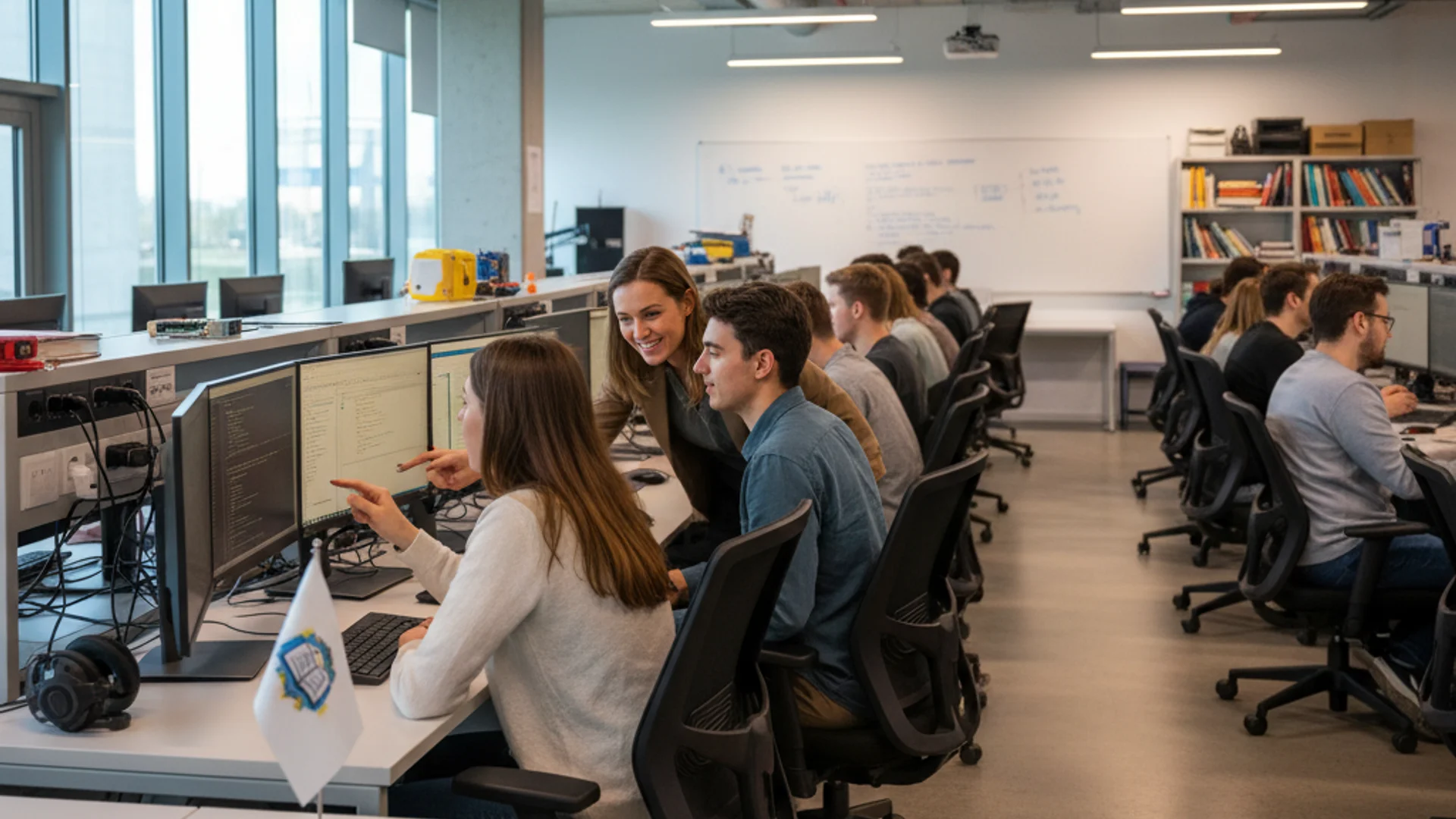
- 1.Hakia ranks the best computer science degree programs in 2026, computer science professionals earn a median salary of $136,620/year, with 25% job growth projected through 2032, much faster than average.
- 2.Our top-ranked computer science programs are University of California-Berkeley, University of Washington-Seattle Campus, and Carnegie Mellon University, selected based on graduation rates, program size, and career outcomes.
- 3.Best value: University of North Carolina at Charlotte offers computer science degrees at just $3,812/year with a 76% graduation rate.
- 4.726 accredited computer science programs available nationwide, with options at every degree level from associate's to doctoral.
- 5.Entry-level positions require a bachelor's degree. Master's degrees unlock senior roles with 20-40% higher salaries and leadership opportunities.
Source: A CS degree is worth it for most students. With $130,160 median salary, 25% job growth, and 140,000+ annual job openings, CS offers among the best career outcomes of any major. ROI analysis shows graduates recoup tuition costs within 2-4 years of employment.
Best Computer Science Programs - Top 10
These are the best computer science programs in the United States based on our comprehensive methodology that considers graduation rates, program size, institutional reputation, and career outcomes. Rankings are updated annually using data from IPEDS and BLS.
Best Computer Science Programs - Top 10
University of California-Berkeley
Doctoral: Very High Research (R1)
Berkeley EECS created BAIR, one of the world's most influential AI research labs, and maintains unique Silicon Valley connections where the most exceptional teachers are often also the most exceptional researchers, unlike many peer institutions.
University of California-Berkeley Computer Science Program Overview
Hakia ranks University of California-Berkeley as the #1 in computer science degree program.
University of California-Berkeley's Computer Science program graduates 994 students annually with a 96% graduation rate. Research opportunities include the Berkeley Artificial Intelligence Research Lab (BAIR) and Berkeley Quantum Information and Computation Center (BQIC). Silicon Valley proximity with direct access to tech industry leaders
Hakia Insight: With a 12% acceptance rate, University of California-Berkeley's computer science program is among the nation's most competitive, attracting top talent to its nationally recognized faculty.
Degree Programs
Research Labs & Institutes
Brings together researchers across computer vision, machine learning, NLP, planning, and robotics with over two dozen faculty and hundreds of graduate students
Quantum information processing investigating computational tasks like integer factorization and secure quantum communication
Research center focused on communications, information and coding theory, optimization, statistics and control
Research at intersection of computer security, online privacy, and human-computer interaction
Brings together domain experts from life, social, and physical sciences with methodological experts from computer science and statistics
Location Advantages
- •Silicon Valley proximity with direct access to tech industry leaders
- •Bay Area innovation ecosystem
- •Lawrence Berkeley National Laboratory collaboration opportunities
- •Strong connections to San Francisco tech corridor
Industry Partners
Career Outcomes
Certifications & Designations
Admissions
University of Washington-Seattle Campus
Doctoral: Very High Research (R1)
UW Allen School uniquely eliminates the traditional standalone master's degree in favor of specialized pathways: a fully-funded Ph.D. track, an exclusive fifth-year master's for their own undergraduates, and a part-time professional program for regional tech workers, all housed in the state-of-the-art Paul G. Allen Center and Bill & Melinda Gates Center facilities.
University of Washington-Seattle Campus Computer Science Program Overview
Hakia ranks University of Washington-Seattle Campus as the #2 in computer science degree program.
University of Washington-Seattle Campus's Computer Science program graduates 495 students annually with a 97% graduation rate. Research opportunities include the Artificial Intelligence Research and Computing + Biology Research. Located in Seattle tech hub Graduates find positions at Major technology companies, Academic institutions, Research laboratories.
Hakia Insight: Students at University of Washington-Seattle Campus benefit from active collaborations with Microsoft and Allen Institute for AI (Ai2), connecting classroom learning to the workforce.
Degree Programs
Research Labs & Institutes
Core AI research and applications
Interdisciplinary research at the intersection of computing and life sciences
Technology design and human-computer interaction
Location Advantages
- •Located in Seattle tech hub
- •Direct access to Microsoft and Amazon headquarters
- •Proximity to hundreds of technology companies
- •Strong venture capital and startup ecosystem
Industry Partners
Career Outcomes
Major technology companies, Academic institutions, Research laboratories
Certifications & Designations
Admissions
Carnegie Mellon University
Doctoral: Very High Research (R1)
CMU Computer Science Department is home to the birthplace of the emoticon smiley:-) created by faculty member Scott Fahlman, and consistently produces graduates with median starting salaries of $135,000 who secure positions at elite firms like Jane Street (13 hires in 2023), with the program's flexible, advisor-guided curriculum allowing students to craft personalized study paths rather than following fixed course sequences.
Carnegie Mellon University Computer Science Program Overview
Hakia ranks Carnegie Mellon University as the #3 in computer science degree program.
Carnegie Mellon University's Computer Science program graduates 270 students annually with a 98% graduation rate. Students benefit from cutting-edge research at the Computer Science Department Research Areas. Pittsburgh tech ecosystem access Graduates find positions at Jane Street, Amazon, Microsoft.
Hakia Insight: Carnegie Mellon University graduates earn $135,000, driven by the program's industry connections and hands-on computer science curriculum.
Degree Programs
Research Labs & Institutes
Six major research divisions: Artificial Intelligence, Graphics, Programming Languages, Security, Systems, and Theory
Location Advantages
- •Pittsburgh tech ecosystem access
- •Strong industry partnerships with major tech companies
Industry Partners
Career Outcomes
Jane Street, Amazon, Microsoft, Google, Meta
Admissions
Cornell University
Doctoral: Very High Research (R1)
Cornell uniquely offers both a fully-funded research MS in Ithaca with mandatory teaching experience and a one-year industry-focused MEng at Cornell Tech in NYC, where students build actual products for real companies through the first-of-its-kind Studio curriculum.
Cornell University Computer Science Program Overview
Hakia ranks Cornell University as the #4 in computer science degree program.
Cornell University's Computer Science program graduates 507 students annually with a 95% graduation rate. Research opportunities include the Initiative for Cryptocurrencies & Contracts (IC3) and Digital Life Initiative (DLI). Ithaca campus provides access to Cornell's research infrastructure Graduates find positions at Google, Facebook, Amazon.
Hakia Insight: Students at Cornell University benefit from active collaborations with Google and Grammarly, connecting classroom learning to the workforce.
Degree Programs
Research Labs & Institutes
Blockchain science and cryptocurrency research
Ethics, policy, and quality of life in socio-technical systems
Mobile sensing systems for capturing human context and activities
Augmented reality, virtual reality, and mixed reality research
Location Advantages
- •Ithaca campus provides access to Cornell's research infrastructure
- •Cornell Tech NYC location offers direct access to major tech companies and startups
- •Manhattan campus facilitates real-world industry partnerships and internships
Industry Partners
Career Outcomes
Google, Facebook, Amazon, Microsoft
Certifications & Designations
Admissions
University of Illinois Urbana-Champaign
Doctoral: Very High Research (R1)
Illinois created one of the first and most extensive CS + X blended degree programs in the nation, allowing students to combine computer science with fields ranging from crop sciences to music, while maintaining guaranteed admission pathways for Illinois graduates into their nationally-ranked MCS programs.
University of Illinois Urbana-Champaign Computer Science Program Overview
Hakia ranks University of Illinois Urbana-Champaign as the #5 in computer science degree program.
University of Illinois Urbana-Champaign's Computer Science program graduates 840 students annually with a 90% graduation rate. Research opportunities include the Architecture, Compilers and Parallel Computing and Artificial Intelligence. Located in Urbana-Champaign with additional Chicago campus presence Graduates find positions at Amazon, Google, Microsoft.
Hakia Insight: University of Illinois Urbana-Champaign's industry network, including Amazon and Apple, provides students with internship and hiring pathways.
Degree Programs
Research Labs & Institutes
computer systems
AI and machine learning
computational biology
computing education
data science
human-computer interaction
software engineering
computational science
cybersecurity
computer systems
theoretical computer science
Location Advantages
- •Located in Urbana-Champaign with additional Chicago campus presence
- •Access to both agricultural technology innovation and urban tech ecosystems
- •Strong connections to Midwest tech corridor and Silicon Valley
- •Research partnerships spanning agriculture, manufacturing, and high-tech industries
Industry Partners
Career Outcomes
Amazon, Google, Microsoft, Meta, Apple
Certifications & Designations
Admissions
University of Southern California
Doctoral: Very High Research (R1)
USC launched the School of Advanced Computing in 2024 as the university's 23rd school, making it the hub for advanced computing research across USC and positioning computer science at the center of an unprecedented interdisciplinary computing initiative.
University of Southern California Computer Science Program Overview
Hakia ranks University of Southern California as the #6 in computer science degree program.
University of Southern California's Computer Science program graduates 1,185 students annually with a 92% graduation rate. Research opportunities include the USC Center for Artificial Intelligence in Society and Robotics and Autonomous Systems Center (RASC). Los Angeles tech ecosystem access Graduates find positions at Amazon, Microsoft, Meta Platforms.
Hakia Insight: Students at University of Southern California benefit from active collaborations with Amazon and Microsoft, connecting classroom learning to the workforce.
Degree Programs
Research Labs & Institutes
AI applications for social good, combating human trafficking, wildlife conservation
Socially assistive robotics, human-robot interaction, multi-robot systems
Advanced computing research, natural language processing, cybersecurity
Human-robot interaction, socially assistive robotics with Maja Matarić
Location Advantages
- •Los Angeles tech ecosystem access
- •Silicon Beach proximity
- •Entertainment industry collaboration opportunities
- •Year-round research and internship availability
Industry Partners
Career Outcomes
Amazon, Microsoft, Meta Platforms, Google, Goldman Sachs
Certifications & Designations
Admissions
Massachusetts Institute of Technology
Doctoral: Very High Research (R1)
MIT EECS is home to CSAIL, the largest interdepartmental laboratory at MIT, and uniquely structures computer science within three overlapping domains including a dedicated AI and decision-making unit, reflecting MIT's pioneering role in artificial intelligence research.
Massachusetts Institute of Technology Computer Science Program Overview
Hakia ranks Massachusetts Institute of Technology as the #7 in computer science degree program.
Massachusetts Institute of Technology offers comprehensive Computer Science programs at multiple degree levels, combining rigorous academics with practical experience. Research opportunities include the Carbon flux tracking across ocean interfaces and Marine microbiomes and bacterial ecology. Cambridge/Boston tech ecosystem
Hakia Insight: Massachusetts Institute of Technology's industry network, including IBM and Abdul Latif Jameel, provides students with internship and hiring pathways.
Degree Programs
Research Labs & Institutes
Carbon flux tracking across ocean interfaces
Marine microbiomes and bacterial ecology
Ocean acidification and marine organism responses
Coral reef ecology and climate adaptation
Marine mammal behavior and acoustics
Phytoplankton and zooplankton dynamics
Deep-sea hydrothermal vent ecosystems
Larval fish ecology and population dynamics
Marine pollution and microplastics research
Location Advantages
- •Cambridge/Boston tech ecosystem
- •Access to venture capital and startups
- •Proximity to other top universities
- •Strong biotech and healthcare industry presence
Industry Partners
Career Outcomes
Admissions
University of California-San Diego
Doctoral: Very High Research (R1)
UCSD's CS program uniquely combines access to the San Diego Supercomputer Center's national-scale computing infrastructure with an interdisciplinary curriculum option, while maintaining direct pathways for exceptional MS students to transition into the PhD program.
University of California-San Diego Computer Science Program Overview
Hakia ranks University of California-San Diego as the #8 in computer science degree program.
University of California-San Diego's Computer Science program graduates 518 students annually with a 81% graduation rate. Research opportunities include the San Diego Supercomputer Center and Calit2 Qualcomm Institute. Access to San Diego Supercomputer Center's national research infrastructure
Hakia Insight: University of California-San Diego's San Diego Supercomputer Center and Calit2 Qualcomm Institute position students at the forefront of computer science research.
Degree Programs
Research Labs & Institutes
High-performance computing
Telecommunications and information technology
Location Advantages
- •Access to San Diego Supercomputer Center's national research infrastructure
- •La Jolla's proximity to biotech and telecommunications industries
Career Outcomes
Certifications & Designations
Admissions
Purdue University-Main Campus
Doctoral: Very High Research (R1)
Purdue CS faculty have had research collaborations with every other college at Purdue in the past five years, demonstrating the program's unique interdisciplinary reach and practical application across all fields of study.
Purdue University-Main Campus Computer Science Program Overview
Hakia ranks Purdue University-Main Campus as the #9 in computer science degree program.
Purdue University-Main Campus's Computer Science program graduates 560 students annually with a 83% graduation rate. Research opportunities include the Purdue Quantum Science and Engineering Institute and Center for Education and Research in Information Assurance and Security (CERIAS). Access to Purdue's extensive interdisciplinary research network Graduates find positions at Microsoft, Facebook, Amazon.
Hakia Insight: Purdue University-Main Campus's industry network, including Google and Amazon, provides students with internship and hiring pathways.
Degree Programs
Research Labs & Institutes
Quantum computing and quantum information
Cybersecurity research and threat analysis
Location Advantages
- •Access to Purdue's extensive interdisciplinary research network
- •Strong connections with defense and aerospace industries in Indiana
Industry Partners
Career Outcomes
Microsoft, Facebook, Amazon, Google, Various startups
Certifications & Designations
Admissions
Columbia University in the City of New York
Doctoral: Very High Research (R1)
Columbia CS uniquely combines Ivy League academic rigor with Manhattan's tech ecosystem, offering specialized pathways like the dual MS in Journalism and Computer Science and faculty-invite-only personalized tracks that leverage the university's position as a global research hub in one of the world's major technology centers.
Columbia University in the City of New York Computer Science Program Overview
Hakia ranks Columbia University in the City of New York as the #10 in computer science degree program.
Columbia University in the City of New York's Computer Science program graduates 595 students annually with a 100% graduation rate. Research opportunities include the Computer Graphics Lab and Computer Vision Lab. Manhattan location providing access to diverse tech companies and startups
Hakia Insight: Columbia University in the City of New York's Computer Graphics Lab creates a direct research-to-career pipeline with New York City Tech Industry, bridging academic research and industry practice.
Degree Programs
Research Labs & Institutes
computer graphics
computer vision
databases and digital libraries
data mining
distributed systems
mobile computing
NLP
networking
robotics
user interfaces
Location Advantages
- •Manhattan location providing access to diverse tech companies and startups
- •Proximity to financial services, media, healthcare, and tech industries
- •New York City's position as a global technology and innovation hub
- •Access to Columbia's broader research ecosystem and interdisciplinary programs
Industry Partners
Career Outcomes
Admissions
Best Computer Science Programs - Top 10 — Complete Program Data
#1. University of California-Berkeley Computer Science Program
Hakia ranks University of California-Berkeley as the #1 in computer science degree program. Location: Berkeley, CA | Type: Public | Tuition: $11,834/year | Graduation Rate: 96% | Score: 100.0
What makes University of California-Berkeley stand out: Berkeley EECS created BAIR, one of the world's most influential AI research labs, and maintains unique Silicon Valley connections where the most exceptional teachers are often also the most exceptional researchers, unlike many peer institutions.
Hakia Insight: With a 12% acceptance rate, University of California-Berkeley's computer science program is among the nation's most competitive, attracting top talent to its nationally recognized faculty.
Program Overview: UC Berkeley's Computer Science program stands as one of the world's most prestigious and influential CS programs, housed within the Department of Electrical Engineering and Computer Sciences (EECS). The program offers multiple pathways including a PhD in Computer Science, MS in Computer Science, and the innovative one-year Master of Engineering (MEng) designed for industry professionals. Berkeley's CS program is uniquely positioned in the Bay Area, where regular faculty - many of whom are leading researchers - teach the majority of courses, ensuring students learn from the most exceptional minds in the field. The program spans advanced research areas from artificial intelligence and robotics at the Berkeley Artificial Intelligence Research Lab (BAIR) to quantum computing at the Berkeley Quantum Information and Computation Center (BQIC). With over 200 graduate programs university-wide and consistently ranking among the top doctoral programs nationwide, Berkeley offers an academic environment where students work alongside faculty on projects that cross disciplinary boundaries to improve everyday life.
Degree Programs: PhD in Computer Science (5-7 years typical); MS in Computer Science (2 years); Master of Engineering (MEng) in EECS (1 academic year); MS/PhD in Computer Science (5-7 years)
Research Labs: Berkeley Artificial Intelligence Research Lab (BAIR) - Brings together researchers across computer vision, machine learning, NLP, planning, and robotics with over two dozen faculty and hundreds of graduate students; Berkeley Quantum Information and Computation Center (BQIC) - Quantum information processing investigating computational tasks like integer factorization and secure quantum communication; Berkeley Laboratory for Information and System Sciences (BLISS) - Research center focused on communications, information and coding theory, optimization, statistics and control; Berkeley Laboratory for Usable and Experimental Security (BLUES) - Research at intersection of computer security, online privacy, and human-computer interaction; Berkeley Institute for Data Science (BIDS) - Brings together domain experts from life, social, and physical sciences with methodological experts from computer science and statistics
Industry Partners: Google, Microsoft, Intel, IBM, Facebook, Apple, DARPA
Career Outcomes:
Notable Faculty: Stuart Russell (Artificial intelligence); David Patterson (Computer architecture); Dawn Song (Computer security); Pieter Abbeel (Robotics and machine learning)
Admissions: GPA: 3.0 minimum for MEng program, 3.7 average for admitted students | Acceptance Rate: 12% average for MEng program
Accreditations: ABET accredited
#2. University of Washington-Seattle Campus Computer Science Program
Hakia ranks University of Washington-Seattle Campus as the #2 in computer science degree program. Location: Seattle, WA | Type: Public | Tuition: $11,524/year | Graduation Rate: 97% | Score: 97.4
What makes University of Washington-Seattle Campus stand out: UW Allen School uniquely eliminates the traditional standalone master's degree in favor of specialized pathways: a fully-funded Ph.D. track, an exclusive fifth-year master's for their own undergraduates, and a part-time professional program for regional tech workers, all housed in the state-of-the-art Paul G. Allen Center and Bill & Melinda Gates Center facilities.
Hakia Insight: Students at University of Washington-Seattle Campus benefit from active collaborations with Microsoft and Allen Institute for AI (Ai2), connecting classroom learning to the workforce.
Program Overview: The University of Washington's Paul G. Allen School of Computer Science & Engineering operates as one of the nation's premier computer science programs, consistently ranking among the top programs nationally. The school offers a comprehensive graduate education ecosystem that uniquely serves different student populations without a traditional standalone master's degree. Instead, UW provides a research-intensive Ph.D. program where students earn both master's and doctoral degrees with full financial support, a Combined B.S./M.S. program (also called the Fifth Year Master's Program) exclusively for current Allen School undergraduates, and a Professional Master's Program designed as a part-time evening option for working professionals in the Puget Sound region. The school recently launched a Graduate Certificate in Modern AI Methods starting fall 2025, designed for working professionals across industries seeking to leverage advanced AI and machine learning techniques.
Degree Programs: Full-time Ph.D. Program (5-7 years); Combined B.S./M.S. Program (Fifth Year Master's) (1 year beyond bachelor's); Professional Master's Program (PMP) (Variable); Graduate Certificate in Modern AI Methods (Variable)
Research Labs: Artificial Intelligence Research - Core AI research and applications; Computing + Biology Research - Interdisciplinary research at the intersection of computing and life sciences; Human-Centered Computing Research - Technology design and human-computer interaction
Industry Partners: Microsoft, Allen Institute for AI (Ai2), Fred Hutchinson Cancer Research Center, Toyota Research Institute
Career Outcomes: | Top Employers: Major technology companies, Academic institutions, Research laboratories | Common Roles: Software Engineer, Research Scientist, Academic Faculty, Technology Leadership
Notable Faculty: Professor Natasha Jaques (AI safety and human-AI interaction); Professor Sheng Wang (computational biology and AI for healthcare); Professor James Fogarty (human-computer interaction); Professor Shyam Gollakota (mobile intelligence and networking); Professor Noah Smith (artificial intelligence); Professor Katharina Reinecke (human-computer interaction and digital culture); Professor Ira Kemelmacher-Shlizerman (computer vision and graphics)
Admissions:
Accreditations: ABET accredited Computer Engineering degree program
#3. Carnegie Mellon University Computer Science Program
Hakia ranks Carnegie Mellon University as the #3 in computer science degree program. Location: Pittsburgh, PA | Type: Private | Tuition: $62,260/year | Graduation Rate: 98% | Score: 95.1
What makes Carnegie Mellon University stand out: CMU Computer Science Department is home to the birthplace of the emoticon smiley:-) created by faculty member Scott Fahlman, and consistently produces graduates with median starting salaries of $135,000 who secure positions at elite firms like Jane Street (13 hires in 2023), with the program's flexible, advisor-guided curriculum allowing students to craft personalized study paths rather than following fixed course sequences.
Hakia Insight: Carnegie Mellon University graduates earn $135,000, driven by the program's industry connections and hands-on computer science curriculum.
Program Overview: Carnegie Mellon University's Computer Science Department offers a flagship Master of Science in Computer Science (MSCS) program that embodies the institution's pioneering legacy in computational sciences. Established in 1965 with a $5 million grant from the Richard K. Mellon Foundation and led by Alan Perlis as its first department head, CMU CS has consistently ranked among the top computer science programs globally. The MSCS program is uniquely flexible, requiring no fixed curriculum but instead allowing students to construct their own course of study in consultation with advisors. Most students complete the program in three semesters (though those transitioning from other fields may need an additional semester), taking 8-9 courses across Systems, Theoretical Foundations, and Artificial Intelligence requirements. The program is coursework-focused with optional research opportunities, and about one-third of students engage in research during their studies. The department spans six major research areas including Artificial Intelligence, Graphics, Programming Languages, Security, Systems, and Theory, with faculty maintaining individual research summaries available through their comprehensive Faculty Research Guide.
Degree Programs: MS in Computer Science (3 semesters (1.5 years)); Fifth Year Master's Program (1 year); Accelerated MBA Program (5 years total)
Research Labs: Computer Science Department Research Areas - Six major research divisions: Artificial Intelligence, Graphics, Programming Languages, Security, Systems, and Theory
Industry Partners: Jane Street, Amazon/AWS, Microsoft, Google, Meta, Netflix
Career Outcomes: Placement Rate: Exceptional based on 2023 outcomes | Top Employers: Jane Street, Amazon, Microsoft, Google, Meta, Netflix
Notable Faculty: Srinivasan Seshan (Department Head, Computer Science); Charlie Garrod (CS Undergraduate Program Director)
Admissions: GPA: 3.0 minimum to maintain
#4. Cornell University Computer Science Program
Hakia ranks Cornell University as the #4 in computer science degree program. Location: Ithaca, NY | Type: Private | Tuition: $65,204/year | Graduation Rate: 95% | Score: 94.1
What makes Cornell University stand out: Cornell uniquely offers both a fully-funded research MS in Ithaca with mandatory teaching experience and a one-year industry-focused MEng at Cornell Tech in NYC, where students build actual products for real companies through the first-of-its-kind Studio curriculum.
Hakia Insight: Students at Cornell University benefit from active collaborations with Google and Grammarly, connecting classroom learning to the workforce.
Program Overview: Cornell University offers multiple pathways into computer science graduate education, each with distinct advantages for different career trajectories. The Master of Science in Computer Science, housed at Cornell's Ithaca campus, represents a highly selective, research-intensive program that combines advanced coursework with mandatory thesis research and teaching assistantships. This four-semester program requires 34 credit hours, including 6-12 credits of thesis research, and provides full funding through teaching assistantships for students maintaining good standing. In New York City, Cornell Tech offers a one-year Master of Engineering in Computer Science designed for immediate industry impact, featuring the innovative Studio curriculum where students build complete digital solutions for real companies in cross-disciplinary teams with business and law students. The Ithaca MS program particularly appeals to self-motivated researchers who thrive in mentoring environments, as students gain valuable teaching experience with undergraduates while conducting specialized research. Cornell Tech's Manhattan location provides direct access to NYC's tech ecosystem, with students working on innovation challenges from real companies and learning from faculty with extensive industry experience. Both programs benefit from Cornell's broader research infrastructure, including facilities like the Cornell Center for Advanced Computing and specialized research groups in artificial intelligence, security and privacy, and human-computer interaction.
Degree Programs: Bachelor of Arts in Computer Science; Bachelor of Science in Computer Science; Master of Engineering in Computer Science (two-semester); Master of Science in Computer Science; Ph.D. in Computer Science; Special Master's in Computer Science
Research Labs: Initiative for Cryptocurrencies & Contracts (IC3) - Blockchain science and cryptocurrency research; Digital Life Initiative (DLI) - Ethics, policy, and quality of life in socio-technical systems; People-Aware Computing Lab - Mobile sensing systems for capturing human context and activities; XR Collaboratory (XRC) - Augmented reality, virtual reality, and mixed reality research
Industry Partners: Google, Grammarly, IBM, Bill & Melinda Gates Foundation
Career Outcomes: Placement Rate: 90% of Cornell Tech CS graduates accept Software Developer roles | Top Employers: Google, Facebook, Amazon, Microsoft | Common Roles: Software Developer, Product Manager, Program Manager, Data Scientist, Research positions
Notable Faculty: Vitaly Shmatikov (Digital privacy, computer security, machine learning security); Yoav Artzi (Natural language processing, machine learning); Noah Snavely (Computer vision, computer graphics); Helen Nissenbaum (Ethics and policy in technology)
Admissions:
Accreditations: AI for Engineers Certificate available at Cornell Tech
#5. University of Illinois Urbana-Champaign Computer Science Program
Hakia ranks University of Illinois Urbana-Champaign as the #5 in computer science degree program. Location: Champaign, IL | Type: Public | Tuition: $14,768/year | Graduation Rate: 90% | Score: 92.8
What makes University of Illinois Urbana-Champaign stand out: Illinois created one of the first and most extensive CS + X blended degree programs in the nation, allowing students to combine computer science with fields ranging from crop sciences to music, while maintaining guaranteed admission pathways for Illinois graduates into their nationally-ranked MCS programs.
Hakia Insight: University of Illinois Urbana-Champaign's industry network, including Amazon and Apple, provides students with internship and hiring pathways.
Program Overview: The University of Illinois Urbana-Champaign's Siebel School of Computing and Data Science offers one of the nation's most distinguished computer science programs, consistently ranked #7 overall in undergraduate CS by U.S. News & World Report. The school provides multiple pathways including a traditional B.S. in Computer Science, over a dozen innovative CS + X blended degrees (combining CS with fields like astronomy, bioengineering, advertising, and music), and flexible graduate options. At the graduate level, students can pursue a research-focused M.S. or Ph.D., a professional Master of Computer Science (MCS) available on-campus, online through Coursera partnership, or at their Chicago location. The online MCS is particularly noteworthy as a 32-credit hour, coursework-only degree that can be completed in 1-5 years with full flexibility. The program leverages research infrastructure including partnerships with major tech companies and government agencies. Students learn in the Thomas M. Siebel Center for Computer Science and benefit from extensive research opportunities across eleven specialized areas from artificial intelligence to quantum computing. The school's 95% undergraduate internship participation rate and 96% job placement rate within six months demonstrate strong industry connections, with graduates regularly joining Amazon, Google, Microsoft, Meta, and other top-tier employers.
Degree Programs: BS (4 years); MS (2 years); PhD; MCS Online; MCS Urbana-Champaign; MCS Chicago; 5-year BS/MCS (5 years); 5-year BS/MS (5 years)
Research Labs: Architecture, Compilers and Parallel Computing - computer systems; Artificial Intelligence - AI and machine learning; Bioinformatics and Computational Biology - computational biology; Computers and Education - computing education; Data and Intelligent Systems - data science; Interactive Computing - human-computer interaction; Programming Languages, Formal Methods and Software Engineering - software engineering; Scientific Computing - computational science; Security and Privacy - cybersecurity; Systems and Networking - computer systems; Theory and Algorithms - theoretical computer science
Industry Partners: Amazon, Apple, Capital One, Google, IBM, Meta, Microsoft, Netflix, Sandia National Laboratories, Twitch
Career Outcomes: Placement Rate: 96% secure first choice destination, 97% overall placement rate | Top Employers: Amazon, Google, Microsoft, Meta, Apple, Capital One, Epic Systems, Goldman Sachs, JPMorgan Chase, Netflix | Common Roles: Software Engineer, Machine Learning Engineer, Product Manager, Quantitative Developer, API Engineer, Application Developer
Notable Faculty: Nancy Amato (Department Head); Darko Marinov (Director of Graduate Studies)
Admissions: GPA: 3.7+ GPA in CS courses for guaranteed MCS admission
Accreditations: ABET Accredited through The Grainger College of Engineering
#6. University of Southern California Computer Science Program
Hakia ranks University of Southern California as the #6 in computer science degree program. Location: Los Angeles, CA | Type: Private | Tuition: $66,640/year | Graduation Rate: 92% | Score: 92.5
What makes University of Southern California stand out: USC launched the School of Advanced Computing in 2024 as the university's 23rd school, making it the hub for advanced computing research across USC and positioning computer science at the center of an unprecedented interdisciplinary computing initiative.
Hakia Insight: Students at University of Southern California benefit from active collaborations with Amazon and Microsoft, connecting classroom learning to the workforce.
Program Overview: USC Viterbi's MS in Computer Science stands at the heart of the newly established USC School of Advanced Computing, representing the most ambitious initiative in USC computing history. The Thomas Lord Department of Computer Science offers a comprehensive 32-unit Master of Science program that provides intensive preparation in computing system design, programming, and application. Students can pursue the degree on-campus or entirely online through DEN@Viterbi, with both tracks maintaining identical academic rigor and resulting in the same USC degree. The program takes 1.5-2 years full-time or 2.5-3 years part-time, with an optional thesis track adding 4 additional units. The department houses over 40 research labs spanning four major areas: Artificial Intelligence and Machine Learning, Theory and Computation, Systems and Security, and Computer Vision and Robotics. Notable research centers include the USC Center for Artificial Intelligence in Society, the Robotics and Autonomous Systems Center, and the Information Sciences Institute. With faculty like Gaurav Sukhatme (inaugural director of the School of Advanced Computing) and pioneers in AI safety, natural language processing, and autonomous systems, USC offers specializations in Artificial Intelligence, Data Science, and Game Development, alongside the general track.
Degree Programs: MS in Computer Science (General) (1.5-2 years full-time); MS in Computer Science - Artificial Intelligence (1.5-2 years); MS in Computer Science - Data Science (1.5-2 years); MS in Computer Science - Scientists and Engineers (2-3 years)
Research Labs: USC Center for Artificial Intelligence in Society - AI applications for social good, combating human trafficking, wildlife conservation; Robotics and Autonomous Systems Center (RASC) - Socially assistive robotics, human-robot interaction, multi-robot systems; Information Sciences Institute (ISI) - Advanced computing research, natural language processing, cybersecurity; Interaction Lab - Human-robot interaction, socially assistive robotics with Maja Matarić
Industry Partners: Amazon, Microsoft, Meta Platforms, Google, Goldman Sachs
Career Outcomes: | Top Employers: Amazon, Microsoft, Meta Platforms, Google, Goldman Sachs, Apple, Bloomberg, Tesla | Common Roles: Software Development Engineer, Software Engineer, Applied Scientist, Solutions Architect, Machine Learning Engineer
Notable Faculty: Gaurav Sukhatme (Robotics, autonomous systems, sensor networks); Maja Matarić (Socially assistive robotics, human-robot interaction); Bistra Dilkina (AI for social good, computational sustainability); Laurent Itti (Computer vision, computational neuroscience)
Admissions:
Accreditations: OPT STEM extension eligible for international students
#7. Massachusetts Institute of Technology Computer Science Program
Hakia ranks Massachusetts Institute of Technology as the #7 in computer science degree program. Location: Cambridge, MA | Type: Private | Tuition: $59,750/year | Score: 89.8
What makes Massachusetts Institute of Technology stand out: MIT EECS is home to CSAIL, the largest interdepartmental laboratory at MIT, and uniquely structures computer science within three overlapping domains including a dedicated AI and decision-making unit, reflecting MIT's pioneering role in artificial intelligence research.
Hakia Insight: Massachusetts Institute of Technology's industry network, including IBM and Abdul Latif Jameel, provides students with internship and hiring pathways.
Program Overview: MIT's Computer Science program operates through the Department of Electrical Engineering and Computer Science (EECS), the largest academic department at MIT and consistently ranked #1 in U.S. News & World Report. The program offers PhD and ScD degrees in Computer Science, Computer Science and Engineering, plus specialized Master of Engineering (MEng) degrees available exclusively to MIT undergraduates. What sets MIT apart is its unique structure combining three overlapping sub-units: electrical engineering, computer science, and artificial intelligence and decision-making. The program doesn't offer terminal master's degrees to external applicants - students must pursue doctoral studies, receiving an SM degree en route to their PhD. The program is anchored by the Computer Science & Artificial Intelligence Laboratory (CSAIL), the largest interdepartmental laboratory at MIT, alongside the Laboratory for Information and Decision Systems (LIDS) and the MIT-IBM Watson AI Lab. Research spans from theoretical computer science and programming languages to advanced AI applications in healthcare, robotics, and natural language processing. PhD students receive full financial support including tuition, monthly stipend, and medical insurance through fellowships, research assistantships, or teaching assistantships.
Degree Programs: PhD in Computer Science (4-6 years); ScD in Computer Science (4-6 years); PhD in Computer Science and Engineering (4-6 years); MEng in Electrical Engineering and Computer Science (1-2 years)
Research Labs: Carbon flux tracking across ocean interfaces - Carbon flux tracking across ocean interfaces; Marine microbiomes and bacterial ecology - Marine microbiomes and bacterial ecology; Ocean acidification and marine organism responses - Ocean acidification and marine organism responses; Coral reef ecology and climate adaptation - Coral reef ecology and climate adaptation; Marine mammal behavior and acoustics - Marine mammal behavior and acoustics; Phytoplankton and zooplankton dynamics - Phytoplankton and zooplankton dynamics; Deep-sea hydrothermal vent ecosystems - Deep-sea hydrothermal vent ecosystems; Larval fish ecology and population dynamics - Larval fish ecology and population dynamics; Marine pollution and microplastics research - Marine pollution and microplastics research
Industry Partners: IBM, Abdul Latif Jameel
Career Outcomes:
Admissions:
#8. University of California-San Diego Computer Science Program
Hakia ranks University of California-San Diego as the #8 in computer science degree program. Location: La Jolla, CA | Type: Public | Tuition: $11,834/year | Graduation Rate: 81% | Score: 88.8
What makes University of California-San Diego stand out: UCSD's CS program uniquely combines access to the San Diego Supercomputer Center's national-scale computing infrastructure with an interdisciplinary curriculum option, while maintaining direct pathways for exceptional MS students to transition into the PhD program.
Hakia Insight: University of California-San Diego's San Diego Supercomputer Center and Calit2 Qualcomm Institute position students at the forefront of computer science research.
Program Overview: UC San Diego's Computer Science and Engineering Department offers both Master of Science in Computer Science and Master of Science in Computer Science and Engineering (Computer Engineering) degrees, designed to serve diverse post-graduate educational needs. The program provides three distinct pathways: a Thesis Plan for research-oriented students, a Comprehensive Standard Plan, and a unique Comprehensive Interdisciplinary Plan that requires additional coursework in another department. What sets UCSD apart is its rigorous three-pronged curriculum structure ensuring students master fundamental concepts, gain breadth across multiple CS domains (Theory, Systems, and Applications), and develop deep expertise in their chosen specialization area. The program accommodates both full-time students and working professionals through part-time options, with a minimum three-quarter residency requirement. Located in La Jolla with proximity to the San Diego Supercomputer Center (SDSC), students gain access to advanced computational resources including the Expanse supercomputer and AI-integrated computing environments that have powered breakthrough scientific research since the early Cray systems era.
Degree Programs: MS in Computer Science and Engineering - Thesis Plan (Minimum 3 quarters); MS in Computer Science and Engineering - Comprehensive Standard Plan (Minimum 3 quarters); MS in Computer Science and Engineering - Comprehensive Interdisciplinary Plan (Minimum 3 quarters); MS in Computer Science and Engineering (Computer Engineering) (Minimum 3 quarters)
Research Labs: San Diego Supercomputer Center - High-performance computing; Calit2 Qualcomm Institute - Telecommunications and information technology
Career Outcomes:
Admissions: GPA: 3.0 minimum for good academic standing
Accreditations: University of California accreditation
#9. Purdue University-Main Campus Computer Science Program
Hakia ranks Purdue University-Main Campus as the #9 in computer science degree program. Location: West Lafayette, IN | Type: Public | Tuition: $9,718/year | Graduation Rate: 83% | Score: 88.2
What makes Purdue University-Main Campus stand out: Purdue CS faculty have had research collaborations with every other college at Purdue in the past five years, demonstrating the program's unique interdisciplinary reach and practical application across all fields of study.
Hakia Insight: Purdue University-Main Campus's industry network, including Google and Amazon, provides students with internship and hiring pathways.
Program Overview: Purdue University's Computer Science program offers multiple master's pathways designed for both academic and professional advancement. The traditional MS in Computer Science provides thesis and non-thesis options, requiring 10 courses (30 credits) with three core areas: Systems I (CS 50200/56500), Systems II (CS 50300/53600), and Algorithms (CS 58000/58800). Students must demonstrate breadth by taking courses from at least two additional areas beyond the core systems and algorithms requirements. The department also offers joint programs including MS in Computational Science & Engineering and Statistics-Computer Science, plus a specialized Professional Master's in Information and Cybersecurity (currently not accepting applications). Housed in Lawson Hall, the program connects students with faculty conducting research across 12 major areas from AI and machine learning to quantum computing and cybersecurity. The department's research enterprise spans collaborations with every college at Purdue, reflecting computer science's broad applicability. Recent achievements include the IDEAS Lab receiving a 5-year defense grant for AI-enabled robotics and faculty earning Amazon Research Awards. With over 135 faculty members and 3,800 students, the program maintains strong industry connections, evidenced by graduates securing positions at major technology companies with an average starting salary of $108,505 for undergraduates.
Degree Programs: MS in Computer Science (Non-Thesis) (3-4 semesters); MS in Computer Science (Thesis) (3-4 semesters); Statistics-Computer Science Joint Masters (3-4 semesters); MS in Computational Science & Engineering (3-4 semesters)
Research Labs: Purdue Quantum Science and Engineering Institute - Quantum computing and quantum information; Center for Education and Research in Information Assurance and Security (CERIAS) - Cybersecurity research and threat analysis
Industry Partners: Google, Amazon, Microsoft, Caterpillar
Career Outcomes: Placement Rate: 76% response rate on placement surveys | Top Employers: Microsoft, Facebook, Amazon, Google, Various startups | Common Roles: Software Engineer, Research Scientist, Systems Architect, Data Scientist
Notable Faculty: Cristian Borcea (Distributed systems, mobile computing, and cyber-physical systems); Eugene Spafford (Cybersecurity and information assurance)
Admissions: GPA: 3.0 minimum on plan of study courses
Accreditations: ABET accredited
#10. Columbia University in the City of New York Computer Science Program
Hakia ranks Columbia University in the City of New York as the #10 in computer science degree program. Location: New York, NY | Type: Private | Tuition: $64,526/year | Graduation Rate: 100% | Score: 88.0
What makes Columbia University in the City of New York stand out: Columbia CS uniquely combines Ivy League academic rigor with Manhattan's tech ecosystem, offering specialized pathways like the dual MS in Journalism and Computer Science and faculty-invite-only personalized tracks that leverage the university's position as a global research hub in one of the world's major technology centers.
Hakia Insight: Columbia University in the City of New York's Computer Graphics Lab creates a direct research-to-career pipeline with New York City Tech Industry, bridging academic research and industry practice.
Program Overview: Columbia University's Computer Science program sits at the heart of Manhattan's vibrant tech ecosystem, offering a comprehensive Master of Science degree that spans ten specialized pathways from Machine Learning to Computational Biology. The 30-credit program requires students to complete coursework at the 4000 level or above, with at least 6 points at the advanced 6000 level, while maintaining a 2.7 GPA. What sets Columbia apart is its faculty-determined pathway system that allows deep specialization in areas like Computer Security, Natural Language Processing, Vision Graphics Interaction and Robotics, and Software Systems, alongside unique offerings like the dual MS in Journalism and Computer Science. The program leverages Columbia's position in New York City to provide industry connections and career opportunities across multiple sectors. Students can participate in state-of-the-art research within the department's specialized labs and research groups, while the Columbia Video Network (CVN) option extends access to working professionals. The department also offers an innovative MS Bridge Program and maintains strong ties to Columbia Engineering's broader research ecosystem, including partnerships with the Data Science Institute and various interdisciplinary centers.
Degree Programs: BS; BA; BA in Computer Science and Mathematics; BA in Computational Biology; BA in Data Science; BA in Information Science
Research Labs: Computer Graphics Lab - computer graphics; Computer Vision Lab - computer vision; Databases and Digital Libraries Lab - databases and digital libraries; Data Mining and Knowledge Discovery Lab - data mining; Distributed Systems Lab - distributed systems; Mobile and Wearable Computing Lab - mobile computing; Natural Language Processing Lab - NLP; Networking Lab - networking; Robotics Lab - robotics; User Interfaces Lab - user interfaces
Industry Partners: New York City Tech Industry
Career Outcomes:
Notable Faculty: Dr. Jae Woo Lee (Director of Undergraduate Studies)
Admissions: GPA: Minimum 2.7 GPA to maintain standing
Our rankings methodology weighs program strength (25%), graduation rate (20%), career outcomes (15%), institutional quality (12%), industry recognition (10%), selectivity (10%), and data transparency (8%). Learn more about our methodology →
Who Should Study Computer Science?
Computer science is ideal for students who enjoy logical problem-solving, have curiosity about how technology works, and are comfortable with mathematics. You don't need prior programming experience, most programs start with introductory courses, but you should enjoy analytical thinking.
- Problem solvers who enjoy breaking down complex challenges into logical steps
- Math-comfortable students willing to engage with discrete math, algorithms, and some calculus
- Curious builders who want to understand how software, systems, and technology work
- Career-focused students seeking high-paying, in-demand jobs with strong growth
- Flexible thinkers who want a degree that opens doors across many industries
CS is also excellent for career changers who want to transition to tech from other fields, as the analytical skills transfer well from backgrounds in engineering, mathematics, science, or business.
Computer Science Degree Levels Compared
CS degrees are available at multiple levels, each suited to different goals and career paths.
Computer Science Programs by Degree Level
2-year programs for career entry or transfer to bachelor's programs
Top-ranked undergraduate programs nationwide
Top graduate programs for specialization and advancement
PhD programs for research and academic careers
Flexible online programs for working professionals
Best Computer Science Programs - Bachelor's
A bachelor's degree in computer science is the standard credential for entry-level positions. These 4-year programs provide comprehensive training and hands-on experience.
Best Computer Science Programs - Top 3 Bachelor's
University of California-Berkeley
994 graduates, 96% grad rate, Score: 100.0
University of Washington-Seattle Campus
495 graduates, 97% grad rate, Score: 97.4
Carnegie Mellon University
270 graduates, 98% grad rate, Score: 95.1
4. Cornell University (Ithaca, NY) - Score: 94.1, Tuition: $65,204
5. Massachusetts Institute of Technology (Cambridge, MA) - Score: 89.8, Tuition: $59,750
6. University of California-San Diego (La Jolla, CA) - Score: 88.8, Tuition: $11,834
7. Purdue University-Main Campus (West Lafayette, IN) - Score: 88.2, Tuition: $9,718
8. University of Illinois Urbana-Champaign (Champaign, IL) - Score: 87.5, Tuition: $14,768
9. University of Southern California (Los Angeles, CA) - Score: 87.0, Tuition: $66,640
10. University of California-Irvine (Irvine, CA) - Score: 85.8, Tuition: $11,834
Best Computer Science Programs - Master's
A master's degree in computer science prepares students for senior and specialized roles. These 1-2 year programs offer advanced expertise and leadership training.
Best Computer Science Programs - Top 3 Master's
University of Illinois Urbana-Champaign
840 graduates, 90% grad rate, Score: 92.8
University of Southern California
1185 graduates, 92% grad rate, Score: 92.5
University of California-San Diego
499 graduates, 81% grad rate, Score: 88.8
4. Cornell University (Ithaca, NY) - Score: 88.1, Tuition: $65,204
5. Columbia University in the City of New York (New York, NY) - Score: 88.0, Tuition: $64,526
6. Stanford University (Stanford, CA) - Score: 86.5, Tuition: $61,731
7. Massachusetts Institute of Technology (Cambridge, MA) - Score: 85.9, Tuition: $59,750
8. Carnegie Mellon University (Pittsburgh, PA) - Score: 85.5, Tuition: $62,260
9. University of California-Berkeley (Berkeley, CA) - Score: 82.0, Tuition: $11,834
10. University of Washington-Seattle Campus (Seattle, WA) - Score: 81.1, Tuition: $11,524
Best Computer Science Programs - Online
Online computer science programs offer flexibility for working professionals. Top accredited programs provide the same curriculum quality as on-campus alternatives.
Best Computer Science Programs - Top 3 Online
University of California-Berkeley
994 graduates, 96% grad rate, Score: 100.0
University of Washington-Seattle Campus
495 graduates, 97% grad rate, Score: 97.4
Carnegie Mellon University
270 graduates, 98% grad rate, Score: 95.1
4. Cornell University (Ithaca, NY) - Score: 94.1, Tuition: $65,204
5. University of Illinois Urbana-Champaign (Champaign, IL) - Score: 92.5, Tuition: $14,768
6. Massachusetts Institute of Technology (Cambridge, MA) - Score: 89.8, Tuition: $59,750
7. University of California-San Diego (La Jolla, CA) - Score: 88.8, Tuition: $11,834
8. Purdue University-Main Campus (West Lafayette, IN) - Score: 88.2, Tuition: $9,718
9. University of Southern California (Los Angeles, CA) - Score: 87.0, Tuition: $66,640
10. University of California-Irvine (Irvine, CA) - Score: 85.8, Tuition: $11,834
Best Computer Science Programs - Associate's
An associate's degree in computer science provides a 2-year pathway into the field. These programs are ideal for career starters or those planning to transfer to a 4-year program.
Best Computer Science Programs - Top 3 Associate's
Weber State University
139 graduates, 92% grad rate, Score: 64.5
Santa Monica College
46 graduates, 95% grad rate, Score: 55.7
Southern New Hampshire University
122 graduates, 67% grad rate, Score: 54.4
4. Green River College (Auburn, WA) - Score: 53.5, Tuition: $4,074
5. Utah Valley University (Orem, UT) - Score: 53.0, Tuition: $5,614
6. CUNY New York City College of Technology (Brooklyn, NY) - Score: 52.5, Tuition: $6,930
7. MiraCosta College (Oceanside, CA) - Score: 52.4, Tuition: $1,104
8. Columbia Basin College (Pasco, WA) - Score: 51.3, Tuition: $5,514
9. De Anza College (Cupertino, CA) - Score: 51.0, Tuition: $1,395
10. Edmonds College (Lynnwood, WA) - Score: 50.9, Tuition: $4,073
Best Computer Science Programs - Graduate
Graduate programs in computer science (PhD and doctoral degrees) prepare students for research, academic, and senior leadership positions.
Best Computer Science Programs - Top 3 Graduate
University of California-Berkeley
46 graduates, 96% grad rate, Score: 95.5
Carnegie Mellon University
23 graduates, 98% grad rate, Score: 88.7
Massachusetts Institute of Technology
68 graduates, N/A% grad rate, Score: 88.4
4. University of Southern California (Los Angeles, CA) - Score: 85.7, Tuition: $66,640
5. University of Illinois Urbana-Champaign (Champaign, IL) - Score: 83.8, Tuition: $14,768
6. Stanford University (Stanford, CA) - Score: 82.8, Tuition: $61,731
7. Princeton University (Princeton, NJ) - Score: 82.6, Tuition: $59,710
8. Cornell University (Ithaca, NY) - Score: 81.8, Tuition: $65,204
9. University of California-San Diego (La Jolla, CA) - Score: 79.2, Tuition: $11,834
10. Purdue University-Main Campus (West Lafayette, IN) - Score: 78.6, Tuition: $9,718
Most Affordable Computer Science Programs
Looking for quality computer science education without the hefty price tag? These programs offer the best value, balancing tuition costs with strong academic outcomes and career prospects. Our Value Score factors in graduation rates, program strength, and institutional quality relative to cost.
Top 5 Most Affordable Computer Science Programs
| Rank | Institution | Location | Tuition | Value Score | Grad Rate |
|---|---|---|---|---|---|
| 1 | University of North Carolina at Charlotte | Charlotte, NC | $3,812 | 151.6 | 76% |
| 2 | University of South Florida | Tampa, FL | $4,559 | 132.6 | 85% |
| 3 | California Polytechnic State University-San Luis Obispo | San Luis Obispo, CA | $5,742 | 125.7 | 100% |
| 4 | San Diego State University | San Diego, CA | $5,742 | 125.2 | 83% |
| 5 | Kennesaw State University | Kennesaw, GA | $4,450 | 123.2 | 66% |
Computer Science Career Outcomes
Computer science graduates have access to some of the highest-paying and fastest-growing careers in the economy. The BLS projects 25% job growth for software developers through 2032, much faster than average. For detailed salary breakdowns, see our software engineer salary guide and data scientist salary guide.
Computer Science Curriculum Overview
CS programs include core courses in programming, data structures and algorithms, discrete mathematics, computer organization/architecture, operating systems, databases, and software engineering. Upper-level courses allow specialization in high-demand areas.
- Core Programming: Python, Java, C/C++, functional programming concepts
- Mathematics: Discrete math, linear algebra, probability, calculus (1-2 courses)
- Theory: Algorithms, data structures, computation theory, complexity
- Systems: Operating systems, networks, databases, computer architecture
- Software Engineering: Development methodology, testing, version control, teamwork
- Electives: AI/ML, security, graphics, HCI, distributed systems, mobile development
Most programs also require capstone projects, internships, or research experiences. For details on what you'll learn, see our CS curriculum guide and CS fundamentals you need.
Computer Science Programs by State
Computer Science vs Related Fields
Computer science provides the broadest foundation in computing theory, algorithms, data structures, computation theory, and systems design. This theoretical depth translates to versatility: CS graduates can pivot between software development, data science, security, AI research, and technical management throughout their careers.
The key differentiator is abstraction level. CS teaches you to think about problems at multiple levels, from low-level memory management to high-level system architecture. This makes CS graduates particularly strong at debugging complex systems, optimizing performance, and designing scalable solutions.
If you're uncertain about your specific tech career path, CS is often the safest choice. The foundational knowledge transfers across specializations, and you can narrow your focus through electives, projects, and work experience rather than committing to a specialization before you understand the field.
Launch Your Tech Career with Springboard
6 Career Tracks · $23K avg salary increase · 85.6% placement rate
Data Science
6 months·+$25K
Machine Learning & AI
9 months·+$25K
Cybersecurity
6 months·+$11K
Data Analytics
6 months·+$17K
Software Engineering
9 months·+$25K
UI/UX Design
9 months·+$24K
Affiliate link · We may earn a commission at no extra cost to you.
- You want broad foundations in computing theory and practice
- You're interested in algorithms, systems, or research
- You want maximum career flexibility across tech roles
- You enjoy math and abstract problem-solving
- You want to focus specifically on building software products
- You prefer practical engineering methodology over theory
- Your primary goal is becoming a developer quickly
- You're less interested in algorithms/theory
- You're specifically interested in analytics and ML
- You want to work with data rather than build systems
- You have strong statistics and math interest
- You want to focus on insights over infrastructure
- You prefer managing technology over creating it
- You're interested in networking or systems administration
- You want an IT management career path
- You prefer less programming and more operations
Is a Computer Science Degree Worth It?
For most students, yes. The combination of high starting salaries ($75,000+ for new grads), strong job growth (25% through 2032), career flexibility, and 140,000+ annual job openings makes CS one of the highest-ROI degrees available.
When it's worth it: You're interested in tech careers, comfortable with math, and willing to engage with challenging coursework. The credential opens doors at top companies, provides structured learning, and offers networking and internship opportunities bootcamps can't replicate.
When to consider alternatives: You're certain you only want web development (bootcamps may be faster), you have significant financial constraints (start at community college), or you're already working in tech and just need specific skills (certifications or online courses).
Consider the tech job market trends for 2025 and whether self-taught paths might work better for your situation.
Alternative Paths to Tech Careers
While a CS degree is the most common path, alternatives exist for those with different goals, timelines, or budgets
- Software Engineering Bootcamps, 12-24 week intensive programs for career switchers
- Data Science Bootcamps. Fast-track to data and analytics roles
- AWS Certifications Roadmap. Cloud credentials for career advancement
- Self-Taught Programming. Combining online resources with portfolio building
- IT Certifications. CompTIA, Cisco, and other vendor-neutral credentials
Many successful developers combine paths, starting with a bootcamp or self-study, then adding a degree later for advancement. For career-specific guidance, see how to become an AI engineer or transitioning to tech.
Coding Bootcamps: An Alternative Pathway
Coding bootcamps offer an accelerated pathway into computer science careers. For those considering alternatives to traditional degrees, here's what you need to know about this intensive learning format.
What is a Coding Bootcamp?
A coding bootcamp is an intensive, short-term training program (typically 12-24 weeks) that teaches practical programming skills through hands-on projects. Unlike traditional degrees, bootcamps focus exclusively on job-ready skills and often include career services to help graduates land their first tech role.
Who Bootcamps Are Best For
- Career changers looking to enter tech quickly
- Professionals wanting to upskill or transition roles
- Self-taught developers seeking structured training
- Those unable to commit to a 4-year degree timeline
What People Love
Based on discussions from r/codingbootcamp, r/cscareerquestions, and r/learnprogramming
- Get job-ready in months instead of 4 years
- Learn modern tech stacks actually used in industry
- Build portfolio projects that demonstrate practical skills
- Many bootcamp grads report landing $70-100K+ starting salaries
- 1-on-1 mentorship helps bridge knowledge gaps quickly
Common Concerns
Honest feedback from bootcamp graduates and industry professionals
- May struggle with algorithm-heavy interviews at FAANG companies
- Lacks depth in systems programming and low-level concepts
- Some hiring managers filter out bootcamp grads automatically
- Requires significant self-study to fill CS fundamentals gaps
- Current market (2025-2026) is competitive for entry-level roles
Save $1000 on Springboard Bootcamps
Springboard offers career-focused bootcamps with 1-on-1 mentorship from industry professionals. Their programs include a job guarantee, complete all requirements, and if you don't land a qualifying role, you may be eligible for a full tuition refund. Use our exclusive link to save $1000 on enrollment.
Programs for Computer Science careers:
- Software Engineering Career Track
We may earn a commission when you use our affiliate link and coupon.
More Bootcamp Resources
Computer Science Degree FAQ
Based on 742 programs from IPEDS 2023
Our rankings are based on analysis of computer science degree programs nationwide using IPEDS 2023 data and BLS labor statistics. Rankings are produced algorithmically without editorial intervention, ensuring objectivity and reproducibility.
Ranking Factors
Number of graduates per year in this specific field (CIP code). Larger programs indicate established departments with more resources, course offerings, and career services. Measured from IPEDS Completions data.
Percentage of students completing their degree within 150% of expected time (6 years for bachelor's, 3 years for associate's). Higher rates indicate better student support and program quality. Source: IPEDS Graduation Rates survey.
Admission rate (lower = more selective). More selective institutions have stronger academic environments and more competitive graduates. For open-admission institutions, we use graduation rates as a proxy for quality.
National salary data for computer science graduates, factored into institutional scores based on job market strength.
Ranking Categories
Overall quality using all four factors weighted as shown above. Ideal for students seeking the strongest academic experience.
Same methodology, filtered to schools with fully online or hybrid options (IPEDS Distance Education data). Some schools may have lower graduation rates due to different student demographics.
Ranked primarily by net cost (tuition minus average institutional aid), with quality factors as tiebreakers. Best for cost-conscious students.
Data Sources
- IPEDS 2023 — Institutional characteristics, completions, graduation rates
- BLS OEWS 2024 — National and metro salary data by occupation
- CIP Code Mapping — Programs identified using Classification of Instructional Programs codes
Related Resources

Taylor Rupe
Co-founder & Editor (B.S. Computer Science, Oregon State • B.A. Psychology, University of Washington)
Taylor combines technical expertise in computer science with a deep understanding of human behavior and learning. His dual background drives Hakia's mission: leveraging technology to build authoritative educational resources that help people make better decisions about their academic and career paths.