🥇
University of North Carolina at Chapel Hill
Chapel Hill, NCPublic
Campus Tours Introduce Young Students to Higher Education$7,019
Tuition/yr
91%
Grad rate
96.6
Hakia Score
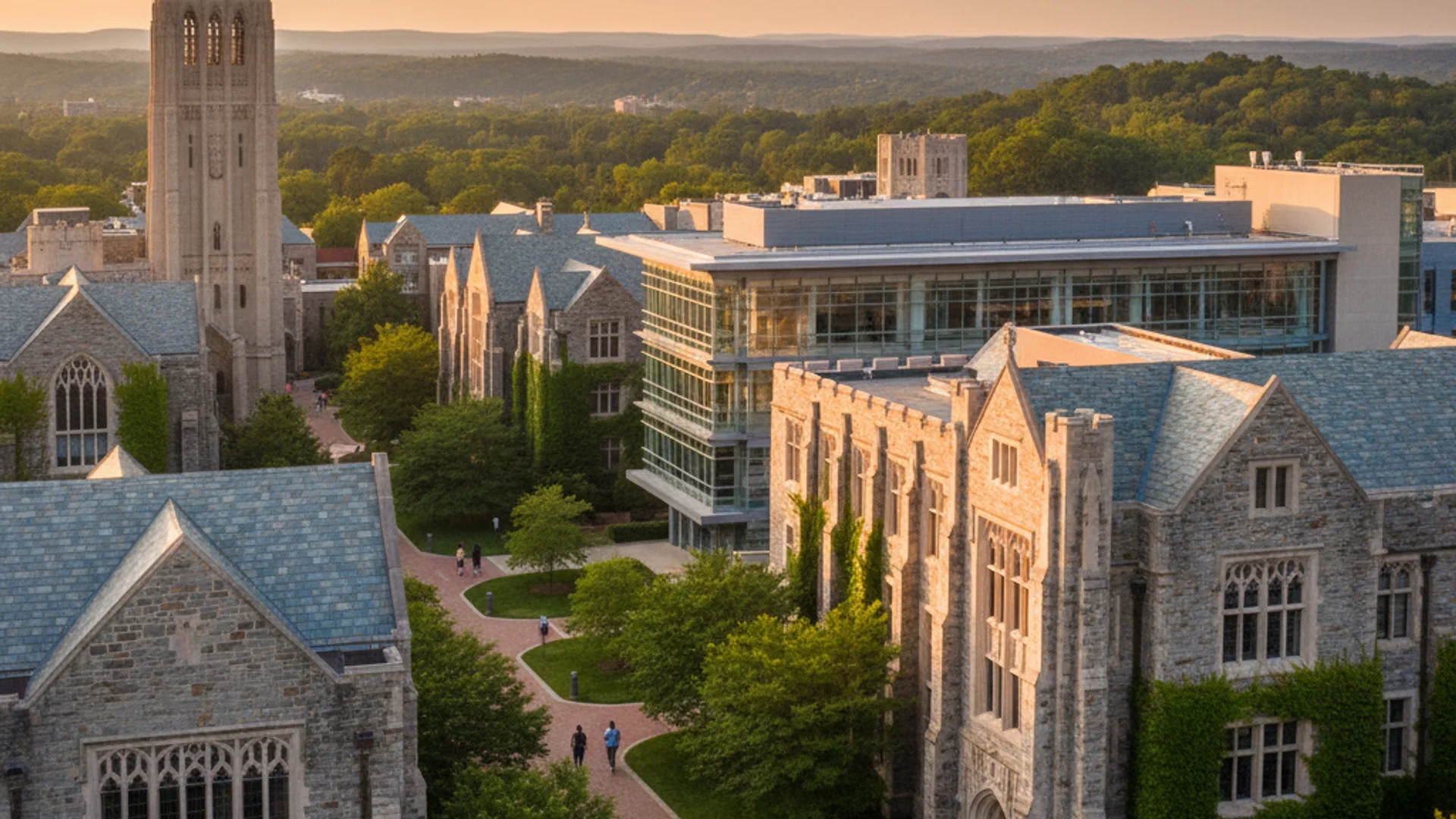
Compare the top computer science colleges in North Carolina. 34 accredited computer science schools ranked by graduation rate, career outcomes, and value, from University of North Carolina at Charlotte to University of North Carolina at Chapel Hill.
Research Triangle (Raleigh-Durham) is home to IBM, Red Hat, SAS, Epic Games, and Apple, making NC a top-5 state for CS employment
Charlotte adds a second tech corridor anchored by Bank of America, Wells Fargo, and a growing fintech startup scene
Hakia Research 2026
University of North Carolina at Chapel Hill ranks #1 with a 93% graduation rate and $7,019/yr in-state tuition
NC State at Raleigh (#4, 85% grad rate) and Duke (#2) round out a strong top tier, with NC State offering online options
North Carolina CS graduates earn a $107,340 median salary, rising to $118,074 in the Raleigh metro
Cost of living is substantially lower than Bay Area or NYC, improving real purchasing power for graduates
Elizabeth City State University and Western Carolina University charge just $1,000/yr in-state tuition
Both maintain graduation rates above 95%, offering exceptional value among public bachelor's programs
The Comprehensive Articulation Agreement guarantees transfer from all 58 NC community colleges to 16 UNC System universities
Students completing an Associate in Science with a 2.0+ GPA transfer with junior standing and 60-61 credits
15 online CS programs available, with NC State and North Carolina A&T State University leading online delivery
NC A&T holds a CAE-CDE cybersecurity designation and offers in-state tuition of just $3,540/yr
Updated October 19, 2026
We rank 50 accredited computer science programs in North Carolina using IPEDS 2024 institutional data, BLS OEWS 2024 state salary data, and College Scorecard outcomes. A 4-factor weighted composite is normalized to a 0–100 score. Schools cannot pay for placement; rankings are produced algorithmically.
Are Computer Science Degree Programs in North Carolina Worth It?
Source: BLS OEWS May 2024
Compare the top-ranked Computer Science programs in North Carolina by degree level. Tuition, graduation rate, and Hakia Score for every accredited program.
North Carolina ranks among the nation's top destinations for computer science education, with 34 accredited bachelor's degree programs across 15 public and 19 private institutions. The highest-ranked programs are U of North Carolina at Ch..., Duke, U of North Carolina at Ch..., recognized for academic excellence, research opportunities, and strong industry connections.
Graduates from North Carolina computer science programs earn a median salary of $91,239, 7% below the national average. The state's robust technology sector, anchored by the Raleigh, Charlotte, Durham metropolitan areas, provides abundant internship and employment opportunities with companies including IBM, Cisco, Red Hat.
Tuition ranges from $1,000 to $63,608 annually, with an average of $21,118/yr. Top programs maintain graduation rates above 87%, with the highest reaching 100%. Many programs hold ABET accreditation, the gold standard for computing education, ensuring curriculum meets rigorous industry standards.
Students can choose from specializations including software engineering, cybersecurity, artificial intelligence, data science, and systems architecture. Strong industry partnerships provide access to co-op programs, capstone projects with real companies, and direct recruiting pipelines to North Carolina's leading technology employers. For students seeking computer science degrees in North Carolina, these top-ranked computer science schools offer the strongest combination of academic rigor and career preparation.
| Rank | School | Location | Type | Tuition | Grad Rate | Hakia Score |
|---|---|---|---|---|---|---|
| #6 | University of North Carolina Wilmington | Wilmington, NC | Public | $4,443 | 71% | 87.5 |
| #7 | Elon University | Elon, NC | Private nonprofit | $46,451 | 84% | 84.2 |
| #8 | University of North Carolina at Charlotte | Charlotte, NC | Public | $3,812 | 69% | 82.6 |
| #9 | High Point University | High Point, NC | Private nonprofit | $39,714 | 74% | 80.2 |
| #10 | North Carolina A & T State University | Greensboro, NC | Public | $3,540 | 57% | 79.8 |
| #11 | Appalachian State University | Boone, NC | Public | $4,242 | 75% | 79.5 |
| #12 | Meredith College | Raleigh, NC | Private nonprofit | $45,460 | 70% | 75.7 |
| #13 | East Carolina University | Greenville, NC | Public | $4,452 | 63% | 75.3 |
| #14 | Western Carolina University | Cullowhee, NC | Public | $1,000 | 60% | 75.2 |
| #15 | University of North Carolina at Greensboro | Greensboro, NC | Public | $4,422 | 56% | 75.0 |
| #16 | University of North Carolina Asheville | Asheville, NC | Public | $4,122 | 54% | 70.2 |
| #17 | Elizabeth City State University | Elizabeth City, NC | Public | $1,000 | 44% | 69.1 |
| #18 | Gardner-Webb University | Boiling Springs, NC | Private nonprofit | $33,770 | 55% | 68.6 |
| #19 | University of Mount Olive | Mount Olive, NC | Private nonprofit | $26,216 | 52% | 67.4 |
| #20 | Methodist University | Fayetteville, NC | Private nonprofit | $40,500 | 44% | 66.5 |
| #21 | Winston-Salem State University | Winston-Salem, NC | Public | $3,401 | 47% | 66.4 |
| #22 | Fayetteville State University | Fayetteville, NC | Public | $1,000 | 38% | 65.6 |
| #23 | University of North Carolina at Pembroke | Pembroke, NC | Public | $1,000 | 44% | 64.7 |
| #24 | Shaw University | Raleigh, NC | Private nonprofit | $12,792 | 22% | 60.3 |
North Carolina offers 11 master's degree programs in computer science, designed for professionals seeking to advance into senior engineering, technical leadership, and specialized roles. The top programs, North Carolina State Univ..., U of North Carolina at Ch..., U of North Carolina at Ch..., combine advanced technical training with research opportunities and leadership development.
Master's graduates in North Carolina earn a median salary of $107,340, approximately 20-30% higher than bachelor's degree holders. The concentration of technology companies in Raleigh, Charlotte, Durham creates strong demand for graduate-level talent, with IBM, Cisco, Red Hat actively recruiting from these programs.
Program formats include traditional full-time study (typically 2 years), part-time options for working professionals (2-3 years), and accelerated tracks. Tuition averages $15,357/yr, with many employers offering tuition reimbursement for graduate education. Some programs offer thesis and non-thesis tracks, allowing students to focus on research or professional development based on their career goals.
Curriculum covers advanced topics including machine learning, distributed systems, software architecture, and technical management. Many programs include practicum experiences, industry capstone projects, or consulting engagements that provide real-world application of advanced concepts. Among North Carolina's computer science schools at the graduate level, these programs stand out for both academic quality and career outcomes.
| Rank | School | Location | Type | Tuition | Grad Rate | Hakia Score |
|---|---|---|---|---|---|---|
| #6 | North Carolina A & T State University | Greensboro, NC | Public | $3,540 | 57% | 75.9 |
| #7 | Appalachian State University | Boone, NC | Public | $4,242 | 75% | 74.5 |
| #8 | East Carolina University | Greenville, NC | Public | $4,452 | 63% | 71.4 |
| #9 | University of North Carolina at Greensboro | Greensboro, NC | Public | $4,422 | 56% | 71.2 |
North Carolina is home to 5 doctoral programs in computer science, preparing students for research positions, faculty appointments, and executive technical roles. Leading programs at North Carolina State Univ..., U of North Carolina at Ch..., U of North Carolina at Ch... are recognized for cutting-edge research, strong faculty publications, and competitive funding packages.
Doctoral graduates command premium salaries, with North Carolina PhD holders earning a median of $134,175, reflecting the advanced expertise required for research and executive positions. The Raleigh, Charlotte, Durham region's research universities and corporate R&D centers provide extensive collaboration opportunities with industry leaders like IBM, Cisco, Red Hat.
PhD programs typically require 4-6 years of full-time study, including coursework, qualifying examinations, and original dissertation research. Many programs offer full funding through teaching or research assistantships, covering tuition and providing stipends of $25,000–$40,000 annually.
Research strengths across North Carolina programs include artificial intelligence, cybersecurity, human-computer interaction, systems, and theoretical computer science. For aspiring researchers pursuing computer science degrees in North Carolina, graduates go on to careers as university faculty, industry research scientists, or technical executives, contributing to advances in technology that impact millions of users worldwide.
| Metric | Value |
|---|---|
| Average in-state tuition | $21,118/year |
| Average out-of-state tuition | $52,795/year |
| Community college tuition | $5,280/year |
| 4-year savings for residents | $126,708 |
| 2+2 transfer pathway savings | $31,676 |
Source: IPEDS 2024
Verdict: North Carolina's financial aid system is meaningful but moderate in scale, the state's structural value comes from the combination of relatively low in-state tuition at the 16-campus UNC System plus targeted state aid programs. UNC Chapel Hill's Carolina Covenant and NC State's institutional aid for in-state students produce particularly strong economics for CS-bound NC residents. The combination of strong public CS programs (NC State, UNC, UNC Charlotte) at moderate in-state cost plus solid state aid creates one of the better Southeast CS pathways.
NC Education Lottery Scholarship is the primary need-based program for in-state students, up to ~$5,100/year at NC public 4-year institutions and up to ~$2,800/year at NC community colleges, funded through the state lottery. The UNC Need-Based Grant stacks on top for students at one of the 16 UNC System universities, providing additional aid averaging ~$3,500/year (varies by institution and demonstrated need).
NC Need-Based Scholarship (NCNBS) specifically supports NC residents at private NC colleges and universities, up to ~$11,150/year. This is a meaningful program for in-state students attending Duke (despite Duke's substantial institutional aid making this less commonly used), Davidson, Wake Forest, Furman, Elon, and similar private NC institutions.
The standout institutional program is UNC Chapel Hill's Carolina Covenant, full debt-free education (tuition, fees, room, board) for UNC students with family income up to 200% of the federal poverty level. For low-income NC residents accepted to UNC Chapel Hill, the Carolina Covenant produces zero-loan undergraduate CS at one of the top US public universities. NC State's Pack Promise is the equivalent at NC State, also debt-free for qualified Pell-eligible NC residents. Both programs combine with state aid and federal Pell to produce essentially-free CS bachelor's degrees for low-income NC students at the state flagships.
Use our interactive ROI calculator to estimate your return on investment for a computer science degree in North Carolina. Enter your expected tuition costs, financial aid, and career goals to see projected payback periods and lifetime earnings. The calculator uses current salary data from BLS and tuition data from IPEDS to provide accurate estimates.
Estimate your return on investment for a computer science degree
Leave blank to use average cost for selected program type
+750%
Net gain divided by total investment. ROI above 200% is considered excellent for education investments.
$1,386,612
Your additional lifetime earnings with this degree vs. working without one, minus the total investment.
6 years
Years until your cumulative earnings exceed total investment. Shorter programs often break even faster due to lower opportunity cost.
$131,579
Your starting salary adjusted for local cost of living. This shows real purchasing power compared to a $100K national baseline.
Why does break-even change with program type? Your "total investment" includes both tuition AND opportunity cost (foregone earnings while in school). A 4-year full-time public university (in-state) means 4 years of not earning a salary ($140,000 in opportunity cost). Shorter full-time programs may have higher tuition but lower total investment because you return to the workforce sooner.
How we calculate your degree ROI using real salary data
Tuition plus opportunity cost (earnings you miss while in school)
Direct cost of the degree program
4 years × $35K/year foregone salary while studying full-time
Projected career earnings starting after graduation, with salary growth
What you'd earn working at $35K/year with 2% annual growth
Median salary for this role in your selected location (BLS 2024)
Your investment's compound annual growth rate (similar to stock market returns)
Data sources: BLS OEWS May 2024, IPEDS 2024. Calculations use median salaries, 3% discount rate, and assume salary growth declines from 6% to 2% over career. Individual results will vary. | Powered by Hakia.com
Median annual salary in North Carolina metro areas
| Category | Value |
|---|---|
| Raleigh | $118K |
| Charlotte | $113K |
| Durham | $107K |
Source: BLS OEWS May 2024
Hakia.com
Find computer science jobs in North Carolina. These major employers across North Carolina metro areas are actively hiring computer science degree holders. Click employer names to view current job openings.
Charlotte is the second-largest banking center in the US. Bank of America and Wells Fargo drive fintech demand.
Nearby cities: Huntersville, Concord, Matthews, Gastonia, Rock Hill, Mooresville
North Carolina's Research Triangle (Raleigh-Durham-Chapel Hill) is one of the densest US tech corridors per capita, anchored by three major research universities (NC State, Duke, UNC Chapel Hill) and a 7,000-acre Research Triangle Park hosting hundreds of tech employers. Charlotte separately operates as a top-tier US financial-services tech hub.
Raleigh-Durham-Chapel Hill metros
Home to SAS Institute (analytics), IBM Research Triangle Park, Cisco, Red Hat (now IBM), Lenovo Americas HQ, Epic Games, Citrix, Bandwidth, and the Research Triangle Park complex. NC State CS, Duke CS, and UNC computer science all feed the local market — combined a top-10 US CS graduate pipeline.
Charlotte metro
Bank of America HQ and a top-3 US banking center. Wells Fargo, Truist, LendingTree, and dense fintech employment. Charlotte tech is heavily financial-services-coded; less consumer/startup but exceptionally stable employment.
Asheville metro
Smaller but growing remote-work and outdoor-industry tech market; not a primary tech destination but increasingly relevant for lifestyle-driven talent.
North Carolina has a flat state income tax (4.5% in 2026, scheduled to decline further). The NC Job Development Investment Grant (JDIG) and One NC Fund are the principal tech-employer incentives — Apple's $1B+ RTP campus relocation was supported by these programs.
North Carolina has been more active on legislation around identity theft, biometrics, and AI in employment than on broad consumer privacy. The state's regulatory environment is generally employer-favorable but has tightened on data security since several high-profile state-government breaches.
Requires businesses to notify NC residents of data security breaches and sets minimum data-handling and disposal standards for personal information.
Standard breach-response compliance for any NC-resident-serving business; minimum technical standards have informed security-program design at NC-headquartered employers.
Read moreState cybercrime law parallel to federal CFAA; covers unauthorized computer access, computer-related fraud, and damage to data.
Relevant for cybersecurity professionals doing incident response, penetration testing, or security research within NC.
Read moreAdopted from the NAIC model; requires insurers and insurance-adjacent businesses to maintain comprehensive information security programs with risk assessments, incident response plans, and third-party oversight.
Drives security-engineering hiring at Charlotte-based insurance and financial-services employers; sets the technical bar for NC financial-services security teams.
Read moreNorth Carolina does not currently administer a separate Software Engineering PE license. Standard engineering disciplines require ABET-EAC accreditation for PE eligibility; software engineering is not a recognized NC PE discipline. NC State's ABET-EAC software engineering program does qualify graduates for engineering tracks at federal agencies that recognize software engineering as engineering.
North Carolina licensing boardUp to $11,150/yr
NC residents with demonstrated financial need at NC private colleges/universities
Varies by institution and need; averages ~$3,500/yr
NC residents with financial need attending one of 16 UNC System universities
Up to $5,100/yr at 4-year, $2,800/yr at community college
NC residents at NC public 2-year and 4-year institutions with financial need
Up to $2,800/yr
NC residents at NC community colleges with financial need
Verdict: North Carolina's Comprehensive Articulation Agreement (CAA) between the NC Community College System (58 institutions) and the UNC System (16 universities) is one of the more developed US state transfer systems. NC community college students who complete the appropriate Associate in Arts or Associate in Engineering degree are guaranteed admission to a UNC System institution, though not necessarily their first-choice campus or program.
The Comprehensive Articulation Agreement covers general education credits universally; for CS-specific courses, the Universal General Education Transfer Component (UGETC) plus engineering-pathway articulation provides cross-system credit transfer guarantees. The Independent Comprehensive Articulation Agreement (ICAA) extends similar transfer guarantees to participating private NC colleges (Wake Forest, Duke, Elon, Davidson).
Best North Carolina community college CS-feeder schools: Wake Technical Community College (Raleigh, feeds NC State, NCCU, and NC Central), Central Piedmont Community College (Charlotte, feeds UNC Charlotte, UNC at Pembroke), Forsyth Technical Community College (Winston-Salem area), Guilford Technical Community College (Greensboro), Durham Technical Community College, and Asheville-Buncombe Technical Community College. Wake Tech specifically has the strongest established CS prerequisite sequences and most refined NC State transfer counseling.
NC State CS transfer admission is competitive but accessible, NC State's CS program runs roughly 20-40% transfer admit rate depending on the year, materially more open than UNC Chapel Hill CS. UNC Chapel Hill CS transfer is more competitive (10-20% admit rate). UNC Charlotte CS is meaningfully more open and has been growing rapidly as Charlotte's tech market expanded. Duke CS transfer is genuinely difficult (under 10% transfer admit rate overall). For most strong NC CS-track community-college students, NC State or UNC Charlotte are the realistic four-year destinations with substantially better admission economics and excellent industry placement.
Computer Science Job Growth in North Carolina
Source: BLS Occupational Outlook
Verdict: North Carolina's CS job market is anchored by Research Triangle Park (RTP), one of the densest US tech corridors per capita, with three major research universities (NC State, Duke, UNC Chapel Hill) feeding the local employer base. Charlotte separately operates as a top-3 US banking hub with substantial financial-services-tech employment. Nominal CS salaries in NC are below Bay Area / NYC / Seattle but cost of living differential is substantial; mid-career CS engineers in Raleigh or Charlotte often have higher take-home purchasing power than equivalent Bay Area peers once housing is factored in.
By metro: Research Triangle (Raleigh-Durham-Chapel Hill) averages ~$115,000-$145,000 for software engineer roles per Levels.fyi and BLS, anchored by SAS Institute (one of the largest US analytics employers, headquartered in Cary), IBM Research Triangle Park (one of IBM's most significant US engineering campuses), Cisco, Red Hat (now IBM), Lenovo Americas HQ, Epic Games HQ, Citrix, Bandwidth, and Pendo. The combined NC State + Duke + UNC CS pipeline feeds RTP at scale. Charlotte averages ~$110,000-$140,000 with Bank of America HQ as the anchor employer plus Wells Fargo, Truist (formed from BB&T and SunTrust merger), LendingTree, Honeywell IT, and a substantial fintech and insurance-tech employer base. Charlotte tech is heavily financial-services-coded; less consumer/startup but exceptionally stable employment.
2026 sector picture for NC CS graduates: RTP's employer base benefits from continued enterprise-tech demand, SAS, IBM, Cisco, and Red Hat (IBM) operate on substantially different macro cycles than consumer Big Tech and have continued steady hiring through the 2022-2024 downturn. Apple's Project Phoenix RTP campus (announced 2021, opening in phases through 2027) is expected to add 3,000+ engineering jobs, materially expanding the Triangle's Big Tech presence beyond the existing Apple Maps team in Maiden.
Charlotte fintech has been one of the most stable major US tech-subsector employers through 2022-2024, banking tech doesn't depend on consumer-internet ad spend and Charlotte's banks (BofA, Wells, Truist) continued tech hiring at relatively stable rates. For CS graduates prioritizing employment stability over startup-style upside, Charlotte fintech is one of the strongest US destinations. See Software Engineer Career Guide, Data Analyst Career Guide, and the North Carolina Insurance Data Security Act coverage for related context.
New graduates and career changers
Technical leads and architects
15 available in North Carolina
Traditional classroom experience
Institutional characteristics, completions, graduation rates
North Carolina salary and employment data
Program details and admissions information
Last Updated: June 26, 2026. Rankings based on IPEDS 2024 data. Salary data from BLS OEWS May 2024.

Co-founder & Editor (B.S. Computer Science, Oregon State • B.A. Psychology, University of Washington)
Taylor combines technical expertise in computer science with a deep understanding of human behavior and learning. His dual background drives Hakia's mission: leveraging technology to build authoritative educational resources that help people make better decisions about their academic and career paths.
Hand-researched detail on the top-ranked programs: degree pathways, research labs, industry partners, career outcomes, and admissions. Tap any school to expand.
Why it stands out. Competitive major admission process after COMP 210 completion to maintain program quality. Priority access to upper-division electives for admitted majors
Hakia insight. UNC Chapel Hill's competitive major-admission gate after COMP 210 signals rigor but delivers a concrete advantage: priority registration for upper-division electives ensures admitted majors access sought-after courses on schedule rather than competing with non-majors, a structural advantage invisible in rankings but critical for on-time graduation.
The Bachelor of Science in Computer Science at UNC Chapel Hill prepares students for technical careers in software development, computational science, networking, information systems, and electronic commerce, as well as graduate study. The program requires 120 credit hours with core coursework in data structures, systems fundamentals, algorithms, and computation theory, complemented by mathematics and science requirements. Students have access to high-impact experiences including undergraduate research (COMP 691H, COMP 692H for honors track), learning assistantships (COMP 227), mentored research (COMP 495), internships through COMP 293, and study abroad opportunities. The honors program requires a 3.3+ GPA and culminates in a written thesis with oral presentation. Admission to the major is competitive and requires completion of COMP 210; students gain priority access to upper-division electives upon acceptance. Graduates are well-positioned for employment in traditional tech industries, financial services, and consulting practices.
Programs offered
Research labs & institutes
Industry partners
Notable faculty
Admissions
GPA 2.0.
Why it stands out. Artificial Intelligence integrated into core curriculum (COMPSCI 270 requirement for Fall 2026+ matriculants). Four concentration pathways (Software Systems, Data Science, AI and Machine Learning, Software Engineering and Design) available without additional course requirements
Hakia insight. Duke's mandatory AI requirement (COMPSCI 270) embedded in core curriculum—not an elective—means every graduate leaves with foundational competency in the field that dominates tech hiring, while most peer programs relegate AI to upper-level specialization.
Duke's Bachelor of Science in Computer Science is a rigorous 34-unit program emphasizing both foundational and advanced topics. Students complete 15 required major units including prerequisites in programming and mathematics, five core courses covering data structures, algorithms, systems, and artificial intelligence (newly integrated into core requirements for Fall 2026 matriculants), plus four elective units. The program offers four concentration pathways—Software Systems, Data Science, Artificial Intelligence and Machine Learning, and Software Engineering and Design—allowing students to tailor their education to career goals. Duke emphasizes undergraduate research opportunities, independent study options, and a Graduation with Distinction program for advanced students. The curriculum integrates practical computer science with interdisciplinary research in AI for Social Good, computational biology, and security & privacy. Career pathways span academia, industry, and technology leadership roles.
Programs offered
Research labs & institutes
Notable faculty
Why it stands out. Mandatory Senior Design Project (CSC 492) with potential industrial sponsors. Three undergraduate concentrations available (Artificial Intelligence, Cybersecurity, Game Development) appearing on transcripts
Hakia insight. NC State's mandatory Senior Design Project with industrial sponsors (CSC 492) isn't a capstone exercise—it's a structured pipeline where students ship real systems for companies like Labcorp, giving them production-grade portfolio pieces before graduation.
NC State's Bachelor of Science in Computer Science is an ABET-accredited program that equips students with skills to specify, design, implement, test, and deploy computer and software systems. The curriculum includes foundational coursework in programming languages, data structures, software engineering, systems, theory of computation, secure software development, and ethical computing. Students complete a mandatory Senior Design Project (CSC 492) where teams tackle technical computing problems, often with industrial sponsors, gaining direct experience collaborating with industry representatives. The program offers three undergraduate concentrations (Artificial Intelligence, Cybersecurity, and Game Development) and three elective tracks (Security, Entrepreneurship, and Robotics) allowing specialization in advanced areas including cloud computing, databases, networks, AI, and more. With 121 total credit hours over four years, graduates are prepared for diverse computing careers across multiple industries.
Programs offered
Industry partners
Notable faculty
Admissions
GPA C.
Accreditation & certifications
Why it stands out. Allows completion of both BS and MS degrees with only one additional year of study. Industry-focused career preparation with required professional internship
Hakia insight. Wake Forest's 4+1 structure compressing both BS and MS into five years sidesteps the two-year master's tax entirely—graduates enter the job market with a master's credential at the cost of one extra year rather than two, accelerating salary progression and career specialization.
Wake Forest University's Joint B.S. & M.S. Program offers an accelerated pathway for Computer Science undergraduates to earn both bachelor's and master's degrees with just one additional year of study. This industry-focused program is designed for students seeking careers in technology, combining rigorous graduate coursework with hands-on professional experience. Students begin taking graduate-level courses during their senior year, complete 9 hours of advanced coursework including core classes in Software Engineering (CSC 631), Operating Systems (CSC 641), and Theory of Algorithms (CSC 721). The program requires completion of 33 total graduate credit hours, including a 6-hour approved summer internship that provides real-world industry experience. Admission requires maintaining a 3.25 GPA in both major and overall coursework, completing foundational courses including CSC 251 (Computer Systems II) and CSC 201 (Data Structures and Algorithms), plus linear algebra. Students must apply by spring semester of their junior year and demonstrate ability to complete 129 total credit hours. The program streamlines the traditional path to advanced education while emphasizing practical skills through its internship component, making graduates well-prepared for technology careers with both theoretical knowledge and professional experience.
Programs offered
Notable faculty
Admissions
GPA 3.5 in the major and 3.0 in all college work for Honors.
Why it stands out. Offered as both major and minor options. Part of Davidson College's 74 majors, minors and interdisciplinary programs
Hakia insight. Davidson's proximity to Charlotte's financial services corridor combined with Google and Microsoft partnerships means undergraduates can interleave coursework with internships at firms actively recruiting in specialized domains like fintech and cloud infrastructure.
Davidson College offers Computer Science as both a major and minor program, providing flexibility for students interested in computing at different levels of depth. As part of Davidson's comprehensive academic offerings of 74 majors, minors and interdisciplinary programs, the Computer Science program is designed to provide broad exposure to diverse thought and deep exploration within the field. The major requires 10 or more courses offered toward a degree, while the minor option requires five or six courses, all offered through a home department. This structure allows students to either pursue Computer Science as their primary focus or complement other studies with computing knowledge. The program is integrated into Davidson's liberal arts framework, which emphasizes both breadth and depth in academic exploration. Students can choose between the major track for comprehensive study or the minor for supplementary expertise in computing. The program's placement within Davidson's extensive academic portfolio suggests integration with the college's broader educational mission of combining rigorous academics with diverse intellectual experiences.
Programs offered
Industry partners
Accreditation & certifications
Location advantage: Proximity to Charlotte tech ecosystem and financial services industry
Why it stands out. Computer Science and Information Systems Bachelor's/Master's Combined Program available. Three-Plus-Two Computer Science and Electrical or Computer Engineering Program offered
Hakia insight. UNC Wilmington's 3+2 Computer Science/Engineering dual-degree pathway is rare among mid-size universities, allowing students to earn two bachelor's degrees in five years while tapping Wilmington's growing digital media and film production industry for specialized systems roles.
The University of North Carolina Wilmington offers a Bachelor of Science in Computer Science designed to provide students with comprehensive technical education in computing. What makes this program distinctive is its flexible pathways for advanced study, including a Computer Science and Information Systems Bachelor's/Master's Combined Program that allows students to accelerate their graduate education. Additionally, UNCW offers a unique Three-Plus-Two Computer Science and Electrical or Computer Engineering Program, providing students with interdisciplinary opportunities to combine computer science with engineering disciplines. The program is part of the College of Science and Engineering, indicating a strong foundation in both theoretical and applied sciences. Students can also pursue a Computer Science Minor to complement other areas of study. The university's location in Wilmington, North Carolina, provides access to both coastal research opportunities and growing technology sectors. The program appears to emphasize both foundational computer science principles and practical applications, preparing students for careers in the evolving technology landscape. The availability of combined degree programs suggests strong graduate school preparation for students interested in advanced study in computer science or related engineering fields.
Programs offered
Accreditation & certifications
Location advantage: Growing tech ecosystem in Wilmington Proximity to digital media and film production industry
Why it stands out. Small class sizes with hands-on learning from day one. Faculty dedicated to staying current with cutting-edge and relevant projects
Hakia insight. Elon's hands-on laboratory infrastructure—configurable spaces with mobile devices and building equipment—combined with small cohorts means students prototype and debug in real equipment from week one, not in simulated environments like peers at larger institutions.
Elon University's Computer Science program stands out through its commitment to small class sizes that enable hands-on learning from day one. The program is housed within the newly established School of Engineering and Computing, featuring 18 full-time faculty members who stay current with cutting-edge technology and engage students in relevant projects involving mobile devices, robots, and game systems. Students benefit from configurable laboratory spaces and dedicated areas for hands-on building, fostering practical experience alongside theoretical knowledge. The program emphasizes excellent problem-solving techniques and effective communication skills, preparing students to adapt quickly to new concepts and changing technology. Beyond classroom learning, students can participate in internships, research projects, independent learning experiences, the Elon Society of Computing, and programming contests. The program is strategically located in Elon's Innovation Quad, reflecting its central role in the university's technology initiatives. Upon graduation, Computer Science students successfully pursue employment across diverse industries, from government agencies and educational institutions to businesses ranging from Fortune 500 companies to startups, while many others continue their studies in graduate school.
Programs offered
Research labs & institutes
Why it stands out. The program offers multiple concentration options including AI/Robotics/Gaming, Data Science, Information Security and Privacy, and Software/Systems/Networks, with flexibility for dual concentrations and both thesis and non-thesis tracks.
Hakia insight. UNC Charlotte's dual-concentration flexibility combined with Lowe's partnership creates an unusual advantage: students can simultaneously pursue AI/Robotics and Information Security, then tap an on-campus employer with immediate hiring pipeline visibility.
The Bachelor of Science in Computer Science with a Bioinformatics Concentration at UNC Charlotte, offered through the College of Computing and Informatics, prepares students for careers in computational biology and genomics. Launched in Fall 2016, the program trains students in collection, informatics analysis, and interpretation of genomic and biological data. Students develop expertise in modern data handling methods, statistical analysis, and bioinformatics research design while gaining critical domain knowledge in genomics. The curriculum integrates computer science fundamentals with specialized bioinformatics coursework, emphasizing practical skills in data analysis and computational methods applicable to genomic research and biomedical applications.
Programs offered
Research labs & institutes
Industry partners
Notable faculty
Admissions
GPA 3.0.
Why it stands out. America's largest public HBCU and the top producer of African American engineers in the country, with focus on AI, cybersecurity, and creative engineering aspects of software design
Hakia insight. As America's top HBCU producer of engineers with partnerships spanning IBM, Microsoft, Intel, and MITRE, A&T's CS program offers students access to recruitment pipelines and mentorship networks specifically designed for underrepresented technologists—a structural advantage that transcends curriculum.
The Bachelor of Science in Computer Science at North Carolina A&T State University prepares students to become leaders and changemakers in technology through a curriculum emphasizing software and hardware fundamentals, emerging technologies, and hands-on problem-solving. The program develops core competencies in breaking down complex computing problems, designing and building software solutions, and applying computer science theory in practical settings. Students gain professional communication and teamwork skills alongside technical expertise in coding and critical thinking. The program supports diverse career pathways, including direct entry into the tech industry, software development, startup creation, and artificial intelligence research, as well as preparation for graduate study. The curriculum integrates exposure to arts, sciences, and business to foster well-rounded technical leaders.
Programs offered
Industry partners
Notable faculty
Admissions
GPA 3.5.
Why it stands out. Appalachian State embeds authentic undergraduate research across the CS curriculum, producing students with publishable work and genuine research experience.
Hakia insight. Appalachian State embeds publishable research into the undergraduate curriculum itself rather than isolating it in optional capstones, meaning students graduate with actual peer-reviewed work on their CVs—a credential that typically requires graduate school elsewhere.
At the bachelor's level, appalachian State's computer science program stands out for its integration of undergraduate research across the curriculum, treating it not as an optional capstone but as a defining feature from sophomore year onward. Students engage with faculty projects spanning areas like data visualization, open-source software development, human-computer interaction, and applied machine learning—many of these projects result in peer-reviewed publications with student co-authors, a rare accomplishment for undergraduate programs. The department maintains partnerships with regional tech companies and startup accelerators in the North Carolina Research Triangle, while simultaneously supporting faculty-led research initiatives that students can directly contribute to. This dual focus—genuine research alongside industry collaboration—creates a pipeline where students arrive at internships or first jobs with concrete research artifacts on their résumé, not just course projects. The program's culture emphasizes both depth and breadth, requiring solid foundations in theory while encouraging specialization in areas like machine learning, software systems, or computer vision. For students serious about graduate school or early-career research roles, AppState's embedded research opportunities provide competitive advantages. The active research presence also means the faculty are current in their fields, bringing cutting-edge techniques into courses rather than teaching settled material alone.
Programs offered
Accreditation & certifications
Location advantage: Access to Research Triangle tech ecosystem and regional startup community in western North Carolina
Why it stands out. Thesis vs. non-thesis track options: students choose between COMP 993 (Master's Thesis Research) for original research or COMP 992 (MS Non-Thesis Option) for coursework-based completion. Flexible part-time completion on 5-year clock
Hakia insight. UNC Chapel Hill's 2.0 GPA floor and 5-year part-time clock paired with SAS Institute partnership creates the most flexible entry for working professionals with weaker undergraduate transcripts—a rare combination that trades selectivity for accessibility without sacrificing faculty research caliber.
UNC Chapel Hill's Master of Science in Computer Science offers both thesis and non-thesis (coursework) tracks designed for working professionals. Students complete 30 semester hours of graduate coursework, with at least 18 hours in Computer Science and 12 hours supporting their specialization. The program features flexible advising with faculty mentorship and mandatory breadth requirements across theory, systems, and applications. Thesis-track students conduct original research under faculty guidance; non-thesis students complete COMP 992 coursework. The program operates on a 5-year clock, allowing part-time completion. Students gain advanced technical expertise in areas like AI, systems, databases, and networking. While specific salary data and assistantship stipends are not detailed in the provided materials, graduates advance to senior technical and leadership roles at major technology companies. UNC offers employer tuition partnerships and graduate support through research opportunities within the department.
Programs offered
Research labs & institutes
Industry partners
Notable faculty
Admissions
GPA 2.0.
Why it stands out. 4+1 year program format available to Duke undergraduates. Joint MS in Economics and Computation program with Duke Economics
Hakia insight. Duke's joint MS in Economics and Computation uniquely positions CS graduates to architect algorithmic and mechanism-design solutions for fintech, policy, and markets—a specialization that commands 15-20% salary premiums over standard CS degrees but exists at few peer institutions.
Duke University's Computer Science department offers two distinctive Master's programs: the traditional MS in Computer Science and an innovative joint MS in Economics and Computation (MSEC). What sets Duke apart is its highly selective MS-CS program that receives an average of 760 applications annually while admitting relatively few students, ensuring an elite cohort. The program offers exceptional flexibility with both course-only and project-based tracks, plus optional concentrations in Artificial Intelligence/Machine Learning and Cybersecurity. A unique 4+1 format allows Duke undergraduates to complete their master's in just one additional year. The interdisciplinary MSEC program reflects Duke's research excellence, ranking 11th nationally in economics and computation research from 2000-2020. Both programs maintain rigorous academic standards, with MS students taking identical courses to PhD candidates. The MSEC program offers additional benefits as a STEM-designated degree, providing international students 24-month OPT extensions. Career outcomes are strong across both programs, with MSEC graduates advancing to research positions and PhD programs in computer science, economics, finance, government, and business, while MS graduates are well-prepared for software development roles in industry.
Programs offered
Research labs & institutes
Notable faculty
Why it stands out. Coursework-only degree with no thesis or comprehensive exam required. Part-time enrollment available for working professionals
Hakia insight. NC State's coursework-only MS with no thesis requirement and C-grade minimum creates an efficient degree for working professionals unwilling to sacrifice salary during part-time study, while maintaining ABET accreditation—a rare combination that prioritizes career continuity over research depth.
NC State's Master of Computer Science is a terminal professional degree designed for working professionals, offered in coursework-based format with no thesis requirement. Students complete 31 credits with flexibility to study part-time while maintaining employment. Four specialized tracks—Artificial Intelligence, Data Science, Security, and Software Engineering—allow career-focused specialization. The program features an Accelerated Bachelors-Masters (ABM) pathway enabling completion in two semesters beyond the bachelor's degree for high-achieving undergraduates. While the program does not explicitly detail salary advancement metrics, graduates advance into specialized technical roles leveraging industry-relevant skills in AI, data science, and systems engineering. Graduate assistantships and internship opportunities (full-time summer or part-time academic year) are available, particularly for international students meeting GPA requirements. The program emphasizes continuous skill development through core courses in theory and systems, with optional graduate certificates available upon track completion.
Programs offered
Industry partners
Notable faculty
Admissions
GPA C.
Accreditation & certifications
Why it stands out. Three degree completion tracks: thesis (30 credits), project (36 credits), and coursework only (36 credits). Interdisciplinary Graduate Track in Structural and Computational Biophysics with embedded certificate
Hakia insight. Wake Forest's embedded Structural and Computational Biophysics certificate within the MS creates a rare pathway for CS students entering biotech without requiring a separate dual degree, letting graduates leverage computational biology expertise while staying on an accelerated timeline.
Wake Forest University's Master of Science in Computer Science is designed for students seeking a terminal master's degree or preparation for doctoral study. The program offers three flexible completion tracks: a 30-credit thesis option combining core coursework with independent research, a 36-credit project-based option with applied capstone work, and a 36-credit coursework-only option for those prioritizing coursework over research. All students complete a nine-hour core in advanced computer science fundamentals. The program accommodates diverse professional goals through its multiple pathways, allowing students to tailor their experience. An interdisciplinary track in Structural and Computational Biophysics is available, enabling students to earn an M.S. with an embedded certificate. Graduate assistantship and funding opportunities are available through the graduate school. The program prepares graduates for advanced technical roles and doctoral pursuit.
Programs offered
Notable faculty
Admissions
GPA 3.5 in the major and 3.0 in all college work for Honors.
Why it stands out. Thesis vs coursework track option (optional 6-credit thesis satisfies capstone requirement). Part-time completion available
Hakia insight. UNC Charlotte's optional thesis track (satisfying capstone with just 6 credits) lets working professionals choose between quick completion or research-weighted credentials without restructuring the entire degree, accommodating both career-focused and research-track students in one program.
UNC Charlotte's M.S. in Computer Science equips working professionals with advanced skills in planning, design, implementation, testing, and management of computer systems and applications. The 30-credit program offers flexibility with optional thesis (6 credits) or coursework-only tracks, allowing completion in approximately 2 years part-time. Students select four core courses from specialized areas (Foundation of Computing, AI/Robotics/Gaming, Data Science, or Software/Systems/Networks) and can pursue one of four concentrations or remain non-specialized. The program emphasizes real-world application through capstone projects and industrial internship options. Admission considers professional industry experience as a substitute for certain prerequisites, making it accessible to career-changers. Graduates advance into technical and managerial roles across business, industry, and government sectors, with particular strength in emerging fields like AI, data science, and cybersecurity.
Programs offered
Research labs & institutes
Industry partners
Notable faculty
Admissions
GPA 3.0.
Why it stands out. Coursework-based track (no formal thesis requirement). Online delivery enabling part-time professional study
Hakia insight. A&T's fully online, coursework-based master's (3-4 terms) delivered to IBM, Microsoft, and Intel employees creates a closed-loop talent development system where employers essentially subsidize degrees for their own workforce—a model that generates both completion rates and direct hiring.
North Carolina A&T's Master of Science in Computer Science prepares working professionals for advanced roles in computing through a 30-credit, 3-4 term program delivered online. Students complete three core courses in software specification, advanced operating systems, and algorithm design, then specialize in Software Engineering, Cyber Security, or Artificial Intelligence and Data Science through elective selection. The program offers no formal thesis requirement, emphasizing coursework-based completion suitable for part-time study. Graduates earn 25% higher starting salaries than bachelor's degree holders, with median computer science researcher salaries at $126,830 annually. A embedded Post-Baccalaureate Certificate in Cyber Security is available. North Carolina A&T's industry advisor board includes Cisco, Oracle, MITRE, Capital One, and Visa, with relationships spanning Google, Microsoft, Intel, and NVIDIA. Research is funded by NSF, DoD, NSA, and DOE. Graduate assistantships and fellowships support outstanding students. Employer demand is strong, with 11% projected growth in IT occupations and 15% growth specifically for computer research scientists.
Programs offered
Industry partners
Career outcomes
Top employers: IBM, Microsoft, Intel
Notable faculty
Admissions
GPA 3.5.
Why it stands out. Appalachian State embeds authentic undergraduate research across the CS curriculum, producing students with publishable work and genuine research experience.
Hakia insight. Rather than treating research as a capstone afterthought, Appalachian State embeds it throughout the CS curriculum, producing master's graduates with publishable work and genuine lab credentials before graduation—a competitive advantage in a market where research experience increasingly separates strong candidates from exceptional ones.
At the master's level, appalachian State's computer science program stands out for its integration of undergraduate research across the curriculum, treating it not as an optional capstone but as a defining feature from sophomore year onward. Students engage with faculty projects spanning areas like data visualization, open-source software development, human-computer interaction, and applied machine learning—many of these projects result in peer-reviewed publications with student co-authors, a rare accomplishment for undergraduate programs. The department maintains partnerships with regional tech companies and startup accelerators in the North Carolina Research Triangle, while simultaneously supporting faculty-led research initiatives that students can directly contribute to. This dual focus—genuine research alongside industry collaboration—creates a pipeline where students arrive at internships or first jobs with concrete research artifacts on their résumé, not just course projects. The program's culture emphasizes both depth and breadth, requiring solid foundations in theory while encouraging specialization in areas like machine learning, software systems, or computer vision. For students serious about graduate school or early-career research roles, AppState's embedded research opportunities provide competitive advantages. The active research presence also means the faculty are current in their fields, bringing cutting-edge techniques into courses rather than teaching settled material alone.
Programs offered
Accreditation & certifications
Location advantage: Access to Research Triangle tech ecosystem and regional startup community in western North Carolina
Why it stands out. Available both online and on-campus. Designed for working professionals
Hakia insight. ECU's IBM cluster with 128 Xeon nodes and Nvidia DGX stations rival some university doctoral labs, yet the program markets itself to working professionals through flexible scheduling; this means part-time students get access to enterprise-grade GPU infrastructure typically reserved for full-time researchers or PhD students.
East Carolina University's Master of Science in Computer Science stands out for its flexibility and exceptional computing resources. Designed specifically for working professionals, the program can be completed entirely online or on-campus. Students gain hands-on experience with cutting-edge technology including an IBM computer cluster with 128 Xeon nodes and 512 GB RAM, an IBM Minsky Power Server with 256 computer cores and four interconnected GPUs, and Nvidia DGX Station with E5-2699 CPU, 256 GB RAM, and Nvidia V100 GPUs. The program offers three completion tracks: thesis, project, and coursework-only, with opportunities to take electives in software engineering or data science programs. Students also have access to specialized facilities including the Cognitive Computing Lab with 12 iMac workstations and Data Analytics Lab with 12 Dell workstations. Faculty are active researchers in areas including databases, bioinformatics, programming languages, software engineering, intelligent systems, and cryptography. The program is ranked as a top online college by Newsweek and maintains SACSCOC accreditation. Career prospects are excellent, with the U.S. Bureau of Labor Statistics projecting 22% job growth for computer science roles through 2030 and average salaries of $98,569 for master's degree holders. Graduates work across diverse sectors including telecommunications, healthcare, aerospace, entertainment, and sports.
Programs offered
Research labs & institutes
Industry partners
Career outcomes
Why it stands out. One of only seven North Carolina public universities accredited by ABET. Faculty received more than $800,000 in new research grants over 2019-2020 academic year from NSF and NIST
Hakia insight. UNC Greensboro's $800K in NSF and NIST grants during 2019-2020 concentrated in bioinformatics and VR labs means master's students don't just study these fields—they contribute to funded research from year one, a pathway to publications and industry recognition that most regional programs reserve for PhD candidates.
UNC Greensboro's Master of Science in Computer Science stands out as one of only seven North Carolina public universities accredited by the Accreditation Board for Engineering and Technology (ABET). The program demonstrates strong research capabilities, with faculty receiving more than $800,000 in new research grants over the 2019-2020 academic year from prestigious organizations including the National Science Foundation and National Institutes for Standards and Technology. Students have exceptional opportunities to work alongside faculty conducting cutting-edge research in bioinformatics, virtual reality, big data, artificial intelligence, and security. The program offers flexibility with three capstone options - comprehensive examination, project, or thesis - allowing students to tailor their experience to their career goals. An optional concentration in Data Science and Big Data provides specialized training in high-demand areas. The program is designed to build computer science depth and research competence, preparing graduates for both advanced careers in computing fields and doctoral study. Career paths include roles as Software Developer, Senior Database Administrator, Web Developer, Network and Computer Systems Administrator, Computer System Analyst, and Computer Network Architect, with many graduates also pursuing PhD programs leading to academic careers.
Programs offered
Research labs & institutes
Notable faculty
Why it stands out. Duke CS has recently integrated AI as a core requirement for all BS students starting Fall 2026, offers specialized concentrations without requiring additional courses, and provides a 4+1 program for Duke undergraduates to earn both BS and MS degrees.
Hakia insight. Duke's Fall 2026 curriculum redesign makes AI a core requirement for all BS students rather than an elective or specialization, signaling that the institution is restructuring foundational computer science around AI-first thinking years before peer programs catch up.
At the doctoral level, duke University's Department of Computer Science offers BS, MS, and PhD programs with a comprehensive curriculum that includes a newly revised BS degree with AI as part of the core requirements. The program emphasizes both theoretical foundations and practical applications across multiple specialization areas.
Programs offered
Research labs & institutes
Notable faculty
Why it stands out. Students have the option of receiving a bachelor's degree and a master's degree in as few as five years through the dual B.S.-M.S. program, and the program maintains restricted enrollment to ensure quality educational experiences with priority access to upper-division electives for admitted students.
Hakia insight. UNC Chapel Hill's dual B.S.-M.S. pathway compresses two degrees into five years while restricted upper-division enrollment guarantees admitted students priority access to seminars and electives, creating a cohort model where undergraduates work alongside graduate students in ways most universities save for graduate-only seminars.
At the doctoral level, the bachelor of science with a major in computer science is the preferred degree both for graduate study in computer science and for technical careers in software development, computational science, networking, information systems, and electronic commerce. Graduates are well-suited for professional employment in traditional computer and communications industries, as well as diverse industries like financial services and consulting practices.
Programs offered
Research labs & institutes
Industry partners
Notable faculty
Admissions
GPA 2.0.
Why it stands out. The department boasts more than 30 faculty who have been awarded NSF's prestigious Early CAREER Awards, one of the highest concentrations of young talent in the country, and offers globally ranked and industry-driven computer science programs within a supportive community.
Hakia insight. NC State's concentration of 30+ NSF Early CAREER Award recipients in the CS department signals not just faculty prestige but a research culture where doctoral students collaborate directly with young investigators actively shaping their fields—a structural difference from programs where senior faculty dominate advising.
At the doctoral level, the Department of Computer Science in the College of Engineering at NC State University offers a Bachelor of Science in Computer Science degree. The Computer Science curriculum teaches students the skills needed to specify, design, implement, test, and deploy computer and software systems.
Programs offered
Industry partners
Notable faculty
Admissions
GPA C.
Accreditation & certifications
Why it stands out. America's largest public HBCU and the top producer of African American engineers in the country, with focus on AI, cybersecurity, and creative engineering aspects of software design
Hakia insight. NC A&T's median salary of $126,830 paired with top employers (Lockheed Martin, Microsoft, IBM) and HBCU status creates a distinct talent-pipeline advantage: major defense and tech contractors actively recruit from the nation's largest public HBCU, translating institutional diversity into demonstrated hiring outcomes.
At the doctoral level, north Carolina A&T State University's Computer Science program shapes the next generation of computer scientists for modern computing. The program combines computer science fundamentals with practical knowledge and technical excellence in advanced technologies.
Programs offered
Industry partners
Career outcomes
Top employers: Lockheed Martin, Northrop Grumman, IBM, Microsoft, Intel, SAS, CIA, NSA, FBI, NASA, NAVSEA
Notable faculty
Admissions
GPA 3.5.