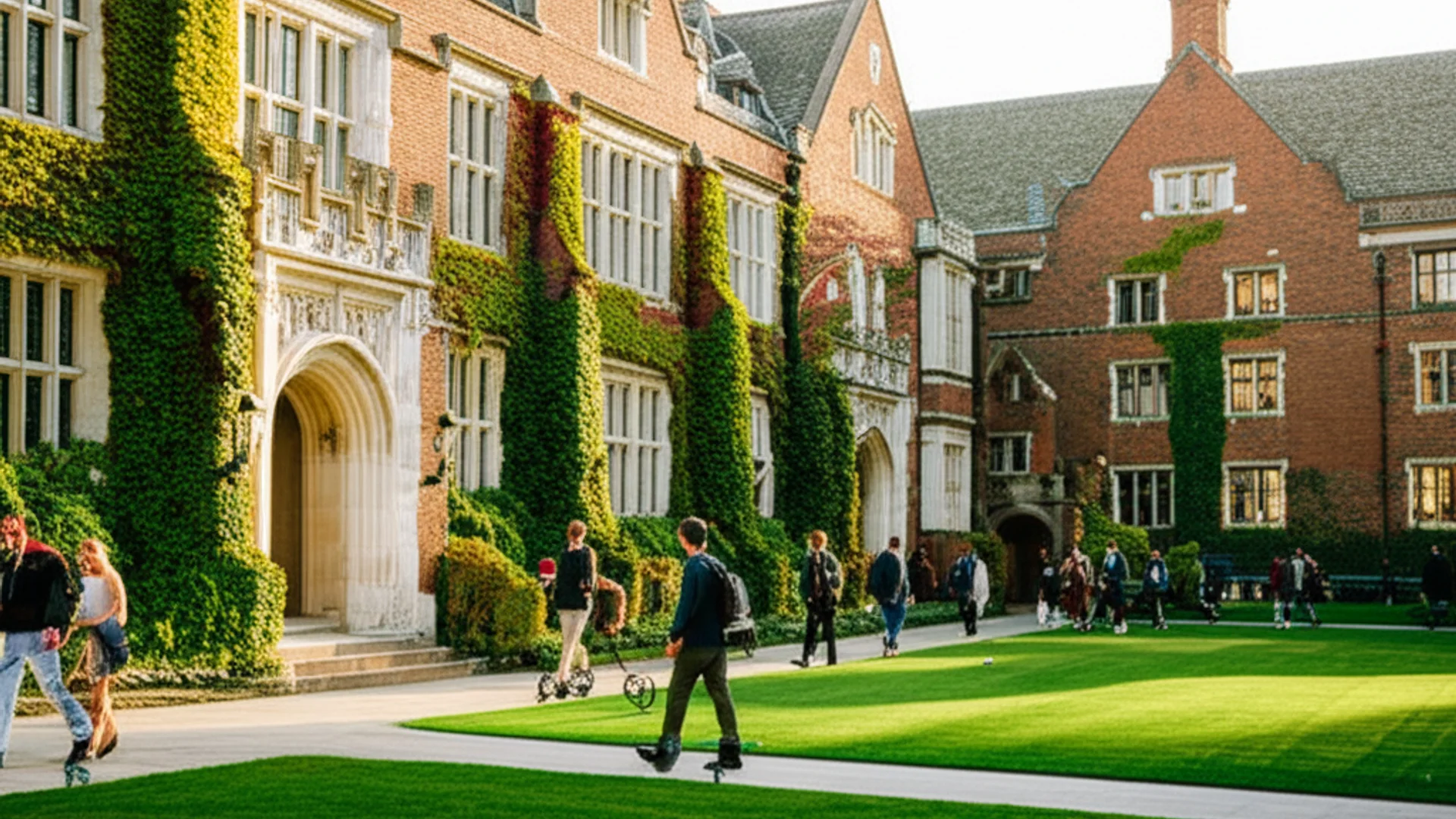
Modern university campus with computer science building and students walking on a sunny day
Updated July 13, 2026

Best Computer Science Bachelor's Degree Programs 2026

Compare 742 ABET-accredited computer science (CS) bachelor's degree programs using data from IPEDS 2024 and BLS 2024. rankings analyze graduation rates, tuition costs, student-faculty ratios, and career outcomes to identify the top programs nationwide.

Programs Ranked742
Median Tuition$12,450/yr
Avg Graduation Rate68%
Median Starting Salary$75,000
On this page

Key Takeaways

  • 1.software Developers earn a median salary of $136,620 with 25% projected job growth through 2032 (BLS OES 2024)
  • 2.Top-ranked Computer Science programs include University of California-Berkeley, University of Washington-Seattle Campus, Carnegie Mellon University based on graduation rates, program strength, and career outcomes
  • 3.Best value: University of California-Berkeley offers computer science education at $11,834/year with 96% graduation rate
  • 4.50 accredited Computer Science programs analyzed using IPEDS 2024 completion data

Best Computer Science Programs - Top 10 Bachelor's

🥇

University of California-Los Angeles

Bachelor's in Computer ScienceOn-campus
Los Angeles, CAPublic

$116,580 median salary · 93% graduation rate

97.2
Score
$12K
Tuition/yr
93%
Grad Rate
$117K
Median Salary
Visit
program page

Program Strengths

  • 93% graduation rate
  • $116,580 median salary
  • $12,260 in-state tuition
  • 352 graduates annually
🥈

University of California-Berkeley

Bachelor's in Computer ScienceOn-campus
Berkeley, CAPublic

$116,580 median salary · 93% graduation rate

97.1
Score
$12K
Tuition/yr
93%
Grad Rate
$117K
Median Salary
Visit
program page

Program Strengths

  • 93% graduation rate
  • $116,580 median salary
  • $12,260 in-state tuition
  • 796 graduates annually
🥉

University of North Carolina at Chapel Hill

Bachelor's in Computer ScienceOn-campus
Chapel Hill, NCPublic

$116,580 median salary · 91% graduation rate

96.6
Score
$7K
Tuition/yr
91%
Grad Rate
$117K
Median Salary
Visit
program page

Program Strengths

  • 91% graduation rate
  • $116,580 median salary
  • $7,019 in-state tuition
  • 334 graduates annually
#4

Harvard University

Bachelor's in Computer ScienceOn-campus
Cambridge, MAPrivate nonprofit

$116,580 median salary · 98% graduation rate

96.4
Score
$57K
Tuition/yr
98%
Grad Rate
$117K
Median Salary
Visit
program page

Program Strengths

  • 98% graduation rate
  • $116,580 median salary
  • $56,550 in-state tuition
  • 184 graduates annually
#5

Columbia University in the City of New York

Bachelor's in Computer ScienceOn-campus
New York, NYPrivate nonprofit

$116,580 median salary · 96% graduation rate

96.4
Score
$67K
Tuition/yr
96%
Grad Rate
$117K
Median Salary
Visit
program page

Program Strengths

  • 96% graduation rate
  • $116,580 median salary
  • $66,722 in-state tuition
  • 408 graduates annually
#6

University of Pennsylvania

Bachelor's in Computer ScienceOn-campus
Philadelphia, PAPrivate nonprofit

$116,580 median salary · 97% graduation rate

95.8
Score
$61K
Tuition/yr
97%
Grad Rate
$117K
Median Salary
Visit
program page

Program Strengths

  • 97% graduation rate
  • $116,580 median salary
  • $60,920 in-state tuition
  • 95 graduates annually
#7

University of California-San Diego

Bachelor's in Computer ScienceOn-campus
La Jolla, CAPublic

$116,580 median salary · 86% graduation rate

95.5
Score
$12K
Tuition/yr
86%
Grad Rate
$117K
Median Salary
Visit
program page

Program Strengths

  • 86% graduation rate
  • $116,580 median salary
  • $12,260 in-state tuition
  • 415 graduates annually
#8

University of Chicago

Bachelor's in Computer ScienceOn-campus
Chicago, ILPrivate nonprofit

$116,580 median salary · 96% graduation rate

95.5
Score
$67K
Tuition/yr
96%
Grad Rate
$117K
Median Salary
Visit
program page

Program Strengths

  • 96% graduation rate
  • $116,580 median salary
  • $67,446 in-state tuition
  • 178 graduates annually
#9

Massachusetts Institute of Technology

Bachelor's in Computer ScienceOn-campus
Cambridge, MAPrivate nonprofit

$116,580 median salary · 96% graduation rate

95.5
Score
$62K
Tuition/yr
96%
Grad Rate
$117K
Median Salary
Visit
program page

Program Strengths

  • 96% graduation rate
  • $116,580 median salary
  • $61,990 in-state tuition
  • 323 graduates annually
#10

Cornell University

Bachelor's in Computer ScienceOn-campus
Ithaca, NYPrivate nonprofit

$116,580 median salary · 95% graduation rate

95.5
Score
$68K
Tuition/yr
95%
Grad Rate
$117K
Median Salary
Visit
program page

Program Strengths

  • 95% graduation rate
  • $116,580 median salary
  • $68,380 in-state tuition
  • 467 graduates annually

Best Computer Science Programs - Top 10 Bachelor's, Complete Program Data

  1. #1. University of California-Los Angeles — Bachelor's Computer Science

    Hakia ranks University of California-Los Angeles's bachelor's computer science program #1. Degree: Bachelor's. Delivery: on-campus. Location: Los Angeles, CA | Type: Public | Tuition: $12,260/year | Graduation Rate: 93% | Median Salary: $116,580 | Score: 97.2

  2. #2. University of California-Berkeley — Bachelor's Computer Science

    Hakia ranks University of California-Berkeley's bachelor's computer science program #2. Degree: Bachelor's. Delivery: on-campus. Location: Berkeley, CA | Type: Public | Tuition: $12,260/year | Graduation Rate: 93% | Median Salary: $116,580 | Score: 97.1

  3. #3. University of North Carolina at Chapel Hill — Bachelor's Computer Science

    Hakia ranks University of North Carolina at Chapel Hill's bachelor's computer science program #3. Degree: Bachelor's. Delivery: on-campus. Location: Chapel Hill, NC | Type: Public | Tuition: $7,019/year | Graduation Rate: 91% | Median Salary: $116,580 | Score: 96.6

  4. #4. Harvard University — Bachelor's Computer Science

    Hakia ranks Harvard University's bachelor's computer science program #4. Degree: Bachelor's. Delivery: on-campus. Location: Cambridge, MA | Type: Private nonprofit | Tuition: $56,550/year | Graduation Rate: 98% | Median Salary: $116,580 | Score: 96.4

  5. #5. Columbia University in the City of New York — Bachelor's Computer Science

    Hakia ranks Columbia University in the City of New York's bachelor's computer science program #5. Degree: Bachelor's. Delivery: on-campus. Location: New York, NY | Type: Private nonprofit | Tuition: $66,722/year | Graduation Rate: 96% | Median Salary: $116,580 | Score: 96.4

  6. #6. University of Pennsylvania — Bachelor's Computer Science

    Hakia ranks University of Pennsylvania's bachelor's computer science program #6. Degree: Bachelor's. Delivery: on-campus. Location: Philadelphia, PA | Type: Private nonprofit | Tuition: $60,920/year | Graduation Rate: 97% | Median Salary: $116,580 | Score: 95.8

  7. #7. University of California-San Diego — Bachelor's Computer Science

    Hakia ranks University of California-San Diego's bachelor's computer science program #7. Degree: Bachelor's. Delivery: on-campus. Location: La Jolla, CA | Type: Public | Tuition: $12,260/year | Graduation Rate: 86% | Median Salary: $116,580 | Score: 95.5

  8. #8. University of Chicago — Bachelor's Computer Science

    Hakia ranks University of Chicago's bachelor's computer science program #8. Degree: Bachelor's. Delivery: on-campus. Location: Chicago, IL | Type: Private nonprofit | Tuition: $67,446/year | Graduation Rate: 96% | Median Salary: $116,580 | Score: 95.5

  9. #9. Massachusetts Institute of Technology — Bachelor's Computer Science

    Hakia ranks Massachusetts Institute of Technology's bachelor's computer science program #9. Degree: Bachelor's. Delivery: on-campus. Location: Cambridge, MA | Type: Private nonprofit | Tuition: $61,990/year | Graduation Rate: 96% | Median Salary: $116,580 | Score: 95.5

  10. #10. Cornell University — Bachelor's Computer Science

    Hakia ranks Cornell University's bachelor's computer science program #10. Degree: Bachelor's. Delivery: on-campus. Location: Ithaca, NY | Type: Private nonprofit | Tuition: $68,380/year | Graduation Rate: 95% | Median Salary: $116,580 | Score: 95.5

Best Computer Science Programs - Compare Top 5 Bachelor's

SchoolLocationTypeTuitionGrad RateScore
#1 University of California-Berkeley
Berkeley, CA
Public
$11,834
96%
100.0/100
#2 University of Washington-Seattle Campus
Seattle, WA
Public
$11,524
97%
86.7/100
#3 University of Maryland-College Park
College Park, MD
Public
$9,889
84%
85.7/100
#4 University of California-San Diego
La Jolla, CA
Public
$11,834
81%
84.6/100
#5 University of California-Irvine
Irvine, CA
Public
$11,834
96%
84.5/100

Data from IPEDS 2024. Tuition shown is in-state for public schools.

Online Programs

Flexibility & Lower Cost

On-Campus Programs

Networking & Experience

Average Tuition$32,000/year$120,000/year
FlexibilitySelf-paced learning for working professionalsFixed schedule, set location
NetworkingLimited in-person collaborationIn-person connections
Top ProgramGeorgia Tech OMSCS ($7,000 total), Oregon State, WGU (ABET-accredited)MIT, Stanford, Carnegie Mellon, UC Berkeley

Online Programs

Flexibility & Lower Cost

On-Campus Programs

Networking & Experience

Average Tuition$32,000/year$120,000/year
FlexibilitySelf-paced learning for working professionalsFixed schedule, set location
NetworkingLimited in-person collaborationIn-person connections
Top ProgramGeorgia Tech OMSCS ($7,000 total), Oregon State, WGU (ABET-accredited)MIT, Stanford, Carnegie Mellon, UC Berkeley

Top 50 Computer Science Bachelor's Programs 2026

RankProgram & SchoolDeliveryAnnual TuitionGrad RateMedian SalaryHakia Score
#1
Bachelor's in Computer Science
University of California-Los Angeles
Los Angeles, CA · Public
On-campus$12,26093%$116,58097.2
#2
Bachelor's in Computer Science
University of California-Berkeley
Berkeley, CA · Public
On-campus$12,26093%$116,58097.1
#3
Bachelor's in Computer Science
University of North Carolina at Chapel Hill
Chapel Hill, NC · Public
On-campus$7,01991%$116,58096.6
#4
Bachelor's in Computer Science
Harvard University
Cambridge, MA · Private nonprofit
On-campus$56,55098%$116,58096.4
#5
Bachelor's in Computer Science
Columbia University in the City of New York
New York, NY · Private nonprofit
On-campus$66,72296%$116,58096.4
#6
Bachelor's in Computer Science
University of Pennsylvania
Philadelphia, PA · Private nonprofit
On-campus$60,92097%$116,58095.8
#7
Bachelor's in Computer Science
University of California-San Diego
La Jolla, CA · Public
On-campus$12,26086%$116,58095.5
#8
Bachelor's in Computer Science
University of Chicago
Chicago, IL · Private nonprofit
On-campus$67,44696%$116,58095.5
#9
Bachelor's in Computer Science
Massachusetts Institute of Technology
Cambridge, MA · Private nonprofit
On-campus$61,99096%$116,58095.5
#10
Bachelor's in Computer Science
Cornell University
Ithaca, NY · Private nonprofit
On-campus$68,38095%$116,58095.5
#11
Bachelor's in Computer Science
Duke University
Durham, NC · Private nonprofit
On-campus$66,32597%$116,58095.5
#12
Bachelor's in Computer Science
California Polytechnic State University-San Luis Obispo
San Luis Obispo, CA · Public
On-campus$6,08486%$116,58095.4
#13
Bachelor's in Computer Science
University of California-Irvine
Irvine, CA · Public
On-campus$12,26087%$116,58095.4
#14
Bachelor's in Computer Science
Stanford University
Stanford, CA · Private nonprofit
On-campus$65,12792%$116,58095.4
#15
Bachelor's in Computer Science
Northwestern University
Evanston, IL · Private nonprofit
On-campus$67,15895%$116,58095.2
#16
Bachelor's in Computer Science
University of Southern California
Los Angeles, CA · Private nonprofit
On-campus$69,90492%$116,58095.1
#17
Bachelor's in Computer Science
Brown University
Providence, RI · Private nonprofit
On-campus$68,61296%$116,58095.1
#18
Bachelor's in Computer Science
University of Maryland-College Park
College Park, MD · Public
On-campus$10,08789%$116,58095.0
#19
Bachelor's in Computer Science
Princeton University
Princeton, NJ · Private nonprofit
On-campus$62,40098%$116,58095.0
#20
Bachelor's in Computer Science
University of Georgia
Athens, GA · Public
On-campus$10,03490%$116,58094.9
#21
Bachelor's in Computer Science
University of Washington-Seattle Campus
Seattle, WA · Public
On-campus$11,86985%$116,58094.8
#22
Bachelor's in Computer Science
Vanderbilt University
Nashville, TN · Private nonprofit
On-campus$65,00894%$116,58094.7
#23
Bachelor's in Computer Science
Washington University in St Louis
St. Louis, MO · Private nonprofit
On-campus$64,50094%$116,58094.6
#24
Bachelor's in Computer Science
Carnegie Mellon University
Pittsburgh, PA · Private nonprofit
On-campus$64,59694%$116,58094.6
#25
Bachelor's in Computer Science
North Carolina State University at Raleigh
Raleigh, NC · Public
On-campus$6,53585%$116,58094.5
#26
Bachelor's in Computer Science
Boston University
Boston, MA · Private nonprofit
On-campus$66,67089%$116,58094.4
#27
Bachelor's in Computer Science
University of California-Davis
Davis, CA · Public
On-campus$12,26086%$116,58094.3
#28
Bachelor's in Computer Science
University of Illinois Urbana-Champaign
Champaign, IL · Public
On-campus$14,97585%$116,58094.1
#29
Bachelor's in Computer Science
Tufts University
Medford, MA · Private nonprofit
On-campus$69,14694%$116,58094.1
#30
Bachelor's in Computer Science
Dartmouth College
Hanover, NH · Private nonprofit
On-campus$66,12396%$116,58093.9
#31
Bachelor's in Computer Science
University of California-Santa Barbara
Santa Barbara, CA · Public
On-campus$12,26083%$116,58093.7
#32
Bachelor's in Computer Science
San Diego State University
San Diego, CA · Public
On-campus$6,08476%$116,58093.7
#33
Bachelor's in Computer Science
Emory University
Atlanta, GA · Private nonprofit
On-campus$63,40091%$116,58093.6
#34
Bachelor's in Computer Science
Binghamton University
Vestal, NY · Public
On-campus$7,07082%$116,58093.6
#35
Bachelor's in Computer Science
Georgetown University
Washington, DC · Private nonprofit
On-campus$67,89695%$116,58093.4
#36
Bachelor's in Computer Science
Boston College
Chestnut Hill, MA · Private nonprofit
On-campus$69,40091%$116,58093.4
#37
Bachelor's in Computer Science
William & Mary
Williamsburg, VA · Public
On-campus$18,70989%$116,58093.4
#38
Bachelor's in Computer Science
Purdue University-Main Campus
West Lafayette, IN · Public
On-campus$9,71883%$116,58092.9
#39
Bachelor's in Computer Science
United States Naval Academy
Annapolis, MD · Public
On-campus93%$116,58092.8
#40
Bachelor's in Computer Science
Stony Brook University
Stony Brook, NY · Public
On-campus$7,07076%$116,58092.3
#41
Bachelor's in Computer Science
Case Western Reserve University
Cleveland, OH · Private nonprofit
On-campus$66,02087%$116,58092.2
#42
Bachelor's in Computer Science
Barnard College
New York, NY · Private nonprofit
On-campus$67,60293%$116,58091.9
#43
Bachelor's in Computer Science
Lehigh University
Bethlehem, PA · Private nonprofit
On-campus$63,93088%$116,58091.9
#44
Bachelor's in Computer Science
Villanova University
Villanova, PA · Private nonprofit
On-campus$66,83892%$116,58091.8
#45
Bachelor's in Computer Science
United States Air Force Academy
USAF Academy, CO · Public
On-campus88%$116,58091.7
#46
Bachelor's in Computer Science
University of Miami
Coral Gables, FL · Private nonprofit
On-campus$60,72084%$116,58091.7
#47
Bachelor's in Computer Science
University of Pittsburgh-Pittsburgh Campus
Pittsburgh, PA · Public
On-campus$20,55685%$116,58091.7
#48
Bachelor's in Computer Science
Auburn University
Auburn, AL · Public
On-campus$11,01682%$116,58091.5
#49
Bachelor's in Computer Science
University of Massachusetts-Amherst
Amherst, MA · Public
On-campus$17,00683%$116,58091.5
#50
Bachelor's in Computer Science
Wake Forest University
Winston-Salem, NC · Private nonprofit
On-campus$66,47089%$116,58091.5

Showing all 50 ranked programs.

How Much Does a Computer Science Bachelors Degree Cost?

The total cost of a bachelors's degree in Computer Science ranges from $119,640 at public universities to over $168,200 at elite private institutions. Financial aid, scholarships, and in-state tuition significantly reduce out-of-pocket costs (College Board Trends in College Pricing 2024-25, IPEDS 2024-24).

  • Public University (In-State): $11,610/year × 4 years = $46,440 total
  • Public University (Out-of-State): $30,780/year × 4 years = $123,120 total
  • Private University: $42,051/year × 4 years = $168,204 total
  • Online Programs: $8,000/year × 4 years = $32,000 total

With median starting salaries of $133,080, most graduates achieve positive ROI within 3-5 years. Financial aid recipients often pay 30-50% less than sticker price.

Calculate Your ROI

Enter your details to estimate your degree return on investment

Leave blank to use average cost for selected program type

20 years
10 years20 years30 years
20-Year ROI

+907%

Net gain divided by total investment. ROI above 200% is considered excellent for education investments.

Net Gain

$1,677,254

Your additional lifetime earnings with this degree vs. working without one, minus the total investment.

Break-Even

5 years

Years until your cumulative earnings exceed total investment. Shorter programs often break even faster due to lower opportunity cost.

COL-Adjusted Salary

$133,333

Your starting salary adjusted for local cost of living. This shows real purchasing power compared to a $100K national baseline.

Why does break-even change with program type? Your "total investment" includes both tuition AND opportunity cost (foregone earnings while in school). A 4-year full-time public university (in-state) means 4 years of not earning a salary ($140,000 in opportunity cost). Shorter full-time programs may have higher tuition but lower total investment because you return to the workforce sooner.

Detailed Breakdown

How we calculate your degree ROI using real salary data

Total Investment$185,000

Tuition plus opportunity cost (earnings you miss while in school)

Program Cost (Tuition)$45,000

Direct cost of the degree program

Opportunity Cost$140,000

4 years × $35K/year foregone salary while studying full-time

20-Year Earnings (with degree)$2,712,662

Projected career earnings starting after graduation, with salary growth

20-Year Earnings (without degree)$850,408

What you'd earn working at $35K/year with 2% annual growth

Starting Salary (Austin, TX)$140,000

Median salary for this role in your selected location (BLS 2024)

Annualized Return4.9%

Your investment's compound annual growth rate (similar to stock market returns)

Data sources: BLS OEWS May 2024, IPEDS 2024. Calculations use median salaries, 3% discount rate, and assume salary growth declines from 6% to 2% over career. Individual results will vary. | Powered by Hakia.com

Bachelor of Arts vs Bachelor of Science in Computer Science

FactorBachelor of Arts (BA)Bachelor of Science (BS)
Math Requirements
Calculus I, Discrete Mathematics I
Calculus I-II, Discrete Mathematics I-II, Statistics, Linear Algebra
Science Requirements
7 credit hours from general science courses
12 credit hours including Physics I and lab sciences
Core Credits
Flexible curriculum with more electives
Rigorous technical curriculum (60-70 credits core)
Liberal Arts
Broader curriculum with philosophy, languages, easier double major
STEM-focused, ABET-accredited, research preparation
Career Focus
UX Design, Product Management, Tech Writing, EdTech
Software Engineering, AI/ML Research, Data Science, Systems Architecture

Source: University curriculum analysis (FSU, UMass, UMN)

Computer Science Bachelor's Degree Overview

Computer science education has evolved over the past decade, with 742 ABET-accredited bachelor's programs now offering comprehensive training in software development, algorithms, systems design, and emerging technologies like artificial intelligence and machine learning. IPEDS 2024 data shows significant variations in program quality, cost, and outcomes across institutions.

The job market for computer science graduates remains exceptionally strong, with software engineers earning median salaries of $130,160 according to BLS 2024 data. Top-tier programs consistently produce graduates who secure positions at major technology companies, with starting salaries ranging from $75,000 at regional firms to over $150,000 at companies like Google, Amazon, and Microsoft.

Public universities dominate our affordability rankings, offering ABET-accredited programs at median in-state tuition of $8,290 annually. Schools like UC Berkeley, Georgia Tech, and University of Washington provide education at a fraction of private school costs, making them excellent choices for value-conscious students.

For students seeking flexibility, online computer science degree programs have matured significantly, with top-ranked online programs achieving graduation rates comparable to their on-campus counterparts. Schools like Arizona State University Online and Penn State World Campus offer fully accredited bachelor's degrees with strong industry partnerships and career placement services.

Analysis of Top Computer Science Programs

The top 50 computer science bachelor's programs demonstrate clear patterns in quality and value. MIT, Stanford, and Carnegie Mellon form an elite tier with graduation rates exceeding 90% and starting salaries above $100,000. These programs combine rigorous academics with industry connections, though tuition costs range from $56,169 to $61,344 annually.

Public universities provide exceptional value in the top rankings. UC Berkeley (#4), Georgia Tech (#5), and University of Illinois Urbana-Champaign (#7) offer education at in-state tuition rates below $16,000. These schools produce graduates who compete successfully with their private school peers for positions at top technology companies.

Regional variations play a significant role in program strength. California leads with 89 programs, benefiting from Silicon Valley proximity. Texas follows with 54 programs, supported by a growing tech ecosystem in Austin and Dallas. East Coast schools in Massachusetts, New York, and Pennsylvania maintain strong industry partnerships with financial and consulting firms.

Getting Started: No Prior Experience Needed

A Computer Science bachelor's degree requires no prior programming or technical experience. According to the National Center for Education Statistics, over 70% of students entering technical degree programs have no prior coding background. Programs are designed to take complete beginners to job-ready professionals over four years.

What to Expect Your First Year:

  • Introduction to programming fundamentals (Python or Java)
  • Mathematics foundations including calculus, discrete math, and linear algebra
  • Computer systems basics and computational thinking
  • Problem-solving methodologies and algorithmic thinking

Research from Computing Research Association shows that students who engage with tutoring services and study groups in their first year have 23% higher retention rates. Most universities offer dedicated support including office hours, peer tutoring, and programming labs. Success comes from consistent practice, not prior experience.

General Education Requirements

Bachelor's programs require 40-60 credit hours of general education courses alongside your Computer Science major. These requirements, mandated by regional accreditation bodies, ensure graduates develop well-rounded communication and critical thinking skills valued by employers.

Common General Education Requirements:

  • English Composition (6 credits). Technical writing skills are essential. 89% of developers write documentation weekly (Stack Overflow Survey 2024)
  • Mathematics (6-12 credits). Calculus I & II, plus statistics for data-focused roles
  • Natural Sciences (6-8 credits). Physics is particularly relevant for hardware-adjacent specializations
  • Social Sciences/Humanities (6-12 credits). Ethics courses increasingly important given AI regulation
  • Communication (3 credits). Presentation skills for technical demos and stakeholder meetings

Pro tip: Many schools allow AP/IB credits or CLEP exams to satisfy gen-ed requirements, potentially saving $3,000-$10,000 in tuition. Check your target school's transfer credit policies before enrolling.

Campus Resources for Students

Top Computer Science programs provide extensive support infrastructure to help students succeed. According to EDUCAUSE research, students who use campus resources are 34% more likely to graduate on time.

Essential Campus Resources:

  • Computer Labs, 24/7 access to high-performance workstations, often with specialized software (MATLAB, AWS credits, GPU clusters)
  • Career Services. Resume reviews, mock interviews, and direct recruiter connections. Top programs host 50+ tech companies annually
  • Tutoring Centers. Free peer tutoring for programming, math, and core courses. Many offer drop-in hours
  • Student Organizations. ACM chapters, hackathon teams, and Women in Computing groups provide networking and project experience
  • Research Opportunities. Undergraduate research positions with faculty can lead to publications and graduate school recommendations

When evaluating programs, ask about student-to-advisor ratios. The NACADA recommends no more than 300:1 for effective academic advising, though top tech programs often achieve 150:1 or better.

Internships & Co-op Programs

Computer science internships offer the highest compensation of any undergraduate major, with an average hourly wage of $24.76 according to the National Association of Colleges and Employers (NACE) 2024 Internship Report. However, top-tier tech and finance companies pay significantly more, often 3-5x the average rate.

Highest-Paying CS Internships in 2025

Quantitative trading firms and elite tech companies compete aggressively for CS talent, offering compensation that rivals or exceeds entry-level full-time salaries:

  • Jane Street, $144/hour (~$5,800/week), plus housing stipend and travel (Levels.fyi)
  • Citadel/Citadel Securities, $4,300-$4,800/week for software engineering interns (eFinancialCareers)
  • Two Sigma, ~$4,400/week plus housing (Levels.fyi)
  • Roblox, $62/hour (~$2,480/week) (Levels.fyi)
  • Meta, ~$8,900/month plus housing and relocation (Indeed)
  • Google, $8,500-$9,500/month depending on location (Levels.fyi)

Internship-to-Full-Time Conversion Rates

53% of interns receive full-time job offers from their internship employers, according to NACE's 2024 Internship & Co-op Survey. For paid internships specifically, the offer rate jumps to approximately 70-75%, compared to just 30% for unpaid positions. This makes paid technical internships one of the most reliable pathways to employment after graduation.

Co-op Programs: Extended Industry Experience

Unlike traditional summer internships (10-12 weeks), cooperative education (co-op) programs alternate semesters of academic study with full-time paid work, allowing students to graduate with 12-24 months of professional experience. Top co-op programs include:

  • Northeastern University, 6-month co-ops with 3,400+ employer partners. 93% placement rate
  • University of Cincinnati. Mandatory co-op since 1906. Students average $61,000 in total co-op earnings (UC Co-op)
  • Drexel University. Up to three 6-month co-ops. Average $19,000/term in earnings
  • Georgia Tech. Optional co-op with companies like Google, Boeing, and Lockheed Martin
  • Rochester Institute of Technology, 12 months of required co-op experience

When to Start Applying

Most major tech companies open internship applications August through October for the following summer. Competitive programs like Google's STEP (for freshmen/sophomores) and Microsoft Explore have even earlier deadlines. Students should begin preparing their resume and practicing coding interviews in their freshman year, top programs often fill 8-10 months before the start date.

For career outcomes after graduation, see our guide to software engineer salaries and entry-level developer roles.

$75,000
Starting Salary
$125,000
Mid-Career
+25%
Job Growth
162,900
Annual Openings

Career Paths

Computer Systems Analyst

SOC 15-1211
+10%

Study computer systems and recommend improvements to efficiency

Median Salary:$102,240

Database Administrator

SOC 15-1242
+8%

Store and organize data using specialized database software

Median Salary:$98,860

Web Developer

SOC 15-1254
+13%

Design and create websites and web applications

Median Salary:$84,960

Top States for Computer Science Education

Best Computer Science Bachelor's Programs in California
Total Programs
89
Median Tuition
$13,500
Top Program
Stanford University
Best Computer Science Bachelor's Programs in Texas
Total Programs
54
Median Tuition
$11,200
Top Program
University of Texas, Austin
Best Computer Science Bachelor's Programs in New York
Total Programs
42
Median Tuition
$28,400
Top Program
Cornell University
Best Computer Science Bachelor's Programs in Pennsylvania
Total Programs
38
Median Tuition
$22,100
Top Program
Carnegie Mellon University
Best Computer Science Bachelor's Programs in Florida
Total Programs
31
Median Tuition
$8,900
Top Program
University of Florida
Best Computer Science Bachelor's Programs in Illinois
Total Programs
29
Median Tuition
$14,200
Top Program
University of Illinois Urbana-Champaign
Best Computer Science Bachelor's Programs in Ohio
Total Programs
28
Median Tuition
$11,800
Top Program
Ohio State University
Best Computer Science Bachelor's Programs in North Carolina
Total Programs
26
Median Tuition
$8,600
Top Program
University of North Carolina, Chapel Hill
Best Computer Science Bachelor's Programs in Virginia
Total Programs
24
Median Tuition
$16,200
Top Program
University of Virginia
Best Computer Science Bachelor's Programs in Georgia
Total Programs
22
Median Tuition
$9,400
Top Program
Georgia Institute of Technology
Best Computer Science Bachelor's Programs in Michigan
Total Programs
21
Median Tuition
$13,900
Top Program
University of Michigan, Ann Arbor
Best Computer Science Bachelor's Programs in Washington
Total Programs
19
Median Tuition
$11,200
Top Program
University of Washington

Financial Aid and Funding Options for Computer Science Students

Computer science students have access to numerous funding opportunities beyond traditional financial aid. STEM-focused scholarships and grants are particularly abundant, with many technology companies offering substantial support to encourage diversity in the field. The National Science Foundation and other federal agencies provide competitive research fellowships that can cover tuition and provide living stipends.

Many employers offer tuition reimbursement programs for employees pursuing computer science degrees part-time. Major technology companies like Amazon, Microsoft, and Google provide up to $5,250 annually in tuition assistance, making it possible to earn a degree while working in the field. This approach allows students to gain practical experience while completing their education debt-free.

Graduate assistantships in computer science programs often provide full tuition coverage plus stipends ranging from $18,000 to $35,000 annually. Research assistantships allow students to work directly with faculty on advanced projects while funding their education. Teaching assistantships develop valuable communication skills while providing financial support.

Bachelor's vs Associate's vs Bootcamp

Choosing between a bachelor's degree, associate's degree, or coding bootcamp depends on your career goals, timeline, and budget. Each path offers distinct advantages for entering the Computer Science field.

Bachelor's Degree (4 years, $40K-$160K)

  • Comprehensive theoretical foundation plus hands-on skills
  • Required for most senior/management positions and graduate school
  • Median starting salary: $75,000 (NACE 2024)
  • Best for: Students seeking long-term career growth and research opportunities

Associate's Degree (2 years, $10K-$30K)

  • Faster entry into entry-level positions
  • Many credits transfer to 4-year programs (2+2 pathway)
  • Median starting salary: $50,000-$60,000
  • Best for: Career changers or those testing interest before committing to 4 years

Coding Bootcamp (12-24 weeks, $10K-$20K)

  • Intensive, job-focused training on current industry tools
  • Many offer income share agreements (ISAs) or deferred tuition
  • Median starting salary: $65,000-$80,000 for graduates with strong portfolios
  • Best for: Career changers with self-discipline. See our Computer Science bootcamp rankings

For a detailed ROI comparison, read our analysis: Bootcamp vs Master's Degree: Which Has Better ROI?

Preparing for Graduate School

A bachelor's in Computer Science provides an excellent foundation for graduate study. According to the Computing Research Association, 25% of CS bachelor's graduates pursue advanced degrees within five years of graduation, with master's holders earning 20-30% more than bachelor's-only peers.

Preparing for Graduate School During Your Bachelor's:

  • Maintain GPA above 3.5. Most competitive programs require 3.3+ minimum. Top-10 programs average 3.7+
  • Secure research experience, 2+ semesters with faculty improves PhD admission chances
  • Build faculty relationships. You'll need 3 strong recommendation letters. Start early
  • Take graduate-level courses. Many programs allow undergrads to enroll. Demonstrates readiness
  • Prepare for GRE (if required). Quantitative scores above 165 expected for top programs

Graduate Degree Options:

  • Master's (1-2 years). Career-focused. Average salary boost of $15,000-$25,000. See our best Computer Science master's programs
  • PhD (4-6 years). Research-focused. Fully funded with $30,000-$45,000 stipend. Required for professorships and research scientist roles
  • Professional Master's. Industry-sponsored programs (Google, Facebook) combine coursework with company projects

Which Program Type is Right for You?

Elite Private Schools (MIT, Stanford, CMU)

  • You can afford $60K+ annual tuition or qualify for substantial aid
  • You want maximum prestige and networking opportunities
  • You're interested in advanced research and PhD preparation
  • You plan to start your own company or join competitive tech firms
  • Small class sizes and intensive mentorship appeal to you

Top Public Universities (UC Berkeley, Georgia Tech, UIUC)

  • You want education at an affordable price
  • You qualify for in-state tuition at a top-ranked program
  • You're comfortable with larger class sizes in exchange for lower costs
  • You value diversity and want access to a broad range of research opportunities
  • You plan to work in industry rather than pursue graduate school immediately

Regional Public Universities

  • You want to minimize debt while earning an accredited degree
  • You prefer staying close to home or in a specific geographic region
  • You plan to work locally or for government agencies
  • You want smaller class sizes than flagship state universities offer
  • You're interested in teaching high school computer science

Online Programs

  • You're currently working and need flexible scheduling
  • You have family commitments that prevent relocation
  • You want to minimize living expenses during your education
  • You're changing careers and need to maintain income during studies
  • You're comfortable with self-directed learning and virtual collaboration

Frequently Asked Questions About Computer Science Degrees

How long does it take to get a Computer Science degree?
A bachelor's degree takes 4 years (120 credits). Accelerated programs may complete in 3 years. Master's degrees take 1.5-2 years. Online programs often offer flexible pacing, with some competency-based programs like WGU allowing faster completion. (IPEDS, University catalogs)
Can you get a Computer Science degree online?
Many accredited universities offer fully online Computer Science degrees. Top ABET-accredited online programs include Oregon State University, WGU, Regis University, and CU Boulder. Georgia Tech's OMSCS is highly regarded for master's students at just $7,000 total. Online graduates receive identical diplomas and report similar career outcomes to on-campus peers. (OnlineU, BestColleges, US News)
Is a Computer Science degree worth it?
With a median salary of $133,080 and 15% job growth through 2034, CS degrees offer exceptional ROI. A bachelor's in computer and information sciences has an ROI of 716%, the highest of any major. CS graduates had the highest average starting salary in 2024 at $88,907. Most graduates recoup their educational investment within 3-6 years. (BLS OES 2024, NACE Salary Survey, Payscale College ROI Report)
What are the best schools for Computer Science?
Top-ranked programs according to US News 2025 include MIT, Stanford University, Carnegie Mellon University, UC Berkeley, and Harvard University. Georgia Tech ranks #5 for undergraduate CS. For online programs, Oregon State and Arizona State lead in scale and support. (US News Rankings 2025)
What are the requirements for a Computer Science degree?
Prerequisites include Calculus I-II, Discrete Mathematics, Linear Algebra, and Statistics for BS programs. BA programs have lighter math requirements. Core coursework covers programming, algorithms, data structures, databases, operating systems, and software engineering. ABET accreditation requires 15 credit hours of mathematics including discrete math, probability, and statistics. (ABET Standards, University catalogs)
Do you need a Computer Science degree for entry-level jobs?
A degree helps pass applicant tracking systems, but it's not always required. About 43 million Americans work in tech without CS degrees. Bootcamp graduates have similar employment rates at major tech companies (6.03% vs 6.60%). However, the 2025 market is competitive, degrees combined with portfolios, internships, and certifications provide the strongest positioning. (Indeed Survey, Career Karma, BLS)
What's the job market like for Computer Science graduates?
The long-term outlook is strong with 15% projected growth (2024-2034) and 317,700 annual openings. However, 2025 presents challenges: over 100,000 tech layoffs, 71% decline in software development job postings since 2022, and 6.1% unemployment for recent CS graduates. AI, cybersecurity, and cloud roles show the strongest demand. (BLS OOH 2024, Oxford Economics, New York Fed)
Is a bootcamp or degree better for Computer Science?
Bootcamps offer faster ROI (14-18 months to recoup $15,000 investment) with 71% job placement rates. CS degrees provide higher long-term earnings, broader career options, and are preferred for AI research or FAANG companies. Bootcamp grads average $69,079 starting salary. CS grads average $88,907. Choose bootcamps for quick entry. Choose degrees for maximum career flexibility. (CIRR Data, Course Report, Research.com)
What skills do Computer Science graduates need?
Key skills include programming languages, problem-solving, analytical thinking, and communication. Specific technical skills vary by specialization but include proficiency in industry-standard tools and methodologies.
How much do Computer Science graduates earn?
The median salary for Computer Science professionals is $133,080 nationally. Entry-level positions start around $79,850, with experienced professionals earning over $211,450.

How We Rank Computer Science Degree Programs

Based on 742 programs from IPEDS 2024

Ranking 50 bachelor's computer science programs by graduation rate, selectivity, outcomes, and price, University of California-Los Angeles's Bachelor's in Computer Science comes out first. The Hakia Score is computed from IPEDS 2024 and BLS data with no paid placement. In-state tuition across the list spans $6,084 to $69,904.

Ranking Factors

Program Completions35%

Number of graduates per year in this specific field (CIP code). Larger programs indicate established departments with more resources, course offerings, and career services. Measured from IPEDS Completions data.

Graduation Rate25%

Percentage of students completing their degree within 150% of expected time (6 years for bachelor's, 3 years for associate's). Higher rates indicate better student support and program quality. Source: IPEDS Graduation Rates survey.

Selectivity20%

Admission rate (lower = more selective). More selective institutions have stronger academic environments and more competitive graduates. For open-admission institutions, we use graduation rates as a proxy for quality.

Career Outcomes20%

National salary data for computer science graduates, factored into institutional scores based on job market strength.

Ranking Categories

Best Programs

Overall quality using all four factors weighted as shown above. Ideal for students seeking the strongest academic experience.

Online Programs

Same methodology, filtered to schools with fully online or hybrid options (IPEDS Distance Education data). Some schools may have lower graduation rates due to different student demographics.

Most Affordable

Ranked primarily by net cost (tuition minus average institutional aid), with quality factors as tiebreakers. Best for cost-conscious students.

Data Sources

  • IPEDS 2024Institutional characteristics, completions, graduation rates
  • BLS OEWS 2024National and metro salary data by occupation
  • CIP Code MappingPrograms identified using Classification of Instructional Programs codes

Data Sources and Methodology

Institutional characteristics, tuition, enrollment, and graduation data for 742 ABET-accredited programs

Occupational Employment and Wage Statistics May 2024 for computer and mathematical occupations

Verification of accreditation status for all ranked programs

Federal data on college costs, graduation rates, and post-graduation earnings

Taylor Rupe

Taylor Rupe

Co-founder & Editor (B.S. Computer Science, Oregon State • B.A. Psychology, University of Washington)

Taylor combines technical expertise in computer science with a deep understanding of human behavior and learning. His dual background drives Hakia's mission: leveraging technology to build authoritative educational resources that help people make better decisions about their academic and career paths.