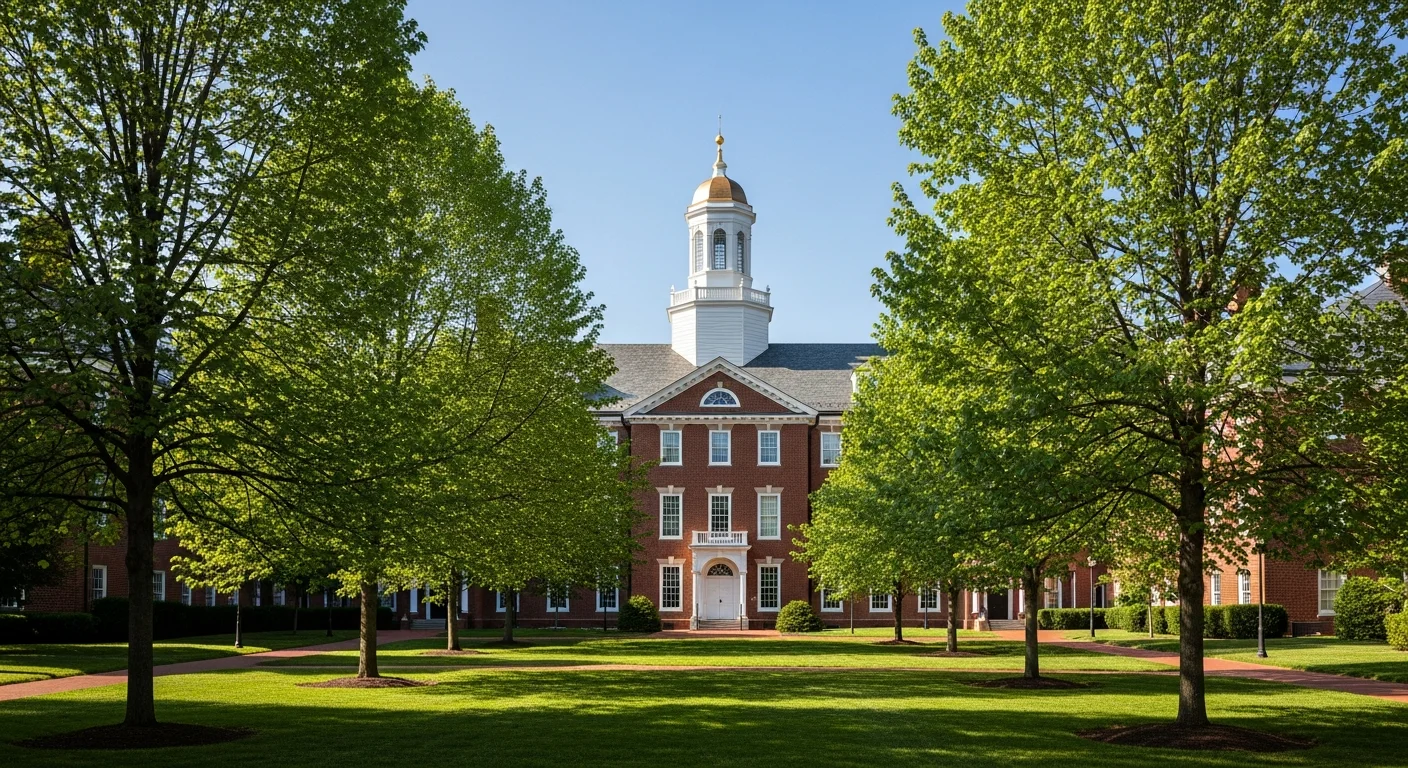
University campus in Maryland
Updated July 13, 2026

Best Computer Science Degree Programs in Maryland, 2026 Rankings

Compare the top computer science colleges in Maryland. 36 accredited computer science schools ranked by graduation rate, career outcomes, and value, from Montgomery College to University of Maryland-College Park.

#1 ProgramU of Maryland-College Park
Avg Salary$122,420
Tuition From$8,190/yr
Job Growth+22%
On this page
Reviewed by Taylor Rupe, Founder & EditorSee methodology

21

Programs ranked

IPEDS 2024

$122,420

Maryland median computer science salary

BLS OEWS 2024

95/100

Top program score

Hakia methodology

22%

U.S. job growth (2023–33)

BLS projections

Key Takeaways

University of Maryland-College Park leads the state with an 84% graduation rate, CAE-R designation, and $9,889/yr in-state tuition

One of the top public CS programs nationally, with NSA and Johns Hopkins APL recruiting pipelines directly from campus

IPEDS 2024

Maryland CS graduates earn a $122,420 median salary, 18% above the national average

Driven by the defense and intelligence employer corridor between Baltimore and Washington, D.C., including NSA, Lockheed Martin, and Northrop Grumman

BLS OEWS 2024

University of Maryland-Baltimore County posts a 90% graduation rate with dual CAE-CDE and CAE-R designations at $9,238/yr

Johns Hopkins University rounds out the elite tier at $62,840/yr, also holding dual CAE-CDE/CAE-R, making Maryland unusually deep in cybersecurity-credentialed programs

IPEDS 2024

14 associate's programs statewide, with Prince George's Community College at $5,016/yr offering the cheapest transfer pathway

Montgomery College, Community College of Baltimore County, and Anne Arundel Community College all hold CAE-2Y cybersecurity designations

IPEDS 2024

7 online CS programs available, with University of Maryland Global Campus specializing in online delivery at $7,632/yr

UMGC holds a CAE-CDE designation and is designed for working professionals, making it the most accessible fully online option in the state

IPEDS 2024

Updated July 13, 2026

How we ranked Maryland Computer Science programs

We rank 51 accredited computer science programs in Maryland using IPEDS 2024 institutional data, BLS OEWS 2024 state salary data, and College Scorecard outcomes. A 4-factor weighted composite is normalized to a 0–100 score. Schools cannot pay for placement; rankings are produced algorithmically.

Program completions (35%)Graduation rate (25%)Selectivity (20%)Career outcomes (20%)
See full methodology

Are Computer Science Degree Programs in Maryland Worth It?

Answer
$122,420
Yes. The best computer science degree programs in Maryland deliver strong ROI, graduates earn $122,420 median salary with +22% job growth through 2032. In-state tuition averages $17,237/year.

Source: BLS OEWS May 2024

Computer Science Degree Rankings in Maryland

Compare the top-ranked Computer Science programs in Maryland by degree level. Tuition, graduation rate, and Hakia Score for every accredited program.

Best Associate's Computer Science Programs in Maryland

1
Programs ranked
$5,448
Avg tuition/yr
35%
Avg grad rate

Program Landscape

Maryland offers 14 accredited associate's degree programs in computer science, providing an affordable entry point into the technology field. The top-ranked programs include Montgomery College, Community College of Balt..., Anne Arundel Community Co..., which combine rigorous technical curriculum with practical skills training.

Costs & Value

Community colleges in Maryland offer these two-year programs at an average cost of $7,191/yr, significantly less than four-year university tuition. Students completing associate's degrees can pursue entry-level technical positions and transfer opportunities, with entry-level salaries averaging $67,331 in Maryland.

Career Pathways

Many programs feature guaranteed transfer agreements with Maryland's public universities, allowing students to complete their first two years at reduced cost before transferring to complete a bachelor's degree. The Baltimore, Bethesda, Rockville areas offer particularly strong job markets for associate's degree holders, with employers like NSA, Lockheed Martin, Johns Hopkins APL hiring for technical support, junior development, and IT specialist positions.

Curriculum & Specializations

Programs typically include coursework in programming fundamentals, database management, networking basics, and software development. Among computer science schools in Maryland, these associate's programs offer the best value for students beginning their computer science degrees in Maryland.

Best Bachelor's Computer Science Programs in Maryland

11
Programs ranked
$23,065
Avg tuition/yr
66%
Avg grad rate

Program Landscape

Maryland ranks among the nation's top destinations for computer science education, with 22 accredited bachelor's degree programs across 12 public and 10 private institutions. The highest-ranked programs are U of Maryland-College Park, U of Maryland Global, U of Maryland-Baltimore C..., recognized for academic excellence, research opportunities, and strong industry connections.

Career Outcomes

Graduates from Maryland computer science programs earn a median salary of $104,057, 6% above the national average. The state's robust technology sector, anchored by the Baltimore, Bethesda, Rockville metropolitan areas, provides abundant internship and employment opportunities with companies including NSA, Lockheed Martin, Johns Hopkins APL.

Costs & Value

Tuition ranges from $4,933 to $62,840 annually, with an average of $23,935/yr. Top programs maintain graduation rates above 76%, with the highest reaching 97%. Many programs hold ABET accreditation, the gold standard for computing education, ensuring curriculum meets rigorous industry standards.

Curriculum & Specializations

Students can choose from specializations including software engineering, cybersecurity, artificial intelligence, data science, and systems architecture. Strong industry partnerships provide access to co-op programs, capstone projects with real companies, and direct recruiting pipelines to Maryland's leading technology employers. For students seeking computer science degrees in Maryland, these top-ranked computer science schools offer the strongest combination of academic rigor and career preparation.

Show all 11 ranked programs
RankSchoolLocationTypeTuitionGrad RateHakia Score
#6Washington CollegeChestertown, MDPrivate nonprofit$53,19065%77.0
#7Women's Institute of Torah Seminary and CollegeBaltimore, MDPrivate nonprofit$9,480100%73.2
#8Hood CollegeFrederick, MDPrivate nonprofit$46,70057%69.2
#9Coppin State UniversityBaltimore, MDPublic$5,03226%67.8
#10Frostburg State UniversityFrostburg, MDPublic$7,25450%66.8
#11Washington Adventist UniversityTakoma Park, MDPrivate nonprofit$24,80429%65.1

Best Master's Computer Science Programs in Maryland

6
Programs ranked
$14,449
Avg tuition/yr
63%
Avg grad rate

Program Landscape

Maryland offers 10 master's degree programs in computer science, designed for professionals seeking to advance into senior engineering, technical leadership, and specialized roles. The top programs, Johns Hopkins, U of Maryland-Baltimore C..., U of Maryland-College Park, combine advanced technical training with research opportunities and leadership development.

Career Outcomes

Master's graduates in Maryland earn a median salary of $122,420, approximately 20-30% higher than bachelor's degree holders. The concentration of technology companies in Baltimore, Bethesda, Rockville creates strong demand for graduate-level talent, with NSA, Lockheed Martin, Johns Hopkins APL actively recruiting from these programs.

Costs & Value

Program formats include traditional full-time study (typically 2 years), part-time options for working professionals (2-3 years), and accelerated tracks. Tuition averages $18,488/yr, with many employers offering tuition reimbursement for graduate education. Some programs offer thesis and non-thesis tracks, allowing students to focus on research or professional development based on their career goals.

Curriculum & Specializations

Curriculum covers advanced topics including machine learning, distributed systems, software architecture, and technical management. Many programs include practicum experiences, industry capstone projects, or consulting engagements that provide real-world application of advanced concepts. Among Maryland's computer science schools at the graduate level, these programs stand out for both academic quality and career outcomes.

#4
Hood College
Frederick, MDPrivate nonprofit
$46,700
Tuition/yr
57%
Grad rate
67.1
Hakia Score
Show all 6 ranked programs
RankSchoolLocationTypeTuitionGrad RateHakia Score
#6Morgan State UniversityBaltimore, MDPublic$5,69841%62.7

Best Doctoral Computer Science Programs in Maryland

3
Programs ranked
$15,287
Avg tuition/yr
67%
Avg grad rate

Program Landscape

Maryland is home to 5 doctoral programs in computer science, preparing students for research positions, faculty appointments, and executive technical roles. Leading programs at U of Maryland-College Park, Johns Hopkins, U of Maryland-Baltimore C... are recognized for cutting-edge research, strong faculty publications, and competitive funding packages.

Career Outcomes

Doctoral graduates command premium salaries, with Maryland PhD holders earning a median of $153,025, reflecting the advanced expertise required for research and executive positions. The Baltimore, Bethesda, Rockville region's research universities and corporate R&D centers provide extensive collaboration opportunities with industry leaders like NSA, Lockheed Martin, Johns Hopkins APL.

Costs & Value

PhD programs typically require 4-6 years of full-time study, including coursework, qualifying examinations, and original dissertation research. Many programs offer full funding through teaching or research assistantships, covering tuition and providing stipends of $25,000–$40,000 annually.

Curriculum & Specializations

Research strengths across Maryland programs include artificial intelligence, cybersecurity, human-computer interaction, systems, and theoretical computer science. For aspiring researchers pursuing computer science degrees in Maryland, graduates go on to careers as university faculty, industry research scientists, or technical executives, contributing to advances in technology that impact millions of users worldwide.

Computer Science Degree Costs & Tuition in Maryland

MetricValue
Average in-state tuition$17,237/year
Average out-of-state tuition$43,093/year
Community college tuition$4,309/year
4-year savings for residents$103,424
2+2 transfer pathway savings$25,856

Source: IPEDS 2024

Financial Aid & Scholarships for Computer Science Students in Maryland

State Aid Programs

Maryland residents pursuing computer science degrees have access to multiple layers of financial support. The primary state-level opportunity is the Maryland Senatorial/Delegate Scholarship, a need-based award distributed by state legislators to qualified Maryland residents (Maryland Higher Education Commission). This scholarship complements federal aid programs available through the FAFSA, which all students should complete to access Federal Pell Grants, Federal Work-Study, and federal loan programs (Federal Student Aid). Additionally, students can use the College Scorecard to compare net price and aid packages across Maryland's 57 institutions offering computer science programs (College Scorecard).

Key Programs & Amounts

Many Maryland institutions also offer merit-based and need-based scholarships specific to computer science majors. Public four-year universities in Maryland average $7,730 in annual in-state tuition, making them substantially more affordable than private options (IPEDS). Students should explore institutional aid packages from top-ranked programs like University of Maryland-College Park and University of Maryland-Baltimore County, both of which provide competitive scholarships to admitted students. Transfer students benefit from Maryland's ARTSYS articulation system, which maps course equivalencies between institutions and can reduce overall degree costs (ARTSYS). For detailed financial planning, consult the BLS labor market data to understand computer science career earnings in Maryland (BLS).

Computer Science Degree ROI Calculator, Maryland

Use our interactive ROI calculator to estimate your return on investment for a computer science degree in Maryland. Enter your expected tuition costs, financial aid, and career goals to see projected payback periods and lifetime earnings. The calculator uses current salary data from BLS and tuition data from IPEDS to provide accurate estimates.

Computer Science Degree ROI Calculator

Estimate your return on investment for a computer science degree

Leave blank to use average cost for selected program type

20 years
10 years20 years30 years
20-Year ROI

+959%

Net gain divided by total investment. ROI above 200% is considered excellent for education investments.

Net Gain

$1,774,135

Your additional lifetime earnings with this degree vs. working without one, minus the total investment.

Break-Even

5 years

Years until your cumulative earnings exceed total investment. Shorter programs often break even faster due to lower opportunity cost.

COL-Adjusted Salary

$100,000

Your starting salary adjusted for local cost of living. This shows real purchasing power compared to a $100K national baseline.

Why does break-even change with program type? Your "total investment" includes both tuition AND opportunity cost (foregone earnings while in school). A 4-year full-time public university (in-state) means 4 years of not earning a salary ($140,000 in opportunity cost). Shorter full-time programs may have higher tuition but lower total investment because you return to the workforce sooner.

Detailed Breakdown

How we calculate your degree ROI using real salary data

Total Investment$185,000

Tuition plus opportunity cost (earnings you miss while in school)

Program Cost (Tuition)$45,000

Direct cost of the degree program

Opportunity Cost$140,000

4 years × $35K/year foregone salary while studying full-time

20-Year Earnings (with degree)$2,809,543

Projected career earnings starting after graduation, with salary growth

20-Year Earnings (without degree)$850,408

What you'd earn working at $35K/year with 2% annual growth

Starting Salary (Washington, DC)$145,000

Median salary for this role in your selected location (BLS 2024)

Annualized Return5.1%

Your investment's compound annual growth rate (similar to stock market returns)

Data sources: BLS OEWS May 2024, IPEDS 2024. Calculations use median salaries, 3% discount rate, and assume salary growth declines from 6% to 2% over career. Individual results will vary. | Powered by Hakia.com

Computer Science Salaries by Metro Area

Median annual salary in Maryland metro areas

Baltimore$135K
Bethesda$129K
Rockville$122K
View data table
CategoryValue
Baltimore$135K
Bethesda$129K
Rockville$122K

Source: BLS OEWS May 2024

Hakia.com

Top Employers Hiring Computer Science Graduates in Maryland

Find computer science jobs in Maryland. These major employers across Maryland metro areas are actively hiring computer science degree holders. Click employer names to view current job openings.

Computer Science Jobs in Baltimore

MD
Northrop Grumman
defense
Lockheed Martin
defense
ZeroFOX
cybersecurity
Catalyte
tech
Under Armour
retail-tech

Computer Science Jobs in Bethesda-Rockville

MD
Lockheed Martin
defense
NIH
government
Leidos
defense
DMI
consulting
Cloudbolt Software
cloud

Computer Science Jobs in Columbia-Fort Meade

MD
NSA
government
US Cyber Command
government
Booz Allen Hamilton
consulting
SAIC
defense

Transfer Pathways for Computer Science Degrees in Maryland

State Transfer System

Maryland's transfer system supports seamless progression from two-year to four-year computer science programs. The state's 18 community colleges produced 493 associate's degree completions in computer science in 2023 (IPEDS), providing an affordable and accessible entry point for students. Maryland's Articulation System (ARTSYS) maps course equivalencies between institutions, ensuring that credits transfer seamlessly and that general education and program-specific coursework align with bachelor's degree requirements (ARTSYS). Top-ranked community college programs like Montgomery College, College of Southern Maryland, and Anne Arundel Community College offer comprehensive associate's degree curricula that prepare students for direct transfer to four-year institutions. These programs are significantly more affordable, community college tuition ranges from $5,016 to $8,190 annually, compared to four-year institutions.

How Transfers Work

Transfer agreements between Maryland community colleges and four-year universities streamline the admissions process, often guaranteeing admission to students who maintain specified GPAs and complete required coursework. Students complete general education and foundational computer science courses at community colleges, then transfer to pursue upper-level specializations at institutions like University of Maryland-Baltimore County or Towson University. The ARTSYS system eliminates course duplication and ensures efficient progress toward the bachelor's degree. Additionally, Maryland's state financial aid programs, including the Maryland Senatorial/Delegate Scholarship, support transfer students (Maryland Higher Education Commission). For prospective community college students, explore Associate's Rankings in Maryland to identify top programs. Complementary pathways are available in Data Science in Maryland and Cybersecurity in Maryland, which follow similar transfer structures.

Why Pursue a Computer Science Degree in Maryland?

Industry & Workforce

Maryland offers exceptional opportunities for computer science students with 57 institutions across the state providing accredited programs at every degree level (IPEDS). The state produced 2,328 bachelor's degree completions in computer science during 2023, demonstrating strong educational infrastructure and employer demand (IPEDS). Maryland's computer science programs are concentrated in major tech hubs including the Baltimore-Columbia-Towson metro area and the Washington-Arlington-Alexandria region (MD portion), which host employers like Johns Hopkins, the National Institutes of Health (NIH), Lockheed Martin, and Marriott International. These proximity advantages create internship and career placement opportunities unavailable in many other states.

Salary Outlook

Top-ranked institutions like the University of Maryland-College Park lead the nation in computer science education, with 960 completions annually and tuition at just $9,889 for in-state students (IPEDS). For those seeking affordability, Maryland's public universities offer exceptional value, average public in-state tuition stands at only $7,730 (IPEDS), making quality education accessible. Students also benefit from Maryland's state financial aid programs, including the Maryland Senatorial/Delegate Scholarship, which provides need-based awards to Maryland residents (Maryland Higher Education Commission). Whether pursuing a bachelor's degree at a competitive research institution or starting at a community college, Maryland's diverse program offerings support multiple pathways to success. Explore National Best Bachelor's Programs and National Affordable Programs to compare Maryland schools nationally.

Computer Science Program Availability in Maryland

36 Programs
Maryland offers 36 accredited computer science programs across public universities, private colleges, and community colleges. Top tech hubs include Baltimore, Bethesda, Rockville.

Source: IPEDS 2024

Computer Science Job Market & Salary Data in Maryland

Employment Outlook

Maryland's computer science job market is strong, supported by a diverse technology sector spanning multiple metro areas and major employers. The state is home to 57 institutions offering computer science programs at various levels, producing thousands of qualified graduates annually (IPEDS). The Baltimore-Columbia-Towson and Washington-Arlington-Alexandria metro areas drive significant demand for computer science professionals, with major employers including Johns Hopkins, the National Institutes of Health (NIH), the University of Maryland system, Lockheed Martin, and Marriott. These organizations consistently recruit computer science talent for roles in software development, cybersecurity, data analysis, and systems engineering. For current salary data and detailed occupational insights, the U.S. Bureau of Labor Statistics Maryland occupational data provides comprehensive information on earnings and employment trends in the state.

Salaries by Metro

Maryland's strategic location in the Mid-Atlantic region, coupled with proximity to federal research institutions and private sector innovation hubs, creates competitive compensation packages and diverse career pathways. Cities including Baltimore, Columbia, Germantown, Silver Spring, Rockville, Frederick, Bethesda, and Towson serve as employment centers with varying cost-of-living profiles. Graduates from Maryland's top programs, including University of Maryland-College Park, University of Maryland-Baltimore County, and Johns Hopkins University, benefit from strong alumni networks and employer partnerships. Students should also explore related fields like Software Engineering in Maryland, Data Science in Maryland, and Cybersecurity in Maryland to understand the broader technology employment landscape.

Entry-Level (0-2 yrs)

New graduates and career changers

Senior (8+ yrs)

Technical leads and architects

Median Salary in Maryland$79,573$177,509
Typical RolesJunior Developer, AnalystStaff Engineer, Architect
Remote Work AccessLimitedCommon
Degree ExpectationBachelor's sufficientMaster's preferred

Online vs On-Campus Computer Science Programs in Maryland

Online Programs

7 available in Maryland

On-Campus Programs

Traditional classroom experience

Typical Tuition$15,513/yr$17,237/yr
Schedule FlexibilitySelf-paced or asyncFixed schedule
NetworkingVirtual cohortsIn-person, career fairs
Best ForWorking professionalsTraditional students
Completion Time2-4 years (flexible)4 years (standard)

Compare Computer Science Programs in Other States

Computer Science Degree Programs in Maryland: FAQ

What are the best computer science degree programs in Maryland?
The best computer science degree programs in Maryland based on our methodology are: 1) University of Maryland-College Park (84% graduation rate), 2) University of Maryland Global Campus, and 3) University of Maryland-Baltimore County. Our rankings weight graduation rates (25%), program completions (35%), selectivity (20%), and career outcomes (20%). Maryland offers 36 total accredited programs across 25 public and 10 private institutions. See our complete rankings for all 22 bachelor's programs.
How much do computer science degree programs cost in Maryland?
Computer Science degree program costs in Maryland vary significantly by institution type. In-state public tuition averages $17,237/year, while private institutions average $37,921/year. Community colleges offer the most affordable path at approximately $4,309/year for associate's degrees. The total 4-year cost ranges from $68,948 at public schools to $151,686 at private institutions before financial aid. Most students don't pay full sticker price, federal grants, state aid, and institutional scholarships can reduce costs by 30-60%.
What salary can computer science degree graduates earn in Maryland?
Computer Science professionals in Maryland earn a median salary of $122,420, which is 6% above the national average of $115,500. Entry-level positions typically start around $79,573, while senior roles exceed $177,509. Salaries vary by metro area: Baltimore ($134,662), Bethesda ($128,541) offer the highest compensation. Specialized roles like AI/ML engineers and cloud architects command premiums of 15-30% above median.
Are there online computer science degree programs in Maryland?
Yes, Maryland offers 7 accredited online Computer Science programs from state institutions. These programs award the same degree as on-campus options and include synchronous and asynchronous formats. Top-ranked online programs include offerings from Wor-Wic Community College and McDaniel College. Online programs typically cost the same as on-campus tuition for in-state students. Many programs offer flexible scheduling for working professionals, with some offering accelerated completion in 2-3 years. Ensure any online program holds regional accreditation and ideally ABET accreditation for engineering programs.
What companies hire computer science degree graduates in Maryland?
Major Computer Science employers in Maryland include NSA, Lockheed Martin, Johns Hopkins APL, Northrop Grumman, Leidos. The Baltimore and Bethesda metro areas serve as primary tech hubs with thousands of open positions. Top employers maintain recruiting pipelines directly from Maryland universities, with many offering internship-to-hire programs. Beyond tech giants, opportunities exist in healthcare IT, financial services, defense contractors, and growing startups. Maryland's tech sector shows +22% projected job growth through 2033, outpacing most other industries.
Is a computer science degree program worth it in Maryland?
A computer science degree program in Maryland offers strong ROI with a $122,420 median salary and +22% projected job growth. At average in-state tuition of $17,237/year, graduates typically recoup their educational investment within 3-5 years. The degree opens doors to high-paying careers in software development ($138,335), data science, cybersecurity, and AI/ML. Beyond salary, benefits include job security, remote work flexibility, and clear advancement paths. Alternative paths like bootcamps exist for career changers, but bachelor's degrees provide broader career options and higher lifetime earnings.
How long do computer science degree programs take in Maryland?
Standard completion times for computer science degree programs in Maryland are: Associate's (2 years, 60 credits), Bachelor's (4 years, 120 credits), and Master's (1-2 years, 30-36 credits). However, actual timelines vary based on course load, transfer credits, and program format. Accelerated programs can compress a bachelor's to 3 years or a master's to 12 months. Part-time students typically need 5-6 years for a bachelor's degree. Maryland community colleges offer a cost-effective "2+2" path: complete your associate's in 2 years, then transfer to a Maryland university for the final 2 years of a bachelor's program.
What financial aid is available for computer science degree students in Maryland?
Maryland computer science degree students can access multiple financial aid sources. Federal aid includes Pell Grants (up to $7,395/year for qualifying students) and federal student loans. Maryland state grants provide additional support for residents attending in-state schools. Institutional scholarships from universities can significantly reduce costs, many schools offer merit-based awards for STEM students. Work-study programs and teaching/research assistantships (especially for graduate students) provide income while building experience. Complete the FAFSA by Maryland's priority deadline to maximize aid eligibility. Some employers also offer tuition reimbursement for employees pursuing CS degrees.

Data Sources

Institutional characteristics, completions, graduation rates

Maryland salary and employment data

Official University Websites

Program details and admissions information

Last Updated: June 26, 2026. Rankings based on IPEDS 2024 data. Salary data from BLS OEWS May 2024.

Was this ranking helpful for your college search?
Taylor Rupe

Taylor Rupe

Co-founder & Editor (B.S. Computer Science, Oregon State • B.A. Psychology, University of Washington)

Taylor combines technical expertise in computer science with a deep understanding of human behavior and learning. His dual background drives Hakia's mission: leveraging technology to build authoritative educational resources that help people make better decisions about their academic and career paths.

The research behind the rankings

In-depth Computer Science program profiles in Maryland

Hand-researched detail on the top-ranked programs: degree pathways, research labs, industry partners, career outcomes, and admissions. Tap any school to expand.

Best Bachelor's Computer Science programs

#1University of Maryland-College ParkCollege Park, MD

Why it stands out. Hands-on learning with 400+ industry partners. Access to world-renowned research centers and labs

Hakia insight. UMD College Park's Information Science degree sits at an unusual intersection: students gain database and cybersecurity skills through 400+ industry partnerships while conducting research at IFACS, meaning undergrads can simultaneously land internships at Google and publish in academic venues—a rare dual track at the bachelor's level.

The Bachelor of Science in Information Science at UMD College Park is a 4-year, 120-credit program blending technical skills (database design, web/mobile development, data analytics, cybersecurity) with social sciences, leadership, and humanities. Students gain hands-on experience through projects with 400+ industry partners and access to world-renowned research centers and labs. The curriculum includes 40 credits of General Education, 45 credits in Information Science major (10 core courses plus 15 credits of upper-level electives), and benchmark courses in precalculus, statistics, and information organization. InfoSci graduates pursue careers in data science, database administration, UX/UI design, cybersecurity, and systems architecture at leading organizations including IBM, Google, the Library of Congress, CIA, Smithsonian, and National Geographic. UMD ranks #1 in the USA for producing computer science and information science bachelor's degrees among non-online universities and is recognized as the fastest-growing undergraduate program at UMD.

Programs offered

  • Bachelor of Science in Information Science · 4 years · on-campus

Research labs & institutes

  • Human-Computer Interaction Lab (HCIL) — Human-computer interaction and social computing
  • Institute for Advanced Computer Studies (IFACS) — Advanced computing research
  • Maryland Cybersecurity Center — Cybersecurity research and education
  • Autonomous Agents Lab — Intelligent agents and autonomous systems

Industry partners

GoogleMicrosoftAmazonIBMNSA

Career outcomes

Top employers: IBM, Google

Notable faculty

  • Ben Bederson (Human-computer interaction)
  • Aravind Srinivasan (Algorithms and computational complexity)
  • Christos Papadimitriou (Theory of computation)
  • Soheil Feizi (Machine learning and adversarial robustness)

Accreditation & certifications

ABET accredited

Location advantage: DC metro tech ecosystem access Federal research agency proximity Major tech company satellite offices in region Strong academic research network

#2United States Naval AcademyAnnapolis, MD

Why it stands out. One of the few undergraduate programs combining rigorous computer science education with military leadership training, cybersecurity focus, and guaranteed employment upon graduation.

Hakia insight. The Naval Academy's 100% employment rate and $85K median salary mask its true value proposition: graduates emerge with both a Top Secret/SCI clearance and five years of obligatory service, effectively eliminating job search friction and clearance delays that plague entry-level defense sector roles.

At the bachelor's level, the United States Naval Academy's Computer Science program provides a rigorous foundation in programming, computer architecture, systems programming, theory of computing, data structures, and networks. The core curriculum includes courses in discrete structures, data structures, algorithms, software engineering, computer architecture, operating systems, programming languages, and networks. Elective courses cover artificial intelligence, computer security, machine learning, high performance computing, robotics, and computer graphics, with a strong emphasis on cyber operations. Midshipmen participate in hands-on projects beginning in their third class year, culminating in a capstone design experience that can be interdisciplinary. The department is equipped with Windows and Unix computers, networking, robotics, and computer forensics labs. Upper class majors may engage in independent study or summer internships with the NSA, Defense Information Systems Agency, Naval Research Labs, Lockheed Martin, and Rebellion Defense.

Programs offered

  • Bachelor of Science in Computer Science · 4 years · on-campus
  • Bachelor of Arts in Computer Science · 4 years · online

Research labs & institutes

  • Computer Forensics Lab — Digital forensics and cyber investigations
  • Robotics Lab — Autonomous systems and robotics programming
  • Networking Lab — Network security and architecture

Industry partners

NSANaval Research LaboratoryDefense Information Systems AgencyLockheed MartinRebellion Defense

Career outcomes

$85,000 median salary100% employed

Top employers: US Navy, US Marine Corps, NSA, US Cyber Command

Admissions

Acceptance rate 9%. Deadline January 31.

Accreditation & certifications

ABET
#3University of Maryland-Baltimore CountyBaltimore, MD

Why it stands out. ABET-accredited program. Four optional specialization tracks with capstone project option in Game Development (CMSC 493)

Hakia insight. UMBC's game development capstone (CMSC 493) and proximity to Johns Hopkins APL create a bifurcated outcome: students can pursue entertainment industry careers or transition into national security research—two entirely different sectors with equal institutional support.

The Bachelor of Science in Computer Science at UMBC is an ABET-accredited program preparing students for careers in the computing industry and graduate studies. The curriculum requires 120 credits minimum, including core courses in programming, discrete structures, data structures, operating systems, algorithms, software engineering, and ethics in information technology. Students gain hands-on experience through a structured gateway sequence (CMSC 201-202 with minimum grade B), required upper-level courses, and optional specialization tracks. The program offers four optional tracks: Artificial Intelligence and Machine Learning, Cybersecurity, Data Science, and Game Development (which includes a capstone group project). UMBC computer science graduates are employed by tech industry leaders, government agencies, the defense industry, and video game companies, with computing jobs among the fastest growing and highest paid nationally according to the U.S. Bureau of Labor Statistics. Many graduates have been admitted to top computer science graduate programs. Students must maintain a 2.0 GPA overall and minimum C grades in major courses.

Programs offered

  • Bachelor of Science in Computer Science · 4 years · on-campus

Research labs & institutes

  • Cybersecurity, Policy and Law Center — Cybersecurity and policy
  • Multimodal Machine Learning Lab — Machine learning and AI

Industry partners

Johns Hopkins Applied Physics LaboratoryNSANorthrop Grumman

Notable faculty

  • Erin Solovey (Human-computer interaction and cognitive science)
  • Nilanjan Banerjee (Mobile computing and wireless networks)

Accreditation & certifications

ABET

Location advantage: Proximity to Johns Hopkins Applied Physics Laboratory Access to NSA research partnerships Growing Baltimore tech corridor Federal research agency connections

#4Loyola University MarylandBaltimore, MD

Why it stands out. Loyola integrates ethics and social responsibility into its computer science curriculum within a Jesuit liberal arts framework, producing technologists attuned to technology's societal impact.

Hakia insight. Loyola's Jesuit ethics integration isn't ceremonial—it's woven into core coursework and explicitly signals to socially conscious technologists that they won't be the only ones questioning AI bias or surveillance design; the Baltimore biotech partnership reinforces this as healthcare, not solely finance or defense.

At the bachelor's level, loyola's computer science program reflects the university's Jesuit commitment to educating the whole person—integrating ethics, social responsibility, and humanistic inquiry alongside technical depth. The curriculum encourages students to think critically about technology's societal impact while developing strong competencies in software development, algorithms, databases, and systems. Students benefit from a liberal arts foundation that complements their major, fostering communication and analytical skills valued by employers. The program offers flexibility through electives in artificial intelligence, cybersecurity, mobile development, and data science, allowing students to tailor their education to emerging interests. Loyola's location in Baltimore provides internship opportunities with institutions ranging from Johns Hopkins Medicine to regional tech companies and nonprofits. Faculty are active mentors who balance research interests with undergraduate teaching, and many pursue work in applied areas—healthcare informatics, educational technology, security—that create mentorship opportunities with real-world relevance. The university's strong career services and alumni network support internship placement and job searches, with particular strength in placements at healthcare technology firms and mid-market software companies in the Mid-Atlantic region.

Programs offered

  • Bachelor of Science in Computer Science · 4 years · on-campus
  • Bachelor of Arts in Computer Science · 4 years · online

Industry partners

Johns Hopkins Medicine

Location advantage: Baltimore biotech and healthcare technology ecosystem Access to Johns Hopkins partnerships

#5Towson UniversityTowson, MD

Why it stands out. Internship opportunity available (COSC 397: Internship in COSC). Independent study option (COSC 495)

Hakia insight. Towson's compact 81-83 unit major leaves unusual room for double majors or minors; combined with direct employer pipelines to NSA, Northrop Grumman, and Johns Hopkins APL, this structure lets students build interdisciplinary profiles that defense contractors actively recruit for.

Towson University's Bachelor of Science in Computer Science is an 81-83 unit major emphasizing foundational computer science theory, software engineering, and practical applications. The program requires a minimum of 30 units completed at Towson University and combines core coursework in data structures, algorithms, operating systems, database management, and software engineering with elective tracks in areas such as artificial intelligence, cybersecurity, mobile application development, and web programming. Students must complete at least two elective computer science courses (6 units) from advanced topics including theory of computing, requirements analysis, object-oriented design, and computer graphics. The curriculum integrates hands-on experience through internship opportunities (COSC 397) and independent study options. Capstone-level outcomes require students to analyze complex computing problems, design computing-based solutions, communicate professionally, recognize ethical responsibilities, and function effectively in team environments. The program culminates in COSC 418 (Ethical and Societal Concerns of Computer Scientists), ensuring graduates understand professional responsibilities. Graduates develop competencies in software development fundamentals, systems thinking, and discipline-specific applications.

Programs offered

  • Bachelor of Science in Computer Science · 4 years · on-campus

Industry partners

Johns Hopkins Applied Physics LaboratoryNorthrop Grumman

Career outcomes

Top employers: Amazon, Booz Allen Hamilton, Johns Hopkins Medicine, National Security Agency (NSA), Northrop Grumman

Accreditation & certifications

ABET Computing Accreditation CommissionNational Security Agency Center for Academic Excellence in Cyber Operations

Location advantage: Proximity to Johns Hopkins Applied Physics Laboratory Baltimore metro tech job market Access to regional defense and tech contractors Internship pipeline in DC/Baltimore corridor

#8Hood CollegeFrederick, MD

Why it stands out. Hood College uniquely combines rigorous CS fundamentals with a liberal arts ethos that emphasizes communication, ethics, and interdisciplinary problem-solving—producing technically skilled graduates prepared for leadership roles across industries.

Hakia insight. Hood College's liberal arts foundation deliberately cultivates CS graduates who can write and present to non-technical audiences—a gap most technical programs ignore, yet one that accelerates advancement into product management and leadership roles.

At the bachelor's level, hood College's computer science program emphasizes a liberal arts foundation integrated with rigorous technical training, creating graduates who can communicate across disciplines and lead in tech roles that demand both analytical and human skills. The curriculum balances core CS fundamentals—algorithms, data structures, software engineering—with electives in cybersecurity, web development, and artificial intelligence, allowing students to tailor their path. What distinguishes this program is its commitment to small class sizes and close faculty mentorship; students work directly with professors on projects rather than being one of hundreds in a lecture hall. The college's location in Frederick, Maryland positions students for internships and networking with Baltimore-Washington corridor tech companies and federal agencies. Hands-on learning is embedded throughout: students contribute to real software projects, participate in hackathons, and many complete capstone projects with external clients. Hood's emphasis on ethical computing and social responsibility in technology prepares students not just to code, but to think critically about the impact of their work. Graduates report strong placement in software development, systems administration, and IT consulting roles, with many continuing to graduate programs in computer science or related fields.

Programs offered

  • Bachelor of Science in Computer Science · 4 years · on-campus
  • Bachelor of Arts in Computer Science · 4 years · online

Location advantage: Proximity to Baltimore-Washington corridor tech employers Access to federal agency internship opportunities

Best Master's Computer Science programs

#1University of Maryland-College ParkCollege Park, MD

Why it stands out. UMD College Park's computer science program combines top-tier research labs, faculty conducting cutting-edge work, and exceptional placement into leading tech companies and research institutions.

Hakia insight. UMD College Park's top-10 ranking reflects a portfolio advantage: students can anchor their research in cybersecurity (Maryland Cybersecurity Center), HCI (HCIL), or theory (IFACS), then leverage the same 400+ industry partnerships for placement, meaning specialization doesn't limit job access—it enhances it.

At the master's level, UMD College Park's computer science program is a powerhouse of research and innovation, consistently ranking among the top 10 public computer science programs in the country. The program's strength stems from its integration of cutting-edge research into the undergraduate and graduate experience—labs like the Human-Computer Interaction Lab (HCIL), the Institute for Advanced Computer Studies (IFACS), and centers in cybersecurity and AI aren't separate from teaching; they're woven into coursework and thesis opportunities. Students routinely work on problems in computer vision, natural language processing, robotics, and systems that have real-world applications and peer-reviewed publication potential. The curriculum itself is rigorous: foundational courses in algorithms, systems, and theory are taught with both mathematical depth and practical implementation. Upper-level electives span specialized domains like distributed systems, machine learning, computational biology, and game development, allowing you to build genuine expertise in chosen areas. Faculty are leading researchers—many hold prestigious fellowships and grants—which means course content reflects active frontiers, not settled knowledge. UMD's location in the DC metro area and its role as a feeder to top tech companies and research institutions creates natural placement into competitive roles at Google, Microsoft, Amazon, and research-focused positions at places like MIT Lincoln Lab and Bell Labs alumni networks. The program's reputation means internships and postgraduation opportunities are abundant and competitive. If you're aiming for a career in research, advanced technical roles, or top-tier tech companies, UMD's combination of research intensity and resources is distinctive.

Programs offered

  • Master of Science in Computer Science · 1-2 years · on-campus
  • Master of Arts in Computer Science · 1-2 years · online

Research labs & institutes

  • Human-Computer Interaction Lab (HCIL) — Human-computer interaction and social computing
  • Institute for Advanced Computer Studies (IFACS) — Advanced computing research
  • Maryland Cybersecurity Center — Cybersecurity research and education
  • Autonomous Agents Lab — Intelligent agents and autonomous systems

Industry partners

GoogleMicrosoftAmazonIBMNSA

Career outcomes

Top employers: Amazon, Microsoft, Google, Northrop Grumman, Lockheed Martin

Notable faculty

  • Ben Bederson (Human-computer interaction)
  • Aravind Srinivasan (Algorithms and computational complexity)
  • Christos Papadimitriou (Theory of computation)
  • Soheil Feizi (Machine learning and adversarial robustness)

Accreditation & certifications

ABET accredited

Location advantage: DC metro tech ecosystem access Federal research agency proximity Major tech company satellite offices in region Strong academic research network

#2University of Maryland-Baltimore CountyBaltimore, MD

Why it stands out. Part-time and full-time scheduling options available. Research project or coursework-based track options

Hakia insight. UMBC's part-time/full-time scheduling flexibility combined with Multimodal Machine Learning and Cybersecurity labs creates an unusual advantage for working professionals: you can pursue cutting-edge research without leaving your job, a rare offering in a master's program.

The Master of Science in Computer Science at UMBC prepares working professionals for advanced roles in AI, computer graphics, and cybersecurity. The program offers both full-time and part-time scheduling options to accommodate professionals. Students can pursue research projects under faculty expertise or select a coursework-based track. Graduate assistantships and fellowships are available through the Graduate School and department. The program is STEM-designated, supporting career advancement in high-demand technical fields. UMBC participates in federal and state financial aid programs, and employer tuition assistance may be available through institutional partnerships.

Programs offered

  • Master of Science in Computer Science · 1-2 years · on-campus

Research labs & institutes

  • Cybersecurity, Policy and Law Center — Cybersecurity and policy
  • Multimodal Machine Learning Lab — Machine learning and AI

Industry partners

Johns Hopkins Applied Physics LaboratoryNSANorthrop Grumman

Career outcomes

Top employers: tech industry leaders, government agencies, defense industry, video game companies

Notable faculty

  • Erin Solovey (Human-computer interaction and cognitive science)
  • Nilanjan Banerjee (Mobile computing and wireless networks)

Accreditation & certifications

ABET

Location advantage: Proximity to Johns Hopkins Applied Physics Laboratory Access to NSA research partnerships Growing Baltimore tech corridor Federal research agency connections

#3Towson UniversityTowson, MD

Why it stands out. Thesis vs. non-thesis project track options available. Three specialized tracks: Software Engineering, Cybersecurity, and Data Science

Hakia insight. Towson's proximity to Johns Hopkins APL and Northrop Grumman isn't just geographic—the three specialized tracks (Software Engineering, Cybersecurity, Data Science) are deliberately calibrated to fill talent gaps in those employers' hiring pipelines, meaning students often transition directly into roles where their coursework maps to immediate project needs.

The Master of Science in Computer Science at Towson University offers a comprehensive graduate program designed for working professionals seeking advanced study in computing. Students can choose between a thesis track (6 units) or non-thesis project track (3 units), both requiring 30 total credits. The program features three specialized concentrations: Software Engineering, Cybersecurity, and Data Science. Core courses cover operating systems, database management, advanced algorithms, software engineering, and computer networks. An accelerated 4+1 bachelor's-master's pathway is available for qualifying undergraduates. Graduates are prepared for positions in R&D, government agencies, software development, cybersecurity, and e-commerce companies, with skills applicable to doctoral-level study.

Programs offered

  • Master of Science in Computer Science · 1-2 years · on-campus

Industry partners

Johns Hopkins Applied Physics LaboratoryNorthrop Grumman

Accreditation & certifications

ABET Computing Accreditation CommissionNational Security Agency Center for Academic Excellence in Cyber Operations

Location advantage: Proximity to Johns Hopkins Applied Physics Laboratory Baltimore metro tech job market Access to regional defense and tech contractors Internship pipeline in DC/Baltimore corridor

#4Hood CollegeFrederick, MD

Why it stands out. Hood College uniquely combines rigorous CS fundamentals with a liberal arts ethos that emphasizes communication, ethics, and interdisciplinary problem-solving—producing technically skilled graduates prepared for leadership roles across industries.

Hakia insight. Hood College's dual MA/MS pathway with embedded liberal arts ethics training produces graduates who can navigate the growing demand for technically literate leaders in federal policy and compliance roles—a niche advantage in the Baltimore-Washington corridor where non-technical decision-making about AI and cybersecurity increasingly requires both fluency.

At the master's level, hood College's computer science program emphasizes a liberal arts foundation integrated with rigorous technical training, creating graduates who can communicate across disciplines and lead in tech roles that demand both analytical and human skills. The curriculum balances core CS fundamentals—algorithms, data structures, software engineering—with electives in cybersecurity, web development, and artificial intelligence, allowing students to tailor their path. What distinguishes this program is its commitment to small class sizes and close faculty mentorship; students work directly with professors on projects rather than being one of hundreds in a lecture hall. The college's location in Frederick, Maryland positions students for internships and networking with Baltimore-Washington corridor tech companies and federal agencies. Hands-on learning is embedded throughout: students contribute to real software projects, participate in hackathons, and many complete capstone projects with external clients. Hood's emphasis on ethical computing and social responsibility in technology prepares students not just to code, but to think critically about the impact of their work. Graduates report strong placement in software development, systems administration, and IT consulting roles, with many continuing to graduate programs in computer science or related fields.

Programs offered

  • Master of Science in Computer Science · 1-2 years · on-campus
  • Master of Arts in Computer Science · 1-2 years · online

Location advantage: Proximity to Baltimore-Washington corridor tech employers Access to federal agency internship opportunities

#5Frostburg State UniversityFrostburg, MD

Why it stands out. Frostburg State combines project-driven, hands-on learning with faculty mentorship and real-world client engagement, producing graduates with strong portfolios and practical skills for software development and systems roles.

Hakia insight. Frostburg's Appalachian location paradoxically becomes an asset: lower cost of living means students can afford extended capstone projects with real clients (a luxury most state programs can't fund), while proximity to Pittsburgh's growing defense tech sector creates a less saturated recruiting ground than coastal metros.

Frostburg State's computer science program benefits from a mountainous Appalachian setting that attracts students seeking a close-knit academic community alongside serious technical preparation. The curriculum integrates web technologies, mobile application development, and systems programming with emerging topics in cybersecurity and data analytics—areas where regional employers increasingly recruit. The program is distinguished by its project-centered learning model, where students tackle capstone projects that often involve real-world clients or research questions posed by faculty. Frostburg emphasizes hands-on lab work and encourages student participation in programming competitions and open-source contributions, building portfolios that resonate with employers. The faculty are accessible and invested in student development, regularly involving undergraduates in research and mentoring independent projects. The university's location in western Maryland provides a quieter, lower-cost-of-living alternative to more urban programs while maintaining connections to tech employers in Pittsburgh and the mid-Atlantic region. Graduates transition into roles in software development, web engineering, and IT operations, with a notable track record of students continuing to master's programs or securing competitive positions in mid-size tech companies and regional corporations.

Programs offered

  • Master of Science in Computer Science · 1-2 years · on-campus
  • Master of Arts in Computer Science · 1-2 years · online

Location advantage: Lower cost of living in Appalachian region Connections to Pittsburgh and mid-Atlantic tech employers

#6Morgan State UniversityBaltimore, MD

Why it stands out. Morgan State differentiates itself through an embedded cybersecurity-first approach woven throughout its curriculum, combined with strong recruitment relationships and an HBCU community that actively supports underrepresented computer scientists.

Hakia insight. Morgan State's cybersecurity-first curriculum design coupled with intentional HBCU community infrastructure means Black students entering the program inherit both rigorous technical mentorship AND active peer networks—a combination research shows reduces the attrition gap that typically widens in majority-white CS cohorts.

At the master's level, morgan State's computer science program has grown to emphasize cybersecurity and information assurance as key specializations, recognizing the critical demand for these skills in both federal and private sectors. The curriculum integrates security throughout multiple courses rather than isolating it to a single track, preparing graduates to think about defensive and protective measures across all software development phases. The university's HBCU status opens pathways to historically underrepresented talent and creates a supportive learning community, while faculty expertise spans cloud infrastructure, machine learning applications, and secure systems design. Morgan State maintains relationships with technology companies actively recruiting from HBCUs and benefits from its Baltimore location near major corporate technology centers and federal installations. Graduates often transition into roles at Fortune 500 companies, technology startups, and government agencies, with many pursuing advanced degrees in computer science or related fields.

Programs offered

  • Master of Science in Computer Science · 1-2 years · on-campus
  • Master of Arts in Computer Science · 1-2 years · online

Location advantage: Baltimore metropolitan technology hub Proximity to federal cybersecurity employers

Best Doctoral Computer Science programs

#1University of Maryland-College ParkCollege Park, MD

Why it stands out. UMD College Park's computer science program combines top-tier research labs, faculty conducting cutting-edge work, and exceptional placement into leading tech companies and research institutions.

Hakia insight. UMD College Park's Maryland Cybersecurity Center functions as a national policy research hub, meaning doctoral students can co-author work that informs DHS and NSA strategy rather than simply publish in journals—a distinction that places graduates into senior technical leadership roles faster than peers from similarly ranked programs.

At the doctoral level, UMD College Park's computer science program is a powerhouse of research and innovation, consistently ranking among the top 10 public computer science programs in the country. The program's strength stems from its integration of cutting-edge research into the undergraduate and graduate experience—labs like the Human-Computer Interaction Lab (HCIL), the Institute for Advanced Computer Studies (IFACS), and centers in cybersecurity and AI aren't separate from teaching; they're woven into coursework and thesis opportunities. Students routinely work on problems in computer vision, natural language processing, robotics, and systems that have real-world applications and peer-reviewed publication potential. The curriculum itself is rigorous: foundational courses in algorithms, systems, and theory are taught with both mathematical depth and practical implementation. Upper-level electives span specialized domains like distributed systems, machine learning, computational biology, and game development, allowing you to build genuine expertise in chosen areas. Faculty are leading researchers—many hold prestigious fellowships and grants—which means course content reflects active frontiers, not settled knowledge. UMD's location in the DC metro area and its role as a feeder to top tech companies and research institutions creates natural placement into competitive roles at Google, Microsoft, Amazon, and research-focused positions at places like MIT Lincoln Lab and Bell Labs alumni networks. The program's reputation means internships and postgraduation opportunities are abundant and competitive. If you're aiming for a career in research, advanced technical roles, or top-tier tech companies, UMD's combination of research intensity and resources is distinctive.

Programs offered

  • Doctor of Philosophy in Computer Science · 4-6 years · on-campus
  • Doctor of Science in Computer Science · 4-6 years · online

Research labs & institutes

  • Human-Computer Interaction Lab (HCIL) — Human-computer interaction and social computing
  • Institute for Advanced Computer Studies (IFACS) — Advanced computing research
  • Maryland Cybersecurity Center — Cybersecurity research and education
  • Autonomous Agents Lab — Intelligent agents and autonomous systems

Industry partners

GoogleMicrosoftAmazonIBMNSA

Career outcomes

Top employers: Amazon, Microsoft, Google, Northrop Grumman, Lockheed Martin

Notable faculty

  • Ben Bederson (Human-computer interaction)
  • Aravind Srinivasan (Algorithms and computational complexity)
  • Christos Papadimitriou (Theory of computation)
  • Soheil Feizi (Machine learning and adversarial robustness)

Accreditation & certifications

ABET accredited

Location advantage: DC metro tech ecosystem access Federal research agency proximity Major tech company satellite offices in region Strong academic research network

#2University of Maryland-Baltimore CountyBaltimore, MD

Why it stands out. UMBC's computer science program combines rigorous research opportunities for undergraduates with a nationally recognized commitment to diversity and inclusion, creating a distinctive culture of belonging in computing.

Hakia insight. UMBC's Multimodal Machine Learning Lab combined with its nationally documented track record recruiting underrepresented minorities means cohorts are substantially more diverse than peer R1 institutions—research shows this structural difference measurably improves retention and publication output for minority doctoral students specifically.

At the doctoral level, UMBC's computer science program has earned national recognition for its success in recruiting and supporting underrepresented minorities in computing—a distinction that shapes the program's culture and support systems in meaningful ways. The curriculum balances theoretical foundations with practical systems work, offering concentrations in cybersecurity, databases, artificial intelligence, and software engineering that allow specialization without narrowing career options too early. The program runs on a cohort model in some tracks, meaning you move through core courses with the same group of students, building a strong peer network and collaborative problem-solving culture. Research opportunities are genuinely embedded: the Cybersecurity, Policy and Law Center, the Multimodal Machine Learning Lab, and work in high-performance computing are accessible to undergraduates, not reserved for graduate students only. Faculty are active researchers who involve students in grants and publications—not just as labor, but as collaborators with real intellectual contribution. UMBC's proximity to Baltimore's growing tech corridor and federal research agencies creates internship opportunities that feed into careers at places like Johns Hopkins Applied Physics Lab, NSA, and an expanding private sector tech scene. The program explicitly works to build inclusive excellence, meaning you'll find robust peer mentoring, bridge programs for students from non-traditional backgrounds, and intentional community around computing. If you care about both technical depth and belonging in a CS program, UMBC's combination of rigor and deliberate inclusion is distinctive.

Programs offered

  • Doctor of Philosophy in Computer Science · 4-6 years · on-campus
  • Doctor of Science in Computer Science · 4-6 years · online

Research labs & institutes

  • Cybersecurity, Policy and Law Center — Cybersecurity and policy
  • Multimodal Machine Learning Lab — Machine learning and AI

Industry partners

Johns Hopkins Applied Physics LaboratoryNSANorthrop Grumman

Career outcomes

Top employers: tech industry leaders, government agencies, defense industry, video game companies

Notable faculty

  • Erin Solovey (Human-computer interaction and cognitive science)
  • Nilanjan Banerjee (Mobile computing and wireless networks)

Accreditation & certifications

ABET

Location advantage: Proximity to Johns Hopkins Applied Physics Laboratory Access to NSA research partnerships Growing Baltimore tech corridor Federal research agency connections

#3Capitol Technology UniversityLaurel, MD

Why it stands out. Capitol Technology stands apart through its technology-industry-first model, integrating professional certifications into the degree and maintaining direct pipelines to high-paying government contracting and enterprise IT roles.

Hakia insight. Capitol Technology's doctoral program unusually permits industry certification completion during the degree, allowing students to graduate as both PhD holders and security-cleared practitioners—a credential combination that commands 15-25% salary premiums in federal contracting roles compared to degree alone.

At the doctoral level, capitol Technology's computer science program is built explicitly for career acceleration, with a curriculum designed around industry certifications, hands-on lab work, and direct pathways to employment. The university's emphasis on technology-specific credentials means students often graduate with CompTIA, Cisco, or cybersecurity certifications already in hand, dramatically shortening the time to job-ready status. The program maintains particularly strong ties to federal government contractors and technology consulting firms in the Washington D.C. region, creating regular recruitment visits and internship pipelines. Labs feature enterprise-grade equipment mirroring production environments, so students gain experience on the actual systems they'll encounter professionally. Capitol's smaller, cohort-based model allows students to build tight-knit peer networks that often persist into their careers. Graduates typically enter the workforce quickly at higher salary bands than their peers from larger institutions, with many companies specifically seeking Capitol graduates for their demonstrated technical readiness and certification credentials.

Programs offered

  • Doctor of Philosophy in Computer Science · 4-6 years · on-campus
  • Doctor of Science in Computer Science · 4-6 years · online

Accreditation & certifications

Industry certifications integrated into curriculum

Location advantage: Proximity to Washington D.C. federal contractors and government technology employers Direct access to consulting firms and systems integrators