🥇
University of Michigan-Ann Arbor
Ann Arbor, MIPublic
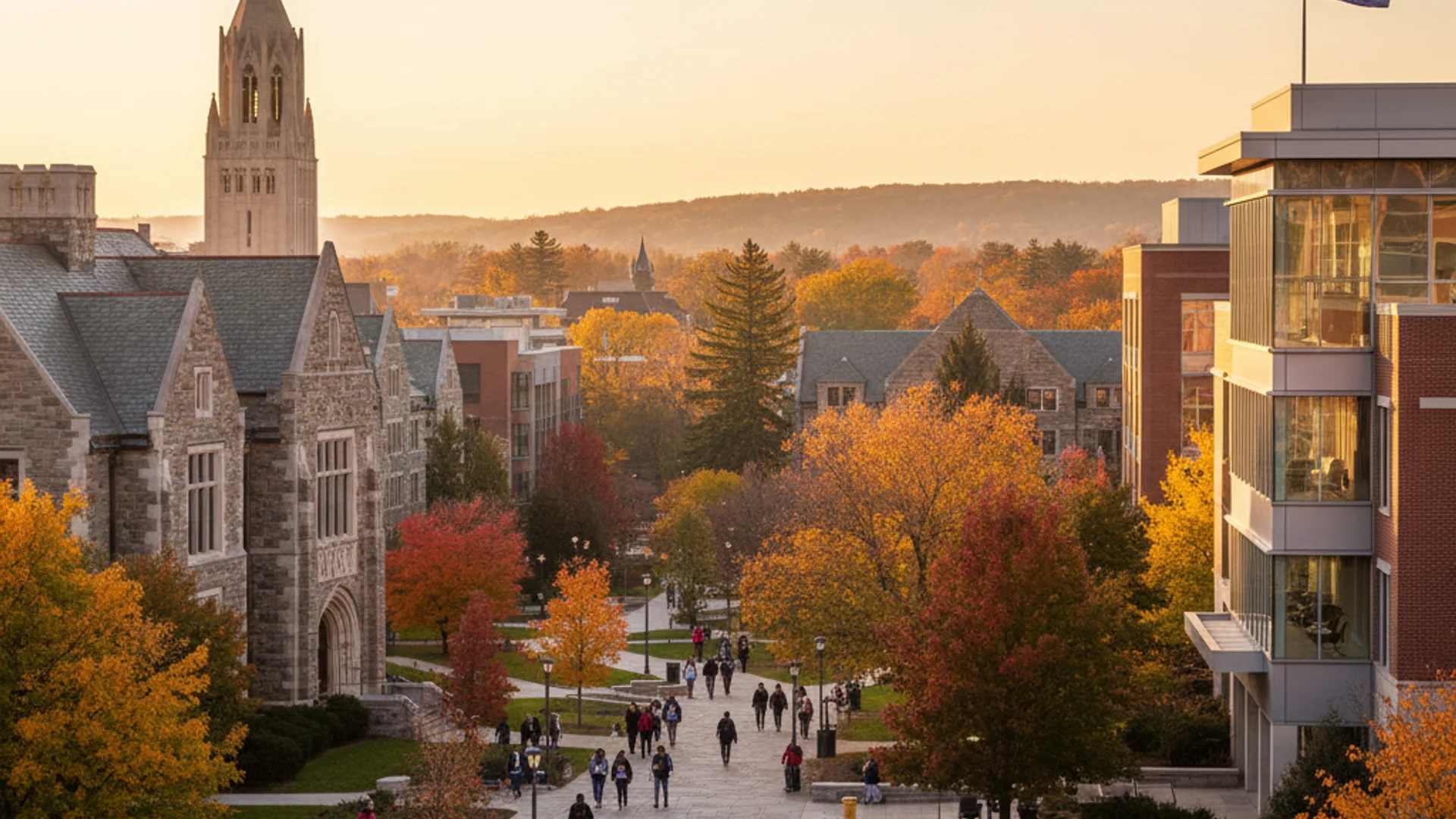
U-M Central Campus Tour #UofM #UMich #Michigan #CampusTour$18,516
Tuition/yr
93%
Grad rate
95.9
Hakia Score
Compare the top data science colleges in Michigan. 31 accredited data science schools ranked by graduation rate, career outcomes, and value, from Monroe County Community College to University of Michigan-Ann Arbor.
Best data science degree programs: U of Michigan-Ann Arbor, Michigan Technological, Michigan State
Ranked by graduation rates, program outcomes, and institutional quality
Tuition ranges from $4,656 to $55,226/year
Monroe County Community C... offers the most affordable option at $6,638/yr
Data Science degree programs available: 4 associate's, 13 master's, 5 doctoral in Michigan
From community college pathways to advanced research degrees
8 online data science degree programs in Michigan
Flexible scheduling for working professionals
Michigan community college transfer can save 40-60% on total degree costs
4 associate's programs provide transfer pathways to bachelor's degrees
Education Commission of the States
Major employers: Ford, GM, Quicken Loans, Duo Security
Tech hubs in Detroit and Ann Arbor
Hakia Research 2026
Data Science degree programs near 85+ cities across Michigan
Search by city to find programs within 200 miles of your location
Updated October 19, 2026
We rank 49 accredited data science programs in Michigan using IPEDS 2024 institutional data, BLS OEWS 2024 state salary data, and College Scorecard outcomes. A 4-factor weighted composite is normalized to a 0–100 score. Schools cannot pay for placement; rankings are produced algorithmically.
Are Data Science Degree Programs in Michigan Worth It?
Source: BLS OEWS May 2024
Compare the top-ranked Data Science programs in Michigan by degree level. Tuition, graduation rate, and Hakia Score for every accredited program.
Michigan ranks among the nation's top destinations for data science education, with 27 accredited bachelor's degree programs across 12 public and 15 private institutions. The highest-ranked programs are U of Michigan-Ann Arbor, Michigan Technological, Michigan State, recognized for academic excellence, research opportunities, and strong industry connections.
Graduates from Michigan data science programs earn a median salary of $84,856, 14% below the national average. The state's robust technology sector, anchored by the Detroit, Ann Arbor, Grand Rapids metropolitan areas, provides abundant internship and employment opportunities with companies including Ford, GM, Quicken Loans.
Tuition ranges from $12,460 to $55,226 annually, with an average of $26,251/yr. Top programs maintain graduation rates above 87%, with the highest reaching 97%. Many programs hold ABET accreditation, the gold standard for computing education, ensuring curriculum meets rigorous industry standards.
Students can choose from specializations including software engineering, cybersecurity, artificial intelligence, data science, and systems architecture. Strong industry partnerships provide access to co-op programs, capstone projects with real companies, and direct recruiting pipelines to Michigan's leading technology employers. For students seeking data science degrees in Michigan, these top-ranked data science schools offer the strongest combination of academic rigor and career preparation.
Michigan offers 13 master's degree programs in data science, designed for professionals seeking to advance into senior engineering, technical leadership, and specialized roles. The top programs, U of Michigan-Ann Arbor, Michigan Technological, Grand Valley State, combine advanced technical training with research opportunities and leadership development.
Master's graduates in Michigan earn a median salary of $99,830, approximately 20-30% higher than bachelor's degree holders. The concentration of technology companies in Detroit, Ann Arbor, Grand Rapids creates strong demand for graduate-level talent, with Ford, GM, Quicken Loans actively recruiting from these programs.
Program formats include traditional full-time study (typically 2 years), part-time options for working professionals (2-3 years), and accelerated tracks. Tuition averages $21,868/yr, with many employers offering tuition reimbursement for graduate education. Some programs offer thesis and non-thesis tracks, allowing students to focus on research or professional development based on their career goals.
Curriculum covers advanced topics including machine learning, distributed systems, software architecture, and technical management. Many programs include practicum experiences, industry capstone projects, or consulting engagements that provide real-world application of advanced concepts. Among Michigan's data science schools at the graduate level, these programs stand out for both academic quality and career outcomes.
| Metric | Value |
|---|---|
| Average in-state tuition | $23,823/year |
| Average out-of-state tuition | $59,558/year |
| Community college tuition | $5,956/year |
| 4-year savings for residents | $142,940 |
| 2+2 transfer pathway savings | $35,734 |
Source: IPEDS 2024
Michigan students benefit from both federal financial aid and state-specific programs supporting STEM education. The Michigan Tuition Grant provides up to $2,800/year for students at private institutions, while the Michigan Competitive Scholarship supports students at public universities with up to $1,500/year based on standardized test scores (Michigan Student Aid). Merit-based scholarships often target students pursuing technical fields like data science, with awards ranging from $2,000 to full tuition coverage.
Industry partnerships create additional scholarship opportunities through Ford, General Motors, and Rocket Mortgage. Michigan Tech offers extensive scholarship programs for engineering and technology students including data science majors. Graduate students may qualify for research or teaching assistantships covering tuition plus $25,000-$35,000 stipends. Federal Pell Grants provide up to $7,395/year for students with demonstrated financial need.
Michigan Reconnect covers community college tuition for adults 25+, providing free access to foundational data science coursework. Work-study programs and cooperative education help students offset costs while gaining experience. Many employers offer tuition reimbursement for employees pursuing data science degrees, with GM, Ford, and major healthcare systems providing $5,000-$15,000/year for continuing education. Students can explore affordable data science programs for cost comparisons.
Use our interactive ROI calculator to estimate your return on investment for a data science degree in Michigan. Enter your expected tuition costs, financial aid, and career goals to see projected payback periods and lifetime earnings. The calculator uses current salary data from BLS and tuition data from IPEDS to provide accurate estimates.
Estimate your return on investment for a data science degree
Leave blank to use average cost for selected program type
+488%
Net gain divided by total investment. ROI above 200% is considered excellent for education investments.
$902,208
Your additional lifetime earnings with this degree vs. working without one, minus the total investment.
6 years
Years until your cumulative earnings exceed total investment. Shorter programs often break even faster due to lower opportunity cost.
$117,647
Your starting salary adjusted for local cost of living. This shows real purchasing power compared to a $100K national baseline.
Why does break-even change with program type? Your "total investment" includes both tuition AND opportunity cost (foregone earnings while in school). A 4-year full-time public university (in-state) means 4 years of not earning a salary ($140,000 in opportunity cost). Shorter full-time programs may have higher tuition but lower total investment because you return to the workforce sooner.
How we calculate your degree ROI using real salary data
Tuition plus opportunity cost (earnings you miss while in school)
Direct cost of the degree program
4 years × $35K/year foregone salary while studying full-time
Projected career earnings starting after graduation, with salary growth
What you'd earn working at $35K/year with 2% annual growth
Median salary for this role in your selected location (BLS 2024)
Your investment's compound annual growth rate (similar to stock market returns)
Data sources: BLS OEWS May 2024, IPEDS 2024. Calculations use median salaries, 3% discount rate, and assume salary growth declines from 6% to 2% over career. Individual results will vary. | Powered by Hakia.com
Median annual salary in Michigan metro areas
| Category | Value |
|---|---|
| Detroit | $110K |
| Ann Arbor | $105K |
| Grand Rapids | $100K |
Source: BLS OEWS May 2024
Hakia.com
Find data science jobs in Michigan. These major employers across Michigan metro areas are actively hiring data science degree holders. Click employer names to view current job openings.
Detroit is the center of automotive innovation, leading in EV development and autonomous vehicle technology.
Nearby cities: Dearborn, Troy, Warren, Auburn Hills, Southfield
Ann Arbor is anchored by University of Michigan, with strong tech research and startup ecosystem.
Nearby cities: Ypsilanti, Canton, Plymouth, Novi
Michigan's community college system maintains articulation agreements with four-year universities helping data science pathway completion. Students complete mathematics, statistics, and introductory computer science courses at community colleges before transferring. Grand Rapids Community College, Oakland Community College, and Macomb Community College offer strong preparatory programs aligned with transfer requirements. Transfer agreements often guarantee admission with specific GPA requirements.
The Michigan Transfer Network provides online resources for course equivalency and degree planning across institutions. Students should work closely with academic advisors to ensure prerequisite completion and smooth transitions. Some universities offer 2+2 programs specifically designed for data science, providing structured pathways from associate to bachelor's degrees. Transfer-specific scholarships of $2,000-$10,000 reward strong academic performance.
Michigan Reconnect covers tuition for adults 25+ at community colleges, enabling free access to foundational coursework. Over 207,000 Michiganders have enrolled since 2021 (Michigan Reconnect). Research shows community college transfer students perform comparably to native students when prerequisites are properly completed. Students should complete calculus through multivariable, statistics, and programming (Python/R) before transferring to ensure smooth academic preparation.
Michigan is a premier destination for data science education and careers, driven by the automotive industry's transformation into autonomous and electric vehicles. Software developers in Michigan earn competitive salaries with strong growth potential, while data scientists are in high demand across automotive, healthcare, and financial services sectors (BLS Software Developers). The state's tech sector benefits from established manufacturing expertise now requiring advanced analytics, machine learning, and AI capabilities.
Detroit has launched eight certified tech hubs to support digital literacy and technology development, creating a foundation for data science growth (Detroit Tech Hubs). Major employers like Ford, General Motors, and Rocket Mortgage actively seek data scientists to drive innovation in connected vehicles, autonomous driving, and financial technology. Michigan's lower cost of living compared to coastal tech hubs makes it attractive for students and professionals alike.
The Brookings Institution identified emerging AI activity across Michigan metro areas, indicating expanding opportunities beyond traditional tech centers (Brookings). University of Michigan's data science programs rank among the nation's best, while Michigan State's MSDS program earned #3 national ranking from Fortune Magazine. Students can explore data science programs nationally or compare options in California and Texas.
Data Science Job Growth in Michigan
Source: BLS Occupational Outlook
Michigan's data science job market reflects national growth trends with employment projected to increase 34% from 2024 to 2034, making it the fourth fastest-growing occupation nationally (BLS Data Scientists). Entry-level data scientists in Michigan start at $70,000-$85,000 annually, while experienced professionals earn $120,000-$160,000. Detroit metro leads employment, followed by Grand Rapids and Ann Arbor, with healthcare, financial services, and manufacturing actively recruiting.
Automotive employers dominate the market. GM employs Senior Data Scientists for marketing analytics with Media Mix Modeling expertise, earning $102,000-$135,900 with comprehensive benefits (GM Careers). Ford's GDI&A department seeks professionals for Machine Learning projects across Connected Vehicle, Smart Mobility, Manufacturing, and Warranty Analytics domains. Stellantis applies data science to autonomous vehicle development and predictive maintenance.
Financial and healthcare sectors provide stable alternatives. Rocket Mortgage employs hundreds of data scientists for mortgage analytics and AI-driven technology. Blue Cross Blue Shield of Michigan and Henry Ford Health apply data science to healthcare outcomes and operational efficiency. DTE Energy utilizes data science for smart grid management. Remote work options have expanded access to national employers while maintaining Michigan's 30-40% lower cost of living compared to coastal cities.
New graduates and career changers
Technical leads and architects
8 available in Michigan
Traditional classroom experience
Institutional characteristics, completions, graduation rates
Michigan salary and employment data
Program details and admissions information
Last Updated: June 26, 2026. Rankings based on IPEDS 2024 data. Salary data from BLS OEWS May 2024.

Co-founder & Editor (B.S. Computer Science, Oregon State • B.A. Psychology, University of Washington)
Taylor combines technical expertise in computer science with a deep understanding of human behavior and learning. His dual background drives Hakia's mission: leveraging technology to build authoritative educational resources that help people make better decisions about their academic and career paths.
Hand-researched detail on the top-ranked programs: degree pathways, research labs, industry partners, career outcomes, and admissions. Tap any school to expand.
Why it stands out. 100% of students complete real-world client projects as part of curriculum. Partnerships with industry, nonprofit, and educational organizations for hands-on experience
Hakia insight. Michigan's School of Information requirement that 100% of BSI students complete real-world client projects means every graduate has portfolio work from actual nonprofit, industry, or educational organizations—a competitive edge over peers whose capstones are hypothetical case studies.
The Bachelor of Science in Information (BSI) at University of Michigan's School of Information is an interdisciplinary program combining technology and data with human behavior understanding. Students choose between two pathways: Information Analysis or User Experience Design. The curriculum emphasizes engaged learning with 100% of students completing real-world client projects through partnerships with industry, nonprofit, and educational organizations. The program integrates technical skills in programming and data manipulation with courses in psychology, business, communications, and ethics. BSI graduates pursue careers as UX designers, data analysts, product managers, and business consultants across tech, finance, healthcare, startups, and government. The program offers dedicated career development support including personalized coaching, internship courses, and on-campus recruiting.
Programs offered
Research labs & institutes
Career outcomes
Notable faculty
Admissions
GPA 3.4 for honors admission. Deadline Fall: July 15, Winter: November 15, Spring/Summer: March 15.
Why it stands out. Practitioner-focused data science program with flexible scheduling and applied curriculum designed for working professionals and career-switchers entering Midwest business analytics roles.
Hakia insight. Eastern Michigan's explicit design for working professionals and career-changers, paired with Detroit metro proximity to finance/insurance/healthcare hubs, creates a regional ecosystem where students can negotiate flexible internships and capstones around full-time employment—a practical edge most traditional programs don't accommodate.
At the bachelor's level, eastern Michigan's data science program targets working professionals and career-changers through flexible delivery and applied curriculum design. The program prioritizes accessibility and real-world relevance, with courses structured around industry-standard tools and techniques in SQL, Python, and cloud platforms. Students engage with capstone projects anchored in local business problems, creating direct pathways to employment in the Detroit metro area's growing analytics sector. The program is particularly strong for students balancing full-time work with education, offering evening and hybrid formats that don't compromise on rigor. Faculty bring industry experience alongside academic credentials, emphasizing the translation of data science theory into immediate business value. Outcomes lean toward business analytics, financial services, healthcare analytics, and retail—sectors dominant in Michigan's regional economy—where EMU graduates build strong professional networks.
Programs offered
Location advantage: Detroit metro proximity—major finance, insurance, and healthcare hub Strong regional employer base for internships and employment Access to Michigan's automotive and manufacturing analytics demand
Why it stands out. Northern Michigan uniquely positions data science within environmental and geospatial applications, with capstone partnerships in natural resource management and climate analytics.
Hakia insight. Northern Michigan's positioning of data science within environmental and geospatial applications—including Michigan DNR partnerships—appeals to students seeking climate analytics or natural resource careers, a niche most data science programs ignore despite growing employer demand in this sector.
At the bachelor's level, northern Michigan University's approach to data science education emphasizes computational thinking and environmental applications, reflecting the university's Upper Peninsula location and natural resource focus. The program integrates geospatial analysis, climate modeling, and big data tools into its core curriculum, making it distinctive for students interested in environmental data science, forestry analytics, or natural resource management. Students learn Python, R, SQL, and cloud computing platforms through problem sets rooted in real environmental challenges—analyzing sensor networks, processing satellite imagery, managing large ecological datasets. The faculty combination includes computer scientists with data systems expertise and domain specialists in environmental science, creating an interdisciplinary teaching environment. Capstone projects frequently involve collaboration with state and federal agencies managing Michigan's forests and water resources. While the program is smaller than peers in urban centers, it attracts students specifically seeking deep technical training without the competition and cost of major metropolitan programs. Graduates find roles in both traditional data science positions and specialized environmental analytics roles with government agencies, conservation nonprofits, and resource management companies.
Programs offered
Industry partners
Location advantage: Upper Peninsula location with access to natural resource and environmental sector employers Partnerships with state and federal natural resource agencies
Why it stands out. The program uniquely combines information science with data analytics through interdisciplinary faculty appointments across engineering, social research, medicine, and public policy schools.
Hakia insight. Michigan's interdisciplinary ownership model (shared across CS, Statistics, Information, and Biostatistics) means your thesis advisor could be a social computing researcher studying online behavior or a biostatistician working on clinical trials, creating unusual cross-domain research opportunities most peer programs compartmentalize.
The Master's in Data Science at University of Michigan is a collaborative interdisciplinary program jointly owned by Computer Science & Engineering, Statistics, School of Information, and Biostatistics. Students receive balanced training in statistical and computational skills, preparing them to identify datasets, apply appropriate analytical tools, design evaluation procedures, and implement solutions across large heterogeneous datasets in multi-computer environments. The program is designed for working professionals seeking advanced expertise in data representation and analysis. Visit the program's detailed admissions page for specific information on part-time/evening options, thesis vs coursework tracks, graduate assistantship opportunities, embedded certifications, and career advancement outcomes.
Programs offered
Research labs & institutes
Career outcomes
Notable faculty
Admissions
GPA 3.4 for honors admission. Deadline Fall: July 15, Winter: November 15, Spring/Summer: March 15.
Why it stands out. This applied program is specifically designed for working professionals with flexible evening classes and emphasizes experiential learning through mandatory internships and collaborative projects. As one of five synergistic PSM programs at GVSU, it integrates university coursework with business/industrial internships.
Hakia insight. Grand Valley's $98,822 median salary for a 36-credit PSM is notable not for the number itself, but because it's earned by professionals who completed evening classes while working—a data point that proves you don't need a two-year full-time commitment to reach mid-career earnings in this region.
Grand Valley State University's Master of Science in Data Science and Analytics is a 36-credit professional science master's (PSM) program designed for working professionals. The program combines technical training with business and communication skills development, featuring coursework from both information systems and statistics. Students complete four CIS courses including knowledge discovery and data mining, data engineering, and information visualization, plus four statistics courses covering statistical computing with R, multivariate data analysis, and statistical modeling. The program emphasizes experiential learning through field experiences, collaborative assignments, internships, and flexible evening classes. Led by faculty with advanced degrees in data science, the program covers data mining, machine learning, high-performance computing, ethics, and practical applications across health, social, political, environmental, science, and technological fields. The curriculum prepares students for real-world data challenges with hands-on experience using state-of-the-art programming techniques and tools.
Programs offered
Research labs & institutes
Career outcomes
Notable faculty
Admissions
GPA 3.0. Deadline Rolling basis - July 1 for fall (domestic), May 1 for fall (international).
Location advantage: Grand Rapids location Dedicated computer labs State-of-the-art equipment Extensive internship opportunities
Why it stands out. Accelerated 5-year BS-MS pathway — complete master's in only one additional year. Coursework-only degree track (no thesis option)
Hakia insight. Michigan Tech's five-year BS-MS pathway compresses the master's into just one additional year while maintaining access to Argonne National Laboratory infrastructure—a rare combination that delivers both acceleration and national-lab-scale computing resources typically available only to PhD students.
Michigan Tech's Accelerated Master's in Data Science (BS-MS/BA-MS) is a five-year, full-time pathway for strong undergraduate students to earn both bachelor's and master's degrees. The program is coursework-only, requiring 30 credits of approved courses with up to 6 credits double-counted toward both degrees. Students gain comprehensive education in data mining, predictive analytics, visualization, and business acumen. The accelerated format allows completion in just one additional year beyond the bachelor's degree, enhancing career advancement prospects in analytically-based roles. No GRE required. Eligible undergraduates from Computer Science, Cybersecurity, Software Engineering, Computer Engineering, Bioinformatics, and related computational/statistics majors with a 3.0+ GPA can apply during junior or senior year.
Programs offered
Research labs & institutes
Industry partners
Accreditation & certifications
Location advantage: Strong ties to automotive industry (Ford, General Motors nearby) Access to advanced computing infrastructure National lab partnerships (Argonne)