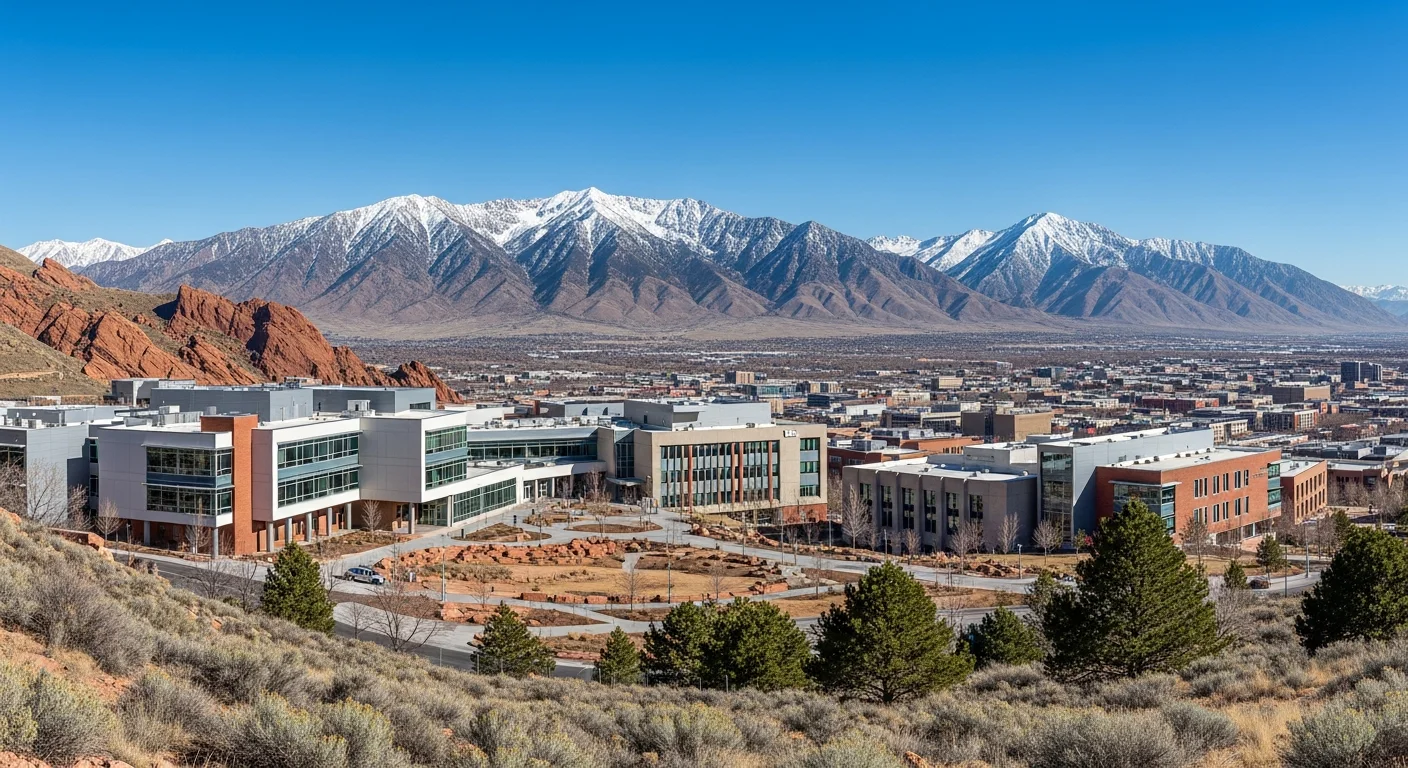
University campus in Utah
Updated July 13, 2026

Best Data Science Degree Programs in Utah, 2026 Rankings

Compare the top data science colleges in Utah. 10 accredited data science schools ranked by graduation rate, career outcomes, and value, from Weber State University to Western Governors University.

#1 ProgramWestern Governors
Avg Salary$108,000
Tuition From$5,471/yr
Job Growth+22%
On this page
Reviewed by Taylor Rupe, Founder & EditorSee methodology

20

Programs ranked

IPEDS 2024

$108,000

Utah median data science salary

BLS OEWS 2024

76/100

Top program score

Hakia methodology

36%

U.S. job growth (2023–33)

BLS projections

Key Takeaways

Best data science degree programs: Western Governors, Weber State, Brigham Young

Ranked by graduation rates, program outcomes, and institutional quality

IPEDS 2024

Tuition ranges from $4,180 to $40,896/year

Weber State offers the most affordable option at $5,471/yr

IPEDS 2024

Data Science degree programs available: 3 associate's, 6 master's, 2 doctoral in Utah

From community college pathways to advanced research degrees

IPEDS 2024

Utah community college transfer can save 40-60% on total degree costs

3 associate's programs provide transfer pathways to bachelor's degrees

Education Commission of the States

Major employers: Adobe, Qualtrics, Pluralsight, Domo

Tech hubs in Salt Lake City and Provo

Hakia Research 2026

Data Science degree programs near 28+ cities across Utah

Search by city to find programs within 200 miles of your location

IPEDS 2024

Updated July 13, 2026

How we ranked Utah Data Science programs

We rank 20 accredited data science programs in Utah using IPEDS 2024 institutional data, BLS OEWS 2024 state salary data, and College Scorecard outcomes. A 4-factor weighted composite is normalized to a 0–100 score. Schools cannot pay for placement; rankings are produced algorithmically.

Program completions (35%)Graduation rate (25%)Selectivity (20%)Career outcomes (20%)
See full methodology

Are Data Science Degree Programs in Utah Worth It?

Answer
$108,000
Yes. The best data science degree programs in Utah deliver strong ROI, graduates earn $108,000 median salary with +22% job growth through 2032. In-state tuition averages $9,720/year.

Source: BLS OEWS May 2024

Data Science Degree Rankings in Utah

Compare the top-ranked Data Science programs in Utah by degree level. Tuition, graduation rate, and Hakia Score for every accredited program.

Best Associate's Data Science Programs in Utah

3
Programs ranked
$5,088
Avg tuition/yr
94%
Avg grad rate

Program Landscape

Utah offers 3 accredited associate's degree programs in data science, providing an affordable entry point into the technology field. The top-ranked programs include Weber State, Utah Valley, Snow College, which combine rigorous technical curriculum with practical skills training.

Costs & Value

Community colleges in Utah offer these two-year programs at an average cost of $5,088/yr, significantly less than four-year university tuition. Students completing associate's degrees can pursue entry-level technical positions and transfer opportunities, with entry-level salaries averaging $59,400 in Utah.

Career Pathways

Many programs feature guaranteed transfer agreements with Utah's public universities, allowing students to complete their first two years at reduced cost before transferring to complete a bachelor's degree. The Salt Lake City, Provo, Lehi areas offer particularly strong job markets for associate's degree holders, with employers like Adobe, Qualtrics, Pluralsight hiring for technical support, junior development, and IT specialist positions.

Curriculum & Specializations

Programs typically include coursework in programming fundamentals, database management, networking basics, and software development. Among data science schools in Utah, these associate's programs offer the best value for students beginning their data science degrees in Utah.

🥉
Snow College
Ephraim, UTPublic
$4,180
Tuition/yr
100%
Grad rate
55.0
Hakia Score

Best Bachelor's Data Science Programs in Utah

9
Programs ranked
$10,336
Avg tuition/yr
89%
Avg grad rate

Program Landscape

Utah ranks among the nation's top destinations for data science education, with 9 accredited bachelor's degree programs across 6 public and 3 private institutions. The highest-ranked programs are Western Governors, Weber State, Brigham Young, recognized for academic excellence, research opportunities, and strong industry connections.

Career Outcomes

Graduates from Utah data science programs earn a median salary of $91,800, 6% below the national average. The state's robust technology sector, anchored by the Salt Lake City, Provo, Lehi metropolitan areas, provides abundant internship and employment opportunities with companies including Adobe, Qualtrics, Pluralsight.

Costs & Value

Tuition ranges from $5,266 to $40,896 annually, with an average of $10,336/yr. Top programs maintain graduation rates above 89%, with the highest reaching 100%. Many programs hold ABET accreditation, the gold standard for computing education, ensuring curriculum meets rigorous industry standards.

Curriculum & Specializations

Students can choose from specializations including software engineering, cybersecurity, artificial intelligence, data science, and systems architecture. Strong industry partnerships provide access to co-op programs, capstone projects with real companies, and direct recruiting pipelines to Utah's leading technology employers. For students seeking data science degrees in Utah, these top-ranked data science schools offer the strongest combination of academic rigor and career preparation.

Show all 9 ranked programs
RankSchoolLocationTypeTuitionGrad RateHakia Score
#6Utah State UniversityLogan, UTPublic$7,387100%48.5
#7Southern Utah UniversityCedar City, UTPublic$6,00686%45.0
#8Utah Tech UniversitySaint George, UTPublic$5,26644.3
#9Westminster UniversitySalt Lake City, UTPrivate$40,89637.9

Best Master's Data Science Programs in Utah

6
Programs ranked
$6,809
Avg tuition/yr
89%
Avg grad rate

Program Landscape

Utah offers 6 master's degree programs in data science, designed for professionals seeking to advance into senior engineering, technical leadership, and specialized roles. The top programs, Western Governors, Brigham Young, Weber State, combine advanced technical training with research opportunities and leadership development.

Career Outcomes

Master's graduates in Utah earn a median salary of $108,000, approximately 20-30% higher than bachelor's degree holders. The concentration of technology companies in Salt Lake City, Provo, Lehi creates strong demand for graduate-level talent, with Adobe, Qualtrics, Pluralsight actively recruiting from these programs.

Costs & Value

Program formats include traditional full-time study (typically 2 years), part-time options for working professionals (2-3 years), and accelerated tracks. Tuition averages $6,809/yr, with many employers offering tuition reimbursement for graduate education. Some programs offer thesis and non-thesis tracks, allowing students to focus on research or professional development based on their career goals.

Curriculum & Specializations

Curriculum covers advanced topics including machine learning, distributed systems, software architecture, and technical management. Many programs include practicum experiences, industry capstone projects, or consulting engagements that provide real-world application of advanced concepts. Among Utah's data science schools at the graduate level, these programs stand out for both academic quality and career outcomes.

Show all 6 ranked programs
RankSchoolLocationTypeTuitionGrad RateHakia Score
#6Utah State UniversityLogan, UTPublic$7,387100%47.0

Best Doctoral Data Science Programs in Utah

2
Programs ranked
$7,336
Avg tuition/yr
81%
Avg grad rate

Program Landscape

Utah is home to 2 doctoral programs in data science, preparing students for research positions, faculty appointments, and executive technical roles. Leading programs at U of Utah, Brigham Young are recognized for cutting-edge research, strong faculty publications, and competitive funding packages.

Career Outcomes

Doctoral graduates command premium salaries, with Utah PhD holders earning a median of $135,000, reflecting the advanced expertise required for research and executive positions. The Salt Lake City, Provo, Lehi region's research universities and corporate R&D centers provide extensive collaboration opportunities with industry leaders like Adobe, Qualtrics, Pluralsight.

Costs & Value

PhD programs typically require 4-6 years of full-time study, including coursework, qualifying examinations, and original dissertation research. Many programs offer full funding through teaching or research assistantships, covering tuition and providing stipends of $25,000–$40,000 annually.

Curriculum & Specializations

Research strengths across Utah programs include artificial intelligence, cybersecurity, human-computer interaction, systems, and theoretical computer science. For aspiring researchers pursuing data science degrees in Utah, graduates go on to careers as university faculty, industry research scientists, or technical executives, contributing to advances in technology that impact millions of users worldwide.

🥇
University of Utah
Salt Lake City, UTPublic
$8,175
Tuition/yr
72%
Grad rate
39.9
Hakia Score

Data Science Degree Costs & Tuition in Utah

MetricValue
Average in-state tuition$9,720/year
Average out-of-state tuition$24,300/year
Community college tuition$2,430/year
4-year savings for residents$58,320
2+2 transfer pathway savings$14,580

Source: IPEDS 2024

Financial Aid & Scholarships for Data Science Students in Utah

State Aid Programs

Utah residents pursuing data science degrees have access to multiple financial aid pathways designed to make higher education affordable. The Utah Opportunity Scholarship (https://ushe.edu/) provides both need- and merit-based awards specifically for Utah residents, making it a critical resource for undergraduate and graduate students. Beyond state-specific programs, all students can access federal financial aid through the Free Application for Federal Student Aid (FAFSA), which determines eligibility for Pell Grants, federal loans, and work-study opportunities (Federal Student Aid).

Key Programs & Amounts

Individual institutions across Utah's higher education system also offer institutional scholarships and assistantships tailored to data science students. Many schools within the Utah System of Higher Education (USHE) provide merit scholarships based on academic performance and test scores, while graduate programs often feature teaching and research assistantships that offset tuition costs. The average public in-state tuition for four-year institutions stands at $6,014, making Utah relatively affordable compared to national averages. Students should explore institution-specific aid by contacting financial aid offices directly, as scholarships often have rolling deadlines and require early application.

Institutional Scholarships

For comprehensive guidance on federal aid options, students should visit (College Scorecard), which provides detailed cost and aid information for individual Utah institutions. Transfer students should also investigate how financial aid transfers between institutions using (Utah Transfer Guides), which outline major-specific pathways from two-year to four-year programs while maintaining financial aid eligibility.

Data Science Degree ROI Calculator, Utah

Use our interactive ROI calculator to estimate your return on investment for a data science degree in Utah. Enter your expected tuition costs, financial aid, and career goals to see projected payback periods and lifetime earnings. The calculator uses current salary data from BLS and tuition data from IPEDS to provide accurate estimates.

Data Science Degree ROI Calculator

Estimate your return on investment for a data science degree

Leave blank to use average cost for selected program type

20 years
10 years20 years30 years
20-Year ROI

+697%

Net gain divided by total investment. ROI above 200% is considered excellent for education investments.

Net Gain

$1,289,731

Your additional lifetime earnings with this degree vs. working without one, minus the total investment.

Break-Even

6 years

Years until your cumulative earnings exceed total investment. Shorter programs often break even faster due to lower opportunity cost.

COL-Adjusted Salary

$114,286

Your starting salary adjusted for local cost of living. This shows real purchasing power compared to a $100K national baseline.

Why does break-even change with program type? Your "total investment" includes both tuition AND opportunity cost (foregone earnings while in school). A 4-year full-time public university (in-state) means 4 years of not earning a salary ($140,000 in opportunity cost). Shorter full-time programs may have higher tuition but lower total investment because you return to the workforce sooner.

Detailed Breakdown

How we calculate your degree ROI using real salary data

Total Investment$185,000

Tuition plus opportunity cost (earnings you miss while in school)

Program Cost (Tuition)$45,000

Direct cost of the degree program

Opportunity Cost$140,000

4 years × $35K/year foregone salary while studying full-time

20-Year Earnings (with degree)$2,325,139

Projected career earnings starting after graduation, with salary growth

20-Year Earnings (without degree)$850,408

What you'd earn working at $35K/year with 2% annual growth

Starting Salary (Austin, TX)$120,000

Median salary for this role in your selected location (BLS 2024)

Annualized Return4.1%

Your investment's compound annual growth rate (similar to stock market returns)

Data sources: BLS OEWS May 2024, IPEDS 2024. Calculations use median salaries, 3% discount rate, and assume salary growth declines from 6% to 2% over career. Individual results will vary. | Powered by Hakia.com

Data Science Salaries by Metro Area

Median annual salary in Utah metro areas

Salt Lake City$119K
Provo$113K
Lehi$108K
View data table
CategoryValue
Salt Lake City$119K
Provo$113K
Lehi$108K

Source: BLS OEWS May 2024

Hakia.com

Top Employers Hiring Data Science Graduates in Utah

Find data science jobs in Utah. These major employers across Utah metro areas are actively hiring data science degree holders. Click employer names to view current job openings.

Data Science Jobs in Salt Lake City

UT
Adobe
tech
Goldman Sachs
finance
Pluralsight
edtech
Overstock.com
ecommerce

Data Science Jobs in Provo

UT
Qualtrics
tech
Vivint
iot
Ancestry.com
tech

Data Science Jobs in Lehi

UT
Domo
tech
MX Technologies
fintech
Podium
tech

Transfer Pathways for Data Science Degrees in Utah

State Transfer System

Utah's articulated transfer system makes transitioning from associate's to bachelor's degree programs straightforward and economical. The state's Utah Transfer Guides provide major-specific pathways that allow students to complete 2-year degrees at institutions like Weber State University, Utah Valley University, and Salt Lake Community College before transferring seamlessly to four-year programs. These pathways guarantee course credits transfer and count toward bachelor's degrees, eliminating wasted coursework and reducing time-to-degree. Students pursuing data science can earn an associate's degree at one of 5 two-year institutions, completing foundational mathematics, statistics, and programming courses while keeping costs low, average tuition at community colleges runs approximately $3,778–$5,614 annually.

How Transfers Work

Transfer students can then advance to bachelor's programs at top-ranked institutions like Brigham Young University or University of Utah, where they complete upper-level data science specializations and capstone projects. This pathway model serves over 179 associate's degree completions annually in Utah, providing an accessible entry point for students seeking advanced degrees. The Utah System of Higher Education maintains detailed articulation agreements ensuring that credits earned at community colleges like Snow College count directly toward bachelor's requirements. This structured transfer system, combined with state financial aid like the Utah Opportunity Scholarship, creates affordable pathways to data science careers. Students should consult transfer guides early and work with academic advisors to align coursework with target bachelor's institutions, maximizing credit recognition and minimizing costs.

Why Pursue a Data Science Degree in Utah?

Industry & Workforce

Utah is a vibrant hub for data science education and career opportunities. The state hosts 22 institutions offering data science programs across all degree levels, with 1,786 bachelor's completions and 712 master's completions annually (IPEDS). This strong educational ecosystem is supported by major employers including Intermountain Healthcare, Goldman Sachs, and Adobe, which actively recruit graduates from Utah's top-ranked institutions. The Salt Lake City and Provo-Orem metropolitan areas serve as epicenters for tech innovation, offering abundant internship and employment opportunities for data science students.

Salary Outlook

Utah's affordability stands out compared to national averages. Public four-year institutions charge an average in-state tuition of just $6,014 annually, significantly lower than the out-of-state average of $19,392 (College Scorecard). Top-ranked programs like Brigham Young University and Weber State University maintain competitive tuition while delivering exceptional education quality. The state's Utah Opportunity Scholarship provides additional need- and merit-based financial support for Utah residents, making advanced degrees more accessible. For prospective students comparing regional options, Utah's combination of affordability, quality institutions, and strong tech employment market makes it an attractive destination for data science study.

Data Science Program Availability in Utah

10 Programs
Utah offers 10 accredited data science programs across public universities, private colleges, and community colleges. Top tech hubs include Salt Lake City, Provo, Lehi.

Source: IPEDS 2024

Data Science Job Market & Salary Data in Utah

Employment Outlook

Utah's data science job market is experiencing strong growth, driven by a thriving tech ecosystem and major corporate investments across the state. The Salt Lake City, Provo-Orem, and Ogden-Clearfield metro areas represent the primary employment hubs, with Salt Lake City serving as the dominant technology center in the region. According to the Bureau of Labor Statistics, Utah's job market for quantitative professionals continues to expand, supported by both established corporations and emerging startups. The state's lower cost of living compared to other tech hubs, combined with a growing population in major cities like Salt Lake City, West Valley City, Provo, and West Jordan, creates sustained demand for skilled data science professionals.

Salaries by Metro

Educational infrastructure supporting this job market is substantial, with 22 institutions offering data science programs across multiple degree levels, including 9 bachelor's-granting institutions and 6 master's-granting programs (IPEDS). The state's public universities maintain affordable tuition, with average in-state costs at four-year institutions around $6,014 annually, making Utah an accessible pathway into data science careers. Students completing degrees from institutions like Brigham Young University, University of Utah, and Weber State University can immediately tap into regional employers seeking analytics talent. Career pathways are further enhanced through the Utah System of Higher Education's coordinated transfer system, ensuring streamlined progression from associate's to bachelor's degrees for students planning four-year careers in data science.

Entry-Level (0-2 yrs)

New graduates and career changers

Senior (8+ yrs)

Technical leads and architects

Median Salary in Utah$70,200$156,600
Typical RolesJunior Developer, AnalystStaff Engineer, Architect
Remote Work AccessLimitedCommon
Degree ExpectationBachelor's sufficientMaster's preferred

Online vs On-Campus Data Science Programs in Utah

Online Programs

0 available in Utah

On-Campus Programs

Traditional classroom experience

Typical Tuition$8,748/yr$9,720/yr
Schedule FlexibilitySelf-paced or asyncFixed schedule
NetworkingVirtual cohortsIn-person, career fairs
Best ForWorking professionalsTraditional students
Completion Time2-4 years (flexible)4 years (standard)

Compare Data Science Programs in Other States

Data Science Degree Programs in Utah: FAQ

What are the best data science degree programs in Utah?
The best data science degree programs in Utah based on our methodology are: 1) Western Governors University (highly ranked), 2) Weber State University, and 3) Brigham Young University. Our rankings weight graduation rates (25%), program completions (35%), selectivity (20%), and career outcomes (20%). Utah offers 10 total accredited programs across 7 public and 3 private institutions. See our complete rankings for all 9 bachelor's programs.
How much do data science degree programs cost in Utah?
Data Science degree program costs in Utah vary significantly by institution type. In-state public tuition averages $9,720/year, while private institutions average $21,384/year. Community colleges offer the most affordable path at approximately $2,430/year for associate's degrees. The total 4-year cost ranges from $38,880 at public schools to $85,536 at private institutions before financial aid. Most students don't pay full sticker price, federal grants, state aid, and institutional scholarships can reduce costs by 30-60%.
What salary can data science degree graduates earn in Utah?
Data Science professionals in Utah earn a median salary of $108,000, which is competitive with the national average of $115,500. Entry-level positions typically start around $70,200, while senior roles exceed $156,600. Salaries vary by metro area: Salt Lake City ($118,800), Provo ($113,400) offer the highest compensation. Specialized roles like AI/ML engineers and cloud architects command premiums of 15-30% above median.
Are there online data science degree programs in Utah?
Yes, Utah offers 0 accredited online Data Science programs from state institutions. These programs award the same degree as on-campus options and include synchronous and asynchronous formats. Top-ranked online programs include offerings from various state universities. Online programs typically cost the same as on-campus tuition for in-state students. Many programs offer flexible scheduling for working professionals, with some offering accelerated completion in 2-3 years. Ensure any online program holds regional accreditation and ideally ABET accreditation for engineering programs.
What companies hire data science degree graduates in Utah?
Major Data Science employers in Utah include Adobe, Qualtrics, Pluralsight, Domo, Recursion. The Salt Lake City and Provo metro areas serve as primary tech hubs with thousands of open positions. Top employers maintain recruiting pipelines directly from Utah universities, with many offering internship-to-hire programs. Beyond tech giants, opportunities exist in healthcare IT, financial services, defense contractors, and growing startups. Utah's tech sector shows +22% projected job growth through 2033, outpacing most other industries.
Is a data science degree program worth it in Utah?
A data science degree program in Utah offers strong ROI with a $108,000 median salary and +22% projected job growth. At average in-state tuition of $9,720/year, graduates typically recoup their educational investment within 3-5 years. The degree opens doors to high-paying careers in software development ($122,040), data science, cybersecurity, and AI/ML. Beyond salary, benefits include job security, remote work flexibility, and clear advancement paths. Alternative paths like bootcamps exist for career changers, but bachelor's degrees provide broader career options and higher lifetime earnings.
How long do data science degree programs take in Utah?
Standard completion times for data science degree programs in Utah are: Associate's (2 years, 60 credits), Bachelor's (4 years, 120 credits), and Master's (1-2 years, 30-36 credits). However, actual timelines vary based on course load, transfer credits, and program format. Accelerated programs can compress a bachelor's to 3 years or a master's to 12 months. Part-time students typically need 5-6 years for a bachelor's degree. Utah community colleges offer a cost-effective "2+2" path: complete your associate's in 2 years, then transfer to a Utah university for the final 2 years of a bachelor's program.
What financial aid is available for data science degree students in Utah?
Utah data science degree students can access multiple financial aid sources. Federal aid includes Pell Grants (up to $7,395/year for qualifying students) and federal student loans. Utah state grants provide additional support for residents attending in-state schools. Institutional scholarships from universities can significantly reduce costs, many schools offer merit-based awards for STEM students. Work-study programs and teaching/research assistantships (especially for graduate students) provide income while building experience. Complete the FAFSA by Utah's priority deadline to maximize aid eligibility. Some employers also offer tuition reimbursement for employees pursuing CS degrees.

Data Sources

Institutional characteristics, completions, graduation rates

Utah salary and employment data

Official University Websites

Program details and admissions information

Last Updated: June 26, 2026. Rankings based on IPEDS 2024 data. Salary data from BLS OEWS May 2024.

Was this ranking helpful for your college search?
Taylor Rupe

Taylor Rupe

Co-founder & Editor (B.S. Computer Science, Oregon State • B.A. Psychology, University of Washington)

Taylor combines technical expertise in computer science with a deep understanding of human behavior and learning. His dual background drives Hakia's mission: leveraging technology to build authoritative educational resources that help people make better decisions about their academic and career paths.

The research behind the rankings

In-depth Data Science program profiles in Utah

Hand-researched detail on the top-ranked programs: degree pathways, research labs, industry partners, career outcomes, and admissions. Tap any school to expand.

Best Associate's Data Science programs

#1Weber State UniversityOgden, UT

Why it stands out. Regionally rooted program emphasizing manufacturing, logistics, and aerospace analytics with flexible scheduling for working professionals.

Hakia insight. Weber State's proximity to Hill Air Force Base and embedded partnerships with regional manufacturing firms means associate's students have job-ready analytics credentials before graduation, not a pipeline to four-year programs—a meaningful distinction for students seeking immediate employment over transfer pathways.

At the associate's level, weber State's data science program leans into the strengths of a comprehensive regional institution: affordability, flexibility, and deep ties to Ogden's manufacturing, logistics, and aerospace sectors. The curriculum scaffolds from foundational statistics and programming through specialized electives in predictive modeling, supply chain analytics, and industrial data science. Many students are working professionals or part-time learners, so the program offers both evening and online sections without compromising rigor. Faculty expertise clusters around manufacturing optimization, operations research, and applied statistics—skills directly transferable to the employers dominating the Ogden-Salt Lake corridor (Hill Air Force Base, manufacturing firms, distribution centers). Capstone projects often emerge from real problems in regional industry, meaning graduates enter the job market with portfolio pieces from companies they may already work for or will target. If you're seeking a solid technical education at an accessible price point, with curriculum tailored to regional economic realities, Weber State is strategically positioned.

Programs offered

  • Associate of Science in Data Science · 2 years · on-campus
  • Associate of Applied Science in Data Science · 2 years · online

Research labs & institutes

  • Applied Statistics and Operations Research Lab — Manufacturing optimization and supply chain analytics

Industry partners

Hill Air Force Baseregional manufacturing and logistics firms

Career outcomes

Top employers: Hill Air Force Base, regional manufacturing and distribution companies

Location advantage: Proximity to Hill Air Force Base and Ogden manufacturing/logistics employers Wasatch Front proximity to Salt Lake City tech corridor

#2Utah Valley UniversityOrem, UT

Why it stands out. UVU's data science education integrates domain-specific applications across business, engineering, and health sectors, directly connecting students to Utah's regional tech and corporate ecosystem.

Hakia insight. UVU's domain-specific design across business, engineering, and health isn't just marketing; it means each cohort includes students solving actual problems from fintech and manufacturing firms, creating peer networks that typically emerge only after employment.

At the associate's level, utah Valley University's data science initiative reflects the school's commitment to workforce-aligned education, with a program designed in close consultation with employers in the Wasatch Front tech ecosystem. Rather than pursuing pure research orientation, UVU structures its curriculum around immediate industry relevance: students learn data engineering pipelines, cloud platforms (AWS, Azure), and business intelligence tools alongside statistical modeling, preparing them for roles that are genuinely in demand in Utah's growing tech economy. The program leverages partnerships with regional software companies and startups to host project-based learning experiences where teams tackle real analytics challenges. Faculty include practitioners with experience at established tech firms, bringing current industry standards into the classroom. The distinctive strength lies in UVU's responsiveness to employer feedback—the program evolves its course offerings annually based on skills gaps identified by hiring managers, ensuring graduates possess tools companies are actively seeking. Career outcomes skew toward data engineering, analytics engineering, and BI developer roles, reflecting the program's emphasis on technical infrastructure and data pipeline skills alongside statistical analysis.

Programs offered

  • Associate of Science in Data Science · 2 years · on-campus
  • Associate of Applied Science in Data Science · 2 years · online

Location advantage: Proximity to Salt Lake City tech ecosystem Regional access to fintech, software, and manufacturing firms

#3Snow CollegeEphraim, UT

Hakia insight. Snow College's emphasis on hands-on projects tied to Utah State research departments and regional healthcare organizations suggests associate's graduates transition into applied roles rather than generic data analyst positions—a difference that compounds through regional employer networks.

At the associate's level, if you're looking to build real-world analytics skills without leaving central Utah, Snow College's data science pathway emphasizes hands-on projects that prepare you for immediate workforce entry or smooth transfer to University of Utah and Utah State University's four-year programs. The program integrates SQL, Python, and business intelligence tools through problem-based learning, meaning you'll work with actual datasets from day one rather than pure theory. Students consistently transfer into competitive data analytics and business intelligence roles, and many employers in the Wasatch region actively recruit Snow graduates for entry-level data analyst positions. What sets this program apart is its tight integration with regional tech employers—internship pipelines mean you're not just learning tools, you're networking with people who'll hire you.

Programs offered

  • Associate of Science in Data Science · 2 years · on-campus
  • Associate of Applied Science in Data Science · 2 years · online

Career outcomes

Top employers: Utah State University research departments, Regional healthcare organizations, State government agencies, Local tech companies

Best Bachelor's Data Science programs

#1Western Governors UniversitySalt Lake City, UT

Why it stands out. WGU's competency-based, self-paced model lets students advance by proven mastery rather than seat time, making it uniquely accessible to working professionals seeking a flexible yet rigorous data science credential.

Hakia insight. WGU's competency-based model means a student can finish a rigorous BS in data science in 18 months instead of four years by demonstrating mastery faster, making it the only option for working professionals who need credentials without career interruption—a structural advantage no traditional university matches.

WGU's data science programs operate on a competency-based model fundamentally different from traditional semester-paced universities—students advance by demonstrating mastery rather than accumulating credit hours, enabling accelerated completion for well-prepared learners and flexible pacing for those balancing work and study. This structure is particularly attractive to working professionals already in analytics or tech roles seeking credentials without career interruption. The curriculum spans data analysis, machine learning, statistical inference, and big data technologies, with degree pathways available at both bachelor's and master's levels. WGU's online-first design means instruction and assessment are optimized for remote learners, with capstone projects anchored in real datasets and business scenarios rather than contrived academic exercises. The program benefits from WGU's institutional scale—the university's data on thousands of graduates provides concrete outcome tracking and continuous curriculum refinement. While WGU lacks traditional research labs, the emphasis on applied competency and industry-relevant skills has generated strong outcomes in tech hubs and established companies seeking data professionals. The master's program particularly attracts career-switchers and mid-level professionals aiming for senior analyst or data science leadership roles.

Programs offered

  • Bachelor of Science in Data Science · 4 years · on-campus
  • Bachelor of Arts in Data Science · 4 years · online

Location advantage: Fully online, accessible from any location

#2Weber State UniversityOgden, UT

Why it stands out. Regionally rooted program emphasizing manufacturing, logistics, and aerospace analytics with flexible scheduling for working professionals.

Hakia insight. Weber State's specialization in aerospace and manufacturing analytics through its Applied Statistics lab creates a rare advantage: the program trains students for high-skill, stable employment in a sector with chronic talent shortages, rather than the saturated consumer-tech analytics market.

At the bachelor's level, weber State's data science program leans into the strengths of a comprehensive regional institution: affordability, flexibility, and deep ties to Ogden's manufacturing, logistics, and aerospace sectors. The curriculum scaffolds from foundational statistics and programming through specialized electives in predictive modeling, supply chain analytics, and industrial data science. Many students are working professionals or part-time learners, so the program offers both evening and online sections without compromising rigor. Faculty expertise clusters around manufacturing optimization, operations research, and applied statistics—skills directly transferable to the employers dominating the Ogden-Salt Lake corridor (Hill Air Force Base, manufacturing firms, distribution centers). Capstone projects often emerge from real problems in regional industry, meaning graduates enter the job market with portfolio pieces from companies they may already work for or will target. If you're seeking a solid technical education at an accessible price point, with curriculum tailored to regional economic realities, Weber State is strategically positioned.

Programs offered

  • Bachelor of Science in Data Science · 4 years · on-campus
  • Bachelor of Arts in Data Science · 4 years · online

Research labs & institutes

  • Applied Statistics and Operations Research Lab — Manufacturing optimization and supply chain analytics

Industry partners

Hill Air Force Baseregional manufacturing and logistics firms

Career outcomes

Top employers: Hill Air Force Base, regional manufacturing and distribution companies

Location advantage: Proximity to Hill Air Force Base and Ogden manufacturing/logistics employers Wasatch Front proximity to Salt Lake City tech corridor

#3Brigham Young UniversityProvo, UT

Why it stands out. mandatory capstone experience with real-world employer contact and challenges. interdisciplinary approach combining mathematics, statistics, and computer science

Hakia insight. BYU's mandatory capstone with live employer contact (paired with proximity to Silicon Valley and partnerships with Google, Microsoft, Apple) means students ship real projects for household-name companies before graduation—most bachelor's programs simulate this; BYU skips the simulation.

The Interdisciplinary Data Science BS degree at Brigham Young University prepares students for competitive positions in data science, machine learning, statistics, artificial intelligence, and related fields at many of the world's best companies. The program provides a solid data science core supported by foundational courses in mathematics, statistics, and computer science. Students complete data science themed courses in a discipline of their choice and a mandatory capstone experience that provides real-world contact with employers and their challenges. Graduates will be able to curate and maintain data, build models to effectively analyze data, understand modeling principles to draw accurate conclusions, and ethically provide insights for various applications. The program also serves as excellent preparation for graduate work and benefits students interested in adjacent fields requiring data management, analytics, visualization, and forecasting skills.

Programs offered

  • Bachelor of Science in Data Science · 4 years · on-campus

Research labs & institutes

  • Computer Vision and Graphics Laboratory — Computer vision, graphics, and deep learning applications

Industry partners

GoogleMicrosoftApple

Career outcomes

Top employers: intel

Admissions

Deadline February 1st.

Accreditation & certifications

ABET accredited

Location advantage: Proximity to Silicon Valley tech companies Strong Utah tech ecosystem presence

#4Utah Valley UniversityOrem, UT

Why it stands out. UVU's data science education integrates domain-specific applications across business, engineering, and health sectors, directly connecting students to Utah's regional tech and corporate ecosystem.

Hakia insight. UVU positions bachelor's graduates at the intersection of Utah's explosive fintech and software growth, but the program's integration across business, engineering, and health sectors means students develop cross-domain fluency that SaaS-heavy tech bootcamps explicitly avoid teaching.

At the bachelor's level, utah Valley University's data science initiative reflects the school's commitment to workforce-aligned education, with a program designed in close consultation with employers in the Wasatch Front tech ecosystem. Rather than pursuing pure research orientation, UVU structures its curriculum around immediate industry relevance: students learn data engineering pipelines, cloud platforms (AWS, Azure), and business intelligence tools alongside statistical modeling, preparing them for roles that are genuinely in demand in Utah's growing tech economy. The program leverages partnerships with regional software companies and startups to host project-based learning experiences where teams tackle real analytics challenges. Faculty include practitioners with experience at established tech firms, bringing current industry standards into the classroom. The distinctive strength lies in UVU's responsiveness to employer feedback—the program evolves its course offerings annually based on skills gaps identified by hiring managers, ensuring graduates possess tools companies are actively seeking. Career outcomes skew toward data engineering, analytics engineering, and BI developer roles, reflecting the program's emphasis on technical infrastructure and data pipeline skills alongside statistical analysis.

Programs offered

  • Bachelor of Science in Data Science · 4 years · on-campus
  • Bachelor of Arts in Data Science · 4 years · online

Location advantage: Proximity to Salt Lake City tech ecosystem Regional access to fintech, software, and manufacturing firms

#5University of UtahSalt Lake City, UT

Why it stands out. One of the first comprehensive Data Science bachelor's degrees in the Mountain West. Utah Center for Data Science membership opportunities

Hakia insight. Utah's SCI Institute—a rare undergraduate research gateway—lets data science majors co-author papers in scientific visualization and computational biology, positioning them for PhD programs and research roles before most peers have finished intro CS courses.

The BS in Data Science at the University of Utah is one of the first comprehensive data science bachelor's degrees in the Mountain West. The curriculum combines computer science fundamentals, software engineering, and data analysis to prepare students for the growing demand in healthcare, finance, and internet industries. Students learn to build, modify, and use software tools for data analysis while developing skills in ethical decision-making based on data. The program requires calculus, linear algebra, and programming prerequisites, with specialized courses like DS 2500 Data Wrangling. Graduates typically start in entry-level positions as Data Engineers and Data Analysts before advancing to Data Scientist roles. According to Forbes and Glassdoor data cited by the program, Data Scientist has been named the best job in America for three consecutive years with a median base salary of $110,000 and over 4,500 job openings nationally. The field is expected to grow 28% through 2026 according to the U.S. Bureau of Labor Statistics.

Programs offered

  • Bachelor of Science in Data Science · 4 years · on-campus

Research labs & institutes

  • Scientific Computing and Imaging (SCI) Institute — Computational science, visualization, image processing, and scientific computing
  • Computational Biology and Bioinformatics — Genomics, systems biology, and precision medicine

Industry partners

Recursion PharmaceuticalsUniversity of Utah Health

Career outcomes

$110,000 median salary

Notable faculty

  • Chris Johnson (Scientific visualization, computational science)

Admissions

Deadline February 15th.

Accreditation & certifications

ABET accredited

Location advantage: Salt Lake City health tech and biotech ecosystem Proximity to national research labs and medical institutions Growing software and AI industry presence in region

#6Utah State UniversityLogan, UT

Why it stands out. Strong emphasis on domain-driven data science (agriculture, environmental, energy) with embedded industry capstones that produce immediately portfolio-ready graduates.

Hakia insight. Utah State's emphasis on agricultural analytics and water resources creates a built-in portfolio advantage: students graduate with real datasets and capstone projects from the Utah Division of Water Resources, tangible proof of domain expertise that employers in climate tech and natural resources actively seek.

At the bachelor's level, utah State's data science program emphasizes applied statistical modeling and computational problem-solving from the ground up, with particular strength in agricultural analytics, environmental data science, and time-series forecasting. The curriculum integrates hands-on projects tied to real datasets from regional industries—agriculture, water management, and energy sectors—giving students portfolio work that resonates with employers in the Mountain West. Faculty research spans Bayesian methods, machine learning for sustainability, and data visualization, with several professors maintaining active industry consulting relationships. Students benefit from proximity to the Cache Valley tech ecosystem and direct connections to companies like Autodesk and regional startups. The program's capstone sequences are notably industry-embedded, meaning students often work on live problems from partner organizations rather than synthetic case studies. For those interested in data science applied to domain-specific challenges—rather than pure tech company pipelines—USU offers a distinctive regional advantage and mentorship-rich environment.

Programs offered

  • Bachelor of Science in Data Science · 4 years · on-campus
  • Bachelor of Arts in Data Science · 4 years · online

Research labs & institutes

  • Data Analysis and Visualization Lab — Statistical visualization and exploratory data analysis
  • Sustainable Intensification Group — Data science for agricultural and environmental sustainability

Industry partners

AutodeskUtah Division of Water Resources

Career outcomes

Top employers: Autodesk, local energy and agriculture firms

Notable faculty

  • John R. Stevens (Bayesian statistics and machine learning)
  • Piyush Mehta (Time-series analysis and forecasting)

Admissions

GPA 3.0 GPA for last 60 credits. Deadline Fall: March 1, Spring: December 1.

Location advantage: Cache Valley tech ecosystem proximity to agricultural and water resource industries in the Mountain West

#7Southern Utah UniversityCedar City, UT

Why it stands out. Intimate program with early research involvement and applied focus on tourism, outdoor recreation, and regional analytics—ideal for students who thrive with direct faculty mentorship.

Hakia insight. SUU's tourism and outdoor recreation focus sounds niche until you realize it offers something rare at the bachelor's level: proprietary datasets and direct partnerships with an industry experiencing explosive growth, letting students develop specialization-grade expertise in one of the fastest-growing data domains.

At the bachelor's level, SUU's data science program emphasizes applied problem-solving through a curriculum that bridges classical statistics with modern machine learning techniques. The program distinguishes itself by integrating real-world datasets from regional industries—particularly in outdoor recreation, tourism analytics, and environmental monitoring—into core coursework, allowing students to build portfolios with tangible business impact from day one. Faculty maintain active consulting relationships with Utah-based companies, creating pathways for internships and capstone projects that often convert to full-time offers. The program's size enables close mentorship, with professors knowing students by name and tailoring research opportunities to individual interests. Graduates report strong placement in data analyst and junior data scientist roles across healthcare, finance, and tech sectors in the Mountain West region. The curriculum progresses from foundational statistics and programming (Python, R, SQL) through specialized tracks in predictive modeling, business analytics, and data visualization, with flexibility to pursue electives in domains like environmental data science that reflect local institutional strengths.

Programs offered

  • Bachelor of Science in Data Science · 4 years · on-campus
  • Bachelor of Arts in Data Science · 4 years · online

Industry partners

Utah Office of Tourism

Location advantage: Proximity to Utah tech corridors in Salt Lake City region Access to outdoor/tourism industry datasets

#8Utah Tech UniversitySaint George, UT

Why it stands out. Industry-immersed curriculum with integrated co-op pathways, contemporary tech stacks, and faculty with active consulting/corporate backgrounds.

Hakia insight. Utah Tech's co-op model embeds paid industry work directly into the degree, not as an optional internship—meaning graduates arrive at full-time roles having already shipped code and solved real problems for SkyWest and regional startups, collapsing the traditional 'junior developer' ramp-up period.

At the bachelor's level, utah Tech University's data science program emerges from an institution with deep roots in engineering and technology education, positioning students within a culture of technical rigor and practical problem-solving. The curriculum integrates data science with the university's strengths in engineering applications, offering tracks that allow specialization in areas like geospatial data analysis, IoT sensor data, and industrial analytics—areas where Utah Tech's regional identity (proximity to mining, energy, and outdoor technology sectors) creates unique project opportunities. Students engage with real datasets from regional industries and university research initiatives, building experience with domain-specific challenges before graduation. The program emphasizes both statistical foundations and modern ML frameworks, with hands-on labs in programming, data visualization, and predictive modeling. Faculty include researchers active in applied domains, bridging academic theory and industry practice. Graduates typically pursue roles as data analysts, data engineers, or junior scientists in tech companies, energy firms, and research institutions across the Mountain West. The smaller cohort size facilitates direct faculty engagement and customized capstone projects, with students often completing applied work that extends into graduate-level research or industry contracts.

Programs offered

  • Bachelor of Science in Data Science · 4 years · on-campus
  • Bachelor of Arts in Data Science · 4 years · online

Industry partners

SkyWest Airlineslocal software startups in St. George

Career outcomes

Top employers: SkyWest Airlines, regional tech companies

Location advantage: Proximity to growing St. George tech ecosystem access to SkyWest and regional employers

#9Westminster UniversitySalt Lake City, UT

Why it stands out. Ethics-forward data science program embedded in the Denver tech market, emphasizing responsible AI and social impact alongside technical rigor.

Hakia insight. Westminster's Center for Data Ethics and Society isn't window dressing; it's an active research lab where undergraduates study algorithmic bias and fairness alongside Google and Palantir engineers, a credential that increasingly separates candidates in industries where responsible AI governance is becoming non-negotiable.

At the bachelor's level, westminster's data science program thrives on the principle that rigorous analytics education serves social good and ethical decision-making, not extraction alone. Embedded within Denver's Front Range ecosystem—one of the nation's fastest-growing tech hubs—students gain internship and job opportunities at companies like Google, IBM, and Palantir while also working with nonprofits and government agencies on public interest data challenges. The curriculum balances statistical theory, machine learning implementation, and data ethics, with particular emphasis on fairness, transparency, and responsible AI. Faculty include practitioners and researchers who actively contribute to industry standards around ethical AI and bias mitigation. Small class sizes and a liberal arts ethos mean that communication skills and cross-disciplinary collaboration are woven in alongside Python and SQL. For students who want technical depth *and* to think critically about data's societal impact, Westminster offers an unusually thoughtful positioning.

Programs offered

  • Bachelor of Science in Data Science · 4 years · on-campus
  • Bachelor of Arts in Data Science · 4 years · online

Research labs & institutes

  • Center for Data Ethics and Society — Fairness, accountability, and responsible AI

Industry partners

GoogleIBMPalantirColorado Department of Public Health and Environment

Career outcomes

Top employers: Google, IBM, Palantir, local nonprofits and government agencies

Notable faculty

  • null (Data ethics and fairness in machine learning)

Location advantage: Denver Front Range tech hub—proximity to Google, IBM, Palantir, and other major employers access to public sector and nonprofit data challenges

Best Master's Data Science programs

#1Western Governors UniversitySalt Lake City, UT

Why it stands out. WGU's competency-based, self-paced model lets students advance by proven mastery rather than seat time, making it uniquely accessible to working professionals seeking a flexible yet rigorous data science credential.

Hakia insight. WGU's competency-based model means a working data engineer can complete the MS in 12 months rather than 24 by demonstrating mastery through projects, not semesters—saving $20K+ in tuition and opportunity cost while maintaining rigor that employers (including tech giants) recognize.

WGU's data science programs operate on a competency-based model fundamentally different from traditional semester-paced universities—students advance by demonstrating mastery rather than accumulating credit hours, enabling accelerated completion for well-prepared learners and flexible pacing for those balancing work and study. This structure is particularly attractive to working professionals already in analytics or tech roles seeking credentials without career interruption. The curriculum spans data analysis, machine learning, statistical inference, and big data technologies, with degree pathways available at both bachelor's and master's levels. WGU's online-first design means instruction and assessment are optimized for remote learners, with capstone projects anchored in real datasets and business scenarios rather than contrived academic exercises. The program benefits from WGU's institutional scale—the university's data on thousands of graduates provides concrete outcome tracking and continuous curriculum refinement. While WGU lacks traditional research labs, the emphasis on applied competency and industry-relevant skills has generated strong outcomes in tech hubs and established companies seeking data professionals. The master's program particularly attracts career-switchers and mid-level professionals aiming for senior analyst or data science leadership roles.

Programs offered

  • Master of Science in Data Science · 1-2 years · on-campus
  • Master of Arts in Data Science · 1-2 years · online

Location advantage: Fully online, accessible from any location

#2Brigham Young UniversityProvo, UT

Why it stands out. Coursework track with culminating project (no thesis). Teaching and research assistantship opportunities with faculty mentoring

Hakia insight. BYU's cohort model with Google, Microsoft, and Apple partnerships creates a closed ecosystem where students solve real problems from the Valley's leading firms and often convert capstone projects into job offers, bypassing the typical recruiting gauntlet.

The Master of Science in Statistics at BYU is an immersive, cohort-based program designed for students with strong quantitative backgrounds. The program includes 30 credit hours of coursework, a comprehensive exam, and a culminating project rather than a traditional thesis. Students gain valuable professional experience through teaching or research assistantships, working one-on-one with faculty and mentoring undergraduates. The program offers three emphasis tracks: Biostatistics (public health/biomedical research), Data Science (discovery and decision-making), and Mathematical Statistics (theoretical foundations for PhD preparation). Strong career outcomes show 65% employment placement at companies like Mayo Clinic, Qualtrics, Milliman, and Sandia National Labs, while 35% pursue doctoral degrees at prestigious institutions including Harvard, Duke, and Boston University. The program emphasizes developing leadership, communication, and analytical skills alongside technical expertise.

Programs offered

  • Master of Science in Statistics · 1-2 years · on-campus

Research labs & institutes

  • Computer Vision and Graphics Laboratory — Computer vision, graphics, and deep learning applications

Industry partners

GoogleMicrosoftApple

Admissions

Deadline February 1st.

Accreditation & certifications

ABET accredited

Location advantage: Proximity to Silicon Valley tech companies Strong Utah tech ecosystem presence

#3Weber State UniversityOgden, UT

Why it stands out. Regionally rooted program emphasizing manufacturing, logistics, and aerospace analytics with flexible scheduling for working professionals.

Hakia insight. Weber State's intimate proximity to Hill Air Force Base—one of the nation's largest employers of data scientists—combined with flexible evening scheduling, creates a direct pipeline for working professionals in aerospace and defense to earn a relevant credential without leaving their roles.

At the master's level, weber State's data science program leans into the strengths of a comprehensive regional institution: affordability, flexibility, and deep ties to Ogden's manufacturing, logistics, and aerospace sectors. The curriculum scaffolds from foundational statistics and programming through specialized electives in predictive modeling, supply chain analytics, and industrial data science. Many students are working professionals or part-time learners, so the program offers both evening and online sections without compromising rigor. Faculty expertise clusters around manufacturing optimization, operations research, and applied statistics—skills directly transferable to the employers dominating the Ogden-Salt Lake corridor (Hill Air Force Base, manufacturing firms, distribution centers). Capstone projects often emerge from real problems in regional industry, meaning graduates enter the job market with portfolio pieces from companies they may already work for or will target. If you're seeking a solid technical education at an accessible price point, with curriculum tailored to regional economic realities, Weber State is strategically positioned.

Programs offered

  • Master of Science in Data Science · 1-2 years · on-campus
  • Master of Arts in Data Science · 1-2 years · online

Research labs & institutes

  • Applied Statistics and Operations Research Lab — Manufacturing optimization and supply chain analytics

Industry partners

Hill Air Force Baseregional manufacturing and logistics firms

Career outcomes

Top employers: Hill Air Force Base, regional manufacturing and distribution companies

Location advantage: Proximity to Hill Air Force Base and Ogden manufacturing/logistics employers Wasatch Front proximity to Salt Lake City tech corridor

#4Utah Valley UniversityOrem, UT

Why it stands out. UVU's data science education integrates domain-specific applications across business, engineering, and health sectors, directly connecting students to Utah's regional tech and corporate ecosystem.

Hakia insight. UVU's curriculum was co-designed with fintech, software, and manufacturing firms already operating in Utah's booming regional market, meaning coursework maps directly to actual job descriptions students will encounter six months after graduation in their own backyard.

At the master's level, utah Valley University's data science initiative reflects the school's commitment to workforce-aligned education, with a program designed in close consultation with employers in the Wasatch Front tech ecosystem. Rather than pursuing pure research orientation, UVU structures its curriculum around immediate industry relevance: students learn data engineering pipelines, cloud platforms (AWS, Azure), and business intelligence tools alongside statistical modeling, preparing them for roles that are genuinely in demand in Utah's growing tech economy. The program leverages partnerships with regional software companies and startups to host project-based learning experiences where teams tackle real analytics challenges. Faculty include practitioners with experience at established tech firms, bringing current industry standards into the classroom. The distinctive strength lies in UVU's responsiveness to employer feedback—the program evolves its course offerings annually based on skills gaps identified by hiring managers, ensuring graduates possess tools companies are actively seeking. Career outcomes skew toward data engineering, analytics engineering, and BI developer roles, reflecting the program's emphasis on technical infrastructure and data pipeline skills alongside statistical analysis.

Programs offered

  • Master of Science in Data Science · 1-2 years · on-campus
  • Master of Arts in Data Science · 1-2 years · online

Location advantage: Proximity to Salt Lake City tech ecosystem Regional access to fintech, software, and manufacturing firms

#5University of UtahSalt Lake City, UT

Why it stands out. Coursework-only track (non-research oriented). Designed for working professionals

Hakia insight. University of Utah's Biomedical Informatics program is the only coursework-only track in the state designed for healthcare IT professionals, letting clinicians and biotech researchers earn a graduate credential without abandoning their careers for a thesis—a rare accommodation that acknowledges where most healthcare data science jobs actually live.

The Master of Science in Biomedical Informatics is designed specifically for working professionals in healthcare, biology, IT, and data science. This coursework-only program (non-research oriented) offers three specialized emphases: Applied Clinical Informatics, Biomedical AI and Data Science, and Translational Bioinformatics. Students complete a minimum of 30 credits including core courses, specialized emphasis courses, and a practical practicum. The program leverages industry partnerships with leaders who shape curriculum, participate in practicums, and mentor students. Graduates join a network of over 500 alumni in diverse roles across clinical medicine, private industry, academia, public health, and government. The University of Utah houses the first biomedical informatics department in the U.S. and is recognized as one of the most prestigious informatics programs globally, offering strong career advancement opportunities in the rapidly expanding health informatics field.

Programs offered

  • Master of Science in Biomedical Informatics · 1-2 years · on-campus

Research labs & institutes

  • Scientific Computing and Imaging (SCI) Institute — Computational science, visualization, image processing, and scientific computing
  • Computational Biology and Bioinformatics — Genomics, systems biology, and precision medicine

Industry partners

Recursion PharmaceuticalsUniversity of Utah Health

Notable faculty

  • Chris Johnson (Scientific visualization, computational science)

Admissions

Deadline February 15th.

Accreditation & certifications

ABET accredited

Location advantage: Salt Lake City health tech and biotech ecosystem Proximity to national research labs and medical institutions Growing software and AI industry presence in region

#6Utah State UniversityLogan, UT

Why it stands out. Plan A thesis-required program. Graduate assistantships available: fellowships, teaching assistantships (20 hrs/week), research assistantships

Hakia insight. Utah State's thesis requirement paired with guaranteed graduate assistantships ($15K–$20K stipends) flips the economics for research-focused students: you're paid to build your portfolio and publish, not charged to pursue it, a structure that attracts serious researchers away from costlier R1 programs.

The Data Science Master of Science at Utah State University is a Plan A thesis-required degree program designed for research-focused careers. The 30-credit program includes 9 required credits, 14 elective credits, 6 thesis research credits (CS6970/STAT6970), and 1 seminar credit. Students must complete a thesis proposal and defense. Graduate assistantships are available including fellowships for top students, teaching assistantships (20 hours/week), and research assistantships from individual faculty, typically providing stipends plus tuition waivers up to 9 credits. The department prioritizes funding for research grant-supported students and those in good academic standing. Students work closely with faculty advisors and form supervisory committees. The program requires demonstrated proficiency in Python, data structures, and statistics for admission. This research-intensive degree prepares graduates for advanced data science roles in industry and academia.

Programs offered

  • Data Science Master of Science · 1-2 years · on-campus

Research labs & institutes

  • Data Analysis and Visualization Lab — Statistical visualization and exploratory data analysis
  • Sustainable Intensification Group — Data science for agricultural and environmental sustainability

Industry partners

AutodeskUtah Division of Water Resources

Career outcomes

Top employers: Autodesk, local energy and agriculture firms

Notable faculty

  • John R. Stevens (Bayesian statistics and machine learning)
  • Piyush Mehta (Time-series analysis and forecasting)

Admissions

GPA 3.0 GPA for last 60 credits. Deadline Fall: March 1, Spring: December 1.

Location advantage: Cache Valley tech ecosystem proximity to agricultural and water resource industries in the Mountain West

Best Doctoral Data Science programs

#1University of UtahSalt Lake City, UT

Why it stands out. The University of Utah's R1 research environment and domain expertise in health sciences, computational biology, and visual analytics position graduates for advanced roles in medical AI and scientific computing.

Hakia insight. University of Utah's dual appointment model—where PhD students train under faculty with active consulting relationships at Recursion Pharmaceuticals and University of Utah Health—means your dissertation solves industry problems, not hypotheticals, creating immediate pathways to roles in medical AI and biotech.

The University of Utah's data science program harnesses the research prowess of a top-tier R1 institution while remaining deeply engaged with industry. Students in the Data Science MS program train under faculty conducting cutting-edge research in machine learning, bioinformatics, computational science, and statistical inference—and many students contribute directly to those research initiatives. The curriculum balances foundational statistics and algorithms with specialized tracks in areas like computational biology, visual analytics, and large-scale data systems, allowing students to shape their focus around their career aspirations. The University of Utah's location in Salt Lake City, a growing hub for health tech, biotech, and software innovation, provides exceptional internship and placement opportunities; plus, the university's medical school and health sciences research create unique pipelines into healthcare analytics and precision medicine—sectors offering some of the most intellectually stimulating and well-compensated data science roles. The faculty includes experts who have shaped the field; their mentorship can open doors to postdoctoral positions, industry research labs, and leadership roles in tech. For graduate students especially, the University of Utah offers a rare blend: world-class research infrastructure, domain expertise across sectors, and strong employer relationships that translate directly into competitive career outcomes.

Programs offered

  • Doctor of Philosophy in Data Science · 4-6 years · on-campus
  • Doctor of Science in Data Science · 4-6 years · online

Research labs & institutes

  • Scientific Computing and Imaging (SCI) Institute — Computational science, visualization, image processing, and scientific computing
  • Computational Biology and Bioinformatics — Genomics, systems biology, and precision medicine

Industry partners

Recursion PharmaceuticalsUniversity of Utah Health

Career outcomes

Top employers: Tech companies, Healthcare and biotech firms, National laboratories

Notable faculty

  • Chris Johnson (Scientific visualization, computational science)

Admissions

Deadline February 15th.

Accreditation & certifications

ABET accredited

Location advantage: Salt Lake City health tech and biotech ecosystem Proximity to national research labs and medical institutions Growing software and AI industry presence in region

#2Brigham Young UniversityProvo, UT

Why it stands out. BYU combines rigorous algorithmic and mathematical foundations with active research participation and elite industry connections, producing data scientists capable of designing and deploying complex systems at scale.

Hakia insight. BYU's doctoral program punches above its weight by tethering theoretical rigor to Google, Microsoft, and Apple research collaborations; graduates publish in top venues while having already solved production-scale problems, a combination that makes them immediately credible for research scientist and distinguished engineer roles.

At the doctoral level, BYU's data science education thrives on deep computational theory married with cutting-edge applications. The program, anchored in BYU's Computer Science Department, develops students who can architect machine learning systems, not merely apply them—beginning with foundational coursework in algorithms, numerical methods, and statistical inference before advancing to deep learning, computer vision, and large-scale data engineering. What sets BYU apart is the emphasis on research-backed problem solving; undergraduates frequently join faculty research projects in machine learning, natural language processing, and data visualization, giving them genuine research credentials upon graduation. The university's strong ties to Silicon Valley and established tech companies (particularly those with Utah operations) mean students access internships at companies like Google, Microsoft, and Apple. BYU also cultivates a rigorous mathematical foundation—graduates often excel at technical interviews and complex algorithmic challenges. The culture of innovation is palpable: student projects regularly win competitions, and the university invests heavily in high-performance computing infrastructure. For students seeking both intellectual depth and clear industry pathways, BYU's program delivers a significant competitive edge, particularly for roles requiring systems-level data science thinking.

Programs offered

  • Doctor of Philosophy in Data Science · 4-6 years · on-campus
  • Doctor of Science in Data Science · 4-6 years · online

Research labs & institutes

  • Computer Vision and Graphics Laboratory — Computer vision, graphics, and deep learning applications

Industry partners

GoogleMicrosoftApple

Career outcomes

Top employers: Google, Microsoft, Apple, Tech startups

Admissions

Deadline February 1st.

Accreditation & certifications

ABET accredited

Location advantage: Proximity to Silicon Valley tech companies Strong Utah tech ecosystem presence