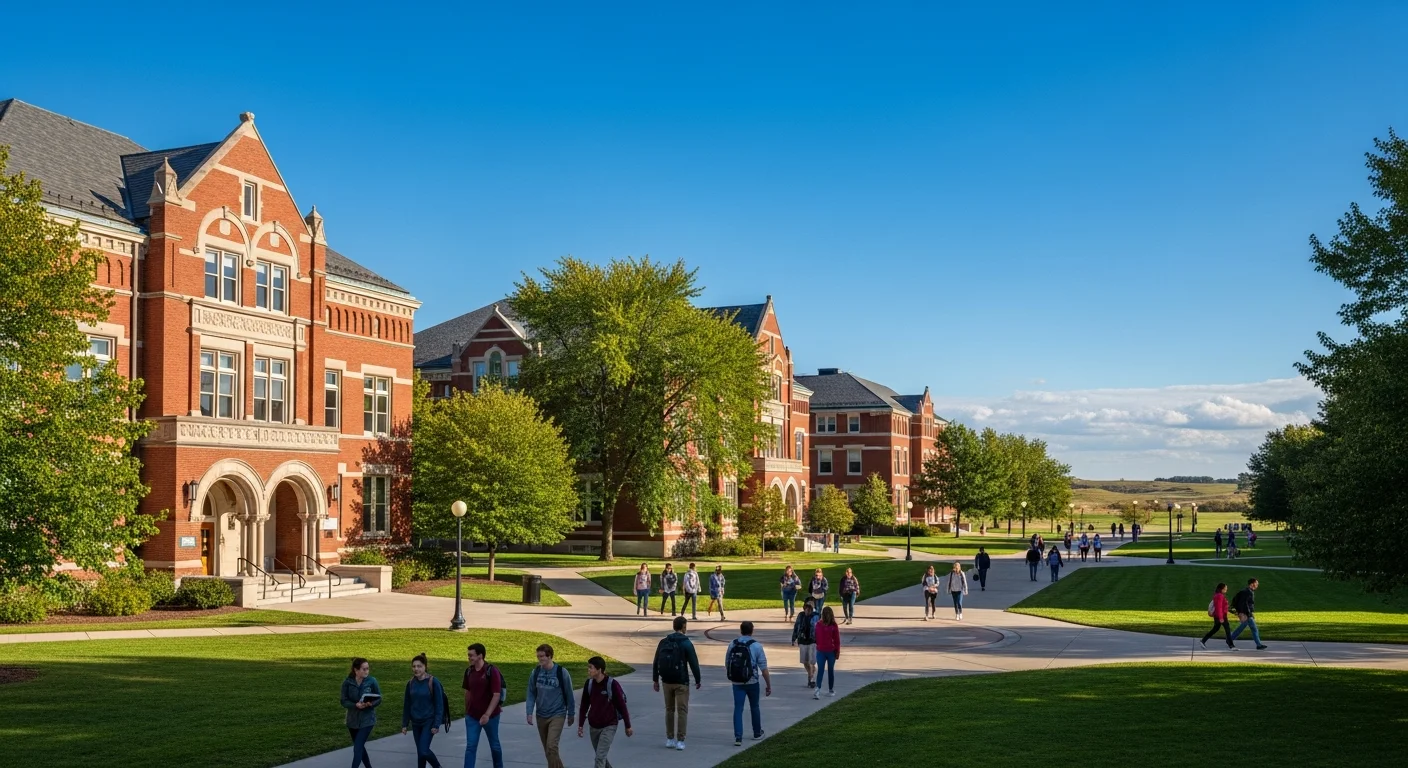
University campus in Nebraska
Updated June 28, 2026

Best Data Science Degree Programs in Nebraska, 2026 Rankings

Compare the top data science colleges in Nebraska. 8 accredited data science schools ranked by graduation rate, career outcomes, and value, from Northeast Community College to University of Nebraska at Omaha.

#1 ProgramU of Nebraska at Omaha
Avg Salary$91,560
Tuition From$3,240/yr
Job Growth+22%
On this page
Reviewed by Taylor Rupe, Founder & EditorSee methodology

12

Programs ranked

IPEDS 2024

$91,560

Nebraska median data science salary

BLS OEWS 2024

78/100

Top program score

Hakia methodology

36%

U.S. job growth (2023–33)

BLS projections

Key Takeaways

Best data science degree programs: U of Nebraska at Omaha, U of Nebraska-Lincoln, Hastings College

Ranked by graduation rates, program outcomes, and institutional quality

IPEDS 2024

Tuition ranges from $3,240 to $45,000/year

Northeast Community College offers the most affordable option at $3,240/yr

IPEDS 2024

Data Science degree programs available: 1 associate's, 3 master's, 1 doctoral in Nebraska

From community college pathways to advanced research degrees

IPEDS 2024

Nebraska community college transfer can save 40-60% on total degree costs

1 associate's programs provide transfer pathways to bachelor's degrees

Education Commission of the States

Major employers: Mutual of Omaha, First Data, TD Ameritrade, Gallup

Tech hubs in Omaha and Lincoln

Hakia Research 2026

Data Science degree programs near 20+ cities across Nebraska

Search by city to find programs within 200 miles of your location

IPEDS 2024

Updated June 28, 2026

How we ranked Nebraska Data Science programs

We rank 12 accredited data science programs in Nebraska using IPEDS 2024 institutional data, BLS OEWS 2024 state salary data, and College Scorecard outcomes. A 4-factor weighted composite is normalized to a 0–100 score. Schools cannot pay for placement; rankings are produced algorithmically.

Program completions (35%)Graduation rate (25%)Selectivity (20%)Career outcomes (20%)
See full methodology

Are Data Science Degree Programs in Nebraska Worth It?

Answer
$91,560
Yes. The best data science degree programs in Nebraska deliver strong ROI, graduates earn $91,560 median salary with +22% job growth through 2032. In-state tuition averages $22,839/year.

Source: BLS OEWS May 2024

Data Science Degree Rankings in Nebraska

Compare the top-ranked Data Science programs in Nebraska by degree level. Tuition, graduation rate, and Hakia Score for every accredited program.

Best Associate's Data Science Programs in Nebraska

1
Programs ranked
$3,240
Avg tuition/yr
0%
Avg grad rate

Program Landscape

Nebraska offers 1 accredited associate's degree programs in data science, providing an affordable entry point into the technology field. The top-ranked programs include Northeast Community College, which combine rigorous technical curriculum with practical skills training.

Costs & Value

Community colleges in Nebraska offer these two-year programs at an average cost of $3,240/yr, significantly less than four-year university tuition. Students completing associate's degrees can pursue entry-level technical positions and transfer opportunities, with entry-level salaries averaging $50,358 in Nebraska.

Career Pathways

Many programs feature guaranteed transfer agreements with Nebraska's public universities, allowing students to complete their first two years at reduced cost before transferring to complete a bachelor's degree. The Omaha, Lincoln, Bellevue areas offer particularly strong job markets for associate's degree holders, with employers like Mutual of Omaha, First Data, TD Ameritrade hiring for technical support, junior development, and IT specialist positions.

Curriculum & Specializations

Programs typically include coursework in programming fundamentals, database management, networking basics, and software development. Among data science schools in Nebraska, these associate's programs offer the best value for students beginning their data science degrees in Nebraska.

Best Bachelor's Data Science Programs in Nebraska

7
Programs ranked
$25,638
Avg tuition/yr
74%
Avg grad rate

Program Landscape

Nebraska ranks among the nation's top destinations for data science education, with 7 accredited bachelor's degree programs across 2 public and 5 private institutions. The highest-ranked programs are U of Nebraska at Omaha, U of Nebraska-Lincoln, Hastings College, recognized for academic excellence, research opportunities, and strong industry connections.

Career Outcomes

Graduates from Nebraska data science programs earn a median salary of $77,826, 21% below the national average. The state's robust technology sector, anchored by the Omaha, Lincoln, Bellevue metropolitan areas, provides abundant internship and employment opportunities with companies including Mutual of Omaha, First Data, TD Ameritrade.

Costs & Value

Tuition ranges from $6,536 to $45,000 annually, with an average of $25,638/yr. Top programs maintain graduation rates above 74%, with the highest reaching 97%. Many programs hold ABET accreditation, the gold standard for computing education, ensuring curriculum meets rigorous industry standards.

Curriculum & Specializations

Students can choose from specializations including software engineering, cybersecurity, artificial intelligence, data science, and systems architecture. Strong industry partnerships provide access to co-op programs, capstone projects with real companies, and direct recruiting pipelines to Nebraska's leading technology employers. For students seeking data science degrees in Nebraska, these top-ranked data science schools offer the strongest combination of academic rigor and career preparation.

🥉
Hastings College
Hastings, NEPrivate
$33,950
Tuition/yr
95%
Grad rate
51.4
Hakia Score
Show all 7 ranked programs
RankSchoolLocationTypeTuitionGrad RateHakia Score
#6Bellevue UniversityBellevue, NEPrivate$8,13612%34.4
#7Doane UniversityCrete, NEPrivate$39,33634.8

Best Master's Data Science Programs in Nebraska

3
Programs ranked
$7,561
Avg tuition/yr
54%
Avg grad rate

Program Landscape

Nebraska offers 3 master's degree programs in data science, designed for professionals seeking to advance into senior engineering, technical leadership, and specialized roles. The top programs, Bellevue, U of Nebraska at Omaha, U of Nebraska-Lincoln, combine advanced technical training with research opportunities and leadership development.

Career Outcomes

Master's graduates in Nebraska earn a median salary of $91,560, approximately 20-30% higher than bachelor's degree holders. The concentration of technology companies in Omaha, Lincoln, Bellevue creates strong demand for graduate-level talent, with Mutual of Omaha, First Data, TD Ameritrade actively recruiting from these programs.

Costs & Value

Program formats include traditional full-time study (typically 2 years), part-time options for working professionals (2-3 years), and accelerated tracks. Tuition averages $7,561/yr, with many employers offering tuition reimbursement for graduate education. Some programs offer thesis and non-thesis tracks, allowing students to focus on research or professional development based on their career goals.

Curriculum & Specializations

Curriculum covers advanced topics including machine learning, distributed systems, software architecture, and technical management. Many programs include practicum experiences, industry capstone projects, or consulting engagements that provide real-world application of advanced concepts. Among Nebraska's data science schools at the graduate level, these programs stand out for both academic quality and career outcomes.

Best Doctoral Data Science Programs in Nebraska

1
Programs ranked
$8,010
Avg tuition/yr
0%
Avg grad rate

Program Landscape

Nebraska is home to 1 doctoral programs in data science, preparing students for research positions, faculty appointments, and executive technical roles. Leading programs at U of Nebraska-Lincoln are recognized for cutting-edge research, strong faculty publications, and competitive funding packages.

Career Outcomes

Doctoral graduates command premium salaries, with Nebraska PhD holders earning a median of $114,450, reflecting the advanced expertise required for research and executive positions. The Omaha, Lincoln, Bellevue region's research universities and corporate R&D centers provide extensive collaboration opportunities with industry leaders like Mutual of Omaha, First Data, TD Ameritrade.

Costs & Value

PhD programs typically require 4-6 years of full-time study, including coursework, qualifying examinations, and original dissertation research. Many programs offer full funding through teaching or research assistantships, covering tuition and providing stipends of $25,000–$40,000 annually.

Curriculum & Specializations

Research strengths across Nebraska programs include artificial intelligence, cybersecurity, human-computer interaction, systems, and theoretical computer science. For aspiring researchers pursuing data science degrees in Nebraska, graduates go on to careers as university faculty, industry research scientists, or technical executives, contributing to advances in technology that impact millions of users worldwide.

Data Science Degree Costs & Tuition in Nebraska

MetricValue
Average in-state tuition$22,839/year
Average out-of-state tuition$57,098/year
Community college tuition$5,710/year
4-year savings for residents$137,036
2+2 transfer pathway savings$34,258

Source: IPEDS 2024

Financial Aid & Scholarships for Data Science Students in Nebraska

State Aid Programs

Nebraska residents pursuing data science degrees have access to multiple financial aid pathways designed to make higher education affordable. The primary state-level support comes through the Nebraska Opportunity Grant, a need-based grant program administered by the Nebraska Coordinating Commission for Postsecondary Education that assists eligible students attending participating institutions. This grant is available to Nebraska residents enrolled at eligible public and private colleges and universities throughout the state, including the major research institutions offering data science programs.

Key Programs & Amounts

All students should complete the Free Application for Federal Student Aid (FAFSA) to access federal grants, loans, and work-study opportunities. The Federal Student Aid portal provides comprehensive information about Pell Grants, Direct Loans, and other federal programs. Additionally, many Nebraska institutions offer institutional scholarships and merit-based aid specifically for data science and STEM majors. Students are encouraged to contact their chosen institution's financial aid office to explore full scholarship packages, as many schools in Nebraska, including the University of Nebraska system institutions, offer competitive awards for qualified applicants in technical fields.

Data Science Degree ROI Calculator, Nebraska

Use our interactive ROI calculator to estimate your return on investment for a data science degree in Nebraska. Enter your expected tuition costs, financial aid, and career goals to see projected payback periods and lifetime earnings. The calculator uses current salary data from BLS and tuition data from IPEDS to provide accurate estimates.

Data Science Degree ROI Calculator

Estimate your return on investment for a data science degree

Leave blank to use average cost for selected program type

20 years
10 years20 years30 years
20-Year ROI

+697%

Net gain divided by total investment. ROI above 200% is considered excellent for education investments.

Net Gain

$1,289,731

Your additional lifetime earnings with this degree vs. working without one, minus the total investment.

Break-Even

6 years

Years until your cumulative earnings exceed total investment. Shorter programs often break even faster due to lower opportunity cost.

COL-Adjusted Salary

$114,286

Your starting salary adjusted for local cost of living. This shows real purchasing power compared to a $100K national baseline.

Why does break-even change with program type? Your "total investment" includes both tuition AND opportunity cost (foregone earnings while in school). A 4-year full-time public university (in-state) means 4 years of not earning a salary ($140,000 in opportunity cost). Shorter full-time programs may have higher tuition but lower total investment because you return to the workforce sooner.

Detailed Breakdown

How we calculate your degree ROI using real salary data

Total Investment$185,000

Tuition plus opportunity cost (earnings you miss while in school)

Program Cost (Tuition)$45,000

Direct cost of the degree program

Opportunity Cost$140,000

4 years × $35K/year foregone salary while studying full-time

20-Year Earnings (with degree)$2,325,139

Projected career earnings starting after graduation, with salary growth

20-Year Earnings (without degree)$850,408

What you'd earn working at $35K/year with 2% annual growth

Starting Salary (Austin, TX)$120,000

Median salary for this role in your selected location (BLS 2024)

Annualized Return4.1%

Your investment's compound annual growth rate (similar to stock market returns)

Data sources: BLS OEWS May 2024, IPEDS 2024. Calculations use median salaries, 3% discount rate, and assume salary growth declines from 6% to 2% over career. Individual results will vary. | Powered by Hakia.com

Data Science Salaries by Metro Area

Median annual salary in Nebraska metro areas

Omaha$101K
Lincoln$96K
Bellevue$92K
View data table
CategoryValue
Omaha$101K
Lincoln$96K
Bellevue$92K

Source: BLS OEWS May 2024

Hakia.com

Top Employers Hiring Data Science Graduates in Nebraska

Find data science jobs in Nebraska. These major employers across Nebraska metro areas are actively hiring data science degree holders. Click employer names to view current job openings.

Data Science Jobs in Omaha

NE
Mutual of Omaha
insurance
Kiewit
construction
PayPal/Venmo
fintech
Buildertrend
tech
Union Pacific
railroad

Data Science Jobs in Lincoln

NE
Hudl
tech
Nelnet
fintech
University of Nebraska-Lincoln
education

Transfer Pathways for Data Science Degrees in Nebraska

State Transfer System

Nebraska's 2 associate's degree programs in data science, offered through community colleges, provide an affordable and accessible entry point for students pursuing bachelor's and master's degrees. The Nebraska Transfer Initiative, administered by the Nebraska Coordinating Commission for Postsecondary Education, facilitates seamless credit transfer among public institutions, allowing students to complete foundational coursework at two-year colleges before transferring to four-year universities. Top-ranked associate's programs include Metropolitan Community College Area ($3,060 tuition), Southeast Community College Area ($2,912 tuition), and Northeast Community College ($3,240 tuition). These pathways significantly reduce overall education costs while maintaining academic rigor.

How Transfers Work

Students completing associate's degrees in data science can articulate directly into bachelor's programs at universities such as University of Nebraska at Omaha, University of Nebraska-Lincoln, and University of Nebraska at Kearney, completing a four-year degree in two additional years. The Nebraska Transfer Initiative ensures transcript evaluation and credit acceptance, eliminating lost coursework and reducing time-to-degree. After earning a bachelor's degree, graduates can pursue master's programs at leading institutions like University of Nebraska at Omaha ($6,536 tuition) and University of Nebraska-Lincoln ($8,010 tuition). For financial assistance during transfer, students should explore the Nebraska Opportunity Grant, a need-based program supporting Nebraska residents at eligible institutions. This structured pathway maximizes affordability while providing opportunities to advance through associate, bachelor, and master's credentials.

Why Pursue a Data Science Degree in Nebraska?

Industry & Workforce

Nebraska offers strong opportunities for data science education across all degree levels, with 13 institutions providing dedicated programs in the state. According to IPEDS, Nebraska awarded 259 bachelor's degrees, 151 master's degrees, 18 doctoral degrees, and 2 associate's degrees in data science during 2023. This breadth of offerings means students can pursue their educational goals without leaving the state, from community college entry points through doctoral research. The University of Nebraska system leads the charge, with the University of Nebraska-Lincoln and University of Nebraska at Omaha anchoring the state's data science ecosystem with 169 and 120 completions respectively.

Salary Outlook

Nebraska's major technology hubs in Omaha, Lincoln, and Bellevue provide exceptional employment pathways for graduates. Major employers including Nebraska Medicine, Union Pacific, and Berkshire Hathaway actively recruit data science talent, creating strong local demand. Public in-state tuition at four-year institutions averages just $6,668, significantly below the national average, making Nebraska an affordable gateway to in-demand careers. Beyond cost, Nebraska's growing tech sector and research universities create a supportive environment for developing advanced data science skills. Explore related fields like Data Analytics in Nebraska, Machine Learning in Nebraska, and Artificial Intelligence in Nebraska to understand the broader data-driven career landscape available in the state.

Data Science Program Availability in Nebraska

8 Programs
Nebraska offers 8 accredited data science programs across public universities, private colleges, and community colleges. Top tech hubs include Omaha, Lincoln, Bellevue.

Source: IPEDS 2024

Data Science Job Market & Salary Data in Nebraska

Employment Outlook

Nebraska's data science job market is experiencing steady growth, driven by a diverse employer base spanning healthcare, transportation, insurance, and technology sectors. The state's major metropolitan areas. Omaha-Council Bluffs and Lincoln, represent the primary hubs for data science employment. According to the Bureau of Labor Statistics, Nebraska's employment landscape continues to evolve as organizations increasingly recognize the value of data-driven decision-making. The Omaha metro area, in particular, is a significant center for data science talent recruitment, supported by major regional employers and growing tech infrastructure.

Salaries by Metro

Data science graduates from Nebraska institutions are well-positioned to enter a competitive job market with multiple career pathways. The state's 13 institutions offering data science programs across associate's, bachelor's, master's, and doctoral levels create a strong pipeline of talent. Key employment sectors include healthcare analytics, supply chain optimization, and financial services. Students from top-ranked programs like University of Nebraska at Omaha and University of Nebraska-Lincoln benefit from proximity to major employers and networking opportunities. For comprehensive salary and employment data, consult the College Scorecard and BLS State Data resources.

Entry-Level (0-2 yrs)

New graduates and career changers

Senior (8+ yrs)

Technical leads and architects

Median Salary in Nebraska$59,514$132,762
Typical RolesJunior Developer, AnalystStaff Engineer, Architect
Remote Work AccessLimitedCommon
Degree ExpectationBachelor's sufficientMaster's preferred

Online vs On-Campus Data Science Programs in Nebraska

Online Programs

0 available in Nebraska

On-Campus Programs

Traditional classroom experience

Typical Tuition$20,555/yr$22,839/yr
Schedule FlexibilitySelf-paced or asyncFixed schedule
NetworkingVirtual cohortsIn-person, career fairs
Best ForWorking professionalsTraditional students
Completion Time2-4 years (flexible)4 years (standard)

Compare Data Science Programs in Other States

Data Science Degree Programs in Nebraska: FAQ

What are the best data science degree programs in Nebraska?
The best data science degree programs in Nebraska based on our methodology are: 1) University of Nebraska at Omaha (97% graduation rate), 2) University of Nebraska-Lincoln, and 3) Hastings College. Our rankings weight graduation rates (25%), program completions (35%), selectivity (20%), and career outcomes (20%). Nebraska offers 8 total accredited programs across 3 public and 5 private institutions. See our complete rankings for all 7 bachelor's programs.
How much do data science degree programs cost in Nebraska?
Data Science degree program costs in Nebraska vary significantly by institution type. In-state public tuition averages $22,839/year, while private institutions average $50,246/year. Community colleges offer the most affordable path at approximately $5,710/year for associate's degrees. The total 4-year cost ranges from $91,356 at public schools to $200,983 at private institutions before financial aid. Most students don't pay full sticker price, federal grants, state aid, and institutional scholarships can reduce costs by 30-60%.
What salary can data science degree graduates earn in Nebraska?
Data Science professionals in Nebraska earn a median salary of $91,560, which is competitive with the national average of $115,500. Entry-level positions typically start around $59,514, while senior roles exceed $132,762. Salaries vary by metro area: Omaha ($100,716), Lincoln ($96,138) offer the highest compensation. Specialized roles like AI/ML engineers and cloud architects command premiums of 15-30% above median.
Are there online data science degree programs in Nebraska?
Yes, Nebraska offers 0 accredited online Data Science programs from state institutions. These programs award the same degree as on-campus options and include synchronous and asynchronous formats. Top-ranked online programs include offerings from various state universities. Online programs typically cost the same as on-campus tuition for in-state students. Many programs offer flexible scheduling for working professionals, with some offering accelerated completion in 2-3 years. Ensure any online program holds regional accreditation and ideally ABET accreditation for engineering programs.
What companies hire data science degree graduates in Nebraska?
Major Data Science employers in Nebraska include Mutual of Omaha, First Data, TD Ameritrade, Gallup, Buildertrend. The Omaha and Lincoln metro areas serve as primary tech hubs with thousands of open positions. Top employers maintain recruiting pipelines directly from Nebraska universities, with many offering internship-to-hire programs. Beyond tech giants, opportunities exist in healthcare IT, financial services, defense contractors, and growing startups. Nebraska's tech sector shows +22% projected job growth through 2033, outpacing most other industries.
Is a data science degree program worth it in Nebraska?
A data science degree program in Nebraska offers strong ROI with a $91,560 median salary and +22% projected job growth. At average in-state tuition of $22,839/year, graduates typically recoup their educational investment within 3-5 years. The degree opens doors to high-paying careers in software development ($103,463), data science, cybersecurity, and AI/ML. Beyond salary, benefits include job security, remote work flexibility, and clear advancement paths. Alternative paths like bootcamps exist for career changers, but bachelor's degrees provide broader career options and higher lifetime earnings.
How long do data science degree programs take in Nebraska?
Standard completion times for data science degree programs in Nebraska are: Associate's (2 years, 60 credits), Bachelor's (4 years, 120 credits), and Master's (1-2 years, 30-36 credits). However, actual timelines vary based on course load, transfer credits, and program format. Accelerated programs can compress a bachelor's to 3 years or a master's to 12 months. Part-time students typically need 5-6 years for a bachelor's degree. Nebraska community colleges offer a cost-effective "2+2" path: complete your associate's in 2 years, then transfer to a Nebraska university for the final 2 years of a bachelor's program.
What financial aid is available for data science degree students in Nebraska?
Nebraska data science degree students can access multiple financial aid sources. Federal aid includes Pell Grants (up to $7,395/year for qualifying students) and federal student loans. Nebraska state grants provide additional support for residents attending in-state schools. Institutional scholarships from universities can significantly reduce costs, many schools offer merit-based awards for STEM students. Work-study programs and teaching/research assistantships (especially for graduate students) provide income while building experience. Complete the FAFSA by Nebraska's priority deadline to maximize aid eligibility. Some employers also offer tuition reimbursement for employees pursuing CS degrees.

Data Sources

Institutional characteristics, completions, graduation rates

Nebraska salary and employment data

Official University Websites

Program details and admissions information

Last Updated: June 26, 2026. Rankings based on IPEDS 2024 data. Salary data from BLS OEWS May 2024.

Was this ranking helpful for your college search?
Taylor Rupe

Taylor Rupe

Co-founder & Editor (B.S. Computer Science, Oregon State • B.A. Psychology, University of Washington)

Taylor combines technical expertise in computer science with a deep understanding of human behavior and learning. His dual background drives Hakia's mission: leveraging technology to build authoritative educational resources that help people make better decisions about their academic and career paths.

The research behind the rankings

In-depth Data Science program profiles in Nebraska

Hand-researched detail on the top-ranked programs: degree pathways, research labs, industry partners, career outcomes, and admissions. Tap any school to expand.

Best Associate's Data Science programs

#1Northeast Community CollegeNorfolk, NE

Hakia insight. Northeast CC's deliberate resistance to technology chasing—keeping data cleaning and statistical foundations sharp—produces graduates who land roles at agricultural cooperatives and regional manufacturers where fundamentals outlast frameworks, a hiring preference that favors Northeast's grads over associates degree holders from trend-chasing competitors.

At the associate's level, rather than chasing every trending technology, Northeast CC keeps its data science fundamentals sharp and relevant—students master the core skills (data cleaning, basic statistics, SQL, Python) that transfer across any industry, then specialize based on their interests. The program works closely with regional employers in agriculture, food processing, and small manufacturing, so your capstone projects often solve real business problems. Transfer agreements with UNL and UNK are solid, and many graduates find that employers value their work ethic and hands-on lab experience as much as their technical skills. The culture here is collaborative, not competitive, which means you'll have instructors who actually know your name and care whether you succeed.

Programs offered

  • Associate of Science in Data Science · 2 years · on-campus
  • Associate of Applied Science in Data Science · 2 years · online

Career outcomes

Top employers: Agricultural cooperatives, Food processing companies, Regional manufacturers

Best Bachelor's Data Science programs

#1University of Nebraska at OmahaOmaha, NE

Why it stands out. Data Science concentration track. Student organizations including Pi Mu Epsilon and NE STEM 4U

Hakia insight. UNO's proximity to U.S. Strategic Command headquarters and its partnerships with NSA and DOD create a rare undergraduate pipeline where data science students can transition directly into cleared defense contractor roles—a career acceleration unavailable at most state schools without top-secret clearance sponsorship.

The Bachelor of Science in Mathematics with a Data Science concentration at University of Nebraska at Omaha prepares students for careers in data analysis, predictive modeling, and quantitative research. The program combines core mathematics coursework with specialized data science training, enabling students to analyze complex datasets and make data-driven decisions for organizations across retail, finance, and technology sectors. Students benefit from a flexible curriculum structure that allows concentration in data science while maintaining breadth in mathematical foundations. The program prepares graduates for immediate employment in data science roles or advanced study in related fields, with career paths including data scientist positions at major retailers and tech companies.

Programs offered

  • Bachelor of Science in Mathematics - Data Science Concentration · 4 years · on-campus

Research labs & institutes

  • Cybersecurity Research Lab — Threat detection, network security, data forensics

Industry partners

U.S. Department of DefenseU.S. National Security Agency

Admissions

Deadline Fall: July 1, Spring: December 15, Summer available.

Location advantage: Proximity to U.S. Strategic Command headquarters in Omaha Strong regional defense contractor ecosystem

#2University of Nebraska-LincolnLincoln, NE

Why it stands out. Mandatory Experiential Learning (EL) designated course for all CASNR undergraduates. Dual degree option: students can earn both data science degree and their chosen discipline's degree

Hakia insight. Nebraska-Lincoln's dual degree option—earning both your data science degree and your chosen discipline (e.g., agricultural economics)—lets students graduate as domain experts with technical chops rather than generalist data scientists, a structural advantage that justifies employer preference for their graduates at John Deere and Ameritas.

The Bachelor of Science in Data Science at University of Nebraska-Lincoln is an interdisciplinary program offered through the College of Agricultural Science and Natural Resources (CASNR), Department of Statistics. The program prepares students with skills in data analysis and interpretation, algorithm design and implementation, and interdisciplinary problem-solving for data-rich systems. Students develop competencies across diverse fields and can leverage career opportunities in data-driven industries. The program emphasizes flexibility, allowing students to earn dual degrees combining data science with their chosen discipline or add complementary minors. All undergraduates in CASNR must complete an Experiential Learning (EL) designated course, providing hands-on experience. The curriculum integrates ACE (Achievement-Centered Education) requirements, college core courses, and degree-specific coursework. At least 9 hours in the major, including the capstone course, must be completed at UNL. The program addresses the growing societal and economic need for qualified professionals in the digital age workforce.

Programs offered

  • Bachelor of Science in Data Science · 4 years · on-campus

Research labs & institutes

  • Nebraska Center for Materials and Nanoscience — Materials informatics, computational modeling
  • NIMBUS Lab — Drone development and unmanned aircraft systems
  • Central Plains Federal Statistical Research Data Center — Restricted-use federal statistical data research

Industry partners

AmeritasJohn DeereSandhills GlobalMicrosoftLockheed MartinBuildertrendHudlThe North Jackson CompanyExperianEpic

Notable faculty

  • Dr. Petronela Radu (Mathematical modeling and interdisciplinary data science applications)

Admissions

GPA 3.0 high school GPA.

Location advantage: Access to agricultural data and domain expertise through university partnerships Connection to agricultural technology companies in the region

#3Hastings CollegeHastings, NE

Hakia insight. Hastings College offers both B.S. and B.A. tracks in data science—a distinction that signals flexibility for students uncertain whether they're statistics-focused or communications-adjacent, yet the provided data lacks detail on outcomes and differentiation.

Programs offered

  • Bachelor of Science in Data Science · 4 years · on-campus
  • Bachelor of Arts in Data Science · 4 years · online
#4Concordia University-NebraskaSeward, NE

Why it stands out. Two dedicated computer science labs with hands-on learning. Programming Team with national/international competition participation

Hakia insight. Concordia's Programming Team competing at national and international levels means undergraduates sharpen algorithmic thinking through real competition rather than homework problems, an advantage that directly translates to faster hiring at Intel and other technical employers who screen for competitive programming backgrounds.

Concordia University, Nebraska's Bachelor of Science in Data Science is a 120-credit interdisciplinary program combining computer science, statistics, and domain-specific knowledge. The program emphasizes hands-on learning in two dedicated computer science labs within the innovative Dunklau Center, featuring Dell and Apple devices with ultra-wide monitors. Students gain practical experience through internships, extracurricular activities, and the Programming Team which competes nationally and internationally while developing real campus software systems. The curriculum covers Python programming, data manipulation, visualization, machine learning, and applications across business, finance, healthcare, and technology. Students can supplement their studies with minors in Computer Science, Cybersecurity, or Mathematics. Career outcomes include roles as Data Scientists, Data Engineers, Data Analysts, Machine Learning Engineers, and Business Intelligence Analysts across diverse industries. The program maintains a 14:1 student-to-faculty ratio and offers Programming Team scholarships for qualified freshmen maintaining 3.0+ GPA.

Programs offered

  • Bachelor of Science in Data Science · 4 years · on-campus

Career outcomes

Top employers: Intel

#5Creighton UniversityOmaha, NE

Why it stands out. Interdisciplinary curriculum combining mathematics, computer science, journalism, and media. Collaborative, service-learning-based capstone project with real-world experience

Hakia insight. Creighton's capstone integrating journalism and media alongside mathematics and computer science is unusual; positioning Omaha-based data scientists to move between healthcare analytics (Methodist Health System), insurance data (regional firms), and investigative storytelling—a rare tri-domain flexibility in a single degree.

Creighton's Bachelor of Science in Data Science is an interdisciplinary program combining mathematics, computer science, journalism, and media with a collaborative, service-learning-based capstone project. The 47-credit curriculum prepares students to work across the entire data lifecycle—planning, acquiring, managing, analyzing, modeling, and drawing inferences from data. Students choose between two specialization tracks: Advanced Computing (Algorithm Design, Artificial Intelligence, Social Media Analytics) or Advanced Mathematics and Statistics (Advanced Linear Algebra, Probability Theory, Mathematical Statistics). The program emphasizes real-world problem-solving, teaching students to design algorithms, build software systems for complex data analysis, and communicate technical ideas effectively. Graduates are well-prepared for roles as data scientists, data engineers, machine learning engineers, or statisticians, with job growth projected at 15-33% over two decades according to the Bureau of Labor Statistics.

Programs offered

  • Bachelor of Science in Data Science · 4 years · on-campus

Location advantage: Omaha, Nebraska—proximity to major healthcare systems (Methodist Health System, CHI Health), insurance companies, and regional financial services firms

#6Bellevue UniversityBellevue, NE

Why it stands out. Bellevue's data science program prioritizes accessibility and applied business analytics for working professionals seeking career transition without sacrificing rigor.

Hakia insight. Bellevue's 2.5 GPA floor from recent coursework—rather than cumulative GPA—explicitly welcomes career-switchers and allows transcript recovery, a structural admission choice that compounds across the program (no GRE/GMAT required for their master's either), creating a throughline for working adults to reach data roles without credential burnishing.

At the bachelor's level, bellevue University's data science offerings emphasize applied analytics and business intelligence in a format designed for working professionals. The curriculum integrates real-world data challenges with practical tools and techniques that immediately transfer to industry settings. With a focus on predictive analytics, statistical modeling, and data-driven decision making, students gain hands-on experience through capstone projects grounded in current business problems. The program's flexibility—available in hybrid and online formats—allows professionals to balance career advancement with degree completion. Faculty bring substantial industry experience, ensuring coursework reflects contemporary business analytics demands rather than purely theoretical frameworks. Graduates commonly move into data analyst and business intelligence roles, with many employers actively recruiting from Bellevue's working-professional student base.

Programs offered

  • Bachelor of Science in Data Science · 4 years · on-campus
  • Bachelor of Arts in Data Science · 4 years · online

Research labs & institutes

  • Center for Cybersecurity Education — Cybersecurity research and education
  • Natural Science Center of Excellence — Natural science research and innovation
  • Project Management Center of Excellence — Project management research and education
  • MathX Lab — Mathematics and quantitative analysis
  • Courtnage Intelligence Systems Lab — Cybersecurity and intelligence systems

Notable faculty

  • Dr. Mary Dobransky (Higher education administration and technology leadership)
  • James Lewis (Academic administration and accreditation standards)
  • Phillip Fitzpatrick (Technology, Cybersecurity, and Science programs)

Admissions

GPA 2.5 minimum from most recent 60 credits or 3.0 in previous graduate coursework.

Accreditation & certifications

Higher Learning Commission

Location advantage: Nebraska's growing tech sector Omaha metro area business and finance networks

#7Doane UniversityCrete, NE

Why it stands out. Doane stands apart through its early and intensive focus on technical coding and statistical programming, preparing students to contribute immediately in engineering and analyst roles.

Hakia insight. Doane's front-loaded immersion in Python, R, and SQL before statistical theory lets students contribute as junior analysts by sophomore year, a sequencing choice that trades theoretical depth for immediate job-market readiness—valuable in regional healthcare and agriculture sectors where employers need analysts who can write queries on day one.

At the bachelor's level, doane University's data science program prioritizes hands-on technical mastery from day one, with early immersion in programming (Python, R, SQL) and statistical foundations before branching into machine learning and data engineering specializations. The curriculum is explicitly designed for students who want to hit the ground running in technical roles, with problem-solving and coding skills emphasized throughout. Labs and projects use real datasets from public sources and partner organizations, so students develop portfolios with tangible analytics work from their first year. Faculty bring academic research backgrounds and consulting experience, creating a mentoring environment where students learn not just what to code but how to think like data scientists. The program's geographic location and regional partnerships create internship opportunities in healthcare systems, agricultural cooperatives, and mid-market technology companies—sectors where data science talent is in acute demand but competition is less intense than in major tech hubs.

Programs offered

  • Bachelor of Science in Data Science · 4 years · on-campus
  • Bachelor of Arts in Data Science · 4 years · online

Location advantage: Regional demand for data science talent in healthcare and agriculture sectors

Best Master's Data Science programs

#1Bellevue UniversityBellevue, NE

Why it stands out. 100% online, fully asynchronous format designed for working professionals. No GRE/GMAT required for admission

Hakia insight. Bellevue's fully asynchronous 100% online master's with no GRE/GMAT removes three traditional gatekeeping barriers simultaneously, a rare combination that lets working professionals pivot into data science without pausing careers—the 30-credit coursework-only track (no thesis) ensures completion in under two years even with full-time work.

Bellevue University's MS in Data Science is a fully online, flexible master's program designed for working professionals. The 30-credit coursework-based track (no thesis option) can be completed entirely online with asynchronous learning, allowing students to balance career advancement with education. The curriculum emphasizes practical tools like Python, R, Tableau, and Power BI, with hands-on projects in data analysis, predictive analytics, and visualization. A dedicated Student Coach supports learners from enrollment through graduation. The program covers ethical data modeling, business intelligence applications, and emerging AI techniques. While specific salary data isn't provided, data science professionals are positioned for significant career advancement across industries seeking skilled data analysts. Employer tuition reimbursement partnerships are available, and graduate students may access up to $20,500 annually in unsubsidized Direct Student Loans. No graduate assistantships are mentioned. The program is ideal for mid-career professionals seeking flexible, affordable credential advancement without thesis requirements.

Programs offered

  • Master of Science in Data Science · 1-2 years · on-campus

Research labs & institutes

  • Center for Cybersecurity Education — Cybersecurity research and education
  • Natural Science Center of Excellence — Natural science research and innovation
  • Project Management Center of Excellence — Project management research and education
  • MathX Lab — Mathematics and quantitative analysis
  • Courtnage Intelligence Systems Lab — Cybersecurity and intelligence systems

Career outcomes

Top employers: Intel

Notable faculty

  • Dr. Mary Dobransky (Higher education administration and technology leadership)
  • James Lewis (Academic administration and accreditation standards)
  • Phillip Fitzpatrick (Technology, Cybersecurity, and Science programs)

Admissions

GPA 2.5 minimum from most recent 60 credits or 3.0 in previous graduate coursework.

Accreditation & certifications

Higher Learning Commission

Location advantage: Nebraska's growing tech sector Omaha metro area business and finance networks

#2University of Nebraska at OmahaOmaha, NE

Why it stands out. Multiple concentration tracks for specialization. Interdisciplinary curriculum across College of Business Administration, College of Arts and Sciences, and College of Information Science & Technology

Hakia insight. UNO's multiple concentration tracks across three colleges—Business, Arts & Sciences, and Information Science & Technology—combined with its NSA/DOD partnerships means students can specialize in cybersecurity analytics or government data work while staying embedded in regional defense contractor hiring pipelines.

The Master of Science in Data Science at University of Nebraska at Omaha prepares working professionals to transform raw data into actionable business insights. The program offers multiple concentrations including Business Data Science, Health Sciences, Information Technology, and Statistical and Decision Sciences, allowing students to tailor their studies to career goals. Available in traditional format with flexible scheduling options, this interdisciplinary program combines coursework across business, arts and sciences, and information technology. Graduates develop expertise in data analysis, visualization, and strategic decision-making for corporate and government sectors. The program supports career advancement by equipping professionals with in-demand data science skills that command higher salaries in competitive markets.

Programs offered

  • Data Science, Master of Science · 1-2 years · on-campus

Research labs & institutes

  • Cybersecurity Research Lab — Threat detection, network security, data forensics

Industry partners

U.S. Department of DefenseU.S. National Security Agency

Admissions

Deadline Fall: July 1, Spring: December 15, Summer available.

Location advantage: Proximity to U.S. Strategic Command headquarters in Omaha Strong regional defense contractor ecosystem

#3University of Nebraska-LincolnLincoln, NE

Why it stands out. Part-time completion in 5 semesters with flexible scheduling. Three start dates per year (May, August, January)

Hakia insight. Through ties with Ameritas and John Deere, University of Nebraska-Lincoln bridges the gap between academic data science training and industry practice in Nebraska.

The Master of Science in Business Analytics from University of Nebraska-Lincoln is a 30-credit online program designed for working professionals seeking career advancement through data-driven decision-making. The program offers flexible part-time completion in as quickly as 5 semesters with three start dates per year (May, August, January). The curriculum combines 8 core courses in financial accounting, managerial marketing, supply chain management, and advanced analytics with 2 electives allowing specialization in marketing analytics, econometrics, big data, prescriptive analytics, project management, or operations innovation. No GRE/GMAT required for admission, making it accessible to mid-career professionals. Graduates join a Big Ten institution with #3 Career Services ranking (Financial Times, 2022) and #35 best online master's programs (U.S. News, 2025). The 12% job growth forecast for analytics roles supports strong salary advancement potential. Employer tuition partnerships available; students encouraged to verify employer financial support.

Programs offered

  • Master of Science in Business Analytics · 1-2 years · on-campus

Research labs & institutes

  • Nebraska Center for Materials and Nanoscience — Materials informatics, computational modeling
  • NIMBUS Lab — Drone development and unmanned aircraft systems
  • Central Plains Federal Statistical Research Data Center — Restricted-use federal statistical data research

Industry partners

AmeritasJohn DeereSandhills GlobalMicrosoftLockheed MartinBuildertrendHudlThe North Jackson CompanyExperianEpic

Notable faculty

  • Dr. Petronela Radu (Mathematical modeling and interdisciplinary data science applications)

Admissions

GPA 3.0 high school GPA.

Location advantage: Access to agricultural data and domain expertise through university partnerships Connection to agricultural technology companies in the region

Best Doctoral Data Science programs

#1University of Nebraska-LincolnLincoln, NE

Why it stands out. UNL's data science program emphasizes research methodology and computational depth, with genuine opportunities for undergraduates to contribute to published research.

Hakia insight. UNL's partnerships with John Deere and regional agricultural tech companies mean doctoral students aren't studying farming data in the abstract—they're embedded in a $300B+ industry that actively funds their research and generates dissertation topics with immediate commercial relevance.

At the doctoral level, nebraska's flagship institution offers data science education embedded within a research-intensive environment, where students contribute to active projects spanning agricultural analytics, computational biology, and machine learning systems. The program capitalizes on UNL's research strengths by giving undergraduates and graduate students direct involvement in faculty-led investigations—a pathway that accelerates development of both methodological and independent research skills. Curriculum balances statistical foundations with modern machine learning, reinforced through senior capstones and thesis work on problems with genuine research complexity. Faculty expertise spans optimization, statistical inference, deep learning, and domain applications, providing mentorship across theoretical and applied frontiers. The university's investment in high-performance computing infrastructure and data repositories gives students access to computational resources typical of much larger research institutions. Graduates report strong outcomes in both research-oriented PhD programs and industry machine learning roles, reflecting the program's success in preparing students for either academic or advanced technical career paths.

Programs offered

  • Doctor of Philosophy in Data Science · 4-6 years · on-campus
  • Doctor of Science in Data Science · 4-6 years · online

Research labs & institutes

  • Nebraska Center for Materials and Nanoscience — Materials informatics, computational modeling
  • NIMBUS Lab — Drone development and unmanned aircraft systems
  • Central Plains Federal Statistical Research Data Center — Restricted-use federal statistical data research

Industry partners

AmeritasJohn DeereSandhills GlobalMicrosoftLockheed MartinBuildertrendHudlThe North Jackson CompanyExperianEpic

Notable faculty

  • Dr. Petronela Radu (Mathematical modeling and interdisciplinary data science applications)

Admissions

GPA 3.0 high school GPA.

Location advantage: Access to agricultural data and domain expertise through university partnerships Connection to agricultural technology companies in the region