On this page
Key Takeaways
Best artificial intelligence degree programs: U of Minnesota-Twin Cities, Carleton College, St Olaf College
Ranked by graduation rates, program outcomes, and institutional quality
Tuition ranges from $4,502 to $65,043/year
Normandale Community College offers the most affordable option at $5,347/yr
Artificial Intelligence degree programs available: 7 associate's, 4 master's, 1 doctoral in Minnesota
From community college pathways to advanced research degrees
7 online artificial intelligence degree programs in Minnesota
Flexible scheduling for working professionals
Minnesota community college transfer can save 40-60% on total degree costs
7 associate's programs provide transfer pathways to bachelor's degrees
Education Commission of the States
Major employers: Target, UnitedHealth, Best Buy, 3M
Tech hubs in Minneapolis and St. Paul
Hakia Research 2026
Artificial Intelligence degree programs near 53+ cities across Minnesota
Search by city to find programs within 200 miles of your location
Updated October 19, 2026
How we ranked Minnesota Artificial Intelligence programs
We rank 36 accredited artificial intelligence programs in Minnesota using IPEDS 2024 institutional data, BLS OEWS 2024 state salary data, and College Scorecard outcomes. A 4-factor weighted composite is normalized to a 0–100 score. Schools cannot pay for placement; rankings are produced algorithmically.
Are Artificial Intelligence Degree Programs in Minnesota Worth It?
Source: BLS OEWS May 2024
Artificial Intelligence Degree Rankings in Minnesota
Compare the top-ranked Artificial Intelligence programs in Minnesota by degree level. Tuition, graduation rate, and Hakia Score for every accredited program.
Best Associate's Artificial Intelligence Programs in Minnesota
Program Landscape
Minnesota offers 7 accredited associate's degree programs in artificial intelligence, providing an affordable entry point into the technology field. The top-ranked programs include Normandale Community College, Anoka-Ramsey Community Co..., North Hennepin Community ..., which combine rigorous technical curriculum with practical skills training.
Costs & Value
Community colleges in Minnesota offer these two-year programs at an average cost of $5,247/yr, significantly less than four-year university tuition. Students completing associate's degrees can pursue entry-level technical positions and transfer opportunities, with entry-level salaries averaging $58,735 in Minnesota.
Career Pathways
Many programs feature guaranteed transfer agreements with Minnesota's public universities, allowing students to complete their first two years at reduced cost before transferring to complete a bachelor's degree. The Minneapolis, St. Paul, Bloomington areas offer particularly strong job markets for associate's degree holders, with employers like Target, UnitedHealth, Best Buy hiring for technical support, junior development, and IT specialist positions.
Curriculum & Specializations
Programs typically include coursework in programming fundamentals, database management, networking basics, and software development. Among artificial intelligence schools in Minnesota, these associate's programs offer the best value for students beginning their artificial intelligence degrees in Minnesota.
Show all 7 ranked programs
| Rank | School | Location | Type | Tuition | Grad Rate | Hakia Score |
|---|---|---|---|---|---|---|
| #6 | Century College | White Bear Lake, MN | Public | $5,475 | — | 49.9 |
| #7 | Inver Hills Community College | Inver Grove Heights, MN | Public | $5,420 | — | 40.3 |
Best Bachelor's Artificial Intelligence Programs in Minnesota
Program Landscape
Minnesota ranks among the nation's top destinations for artificial intelligence education, with 24 accredited bachelor's degree programs across 10 public and 13 private institutions. The highest-ranked programs are U of Minnesota-Twin Cities, Carleton College, St Olaf College, recognized for academic excellence, research opportunities, and strong industry connections.
Career Outcomes
Graduates from Minnesota artificial intelligence programs earn a median salary of $90,772, 8% below the national average. The state's robust technology sector, anchored by the Minneapolis, St. Paul, Bloomington metropolitan areas, provides abundant internship and employment opportunities with companies including Target, UnitedHealth, Best Buy.
Costs & Value
Tuition ranges from $8,356 to $65,043 annually, with an average of $28,375/yr. Top programs maintain graduation rates above 79%, with the highest reaching 97%. Many programs hold ABET accreditation, the gold standard for computing education, ensuring curriculum meets rigorous industry standards.
Curriculum & Specializations
Students can choose from specializations including software engineering, cybersecurity, artificial intelligence, data science, and systems architecture. Strong industry partnerships provide access to co-op programs, capstone projects with real companies, and direct recruiting pipelines to Minnesota's leading technology employers. For students seeking artificial intelligence degrees in Minnesota, these top-ranked artificial intelligence schools offer the strongest combination of academic rigor and career preparation.
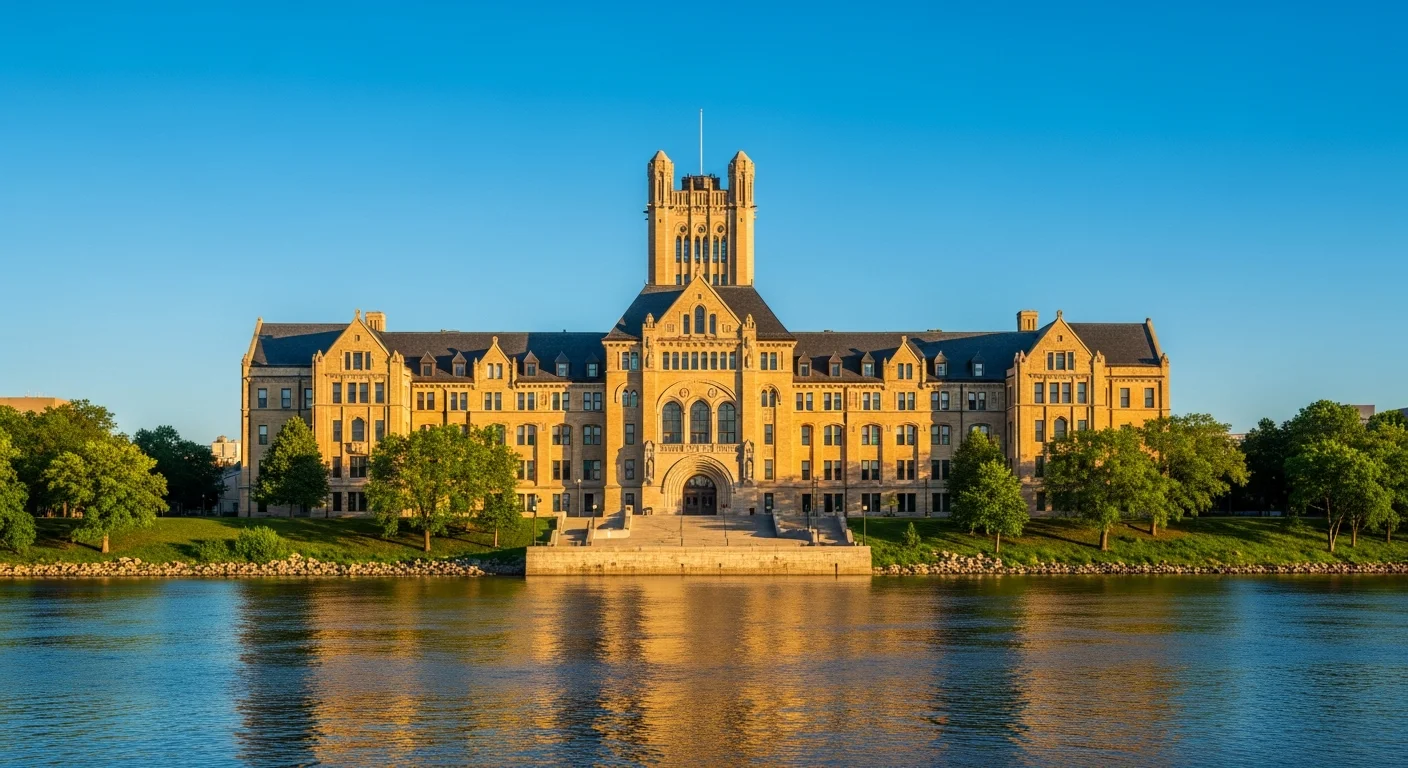
University of Minnesota-Twin Cities
Show all 24 ranked programs
| Rank | School | Location | Type | Tuition | Grad Rate | Hakia Score |
|---|---|---|---|---|---|---|
| #6 | University of St Thomas | Saint Paul, MN | Private | $50,788 | 89% | 60.4 |
| #7 | Bethany Lutheran College | Mankato, MN | Private | $29,280 | 72% | 48.4 |
| #8 | University of Minnesota-Duluth | Duluth, MN | Public | $12,766 | — | 44.6 |
| #9 | Minnesota State University-Mankato | Mankato, MN | Public | $8,356 | 95% | 49.8 |
| #10 | Minnesota State University Moorhead | Moorhead, MN | Public | $8,838 | — | 52.6 |
| #11 | Winona State University | Winona, MN | Public | $8,388 | — | 56.5 |
| #12 | North Central University | Minneapolis, MN | Private | $28,500 | 94% | 45.8 |
| #13 | Gustavus Adolphus College | Saint Peter, MN | Private | $53,570 | — | 51.5 |
| #14 | Concordia University-Saint Paul | Saint Paul, MN | Private | $25,000 | 66% | 48.9 |
| #15 | Augsburg University | Minneapolis, MN | Private | $43,142 | 63% | 49.2 |
| #16 | Concordia College at Moorhead | Moorhead, MN | Private | $29,400 | — | 47.8 |
| #17 | University of Minnesota-Morris | Morris, MN | Public | $12,932 | — | 48.4 |
| #18 | Saint Cloud State University | Saint Cloud, MN | Public | $8,811 | — | 38.0 |
| #19 | Bemidji State University | Bemidji, MN | Public | $8,994 | — | 43.8 |
| #20 | Saint Johns University | Collegeville, MN | Private | $52,700 | — | 47.2 |
| #21 | University of Northwestern-St Paul | Saint Paul, MN | Private | $35,970 | — | 42.4 |
| #22 | Saint Mary's University of Minnesota | Winona, MN | Private | $42,500 | — | 40.7 |
| #23 | College of Saint Benedict | Saint Joseph, MN | Private | $52,700 | — | 39.2 |
| #24 | Capella University | Minneapolis, MN | For-Profit | $14,436 | 13% | 31.2 |
Best Master's Artificial Intelligence Programs in Minnesota
Program Landscape
Minnesota offers 4 master's degree programs in artificial intelligence, designed for professionals seeking to advance into senior engineering, technical leadership, and specialized roles. The top programs, U of Minnesota-Twin Cities, Metropolitan State, Saint Cloud State, combine advanced technical training with research opportunities and leadership development.
Career Outcomes
Master's graduates in Minnesota earn a median salary of $106,790, approximately 20-30% higher than bachelor's degree holders. The concentration of technology companies in Minneapolis, St. Paul, Bloomington creates strong demand for graduate-level talent, with Target, UnitedHealth, Best Buy actively recruiting from these programs.
Costs & Value
Program formats include traditional full-time study (typically 2 years), part-time options for working professionals (2-3 years), and accelerated tracks. Tuition averages $11,161/yr, with many employers offering tuition reimbursement for graduate education. Some programs offer thesis and non-thesis tracks, allowing students to focus on research or professional development based on their career goals.
Curriculum & Specializations
Curriculum covers advanced topics including machine learning, distributed systems, software architecture, and technical management. Many programs include practicum experiences, industry capstone projects, or consulting engagements that provide real-world application of advanced concepts. Among Minnesota's artificial intelligence schools at the graduate level, these programs stand out for both academic quality and career outcomes.
University of Minnesota-Twin Cities
Best Doctoral Artificial Intelligence Programs in Minnesota
Program Landscape
Minnesota is home to 1 doctoral programs in artificial intelligence, preparing students for research positions, faculty appointments, and executive technical roles. Leading programs at U of Minnesota-Twin Cities are recognized for cutting-edge research, strong faculty publications, and competitive funding packages.
Career Outcomes
Doctoral graduates command premium salaries, with Minnesota PhD holders earning a median of $133,488, reflecting the advanced expertise required for research and executive positions. The Minneapolis, St. Paul, Bloomington region's research universities and corporate R&D centers provide extensive collaboration opportunities with industry leaders like Target, UnitedHealth, Best Buy.
Costs & Value
PhD programs typically require 4-6 years of full-time study, including coursework, qualifying examinations, and original dissertation research. Many programs offer full funding through teaching or research assistantships, covering tuition and providing stipends of $25,000–$40,000 annually.
Curriculum & Specializations
Research strengths across Minnesota programs include artificial intelligence, cybersecurity, human-computer interaction, systems, and theoretical computer science. For aspiring researchers pursuing artificial intelligence degrees in Minnesota, graduates go on to careers as university faculty, industry research scientists, or technical executives, contributing to advances in technology that impact millions of users worldwide.
University of Minnesota-Twin Cities
Artificial Intelligence Degree Costs & Tuition in Minnesota
| Metric | Value |
|---|---|
| Average in-state tuition | $23,152/year |
| Average out-of-state tuition | $57,880/year |
| Community college tuition | $5,788/year |
| 4-year savings for residents | $138,912 |
| 2+2 transfer pathway savings | $34,728 |
Source: IPEDS 2024
Financial Aid & Scholarships for Artificial Intelligence Students in Minnesota
State Aid Programs
Minnesota residents pursuing artificial intelligence degrees have access to one of the nation's most strong state financial aid programs. The Minnesota State Grant is a need-based grant program administered through the Minnesota Office of Higher Education, designed specifically to help eligible students afford tuition and fees at participating institutions. This program ranks among the largest state grant programs in the country and can significantly reduce out-of-pocket costs for AI bachelor's, master's, and associate's degree programs across Minnesota's 41 institutions offering AI credentials.
Key Programs & Amounts
Beyond state aid, all students should complete the Free Application for Federal Student Aid (FAFSA) through Federal Student Aid to access federal grants, loans, and work-study opportunities. The College Scorecard provides transparency on financial aid packages and loan repayment outcomes at Minnesota institutions. Many of Minnesota's top AI programs, including the University of Minnesota-Twin Cities and Metropolitan State University, offer institutional scholarships and assistantships that can further reduce costs. Students exploring online AI degrees should note that schools like the University of St Thomas and Minnesota State University-Mankato offer flexible financial aid packages tailored to distance learners, ensuring that geography doesn't limit access to quality AI education in the state.
Artificial Intelligence Degree ROI Calculator, Minnesota
Use our interactive ROI calculator to estimate your return on investment for a artificial intelligence degree in Minnesota. Enter your expected tuition costs, financial aid, and career goals to see projected payback periods and lifetime earnings. The calculator uses current salary data from BLS and tuition data from IPEDS to provide accurate estimates.
Artificial Intelligence Degree ROI Calculator
Estimate your return on investment for a artificial intelligence degree
Leave blank to use average cost for selected program type
+802%
Net gain divided by total investment. ROI above 200% is considered excellent for education investments.
$1,483,492
Your additional lifetime earnings with this degree vs. working without one, minus the total investment.
5 years
Years until your cumulative earnings exceed total investment. Shorter programs often break even faster due to lower opportunity cost.
$130,000
Your starting salary adjusted for local cost of living. This shows real purchasing power compared to a $100K national baseline.
Why does break-even change with program type? Your "total investment" includes both tuition AND opportunity cost (foregone earnings while in school). A 4-year full-time public university (in-state) means 4 years of not earning a salary ($140,000 in opportunity cost). Shorter full-time programs may have higher tuition but lower total investment because you return to the workforce sooner.
Detailed Breakdown
How we calculate your degree ROI using real salary data
Tuition plus opportunity cost (earnings you miss while in school)
Direct cost of the degree program
4 years × $35K/year foregone salary while studying full-time
Projected career earnings starting after graduation, with salary growth
What you'd earn working at $35K/year with 2% annual growth
Median salary for this role in your selected location (BLS 2024)
Your investment's compound annual growth rate (similar to stock market returns)
Data sources: BLS OEWS May 2024, IPEDS 2024. Calculations use median salaries, 3% discount rate, and assume salary growth declines from 6% to 2% over career. Individual results will vary. | Powered by Hakia.com
Artificial Intelligence Salaries by Metro Area
Median annual salary in Minnesota metro areas
View data table
| Category | Value |
|---|---|
| Minneapolis | $117K |
| St. Paul | $112K |
| Bloomington | $107K |
Source: BLS OEWS May 2024
Hakia.com
Top Employers Hiring Artificial Intelligence Graduates in Minnesota
Find artificial intelligence jobs in Minnesota. These major employers across Minnesota metro areas are actively hiring artificial intelligence degree holders. Click employer names to view current job openings.
Artificial Intelligence Jobs in Minneapolis-St. Paul
MNTransfer Pathways for Artificial Intelligence Degrees in Minnesota
State Transfer System
Minnesota's higher education system is designed to help seamless transfer from community colleges to four-year universities. The Minnesota Transfer Curriculum (MnTC) enables students to complete general education requirements at any community or state university, with guaranteed transfer credits to all Minnesota State institutions and participating independent colleges. This system is particularly valuable for AI students starting at 10 community colleges offering associate's degrees. Institutions like Normandale Community College ($5,347 tuition), Anoka-Ramsey Community College ($4,942), and North Hennepin Community College ($4,502) provide affordable entry points, allowing students to complete foundational coursework before advancing to bachelor's programs.
How Transfers Work
After completing associate degrees, students can transfer directly into bachelor's programs at Minnesota's 25 institutions offering AI degrees. The MnTC system streamlines this transition by ensuring general education credits count toward degree requirements at receiving institutions. Many four-year universities, including the University of Minnesota system and Minnesota State universities, have formal articulation agreements with community colleges, making course equivalencies transparent. Students transitioning from community colleges often find tuition advantages. For example, Metropolitan State University charges $8,571 annually, comparable to or even lower than many community college costs after two years combined. For student support during transfer, consult Federal Student Aid and explore Minnesota's State Grant program, which continues supporting grant-eligible students through degree completion.
Why Pursue an Artificial Intelligence Degree in Minnesota?
Industry & Workforce
Minnesota is a strong hub for artificial intelligence education, with 41 institutions offering AI programs across multiple degree levels (IPEDS). The state boasts 1,196 bachelor's degree completions, 134 master's completions, and 145 associate's degree completions, demonstrating strong pathway options from community colleges through doctoral study (IPEDS). The University of Minnesota-Twin Cities leads the region with 719 completions, establishing itself as a cornerstone for AI talent development. This educational infrastructure positions Minnesota graduates to meet growing demand in the nation's tech sector.
Salary Outlook
The state's major employment centers drive AI opportunity. Minneapolis, St. Paul, and the Twin Cities metro area host major tech employers including Target, UnitedHealth Group, 3M, and the University of Minnesota, all actively seeking AI-trained professionals. Rochester's proximity to Mayo Clinic creates additional opportunities in healthcare AI applications. Minnesota's public institutions offer exceptional affordability, with average in-state tuition at four-year public universities around $10,088 annually (Minnesota Office of Higher Education). Combined with the Minnesota State Grant program, one of the nation's largest need-based grant programs. Minnesota makes advanced AI education accessible to diverse students.
Regional Tech Hubs
For those seeking more affordable entry points, 10 community colleges offer associate's degrees in AI, with tuition ranging from $4,502 to $5,556 annually. Students can leverage Minnesota's seamless transfer pathways to pursue bachelor's and master's degrees at top-ranked institutions. Compare Minnesota's opportunities with programs in neighboring and competitive states by exploring artificial intelligence programs in California, Texas, and New York.
Artificial Intelligence Program Availability in Minnesota
Source: IPEDS 2024
Artificial Intelligence Job Market & Salary Data in Minnesota
Employment Outlook
Minnesota's artificial intelligence job market is experiencing strong growth, driven by a diverse economic base spanning healthcare, retail, manufacturing, and technology sectors. The state hosts major employment hubs in the Minneapolis-St. Paul-Bloomington metro area, Rochester, and Duluth, where companies actively recruit AI professionals. According to the Bureau of Labor Statistics, Minnesota's tech-driven economy continues to expand opportunities for AI specialists, machine learning engineers, and data scientists. The state's commitment to workforce development is reflected in its comprehensive higher education infrastructure, with 41 institutions now offering artificial intelligence programs across all degree levels, from associate's to doctoral programs (IPEDS).
Salaries by Metro
The Twin Cities region leads Minnesota's AI employment landscape, supported by Fortune 500 companies and innovative startups. Entry-level positions and experienced roles span healthcare analytics, financial services, and consumer technology sectors. Graduates from top-ranked programs like the University of Minnesota-Twin Cities, which produced 719 completions in AI, have strong placement rates in these markets. The state's average public in-state tuition of $10,088 makes Minnesota an affordable option for students pursuing AI careers without excessive student debt, enabling faster entry into the workforce. For comprehensive job market data and salary information, the BLS Occupational Outlook provides current Minnesota-specific employment projections and wage data across AI-related occupations.
Entry-Level (0-2 yrs)
New graduates and career changers
Senior (8+ yrs)
Technical leads and architects
Online vs On-Campus Artificial Intelligence Programs in Minnesota
Online Programs
7 available in Minnesota
On-Campus Programs
Traditional classroom experience
Compare Artificial Intelligence Programs in Other States
- Total Programs
- 19
- Median Tuition
- $33,800
- Total Programs
- 24
- Median Tuition
- $34,200
- Total Programs
- 5
- Median Tuition
- $7,800
- Total Programs
- 177
- Median Tuition
- $5,700
- Total Programs
- 38
- Median Tuition
- $11,000
- Total Programs
- 62
- Median Tuition
- $8,600
- Total Programs
- 112
- Median Tuition
- $7,100
Artificial Intelligence Degree Programs in Minnesota: FAQ
What are the best artificial intelligence degree programs in Minnesota?
How much do artificial intelligence degree programs cost in Minnesota?
What salary can artificial intelligence degree graduates earn in Minnesota?
Are there online artificial intelligence degree programs in Minnesota?
What companies hire artificial intelligence degree graduates in Minnesota?
Is an artificial intelligence degree program worth it in Minnesota?
How long do artificial intelligence degree programs take in Minnesota?
What financial aid is available for artificial intelligence degree students in Minnesota?
Data Sources
Institutional characteristics, completions, graduation rates
Minnesota salary and employment data
Program details and admissions information
Last Updated: June 26, 2026. Rankings based on IPEDS 2024 data. Salary data from BLS OEWS May 2024.

Taylor Rupe
Co-founder & Editor (B.S. Computer Science, Oregon State • B.A. Psychology, University of Washington)
Taylor combines technical expertise in computer science with a deep understanding of human behavior and learning. His dual background drives Hakia's mission: leveraging technology to build authoritative educational resources that help people make better decisions about their academic and career paths.