🥇
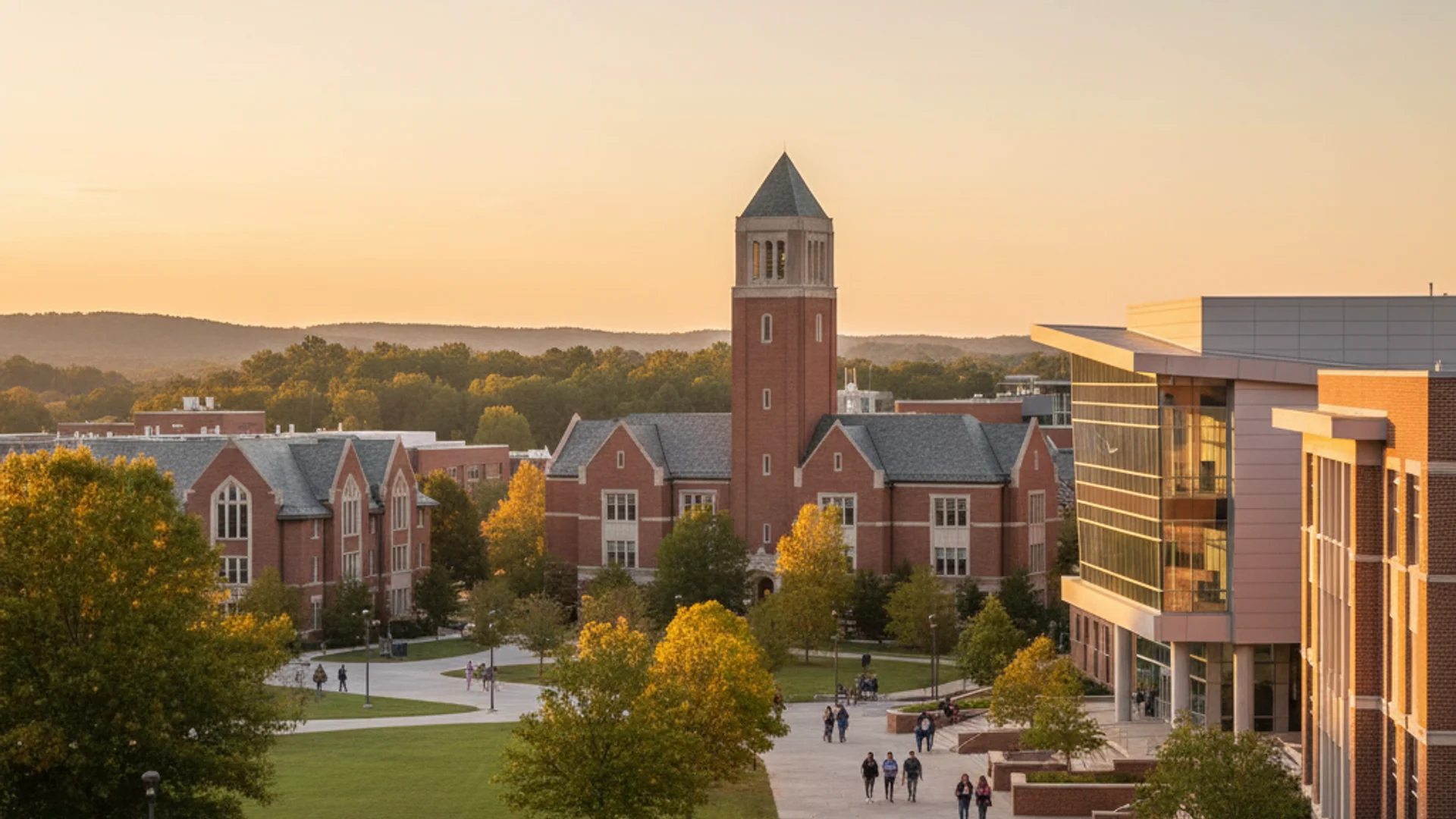
University of North Carolina at Chapel Hill
Chapel Hill, NCPublic
Campus Tours Introduce Young Students to Higher Education$7,019
Tuition/yr
93%
Grad rate
85.5
Hakia Score
Compare the top software engineering colleges in North Carolina. 24 accredited software engineering schools ranked by graduation rate, career outcomes, and value, from University of North Carolina at Charlotte to University of North Carolina at Chapel Hill.
Best software engineering degree programs: U of North Carolina at Ch..., Duke, North Carolina State Univ...
Ranked by graduation rates, program outcomes, and institutional quality
Tuition ranges from $1,000 to $63,608/year
U of North Carolina at Ch... offers the most affordable option at $3,812/yr
Software Engineering degree programs available: 9 master's, 4 doctoral in North Carolina
From community college pathways to advanced research degrees
10 online software engineering degree programs in North Carolina
Flexible scheduling for working professionals
Major employers: IBM, Cisco, Red Hat, SAS
Tech hubs in Raleigh and Charlotte
Hakia Research 2026
Software Engineering degree programs near 92+ cities across North Carolina
Search by city to find programs within 200 miles of your location
Updated October 19, 2026
We rank 37 accredited software engineering programs in North Carolina using IPEDS 2024 institutional data, BLS OEWS 2024 state salary data, and College Scorecard outcomes. A 4-factor weighted composite is normalized to a 0–100 score. Schools cannot pay for placement; rankings are produced algorithmically.
Are Software Engineering Degree Programs in North Carolina Worth It?
Source: BLS OEWS May 2024
Compare the top-ranked Software Engineering programs in North Carolina by degree level. Tuition, graduation rate, and Hakia Score for every accredited program.
North Carolina ranks among the nation's top destinations for software engineering education, with 24 accredited bachelor's degree programs across 14 public and 10 private institutions. The highest-ranked programs are U of North Carolina at Ch..., Duke, North Carolina State Univ..., recognized for academic excellence, research opportunities, and strong industry connections.
Graduates from North Carolina software engineering programs earn a median salary of $91,239, 7% below the national average. The state's robust technology sector, anchored by the Raleigh, Charlotte, Durham metropolitan areas, provides abundant internship and employment opportunities with companies including IBM, Cisco, Red Hat.
Tuition ranges from $1,000 to $63,608 annually, with an average of $19,182/yr. Top programs maintain graduation rates above 86%, with the highest reaching 100%. Many programs hold ABET accreditation, the gold standard for computing education, ensuring curriculum meets rigorous industry standards.
Students can choose from specializations including software engineering, cybersecurity, artificial intelligence, data science, and systems architecture. Strong industry partnerships provide access to co-op programs, capstone projects with real companies, and direct recruiting pipelines to North Carolina's leading technology employers. For students seeking software engineering degrees in North Carolina, these top-ranked software engineering schools offer the strongest combination of academic rigor and career preparation.
| Rank | School | Location | Type | Tuition | Grad Rate | Hakia Score |
|---|---|---|---|---|---|---|
| #6 | Wake Forest University | Winston-Salem, NC | Private | $63,608 | 97% | 68.7 |
| #7 | North Carolina A & T State University | Greensboro, NC | Public | $3,540 | 84% | 62.3 |
| #8 | University of North Carolina Wilmington | Wilmington, NC | Public | $4,443 | 79% | 55.3 |
| #9 | Elon University | Elon, NC | Private | $44,029 | 94% | 52.6 |
| #10 | Appalachian State University | Boone, NC | Public | $4,242 | 78% | 51.1 |
| #11 | Elizabeth City State University | Elizabeth City, NC | Public | $1,000 | 99% | 48.9 |
| #12 | Western Carolina University | Cullowhee, NC | Public | $1,000 | 95% | 47.3 |
| #13 | Fayetteville State University | Fayetteville, NC | Public | $1,000 | 86% | 46.3 |
| #14 | High Point University | High Point, NC | Private | $38,748 | 76% | 45.2 |
| #15 | Shaw University | Raleigh, NC | Private | $12,408 | — | 44.5 |
| #16 | Carolina University | Winston-Salem, NC | Private | $13,400 | 59% | 44.0 |
| #17 | Gardner-Webb University | Boiling Springs, NC | Private | $32,470 | 93% | 43.5 |
| #18 | East Carolina University | Greenville, NC | Public | $4,452 | — | 43.2 |
| #19 | University of North Carolina at Greensboro | Greensboro, NC | Public | $4,422 | — | 42.7 |
| #20 | University of North Carolina at Pembroke | Pembroke, NC | Public | $1,000 | — | 37.2 |
| #21 | Winston-Salem State University | Winston-Salem, NC | Public | $3,401 | — | 36.7 |
| #22 | Methodist University | Fayetteville, NC | Private | $38,936 | — | 35.7 |
| #23 | University of North Carolina Asheville | Asheville, NC | Public | $4,122 | — | 35.2 |
| #24 | Meredith College | Raleigh, NC | Private | $43,816 | — | 34.5 |
North Carolina offers 9 master's degree programs in software engineering, designed for professionals seeking to advance into senior engineering, technical leadership, and specialized roles. The top programs, North Carolina State Univ..., U of North Carolina at Ch..., U of North Carolina at Ch..., combine advanced technical training with research opportunities and leadership development.
Master's graduates in North Carolina earn a median salary of $107,340, approximately 20-30% higher than bachelor's degree holders. The concentration of technology companies in Raleigh, Charlotte, Durham creates strong demand for graduate-level talent, with IBM, Cisco, Red Hat actively recruiting from these programs.
Program formats include traditional full-time study (typically 2 years), part-time options for working professionals (2-3 years), and accelerated tracks. Tuition averages $17,898/yr, with many employers offering tuition reimbursement for graduate education. Some programs offer thesis and non-thesis tracks, allowing students to focus on research or professional development based on their career goals.
Curriculum covers advanced topics including machine learning, distributed systems, software architecture, and technical management. Many programs include practicum experiences, industry capstone projects, or consulting engagements that provide real-world application of advanced concepts. Among North Carolina's software engineering schools at the graduate level, these programs stand out for both academic quality and career outcomes.
| Rank | School | Location | Type | Tuition | Grad Rate | Hakia Score |
|---|---|---|---|---|---|---|
| #6 | North Carolina A & T State University | Greensboro, NC | Public | $3,540 | 84% | 57.1 |
| #7 | Appalachian State University | Boone, NC | Public | $4,242 | 78% | 47.5 |
| #8 | University of North Carolina at Greensboro | Greensboro, NC | Public | $4,422 | — | 36.9 |
| #9 | East Carolina University | Greenville, NC | Public | $4,452 | — | 41.9 |
North Carolina is home to 4 doctoral programs in software engineering, preparing students for research positions, faculty appointments, and executive technical roles. Leading programs at North Carolina State Univ..., U of North Carolina at Ch..., Duke are recognized for cutting-edge research, strong faculty publications, and competitive funding packages.
Doctoral graduates command premium salaries, with North Carolina PhD holders earning a median of $134,175, reflecting the advanced expertise required for research and executive positions. The Raleigh, Charlotte, Durham region's research universities and corporate R&D centers provide extensive collaboration opportunities with industry leaders like IBM, Cisco, Red Hat.
PhD programs typically require 4-6 years of full-time study, including coursework, qualifying examinations, and original dissertation research. Many programs offer full funding through teaching or research assistantships, covering tuition and providing stipends of $25,000–$40,000 annually.
Research strengths across North Carolina programs include artificial intelligence, cybersecurity, human-computer interaction, systems, and theoretical computer science. For aspiring researchers pursuing software engineering degrees in North Carolina, graduates go on to careers as university faculty, industry research scientists, or technical executives, contributing to advances in technology that impact millions of users worldwide.
| Metric | Value |
|---|---|
| Average in-state tuition | $19,182/year |
| Average out-of-state tuition | $47,955/year |
| Community college tuition | $4,796/year |
| 4-year savings for residents | $115,092 |
| 2+2 transfer pathway savings | $28,772 |
Source: IPEDS 2024
Verdict: North Carolina software engineering students benefit from moderate-but-genuine state aid plus UNC Charlotte's ABET-EAC accredited software engineering program, one of the strongest US ABET-EAC SE programs by enrollment and Charlotte banking industry placement. Combined with NC State's strong CS-with-SE-track curriculum, UNC Chapel Hill's Carolina Covenant, and NC State's Pack Promise (both producing debt-free undergraduate paths for low-income NC residents at the state flagships), North Carolina offers some of the strongest US Southeast SE education paths.
NC Education Lottery Scholarship provides up to ~$5,100/year at NC public 4-year institutions for residents with financial need. UNC Need-Based Grant stacks on top for UNC System students. NC Need-Based Scholarship (NCNBS) extends aid up to ~$11,150/year for NC residents at private NC institutions.
UNC Charlotte's Department of Software and Information Systems ABET-EAC accredited software engineering program is among the strongest US public-university ABET-EAC SE options, substantial Charlotte banking and financial-services SE industry partnerships make this one of the best US programs for SE students specifically targeting financial-services SE careers. NC State's Department of Computer Science offers CS with substantial SE-track curriculum.
UNC Chapel Hill's Carolina Covenant covers full debt-free education for UNC students with family income up to 200% of the federal poverty level. NC State's Pack Promise is the equivalent at NC State, also debt-free for qualified Pell-eligible NC residents. Combined with NC State's CS-with-SE-track curriculum, this produces zero-loan SE bachelor's degrees for low-income NC residents at one of the top US public Universities for SE preparation. Duke has CS with SE-track and no-loan financial aid policy. North Carolina A&T (HBCU) has CS programs. Federal Pell stacks on top. Industry-track scholarships from NC-based SE employers (Bank of America SE, Wells Fargo Charlotte SE, Truist SE, SAS Institute SE, IBM RTP SE, Red Hat SE, Cisco SE) provide additional industry-track funding most students don't pursue.
Use our interactive ROI calculator to estimate your return on investment for a software engineering degree in North Carolina. Enter your expected tuition costs, financial aid, and career goals to see projected payback periods and lifetime earnings. The calculator uses current salary data from BLS and tuition data from IPEDS to provide accurate estimates.
Estimate your return on investment for a software engineering degree
Leave blank to use average cost for selected program type
+750%
Net gain divided by total investment. ROI above 200% is considered excellent for education investments.
$1,386,612
Your additional lifetime earnings with this degree vs. working without one, minus the total investment.
6 years
Years until your cumulative earnings exceed total investment. Shorter programs often break even faster due to lower opportunity cost.
$131,579
Your starting salary adjusted for local cost of living. This shows real purchasing power compared to a $100K national baseline.
Why does break-even change with program type? Your "total investment" includes both tuition AND opportunity cost (foregone earnings while in school). A 4-year full-time public university (in-state) means 4 years of not earning a salary ($140,000 in opportunity cost). Shorter full-time programs may have higher tuition but lower total investment because you return to the workforce sooner.
How we calculate your degree ROI using real salary data
Tuition plus opportunity cost (earnings you miss while in school)
Direct cost of the degree program
4 years × $35K/year foregone salary while studying full-time
Projected career earnings starting after graduation, with salary growth
What you'd earn working at $35K/year with 2% annual growth
Median salary for this role in your selected location (BLS 2024)
Your investment's compound annual growth rate (similar to stock market returns)
Data sources: BLS OEWS May 2024, IPEDS 2024. Calculations use median salaries, 3% discount rate, and assume salary growth declines from 6% to 2% over career. Individual results will vary. | Powered by Hakia.com
Median annual salary in North Carolina metro areas
| Category | Value |
|---|---|
| Raleigh | $118K |
| Charlotte | $113K |
| Durham | $107K |
Source: BLS OEWS May 2024
Hakia.com
Find software engineering jobs in North Carolina. These major employers across North Carolina metro areas are actively hiring software engineering degree holders. Click employer names to view current job openings.
Charlotte is the second-largest banking center in the US. Bank of America and Wells Fargo drive fintech demand.
Nearby cities: Huntersville, Concord, Matthews, Gastonia, Rock Hill, Mooresville
North Carolina's Research Triangle (Raleigh-Durham-Chapel Hill) is one of the densest US tech corridors per capita, anchored by three major research universities (NC State, Duke, UNC Chapel Hill) and a 7,000-acre Research Triangle Park hosting hundreds of tech employers. Charlotte separately operates as a top-tier US financial-services tech hub.
Raleigh-Durham-Chapel Hill metros
Home to SAS Institute (analytics), IBM Research Triangle Park, Cisco, Red Hat (now IBM), Lenovo Americas HQ, Epic Games, Citrix, Bandwidth, and the Research Triangle Park complex. NC State CS, Duke CS, and UNC computer science all feed the local market — combined a top-10 US CS graduate pipeline.
Charlotte metro
Bank of America HQ and a top-3 US banking center. Wells Fargo, Truist, LendingTree, and dense fintech employment. Charlotte tech is heavily financial-services-coded; less consumer/startup but exceptionally stable employment.
Asheville metro
Smaller but growing remote-work and outdoor-industry tech market; not a primary tech destination but increasingly relevant for lifestyle-driven talent.
North Carolina has a flat state income tax (4.5% in 2026, scheduled to decline further). The NC Job Development Investment Grant (JDIG) and One NC Fund are the principal tech-employer incentives — Apple's $1B+ RTP campus relocation was supported by these programs.
North Carolina has been more active on legislation around identity theft, biometrics, and AI in employment than on broad consumer privacy. The state's regulatory environment is generally employer-favorable but has tightened on data security since several high-profile state-government breaches.
Requires businesses to notify NC residents of data security breaches and sets minimum data-handling and disposal standards for personal information.
Standard breach-response compliance for any NC-resident-serving business; minimum technical standards have informed security-program design at NC-headquartered employers.
Read moreState cybercrime law parallel to federal CFAA; covers unauthorized computer access, computer-related fraud, and damage to data.
Relevant for cybersecurity professionals doing incident response, penetration testing, or security research within NC.
Read moreAdopted from the NAIC model; requires insurers and insurance-adjacent businesses to maintain comprehensive information security programs with risk assessments, incident response plans, and third-party oversight.
Drives security-engineering hiring at Charlotte-based insurance and financial-services employers; sets the technical bar for NC financial-services security teams.
Read moreNorth Carolina does not currently administer a separate Software Engineering PE license. Standard engineering disciplines require ABET-EAC accreditation for PE eligibility; software engineering is not a recognized NC PE discipline. NC State's ABET-EAC software engineering program does qualify graduates for engineering tracks at federal agencies that recognize software engineering as engineering.
North Carolina licensing boardUp to $11,150/yr
NC residents with demonstrated financial need at NC private colleges/universities
Varies by institution and need; averages ~$3,500/yr
NC residents with financial need attending one of 16 UNC System universities
Up to $5,100/yr at 4-year, $2,800/yr at community college
NC residents at NC public 2-year and 4-year institutions with financial need
Up to $2,800/yr
NC residents at NC community colleges with financial need
Verdict: North Carolina's Comprehensive Articulation Agreement (CAA) between the 58-school NC Community College System and the 16-campus UNC System guarantees transfer admission for AS-degree graduates. The SE-specific dimension is that UNC Charlotte's ABET-EAC software engineering program has accessible transfer admission, for North Carolina community college students who specifically want ABET-EAC SE accreditation, UNC Charlotte is among the strongest US options.
Best North Carolina community college SE-feeder schools: Central Piedmont Community College (Charlotte, strong UNC Charlotte SE pipeline, refined CS/SE prerequisite sequences), Wake Technical Community College (Raleigh, strong NC State pipeline), Forsyth Technical Community College (Winston-Salem area), Guilford Technical Community College (Greensboro), Durham Technical Community College, and Asheville-Buncombe Technical Community College.
The Central Piedmont → UNC Charlotte Software Engineering pathway is the most reliable NC ABET-EAC SE transfer progression, Central Piedmont is geographically adjacent to UNC Charlotte, has dedicated transfer counseling for the Department of Software and Information Systems, and UNC Charlotte's SE transfer admission is accessible (30-45% for qualified applicants). The Wake Tech → NC State CS-with-SE-track pathway is the parallel for Triangle-area students.
Beyond UNC Charlotte: NC State's CS-with-SE-track program offers accessible transfer admission and produces well-placed RTP-area SE graduates. UNC Chapel Hill's CS-with-SE-track is research-prestigious but transfer admission is more competitive (~10-20%). Duke's CS-with-SE-track is genuinely difficult for transfers (under 10%). East Carolina University, UNC Greensboro, and Appalachian State University all have CS programs with SE-track curriculum at accessible transfer admission. North Carolina A&T offers CS with SE-track at one of the strongest US HBCU programs. For NC SE-track students, the UNC Charlotte pathway is the ABET-EAC optimization with strong Charlotte banking SE placement; NC State is the RTP enterprise-SE optimization; UNC Chapel Hill and Duke are the elite optimizations for the most competitive applicants; East Carolina is the affordable accessible alternative; NC A&T is the strong HBCU option.
Software Engineering Job Growth in North Carolina
Source: BLS Occupational Outlook
Verdict: North Carolina has one of the largest US software engineering job markets outside the established coastal centers, anchored by two distinctive clusters: Research Triangle Park's enterprise-tech SE (SAS Institute, one of the largest US analytics-vendor SE operations, IBM RTP, Cisco, Red Hat, now IBM, Lenovo, Epic Games, plus growing Apple RTP SE) and Charlotte's banking SE (Bank of America HQ, Wells Fargo Charlotte operations, Truist, collectively one of the largest US bank SE workforces). Combined with substantial NC State + Duke + UNC SE pipelines and materially lower cost of living than coastal markets, NC SE purchasing power often exceeds Bay Area equivalents.
By metro: Research Triangle (Raleigh-Durham-Chapel Hill) averages ~$130,000-$170,000 for software engineer roles per Levels.fyi and BLS, anchored by SAS Institute (Cary, one of the largest US analytics-vendor SE organizations, substantial R&D and applied SE work), IBM Research Triangle Park SE (one of IBM's most significant US SE operations), Cisco SE, Red Hat SE (open-source SE at scale), Lenovo Americas HQ SE, Epic Games SE, Citrix SE, Bandwidth SE, NetApp SE, RTI International, plus growing Apple RTP SE hiring as Apple's $1B+ campus opens in phases through 2027 (estimated 3,000+ engineering jobs).
Charlotte averages ~$120,000-$160,000 with Bank of America SE (one of the largest US bank SE organizations, credit platforms, fraud detection systems, customer experience engineering, ML platform engineering at scale), Wells Fargo SE (substantial Charlotte operations alongside SF HQ), Truist SE (formed from BB&T-SunTrust merger), LendingTree SE, Honeywell SE, Lowe's SE, Brighthouse Financial SE, plus a growing fintech and insurance-tech SE cluster. Charlotte's banking-SE work is heavily regulated and operationally complex, different skill emphasis than RTP enterprise SE but equally substantial.
Three distinctive NC SE dynamics: (1) SAS Institute's direct relationship with NC State CS and Statistics produces a structurally unique SE pipeline, SAS's substantial R&D operation in Cary employs hundreds of software engineers, many with NC State degrees, creating distinctive Triangle-area SE culture and practice depth. (2) Charlotte banking SE continued aggressive hiring through 2022-2024 broader tech downturns, bank-tech operates on different demand cycles than consumer internet, and Charlotte's big-3-bank base provides ongoing employment stability that's hard to find in less-bank-heavy metros. (3) The NC Insurance Data Security Act intersects with SE work at Charlotte insurance employers. Combined with UNC Charlotte's ABET-EAC SE program, NC offers an unusually well-integrated education-to-employment pathway for SE-track students. See Software Engineer Career Guide and Cybersecurity Career Guide.
New graduates and career changers
Technical leads and architects
10 available in North Carolina
Traditional classroom experience
Institutional characteristics, completions, graduation rates
North Carolina salary and employment data
Program details and admissions information
Last Updated: June 26, 2026. Rankings based on IPEDS 2024 data. Salary data from BLS OEWS May 2024.

Co-founder & Editor (B.S. Computer Science, Oregon State • B.A. Psychology, University of Washington)
Taylor combines technical expertise in computer science with a deep understanding of human behavior and learning. His dual background drives Hakia's mission: leveraging technology to build authoritative educational resources that help people make better decisions about their academic and career paths.
Hand-researched detail on the top-ranked programs: degree pathways, research labs, industry partners, career outcomes, and admissions. Tap any school to expand.
Why it stands out. Ranked #8 by CSRankings in AI, NLP, and Computer Vision since 2024, with a unique CS Experience Labs (CSXL) collaborative co-working hub that drives hands-on learning in software engineering, user experience design, production engineering, and product management
Hakia insight. UNC Chapel Hill's #8 AI ranking flows directly into CSXL, where undergrads collaborate on real NLP projects with Dr. Bansal's lab rather than watching from the sidelines—the co-working hub structure means your software engineering capstone can intersect with cutting-edge language model research.
At the bachelor's level, UNC Chapel Hill's Computer Science program offers a bachelor of science degree that is the preferred pathway for graduate study and technical careers in software development, computational science, networking, information systems, and electronic commerce. Graduates are well-suited for employment in traditional computer and communications industries, as well as diverse fields like financial services and consulting where computing is central to operations.
Programs offered
Research labs & institutes
Industry partners
Notable faculty
Admissions
GPA 2.0.
Why it stands out. Duke's software engineering programs are distinguished by their highly customizable degree paths, integration of both technical and human skills training, and strong emphasis on real-world project experience with industry partners.
Hakia insight. Duke's undergraduate software engineering concentration pulls from both CS and ECE departments, letting you simultaneously study systems design with Astrachan and hardware-software integration with ECE faculty—a dual-department path competitors don't structurally offer.
At the bachelor's level, duke offers a BS concentration in Software Engineering and Design through the Computer Science department and a Software Engineering study track in the ECE graduate programs. The programs emphasize practical, project-based learning with strong industry connections and customizable curricula.
Programs offered
Research labs & institutes
Industry partners
Notable faculty
Why it stands out. At the forefront of technological innovation, blending electrical engineering and computer science with emphasis on emerging technologies like artificial intelligence, augmented reality, and Internet of Things to engineer solutions that redefine what's possible
Hakia insight. NC State's $119,949 median salary reflects not just employer caliber but curriculum design: the electrical engineering blend means graduates enter roles in IoT and embedded systems that pure CS programs don't prepare for, commanding premiums in hardware-adjacent roles.
At the bachelor's level, north Carolina State University offers computer engineering and related programs that blend electrical engineering and computer science to develop digital architecture and intelligent systems. The programs emphasize fundamental concepts in core courses with laboratory work designed to demonstrate principles and provide experience in designing and testing electronic hardware and computer software.
Programs offered
Industry partners
Career outcomes
Top employers: Amazon, Capital One, Google, Red Hat, Cisco, Wells Fargo, Lowe's
Accreditation & certifications
Why it stands out. Small cohort sizes (5 students max in bootcamps), collaboration with Flatiron School, and integration of academic rigor with cutting-edge industry practices through project-based learning
Hakia insight. UNC Charlotte's 5-student bootcamp cohorts through Flatiron School create an unusual hybrid: you get academic rigor with 1:5 instructor ratios most universities reserve for graduate seminars, compressed into a parallel track that doesn't cannibalize the traditional degree path.
At the bachelor's level, UNC Charlotte offers software engineering through multiple pathways including concentrations within Computer Science degrees, graduate certificates, and professional bootcamps. The programs focus on full-stack development, software design, and modern industry practices.
Programs offered
Industry partners
Notable faculty
Admissions
GPA 2.75.
Why it stands out. A liberal arts-grounded software engineering education that produces thoughtful, communicative engineers equipped for leadership and complex system design.
Hakia insight. Davidson's liberal arts model produces software engineers who can write architecture documents and lead cross-functional teams—a structural advantage in roles where communication gaps cost companies more than coding gaps, evidenced by their Research Triangle proximity enabling internships that value both skills.
At the bachelor's level, davidson's approach to software engineering emerges from its liberal arts DNA—students build technical depth without sacrificing breadth in critical thinking, communication, and ethical reasoning. The program integrates computer science fundamentals with software engineering principles, creating engineers who understand the human and organizational dimensions of systems design. Small class sizes enable close mentorship and research collaboration, with opportunities to work alongside faculty on projects that blend practical software construction with intellectual inquiry. Davidson's network of accomplished alumni spans technology leadership, entrepreneurship, and technical roles across top-tier companies, creating mentorship and recruitment pipelines that punch above the college's size. Graduates leave with not just coding proficiency but facility in problem-framing, stakeholder communication, and navigating complex technical tradeoffs—skills that emerge naturally in a collegiate environment emphasizing dialogue and liberal inquiry alongside technical rigor.
Programs offered
Accreditation & certifications
Location advantage: Access to Research Triangle Region employers Proximity to Chapel Hill and Duke tech ecosystems
Why it stands out. Wake Forest was one of the first American universities to recognize the necessity of a laptop computer for every student and offers unique entrepreneurship fellowships, with Computer Science being the fastest growing major (228% growth rate from 2015-2025).
Hakia insight. Wake Forest's 228% CS growth rate since 2015 isn't marketing—it reflects institutional bet-hedging: the university's laptop-for-every-student legacy means software engineering students inherit a 20-year infrastructure of digital integration that shapes how entrepreneurship fellowships actually function.
At the bachelor's level, wake Forest University offers both traditional Computer Science degree programs (BS, BA, and minor) and a 9-month online Software Engineering Bootcamp. The Computer Science program covers 10 distinct areas including mobile computing, computational biophysics, and big data, while the bootcamp focuses on full-stack development using the MERN stack.
Programs offered
Location advantage: Winston-Salem, NC location Wake Downtown campus for engineering programs
Why it stands out. North Carolina A&T is America's largest public HBCU and the top producer of African American engineers in the country, with specialized research centers including the Center for Trustworthy AI and designation as a National Center of Academic Excellence in Information Assurance Education by NSA and DHS.
Hakia insight. NC A&T's Center for Trustworthy AI and NSA CAE designation mean undergrads can contribute to peer-reviewed trustworthy AI research while satisfying information assurance credentials—the $126,830 median salary reflects employers recruiting directly from a pipeline that has produced more Black engineers than any peer institution.
At the bachelor's level, the Computer Science Department at North Carolina A&T State University offers comprehensive graduate programs in computer science with specializations in software engineering, cybersecurity, secure software engineering, and artificial intelligence. The department provides both Master of Science and Doctor of Philosophy degrees, with the MS program offering five specialized tracks including Software Engineering, Computational Science and Engineering, Information Assurance, Secure Software Engineering, and Artificial Intelligence, plus a general track. Research is funded by prestigious agencies including NSF, NASA, U.S. Air Force, NSA, and DOE. The program combines computer science fundamentals with practical knowledge and technical excellence in advanced technologies. Faculty research spans software engineering, cybersecurity, AI, computational science, distributed systems, multiagent systems, trustworthy cloud computing, and high-performance computing. The university is America's largest public HBCU and top producer of African American engineers.
Programs offered
Research labs & institutes
Industry partners
Career outcomes
Top employers: Lockheed Martin, Northrop Grumman, IBM, Microsoft, Intel, SAS
Notable faculty
Admissions
GPA 3.0.
Accreditation & certifications
Location advantage: Located in Greensboro, NC Largest public HBCU in America
Why it stands out. UNCW's Software Engineering program features a unique two-semester capstone where student teams implement software systems for external clients, combined with entrepreneurship training and industry expert seminars in a top-ranked startup ecosystem environment.
Hakia insight. UNCW's two-semester capstone with external clients, paired with being ranked #2 globally in startup ecosystems, creates a rare structure: your software engineering final project has genuine market validation and founder mentorship built in, not grafted on.
At the bachelor's level, the University of North Carolina Wilmington's Software Engineering program is a Bachelor of Science degree that emphasizes creating high-quality software systems for real-world applications. The program begins with foundation skills in computer programming, version control, program verification, and software lifecycle using industry-standard tools. Students study advanced topics including software analysis, construction, and security, culminating in a two-semester capstone where teams implement software systems for external clients. The curriculum includes entrepreneurship introduction, industry expert seminars, and math and science courses required for ABET accreditation. The program prepares graduates for diverse careers including software development, systems analysis, DevOps engineering, and quality assurance testing. Located in Wilmington, which ranks 2nd globally in startup ecosystems among similar-sized municipalities, students benefit from strong industry connections and practical learning opportunities.
Programs offered
Research labs & institutes
Career outcomes
Notable faculty
Admissions
Acceptance rate not specified%. GPA not specified. Deadline not specified.
Accreditation & certifications
Location advantage: Wilmington ranks 2nd globally in startup ecosystems among similar-sized municipalities Access to coastal university setting with strong research opportunities Proximity to growing technology sector
Hakia insight. Elon's $72,000 median salary suggests a strong regional placement pattern rather than weakness—notable employers like Red Hat and Credit Suisse indicate the program feeds mid-market tech and finance, where hands-on labs in the HCI and Software Engineering research labs directly train students for roles competitors' curricula don't emphasize.
At the bachelor's level, elon University's Computer Science program emphasizes hands-on learning and practical application of software engineering principles. The program combines theoretical foundations with real-world project experience, preparing students for careers in software development and technology innovation. Students benefit from small class sizes and close faculty mentorship in a collaborative learning environment.
Programs offered
Research labs & institutes
Industry partners
Career outcomes
Top employers: IBM, Red Hat, Wells Fargo, Credit Suisse
Admissions
GPA 3.0.
Accreditation & certifications
Why it stands out. App State's Computer Science program combines R2 high research activity designation with top 5 innovation recognition, featuring a cutting-edge Robotics Lab and comprehensive MS concentrations from systems to visual computing.
Hakia insight. App State's R2 classification and Robotics Lab combination means undergrads gain access to hardware-software integration research typically reserved for R1 institutions, while the top 5 innovation ranking reflects curriculum design that prioritizes emerging tech over canonical CS theory.
At the bachelor's level, appalachian State University's Computer Science program offers comprehensive education in software engineering, analytics, and cloud computing with both undergraduate BS and graduate MS degrees. The program emphasizes hands-on learning with expert faculty, covering areas like data structures, programming languages, software engineering, and system design. Students gain skills in front-end design, back-end development, network security, and artificial intelligence. The program features specialized MS concentrations including Data Science and Visual Computing, Systems, Web and Mobile, and Theoretics. With R2 Carnegie Classification for high research activity and recognition as a top 5 innovation school by U.S. News for nine consecutive years, the program provides strong industry connections and research opportunities. The newly established Robotics Lab, directed by Dr. Yeganeh Madadi, focuses on AI, machine learning, and human-robot interaction for real-world applications.
Programs offered
Research labs & institutes
Industry partners
Career outcomes
Top employers: Amazon, Google, Microsoft, IBM, Bank of America, Duke Energy, Red Hat Software, SAS
Notable faculty
Admissions
GPA 3.0. Deadline Fall: July 1, Spring: November 1, Summer: April 1.
Location advantage: Boone campus location R2 Carnegie Classification for high research activity Top 5 innovation recognition by U.S. News Best college for value according to Money.com
Why it stands out. At the forefront of technological innovation, blending electrical engineering and computer science with emphasis on emerging technologies like artificial intelligence, augmented reality, and Internet of Things to engineer solutions that redefine what's possible
Hakia insight. NC State's master's program at $119,949 salary reflects a rare advantage: the electrical engineering blend creates graduates who can architect embedded systems and IoT platforms at scale, a specialization most pure software engineering master's programs don't develop despite surging industry demand.
At the master's level, north Carolina State University offers computer engineering and related programs that blend electrical engineering and computer science to develop digital architecture and intelligent systems. The programs emphasize fundamental concepts in core courses with laboratory work designed to demonstrate principles and provide experience in designing and testing electronic hardware and computer software.
Programs offered
Industry partners
Career outcomes
Top employers: Amazon, Capital One, Google, Red Hat, Cisco, Wells Fargo, Lowe's
Accreditation & certifications
Why it stands out. Small cohort sizes (5 students max in bootcamps), collaboration with Flatiron School, and integration of academic rigor with cutting-edge industry practices through project-based learning
Hakia insight. UNC Charlotte's 5-student maximum bootcamp cohorts with Dayle Janus create an unusual advantage for master's students: personalized code review and mentorship at a scale typically reserved for PhD programs, compressed into accelerated timelines.
At the master's level, UNC Charlotte offers software engineering through multiple pathways including concentrations within Computer Science degrees, graduate certificates, and professional bootcamps. The programs focus on full-stack development, software design, and modern industry practices.
Programs offered
Industry partners
Notable faculty
Admissions
GPA 2.75.
Why it stands out. Ranked #8 by CSRankings in AI, NLP, and Computer Vision since 2024, with a unique CS Experience Labs (CSXL) collaborative co-working hub that drives hands-on learning in software engineering, user experience design, production engineering, and product management
Hakia insight. UNC Chapel Hill's #8 CSRankings standing in AI and NLP masks its real differentiator—the CS Experience Labs hub lets master's students ship production code alongside Dr. Mohit Bansal's multimodal NLP research, bridging the gap between academic papers and deployed systems.
At the master's level, UNC Chapel Hill's Computer Science program offers a bachelor of science degree that is the preferred pathway for graduate study and technical careers in software development, computational science, networking, information systems, and electronic commerce. Graduates are well-suited for employment in traditional computer and communications industries, as well as diverse fields like financial services and consulting where computing is central to operations.
Programs offered
Research labs & institutes
Industry partners
Notable faculty
Admissions
GPA 2.0.
Why it stands out. Duke's software engineering programs are distinguished by their highly customizable degree paths, integration of both technical and human skills training, and strong emphasis on real-world project experience with industry partners.
Hakia insight. Duke's integration of human skills training into the master's curriculum, guided by Professors Rodger and Astrachan (both Professors of Practice, not pure researchers), signals an unusual institutional bet: that software engineering mastery requires design thinking and communication parity with technical depth.
At the master's level, duke offers a BS concentration in Software Engineering and Design through the Computer Science department and a Software Engineering study track in the ECE graduate programs. The programs emphasize practical, project-based learning with strong industry connections and customizable curricula.
Programs offered
Research labs & institutes
Industry partners
Notable faculty
Why it stands out. Wake Forest was one of the first American universities to recognize the necessity of a laptop computer for every student and offers unique entrepreneurship fellowships, with Computer Science being the fastest growing major (228% growth rate from 2015-2025).
Hakia insight. Wake Forest's 228% growth in CS majors since 2015 isn't just enrollment momentum—it reflects institutional confidence that supported a 9-month bootcamp option, giving master's candidates a rare choice between traditional rigor and industry-paced acceleration under one accredited roof.
At the master's level, wake Forest University offers both traditional Computer Science degree programs (BS, BA, and minor) and a 9-month online Software Engineering Bootcamp. The Computer Science program covers 10 distinct areas including mobile computing, computational biophysics, and big data, while the bootcamp focuses on full-stack development using the MERN stack.
Programs offered
Location advantage: Winston-Salem, NC location Wake Downtown campus for engineering programs
Why it stands out. North Carolina A&T is America's largest public HBCU and the top producer of African American engineers in the country, with specialized research centers including the Center for Trustworthy AI and designation as a National Center of Academic Excellence in Information Assurance Education by NSA and DHS.
Hakia insight. N.C. A&T's median salary of $126,830 and placement at Lockheed Martin, Northrop Grumman, and Microsoft reflects deeper institutional strength: NSA/DHS recognition as a National Center of Academic Excellence means master's students gain security clearance pathways that most programs don't unlock.
At the master's level, the Computer Science Department at North Carolina A&T State University offers comprehensive graduate programs in computer science with specializations in software engineering, cybersecurity, secure software engineering, and artificial intelligence. The department provides both Master of Science and Doctor of Philosophy degrees, with the MS program offering five specialized tracks including Software Engineering, Computational Science and Engineering, Information Assurance, Secure Software Engineering, and Artificial Intelligence, plus a general track. Research is funded by prestigious agencies including NSF, NASA, U.S. Air Force, NSA, and DOE. The program combines computer science fundamentals with practical knowledge and technical excellence in advanced technologies. Faculty research spans software engineering, cybersecurity, AI, computational science, distributed systems, multiagent systems, trustworthy cloud computing, and high-performance computing. The university is America's largest public HBCU and top producer of African American engineers.
Programs offered
Research labs & institutes
Industry partners
Career outcomes
Top employers: Lockheed Martin, Northrop Grumman, IBM, Microsoft, Intel, SAS
Notable faculty
Admissions
GPA 3.0.
Accreditation & certifications
Location advantage: Located in Greensboro, NC Largest public HBCU in America
Why it stands out. App State's Computer Science program combines R2 high research activity designation with top 5 innovation recognition, featuring a cutting-edge Robotics Lab and comprehensive MS concentrations from systems to visual computing.
Hakia insight. App State's R2 research designation with top-5 innovation ranking creates an unusual master's profile—the Robotics Lab and concentrations in systems/visual computing let students contribute to published research while building industry-ready portfolios, a combination rare outside R1 institutions.
At the master's level, appalachian State University's Computer Science program offers comprehensive education in software engineering, analytics, and cloud computing with both undergraduate BS and graduate MS degrees. The program emphasizes hands-on learning with expert faculty, covering areas like data structures, programming languages, software engineering, and system design. Students gain skills in front-end design, back-end development, network security, and artificial intelligence. The program features specialized MS concentrations including Data Science and Visual Computing, Systems, Web and Mobile, and Theoretics. With R2 Carnegie Classification for high research activity and recognition as a top 5 innovation school by U.S. News for nine consecutive years, the program provides strong industry connections and research opportunities. The newly established Robotics Lab, directed by Dr. Yeganeh Madadi, focuses on AI, machine learning, and human-robot interaction for real-world applications.
Programs offered
Research labs & institutes
Industry partners
Career outcomes
Top employers: Amazon, Google, Microsoft, IBM, Bank of America, Duke Energy, Red Hat Software, SAS
Notable faculty
Admissions
GPA 3.0. Deadline Fall: July 1, Spring: November 1, Summer: April 1.
Location advantage: Boone campus location R2 Carnegie Classification for high research activity Top 5 innovation recognition by U.S. News Best college for value according to Money.com
Why it stands out. UNCG's Computer Science program is one of only six doctoral programs in North Carolina and one of just seven public universities in the state with ABET accreditation, ranked 4th statewide by C.S. Rankings.
Hakia insight. UNCG's ranking as 4th statewide by C.S. Rankings and one of only six doctoral programs in North Carolina positions its master's as a credential that bridges: ABET accreditation signals engineering rigor, while the AI and Data Analytics Lab offers specialization depth competitors lack.
At the master's level, the University of North Carolina at Greensboro's Computer Science program is one of only seven North Carolina public universities accredited by ABET and offers comprehensive undergraduate and graduate education in computer science. The program emphasizes fundamental computing principles over specific technologies, preparing students to adapt to changing technology landscapes. The B.S. program includes an optional Data Science and Big Data concentration, while graduate offerings include M.S. and Ph.D. degrees. Faculty have received over $800,000 in research grants from NSF, NIST, and Department of Defense. The program is ranked 4th in North Carolina by C.S. Rankings and operates in a Carnegie-designated 'High Research Activity' doctoral university environment. Research strengths include algorithms, artificial intelligence, data science, machine learning, database systems, networking, security, and image processing, with state-of-the-art laboratories supporting cutting-edge research.
Programs offered
Research labs & institutes
Notable faculty
Admissions
GPA 2.0.
Accreditation & certifications
Location advantage: Carnegie High Research Activity designation One of only 50 doctoral universities with both higher research activity and sustained community engagement
Why it stands out. ECU has the first MS degree in software engineering in North Carolina and offers both face-to-face and online delivery. The program emphasizes practical engineering principles with required capstone projects and thesis work under faculty supervision.
Hakia insight. ECU claims the first MS in Software Engineering in North Carolina and still leads on a metric most overlook: both face-to-face and online delivery under the same faculty (Qin Ding, Nic Herndon), meaning remote master's students access engineering-school rigor typically siloed in on-campus cohorts.
At the master's level, east Carolina University's Software Engineering program is a comprehensive discipline that brings the rigor of traditional engineering to software design, production, and maintenance. The program offers both Bachelor of Science and Master of Science degrees, with ECU being the first to offer an MS in Software Engineering in North Carolina. The BS program emphasizes developing large-scale, high-quality, and secure software systems through systematic application of engineering principles and proven industry practices. The curriculum provides extensive opportunities to design and build complex software-intensive systems using computing and engineering technologies. The MS program is available both face-to-face and online, featuring specializations for new software engineers and practicing professionals. Students complete capstone projects or thesis work under faculty supervision, enhancing the degree's value. The program focuses on software architecture, construction, verification and validation, and project management while developing both technical and professional skills including communication, teamwork, and lifelong learning.
Programs offered
Industry partners
Career outcomes
Notable faculty
Admissions
GPA 3.0.
Why it stands out. At the forefront of technological innovation, blending electrical engineering and computer science with emphasis on emerging technologies like artificial intelligence, augmented reality, and Internet of Things to engineer solutions that redefine what's possible
Hakia insight. NC State's doctoral emphasis on IoT, augmented reality, and emerging AI architecture—paired with top employer placement at Amazon, Google, and Red Hat—signals a program designed around infrastructure problems that will define the next decade, not last decade's research agendas.
At the doctoral level, north Carolina State University offers computer engineering and related programs that blend electrical engineering and computer science to develop digital architecture and intelligent systems. The programs emphasize fundamental concepts in core courses with laboratory work designed to demonstrate principles and provide experience in designing and testing electronic hardware and computer software.
Programs offered
Industry partners
Career outcomes
Top employers: Amazon, Capital One, Google, Red Hat, Cisco, Wells Fargo, Lowe's
Accreditation & certifications
Why it stands out. Ranked #8 by CSRankings in AI, NLP, and Computer Vision since 2024, with a unique CS Experience Labs (CSXL) collaborative co-working hub that drives hands-on learning in software engineering, user experience design, production engineering, and product management
Hakia insight. UNC Chapel Hill's #8 CSRankings standing in AI, NLP, and Computer Vision at the doctoral level is sharpened by Dr. Mohit Bansal's focus on model interpretability—a research direction that prioritizes explainability over raw benchmark performance, attracting doctoral students concerned with responsible AI deployment.
At the doctoral level, UNC Chapel Hill's Computer Science program offers a bachelor of science degree that is the preferred pathway for graduate study and technical careers in software development, computational science, networking, information systems, and electronic commerce. Graduates are well-suited for employment in traditional computer and communications industries, as well as diverse fields like financial services and consulting where computing is central to operations.
Programs offered
Research labs & institutes
Industry partners
Notable faculty
Admissions
GPA 2.0.
Why it stands out. Duke's software engineering programs are distinguished by their highly customizable degree paths, integration of both technical and human skills training, and strong emphasis on real-world project experience with industry partners.
Hakia insight. Duke's doctoral programs through both Computer Science and ECE departments with customizable paths and emphasis on human skills training, mentored by Professors of Practice Rodger and Astrachan, suggest a doctoral experience structured around producing faculty-ready researchers *and* industry-ready technologists simultaneously.
At the doctoral level, duke offers a BS concentration in Software Engineering and Design through the Computer Science department and a Software Engineering study track in the ECE graduate programs. The programs emphasize practical, project-based learning with strong industry connections and customizable curricula.
Programs offered
Research labs & institutes
Industry partners
Notable faculty
Why it stands out. North Carolina A&T is America's largest public HBCU and the top producer of African American engineers in the country, with specialized research centers including the Center for Trustworthy AI and designation as a National Center of Academic Excellence in Information Assurance Education by NSA and DHS.
Hakia insight. N.C. A&T's Center for Trustworthy AI and NSA/DHS National Center designation creates a doctoral pathway unavailable elsewhere: research in AI safety and cybersecurity with immediate clearance-eligible credentials, positioning graduates for roles in national security research labs.
At the doctoral level, the Computer Science Department at North Carolina A&T State University offers comprehensive graduate programs in computer science with specializations in software engineering, cybersecurity, secure software engineering, and artificial intelligence. The department provides both Master of Science and Doctor of Philosophy degrees, with the MS program offering five specialized tracks including Software Engineering, Computational Science and Engineering, Information Assurance, Secure Software Engineering, and Artificial Intelligence, plus a general track. Research is funded by prestigious agencies including NSF, NASA, U.S. Air Force, NSA, and DOE. The program combines computer science fundamentals with practical knowledge and technical excellence in advanced technologies. Faculty research spans software engineering, cybersecurity, AI, computational science, distributed systems, multiagent systems, trustworthy cloud computing, and high-performance computing. The university is America's largest public HBCU and top producer of African American engineers.
Programs offered
Research labs & institutes
Industry partners
Career outcomes
Top employers: Lockheed Martin, Northrop Grumman, IBM, Microsoft, Intel, SAS
Notable faculty
Admissions
GPA 3.0.
Accreditation & certifications
Location advantage: Located in Greensboro, NC Largest public HBCU in America