🥇
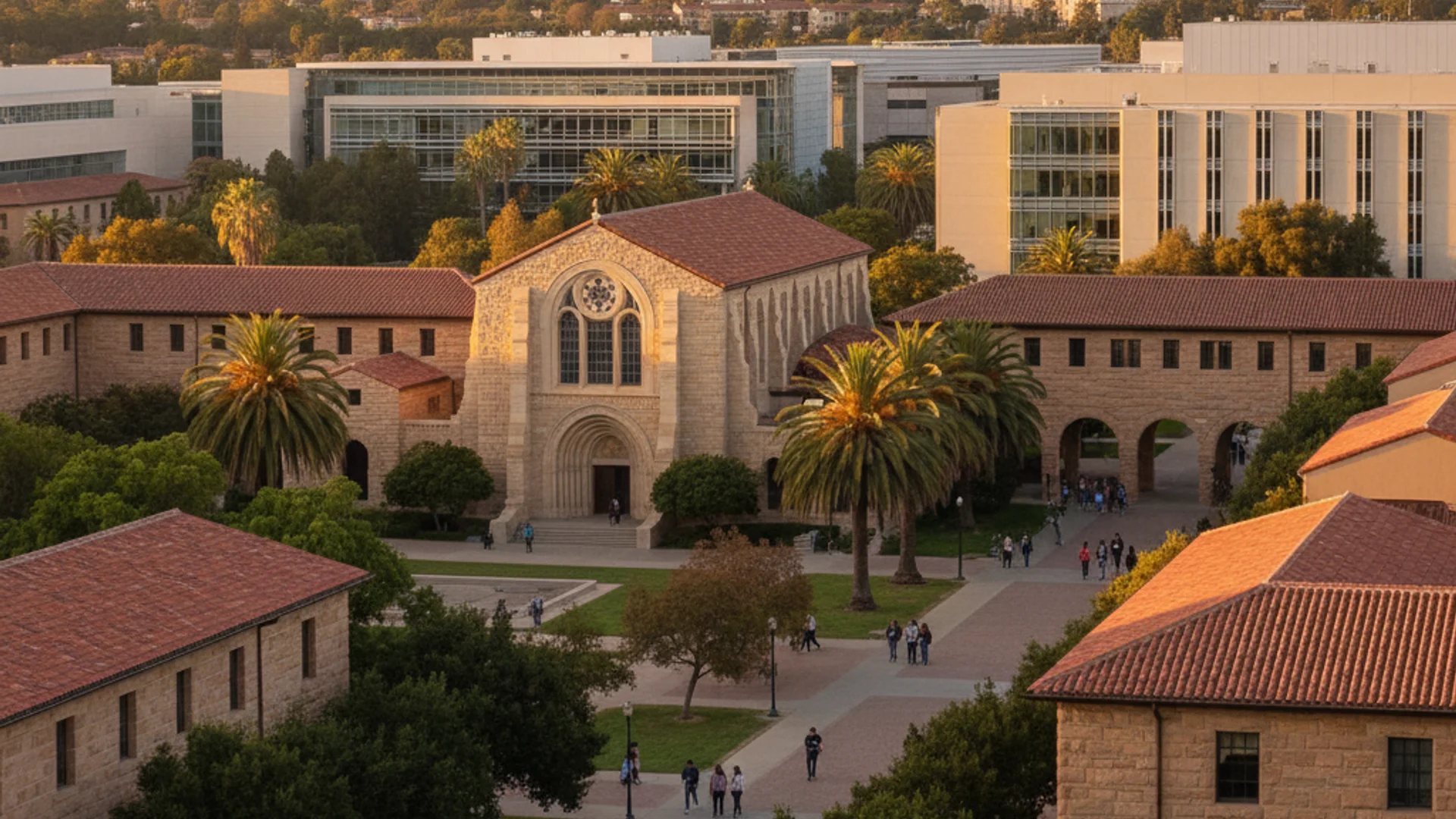
University of California-Irvine
Irvine, CAPublic
2023 National Center for Free Speech and Civic Engagement$12,260
Tuition/yr
87%
Grad rate
96.3
Hakia Score
Compare the top software engineering colleges in California. 148 accredited software engineering schools ranked by graduation rate, career outcomes, and value, from Diablo Valley College to University of California-Berkeley.
Best software engineering degree programs: UC Berkeley, U of California-Irvine, U of California-San Diego
Ranked by graduation rates, program outcomes, and institutional quality
Tuition ranges from $1,104 to $66,640/year
Diablo Valley College offers the most affordable option at $1,288/yr
Software Engineering degree programs available: 86 associate's, 39 master's, 16 doctoral in California
From community college pathways to advanced research degrees
31 online software engineering degree programs in California
Flexible scheduling for working professionals
California community college transfer can save 40-60% on total degree costs
86 associate's programs provide transfer pathways to bachelor's degrees
Education Commission of the States
Major employers: Google, Apple, Meta, Netflix
Tech hubs in San Francisco and San Jose
Hakia Research 2026
Software Engineering degree programs near 231+ cities across California
Search by city to find programs within 200 miles of your location
Updated October 19, 2026
We rank 200 accredited software engineering programs in California using IPEDS 2024 institutional data, BLS OEWS 2024 state salary data, and College Scorecard outcomes. A 4-factor weighted composite is normalized to a 0–100 score. Schools cannot pay for placement; rankings are produced algorithmically.
Are Software Engineering Degree Programs in California Worth It?
Source: BLS OEWS May 2024
Compare the top-ranked Software Engineering programs in California by degree level. Tuition, graduation rate, and Hakia Score for every accredited program.
California ranks among the nation's top destinations for software engineering education, with 59 accredited bachelor's degree programs across 31 public and 26 private institutions. The highest-ranked programs are UC Berkeley, U of California-Irvine, U of California-San Diego, recognized for academic excellence, research opportunities, and strong industry connections.
Graduates from California software engineering programs earn a median salary of $123,905, 26% above the national average. The state's robust technology sector, anchored by the San Francisco, San Jose, Los Angeles metropolitan areas, provides abundant internship and employment opportunities with companies including Google, Apple, Meta.
Tuition ranges from $5,742 to $66,640 annually, with an average of $26,822/yr. Top programs maintain graduation rates above 91%, with the highest reaching 100%. Many programs hold ABET accreditation, the gold standard for computing education, ensuring curriculum meets rigorous industry standards.
Students can choose from specializations including software engineering, cybersecurity, artificial intelligence, data science, and systems architecture. Strong industry partnerships provide access to co-op programs, capstone projects with real companies, and direct recruiting pipelines to California's leading technology employers. For students seeking software engineering degrees in California, these top-ranked software engineering schools offer the strongest combination of academic rigor and career preparation.
| Rank | School | Location | Type | Tuition | Grad Rate | Hakia Score |
|---|---|---|---|---|---|---|
| #6 | California Baptist University | Riverside, CA | Private nonprofit | $39,078 | 62% | 71.3 |
| #7 | California State University-San Marcos | San Marcos, CA | Public | $6,084 | 55% | 68.5 |
| #8 | Ashford University | San Diego, CA | Private for-profit | $11,040 | 11% | 67.8 |
California offers 39 master's degree programs in software engineering, designed for professionals seeking to advance into senior engineering, technical leadership, and specialized roles. The top programs, U of Southern California, U of California-San Diego, U of California-Irvine, combine advanced technical training with research opportunities and leadership development.
Master's graduates in California earn a median salary of $145,770, approximately 20-30% higher than bachelor's degree holders. The concentration of technology companies in San Francisco, San Jose, Los Angeles creates strong demand for graduate-level talent, with Google, Apple, Meta actively recruiting from these programs.
Program formats include traditional full-time study (typically 2 years), part-time options for working professionals (2-3 years), and accelerated tracks. Tuition averages $17,266/yr, with many employers offering tuition reimbursement for graduate education. Some programs offer thesis and non-thesis tracks, allowing students to focus on research or professional development based on their career goals.
Curriculum covers advanced topics including machine learning, distributed systems, software architecture, and technical management. Many programs include practicum experiences, industry capstone projects, or consulting engagements that provide real-world application of advanced concepts. Among California's software engineering schools at the graduate level, these programs stand out for both academic quality and career outcomes.
| Rank | School | Location | Type | Tuition | Grad Rate | Hakia Score |
|---|---|---|---|---|---|---|
| #6 | California State University-Sacramento | Sacramento, CA | Public | $6,084 | 56% | 63.6 |
California is home to 16 doctoral programs in software engineering, preparing students for research positions, faculty appointments, and executive technical roles. Leading programs at U of Southern California, UC Berkeley, U of California-Irvine are recognized for cutting-edge research, strong faculty publications, and competitive funding packages.
Doctoral graduates command premium salaries, with California PhD holders earning a median of $182,213, reflecting the advanced expertise required for research and executive positions. The San Francisco, San Jose, Los Angeles region's research universities and corporate R&D centers provide extensive collaboration opportunities with industry leaders like Google, Apple, Meta.
PhD programs typically require 4-6 years of full-time study, including coursework, qualifying examinations, and original dissertation research. Many programs offer full funding through teaching or research assistantships, covering tuition and providing stipends of $25,000–$40,000 annually.
Research strengths across California programs include artificial intelligence, cybersecurity, human-computer interaction, systems, and theoretical computer science. For aspiring researchers pursuing software engineering degrees in California, graduates go on to careers as university faculty, industry research scientists, or technical executives, contributing to advances in technology that impact millions of users worldwide.
| Metric | Value |
|---|---|
| Average in-state tuition | $12,043/year |
| Average out-of-state tuition | $30,108/year |
| Community college tuition | $3,011/year |
| 4-year savings for residents | $72,260 |
| 2+2 transfer pathway savings | $18,064 |
Source: IPEDS 2024
Verdict: California software engineering students benefit from the same state aid stack as CS students, Cal Grant, UC Blue and Gold Opportunity Plan, Middle Class Scholarship. The SE-specific consideration is that California has relatively few ABET-EAC accredited software engineering programs, Cal Poly San Luis Obispo and San Jose State University are the standouts. For students who specifically want ABET-EAC accreditation (relevant for federal employment classification under OPM 0854 software engineering series and certain regulated-industry roles), California's options are narrower than the CS landscape.
Cal Grant eligibility flows automatically from FAFSA, and the UC Blue and Gold Opportunity Plan covers full UC tuition for California families under $80,000 income. For undergraduate SE-track students at UC campuses, this combination plus federal Pell can produce essentially-free SE-track bachelor's degrees for qualified Californians. The Middle Class Scholarship extends support to families up to $217,000.
California's ABET-EAC accredited software engineering programs are concentrated at: California Polytechnic State University, San Luis Obispo (Cal Poly SLO), one of the strongest US undergraduate ABET-EAC SE programs, with substantial Bay Area employer recruiting, and San Jose State University, accessible CSU option with strong Silicon Valley industry placement. Beyond these, most California universities offer software engineering as a track within CS rather than as a separately-accredited ABET-EAC program.
California Dream Act Application (CADAA) extends state-aid eligibility to undocumented California residents who can't use FAFSA. Federal Pell stacks on top. Stanford and Caltech offer substantial institutional aid with no-loan policies for admitted students with demonstrated need, both have CS programs that include SE-track coursework but neither has standalone ABET-EAC SE. Industry-track scholarships from California-based SE employers (Apple, Google, Meta, Microsoft, Nvidia, Salesforce, Adobe) provide additional funding most students don't pursue.
Estimate your return on investment for a software engineering degree
Leave blank to use average cost for selected program type
+1378%
Net gain divided by total investment. ROI above 200% is considered excellent for education investments.
$2,549,181
Your additional lifetime earnings with this degree vs. working without one, minus the total investment.
5 years
Years until your cumulative earnings exceed total investment. Shorter programs often break even faster due to lower opportunity cost.
$102,778
Your starting salary adjusted for local cost of living. This shows real purchasing power compared to a $100K national baseline.
Why does break-even change with program type? Your "total investment" includes both tuition AND opportunity cost (foregone earnings while in school). A 4-year full-time public university (in-state) means 4 years of not earning a salary ($140,000 in opportunity cost). Shorter full-time programs may have higher tuition but lower total investment because you return to the workforce sooner.
How we calculate your degree ROI using real salary data
Tuition plus opportunity cost (earnings you miss while in school)
Direct cost of the degree program
4 years × $35K/year foregone salary while studying full-time
Projected career earnings starting after graduation, with salary growth
What you'd earn working at $35K/year with 2% annual growth
Median salary for this role in your selected location (BLS 2024)
Your investment's compound annual growth rate (similar to stock market returns)
Data sources: BLS OEWS May 2024, IPEDS 2024. Calculations use median salaries, 3% discount rate, and assume salary growth declines from 6% to 2% over career. Individual results will vary. | Powered by Hakia.com
Median annual salary in California metro areas
| Category | Value |
|---|---|
| San Francisco | $160K |
| San Jose | $153K |
| Los Angeles | $146K |
| San Diego | $138K |
Source: BLS OEWS May 2024
Hakia.com
Find software engineering jobs in California. These major employers across California metro areas are actively hiring software engineering degree holders. Click employer names to view current job openings.
Silicon Valley remains the global center of tech innovation. Headquarters for Google, Apple, Meta, and thousands of startups.
Nearby cities: San Jose, Palo Alto, Mountain View, Sunnyvale, Santa Clara, Cupertino, Menlo Park, Redwood City
San Francisco is a major fintech and enterprise software hub. Salesforce Tower anchors a dense tech ecosystem.
Nearby cities: Oakland, Berkeley, Daly City, South San Francisco, San Mateo, Fremont
LA has a diverse tech scene spanning entertainment tech, aerospace, and ecommerce. SpaceX and Snap are headquartered here.
Nearby cities: Santa Monica, Culver City, Burbank, Pasadena, Long Beach, Irvine, El Segundo
San Diego is a biotech and defense technology hub. Qualcomm is headquartered here alongside major military contractors.
Nearby cities: La Jolla, Carlsbad, Chula Vista, Oceanside, Escondido, El Cajon
California concentrates roughly a third of all U.S. venture capital investment and houses the headquarters of every company in the top five U.S. tech market caps. For a CS graduate, that translates into denser-than-anywhere hiring pipelines — but it also means the supply of CS graduates is unusually large, and competition for entry-level roles at named employers is intense.
San Francisco, San Jose, Oakland, Berkeley
Global center for consumer internet, AI/ML research, and high-growth software startups. Entry-level total compensation at named employers regularly clears $200,000 for new bachelor's graduates from top programs.
Los Angeles County
Quieter but substantial tech market centered on entertainment-tech (Netflix, Disney Streaming, Riot, Activision-Blizzard), aerospace-adjacent software (SpaceX, Anduril, Northrop), and emerging fintech and consumer-app clusters.
San Diego County
Smaller but dense in defense, biotech-adjacent software, and Qualcomm-anchored wireless engineering.
California does not levy a separate state-level tech tax credit at scale; the federal R&D credit is the relevant lever for most tech employers.
Several California laws directly shape what CS graduates work on — particularly anyone joining a privacy, security, data, or AI team. These create both job market demand (compliance is a substantial employer concern) and constrain technical decisions in ways federal law does not.
Strongest US state privacy law. Requires explicit consumer rights around data access, deletion, and sale opt-out for any business serving California residents at scale.
Engineers joining privacy, data, or security teams at California employers engage with CCPA daily.
Read moreRequires data minimization, default privacy protections, and impact assessments for online products likely to be accessed by minors.
Drove significant engineering work at every consumer internet company headquartered in California.
Read moreCalifornia has issued executive-branch guidance on generative AI in state government and is the most active US state legislature on AI policy.
Engineers building AI products serving California users should expect material compliance overhead.
Read moreFirst US state privacy enforcement agency. Issues regulations under CCPA/CPRA and brings enforcement actions.
Tech-adjacent compliance work has grown substantially since CPPA stood up.
Read moreCalifornia recognizes Professional Engineer (PE) licensure in software engineering, but it is rarely required for industry work. ABET-EAC accredited SE degrees count toward PE eligibility; ABET-CAC CS does not. Most California CS graduates never seek PE licensure.
California licensing boardUp to ~$12,570/yr for UC, ~$5,742/yr for CSU, ~$1,094/yr for community college
California residents pursuing undergraduate degrees with demonstrated financial need
Varies by income tier
California undergrads at UC and CSU with family income up to $217,000
Full enrollment fee waiver
California residents at community college with financial need
Up to $5,000/yr
Current or former foster youth pursuing vocational training or college
Verdict: California's ASSIST.org articulation system supports SE-track transfer pathways well at the foundational level (calculus, linear algebra, discrete math, intro programming, data structures). The SE-specific consideration is that Cal Poly San Luis Obispo's transfer admission to its ABET-EAC software engineering program is competitive but accessible for strong applicants, substantially more open than UC Berkeley CS. For California students specifically targeting ABET-EAC SE, Cal Poly SLO is the standout option.
Best California community college SE-feeder schools: De Anza College (Cupertino, strong Cal Poly SLO and SJSU transfer record), Foothill College (Los Altos Hills), Mt. San Antonio College (Mt. SAC) (Walnut, strong Cal Poly Pomona pipeline), Cuesta College (San Luis Obispo, geographically adjacent to Cal Poly SLO), Sierra College (NorCal, strong CSU Sacramento and CSU Chico pipelines), and Santa Monica College. Each has refined CS/SE prerequisite sequences via ASSIST articulation.
The Cuesta College → Cal Poly San Luis Obispo Software Engineering pathway is the most reliable California ABET-EAC SE transfer progression, Cuesta is geographically adjacent to Cal Poly SLO, has dedicated transfer counseling specifically for Cal Poly engineering admissions, and has refined SE prerequisite sequences aligned to Cal Poly's program. Cal Poly SLO SE transfer admission is competitive but accessible, roughly 30-50% for qualified applicants.
Beyond Cal Poly SLO: San Jose State University offers ABET-EAC accredited software engineering with substantially more open transfer admission and exceptional Silicon Valley industry placement. California State Polytechnic University, Pomona (Cal Poly Pomona) offers SE programs at the CS level (the program is ABET-CAC accredited rather than ABET-EAC). Most UC campuses offer SE as a CS-track emphasis rather than as a standalone ABET-EAC program, meaningful for students for whom the EAC distinction matters less than the school brand. For California SE-track students, the Cal Poly SLO pathway is the ABET-EAC optimization with Bay Area employer recruiting; San Jose State is the accessible ABET-EAC alternative with strong Silicon Valley placement; UC CS programs are the broader strong-CS-with-SE-emphasis pathway for students prioritizing school brand over accreditation type.
Software Engineering Job Growth in California
Source: BLS Occupational Outlook
Verdict: California has the largest US software engineering job market by every meaningful metric. The Bay Area's combined Big Tech engineering operations (Apple, Google, Meta, Microsoft Bay Area, Nvidia, Salesforce, Adobe, Intel, Oracle), high-growth product companies (Stripe, Airbnb, Uber, Lyft, Databricks, Snowflake), and an exceptionally dense startup ecosystem create SE employment density unmatched anywhere on Earth. Senior software engineer compensation at named Bay Area employers regularly clears $300,000-$500,000+ total comp; staff and principal engineer roles routinely exceed $600,000-$1,000,000+.
By metro: Bay Area (San Jose / San Francisco / Oakland) averages ~$200,000-$280,000 for software engineer roles per Levels.fyi, among the highest SE compensation in the world. New-grad SWE roles at named Bay Area employers commonly start at $180,000-$250,000 total compensation. Major Bay Area SE employers: Apple, Google (Search, Ads, YouTube, Cloud, DeepMind, Android, Pixel), Meta (Family of Apps, Reality Labs, AI/FAIR), Microsoft Bay Area engineering, Nvidia (GPU software, AI infrastructure, robotics), Salesforce, Adobe, Intel, Oracle, Cisco, plus high-growth product companies: Stripe, Airbnb, Uber, Lyft, Databricks, Snowflake, Datadog, OpenAI, Anthropic, plus a deep startup ecosystem.
Los Angeles averages ~$155,000-$195,000 for software engineer roles with strong concentrations at Netflix engineering (Los Gatos/LA), Disney Streaming engineering, Riot Games engineering, Activision-Blizzard engineering (now Microsoft), SpaceX engineering (Hawthorne), Snap engineering, plus growing entertainment-tech and aerospace SE. San Diego averages ~$145,000-$180,000 anchored by Qualcomm (one of the largest US chip-and-systems-SE operations), Illumina engineering, Northrop Grumman aerospace SE, plus the substantial UCSD-CS pipeline. Orange County has substantial SE employment at Blizzard Entertainment (now Microsoft), Capital Group financial-services SE, and growing healthcare-tech.
Three California SE-specific dynamics: (1) The ABET-EAC vs ABET-CAC distinction matters less in California than in most states, industry hiring at named Big Tech employers screens on demonstrated skill (interview performance, projects, internships) far more than accreditation type. Cal Poly SLO ABET-EAC SE graduates and UC Berkeley CS graduates land at substantially the same employers for substantially the same compensation. (2) California's exceptionally dense startup ecosystem means new SE graduates have unusual breadth of early-career employer options. (3) Internships are the dominant SWE hiring pipeline, students who don't secure a summer internship at a Bay Area target employer have materially lower full-time conversion odds. See Software Engineer Career Guide and AI/ML Engineer Career Guide.
New graduates and career changers
Technical leads and architects
31 available in California
Traditional classroom experience
Institutional characteristics, completions, graduation rates
California salary and employment data
Program details and admissions information
Last Updated: June 26, 2026. Rankings based on IPEDS 2024 data. Salary data from BLS OEWS May 2024.

Co-founder & Editor (B.S. Computer Science, Oregon State • B.A. Psychology, University of Washington)
Taylor combines technical expertise in computer science with a deep understanding of human behavior and learning. His dual background drives Hakia's mission: leveraging technology to build authoritative educational resources that help people make better decisions about their academic and career paths.
Hand-researched detail on the top-ranked programs: degree pathways, research labs, industry partners, career outcomes, and admissions. Tap any school to expand.
Why it stands out. Three-quarter capstone course developing real software systems for external clients from companies and organizations. Hands-on experience with multiple programming languages and different domains
Hakia insight. UCI's three-quarter capstone isn't a semester project; it's a 36-week client engagement requiring students to ship production code to real organizations—a commitment that forces mastery of documentation, handoff, and technical communication that most universities treat as optional.
UC Irvine's B.S. in Software Engineering emphasizes hands-on experience in designing and implementing software systems through a structured curriculum combining core courses in requirements analysis, design, testing, programming, and computer science fundamentals. Students choose from nearly two dozen electives to specialize in areas ranging from systems-level engineering to human-centered software development. The program culminates in a three-quarter capstone course where students work in teams to develop real software systems for actual external clients from companies and organizations. The curriculum prepares engineers for careers at large Internet companies (Twitter, Snapchat, Google), automotive and aerospace corporations, medical software providers, and startups. UC Irvine's location in Orange County provides access to a vibrant tech industry and proximity to Silicon Valley for internship opportunities. Alumni have entered prestigious Ph.D. programs, joined innovative corporations, and founded successful startups.
Programs offered
Why it stands out. A rigorous project-first program where capstone partnerships with real companies and year-round co-ops ensure graduates arrive on day one with production experience and industry networks.
Hakia insight. Cal Poly's year-round co-ops embedded within the curriculum (not optional internships) create a continuous production cycle where capstone partnerships with SpaceX and Raytheon aren't networking opportunities but integrated learning; most competitors compress this into a single semester.
At the bachelor's level, cal Poly's "learn by doing" philosophy transforms software engineering from classroom theory into hands-on expertise through a project-centered curriculum where students build real systems rather than toy assignments. The program is built on the principle that software engineers should graduate ready to contribute immediately to professional projects—this means heavy emphasis on modern development tools, version control, testing frameworks, and agile practices integrated throughout every course. Students tackle substantial year-long capstone projects in partnership with real companies and organizations, giving them portfolios and professional references before graduation. The faculty, many with active industry backgrounds, design courses around problems companies actually face: scaling distributed systems, securing applications, managing technical debt. Cal Poly's cooperative education program provides paid internships during the academic year (not just summers), allowing students to work with employers like Apple, Google, SpaceX, and regional tech firms while maintaining academic progress. The result is exceptional job placement and starting salaries that rival schools with much higher selectivity—employers value the combination of theoretical grounding and proven project execution skills. Located on California's Central Coast, the program attracts students seeking strong engineering rigor without the Bay Area's intensity.
Programs offered
Research labs & institutes
Industry partners
Career outcomes
Top employers: Google, Microsoft, Apple, Yahoo, IBM, SUN, Intel, Intuit, Amgen, Adobe, Salesforce, DreamWorks, Disney, Electronic Arts, Raytheon, Boeing, Cisco, HP, JPL, Saint Jude Medical, Lawrence Livermore National Labs
Notable faculty
Accreditation & certifications
Location advantage: Central Coast location with co-op and capstone partnerships spanning Bay Area tech firms (Apple, Google, SpaceX) and regional companies Growing tech corridor in San Luis Obispo and nearby regions
Why it stands out. A Silicon Valley-embedded program where industry co-op partnerships and an advisory board of major tech employers directly shape the curriculum and create a direct hiring pipeline.
Hakia insight. SJSU's advisory board of major tech employers (Google, Apple, Cisco) directly reshaping curriculum creates a feedback loop most programs achieve only through retrospective job analyses; the hiring pipeline isn't implied—it's structural.
At the bachelor's level, SJSU's software engineering degree stands out for its relentless focus on industry-relevant skills and hands-on project experience, shaped by direct feedback from Silicon Valley employers who literally sit on the program's advisory board. Rather than treating software engineering as a theoretical discipline, the curriculum emphasizes modern development practices—agile methodologies, cloud computing, DevOps, and full-stack development—that companies hiring in the Valley expect on day one. The program's cooperative education (co-op) pathway is particularly powerful: students alternate between classroom and paid industry internships, building a professional network and portfolio while still in school. Faculty bring active industry experience; many continue consulting or research partnerships with tech companies, keeping the curriculum current. Located in the heart of San Jose, students have proximity to major tech employers (Google, Apple, Cisco, Adobe, Intel nearby) and regular networking events with local engineers. Graduates report strong placement rates in software development, quality assurance, and systems engineering roles, often with offers coming directly from co-op employers.
Programs offered
Research labs & institutes
Industry partners
Career outcomes
Notable faculty
Accreditation & certifications
Location advantage: Headquarters in San Jose, center of Silicon Valley tech ecosystem Proximity to Google, Apple, Cisco, Adobe, Intel campuses Access to Bay Area startup and venture capital scenes
Why it stands out. Thesis-required track (not optional coursework alternative). Research-intensive with seven faculty-led research groups available
Hakia insight. UCI's thesis-required structure (no coursework-only option) and seven faculty-led research groups means the program trades flexibility for depth—graduates emerge with peer-reviewed publications, a credential that fundamentally shapes career trajectory in research-adjacent roles.
The M.S. Software Engineering (MSSE) program at UC Irvine is a research-oriented master's degree designed for professionals seeking to deepen expertise in software engineering processes, tools, and techniques for large-scale systems. The program requires completion and defense of an M.S. thesis under faculty supervision, with students joining research groups for at least three quarters. Core coursework is followed by elective specializations in computer science, data science, end-user interaction, or advanced software engineering. The thesis track is ideal for career researchers and those considering Ph.D. programs. Many courses include team-based project work culminating in systems or prototypes. Graduates advance quickly from early engineering roles to technical and managerial leadership positions at prestigious corporations, research labs, and startups. The program emphasizes strong faculty mentorship, peer networking, and industry connections to support career advancement.
Programs offered
Why it stands out. A Silicon Valley-embedded program where industry co-op partnerships and an advisory board of major tech employers directly shape the curriculum and create a direct hiring pipeline.
Hakia insight. SJSU's industry co-op partnerships and advisory board structure at the master's level means curriculum changes track Silicon Valley hiring needs in real time; students graduate into roles companies are actively designing the degree to fill.
At the master's level, SJSU's software engineering degree stands out for its relentless focus on industry-relevant skills and hands-on project experience, shaped by direct feedback from Silicon Valley employers who literally sit on the program's advisory board. Rather than treating software engineering as a theoretical discipline, the curriculum emphasizes modern development practices—agile methodologies, cloud computing, DevOps, and full-stack development—that companies hiring in the Valley expect on day one. The program's cooperative education (co-op) pathway is particularly powerful: students alternate between classroom and paid industry internships, building a professional network and portfolio while still in school. Faculty bring active industry experience; many continue consulting or research partnerships with tech companies, keeping the curriculum current. Located in the heart of San Jose, students have proximity to major tech employers (Google, Apple, Cisco, Adobe, Intel nearby) and regular networking events with local engineers. Graduates report strong placement rates in software development, quality assurance, and systems engineering roles, often with offers coming directly from co-op employers.
Programs offered
Research labs & institutes
Industry partners
Career outcomes
Notable faculty
Accreditation & certifications
Location advantage: Headquarters in San Jose, center of Silicon Valley tech ecosystem Proximity to Google, Apple, Cisco, Adobe, Intel campuses Access to Bay Area startup and venture capital scenes
Why it stands out. The program is particularly hands-on, with students continuously designing and building new software from first courses through a final capstone where they work with outside organizations for two quarters to create substantial software systems. Courses embrace the newest trends and technologies, preparing students for both today's computing landscape and emerging new technologies.
Hakia insight. UCI's two-quarter capstone with external organizations isn't a polished internship—it's a forcing function where doctoral students ship real production software before graduation, a constraint that explains why their graduates move into architect and lead roles faster than peers from research-only programs.
At the doctoral level, the Software Engineering major provides students with a strong foundation in all aspects of software development, from initial conception to implementation using modern technology stacks and ensuring system quality. The program is designed to prepare students to be productive members of software engineering teams in all kinds of application domains.
Programs offered