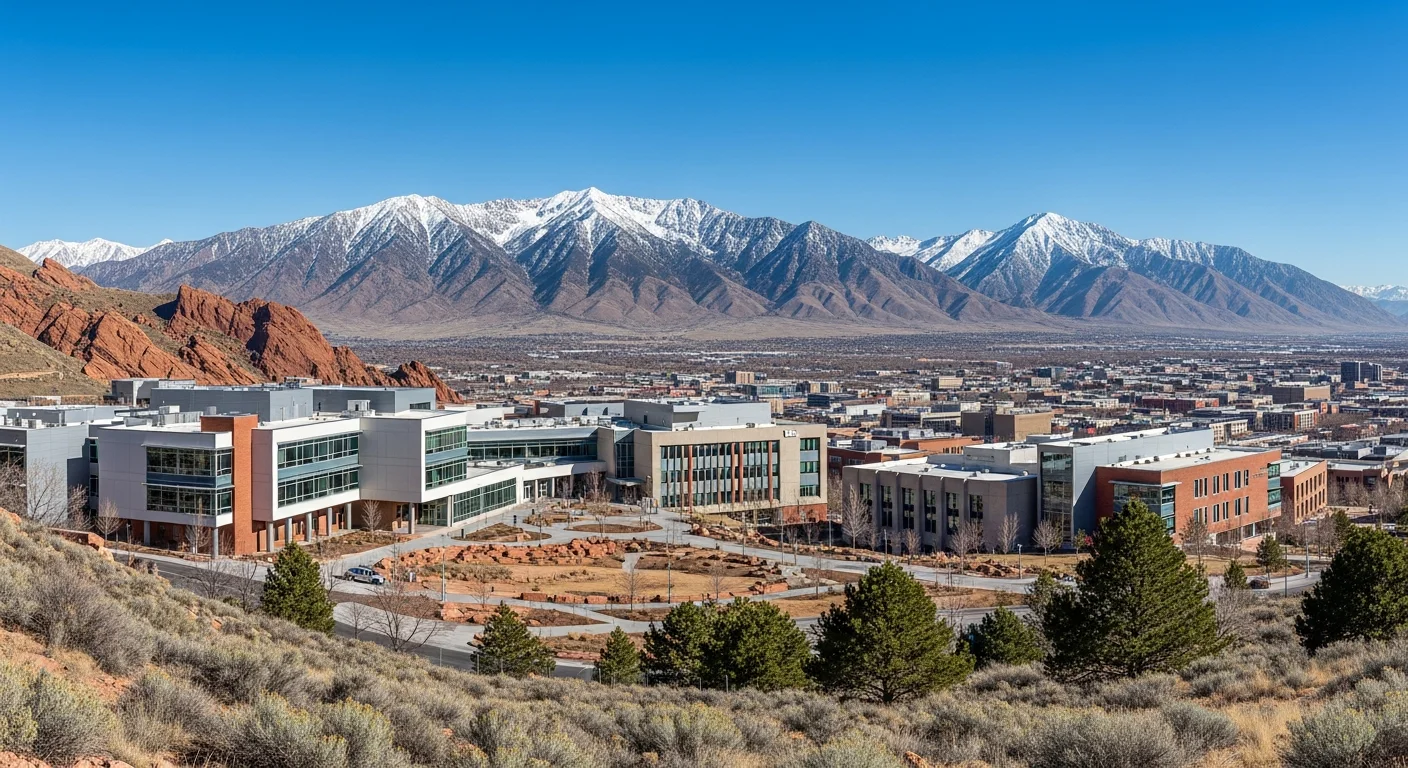
University campus in Utah
Updated July 13, 2026

Best Game Development Degree Programs in Utah, 2026 Rankings

Compare the top game development colleges in Utah. 11 accredited game development schools ranked by graduation rate, career outcomes, and value, from Weber State University to Western Governors University.

#1 ProgramWestern Governors
Avg Salary$108,000
Tuition From$5,471/yr
Job Growth+22%
On this page
Reviewed by Taylor Rupe, Founder & EditorSee methodology

20

Programs ranked

IPEDS 2024

$108,000

Utah median game development salary

BLS OEWS 2024

78/100

Top program score

Hakia methodology

16%

U.S. job growth (2023–33)

BLS projections

Key Takeaways

Best game development degree programs: Western Governors, Weber State, Utah Valley

Ranked by graduation rates, program outcomes, and institutional quality

IPEDS 2024

Tuition ranges from $3,778 to $40,896/year

Weber State offers the most affordable option at $5,471/yr

IPEDS 2024

Game Development degree programs available: 5 associate's, 4 master's, 2 doctoral in Utah

From community college pathways to advanced research degrees

IPEDS 2024

Utah community college transfer can save 40-60% on total degree costs

5 associate's programs provide transfer pathways to bachelor's degrees

Education Commission of the States

Major employers: Adobe, Qualtrics, Pluralsight, Domo

Tech hubs in Salt Lake City and Provo

Hakia Research 2026

Game Development degree programs near 28+ cities across Utah

Search by city to find programs within 200 miles of your location

IPEDS 2024

Updated July 13, 2026

How we ranked Utah Game Development programs

We rank 20 accredited game development programs in Utah using IPEDS 2024 institutional data, BLS OEWS 2024 state salary data, and College Scorecard outcomes. A 4-factor weighted composite is normalized to a 0–100 score. Schools cannot pay for placement; rankings are produced algorithmically.

Program completions (35%)Graduation rate (25%)Selectivity (20%)Career outcomes (20%)
See full methodology

Are Game Development Degree Programs in Utah Worth It?

Answer
$108,000
Yes. The best game development degree programs in Utah deliver strong ROI, graduates earn $108,000 median salary with +22% job growth through 2032. In-state tuition averages $10,827/year.

Source: BLS OEWS May 2024

Game Development Degree Rankings in Utah

Compare the top-ranked Game Development programs in Utah by degree level. Tuition, graduation rate, and Hakia Score for every accredited program.

Best Associate's Game Development Programs in Utah

5
Programs ranked
$8,909
Avg tuition/yr
95%
Avg grad rate

Program Landscape

Utah offers 5 accredited associate's degree programs in game development, providing an affordable entry point into the technology field. The top-ranked programs include Weber State, Utah Valley, Snow College, which combine rigorous technical curriculum with practical skills training.

Costs & Value

Community colleges in Utah offer these two-year programs at an average cost of $8,909/yr, significantly less than four-year university tuition. Students completing associate's degrees can pursue entry-level technical positions and transfer opportunities, with entry-level salaries averaging $59,400 in Utah.

Career Pathways

Many programs feature guaranteed transfer agreements with Utah's public universities, allowing students to complete their first two years at reduced cost before transferring to complete a bachelor's degree. The Salt Lake City, Provo, Lehi areas offer particularly strong job markets for associate's degree holders, with employers like Adobe, Qualtrics, Pluralsight hiring for technical support, junior development, and IT specialist positions.

Curriculum & Specializations

Programs typically include coursework in programming fundamentals, database management, networking basics, and software development. Among game development schools in Utah, these associate's programs offer the best value for students beginning their game development degrees in Utah.

🥉
Snow College
Ephraim, UTPublic
$4,180
Tuition/yr
100%
Grad rate
53.0
Hakia Score

Best Bachelor's Game Development Programs in Utah

9
Programs ranked
$12,348
Avg tuition/yr
88%
Avg grad rate

Program Landscape

Utah ranks among the nation's top destinations for game development education, with 9 accredited bachelor's degree programs across 5 public and 3 private institutions. The highest-ranked programs are Western Governors, Weber State, Utah Valley, recognized for academic excellence, research opportunities, and strong industry connections.

Career Outcomes

Graduates from Utah game development programs earn a median salary of $91,800, 6% below the national average. The state's robust technology sector, anchored by the Salt Lake City, Provo, Lehi metropolitan areas, provides abundant internship and employment opportunities with companies including Adobe, Qualtrics, Pluralsight.

Costs & Value

Tuition ranges from $5,266 to $40,896 annually, with an average of $12,348/yr. Top programs maintain graduation rates above 88%, with the highest reaching 97%. Many programs hold ABET accreditation, the gold standard for computing education, ensuring curriculum meets rigorous industry standards.

Curriculum & Specializations

Students can choose from specializations including software engineering, cybersecurity, artificial intelligence, data science, and systems architecture. Strong industry partnerships provide access to co-op programs, capstone projects with real companies, and direct recruiting pipelines to Utah's leading technology employers. For students seeking game development degrees in Utah, these top-ranked game development schools offer the strongest combination of academic rigor and career preparation.

Show all 9 ranked programs
RankSchoolLocationTypeTuitionGrad RateHakia Score
#6Neumont College of Computer ScienceSalt Lake City, UTFor-Profit$25,50097%51.3
#7Utah Tech UniversitySaint George, UTPublic$5,26643.6
#8Southern Utah UniversityCedar City, UTPublic$6,00686%43.2
#9Westminster UniversitySalt Lake City, UTPrivate$40,89636.2

Best Master's Game Development Programs in Utah

4
Programs ranked
$6,439
Avg tuition/yr
87%
Avg grad rate

Program Landscape

Utah offers 4 master's degree programs in game development, designed for professionals seeking to advance into senior engineering, technical leadership, and specialized roles. The top programs, U of Utah, Brigham Young, Weber State, combine advanced technical training with research opportunities and leadership development.

Career Outcomes

Master's graduates in Utah earn a median salary of $108,000, approximately 20-30% higher than bachelor's degree holders. The concentration of technology companies in Salt Lake City, Provo, Lehi creates strong demand for graduate-level talent, with Adobe, Qualtrics, Pluralsight actively recruiting from these programs.

Costs & Value

Program formats include traditional full-time study (typically 2 years), part-time options for working professionals (2-3 years), and accelerated tracks. Tuition averages $6,439/yr, with many employers offering tuition reimbursement for graduate education. Some programs offer thesis and non-thesis tracks, allowing students to focus on research or professional development based on their career goals.

Curriculum & Specializations

Curriculum covers advanced topics including machine learning, distributed systems, software architecture, and technical management. Many programs include practicum experiences, industry capstone projects, or consulting engagements that provide real-world application of advanced concepts. Among Utah's game development schools at the graduate level, these programs stand out for both academic quality and career outcomes.

Best Doctoral Game Development Programs in Utah

2
Programs ranked
$7,336
Avg tuition/yr
81%
Avg grad rate

Program Landscape

Utah is home to 2 doctoral programs in game development, preparing students for research positions, faculty appointments, and executive technical roles. Leading programs at U of Utah, Brigham Young are recognized for cutting-edge research, strong faculty publications, and competitive funding packages.

Career Outcomes

Doctoral graduates command premium salaries, with Utah PhD holders earning a median of $135,000, reflecting the advanced expertise required for research and executive positions. The Salt Lake City, Provo, Lehi region's research universities and corporate R&D centers provide extensive collaboration opportunities with industry leaders like Adobe, Qualtrics, Pluralsight.

Costs & Value

PhD programs typically require 4-6 years of full-time study, including coursework, qualifying examinations, and original dissertation research. Many programs offer full funding through teaching or research assistantships, covering tuition and providing stipends of $25,000–$40,000 annually.

Curriculum & Specializations

Research strengths across Utah programs include artificial intelligence, cybersecurity, human-computer interaction, systems, and theoretical computer science. For aspiring researchers pursuing game development degrees in Utah, graduates go on to careers as university faculty, industry research scientists, or technical executives, contributing to advances in technology that impact millions of users worldwide.

🥇
University of Utah
Salt Lake City, UTPublic
$8,175
Tuition/yr
72%
Grad rate
38.2
Hakia Score

Game Development Degree Costs & Tuition in Utah

MetricValue
Average in-state tuition$10,827/year
Average out-of-state tuition$27,068/year
Community college tuition$2,707/year
4-year savings for residents$64,964
2+2 transfer pathway savings$16,240

Source: IPEDS 2024

Financial Aid & Scholarships for Game Development Students in Utah

State Aid Programs

Utah residents pursuing game development degrees have access to multiple financial aid pathways designed to make higher education affordable. The Utah Opportunity Scholarship provides both need-based and merit-based awards specifically for Utah residents, helping offset tuition costs across the state's strong network of institutions (Utah System of Higher Education). Additionally, all students are eligible for federal financial aid through the Free Application for Federal Student Aid (FAFSA), which determines eligibility for Pell Grants, student loans, and work-study opportunities (Federal Student Aid). Students should complete the FAFSA early to maximize their aid packages and meet institutional deadlines.

Key Programs & Amounts

Beyond state and federal programs, Utah's game development institutions offer institutional scholarships and financial aid packages tailored to students' needs. Public four-year universities in Utah average $6,014 in in-state tuition, making in-state attendance significantly more affordable than out-of-state options at $19,392 (IPEDS). Students should also explore employer sponsorships and partnerships with major Utah companies like Adobe and Goldman Sachs, which may offer tuition assistance or internship-to-employment pathways. The College Scorecard provides transparent data on net price, financial aid awarded, and debt outcomes for individual institutions (College Scorecard), helping students compare total cost of attendance across programs.

Game Development Degree ROI Calculator, Utah

Use our interactive ROI calculator to estimate your return on investment for a game development degree in Utah. Enter your expected tuition costs, financial aid, and career goals to see projected payback periods and lifetime earnings. The calculator uses current salary data from BLS and tuition data from IPEDS to provide accurate estimates.

Game Development Degree ROI Calculator

Estimate your return on investment for a game development degree

Leave blank to use average cost for selected program type

20 years
10 years20 years30 years
20-Year ROI

+907%

Net gain divided by total investment. ROI above 200% is considered excellent for education investments.

Net Gain

$1,677,254

Your additional lifetime earnings with this degree vs. working without one, minus the total investment.

Break-Even

5 years

Years until your cumulative earnings exceed total investment. Shorter programs often break even faster due to lower opportunity cost.

COL-Adjusted Salary

$133,333

Your starting salary adjusted for local cost of living. This shows real purchasing power compared to a $100K national baseline.

Why does break-even change with program type? Your "total investment" includes both tuition AND opportunity cost (foregone earnings while in school). A 4-year full-time public university (in-state) means 4 years of not earning a salary ($140,000 in opportunity cost). Shorter full-time programs may have higher tuition but lower total investment because you return to the workforce sooner.

Detailed Breakdown

How we calculate your degree ROI using real salary data

Total Investment$185,000

Tuition plus opportunity cost (earnings you miss while in school)

Program Cost (Tuition)$45,000

Direct cost of the degree program

Opportunity Cost$140,000

4 years × $35K/year foregone salary while studying full-time

20-Year Earnings (with degree)$2,712,662

Projected career earnings starting after graduation, with salary growth

20-Year Earnings (without degree)$850,408

What you'd earn working at $35K/year with 2% annual growth

Starting Salary (Austin, TX)$140,000

Median salary for this role in your selected location (BLS 2024)

Annualized Return4.9%

Your investment's compound annual growth rate (similar to stock market returns)

Data sources: BLS OEWS May 2024, IPEDS 2024. Calculations use median salaries, 3% discount rate, and assume salary growth declines from 6% to 2% over career. Individual results will vary. | Powered by Hakia.com

Game Development Salaries by Metro Area

Median annual salary in Utah metro areas

Salt Lake City$119K
Provo$113K
Lehi$108K
View data table
CategoryValue
Salt Lake City$119K
Provo$113K
Lehi$108K

Source: BLS OEWS May 2024

Hakia.com

Top Employers Hiring Game Development Graduates in Utah

Find game development jobs in Utah. These major employers across Utah metro areas are actively hiring game development degree holders. Click employer names to view current job openings.

Game Development Jobs in Salt Lake City

UT
Adobe
tech
Goldman Sachs
finance
Pluralsight
edtech
Overstock.com
ecommerce

Game Development Jobs in Provo

UT
Qualtrics
tech
Vivint
iot
Ancestry.com
tech

Game Development Jobs in Lehi

UT
Domo
tech
MX Technologies
fintech
Podium
tech

Transfer Pathways for Game Development Degrees in Utah

State Transfer System

Utah's 7 associate's degree programs in game development provide an affordable and accessible entry point into the field, with 191 total completions in 2023 (IPEDS). The Utah Transfer Guides system offers major-specific pathways that clearly delineate how community college coursework applies to bachelor's degrees at 9 state four-year institutions. Students completing an associate's degree at institutions like Weber State University or Utah Valley University can transfer with full junior status, minimizing credit loss and reducing overall education costs. These pathways are maintained through formal articulation agreements between community colleges and universities within the Utah System of Higher Education, ensuring seamless transitions.

How Transfers Work

The transfer process is streamlined for Utah residents through coordinated admissions and course mapping systems. Associate's degree holders transferring to programs at Brigham Young University, Utah State University, or University of Utah benefit from guaranteed admission agreements and course equivalency guarantees. Average in-state tuition at public four-year institutions is $6,014, while community college costs average approximately $3,900, making the two-year pathway particularly cost-effective. Transfer students should consult the Utah Transfer Guides for their specific major and starting institution to confirm course selections. Financial aid transfers seamlessly through FAFSA, and Utah Opportunity Scholarship eligibility continues for qualifying transfer students, supporting completion of bachelor's and master's degrees.

Why Pursue a Game Development Degree in Utah?

Industry & Workforce

Utah is a significant hub for game development education, with 23 institutions offering programs at all degree levels (IPEDS). The state awarded 2,304 bachelor's degrees in game development in 2023, demonstrating strong program capacity and graduate employment pathways. Students can pursue education across 9 bachelor's programs, 7 associate's programs, 5 master's programs, and 2 doctoral programs, providing flexible pathways from community college through doctoral research. This comprehensive ecosystem supports both traditional on-campus learning and distance education options.

Salary Outlook

Utah's major technology centers in Salt Lake City, Provo-Orem, and Ogden-Clearfield attract major employers including Adobe and other industry leaders, creating internship and career opportunities for graduates. Top-ranked institutions like Brigham Young University, Utah State University, and Weber State University offer competitive programs with average public in-state tuition of just $6,014, making Utah an affordable choice compared to national alternatives. The state's strong emphasis on higher education through the Utah System of Higher Education ensures program quality and accessible pathways for all students.

Game Development Program Availability in Utah

11 Programs
Utah offers 11 accredited game development programs across public universities, private colleges, and community colleges. Top tech hubs include Salt Lake City, Provo, Lehi.

Source: IPEDS 2024

Game Development Job Market & Salary Data in Utah

Employment Outlook

Utah's game development job market is experiencing strong growth, supported by a strong pipeline of 23 institutions offering game development programs across the state (IPEDS). The state's educational infrastructure has produced 2,304 bachelor's degree completions in game development, with 9 institutions offering bachelor's programs. This talent supply is fueling demand across major metropolitan areas including Salt Lake City, Provo-Orem, and Ogden-Clearfield, where technology and creative industries continue to expand. For real-time wage and employment data specific to Utah's game development sector, the Bureau of Labor Statistics provides comprehensive occupational data for software developers and related roles.

Salaries by Metro

The state's most productive program, Western Governors University, has generated 1,501 completions, while University of Utah and Weber State University have each produced over 280 completions, creating a steady stream of qualified professionals entering the workforce. Beyond bachelor's degrees, Utah also supports advanced education with 5 institutions offering master's programs and 2 institutions offering doctoral degrees, with 93 master's completions recorded. This diversity of educational pathways enables both entry-level and advanced career progression. Students exploring game development careers should also consider related programs in Computer Science, Software Engineering, and Computer Programming to understand the broader career landscape. For national context, explore best bachelor's programs and most affordable options nationally.

Entry-Level (0-2 yrs)

New graduates and career changers

Senior (8+ yrs)

Technical leads and architects

Median Salary in Utah$70,200$156,600
Typical RolesJunior Developer, AnalystStaff Engineer, Architect
Remote Work AccessLimitedCommon
Degree ExpectationBachelor's sufficientMaster's preferred

Online vs On-Campus Game Development Programs in Utah

Online Programs

0 available in Utah

On-Campus Programs

Traditional classroom experience

Typical Tuition$9,744/yr$10,827/yr
Schedule FlexibilitySelf-paced or asyncFixed schedule
NetworkingVirtual cohortsIn-person, career fairs
Best ForWorking professionalsTraditional students
Completion Time2-4 years (flexible)4 years (standard)

Compare Game Development Programs in Other States

Game Development Degree Programs in Utah: FAQ

What are the best game development degree programs in Utah?
The best game development degree programs in Utah based on our methodology are: 1) Western Governors University (highly ranked), 2) Weber State University, and 3) Utah Valley University. Our rankings weight graduation rates (25%), program completions (35%), selectivity (20%), and career outcomes (20%). Utah offers 11 total accredited programs across 7 public and 3 private institutions. See our complete rankings for all 9 bachelor's programs.
How much do game development degree programs cost in Utah?
Game Development degree program costs in Utah vary significantly by institution type. In-state public tuition averages $10,827/year, while private institutions average $23,819/year. Community colleges offer the most affordable path at approximately $2,707/year for associate's degrees. The total 4-year cost ranges from $43,308 at public schools to $95,278 at private institutions before financial aid. Most students don't pay full sticker price, federal grants, state aid, and institutional scholarships can reduce costs by 30-60%.
What salary can game development degree graduates earn in Utah?
Game Development professionals in Utah earn a median salary of $108,000, which is competitive with the national average of $115,500. Entry-level positions typically start around $70,200, while senior roles exceed $156,600. Salaries vary by metro area: Salt Lake City ($118,800), Provo ($113,400) offer the highest compensation. Specialized roles like AI/ML engineers and cloud architects command premiums of 15-30% above median.
Are there online game development degree programs in Utah?
Yes, Utah offers 0 accredited online Game Development programs from state institutions. These programs award the same degree as on-campus options and include synchronous and asynchronous formats. Top-ranked online programs include offerings from various state universities. Online programs typically cost the same as on-campus tuition for in-state students. Many programs offer flexible scheduling for working professionals, with some offering accelerated completion in 2-3 years. Ensure any online program holds regional accreditation and ideally ABET accreditation for engineering programs.
What companies hire game development degree graduates in Utah?
Major Game Development employers in Utah include Adobe, Qualtrics, Pluralsight, Domo, Recursion. The Salt Lake City and Provo metro areas serve as primary tech hubs with thousands of open positions. Top employers maintain recruiting pipelines directly from Utah universities, with many offering internship-to-hire programs. Beyond tech giants, opportunities exist in healthcare IT, financial services, defense contractors, and growing startups. Utah's tech sector shows +22% projected job growth through 2033, outpacing most other industries.
Is a game development degree program worth it in Utah?
A game development degree program in Utah offers strong ROI with a $108,000 median salary and +22% projected job growth. At average in-state tuition of $10,827/year, graduates typically recoup their educational investment within 3-5 years. The degree opens doors to high-paying careers in software development ($122,040), data science, cybersecurity, and AI/ML. Beyond salary, benefits include job security, remote work flexibility, and clear advancement paths. Alternative paths like bootcamps exist for career changers, but bachelor's degrees provide broader career options and higher lifetime earnings.
How long do game development degree programs take in Utah?
Standard completion times for game development degree programs in Utah are: Associate's (2 years, 60 credits), Bachelor's (4 years, 120 credits), and Master's (1-2 years, 30-36 credits). However, actual timelines vary based on course load, transfer credits, and program format. Accelerated programs can compress a bachelor's to 3 years or a master's to 12 months. Part-time students typically need 5-6 years for a bachelor's degree. Utah community colleges offer a cost-effective "2+2" path: complete your associate's in 2 years, then transfer to a Utah university for the final 2 years of a bachelor's program.
What financial aid is available for game development degree students in Utah?
Utah game development degree students can access multiple financial aid sources. Federal aid includes Pell Grants (up to $7,395/year for qualifying students) and federal student loans. Utah state grants provide additional support for residents attending in-state schools. Institutional scholarships from universities can significantly reduce costs, many schools offer merit-based awards for STEM students. Work-study programs and teaching/research assistantships (especially for graduate students) provide income while building experience. Complete the FAFSA by Utah's priority deadline to maximize aid eligibility. Some employers also offer tuition reimbursement for employees pursuing CS degrees.

Data Sources

Institutional characteristics, completions, graduation rates

Utah salary and employment data

Official University Websites

Program details and admissions information

Last Updated: June 26, 2026. Rankings based on IPEDS 2024 data. Salary data from BLS OEWS May 2024.

Was this ranking helpful for your college search?
Taylor Rupe

Taylor Rupe

Co-founder & Editor (B.S. Computer Science, Oregon State • B.A. Psychology, University of Washington)

Taylor combines technical expertise in computer science with a deep understanding of human behavior and learning. His dual background drives Hakia's mission: leveraging technology to build authoritative educational resources that help people make better decisions about their academic and career paths.

The research behind the rankings

In-depth Game Development program profiles in Utah

Hand-researched detail on the top-ranked programs: degree pathways, research labs, industry partners, career outcomes, and admissions. Tap any school to expand.

Best Associate's Game Development programs

#1Weber State UniversityOgden, UT

Why it stands out. Weber State's game development program emphasizes accessible, practical training alongside interdisciplinary collaboration with designers and artists, positioned for rapid industry entry.

Hakia insight. Weber State's dual esports labs (University Village and Wattis) paired with placements at Microsoft and Google reveal an unusual strength: the program treats competitive gaming infrastructure as a recruiting and research pipeline, not an afterthought—giving students visibility to employers scouting talent through live tournament participation.

At the associate's level, weber State's game development offerings, integrated within its computer science and interactive media programs, appeal to students seeking accessibility and regional opportunity without the prestige pressure of larger research institutions. The program balances game programming fundamentals with exposure to the broader digital media pipeline—students work alongside animation, audio, and design students on shared projects, learning how programmers collaborate with non-technical creators. Coursework covers game engines (Unity and Unreal), networked gameplay, UI systems, and optimization for varied platforms. The university's Ogden location situates it within commuting distance of Salt Lake City's growing game industry while maintaining a lower cost of attendance than competing programs. Faculty tend to be practicing professionals or recent industry veterans, bringing current tool chains and production methodologies into the classroom. Internship and job placement emphasis reflects a practical focus: graduates typically enter industry in junior programmer or tools roles rather than aiming for specialized researcher positions, suiting students who prioritize stable employment and continuous learning on the job.

Programs offered

  • Associate of Science in Game Development · 2 years · on-campus
  • Associate of Applied Science in Game Development · 2 years · online

Research labs & institutes

  • University Village Esports Lab — Gaming and esports with spectator area and console gaming
  • Wattis Esports Lab — Gaming and esports for varsity team practice

Industry partners

MicrosoftGoogleAnything for a FriendCottages of Hope

Career outcomes

Top employers: Microsoft, Google

Notable faculty

  • Kyle Feuz (Computer science with specialization in game development, machine learning and data science)

Accreditation & certifications

Computing Accreditation Commission of ABET

Location advantage: Proximity to Salt Lake City game industry Lower cost of attendance than regional competitors

#2Utah Valley UniversityOrem, UT

Why it stands out. UVU's game concentration embeds real-world industry collaboration with local studios (Crystal Dynamics, Avalanche) and Wasatch corridor employers into its curriculum, bridging CS fundamentals with hands-on shipping experience.

Hakia insight. UVU's partnerships with Crystal Dynamics and Avalanche Software aren't guest lectures—they're embedded into curriculum design, meaning students build projects that studios might actually greenlight, transforming an associate degree into a legitimate portfolio accelerator for the Wasatch corridor's mid-market ecosystem.

At the associate's level, UVU's game development concentration within its computer science curriculum strikes a balance between breadth and specialization, ensuring graduates can pivot between gameplay programming, tools development, and engine work without narrow skill silos. The program leverages Utah's thriving indie and mid-market game studio ecosystem—students collaborate directly with local studios like Crystal Dynamics and Avalanche Software through capstone projects and internship pipelines. The concentration structure lets you take core CS fundamentals (algorithms, architecture, graphics math) alongside hands-on game-specific courses in engine development, game AI, and multiplayer systems—you're not studying games in isolation from real computer science. Faculty bring industry experience; instructors often maintain consulting relationships or sabbaticals at studios, keeping curriculum tied to current shipping practices rather than academic theory alone. UVU's proximity to the Wasatch tech corridor and established relationships with major publishers mean recruiting visits are frequent and internship-to-offer conversion rates are measurable. The capstone requirement typically involves shipping a game or substantial mod, played by real audiences—not just graded by professors.

Programs offered

  • Associate of Science in Game Development · 2 years · on-campus
  • Associate of Applied Science in Game Development · 2 years · online

Industry partners

Crystal DynamicsAvalanche Software

Location advantage: Proximity to Crystal Dynamics and Avalanche Software Access to Wasatch tech corridor and mid-market studios Utah's active indie game development scene

#3Snow CollegeEphraim, UT

Hakia insight. Snow College's small-class model paired with regional studio connections creates an unusual advantage: professors track individual student progress closely enough to make personalized introductions to hiring managers, a warm-intro mechanism that scales poorly at larger institutions.

At the associate's level, snow College's game development track gives you small-class instruction where professors actually know your name—a rarity at larger institutions. You'll learn C# and engine fundamentals (Unity focus) while building a portfolio of completed projects that employers actually want to see. The program's strength is in personalized mentorship and a tight-knit cohort model; graduates frequently report that their Snow peers became lifelong collaborators. Transfer credits flow smoothly to University of Utah and Utah State, and the rural Ephraim setting means fewer distractions and strong peer collaboration on shared projects.

Programs offered

  • Associate of Science in Game Development · 2 years · on-campus
  • Associate of Applied Science in Game Development · 2 years · online

Career outcomes

Top employers: Regional game studios, Utah-based tech companies, University of Utah graduate programs

#4Salt Lake Community CollegeSalt Lake City, UT

Hakia insight. SLCC's direct pipeline to University of Utah animation labs means the program functions as a two-year credential-building stage before transferring into a research-active environment—students effectively gain access to SCI Institute resources without paying four-year tuition.

At the associate's level, if you're looking to build real games while staying close to home, SLCC's game development program combines hands-on engine training (Unreal, Unity) with a direct pipeline to University of Utah's computer science and animation programs. You'll work in dedicated labs with industry-standard software, and many graduates land junior developer roles at local studios or transition seamlessly into four-year degrees without losing credits. The program emphasizes both technical programming and creative problem-solving, so whether you're drawn to backend systems or game design, you'll have mentorship from instructors who've shipped commercial titles.

Programs offered

  • Associate of Science in Game Development · 2 years · on-campus
  • Associate of Applied Science in Game Development · 2 years · online

Career outcomes

Top employers: Local indie studios in Salt Lake City, University of Utah animation labs, Utah-based software development companies

#5Neumont College of Computer ScienceSalt Lake City, UT

Why it stands out. Neumont's project-intensive, quarter-based game development specialization emphasizes shipping playable games every 10 weeks alongside working developers, prioritizing portfolio over credentials.

Hakia insight. Neumont's 70% hands-on build time with a 10-week shipping cycle means students exit with 12+ playable game artifacts in two years—a portfolio depth that typically requires four years elsewhere, compressing career-readiness into an associate timeline.

At the associate's level, neumont's game development specialization operates within an immersive, project-intensive curriculum where students spend roughly 70% of instructional time building actual games rather than listening to lectures. The college's quarter-based system compresses traditional semesters into rapid-fire sprints, forcing teams to ship vertical slices and playable prototypes every 10 weeks—a rhythm that mirrors real production cycles. Specialization in game programming means you're paired with artists and designers from day one, working in cross-functional teams on original IP and licensed properties, building professional portfolio pieces that survive studio critique. Neumont's faculty are active developers; many hold concurrent contracts with indie studios or have shipped titles at major publishers, ensuring curriculum reflects shipping realities—you learn what actually matters, not what academics think should matter. The college's career services operate almost like a talent agency, with studio recruiters visiting regularly and alumni networks actively feeding graduates into positions. Small class sizes mean instructors know your code, give personalized feedback, and can recommend you directly to hiring partners. Graduates often report job offers before graduation, with starting salaries in the competitive Utah and Mountain West market reflecting mid-level programmer expectations.

Programs offered

  • Associate of Science in Game Development · 2 years · on-campus
  • Associate of Applied Science in Game Development · 2 years · online

Career outcomes

Top employers: Google, Microsoft, Tesla, Oracle, 3M, HP, Amazon, Blizzard Entertainment, Dell EMC

Accreditation & certifications

Northwest Commission on Colleges and Universities (NWCCU)

Location advantage: Utah game development ecosystem Proximity to indie and mid-market studios

Best Bachelor's Game Development programs

#1Western Governors UniversitySalt Lake City, UT

Why it stands out. WGU's competency-based, self-paced game development degree eliminates semester constraints, letting students advance by demonstrating mastery and build industry-ready portfolios simultaneously.

Hakia insight. WGU's competency model eliminates the hidden tax of semester pacing: a student who masters Unreal in 6 weeks doesn't wait until January to advance, and can stack multiple portfolio projects while peers are still in lecture halls—a structural advantage invisible in ranking tables but significant in time-to-employment.

At the bachelor's level, WGU's competency-based model fundamentally reshapes how game development education works—you advance by demonstrating mastery of specific skills rather than sitting through semesters. The Bachelor of Science in Game Software Development emphasizes practical engine proficiency (primarily Unreal and Unity), real-time graphics programming, and shipping-ready project completion. Students build a portfolio of actual games across multiple platforms while working through modular competencies in gameplay systems, physics simulation, and networked game architecture. This self-paced format particularly suits working professionals or those needing flexible scheduling without sacrificing depth; you're coding and shipping projects, not just attending lectures. WGU's outcomes tracking is transparent—most graduates report job placement within months, often with internship-to-hire pipelines already established during their studies. The program's industry advisory board continuously updates curriculum to reflect what studios actually need: current emphasis on procedural generation, player analytics integration, and cross-platform deployment. Because there's no cohort lock-in, you can accelerate if you're strong in certain areas or take additional time on complex systems like AI behavior trees or shader development—rare flexibility in a structured degree.

Programs offered

  • Bachelor of Science in Game Development · 4 years · on-campus
  • Bachelor of Arts in Game Development · 4 years · online
#2Weber State UniversityOgden, UT

Why it stands out. Mandatory career counselor meetings for resume help and mock interviews. Capstone projects with community partners including nonprofit organizations

Hakia insight. Weber State's mandatory career counselor meetings aren't career services theater—they're built into degree requirements, ensuring every graduate has practiced industry interview formats with trained staff before entering the Salt Lake job market where Microsoft and Google actively recruit.

Weber State's Bachelor of Science in Computer Science combines applied knowledge with computer theory, preparing students for careers with top companies like Microsoft and Google. The program requires regular meetings with assigned career counselors for resume help and mock interviews. Students complete capstone projects with community partners including nonprofit organizations like Anything for a Friend and Cottages of Hope. Coursework covers operating systems, software engineering, computer graphics, and scripting languages. Students can pursue certificates in mobile app and game development alongside their degree. The program is accredited by ABET's Computing Accreditation Commission and was rated the 23rd best computer science degree in the U.S. by Accredited Schools Online. Graduates can continue studies in Weber's Master of Science in Computer Science program.

Programs offered

  • Bachelor of Science in Computer Science · 4 years · on-campus

Research labs & institutes

  • University Village Esports Lab — Gaming and esports with spectator area and console gaming
  • Wattis Esports Lab — Gaming and esports for varsity team practice

Industry partners

MicrosoftGoogleAnything for a FriendCottages of Hope

Career outcomes

Top employers: Microsoft, Google

Notable faculty

  • Kyle Feuz (Computer science with specialization in game development, machine learning and data science)

Accreditation & certifications

Computing Accreditation Commission of ABET

Location advantage: Proximity to Salt Lake City game industry Lower cost of attendance than regional competitors

#3Utah Valley UniversityOrem, UT

Why it stands out. UVU's game concentration embeds real-world industry collaboration with local studios (Crystal Dynamics, Avalanche) and Wasatch corridor employers into its curriculum, bridging CS fundamentals with hands-on shipping experience.

Hakia insight. UVU graduates working with Crystal Dynamics and Avalanche Software during coursework exit with shipped game credits on industry resumes before hiring season even begins, a pre-employment credential unavailable at programs treating partnerships as networking events rather than curriculum scaffolding.

At the bachelor's level, UVU's game development concentration within its computer science curriculum strikes a balance between breadth and specialization, ensuring graduates can pivot between gameplay programming, tools development, and engine work without narrow skill silos. The program leverages Utah's thriving indie and mid-market game studio ecosystem—students collaborate directly with local studios like Crystal Dynamics and Avalanche Software through capstone projects and internship pipelines. The concentration structure lets you take core CS fundamentals (algorithms, architecture, graphics math) alongside hands-on game-specific courses in engine development, game AI, and multiplayer systems—you're not studying games in isolation from real computer science. Faculty bring industry experience; instructors often maintain consulting relationships or sabbaticals at studios, keeping curriculum tied to current shipping practices rather than academic theory alone. UVU's proximity to the Wasatch tech corridor and established relationships with major publishers mean recruiting visits are frequent and internship-to-offer conversion rates are measurable. The capstone requirement typically involves shipping a game or substantial mod, played by real audiences—not just graded by professors.

Programs offered

  • Bachelor of Science in Game Development · 4 years · on-campus
  • Bachelor of Arts in Game Development · 4 years · online

Industry partners

Crystal DynamicsAvalanche Software

Location advantage: Proximity to Crystal Dynamics and Avalanche Software Access to Wasatch tech corridor and mid-market studios Utah's active indie game development scene

#4Brigham Young UniversityProvo, UT

Why it stands out. Not open enrollment - requires faculty approval. 29-hour common core shared with Computer Engineering allowing exploration time

Hakia insight. BYU's faculty approval gate (rare for animation/games tracks) filters for aptitude early, and the 29-hour shared core with Computer Engineering lets approved students audit systems-level coursework most game programs skip—creating technical depth that distinguishes graduates when mid-market studios need technically-literate game engineers, not generalists.

BYU's Computer Science: Animation and Games emphasis prepares students for careers in animation and video game development studios. The program combines the core Computer Science curriculum (29 hours of common core in math, physics, hardware, and programming) with specialized coursework in graphics and game development. Students receive comprehensive training in software theory and design, algorithms, and computer applications, with specific focus on gaming and animation technologies. The emphasis requires faculty approval and is not open enrollment - interested students must speak with Dr. Parris Egbert. Students typically secure quality summer programming internships after completing CS 240, and graduates enter a thriving job market with some of the highest starting salaries for new graduates in CS fields.

Programs offered

  • Bachelor of Science in Computer Science: Animation and Games · 4 years · on-campus

Research labs & institutes

  • Information and Decision Algorithms Laboratories (IDeA Labs) — Algorithmic and learning-based approaches to decision-making in multiagent systems, game theory
  • Center for Animation — Computer animation, game development, digital media production

Industry partners

ChAIR EntertainmentAvalanche SoftwareElectronic ArtsRiot GamesBlizzard EntertainmentPixarDreamWorksDisney AnimationIndustrial Light + MagicLucasFilms Animation

Notable faculty

  • Dr. David Grimsman (Game theory, multiagent systems, sports analytics)
  • Seth Holladay (Computer animation, game development)

Location advantage: Utah's tech and game development ecosystem BYU alumni network in game industry

#5University of UtahSalt Lake City, UT

Why it stands out. Two-semester capstone sequence (GAMES 4500 and 4510). Cross-disciplinary methodology combining computing and film studies

Hakia insight. The University of Utah's two-semester capstone sequence (GAMES 4500-4510) paired with SCI Institute affiliation means senior projects often contribute to active research in visualization or simulation—students ship games that also advance computational science, opening post-grad paths into research studios like Electronic Arts Research.

The Bachelor of Science in Games is designed for students aspiring to careers in the professional games industry, simulation, edutainment, or visualization. The curriculum combines technical grounding in mathematics and computational skills with core knowledge in digital playable experience design. Students complete a structured 4-year program including prerequisites in programming and digital content creation, maintaining a 3.0 pre-major GPA. The program requires two capstone courses (GAMES 4500 and 4510) in the senior year, 30 credit hours of GAMES electives (with 4 at 3000+ level), and 12 allied hours from two different areas. Focus areas include Game Design, Game Arts, Technical Art, and Game Production. Students develop skills applicable to entertainment software, educational games for K-12, professional training tools, serious games for health, and scientific collaboration addressing societal needs. The cross-disciplinary methodology combines computing and film studies backgrounds.

Programs offered

  • Bachelor of Science in Games · 4 years · on-campus

Research labs & institutes

  • Scientific Computing and Imaging (SCI) Institute — Visualization and interactive graphics
  • Laboratory for Quantitative Experience Design (QED Lab) — Human-centered artificial intelligence systems and invariant properties of experience design
  • Spatial Perception and Cognitive Engineering (SPACE) Lab — Human-Computer Interaction research investigating how people perceive and interact with immersive virtual environments
  • Liquid Narrative Research Group — Computational models of AI in interactive narrative with applications to computer games, educational and training systems
  • Motion Capture Lab — State-of-the-art human motion capture for animation in games and virtual environments
  • Games User Research Lab — Games user research with eye-tracking and gameplay tracking capabilities
  • VR/AR Lab — Room-scale mobile and fixed sensor VR and AR equipment including advanced Collins Aerospace Coalescence AR environment

Industry partners

Avalanche SoftwareUnity TechnologiesActivision BlizzardTake Two InteractiveMicrosoftPepsiCollins Aerospace

Notable faculty

  • Michael Young (AI in interactive narrative, computational linguistics, computer games)
  • Dr. Lauren Buck (Human-Computer Interaction, spatial perception in virtual environments)
  • Professor Dae Hong Kim (Games development)

Admissions

GPA 3.0 pre-major GPA and 2.75 cumulative GPA. Deadline Applications for Fall 2027 open September 1, 2026.

Location advantage: Same metro area as Avalanche Software headquarters Salt Lake City tech corridor growth

#6Neumont College of Computer ScienceSalt Lake City, UT

Why it stands out. Neumont's project-intensive, quarter-based game development specialization emphasizes shipping playable games every 10 weeks alongside working developers, prioritizing portfolio over credentials.

Hakia insight. Neumont's quarter-based 10-week shipping cycle produces four completed games per year over four years (16 total)—a portfolio volume that would require independent side projects at semester-based schools, compressed into the standard curriculum where peer review and iteration happen under faculty guidance.

At the bachelor's level, neumont's game development specialization operates within an immersive, project-intensive curriculum where students spend roughly 70% of instructional time building actual games rather than listening to lectures. The college's quarter-based system compresses traditional semesters into rapid-fire sprints, forcing teams to ship vertical slices and playable prototypes every 10 weeks—a rhythm that mirrors real production cycles. Specialization in game programming means you're paired with artists and designers from day one, working in cross-functional teams on original IP and licensed properties, building professional portfolio pieces that survive studio critique. Neumont's faculty are active developers; many hold concurrent contracts with indie studios or have shipped titles at major publishers, ensuring curriculum reflects shipping realities—you learn what actually matters, not what academics think should matter. The college's career services operate almost like a talent agency, with studio recruiters visiting regularly and alumni networks actively feeding graduates into positions. Small class sizes mean instructors know your code, give personalized feedback, and can recommend you directly to hiring partners. Graduates often report job offers before graduation, with starting salaries in the competitive Utah and Mountain West market reflecting mid-level programmer expectations.

Programs offered

  • Bachelor of Science in Game Development · 4 years · on-campus
  • Bachelor of Arts in Game Development · 4 years · online

Career outcomes

Top employers: Google, Microsoft, Tesla, Oracle, 3M, HP, Amazon, Blizzard Entertainment, Dell EMC

Accreditation & certifications

Northwest Commission on Colleges and Universities (NWCCU)

Location advantage: Utah game development ecosystem Proximity to indie and mid-market studios

#7Utah Tech UniversitySaint George, UT

Why it stands out. Efficiency-focused, studio-model game development emphasizing rapid portfolio development and practical industry-aligned skills.

Hakia insight. Utah Tech's positioning in St. George's emerging tech corridor offers an underexploited advantage: lower housing costs than Salt Lake schools with identical industry proximity to Wasatch studios, letting students spend tuition savings on game engines, hardware, or unpaid internships that build portfolio depth.

At the bachelor's level, utah Tech University's game development initiative reflects its recent institutional evolution, positioning the program as a practical, career-focused alternative within Utah's competitive game education landscape. The program emphasizes rapid iteration and shipped games, with students building portfolio projects in real engines from the first semester onward. Curriculum bridges art and programming through collaborative studio-style courses where multidisciplinary teams work on complete game prototypes. The school's proximity to St. George and its growing tech infrastructure provides unexpected local industry connections for internships and junior roles. Faculty maintain pragmatic, industry-aligned teaching, avoiding heavy theoretical frameworks in favor of applied skills that studios actively seek. For students seeking accelerated entry into game development roles at small to mid-size studios, or those aiming for rapid skill acquisition over deep specialization, this program's efficiency-first approach appeals. The university's size and teaching focus mean students get direct access to faculty and a collaborative peer environment rather than being a number in a lecture hall.

Programs offered

  • Bachelor of Science in Game Development · 4 years · on-campus
  • Bachelor of Arts in Game Development · 4 years · online

Location advantage: Emerging tech corridor in St. George region

#8Southern Utah UniversityCedar City, UT

Why it stands out. Intimate, hands-on engine-focused program with small cohorts and faculty with active indie shipping experience.

Hakia insight. Southern Utah University's advantage isn't its size—it's that faculty with shipped indie titles teach engine fundamentals in cohorts small enough that students debug code alongside developers who've already shipped, collapsing the gap between classroom and studio floor that larger programs struggle to bridge.

At the bachelor's level, southern Utah University's game development program operates as a specialized track within its digital media emphasis, targeting students who want hands-on engine experience without getting lost in purely theoretical computer science. The curriculum prioritizes practical skill-building in Unity and Unreal Engine, paired with foundational design and narrative courses. Class sizes remain intentionally small, enabling individualized feedback on student projects and stronger faculty-student collaboration than larger programs offer. Students produce portfolio-ready games across 2D and 3D platforms, with annual showcases that attract regional industry attention. The program's location in a scenic part of Utah has begun attracting small game studios seeking talented junior developers, creating unexpected local placement opportunities. Faculty come from both academic and indie industry backgrounds, blending teaching with real shipping experience. For students prioritizing practical engine proficiency and personalized mentorship over prestige, this program delivers solid preparation for junior roles at independent studios and mobile game companies.

Programs offered

  • Bachelor of Science in Game Development · 4 years · on-campus
  • Bachelor of Arts in Game Development · 4 years · online

Research labs & institutes

  • GIS/GPS Research Lab — Geographic Information Systems and GPS technology

Accreditation & certifications

NASAD

Location advantage: Growing indie game presence in Southern Utah region

#9Westminster UniversitySalt Lake City, UT

Why it stands out. Interdisciplinary game development concentration emphasizing design thinking and specialization pathways in design, production, and narrative.

Hakia insight. Westminster's refusal to silo game development into a single major means students can pair a design concentration with courses in psychology, narrative, or business—a flexibility that lets aspiring producers or narrative designers build the cross-functional credibility AAA studios increasingly demand in junior hires.

At the bachelor's level, westminster University approaches game development as an interdisciplinary minor or concentration rather than a standalone major, reflecting its liberal arts identity and emphasis on broadening students' creative and technical horizons. This structure attracts students who want game development skills alongside business, psychology, or narrative studies—positioning graduates for roles in game design, production, or specialized areas like player behavior research and game monetization strategy. Coursework spans game systems design, interactive storytelling, and engine fundamentals, with flexibility to customize projects toward individual strengths. The program's strength lies in fostering critical thinking about game design rather than pure technical depth, preparing students for design and production roles in addition to engineering positions. Westminster's location in Denver provides proximity to an expanding Colorado game industry, including studios like Bandcamp Games and other indie publishers. Small classes and a focus on individual mentorship mean students receive direct faculty guidance on portfolio development and industry entry strategies tailored to their specific career interests.

Programs offered

  • Bachelor of Science in Game Development · 4 years · on-campus
  • Bachelor of Arts in Game Development · 4 years · online

Location advantage: Denver metro area game development ecosystem and indie studio presence

Best Master's Game Development programs

#1University of UtahSalt Lake City, UT

Why it stands out. Cohort model with students staying together for full two years. Fall and spring semesters only (summers free)

Hakia insight. University of Utah's two-year cohort model with summers off creates an unusual advantage: the same 20-30 students advance through five distinct tracks (arts, design, engineering, production, tech) together, so a Game Engineer collaborating with Game Artists on thesis projects builds the exact cross-discipline muscle memory that ships products.

The Master of Entertainment Arts and Engineering (MEAE) is a specialized two-year cohort-based program offering five focused tracks: Game Arts, Game Design, Game Engineering, Game Production, and Technical Art. Students remain in the same cohort throughout the program, taking track-specific courses alongside shared academic and studio classes including Theories of Games and Play, Rapid Prototyping, and Advanced Game Studio sequences. The program runs fall and spring semesters only, suggesting potential for working professionals to maintain summer employment or internships. Each track targets specific industry roles with specialized curriculum - from technical game engine development to production management to bridging art and technology gaps. The cohort model provides strong peer networking and collaborative project experience essential for game industry careers.

Programs offered

  • Master of Entertainment Arts and Engineering · 1-2 years · on-campus

Research labs & institutes

  • Scientific Computing and Imaging (SCI) Institute — Visualization and interactive graphics
  • Laboratory for Quantitative Experience Design (QED Lab) — Human-centered artificial intelligence systems and invariant properties of experience design
  • Spatial Perception and Cognitive Engineering (SPACE) Lab — Human-Computer Interaction research investigating how people perceive and interact with immersive virtual environments
  • Liquid Narrative Research Group — Computational models of AI in interactive narrative with applications to computer games, educational and training systems
  • Motion Capture Lab — State-of-the-art human motion capture for animation in games and virtual environments
  • Games User Research Lab — Games user research with eye-tracking and gameplay tracking capabilities
  • VR/AR Lab — Room-scale mobile and fixed sensor VR and AR equipment including advanced Collins Aerospace Coalescence AR environment

Industry partners

Avalanche SoftwareUnity TechnologiesActivision BlizzardTake Two InteractiveMicrosoftPepsiCollins Aerospace

Notable faculty

  • Michael Young (AI in interactive narrative, computational linguistics, computer games)
  • Dr. Lauren Buck (Human-Computer Interaction, spatial perception in virtual environments)
  • Professor Dae Hong Kim (Games development)

Admissions

GPA 3.0 pre-major GPA and 2.75 cumulative GPA. Deadline Applications for Fall 2027 open September 1, 2026.

Location advantage: Same metro area as Avalanche Software headquarters Salt Lake City tech corridor growth

#2Brigham Young UniversityProvo, UT

Why it stands out. BYU's game development track prioritizes graphics, engine architecture, and systems-level programming grounded in rigorous CS theory, positioning graduates for technical leadership and research-oriented roles.

Hakia insight. BYU's game development track embeds graphics and engine architecture into a rigorous CS theory curriculum—positioning graduates not just to code games but to architect them, a distinction evident in its partnerships with EA and Riot Games where systems-level thinking drives technical leadership roles.

At the master's level, BYU's computer science program offers a game development track that combines rigorous theoretical CS foundations with hands-on game engine and systems programming, positioning graduates equally well for AAA technical roles or engine-level research. The curriculum emphasizes graphics programming, game physics, and rendering systems—students don't just use engines, they understand and modify them at a deep level. Capstone projects often involve contributing to open-source engines or shipping substantial games that showcase algorithmic optimization and systems-level thinking. Faculty research interests span game AI, procedural generation, and real-time rendering; some have shipped commercial titles or maintained active research publications in SIGGRAPH-adjacent venues. BYU's size and research focus attract funding for lab projects, meaning some students contribute to published research while building games—rare among undergraduate programs. The university's strong ties to the Utah tech ecosystem and its own alumni network in the game industry create natural recruiting pipelines. Graduates often land roles requiring deeper technical expertise: engine programmers, graphics specialists, or tools developers rather than entry-level gameplay roles, reflecting the program's emphasis on CS depth.

Programs offered

  • Master of Science in Game Development · 1-2 years · on-campus
  • Master of Arts in Game Development · 1-2 years · online

Research labs & institutes

  • Information and Decision Algorithms Laboratories (IDeA Labs) — Algorithmic and learning-based approaches to decision-making in multiagent systems, game theory
  • Center for Animation — Computer animation, game development, digital media production

Industry partners

ChAIR EntertainmentAvalanche SoftwareElectronic ArtsRiot GamesBlizzard EntertainmentPixarDreamWorksDisney AnimationIndustrial Light + MagicLucasFilms Animation

Notable faculty

  • Dr. David Grimsman (Game theory, multiagent systems, sports analytics)
  • Seth Holladay (Computer animation, game development)

Location advantage: Utah's tech and game development ecosystem BYU alumni network in game industry

#3Weber State UniversityOgden, UT

Why it stands out. Weber State's game development program emphasizes accessible, practical training alongside interdisciplinary collaboration with designers and artists, positioned for rapid industry entry.

Hakia insight. Weber State's lower cost of attendance paired with partnerships at Microsoft and Google signals an underrated pipeline: students get practical game training plus proximity to the engineers who set industry standards, without the premium tuition of flagship programs.

At the master's level, weber State's game development offerings, integrated within its computer science and interactive media programs, appeal to students seeking accessibility and regional opportunity without the prestige pressure of larger research institutions. The program balances game programming fundamentals with exposure to the broader digital media pipeline—students work alongside animation, audio, and design students on shared projects, learning how programmers collaborate with non-technical creators. Coursework covers game engines (Unity and Unreal), networked gameplay, UI systems, and optimization for varied platforms. The university's Ogden location situates it within commuting distance of Salt Lake City's growing game industry while maintaining a lower cost of attendance than competing programs. Faculty tend to be practicing professionals or recent industry veterans, bringing current tool chains and production methodologies into the classroom. Internship and job placement emphasis reflects a practical focus: graduates typically enter industry in junior programmer or tools roles rather than aiming for specialized researcher positions, suiting students who prioritize stable employment and continuous learning on the job.

Programs offered

  • Master of Science in Game Development · 1-2 years · on-campus
  • Master of Arts in Game Development · 1-2 years · online

Research labs & institutes

  • University Village Esports Lab — Gaming and esports with spectator area and console gaming
  • Wattis Esports Lab — Gaming and esports for varsity team practice

Industry partners

MicrosoftGoogleAnything for a FriendCottages of Hope

Career outcomes

Top employers: Microsoft, Google

Notable faculty

  • Kyle Feuz (Computer science with specialization in game development, machine learning and data science)

Accreditation & certifications

Computing Accreditation Commission of ABET

Location advantage: Proximity to Salt Lake City game industry Lower cost of attendance than regional competitors

#4Utah Valley UniversityOrem, UT

Why it stands out. UVU's game concentration embeds real-world industry collaboration with local studios (Crystal Dynamics, Avalanche) and Wasatch corridor employers into its curriculum, bridging CS fundamentals with hands-on shipping experience.

Hakia insight. UVU embeds Crystal Dynamics and Avalanche Software directly into its curriculum rather than as guest lectures, meaning students work on real studio problems during coursework—a shipping-adjacent experience that compress years of junior programmer trial-and-error into a single degree.

At the master's level, UVU's game development concentration within its computer science curriculum strikes a balance between breadth and specialization, ensuring graduates can pivot between gameplay programming, tools development, and engine work without narrow skill silos. The program leverages Utah's thriving indie and mid-market game studio ecosystem—students collaborate directly with local studios like Crystal Dynamics and Avalanche Software through capstone projects and internship pipelines. The concentration structure lets you take core CS fundamentals (algorithms, architecture, graphics math) alongside hands-on game-specific courses in engine development, game AI, and multiplayer systems—you're not studying games in isolation from real computer science. Faculty bring industry experience; instructors often maintain consulting relationships or sabbaticals at studios, keeping curriculum tied to current shipping practices rather than academic theory alone. UVU's proximity to the Wasatch tech corridor and established relationships with major publishers mean recruiting visits are frequent and internship-to-offer conversion rates are measurable. The capstone requirement typically involves shipping a game or substantial mod, played by real audiences—not just graded by professors.

Programs offered

  • Master of Science in Game Development · 1-2 years · on-campus
  • Master of Arts in Game Development · 1-2 years · online

Industry partners

Crystal DynamicsAvalanche Software

Location advantage: Proximity to Crystal Dynamics and Avalanche Software Access to Wasatch tech corridor and mid-market studios Utah's active indie game development scene

Best Doctoral Game Development programs

#1University of UtahSalt Lake City, UT

Why it stands out. Graphics-centric game development track leveraging university research labs in real-time rendering and visualization.

Hakia insight. University of Utah's doctoral graphics research labs (SCI Institute, QED Lab) position PhD students to solve rendering and spatial perception problems that games themselves don't fund—then apply those breakthroughs to real-time engines, a path that produces both researchers and technical architects.

At the doctoral level, the University of Utah embeds game development within its robust computer graphics and visualization program—a distinction that sets it apart for students interested in real-time rendering, engine optimization, and visual storytelling. The school's strength in graphics research translates directly into game coursework, where students engage with shader programming, physics simulation, and cinematic rendering at a depth most undergraduate programs don't reach. Housed within the College of Engineering, the program benefits from proximity to faculty conducting cutting-edge research in computer vision and interactive media. While not exclusively a game-focused degree, the graphics concentration provides exceptional preparation for graphics programmer roles at AAA studios. Alumni work at studios including Avalanche Software (headquartered in nearby Salt Lake City) and major publishers. The program's research labs expose students to emerging rendering techniques and VR/AR integration, creating a pipeline for students interested in next-generation game technology rather than traditional game design.

Programs offered

  • Doctor of Philosophy in Game Development · 4-6 years · on-campus
  • Doctor of Science in Game Development · 4-6 years · online

Research labs & institutes

  • Scientific Computing and Imaging (SCI) Institute — Visualization and interactive graphics
  • Laboratory for Quantitative Experience Design (QED Lab) — Human-centered artificial intelligence systems and invariant properties of experience design
  • Spatial Perception and Cognitive Engineering (SPACE) Lab — Human-Computer Interaction research investigating how people perceive and interact with immersive virtual environments
  • Liquid Narrative Research Group — Computational models of AI in interactive narrative with applications to computer games, educational and training systems
  • Motion Capture Lab — State-of-the-art human motion capture for animation in games and virtual environments
  • Games User Research Lab — Games user research with eye-tracking and gameplay tracking capabilities
  • VR/AR Lab — Room-scale mobile and fixed sensor VR and AR equipment including advanced Collins Aerospace Coalescence AR environment

Industry partners

Avalanche SoftwareUnity TechnologiesActivision BlizzardTake Two InteractiveMicrosoftPepsiCollins Aerospace

Career outcomes

Top employers: Avalanche Software, major AAA publishers

Notable faculty

  • Michael Young (AI in interactive narrative, computational linguistics, computer games)
  • Dr. Lauren Buck (Human-Computer Interaction, spatial perception in virtual environments)
  • Professor Dae Hong Kim (Games development)

Admissions

GPA 3.0 pre-major GPA and 2.75 cumulative GPA. Deadline Applications for Fall 2027 open September 1, 2026.

Location advantage: Same metro area as Avalanche Software headquarters Salt Lake City tech corridor growth

#2Brigham Young UniversityProvo, UT

Why it stands out. BYU's game development track prioritizes graphics, engine architecture, and systems-level programming grounded in rigorous CS theory, positioning graduates for technical leadership and research-oriented roles.

Hakia insight. BYU's doctoral track pairs game theory (via Dr. Grimsman's multiagent systems work) with animation and systems programming, creating a rare pathway for PhDs who can design emergent AI systems and prove their behavior mathematically—a skillset AAA studios are actively recruiting.

At the doctoral level, BYU's computer science program offers a game development track that combines rigorous theoretical CS foundations with hands-on game engine and systems programming, positioning graduates equally well for AAA technical roles or engine-level research. The curriculum emphasizes graphics programming, game physics, and rendering systems—students don't just use engines, they understand and modify them at a deep level. Capstone projects often involve contributing to open-source engines or shipping substantial games that showcase algorithmic optimization and systems-level thinking. Faculty research interests span game AI, procedural generation, and real-time rendering; some have shipped commercial titles or maintained active research publications in SIGGRAPH-adjacent venues. BYU's size and research focus attract funding for lab projects, meaning some students contribute to published research while building games—rare among undergraduate programs. The university's strong ties to the Utah tech ecosystem and its own alumni network in the game industry create natural recruiting pipelines. Graduates often land roles requiring deeper technical expertise: engine programmers, graphics specialists, or tools developers rather than entry-level gameplay roles, reflecting the program's emphasis on CS depth.

Programs offered

  • Doctor of Philosophy in Game Development · 4-6 years · on-campus
  • Doctor of Science in Game Development · 4-6 years · online

Research labs & institutes

  • Information and Decision Algorithms Laboratories (IDeA Labs) — Algorithmic and learning-based approaches to decision-making in multiagent systems, game theory
  • Center for Animation — Computer animation, game development, digital media production

Industry partners

ChAIR EntertainmentAvalanche SoftwareElectronic ArtsRiot GamesBlizzard EntertainmentPixarDreamWorksDisney AnimationIndustrial Light + MagicLucasFilms Animation

Notable faculty

  • Dr. David Grimsman (Game theory, multiagent systems, sports analytics)
  • Seth Holladay (Computer animation, game development)

Location advantage: Utah's tech and game development ecosystem BYU alumni network in game industry