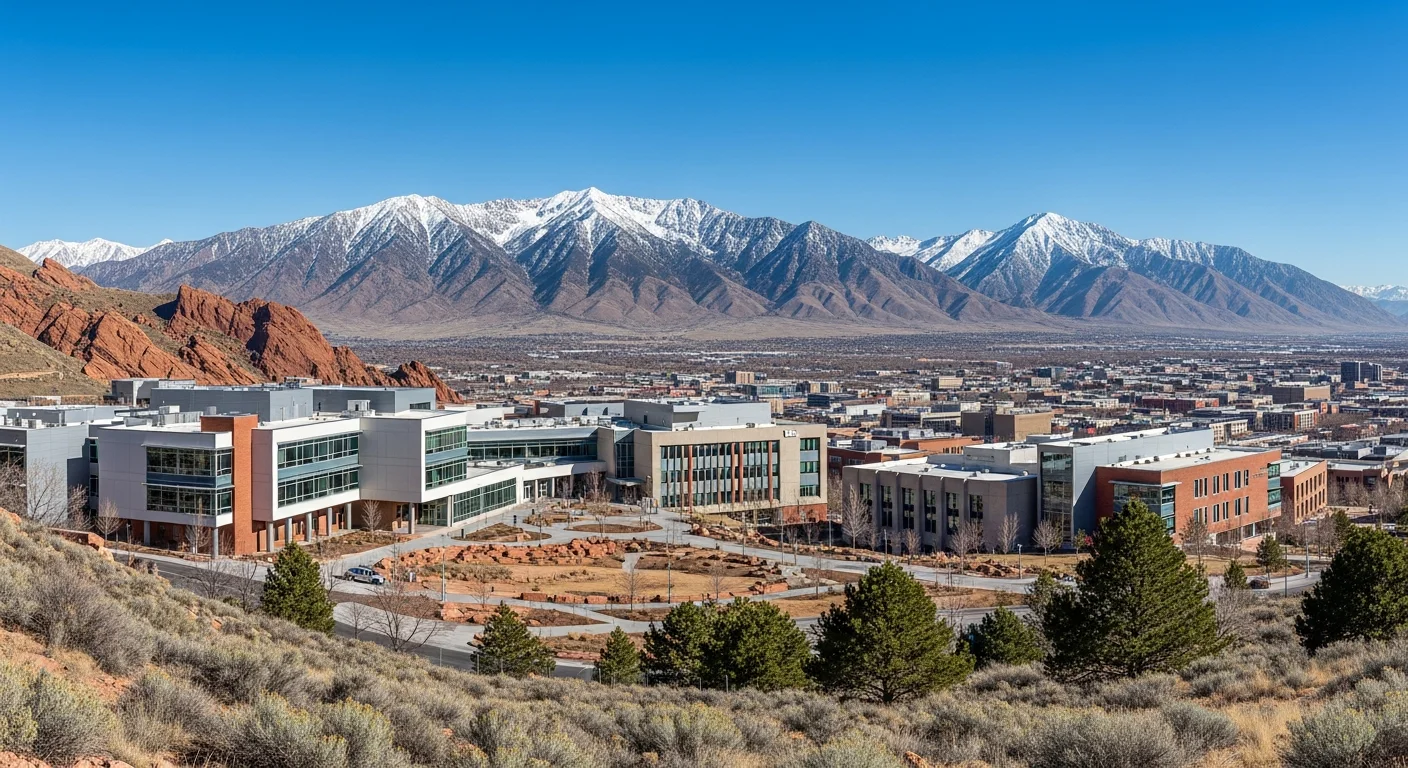
University campus in Utah
Updated July 13, 2026

Best Computer Engineering Degree Programs in Utah, 2026 Rankings

Compare the top computer engineering colleges in Utah. 11 accredited computer engineering schools ranked by graduation rate, career outcomes, and value, from Weber State University to Western Governors University.

#1 ProgramWestern Governors
Avg Salary$108,000
Tuition From$5,471/yr
Job Growth+22%
On this page
Reviewed by Taylor Rupe, Founder & EditorSee methodology

7

Programs ranked

IPEDS 2024

$108,000

Utah median computer engineering salary

BLS OEWS 2024

85.4/100

Top program score

Hakia methodology

5%

U.S. job growth (2023–33)

BLS projections

Key Takeaways

Best computer engineering degree programs: Western Governors, Brigham Young, Weber State

Ranked by graduation rates, program outcomes, and institutional quality

IPEDS 2024

Tuition ranges from $3,778 to $40,896/year

Weber State offers the most affordable option at $5,471/yr

IPEDS 2024

Computer Engineering degree programs available: 4 associate's, 5 master's, 3 doctoral in Utah

From community college pathways to advanced research degrees

IPEDS 2024

Utah community college transfer can save 40-60% on total degree costs

4 associate's programs provide transfer pathways to bachelor's degrees

Education Commission of the States

Major employers: Adobe, Qualtrics, Pluralsight, Domo

Tech hubs in Salt Lake City and Provo

Hakia Research 2026

Computer Engineering degree programs near 28+ cities across Utah

Search by city to find programs within 200 miles of your location

IPEDS 2024

Updated July 13, 2026

How we ranked Utah Computer Engineering programs

We rank 22 accredited computer engineering programs in Utah using IPEDS 2024 institutional data, BLS OEWS 2024 state salary data, and College Scorecard outcomes. A 4-factor weighted composite is normalized to a 0–100 score. Schools cannot pay for placement; rankings are produced algorithmically.

Program completions (35%)Graduation rate (25%)Selectivity (20%)Career outcomes (20%)
See full methodology

Are Computer Engineering Degree Programs in Utah Worth It?

Answer
$108,000
Yes. The best computer engineering degree programs in Utah deliver strong ROI, graduates earn $108,000 median salary with +22% job growth through 2032. In-state tuition averages $9,180/year.

Source: BLS OEWS May 2024

Computer Engineering Degree Rankings in Utah

Compare the top-ranked Computer Engineering programs in Utah by degree level. Tuition, graduation rate, and Hakia Score for every accredited program.

Best Associate's Computer Engineering Programs in Utah

1
Programs ranked
$3,928
Avg tuition/yr
29%
Avg grad rate

Program Landscape

Utah offers 4 accredited associate's degree programs in computer engineering, providing an affordable entry point into the technology field. The top-ranked programs include Weber State, Utah Valley, Snow College, which combine rigorous technical curriculum with practical skills training.

Costs & Value

Community colleges in Utah offer these two-year programs at an average cost of $4,761/yr, significantly less than four-year university tuition. Students completing associate's degrees can pursue entry-level technical positions and transfer opportunities, with entry-level salaries averaging $59,400 in Utah.

Career Pathways

Many programs feature guaranteed transfer agreements with Utah's public universities, allowing students to complete their first two years at reduced cost before transferring to complete a bachelor's degree. The Salt Lake City, Provo, Lehi areas offer particularly strong job markets for associate's degree holders, with employers like Adobe, Qualtrics, Pluralsight hiring for technical support, junior development, and IT specialist positions.

Curriculum & Specializations

Programs typically include coursework in programming fundamentals, database management, networking basics, and software development. Among computer engineering schools in Utah, these associate's programs offer the best value for students beginning their computer engineering degrees in Utah.

Best Bachelor's Computer Engineering Programs in Utah

5
Programs ranked
$6,843
Avg tuition/yr
59%
Avg grad rate

Program Landscape

Utah ranks among the nation's top destinations for computer engineering education, with 10 accredited bachelor's degree programs across 7 public and 3 private institutions. The highest-ranked programs are Western Governors, Brigham Young, Weber State, recognized for academic excellence, research opportunities, and strong industry connections.

Career Outcomes

Graduates from Utah computer engineering programs earn a median salary of $91,800, 6% below the national average. The state's robust technology sector, anchored by the Salt Lake City, Provo, Lehi metropolitan areas, provides abundant internship and employment opportunities with companies including Adobe, Qualtrics, Pluralsight.

Costs & Value

Tuition ranges from $4,180 to $40,896 annually, with an average of $9,720/yr. Top programs maintain graduation rates above 90%, with the highest reaching 100%. Many programs hold ABET accreditation, the gold standard for computing education, ensuring curriculum meets rigorous industry standards.

Curriculum & Specializations

Students can choose from specializations including software engineering, cybersecurity, artificial intelligence, data science, and systems architecture. Strong industry partnerships provide access to co-op programs, capstone projects with real companies, and direct recruiting pipelines to Utah's leading technology employers. For students seeking computer engineering degrees in Utah, these top-ranked computer engineering schools offer the strongest combination of academic rigor and career preparation.

Best Master's Computer Engineering Programs in Utah

1
Programs ranked
$7,627
Avg tuition/yr
59%
Avg grad rate

Program Landscape

Utah offers 5 master's degree programs in computer engineering, designed for professionals seeking to advance into senior engineering, technical leadership, and specialized roles. The top programs, U of Utah, Weber State, Brigham Young, combine advanced technical training with research opportunities and leadership development.

Career Outcomes

Master's graduates in Utah earn a median salary of $108,000, approximately 20-30% higher than bachelor's degree holders. The concentration of technology companies in Salt Lake City, Provo, Lehi creates strong demand for graduate-level talent, with Adobe, Qualtrics, Pluralsight actively recruiting from these programs.

Costs & Value

Program formats include traditional full-time study (typically 2 years), part-time options for working professionals (2-3 years), and accelerated tracks. Tuition averages $6,629/yr, with many employers offering tuition reimbursement for graduate education. Some programs offer thesis and non-thesis tracks, allowing students to focus on research or professional development based on their career goals.

Curriculum & Specializations

Curriculum covers advanced topics including machine learning, distributed systems, software architecture, and technical management. Many programs include practicum experiences, industry capstone projects, or consulting engagements that provide real-world application of advanced concepts. Among Utah's computer engineering schools at the graduate level, these programs stand out for both academic quality and career outcomes.

Computer Engineering Degree Costs & Tuition in Utah

MetricValue
Average in-state tuition$9,180/year
Average out-of-state tuition$22,950/year
Community college tuition$2,295/year
4-year savings for residents$55,080
2+2 transfer pathway savings$13,770

Source: IPEDS 2024

Financial Aid & Scholarships for Computer Engineering Students in Utah

State Aid Programs

Utah residents pursuing computer engineering degrees have access to several financial aid options designed to make higher education more affordable. The Utah Opportunity Scholarship provides both need- and merit-based awards specifically for Utah residents, making it a key resource for students across the state's 25 institutions offering computer engineering programs (Utah System of Higher Education). Additionally, federal financial aid through the Free Application for Federal Student Aid (FAFSA) is available to all eligible students, regardless of residency status. Students should complete their FAFSA as early as possible to maximize their eligibility for grants, loans, and work-study opportunities (Federal Student Aid).

Key Programs & Amounts

Many Utah institutions offering computer engineering degrees provide institutional scholarships and assistantships to qualified students. Top-ranked programs like Brigham Young University, University of Utah, and Utah State University offer competitive merit scholarships that can significantly reduce out-of-pocket costs. For students attending public four-year institutions in Utah, the average in-state tuition is $6,014 (IPEDS), making the state relatively affordable compared to national averages. Students should also explore employer sponsorships through major employers in the state, including Intermountain Healthcare, Goldman Sachs, and Adobe, many of which offer tuition reimbursement programs for technical degree holders. Visit the College Scorecard for institution-specific aid data and outcomes.

Computer Engineering Degree ROI Calculator, Utah

Use our interactive ROI calculator to estimate your return on investment for a computer engineering degree in Utah. Enter your expected tuition costs, financial aid, and career goals to see projected payback periods and lifetime earnings. The calculator uses current salary data from BLS and tuition data from IPEDS to provide accurate estimates.

Computer Engineering Degree ROI Calculator

Estimate your return on investment for a computer engineering degree

Leave blank to use average cost for selected program type

20 years
10 years20 years30 years
20-Year ROI

+907%

Net gain divided by total investment. ROI above 200% is considered excellent for education investments.

Net Gain

$1,677,254

Your additional lifetime earnings with this degree vs. working without one, minus the total investment.

Break-Even

5 years

Years until your cumulative earnings exceed total investment. Shorter programs often break even faster due to lower opportunity cost.

COL-Adjusted Salary

$133,333

Your starting salary adjusted for local cost of living. This shows real purchasing power compared to a $100K national baseline.

Why does break-even change with program type? Your "total investment" includes both tuition AND opportunity cost (foregone earnings while in school). A 4-year full-time public university (in-state) means 4 years of not earning a salary ($140,000 in opportunity cost). Shorter full-time programs may have higher tuition but lower total investment because you return to the workforce sooner.

Detailed Breakdown

How we calculate your degree ROI using real salary data

Total Investment$185,000

Tuition plus opportunity cost (earnings you miss while in school)

Program Cost (Tuition)$45,000

Direct cost of the degree program

Opportunity Cost$140,000

4 years × $35K/year foregone salary while studying full-time

20-Year Earnings (with degree)$2,712,662

Projected career earnings starting after graduation, with salary growth

20-Year Earnings (without degree)$850,408

What you'd earn working at $35K/year with 2% annual growth

Starting Salary (Austin, TX)$140,000

Median salary for this role in your selected location (BLS 2024)

Annualized Return4.9%

Your investment's compound annual growth rate (similar to stock market returns)

Data sources: BLS OEWS May 2024, IPEDS 2024. Calculations use median salaries, 3% discount rate, and assume salary growth declines from 6% to 2% over career. Individual results will vary. | Powered by Hakia.com

Computer Engineering Salaries by Metro Area

Median annual salary in Utah metro areas

Salt Lake City$119K
Provo$113K
Lehi$108K
View data table
CategoryValue
Salt Lake City$119K
Provo$113K
Lehi$108K

Source: BLS OEWS May 2024

Hakia.com

Top Employers Hiring Computer Engineering Graduates in Utah

Find computer engineering jobs in Utah. These major employers across Utah metro areas are actively hiring computer engineering degree holders. Click employer names to view current job openings.

Computer Engineering Jobs in Salt Lake City

UT
Adobe
tech
Goldman Sachs
finance
Pluralsight
edtech
Overstock.com
ecommerce

Computer Engineering Jobs in Provo

UT
Qualtrics
tech
Vivint
iot
Ancestry.com
tech

Computer Engineering Jobs in Lehi

UT
Domo
tech
MX Technologies
fintech
Podium
tech

Transfer Pathways for Computer Engineering Degrees in Utah

State Transfer System

Utah's transfer system is designed to streamline the pathway from community colleges to four-year universities, making it affordable and efficient for students to earn computer engineering degrees. The Utah System of Higher Education provides articulation agreements and transfer guides that outline specific coursework requirements for smooth transitions. Six two-year institutions in Utah, including Salt Lake Community College, Weber State University's college division, Utah Valley University, and Snow College, offer associate's degrees in computer engineering (Utah Transfer Guides). These programs align with bachelor's degree requirements, ensuring that credits transfer without loss and allowing students to complete their first two years at lower tuition costs (averaging $4,180 to $5,614 annually) before advancing to four-year institutions. This pathway is particularly valuable for students seeking affordability without compromising academic quality.

How Transfers Work

Major receiving institutions for computer engineering transfers include Brigham Young University, University of Utah, Utah State University, Weber State University, and Utah Valley University. Utah Valley University (#5 on the most affordable list at $5,614 tuition) and Weber State University ($5,471 tuition) are particularly popular transfer destinations, offering strong programs with competitive costs. The Utah Opportunity Scholarship (Utah Opportunity Scholarship) provides need- and merit-based financial aid to residents, further reducing transfer students' out-of-pocket costs. Prospective transfer students should meet with academic advisors at their community college to select courses aligned with specific bachelor's program requirements, review major-specific transfer pathways through Utah Transfer Guides, and explore related technical fields like Network Administration in Utah or Information Technology in Utah that may offer alternative or complementary career paths. The transfer route is an excellent strategy for controlling costs while accessing Utah's excellent engineering education.

Why Pursue a Computer Engineering Degree in Utah?

Industry & Workforce

Utah has established itself as a premier destination for computer engineering education, with 25 institutions offering programs across all degree levels (IPEDS). The state awarded 1,857 bachelor's degrees in computer engineering in 2023, reflecting strong enrollment and completion rates. Leading institutions like Brigham Young University, University of Utah, and Weber State University consistently rank among the nation's best, combining rigorous academics with practical industry experience. The concentration of top-tier programs across the Wasatch Front, spanning Salt Lake City, Provo, and Ogden, creates a dynamic educational ecosystem where students benefit from proximity to major tech employers and research opportunities.

Salary Outlook

Utah's tech economy presents exceptional career prospects for computer engineering graduates. The state hosts major employers including Adobe, Goldman Sachs, Intermountain Healthcare, and the University of Utah's own engineering divisions. Students graduating from Utah programs gain direct access to these employers through internships, research partnerships, and job placements. Public in-state tuition averages just $6,014 annually for four-year institutions, making Utah one of the most affordable states for engineering education (College Scorecard). With affordable tuition, strong academic programs, and a thriving tech corridor, Utah offers exceptional value for aspiring computer engineers seeking education without excessive debt. Explore related programs like Computer Science in Utah and Software Engineering in Utah to find your ideal pathway.

Computer Engineering Program Availability in Utah

11 Programs
Utah offers 11 accredited computer engineering programs across public universities, private colleges, and community colleges. Top tech hubs include Salt Lake City, Provo, Lehi.

Source: IPEDS 2024

Computer Engineering Job Market & Salary Data in Utah

Employment Outlook

Utah's computer engineering job market is experiencing strong growth, supported by a diverse and expanding technology sector across multiple metropolitan regions. The state has established itself as a significant hub for tech employment, with major concentrations in the Salt Lake City, Provo-Orem, and Ogden-Clearfield metro areas. According to the Bureau of Labor Statistics, Utah continues to attract technology professionals across various specializations, with computer engineering roles seeing steady demand across both established firms and emerging startups. The Salt Lake Valley region, in particular, has become a focal point for technology innovation and employment, drawing talent from across the nation.

Salaries by Metro

Major employers in Utah's computer engineering sector span healthcare, financial services, technology, and education industries. Companies like Goldman Sachs, Adobe, and Intermountain Healthcare actively recruit computer engineering graduates, creating substantial career pathways for degree holders. The Provo-Orem metro area, home to Brigham Young University and Utah Valley University, serves as a secondary tech hub with significant employer presence. Additionally, the University of Utah and Weber State University in the Salt Lake City and Davis County regions respectively contribute to a strong pipeline of talent meeting regional employer demand. Career opportunities extend across cities including Salt Lake City, West Valley City, Provo, West Jordan, Orem, Sandy, Ogden, and St. George, each offering distinct employment landscapes. For detailed salary and employment projections specific to Utah, consult the BLS occupational data and explore national best practices in computer engineering.

Entry-Level (0-2 yrs)

New graduates and career changers

Senior (8+ yrs)

Technical leads and architects

Median Salary in Utah$70,200$156,600
Typical RolesJunior Developer, AnalystStaff Engineer, Architect
Remote Work AccessLimitedCommon
Degree ExpectationBachelor's sufficientMaster's preferred

Online vs On-Campus Computer Engineering Programs in Utah

Online Programs

0 available in Utah

On-Campus Programs

Traditional classroom experience

Typical Tuition$8,262/yr$9,180/yr
Schedule FlexibilitySelf-paced or asyncFixed schedule
NetworkingVirtual cohortsIn-person, career fairs
Best ForWorking professionalsTraditional students
Completion Time2-4 years (flexible)4 years (standard)

Compare Computer Engineering Programs in Other States

Computer Engineering Degree Programs in Utah: FAQ

What are the best computer engineering degree programs in Utah?
The best computer engineering degree programs in Utah based on our methodology are: 1) Western Governors University (highly ranked), 2) Brigham Young University, and 3) Weber State University. Our rankings weight graduation rates (25%), program completions (35%), selectivity (20%), and career outcomes (20%). Utah offers 11 total accredited programs across 8 public and 3 private institutions. See our complete rankings for all 10 bachelor's programs.
How much do computer engineering degree programs cost in Utah?
Computer Engineering degree program costs in Utah vary significantly by institution type. In-state public tuition averages $9,180/year, while private institutions average $20,196/year. Community colleges offer the most affordable path at approximately $2,295/year for associate's degrees. The total 4-year cost ranges from $36,720 at public schools to $80,784 at private institutions before financial aid. Most students don't pay full sticker price, federal grants, state aid, and institutional scholarships can reduce costs by 30-60%.
What salary can computer engineering degree graduates earn in Utah?
Computer Engineering professionals in Utah earn a median salary of $108,000, which is competitive with the national average of $115,500. Entry-level positions typically start around $70,200, while senior roles exceed $156,600. Salaries vary by metro area: Salt Lake City ($118,800), Provo ($113,400) offer the highest compensation. Specialized roles like AI/ML engineers and cloud architects command premiums of 15-30% above median.
Are there online computer engineering degree programs in Utah?
Yes, Utah offers 0 accredited online Computer Engineering programs from state institutions. These programs award the same degree as on-campus options and include synchronous and asynchronous formats. Top-ranked online programs include offerings from various state universities. Online programs typically cost the same as on-campus tuition for in-state students. Many programs offer flexible scheduling for working professionals, with some offering accelerated completion in 2-3 years. Ensure any online program holds regional accreditation and ideally ABET accreditation for engineering programs.
What companies hire computer engineering degree graduates in Utah?
Major Computer Engineering employers in Utah include Adobe, Qualtrics, Pluralsight, Domo, Recursion. The Salt Lake City and Provo metro areas serve as primary tech hubs with thousands of open positions. Top employers maintain recruiting pipelines directly from Utah universities, with many offering internship-to-hire programs. Beyond tech giants, opportunities exist in healthcare IT, financial services, defense contractors, and growing startups. Utah's tech sector shows +22% projected job growth through 2033, outpacing most other industries.
Is a computer engineering degree program worth it in Utah?
A computer engineering degree program in Utah offers strong ROI with a $108,000 median salary and +22% projected job growth. At average in-state tuition of $9,180/year, graduates typically recoup their educational investment within 3-5 years. The degree opens doors to high-paying careers in software development ($122,040), data science, cybersecurity, and AI/ML. Beyond salary, benefits include job security, remote work flexibility, and clear advancement paths. Alternative paths like bootcamps exist for career changers, but bachelor's degrees provide broader career options and higher lifetime earnings.
How long do computer engineering degree programs take in Utah?
Standard completion times for computer engineering degree programs in Utah are: Associate's (2 years, 60 credits), Bachelor's (4 years, 120 credits), and Master's (1-2 years, 30-36 credits). However, actual timelines vary based on course load, transfer credits, and program format. Accelerated programs can compress a bachelor's to 3 years or a master's to 12 months. Part-time students typically need 5-6 years for a bachelor's degree. Utah community colleges offer a cost-effective "2+2" path: complete your associate's in 2 years, then transfer to a Utah university for the final 2 years of a bachelor's program.
What financial aid is available for computer engineering degree students in Utah?
Utah computer engineering degree students can access multiple financial aid sources. Federal aid includes Pell Grants (up to $7,395/year for qualifying students) and federal student loans. Utah state grants provide additional support for residents attending in-state schools. Institutional scholarships from universities can significantly reduce costs, many schools offer merit-based awards for STEM students. Work-study programs and teaching/research assistantships (especially for graduate students) provide income while building experience. Complete the FAFSA by Utah's priority deadline to maximize aid eligibility. Some employers also offer tuition reimbursement for employees pursuing CS degrees.

Data Sources

Institutional characteristics, completions, graduation rates

Utah salary and employment data

Official University Websites

Program details and admissions information

Last Updated: June 26, 2026. Rankings based on IPEDS 2024 data. Salary data from BLS OEWS May 2024.

Was this ranking helpful for your college search?
Taylor Rupe

Taylor Rupe

Co-founder & Editor (B.S. Computer Science, Oregon State • B.A. Psychology, University of Washington)

Taylor combines technical expertise in computer science with a deep understanding of human behavior and learning. His dual background drives Hakia's mission: leveraging technology to build authoritative educational resources that help people make better decisions about their academic and career paths.

The research behind the rankings

In-depth Computer Engineering program profiles in Utah

Hand-researched detail on the top-ranked programs: degree pathways, research labs, industry partners, career outcomes, and admissions. Tap any school to expand.

Best Associate's Computer Engineering programs

#1Salt Lake Community CollegeSalt Lake City, UT

Hakia insight. SLCC's employer network (Adobe, Goldman Sachs, State of Utah IT) spans both creative tech and financial services infrastructure, giving associate's graduates unusual optionality across industry verticals most community college programs don't reach.

At the associate's level, you'll build real hands-on skills in hardware troubleshooting, networking, and systems administration through SLCC's computer engineering program, with direct pathways into Utah's tech workforce or transfer to four-year universities. The program emphasizes practical lab experience alongside theoretical foundations, preparing you for immediate employment as a technician or IT support specialist while keeping doors open for bachelor's-level advancement. Many graduates stay local and move into positions at major employers like Adobe, Goldman Sachs, and state government IT departments that actively recruit from SLCC, or transfer to University of Utah or Utah State to complete engineering degrees with junior-level standing.

Programs offered

  • Associate of Science in Computer Engineering · 2 years · on-campus
  • Associate of Applied Science in Computer Engineering · 2 years · online

Career outcomes

Top employers: Adobe, Goldman Sachs, State of Utah IT departments, University of Utah IT, Local healthcare IT departments, Regional financial institutions

Best Bachelor's Computer Engineering programs

#1Brigham Young UniversityProvo, UT

Why it stands out. BYU integrates undergraduate research and industry-sponsored capstone projects throughout the curriculum, enabling students to build publication-quality work alongside rigorous theoretical training.

Hakia insight. BYU students regularly co-author publication-quality work through industry-sponsored capstones with Zebra, iRobot, and Space Dynamics Lab during their undergraduate years—a research credential most peers won't have until grad school.

At the bachelor's level, BYU's computer engineering program is distinguished by its integration of rigorous theoretical coursework with sustained research opportunities, where even undergraduate students often contribute to faculty-led projects in areas like robotics, wireless communication, and power systems. The curriculum structure deliberately weaves together advanced mathematics, signal processing, and digital design with real-world applications—you'll study electromagnetics alongside antenna design, control theory alongside autonomous vehicle projects. Faculty maintain strong connections to industry and conduct externally funded research; undergraduates benefit by working on problems that matter beyond the classroom, whether that's optimizing drone flight controllers or designing fault-tolerant communication networks. The program's capstone sequence is notably ambitious: many teams tackle projects with genuine industrial sponsors, and some results have been published in peer-reviewed venues. BYU's scale—large enough to support sophisticated labs and diverse faculty expertise, yet small enough that professors know students by name—creates a rare environment for mentorship. The university's location in the Provo tech ecosystem and extensive alumni network in Silicon Valley and regional tech hubs opens pathways to internships and permanent roles at companies actively recruiting BYU graduates. Graduates emerge with both strong fundamentals and a portfolio of meaningful design projects, making them highly competitive for roles in hardware startups, defense contractors, and tech companies seeking engineers who can hit the ground running.

Programs offered

  • Bachelor of Science in Computer Engineering · 4 years · on-campus
  • Bachelor of Arts in Computer Engineering · 4 years · online

Research labs & institutes

  • Robotics and Dynamics Laboratory — Robotics, autonomous systems, and control
  • Communications and Signal Processing Laboratory — Wireless systems and signal processing
  • Power Electronics and Renewable Energy Laboratory — Power conversion and renewable systems

Industry partners

Zebra TechnologiesSpace Dynamics LaboratoryiRobot

Notable faculty

  • null (Robotics and control systems)
  • null (Wireless communication and signal processing)

Admissions

GPA 3.0. Deadline Fall: January 15, Winter: August 15.

Accreditation & certifications

ABET Engineering Accreditation Commission

Location advantage: Located in Provo tech hub with strong connections to Silicon Valley Proximity to aerospace and defense contractors Extensive alumni network in technology sector

#2University of UtahSalt Lake City, UT

Why it stands out. U of Utah's computer engineering program stands out for its research-driven curriculum and integration with a vibrant Salt Lake City tech community, creating dual pathways into both industry and academia.

Hakia insight. University of Utah's dual pathways into both the Kahlert School of Computing and Salt Lake City's hyperscaler ecosystem (Google, Microsoft, Adobe offices) give you research credentials and immediate industry access in the same degree, eliminating the typical choice between academia and industry.

At the bachelor's level, the University of Utah's computer engineering program leverages the school's research-intensive mission and Salt Lake City's robust tech ecosystem to offer students dual pathways into either industry-focused roles or graduate research. The curriculum emphasizes signal processing, computer architecture, and systems design, with particular strength in areas like VLSI and digital signal processing—fields where the program has built genuine research depth. Students benefit from proximity to major tech employers (Adobe, Workiva, and numerous startups) and access to research opportunities through the university's engineering colleges and centers; many undergraduates publish or present work before graduating. The program attracts faculty with active NSF and industry-funded research agendas, meaning classroom instruction naturally incorporates current research problems and methodologies. Graduates succeed in both startup environments and large-scale systems roles at companies like Google, Microsoft, and Intel, with the program's research culture preparing those interested in doctoral work to pursue competitive PhD programs.

Programs offered

  • Bachelor of Science in Computer Engineering · 4 years · on-campus
  • Bachelor of Arts in Computer Engineering · 4 years · online

Research labs & institutes

  • Kahlert School of Computing — Computing research across systems, architecture, and design

Industry partners

AdobeWorkivaMicrosoftGoogleIntel

Career outcomes

Top employers: Google, Microsoft, Intel, Adobe

Admissions

GPA 3.0+ Cumulative GPA (3.5+ recommended).

Accreditation & certifications

ABET accredited

Location advantage: Salt Lake City tech hub with major employers (Adobe, Workiva, Microsoft, Google) Access to startup ecosystem and emerging companies

#3Utah Valley UniversityOrem, UT

Why it stands out. UVU's program emphasizes industry-aligned capstone projects and faculty with active careers in engineering, ensuring curriculum and mentorship reflect current marketplace demands.

Hakia insight. UVU's faculty maintain active careers outside academia while teaching, ensuring your capstone mentorship reflects current market demands rather than academic trends from five years ago.

At the bachelor's level, UVU's computer engineering program thrives on applied learning and industry alignment, with curriculum shaped by regular feedback from employers in the Wasatch technology corridor and beyond. The program emphasizes practical skills alongside theory: students design and prototype circuits, program microcontrollers, work with FPGAs, and tackle real embedded systems challenges in well-resourced labs. The faculty intentionally maintain connections to industry—many teach part-time while working in engineering roles—bringing current project examples and hiring networks directly into the classroom. UVU's capstone sequence pairs students with actual company problems, whether that's optimizing power consumption in IoT devices, designing control systems for manufacturing equipment, or developing diagnostic firmware for medical instruments; this pipeline means employers see student work in action and often hire before graduation. The program's growth has attracted increasingly sophisticated equipment and expanded faculty expertise in robotics, wireless systems, and embedded platforms. Because UVU serves many non-traditional students—working adults, career-changers, students with family obligations—the program offers flexibility in pacing and delivery while maintaining rigor; you're learning alongside peers who bring real-world experience into group projects. Graduates report high satisfaction with job readiness and rapid advancement into senior technical roles, a testament to the program's focus on skills that matter immediately in the marketplace. If you want an engineering education grounded in current industry practice, taught by instructors actively working in the field, UVU delivers that directly.

Programs offered

  • Bachelor of Science in Computer Engineering · 4 years · on-campus
  • Bachelor of Arts in Computer Engineering · 4 years · online

Career outcomes

Top employers: United States Air Force

Accreditation & certifications

ABET Engineering Accreditation Commission

Location advantage: Located in Utah Valley tech corridor with strong employer connections Access to internships and permanent positions with regional technology companies

#4Utah State UniversityLogan, UT

Why it stands out. Capstone design project requirement during senior year. Concurrent bachelor's/master's program option allowing graduate coursework during senior year

Hakia insight. Utah State's concurrent bachelor's/master's option lets you compress two degrees while still accessing ATK and NASA partnership projects, an acceleration path that typically requires reapplication and re-credentialing at most universities.

The Computer Engineering BS program at Utah State University combines programming software and hardware with electronics and circuits knowledge. Students design and build computers, workstations, and computer-based systems for various applications. The program is accredited by EAC-ABET and requires completion of a capstone design project during senior year. The Electrical and Computer Engineering Department ranks in the top 100 nationally according to U.S. News & World Report. Graduates achieve nearly 100% job placement with among the highest starting salaries of all degree programs at USU. The program offers a concurrent bachelor's/master's option, allowing students to begin graduate coursework during their senior year and complete both degrees concurrently over two years. Career opportunities span software publishing, computer systems design, telecommunications, quality control, and both private and government sectors.

Programs offered

  • Computer Engineering - BS · 4 years · on-campus

Research labs & institutes

  • Utah State University Embedded Systems Lab — Embedded systems, IoT, autonomous systems

Industry partners

ATK (Alliant Techsystems)NASA

Admissions

GPA 2.7 high school GPA or 2.8 transfer GPA. Deadline Fall: January 1, Spring: July 1.

Accreditation & certifications

ABET accredited

Location advantage: Proximity to aerospace and defense contractors (ATK, NASA facilities) Access to Utah's growing tech corridor

#5Weber State UniversityOgden, UT

Why it stands out. Weber State emphasizes hands-on laboratory experience and capstone projects with real industrial applications, positioning graduates for immediate impact in embedded systems and control engineering roles.

Hakia insight. Weber State's embedded systems focus combined with Hill Air Force Base proximity creates a rare pipeline where capstone projects directly feed into post-graduation roles in control systems and power electronics with security clearance pathways already in place.

At the bachelor's level, weber State's computer engineering program builds strength through hands-on laboratory work and capstone projects that require students to design and build real systems—power supplies, motor controllers, robotics platforms, and signal processing applications. The curriculum balances analog and digital domains with particular emphasis on embedded systems, giving graduates a competitive edge in the industrial automation and IoT sectors that dominate the broader Wasatch region. Faculty maintain active research in areas like renewable energy conversion, autonomous systems, and wireless sensor networks, and undergraduates gain direct involvement through senior design partnerships. The program benefits from Weber State's location near manufacturing hubs and tech companies; internship pipelines connect students to positions in robotics, control systems, and hardware development at firms throughout northern Utah. Class sizes remain manageable, meaning you get meaningful mentorship from instructors who know your strengths and can guide you toward specialized research opportunities or industry projects. The on-campus labs—well-equipped with oscilloscopes, logic analyzers, FPGA boards, and embedded development kits—feel less like teaching spaces and more like working engineering environments where you solve real problems. Graduates frequently move into roles in industrial IoT, renewable energy systems, and precision manufacturing, leveraging both their technical depth and the practical troubleshooting mindset the program instills.

Programs offered

  • Bachelor of Science in Computer Engineering · 4 years · on-campus
  • Bachelor of Arts in Computer Engineering · 4 years · online

Research labs & institutes

  • Renewable Energy and Power Electronics Laboratory — Power conversion and renewable energy systems

Industry partners

Hill Air Force BaseAutoliv

Accreditation & certifications

ABET accredited

Location advantage: Proximity to Hill Air Force Base and northern Utah manufacturing/tech corridor Access to industrial internship opportunities in control systems and robotics

Best Master's Computer Engineering programs

#1Utah State UniversityLogan, UT

Why it stands out. Two track options: Plan A thesis-based for PhD preparation/research careers, Plan B project-based for industry design roles. Plan A requires 6 credits thesis research, Plan B requires 3 credits design project plus 3 credits thesis research

Hakia insight. Utah State's Plan B (project-based, non-thesis) explicitly requires only 3 credits of thesis research alongside design work—the lowest thesis burden among peer programs—making it genuinely accessible for working engineers at ATK and NASA who need a degree without a 12-month research commitment.

The Master of Science in Computer Engineering at Utah State University is a research-based degree offering two distinct tracks for working professionals. Plan A is thesis-focused, designed for those pursuing PhD programs or research careers in industry/government labs, requiring 24 credit hours of coursework plus 6 credits of thesis research. Plan B emphasizes practical engineering design with a formal project report, ideal for advanced industry design roles, requiring 24 credit hours plus 3 credits each of design project and thesis research. Both tracks require 30 total credits with a 3.0 GPA minimum and offer substantial coursework in core computer engineering sequences. The program allows up to 1 credit of industry internship that directly relates to research, providing real-world application. Students must complete at least 12 credits in electrical/computer engineering with advanced 6000/7000-level coursework, ensuring deep technical expertise for career advancement in engineering leadership roles.

Programs offered

  • Master of Science in Computer Engineering · 1-2 years · on-campus

Research labs & institutes

  • Utah State University Embedded Systems Lab — Embedded systems, IoT, autonomous systems

Industry partners

ATK (Alliant Techsystems)NASA

Career outcomes

Top employers: ATK, NASA, Lockheed Martin

Admissions

GPA 2.7 high school GPA or 2.8 transfer GPA. Deadline Fall: January 1, Spring: July 1.

Accreditation & certifications

ABET accredited

Location advantage: Proximity to aerospace and defense contractors (ATK, NASA facilities) Access to Utah's growing tech corridor