🥇
$12,260
Tuition/yr
93%
Grad rate
95.9
Hakia Score
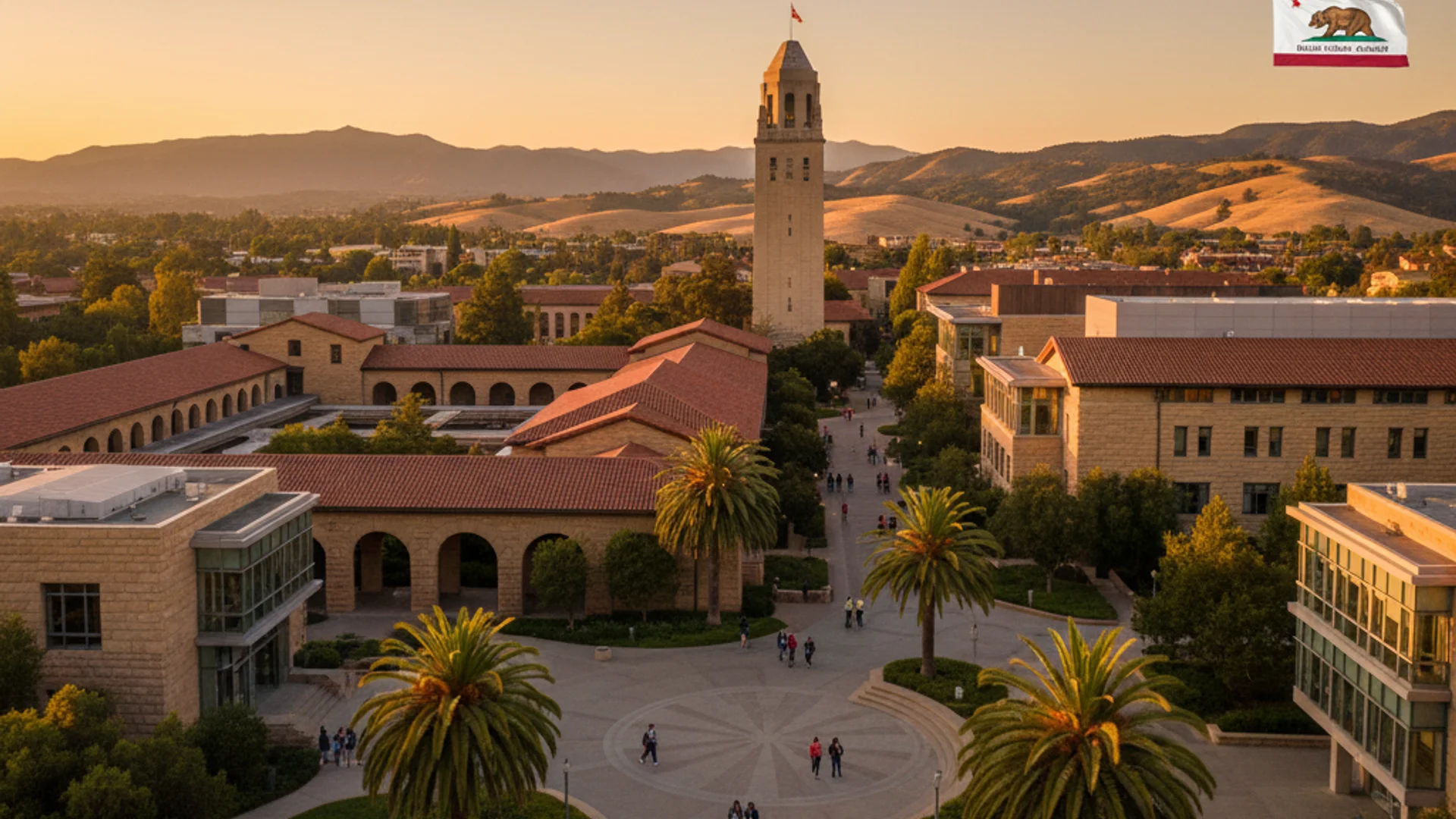
Compare the top computer engineering colleges in California. 134 accredited computer engineering schools ranked by graduation rate, career outcomes, and value, from De Anza College to University of California-Berkeley.
Best computer engineering degree programs: UC Berkeley, U of California-Irvine, U of California-San Diego
Ranked by graduation rates, program outcomes, and institutional quality
Tuition ranges from $1,104 to $66,640/year
De Anza College offers the most affordable option at $1,395/yr
Computer Engineering degree programs available: 72 associate's, 40 master's, 16 doctoral in California
From community college pathways to advanced research degrees
27 online computer engineering degree programs in California
Flexible scheduling for working professionals
California community college transfer can save 40-60% on total degree costs
72 associate's programs provide transfer pathways to bachelor's degrees
Education Commission of the States
Major employers: Google, Apple, Meta, Netflix
Tech hubs in San Francisco and San Jose
Hakia Research 2026
Computer Engineering degree programs near 230+ cities across California
Search by city to find programs within 200 miles of your location
Updated October 19, 2026
We rank 187 accredited computer engineering programs in California using IPEDS 2024 institutional data, BLS OEWS 2024 state salary data, and College Scorecard outcomes. A 4-factor weighted composite is normalized to a 0–100 score. Schools cannot pay for placement; rankings are produced algorithmically.
Are Computer Engineering Degree Programs in California Worth It?
Source: BLS OEWS May 2024
Compare the top-ranked Computer Engineering programs in California by degree level. Tuition, graduation rate, and Hakia Score for every accredited program.
California ranks among the nation's top destinations for computer engineering education, with 59 accredited bachelor's degree programs across 31 public and 26 private institutions. The highest-ranked programs are UC Berkeley, U of California-Irvine, U of California-San Diego, recognized for academic excellence, research opportunities, and strong industry connections.
Graduates from California computer engineering programs earn a median salary of $123,905, 26% above the national average. The state's robust technology sector, anchored by the San Francisco, San Jose, Los Angeles metropolitan areas, provides abundant internship and employment opportunities with companies including Google, Apple, Meta.
Tuition ranges from $5,742 to $66,640 annually, with an average of $26,893/yr. Top programs maintain graduation rates above 91%, with the highest reaching 100%. Many programs hold ABET accreditation, the gold standard for computing education, ensuring curriculum meets rigorous industry standards.
Students can choose from specializations including software engineering, cybersecurity, artificial intelligence, data science, and systems architecture. Strong industry partnerships provide access to co-op programs, capstone projects with real companies, and direct recruiting pipelines to California's leading technology employers. For students seeking computer engineering degrees in California, these top-ranked computer engineering schools offer the strongest combination of academic rigor and career preparation.
| Rank | School | Location | Type | Tuition | Grad Rate | Hakia Score |
|---|---|---|---|---|---|---|
| #6 | University of California-Davis | Davis, CA | Public | $12,260 | 86% | 91.7 |
| #7 | San Diego State University | San Diego, CA | Public | $6,084 | 76% | 90.8 |
| #8 | University of California-Santa Barbara | Santa Barbara, CA | Public | $12,260 | 83% | 90.2 |
| #9 | Santa Clara University | Santa Clara, CA | Private nonprofit | $60,639 | 88% | 88.2 |
| #10 | California State University-Long Beach | Long Beach, CA | Public | $6,084 | 69% | 85.9 |
| #11 | University of California-Santa Cruz | Santa Cruz, CA | Public | $12,260 | 75% | 83.1 |
| #12 | University of California-Riverside | Riverside, CA | Public | $12,260 | 76% | 80.8 |
| #13 | Chapman University | Orange, CA | Private nonprofit | $64,580 | 82% | 80.5 |
| #14 | California State Polytechnic University-Pomona | Pomona, CA | Public | $6,084 | 68% | 79.8 |
| #15 | San Jose State University | San Jose, CA | Public | $6,084 | 69% | 77.4 |
| #16 | University of the Pacific | Stockton, CA | Private nonprofit | $56,140 | 69% | 75.5 |
| #17 | California State University-Fullerton | Fullerton, CA | Public | $6,084 | 70% | 75.4 |
| #18 | University of California-Merced | Merced, CA | Public | $12,260 | 69% | 71.0 |
| #19 | California State University-Northridge | Northridge, CA | Public | $6,084 | 57% | 68.7 |
| #20 | California State University-Sacramento | Sacramento, CA | Public | $6,084 | 56% | 68.2 |
| #21 | California State University-Chico | Chico, CA | Public | $6,084 | 63% | 66.8 |
| #22 | California State University-San Bernardino | San Bernardino, CA | Public | $6,084 | 55% | 66.2 |
| #23 | The Master's University and Seminary | Santa Clarita, CA | Private nonprofit | $38,000 | 68% | 66.2 |
| #24 | California State University-Fresno | Fresno, CA | Public | $6,084 | 57% | 65.9 |
| #25 | San Francisco State University | San Francisco, CA | Public | $6,084 | 50% | 63.6 |
| #26 | California State University-Bakersfield | Bakersfield, CA | Public | $6,084 | 50% | 61.1 |
| #27 | California State University-East Bay | Hayward, CA | Public | $6,084 | 48% | 61.0 |
California offers 40 master's degree programs in computer engineering, designed for professionals seeking to advance into senior engineering, technical leadership, and specialized roles. The top programs, U of Southern California, U of California-San Diego, UCLA, combine advanced technical training with research opportunities and leadership development.
Master's graduates in California earn a median salary of $145,770, approximately 20-30% higher than bachelor's degree holders. The concentration of technology companies in San Francisco, San Jose, Los Angeles creates strong demand for graduate-level talent, with Google, Apple, Meta actively recruiting from these programs.
Program formats include traditional full-time study (typically 2 years), part-time options for working professionals (2-3 years), and accelerated tracks. Tuition averages $18,300/yr, with many employers offering tuition reimbursement for graduate education. Some programs offer thesis and non-thesis tracks, allowing students to focus on research or professional development based on their career goals.
Curriculum covers advanced topics including machine learning, distributed systems, software architecture, and technical management. Many programs include practicum experiences, industry capstone projects, or consulting engagements that provide real-world application of advanced concepts. Among California's computer engineering schools at the graduate level, these programs stand out for both academic quality and career outcomes.
| Rank | School | Location | Type | Tuition | Grad Rate | Hakia Score |
|---|---|---|---|---|---|---|
| #6 | University of California-Riverside | Riverside, CA | Public | $12,260 | 76% | 77.5 |
| #7 | San Jose State University | San Jose, CA | Public | $6,084 | 69% | 74.6 |
| #8 | University of California-Santa Cruz | Santa Cruz, CA | Public | $12,260 | 75% | 74.0 |
| #9 | California State University-Fullerton | Fullerton, CA | Public | $6,084 | 70% | 72.2 |
| #10 | California State University-Northridge | Northridge, CA | Public | $6,084 | 57% | 65.8 |
| #11 | California State University-Sacramento | Sacramento, CA | Public | $6,084 | 56% | 62.2 |
| #12 | Sonoma State University | Rohnert Park, CA | Public | $6,084 | 58% | 62.0 |
| #13 | California State University-Fresno | Fresno, CA | Public | $6,084 | 57% | 61.2 |
| #14 | San Francisco State University | San Francisco, CA | Public | $6,084 | 50% | 60.0 |
California is home to 16 doctoral programs in computer engineering, preparing students for research positions, faculty appointments, and executive technical roles. Leading programs at U of Southern California, UC Berkeley, UCLA are recognized for cutting-edge research, strong faculty publications, and competitive funding packages.
Doctoral graduates command premium salaries, with California PhD holders earning a median of $182,213, reflecting the advanced expertise required for research and executive positions. The San Francisco, San Jose, Los Angeles region's research universities and corporate R&D centers provide extensive collaboration opportunities with industry leaders like Google, Apple, Meta.
PhD programs typically require 4-6 years of full-time study, including coursework, qualifying examinations, and original dissertation research. Many programs offer full funding through teaching or research assistantships, covering tuition and providing stipends of $25,000–$40,000 annually.
Research strengths across California programs include artificial intelligence, cybersecurity, human-computer interaction, systems, and theoretical computer science. For aspiring researchers pursuing computer engineering degrees in California, graduates go on to careers as university faculty, industry research scientists, or technical executives, contributing to advances in technology that impact millions of users worldwide.
| Rank | School | Location | Type | Tuition | Grad Rate | Hakia Score |
|---|---|---|---|---|---|---|
| #6 | University of California-Santa Cruz | Santa Cruz, CA | Public | $12,260 | 75% | 70.1 |
| Metric | Value |
|---|---|
| Average in-state tuition | $13,168/year |
| Average out-of-state tuition | $32,920/year |
| Community college tuition | $3,292/year |
| 4-year savings for residents | $79,008 |
| 2+2 transfer pathway savings | $19,752 |
Source: IPEDS 2024
California's comprehensive financial aid system supports engineering students.
The Cal Grant program provides need-based aid covering tuition at UC, CSU, and qualifying private institutions. Cal Grant A covers tuition and fees for students with demonstrated financial need and strong academics. Cal Grant B provides a living allowance plus tuition after the first year for the neediest students. The Middle Class Scholarship (MCS) covers remaining costs for families with incomes up to $234,000 at UC, CSU, or California Community College bachelor's programs (California Student Aid Commission). Engineering students are eligible for all standard state aid programs.
Engineering-specific scholarships provide additional support:
Institutional engineering scholarships are substantial.
UC Berkeley's College of Engineering offers merit-based scholarships for exceptional students, with some providing full tuition coverage. Stanford's financial aid program ensures families earning under $100,000 pay no tuition. Cal Poly's learn-by-doing scholarships support students in project-based learning experiences. Private universities like USC and Santa Clara often provide significant merit-based aid to attract top engineering talent. Apply early, engineering scholarship deadlines often fall in November-December, well before regular admission deadlines. Complete the FAFSA starting October 1 to maximize federal, state, and institutional aid eligibility.
Estimate your return on investment for a computer engineering degree
Leave blank to use average cost for selected program type
+1378%
Net gain divided by total investment. ROI above 200% is considered excellent for education investments.
$2,549,181
Your additional lifetime earnings with this degree vs. working without one, minus the total investment.
5 years
Years until your cumulative earnings exceed total investment. Shorter programs often break even faster due to lower opportunity cost.
$102,778
Your starting salary adjusted for local cost of living. This shows real purchasing power compared to a $100K national baseline.
Why does break-even change with program type? Your "total investment" includes both tuition AND opportunity cost (foregone earnings while in school). A 4-year full-time public university (in-state) means 4 years of not earning a salary ($140,000 in opportunity cost). Shorter full-time programs may have higher tuition but lower total investment because you return to the workforce sooner.
How we calculate your degree ROI using real salary data
Tuition plus opportunity cost (earnings you miss while in school)
Direct cost of the degree program
4 years × $35K/year foregone salary while studying full-time
Projected career earnings starting after graduation, with salary growth
What you'd earn working at $35K/year with 2% annual growth
Median salary for this role in your selected location (BLS 2024)
Your investment's compound annual growth rate (similar to stock market returns)
Data sources: BLS OEWS May 2024, IPEDS 2024. Calculations use median salaries, 3% discount rate, and assume salary growth declines from 6% to 2% over career. Individual results will vary. | Powered by Hakia.com
Median annual salary in California metro areas
| Category | Value |
|---|---|
| San Francisco | $160K |
| San Jose | $153K |
| Los Angeles | $146K |
| San Diego | $138K |
Source: BLS OEWS May 2024
Hakia.com
Find computer engineering jobs in California. These major employers across California metro areas are actively hiring computer engineering degree holders. Click employer names to view current job openings.
Silicon Valley remains the global center of tech innovation. Headquarters for Google, Apple, Meta, and thousands of startups.
Nearby cities: San Jose, Palo Alto, Mountain View, Sunnyvale, Santa Clara, Cupertino, Menlo Park, Redwood City
San Francisco is a major fintech and enterprise software hub. Salesforce Tower anchors a dense tech ecosystem.
Nearby cities: Oakland, Berkeley, Daly City, South San Francisco, San Mateo, Fremont
LA has a diverse tech scene spanning entertainment tech, aerospace, and ecommerce. SpaceX and Snap are headquartered here.
Nearby cities: Santa Monica, Culver City, Burbank, Pasadena, Long Beach, Irvine, El Segundo
San Diego is a biotech and defense technology hub. Qualcomm is headquartered here alongside major military contractors.
Nearby cities: La Jolla, Carlsbad, Chula Vista, Oceanside, Escondido, El Cajon
California concentrates roughly a third of all U.S. venture capital investment and houses the headquarters of every company in the top five U.S. tech market caps. For a CS graduate, that translates into denser-than-anywhere hiring pipelines — but it also means the supply of CS graduates is unusually large, and competition for entry-level roles at named employers is intense.
San Francisco, San Jose, Oakland, Berkeley
Global center for consumer internet, AI/ML research, and high-growth software startups. Entry-level total compensation at named employers regularly clears $200,000 for new bachelor's graduates from top programs.
Los Angeles County
Quieter but substantial tech market centered on entertainment-tech (Netflix, Disney Streaming, Riot, Activision-Blizzard), aerospace-adjacent software (SpaceX, Anduril, Northrop), and emerging fintech and consumer-app clusters.
San Diego County
Smaller but dense in defense, biotech-adjacent software, and Qualcomm-anchored wireless engineering.
California does not levy a separate state-level tech tax credit at scale; the federal R&D credit is the relevant lever for most tech employers.
Several California laws directly shape what CS graduates work on — particularly anyone joining a privacy, security, data, or AI team. These create both job market demand (compliance is a substantial employer concern) and constrain technical decisions in ways federal law does not.
Strongest US state privacy law. Requires explicit consumer rights around data access, deletion, and sale opt-out for any business serving California residents at scale.
Engineers joining privacy, data, or security teams at California employers engage with CCPA daily.
Read moreRequires data minimization, default privacy protections, and impact assessments for online products likely to be accessed by minors.
Drove significant engineering work at every consumer internet company headquartered in California.
Read moreCalifornia has issued executive-branch guidance on generative AI in state government and is the most active US state legislature on AI policy.
Engineers building AI products serving California users should expect material compliance overhead.
Read moreFirst US state privacy enforcement agency. Issues regulations under CCPA/CPRA and brings enforcement actions.
Tech-adjacent compliance work has grown substantially since CPPA stood up.
Read moreCalifornia recognizes Professional Engineer (PE) licensure in software engineering, but it is rarely required for industry work. ABET-EAC accredited SE degrees count toward PE eligibility; ABET-CAC CS does not. Most California CS graduates never seek PE licensure.
California licensing boardUp to ~$12,570/yr for UC, ~$5,742/yr for CSU, ~$1,094/yr for community college
California residents pursuing undergraduate degrees with demonstrated financial need
Varies by income tier
California undergrads at UC and CSU with family income up to $217,000
Full enrollment fee waiver
California residents at community college with financial need
Up to $5,000/yr
Current or former foster youth pursuing vocational training or college
California's ASSIST system facilitates engineering transfers between community colleges and four-year universities (ASSIST.org). Computer engineering transfer students complete substantial prerequisite coursework at community college: calculus sequence through differential equations, linear algebra, two semesters of physics (mechanics and electromagnetism), general chemistry, and introductory programming. Some programs also require introduction to circuits, digital logic, or additional math courses. ASSIST.org shows exact course equivalencies between specific community colleges and target universities.
Transfer admission to engineering is competitive.
UC Berkeley EECS admits transfer students at approximately 8-10% acceptance rates, requiring 3.5+ GPAs in technical coursework and exceptional applications. The Transfer Admission Guarantee (TAG) program excludes highly impacted majors like computer engineering at most UC campuses, students should verify current TAG availability for their target program. CSU engineering programs are more accessible, with Cal Poly San Luis Obispo requiring approximately 3.5+ GPAs for computer engineering transfers and other CSU campuses accepting students with 3.0+ GPAs. The Associate Degree for Transfer (AS-T) in Engineering Technology provides guaranteed CSU admission, though students should verify specific engineering major requirements.
Strategic transfer planning for computer engineering:
Computer Engineering Job Growth in California
Source: BLS Occupational Outlook
California dominates the national computer engineering job market.
The state employs more computer hardware engineers than any other, concentrated in the Bay Area's semiconductor corridor and Southern California's aerospace sector. The Bureau of Labor Statistics reports a median salary of $169,970 for computer hardware engineers in California, with the highest concentrations in San Jose-Sunnyvale-Santa Clara (home to Intel, AMD, NVIDIA, and Apple's chip design teams) and the Los Angeles-Long Beach-Anaheim metro area (aerospace and defense electronics). Entry-level positions start around $102,039, with experienced engineers earning $150,000-200,000+ depending on specialization.
High-growth sectors driving computer engineering demand:
Salary varies by metro area and specialization:
New graduates and career changers
Technical leads and architects
27 available in California
Traditional classroom experience
Institutional characteristics, completions, graduation rates
California salary and employment data
Program details and admissions information
Last Updated: June 26, 2026. Rankings based on IPEDS 2024 data. Salary data from BLS OEWS May 2024.

Co-founder & Editor (B.S. Computer Science, Oregon State • B.A. Psychology, University of Washington)
Taylor combines technical expertise in computer science with a deep understanding of human behavior and learning. His dual background drives Hakia's mission: leveraging technology to build authoritative educational resources that help people make better decisions about their academic and career paths.
Hand-researched detail on the top-ranked programs: degree pathways, research labs, industry partners, career outcomes, and admissions. Tap any school to expand.
Why it stands out. Joint program between ECE and CS departments with faculty holding appointments in both areas, focusing on complex hardware-software systems from IoT to data centers
Hakia insight. UCLA's dual-appointed faculty in both ECE and CS departments (evidenced by Jason Cong's work in energy-efficient computing and reconfigurable design) ensures hardware-software tradeoffs aren't theoretical exercises but embedded in how courses are actually taught.
At the bachelor's level, UCLA's Computer Engineering program is a joint initiative between the Electrical and Computer Engineering Department and Computer Science Department offering an undergraduate degree. Computer engineers build complex hardware-software systems ranging from small Internet-of-things to large data centers.
Programs offered
Research labs & institutes
Industry partners
Notable faculty
Location advantage: Located in Los Angeles tech hub Access to major cloud computing companies Strong industry connections in Southern California
Why it stands out. Weekly lab projects integrated into courses each semester. Undergraduate research opportunities through specialized groups like Wireless Devices and Systems Group
Hakia insight. USC's weekly lab projects embedded in each semester—not relegated to a final capstone—means students accumulate 40+ real systems-design iterations before graduation, a volume of hands-on reps that compounds skill depth in ways traditional curricula struggle to match.
USC's Bachelor of Science in Electrical and Computer Engineering provides hands-on learning through weekly lab projects in courses like Embedded Systems, Linear Circuits, and Software Design. Students take major-specific courses starting their first semester, including Computer Programming and Introduction to ECE. The program offers extensive undergraduate research opportunities through groups like the Wireless Devices and Systems Group, where students work on wireless communication systems and simulation software. Lab sections are integrated into courses each semester, applying classroom theory to practical weekly projects. The tight-knit community of approximately 50 students per class year fosters collaboration and relationship building. Faculty and the Ming Hsieh Department provide ongoing professional opportunities, career guidance, and mentorship support throughout the program.
Programs offered
Research labs & institutes
Career outcomes
Top employers: Apple, NVIDIA, Qualcomm, Google, Intel, Amazon, Tesla, Microsoft
Admissions
GPA 2.0.
Why it stands out. Mandatory two-course Senior Design Project (EECS 159A-159B) in senior year. Hands-on laboratory courses throughout curriculum (digital logic, computer organization, electronics, network analysis)
Hakia insight. UCI's mandatory two-course senior capstone (EECS 159A-159B) and lab-intensive curriculum front-load hands-on design before graduation, ensuring that students present completed systems projects to employers rather than theoretical competencies.
The Bachelor of Science in Computer Engineering at UC Irvine provides a comprehensive foundation in mathematics, physics, chemistry, and engineering fundamentals. The curriculum emphasizes hands-on learning through laboratory courses and a mandatory two-course Senior Design Project (EECS 159A-159B) in the senior year, where students apply theoretical knowledge to real-world engineering problems. Students progress through core EECS courses covering digital systems, computer organization, networks, electronics, and VLSI design, with flexibility to select three or more engineering electives from specializations including machine vision, parallel computing, system security, digital signal processing, and communication systems. The program requires 187 units and typically takes four years. All students must complete university and school requirements alongside major coursework. The curriculum is structured with prerequisite sequences beginning freshman year, emphasizing problem-solving, teamwork, and communication skills for entry-level professional practice or graduate study.
Programs offered
Admissions
GPA 3.0.
Why it stands out. Mandatory capstone project course selection from CSE 118, CSE 145, CSE 147, CSE 148, CSE 170, CSE 176A, CSE 176E, ECE 115, ECE 140B, ECE 144, ECE 191, ECE 196. Option to pursue curriculum through either ECE or CSE department
Hakia insight. UC San Diego's flexibility to pursue the same degree through either the ECE or CSE department means students can shape their foundation based on whether they're stronger in physics-based circuit thinking or software abstraction—a choice most programs lock in at admissions.
The Computer Engineering bachelor's program at UC San Diego requires 132 units with a strong emphasis on engineering mathematics, basic engineering science, and computer science fundamentals. Students complete 60 units of lower-division requirements including mathematics, physics, computer science, and electrical engineering, followed by 64 units of upper-division coursework. The curriculum requires 18 upper-division courses total, with mandatory core courses like CSE 140/141/142 and ECE 101/108/111. Students must complete a capstone project course selected from options like CSE 118, CSE 145, CSE 147, CSE 148, CSE 170, CSE 176A/E, or ECE 115, ECE 140B, ECE 144, ECE 191, ECE 196. The program offers flexibility through 10 elective courses (40 units) from upper-division CSE and ECE coursework, allowing students to tailor their education. Students can pursue the same curriculum through either the ECE or CSE department. The program emphasizes hands-on learning through project-based courses and allows undergraduate students to take graduate-level courses with instructor permission, providing advanced learning opportunities.
Programs offered
Why it stands out. A learn-by-doing program where hardware and software integration is emphasized throughout four years of intensive hands-on projects, labs, and industry partnerships, producing graduates who can design complete systems independently.
Hakia insight. Cal Poly's integration of agricultural technology and automotive testing facilities into a learn-by-doing curriculum creates an unusual pipeline: graduates designing embedded systems for tractors and autonomous vehicles before their peers finish their first capstone.
At the bachelor's level, cal Poly's computer engineering program is built on the institution's distinctive "learn by doing" philosophy, where theoretical concepts are immediately reinforced through hands-on laboratory work, design projects, and industry internships integrated throughout all four years. The curriculum emphasizes systems thinking—students design complete systems from circuit-level hardware through embedded software and networking—rather than siloing discipline areas. The program is particularly strong in embedded systems, digital signal processing, and hardware-software codesign, with state-of-the-art labs for FPGA development, microcontroller programming, and real-time systems. Cal Poly's location on the Central Coast provides unique access to agricultural technology, automotive innovation (nearby to automotive test facilities), and distributed sensor networks, creating specialized research and internship opportunities distinct from other California engineering programs. The university maintains tight partnerships with technology companies across the state and nationally, resulting in a robust pipeline where many employers actively recruit graduating seniors before commencement. Graduates consistently report high job placement rates and often credit Cal Poly's project-based curriculum with preparing them to contribute meaningfully on day one in their roles.
Programs offered
Accreditation & certifications
Location advantage: Central Coast proximity to agricultural technology sector Access to automotive testing and innovation facilities Distributed sensor networks and IoT applications in region Strong regional and statewide tech company recruitment pipeline
Why it stands out. Mandatory Senior Design Project with multiple specialization options (Integrated Circuit Design, RF/Microwave Systems, IoT, Autonomous Vehicles, Digital Systems). ABET accreditation ensuring quality and industry alignment
Hakia insight. UC Davis's mandatory Senior Design Project with five distinct specialization tracks (IC Design, RF/Microwave, IoT, Autonomous Vehicles, Digital Systems) lets students graduate with resume-ready depth in their chosen domain while competitors are still deciding what to specialize in at grad school.
The Bachelor of Science in Computer Engineering at UC Davis is ABET-accredited and provides students with fundamental principles of electrical and computer engineering alongside practical problem-solving skills. The 145-credit program integrates lower-division coursework in mathematics, physics, and computer science with upper-division specialized courses in digital systems, embedded systems, computer architecture, and computer networks. Students complete a mandatory Senior Design Project (6 units) choosing from options including Integrated Circuit Design, RF/Microwave Systems Design, Internet of Things, Autonomous Vehicle Design, and Digital Systems Design—providing hands-on experience with real engineering challenges. The curriculum emphasizes breadth across electrical and computer engineering disciplines while allowing depth through 12-16 units of upper-division EEC/ECS electives and 8 units of technical electives spanning chemistry, engineering, mathematics, physics, and economics. An Integrated Degree Program (IDP) option allows exceptional juniors to pursue a combined B.S./M.S. degree for superior technical breadth and depth. Graduates develop capabilities for advanced education, professional development, and leadership roles in industry, government, and academia, with program objectives aligned to employer needs for innovation, value creation, and professional contribution.
Programs offered
Career outcomes
Top employers: Intel, HP, Amazon, Facebook, Google, Oracle, Microsoft, Apple
Accreditation & certifications
Location advantage: Near Silicon Valley for innovation trends Collaboration opportunities with industry Access to latest technology developments
Why it stands out. ABET accreditation. Modern laboratory facilities
Hakia insight. San Diego State's focus on embedded systems paired with research labs in mobile dynamics and data-informed construction positions graduates to own the full stack in IoT deployments where most competitors only understand one layer.
The Bachelor's in Computer Engineering at San Diego State University prepares students for careers involving design, development, manufacture, installation, and operation of general purpose and embedded computers. The program covers both hardware (electronic circuits and devices for information storage and processing) and software (programs controlling hardware operation). Students benefit from modern laboratory facilities and research-active faculty within the ABET-accredited College of Engineering. The program provides broad-based education preparing graduates for diverse engineering careers as well as graduate work in engineering, law, medicine, and business. The college emphasizes progressive, project-oriented learning to ensure students are well-prepared to compete in the modern engineering workplace.
Programs offered
Research labs & institutes
Admissions
GPA 3.00.
Why it stands out. Mandatory two-quarter Senior Capstone Project presented prior to graduation. Joint program between Computer Science and Electrical & Computer Engineering departments
Hakia insight. UCSB's mandatory two-quarter Senior Capstone presented before graduation—rather than hidden in a thesis archive—creates a culture where design quality is externally validated and portfolio-ready, a signal that resonates more than GPA with hiring managers at Google and Nvidia.
UCSB's Computer Engineering bachelor's program is offered jointly by the Computer Science and Electrical & Computer Engineering departments, providing a multidisciplinary curriculum that bridges hardware and software. The program focuses on computer systems design, teaching students hardware design, software concepts, and real-world system interfacing including robotics, circuit design, and networking. Students gain more software training than electrical engineers while focusing on low-level software-hardware interactions and digital hardware design. The curriculum includes specializations in computer networks, systems design, distributed systems, multimedia, programming languages, real-time computing, VLSI, robotics, signals and systems, machine learning, and system software architecture. A mandatory two-quarter Senior Capstone Project is required for graduation, presented before degree completion. The program has 345 enrolled students as of Fall 2025, with 54 degrees awarded in June 2025, indicating strong program size and graduation rates.
Programs offered
Research labs & institutes
Industry partners
Career outcomes
Top employers: Google, Apple, Intel, Nvidia, Microsoft, Tesla
Admissions
GPA 3.0.
Accreditation & certifications
Why it stands out. UC Santa Cruz Computer Engineering uniquely offers four distinct concentrations within a single B.S. program, allowing students to specialize in systems programming, computer systems, networks, or digital hardware while maintaining strong foundations across all areas.
Hakia insight. UC Santa Cruz's four internal concentrations within a single degree—systems programming, computer systems, networks, digital hardware—let students pivot between specializations as late as junior year without transcript penalties, a flexibility that mitigates the costly guessing game of early specialization.
At the bachelor's level, UC Santa Cruz's Computer Engineering program offers a comprehensive B.S. degree with four specialized concentrations: systems programming, computer systems, networks, and digital hardware. The program is housed within the Baskin School of Engineering's Computer Science and Engineering Department and provides students with a thorough grounding in both theoretical and practical aspects of computer engineering, mathematics, and scientific principles. Students can choose concentrations that range from software-focused systems programming (closest to computer science) to hardware-focused digital design (closest to electronics engineering). The program emphasizes hands-on experience through extensive research, design, and development projects within required courses, plus opportunities to join faculty-led cutting-edge research projects. UC Santa Cruz also operates a Silicon Valley campus where many research projects take place, providing students with direct access to the tech industry hub.
Programs offered
Research labs & institutes
Notable faculty
Admissions
Acceptance rate not specified%. GPA 3.0. Deadline not specified.
Location advantage: Silicon Valley campus with active research projects Access to tech industry hub and networking opportunities
Why it stands out. Part-time and full-time enrollment options for working professionals. Online delivery via DEN@Viterbi with flexible scheduling (anytime, anywhere)
Hakia insight. USC's DEN@Viterbi online track with a 2.0 GPA floor means working engineers at companies like NVIDIA can earn a master's from a top-20 EE program without quitting, a credential path unavailable at peers who enforce 3.0+ gates.
The Master of Science in Computer Engineering at USC Viterbi focuses on design, development, testing, and evaluation of components, systems, and networks. Available both on-campus and online via DEN@Viterbi, the program serves working professionals with flexible scheduling options: full-time completion in 1.5–2 years or part-time in 2.5–3 years. Research concentrations include Computer Architecture and Parallel Processing, Design and Analysis of Computer Networks and Protocols, and VLSI Design. DEN@Viterbi students complete identical academic requirements and receive the same degree as on-campus cohorts, with no distinction on the diploma. The program does not specify thesis vs. coursework track options, embedded professional certifications, or graduate assistantship stipends in available materials. Career paths span systems design, computer architecture, microelectronics, networks, and nanotechnology.
Programs offered
Research labs & institutes
Admissions
GPA 2.0.
Why it stands out. Thesis vs. coursework (comprehensive exam) track options. Part-time completion available for working professionals
Hakia insight. UC San Diego's explicit thesis-vs-coursework fork for part-time professionals means a software engineer working at Qualcomm can finish in 18 months via comprehensive exam instead of stretching a research thesis across 3 years.
UC San Diego's Master of Science in Computer Engineering is designed for working professionals seeking advanced technical expertise. The program offers three flexible plans: Thesis Plan, Comprehensive Standard Plan, and Comprehensive Interdisciplinary Plan, allowing students to tailor their education to career goals. All plans can be completed full-time or part-time, accommodating industry professionals. The curriculum ensures foundational knowledge through breadth requirements across theory, systems, and applications, while the depth requirement provides specialization in computer engineering. Thesis plan students conduct 8–12 units of independent research culminating in a thesis defense; comprehensive plan students complete practical exams integrated into coursework. Graduate assistantships and research opportunities (CSE 293 and 298) are available. The program requires a minimum 3.0 GPA and typically takes 2–3 years part-time. Graduates advance into senior engineering roles, research positions, and leadership careers at major tech companies, with mid-career salary growth significantly exceeding bachelor's degree holders.
Programs offered
Why it stands out. Thesis vs. comprehensive examination track options. Part-time study available
Hakia insight. UC Irvine's thesis vs. comprehensive exam flexibility at 3.0 GPA threshold lets mid-career engineers at companies in Orange County complete a part-time master's without the research burden of a traditional program.
The Master of Science in Electrical and Computer Engineering at UC Irvine offers two flexible tracks—thesis and comprehensive examination—designed for working professionals. Students can pursue part-time study and customize their program within four calendar years. The thesis option requires 12 courses plus original research and thesis defense, while the comprehensive examination option requires 12 courses and a qualifying exam. Both tracks demand a minimum 3.0 GPA in all coursework. The Computer Engineering concentration focuses on computer architecture, software design, and embedded systems, while the Electrical Engineering concentration spans semiconductor devices, signal processing, communications, and power electronics. Students benefit from customizable specializations, faculty mentorship, and real-world applications through thesis research partnerships. The program emphasizes career advancement in high-demand fields like IC design, embedded systems, and communications networks.
Programs offered
Admissions
GPA 3.0.
Why it stands out. Located in the heart of Silicon Valley, SCU's Computer Engineering program combines theoretical rigor with practical application through access to cutting-edge research laboratories and industry connections.
Hakia insight. SCU's three specialized labs (AI, Cloud, CSI) let master's students pick a research focus before arriving, but the real advantage is that Silicon Valley's talent density means your lab peers often become your first network of co-founders and hiring managers.
At the master's level, santa Clara University's Computer Engineering program offers comprehensive graduate education through the Department of Computer Science and Engineering. The program provides M.S. and Ph.D. degrees in Computer Science and Engineering with specialized tracks in data science, software engineering, information assurance, multimedia processing, computer networks, and computer architecture and systems. Located in Silicon Valley, students have access to cutting-edge facilities including the Engineering Computing Center with 10 computer labs, a Hadoop cluster for Big Data processing, and numerous specialized research laboratories. The program emphasizes hands-on learning with industry-standard software and equipment, preparing students to design and implement software and hardware solutions while developing effective methods for solving real-world problems.
Programs offered
Research labs & institutes
Notable faculty
Admissions
GPA 3.0.
Accreditation & certifications
Location advantage: Located in Silicon Valley Access to cutting-edge technology industry
Why it stands out. three completion options: master's project, thesis, or comprehensive exam. class schedules designed for employed engineers on part-time basis
Hakia insight. San Jose State's three exit options (project, thesis, comprehensive) combined with part-time scheduling designed for employed engineers means someone advancing from IC designer to systems architect at Intel can complete the degree on their internal schedule without quitting.
The MS-CMPE program at San Jose State University combines electrical engineering and computer science, preparing students for the high-tech industry with both hardware and software development skills. The program offers three completion tracks: master's project (CMPE 295A), thesis (CMPE 299A), or comprehensive exam (CMPE 298). Class schedules are specifically designed for employed engineers pursuing graduate work on a part-time basis. Students can choose from five specializations: System Design and Verification, Network Systems, Embedded Systems, Secure Systems, and Data Science. The program emphasizes hands-on learning with hardware design and software development exercises, preparing graduates for roles in digital hardware design, system-level software development, and prototyping. Located in Silicon Valley, the program provides strong connections to the high-tech industry and focuses on creating contemporary microelectronic products and embedded computing systems.
Programs offered
Industry partners
Accreditation & certifications
Location advantage: Located in Silicon Valley with direct access to Intel, NVIDIA, Apple, Cisco campuses Proximity to semiconductor manufacturing and design hubs
Why it stands out. PhD pre-application deadline November 15th. Access to Electrical Engineering Ultra Lab
Hakia insight. USC's three specialized research groups (signal processing, communications, computer architecture) with dedicated labs like the Electrical Engineering Ultra Lab mean doctoral candidates enter pre-formed research communities rather than searching for advisors in a generic pool.
The Doctoral Program in Electrical and Computer Engineering at USC's Ming Hsieh Department offers PhD studies across major research groups including signal and image processing, communications, computer engineering, controls, and electrophysics. The program features world-class faculty researchers and extensive research opportunities. Students complete coursework, qualifying examinations, and original dissertation research. The department is one of the largest in the Viterbi School, providing access to state-of-the-art facilities including research labs like the Electrical Engineering Ultra Lab. The program emphasizes both theoretical foundations and practical applications, with opportunities for teaching assistantships. Post-graduation outcomes include academic careers with many graduates pursuing postdoctoral positions. The application process includes a pre-application deadline of November 15th and final application deadline of December 15th.
Programs offered
Research labs & institutes
Admissions
GPA 2.0.
Why it stands out. Highly customizable program to specific student interests. Research areas include computer architecture, software, embedded systems, parallel and distributed computing, VLSI architectures, reconfigurable computing, low-power design, security, and software engineering
Hakia insight. UCI's high customizability across nine research areas (architecture, embedded systems, VLSI, security) with a 3.0 GPA floor—not higher—means doctoral admissions prioritize research fit over pedigree, rewarding students with specific technical vision over test scores.
The University of California-Irvine offers Ph.D. degrees in Electrical and Computer Engineering with concentrations in Electrical Engineering and Computer Engineering. The Computer Engineering concentration provides a solid foundation in computer system design, development, and evaluation with highly customizable programs. Research areas include computer architecture, software, embedded systems, parallel and distributed computing, VLSI architectures, reconfigurable computing, low-power design, security, and software engineering. Faculty research spans distributed software architectures, ultra-reliable real-time systems, computer design automation, and service-oriented architectures. The program emphasizes fall enrollment as most graduate courses are not repeated every quarter.
Programs offered
Admissions
GPA 3.0.
Why it stands out. Financial support available up to 7 years (6 with MS). Guaranteed Transitional Support program for advisor transitions
Hakia insight. UCSD guarantees financial support for up to seven years (six with a master's) and explicitly offers a 'Transitional Support' program for advisor changes—policies that directly address the two biggest doctoral program risks: funding cliffs and advisor mismatches.
The Computer Engineering Ph.D. at UC San Diego requires 48 units (12 courses) with at least 36 in graduate courses, completed within two years. Students must pass the Preliminary Examination by end of second year and University Qualifying Examination by fourth year (third year recommended). Normative time to degree is 6 years for BS entrants, 5 years with prior MS. Financial support available for maximum 7 years (6 with MS), with total registration limit of 8 years (7 with MS). Students must identify research advisor by end of first year. Doctoral committee requires 5+ members from 2+ departments, with at least 3 from ECE and 2 from different specialties. Program includes annual spring evaluations to track progress. Joint doctoral program available with SDSU. Department offers Guaranteed Transitional Support program for students needing to change advisors due to unhealthy relationships.
Programs offered
Why it stands out. UC Santa Cruz Computer Engineering uniquely offers four distinct concentrations within a single B.S. program, allowing students to specialize in systems programming, computer systems, networks, or digital hardware while maintaining strong foundations across all areas.
Hakia insight. UC Santa Cruz's four concentrations within a single doctoral program (systems programming, computer systems, networks, digital hardware) are rare at the PhD level; most programs force specialization, but UCSC lets you build expertise across multiple hardware-software domains.
At the doctoral level, UC Santa Cruz's Computer Engineering program offers a comprehensive B.S. degree with four specialized concentrations: systems programming, computer systems, networks, and digital hardware. The program is housed within the Baskin School of Engineering's Computer Science and Engineering Department and provides students with a thorough grounding in both theoretical and practical aspects of computer engineering, mathematics, and scientific principles. Students can choose concentrations that range from software-focused systems programming (closest to computer science) to hardware-focused digital design (closest to electronics engineering). The program emphasizes hands-on experience through extensive research, design, and development projects within required courses, plus opportunities to join faculty-led cutting-edge research projects. UC Santa Cruz also operates a Silicon Valley campus where many research projects take place, providing students with direct access to the tech industry hub.
Programs offered
Research labs & institutes
Notable faculty
Admissions
Acceptance rate not specified%. GPA 3.0. Deadline not specified.
Location advantage: Silicon Valley campus with active research projects Access to tech industry hub and networking opportunities