🥇
University of Oklahoma-Norman Campus
Norman, OKPublic
Students Reaction's to Racial Incident in Gaylord College$5,220
Tuition/yr
75%
Grad rate
79.8
Hakia Score
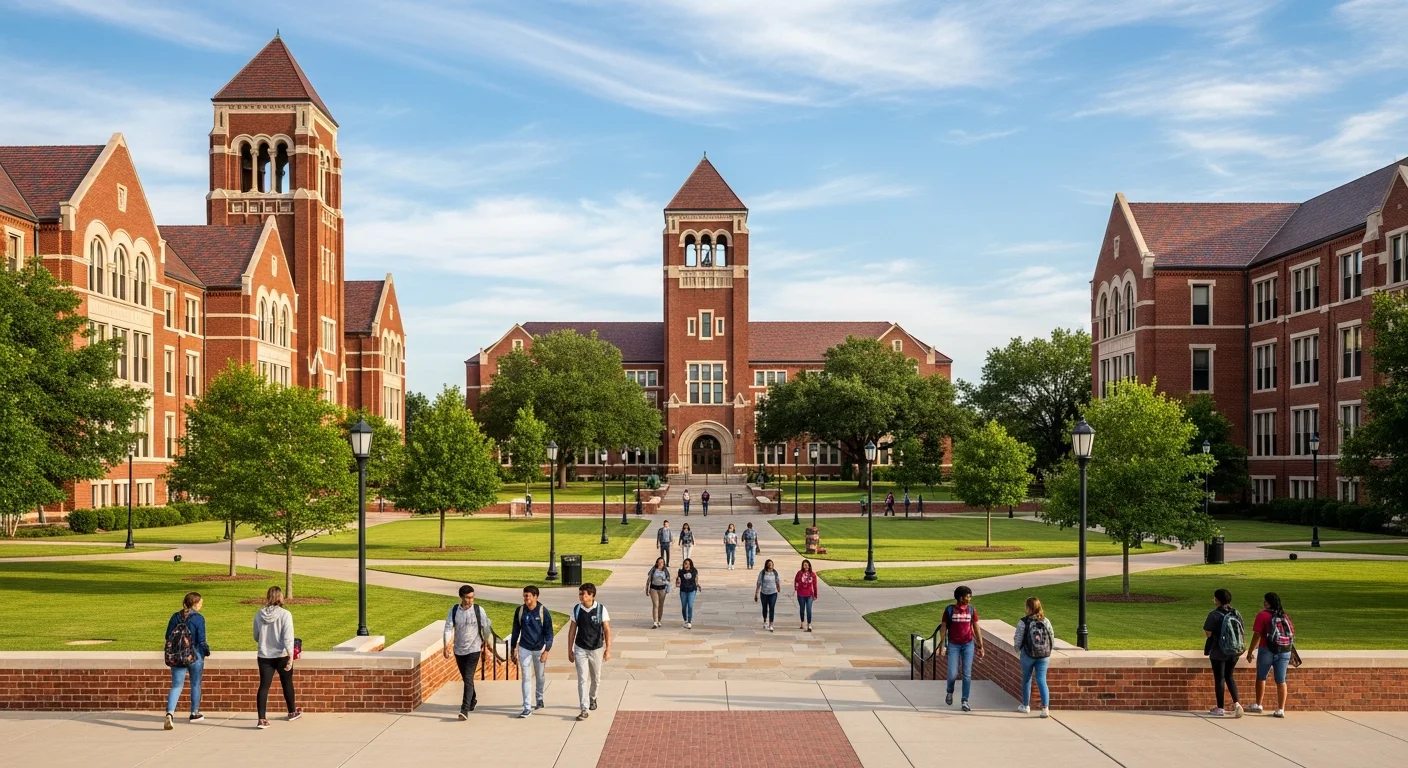
Compare the top computer engineering colleges in Oklahoma. 10 accredited computer engineering schools ranked by graduation rate, career outcomes, and value, from Seminole State College to University of Oklahoma-Norman Campus.
Best computer engineering degree programs: U of Oklahoma-Norman, Oklahoma State, U of Tulsa
Ranked by graduation rates, program outcomes, and institutional quality
Tuition ranges from $3,210 to $46,932/year
Seminole State College offers the most affordable option at $3,210/yr
Computer Engineering degree programs available: 2 associate's, 6 master's, 3 doctoral in Oklahoma
From community college pathways to advanced research degrees
Oklahoma community college transfer can save 40-60% on total degree costs
2 associate's programs provide transfer pathways to bachelor's degrees
Education Commission of the States
Major employers: Paycom, Devon Energy, ONEOK, Love's Travel Stops
Tech hubs in Oklahoma City and Tulsa
Hakia Research 2026
Computer Engineering degree programs near 50+ cities across Oklahoma
Search by city to find programs within 200 miles of your location
Updated October 12, 2026
We rank 18 accredited computer engineering programs in Oklahoma using IPEDS 2024 institutional data, BLS OEWS 2024 state salary data, and College Scorecard outcomes. A 4-factor weighted composite is normalized to a 0–100 score. Schools cannot pay for placement; rankings are produced algorithmically.
Are Computer Engineering Degree Programs in Oklahoma Worth It?
Source: BLS OEWS May 2024
Compare the top-ranked Computer Engineering programs in Oklahoma by degree level. Tuition, graduation rate, and Hakia Score for every accredited program.
Oklahoma ranks among the nation's top destinations for computer engineering education, with 7 accredited bachelor's degree programs across 5 public and 2 private institutions. The highest-ranked programs are U of Oklahoma-Norman, Oklahoma State, U of Tulsa, recognized for academic excellence, research opportunities, and strong industry connections.
Graduates from Oklahoma computer engineering programs earn a median salary of $75,939, 23% below the national average. The state's robust technology sector, anchored by the Oklahoma City, Tulsa, Norman metropolitan areas, provides abundant internship and employment opportunities with companies including Paycom, Devon Energy, ONEOK.
Tuition ranges from $5,070 to $46,932 annually, with an average of $14,442/yr. Top programs maintain graduation rates above 86%, with the highest reaching 88%. Many programs hold ABET accreditation, the gold standard for computing education, ensuring curriculum meets rigorous industry standards.
Students can choose from specializations including software engineering, cybersecurity, artificial intelligence, data science, and systems architecture. Strong industry partnerships provide access to co-op programs, capstone projects with real companies, and direct recruiting pipelines to Oklahoma's leading technology employers. For students seeking computer engineering degrees in Oklahoma, these top-ranked computer engineering schools offer the strongest combination of academic rigor and career preparation.
Oklahoma offers 6 master's degree programs in computer engineering, designed for professionals seeking to advance into senior engineering, technical leadership, and specialized roles. The top programs, U of Oklahoma-Norman, Oklahoma Christian, U of Tulsa, combine advanced technical training with research opportunities and leadership development.
Master's graduates in Oklahoma earn a median salary of $89,340, approximately 20-30% higher than bachelor's degree holders. The concentration of technology companies in Oklahoma City, Tulsa, Norman creates strong demand for graduate-level talent, with Paycom, Devon Energy, ONEOK actively recruiting from these programs.
Program formats include traditional full-time study (typically 2 years), part-time options for working professionals (2-3 years), and accelerated tracks. Tuition averages $20,292/yr, with many employers offering tuition reimbursement for graduate education. Some programs offer thesis and non-thesis tracks, allowing students to focus on research or professional development based on their career goals.
Curriculum covers advanced topics including machine learning, distributed systems, software architecture, and technical management. Many programs include practicum experiences, industry capstone projects, or consulting engagements that provide real-world application of advanced concepts. Among Oklahoma's computer engineering schools at the graduate level, these programs stand out for both academic quality and career outcomes.
Oklahoma is home to 3 doctoral programs in computer engineering, preparing students for research positions, faculty appointments, and executive technical roles. Leading programs at U of Oklahoma-Norman, U of Tulsa, Oklahoma State are recognized for cutting-edge research, strong faculty publications, and competitive funding packages.
Doctoral graduates command premium salaries, with Oklahoma PhD holders earning a median of $111,675, reflecting the advanced expertise required for research and executive positions. The Oklahoma City, Tulsa, Norman region's research universities and corporate R&D centers provide extensive collaboration opportunities with industry leaders like Paycom, Devon Energy, ONEOK.
PhD programs typically require 4-6 years of full-time study, including coursework, qualifying examinations, and original dissertation research. Many programs offer full funding through teaching or research assistantships, covering tuition and providing stipends of $25,000–$40,000 annually.
Research strengths across Oklahoma programs include artificial intelligence, cybersecurity, human-computer interaction, systems, and theoretical computer science. For aspiring researchers pursuing computer engineering degrees in Oklahoma, graduates go on to careers as university faculty, industry research scientists, or technical executives, contributing to advances in technology that impact millions of users worldwide.
| Metric | Value |
|---|---|
| Average in-state tuition | $14,164/year |
| Average out-of-state tuition | $35,410/year |
| Community college tuition | $3,541/year |
| 4-year savings for residents | $84,984 |
| 2+2 transfer pathway savings | $21,246 |
Source: IPEDS 2024
Oklahoma students pursuing computer engineering degrees have access to several federal and state financial aid options. The Free Application for Federal Student Aid (FAFSA) is the primary gateway for federal grants, loans, and work-study opportunities, available through (Federal Student Aid). All Oklahoma public institutions participate in federal aid programs, making computer engineering programs accessible to eligible students regardless of initial financial constraints. Additionally, Oklahoma offers a strong state-specific grant program called (Oklahoma's Promise), which covers tuition at Oklahoma public institutions for students enrolled in 8th–10th grade who meet income and academic requirements. This program significantly reduces out-of-pocket costs for qualifying families.
Beyond federal and state grants, many Oklahoma institutions offer competitive merit scholarships and institutional aid packages specifically for computer engineering students. The University of Oklahoma-Norman Campus and Oklahoma State University-Main Campus, both ranked among the top bachelor's programs, provide substantial scholarship opportunities to attract high-performing students. Prospective students should contact individual institutions' financial aid offices to explore departmental scholarships, assistantships, and work-study positions. For comprehensive information about federal student aid options, visit (Federal Student Aid), and for Oklahoma-specific programs, consult (Oklahoma State Regents for Higher Education). Students should also explore related fields such as (Computer Science in Oklahoma) and (Software Engineering in Oklahoma) to compare funding opportunities across the computer technology landscape.
Use our interactive ROI calculator to estimate your return on investment for a computer engineering degree in Oklahoma. Enter your expected tuition costs, financial aid, and career goals to see projected payback periods and lifetime earnings. The calculator uses current salary data from BLS and tuition data from IPEDS to provide accurate estimates.
Estimate your return on investment for a computer engineering degree
Leave blank to use average cost for selected program type
+907%
Net gain divided by total investment. ROI above 200% is considered excellent for education investments.
$1,677,254
Your additional lifetime earnings with this degree vs. working without one, minus the total investment.
5 years
Years until your cumulative earnings exceed total investment. Shorter programs often break even faster due to lower opportunity cost.
$133,333
Your starting salary adjusted for local cost of living. This shows real purchasing power compared to a $100K national baseline.
Why does break-even change with program type? Your "total investment" includes both tuition AND opportunity cost (foregone earnings while in school). A 4-year full-time public university (in-state) means 4 years of not earning a salary ($140,000 in opportunity cost). Shorter full-time programs may have higher tuition but lower total investment because you return to the workforce sooner.
How we calculate your degree ROI using real salary data
Tuition plus opportunity cost (earnings you miss while in school)
Direct cost of the degree program
4 years × $35K/year foregone salary while studying full-time
Projected career earnings starting after graduation, with salary growth
What you'd earn working at $35K/year with 2% annual growth
Median salary for this role in your selected location (BLS 2024)
Your investment's compound annual growth rate (similar to stock market returns)
Data sources: BLS OEWS May 2024, IPEDS 2024. Calculations use median salaries, 3% discount rate, and assume salary growth declines from 6% to 2% over career. Individual results will vary. | Powered by Hakia.com
Median annual salary in Oklahoma metro areas
| Category | Value |
|---|---|
| Oklahoma City | $98K |
| Tulsa | $94K |
| Norman | $89K |
Source: BLS OEWS May 2024
Hakia.com
Find computer engineering jobs in Oklahoma. These major employers across Oklahoma metro areas are actively hiring computer engineering degree holders. Click employer names to view current job openings.
Oklahoma's community college system provides an accessible entry point for students pursuing Computer Engineering degrees. The state has 28 two-year institutions offering Computer Engineering and related programs, with 3 institutions specifically offering associate's degrees in Computer Engineering (IPEDS). Top-ranked community colleges like Oklahoma City Community College, Seminole State College, and Oklahoma State University-Oklahoma City provide comprehensive coursework that transfers directly to four-year institutions. These programs emphasize practical skills while maintaining alignment with university-level requirements, allowing students to complete their first two years at substantially lower costs, associate's tuition averages around $3,000–$3,500 annually, before transferring to earn bachelor's degrees (IPEDS).
The Oklahoma Course Transfer and Articulation (OCTA) system facilitates seamless credit transfer across institutions through statewide course transfer agreements (Oklahoma Course Transfer and Articulation). This system ensures that courses completed at community colleges are recognized at four-year universities like the University of Oklahoma-Norman Campus and Oklahoma State University-Main Campus, preventing credit loss and reducing time to degree completion. Students should work with community college advisors to select courses that align with specific bachelor's program requirements at their target university. The articulation agreements specifically cover foundational mathematics, physics, and general education courses critical to Computer Engineering study. Transfer-friendly online bachelor's programs, including options at Northwestern Oklahoma State University (#2 online ranking, $5,448 tuition) and East Central University, accommodate working professionals and distance learners. Prospective students should explore Information Technology in Oklahoma and Software Engineering in Oklahoma for complementary transfer pathways.
Oklahoma offers a strong Computer Engineering education landscape with 20 institutions offering programs across all degree levels (IPEDS). The state produced 464 bachelor's degree completions, 217 master's completions, and 31 doctoral completions in the most recent reporting period, demonstrating strong program depth and accessibility. The University of Oklahoma-Norman Campus leads the state with 282 completions, followed by Oklahoma Christian University with 125 completions, making these institutions regional powerhouses in computer engineering education (IPEDS).
Affordability is a significant advantage for Oklahoma computer engineering students. Public four-year institutions charge an average in-state tuition of just $5,487, with leading programs like the University of Oklahoma-Norman Campus at $5,070 and Oklahoma State University-Main Campus at $5,417 (IPEDS). Students enrolled in 8th-10th grade may qualify for Oklahoma's Promise, which covers tuition at Oklahoma public institutions (Oklahoma's Promise). The state's major employment hubs. Oklahoma City and Tulsa, host significant employers including Tinker Air Force Base and leading healthcare systems, creating strong career pathways. Students interested in related fields should explore Computer Science in Oklahoma or Software Engineering in Oklahoma for comparative program options.
Computer Engineering Program Availability in Oklahoma
Source: IPEDS 2024
Oklahoma's computer engineering job market is supported by a strong educational infrastructure, with 20 institutions offering computer engineering programs across all degree levels (IPEDS). The state produces 464 bachelor's degree completions annually, along with 217 master's degrees and 31 doctoral degrees, creating a steady pipeline of talent for regional employers. The Oklahoma City and Tulsa metropolitan areas serve as primary employment hubs, drawing graduates from institutions like the University of Oklahoma-Norman Campus, which leads the state with 282 completions, and Oklahoma State University-Main Campus with 93 completions. These metro regions benefit from diverse industry demand across healthcare, aerospace, and technology sectors.
For salary and employment trend data specific to Oklahoma, prospective students should consult the Bureau of Labor Statistics' Oklahoma occupational data, which provides current wage information and job outlook projections for computer engineering roles. Public institution tuition remains affordable, with average in-state costs at $5,487 annually for four-year universities, making Oklahoma an accessible entry point for the profession. The state's commitment to affordability is further demonstrated through programs like Oklahoma's Promise, which covers tuition for eligible students. Students exploring related career paths should also consider Computer Science in Oklahoma and Software Engineering in Oklahoma programs, which complement computer engineering training and expand employment opportunities.
New graduates and career changers
Technical leads and architects
0 available in Oklahoma
Traditional classroom experience
Institutional characteristics, completions, graduation rates
Oklahoma salary and employment data
Program details and admissions information
Last Updated: June 26, 2026. Rankings based on IPEDS 2024 data. Salary data from BLS OEWS May 2024.

Co-founder & Editor (B.S. Computer Science, Oregon State • B.A. Psychology, University of Washington)
Taylor combines technical expertise in computer science with a deep understanding of human behavior and learning. His dual background drives Hakia's mission: leveraging technology to build authoritative educational resources that help people make better decisions about their academic and career paths.
Hand-researched detail on the top-ranked programs: degree pathways, research labs, industry partners, career outcomes, and admissions. Tap any school to expand.
Why it stands out. OU's program uniquely combines rigorous digital systems foundations with proximity to Tinker Air Force Base partnerships and opportunities in aerospace-defense computing.
Hakia insight. OU's Tinker Air Force Base partnership isn't background noise; internship placements there are effectively pre-screening for aerospace-defense careers, and students who perform well often receive job offers before senior year—a direct pipeline that accelerates both technical depth and career placement simultaneously.
At the bachelor's level, OU's computer engineering program is anchored by strong theoretical foundations in digital systems, microprocessor design, and signal processing, with growing emphasis on machine learning hardware and autonomous systems. The program benefits from OU's broader research ecosystem, where undergraduates and graduate students collaborate on projects funded by federal agencies including DARPA and NSF. The School of Electrical and Computer Engineering maintains partnerships with Tinker Air Force Base, one of the nation's largest aerospace employers, creating direct pathways into defense and aerospace computing roles. A distinctive feature is the integration of computer engineering with OU's established strengths in telecommunications and network infrastructure—students can specialize in hardware-software co-design for networked embedded systems. The program's capstone sequence emphasizes real-world prototyping and system integration, with many projects addressing challenges posed by industry partners.
Programs offered
Research labs & institutes
Industry partners
Admissions
GPA 3.00 (for accelerated BS/MS program).
Accreditation & certifications
Location advantage: Direct partnership with Tinker Air Force Base; proximity to major aerospace and defense contractors in Oklahoma
Why it stands out. TU's computer engineering program stands out for its emphasis on hands-on embedded systems design and low student-to-faculty ratios that foster mentored independent research by the junior year.
Hakia insight. TU's low student-to-faculty ratios enable mentored independent research by junior year—a rarity at the bachelor's level—meaning you're co-authoring papers or building hardware prototypes for publication, not just completing problem sets, which fundamentally changes how graduate programs and tech employers evaluate your candidacy.
At the bachelor's level, TU's computer engineering program emphasizes a rigorous blend of hardware design and embedded systems within a smaller, highly collaborative learning environment. Students benefit from low student-to-faculty ratios that enable hands-on capstone projects in robotics, IoT, and digital signal processing—areas where TU has cultivated particular strength. The curriculum integrates real-world problem-solving early, with many undergraduates conducting independent research by their junior year. Faculty maintain active industry connections, particularly with energy and aerospace sectors headquartered in the region, creating internship pipelines and industry-sponsored projects. Graduates report strong placement in hardware engineering, firmware development, and systems integration roles, with many advancing into leadership positions within 5–7 years. TU's commitment to small cohorts means students design and test their own embedded systems in well-equipped labs, rather than observing from a distance.
Programs offered
Research labs & institutes
Industry partners
Admissions
GPA 3.0.
Accreditation & certifications
Location advantage: Proximity to energy and aerospace industry hubs in Oklahoma and Texas
Why it stands out. Laboratory-intensive curriculum with state-of-the-art equipment in new 70,000 sq ft Endeavor facility. Mandatory two-course capstone design sequence with team projects
Hakia insight. Oklahoma State's new 70,000 sq ft Endeavor facility with mandatory two-course capstone design sequence creates a forcing function: every graduate leaves with a completed team engineering project using current-generation Intel and Texas Instruments hardware, translating to immediate relevance in embedded systems interviews.
Oklahoma State University's Bachelor of Science in Computer Engineering program is ABET-accredited and features a laboratory-intensive, student-centered curriculum. Students complete specialized coursework in microcontrollers, embedded controllers, robotics, computer architecture, digital logic design, networking, programming, and digital electronics. The program emphasizes hands-on experience through state-of-the-art instructional laboratories in the new 70,000 sq ft Endeavor facility, covering areas like microcomputers, digital logic design, electronics, networks, and communications. A mandatory two-course capstone design sequence in the final two semesters requires students to work in teams on open-ended, practical problems, culminating in prototype development, formal public demonstration, oral presentation, and written report. Engineering design laboratories are integrated throughout the curriculum to provide multiple design experiences. The program builds on core electrical engineering principles while integrating computer science concepts for seamless hardware-software design, preparing graduates for careers spanning digital systems, computer hardware/software applications, algorithms, and artificial intelligence.
Programs offered
Research labs & institutes
Industry partners
Accreditation & certifications
Location advantage: Connections to energy sector and advanced manufacturing in Oklahoma; access to major tech company partnerships
Why it stands out. UCO's program excels at producing job-ready computer engineers through curriculum tightly aligned with regional industry needs and embedded internship opportunities.
Hakia insight. UCO's tight curriculum alignment with Oklahoma City's manufacturing sector means internships aren't add-ons—they're embedded into degree requirements, so students graduate with 6-12 months of paid industry experience already on their résumé rather than competing for entry-level roles.
At the bachelor's level, UCO's computer engineering program prioritizes accessible, practical education in systems design and embedded computing for students seeking direct entry into industry roles. Rather than pursuing cutting-edge research, the program concentrates on solidifying core competencies in digital logic, microcontrollers, and real-time systems through project-intensive coursework and laboratory work. Internship placements are woven into the curriculum, with many students working part-time at local technology companies and manufacturing firms during their studies. The faculty maintain active consulting relationships with regional employers, ensuring the curriculum stays aligned with job market needs—a particular advantage in Oklahoma's growing tech and manufacturing sectors. Graduates typically enter roles in embedded systems, manufacturing automation, and IoT device development, with companies reporting that UCO students arrive ready to contribute on day one.
Programs offered
Industry partners
Accreditation & certifications
Location advantage: Proximity to Oklahoma City regional tech and manufacturing sector
Why it stands out. Oklahoma Christian stands apart by embedding professional ethics, leadership development, and communication skills directly into its computer engineering curriculum alongside rigorous technical training.
Hakia insight. While ethics modules exist at many engineering schools, Oklahoma Christian embeds them into core design courses—meaning your embedded systems project isn't just technically sound, it includes documented safety and professional responsibility analysis that defense and aerospace employers explicitly value.
At the bachelor's level, oklahoma Christian University's computer engineering program integrates rigorous technical training with the institution's emphasis on ethical engineering practice and professional development—a combination that appeals to employers seeking engineers who can lead and communicate across disciplines. The curriculum covers traditional computer engineering foundations (digital design, microprocessors, embedded systems) while requiring courses in engineering ethics, professional responsibility, and communication skills that many engineering graduates lack. Faculty actively engage students in research opportunities and design projects that extend beyond classroom requirements, fostering a culture of continuous learning and innovation. The program's location in Oklahoma City provides students with proximity to diverse employers—from aerospace and defense contractors to emerging tech startups—and the university maintains active recruitment relationships with companies seeking well-rounded engineers. Internship and cooperative education experiences are strongly encouraged, with many students securing positions before graduation.
Programs offered
Research labs & institutes
Industry partners
Notable faculty
Accreditation & certifications
Location advantage: Located in Oklahoma City, proximity to aerospace (Boeing, Tinker Air Force Base), defense contractors, and tech companies Access to diverse employer base spanning defense, energy, and startup sectors
Why it stands out. TU's computer engineering program stands out for its emphasis on hands-on embedded systems design and low student-to-faculty ratios that foster mentored independent research by the junior year.
Hakia insight. TU's low student-to-faculty ratios and mentored research by year one in the Collins Lab Complex mean your thesis or capstone work directly influences lab publications; graduates report this creates measurable portfolio differentiation when competing against larger program graduates for senior embedded systems roles.
At the master's level, TU's computer engineering program emphasizes a rigorous blend of hardware design and embedded systems within a smaller, highly collaborative learning environment. Students benefit from low student-to-faculty ratios that enable hands-on capstone projects in robotics, IoT, and digital signal processing—areas where TU has cultivated particular strength. The curriculum integrates real-world problem-solving early, with many undergraduates conducting independent research by their junior year. Faculty maintain active industry connections, particularly with energy and aerospace sectors headquartered in the region, creating internship pipelines and industry-sponsored projects. Graduates report strong placement in hardware engineering, firmware development, and systems integration roles, with many advancing into leadership positions within 5–7 years. TU's commitment to small cohorts means students design and test their own embedded systems in well-equipped labs, rather than observing from a distance.
Programs offered
Research labs & institutes
Industry partners
Admissions
GPA 3.0.
Accreditation & certifications
Location advantage: Proximity to energy and aerospace industry hubs in Oklahoma and Texas
Why it stands out. Oklahoma Christian stands apart by embedding professional ethics, leadership development, and communication skills directly into its computer engineering curriculum alongside rigorous technical training.
Hakia insight. Oklahoma Christian's master's program integrates ethics and leadership into technical electives rather than segregating them into separate courses, meaning you're not adding a "soft skills" requirement—you're learning how Boeing and Cisco actually make engineering trade-offs.
At the master's level, oklahoma Christian University's computer engineering program integrates rigorous technical training with the institution's emphasis on ethical engineering practice and professional development—a combination that appeals to employers seeking engineers who can lead and communicate across disciplines. The curriculum covers traditional computer engineering foundations (digital design, microprocessors, embedded systems) while requiring courses in engineering ethics, professional responsibility, and communication skills that many engineering graduates lack. Faculty actively engage students in research opportunities and design projects that extend beyond classroom requirements, fostering a culture of continuous learning and innovation. The program's location in Oklahoma City provides students with proximity to diverse employers—from aerospace and defense contractors to emerging tech startups—and the university maintains active recruitment relationships with companies seeking well-rounded engineers. Internship and cooperative education experiences are strongly encouraged, with many students securing positions before graduation.
Programs offered
Research labs & institutes
Industry partners
Notable faculty
Accreditation & certifications
Location advantage: Located in Oklahoma City, proximity to aerospace (Boeing, Tinker Air Force Base), defense contractors, and tech companies Access to diverse employer base spanning defense, energy, and startup sectors
Why it stands out. Assistantship support for first year renewable up to 4 years based on performance and funding. Maximum 18 credit hours of 6000-level courses allowed
Hakia insight. TU's four-year renewable assistantship guarantee with a 3.0 GPA threshold is rare; paired with the 18-credit 6000-level course cap, it signals the program optimizes for completion time and research output over course accumulation, so you finish with publishable work rather than just coursework hours.
The University of Tulsa's Ph.D. in Electrical and Computer Engineering offers PhD students assistantship support for at least the first year, renewable for up to four years based on performance and funding availability. Students work with a dissertation committee of at least four graduate faculty members plus a chair, with one member from outside ECE. The program requires 72 credit hours beyond the bachelor's degree, including minimum 18 dissertation credits and 33 ECE credits. Students must pass two examinations: a General exam (written research report plus oral defense) and Preliminary exam (dissertation proposal defense). Time limits are 4-5 years to complete general examination and 6 years total for degree completion. The dissertation must represent patentable invention or publishable research. Full-time residency is required for at least 18 credit hours during dissertation research. Students must maintain 3.0 GPA throughout the program.
Programs offered
Research labs & institutes
Industry partners
Admissions
GPA 3.0.
Accreditation & certifications
Location advantage: Proximity to energy and aerospace industry hubs in Oklahoma and Texas