🥇
$6,056
Tuition/yr
85%
Grad rate
74.8
Hakia Score
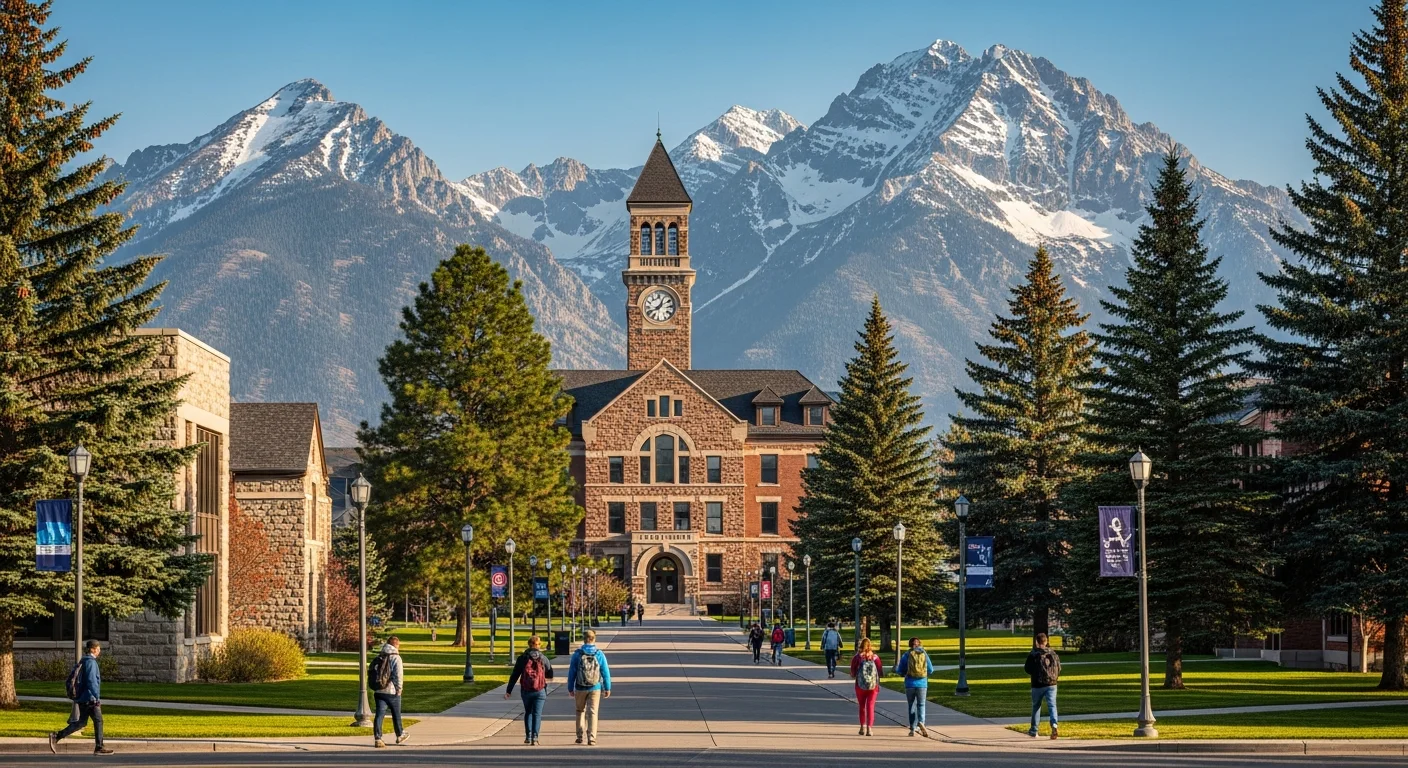
Compare the top computer engineering colleges in Montana. 6 accredited computer engineering schools ranked by graduation rate, career outcomes, and value, from Montana State University to Montana State University.
Best computer engineering degree programs: Montana State, U of Montana, Montana Technological
Ranked by graduation rates, program outcomes, and institutional quality
Tuition ranges from $5,736 to $39,152/year
Montana State offers the most affordable option at $6,056/yr
Computer Engineering degree programs available: 3 master's, 1 doctoral in Montana
From community college pathways to advanced research degrees
Major employers: Oracle, Workiva, Zoot Enterprises, onXmaps
Tech hubs in Bozeman and Missoula
Hakia Research 2026
Computer Engineering degree programs near 16+ cities across Montana
Search by city to find programs within 200 miles of your location
Updated October 12, 2026
We rank 10 accredited computer engineering programs in Montana using IPEDS 2024 institutional data, BLS OEWS 2024 state salary data, and College Scorecard outcomes. A 4-factor weighted composite is normalized to a 0–100 score. Schools cannot pay for placement; rankings are produced algorithmically.
Are Computer Engineering Degree Programs in Montana Worth It?
Source: BLS OEWS May 2024
Compare the top-ranked Computer Engineering programs in Montana by degree level. Tuition, graduation rate, and Hakia Score for every accredited program.
Montana ranks among the nation's top destinations for computer engineering education, with 6 accredited bachelor's degree programs across 3 public and 3 private institutions. The highest-ranked programs are Montana State, U of Montana, Montana Technological, recognized for academic excellence, research opportunities, and strong industry connections.
Graduates from Montana computer engineering programs earn a median salary of $76,390, 22% below the national average. The state's robust technology sector, anchored by the Bozeman, Missoula, Billings metropolitan areas, provides abundant internship and employment opportunities with companies including Oracle, Workiva, Zoot Enterprises.
Tuition ranges from $5,736 to $39,152 annually, with an average of $19,660/yr. Top programs maintain graduation rates above 88%, with the highest reaching 100%. Many programs hold ABET accreditation, the gold standard for computing education, ensuring curriculum meets rigorous industry standards.
Students can choose from specializations including software engineering, cybersecurity, artificial intelligence, data science, and systems architecture. Strong industry partnerships provide access to co-op programs, capstone projects with real companies, and direct recruiting pipelines to Montana's leading technology employers. For students seeking computer engineering degrees in Montana, these top-ranked computer engineering schools offer the strongest combination of academic rigor and career preparation.
| Rank | School | Location | Type | Tuition | Grad Rate | Hakia Score |
|---|---|---|---|---|---|---|
| #6 | Rocky Mountain College | Billings, MT | Private | $32,282 | — | 35.2 |
Montana offers 3 master's degree programs in computer engineering, designed for professionals seeking to advance into senior engineering, technical leadership, and specialized roles. The top programs, Montana State, U of Montana, Montana Technological, combine advanced technical training with research opportunities and leadership development.
Master's graduates in Montana earn a median salary of $89,870, approximately 20-30% higher than bachelor's degree holders. The concentration of technology companies in Bozeman, Missoula, Billings creates strong demand for graduate-level talent, with Oracle, Workiva, Zoot Enterprises actively recruiting from these programs.
Program formats include traditional full-time study (typically 2 years), part-time options for working professionals (2-3 years), and accelerated tracks. Tuition averages $5,968/yr, with many employers offering tuition reimbursement for graduate education. Some programs offer thesis and non-thesis tracks, allowing students to focus on research or professional development based on their career goals.
Curriculum covers advanced topics including machine learning, distributed systems, software architecture, and technical management. Many programs include practicum experiences, industry capstone projects, or consulting engagements that provide real-world application of advanced concepts. Among Montana's computer engineering schools at the graduate level, these programs stand out for both academic quality and career outcomes.
Montana is home to 1 doctoral programs in computer engineering, preparing students for research positions, faculty appointments, and executive technical roles. Leading programs at Montana State are recognized for cutting-edge research, strong faculty publications, and competitive funding packages.
Doctoral graduates command premium salaries, with Montana PhD holders earning a median of $112,338, reflecting the advanced expertise required for research and executive positions. The Bozeman, Missoula, Billings region's research universities and corporate R&D centers provide extensive collaboration opportunities with industry leaders like Oracle, Workiva, Zoot Enterprises.
PhD programs typically require 4-6 years of full-time study, including coursework, qualifying examinations, and original dissertation research. Many programs offer full funding through teaching or research assistantships, covering tuition and providing stipends of $25,000–$40,000 annually.
Research strengths across Montana programs include artificial intelligence, cybersecurity, human-computer interaction, systems, and theoretical computer science. For aspiring researchers pursuing computer engineering degrees in Montana, graduates go on to careers as university faculty, industry research scientists, or technical executives, contributing to advances in technology that impact millions of users worldwide.
| Metric | Value |
|---|---|
| Average in-state tuition | $19,660/year |
| Average out-of-state tuition | $49,150/year |
| Community college tuition | $4,915/year |
| 4-year savings for residents | $117,960 |
| 2+2 transfer pathway savings | $29,490 |
Source: IPEDS 2024
Montana computer engineering students have access to multiple funding pathways to support their education. The primary federal aid mechanism is the Free Application for Federal Student Aid (FAFSA), available through (Federal Student Aid), which determines eligibility for grants, loans, and work-study programs. Montana residents attending in-state institutions benefit from competitive public tuition rates, with average four-year public institution tuition at $4,747 annually, significantly below the national average (IPEDS). Beyond federal aid, the Montana University System administers the Montana University System Honor Scholarship, a merit-based tuition waiver program designed specifically for Montana high school graduates attending public universities in the state (Montana University System).
Individual institutions also offer scholarships and institutional aid packages. Montana State University and The University of Montana, the state's largest computer engineering programs with 171 and 23 completions respectively, provide need-based and merit-based assistance to enrolled students. Students exploring computer science programs in Montana or software engineering options will find similar financial aid structures across Montana's higher education system. The Montana Common Course Numbering system (Montana University System) enables students to transfer credits seamlessly between institutions without losing financial aid eligibility, reducing overall program costs. For detailed information on federal aid eligibility and state-specific programs, prospective students should consult (Federal Student Aid) and verify requirements with individual institution financial aid offices.
Use our interactive ROI calculator to estimate your return on investment for a computer engineering degree in Montana. Enter your expected tuition costs, financial aid, and career goals to see projected payback periods and lifetime earnings. The calculator uses current salary data from BLS and tuition data from IPEDS to provide accurate estimates.
Estimate your return on investment for a computer engineering degree
Leave blank to use average cost for selected program type
+907%
Net gain divided by total investment. ROI above 200% is considered excellent for education investments.
$1,677,254
Your additional lifetime earnings with this degree vs. working without one, minus the total investment.
5 years
Years until your cumulative earnings exceed total investment. Shorter programs often break even faster due to lower opportunity cost.
$133,333
Your starting salary adjusted for local cost of living. This shows real purchasing power compared to a $100K national baseline.
Why does break-even change with program type? Your "total investment" includes both tuition AND opportunity cost (foregone earnings while in school). A 4-year full-time public university (in-state) means 4 years of not earning a salary ($140,000 in opportunity cost). Shorter full-time programs may have higher tuition but lower total investment because you return to the workforce sooner.
How we calculate your degree ROI using real salary data
Tuition plus opportunity cost (earnings you miss while in school)
Direct cost of the degree program
4 years × $35K/year foregone salary while studying full-time
Projected career earnings starting after graduation, with salary growth
What you'd earn working at $35K/year with 2% annual growth
Median salary for this role in your selected location (BLS 2024)
Your investment's compound annual growth rate (similar to stock market returns)
Data sources: BLS OEWS May 2024, IPEDS 2024. Calculations use median salaries, 3% discount rate, and assume salary growth declines from 6% to 2% over career. Individual results will vary. | Powered by Hakia.com
Median annual salary in Montana metro areas
| Category | Value |
|---|---|
| Bozeman | $99K |
| Missoula | $94K |
| Billings | $90K |
Source: BLS OEWS May 2024
Hakia.com
Find computer engineering jobs in Montana. These major employers across Montana metro areas are actively hiring computer engineering degree holders. Click employer names to view current job openings.
Montana's higher education system is designed to help seamless transfer pathways between institutions. The state operates 10 two-year institutions that prepare students for upper-level work at 14 four-year universities, creating accessible entry points for computer engineering study (IPEDS). The Montana Common Course Numbering system (Montana Common Course Numbering) ensures that courses completed at community colleges transfer with full credit recognition to four-year institutions within the Montana University System, eliminating duplicate coursework and reducing time-to-degree. Students beginning at two-year schools can complete foundational mathematics, physics, and engineering science courses before transferring to bachelor's programs at Montana State University, The University of Montana, or Montana Technological University, each offering strong upper-level computer engineering coursework.
The Montana University System (MUS) administers formal articulation agreements that streamline the transfer process, with clear curriculum mapping between community colleges and four-year programs. Prospective transfer students should work closely with advisors at both their current and target institutions to ensure prerequisite alignment. Additionally, the Montana University System Honor Scholarship provides merit-based support for Montana residents, including transfer students, helping offset the average $4,747 in-state tuition costs (Montana University System). Students can explore complementary fields like Information Technology in Montana and Network Administration in Montana at two-year institutions before specializing in computer engineering at four-year universities. Transfer pathways require 60 transferable credits before advancing to upper-level engineering coursework, allowing students to build strong foundational competencies while managing costs efficiently.
Montana offers a strong computer engineering education landscape with 10 institutions offering programs across multiple degree levels (IPEDS). The state boasts 6 bachelor's-granting institutions and 3 master's-granting universities, providing pathways for both undergraduate and graduate study. Montana State University dominates the field with 171 completions, establishing itself as the state's premier computer engineering hub, while The University of Montana and Montana Technological University each contribute significantly to the talent pipeline with 23 and 22 completions respectively (IPEDS).
Montana's affordability advantage sets it apart nationally. Public in-state tuition averages just $4,747 annually, with top-ranked programs like The University of Montana offering tuition as low as $5,736, among the most affordable options nationwide (College Scorecard). The state's major employment centers in Billings, Missoula, and Great Falls, home to employers like Billings Clinic and Providence Health, create real-world opportunities for internships and careers. Students can explore Computer Science in Montana and Software Engineering in Montana as complementary fields, while benchmarking against national leaders via National Best Bachelor's Programs. The Montana University System (MUS) further supports student success through coordinated degree pathways and merit-based financial aid.
Computer Engineering Program Availability in Montana
Source: IPEDS 2024
Montana's computer engineering job market is supported by a diverse employer landscape across multiple metro areas and regions. The state's major hiring centers include Billings, Missoula, and Great Falls, which together represent the strongest metro markets for tech professionals. According to BLS employment data for Montana, the state offers competitive opportunities across Eastern Montana, Western Montana, Central Montana, and the Flathead Valley regions. Local demand is driven by healthcare, education, and technology sectors that continue to invest in digital infrastructure and engineering talent.
Montana's computer engineering programs are well-positioned to meet regional employment needs. With 10 institutions offering computer engineering degrees (IPEDS), the state produces 197 bachelor's degree completions annually, alongside 23 master's completions and 6 doctoral completions. Average public in-state tuition of $4,747 makes Montana programs particularly accessible compared to national averages. Students who graduate from top-ranked programs like Montana State University and The University of Montana benefit from strong regional employer connections. For broader career context, explore how Montana's opportunities compare with Computer Engineering in California or Computer Engineering in Texas, which represent larger competitive markets.
Career advancement in Montana's computer engineering sector is enhanced by proximity to major employers and educational hubs. Students can leverage resources like Federal Student Aid and the Montana University System Honor Scholarship to support their education. For detailed salary and employment outlook information specific to your region, consult BLS Montana occupational data. Consider complementary degree paths in Computer Science in Montana or Software Engineering in Montana to expand career opportunities.
New graduates and career changers
Technical leads and architects
0 available in Montana
Traditional classroom experience
Institutional characteristics, completions, graduation rates
Montana salary and employment data
Program details and admissions information
Last Updated: June 26, 2026. Rankings based on IPEDS 2024 data. Salary data from BLS OEWS May 2024.

Co-founder & Editor (B.S. Computer Science, Oregon State • B.A. Psychology, University of Washington)
Taylor combines technical expertise in computer science with a deep understanding of human behavior and learning. His dual background drives Hakia's mission: leveraging technology to build authoritative educational resources that help people make better decisions about their academic and career paths.
Hand-researched detail on the top-ranked programs: degree pathways, research labs, industry partners, career outcomes, and admissions. Tap any school to expand.
Why it stands out. MSU's program distinguishes itself through research-backed coursework in signal processing and control systems, combined with extensive lab infrastructure and aerospace/industrial applications.
Hakia insight. Montana State's Montana Microfabrication Facility and David Dickensheets' optical instrument lab give computer engineering undergraduates hands-on access to hardware fabrication and medical device prototyping—capabilities most bachelor's programs relegate to graduate students.
At the bachelor's level, montana State University's computer engineering program leverages the university's research infrastructure and engineering emphasis to deliver a curriculum strong in signal processing, power systems, and real-time computing applications. The program benefits from MSU's broader strength in electrical engineering and research facilities, enabling students to pursue advanced coursework in control systems, digital signal processing, and embedded hardware design. Faculty are active in research spanning robotics, aerospace applications, and industrial automation—areas where Montana State has earned regional recognition. Students gain substantial lab experience in both analog and digital circuit design, FPGA prototyping, and sensor systems through well-equipped engineering facilities shared across the department. The capstone design sequence is notably comprehensive, requiring students to conceive, build, and test complex systems that often attract interest from regional employers and showcase student innovation in poster competitions and design fairs. Career trajectories for graduates span aerospace, electronics manufacturing, control systems, and software-hardware integration roles, with strong placement across the Intermountain West and beyond.
Programs offered
Research labs & institutes
Career outcomes
Notable faculty
Admissions
Deadline December 15 for funding consideration.
Accreditation & certifications
Location advantage: Strong ties to aerospace and agricultural technology industries; proximity to Bozeman tech corridor
Why it stands out. Montana's computer engineering program uniquely weaves sustainability and environmental applications throughout its curriculum, differentiating graduates in a market increasingly focused on green technology.
Hakia insight. University of Montana's explicit weaving of sustainability and environmental applications throughout its curriculum, paired with Google, Microsoft, and Meta partnerships, positions graduates for the rapidly expanding green tech and climate tech sectors where environmental fluency becomes a competitive hiring filter.
At the bachelor's level, the computer engineering program at the University of Montana stands out for its integration of environmental and sustainability-focused applications into core coursework—rare among engineering programs in the region. Beyond standard digital logic, signal processing, and microprocessor design, students engage with real challenges in renewable energy systems, environmental monitoring networks, and sustainable infrastructure. The program benefits from the university's location in Missoula and partnerships with regional research initiatives focused on forest management technology and water systems monitoring. Faculty research spans embedded systems for scientific instruments, wireless sensor networks, and signal processing with environmental applications. Capstone projects frequently emerge from genuine interdisciplinary partnerships, bridging engineering with environmental science and geology. Graduates enter careers in renewable energy, environmental technology, telecommunications, and traditional electronics companies, with many choosing to remain engaged with sustainability-driven employers or further their studies in graduate programs emphasizing applied computer engineering and environmental systems.
Programs offered
Industry partners
Career outcomes
Accreditation & certifications
Location advantage: Proximity to renewable energy and environmental technology initiatives
Why it stands out. Montana Tech's program uniquely emphasizes industrial automation and control systems with direct application to mining, energy, and resource extraction—a niche advantage in specialized sectors.
Hakia insight. Montana Tech's industrial automation and control systems focus, anchored to mining and energy sectors through Schweitzer Engineering Laboratories and Idaho Power partnerships, creates a specialized pipeline to industrial IoT and smart grid roles that generalist programs cannot match.
At the bachelor's level, montana Tech's computer engineering program is explicitly designed around the university's legacy in mining, energy, and industrial applications—a distinctive positioning that shapes both curriculum and career outcomes. Core coursework addresses not just traditional digital design and microcontrollers but also power distribution systems, industrial process control, and robotics for resource extraction and energy sectors. The program's strength lies in its applied, systems-level approach: students work on real automation challenges, sensor integration in harsh environments, and embedded software for industrial equipment. Faculty expertise is concentrated in industrial automation, control systems, and embedded design, with many holding dual appointments involving local industry partnerships. Capstone projects frequently involve Butte's legacy mining and energy operations or partnerships with regional utilities and manufacturers, meaning students solve genuine industry problems before graduation. This orientation produces engineers particularly attractive to mining companies, utilities, oil and gas operators, and advanced manufacturing firms across the Northern Rockies—though graduates also successfully transition to broader embedded systems, automation, and controls roles across varied sectors.
Programs offered
Research labs & institutes
Industry partners
Notable faculty
Accreditation & certifications
Location advantage: Direct proximity to mining, energy utilities, and industrial manufacturing sector employers in Montana
Hakia insight. University of Providence's location and program structure remain under-documented in available data, limiting ability to provide differentiated insight.
Programs offered
Why it stands out. Carroll's program uniquely emphasizes ethical engineering practice and societal impact alongside technical competency, creating graduates equipped for leadership in technology design.
Hakia insight. Carroll College's explicit emphasis on ethical design and societal impact, combined with Fortune 500 employer ties (Microsoft, Intel, Block, SoFi), signals that students graduate equipped to drive responsibility conversations in companies actively recruiting engineers with values-alignment—a differentiator in competitive talent markets.
At the bachelor's level, computer engineering at Carroll College operates within a smaller, mission-driven liberal arts framework where close student-faculty relationships and ethical design principles permeate the program. The curriculum balances technical rigor—digital logic, microprocessor systems, embedded design—with an explicit emphasis on the societal impact of technology and professional responsibility in engineering practice. Students benefit from a hands-on, project-intensive approach where they design and build real systems across FPGA platforms, microcontroller applications, and signal processing. The program's size enables flexible specialization options; interested students can concentrate coursework in areas like robotics, IoT systems, or power electronics depending on faculty availability and student interest. Capstone design is a defining feature, with teams tackling problems that often have a service or social dimension—reflecting Carroll's Jesuit heritage—and graduating engineers frequently cite the program's emphasis on professional ethics and teamwork as career differentiators. Alumni pursue roles in aerospace, technology, manufacturing, and telecommunications, with a notable proportion moving directly into graduate programs or founding technology ventures.
Programs offered
Career outcomes
Top employers: SoFi, Microsoft, Intel Corp, Zoom, Block, Hewlett-Packard, Blue Cross Blue Shield, Northrop Grumman Information Technology, FBI, NASA, Oracle, Siebel, US Army, Department of Justice, Department of Agriculture, Montana Department of Justice
Accreditation & certifications
Location advantage: Helena location offers networking access to state government technology initiatives and regional tech employers
Why it stands out. A boutique computer engineering program that prioritizes intimate mentorship and project-driven learning, allowing students to deeply specialize within Montana's industrial and energy sectors.
Hakia insight. Rocky Mountain College's intimate mentorship model and project-driven curriculum in a 12-person cohort environment creates the pedagogical conditions for specialization in Montana's industrial and energy sectors—a boutique advantage impossible at programs managing 300+ undergraduates.
At the bachelor's level, computer engineering at Rocky Mountain College emphasizes hands-on project-based learning within a close-knit liberal arts environment. Students work through a curriculum that integrates digital systems, microcontroller design, and embedded systems with strong foundational mathematics and physics, preparing graduates for roles in IoT, robotics, and industrial automation. The program's defining strength is its ability to combine rigorous technical coursework with personalized mentorship—faculty actively involve undergraduates in design projects and capstone work that often address real-world problems for regional industries. This smaller-scale approach means students gain extensive lab access and can customize their coursework around specializations in power systems, control systems, or sensor networks. Graduates from the program have secured positions in telecommunications, manufacturing, and energy sectors across the Mountain West, with many employers specifically seeking Rocky Mountain College engineers for their practical troubleshooting skills and collaborative mindset.
Programs offered
Accreditation & certifications
Location advantage: Regional proximity to manufacturing and energy industry employers
Why it stands out. Plan A (thesis) and Plan B (professional paper) track options. M.Eng. degree option available
Hakia insight. Montana State's Plan A/B thesis flexibility is rare at the master's level—students can pursue cutting-edge nanotechnology research through the Montana Nanotechnology Facility while maintaining the option to exit with a professional paper, a hybrid approach that hedges against the uncertainty of early-stage research.
Montana State University's Department of Electrical and Computer Engineering offers M.S. in Electrical Engineering with both Plan A (thesis) and Plan B (professional paper) tracks, plus an M.Eng. option for working professionals. The Plan B track allows students to complete a practice-oriented project instead of traditional thesis research, requiring 3 credits of EELE 575 Research/Prof Paper/Project. Students can specialize in communication systems, computation systems, energy and materials, MEMS, optical systems and photonics, or sensors and systems. Research experience is required for all master's students - fulfilled through thesis work in Plan A or approved research/practice projects in Plan B. The department provides access to state-of-the-art facilities including the Montana Microfabrication Facility, optics labs, electronics labs, and leading design software. Students gain hands-on experience with industry-relevant technologies including fuel cells, wireless systems, MEMS devices, and optical sensing systems. Graduate assistantships and research opportunities are available across multiple well-funded research areas with faculty conducting cutting-edge work in renewable energy, biomedical devices, and advanced sensing technologies.
Programs offered
Research labs & institutes
Career outcomes
Notable faculty
Admissions
Deadline December 15 for funding consideration.
Accreditation & certifications
Location advantage: Strong ties to aerospace and agricultural technology industries; proximity to Bozeman tech corridor
Why it stands out. Montana's computer engineering program uniquely weaves sustainability and environmental applications throughout its curriculum, differentiating graduates in a market increasingly focused on green technology.
Hakia insight. Rather than bolting sustainability onto existing coursework, University of Montana embeds environmental applications throughout its computer engineering curriculum, positioning graduates to directly compete for roles at the growing intersection of tech and climate—a market advantage that competitors haven't yet systematized.
At the master's level, the computer engineering program at the University of Montana stands out for its integration of environmental and sustainability-focused applications into core coursework—rare among engineering programs in the region. Beyond standard digital logic, signal processing, and microprocessor design, students engage with real challenges in renewable energy systems, environmental monitoring networks, and sustainable infrastructure. The program benefits from the university's location in Missoula and partnerships with regional research initiatives focused on forest management technology and water systems monitoring. Faculty research spans embedded systems for scientific instruments, wireless sensor networks, and signal processing with environmental applications. Capstone projects frequently emerge from genuine interdisciplinary partnerships, bridging engineering with environmental science and geology. Graduates enter careers in renewable energy, environmental technology, telecommunications, and traditional electronics companies, with many choosing to remain engaged with sustainability-driven employers or further their studies in graduate programs emphasizing applied computer engineering and environmental systems.
Programs offered
Industry partners
Career outcomes
Accreditation & certifications
Location advantage: Proximity to renewable energy and environmental technology initiatives
Why it stands out. Montana Tech's program uniquely emphasizes industrial automation and control systems with direct application to mining, energy, and resource extraction—a niche advantage in specialized sectors.
Hakia insight. Montana Tech's direct partnerships with Schweitzer Engineering Labs and NorthWestern Energy aren't aspirational—they're built into the program's DNA around industrial control systems, meaning thesis projects often become production problems that utilities actually solve.
At the master's level, montana Tech's computer engineering program is explicitly designed around the university's legacy in mining, energy, and industrial applications—a distinctive positioning that shapes both curriculum and career outcomes. Core coursework addresses not just traditional digital design and microcontrollers but also power distribution systems, industrial process control, and robotics for resource extraction and energy sectors. The program's strength lies in its applied, systems-level approach: students work on real automation challenges, sensor integration in harsh environments, and embedded software for industrial equipment. Faculty expertise is concentrated in industrial automation, control systems, and embedded design, with many holding dual appointments involving local industry partnerships. Capstone projects frequently involve Butte's legacy mining and energy operations or partnerships with regional utilities and manufacturers, meaning students solve genuine industry problems before graduation. This orientation produces engineers particularly attractive to mining companies, utilities, oil and gas operators, and advanced manufacturing firms across the Northern Rockies—though graduates also successfully transition to broader embedded systems, automation, and controls roles across varied sectors.
Programs offered
Research labs & institutes
Industry partners
Notable faculty
Accreditation & certifications
Location advantage: Direct proximity to mining, energy utilities, and industrial manufacturing sector employers in Montana
Why it stands out. Most incoming graduate students receive teaching assistantships for first year. Presidential and Meritorious Scholarships available
Hakia insight. Most incoming PhD students at Montana State receive first-year teaching assistantships funded automatically, eliminating the funding anxiety that delays enrollment at peer institutions and allowing students to contribute to engineering education research from day one.
The Computer Science PhD program at Montana State University offers both MS and PhD degrees with faculty research in machine learning, human-robot interaction, and data science. As an R1 research institution, MSU provides meaningful research opportunities across varied faculty expertise. Most incoming graduate students receive teaching assistantships for at least their first year, with additional funding through Presidential and Meritorious Scholarships. Students have access to specialized laboratories including the Software Lab, Applied Algorithms Laboratory, Computation Ecology Group, and Numerical Intelligent Systems Laboratory. The program benefits from a $662,000 NSF grant for genetic variation mapping research. Post-graduation placement shows 33% in academia and 60% in for-profit industry, with 10-year salary ranges of $70,000-$150,000 (average $95,000). The program does not require GRE scores and offers WICHE partnership benefits for western state residents. Applications must be completed by December 15 for funding consideration.
Programs offered
Research labs & institutes
Career outcomes
Notable faculty
Admissions
Deadline December 15 for funding consideration.
Accreditation & certifications
Location advantage: Strong ties to aerospace and agricultural technology industries; proximity to Bozeman tech corridor