🥇
$8,461
Tuition/yr
65%
Grad rate
82.6
Hakia Score
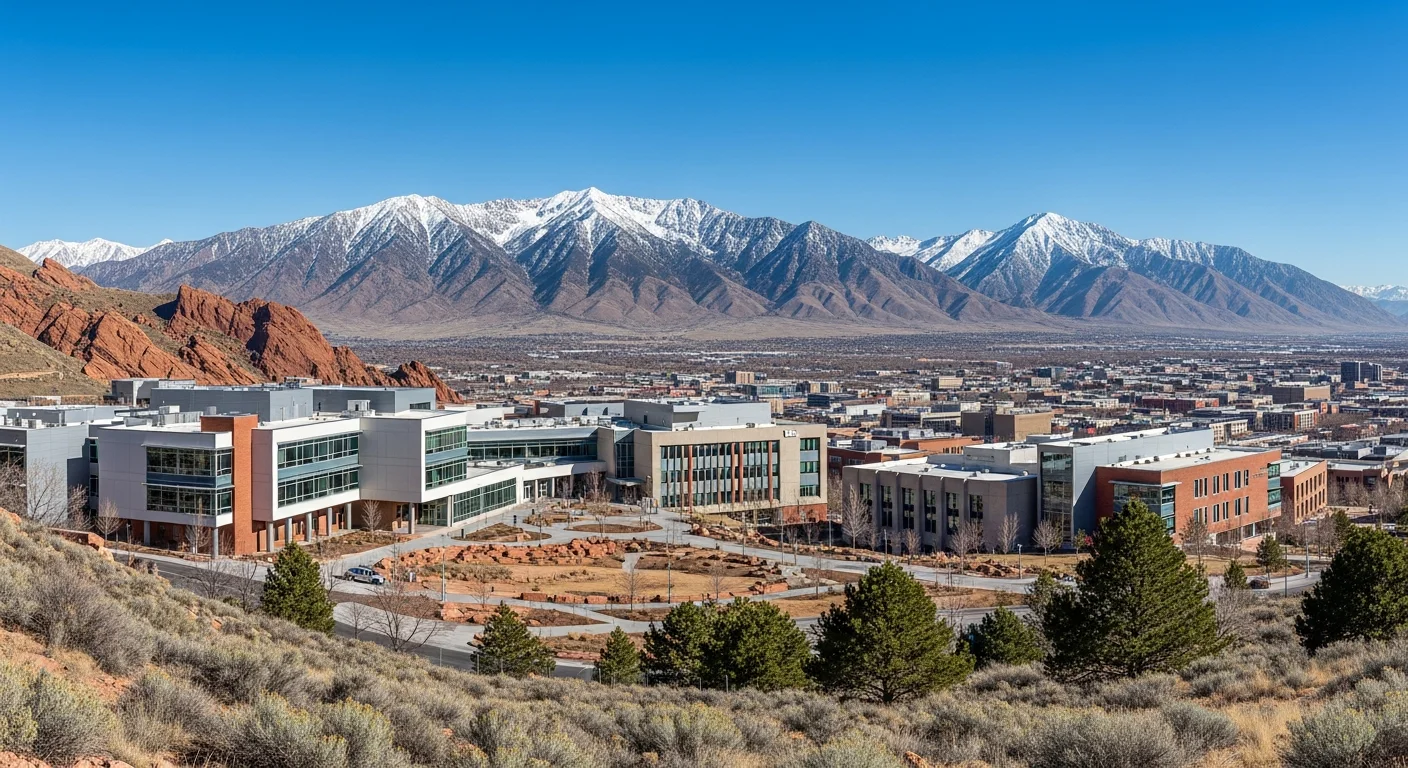
Compare the top information systems colleges in Utah. 9 accredited information systems schools ranked by graduation rate, career outcomes, and value, from Weber State University to Western Governors University.
Best information systems degree programs: Western Governors, Utah Valley, Weber State
Ranked by graduation rates, program outcomes, and institutional quality
Tuition ranges from $3,888 to $8,175/year
Weber State offers the most affordable option at $5,471/yr
Information Systems degree programs available: 4 associate's, 4 master's, 1 doctoral in Utah
From community college pathways to advanced research degrees
2 online information systems degree programs in Utah
Flexible scheduling for working professionals
Utah community college transfer can save 40-60% on total degree costs
4 associate's programs provide transfer pathways to bachelor's degrees
Education Commission of the States
Major employers: Adobe, Qualtrics, Pluralsight, Domo
Tech hubs in Salt Lake City and Provo
Hakia Research 2026
Information Systems degree programs near 28+ cities across Utah
Search by city to find programs within 200 miles of your location
Updated October 19, 2026
We rank 16 accredited information systems programs in Utah using IPEDS 2024 institutional data, BLS OEWS 2024 state salary data, and College Scorecard outcomes. A 4-factor weighted composite is normalized to a 0–100 score. Schools cannot pay for placement; rankings are produced algorithmically.
Are Information Systems Degree Programs in Utah Worth It?
Source: BLS OEWS May 2024
Compare the top-ranked Information Systems programs in Utah by degree level. Tuition, graduation rate, and Hakia Score for every accredited program.
Utah ranks among the nation's top destinations for information systems education, with 7 accredited bachelor's degree programs across 5 public and 2 private institutions. The highest-ranked programs are Western Governors, Utah Valley, Weber State, recognized for academic excellence, research opportunities, and strong industry connections.
Graduates from Utah information systems programs earn a median salary of $91,800, 6% below the national average. The state's robust technology sector, anchored by the Salt Lake City, Provo, Lehi metropolitan areas, provides abundant internship and employment opportunities with companies including Adobe, Qualtrics, Pluralsight.
Tuition ranges from $5,266 to $8,175 annually, with an average of $6,588/yr. Top programs maintain graduation rates above 89%, with the highest reaching 100%. Many programs hold ABET accreditation, the gold standard for computing education, ensuring curriculum meets rigorous industry standards.
Students can choose from specializations including software engineering, cybersecurity, artificial intelligence, data science, and systems architecture. Strong industry partnerships provide access to co-op programs, capstone projects with real companies, and direct recruiting pipelines to Utah's leading technology employers. For students seeking information systems degrees in Utah, these top-ranked information systems schools offer the strongest combination of academic rigor and career preparation.
Utah offers 4 master's degree programs in information systems, designed for professionals seeking to advance into senior engineering, technical leadership, and specialized roles. The top programs, Western Governors, U of Utah, Utah State, combine advanced technical training with research opportunities and leadership development.
Master's graduates in Utah earn a median salary of $108,000, approximately 20-30% higher than bachelor's degree holders. The concentration of technology companies in Salt Lake City, Provo, Lehi creates strong demand for graduate-level talent, with Adobe, Qualtrics, Pluralsight actively recruiting from these programs.
Program formats include traditional full-time study (typically 2 years), part-time options for working professionals (2-3 years), and accelerated tracks. Tuition averages $7,320/yr, with many employers offering tuition reimbursement for graduate education. Some programs offer thesis and non-thesis tracks, allowing students to focus on research or professional development based on their career goals.
Curriculum covers advanced topics including machine learning, distributed systems, software architecture, and technical management. Many programs include practicum experiences, industry capstone projects, or consulting engagements that provide real-world application of advanced concepts. Among Utah's information systems schools at the graduate level, these programs stand out for both academic quality and career outcomes.
| Metric | Value |
|---|---|
| Average in-state tuition | $6,224/year |
| Average out-of-state tuition | $15,560/year |
| Community college tuition | $1,556/year |
| 4-year savings for residents | $37,344 |
| 2+2 transfer pathway savings | $9,336 |
Source: IPEDS 2024
Utah residents pursuing Information Systems degrees have access to multiple funding pathways. The Utah Opportunity Scholarship provides need- and merit-based awards specifically for Utah residents attending institutions within the Utah System of Higher Education (Utah System of Higher Education). This state-sponsored program complements federal aid options, making higher education more accessible across the state's 19 institutions offering Information Systems programs at various degree levels (IPEDS).
All Information Systems students should complete the Free Application for Federal Student Aid (FAFSA) to access federal grants, loans, and work-study opportunities (Federal Student Aid). Beyond state and federal aid, many Utah institutions offer institutional scholarships and merit-based awards. Students should contact their chosen institution's financial aid office to explore program-specific scholarships, assistantships, and employer partnerships. The affordability of Utah's Information Systems programs, with average public in-state tuition at $6,014, makes state and federal aid particularly impactful for reducing overall cost of attendance (College Scorecard).
Use our interactive ROI calculator to estimate your return on investment for a information systems degree in Utah. Enter your expected tuition costs, financial aid, and career goals to see projected payback periods and lifetime earnings. The calculator uses current salary data from BLS and tuition data from IPEDS to provide accurate estimates.
Estimate your return on investment for a information systems degree
Leave blank to use average cost for selected program type
+907%
Net gain divided by total investment. ROI above 200% is considered excellent for education investments.
$1,677,254
Your additional lifetime earnings with this degree vs. working without one, minus the total investment.
5 years
Years until your cumulative earnings exceed total investment. Shorter programs often break even faster due to lower opportunity cost.
$133,333
Your starting salary adjusted for local cost of living. This shows real purchasing power compared to a $100K national baseline.
Why does break-even change with program type? Your "total investment" includes both tuition AND opportunity cost (foregone earnings while in school). A 4-year full-time public university (in-state) means 4 years of not earning a salary ($140,000 in opportunity cost). Shorter full-time programs may have higher tuition but lower total investment because you return to the workforce sooner.
How we calculate your degree ROI using real salary data
Tuition plus opportunity cost (earnings you miss while in school)
Direct cost of the degree program
4 years × $35K/year foregone salary while studying full-time
Projected career earnings starting after graduation, with salary growth
What you'd earn working at $35K/year with 2% annual growth
Median salary for this role in your selected location (BLS 2024)
Your investment's compound annual growth rate (similar to stock market returns)
Data sources: BLS OEWS May 2024, IPEDS 2024. Calculations use median salaries, 3% discount rate, and assume salary growth declines from 6% to 2% over career. Individual results will vary. | Powered by Hakia.com
Median annual salary in Utah metro areas
| Category | Value |
|---|---|
| Salt Lake City | $119K |
| Provo | $113K |
| Lehi | $108K |
Source: BLS OEWS May 2024
Hakia.com
Find information systems jobs in Utah. These major employers across Utah metro areas are actively hiring information systems degree holders. Click employer names to view current job openings.
Utah provides strong transfer pathways for students pursuing Information Systems degrees through the Utah Transfer Guides, which offer major-specific pathways from two-year to four-year institutions. The state operates 5 community colleges and 21 four-year institutions, creating multiple entry points for students seeking affordable, quality education. Utah's transfer system is designed to maximize credit applicability and reduce time-to-degree completion, allowing associate's degree graduates to seamlessly transition to bachelor's programs. The Utah System of Higher Education maintains articulation agreements between community colleges like Salt Lake Community College, Utah Valley University, and Weber State University and universities such as Utah State University and the University of Utah. These agreements guarantee that credits earned in lower-division courses transfer directly and count toward bachelor's degree requirements.
Students completing Information Systems associate's degrees at Utah's community colleges can expect their coursework in database fundamentals, systems analysis, and networking to transfer directly to bachelor's programs. Major-specific transfer guides outline which courses satisfy general education, core IS requirements, and electives at receiving institutions, streamlining the transition and minimizing credit loss. For example, a student earning an associate's degree at Weber State University can transfer to Utah State University's bachelor's program with clear course mapping and minimal additional prerequisite work. This pathway is particularly valuable given Utah's affordable tuition, average public in-state costs are $6,014 annually, allowing students to complete the first two years at lower cost before transitioning to four-year institutions. The Utah Opportunity Scholarship provides additional financial support for transfer students. Prospective students should consult the Utah Transfer Guides website and their community college advisors to identify the most efficient pathways aligned with their career goals in Information Systems.
Utah is a significant hub for Information Systems education, with 19 institutions offering programs across all degree levels according to IPEDS data. The state produced 2,534 completions in Information Systems during 2023, including 1,705 bachelor's degrees, 802 master's degrees, and 10 doctoral degrees. This strong pipeline of talent reflects growing demand in Utah's thriving technology sector, anchored by major employers like Goldman Sachs, Adobe, and Intermountain Healthcare. Utah's tech economy is concentrated in major metropolitan areas including Salt Lake City, Provo-Orem, and Ogden-Clearfield, creating abundant internship and employment opportunities for graduates.
The cost of pursuing an Information Systems degree in Utah is notably competitive. Average public in-state tuition for four-year institutions stands at $6,014 annually, with out-of-state tuition at $19,392, making Utah an attractive destination for both resident and non-resident students. Top-ranked schools like Utah State University and Brigham Young University offer strong programs at approximately $6,500–$7,400 per year. Beyond tuition savings, Utah residents can leverage the Utah Opportunity Scholarship, which provides need- and merit-based financial aid. Whether you're exploring bachelor's, master's, or associate's pathways, Utah's combination of affordable tuition, quality institutions, and regional technology employment opportunities makes it an excellent choice for Information Systems education.
Information Systems Program Availability in Utah
Source: IPEDS 2024
Utah's information systems job market is experiencing strong growth, with strong demand across multiple metropolitan regions. The state's tech sector is concentrated in three major metro areas: the Salt Lake City metropolitan area, the Provo-Orem region, and the Ogden-Clearfield corridor. These areas serve as employment hubs for information systems professionals, with Salt Lake City emerging as the primary technology center in the state. According to the Bureau of Labor Statistics, Utah continues to attract technology talent and investment, making it an increasingly competitive market for IT professionals. The state's relatively affordable cost of living compared to other tech hubs, combined with a growing startup ecosystem, creates favorable conditions for information systems careers.
Utah institutions are well-positioned to prepare graduates for this dynamic market. With 19 institutions offering information systems programs at various levels, including 8 bachelor's programs, 5 master's programs, and 5 associate's programs, students have diverse pathways to enter the field. Western Governors University leads in program completions with 1,877 total completions, followed by the University of Utah with 452 completions, demonstrating the state's capacity to develop a substantial IT workforce. For students seeking specific career guidance, the College Scorecard and BLS occupational data provide detailed salary and employment outlook information. Prospective students should also explore related fields like Information Technology in Utah, Data Analytics in Utah, and Cloud Computing in Utah to understand the broader technology landscape.
New graduates and career changers
Technical leads and architects
2 available in Utah
Traditional classroom experience
Institutional characteristics, completions, graduation rates
Utah salary and employment data
Program details and admissions information
Last Updated: June 26, 2026. Rankings based on IPEDS 2024 data. Salary data from BLS OEWS May 2024.

Co-founder & Editor (B.S. Computer Science, Oregon State • B.A. Psychology, University of Washington)
Taylor combines technical expertise in computer science with a deep understanding of human behavior and learning. His dual background drives Hakia's mission: leveraging technology to build authoritative educational resources that help people make better decisions about their academic and career paths.
Hand-researched detail on the top-ranked programs: degree pathways, research labs, industry partners, career outcomes, and admissions. Tap any school to expand.
Why it stands out. Annual Domo Hackathon. Game Day Analytics Challenge
Hakia insight. University of Utah's annual Domo Hackathon and Game Day Analytics Challenge are built-in credentialing events where students compete against peers from other schools; winning entries become portfolio pieces and networking connections with Adobe, Qualtrics, Google, and Microsoft recruiters in the room.
The Bachelor of Science in Information Systems at University of Utah's David Eccles School of Business focuses on the intersection of business and technology, equipping students with tools to deploy technology for strategic business objectives. The program integrates business concepts with technology skills, preparing graduates for roles in cybersecurity, business intelligence, analytics, database administration, and systems architecture. Students benefit from dedicated academic advisors, career coaches, and world-class faculty. The program emphasizes hands-on learning through multiple competitions and hackathons, including the annual Domo Hackathon, Game Day Analytics Challenge, Adobe Social Impact Challenge, Salesforce IDEAthon Chatbot Challenge, and Generative AI Hackathon. An IS minor is also available with a study abroad option in Seoul, Tokyo, Rome, or Barcelona.
Programs offered
Research labs & institutes
Industry partners
Career outcomes
Top employers: intel
Admissions
Deadline March 15, 2026 for Express Admit.
Accreditation & certifications
Location advantage: Proximity to Salt Lake City tech hub Access to Adobe, Qualtrics, and regional startups Strong local networking and mentorship ecosystem
Why it stands out. Optional internship available (INFO 4810R, 3 credits) as elective option. Hands-on development focus with courses in client-side web development, server-side frameworks, mobile app development, and web security
Hakia insight. Utah Valley's application development emphasis with courses in client-side, server-side, and mobile development positions graduates for startup and scale-up roles where full-stack capability is non-negotiable, a practical advantage over programs splitting between application and infrastructure tracks.
The BS in Information Systems - Application Development Emphasis prepares students to develop and deploy enterprise-level systems for organizational needs. The 123-credit program combines 99 credits of IS core and discipline requirements with 24 credits in the Application Development emphasis, focusing on client-side and server-side web development, mobile application development, and web/application security. Students complete coursework in programming, database systems, systems analysis and design, and data analytics. The curriculum includes an optional internship opportunity (INFO 4810R) available as an elective. Graduates pursue careers as software developers, web developers, database architects, and IT managers, with median salaries ranging from $98,540 to $169,510 depending on specialization. The program emphasizes hands-on development skills through practical courses in web frameworks, enterprise development, and security.
Programs offered
Industry partners
Career outcomes
Location advantage: Proximity to Utah's tech corridor including software, finance, and business services companies
Why it stands out. Industry-recognized certifications (CompTIA A+, Network+, Security+, Cloud+, AWS) built into degree at no additional cost. Competency-based learning allows faster progression through known material
Hakia insight. WGU's competency-based model lets students test out of CompTIA A+, Network+, Security+, and Cloud+ certifications immediately upon enrollment rather than taking prerequisite courses—a student who already knows networking can earn three certifications and skip 6-9 months while peers complete intro sequences.
WGU's Bachelor of Science in Information Technology is a fully online program designed with input from industry experts and regularly updated to reflect current IT practices. The 35-course curriculum provides a broad foundation in AI-integrated computer information systems, covering scripting and programming, networking and security, systems and services, data management, business of IT, automation with Python, cloud and networking security, IT service management, data and AI fluency, and agile project management. Students earn industry-recognized certifications from CompTIA and AWS built directly into the program at no additional cost or time. The program emphasizes hands-on skills in AI, automation, and data-driven problem-solving. With 61% of graduates finishing within 39 months, the program's competency-based structure allows students to advance as soon as they master material. Graduates report an average salary increase of $9,639 after completing the degree.
Programs offered
Industry partners
Career outcomes
Accreditation & certifications
Location advantage: 100% online, accessible globally Based in Salt Lake City but serves no geographic boundary
Why it stands out. Multiple career tracks for customization. Meaningful internship experiences
Hakia insight. Utah Tech's Analytics and Modeling Center and DataPark Center aren't just labs—they're live project environments where students work on real regional business problems, creating portfolio pieces that distinguish them from peers whose capstones remain theoretical.
Utah Tech University's Information Systems and Analytics Bachelor of Science program prepares students for high-demand careers by combining technology expertise with business acumen. The curriculum emphasizes hands-on learning through active learning approaches, meaningful internship experiences, and business development opportunities. Students develop skills in statistical and analytical tools, formulating descriptive, predictive, and prescriptive models, and optimization techniques. The program features multiple career tracks allowing customization based on student interests and career goals. A unique graduation requirement includes passing at least one industry certification related to the student's career path. Students engage in analyzing real-world business situations, developing professional communication skills, and integrating emerging technologies. The program focuses on creating leaders with global perspectives who can derive actionable insights from large datasets to maintain competitive advantage for organizations across various industries.
Programs offered
Research labs & institutes
Notable faculty
Location advantage: Emerging tech market in southwestern Utah
Why it stands out. Accelerated completion: as little as one calendar year (three semesters) while working full-time. Flexible part-time option: four semesters (15 months) with lighter course load
Hakia insight. University of Utah's three-semester completion option (one calendar year) while working full-time is possible because the program front-loads technical depth in summer blocks—a design that appeals to professionals who can't afford a traditional two-year commitment but need genuine master's-level rigor, not a diluted online alternative.
The Master of Science in Information Systems at the David Eccles School of Business prepares working professionals to solve complex business problems using modern technology. The program offers flexible completion options: as little as one calendar year (three semesters) or 15 months (four semesters) with lighter course load, enabling full-time employment while studying. Students choose from four advanced specializations: IT security, software and systems architecture, product and process management, and business intelligence and analytics. The curriculum is industry-driven with hands-on experience designed for real-world application. The U.S. Bureau of Labor Statistics forecasts 15% employment growth for computer and information systems managers through 2032. Graduates gain competitive advantage for in-demand positions in major corporations. The program offers an Express Admit option for faster application processing and provides up to 36 months of OPT (Optional Practical Training) post-graduation.
Programs offered
Research labs & institutes
Industry partners
Admissions
Deadline March 15, 2026 for Express Admit.
Accreditation & certifications
Location advantage: Proximity to Salt Lake City tech hub Access to Adobe, Qualtrics, and regional startups Strong local networking and mentorship ecosystem