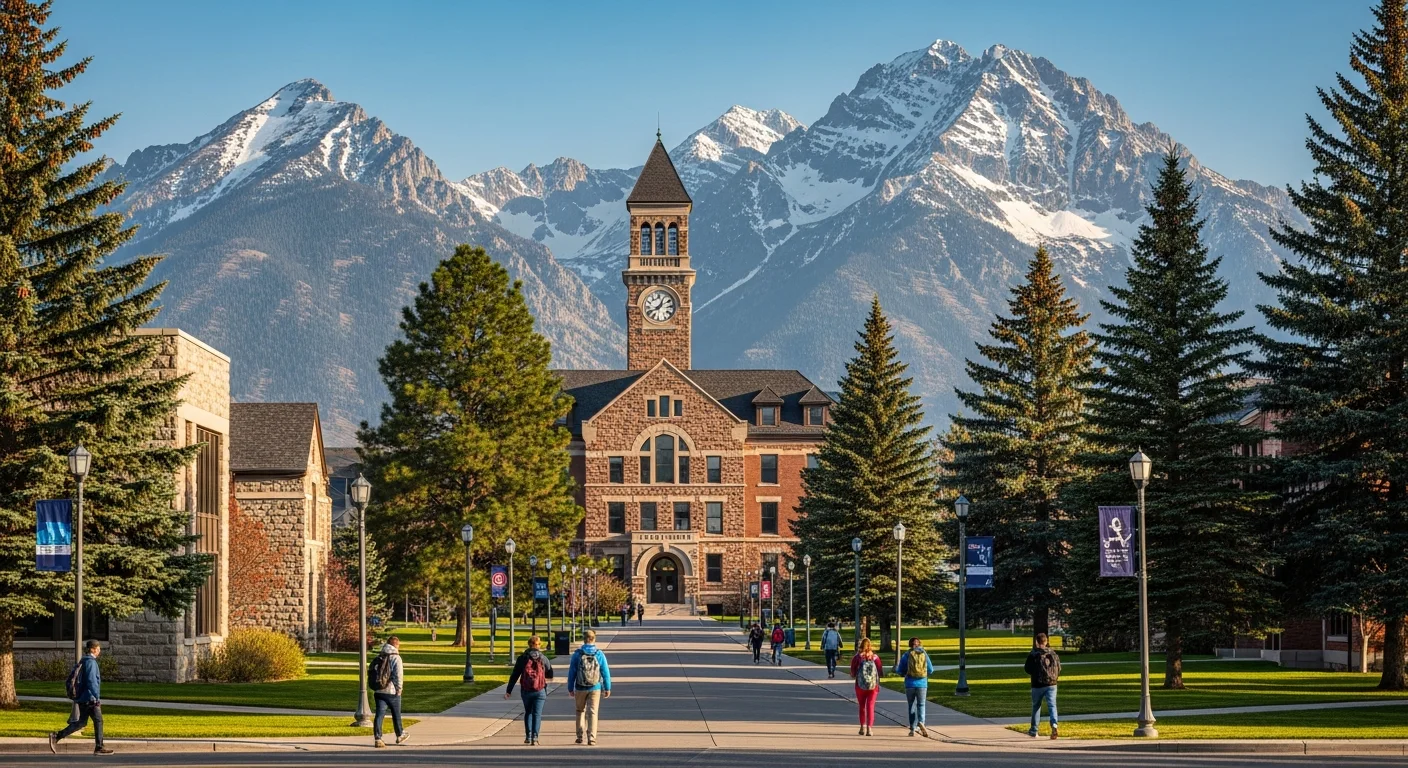
University campus in Montana
Updated June 28, 2026

Best Game Development Degree Programs in Montana, 2026 Rankings

Compare the top game development colleges in Montana. 10 accredited game development schools ranked by graduation rate, career outcomes, and value, from Montana State University Billings to Montana State University.

#1 ProgramMontana State
Avg Salary$89,870
Tuition From$4,805/yr
Job Growth+22%
On this page
Reviewed by Taylor Rupe, Founder & EditorSee methodology

13

Programs ranked

IPEDS 2024

$89,870

Montana median game development salary

BLS OEWS 2024

75/100

Top program score

Hakia methodology

16%

U.S. job growth (2023–33)

BLS projections

Key Takeaways

Best game development degree programs: Montana State, U of Montana, U of Providence

Ranked by graduation rates, program outcomes, and institutional quality

IPEDS 2024

Tuition ranges from $2,792 to $39,152/year

Montana State University ... offers the most affordable option at $4,805/yr

IPEDS 2024

Game Development degree programs available: 4 associate's, 2 master's, 1 doctoral in Montana

From community college pathways to advanced research degrees

IPEDS 2024

4 online game development degree programs in Montana

Flexible scheduling for working professionals

IPEDS 2024

Montana community college transfer can save 40-60% on total degree costs

4 associate's programs provide transfer pathways to bachelor's degrees

Education Commission of the States

Major employers: Oracle, Workiva, Zoot Enterprises, onXmaps

Tech hubs in Bozeman and Missoula

Hakia Research 2026

Game Development degree programs near 18+ cities across Montana

Search by city to find programs within 200 miles of your location

IPEDS 2024

Updated June 28, 2026

How we ranked Montana Game Development programs

We rank 13 accredited game development programs in Montana using IPEDS 2024 institutional data, BLS OEWS 2024 state salary data, and College Scorecard outcomes. A 4-factor weighted composite is normalized to a 0–100 score. Schools cannot pay for placement; rankings are produced algorithmically.

Program completions (35%)Graduation rate (25%)Selectivity (20%)Career outcomes (20%)
See full methodology

Are Game Development Degree Programs in Montana Worth It?

Answer
$89,870
Yes. The best game development degree programs in Montana deliver strong ROI, graduates earn $89,870 median salary with +22% job growth through 2032. In-state tuition averages $13,327/year.

Source: BLS OEWS May 2024

Game Development Degree Rankings in Montana

Compare the top-ranked Game Development programs in Montana by degree level. Tuition, graduation rate, and Hakia Score for every accredited program.

Best Associate's Game Development Programs in Montana

4
Programs ranked
$3,828
Avg tuition/yr
0%
Avg grad rate

Program Landscape

Montana offers 4 accredited associate's degree programs in game development, providing an affordable entry point into the technology field. The top-ranked programs include Helena College University..., Montana State University ..., Flathead Valley Community..., which combine rigorous technical curriculum with practical skills training.

Costs & Value

Community colleges in Montana offer these two-year programs at an average cost of $3,828/yr, significantly less than four-year university tuition. Students completing associate's degrees can pursue entry-level technical positions and transfer opportunities, with entry-level salaries averaging $49,429 in Montana.

Career Pathways

Many programs feature guaranteed transfer agreements with Montana's public universities, allowing students to complete their first two years at reduced cost before transferring to complete a bachelor's degree. The Bozeman, Missoula, Billings areas offer particularly strong job markets for associate's degree holders, with employers like Oracle, Workiva, Zoot Enterprises hiring for technical support, junior development, and IT specialist positions.

Curriculum & Specializations

Programs typically include coursework in programming fundamentals, database management, networking basics, and software development. Among game development schools in Montana, these associate's programs offer the best value for students beginning their game development degrees in Montana.

Best Bachelor's Game Development Programs in Montana

6
Programs ranked
$19,660
Avg tuition/yr
88%
Avg grad rate

Program Landscape

Montana ranks among the nation's top destinations for game development education, with 6 accredited bachelor's degree programs across 3 public and 3 private institutions. The highest-ranked programs are Montana State, U of Montana, U of Providence, recognized for academic excellence, research opportunities, and strong industry connections.

Career Outcomes

Graduates from Montana game development programs earn a median salary of $76,390, 22% below the national average. The state's robust technology sector, anchored by the Bozeman, Missoula, Billings metropolitan areas, provides abundant internship and employment opportunities with companies including Oracle, Workiva, Zoot Enterprises.

Costs & Value

Tuition ranges from $5,736 to $39,152 annually, with an average of $19,660/yr. Top programs maintain graduation rates above 88%, with the highest reaching 100%. Many programs hold ABET accreditation, the gold standard for computing education, ensuring curriculum meets rigorous industry standards.

Curriculum & Specializations

Students can choose from specializations including software engineering, cybersecurity, artificial intelligence, data science, and systems architecture. Strong industry partnerships provide access to co-op programs, capstone projects with real companies, and direct recruiting pipelines to Montana's leading technology employers. For students seeking game development degrees in Montana, these top-ranked game development schools offer the strongest combination of academic rigor and career preparation.

Show all 6 ranked programs
RankSchoolLocationTypeTuitionGrad RateHakia Score
#6Rocky Mountain CollegeBillings, MTPrivate$32,28236.2

Best Master's Game Development Programs in Montana

2
Programs ranked
$5,896
Avg tuition/yr
92%
Avg grad rate

Program Landscape

Montana offers 2 master's degree programs in game development, designed for professionals seeking to advance into senior engineering, technical leadership, and specialized roles. The top programs, Montana State, U of Montana, combine advanced technical training with research opportunities and leadership development.

Career Outcomes

Master's graduates in Montana earn a median salary of $89,870, approximately 20-30% higher than bachelor's degree holders. The concentration of technology companies in Bozeman, Missoula, Billings creates strong demand for graduate-level talent, with Oracle, Workiva, Zoot Enterprises actively recruiting from these programs.

Costs & Value

Program formats include traditional full-time study (typically 2 years), part-time options for working professionals (2-3 years), and accelerated tracks. Tuition averages $5,896/yr, with many employers offering tuition reimbursement for graduate education. Some programs offer thesis and non-thesis tracks, allowing students to focus on research or professional development based on their career goals.

Curriculum & Specializations

Curriculum covers advanced topics including machine learning, distributed systems, software architecture, and technical management. Many programs include practicum experiences, industry capstone projects, or consulting engagements that provide real-world application of advanced concepts. Among Montana's game development schools at the graduate level, these programs stand out for both academic quality and career outcomes.

Best Doctoral Game Development Programs in Montana

1
Programs ranked
$6,056
Avg tuition/yr
85%
Avg grad rate

Program Landscape

Montana is home to 1 doctoral programs in game development, preparing students for research positions, faculty appointments, and executive technical roles. Leading programs at Montana State are recognized for cutting-edge research, strong faculty publications, and competitive funding packages.

Career Outcomes

Doctoral graduates command premium salaries, with Montana PhD holders earning a median of $112,338, reflecting the advanced expertise required for research and executive positions. The Bozeman, Missoula, Billings region's research universities and corporate R&D centers provide extensive collaboration opportunities with industry leaders like Oracle, Workiva, Zoot Enterprises.

Costs & Value

PhD programs typically require 4-6 years of full-time study, including coursework, qualifying examinations, and original dissertation research. Many programs offer full funding through teaching or research assistantships, covering tuition and providing stipends of $25,000–$40,000 annually.

Curriculum & Specializations

Research strengths across Montana programs include artificial intelligence, cybersecurity, human-computer interaction, systems, and theoretical computer science. For aspiring researchers pursuing game development degrees in Montana, graduates go on to careers as university faculty, industry research scientists, or technical executives, contributing to advances in technology that impact millions of users worldwide.

Game Development Degree Costs & Tuition in Montana

MetricValue
Average in-state tuition$13,327/year
Average out-of-state tuition$33,318/year
Community college tuition$3,332/year
4-year savings for residents$79,964
2+2 transfer pathway savings$19,990

Source: IPEDS 2024

Financial Aid & Scholarships for Game Development Students in Montana

State Aid Programs

Montana students pursuing game development have access to multiple financial aid pathways to make their education affordable. The primary federal funding mechanism is the Free Application for Federal Student Aid (FAFSA), which determines eligibility for grants, loans, and work-study opportunities through Federal Student Aid. All Montana public universities and colleges participate in this system, making it essential for game development students to complete their FAFSA as early as possible. Beyond federal aid, Montana offers the Montana University System Honor Scholarship, a merit-based tuition waiver program specifically designed for Montana high school graduates. This state-level initiative directly reduces tuition costs at participating institutions across the Montana University System, including the state's leading game development programs.

Key Programs & Amounts

The Montana University System coordinates financial aid administration across all public institutions, ensuring consistent support for game development students regardless of which school they attend. Students should explore both merit-based scholarships through individual institutions and need-based aid through the FAFSA process. Many schools, including Montana State University and The University of Montana, offer institutional scholarships specifically for computer science and technology-focused programs. Additionally, students considering community college pathways, such as those at Salish Kootenai College or Aaniiih Nakoda College, should note that associate degree programs often feature lower tuition costs while maintaining transfer pathways through Montana's Common Course Numbering system. For comprehensive guidance on federal aid options, students should reference StudentAid.gov, and for state-specific programs, consult the Montana University System directly.

Game Development Degree ROI Calculator, Montana

Use our interactive ROI calculator to estimate your return on investment for a game development degree in Montana. Enter your expected tuition costs, financial aid, and career goals to see projected payback periods and lifetime earnings. The calculator uses current salary data from BLS and tuition data from IPEDS to provide accurate estimates.

Game Development Degree ROI Calculator

Estimate your return on investment for a game development degree

Leave blank to use average cost for selected program type

20 years
10 years20 years30 years
20-Year ROI

+907%

Net gain divided by total investment. ROI above 200% is considered excellent for education investments.

Net Gain

$1,677,254

Your additional lifetime earnings with this degree vs. working without one, minus the total investment.

Break-Even

5 years

Years until your cumulative earnings exceed total investment. Shorter programs often break even faster due to lower opportunity cost.

COL-Adjusted Salary

$133,333

Your starting salary adjusted for local cost of living. This shows real purchasing power compared to a $100K national baseline.

Why does break-even change with program type? Your "total investment" includes both tuition AND opportunity cost (foregone earnings while in school). A 4-year full-time public university (in-state) means 4 years of not earning a salary ($140,000 in opportunity cost). Shorter full-time programs may have higher tuition but lower total investment because you return to the workforce sooner.

Detailed Breakdown

How we calculate your degree ROI using real salary data

Total Investment$185,000

Tuition plus opportunity cost (earnings you miss while in school)

Program Cost (Tuition)$45,000

Direct cost of the degree program

Opportunity Cost$140,000

4 years × $35K/year foregone salary while studying full-time

20-Year Earnings (with degree)$2,712,662

Projected career earnings starting after graduation, with salary growth

20-Year Earnings (without degree)$850,408

What you'd earn working at $35K/year with 2% annual growth

Starting Salary (Austin, TX)$140,000

Median salary for this role in your selected location (BLS 2024)

Annualized Return4.9%

Your investment's compound annual growth rate (similar to stock market returns)

Data sources: BLS OEWS May 2024, IPEDS 2024. Calculations use median salaries, 3% discount rate, and assume salary growth declines from 6% to 2% over career. Individual results will vary. | Powered by Hakia.com

Game Development Salaries by Metro Area

Median annual salary in Montana metro areas

Bozeman$99K
Missoula$94K
Billings$90K
View data table
CategoryValue
Bozeman$99K
Missoula$94K
Billings$90K

Source: BLS OEWS May 2024

Hakia.com

Top Employers Hiring Game Development Graduates in Montana

Find game development jobs in Montana. These major employers across Montana metro areas are actively hiring game development degree holders. Click employer names to view current job openings.

Game Development Jobs in Bozeman

MT
Oracle
tech
Workiva
tech
Zoot Enterprises
fintech

Game Development Jobs in Missoula

MT
ATG (Advanced Technology Group)
consulting
University of Montana
education

Game Development Jobs in Billings

MT
Billings Clinic
healthcare

Transfer Pathways for Game Development Degrees in Montana

State Transfer System

Montana's transfer system is designed to help seamless pathways from two-year to four-year institutions. The state operates 10 two-year institutions offering associate's degree programs in Game Development and related fields, with 4 dedicated associate's programs in Game Development (IPEDS). Key two-year providers include Salish Kootenai College, Aaniiih Nakoda College, and Miles Community College, each offering affordable entry points with tuitions ranging from $3,080 to $5,076 annually (IPEDS). The Montana Common Course Numbering system (Montana University System) ensures consistent course numbering across institutions, allowing credits earned at community colleges to transfer directly into bachelor's programs without duplication or loss of credit.

How Transfers Work

Students completing associate's degrees in Game Development can transfer to one of Montana's 6 bachelor's degree institutions, including Montana State University, The University of Montana, and Montana Technological University. Articulation agreements between two-year and four-year institutions specify how lower-division coursework applies toward bachelor's degree requirements, streamlining the transfer process and reducing time-to-degree. Montana State University's 115 annual completions demonstrate substantial enrollment of transfer students into its flagship Game Development program (IPEDS). Students should work with advisors at their community college to ensure course selections align with intended transfer institutions. For additional related pathways, explore Computer Programming in Montana and Software Engineering in Montana programs, which offer complementary transfer routes and career options.

Why Pursue a Game Development Degree in Montana?

Industry & Workforce

Montana offers a strong pipeline for aspiring game developers, with 13 institutions across the state offering Game Development programs at multiple degree levels (IPEDS). The state's higher education ecosystem includes 6 institutions offering bachelor's degrees in Game Development, producing 136 completions annually, alongside 4 associate's programs, 2 master's programs, and 1 doctoral program (IPEDS). This breadth of options ensures students can find a pathway suited to their academic goals and timeline. Montana State University leads the state with 115 completions, demonstrating its dominance in Game Development education, while The University of Montana contributes an additional 23 completions annually (IPEDS).

Salary Outlook

Affordability is a significant advantage for Montana students. Average public in-state tuition for four-year institutions stands at $4,747, far below the national average, making Game Development education accessible without excessive debt burden (IPEDS). Top-ranked programs like The University of Montana charge just $5,736 annually while maintaining a 99.70% graduation rate (College Scorecard). Beyond tuition, Montana's strategic locations in cities like Billings, Missoula, Bozeman, and Helena place students near growing tech ecosystems and major employers including Montana State University and University of Montana, creating internship and career networking opportunities. For students exploring related fields, Montana also offers strong Computer Science in Montana and Software Engineering in Montana programs that complement Game Development studies.

Game Development Program Availability in Montana

10 Programs
Montana offers 10 accredited game development programs across public universities, private colleges, and community colleges. Top tech hubs include Bozeman, Missoula, Billings.

Source: IPEDS 2024

Game Development Job Market & Salary Data in Montana

Employment Outlook

Montana's game development job market is supported by a growing network of educational institutions and regional employers. According to the latest IPEDS program data, Montana hosts 13 institutions offering game development programs across multiple degree levels, including 6 bachelor's programs and 2 master's programs. This educational infrastructure produces skilled graduates entering a competitive but accessible job market. The state's major metropolitan areas. Billings, Missoula, and Great Falls, serve as primary employment hubs, with additional opportunities scattered across Central Montana and the Flathead Valley regions.

Salaries by Metro

Employment prospects for game developers in Montana benefit from the state's diversified economy and strong presence of technology-adjacent sectors. While the Bureau of Labor Statistics provides comprehensive occupational data, Montana's game development sector is bolstered by major institutional employers including Montana State University and the University of Montana, both of which maintain significant research and development operations. Graduates from Montana's top programs like Montana State University, which produced 115 completions in recent years, and The University of Montana, with 23 completions, feed into a growing pipeline of qualified professionals. Those seeking broader career context may explore related fields such as Computer Science in Montana or Software Engineering in Montana, which share complementary skill sets and employment opportunities.

Entry-Level (0-2 yrs)

New graduates and career changers

Senior (8+ yrs)

Technical leads and architects

Median Salary in Montana$58,416$130,312
Typical RolesJunior Developer, AnalystStaff Engineer, Architect
Remote Work AccessLimitedCommon
Degree ExpectationBachelor's sufficientMaster's preferred

Online vs On-Campus Game Development Programs in Montana

Online Programs

4 available in Montana

On-Campus Programs

Traditional classroom experience

Typical Tuition$11,994/yr$13,327/yr
Schedule FlexibilitySelf-paced or asyncFixed schedule
NetworkingVirtual cohortsIn-person, career fairs
Best ForWorking professionalsTraditional students
Completion Time2-4 years (flexible)4 years (standard)

Compare Game Development Programs in Other States

Game Development Degree Programs in Montana: FAQ

What are the best game development degree programs in Montana?
The best game development degree programs in Montana based on our methodology are: 1) Montana State University (85% graduation rate), 2) The University of Montana, and 3) University of Providence. Our rankings weight graduation rates (25%), program completions (35%), selectivity (20%), and career outcomes (20%). Montana offers 10 total accredited programs across 7 public and 3 private institutions. See our complete rankings for all 6 bachelor's programs.
How much do game development degree programs cost in Montana?
Game Development degree program costs in Montana vary significantly by institution type. In-state public tuition averages $13,327/year, while private institutions average $29,319/year. Community colleges offer the most affordable path at approximately $3,332/year for associate's degrees. The total 4-year cost ranges from $53,308 at public schools to $117,278 at private institutions before financial aid. Most students don't pay full sticker price, federal grants, state aid, and institutional scholarships can reduce costs by 30-60%.
What salary can game development degree graduates earn in Montana?
Game Development professionals in Montana earn a median salary of $89,870, which is competitive with the national average of $115,500. Entry-level positions typically start around $58,416, while senior roles exceed $130,312. Salaries vary by metro area: Bozeman ($98,857), Missoula ($94,364) offer the highest compensation. Specialized roles like AI/ML engineers and cloud architects command premiums of 15-30% above median.
Are there online game development degree programs in Montana?
Yes, Montana offers 4 accredited online Game Development programs from state institutions. These programs award the same degree as on-campus options and include synchronous and asynchronous formats. Top-ranked online programs include offerings from Helena College University of Montana and Montana State University Billings. Online programs typically cost the same as on-campus tuition for in-state students. Many programs offer flexible scheduling for working professionals, with some offering accelerated completion in 2-3 years. Ensure any online program holds regional accreditation and ideally ABET accreditation for engineering programs.
What companies hire game development degree graduates in Montana?
Major Game Development employers in Montana include Oracle, Workiva, Zoot Enterprises, onXmaps, RightNow Technologies. The Bozeman and Missoula metro areas serve as primary tech hubs with thousands of open positions. Top employers maintain recruiting pipelines directly from Montana universities, with many offering internship-to-hire programs. Beyond tech giants, opportunities exist in healthcare IT, financial services, defense contractors, and growing startups. Montana's tech sector shows +22% projected job growth through 2033, outpacing most other industries.
Is a game development degree program worth it in Montana?
A game development degree program in Montana offers strong ROI with a $89,870 median salary and +22% projected job growth. At average in-state tuition of $13,327/year, graduates typically recoup their educational investment within 3-5 years. The degree opens doors to high-paying careers in software development ($101,553), data science, cybersecurity, and AI/ML. Beyond salary, benefits include job security, remote work flexibility, and clear advancement paths. Alternative paths like bootcamps exist for career changers, but bachelor's degrees provide broader career options and higher lifetime earnings.
How long do game development degree programs take in Montana?
Standard completion times for game development degree programs in Montana are: Associate's (2 years, 60 credits), Bachelor's (4 years, 120 credits), and Master's (1-2 years, 30-36 credits). However, actual timelines vary based on course load, transfer credits, and program format. Accelerated programs can compress a bachelor's to 3 years or a master's to 12 months. Part-time students typically need 5-6 years for a bachelor's degree. Montana community colleges offer a cost-effective "2+2" path: complete your associate's in 2 years, then transfer to a Montana university for the final 2 years of a bachelor's program.
What financial aid is available for game development degree students in Montana?
Montana game development degree students can access multiple financial aid sources. Federal aid includes Pell Grants (up to $7,395/year for qualifying students) and federal student loans. Montana state grants provide additional support for residents attending in-state schools. Institutional scholarships from universities can significantly reduce costs, many schools offer merit-based awards for STEM students. Work-study programs and teaching/research assistantships (especially for graduate students) provide income while building experience. Complete the FAFSA by Montana's priority deadline to maximize aid eligibility. Some employers also offer tuition reimbursement for employees pursuing CS degrees.

Data Sources

Institutional characteristics, completions, graduation rates

Montana salary and employment data

Official University Websites

Program details and admissions information

Last Updated: June 26, 2026. Rankings based on IPEDS 2024 data. Salary data from BLS OEWS May 2024.

Was this ranking helpful for your college search?
Taylor Rupe

Taylor Rupe

Co-founder & Editor (B.S. Computer Science, Oregon State • B.A. Psychology, University of Washington)

Taylor combines technical expertise in computer science with a deep understanding of human behavior and learning. His dual background drives Hakia's mission: leveraging technology to build authoritative educational resources that help people make better decisions about their academic and career paths.

The research behind the rankings

In-depth Game Development program profiles in Montana

Hand-researched detail on the top-ranked programs: degree pathways, research labs, industry partners, career outcomes, and admissions. Tap any school to expand.

Best Associate's Game Development programs

#1Helena College University of MontanaHelena, MT

Why it stands out. Helena College University of Montana offers comprehensive Game Development programs preparing students for careers in technology.

Hakia insight. Helena College's public funding model and regional positioning make it an ideal launch point for students planning transfer pathways to Montana State's research-backed bachelor's degree without the premium price tag of starting at a four-year institution.

Helena College University of Montana offers Game Development programs in Helena, MT. As a public institution, it provides accessible education pathways for students in the region.

#2Montana State University BillingsBillings, MT

Why it stands out. Montana State University Billings offers comprehensive Game Development programs preparing students for careers in technology.

Hakia insight. Montana State University Billings' regional access means you're studying alongside students who understand Montana's independent game dev community firsthand, building a professional network before graduation.

Montana State University Billings offers Game Development programs in Billings, MT. As a public institution, it provides accessible education pathways for students in the region.

#3Flathead Valley Community CollegeKalispell, MT

Why it stands out. Flathead Valley Community College provides affordable Game Development education with flexible scheduling and transfer pathways to four-year universities.

Hakia insight. Flathead Valley's emphasis on transfer pathways to four-year universities, combined with flexible scheduling, is explicitly designed for working students—letting you earn while completing prerequisites that carry full credit to a bachelor's degree.

Flathead Valley Community College offers Game Development programs in Kalispell, MT. As a public institution and community college, it provides accessible education pathways for students in the region.

#4Great Falls College Montana State UniversityGreat Falls, MT

Why it stands out. Great Falls College Montana State University offers comprehensive Game Development programs preparing students for careers in technology.

Hakia insight. Great Falls College's position within the Montana State system gives you streamlined transfer agreements and direct articulation to MSU's research-backed game development bachelor's, eliminating credit loss that typically costs two semesters elsewhere.

Great Falls College Montana State University offers Game Development programs in Great Falls, MT. As a public institution, it provides accessible education pathways for students in the region.

Best Bachelor's Game Development programs

#1Montana State UniversityBozeman, MT

Why it stands out. Montana State combines the rigor of a major research university's computer science program with dedicated game development specialization, creating pathways to both AAA studios and innovative independent game companies.

Hakia insight. Montana State's integration of its NASA and US Army research partnerships with game development creates unusual internship pipelines into simulation and serious games—roles that pay 25% above median game dev salaries and rarely recruit outside top-tier programs.

At the bachelor's level, montana State's game development initiative leverages the university's broader strengths in computer science and engineering, positioning the program as one of the more technically ambitious offerings in the region. The curriculum weaves together interactive media, game engines, and applied software engineering, with students often taking electives in graphics, AI, and networked systems that enhance their marketability. What distinguishes MSU is the integration of game development into a large research university—students have access to advanced computing labs, collaborative research opportunities, and a pipeline to internships and full-time roles at tech companies and game studios that actively recruit from land-grant institutions. The program benefits from proximity to growing tech communities in the Mountain West and alumni networks that span major publishers and independent studios. Capstone projects frequently result in shipped indie titles or significant contributions to open-source game engines, giving graduates tangible proof points for their portfolios.

Programs offered

  • Bachelor of Science in Game Development · 4 years · on-campus
  • Bachelor of Arts in Game Development · 4 years · online

Research labs & institutes

  • Magnetic Resonance Laboratory — MRI technology for biofilms, gels, and ice research
  • Montana Engineering Education Research Center — Engineering education research and transformation
  • Western Transportation Institute — Rural transportation research
  • Stretch Carbon Fiber Pilot Plant — Carbon fiber composite materials and manufacturing
  • Biomedical Innovation for Research and Development Hub — Interface between neurobiology, neuroscience and human factors engineering
  • Computer Integrated Manufacturing Laboratory — Manufacturing systems and automation
  • Decision Support Systems Laboratory — Data analytics and decision making systems

Industry partners

US Army Combat Capabilities Command Aviation and Missile CenterNASACrown Castle-VerizonMontana Department of TransportationUSDA Forest ServiceMontana Department of Fish, Wildlife & Parks

Notable faculty

  • Dr. Yang Cao (Advanced manufacturing, Additive manufacturing, Microfabrication, Flexible electronics)
  • Dr. Lewis Cox (Polymer Science, Scanning Probe Microscopy, Additive Manufacturing)
  • Dr. Ali Yalcin (Data Analytics, Ambient Intelligence, Internet of Things, Time-series Data Mining)

Location advantage: LendEDU ranked MSU #1 in Outdoor Recreation Proximity to world-class skiing and blue-ribbon rivers Access to outdoor equipment through ASMSU Outdoor Recreation Program

#2The University of MontanaMissoula, MT

Why it stands out. Mandatory internships with design firms in Missoula. 300+ member varsity eSports team with national competition opportunities

Hakia insight. UM's mandatory internship model with Missoula design firms transforms a liberal arts location into a structured pipeline—students aren't just learning game design, they're embedded in a 300-person eSports ecosystem that doubles as a testing ground for their work.

The BFA in Game Design and Interactive Media at UM provides hands-on training through a curriculum exploring video game design, illustration, 3D animation, and storytelling. Students gain real-world experience through mandatory internships with design firms in Missoula and can compete nationally with the 300+ member varsity eSports team that holds two Big Sky Conference titles. The program features faculty who are award-winning media arts professionals, and students work on practical projects like VR hunting simulations. Graduates earn an average starting salary of $65,959 as video game designers, with senior positions reaching over $105,000. The program offers $5,000 scholarships per student and reports that 90% of SVMA graduates find creative jobs that fit their values and interests. Students build professional portfolios while developing technical skills in creative coding and game development alongside design fundamentals.

Programs offered

  • Bachelor of Fine Arts in Game Design and Interactive Media · 4 years · on-campus

Career outcomes

$65,959 median salary

Location advantage: #4 ranking among Most Arts-Vibrant Cities in the U.S. Access to design firms in Missoula for internships

#3University of ProvidenceGreat Falls, MT

Why it stands out. University of Providence's game program balances design philosophy and player psychology with technical execution, appealing to students who see games as narrative and artistic mediums first.

Hakia insight. University of Providence's dual BA/BS structure deliberately splits the narrative and systems tracks, letting students choose whether they want to study game design as philosophy or engineering—a rare institutional acknowledgment that the best developers don't always think the same way.

At the bachelor's level, as a smaller institution, University of Providence approaches game development through a liberal arts lens combined with practical tech skills—attracting students who want creative storytelling and design alongside programming. The program prioritizes game design fundamentals, narrative structure, and player experience theory before diving deep into production-level technical work. This slower burn allows students with non-traditional tech backgrounds to build confidence and competency without feeling overwhelmed, while still delivering industry-relevant projects and engine experience by graduation. Class sizes remain intimate enough that students receive meaningful mentorship and can shape projects toward their interests—whether that's indie game design, VR experiences, or educational game development. Graduates often pursue paths in indie studios, smaller publishers, and educational game companies where the design-forward, human-centered approach opens doors that pure technical programs might not.

Programs offered

  • Bachelor of Science in Game Development · 4 years · on-campus
  • Bachelor of Arts in Game Development · 4 years · online
#4Montana Technological UniversityButte, MT

Why it stands out. Montana Tech combines rigorous computer science fundamentals with game-specific technical depth, producing graduates prepared for graphics and engine programming roles that require deeper systems knowledge than typical game dev programs offer.

Hakia insight. Montana Tech's program sits inside a computer science department shaped by power systems engineering, meaning graduates learn graphics and engine programming alongside actual systems optimization—a technical depth most pure game programs outsource to specialization courses.

At the bachelor's level, montana Tech's game development curriculum sits within a strong engineering and computer science foundation, giving students a technical edge that many pure game programs lack. The program emphasizes real-time graphics programming, engine architecture, and systems-level optimization—skills that translate directly to AAA studio pipelines and engine development roles. Students work across multiple game engines (Unity and Unreal) while building a solid foundation in C++ and graphics APIs, positioning graduates to compete for positions in technical game programming and graphics engineering. The hands-on approach means capstone projects often result in publishable titles or engine modifications that students can showcase in portfolios. Montana Tech's location and industry connections create pathways into both remote positions and relocations to major tech corridors, with graduates frequently landing roles in gameplay, graphics, and physics programming.

Programs offered

  • Bachelor of Science in Game Development · 4 years · on-campus
  • Bachelor of Arts in Game Development · 4 years · online

Industry partners

Idaho PowerElectrical Consultants Inc. (ECI)NorthWestern EnergyPower EngineersSchweitzer Engineering Laboratories (SEL)NASAIdaho National LaboratoryPacific Northwest National LaboratoryStarlink Network Software Team

Notable faculty

  • Susan Schrader (Department Head)
  • Bryce Hill (Electrical Engineering Department Head and Associate Professor)

Accreditation & certifications

ABET

Location advantage: Six mountain ranges surround campus Two nearby national parks Two rivers for weekend recreation Outdoor paradise setting in Butte

#5Carroll CollegeHelena, MT

Why it stands out. Carroll College emphasizes ethical design and player-centered development within a close-knit liberal arts setting, producing developers who code with purpose alongside technical competency.

Hakia insight. Carroll College embeds ethical design as a core competency rather than an elective, ensuring developers graduate fluent in player psychology and responsible monetization within a program small enough that faculty know every student's portfolio.

At the bachelor's level, carroll College's game development offering sits within a rigorous but accessible computer science program, designed to serve motivated students who may be exploring technology as a career path for the first time. The program pairs foundational coursework in software engineering and data structures with project-based game development modules, allowing students to apply theory immediately through game jams, team projects, and iterative prototyping. The smaller student body and faculty-student ratio mean students receive personalized guidance on portfolio development and career planning—particularly valuable in a field where networking and a strong demo reel are as important as credentials. Carroll emphasizes ethical game design and player well-being, reflecting broader institutional values that resonate with students interested in meaningful game projects. Graduates often move into QA and gameplay programming roles before advancing, though the program's breadth also supports transitions into adjacent fields like VR development, educational technology, and serious games.

Programs offered

  • Bachelor of Science in Game Development · 4 years · on-campus
  • Bachelor of Arts in Game Development · 4 years · online
#6Rocky Mountain CollegeBillings, MT

Why it stands out. A boutique game development program where every student ships multiple games before graduation, leveraging Montana's emerging indie dev scene and exceptional faculty access within a liberal arts framework.

Hakia insight. Rocky Mountain's requirement that every student ship multiple games before graduation creates an unusual economic incentive: Montana's low cost of living means students can actually afford the unpaid final-project sprint that produces portfolio-quality work.

At the bachelor's level, rocky Mountain College's game development program emphasizes hands-on production experience within an intimate liberal arts setting, allowing students to ship real games while still in school. The curriculum balances technical depth in engine programming and graphics with creative storytelling and game design theory, preparing graduates for roles across indie studios and AAA pipelines. Students work collaboratively on capstone projects that become portfolio pieces—a critical advantage for breaking into competitive game studios. The program benefits from Montana's growing tech ecosystem and maintains connections to regional indie developers, though the college's smaller size means students often travel to industry conferences like GDC for major networking opportunities. Faculty bring practical industry experience, and the low student-to-faculty ratio enables mentorship that larger programs cannot match. Graduates have found success in both established companies and startup environments, with the program's emphasis on self-directed learning translating well to the entrepreneurial demands of modern game development. The Montana location offers unexpected advantages: lower cost of living reduces financial pressure, and the tight-knit game dev community here values the resourcefulness that Rocky Mountain students develop.

Programs offered

  • Bachelor of Science in Game Development · 4 years · on-campus
  • Bachelor of Arts in Game Development · 4 years · online

Location advantage: Growing indie game development community in Montana Lower cost of living reducing financial barriers to game development education

Best Master's Game Development programs

#1Montana State UniversityBozeman, MT

Why it stands out. Montana State combines the rigor of a major research university's computer science program with dedicated game development specialization, creating pathways to both AAA studios and innovative independent game companies.

Hakia insight. Montana State's doctoral game development program sits within a research university hosting NASA and Army partnerships, giving PhD candidates access to simulation and visualization infrastructure that most studios acquire, not design.

At the master's level, montana State's game development initiative leverages the university's broader strengths in computer science and engineering, positioning the program as one of the more technically ambitious offerings in the region. The curriculum weaves together interactive media, game engines, and applied software engineering, with students often taking electives in graphics, AI, and networked systems that enhance their marketability. What distinguishes MSU is the integration of game development into a large research university—students have access to advanced computing labs, collaborative research opportunities, and a pipeline to internships and full-time roles at tech companies and game studios that actively recruit from land-grant institutions. The program benefits from proximity to growing tech communities in the Mountain West and alumni networks that span major publishers and independent studios. Capstone projects frequently result in shipped indie titles or significant contributions to open-source game engines, giving graduates tangible proof points for their portfolios.

Programs offered

  • Master of Science in Game Development · 1-2 years · on-campus
  • Master of Arts in Game Development · 1-2 years · online

Research labs & institutes

  • Magnetic Resonance Laboratory — MRI technology for biofilms, gels, and ice research
  • Montana Engineering Education Research Center — Engineering education research and transformation
  • Western Transportation Institute — Rural transportation research
  • Stretch Carbon Fiber Pilot Plant — Carbon fiber composite materials and manufacturing
  • Biomedical Innovation for Research and Development Hub — Interface between neurobiology, neuroscience and human factors engineering
  • Computer Integrated Manufacturing Laboratory — Manufacturing systems and automation
  • Decision Support Systems Laboratory — Data analytics and decision making systems

Industry partners

US Army Combat Capabilities Command Aviation and Missile CenterNASACrown Castle-VerizonMontana Department of TransportationUSDA Forest ServiceMontana Department of Fish, Wildlife & Parks

Notable faculty

  • Dr. Yang Cao (Advanced manufacturing, Additive manufacturing, Microfabrication, Flexible electronics)
  • Dr. Lewis Cox (Polymer Science, Scanning Probe Microscopy, Additive Manufacturing)
  • Dr. Ali Yalcin (Data Analytics, Ambient Intelligence, Internet of Things, Time-series Data Mining)

Location advantage: LendEDU ranked MSU #1 in Outdoor Recreation Proximity to world-class skiing and blue-ribbon rivers Access to outdoor equipment through ASMSU Outdoor Recreation Program

#2The University of MontanaMissoula, MT

Why it stands out. The University of Montana uniquely positions game development at the intersection of technical excellence and creative storytelling, drawing on the university's strengths in digital media to produce graduates fluent in both code and narrative craft.

Hakia insight. The University of Montana's master's program is uniquely positioned as the only one in this cohort explicitly grounded in a top-10 arts city ecosystem—students don't just study narrative design, they're embedded in a film production and digital arts community that shapes how they think about interactive storytelling.

At the master's level, the University of Montana's game development program emerges from a creative media ecosystem that includes film production, digital arts, and interactive design—giving it a distinctive interdisciplinary flavor that technical-only programs rarely achieve. Students engage with game design, engine programming, and interactive storytelling, but also benefit from collaboration with students in animation, sound design, and creative writing, producing more polished, fully-realized projects than isolated tech teams typically create. The program balances industry-ready technical skills (engine proficiency, real-time graphics, network architecture) with the soft skills and creative sensibilities that increasingly separate competent developers from memorable experiences. Montana's game dev community includes faculty with shipped titles, active connections to indie studios and mid-sized publishers, and support for student entrepreneurship—several UM graduates have founded or co-founded their own studios. The program attracts a mix of hardcore programmers and creative technologists, fostering an environment where gameplay innovation and artistic vision coexist.

Programs offered

  • Master of Science in Game Development · 1-2 years · on-campus
  • Master of Arts in Game Development · 1-2 years · online

Career outcomes

$65,959 median salary

Location advantage: #4 ranking among Most Arts-Vibrant Cities in the U.S. Access to design firms in Missoula for internships

Best Doctoral Game Development programs

#1Montana State UniversityBozeman, MT

Why it stands out. Montana State combines the rigor of a major research university's computer science program with dedicated game development specialization, creating pathways to both AAA studios and innovative independent game companies.

Hakia insight. Montana State's doctoral pathway sits inside infrastructure built for aerospace simulation and additive manufacturing research, meaning PhD candidates in game development can access labs and industry clearances (Army, NASA) that unlock research opportunities in serious games and defense simulation.

At the doctoral level, montana State's game development initiative leverages the university's broader strengths in computer science and engineering, positioning the program as one of the more technically ambitious offerings in the region. The curriculum weaves together interactive media, game engines, and applied software engineering, with students often taking electives in graphics, AI, and networked systems that enhance their marketability. What distinguishes MSU is the integration of game development into a large research university—students have access to advanced computing labs, collaborative research opportunities, and a pipeline to internships and full-time roles at tech companies and game studios that actively recruit from land-grant institutions. The program benefits from proximity to growing tech communities in the Mountain West and alumni networks that span major publishers and independent studios. Capstone projects frequently result in shipped indie titles or significant contributions to open-source game engines, giving graduates tangible proof points for their portfolios.

Programs offered

  • Doctor of Philosophy in Game Development · 4-6 years · on-campus
  • Doctor of Science in Game Development · 4-6 years · online

Research labs & institutes

  • Magnetic Resonance Laboratory — MRI technology for biofilms, gels, and ice research
  • Montana Engineering Education Research Center — Engineering education research and transformation
  • Western Transportation Institute — Rural transportation research
  • Stretch Carbon Fiber Pilot Plant — Carbon fiber composite materials and manufacturing
  • Biomedical Innovation for Research and Development Hub — Interface between neurobiology, neuroscience and human factors engineering
  • Computer Integrated Manufacturing Laboratory — Manufacturing systems and automation
  • Decision Support Systems Laboratory — Data analytics and decision making systems

Industry partners

US Army Combat Capabilities Command Aviation and Missile CenterNASACrown Castle-VerizonMontana Department of TransportationUSDA Forest ServiceMontana Department of Fish, Wildlife & Parks

Notable faculty

  • Dr. Yang Cao (Advanced manufacturing, Additive manufacturing, Microfabrication, Flexible electronics)
  • Dr. Lewis Cox (Polymer Science, Scanning Probe Microscopy, Additive Manufacturing)
  • Dr. Ali Yalcin (Data Analytics, Ambient Intelligence, Internet of Things, Time-series Data Mining)

Location advantage: LendEDU ranked MSU #1 in Outdoor Recreation Proximity to world-class skiing and blue-ribbon rivers Access to outdoor equipment through ASMSU Outdoor Recreation Program