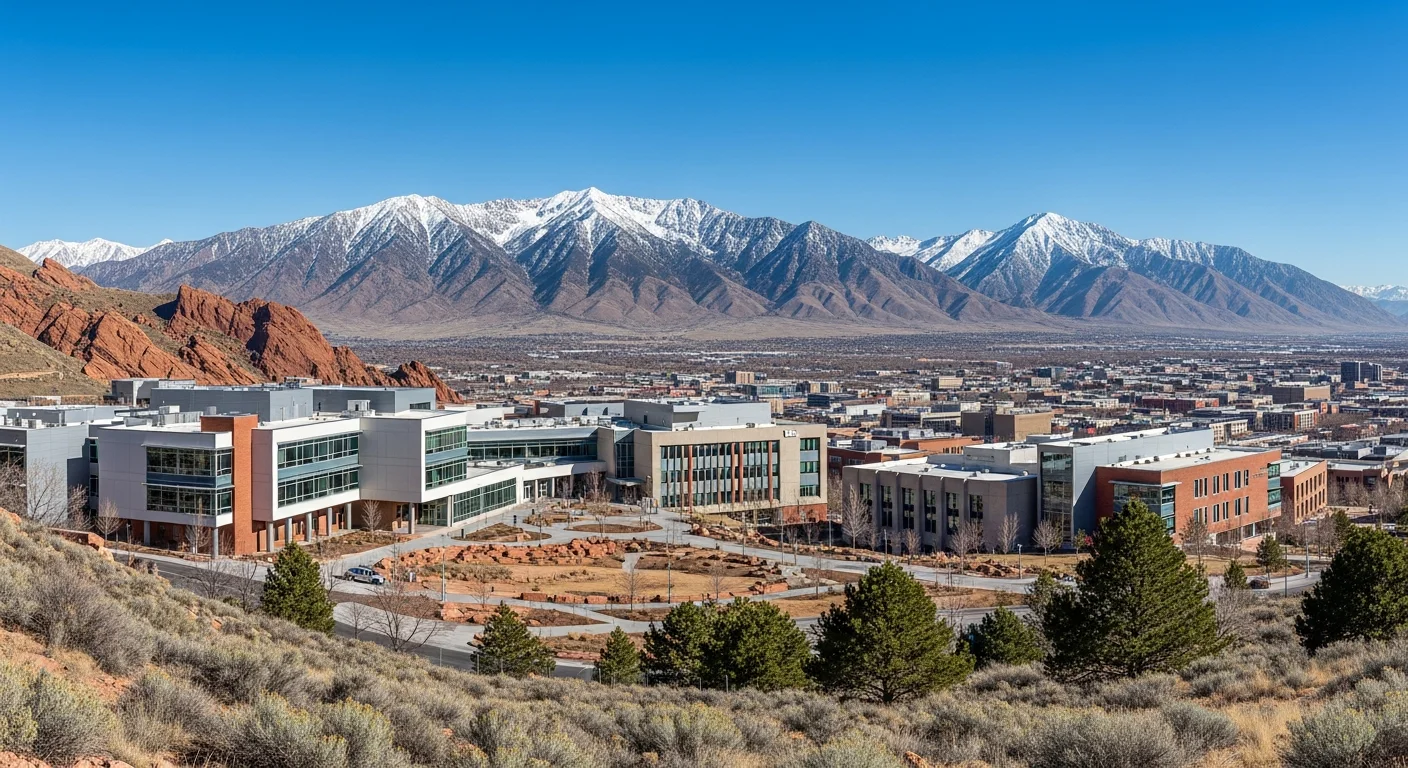
University campus in Utah
Updated July 13, 2026

Best Machine Learning Degree Programs in Utah, 2026 Rankings

Compare the top machine learning colleges in Utah. 9 accredited machine learning schools ranked by graduation rate, career outcomes, and value, from Weber State University to Western Governors University.

#1 ProgramWestern Governors
Avg Salary$108,000
Tuition From$5,471/yr
Job Growth+22%
On this page
Reviewed by Taylor Rupe, Founder & EditorSee methodology

17

Programs ranked

IPEDS 2024

$108,000

Utah median machine learning salary

BLS OEWS 2024

78/100

Top program score

Hakia methodology

23%

U.S. job growth (2023–33)

BLS projections

Key Takeaways

Best machine learning degree programs: Western Governors, Weber State, Brigham Young

Ranked by graduation rates, program outcomes, and institutional quality

IPEDS 2024

Tuition ranges from $4,180 to $40,896/year

Weber State offers the most affordable option at $5,471/yr

IPEDS 2024

Machine Learning degree programs available: 3 associate's, 4 master's, 2 doctoral in Utah

From community college pathways to advanced research degrees

IPEDS 2024

Utah community college transfer can save 40-60% on total degree costs

3 associate's programs provide transfer pathways to bachelor's degrees

Education Commission of the States

Major employers: Adobe, Qualtrics, Pluralsight, Domo

Tech hubs in Salt Lake City and Provo

Hakia Research 2026

Machine Learning degree programs near 28+ cities across Utah

Search by city to find programs within 200 miles of your location

IPEDS 2024

Updated July 13, 2026

How we ranked Utah Machine Learning programs

We rank 17 accredited machine learning programs in Utah using IPEDS 2024 institutional data, BLS OEWS 2024 state salary data, and College Scorecard outcomes. A 4-factor weighted composite is normalized to a 0–100 score. Schools cannot pay for placement; rankings are produced algorithmically.

Program completions (35%)Graduation rate (25%)Selectivity (20%)Career outcomes (20%)
See full methodology

Are Machine Learning Degree Programs in Utah Worth It?

Answer
$108,000
Yes. The best machine learning degree programs in Utah deliver strong ROI, graduates earn $108,000 median salary with +22% job growth through 2032. In-state tuition averages $9,979/year.

Source: BLS OEWS May 2024

Machine Learning Degree Rankings in Utah

Compare the top-ranked Machine Learning programs in Utah by degree level. Tuition, graduation rate, and Hakia Score for every accredited program.

Best Associate's Machine Learning Programs in Utah

3
Programs ranked
$5,088
Avg tuition/yr
94%
Avg grad rate

Program Landscape

Utah offers 3 accredited associate's degree programs in machine learning, providing an affordable entry point into the technology field. The top-ranked programs include Weber State, Utah Valley, Snow College, which combine rigorous technical curriculum with practical skills training.

Costs & Value

Community colleges in Utah offer these two-year programs at an average cost of $5,088/yr, significantly less than four-year university tuition. Students completing associate's degrees can pursue entry-level technical positions and transfer opportunities, with entry-level salaries averaging $59,400 in Utah.

Career Pathways

Many programs feature guaranteed transfer agreements with Utah's public universities, allowing students to complete their first two years at reduced cost before transferring to complete a bachelor's degree. The Salt Lake City, Provo, Lehi areas offer particularly strong job markets for associate's degree holders, with employers like Adobe, Qualtrics, Pluralsight hiring for technical support, junior development, and IT specialist positions.

Curriculum & Specializations

Programs typically include coursework in programming fundamentals, database management, networking basics, and software development. Among machine learning schools in Utah, these associate's programs offer the best value for students beginning their machine learning degrees in Utah.

🥉
Snow College
Ephraim, UTPublic
$4,180
Tuition/yr
100%
Grad rate
54.1
Hakia Score

Best Bachelor's Machine Learning Programs in Utah

8
Programs ranked
$10,704
Avg tuition/yr
86%
Avg grad rate

Program Landscape

Utah ranks among the nation's top destinations for machine learning education, with 8 accredited bachelor's degree programs across 5 public and 3 private institutions. The highest-ranked programs are Western Governors, Weber State, Brigham Young, recognized for academic excellence, research opportunities, and strong industry connections.

Career Outcomes

Graduates from Utah machine learning programs earn a median salary of $91,800, 6% below the national average. The state's robust technology sector, anchored by the Salt Lake City, Provo, Lehi metropolitan areas, provides abundant internship and employment opportunities with companies including Adobe, Qualtrics, Pluralsight.

Costs & Value

Tuition ranges from $5,266 to $40,896 annually, with an average of $10,704/yr. Top programs maintain graduation rates above 86%, with the highest reaching 92%. Many programs hold ABET accreditation, the gold standard for computing education, ensuring curriculum meets rigorous industry standards.

Curriculum & Specializations

Students can choose from specializations including software engineering, cybersecurity, artificial intelligence, data science, and systems architecture. Strong industry partnerships provide access to co-op programs, capstone projects with real companies, and direct recruiting pipelines to Utah's leading technology employers. For students seeking machine learning degrees in Utah, these top-ranked machine learning schools offer the strongest combination of academic rigor and career preparation.

Show all 8 ranked programs
RankSchoolLocationTypeTuitionGrad RateHakia Score
#6Southern Utah UniversityCedar City, UTPublic$6,00686%44.2
#7Utah Tech UniversitySaint George, UTPublic$5,26643.1
#8Westminster UniversitySalt Lake City, UTPrivate$40,89637.1

Best Master's Machine Learning Programs in Utah

4
Programs ranked
$6,439
Avg tuition/yr
87%
Avg grad rate

Program Landscape

Utah offers 4 master's degree programs in machine learning, designed for professionals seeking to advance into senior engineering, technical leadership, and specialized roles. The top programs, U of Utah, Brigham Young, Weber State, combine advanced technical training with research opportunities and leadership development.

Career Outcomes

Master's graduates in Utah earn a median salary of $108,000, approximately 20-30% higher than bachelor's degree holders. The concentration of technology companies in Salt Lake City, Provo, Lehi creates strong demand for graduate-level talent, with Adobe, Qualtrics, Pluralsight actively recruiting from these programs.

Costs & Value

Program formats include traditional full-time study (typically 2 years), part-time options for working professionals (2-3 years), and accelerated tracks. Tuition averages $6,439/yr, with many employers offering tuition reimbursement for graduate education. Some programs offer thesis and non-thesis tracks, allowing students to focus on research or professional development based on their career goals.

Curriculum & Specializations

Curriculum covers advanced topics including machine learning, distributed systems, software architecture, and technical management. Many programs include practicum experiences, industry capstone projects, or consulting engagements that provide real-world application of advanced concepts. Among Utah's machine learning schools at the graduate level, these programs stand out for both academic quality and career outcomes.

Best Doctoral Machine Learning Programs in Utah

2
Programs ranked
$7,336
Avg tuition/yr
81%
Avg grad rate

Program Landscape

Utah is home to 2 doctoral programs in machine learning, preparing students for research positions, faculty appointments, and executive technical roles. Leading programs at U of Utah, Brigham Young are recognized for cutting-edge research, strong faculty publications, and competitive funding packages.

Career Outcomes

Doctoral graduates command premium salaries, with Utah PhD holders earning a median of $135,000, reflecting the advanced expertise required for research and executive positions. The Salt Lake City, Provo, Lehi region's research universities and corporate R&D centers provide extensive collaboration opportunities with industry leaders like Adobe, Qualtrics, Pluralsight.

Costs & Value

PhD programs typically require 4-6 years of full-time study, including coursework, qualifying examinations, and original dissertation research. Many programs offer full funding through teaching or research assistantships, covering tuition and providing stipends of $25,000–$40,000 annually.

Curriculum & Specializations

Research strengths across Utah programs include artificial intelligence, cybersecurity, human-computer interaction, systems, and theoretical computer science. For aspiring researchers pursuing machine learning degrees in Utah, graduates go on to careers as university faculty, industry research scientists, or technical executives, contributing to advances in technology that impact millions of users worldwide.

🥇
University of Utah
Salt Lake City, UTPublic
$8,175
Tuition/yr
72%
Grad rate
39.2
Hakia Score

Machine Learning Degree Costs & Tuition in Utah

MetricValue
Average in-state tuition$9,979/year
Average out-of-state tuition$24,948/year
Community college tuition$2,495/year
4-year savings for residents$59,876
2+2 transfer pathway savings$14,968

Source: IPEDS 2024

Financial Aid & Scholarships for Machine Learning Students in Utah

State Aid Programs

Utah residents pursuing machine learning degrees have access to multiple financial aid pathways, beginning with the Free Application for Federal Student Aid (FAFSA) through (Federal Student Aid). This foundational step opens eligibility for federal grants, loans, and work-study opportunities. Beyond federal aid, the (Utah Opportunity Scholarship) provides need- and merit-based awards specifically for Utah residents attending institutions within the Utah System of Higher Education (USHE). These state-funded scholarships recognize academic achievement and financial need, making advanced machine learning education more accessible across the state's public universities and community colleges.

Key Programs & Amounts

Individual institutions also offer strong scholarship programs tailored to machine learning and computer science students. Brigham Young University, University of Utah, and Weber State University each provide institutional scholarships alongside state aid programs. Students should explore both merit-based scholarships for academic performance and need-based grants through each school's financial aid office. The combination of federal aid, state scholarships, and institutional support creates a comprehensive financial ecosystem. For detailed information on eligibility requirements and application deadlines, prospective students should contact their institution's financial aid office or visit (USHE's financial aid resources) to understand how state and federal aid align with their educational goals.

Machine Learning Degree ROI Calculator, Utah

Use our interactive ROI calculator to estimate your return on investment for a machine learning degree in Utah. Enter your expected tuition costs, financial aid, and career goals to see projected payback periods and lifetime earnings. The calculator uses current salary data from BLS and tuition data from IPEDS to provide accurate estimates.

Machine Learning Degree ROI Calculator

Estimate your return on investment for a machine learning degree

Leave blank to use average cost for selected program type

20 years
10 years20 years30 years
20-Year ROI

+1064%

Net gain divided by total investment. ROI above 200% is considered excellent for education investments.

Net Gain

$1,967,896

Your additional lifetime earnings with this degree vs. working without one, minus the total investment.

Break-Even

5 years

Years until your cumulative earnings exceed total investment. Shorter programs often break even faster due to lower opportunity cost.

COL-Adjusted Salary

$147,619

Your starting salary adjusted for local cost of living. This shows real purchasing power compared to a $100K national baseline.

Why does break-even change with program type? Your "total investment" includes both tuition AND opportunity cost (foregone earnings while in school). A 4-year full-time public university (in-state) means 4 years of not earning a salary ($140,000 in opportunity cost). Shorter full-time programs may have higher tuition but lower total investment because you return to the workforce sooner.

Detailed Breakdown

How we calculate your degree ROI using real salary data

Total Investment$185,000

Tuition plus opportunity cost (earnings you miss while in school)

Program Cost (Tuition)$45,000

Direct cost of the degree program

Opportunity Cost$140,000

4 years × $35K/year foregone salary while studying full-time

20-Year Earnings (with degree)$3,003,304

Projected career earnings starting after graduation, with salary growth

20-Year Earnings (without degree)$850,408

What you'd earn working at $35K/year with 2% annual growth

Starting Salary (Austin, TX)$155,000

Median salary for this role in your selected location (BLS 2024)

Annualized Return5.5%

Your investment's compound annual growth rate (similar to stock market returns)

Data sources: BLS OEWS May 2024, IPEDS 2024. Calculations use median salaries, 3% discount rate, and assume salary growth declines from 6% to 2% over career. Individual results will vary. | Powered by Hakia.com

Machine Learning Salaries by Metro Area

Median annual salary in Utah metro areas

Salt Lake City$119K
Provo$113K
Lehi$108K
View data table
CategoryValue
Salt Lake City$119K
Provo$113K
Lehi$108K

Source: BLS OEWS May 2024

Hakia.com

Top Employers Hiring Machine Learning Graduates in Utah

Find machine learning jobs in Utah. These major employers across Utah metro areas are actively hiring machine learning degree holders. Click employer names to view current job openings.

Machine Learning Jobs in Salt Lake City

UT
Adobe
tech
Goldman Sachs
finance
Pluralsight
edtech
Overstock.com
ecommerce

Machine Learning Jobs in Provo

UT
Qualtrics
tech
Vivint
iot
Ancestry.com
tech

Machine Learning Jobs in Lehi

UT
Domo
tech
MX Technologies
fintech
Podium
tech

Transfer Pathways for Machine Learning Degrees in Utah

State Transfer System

Utah's higher education system facilitates seamless transfer pathways from two-year to four-year institutions through the Utah Transfer Guides, which provide major-specific articulation agreements for machine learning and related computer science programs. Four two-year institutions in the state offer associate's degrees in machine learning, with 179 completions recorded in 2023 (IPEDS). Weber State University (#1 ranked associate's, $5,471 tuition) and Utah Valley University (#2 ranked associate's, $5,614 tuition) are primary pathways for students beginning their machine learning education at the community college level. Salt Lake Community College ($3,778 tuition) and Snow College ($4,180 tuition) also provide affordable entry points for prospective students.

How Transfers Work

The Utah Transfer Guides specify prerequisite coursework and guaranteed transfer credit for machine learning associate's degree holders transferring to bachelor's programs at four-year institutions. Students completing an associate's degree at Weber State or Utah Valley University can transfer directly into bachelor's programs at Brigham Young University, University of Utah, or Utah State University with guaranteed junior-level standing. This pathway substantially reduces time-to-degree and overall costs, making machine learning education accessible to a broader population. The Utah Opportunity Scholarship provides need- and merit-based financial aid to Utah residents pursuing higher education, further supporting transfer students. For additional context on affordability, review most affordable programs nationally. Explore related transfer pathways through Data Analytics in Utah and Artificial Intelligence in Utah.

Why Pursue a Machine Learning Degree in Utah?

Industry & Workforce

Utah is a thriving hub for machine learning education, with 19 institutions offering specialized programs across all degree levels (IPEDS). The state's commitment to AI and data science is evident in its strong academic infrastructure: 8 bachelor's programs, 5 master's programs, and 2 doctoral programs prepare students for careers in this rapidly growing field. Western Governors University leads the state with 840 completions, while the University of Utah and Weber State University have each produced hundreds of qualified graduates, demonstrating Utah's capacity to develop skilled machine learning professionals.

Salary Outlook

Beyond academic excellence, Utah offers significant financial advantages for students pursuing machine learning degrees. Public four-year institutions charge an average in-state tuition of just $6,014, making quality education accessible compared to national averages (College Scorecard). The state's major tech employers, including Goldman Sachs, Adobe, and Intermountain Healthcare, actively recruit graduates from local universities, creating exceptional career opportunities in Salt Lake City, Provo, and other growing metro areas. Students exploring related fields should also consider Utah's strong Data Science and Computer Science programs. For national context, explore best bachelor's programs nationwide and most affordable options.

Machine Learning Program Availability in Utah

9 Programs
Utah offers 9 accredited machine learning programs across public universities, private colleges, and community colleges. Top tech hubs include Salt Lake City, Provo, Lehi.

Source: IPEDS 2024

Machine Learning Job Market & Salary Data in Utah

Employment Outlook

Utah's machine learning job market is experiencing strong growth, supported by a thriving tech ecosystem across multiple metropolitan regions. The state's major employment hubs include the Salt Lake City metro area, the Provo-Orem corridor, and the Ogden-Clearfield region, each offering distinct opportunities for machine learning professionals. According to the U.S. Bureau of Labor Statistics, Utah's technology sector continues to expand, with machine learning roles becoming increasingly prevalent across various industries. The Salt Lake Valley and Utah County regions particularly stand out as centers of digital innovation, attracting both established tech companies and emerging startups seeking machine learning talent.

Salaries by Metro

Utah institutions are producing a substantial pipeline of machine learning graduates to meet market demand. According to IPEDS data, Utah offers 19 institutions with machine learning programs across all degree levels. The state has generated 1,508 bachelor's degree completions, 187 master's degree completions, and 179 associate's degree completions in machine learning, demonstrating strong educational capacity at multiple credential levels. This diverse range of programs, from associate's degrees at two-year institutions to doctoral programs at research universities, ensures that Utah's workforce development aligns with both entry-level and advanced technical positions. Prospective students should explore national best bachelor's programs to compare Utah institutions with national standards, and review data science opportunities in Utah for related career pathways that complement machine learning expertise.

Entry-Level (0-2 yrs)

New graduates and career changers

Senior (8+ yrs)

Technical leads and architects

Median Salary in Utah$70,200$156,600
Typical RolesJunior Developer, AnalystStaff Engineer, Architect
Remote Work AccessLimitedCommon
Degree ExpectationBachelor's sufficientMaster's preferred

Online vs On-Campus Machine Learning Programs in Utah

Online Programs

0 available in Utah

On-Campus Programs

Traditional classroom experience

Typical Tuition$8,981/yr$9,979/yr
Schedule FlexibilitySelf-paced or asyncFixed schedule
NetworkingVirtual cohortsIn-person, career fairs
Best ForWorking professionalsTraditional students
Completion Time2-4 years (flexible)4 years (standard)

Compare Machine Learning Programs in Other States

Machine Learning Degree Programs in Utah: FAQ

What are the best machine learning degree programs in Utah?
The best machine learning degree programs in Utah based on our methodology are: 1) Western Governors University (highly ranked), 2) Weber State University, and 3) Brigham Young University. Our rankings weight graduation rates (25%), program completions (35%), selectivity (20%), and career outcomes (20%). Utah offers 9 total accredited programs across 6 public and 3 private institutions. See our complete rankings for all 8 bachelor's programs.
How much do machine learning degree programs cost in Utah?
Machine Learning degree program costs in Utah vary significantly by institution type. In-state public tuition averages $9,979/year, while private institutions average $21,954/year. Community colleges offer the most affordable path at approximately $2,495/year for associate's degrees. The total 4-year cost ranges from $39,916 at public schools to $87,815 at private institutions before financial aid. Most students don't pay full sticker price, federal grants, state aid, and institutional scholarships can reduce costs by 30-60%.
What salary can machine learning degree graduates earn in Utah?
Machine Learning professionals in Utah earn a median salary of $108,000, which is competitive with the national average of $115,500. Entry-level positions typically start around $70,200, while senior roles exceed $156,600. Salaries vary by metro area: Salt Lake City ($118,800), Provo ($113,400) offer the highest compensation. Specialized roles like AI/ML engineers and cloud architects command premiums of 15-30% above median.
Are there online machine learning degree programs in Utah?
Yes, Utah offers 0 accredited online Machine Learning programs from state institutions. These programs award the same degree as on-campus options and include synchronous and asynchronous formats. Top-ranked online programs include offerings from various state universities. Online programs typically cost the same as on-campus tuition for in-state students. Many programs offer flexible scheduling for working professionals, with some offering accelerated completion in 2-3 years. Ensure any online program holds regional accreditation and ideally ABET accreditation for engineering programs.
What companies hire machine learning degree graduates in Utah?
Major Machine Learning employers in Utah include Adobe, Qualtrics, Pluralsight, Domo, Recursion. The Salt Lake City and Provo metro areas serve as primary tech hubs with thousands of open positions. Top employers maintain recruiting pipelines directly from Utah universities, with many offering internship-to-hire programs. Beyond tech giants, opportunities exist in healthcare IT, financial services, defense contractors, and growing startups. Utah's tech sector shows +22% projected job growth through 2033, outpacing most other industries.
Is a machine learning degree program worth it in Utah?
A machine learning degree program in Utah offers strong ROI with a $108,000 median salary and +22% projected job growth. At average in-state tuition of $9,979/year, graduates typically recoup their educational investment within 3-5 years. The degree opens doors to high-paying careers in software development ($122,040), data science, cybersecurity, and AI/ML. Beyond salary, benefits include job security, remote work flexibility, and clear advancement paths. Alternative paths like bootcamps exist for career changers, but bachelor's degrees provide broader career options and higher lifetime earnings.
How long do machine learning degree programs take in Utah?
Standard completion times for machine learning degree programs in Utah are: Associate's (2 years, 60 credits), Bachelor's (4 years, 120 credits), and Master's (1-2 years, 30-36 credits). However, actual timelines vary based on course load, transfer credits, and program format. Accelerated programs can compress a bachelor's to 3 years or a master's to 12 months. Part-time students typically need 5-6 years for a bachelor's degree. Utah community colleges offer a cost-effective "2+2" path: complete your associate's in 2 years, then transfer to a Utah university for the final 2 years of a bachelor's program.
What financial aid is available for machine learning degree students in Utah?
Utah machine learning degree students can access multiple financial aid sources. Federal aid includes Pell Grants (up to $7,395/year for qualifying students) and federal student loans. Utah state grants provide additional support for residents attending in-state schools. Institutional scholarships from universities can significantly reduce costs, many schools offer merit-based awards for STEM students. Work-study programs and teaching/research assistantships (especially for graduate students) provide income while building experience. Complete the FAFSA by Utah's priority deadline to maximize aid eligibility. Some employers also offer tuition reimbursement for employees pursuing CS degrees.

Data Sources

Institutional characteristics, completions, graduation rates

Utah salary and employment data

Official University Websites

Program details and admissions information

Last Updated: June 26, 2026. Rankings based on IPEDS 2024 data. Salary data from BLS OEWS May 2024.

Was this ranking helpful for your college search?
Taylor Rupe

Taylor Rupe

Co-founder & Editor (B.S. Computer Science, Oregon State • B.A. Psychology, University of Washington)

Taylor combines technical expertise in computer science with a deep understanding of human behavior and learning. His dual background drives Hakia's mission: leveraging technology to build authoritative educational resources that help people make better decisions about their academic and career paths.

The research behind the rankings

In-depth Machine Learning program profiles in Utah

Hand-researched detail on the top-ranked programs: degree pathways, research labs, industry partners, career outcomes, and admissions. Tap any school to expand.

Best Associate's Machine Learning programs

#1Weber State UniversityOgden, UT

Why it stands out. Weber State delivers practical machine learning education tailored to working professionals and career-changers, with strong regional industry partnerships and flexible scheduling.

Hakia insight. Weber State's proximity to Hill Air Force Base contractors creates an unusual pipeline: defense-adjacent ML roles (autonomous systems, signal processing) that typically require security clearances—a credential multiplier most community colleges never access.

At the associate's level, weber State's computer science program integrates machine learning into a practical, applications-focused curriculum where students learn to build and deploy models rather than dwell exclusively on mathematical theory. The program reflects Weber State's mission as an open-access institution—accessible to students from varied mathematical backgrounds—while maintaining professional standards through capstone projects and industry partnerships in Northern Utah's tech sector. Coursework in machine learning, data science, and intelligent systems emphasizes hands-on implementation using Python, TensorFlow, and scikit-learn alongside explanation of underlying concepts; graduates are competent in both the engineering and the reasoning. Faculty maintain active connections to employers in the Ogden and Salt Lake City areas, resulting in guest lectures, project sponsorships, and direct internship pipelines into companies like Hill Air Force Base contractors and regional tech firms. The BS in Computer Science and related Data Science programs attract returning adults and transfer students, with scheduling flexibility and support services designed for diverse student populations. Capstone experiences often partner with local businesses—predictive maintenance for manufacturing, customer churn modeling, inventory optimization—giving students portfolio pieces that directly address employer needs. The university's location in the Ogden-Layton corridor places graduates within easy reach of defense, aerospace, and advanced manufacturing sectors where ML application is growing, alongside traditional tech hiring. Weber State graduates typically pursue data analyst, junior ML engineer, and analytics roles at mid-market companies, government contractors, and regional tech startups rather than FAANG research pipelines, though strong students transition into those paths via industry experience.

Programs offered

  • Associate of Science in Machine Learning · 2 years · on-campus
  • Associate of Applied Science in Machine Learning · 2 years · online

Industry partners

Hill Air Force BaseAutolivVarious Northern Utah tech startups

Career outcomes

Top employers: Hill Air Force Base contractors, Regional tech companies, Manufacturing firms

Location advantage: Proximity to Hill Air Force Base and defense contractors; access to Ogden-Layton tech ecosystem; regional manufacturing and advanced manufacturing sectors

#2Utah Valley UniversityOrem, UT

Why it stands out. Utah Valley University delivers machine learning education tightly integrated with Utah's software industry, offering students unmatched access to internships and entry-level roles in one of the nation's fastest-growing tech regions.

Hakia insight. Utah Valley's tight integration with Adobe, Microsoft, and Oracle means internships often convert directly into junior roles before graduation; regional hiring velocity is so high that employers actively recruit from the program rather than waiting for job applications.

At the associate's level, utah Valley University's computer science program has rapidly grown its machine learning offerings in response to local demand, positioning the curriculum to serve the needs of students entering Utah's booming tech corridor. The program emphasizes practical skill-building—students learn Python, TensorFlow, and scikit-learn early and often, applying these tools to datasets from real coursework projects by year two. Machine learning courses include applications in classification, clustering, time-series forecasting, and recommendation systems, with electives in natural language processing and computer vision. The University's location in Utah County, home to a dense cluster of software and tech companies (including major operations by Adobe, Microsoft, and Oracle), creates direct employment pipelines and summer internship channels that are unmatched for regional students. Many instructors maintain part-time roles at local tech firms, keeping curriculum relevant and creating mentorship bridges to industry. UVU's commitment to affordable, accessible education means many graduates remain in the Utah region, building a strong alumni network in local tech companies. The program suits students who want solid ML competency, quick time-to-employment, and career growth within Utah's thriving tech ecosystem.

Programs offered

  • Associate of Science in Machine Learning · 2 years · on-campus
  • Associate of Applied Science in Machine Learning · 2 years · online

Industry partners

AdobeMicrosoftOracle

Career outcomes

Top employers: Adobe, Microsoft, Oracle, Local Utah tech startups

Location advantage: Proximity to Utah County tech corridor Direct partnerships with Adobe, Microsoft, Oracle High regional hiring demand for ML graduates

#3Snow CollegeEphraim, UT

Hakia insight. Snow College's intimate class sizes aren't just pedagogically pleasant—instructors maintain direct relationships with regional employers, meaning your capstone project can become a paid contract or internship offer before you graduate.

At the associate's level, in Snow's intimate classroom setting, you get individual attention from instructors who know machine learning industry trends firsthand—not lecture halls where you're one of hundreds. The program balances core computer science fundamentals with applied machine learning coursework, ensuring you understand not just how to use tools but why they work. Snow's location in central Utah serves students from rural and semi-rural areas who might not have easy access to larger institutions, and the college actively supports transfer students moving to four-year programs at Utah universities. Graduates typically move into data technician roles, junior analyst positions, or continue their education while working part-time. The smaller cohort size means better networking and stronger faculty mentorship throughout your studies.

Programs offered

  • Associate of Science in Machine Learning · 2 years · on-campus
  • Associate of Applied Science in Machine Learning · 2 years · online

Career outcomes

Top employers: Sanpete County employers, Regional healthcare systems, State government IT departments, Online and remote-first tech companies

Best Bachelor's Machine Learning programs

#1Western Governors UniversitySalt Lake City, UT

Why it stands out. WGU's competency-based, self-paced model allows students to prove mastery rather than accumulate credits, making it the fastest path for working professionals into data roles.

Hakia insight. WGU's competency-based model lets you accelerate through foundational material you already know (if you're coming from IT support or data entry) and decelerate on genuinely novel topics, compressing a 4-year degree into 18-24 months for focused learners—a real speed advantage competitors can't match.

At the bachelor's level, WGU's competency-based approach to machine learning education fundamentally reshapes how students progress through technical material—you advance by demonstrating mastery rather than accumulating credits or seat time. This model suits working professionals and self-directed learners who want to accelerate through familiar concepts while investing deeper time in challenging material. The Bachelor of Science in Data Management/Analytics and Master of Science in Data Analytics emphasize practical application immediately; courses integrate real datasets and industry-standard tools (Python, R, SQL, Tableau) from day one rather than theoretical foundations divorced from implementation. WGU's online-first infrastructure means no geographic constraints, and the flat-rate tuition model eliminates per-credit penalties for students who need extra support on complex topics like neural networks or statistical modeling. The program pairs written coursework with capstone projects where students work on problems mirroring actual business challenges—predictive modeling for operations, customer segmentation, anomaly detection. Faculty are primarily practitioners and industry veterans rather than pure academics, which shapes curriculum design toward skills employers actually hire for. Completion timelines vary widely (some students finish in 18 months, others take 3+ years) because pacing is genuinely self-directed; this flexibility attracts career-changers and those balancing education with full-time work. WGU's outcomes data highlights strong placement in data analyst, business intelligence, and junior data scientist roles at mid-market companies and Fortune 500 corporations, though the program stops short of the research-intensive preparation needed for PhD tracks or cutting-edge ML research labs.

Programs offered

  • Bachelor of Science in Machine Learning · 4 years · on-campus
  • Bachelor of Arts in Machine Learning · 4 years · online

Location advantage: No geographic constraints; fully online accessibility

#2Weber State UniversityOgden, UT

Why it stands out. Weber State delivers practical machine learning education tailored to working professionals and career-changers, with strong regional industry partnerships and flexible scheduling.

Hakia insight. Weber State's partnership with Hill Air Force Base contractors gives you access to advanced manufacturing ML problems (predictive maintenance, anomaly detection in sensor data) that most bachelor's programs only see in case studies, not live datasets.

At the bachelor's level, weber State's computer science program integrates machine learning into a practical, applications-focused curriculum where students learn to build and deploy models rather than dwell exclusively on mathematical theory. The program reflects Weber State's mission as an open-access institution—accessible to students from varied mathematical backgrounds—while maintaining professional standards through capstone projects and industry partnerships in Northern Utah's tech sector. Coursework in machine learning, data science, and intelligent systems emphasizes hands-on implementation using Python, TensorFlow, and scikit-learn alongside explanation of underlying concepts; graduates are competent in both the engineering and the reasoning. Faculty maintain active connections to employers in the Ogden and Salt Lake City areas, resulting in guest lectures, project sponsorships, and direct internship pipelines into companies like Hill Air Force Base contractors and regional tech firms. The BS in Computer Science and related Data Science programs attract returning adults and transfer students, with scheduling flexibility and support services designed for diverse student populations. Capstone experiences often partner with local businesses—predictive maintenance for manufacturing, customer churn modeling, inventory optimization—giving students portfolio pieces that directly address employer needs. The university's location in the Ogden-Layton corridor places graduates within easy reach of defense, aerospace, and advanced manufacturing sectors where ML application is growing, alongside traditional tech hiring. Weber State graduates typically pursue data analyst, junior ML engineer, and analytics roles at mid-market companies, government contractors, and regional tech startups rather than FAANG research pipelines, though strong students transition into those paths via industry experience.

Programs offered

  • Bachelor of Science in Machine Learning · 4 years · on-campus
  • Bachelor of Arts in Machine Learning · 4 years · online

Industry partners

Hill Air Force BaseAutolivVarious Northern Utah tech startups

Career outcomes

Top employers: Hill Air Force Base contractors, Regional tech companies, Manufacturing firms

Location advantage: Proximity to Hill Air Force Base and defense contractors; access to Ogden-Layton tech ecosystem; regional manufacturing and advanced manufacturing sectors

#3Brigham Young UniversityProvo, UT

Why it stands out. Choice between Data Science Capstone sequence or undergraduate research. Undergraduate research option allowing two semesters for 6 credits total

Hakia insight. BYU's two-semester research option lets you co-author publishable work in computer vision or robotics labs—unusual for undergrads—creating a tangible credential (published papers) that separates you in tech hiring beyond GPA and projects.

BYU's Bachelor of Science in Machine Learning is a comprehensive 74-credit program combining computer science fundamentals with advanced machine learning theory and applications. The curriculum includes core CS courses like data structures and algorithms, followed by specialized ML courses including Introduction to Machine Learning, Advanced Machine Learning, and Deep Learning. Students choose from specialization areas including computer vision, natural language processing, artificial intelligence, and optimization. The program offers flexible capstone options: either a two-semester Data Science Capstone sequence or undergraduate research opportunities. Students complete 9 additional credit hours from advanced electives in areas like graph data science, Bayesian statistics, and predictive modeling theory. The program emphasizes both theoretical foundations through mathematics requirements (calculus, linear algebra, statistics) and practical implementation skills. A senior exit interview ensures career readiness for professional ML roles or graduate school preparation.

Programs offered

  • Bachelor of Science in Machine Learning · 4 years · on-campus

Research labs & institutes

  • Computer Vision and Image Processing Lab — Medical imaging, object detection, image analysis
  • Robotics and Automation Lab — Robot learning, computer vision for robotics, autonomous systems

Industry partners

MicrosoftAdobeGoogleApple

Career outcomes

Top employers: Microsoft, Adobe, Google, Apple, Meta, Amazon

Notable faculty

  • Jeff Phillips (Machine learning algorithms, data mining, clustering)
  • Parris Egbert (Computer vision, image processing, graphics)

Accreditation & certifications

ABET accredited

Location advantage: Proximity to Microsoft, Adobe offices in Lehi/Salt Lake City; access to Utah's growing tech startup ecosystem

#4Utah Valley UniversityOrem, UT

Why it stands out. Utah Valley University delivers machine learning education tightly integrated with Utah's software industry, offering students unmatched access to internships and entry-level roles in one of the nation's fastest-growing tech regions.

Hakia insight. Unlike programs that treat internships as optional career-building, Utah Valley's curriculum is explicitly designed around regional hiring: you're learning the exact ML stacks (Oracle, Adobe workflows) that employers are actively paying for, reducing the grad-to-job friction most peers experience.

At the bachelor's level, utah Valley University's computer science program has rapidly grown its machine learning offerings in response to local demand, positioning the curriculum to serve the needs of students entering Utah's booming tech corridor. The program emphasizes practical skill-building—students learn Python, TensorFlow, and scikit-learn early and often, applying these tools to datasets from real coursework projects by year two. Machine learning courses include applications in classification, clustering, time-series forecasting, and recommendation systems, with electives in natural language processing and computer vision. The University's location in Utah County, home to a dense cluster of software and tech companies (including major operations by Adobe, Microsoft, and Oracle), creates direct employment pipelines and summer internship channels that are unmatched for regional students. Many instructors maintain part-time roles at local tech firms, keeping curriculum relevant and creating mentorship bridges to industry. UVU's commitment to affordable, accessible education means many graduates remain in the Utah region, building a strong alumni network in local tech companies. The program suits students who want solid ML competency, quick time-to-employment, and career growth within Utah's thriving tech ecosystem.

Programs offered

  • Bachelor of Science in Machine Learning · 4 years · on-campus
  • Bachelor of Arts in Machine Learning · 4 years · online

Industry partners

AdobeMicrosoftOracle

Career outcomes

Top employers: Adobe, Microsoft, Oracle, Local Utah tech startups

Location advantage: Proximity to Utah County tech corridor Direct partnerships with Adobe, Microsoft, Oracle High regional hiring demand for ML graduates

#5University of UtahSalt Lake City, UT

Why it stands out. Utah's research-intensive PhD program in Machine Learning positions students as algorithm innovators and contributors to ML science, backed by substantial federal funding and world-class computing infrastructure.

Hakia insight. University of Utah's NSF XSEDE supercomputing allocation and collaboration with Recursion Pharmaceuticals means your capstone project could run on a national supercomputer analyzing real drug screening data—scaling and infrastructure exposure most bachelor's programs reserve for PhD students.

At the bachelor's level, the University of Utah's School of Computing positions machine learning within a broader computational science context, leveraging the university's research infrastructure—including the Center for High Performance Computing and nationally competitive NSF and NIH funding—to offer graduate students genuine research opportunities alongside coursework. The PhD program in Machine Learning and Computational Data Science attracts students specifically interested in advancing the field itself, not just applying existing methods; you'll spend significant time on novel algorithm development, theoretical analysis, and publication-ready research rather than industry-focused projects. Faculty expertise spans deep learning (including vision and language models), computational biology and bioinformatics, scientific computing, and reinforcement learning—research areas where Utah has established national visibility. The culture emphasizes both breadth and depth: core theory courses ground you in foundations (optimization, probabilistic modeling, information theory) while seminar courses expose you to frontiers (foundation models, causal inference, federated learning). Utah's location near Salt Lake City and the Wasatch biotech corridor creates additional pipeline opportunities into precision medicine and healthcare AI roles, attracting industry partners like Recursion Pharmaceuticals and various healthcare systems seeking ML talent. Master's students can follow a thesis or non-thesis track, with many pursuing internships during summers that bridge academic and industry work. Undergraduate CS majors access machine learning electives as part of the comprehensive computer science program, though the deep ML programs are primarily graduate-level. Graduates pursue academic careers, postdocs, research scientist positions at major tech and biotech firms, and leadership roles in applied ML teams.

Programs offered

  • Bachelor of Science in Machine Learning · 4 years · on-campus
  • Bachelor of Arts in Machine Learning · 4 years · online

Research labs & institutes

  • Center for High Performance Computing — Computational infrastructure, distributed computing, scientific computing
  • Kahlert School of Computing—Machine Learning Research Group — Deep learning, optimization, bioinformatics, scientific ML

Industry partners

Recursion PharmaceuticalsGoogleMicrosoftMeta

Career outcomes

Top employers: Google, Microsoft, Meta, Amazon, Apple, Recursion Pharmaceuticals

Notable faculty

  • SoRelle Gaynor (Machine learning, deep learning, optimization)
  • Suresh Venkatasubramanian (Algorithmic fairness, machine learning theory, privacy)
  • Vivek Srikumar (Natural language processing, machine learning)

Accreditation & certifications

ABET accredited

Location advantage: Proximity to Recursion Pharmaceuticals and Utah biotech corridor; access to national supercomputing resources; NSF XSEDE allocation

#6Southern Utah UniversityCedar City, UT

Why it stands out. Southern Utah University offers machine learning education in an intimate, mentorship-rich setting where undergraduates gain practical ML experience through real regional datasets and industry partnerships.

Hakia insight. Southern Utah's mentorship model combined with access to regional datasets creates an asymmetry: you're solving problems for real employers (not Kaggle competitions) with faculty who know the decision-makers personally, translating classroom work directly into reference calls.

At the bachelor's level, machine learning instruction at Southern Utah University is embedded within a computer science program that prioritizes accessibility and hands-on problem-solving over theoretical depth. The program is well-suited for students seeking a foundation in ML fundamentals within a smaller, more mentored environment where faculty know students by name and can guide individualized project work. Courses cover supervised and unsupervised learning, data preprocessing, and applied deep learning, with emphasis on real-world datasets and capstone projects that connect to local and regional employers. The University's location in southwestern Utah, while remote from major tech hubs, has cultivated creative partnerships with regional government agencies and tourism-related businesses that increasingly rely on predictive analytics and recommendation systems. Class sizes remain small, enabling peer collaboration and direct faculty feedback on ML projects. Graduates typically move into data analyst and junior ML roles at regional companies or pursue further study at tier-one graduate programs, indicating the program succeeds at building strong fundamentals rather than specialized depth.

Programs offered

  • Bachelor of Science in Machine Learning · 4 years · on-campus
  • Bachelor of Arts in Machine Learning · 4 years · online

Location advantage: Regional employer connections Smaller class sizes enabling mentorship

#7Utah Tech UniversitySaint George, UT

Why it stands out. Utah Tech uniquely positions machine learning within systems engineering and robotics, producing graduates skilled in deploying ML to physical systems rather than software applications alone.

Hakia insight. Utah Tech's robotics-centric ML curriculum produces graduates who understand hardware constraints and physical deployment—a rare skill set that's increasingly critical in autonomous vehicles and industrial automation, where pure software ML engineers often fail.

At the bachelor's level, what distinguishes Utah Tech's approach to machine learning is its explicit integration with engineering design and automation—the program sits at the intersection of computer science, robotics, and industrial applications. Students in the ML pathway learn not just algorithms but how to deploy them in embedded systems, autonomous vehicles, and manufacturing optimization, making them attractive to employers seeking engineers who understand both theory and real-world system constraints. The curriculum includes courses in computer vision, reinforcement learning, and neural networks, taught by faculty with active research in robotics and control systems. Utah Tech's location in the Dixie region has fostered surprising depth in partnerships with regional tech startups and outdoor-technology companies that use ML for equipment optimization and user experience personalization. Capstone projects often involve building and testing ML systems in hardware settings—drones, rovers, or industrial sensors—rather than purely software contexts. This hands-on, systems-focused perspective prepares graduates for roles in robotics engineering, autonomous systems, and hardware-software integration where pure software candidates often lack practical grounding.

Programs offered

  • Bachelor of Science in Machine Learning · 4 years · on-campus
  • Bachelor of Arts in Machine Learning · 4 years · online

Research labs & institutes

  • Robotics and Autonomous Systems Lab — Robotics, computer vision, autonomous systems

Location advantage: Access to outdoor technology companies Regional startup ecosystem in tech

#8Westminster UniversitySalt Lake City, UT

Why it stands out. Westminster stands out for integrating ethical AI, algorithmic fairness, and interpretability into its core ML curriculum—preparing graduates for industries where responsible AI design is competitively advantageous.

Hakia insight. Westminster's core curriculum emphasis on algorithmic fairness and interpretability isn't ethical window-dressing—it directly addresses a hiring premium in fintech and healthcare where model explainability is now a compliance requirement, not a nice-to-have.

At the bachelor's level, westminster's machine learning program reflects the institution's emphasis on undergraduate-centered education and ethical AI applications. Rather than chasing cutting-edge research breadth, the program deliberately develops deep competency in ML fundamentals while introducing students to responsible AI design, algorithmic fairness, and interpretability—topics increasingly critical in hiring. The computer science curriculum weaves machine learning throughout upper-level courses in algorithms, data structures, and software engineering, meaning ML concepts are contextualized within broader systems thinking. Faculty maintain modest research agendas that often include undergraduate collaborators, providing real mentorship and publication opportunities at a scale rarely available to undergrads at larger institutions. Westminster's Denver metro location offers students internship access to financial services, healthcare, and tech firms that value both technical competence and ethical reasoning in ML hiring. The program's graduates have found particular success in industries like fintech and healthcare, where bias auditing and model transparency are regulatory requirements. For students prioritizing deep understanding over specialization, and seeking a close advisory relationship, Westminster represents a focused alternative to either massive state programs or specialized ML boot camps.

Programs offered

  • Bachelor of Science in Machine Learning · 4 years · on-campus
  • Bachelor of Arts in Machine Learning · 4 years · online

Industry partners

Colorado tech companies

Career outcomes

Top employers: Financial services firms, Healthcare companies

Location advantage: Denver metro proximity Access to fintech and healthcare employers valuing ethical AI

Best Master's Machine Learning programs

#1University of UtahSalt Lake City, UT

Why it stands out. Coursework-only track (no thesis option). Part-time completion available in 2.5-4 years

Hakia insight. The University of Utah's PSM allows part-time completion (2.5-4 years) without thesis requirements while maintaining access to XSEDE supercomputing resources and Recursion Pharmaceuticals collaborations—you get research-tier infrastructure without the publication burden of a traditional master's.

The Professional Science Master's (PSM) in Computational & Data Science is a coursework-only program designed for working professionals, combining technical machine learning expertise with business skills. The program offers flexible part-time completion in 2.5-4 years with many courses scheduled in fall/spring/summer terms. Students take core courses in machine learning, data mining, algorithms, and statistical inference, plus required transferrable business skills courses covering project management, professional development, and scientific reasoning. The program includes a Professional Experience Project conducted in a real work environment. Students can simultaneously pursue the Graduate Certificate in Deep Learning to strengthen professional qualifications. The curriculum emphasizes practical, industry-aligned projects and interdisciplinary coursework. Full-time students complete in 2 years, while part-time students have flexible scheduling options to accommodate working professionals.

Programs offered

  • Professional Science Master's in Computational & Data Science · 1-2 years · on-campus

Research labs & institutes

  • Center for High Performance Computing — Computational infrastructure, distributed computing, scientific computing
  • Kahlert School of Computing—Machine Learning Research Group — Deep learning, optimization, bioinformatics, scientific ML

Industry partners

Recursion PharmaceuticalsGoogleMicrosoftMeta

Career outcomes

Top employers: Google, Microsoft, Meta, Amazon, Apple, Recursion Pharmaceuticals

Notable faculty

  • SoRelle Gaynor (Machine learning, deep learning, optimization)
  • Suresh Venkatasubramanian (Algorithmic fairness, machine learning theory, privacy)
  • Vivek Srikumar (Natural language processing, machine learning)

Accreditation & certifications

ABET accredited

Location advantage: Proximity to Recursion Pharmaceuticals and Utah biotech corridor; access to national supercomputing resources; NSF XSEDE allocation

#2Brigham Young UniversityProvo, UT

Why it stands out. BYU combines theoretical computer science rigor with applied systems thinking, producing ML engineers equally comfortable with algorithm design and production systems.

Hakia insight. BYU's master's program sits unusually at the intersection: rigorous algorithm theory (Jeff Phillips on clustering and data mining) taught alongside production systems thinking, producing graduates who can both innovate on papers and ship systems—a rare duality in most master's programs.

At the master's level, BYU's machine learning education emerges from the School of Computing's strong emphasis on both theoretical rigor and applied systems thinking, cultivating graduates who understand not just how to train models but why algorithms behave as they do under different conditions. The curriculum weaves together core computer science foundations (algorithms, discrete math, data structures) with specialized ML courses covering supervised learning, deep learning, reinforcement learning, and NLP, ensuring students aren't just practitioners but informed engineers capable of diagnosing and improving model performance. Faculty research in computer vision, robotics, and natural language processing enriches the classroom—you'll find graduate seminars examining cutting-edge papers alongside undergraduate problem sets that isolate core concepts. BYU's on-campus environment fosters intensive capstone projects where small teams tackle real challenges; recent projects have involved computer vision for medical imaging, NLP systems for accessibility, and reinforcement learning for autonomous systems. The honor code and collaborative culture create an unusual cohort dynamic—peer code reviews and group projects are serious business, producing engineers who communicate technical ideas clearly and work well in teams. Internship pipelines connect students to tech companies across the Wasatch Front (Microsoft, Adobe, startups) and major tech hubs, and the university's proximity to Salt Lake City's growing tech ecosystem provides ongoing recruitment from established firms. Graduates consistently place in ML engineer, research engineer, and senior data scientist roles at companies valuing both algorithmic depth and software craftsmanship. The program's balance of theory and practice appeals to students aiming for either industry impact or graduate research paths.

Programs offered

  • Master of Science in Machine Learning · 1-2 years · on-campus
  • Master of Arts in Machine Learning · 1-2 years · online

Research labs & institutes

  • Computer Vision and Image Processing Lab — Medical imaging, object detection, image analysis
  • Robotics and Automation Lab — Robot learning, computer vision for robotics, autonomous systems

Industry partners

MicrosoftAdobeGoogleApple

Career outcomes

Top employers: Microsoft, Adobe, Google, Apple, Meta, Amazon

Notable faculty

  • Jeff Phillips (Machine learning algorithms, data mining, clustering)
  • Parris Egbert (Computer vision, image processing, graphics)

Accreditation & certifications

ABET accredited

Location advantage: Proximity to Microsoft, Adobe offices in Lehi/Salt Lake City; access to Utah's growing tech startup ecosystem

#3Weber State UniversityOgden, UT

Why it stands out. Weber State delivers practical machine learning education tailored to working professionals and career-changers, with strong regional industry partnerships and flexible scheduling.

Hakia insight. Weber State's master's pathway for working professionals pairs flexible scheduling with direct access to defense contractor hiring pipelines through Hill Air Force Base partnerships—you're completing a degree while potentially contracting into your post-graduation role.

At the master's level, weber State's computer science program integrates machine learning into a practical, applications-focused curriculum where students learn to build and deploy models rather than dwell exclusively on mathematical theory. The program reflects Weber State's mission as an open-access institution—accessible to students from varied mathematical backgrounds—while maintaining professional standards through capstone projects and industry partnerships in Northern Utah's tech sector. Coursework in machine learning, data science, and intelligent systems emphasizes hands-on implementation using Python, TensorFlow, and scikit-learn alongside explanation of underlying concepts; graduates are competent in both the engineering and the reasoning. Faculty maintain active connections to employers in the Ogden and Salt Lake City areas, resulting in guest lectures, project sponsorships, and direct internship pipelines into companies like Hill Air Force Base contractors and regional tech firms. The BS in Computer Science and related Data Science programs attract returning adults and transfer students, with scheduling flexibility and support services designed for diverse student populations. Capstone experiences often partner with local businesses—predictive maintenance for manufacturing, customer churn modeling, inventory optimization—giving students portfolio pieces that directly address employer needs. The university's location in the Ogden-Layton corridor places graduates within easy reach of defense, aerospace, and advanced manufacturing sectors where ML application is growing, alongside traditional tech hiring. Weber State graduates typically pursue data analyst, junior ML engineer, and analytics roles at mid-market companies, government contractors, and regional tech startups rather than FAANG research pipelines, though strong students transition into those paths via industry experience.

Programs offered

  • Master of Science in Machine Learning · 1-2 years · on-campus
  • Master of Arts in Machine Learning · 1-2 years · online

Industry partners

Hill Air Force BaseAutolivVarious Northern Utah tech startups

Career outcomes

Top employers: Hill Air Force Base contractors, Regional tech companies, Manufacturing firms

Location advantage: Proximity to Hill Air Force Base and defense contractors; access to Ogden-Layton tech ecosystem; regional manufacturing and advanced manufacturing sectors

#4Utah Valley UniversityOrem, UT

Why it stands out. Utah Valley University delivers machine learning education tightly integrated with Utah's software industry, offering students unmatched access to internships and entry-level roles in one of the nation's fastest-growing tech regions.

Hakia insight. Utah Valley's master's program punches above its weight by embedding students directly into Adobe, Microsoft, and Oracle's Utah operations—meaning recruiting often happens before graduation, unlike programs where industry access requires networking.

At the master's level, utah Valley University's computer science program has rapidly grown its machine learning offerings in response to local demand, positioning the curriculum to serve the needs of students entering Utah's booming tech corridor. The program emphasizes practical skill-building—students learn Python, TensorFlow, and scikit-learn early and often, applying these tools to datasets from real coursework projects by year two. Machine learning courses include applications in classification, clustering, time-series forecasting, and recommendation systems, with electives in natural language processing and computer vision. The University's location in Utah County, home to a dense cluster of software and tech companies (including major operations by Adobe, Microsoft, and Oracle), creates direct employment pipelines and summer internship channels that are unmatched for regional students. Many instructors maintain part-time roles at local tech firms, keeping curriculum relevant and creating mentorship bridges to industry. UVU's commitment to affordable, accessible education means many graduates remain in the Utah region, building a strong alumni network in local tech companies. The program suits students who want solid ML competency, quick time-to-employment, and career growth within Utah's thriving tech ecosystem.

Programs offered

  • Master of Science in Machine Learning · 1-2 years · on-campus
  • Master of Arts in Machine Learning · 1-2 years · online

Industry partners

AdobeMicrosoftOracle

Career outcomes

Top employers: Adobe, Microsoft, Oracle, Local Utah tech startups

Location advantage: Proximity to Utah County tech corridor Direct partnerships with Adobe, Microsoft, Oracle High regional hiring demand for ML graduates

Best Doctoral Machine Learning programs

#1University of UtahSalt Lake City, UT

Why it stands out. Utah's research-intensive PhD program in Machine Learning positions students as algorithm innovators and contributors to ML science, backed by substantial federal funding and world-class computing infrastructure.

Hakia insight. The University of Utah's PhD students don't just publish ML research; they access NSF XSEDE supercomputing allocations and Recursion Pharmaceuticals' real-time drug discovery pipelines, turning theory into applications that shape biotech outcomes within their dissertation work.

At the doctoral level, the University of Utah's School of Computing positions machine learning within a broader computational science context, leveraging the university's research infrastructure—including the Center for High Performance Computing and nationally competitive NSF and NIH funding—to offer graduate students genuine research opportunities alongside coursework. The PhD program in Machine Learning and Computational Data Science attracts students specifically interested in advancing the field itself, not just applying existing methods; you'll spend significant time on novel algorithm development, theoretical analysis, and publication-ready research rather than industry-focused projects. Faculty expertise spans deep learning (including vision and language models), computational biology and bioinformatics, scientific computing, and reinforcement learning—research areas where Utah has established national visibility. The culture emphasizes both breadth and depth: core theory courses ground you in foundations (optimization, probabilistic modeling, information theory) while seminar courses expose you to frontiers (foundation models, causal inference, federated learning). Utah's location near Salt Lake City and the Wasatch biotech corridor creates additional pipeline opportunities into precision medicine and healthcare AI roles, attracting industry partners like Recursion Pharmaceuticals and various healthcare systems seeking ML talent. Master's students can follow a thesis or non-thesis track, with many pursuing internships during summers that bridge academic and industry work. Undergraduate CS majors access machine learning electives as part of the comprehensive computer science program, though the deep ML programs are primarily graduate-level. Graduates pursue academic careers, postdocs, research scientist positions at major tech and biotech firms, and leadership roles in applied ML teams.

Programs offered

  • Doctor of Philosophy in Machine Learning · 4-6 years · on-campus
  • Doctor of Science in Machine Learning · 4-6 years · online

Research labs & institutes

  • Center for High Performance Computing — Computational infrastructure, distributed computing, scientific computing
  • Kahlert School of Computing—Machine Learning Research Group — Deep learning, optimization, bioinformatics, scientific ML

Industry partners

Recursion PharmaceuticalsGoogleMicrosoftMeta

Career outcomes

Top employers: Google, Microsoft, Meta, Amazon, Apple, Recursion Pharmaceuticals

Notable faculty

  • SoRelle Gaynor (Machine learning, deep learning, optimization)
  • Suresh Venkatasubramanian (Algorithmic fairness, machine learning theory, privacy)
  • Vivek Srikumar (Natural language processing, machine learning)

Accreditation & certifications

ABET accredited

Location advantage: Proximity to Recursion Pharmaceuticals and Utah biotech corridor; access to national supercomputing resources; NSF XSEDE allocation

#2Brigham Young UniversityProvo, UT

Why it stands out. Master's thesis defense can fulfill qualifying process paper requirement. Graduate Progress system for milestone tracking

Hakia insight. BYU's unusual hybrid structure—where a master's thesis defense satisfies doctoral qualifying requirements—compresses the PhD timeline by 6-12 months compared to traditional programs, without sacrificing depth in computer vision or robotics specialization.

The BYU Computer Science PhD program prepares students to be technical problem solvers competent in state-of-the-art research with mastery in specific CS areas. Students must complete a Master's degree (either prior to admission or as part of the PhD program). The program focuses on developing skills to generate new ideas, convince others of their viability, conduct necessary research, and communicate results publicly. Requirements include completing a qualifying process (which may use the Master's thesis defense as the paper requirement), forming a dissertation committee, and defending a dissertation. The program utilizes BYU's Graduate Progress system for milestone tracking including committee formation, program of study completion, proposals, and final dissertation submission. No specific information about funding packages, stipend amounts, average time to degree, or placement rates is provided on this overview page.

Programs offered

  • Doctor of Philosophy in Computer Science · 4-6 years · on-campus

Research labs & institutes

  • Computer Vision and Image Processing Lab — Medical imaging, object detection, image analysis
  • Robotics and Automation Lab — Robot learning, computer vision for robotics, autonomous systems

Industry partners

MicrosoftAdobeGoogleApple

Career outcomes

Top employers: Microsoft, Adobe, Google, Apple, Meta, Amazon

Notable faculty

  • Jeff Phillips (Machine learning algorithms, data mining, clustering)
  • Parris Egbert (Computer vision, image processing, graphics)

Accreditation & certifications

ABET accredited

Location advantage: Proximity to Microsoft, Adobe offices in Lehi/Salt Lake City; access to Utah's growing tech startup ecosystem