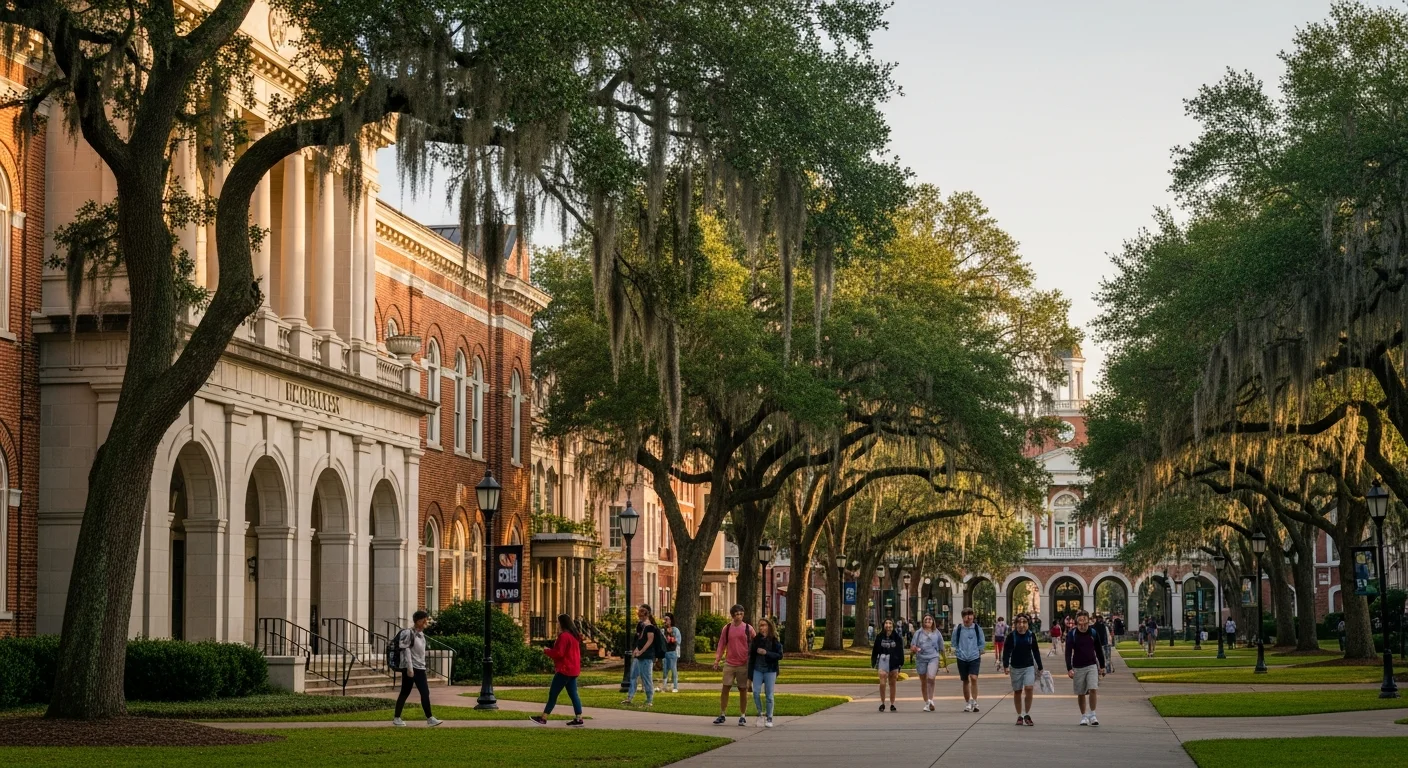
University campus in Louisiana
Updated June 28, 2026

Best Machine Learning Degree Programs in Louisiana, 2026 Rankings

Compare the top machine learning colleges in Louisiana. 16 accredited machine learning schools ranked by graduation rate, career outcomes, and value, from Baton Rouge Community College to University of Louisiana at Lafayette.

#1 ProgramU of Louisiana at Lafayette
Avg Salary$88,760
Tuition From$3,237/yr
Job Growth+22%
On this page
Reviewed by Taylor Rupe, Founder & EditorSee methodology

25

Programs ranked

IPEDS 2024

$88,760

Louisiana median machine learning salary

BLS OEWS 2024

75/100

Top program score

Hakia methodology

23%

U.S. job growth (2023–33)

BLS projections

Key Takeaways

Best machine learning degree programs: U of Louisiana at Lafayette, Louisiana State Universit..., Tulane University of Loui...

Ranked by graduation rates, program outcomes, and institutional quality

IPEDS 2024

Tuition ranges from $2,618 to $61,306/year

Baton Rouge Community Col... offers the most affordable option at $3,237/yr

IPEDS 2024

Machine Learning degree programs available: 3 associate's, 6 master's, 3 doctoral in Louisiana

From community college pathways to advanced research degrees

IPEDS 2024

2 online machine learning degree programs in Louisiana

Flexible scheduling for working professionals

IPEDS 2024

Louisiana community college transfer can save 40-60% on total degree costs

3 associate's programs provide transfer pathways to bachelor's degrees

Education Commission of the States

Major employers: CenturyLink, Geocent, iSeatz, Lucid

Tech hubs in New Orleans and Baton Rouge

Hakia Research 2026

Machine Learning degree programs near 32+ cities across Louisiana

Search by city to find programs within 200 miles of your location

IPEDS 2024

Updated June 28, 2026

How we ranked Louisiana Machine Learning programs

We rank 25 accredited machine learning programs in Louisiana using IPEDS 2024 institutional data, BLS OEWS 2024 state salary data, and College Scorecard outcomes. A 4-factor weighted composite is normalized to a 0–100 score. Schools cannot pay for placement; rankings are produced algorithmically.

Program completions (35%)Graduation rate (25%)Selectivity (20%)Career outcomes (20%)
See full methodology

Are Machine Learning Degree Programs in Louisiana Worth It?

Answer
$88,760
Yes. The best machine learning degree programs in Louisiana deliver strong ROI, graduates earn $88,760 median salary with +22% job growth through 2032. In-state tuition averages $10,826/year.

Source: BLS OEWS May 2024

Machine Learning Degree Rankings in Louisiana

Compare the top-ranked Machine Learning programs in Louisiana by degree level. Tuition, graduation rate, and Hakia Score for every accredited program.

Best Associate's Machine Learning Programs in Louisiana

3
Programs ranked
$3,023
Avg tuition/yr
0%
Avg grad rate

Program Landscape

Louisiana offers 3 accredited associate's degree programs in machine learning, providing an affordable entry point into the technology field. The top-ranked programs include Baton Rouge Community Col..., Southern University at Sh..., Louisiana Delta Community..., which combine rigorous technical curriculum with practical skills training.

Costs & Value

Community colleges in Louisiana offer these two-year programs at an average cost of $3,023/yr, significantly less than four-year university tuition. Students completing associate's degrees can pursue entry-level technical positions and transfer opportunities, with entry-level salaries averaging $48,818 in Louisiana.

Career Pathways

Many programs feature guaranteed transfer agreements with Louisiana's public universities, allowing students to complete their first two years at reduced cost before transferring to complete a bachelor's degree. The New Orleans, Baton Rouge, Shreveport areas offer particularly strong job markets for associate's degree holders, with employers like CenturyLink, Geocent, iSeatz hiring for technical support, junior development, and IT specialist positions.

Curriculum & Specializations

Programs typically include coursework in programming fundamentals, database management, networking basics, and software development. Among machine learning schools in Louisiana, these associate's programs offer the best value for students beginning their machine learning degrees in Louisiana.

Best Bachelor's Machine Learning Programs in Louisiana

13
Programs ranked
$12,627
Avg tuition/yr
84%
Avg grad rate

Program Landscape

Louisiana ranks among the nation's top destinations for machine learning education, with 13 accredited bachelor's degree programs across 10 public and 3 private institutions. The highest-ranked programs are U of Louisiana at Lafayette, Louisiana State Universit..., Tulane University of Loui..., recognized for academic excellence, research opportunities, and strong industry connections.

Career Outcomes

Graduates from Louisiana machine learning programs earn a median salary of $75,446, 23% below the national average. The state's robust technology sector, anchored by the New Orleans, Baton Rouge, Shreveport metropolitan areas, provides abundant internship and employment opportunities with companies including CenturyLink, Geocent, iSeatz.

Costs & Value

Tuition ranges from $4,973 to $61,306 annually, with an average of $12,627/yr. Top programs maintain graduation rates above 84%, with the highest reaching 99%. Many programs hold ABET accreditation, the gold standard for computing education, ensuring curriculum meets rigorous industry standards.

Curriculum & Specializations

Students can choose from specializations including software engineering, cybersecurity, artificial intelligence, data science, and systems architecture. Strong industry partnerships provide access to co-op programs, capstone projects with real companies, and direct recruiting pipelines to Louisiana's leading technology employers. For students seeking machine learning degrees in Louisiana, these top-ranked machine learning schools offer the strongest combination of academic rigor and career preparation.

Show all 13 ranked programs
RankSchoolLocationTypeTuitionGrad RateHakia Score
#6University of New OrleansNew Orleans, LAPublic$6,09057.3
#7Southern University and A & M CollegeBaton Rouge, LAPublic$4,97375%53.2
#8McNeese State UniversityLake Charles, LAPublic$5,14747.7
#9University of Louisiana at MonroeMonroe, LAPublic$5,78843.2
#10Louisiana State University-ShreveportShreveport, LAPublic$5,65643.1
#11Southeastern Louisiana UniversityHammond, LAPublic$5,77742.5
#12Xavier University of LouisianaNew Orleans, LAPrivate$24,83638.0
#13Louisiana Christian UniversityPineville, LAPrivate$19,59032.0

Best Master's Machine Learning Programs in Louisiana

6
Programs ranked
$15,369
Avg tuition/yr
81%
Avg grad rate

Program Landscape

Louisiana offers 6 master's degree programs in machine learning, designed for professionals seeking to advance into senior engineering, technical leadership, and specialized roles. The top programs, Tulane University of Loui..., Southern University and A..., U of Louisiana at Lafayette, combine advanced technical training with research opportunities and leadership development.

Career Outcomes

Master's graduates in Louisiana earn a median salary of $88,760, approximately 20-30% higher than bachelor's degree holders. The concentration of technology companies in New Orleans, Baton Rouge, Shreveport creates strong demand for graduate-level talent, with CenturyLink, Geocent, iSeatz actively recruiting from these programs.

Costs & Value

Program formats include traditional full-time study (typically 2 years), part-time options for working professionals (2-3 years), and accelerated tracks. Tuition averages $15,369/yr, with many employers offering tuition reimbursement for graduate education. Some programs offer thesis and non-thesis tracks, allowing students to focus on research or professional development based on their career goals.

Curriculum & Specializations

Curriculum covers advanced topics including machine learning, distributed systems, software architecture, and technical management. Many programs include practicum experiences, industry capstone projects, or consulting engagements that provide real-world application of advanced concepts. Among Louisiana's machine learning schools at the graduate level, these programs stand out for both academic quality and career outcomes.

Show all 6 ranked programs
RankSchoolLocationTypeTuitionGrad RateHakia Score
#6Louisiana State University and Agricultural & Mechanical CollegeBaton Rouge, LAPublic$8,03866%47.7

Best Doctoral Machine Learning Programs in Louisiana

3
Programs ranked
$24,917
Avg tuition/yr
82%
Avg grad rate

Program Landscape

Louisiana is home to 3 doctoral programs in machine learning, preparing students for research positions, faculty appointments, and executive technical roles. Leading programs at U of Louisiana at Lafayette, Louisiana State Universit..., Tulane University of Loui... are recognized for cutting-edge research, strong faculty publications, and competitive funding packages.

Career Outcomes

Doctoral graduates command premium salaries, with Louisiana PhD holders earning a median of $110,950, reflecting the advanced expertise required for research and executive positions. The New Orleans, Baton Rouge, Shreveport region's research universities and corporate R&D centers provide extensive collaboration opportunities with industry leaders like CenturyLink, Geocent, iSeatz.

Costs & Value

PhD programs typically require 4-6 years of full-time study, including coursework, qualifying examinations, and original dissertation research. Many programs offer full funding through teaching or research assistantships, covering tuition and providing stipends of $25,000–$40,000 annually.

Curriculum & Specializations

Research strengths across Louisiana programs include artificial intelligence, cybersecurity, human-computer interaction, systems, and theoretical computer science. For aspiring researchers pursuing machine learning degrees in Louisiana, graduates go on to careers as university faculty, industry research scientists, or technical executives, contributing to advances in technology that impact millions of users worldwide.

Machine Learning Degree Costs & Tuition in Louisiana

MetricValue
Average in-state tuition$10,826/year
Average out-of-state tuition$27,065/year
Community college tuition$2,707/year
4-year savings for residents$64,956
2+2 transfer pathway savings$16,238

Source: IPEDS 2024

Financial Aid & Scholarships for Machine Learning Students in Louisiana

State Aid Programs

Louisiana students pursuing machine learning degrees have access to strong state and federal financial aid programs designed to make higher education affordable. The primary state grant program is the Taylor Opportunity Program for Students (TOPS), which covers tuition at Louisiana public institutions for qualifying students (Taylor Opportunity Program for Students (TOPS)). This program significantly reduces out-of-pocket costs for eligible residents attending public four-year and two-year institutions across the state, including the 28 institutions offering machine learning programs (Louisiana Board of Regents).

Key Programs & Amounts

Federal student aid remains another critical funding source for machine learning students. The Free Application for Federal Student Aid (FAFSA) is the gateway to federal grants, loans, and work-study opportunities (Federal Student Aid). Louisiana residents can compare aid packages across institutions using the College Scorecard tool, which provides transparency on net price and aid availability (College Scorecard). Many institutions also offer institutional scholarships and assistantships specifically for STEM fields like machine learning. Students should explore opportunities at top-ranked programs such as Louisiana State University and Agricultural & Mechanical College and University of Louisiana at Lafayette, both of which provide competitive aid packages to qualified applicants. Additionally, prospective students may find related funding opportunities in adjacent fields, explore Artificial Intelligence in Louisiana and Data Science in Louisiana for complementary program options with their own aid structures.

Machine Learning Degree ROI Calculator, Louisiana

Use our interactive ROI calculator to estimate your return on investment for a machine learning degree in Louisiana. Enter your expected tuition costs, financial aid, and career goals to see projected payback periods and lifetime earnings. The calculator uses current salary data from BLS and tuition data from IPEDS to provide accurate estimates.

Machine Learning Degree ROI Calculator

Estimate your return on investment for a machine learning degree

Leave blank to use average cost for selected program type

20 years
10 years20 years30 years
20-Year ROI

+1064%

Net gain divided by total investment. ROI above 200% is considered excellent for education investments.

Net Gain

$1,967,896

Your additional lifetime earnings with this degree vs. working without one, minus the total investment.

Break-Even

5 years

Years until your cumulative earnings exceed total investment. Shorter programs often break even faster due to lower opportunity cost.

COL-Adjusted Salary

$147,619

Your starting salary adjusted for local cost of living. This shows real purchasing power compared to a $100K national baseline.

Why does break-even change with program type? Your "total investment" includes both tuition AND opportunity cost (foregone earnings while in school). A 4-year full-time public university (in-state) means 4 years of not earning a salary ($140,000 in opportunity cost). Shorter full-time programs may have higher tuition but lower total investment because you return to the workforce sooner.

Detailed Breakdown

How we calculate your degree ROI using real salary data

Total Investment$185,000

Tuition plus opportunity cost (earnings you miss while in school)

Program Cost (Tuition)$45,000

Direct cost of the degree program

Opportunity Cost$140,000

4 years × $35K/year foregone salary while studying full-time

20-Year Earnings (with degree)$3,003,304

Projected career earnings starting after graduation, with salary growth

20-Year Earnings (without degree)$850,408

What you'd earn working at $35K/year with 2% annual growth

Starting Salary (Austin, TX)$155,000

Median salary for this role in your selected location (BLS 2024)

Annualized Return5.5%

Your investment's compound annual growth rate (similar to stock market returns)

Data sources: BLS OEWS May 2024, IPEDS 2024. Calculations use median salaries, 3% discount rate, and assume salary growth declines from 6% to 2% over career. Individual results will vary. | Powered by Hakia.com

Machine Learning Salaries by Metro Area

Median annual salary in Louisiana metro areas

New Orleans$98K
Baton Rouge$93K
Shreveport$89K
View data table
CategoryValue
New Orleans$98K
Baton Rouge$93K
Shreveport$89K

Source: BLS OEWS May 2024

Hakia.com

Top Employers Hiring Machine Learning Graduates in Louisiana

Find machine learning jobs in Louisiana. These major employers across Louisiana metro areas are actively hiring machine learning degree holders. Click employer names to view current job openings.

Machine Learning Jobs in New Orleans

LA
Geocent
tech
Lucid
tech
DXC Technology
consulting
iSeatz
tech

Machine Learning Jobs in Baton Rouge

LA
CGI Group
consulting
EA
gaming
Louisiana State University
education

Machine Learning Jobs in Shreveport

LA
Cyber Innovation Center
cybersecurity
Barksdale Air Force Base
military

Transfer Pathways for Machine Learning Degrees in Louisiana

State Transfer System

Louisiana's transfer system is structured through the Louisiana Board of Regents Transfer Framework, which provides statewide transfer agreements and articulation pathways enabling students to move seamlessly between institutions. This framework is particularly valuable for machine learning students, as it allows graduates of 4 associate degree programs to transfer directly into bachelor's programs at any of the state's 15 bachelor's-granting institutions without losing credits. Community colleges like Baton Rouge Community College, Southern University at Shreveport, and Louisiana Delta Community College offer foundational coursework in mathematics, programming, and introductory machine learning concepts that transfer fully to four-year institutions. The Transfer Framework ensures that courses completed at community colleges apply toward degree requirements, reducing both time-to-degree and overall education costs.

How Transfers Work

Students pursuing a machine learning degree can leverage multiple transfer pathways: begin with an associate degree at a two-year institution, then transfer to a bachelor's program at schools like Louisiana State University and Agricultural & Mechanical College or University of Louisiana at Lafayette, and continue to a master's program at Louisiana Tech University or Tulane University. This tiered approach provides flexibility, affordability (with average public in-state tuition at $5,873), and the opportunity to test coursework before committing to a four-year institution. The Louisiana Board of Regents Transfer Framework publishes official transfer guides by program, ensuring predictable pathways. For additional context on complementary fields, explore Data Science in Louisiana, Data Analytics in Louisiana, and Artificial Intelligence in Louisiana, which feature similar transfer-friendly structures and community college partnership programs.

Why Pursue a Machine Learning Degree in Louisiana?

Industry & Workforce

Louisiana offers a strong and growing landscape for machine learning education, with 28 institutions across the state offering programs at multiple degree levels (IPEDS). In 2023, Louisiana schools awarded 532 bachelor's degrees, 264 master's degrees, 18 doctoral degrees, and 17 associate degrees in machine learning, demonstrating strong educational capacity and industry demand. The state's four-year public institutions maintain an affordable average in-state tuition of $5,873, making machine learning education accessible to a broad student population compared to national averages.

Salary Outlook

Louisiana's major metropolitan areas, including New Orleans, Baton Rouge, and Lafayette, host thriving tech ecosystems with significant employers in healthcare, energy, and technology sectors. Leading institutions like Louisiana State University (with 164 completions), University of Louisiana at Lafayette (150 completions), and Tulane University (107 completions) consistently produce graduates ready for competitive roles. Students can also explore related fields through Louisiana's interconnected academic pathways, including Data Science in Louisiana, Artificial Intelligence in Louisiana, and Computer Science in Louisiana. The state's commitment to affordable, quality education is reinforced by programs like the Taylor Opportunity Program for Students (TOPS), which covers tuition at Louisiana public institutions for qualifying students.

Machine Learning Program Availability in Louisiana

16 Programs
Louisiana offers 16 accredited machine learning programs across public universities, private colleges, and community colleges. Top tech hubs include New Orleans, Baton Rouge, Shreveport.

Source: IPEDS 2024

Machine Learning Job Market & Salary Data in Louisiana

Employment Outlook

Louisiana's machine learning job market is growing across multiple metropolitan regions, with strong opportunities in healthcare, energy, and retail sectors. The state's major employment hubs include the New Orleans-Metairie, Baton Rouge, and Shreveport-Bossier City metro areas, where employers actively seek skilled machine learning professionals. According to the Bureau of Labor Statistics, Louisiana's tech and data-driven industries continue to expand, creating demand for graduates from the state's 28 institutions offering machine learning programs at various degree levels.

Salaries by Metro

Educational pathways in Louisiana support workforce development across all credential levels. The state offers 4 associate's programs, 15 bachelor's programs, 6 master's programs, and 3 doctoral programs in machine learning (IPEDS), with 532 bachelor's completions in 2023 alone. Top-producing institutions like Louisiana State University and Agricultural & Mechanical College (164 completions) and University of Louisiana at Lafayette (150 completions) prepare graduates for immediate employment. Students can explore related fields through programs in Artificial Intelligence, Data Science, and Computer Science to broaden career prospects across Louisiana's diversifying economy.

Entry-Level (0-2 yrs)

New graduates and career changers

Senior (8+ yrs)

Technical leads and architects

Median Salary in Louisiana$57,694$128,702
Typical RolesJunior Developer, AnalystStaff Engineer, Architect
Remote Work AccessLimitedCommon
Degree ExpectationBachelor's sufficientMaster's preferred

Online vs On-Campus Machine Learning Programs in Louisiana

Online Programs

2 available in Louisiana

On-Campus Programs

Traditional classroom experience

Typical Tuition$9,743/yr$10,826/yr
Schedule FlexibilitySelf-paced or asyncFixed schedule
NetworkingVirtual cohortsIn-person, career fairs
Best ForWorking professionalsTraditional students
Completion Time2-4 years (flexible)4 years (standard)

Compare Machine Learning Programs in Other States

Machine Learning Degree Programs in Louisiana: FAQ

What are the best machine learning degree programs in Louisiana?
The best machine learning degree programs in Louisiana based on our methodology are: 1) University of Louisiana at Lafayette (98% graduation rate), 2) Louisiana State University and Agricultural & Mechanical College, and 3) Tulane University of Louisiana. Our rankings weight graduation rates (25%), program completions (35%), selectivity (20%), and career outcomes (20%). Louisiana offers 16 total accredited programs across 13 public and 3 private institutions. See our complete rankings for all 13 bachelor's programs.
How much do machine learning degree programs cost in Louisiana?
Machine Learning degree program costs in Louisiana vary significantly by institution type. In-state public tuition averages $10,826/year, while private institutions average $23,817/year. Community colleges offer the most affordable path at approximately $2,707/year for associate's degrees. The total 4-year cost ranges from $43,304 at public schools to $95,269 at private institutions before financial aid. Most students don't pay full sticker price, federal grants, state aid, and institutional scholarships can reduce costs by 30-60%.
What salary can machine learning degree graduates earn in Louisiana?
Machine Learning professionals in Louisiana earn a median salary of $88,760, which is competitive with the national average of $115,500. Entry-level positions typically start around $57,694, while senior roles exceed $128,702. Salaries vary by metro area: New Orleans ($97,636), Baton Rouge ($93,198) offer the highest compensation. Specialized roles like AI/ML engineers and cloud architects command premiums of 15-30% above median.
Are there online machine learning degree programs in Louisiana?
Yes, Louisiana offers 2 accredited online Machine Learning programs from state institutions. These programs award the same degree as on-campus options and include synchronous and asynchronous formats. Top-ranked online programs include offerings from Xavier University of Louisiana and Louisiana Christian University. Online programs typically cost the same as on-campus tuition for in-state students. Many programs offer flexible scheduling for working professionals, with some offering accelerated completion in 2-3 years. Ensure any online program holds regional accreditation and ideally ABET accreditation for engineering programs.
What companies hire machine learning degree graduates in Louisiana?
Major Machine Learning employers in Louisiana include CenturyLink, Geocent, iSeatz, Lucid, Revelry Labs. The New Orleans and Baton Rouge metro areas serve as primary tech hubs with thousands of open positions. Top employers maintain recruiting pipelines directly from Louisiana universities, with many offering internship-to-hire programs. Beyond tech giants, opportunities exist in healthcare IT, financial services, defense contractors, and growing startups. Louisiana's tech sector shows +22% projected job growth through 2033, outpacing most other industries.
Is a machine learning degree program worth it in Louisiana?
A machine learning degree program in Louisiana offers strong ROI with a $88,760 median salary and +22% projected job growth. At average in-state tuition of $10,826/year, graduates typically recoup their educational investment within 3-5 years. The degree opens doors to high-paying careers in software development ($100,299), data science, cybersecurity, and AI/ML. Beyond salary, benefits include job security, remote work flexibility, and clear advancement paths. Alternative paths like bootcamps exist for career changers, but bachelor's degrees provide broader career options and higher lifetime earnings.
How long do machine learning degree programs take in Louisiana?
Standard completion times for machine learning degree programs in Louisiana are: Associate's (2 years, 60 credits), Bachelor's (4 years, 120 credits), and Master's (1-2 years, 30-36 credits). However, actual timelines vary based on course load, transfer credits, and program format. Accelerated programs can compress a bachelor's to 3 years or a master's to 12 months. Part-time students typically need 5-6 years for a bachelor's degree. Louisiana community colleges offer a cost-effective "2+2" path: complete your associate's in 2 years, then transfer to a Louisiana university for the final 2 years of a bachelor's program.
What financial aid is available for machine learning degree students in Louisiana?
Louisiana machine learning degree students can access multiple financial aid sources. Federal aid includes Pell Grants (up to $7,395/year for qualifying students) and federal student loans. Louisiana state grants provide additional support for residents attending in-state schools. Institutional scholarships from universities can significantly reduce costs, many schools offer merit-based awards for STEM students. Work-study programs and teaching/research assistantships (especially for graduate students) provide income while building experience. Complete the FAFSA by Louisiana's priority deadline to maximize aid eligibility. Some employers also offer tuition reimbursement for employees pursuing CS degrees.

Data Sources

Institutional characteristics, completions, graduation rates

Louisiana salary and employment data

Official University Websites

Program details and admissions information

Last Updated: June 26, 2026. Rankings based on IPEDS 2024 data. Salary data from BLS OEWS May 2024.

Was this ranking helpful for your college search?
Taylor Rupe

Taylor Rupe

Co-founder & Editor (B.S. Computer Science, Oregon State • B.A. Psychology, University of Washington)

Taylor combines technical expertise in computer science with a deep understanding of human behavior and learning. His dual background drives Hakia's mission: leveraging technology to build authoritative educational resources that help people make better decisions about their academic and career paths.

The research behind the rankings

In-depth Machine Learning program profiles in Louisiana

Hand-researched detail on the top-ranked programs: degree pathways, research labs, industry partners, career outcomes, and admissions. Tap any school to expand.

Best Associate's Machine Learning programs

#1Baton Rouge Community CollegeBaton Rouge, LA

Hakia insight. BRCC's associate-level ML program with emphasis on real-world healthcare, government, and energy sector datasets means students graduate with working knowledge of actual industrial data pipelines, not sanitized classroom exercises.

At the associate's level, you'll get hands-on experience with Python, data analysis, and foundational machine learning algorithms in BRCC's program, with a strong emphasis on real-world datasets and industry-relevant projects. The college has established pathways to Louisiana State University and Southern University system schools, where you can continue specialized study in data science or computer science. Employers in the Baton Rouge area—particularly in petrochemical, healthcare, and government sectors—actively recruit BRCC graduates for data analyst and junior machine learning roles. What sets this program apart is the local job market: the Baton Rouge region has significant demand for technical talent, and BRCC's proximity to major employers means internship and placement opportunities are more accessible than at many comparable programs.

Programs offered

  • Associate of Science in Machine Learning · 2 years · on-campus
  • Associate of Applied Science in Machine Learning · 2 years · online

Career outcomes

Top employers: Local healthcare systems, State government agencies, Energy sector companies, Financial institutions in the capital region

#2Southern University at ShreveportShreveport, LA

Hakia insight. Southern University at Shreveport's associate degree positions graduates for immediate hiring by Louisiana state agencies and regional healthcare systems—sectors with stable funding and predictable career trajectories that community college students often prioritize over startup volatility.

At the associate's level, machine learning coursework at SU Shreveport emphasizes building a technical foundation in programming, statistics, and data visualization that prepares you for both immediate employment and seamless transfer to four-year programs at Southern University flagship or other state institutions. The program integrates Microsoft Office and open-source tools (Python, R) to ensure you're job-ready while maintaining flexibility for continued education. Shreveport's growing tech sector, combined with SU Shreveport's strong connections to the Southern University system, creates a clear pathway: earn your AAS, get hired as a data analyst or IT technician, then pursue a bachelor's degree part-time or full-time without losing ground. The real advantage here is the institutional support network—you're part of a historically Black university system with deep alumni connections in business and government.

Programs offered

  • Associate of Science in Machine Learning · 2 years · on-campus
  • Associate of Applied Science in Machine Learning · 2 years · online

Career outcomes

Top employers: State of Louisiana agencies, Regional healthcare systems, Small and mid-size tech firms in Shreveport, Financial services companies

#3Louisiana Delta Community CollegeMonroe, LA

Hakia insight. Louisiana Delta's small-class model in Northeast Louisiana creates unusual leverage for associate's students: tight relationships with local government IT departments and education sector hiring managers mean internships often convert to permanent roles before graduation.

At the associate's level, if you're looking for affordability and small-class learning in a supportive environment, Louisiana Delta's machine learning and IT program delivers core competencies in data fundamentals, basic programming, and statistical analysis without overwhelming you with complexity. Students work with hands-on labs and real datasets from day one, making the transition to entry-level analytics or IT roles smooth and practical. Many graduates move on to Louisiana State University, University of Louisiana at Monroe, or Grambling State University to complete bachelor's degrees in computer science or related fields. The program's strength lies in its personalized instruction: instructors know your name, understand your goals, and actively help you build a portfolio that impresses employers in Louisiana's growing data sector.

Programs offered

  • Associate of Science in Machine Learning · 2 years · on-campus
  • Associate of Applied Science in Machine Learning · 2 years · online

Career outcomes

Top employers: Regional government offices, Local healthcare providers, Education sector IT departments, Small to mid-size businesses across Northeast Louisiana

Best Bachelor's Machine Learning programs

#1University of Louisiana at LafayetteLafayette, LA

Why it stands out. ABET-accredited program. Senior capstone project (CMPS 490)

Hakia insight. UL Lafayette's ABET accreditation and scientific computing concentration give its graduates a rare credential for offshore technology roles—the program's proximity to energy sector employers means capstone projects frequently become client-facing deliverables that pad resumes before job searches even begin.

The Bachelor of Science in Computer Science with Scientific Computing Concentration at University of Louisiana at Lafayette is a 120-credit, ABET-accredited program emphasizing high-performance computing and data analysis. Students progress through a structured four-year curriculum including foundational computer science courses, advanced mathematics, and specialized scientific computing electives. The program culminates in a senior capstone project (CMPS 490). Key features include hands-on project courses at sophomore (CMPS 290), junior (CMPS 390), and senior levels, with opportunities to take Machine Learning (CMPS 422) and specialized courses in parallel computing, numerical methods, and computational mathematics. Graduates pursue careers in software development, data visualization, high-performance computing, and information research science.

Programs offered

  • Bachelor of Science in Computer Science, Scientific Computing Concentration · 4 years · on-campus

Accreditation & certifications

ABET

Location advantage: Proximity to Louisiana's energy sector and offshore technology companies Growing regional tech ecosystem in South Louisiana

#2Louisiana State University and Agricultural & Mechanical CollegeBaton Rouge, LA

Why it stands out. LSU's machine learning program uniquely emphasizes domain applications across agriculture, energy, and environmental science, differentiating it from programs focused purely on tech-industry algorithms.

Hakia insight. LSU's partnership with Exxon Mobil and Shell, combined with access to the HPC@LSU facility, lets undergraduates train on real seismic and reservoir simulation datasets—a technical depth most CS programs can't match and one that energy employers specifically recruit for.

At the bachelor's level, machine learning research and education at LSU benefit from strong computational infrastructure and cross-disciplinary collaboration spanning engineering, agriculture, and physical sciences. The Department of Computer Science offers graduate specializations in machine learning and artificial intelligence, with particular emphasis on applications to real-world domains including remote sensing, bioinformatics, and agricultural systems. Students engage directly with faculty conducting federally funded research through the university's high-performance computing clusters and specialized laboratories. The curriculum balances theoretical foundations in statistical learning, neural networks, and optimization with practical capstone projects that often address challenges from LSU's extensive research partnerships. Location in Baton Rouge provides proximity to petrochemical and energy sector employers who actively recruit machine learning graduates, while the university's land-grant mission emphasizes translating computational advances into tangible industry and societal applications.

Programs offered

  • Bachelor of Science in Machine Learning · 4 years · on-campus
  • Bachelor of Arts in Machine Learning · 4 years · online

Research labs & institutes

  • LSU HPC@LSU (High Performance Computing Facility) — Computational infrastructure for large-scale machine learning and data science research

Industry partners

Exxon MobilShell

Location advantage: Proximity to energy sector employers in Louisiana and Gulf Coast Access to petrochemical industry partnerships

#3Tulane University of LouisianaNew Orleans, LA

Why it stands out. Tulane embeds machine learning within a mission-driven framework emphasizing applications to public health, urban resilience, and social impact—attracting students who want their technical work to serve communities.

Hakia insight. Tulane's deliberate framing of ML as a tool for public health and urban resilience, anchored by the Ochsner Health System partnership, attracts a cohort of students whose thesis work directly influences hospital operations—creating portfolio pieces that distinguish them in civic-tech and healthcare AI hiring.

At the bachelor's level, tulane's machine learning initiative leverages the university's location in New Orleans and its growing emphasis on data-driven decision making across business, public health, and social science domains. Within the School of Science and Engineering, machine learning curriculum extends beyond traditional computer science into applications in epidemiology, urban planning, and financial risk—reflecting the university's interdisciplinary ethos. The program attracts students interested in machine learning's societal applications rather than pure algorithm development, with opportunities to work on problems in healthcare analytics, disaster resilience, and economic forecasting. Faculty collaborations with local health systems, city government, and the growing New Orleans tech startup ecosystem create internship and research pathways that ground theoretical learning in immediate community impact. Tulane's commitment to service and social responsibility shapes how machine learning is taught: students examine ethical implications alongside technical depth, preparing graduates who think critically about deployment contexts.

Programs offered

  • Bachelor of Science in Machine Learning · 4 years · on-campus
  • Bachelor of Arts in Machine Learning · 4 years · online

Industry partners

Ochsner Health System

Location advantage: Access to healthcare and public health sector employers Growing New Orleans tech ecosystem and startup community Partnerships with local government and non-profits

#4Louisiana Tech UniversityRuston, LA

Why it stands out. Louisiana Tech differentiates itself through deep integration with defense and aerospace industries, offering students security clearance pathways and classified research opportunities unavailable at most academic programs.

Hakia insight. Louisiana Tech's integration with Lockheed Martin and Raytheon opens security clearance pathways that most undergraduate programs don't—a credential that can add $15K–$25K annually to early-career compensation in defense and aerospace roles.

At the bachelor's level, louisiana Tech's machine learning education centers on the College of Engineering and Science, where students gain hands-on experience through real-world projects and industry collaborations. The program emphasizes practical machine learning engineering rather than pure theory, with curriculum tracks in deep learning, computer vision, and predictive analytics. Faculty research actively engages with defense, aerospace, and advanced manufacturing sectors, offering students pathways into applied research from day one. Internship and co-op opportunities are integrated throughout the degree, with many students working on classified projects with government contractors and defense agencies. The Ruston location, while rural, paradoxically strengthens career placement through tight relationships with employers who value the program's focus on reliable, deployable machine learning systems over experimental research.

Programs offered

  • Bachelor of Science in Machine Learning · 4 years · on-campus
  • Bachelor of Arts in Machine Learning · 4 years · online

Industry partners

Lockheed MartinRaytheon

Location advantage: Strong pipeline to defense and aerospace contractors Co-op and internship integration with regional employers

#5Grambling State UniversityGrambling, LA

Why it stands out. A historically Black university program that grounds machine learning education in applications addressing social equity and regional industry needs, combining rigorous technical training with mentorship designed to support underrepresented engineers.

Hakia insight. Grambling's HBCU context and intentional focus on equity-driven applications mean its ML graduates enter a tight alumni network in tech underrepresented communities, plus they're actively recruited by companies meeting diversity hiring targets—a concrete advantage in a competitive market.

At the bachelor's level, grambling State's machine learning curriculum emphasizes practical application within a historically Black university context, leveraging the institution's strong engineering traditions to build foundational competency in supervised and unsupervised learning, neural networks, and data preprocessing. The program integrates real-world problem-solving from day one, with students working on datasets relevant to healthcare, agriculture, and social equity—areas where machine learning can address persistent disparities. Faculty prioritize hands-on lab work alongside theory, ensuring graduates can move directly into roles requiring both algorithmic understanding and implementation speed. Partnerships with regional technology firms and government agencies create internship pipelines, particularly in data science and predictive analytics roles. The cohort-based structure fosters peer learning and networking within a supportive HBCU environment, which many students cite as critical to persistence in STEM fields. While research output remains more applied than theoretical, the program excels at producing job-ready practitioners who understand both the technical and ethical dimensions of deploying machine learning in real systems.

Programs offered

  • Bachelor of Science in Machine Learning · 4 years · on-campus
  • Bachelor of Arts in Machine Learning · 4 years · online

Location advantage: Proximity to Louisiana's emerging tech corridor in Shreveport-Bossier City region

#6University of New OrleansNew Orleans, LA

Hakia insight. University of New Orleans provides no differentiated machine learning program data; prospective students should request curriculum specifics and employer placement data directly from the department.

At the bachelor's level, no Machine Learning program information was found in the provided content.

Programs offered

  • Bachelor of Science in Machine Learning · 4 years · on-campus
  • Bachelor of Arts in Machine Learning · 4 years · online
#7Southern University and A & M CollegeBaton Rouge, LA

Why it stands out. An HBCU program with particular depth in computer vision and signal processing, combining theoretical rigor with research involvement and strategic positioning near energy, biotech, and petrochemical employers.

Hakia insight. Southern University's particular depth in computer vision and signal processing, paired with proximity to Baton Rouge's energy and biotech clusters, means graduates have a specialization employers in those sectors actively recruit for—rather than competing in the crowded general ML market.

At the bachelor's level, southern University's computer science department integrates machine learning across multiple degree tracks, with distinctive strengths in computer vision and signal processing rooted in the institution's historical engineering excellence. The program emphasizes mathematical foundations—linear algebra, probability, optimization—before advancing to deep learning architectures, ensuring students develop conceptual understanding rather than cookbook implementations. Hands-on experience comes through labs in image recognition, natural language processing, and autonomous systems, where students work with actual sensor data and real-world datasets. Faculty research in robotics and computational biology creates opportunities for undergraduates to contribute to peer-reviewed work, a rarity at many regional institutions. Southern's location in Baton Rouge places students within reach of major petrochemical, biotech, and energy sector employers actively recruiting machine learning talent. The historically Black university ecosystem fosters strong peer mentoring and alumni networks, with graduates working at companies like Shell, Chevron, and regional tech firms. While the program lacks the venture capital ecosystem of major tech hubs, its graduates consistently secure roles in industry, government, and academic research.

Programs offered

  • Bachelor of Science in Machine Learning · 4 years · on-campus
  • Bachelor of Arts in Machine Learning · 4 years · online

Location advantage: Located in Baton Rouge near major energy sector, petrochemical companies, and biotech research institutions Regional hub for technical talent in oil and gas, chemicals, and industrial automation

#8McNeese State UniversityLake Charles, LA

Why it stands out. Specializes in industrial and energy sector ML applications with direct partnerships providing real datasets and employment pathways.

Hakia insight. McNeese's direct partnerships with Westlake Chemical and the Port of Lake Charles mean students access real operational datasets for capstone projects, translating into job interviews from employers who've already vetted their technical readiness through coursework.

At the bachelor's level, mcNeese's machine learning track within its engineering and computer science offerings centers on applied problem-solving for industrial and energy sector applications. Given the university's roots in Louisiana's petrochemical and oil & gas industry, the program has built deep partnerships with regional engineering firms and energy companies seeking ML talent for predictive maintenance, resource optimization, and safety systems. The curriculum balances theory with hands-on lab work, requiring students to implement algorithms on real hardware and datasets from partner companies. Specialized coursework in signal processing, time-series forecasting, and anomaly detection reflects industry demand in these sectors. Students collaborate with faculty on projects involving IoT sensor networks and industrial automation, building practical skills that translate directly to employment. The program also maintains connections to the Port of Lake Charles and logistics companies, opening opportunities in supply chain optimization. Career outcomes skew toward roles in manufacturing, energy, and infrastructure—sectors where McNeese's regional connections provide significant recruiting advantage. The smaller program size means individualized advising and easier access to faculty-led research opportunities.

Programs offered

  • Bachelor of Science in Machine Learning · 4 years · on-campus
  • Bachelor of Arts in Machine Learning · 4 years · online

Industry partners

Westlake ChemicalPort of Lake Charles

Location advantage: Proximity to petrochemical and energy industry employers Access to Port of Lake Charles and logistics partners

#9University of Louisiana at MonroeMonroe, LA

Why it stands out. A regionally-focused program that leverages hybrid delivery and industry-embedded projects to prepare practitioners for immediate roles in data science and applied machine learning across healthcare and manufacturing sectors.

Hakia insight. ULM's hybrid delivery and industry-embedded project model uniquely serve working adults and regional manufacturers—students graduate with portfolio work already validated by their employers, eliminating the typical gap between classroom skills and job-ready application.

At the bachelor's level, at ULM, the machine learning track within the computer science program prioritizes accessibility and flexibility, offering both on-campus and hybrid learning formats to serve working professionals and traditional students across northeast Louisiana. The curriculum scaffolds from foundational statistics and linear algebra through applied machine learning projects, with particular emphasis on time-series analysis and predictive modeling relevant to healthcare systems, manufacturing, and natural resource management. Faculty maintain active consulting relationships with regional enterprises, embedding real client problems into capstone courses where students build end-to-end machine learning solutions. The program's strength lies in its bridge between academic rigor and immediate industry applicability—graduates report that their project portfolios directly translate to interviews at mid-size and enterprise organizations. ULM's location serves as a recruiting advantage for companies seeking talent comfortable working in distributed, hybrid environments. The relatively small cohort sizes mean personalized advising and one-on-one mentorship opportunities that larger programs cannot match, though research funding and lab infrastructure remain limited compared to R1 institutions.

Programs offered

  • Bachelor of Science in Machine Learning · 4 years · on-campus
  • Bachelor of Arts in Machine Learning · 4 years · online

Location advantage: Serving regional healthcare systems and manufacturing operations across northeast Louisiana and southeast Arkansas

#10Louisiana State University-ShreveportShreveport, LA

Why it stands out. Offers applied, hands-on ML training with regional industry partnerships and flexibility for students to tailor coursework to emerging specializations.

Hakia insight. LSU-Shreveport's positioning between the regional Shreveport-Bossier tech cluster and the Dallas-Fort Worth corridor gives graduates unusual geographic flexibility; the program's emphasis on specialization pathways lets students tailor coursework toward whichever market they target.

At the bachelor's level, LSU-Shreveport's machine learning pathway integrates with its computer science curriculum while maintaining connections to the university's engineering and technology initiatives in the Shreveport-Bossier region. The program focuses on breadth—students gain exposure to supervised learning, unsupervised learning, deep learning, and applied statistics before specializing. Teaching labs provide hands-on experience with industry-standard tools and libraries (scikit-learn, TensorFlow, PyTorch), reducing the learning curve when students transition to internships or employment. Faculty incorporate real-world datasets and case studies into coursework, often sourced from regional healthcare, manufacturing, and IT consulting firms. The smaller student-to-faculty ratio fosters mentoring relationships that support undergraduate research and independent study projects. Recent initiatives have expanded partnerships with technology companies in the Shreveport tech corridor and nearby Dallas-Fort Worth region. Graduates pursue diverse career paths in software development, data analysis, and systems engineering, with many remaining in Louisiana or relocating to larger tech hubs with strong preparation.

Programs offered

  • Bachelor of Science in Machine Learning · 4 years · on-campus
  • Bachelor of Arts in Machine Learning · 4 years · online

Location advantage: Regional tech industry presence in Shreveport-Bossier Proximity to Dallas-Fort Worth technology corridor

Best Master's Machine Learning programs

#1Tulane University of LouisianaNew Orleans, LA

Why it stands out. Coursework and thesis track options. Online MS degree available as coursework track option

Hakia insight. Tulane's online coursework-track MS with 8-week and 16-week options lets healthcare professionals complete the degree without interrupting clinical schedules—a flexibility that appeals to Ochsner Health System employees seeking advancement, creating a built-in talent pipeline.

Tulane's Master of Science in Computer Science offers flexible pathways for working professionals through both coursework and thesis tracks. The coursework track provides breadth and depth requirements with the option to pursue studies online, ideal for part-time enrollment. The thesis track enables research-focused study in specialized areas. The program requires 30 credit hours total (12 credits breadth, 12-18 credits depth). A 4+1 accelerated pathway allows undergraduates to begin master's coursework during their final year. GRE and TOEFL are optional. Faculty expertise spans machine learning, AI, data science, computational biology, networking, security, and computer vision. Graduates advance into specialized roles leveraging machine learning algorithms, deep learning, reinforcement learning, and AI applications across healthcare, robotics, and business domains.

Programs offered

  • Master of Science in Computer Science · 1-2 years · on-campus

Industry partners

Ochsner Health System

Location advantage: Access to healthcare and public health sector employers Growing New Orleans tech ecosystem and startup community Partnerships with local government and non-profits

#2Southern University and A & M CollegeBaton Rouge, LA

Why it stands out. Thesis vs. non-thesis track options available. Graduate assistantships offered (specific stipend not detailed in provided content)

Hakia insight. Southern University's thesis and non-thesis tracks with graduate assistantships create dual pathways: working professionals can earn while completing a non-thesis degree, while research-oriented candidates access funded research opportunities rare at regional HBCUs.

The Master of Science in Computer Science program at Southern University and A&M College is designed to foster independent study and research for working professionals seeking career advancement. The program offers five concentration areas including Machine Learning & Applied Big Data, allowing students to develop specialized expertise. The curriculum emphasizes both theoretical computer science and practical software development skills. Graduates are prepared to enter competitive job markets, pursue doctoral degrees, or advance into leadership roles in business, industry, and government. The program supports professional development through research opportunities, thesis options, and graduate assistantships. Students benefit from faculty engagement in cutting-edge research areas including machine learning, robotics, and applied analytics, ensuring curriculum remains current with industry demands.

Programs offered

  • Master of Science in Computer Science · 1-2 years · on-campus

Location advantage: Located in Baton Rouge near major energy sector, petrochemical companies, and biotech research institutions Regional hub for technical talent in oil and gas, chemicals, and industrial automation

#3University of Louisiana at LafayetteLafayette, LA

Why it stands out. Thesis vs. non-thesis track options — students declare track after 12 credit hours. Flexible online delivery with 8-week and 16-week course options for working professionals

Hakia insight. UL Lafayette's 33-credit MS Informatics with deferred track selection (thesis vs. non-thesis after 12 credits) plus flexible online pacing lets working professionals test research commitment before deciding—reducing the risk of pursuing a thesis track they can't sustain alongside full-time energy sector roles.

The Master of Science in Informatics at University of Louisiana at Lafayette is a 33-credit interdisciplinary program designed for working professionals, available both on-campus and online with flexible 8-week and 16-week course options. Students choose between thesis and non-thesis tracks after completing 12 credit hours. The curriculum covers data science, machine learning, analytics, database management, cybersecurity, and enterprise computing solutions. Online students pay a flat rate of $480 per credit hour, with scholarship and assistantship opportunities available to help offset costs. The program bridges computing technology with real-world applications across healthcare, retail, finance, and government sectors. Faculty expertise spans artificial intelligence, machine learning, cybersecurity, and business intelligence. Strong partnerships with local and national technology companies provide research, internship, and career advancement opportunities. Graduates pursue roles as data scientists, IT consultants, cybersecurity analysts, and business intelligence specialists in growing technology fields.

Programs offered

  • Master of Science in Informatics · 1-2 years · on-campus

Career outcomes

Top employers: Intel

Accreditation & certifications

ABET

Location advantage: Proximity to Louisiana's energy sector and offshore technology companies Growing regional tech ecosystem in South Louisiana

#4Louisiana Tech UniversityRuston, LA

Why it stands out. Louisiana Tech differentiates itself through deep integration with defense and aerospace industries, offering students security clearance pathways and classified research opportunities unavailable at most academic programs.

Hakia insight. Louisiana Tech's partnership with Lockheed Martin and Raytheon opens a rare pathway: students can pursue security clearances and access classified research projects during their master's degree, a credential that dramatically accelerates hiring timelines at defense contractors.

At the master's level, louisiana Tech's machine learning education centers on the College of Engineering and Science, where students gain hands-on experience through real-world projects and industry collaborations. The program emphasizes practical machine learning engineering rather than pure theory, with curriculum tracks in deep learning, computer vision, and predictive analytics. Faculty research actively engages with defense, aerospace, and advanced manufacturing sectors, offering students pathways into applied research from day one. Internship and co-op opportunities are integrated throughout the degree, with many students working on classified projects with government contractors and defense agencies. The Ruston location, while rural, paradoxically strengthens career placement through tight relationships with employers who value the program's focus on reliable, deployable machine learning systems over experimental research.

Programs offered

  • Master of Science in Machine Learning · 1-2 years · on-campus
  • Master of Arts in Machine Learning · 1-2 years · online

Industry partners

Lockheed MartinRaytheon

Location advantage: Strong pipeline to defense and aerospace contractors Co-op and internship integration with regional employers

#5University of New OrleansNew Orleans, LA

Hakia insight. Without documented program details, prospective students should verify whether UNO's Machine Learning master's is actively enrolling, as data gaps suggest the program may be under development or not yet established.

At the master's level, no Machine Learning program information was found in the provided content.

Programs offered

  • Master of Science in Machine Learning · 1-2 years · on-campus
  • Master of Arts in Machine Learning · 1-2 years · online
#6Louisiana State University and Agricultural & Mechanical CollegeBaton Rouge, LA

Why it stands out. LSU's machine learning program uniquely emphasizes domain applications across agriculture, energy, and environmental science, differentiating it from programs focused purely on tech-industry algorithms.

Hakia insight. While most ML programs optimize for tech industry jobs, LSU's emphasis on agriculture and energy applications—backed by partnerships with Exxon Mobil and Shell—positions graduates for specialized roles in a sector that pays comparable salaries with significantly lower competition from Stanford and MIT candidates.

At the master's level, machine learning research and education at LSU benefit from strong computational infrastructure and cross-disciplinary collaboration spanning engineering, agriculture, and physical sciences. The Department of Computer Science offers graduate specializations in machine learning and artificial intelligence, with particular emphasis on applications to real-world domains including remote sensing, bioinformatics, and agricultural systems. Students engage directly with faculty conducting federally funded research through the university's high-performance computing clusters and specialized laboratories. The curriculum balances theoretical foundations in statistical learning, neural networks, and optimization with practical capstone projects that often address challenges from LSU's extensive research partnerships. Location in Baton Rouge provides proximity to petrochemical and energy sector employers who actively recruit machine learning graduates, while the university's land-grant mission emphasizes translating computational advances into tangible industry and societal applications.

Programs offered

  • Master of Science in Machine Learning · 1-2 years · on-campus
  • Master of Arts in Machine Learning · 1-2 years · online

Research labs & institutes

  • LSU HPC@LSU (High Performance Computing Facility) — Computational infrastructure for large-scale machine learning and data science research

Industry partners

Exxon MobilShell

Location advantage: Proximity to energy sector employers in Louisiana and Gulf Coast Access to petrochemical industry partnerships

Best Doctoral Machine Learning programs

#1University of Louisiana at LafayetteLafayette, LA

Why it stands out. offered through research-intensive Center for Advanced Computer Studies (CACS). assistantship and fellowship funding opportunities available

Hakia insight. UL Lafayette's Center for Advanced Computer Studies pairs full assistantship and fellowship funding with proximity to offshore technology companies, meaning doctoral candidates can fund their research while solving problems directly applicable to Louisiana's $70+ billion energy sector.

The Ph.D. in Computer Science at UL Lafayette is offered through the research-intensive Center for Advanced Computer Studies (CACS) with 72 credit hours required beyond the bachelor's degree. The program follows four phases: breadth, depth, dissertation proposal, and dissertation execution. All students must pass comprehensive exams and take courses in architecture, software, theory, and applications. Research areas include artificial intelligence, machine learning, cloud computing, computer and network security, data analytics and visualization, embedded systems, graphics and human-computer interaction, and wireless communications. The program maintains close relationships with research centers including CBIT, LITE, and UL NASA Regional Application Center. Funding opportunities include assistantships and fellowships with separate application deadlines (assistantships due March 1 for fall, fellowships due February 1). The university is ranked in NSF's top 60 for research and development expenditures. The program is designed for those seeking faculty positions or senior research/development positions in industry, government, or universities.

Programs offered

  • Computer Science (Ph.D.) · 4-6 years · on-campus

Career outcomes

Top employers: Intel

Accreditation & certifications

ABET

Location advantage: Proximity to Louisiana's energy sector and offshore technology companies Growing regional tech ecosystem in South Louisiana

#2Louisiana State University and Agricultural & Mechanical CollegeBaton Rouge, LA

Why it stands out. LSU's machine learning program uniquely emphasizes domain applications across agriculture, energy, and environmental science, differentiating it from programs focused purely on tech-industry algorithms.

Hakia insight. LSU's HPC@LSU facility and cross-disciplinary labs spanning agriculture, energy, and environmental science create dissertation opportunities in applied domains where ML breakthroughs directly influence billion-dollar industries—a rare advantage for earning industry citations before graduation.

At the doctoral level, machine learning research and education at LSU benefit from strong computational infrastructure and cross-disciplinary collaboration spanning engineering, agriculture, and physical sciences. The Department of Computer Science offers graduate specializations in machine learning and artificial intelligence, with particular emphasis on applications to real-world domains including remote sensing, bioinformatics, and agricultural systems. Students engage directly with faculty conducting federally funded research through the university's high-performance computing clusters and specialized laboratories. The curriculum balances theoretical foundations in statistical learning, neural networks, and optimization with practical capstone projects that often address challenges from LSU's extensive research partnerships. Location in Baton Rouge provides proximity to petrochemical and energy sector employers who actively recruit machine learning graduates, while the university's land-grant mission emphasizes translating computational advances into tangible industry and societal applications.

Programs offered

  • Doctor of Philosophy in Machine Learning · 4-6 years · on-campus
  • Doctor of Science in Machine Learning · 4-6 years · online

Research labs & institutes

  • LSU HPC@LSU (High Performance Computing Facility) — Computational infrastructure for large-scale machine learning and data science research

Industry partners

Exxon MobilShell

Location advantage: Proximity to energy sector employers in Louisiana and Gulf Coast Access to petrochemical industry partnerships

#3Tulane University of LouisianaNew Orleans, LA

Why it stands out. Research engagement starting first semester. Required interdisciplinary research project

Hakia insight. Tulane requires interdisciplinary research projects starting first semester and partners with Ochsner Health System, meaning PhD candidates engage with healthcare ML problems from day one rather than waiting until dissertation year to build real-world portfolio pieces.

Tulane's PhD in Computer Science program requires 48 credit hours including core courses, research courses starting in the first year, and an interdisciplinary research project. The program structure includes oral qualifying exam at the end of the fifth semester, prospectus presentation in the seventh semester, and final dissertation defense. Students are paired with advisors upon entry and expected to engage in research as early as their first semester. Core requirements include algorithms, systems, and AI/ML courses with minimum 3.5 GPA. The interdisciplinary project must be completed by the end of the second year. PhD committee consists of at least three faculty initially, expanding to four with external member before third year. Students co-author papers during dissertation research phase, with the expectation that dissertation presents results as coherent theme. No specific funding package details, stipend amounts, or post-graduation placement statistics are provided.

Programs offered

  • Computer Science, PhD · 4-6 years · on-campus

Industry partners

Ochsner Health System

Location advantage: Access to healthcare and public health sector employers Growing New Orleans tech ecosystem and startup community Partnerships with local government and non-profits