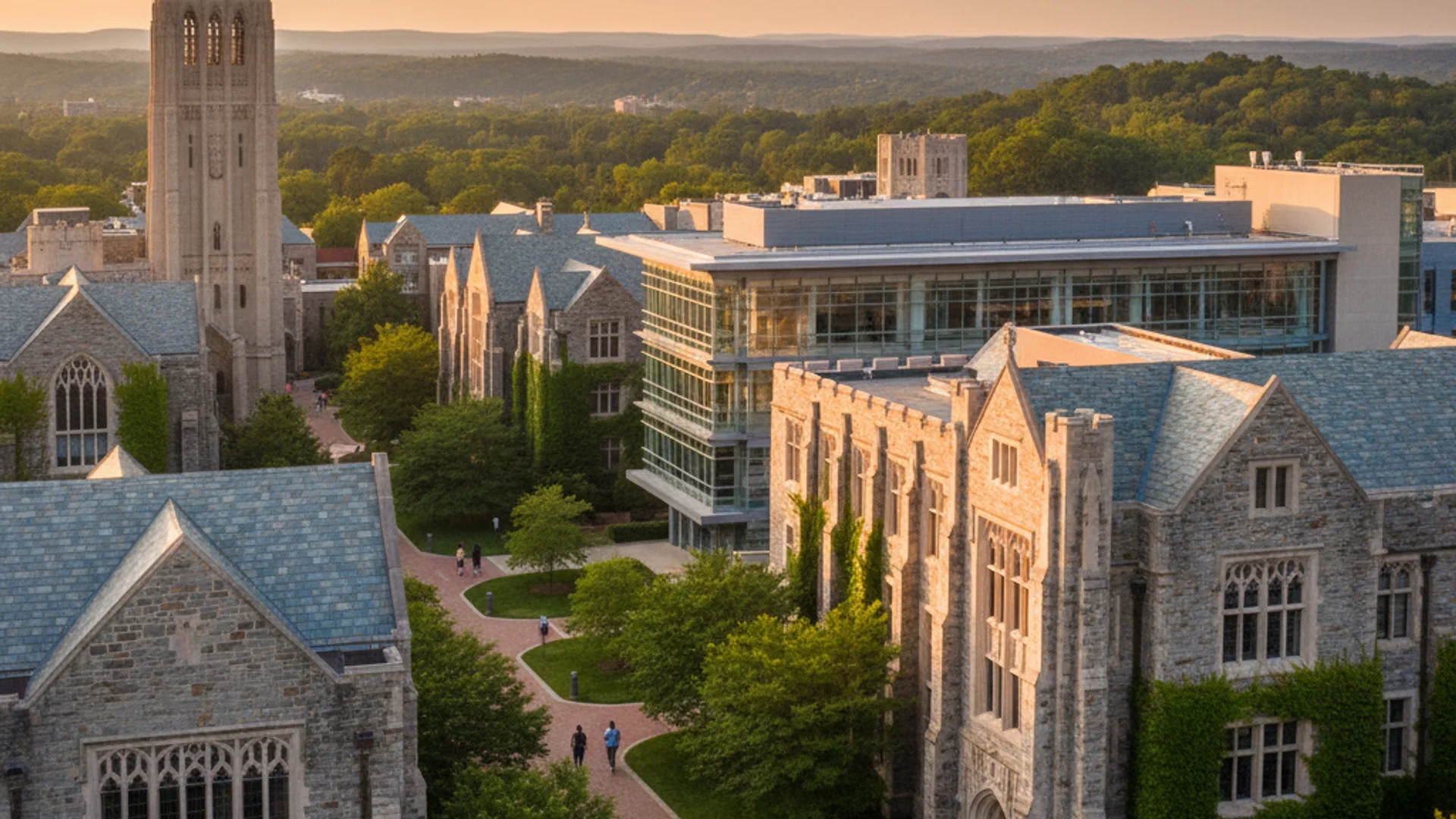
University campus in North Carolina
Updated January 2026

Best Computer Science Degree Programs in North Carolina — 2026 Rankings

Explore 34 accredited computer science (CS) degree programs in North Carolina. Compare schools by graduation rate, salary outcomes, and tuition—from University of North Carolina at Charlotte to University of North Carolina at Chapel Hill.

#1 ProgramU of North Carolina at Ch...
Avg Salary$107,340
Tuition From$3,812/yr
Job Growth+22%

Key Takeaways

Top 3 ranked: U of North Carolina at Ch..., Duke, U of North Carolina at Ch...

Based on graduation rates, program outcomes, and institutional quality

IPEDS 2023

Tuition ranges from $1,000 to $63,608/year

U of North Carolina at Ch... offers the most affordable option at $3,812/yr

IPEDS 2023

Degree levels: 11 master's, 5 doctoral programs available in North Carolina

From community college pathways to advanced research degrees

IPEDS 2023

15 North Carolina programs offer online or hybrid formats

Flexible scheduling for working professionals

IPEDS 2023

Major employers: IBM, Cisco, Red Hat, SAS

Tech hubs in Raleigh and Charlotte

Hakia Research 2026

Computer Science programs available near 92+ cities across North Carolina

Search by city to find programs within 200 miles of your location

IPEDS 2023

Updated February 2026

On This Page
$107,340
Is Computer Science in North Carolina Worth It?
Yes. Computer Science degrees in North Carolina deliver strong ROI—graduates earn $107,340 median salary with +22% job growth through 2032. In-state tuition averages $21,118/year.

Source: BLS OEWS May 2024

Best Computer Science Degree Programs in North Carolina

Bachelor's Computer Science Degree Programs in North Carolina

34 programs$107,340 median salary87% avg grad rate
34
Programs
$107,340
Median Salary
$21,118/yr
Avg Tuition
87%
Avg Grad Rate

Program Landscape

North Carolina ranks among the nation's top destinations for computer science education, with 34 accredited bachelor's degree programs across 15 public and 19 private institutions. The highest-ranked programs are U of North Carolina at Ch..., Duke, U of North Carolina at Ch..., recognized for academic excellence, research opportunities, and strong industry connections.

Career Outcomes

Graduates from North Carolina computer science programs earn a median salary of $91,239—7% below the national average. The state's robust technology sector, anchored by the Raleigh, Charlotte, Durham metropolitan areas, provides abundant internship and employment opportunities with companies including IBM, Cisco, Red Hat.

Costs & Value

Tuition ranges from $1,000 to $63,608 annually, with an average of $21,118/yr. Top programs maintain graduation rates above 87%, with the highest reaching 100%. Many programs hold ABET accreditation, the gold standard for computing education, ensuring curriculum meets rigorous industry standards.

Curriculum & Specializations

Students can choose from specializations including software engineering, cybersecurity, artificial intelligence, data science, and systems architecture. Strong industry partnerships provide access to co-op programs, capstone projects with real companies, and direct recruiting pipelines to North Carolina's leading technology employers. For students seeking computer science degrees in North Carolina, these top-ranked computer science schools offer the strongest combination of academic rigor and career preparation.

Show:

Earn your bachelor's in Computer Science

(Sponsored)

Loading programs...

🥇

University of North Carolina at Chapel Hill

Public
Chapel Hill, NC
$7,019
Tuition/yr
93%
Grad Rate
86.8
Score
Website
🥈

Duke University

Private
Durham, NC
$63,450
Tuition/yr
77.4
Score
Website
🥉

University of North Carolina at Charlotte

Public
Charlotte, NC
$3,812
Tuition/yr
76%
Grad Rate
76.3
Score
Website
#4

North Carolina State University at Raleigh

Public
Raleigh, NC
$6,535
Tuition/yr
85%
Grad Rate
74.9
Score
Website
#5

Davidson College

Private
Davidson, NC
$59,510
Tuition/yr
100%
Grad Rate
87.3
Score
Website
#6

Wake Forest University

Private
Winston-Salem, NC
$63,608
Tuition/yr
97%
Grad Rate
88.1
Score
Website
#7

North Carolina A & T State University

Public
Greensboro, NC
$3,540
Tuition/yr
84%
Grad Rate
60.4
Score
Website
#8

University of North Carolina Wilmington

Public
Wilmington, NC
$4,443
Tuition/yr
79%
Grad Rate
78.5
Score
Website
#9

Elon University

Private
Elon, NC
$44,029
Tuition/yr
94%
Grad Rate
65.9
Score
Website
#10

Appalachian State University

Public
Boone, NC
$4,242
Tuition/yr
78%
Grad Rate
72.9
Score
Website

Complete Computer Science Degree Program Rankings in North Carolina

Best Bachelor's Computer Science Degree Programs in North Carolina

### Program Landscape North Carolina ranks among the nation's top destinations for computer science education, with **34 accredited** bachelor's degree programs across **15 public** and **19 private** institutions. The highest-ranked programs are **U of North Carolina at Ch...**, **Duke**, **U of North Carolina at Ch...**, recognized for academic excellence, research opportunities, and strong industry connections. ### Career Outcomes Graduates from North Carolina computer science programs earn a median salary of **$91,239**—7% below the national average. The state's robust technology sector, anchored by the Raleigh, Charlotte, Durham metropolitan areas, provides abundant internship and employment opportunities with companies including IBM, Cisco, Red Hat. ### Costs & Value Tuition ranges from **$1,000** to **$63,608** annually, with an average of **$21,118/yr**. Top programs maintain graduation rates above **87%**, with the highest reaching **100%**. Many programs hold ABET accreditation, the gold standard for computing education, ensuring curriculum meets rigorous industry standards. ### Curriculum & Specializations Students can choose from specializations including software engineering, cybersecurity, artificial intelligence, data science, and systems architecture. Strong industry partnerships provide access to co-op programs, capstone projects with real companies, and direct recruiting pipelines to North Carolina's leading technology employers. For students seeking computer science degrees in North Carolina, these top-ranked computer science schools offer the strongest combination of academic rigor and career preparation.

  1. #1. University of North Carolina at Chapel Hill

    Hakia ranks University of North Carolina at Chapel Hill as the #1 bachelor's in computer science degree program in North Carolina. This public institution in Chapel Hill, NC has annual tuition of $7,019 and a 93% graduation rate. Ranking score: 86.8.

  2. #2. Duke University

    Hakia ranks Duke University as the #2 bachelor's in computer science degree program in North Carolina. This private institution in Durham, NC has annual tuition of $63,450. Ranking score: 77.4.

  3. #3. University of North Carolina at Charlotte

    Hakia ranks University of North Carolina at Charlotte as the #3 bachelor's in computer science degree program in North Carolina. This public institution in Charlotte, NC has annual tuition of $3,812 and a 76% graduation rate. Ranking score: 76.3.

  4. #4. North Carolina State University at Raleigh

    Hakia ranks North Carolina State University at Raleigh as the #4 bachelor's in computer science degree program in North Carolina. This public institution in Raleigh, NC has annual tuition of $6,535 and a 85% graduation rate. Ranking score: 74.9.

  5. #5. Davidson College

    Hakia ranks Davidson College as the #5 bachelor's in computer science degree program in North Carolina. This private institution in Davidson, NC has annual tuition of $59,510 and a 100% graduation rate. Ranking score: 87.3.

  6. #6. Wake Forest University

    Hakia ranks Wake Forest University as the #6 bachelor's in computer science degree program in North Carolina. This private institution in Winston-Salem, NC has annual tuition of $63,608 and a 97% graduation rate. Ranking score: 88.1.

  7. #7. North Carolina A & T State University

    Hakia ranks North Carolina A & T State University as the #7 bachelor's in computer science degree program in North Carolina. This public institution in Greensboro, NC has annual tuition of $3,540 and a 84% graduation rate. Ranking score: 60.4.

  8. #8. University of North Carolina Wilmington

    Hakia ranks University of North Carolina Wilmington as the #8 bachelor's in computer science degree program in North Carolina. This public institution in Wilmington, NC has annual tuition of $4,443 and a 79% graduation rate. Ranking score: 78.5.

  9. #9. Elon University

    Hakia ranks Elon University as the #9 bachelor's in computer science degree program in North Carolina. This private institution in Elon, NC has annual tuition of $44,029 and a 94% graduation rate. Ranking score: 65.9.

  10. #10. Appalachian State University

    Hakia ranks Appalachian State University as the #10 bachelor's in computer science degree program in North Carolina. This public institution in Boone, NC has annual tuition of $4,242 and a 78% graduation rate. Ranking score: 72.9.

  11. #11. Elizabeth City State University

    Hakia ranks Elizabeth City State University as the #11 bachelor's in computer science degree program in North Carolina. This public institution in Elizabeth City, NC has annual tuition of $1,000 and a 99% graduation rate. Ranking score: 54.8.

  12. #12. Western Carolina University

    Hakia ranks Western Carolina University as the #12 bachelor's in computer science degree program in North Carolina. This public institution in Cullowhee, NC has annual tuition of $1,000 and a 95% graduation rate. Ranking score: 57.9.

  13. #13. Fayetteville State University

    Hakia ranks Fayetteville State University as the #13 bachelor's in computer science degree program in North Carolina. This public institution in Fayetteville, NC has annual tuition of $1,000 and a 86% graduation rate. Ranking score: 56.6.

  14. #14. Shaw University

    Hakia ranks Shaw University as the #14 bachelor's in computer science degree program in North Carolina. This private institution in Raleigh, NC has annual tuition of $12,408. Ranking score: 51.9.

  15. #15. High Point University

    Hakia ranks High Point University as the #15 bachelor's in computer science degree program in North Carolina. This private institution in High Point, NC has annual tuition of $38,748 and a 76% graduation rate. Ranking score: 56.5.

  16. #16. Guilford College

    Hakia ranks Guilford College as the #16 bachelor's in computer science degree program in North Carolina. This private institution in Greensboro, NC has annual tuition of $40,400 and a 94% graduation rate. Ranking score: 49.3.

  17. #17. Carolina University

    Hakia ranks Carolina University as the #17 bachelor's in computer science degree program in North Carolina. This private institution in Winston-Salem, NC has annual tuition of $13,400 and a 59% graduation rate. Ranking score: 46.3.

  18. #18. Gardner-Webb University

    Hakia ranks Gardner-Webb University as the #18 bachelor's in computer science degree program in North Carolina. This private institution in Boiling Springs, NC has annual tuition of $32,470 and a 93% graduation rate. Ranking score: 48.5.

  19. #19. University of North Carolina at Greensboro

    Hakia ranks University of North Carolina at Greensboro as the #19 bachelor's in computer science degree program in North Carolina. This public institution in Greensboro, NC has annual tuition of $4,422. Ranking score: 43.2.

  20. #20. East Carolina University

    Hakia ranks East Carolina University as the #20 bachelor's in computer science degree program in North Carolina. This public institution in Greenville, NC has annual tuition of $4,452. Ranking score: 63.0.

  21. #21. Johnson C Smith University

    Hakia ranks Johnson C Smith University as the #21 bachelor's in computer science degree program in North Carolina. This private institution in Charlotte, NC has annual tuition of $18,450. Ranking score: 49.9.

  22. #22. North Carolina Central University

    Hakia ranks North Carolina Central University as the #22 bachelor's in computer science degree program in North Carolina. This public institution in Durham, NC has annual tuition of $3,728 and a 87% graduation rate. Ranking score: 43.5.

  23. #23. North Carolina Wesleyan University

    Hakia ranks North Carolina Wesleyan University as the #23 bachelor's in computer science degree program in North Carolina. This private institution in Rocky Mount, NC has annual tuition of $34,936. Ranking score: 51.8.

  24. #24. University of North Carolina at Pembroke

    Hakia ranks University of North Carolina at Pembroke as the #24 bachelor's in computer science degree program in North Carolina. This public institution in Pembroke, NC has annual tuition of $1,000. Ranking score: 51.4.

  25. #25. Saint Augustine's University

    Hakia ranks Saint Augustine's University as the #25 bachelor's in computer science degree program in North Carolina. This private institution in Raleigh, NC has annual tuition of $10,968. Ranking score: 40.5.

  26. #26. Livingstone College

    Hakia ranks Livingstone College as the #26 bachelor's in computer science degree program in North Carolina. This private institution in Salisbury, NC has annual tuition of $15,917. Ranking score: 43.7.

  27. #27. Winston-Salem State University

    Hakia ranks Winston-Salem State University as the #27 bachelor's in computer science degree program in North Carolina. This public institution in Winston-Salem, NC has annual tuition of $3,401. Ranking score: 36.8.

  28. #28. Methodist University

    Hakia ranks Methodist University as the #28 bachelor's in computer science degree program in North Carolina. This private institution in Fayetteville, NC has annual tuition of $38,936. Ranking score: 43.5.

  29. #29. University of North Carolina Asheville

    Hakia ranks University of North Carolina Asheville as the #29 bachelor's in computer science degree program in North Carolina. This public institution in Asheville, NC has annual tuition of $4,122. Ranking score: 46.6.

  30. #30. Catawba College

    Hakia ranks Catawba College as the #30 bachelor's in computer science degree program in North Carolina. This private institution in Salisbury, NC has annual tuition of $33,400. Ranking score: 41.1.

  31. #31. Mars Hill University

    Hakia ranks Mars Hill University as the #31 bachelor's in computer science degree program in North Carolina. This private institution in Mars Hill, NC has annual tuition of $37,270. Ranking score: 39.6.

  32. #32. Meredith College

    Hakia ranks Meredith College as the #32 bachelor's in computer science degree program in North Carolina. This private institution in Raleigh, NC has annual tuition of $43,816. Ranking score: 38.4.

  33. #33. Lenoir-Rhyne University

    Hakia ranks Lenoir-Rhyne University as the #33 bachelor's in computer science degree program in North Carolina. This private institution in Hickory, NC has annual tuition of $30,000. Ranking score: 39.0.

  34. #34. Pfeiffer University

    Hakia ranks Pfeiffer University as the #34 bachelor's in computer science degree program in North Carolina. This private institution in Misenheimer, NC has annual tuition of $32,580. Ranking score: 39.5.

Online Bachelor's Computer Science Degree Programs in North Carolina

### Online Program Options 17 North Carolina institutions offer bachelor's computer science degrees with online or hybrid options, enabling students to earn accredited degrees while maintaining professional or personal commitments. Top-ranked online programs include **North Carolina State Univ...**, **North Carolina A & T State**, **U of North Carolina at Gr...**, all regionally accredited and recognized by North Carolina employers. ### Costs & Employer Recognition Online bachelor's programs average **$21,975/yr**—often comparable to or less than on-campus tuition. North Carolina-based employers including IBM, Cisco, Red Hat value online credentials from accredited institutions, recognizing that program quality matters more than delivery format. The Raleigh, Charlotte, Durham job market actively recruits graduates from online programs. ### Program Format These programs feature asynchronous coursework for maximum flexibility, with some offering synchronous sessions for collaborative learning. Students can typically complete **120 credit hours** in 4 years while working full-time. ### Technology & Flexibility Technology requirements include reliable internet access and a modern computer. Programs provide virtual labs, online tutoring, career services, and networking opportunities. Many offer start dates throughout the year and accelerated course formats for motivated students. Graduates earn the same degree as on-campus students, with no distinction on transcripts or diplomas. For students pursuing online computer science degrees in North Carolina, these accredited computer science schools offer the flexibility and quality that today's learners demand.

  • North Carolina State University at Raleigh - Raleigh, NC - Tuition: $6,535/year
  • North Carolina A & T State University - Greensboro, NC - Tuition: $3,540/year
  • University of North Carolina at Greensboro - Greensboro, NC - Tuition: $4,422/year
  • East Carolina University - Greenville, NC - Tuition: $4,452/year
  • Gardner-Webb University - Boiling Springs, NC - Tuition: $32,470/year
  • Carolina University - Winston-Salem, NC - Tuition: $13,400/year
  • High Point University - High Point, NC - Tuition: $38,748/year
  • North Carolina Central University - Durham, NC - Tuition: $3,728/year
  • Johnson C Smith University - Charlotte, NC - Tuition: $18,450/year
  • North Carolina Wesleyan University - Rocky Mount, NC - Tuition: $34,936/year
  • Livingstone College - Salisbury, NC - Tuition: $15,917/year
  • Methodist University - Fayetteville, NC - Tuition: $38,936/year
  • Saint Augustine's University - Raleigh, NC - Tuition: $10,968/year
  • Catawba College - Salisbury, NC - Tuition: $33,400/year
  • Mars Hill University - Mars Hill, NC - Tuition: $37,270/year
  • Meredith College - Raleigh, NC - Tuition: $43,816/year
  • Pfeiffer University - Misenheimer, NC - Tuition: $32,580/year

Best Master's Computer Science Degree Programs in North Carolina

### Program Landscape North Carolina offers **11** master's degree programs in computer science, designed for professionals seeking to advance into senior engineering, technical leadership, and specialized roles. The top programs—**North Carolina State Univ...**, **U of North Carolina at Ch...**, **U of North Carolina at Ch...**—combine advanced technical training with research opportunities and leadership development. ### Career Outcomes Master's graduates in North Carolina earn a median salary of **$107,340**, approximately **20-30% higher** than bachelor's degree holders. The concentration of technology companies in Raleigh, Charlotte, Durham creates strong demand for graduate-level talent, with IBM, Cisco, Red Hat actively recruiting from these programs. ### Costs & Value Program formats include traditional full-time study (typically 2 years), part-time options for working professionals (2-3 years), and accelerated tracks. Tuition averages **$15,357/yr**, with many employers offering tuition reimbursement for graduate education. Some programs offer thesis and non-thesis tracks, allowing students to focus on research or professional development based on their career goals. ### Curriculum & Specializations Curriculum covers advanced topics including machine learning, distributed systems, software architecture, and technical management. Many programs include practicum experiences, industry capstone projects, or consulting engagements that provide real-world application of advanced concepts. Among North Carolina's computer science schools at the graduate level, these programs stand out for both academic quality and career outcomes.

  1. #1. North Carolina State University at Raleigh

    Hakia ranks North Carolina State University at Raleigh as the #1 master's in computer science degree program in North Carolina. This public institution in Raleigh, NC has annual tuition of $6,535 and a 85% graduation rate. Ranking score: 88.9.

  2. #2. University of North Carolina at Charlotte

    Hakia ranks University of North Carolina at Charlotte as the #2 master's in computer science degree program in North Carolina. This public institution in Charlotte, NC has annual tuition of $3,812 and a 76% graduation rate. Ranking score: 79.7.

  3. #3. University of North Carolina at Chapel Hill

    Hakia ranks University of North Carolina at Chapel Hill as the #3 master's in computer science degree program in North Carolina. This public institution in Chapel Hill, NC has annual tuition of $7,019 and a 93% graduation rate. Ranking score: 71.8.

  4. #4. Duke University

    Hakia ranks Duke University as the #4 master's in computer science degree program in North Carolina. This private institution in Durham, NC has annual tuition of $63,450. Ranking score: 64.0.

  5. #5. Wake Forest University

    Hakia ranks Wake Forest University as the #5 master's in computer science degree program in North Carolina. This private institution in Winston-Salem, NC has annual tuition of $63,608 and a 97% graduation rate. Ranking score: 61.8.

  6. #6. North Carolina A & T State University

    Hakia ranks North Carolina A & T State University as the #6 master's in computer science degree program in North Carolina. This public institution in Greensboro, NC has annual tuition of $3,540 and a 84% graduation rate. Ranking score: 58.3.

  7. #7. University of North Carolina Wilmington

    Hakia ranks University of North Carolina Wilmington as the #7 master's in computer science degree program in North Carolina. This public institution in Wilmington, NC has annual tuition of $4,443 and a 79% graduation rate. Ranking score: 52.8.

  8. #8. University of North Carolina at Greensboro

    Hakia ranks University of North Carolina at Greensboro as the #8 master's in computer science degree program in North Carolina. This public institution in Greensboro, NC has annual tuition of $4,422. Ranking score: 50.1.

  9. #9. Appalachian State University

    Hakia ranks Appalachian State University as the #9 master's in computer science degree program in North Carolina. This public institution in Boone, NC has annual tuition of $4,242 and a 78% graduation rate. Ranking score: 48.4.

  10. #10. East Carolina University

    Hakia ranks East Carolina University as the #10 master's in computer science degree program in North Carolina. This public institution in Greenville, NC has annual tuition of $4,452. Ranking score: 42.9.

  11. #11. Winston-Salem State University

    Hakia ranks Winston-Salem State University as the #11 master's in computer science degree program in North Carolina. This public institution in Winston-Salem, NC has annual tuition of $3,401. Ranking score: 41.4.

Online Master's Computer Science Degree Programs in North Carolina

### Online Program Options Working professionals can advance their careers through 4 online master's computer science programs from North Carolina universities, designed for flexibility without sacrificing academic rigor. Top-ranked online programs include **North Carolina State Univ...**, **North Carolina A & T State**, **U of North Carolina at Gr...**, all regionally accredited and recognized by North Carolina employers. ### Costs & Employer Recognition Online master's programs average **$4,737/yr**—often comparable to or less than on-campus tuition. North Carolina-based employers including IBM, Cisco, Red Hat value online credentials from accredited institutions, recognizing that program quality matters more than delivery format. The Raleigh, Charlotte, Durham job market actively recruits graduates from online programs. ### Program Format These programs feature asynchronous coursework for maximum flexibility, with some offering synchronous sessions for collaborative learning. Students can typically complete **30-36 credit hours** in 18-24 months while working full-time. ### Technology & Flexibility Technology requirements include reliable internet access and a modern computer. Programs provide virtual labs, online tutoring, career services, and networking opportunities. Many offer start dates throughout the year and accelerated course formats for motivated students. Graduates earn the same degree as on-campus students, with no distinction on transcripts or diplomas. For students pursuing online computer science degrees in North Carolina, these accredited computer science schools offer the flexibility and quality that today's learners demand.

  • North Carolina State University at Raleigh - Raleigh, NC - Tuition: $6,535/year
  • North Carolina A & T State University - Greensboro, NC - Tuition: $3,540/year
  • University of North Carolina at Greensboro - Greensboro, NC - Tuition: $4,422/year
  • East Carolina University - Greenville, NC - Tuition: $4,452/year

Best Doctoral Computer Science Degree Programs in North Carolina

### Program Landscape North Carolina is home to **5** doctoral programs in computer science, preparing students for research positions, faculty appointments, and executive technical roles. Leading programs at **North Carolina State Univ...**, **U of North Carolina at Ch...**, **U of North Carolina at Ch...** are recognized for cutting-edge research, strong faculty publications, and competitive funding packages. ### Career Outcomes Doctoral graduates command premium salaries, with North Carolina PhD holders earning a median of **$134,175**—reflecting the advanced expertise required for research and executive positions. The Raleigh, Charlotte, Durham region's research universities and corporate R&D centers provide extensive collaboration opportunities with industry leaders like IBM, Cisco, Red Hat. ### Costs & Value PhD programs typically require 4-6 years of full-time study, including coursework, qualifying examinations, and original dissertation research. Many programs offer full funding through teaching or research assistantships, covering tuition and providing stipends of **$25,000–$40,000** annually. ### Curriculum & Specializations Research strengths across North Carolina programs include artificial intelligence, cybersecurity, human-computer interaction, systems, and theoretical computer science. For aspiring researchers pursuing computer science degrees in North Carolina, graduates go on to careers as university faculty, industry research scientists, or technical executives, contributing to advances in technology that impact millions of users worldwide.

  1. #1. North Carolina State University at Raleigh

    Hakia ranks North Carolina State University at Raleigh as the #1 doctoral in computer science degree program in North Carolina. This public institution in Raleigh, NC has annual tuition of $6,535 and a 85% graduation rate. Ranking score: 66.2.

  2. #2. University of North Carolina at Chapel Hill

    Hakia ranks University of North Carolina at Chapel Hill as the #2 doctoral in computer science degree program in North Carolina. This public institution in Chapel Hill, NC has annual tuition of $7,019 and a 93% graduation rate. Ranking score: 68.4.

  3. #3. University of North Carolina at Charlotte

    Hakia ranks University of North Carolina at Charlotte as the #3 doctoral in computer science degree program in North Carolina. This public institution in Charlotte, NC has annual tuition of $3,812 and a 76% graduation rate. Ranking score: 51.5.

  4. #4. Duke University

    Hakia ranks Duke University as the #4 doctoral in computer science degree program in North Carolina. This private institution in Durham, NC has annual tuition of $63,450. Ranking score: 59.7.

  5. #5. North Carolina A & T State University

    Hakia ranks North Carolina A & T State University as the #5 doctoral in computer science degree program in North Carolina. This public institution in Greensboro, NC has annual tuition of $3,540 and a 84% graduation rate. Ranking score: 53.7.

Online Doctoral Computer Science Degree Programs in North Carolina

### Online Program Options 2 North Carolina universities offer doctoral computer science programs with online or hybrid components, accommodating established professionals pursuing terminal degrees. Top-ranked online programs include **North Carolina State Univ...**, **North Carolina A & T State**, all regionally accredited and recognized by North Carolina employers. ### Costs & Employer Recognition Online doctoral programs average **$5,038/yr**—often comparable to or less than on-campus tuition. North Carolina-based employers including IBM, Cisco, Red Hat value online credentials from accredited institutions, recognizing that program quality matters more than delivery format. The Raleigh, Charlotte, Durham job market actively recruits graduates from online programs. ### Program Format These programs feature asynchronous coursework for maximum flexibility, with some offering synchronous sessions for collaborative learning. Students can typically complete doctoral requirements in 3-5 years while working full-time. ### Technology & Flexibility Technology requirements include reliable internet access and a modern computer. Programs provide virtual labs, online tutoring, career services, and networking opportunities. Many offer start dates throughout the year and accelerated course formats for motivated students. Graduates earn the same degree as on-campus students, with no distinction on transcripts or diplomas. For students pursuing online computer science degrees in North Carolina, these accredited computer science schools offer the flexibility and quality that today's learners demand.

  • North Carolina State University at Raleigh - Raleigh, NC - Tuition: $6,535/year
  • North Carolina A & T State University - Greensboro, NC - Tuition: $3,540/year

Computer Science Tuition in North Carolina

MetricValue
Average in-state tuition$21,118/year
Average out-of-state tuition$52,795/year
Community college tuition$5,280/year
4-year savings for residents$126,708
2+2 transfer pathway savings$31,676

Source: IPEDS 2023

Computer Science Financial Aid & Scholarships in North Carolina

State Aid Programs

The Next NC Scholarship revolutionizes North Carolina financial aid.

Beginning 2024-2025, this program combines federal Pell Grants with state funding to guarantee predictable support for families earning $80,000 or less. UNC System students receive at least $5,000/year, while community college students receive at least $3,000/year (CFNC Next NC Scholarship). The scholarship covers tuition, fees, books, food, and housing—not just tuition alone. Application is automatic through FAFSA; no separate form required. Priority deadlines are June 1 for UNC System and August 15 for community colleges.

Key Programs & Amounts

NC Promise dramatically reduces costs at four campuses.

Elizabeth City State University, Fayetteville State University, UNC Pembroke, and Western Carolina University charge just $500/semester ($1,000/year) for in-state undergraduates—approximately one-tenth the cost of other UNC System schools (UNC System). Out-of-state students pay $2,500/semester. Combined with Pell Grants (up to $7,395 in 2024-25) and the Next NC Scholarship, many low-income students attend these schools at zero out-of-pocket cost. All four schools offer computer science or information technology programs.

Institutional Scholarships

Additional financial aid options include: NC Need-Based Scholarship: For private college students attending NC institutions; automatic consideration through FAFSA. Federal Pell Grant: Up to $7,395 for 2024-25 based on financial need. NC State Merit Scholarships: Park Scholarships (full ride), Goodnight Scholars (STEM focus), and departmental awards for high-achieving CS students. Duke Financial Aid: Need-blind admissions with 100% demonstrated need met; average aid package exceeds $60,000 for aided students. Work-Study Programs: Available at all UNC System schools with positions often available in campus IT departments. Complete the FAFSA by March 1 for maximum consideration. NC residents ineligible for federal aid can complete the state's alternative application. Explore most affordable CS programs or best value rankings.

Calculate Your Computer Science Degree ROI in North Carolina

Use our interactive ROI calculator to estimate your return on investment for a computer science degree in North Carolina. Enter your expected tuition costs, financial aid, and career goals to see projected payback periods and lifetime earnings. The calculator uses current salary data from BLS and tuition data from IPEDS to provide accurate estimates.

Computer Science Degree ROI Calculator
Estimate your return on investment for a computer science degree
$

Leave blank to use average cost for selected program type

20 years
10 years20 years30 years
20-Year ROI

+750%

Net gain divided by total investment. ROI above 200% is considered excellent for education investments.

Net Gain

$1,386,612

Your additional lifetime earnings with this degree vs. working without one, minus the total investment.

Break-Even

6 years

Years until your cumulative earnings exceed total investment. Shorter programs often break even faster due to lower opportunity cost.

COL-Adjusted Salary

$131,579

Your starting salary adjusted for local cost of living. This shows real purchasing power compared to a $100K national baseline.

Why does break-even change with program type? Your "total investment" includes both tuition AND opportunity cost (foregone earnings while in school). A 4-year full-time public university (in-state) means 4 years of not earning a salary ($140,000 in opportunity cost). Shorter full-time programs may have higher tuition but lower total investment because you return to the workforce sooner.

Detailed Breakdown
How we calculate your degree ROI using real salary data
Total Investment$185,000

Tuition plus opportunity cost (earnings you miss while in school)

Program Cost (Tuition)$45,000

Direct cost of the degree program

Opportunity Cost$140,000

4 years × $35K/year foregone salary while studying full-time

20-Year Earnings (with degree)$2,422,020

Projected career earnings starting after graduation, with salary growth

20-Year Earnings (without degree)$850,408

What you'd earn working at $35K/year with 2% annual growth

Starting Salary (Raleigh-Durham, NC)$125,000

Median salary for this role in your selected location (BLS 2024)

Annualized Return4.3%

Your investment's compound annual growth rate (similar to stock market returns)

Data sources: BLS OEWS May 2024, IPEDS 2023. Calculations use median salaries, 3% discount rate, and assume salary growth declines from 6% to 2% over career. Individual results will vary. | Powered by Hakia.com

Career Paths

Design and develop software applications and systems

Median Salary:$121,294

Analyze complex datasets and build predictive models

Median Salary:$100,900

Protect computer networks from cyber threats

Median Salary:$112,707

Manage cloud infrastructure and deployment pipelines

Median Salary:$119,147

Design and maintain cloud computing infrastructure

Median Salary:$115,927

Build and deploy machine learning models

Median Salary:$135,248
Computer Science Salaries by Metro Area

Median annual salary in North Carolina metro areas

Hakia.com
View data table
Categoryvalue
Raleigh$118K
Charlotte$113K
Durham$107K

Source: BLS OEWS May 2024

Hakia.com

Computer Science Jobs in North Carolina: Top Employers Hiring

Find computer science jobs in North Carolina. These major employers across North Carolina metro areas are actively hiring computer science graduates. Click employer names to view current job openings.

Computer Science Jobs in raleighDurham

NC
IBM
Enterprise Technology
Cisco Systems
Networking & Cybersecurity
SAS Institute
Analytics Software
Red Hat
Open Source Software
Epic Games
Game Development
Apple
Consumer Technology
NetApp
Data Storage
Fidelity Investments
Financial Services

Computer Science Jobs in Charlotte

NC

Charlotte is the second-largest banking center in the US. Bank of America and Wells Fargo drive fintech demand.

Nearby cities: Huntersville, Concord, Matthews, Gastonia, Rock Hill, Mooresville

Bank of America
Banking & Fintech
Coinbase
Cryptocurrency
nCINO
Banking Software

How to Apply to Computer Science Programs in North Carolina

1

Research Program Requirements

Review admission requirements for computer science programs at your target schools. Requirements vary by institution and degree level.

2

Prepare Application Materials

Gather transcripts, test scores (SAT/ACT for undergrad, GRE for graduate), letters of recommendation, and personal statement.

3

Apply for Financial Aid

Complete the FAFSA by priority deadlines.

4

Submit Applications Before Deadlines

Apply early for priority consideration. Early action/decision deadlines are typically October-November; regular deadlines December-January.

5

Complete Enrollment Steps

Accept your offer, submit enrollment deposit, complete orientation requirements, and register for classes.

Computer Science Transfer Pathways in North Carolina

State Transfer System

The Comprehensive Articulation Agreement (CAA) provides North Carolina's strongest transfer protection.

Effective between all 58 NC community colleges and 16 UNC System universities, the CAA guarantees students completing an Associate in Science degree with 2.0+ GPA will transfer with junior standing and 60-61 credits (NC Community Colleges CAA). The agreement guarantees admission to the UNC System (though not to specific campuses or majors). Transfer Guides for every major help students identify specific community college courses that lead to baccalaureate completion. The 2025 CAA revision—effective Spring 2026—adds clearer protections and a new online Transfer Appeals Portal.

How Transfers Work

Specialized transfer programs offer guaranteed pathways to top schools: Wolfpack Connect (NC State): Wake Tech, Central Piedmont, and Forsyth Tech students earning an associate degree with 3.0+ GPA receive guaranteed admission to 100+ NC State majors. Forms accepted starting January 2026 for Fall 2026 enrollment. C3 Program (NC State): Dual-admission, dual-enrollment program for low-to-moderate income community college students demonstrating academic potential. C-STEP (UNC Chapel Hill): Carolina Student Transfer Excellence Program provides targeted support for high-achieving community college students transferring to UNC (Wake Tech Special Programs).

Transfer Planning Tips

Computer science transfer students should complete prerequisite courses early.

Key courses include Calculus I and II, Introduction to Programming (typically Java or Python), Discrete Mathematics, and Data Structures (if available). These courses appear in the Common Numbering System (CNS) database covering 1,600+ courses across both systems. Students should use CFNC.org's Transfer Student Planner and ASSIST-style tools to verify course equivalencies. Priority transfer deadlines are typically March 1 for fall and October 1 for spring admission. Compare transfer options in Virginia or Tennessee.

Why Study Computer Science in North Carolina?

Industry & Workforce

North Carolina has emerged as one of America's premier destinations for computer science education, combining world-class universities with the nation's largest research park and a rapidly growing tech ecosystem. The state offers over 60 accredited computer science programs across public universities, private institutions, and 58 community colleges (IPEDS 2023). With the Research Triangle—anchored by Duke University, NC State University, and UNC Chapel Hill—North Carolina produces approximately 5,000 computer science graduates annually who fuel one of the fastest-growing tech corridors on the East Coast. Software developers in North Carolina earn a median salary of $130,860 annually ($62.98/hour), competitive with national averages while enjoying a significantly lower cost of living than California or New York (BLS OEWS May 2024).

Salary Outlook

The Research Triangle Park (RTP) defines North Carolina's tech identity.

Established in 1959, RTP has grown into the largest research park in North America, spanning 7,000 acres and hosting over 300 companies employing 55,000 workers plus 10,000 contractors (Research Triangle Park). Major tech employers include IBM (10,000 employees), Cisco (5,000 employees at their largest campus outside Silicon Valley), SAS Institute (5,000+ employees), and Red Hat. The Triangle is now the second-fastest growing tech hub in the United States, with 4,000+ tech companies employing more than 60,000 in software development, information security, and related fields. Apple announced a 1 million square foot campus at RTP with 3,000 employees, and Epic Games maintains its global headquarters in Cary with significant hiring for Unreal Engine and Fortnite development.

Regional Tech Hubs

Charlotte complements the Triangle as the Southeast's banking technology hub.

As the nation's second-largest banking center, Charlotte has become a fintech powerhouse with Bank of America (19,590 employees locally, investing $12 billion annually in technology), Wells Fargo, and emerging players like LendingTree. Charlotte's tech workforce has grown by 40% since 2020, with a median tech salary of $92,000 and 31% industry growth rate outpacing the national average (Built In Charlotte). Tech job postings jumped 50% in 2024-2025, with over 118,000 tech workers now employed across sectors including fintech, AI, and cybersecurity. For students weighing options, compare programs in Virginia, Georgia, or explore our national bachelor's rankings.

North Carolina's affordability advantage is significant.

In-state tuition at NC State averages $8,799 annually, while the UNC System's NC Promise program offers just $500/semester at Elizabeth City State, Fayetteville State, UNC Pembroke, and Western Carolina (UNC System). The state's Next NC Scholarship guarantees at least $5,000/year for students from households earning $80,000 or less attending UNC System schools, covering tuition, fees, books, and housing (CFNC). Combined with median starting salaries of $81,000 for undergraduates and $102,000 for graduate students from NC State's computer science program (NC State Post-Graduate Employment), North Carolina delivers exceptional return on investment.

Computer Science Job Market in North Carolina

Employment Outlook

North Carolina's tech job market ranks among the strongest on the East Coast.

Software developers earn a median annual wage of $130,860 ($62.98/hour) according to May 2024 BLS data, with the Raleigh-Cary metro area specifically paying $135,590 ($65.20/hour) to its 12,290 employed software developers (BLS OEWS May 2024). The Bureau of Labor Statistics projects 17% job growth for software developers through 2033, significantly faster than average occupations. Entry-level software engineers in the Raleigh-Durham area start at $85,000-$95,000, with mid-career professionals earning $110,000-$140,000 and senior engineers commanding $150,000+ at top employers like Cisco, IBM, and Red Hat.

Salaries by Metro

Regional markets offer distinct specializations: Raleigh-Durham (Research Triangle): $119,169 average software engineer salary with range from $110,000 to $187,500 depending on experience and company. Top employers include NetApp, Fidelity Investments, and Envestnet. Software engineering internships average $58/hour, with interns at major companies earning $100,000-$145,000 annualized (Levels.fyi, Glassdoor). The information technology sector pays median total compensation of $94,774 for interns. Charlotte: Median tech salary of $92,000 with exceptional growth—31% compared to the national average, with tech job postings jumping 50% in 2024-2025. Bank of America invests $12 billion annually in technology ($3.8 billion on new initiatives in 2024), driving demand for cybersecurity, AI, and mobile banking engineers. The fintech sector has attracted Credit Karma, Coinbase, SoFi, and Citigroup expansions (Built In Charlotte).

High-Growth Sectors

Key employers shaping North Carolina's tech landscape include: IBM (10,000 employees in RTP), Cisco Systems (5,000 employees—largest site outside Silicon Valley), SAS Institute (5,000+ employees, debt-free company on path to IPO), Red Hat (open source leader), Epic Games (game development and Unreal Engine), Bank of America ($4 billion/year on technology, 6,600+ patents), Wells Fargo, LendingTree, and Apple (1 million sq ft campus under development). Defense and government contractors also maintain significant presence, particularly in the Fayetteville and eastern NC regions. For related career paths, explore software engineering degrees, data science programs, or cybersecurity rankings.

Computer Science Curriculum & Specializations in North Carolina

Core Requirements

North Carolina CS programs follow rigorous ABET-aligned curricula combining theoretical foundations with practical application. NC State's program—the only ABET-accredited CS program in the state—requires courses in data structures, algorithms, computer architecture, operating systems, software engineering, and discrete mathematics. Students can specialize in Cybersecurity or Game Development tracks, with additional courses in artificial intelligence, machine learning, and computer graphics (NC State CSC Curriculum). The curriculum emphasizes teamwork through capstone projects, often partnering with industry sponsors from RTP companies.

Degree Pathways

Duke emphasizes flexibility and interdisciplinary learning, allowing students to combine computer science with second majors or certificates in areas like computational biology, policy, or economics. Core requirements include programming fundamentals, data structures, algorithms, and computer organization, with extensive elective options. UNC Chapel Hill's program similarly balances theory and practice, with strong emphasis on undergraduate research opportunities. The accelerated B.S./M.S. pathway allows exceptional students to earn both degrees in five years.

Specialization Tracks

Hands-on learning distinguishes North Carolina programs.

NC State's Centennial Campus hosts 100+ companies providing capstone project partners, internship opportunities, and real-world problem sets. Duke's proximity to RTP enables industry collaboration on research projects. Community colleges typically cover programming fundamentals (Java, Python, C++), database concepts, and web development in their Associate in Science programs, designed to transfer seamlessly to bachelor's programs through the CAA framework. Students should complete Calculus I/II, introductory programming, and discrete math before transferring to competitive programs. Compare computer science specializations for concentration options.

Online vs On-Campus Computer Science Programs in North Carolina

Online Program Growth

UNC Charlotte leads online computer science options with an evening M.S. in Computer Science track designed specifically for working professionals. Students can complete the 30-credit program entirely through evening classes, balancing education with full-time employment (UNC Charlotte CCI). The program admits students in both fall and spring semesters, with the department accepting relevant industry experience in lieu of formal CS coursework for career-changers. Duke University and NC State primarily offer on-campus programs at the undergraduate level, though both universities have expanded online course offerings.

Accredited Online Options

Community colleges provide online flexibility for prerequisite courses transferring through the CAA. Wake Tech and Central Piedmont offer online sections of introductory programming, discrete mathematics, and other transfer-eligible courses. Students can complete most of their first two years online before transferring to on-campus programs at UNC System schools. This hybrid approach maximizes flexibility while ensuring access to on-campus resources for upper-division coursework.

Choosing Your Format

On-campus programs offer distinct advantages including access to research labs, industry partnerships through RTP proximity, and networking opportunities with faculty and classmates. NC State's Centennial Campus provides hands-on collaboration with 100+ companies impossible to replicate online. Duke and UNC Chapel Hill's undergraduate programs emphasize in-person seminar experiences and research mentorship. However, online students from SACSCOC-accredited NC institutions receive identical degrees—employers report no preference difference for regionally accredited online programs. Explore online CS degree rankings for additional options.

Computer Science by City in North Carolina

Raleigh-Durham (Research Triangle) dominates North Carolina's tech employment.

Raleigh-Durham (Research Triangle) dominates North Carolina's tech employment.

The metro employs 12,290 software developers earning a median $135,590 annually ($65.20/hour)—among the highest in the Southeast (BLS OEWS Raleigh May 2024). Average software engineer salaries reach $119,169 with ranges from $110,000 to $187,500. NC State University, Duke University, and UNC Chapel Hill anchor the talent pipeline, while Centennial Campus (NC State) and RTP provide immediate employer access. The region added Plaid, Apple, and numerous startups in 2024-2025.

Charlotte has emerged as the Southeast's fastest-growing tech hub

Charlotte has emerged as the Southeast's fastest-growing tech hub with 118,000+ tech workers and a 31% industry growth rate. Median tech salary is $92,000, with Bank of America and Wells Fargo driving fintech demand. Tech job postings jumped 50% in 2024-2025 as Coinbase, SoFi, Credit Karma, and Citigroup expanded operations (Built In Charlotte). UNC Charlotte's College of Computing and Informatics, with evening M.S. options, serves working professionals seeking career advancement in the banking hub.

Smaller metros offer lifestyle alternatives:

Smaller metros offer lifestyle alternatives: Greensboro-High Point: Home to NC A&T State (the nation's largest HBCU) and UNC Greensboro; growing tech presence in insurance and logistics technology. Wilmington: UNC Wilmington CS program serves coastal region; emerging digital media and game development scene. Asheville: Growing remote work destination for tech professionals seeking mountain lifestyle; startup-friendly culture. Fayetteville: Fort Bragg drives defense contractor presence; Fayetteville State offers NC Promise pricing at $500/semester. Compare regional options in South Carolina, Virginia, or Georgia.

Compare Online Computer Science Programs in North Carolina

View tuition costs, program formats & enrollment info

Find Computer Science Programs Near You in North Carolina

Search by city to find accredited computer science programs ranked by our state methodology.

Computer Science Degree Programs by City in North Carolina

Computer Science Degree Programs Near Charlotte, North Carolina

As North Carolina's largest financial hub, Charlotte hosts major tech operations for Bank of America, Wells Fargo, and LendingClub, creating strong demand for backend engineers and fintech specialists working on payment systems and trading platforms. The city supports a growing startup ecosystem with venture capital funding and innovation districts, complemented by proximity to UNC Charlotte's computer science program and connections to nearby universities.

Charlotte is located in Mecklenburg County, North Carolina.

Associate's Computer Science Degree Programs Near Charlotte, North Carolina
  1. Wake Technical Community College (Public) — State #1, 123.9 mi from Charlotte. Tuition: $2,076/year.
  2. Guilford Technical Community College (Public) — State #2, 75.8 mi from Charlotte. Tuition: $2,128/year.
  3. Fayetteville Technical Community College (Public) — State #3, 108.1 mi from Charlotte. Tuition: $2,432/year.
Bachelor's Computer Science Degree Programs Near Charlotte, North Carolina
  1. University of North Carolina at Chapel Hill (Public) — State #1, 111.9 mi from Charlotte. Tuition: $7,019/year. Graduation rate: 93%.
  2. University of North Carolina at Charlotte (Public) — State #2, in Charlotte. Tuition: $3,812/year. Graduation rate: 76%.
  3. North Carolina State University at Raleigh (Public) — State #3, 128.2 mi from Charlotte. Tuition: $6,535/year. Graduation rate: 85%.
Master's Computer Science Degree Programs Near Charlotte, North Carolina
  1. North Carolina State University at Raleigh (Public) — State #1, 128.2 mi from Charlotte. Tuition: $6,535/year. Graduation rate: 85%.
  2. University of North Carolina at Chapel Hill (Public) — State #2, 111.9 mi from Charlotte. Tuition: $7,019/year. Graduation rate: 93%.
  3. University of North Carolina at Charlotte (Public) — State #3, in Charlotte. Tuition: $3,812/year. Graduation rate: 76%.
Doctoral Computer Science Degree Programs Near Charlotte, North Carolina
  1. University of North Carolina at Chapel Hill (Public) — State #1, 111.9 mi from Charlotte. Tuition: $7,019/year. Graduation rate: 93%.
  2. North Carolina State University at Raleigh (Public) — State #2, 128.2 mi from Charlotte. Tuition: $6,535/year. Graduation rate: 85%.
  3. Duke University (Private) — State #3, 120.3 mi from Charlotte. Tuition: $63,450/year.

Computer Science Degree Programs Near Raleigh, North Carolina

Home to NC State University's renowned computer science program and the Research Triangle Park ecosystem, Raleigh offers dense opportunities in software development, data science, and enterprise systems across IBM, SAS Institute, and hundreds of tech startups in biotech and cloud infrastructure. The region's startup incubators and venture funding landscape make it ideal for full-stack developers seeking roles in scaling companies.

Raleigh is located in Wake County, North Carolina.

Associate's Computer Science Degree Programs Near Raleigh, North Carolina
  1. Wake Technical Community College (Public) — State #1, in Raleigh. Tuition: $2,076/year.
  2. Guilford Technical Community College (Public) — State #2, 71.6 mi from Raleigh. Tuition: $2,128/year.
  3. Fayetteville Technical Community College (Public) — State #3, 51.6 mi from Raleigh. Tuition: $2,432/year.
Bachelor's Computer Science Degree Programs Near Raleigh, North Carolina
  1. University of North Carolina at Chapel Hill (Public) — State #1, 23.1 mi from Raleigh. Tuition: $7,019/year. Graduation rate: 93%.
  2. University of North Carolina at Charlotte (Public) — State #2, 120.6 mi from Raleigh. Tuition: $3,812/year. Graduation rate: 76%.
  3. North Carolina State University at Raleigh (Public) — State #3, in Raleigh. Tuition: $6,535/year. Graduation rate: 85%.
Master's Computer Science Degree Programs Near Raleigh, North Carolina
  1. North Carolina State University at Raleigh (Public) — State #1, in Raleigh. Tuition: $6,535/year. Graduation rate: 85%.
  2. University of North Carolina at Chapel Hill (Public) — State #2, 23.1 mi from Raleigh. Tuition: $7,019/year. Graduation rate: 93%.
  3. University of North Carolina at Charlotte (Public) — State #3, 120.6 mi from Raleigh. Tuition: $3,812/year. Graduation rate: 76%.
Doctoral Computer Science Degree Programs Near Raleigh, North Carolina
  1. University of North Carolina at Chapel Hill (Public) — State #1, 23.1 mi from Raleigh. Tuition: $7,019/year. Graduation rate: 93%.
  2. North Carolina State University at Raleigh (Public) — State #2, in Raleigh. Tuition: $6,535/year. Graduation rate: 85%.
  3. Duke University (Private) — State #3, 21.2 mi from Raleigh. Tuition: $63,450/year.

Computer Science Degree Programs Near Greensboro, North Carolina

Greensboro serves as a secondary tech hub with growing fintech and manufacturing software operations, while UNCG and High Point University provide nearby CS degree pathways and a lower cost of living compared to larger metros. The city's emerging startup community and proximity to the Research Triangle make remote or hybrid opportunities accessible for systems architects seeking quality-of-life advantages.

Greensboro is located in Guilford County, North Carolina.

Associate's Computer Science Degree Programs Near Greensboro, North Carolina
  1. Wake Technical Community College (Public) — State #1, 69.3 mi from Greensboro. Tuition: $2,076/year.
  2. Guilford Technical Community College (Public) — State #2, 6.6 mi from Greensboro. Tuition: $2,128/year.
  3. Fayetteville Technical Community College (Public) — State #3, 85.6 mi from Greensboro. Tuition: $2,432/year.
Bachelor's Computer Science Degree Programs Near Greensboro, North Carolina
  1. University of North Carolina at Chapel Hill (Public) — State #1, 45 mi from Greensboro. Tuition: $7,019/year. Graduation rate: 93%.
  2. University of North Carolina at Charlotte (Public) — State #2, 72.6 mi from Greensboro. Tuition: $3,812/year. Graduation rate: 76%.
  3. North Carolina State University at Raleigh (Public) — State #3, 67.6 mi from Greensboro. Tuition: $6,535/year. Graduation rate: 85%.
Master's Computer Science Degree Programs Near Greensboro, North Carolina
  1. North Carolina State University at Raleigh (Public) — State #1, 67.6 mi from Greensboro. Tuition: $6,535/year. Graduation rate: 85%.
  2. University of North Carolina at Chapel Hill (Public) — State #2, 45 mi from Greensboro. Tuition: $7,019/year. Graduation rate: 93%.
  3. University of North Carolina at Charlotte (Public) — State #3, 72.6 mi from Greensboro. Tuition: $3,812/year. Graduation rate: 76%.
Doctoral Computer Science Degree Programs Near Greensboro, North Carolina
  1. University of North Carolina at Chapel Hill (Public) — State #1, 45 mi from Greensboro. Tuition: $7,019/year. Graduation rate: 93%.
  2. North Carolina State University at Raleigh (Public) — State #2, 67.6 mi from Greensboro. Tuition: $6,535/year. Graduation rate: 85%.
  3. Duke University (Private) — State #3, 50.2 mi from Greensboro. Tuition: $63,450/year.

Computer Science Degree Programs Near Fayetteville, North Carolina

While primarily military-focused with Fort Bragg's substantial IT and cybersecurity infrastructure contracts, Fayetteville offers specialized opportunities for defense software engineers and secure systems developers, with lower salaries offset by steady government contractor demand. The city lacks a major university CS program, making it best suited for experienced engineers relocating for stability rather than early-career learning.

Fayetteville is located in Cumberland County, North Carolina.

Associate's Computer Science Degree Programs Near Fayetteville, North Carolina
  1. Wake Technical Community College (Public) — State #1, 41.9 mi from Fayetteville. Tuition: $2,076/year.
  2. Guilford Technical Community College (Public) — State #2, 85.1 mi from Fayetteville. Tuition: $2,128/year.
  3. Fayetteville Technical Community College (Public) — State #3, in Fayetteville. Tuition: $2,432/year.
Bachelor's Computer Science Degree Programs Near Fayetteville, North Carolina
  1. University of North Carolina at Chapel Hill (Public) — State #1, 58.6 mi from Fayetteville. Tuition: $7,019/year. Graduation rate: 93%.
  2. University of North Carolina at Charlotte (Public) — State #2, 103.3 mi from Fayetteville. Tuition: $3,812/year. Graduation rate: 76%.
  3. North Carolina State University at Raleigh (Public) — State #3, 51.3 mi from Fayetteville. Tuition: $6,535/year. Graduation rate: 85%.
Master's Computer Science Degree Programs Near Fayetteville, North Carolina
  1. North Carolina State University at Raleigh (Public) — State #1, 51.3 mi from Fayetteville. Tuition: $6,535/year. Graduation rate: 85%.
  2. University of North Carolina at Chapel Hill (Public) — State #2, 58.6 mi from Fayetteville. Tuition: $7,019/year. Graduation rate: 93%.
  3. University of North Carolina at Charlotte (Public) — State #3, 103.3 mi from Fayetteville. Tuition: $3,812/year. Graduation rate: 76%.
Doctoral Computer Science Degree Programs Near Fayetteville, North Carolina
  1. University of North Carolina at Chapel Hill (Public) — State #1, 58.6 mi from Fayetteville. Tuition: $7,019/year. Graduation rate: 93%.
  2. North Carolina State University at Raleigh (Public) — State #2, 51.3 mi from Fayetteville. Tuition: $6,535/year. Graduation rate: 85%.
  3. Duke University (Private) — State #3, 64.3 mi from Fayetteville. Tuition: $63,450/year.

Computer Science Degree Programs Near Winston-Salem, North Carolina

Winston-Salem's tech sector centers on healthcare IT and manufacturing software, with Wake Forest University and WSSU providing local CS education pathways and a relatively affordable talent market for companies building medical data systems and enterprise solutions. The city's lower cost of living and emerging startup scene appeal to developers seeking to maximize savings without the competition of Raleigh or Charlotte.

Winston-Salem is located in Forsyth County, North Carolina.

Associate's Computer Science Degree Programs Near Winston-Salem, North Carolina
  1. Wake Technical Community College (Public) — State #1, 92.3 mi from Winston-Salem. Tuition: $2,076/year.
  2. Guilford Technical Community College (Public) — State #2, 20.1 mi from Winston-Salem. Tuition: $2,128/year.
  3. Fayetteville Technical Community College (Public) — State #3, 103.2 mi from Winston-Salem. Tuition: $2,432/year.
Bachelor's Computer Science Degree Programs Near Winston-Salem, North Carolina
  1. University of North Carolina at Chapel Hill (Public) — State #1, 68.7 mi from Winston-Salem. Tuition: $7,019/year. Graduation rate: 93%.
  2. University of North Carolina at Charlotte (Public) — State #2, 60.8 mi from Winston-Salem. Tuition: $3,812/year. Graduation rate: 76%.
  3. North Carolina State University at Raleigh (Public) — State #3, 91.2 mi from Winston-Salem. Tuition: $6,535/year. Graduation rate: 85%.
Master's Computer Science Degree Programs Near Winston-Salem, North Carolina
  1. North Carolina State University at Raleigh (Public) — State #1, 91.2 mi from Winston-Salem. Tuition: $6,535/year. Graduation rate: 85%.
  2. University of North Carolina at Chapel Hill (Public) — State #2, 68.7 mi from Winston-Salem. Tuition: $7,019/year. Graduation rate: 93%.
  3. University of North Carolina at Charlotte (Public) — State #3, 60.8 mi from Winston-Salem. Tuition: $3,812/year. Graduation rate: 76%.
Doctoral Computer Science Degree Programs Near Winston-Salem, North Carolina
  1. University of North Carolina at Chapel Hill (Public) — State #1, 68.7 mi from Winston-Salem. Tuition: $7,019/year. Graduation rate: 93%.
  2. North Carolina State University at Raleigh (Public) — State #2, 91.2 mi from Winston-Salem. Tuition: $6,535/year. Graduation rate: 85%.
  3. Duke University (Private) — State #3, 74.1 mi from Winston-Salem. Tuition: $63,450/year.

Computer Science Degree Programs Near Durham, North Carolina

Durham's computer science landscape is anchored by Duke University's top-tier CS program and the biotech/pharma research corridor, creating unique opportunities for software engineers specializing in healthcare informatics, bioinformatics, and medical device software. The city combines academic research strength with venture capital funding for health tech startups, offering intellectual depth alongside practical industry experience.

Durham is located in Durham County, North Carolina.

Associate's Computer Science Degree Programs Near Durham, North Carolina
  1. Wake Technical Community College (Public) — State #1, 26.3 mi from Durham. Tuition: $2,076/year.
  2. Guilford Technical Community College (Public) — State #2, 56.6 mi from Durham. Tuition: $2,128/year.
  3. Fayetteville Technical Community College (Public) — State #3, 63.9 mi from Durham. Tuition: $2,432/year.
Bachelor's Computer Science Degree Programs Near Durham, North Carolina
  1. University of North Carolina at Chapel Hill (Public) — State #1, 9.8 mi from Durham. Tuition: $7,019/year. Graduation rate: 93%.
  2. University of North Carolina at Charlotte (Public) — State #2, 112.8 mi from Durham. Tuition: $3,812/year. Graduation rate: 76%.
  3. North Carolina State University at Raleigh (Public) — State #3, 19.4 mi from Durham. Tuition: $6,535/year. Graduation rate: 85%.
Master's Computer Science Degree Programs Near Durham, North Carolina
  1. North Carolina State University at Raleigh (Public) — State #1, 19.4 mi from Durham. Tuition: $6,535/year. Graduation rate: 85%.
  2. University of North Carolina at Chapel Hill (Public) — State #2, 9.8 mi from Durham. Tuition: $7,019/year. Graduation rate: 93%.
  3. University of North Carolina at Charlotte (Public) — State #3, 112.8 mi from Durham. Tuition: $3,812/year. Graduation rate: 76%.
Doctoral Computer Science Degree Programs Near Durham, North Carolina
  1. University of North Carolina at Chapel Hill (Public) — State #1, 9.8 mi from Durham. Tuition: $7,019/year. Graduation rate: 93%.
  2. North Carolina State University at Raleigh (Public) — State #2, 19.4 mi from Durham. Tuition: $6,535/year. Graduation rate: 85%.
  3. Duke University (Private) — State #3, in Durham. Tuition: $63,450/year.

Computer Science Degree Programs Near Asheville, North Carolina

Asheville is a small city (population ~95k) with limited enterprise tech employment, but its remote-work-friendly culture and creative industries attract distributed software engineers and freelance developers who value outdoor amenities and lower cost of living. UNC Asheville offers a modest CS program, and the city's growing digital marketing and tourism tech sectors provide some local opportunities, though most serious CS careers require remote positions.

Asheville is located in Buncombe County, North Carolina.

Associate's Computer Science Degree Programs Near Asheville, North Carolina
  1. Guilford Technical Community College (Public) — State #2, 151.1 mi from Asheville. Tuition: $2,128/year.
  2. Forsyth Technical Community College (Public) — State #4, 133 mi from Asheville. Tuition: $1,824/year.
  3. Central Piedmont Community College (Public) — State #5, 100.9 mi from Asheville. Tuition: $2,432/year.
Bachelor's Computer Science Degree Programs Near Asheville, North Carolina
  1. University of North Carolina at Chapel Hill (Public) — State #1, 198.5 mi from Asheville. Tuition: $7,019/year. Graduation rate: 93%.
  2. University of North Carolina at Charlotte (Public) — State #2, 105 mi from Asheville. Tuition: $3,812/year. Graduation rate: 76%.
  3. North Carolina A & T State University (Public) — State #5, 160.2 mi from Asheville. Tuition: $3,540/year. Graduation rate: 84%.
Master's Computer Science Degree Programs Near Asheville, North Carolina
  1. University of North Carolina at Chapel Hill (Public) — State #2, 198.5 mi from Asheville. Tuition: $7,019/year. Graduation rate: 93%.
  2. University of North Carolina at Charlotte (Public) — State #3, 105 mi from Asheville. Tuition: $3,812/year. Graduation rate: 76%.
  3. Wake Forest University (Private) — State #4, 133.8 mi from Asheville. Tuition: $63,608/year. Graduation rate: 97%.
Doctoral Computer Science Degree Programs Near Asheville, North Carolina
  1. University of North Carolina at Chapel Hill (Public) — State #1, 198.5 mi from Asheville. Tuition: $7,019/year. Graduation rate: 93%.
  2. University of North Carolina at Charlotte (Public) — State #4, 105 mi from Asheville. Tuition: $3,812/year. Graduation rate: 76%.

Computer Science Degree Programs Near Salisbury, North Carolina

Salisbury is a small town (population ~35k) without significant tech employment or a major university; software engineers here rely primarily on remote work while enjoying rural advantages near Charlotte and Greensboro's job markets. The city offers no local CS degree program and limited networking for technology careers, making it viable only for established remote workers.

Salisbury is located in Rowan County, North Carolina.

Associate's Computer Science Degree Programs Near Salisbury, North Carolina
  1. Wake Technical Community College (Public) — State #1, 99.7 mi from Salisbury. Tuition: $2,076/year.
  2. Guilford Technical Community College (Public) — State #2, 39.1 mi from Salisbury. Tuition: $2,128/year.
  3. Fayetteville Technical Community College (Public) — State #3, 96.7 mi from Salisbury. Tuition: $2,432/year.
Bachelor's Computer Science Degree Programs Near Salisbury, North Carolina
  1. University of North Carolina at Chapel Hill (Public) — State #1, 82.1 mi from Salisbury. Tuition: $7,019/year. Graduation rate: 93%.
  2. University of North Carolina at Charlotte (Public) — State #2, 28.3 mi from Salisbury. Tuition: $3,812/year. Graduation rate: 76%.
  3. North Carolina State University at Raleigh (Public) — State #3, 101.8 mi from Salisbury. Tuition: $6,535/year. Graduation rate: 85%.
Master's Computer Science Degree Programs Near Salisbury, North Carolina
  1. North Carolina State University at Raleigh (Public) — State #1, 101.8 mi from Salisbury. Tuition: $6,535/year. Graduation rate: 85%.
  2. University of North Carolina at Chapel Hill (Public) — State #2, 82.1 mi from Salisbury. Tuition: $7,019/year. Graduation rate: 93%.
  3. University of North Carolina at Charlotte (Public) — State #3, 28.3 mi from Salisbury. Tuition: $3,812/year. Graduation rate: 76%.
Doctoral Computer Science Degree Programs Near Salisbury, North Carolina
  1. University of North Carolina at Chapel Hill (Public) — State #1, 82.1 mi from Salisbury. Tuition: $7,019/year. Graduation rate: 93%.
  2. North Carolina State University at Raleigh (Public) — State #2, 101.8 mi from Salisbury. Tuition: $6,535/year. Graduation rate: 85%.
  3. Duke University (Private) — State #3, 89.7 mi from Salisbury. Tuition: $63,450/year.

Computer Science Degree Programs Near Wilmington, North Carolina

Wilmington hosts a niche but growing screen production and digital media tech sector alongside Screen Gems Studios' technical infrastructure needs, attracting software engineers interested in media tech and rendering software. UNCW offers a computer science program, and the city's lower cost of living and port-based logistics modernization create emerging opportunities, though options remain limited compared to major hubs.

Wilmington is located in New Hanover County, North Carolina.

Associate's Computer Science Degree Programs Near Wilmington, North Carolina
  1. Wake Technical Community College (Public) — State #1, 108.1 mi from Wilmington. Tuition: $2,076/year.
  2. Guilford Technical Community College (Public) — State #2, 167.1 mi from Wilmington. Tuition: $2,128/year.
  3. Fayetteville Technical Community College (Public) — State #3, 82.1 mi from Wilmington. Tuition: $2,432/year.
Bachelor's Computer Science Degree Programs Near Wilmington, North Carolina
  1. University of North Carolina at Chapel Hill (Public) — State #1, 133.1 mi from Wilmington. Tuition: $7,019/year. Graduation rate: 93%.
  2. University of North Carolina at Charlotte (Public) — State #2, 176.9 mi from Wilmington. Tuition: $3,812/year. Graduation rate: 76%.
  3. North Carolina State University at Raleigh (Public) — State #3, 115.9 mi from Wilmington. Tuition: $6,535/year. Graduation rate: 85%.
Master's Computer Science Degree Programs Near Wilmington, North Carolina
  1. North Carolina State University at Raleigh (Public) — State #1, 115.9 mi from Wilmington. Tuition: $6,535/year. Graduation rate: 85%.
  2. University of North Carolina at Chapel Hill (Public) — State #2, 133.1 mi from Wilmington. Tuition: $7,019/year. Graduation rate: 93%.
  3. University of North Carolina at Charlotte (Public) — State #3, 176.9 mi from Wilmington. Tuition: $3,812/year. Graduation rate: 76%.
Doctoral Computer Science Degree Programs Near Wilmington, North Carolina
  1. University of North Carolina at Chapel Hill (Public) — State #1, 133.1 mi from Wilmington. Tuition: $7,019/year. Graduation rate: 93%.
  2. North Carolina State University at Raleigh (Public) — State #2, 115.9 mi from Wilmington. Tuition: $6,535/year. Graduation rate: 85%.
  3. Duke University (Private) — State #3, 135.6 mi from Wilmington. Tuition: $63,450/year.

Computer Science Degree Programs Near Elizabeth City, North Carolina

Elizabeth City is a small port town (population ~18k) with minimal computer science employment or educational institutions, making it unsuitable for CS career development except as a remote work base near Norfolk, Virginia's larger tech market. The region's maritime and regional economic focus offers no meaningful local software development infrastructure or startup activity.

Elizabeth City is located in Pasquotank County, North Carolina.

Associate's Computer Science Degree Programs Near Elizabeth City, North Carolina
  1. Wake Technical Community College (Public) — State #1, 146.3 mi from Elizabeth City. Tuition: $2,076/year.
  2. Fayetteville Technical Community College (Public) — State #3, 174.3 mi from Elizabeth City. Tuition: $2,432/year.
  3. Pitt Community College (Public) — State #7, 84.5 mi from Elizabeth City. Tuition: $1,824/year.
Bachelor's Computer Science Degree Programs Near Elizabeth City, North Carolina
  1. University of North Carolina at Chapel Hill (Public) — State #1, 160.5 mi from Elizabeth City. Tuition: $7,019/year. Graduation rate: 93%.
  2. North Carolina State University at Raleigh (Public) — State #3, 141.9 mi from Elizabeth City. Tuition: $6,535/year. Graduation rate: 85%.
  3. Duke University (Private) — State #4, 153.2 mi from Elizabeth City. Tuition: $63,450/year.
Master's Computer Science Degree Programs Near Elizabeth City, North Carolina
  1. North Carolina State University at Raleigh (Public) — State #1, 141.9 mi from Elizabeth City. Tuition: $6,535/year. Graduation rate: 85%.
  2. University of North Carolina at Chapel Hill (Public) — State #2, 160.5 mi from Elizabeth City. Tuition: $7,019/year. Graduation rate: 93%.
  3. North Carolina A & T State University (Public) — State #5, 199 mi from Elizabeth City. Tuition: $3,540/year. Graduation rate: 84%.
Doctoral Computer Science Degree Programs Near Elizabeth City, North Carolina
  1. University of North Carolina at Chapel Hill (Public) — State #1, 160.5 mi from Elizabeth City. Tuition: $7,019/year. Graduation rate: 93%.
  2. North Carolina State University at Raleigh (Public) — State #2, 141.9 mi from Elizabeth City. Tuition: $6,535/year. Graduation rate: 85%.
  3. Duke University (Private) — State #3, 153.2 mi from Elizabeth City. Tuition: $63,450/year.

Coding Bootcamps: An Alternative Pathway

Coding bootcamps offer an accelerated pathway into tech careers. For those in North Carolina considering alternatives to traditional degrees, here's what you need to know about this intensive learning format.

What is a Coding Bootcamp?

A coding bootcamp is an intensive, short-term training program (typically 12-24 weeks) that teaches practical programming skills through hands-on projects. Unlike traditional degrees, bootcamps focus exclusively on job-ready skills and often include career services to help graduates land their first tech role.

Who Bootcamps Are Best For

  • Career changers looking to enter tech quickly
  • Professionals wanting to upskill or transition roles
  • Self-taught developers seeking structured training
  • Those unable to commit to a 4-year degree timeline

What People Love

Based on discussions from r/codingbootcamp, r/cscareerquestions, and r/learnprogramming

  • Get job-ready in months instead of 4 years
  • Learn modern tech stacks actually used in industry
  • Build portfolio projects that demonstrate practical skills
  • Many bootcamp grads report landing $70-100K+ starting salaries
  • 1-on-1 mentorship helps bridge knowledge gaps quickly

Common Concerns

Honest feedback from bootcamp graduates and industry professionals

  • May struggle with algorithm-heavy interviews at FAANG companies
  • Lacks depth in systems programming and low-level concepts
  • Some hiring managers filter out bootcamp grads automatically
  • Requires significant self-study to fill CS fundamentals gaps
  • Current market (2025-2026) is competitive for entry-level roles
EXCLUSIVE OFFER

Save $1000 on Springboard Bootcamps

Springboard offers career-focused bootcamps with 1-on-1 mentorship from industry professionals. Their programs include a job guarantee—complete all requirements, and if you don't land a qualifying role, you may be eligible for a full tuition refund. Use our exclusive link to save $1000 on enrollment.

Programs for Computer Science careers:

  • Software Engineering Career Track
  • Software Engineering for Beginners
1-on-1 MentorshipJob GuaranteeFlexible Payment

We may earn a commission when you use our affiliate link and coupon.

Top Ranked Computer Science Degree Programs in Other States

StateTotal ProgramsMedian TuitionTop Program
Best Computer Science Degree Programs in California61$11,834University of California-Berkeley
Best Computer Science Degree Programs in Texas62$9,003The University of Texas at Dallas
Best Computer Science Degree Programs in New York72$36,920Cornell University
Best Computer Science Degree Programs in Florida34$26,240University of Central Florida
Best Computer Science Degree Programs in Washington19$19,920University of Washington-Seattle Campus
Best Computer Science Degree Programs in Massachusetts46$44,812Northeastern University
Best Computer Science Degree Programs in Illinois47$32,660University of Illinois Urbana-Champaign
Best Computer Science Degree Programs in Georgia25$7,158Georgia Institute of Technology-Main Campus

Computer Science in North Carolina: FAQ

How We Rank Computer Science Degree Programs

Based on 50 programs from IPEDS 2023

We analyzed 50 computer science degree programs in North Carolina using IPEDS 2023 data and BLS labor statistics. Our rankings are produced algorithmically without editorial intervention, ensuring objectivity and reproducibility.

Ranking Factors

Program Completions35%

Number of graduates per year in this specific field (CIP code). Larger programs indicate established departments with more resources, course offerings, and career services. Measured from IPEDS Completions data.

Graduation Rate25%

Percentage of students completing their degree within 150% of expected time (6 years for bachelor's, 3 years for associate's). Higher rates indicate better student support and program quality. Source: IPEDS Graduation Rates survey.

Selectivity20%

Admission rate (lower = more selective). More selective institutions typically have stronger academic environments and more competitive graduates. For open-admission institutions, we use graduation rates as a proxy for quality.

Career Outcomes20%

Regional salary data for computer science graduates. North Carolina median salary of $107,340 is factored into institutional scores based on local job market strength.

Ranking Categories

Best Programs

Overall quality using all four factors weighted as shown above. Ideal for students seeking the strongest academic experience.

Online Programs

Same methodology, filtered to schools with fully online or hybrid options (IPEDS Distance Education data). Some schools may have lower graduation rates due to different student demographics.

Most Affordable

Ranked primarily by net cost (tuition minus average institutional aid), with quality factors as tiebreakers. Best for cost-conscious students.

Data Sources

  • IPEDS 2023Institutional characteristics, completions, graduation rates
  • BLS OEWS 2024State and metro salary data by occupation
  • CIP Code MappingPrograms identified using Classification of Instructional Programs codes

Data Sources

Institutional characteristics, completions, graduation rates

North Carolina salary and employment data

Official University Websites

Program details and admissions information

Last Updated: February 15, 2026. Rankings based on IPEDS 2023 data. Salary data from BLS OEWS May 2024.

Was this ranking helpful for your college search?
Taylor Rupe

Taylor Rupe

Co-founder & Editor (B.S. Computer Science, Oregon State • B.A. Psychology, University of Washington)

Taylor combines technical expertise in computer science with a deep understanding of human behavior and learning. His dual background drives Hakia's mission: leveraging technology to build authoritative educational resources that help people make better decisions about their academic and career paths.

Computer Science Degree Programs in North Carolina — Detailed School Profiles

Best Bachelor's Computer Science Degree Programs in North Carolina

University of North Carolina at Chapel Hill — Chapel Hill, NC

Key Distinction: Competitive major admission process after COMP 210 completion to maintain program quality. Priority access to upper-division electives for admitted majors

Hakia Insight: UNC Chapel Hill's competitive major-admission gate after COMP 210 signals rigor but delivers a concrete advantage: priority registration for upper-division electives ensures admitted majors access sought-after courses on schedule rather than competing with non-majors, a structural advantage invisible in rankings but critical for on-time graduation.

The Bachelor of Science in Computer Science at UNC Chapel Hill prepares students for technical careers in software development, computational science, networking, information systems, and electronic commerce, as well as graduate study. The program requires 120 credit hours with core coursework in data structures, systems fundamentals, algorithms, and computation theory, complemented by mathematics and science requirements. Students have access to high-impact experiences including undergraduate research (COMP 691H, COMP 692H for honors track), learning assistantships (COMP 227), mentored research (COMP 495), internships through COMP 293, and study abroad opportunities. The honors program requires a 3.3+ GPA and culminates in a written thesis with oral presentation. Admission to the major is competitive and requires completion of COMP 210; students gain priority access to upper-division electives upon acceptance. Graduates are well-positioned for employment in traditional tech industries, financial services, and consulting practices.

Programs Offered
  • Computer Science Major, B.S. — 4 years, on-campus. BS
Research Labs and Institutes
  • Multimodal Understanding, Reasoning, and Generation for Language Lab
Industry Partners
  • SAS Institute (tech)
Notable Faculty
  • Professor Mohit Bansal — multimodal NLP foundations, faithful language generation and summarization, and model interpretability methods
Admissions

GPA Requirement: 2.0.

Requirements: Minimum 2.0 cumulative GPA, Minimum 45 academic credit hours from UNC Chapel Hill, At least half of major core requirements completed at UNC Chapel Hill, Minimum 2.0 GPA in major core courses, Core courses: COMP 210, COMP 211, COMP 301, COMP 311, COMP 283/MATH 381/STOR 315, COMP 455, COMP 550, five additional COMP courses (420+), Mathematics: MATH 231, MATH 232, MATH 233/STOR 235, MATH 347/MATH 577, STOR 435/STOR 535/BIOS 650, Two science courses from approved list, IDEAs in Action General Education requirements fulfilled

Location Advantages:

Duke University — Durham, NC

Key Distinction: Artificial Intelligence integrated into core curriculum (COMPSCI 270 requirement for Fall 2026+ matriculants). Four concentration pathways (Software Systems, Data Science, AI and Machine Learning, Software Engineering and Design) available without additional course requirements

Hakia Insight: Duke's mandatory AI requirement (COMPSCI 270) embedded in core curriculum—not an elective—means every graduate leaves with foundational competency in the field that dominates tech hiring, while most peer programs relegate AI to upper-level specialization.

Duke's Bachelor of Science in Computer Science is a rigorous 34-unit program emphasizing both foundational and advanced topics. Students complete 15 required major units including prerequisites in programming and mathematics, five core courses covering data structures, algorithms, systems, and artificial intelligence (newly integrated into core requirements for Fall 2026 matriculants), plus four elective units. The program offers four concentration pathways—Software Systems, Data Science, Artificial Intelligence and Machine Learning, and Software Engineering and Design—allowing students to tailor their education to career goals. Duke emphasizes undergraduate research opportunities, independent study options, and a Graduation with Distinction program for advanced students. The curriculum integrates practical computer science with interdisciplinary research in AI for Social Good, computational biology, and security & privacy. Career pathways span academia, industry, and technology leadership roles.

Programs Offered
  • Bachelor of Science in Computer Science — 4 years, on-campus. BS
Research Labs and Institutes
  • AI for Social Good
  • Computer Vision
  • Natural Language Processing
  • Computational Biology
  • Computational Genomics
  • Algorithmic Game Theory
Notable Faculty
  • Susan H. Rodger — Director of Undergraduate Studies, Professor of the Practice
  • Owen L. Astrachan — Associate Director of Undergraduate Studies, Professor of the Practice
  • Kristin V Stephens-Martinez — Associate Director of Undergraduate Studies, Associate Professor of the Practice
  • Rong Ge — Director of Graduate Studies

Location Advantages:

University of North Carolina at Charlotte — Charlotte, NC

Key Distinction: The program offers multiple concentration options including AI/Robotics/Gaming, Data Science, Information Security and Privacy, and Software/Systems/Networks, with flexibility for dual concentrations and both thesis and non-thesis tracks.

Hakia Insight: UNC Charlotte's dual-concentration flexibility combined with Lowe's partnership creates an unusual advantage: students can simultaneously pursue AI/Robotics and Information Security, then tap an on-campus employer with immediate hiring pipeline visibility.

The Bachelor of Science in Computer Science with a Bioinformatics Concentration at UNC Charlotte, offered through the College of Computing and Informatics, prepares students for careers in computational biology and genomics. Launched in Fall 2016, the program trains students in collection, informatics analysis, and interpretation of genomic and biological data. Students develop expertise in modern data handling methods, statistical analysis, and bioinformatics research design while gaining critical domain knowledge in genomics. The curriculum integrates computer science fundamentals with specialized bioinformatics coursework, emphasizing practical skills in data analysis and computational methods applicable to genomic research and biomedical applications.

Programs Offered
  • Bachelor of Science in Computer Science, Bioinformatics Concentration — 4 years, on-campus. BS
Research Labs and Institutes
  • Computational Biophysics
  • Computational Mass Spectrometry
  • Genome-Wide Association Analysis
  • High-Throughput Studies
  • Metagenomics
  • Plant Genomics
  • Structural Bioinformatics
  • Systems Biology
  • Complex Adaptive Systems
  • Cyber Defense and Network Assurability Research Center
Industry Partners
  • Lowe's (retail/tech)
Notable Faculty
  • Dr. Harini Ramaprasad — Assistant Chair (BS)
  • Mr. Bruce Long — Program Director (BA)
Admissions

GPA Requirement: 3.0.

Requirements: Calculus (6 hours), Linear Algebra or Statistics, Discrete Mathematics, Introductory Computer Science Course sequence (6 hours), Data Structures, Programming Languages, Computer Architecture or Operating Systems

Location Advantages:

North Carolina State University at Raleigh — Raleigh, NC

Key Distinction: Mandatory Senior Design Project (CSC 492) with potential industrial sponsors. Three undergraduate concentrations available (Artificial Intelligence, Cybersecurity, Game Development) appearing on transcripts

Hakia Insight: NC State's mandatory Senior Design Project with industrial sponsors (CSC 492) isn't a capstone exercise—it's a structured pipeline where students ship real systems for companies like Labcorp, giving them production-grade portfolio pieces before graduation.

NC State's Bachelor of Science in Computer Science is an ABET-accredited program that equips students with skills to specify, design, implement, test, and deploy computer and software systems. The curriculum includes foundational coursework in programming languages, data structures, software engineering, systems, theory of computation, secure software development, and ethical computing. Students complete a mandatory Senior Design Project (CSC 492) where teams tackle technical computing problems, often with industrial sponsors, gaining direct experience collaborating with industry representatives. The program offers three undergraduate concentrations (Artificial Intelligence, Cybersecurity, and Game Development) and three elective tracks (Security, Entrepreneurship, and Robotics) allowing specialization in advanced areas including cloud computing, databases, networks, AI, and more. With 121 total credit hours over four years, graduates are prepared for diverse computing careers across multiple industries.

Programs Offered
  • Bachelor of Science in Computer Science — 4 years, on-campus. BS
Industry Partners
  • Labcorp (healthcare)
Notable Faculty
  • Dr. Xiaorui Liu — early career innovation
  • Dr. Yuan Liu — early career innovation
  • Dr. Yuchen Liu — early career innovation
  • Dr. Ruozhou Yu — early career innovation
  • Dr. Xipeng Shen — dynamic optimizations and compiler technologies in heterogeneous computing
  • Dr. Laurie Williams — computer science (Goodnight Distinguished University Professor)
Admissions

GPA Requirement: C.

Requirements: Complete standard engineering first-year courses including humanities, chemistry, mathematics, physics, and computing, Complete core CS courses: programming languages, data structures, software engineering, systems, theory of computation, secure software and systems, teaming and communication, ethics in computing, Select CS electives in consultation with advisers (typically starting junior year), Complete team Senior Design Project (CSC 492) with possible industrial sponsors, Complete general education requirements (humanities, social sciences, interdisciplinary perspectives, health and exercise studies, American democracy, world language proficiency), Minimum grade of C or higher in specified core courses, Complete orientation courses (E 101, E 102, E 115)

Accreditations and Certifications
  • ABET

Location Advantages:

Davidson College — Davidson, NC

Key Distinction: Offered as both major and minor options. Part of Davidson College's 74 majors, minors and interdisciplinary programs

Hakia Insight: Davidson's proximity to Charlotte's financial services corridor combined with Google and Microsoft partnerships means undergraduates can interleave coursework with internships at firms actively recruiting in specialized domains like fintech and cloud infrastructure.

Davidson College offers Computer Science as both a major and minor program, providing flexibility for students interested in computing at different levels of depth. As part of Davidson's comprehensive academic offerings of 74 majors, minors and interdisciplinary programs, the Computer Science program is designed to provide broad exposure to diverse thought and deep exploration within the field. The major requires 10 or more courses offered toward a degree, while the minor option requires five or six courses, all offered through a home department. This structure allows students to either pursue Computer Science as their primary focus or complement other studies with computing knowledge. The program is integrated into Davidson's liberal arts framework, which emphasizes both breadth and depth in academic exploration. Students can choose between the major track for comprehensive study or the minor for supplementary expertise in computing. The program's placement within Davidson's extensive academic portfolio suggests integration with the college's broader educational mission of combining rigorous academics with diverse intellectual experiences.

Programs Offered
  • Computer Science — 4 years, on-campus
Industry Partners
  • Google (corporate)
  • Microsoft (corporate)
Accreditations and Certifications
  • ABET accredited

Location Advantages: Proximity to Charlotte tech ecosystem and financial services industry

Wake Forest University — Winston-Salem, NC

Key Distinction: Allows completion of both BS and MS degrees with only one additional year of study. Industry-focused career preparation with required professional internship

Hakia Insight: Wake Forest's 4+1 structure compressing both BS and MS into five years sidesteps the two-year master's tax entirely—graduates enter the job market with a master's credential at the cost of one extra year rather than two, accelerating salary progression and career specialization.

Wake Forest University's Joint B.S. & M.S. Program offers an accelerated pathway for Computer Science undergraduates to earn both bachelor's and master's degrees with just one additional year of study. This industry-focused program is designed for students seeking careers in technology, combining rigorous graduate coursework with hands-on professional experience. Students begin taking graduate-level courses during their senior year, complete 9 hours of advanced coursework including core classes in Software Engineering (CSC 631), Operating Systems (CSC 641), and Theory of Algorithms (CSC 721). The program requires completion of 33 total graduate credit hours, including a 6-hour approved summer internship that provides real-world industry experience. Admission requires maintaining a 3.25 GPA in both major and overall coursework, completing foundational courses including CSC 251 (Computer Systems II) and CSC 201 (Data Structures and Algorithms), plus linear algebra. Students must apply by spring semester of their junior year and demonstrate ability to complete 129 total credit hours. The program streamlines the traditional path to advanced education while emphasizing practical skills through its internship component, making graduates well-prepared for technology careers with both theoretical knowledge and professional experience.

Programs Offered
  • Joint B.S. & M.S. Program — 4 years, on-campus. Bachelor of Science (BS) and Master of Science (MS) in Computer Science
Notable Faculty
  • Dr. Ying Zhang — LLM API Key research
Admissions

GPA Requirement: 3.5 in the major and 3.0 in all college work for Honors.

Requirements: Must be Wake Forest University undergraduate pursuing BS in Computer Science, Apply by spring semester of junior year, Complete 18 hours in major including CSC 251, CSC 201, and linear algebra (MST/MTH 121 or 205), Maintain 3.25 GPA or higher in major and overall coursework, Complete at least 129 credit hours by end of senior year (120 for BS, 9 graduate hours), Submit three letters of recommendation (two from Wake Forest CS faculty), Complete 33 credit hours of graduate-level coursework, Core courses: CSC 631 (Software Engineering), CSC 641 (Operating Systems), CSC 721 (Theory of Algorithms), At least 6 hours from 700-level courses in final year

Location Advantages:

North Carolina A & T State University — Greensboro, NC

Key Distinction: America's largest public HBCU and the top producer of African American engineers in the country, with focus on AI, cybersecurity, and creative engineering aspects of software design

Hakia Insight: As America's top HBCU producer of engineers with partnerships spanning IBM, Microsoft, Intel, and MITRE, A&T's CS program offers students access to recruitment pipelines and mentorship networks specifically designed for underrepresented technologists—a structural advantage that transcends curriculum.

The Bachelor of Science in Computer Science at North Carolina A&T State University prepares students to become leaders and changemakers in technology through a curriculum emphasizing software and hardware fundamentals, emerging technologies, and hands-on problem-solving. The program develops core competencies in breaking down complex computing problems, designing and building software solutions, and applying computer science theory in practical settings. Students gain professional communication and teamwork skills alongside technical expertise in coding and critical thinking. The program supports diverse career pathways, including direct entry into the tech industry, software development, startup creation, and artificial intelligence research, as well as preparation for graduate study. The curriculum integrates exposure to arts, sciences, and business to foster well-rounded technical leaders.

Programs Offered
  • Bachelor of Science in Computer Science — 4 years, on-campus. BS
Industry Partners
  • Cisco (tech)
  • Oracle (tech)
  • MITRE (defense)
  • Capital One (finance)
  • VF Corporation (retail)
  • Visa (finance)
  • Carrier (tech)
  • Eli Lilly (healthcare)
  • Google (tech)
  • Facebook (tech)
  • Ford (automotive)
  • Microsoft (tech)
  • Intel (tech)
  • Autodesk (tech)
  • NVIDIA (tech)
Notable Faculty
  • Dr. Kaushik Roy — Department Chair and Professor
  • Dr. Huiming (Anna) Yu — Graduate Program Coordinator
Admissions

GPA Requirement: 3.5.

Requirements: Proficiency in breaking down complex computing problems, Ability to design and build software solutions, Professional communication and collaboration skills, Understanding of ethics and responsibilities in technology, Hands-on application of computer science theory

Location Advantages:

University of North Carolina Wilmington — Wilmington, NC

Key Distinction: Computer Science and Information Systems Bachelor's/Master's Combined Program available. Three-Plus-Two Computer Science and Electrical or Computer Engineering Program offered

Hakia Insight: UNC Wilmington's 3+2 Computer Science/Engineering dual-degree pathway is rare among mid-size universities, allowing students to earn two bachelor's degrees in five years while tapping Wilmington's growing digital media and film production industry for specialized systems roles.

The University of North Carolina Wilmington offers a Bachelor of Science in Computer Science designed to provide students with comprehensive technical education in computing. What makes this program distinctive is its flexible pathways for advanced study, including a Computer Science and Information Systems Bachelor's/Master's Combined Program that allows students to accelerate their graduate education. Additionally, UNCW offers a unique Three-Plus-Two Computer Science and Electrical or Computer Engineering Program, providing students with interdisciplinary opportunities to combine computer science with engineering disciplines. The program is part of the College of Science and Engineering, indicating a strong foundation in both theoretical and applied sciences. Students can also pursue a Computer Science Minor to complement other areas of study. The university's location in Wilmington, North Carolina, provides access to both coastal research opportunities and growing technology sectors. The program appears to emphasize both foundational computer science principles and practical applications, preparing students for careers in the evolving technology landscape. The availability of combined degree programs suggests strong graduate school preparation for students interested in advanced study in computer science or related engineering fields.

Programs Offered
  • Computer Science — 4 years, on-campus. Bachelor of Science in Computer Science
Accreditations and Certifications
  • ABET accredited

Location Advantages: Growing tech ecosystem in WilmingtonProximity to digital media and film production industry

Elon University — Elon, NC

Key Distinction: Small class sizes with hands-on learning from day one. Faculty dedicated to staying current with cutting-edge and relevant projects

Hakia Insight: Elon's hands-on laboratory infrastructure—configurable spaces with mobile devices and building equipment—combined with small cohorts means students prototype and debug in real equipment from week one, not in simulated environments like peers at larger institutions.

Elon University's Computer Science program stands out through its commitment to small class sizes that enable hands-on learning from day one. The program is housed within the newly established School of Engineering and Computing, featuring 18 full-time faculty members who stay current with cutting-edge technology and engage students in relevant projects involving mobile devices, robots, and game systems. Students benefit from configurable laboratory spaces and dedicated areas for hands-on building, fostering practical experience alongside theoretical knowledge. The program emphasizes excellent problem-solving techniques and effective communication skills, preparing students to adapt quickly to new concepts and changing technology. Beyond classroom learning, students can participate in internships, research projects, independent learning experiences, the Elon Society of Computing, and programming contests. The program is strategically located in Elon's Innovation Quad, reflecting its central role in the university's technology initiatives. Upon graduation, Computer Science students successfully pursue employment across diverse industries, from government agencies and educational institutions to businesses ranging from Fortune 500 companies to startups, while many others continue their studies in graduate school.

Programs Offered
  • Computer Science — 4 years, on-campus. Bachelor of Arts in Computer Science and Bachelor of Science in Computer Science
Research Labs and Institutes
  • Configurable laboratory spaces
  • Areas for hands-on building
  • Mobile devices of all types
  • Robots
  • Game systems

Location Advantages:

Appalachian State University — Boone, NC

Key Distinction: Appalachian State embeds authentic undergraduate research across the CS curriculum, producing students with publishable work and genuine research experience.

Hakia Insight: Appalachian State embeds publishable research into the undergraduate curriculum itself rather than isolating it in optional capstones, meaning students graduate with actual peer-reviewed work on their CVs—a credential that typically requires graduate school elsewhere.

At the bachelor's level, appalachian State's computer science program stands out for its integration of undergraduate research across the curriculum, treating it not as an optional capstone but as a defining feature from sophomore year onward. Students engage with faculty projects spanning areas like data visualization, open-source software development, human-computer interaction, and applied machine learning—many of these projects result in peer-reviewed publications with student co-authors, a rare accomplishment for undergraduate programs. The department maintains partnerships with regional tech companies and startup accelerators in the North Carolina Research Triangle, while simultaneously supporting faculty-led research initiatives that students can directly contribute to. This dual focus—genuine research alongside industry collaboration—creates a pipeline where students arrive at internships or first jobs with concrete research artifacts on their résumé, not just course projects. The program's culture emphasizes both depth and breadth, requiring solid foundations in theory while encouraging specialization in areas like machine learning, software systems, or computer vision. For students serious about graduate school or early-career research roles, AppState's embedded research opportunities provide competitive advantages. The active research presence also means the faculty are current in their fields, bringing cutting-edge techniques into courses rather than teaching settled material alone.

Programs Offered
  • Bachelor of Science in Computer Science — 4 years, on-campus
  • Bachelor of Arts in Computer Science — 4 years, online
Accreditations and Certifications
  • ABET accredited

Location Advantages: Access to Research Triangle tech ecosystem and regional startup community in western North Carolina

Best Master's Computer Science Degree Programs in North Carolina

North Carolina State University at Raleigh — Raleigh, NC

Key Distinction: Coursework-only degree with no thesis or comprehensive exam required. Part-time enrollment available for working professionals

Hakia Insight: NC State's coursework-only MS with no thesis requirement and C-grade minimum creates an efficient degree for working professionals unwilling to sacrifice salary during part-time study, while maintaining ABET accreditation—a rare combination that prioritizes career continuity over research depth.

NC State's Master of Computer Science is a terminal professional degree designed for working professionals, offered in coursework-based format with no thesis requirement. Students complete 31 credits with flexibility to study part-time while maintaining employment. Four specialized tracks—Artificial Intelligence, Data Science, Security, and Software Engineering—allow career-focused specialization. The program features an Accelerated Bachelors-Masters (ABM) pathway enabling completion in two semesters beyond the bachelor's degree for high-achieving undergraduates. While the program does not explicitly detail salary advancement metrics, graduates advance into specialized technical roles leveraging industry-relevant skills in AI, data science, and systems engineering. Graduate assistantships and internship opportunities (full-time summer or part-time academic year) are available, particularly for international students meeting GPA requirements. The program emphasizes continuous skill development through core courses in theory and systems, with optional graduate certificates available upon track completion.

Programs Offered
  • Master of Computer Science — 1-2 years, on-campus. MS
Industry Partners
  • Labcorp (healthcare)
Notable Faculty
  • Dr. Xiaorui Liu — early career innovation
  • Dr. Yuan Liu — early career innovation
  • Dr. Yuchen Liu — early career innovation
  • Dr. Ruozhou Yu — early career innovation
  • Dr. Xipeng Shen — dynamic optimizations and compiler technologies in heterogeneous computing
  • Dr. Laurie Williams — computer science (Goodnight Distinguished University Professor)
Admissions

GPA Requirement: C.

Requirements: 31 graduate credits total, 1 credit orientation course (CSC 600), 9 credits core courses (one from Theory category, two from Systems category, or vice versa), 12 credits Computer Science graduate electives, 9 credits additional electives (Computer Science, Engineering, or Sciences), Minimum 3.0 GPA overall and in core courses, Minimum 21 hours in 500- and 700-level Computer Science courses, All Computer Science credits at or above 500 level, Continuous enrollment every Fall and Spring semester, Degree completion within 6 calendar years, No thesis or comprehensive examination required

Accreditations and Certifications
  • ABET

Location Advantages:

University of North Carolina at Charlotte — Charlotte, NC

Key Distinction: Thesis vs coursework track option (optional 6-credit thesis satisfies capstone requirement). Part-time completion available

Hakia Insight: UNC Charlotte's optional thesis track (satisfying capstone with just 6 credits) lets working professionals choose between quick completion or research-weighted credentials without restructuring the entire degree, accommodating both career-focused and research-track students in one program.

UNC Charlotte's M.S. in Computer Science equips working professionals with advanced skills in planning, design, implementation, testing, and management of computer systems and applications. The 30-credit program offers flexibility with optional thesis (6 credits) or coursework-only tracks, allowing completion in approximately 2 years part-time. Students select four core courses from specialized areas (Foundation of Computing, AI/Robotics/Gaming, Data Science, or Software/Systems/Networks) and can pursue one of four concentrations or remain non-specialized. The program emphasizes real-world application through capstone projects and industrial internship options. Admission considers professional industry experience as a substitute for certain prerequisites, making it accessible to career-changers. Graduates advance into technical and managerial roles across business, industry, and government sectors, with particular strength in emerging fields like AI, data science, and cybersecurity.

Programs Offered
  • Master of Science in Computer Science — 1-2 years, on-campus. MS
Research Labs and Institutes
  • Computational Biophysics
  • Computational Mass Spectrometry
  • Genome-Wide Association Analysis
  • High-Throughput Studies
  • Metagenomics
  • Plant Genomics
  • Structural Bioinformatics
  • Systems Biology
  • Complex Adaptive Systems
  • Cyber Defense and Network Assurability Research Center
Industry Partners
  • Lowe's (retail/tech)
Notable Faculty
  • Dr. Harini Ramaprasad — Assistant Chair (BS)
  • Mr. Bruce Long — Program Director (BA)
Admissions

GPA Requirement: 3.0.

Requirements: 30 graduate credit hours with minimum 3.0 GPA, Four core courses (one from each core group), At least 18 credit hours from Department of Computer Science, At least 24 credit hours from College of Computing and Informatics, At least 15 credit hours at 6000-level or above, No more than 6 credit hours in Individual Study, Maximum 6 credit hours transfer credit from other graduate programs, Capstone requirement (3 credit hours) or Thesis (6 credit hours optional)

Location Advantages:

University of North Carolina at Chapel Hill — Chapel Hill, NC

Key Distinction: Thesis vs. non-thesis track options: students choose between COMP 993 (Master's Thesis Research) for original research or COMP 992 (MS Non-Thesis Option) for coursework-based completion. Flexible part-time completion on 5-year clock

Hakia Insight: UNC Chapel Hill's 2.0 GPA floor and 5-year part-time clock paired with SAS Institute partnership creates the most flexible entry for working professionals with weaker undergraduate transcripts—a rare combination that trades selectivity for accessibility without sacrificing faculty research caliber.

UNC Chapel Hill's Master of Science in Computer Science offers both thesis and non-thesis (coursework) tracks designed for working professionals. Students complete 30 semester hours of graduate coursework, with at least 18 hours in Computer Science and 12 hours supporting their specialization. The program features flexible advising with faculty mentorship and mandatory breadth requirements across theory, systems, and applications. Thesis-track students conduct original research under faculty guidance; non-thesis students complete COMP 992 coursework. The program operates on a 5-year clock, allowing part-time completion. Students gain advanced technical expertise in areas like AI, systems, databases, and networking. While specific salary data and assistantship stipends are not detailed in the provided materials, graduates advance to senior technical and leadership roles at major technology companies. UNC offers employer tuition partnerships and graduate support through research opportunities within the department.

Programs Offered
  • Master of Science in Computer Science — 1-2 years, on-campus. MS
Research Labs and Institutes
  • Multimodal Understanding, Reasoning, and Generation for Language Lab
Industry Partners
  • SAS Institute (tech)
Notable Faculty
  • Professor Mohit Bansal — multimodal NLP foundations, faithful language generation and summarization, and model interpretability methods
Admissions

GPA Requirement: 2.0.

Requirements: 30 semester hours of courses numbered 400 or higher (excluding COMP 495, 496, 691H, 692H, 990), Minimum 18 hours in Computer Science (COMP 400-890), 12 hours including COMP 993 (Thesis) or COMP 992 (Non-Thesis), plus supporting electives, Minimum 3 hours of COMP 992 or 993 required, Maximum 6 credits of COMP 991 and maximum 6 credits of COMP 992/993, Breadth requirement: one course each in Theory & Formal Thinking, Systems & Hardware, and Applications, At most one breadth course at 500 level or COMP 455; others at 600 level or above, Minimum grade of P- in each breadth course; Calingaert Score of -3 or higher across three breadth courses, Background preparation verification (Form CS-01), Technical writing requirement (thesis-track students write thesis; non-thesis students complete coursework), Comprehensive examination, Program of Study approval (Form CS-3), Up to 6 semester hours may be transferred from another institution

Location Advantages:

Duke University — Durham, NC

Key Distinction: 4+1 year program format available to Duke undergraduates. Joint MS in Economics and Computation program with Duke Economics

Hakia Insight: Duke's joint MS in Economics and Computation uniquely positions CS graduates to architect algorithmic and mechanism-design solutions for fintech, policy, and markets—a specialization that commands 15-20% salary premiums over standard CS degrees but exists at few peer institutions.

Duke University's Computer Science department offers two distinctive Master's programs: the traditional MS in Computer Science and an innovative joint MS in Economics and Computation (MSEC). What sets Duke apart is its highly selective MS-CS program that receives an average of 760 applications annually while admitting relatively few students, ensuring an elite cohort. The program offers exceptional flexibility with both course-only and project-based tracks, plus optional concentrations in Artificial Intelligence/Machine Learning and Cybersecurity. A unique 4+1 format allows Duke undergraduates to complete their master's in just one additional year. The interdisciplinary MSEC program reflects Duke's research excellence, ranking 11th nationally in economics and computation research from 2000-2020. Both programs maintain rigorous academic standards, with MS students taking identical courses to PhD candidates. The MSEC program offers additional benefits as a STEM-designated degree, providing international students 24-month OPT extensions. Career outcomes are strong across both programs, with MSEC graduates advancing to research positions and PhD programs in computer science, economics, finance, government, and business, while MS graduates are well-prepared for software development roles in industry.

Programs Offered
  • Master of Science in Computer Science and Master of Science in Economics and Computation (MSEC) — 1-2 years, on-campus. Master of Science in Computer Science, Master of Science in Economics and Computation
Research Labs and Institutes
  • Artificial Intelligence
  • Machine Learning
  • Cybersecurity
  • Computer Vision
  • Natural Language Processing
  • Robotics
  • Computational Biology
  • Algorithmic Game Theory
  • Quantum Computing
  • Distributed Systems
Notable Faculty
  • Rong Ge - Cue Family Associate Professor of Computer Science, Director of Graduate Studies PhD Program
  • Xiaowei Yang - Professor of Computer Science, Director of Graduate Studies MS Programs

Location Advantages:

Wake Forest University — Winston-Salem, NC

Key Distinction: Three degree completion tracks: thesis (30 credits), project (36 credits), and coursework only (36 credits). Interdisciplinary Graduate Track in Structural and Computational Biophysics with embedded certificate

Hakia Insight: Wake Forest's embedded Structural and Computational Biophysics certificate within the MS creates a rare pathway for CS students entering biotech without requiring a separate dual degree, letting graduates leverage computational biology expertise while staying on an accelerated timeline.

Wake Forest University's Master of Science in Computer Science is designed for students seeking a terminal master's degree or preparation for doctoral study. The program offers three flexible completion tracks: a 30-credit thesis option combining core coursework with independent research, a 36-credit project-based option with applied capstone work, and a 36-credit coursework-only option for those prioritizing coursework over research. All students complete a nine-hour core in advanced computer science fundamentals. The program accommodates diverse professional goals through its multiple pathways, allowing students to tailor their experience. An interdisciplinary track in Structural and Computational Biophysics is available, enabling students to earn an M.S. with an embedded certificate. Graduate assistantship and funding opportunities are available through the graduate school. The program prepares graduates for advanced technical roles and doctoral pursuit.

Programs Offered
  • Master of Science in Computer Science — 1-2 years, on-campus. MS
Notable Faculty
  • Dr. Ying Zhang — LLM API Key research
Admissions

GPA Requirement: 3.5 in the major and 3.0 in all college work for Honors.

Requirements: Nine-hour core (CSC 631, 641, 721), CSC 781 Computer Science Seminar (1 credit, except 5-year B.S./M.S. students), Thesis option: 6 hours thesis research (CSC 791, 792) + 15 additional hours (minimum 9 from 700-level), Project option: 3 hours project research (CSC 795) + 24 additional hours (minimum 9 from 700-level), Coursework only option: remaining hours from computer science courses (minimum 9 from 700-level), Maximum 6 credits from outside department with adviser approval

Location Advantages:

North Carolina A & T State University — Greensboro, NC

Key Distinction: Coursework-based track (no formal thesis requirement). Online delivery enabling part-time professional study

Hakia Insight: A&T's fully online, coursework-based master's (3-4 terms) delivered to IBM, Microsoft, and Intel employees creates a closed-loop talent development system where employers essentially subsidize degrees for their own workforce—a model that generates both completion rates and direct hiring.

North Carolina A&T's Master of Science in Computer Science prepares working professionals for advanced roles in computing through a 30-credit, 3-4 term program delivered online. Students complete three core courses in software specification, advanced operating systems, and algorithm design, then specialize in Software Engineering, Cyber Security, or Artificial Intelligence and Data Science through elective selection. The program offers no formal thesis requirement, emphasizing coursework-based completion suitable for part-time study. Graduates earn 25% higher starting salaries than bachelor's degree holders, with median computer science researcher salaries at $126,830 annually. A embedded Post-Baccalaureate Certificate in Cyber Security is available. North Carolina A&T's industry advisor board includes Cisco, Oracle, MITRE, Capital One, and Visa, with relationships spanning Google, Microsoft, Intel, and NVIDIA. Research is funded by NSF, DoD, NSA, and DOE. Graduate assistantships and fellowships support outstanding students. Employer demand is strong, with 11% projected growth in IT occupations and 15% growth specifically for computer research scientists.

Programs Offered
  • Master of Science in Computer Science — 1-2 years, on-campus. MS
Industry Partners
  • Cisco (tech)
  • Oracle (tech)
  • MITRE (defense)
  • Capital One (finance)
  • VF Corporation (retail)
  • Visa (finance)
  • Carrier (tech)
  • Eli Lilly (healthcare)
  • Google (tech)
  • Facebook (tech)
  • Ford (automotive)
  • Microsoft (tech)
  • Intel (tech)
  • Autodesk (tech)
  • NVIDIA (tech)
Career Outcomes

Median Salary: $NaN. Top Employers: IBM, Microsoft, Intel.

Notable Faculty
  • Dr. Kaushik Roy — Department Chair and Professor
  • Dr. Huiming (Anna) Yu — Graduate Program Coordinator
Admissions

GPA Requirement: 3.5.

Requirements: 30 credit hours (10 courses), Three core courses: COMP 710 (Software Specification, Analysis and Design), COMP 755 (Advanced Operating Systems), COMP 775 (Advanced Design and Analysis of Algorithms), Elective courses in specialized area (no thesis required)

Location Advantages:

University of North Carolina Wilmington — Wilmington, NC

Key Distinction: Five-year combined bachelor's/master's program. Up to 12 hours of graduate-level courses can be double-counted for both degrees

Hakia Insight: UNCW's five-year combined program lets students double-count up to 12 graduate credits toward both degrees, compressing what typically takes six years into five—a structural advantage that saves tuition while positioning graduates for Wilmington's growing digital media sector where employer demand for dual-credentialed developers is outpacing supply.

The University of North Carolina Wilmington's Computer Science and Information Systems Combined Bachelor's/Master's Program offers an accelerated pathway for qualified students to earn both a B.S. in Computer Science and M.S. in Computer Science and Information Systems in just five years. The program's key distinguishing feature allows students to count up to 12 hours of graduate-level courses toward both degrees, creating significant efficiency in the educational journey. Students can choose between a Business Concentration or Non-Business Option track. Admission requires completion of 75-98 undergraduate credit hours, including CSC 331 and at least 9 hours of 300-400 level Computer Science courses, while maintaining a minimum 3.0 cumulative GPA and 3.2 GPA in Computer Science courses. The structured program begins with application during the second semester of junior year, progresses through a senior year combining graduate and undergraduate coursework, includes a mandatory 3-credit summer component after B.S. graduation, and concludes with a final year of full-time graduate study totaling 36 graduate hours. This intensive format requires students to maintain full-time enrollment and meet rigorous academic standards throughout, making it ideal for highly motivated students seeking to advance their computer science careers efficiently.

Programs Offered
  • Computer Science and Information Systems, Bachelor's/Master's Combined Program — 1-2 years, on-campus. B.S. in Computer Science and M.S. in Computer Science and Information Systems
Accreditations and Certifications
  • ABET accredited

Location Advantages: Growing tech ecosystem in WilmingtonProximity to digital media and film production industry

University of North Carolina at Greensboro — Greensboro, NC

Key Distinction: One of only seven North Carolina public universities accredited by ABET. Faculty received more than $800,000 in new research grants over 2019-2020 academic year from NSF and NIST

Hakia Insight: UNC Greensboro's $800K in NSF and NIST grants during 2019-2020 concentrated in bioinformatics and VR labs means master's students don't just study these fields—they contribute to funded research from year one, a pathway to publications and industry recognition that most regional programs reserve for PhD candidates.

UNC Greensboro's Master of Science in Computer Science stands out as one of only seven North Carolina public universities accredited by the Accreditation Board for Engineering and Technology (ABET). The program demonstrates strong research capabilities, with faculty receiving more than $800,000 in new research grants over the 2019-2020 academic year from prestigious organizations including the National Science Foundation and National Institutes for Standards and Technology. Students have exceptional opportunities to work alongside faculty conducting cutting-edge research in bioinformatics, virtual reality, big data, artificial intelligence, and security. The program offers flexibility with three capstone options - comprehensive examination, project, or thesis - allowing students to tailor their experience to their career goals. An optional concentration in Data Science and Big Data provides specialized training in high-demand areas. The program is designed to build computer science depth and research competence, preparing graduates for both advanced careers in computing fields and doctoral study. Career paths include roles as Software Developer, Senior Database Administrator, Web Developer, Network and Computer Systems Administrator, Computer System Analyst, and Computer Network Architect, with many graduates also pursuing PhD programs leading to academic careers.

Programs Offered
  • Master's in Computer Science — 1-2 years, on-campus. Master of Science (MS) in Computer Science
Research Labs and Institutes
  • bioinformatics
  • virtual reality
  • big data
  • artificial intelligence
  • security
Notable Faculty
  • Dr. Yingcheng Sun - Director of Graduate Studies

Location Advantages:

Appalachian State University — Boone, NC

Key Distinction: Appalachian State embeds authentic undergraduate research across the CS curriculum, producing students with publishable work and genuine research experience.

Hakia Insight: Rather than treating research as a capstone afterthought, Appalachian State embeds it throughout the CS curriculum, producing master's graduates with publishable work and genuine lab credentials before graduation—a competitive advantage in a market where research experience increasingly separates strong candidates from exceptional ones.

At the master's level, appalachian State's computer science program stands out for its integration of undergraduate research across the curriculum, treating it not as an optional capstone but as a defining feature from sophomore year onward. Students engage with faculty projects spanning areas like data visualization, open-source software development, human-computer interaction, and applied machine learning—many of these projects result in peer-reviewed publications with student co-authors, a rare accomplishment for undergraduate programs. The department maintains partnerships with regional tech companies and startup accelerators in the North Carolina Research Triangle, while simultaneously supporting faculty-led research initiatives that students can directly contribute to. This dual focus—genuine research alongside industry collaboration—creates a pipeline where students arrive at internships or first jobs with concrete research artifacts on their résumé, not just course projects. The program's culture emphasizes both depth and breadth, requiring solid foundations in theory while encouraging specialization in areas like machine learning, software systems, or computer vision. For students serious about graduate school or early-career research roles, AppState's embedded research opportunities provide competitive advantages. The active research presence also means the faculty are current in their fields, bringing cutting-edge techniques into courses rather than teaching settled material alone.

Programs Offered
  • Master of Science in Computer Science — 1-2 years, on-campus
  • Master of Arts in Computer Science — 1-2 years, online
Accreditations and Certifications
  • ABET accredited

Location Advantages: Access to Research Triangle tech ecosystem and regional startup community in western North Carolina

East Carolina University — Greenville, NC

Key Distinction: Available both online and on-campus. Designed for working professionals

Hakia Insight: ECU's IBM cluster with 128 Xeon nodes and Nvidia DGX stations rival some university doctoral labs, yet the program markets itself to working professionals through flexible scheduling; this means part-time students get access to enterprise-grade GPU infrastructure typically reserved for full-time researchers or PhD students.

East Carolina University's Master of Science in Computer Science stands out for its flexibility and exceptional computing resources. Designed specifically for working professionals, the program can be completed entirely online or on-campus. Students gain hands-on experience with cutting-edge technology including an IBM computer cluster with 128 Xeon nodes and 512 GB RAM, an IBM Minsky Power Server with 256 computer cores and four interconnected GPUs, and Nvidia DGX Station with E5-2699 CPU, 256 GB RAM, and Nvidia V100 GPUs. The program offers three completion tracks: thesis, project, and coursework-only, with opportunities to take electives in software engineering or data science programs. Students also have access to specialized facilities including the Cognitive Computing Lab with 12 iMac workstations and Data Analytics Lab with 12 Dell workstations. Faculty are active researchers in areas including databases, bioinformatics, programming languages, software engineering, intelligent systems, and cryptography. The program is ranked as a top online college by Newsweek and maintains SACSCOC accreditation. Career prospects are excellent, with the U.S. Bureau of Labor Statistics projecting 22% job growth for computer science roles through 2030 and average salaries of $98,569 for master's degree holders. Graduates work across diverse sectors including telecommunications, healthcare, aerospace, entertainment, and sports.

Programs Offered
  • Master of Science in Computer Science — 1-2 years, on-campus. Master of Science in Computer Science
Research Labs and Institutes
  • IBM computer cluster with 128 Xeon nodes and 512 GB RAM
  • IBM Minsky Power Server with 256 computer cores and four interconnected GPUs
  • Nvidia DGX Station with E5-2699 CPU, 256 GB RAM, and Nvidia V100 GPUs
  • Cognitive Computing Lab with 12 iMac workstations
  • Data Analytics Lab with 12 Dell workstations
Industry Partners
  • Active dialog with industrial supporters and alumni through advisory boards (partner)
Career Outcomes

Median Salary: $NaN.

Location Advantages:

Best Doctoral Computer Science Degree Programs in North Carolina

North Carolina State University at Raleigh — Raleigh, NC

Key Distinction: The department boasts more than 30 faculty who have been awarded NSF's prestigious Early CAREER Awards, one of the highest concentrations of young talent in the country, and offers globally ranked and industry-driven computer science programs within a supportive community.

Hakia Insight: NC State's concentration of 30+ NSF Early CAREER Award recipients in the CS department signals not just faculty prestige but a research culture where doctoral students collaborate directly with young investigators actively shaping their fields—a structural difference from programs where senior faculty dominate advising.

At the doctoral level, the Department of Computer Science in the College of Engineering at NC State University offers a Bachelor of Science in Computer Science degree. The Computer Science curriculum teaches students the skills needed to specify, design, implement, test, and deploy computer and software systems.

Programs Offered
  • Doctor of Philosophy in Computer Science — 4-6 years, on-campus
  • Doctor of Science in Computer Science — 4-6 years, online
Industry Partners
  • Labcorp (healthcare)
Notable Faculty
  • Dr. Xiaorui Liu — early career innovation
  • Dr. Yuan Liu — early career innovation
  • Dr. Yuchen Liu — early career innovation
  • Dr. Ruozhou Yu — early career innovation
  • Dr. Xipeng Shen — dynamic optimizations and compiler technologies in heterogeneous computing
  • Dr. Laurie Williams — computer science (Goodnight Distinguished University Professor)
Admissions

GPA Requirement: C.

Requirements: Engineering first-year courses including humanities, chemistry, mathematics, physics, and computing

Accreditations and Certifications
  • ABET

Location Advantages:

University of North Carolina at Chapel Hill — Chapel Hill, NC

Key Distinction: Students have the option of receiving a bachelor's degree and a master's degree in as few as five years through the dual B.S.-M.S. program, and the program maintains restricted enrollment to ensure quality educational experiences with priority access to upper-division electives for admitted students.

Hakia Insight: UNC Chapel Hill's dual B.S.-M.S. pathway compresses two degrees into five years while restricted upper-division enrollment guarantees admitted students priority access to seminars and electives, creating a cohort model where undergraduates work alongside graduate students in ways most universities save for graduate-only seminars.

At the doctoral level, the bachelor of science with a major in computer science is the preferred degree both for graduate study in computer science and for technical careers in software development, computational science, networking, information systems, and electronic commerce. Graduates are well-suited for professional employment in traditional computer and communications industries, as well as diverse industries like financial services and consulting practices.

Programs Offered
  • Doctor of Philosophy in Computer Science — 4-6 years, on-campus
  • Doctor of Science in Computer Science — 4-6 years, online
Research Labs and Institutes
  • Multimodal Understanding, Reasoning, and Generation for Language Lab
Industry Partners
  • SAS Institute (tech)
Notable Faculty
  • Professor Mohit Bansal — multimodal NLP foundations, faithful language generation and summarization, and model interpretability methods
Admissions

GPA Requirement: 2.0.

Requirements: COMP 210

Location Advantages:

University of North Carolina at Charlotte — Charlotte, NC

Key Distinction: The program offers multiple concentration options including AI/Robotics/Gaming, Data Science, Information Security and Privacy, and Software/Systems/Networks, with flexibility for dual concentrations and both thesis and non-thesis tracks.

Hakia Insight: UNC Charlotte's dual-concentration option (combining AI/Robotics with Data Science, for example) lets doctoral students customize their degree without taking additional courses—a built-in efficiency that acknowledges how modern CS research rarely fits a single specialization anymore.

UNC Charlotte's M.S. in Computer Science program equips students with advanced skills in planning, design, implementation, testing, and management of computer systems and applications. The program provides a strong foundation for doctoral studies, research or teaching in computer science while preparing students to tackle complex problems in business, industry and government.

Programs Offered
  • Doctor of Philosophy in Computer Science — 4-6 years, on-campus
  • Doctor of Science in Computer Science — 4-6 years, online
Research Labs and Institutes
  • Computational Biophysics
  • Computational Mass Spectrometry
  • Genome-Wide Association Analysis
  • High-Throughput Studies
  • Metagenomics
  • Plant Genomics
  • Structural Bioinformatics
  • Systems Biology
  • Complex Adaptive Systems
  • Cyber Defense and Network Assurability Research Center
Industry Partners
  • Lowe's (retail/tech)
Notable Faculty
  • Dr. Harini Ramaprasad — Assistant Chair (BS)
  • Mr. Bruce Long — Program Director (BA)
Admissions

GPA Requirement: 3.0.

Requirements: Calculus (6 hours), Linear Algebra or Statistics, Discrete Mathematics, Introductory Computer Science Course sequence (6 hours), Data Structures, Programming Languages, Computer Architecture or Operating Systems

Location Advantages:

Duke University — Durham, NC

Key Distinction: Duke CS has recently integrated AI as a core requirement for all BS students starting Fall 2026, offers specialized concentrations without requiring additional courses, and provides a 4+1 program for Duke undergraduates to earn both BS and MS degrees.

Hakia Insight: Duke's Fall 2026 curriculum redesign makes AI a core requirement for all BS students rather than an elective or specialization, signaling that the institution is restructuring foundational computer science around AI-first thinking years before peer programs catch up.

At the doctoral level, duke University's Department of Computer Science offers BS, MS, and PhD programs with a comprehensive curriculum that includes a newly revised BS degree with AI as part of the core requirements. The program emphasizes both theoretical foundations and practical applications across multiple specialization areas.

Programs Offered
  • Doctor of Philosophy in Computer Science — 4-6 years, on-campus
  • Doctor of Science in Computer Science — 4-6 years, online
Research Labs and Institutes
  • AI for Social Good
  • Computer Vision
  • Natural Language Processing
  • Computational Biology
  • Computational Genomics
  • Algorithmic Game Theory
Notable Faculty
  • Susan H. Rodger — Director of Undergraduate Studies, Professor of the Practice
  • Owen L. Astrachan — Associate Director of Undergraduate Studies, Professor of the Practice
  • Kristin V Stephens-Martinez — Associate Director of Undergraduate Studies, Associate Professor of the Practice
  • Rong Ge — Director of Graduate Studies

Location Advantages:

North Carolina A & T State University — Greensboro, NC

Key Distinction: America's largest public HBCU and the top producer of African American engineers in the country, with focus on AI, cybersecurity, and creative engineering aspects of software design

Hakia Insight: NC A&T's median salary of $126,830 paired with top employers (Lockheed Martin, Microsoft, IBM) and HBCU status creates a distinct talent-pipeline advantage: major defense and tech contractors actively recruit from the nation's largest public HBCU, translating institutional diversity into demonstrated hiring outcomes.

At the doctoral level, north Carolina A&T State University's Computer Science program shapes the next generation of computer scientists for modern computing. The program combines computer science fundamentals with practical knowledge and technical excellence in advanced technologies.

Programs Offered
  • Doctor of Philosophy in Computer Science — 4-6 years, on-campus
  • Doctor of Science in Computer Science — 4-6 years, online
Industry Partners
  • Cisco (tech)
  • Oracle (tech)
  • MITRE (defense)
  • Capital One (finance)
  • VF Corporation (retail)
  • Visa (finance)
  • Carrier (tech)
  • Eli Lilly (healthcare)
  • Google (tech)
  • Facebook (tech)
  • Ford (automotive)
  • Microsoft (tech)
  • Intel (tech)
  • Autodesk (tech)
  • NVIDIA (tech)
Career Outcomes

Median Salary: $126,830. Top Employers: Lockheed Martin, Northrop Grumman, IBM, Microsoft, Intel, SAS, CIA, NSA, FBI, NASA, NAVSEA.

Notable Faculty
  • Dr. Kaushik Roy — Department Chair and Professor
  • Dr. Huiming (Anna) Yu — Graduate Program Coordinator
Admissions

GPA Requirement: 3.5.

Requirements: B.S. in Computer Science

Location Advantages: