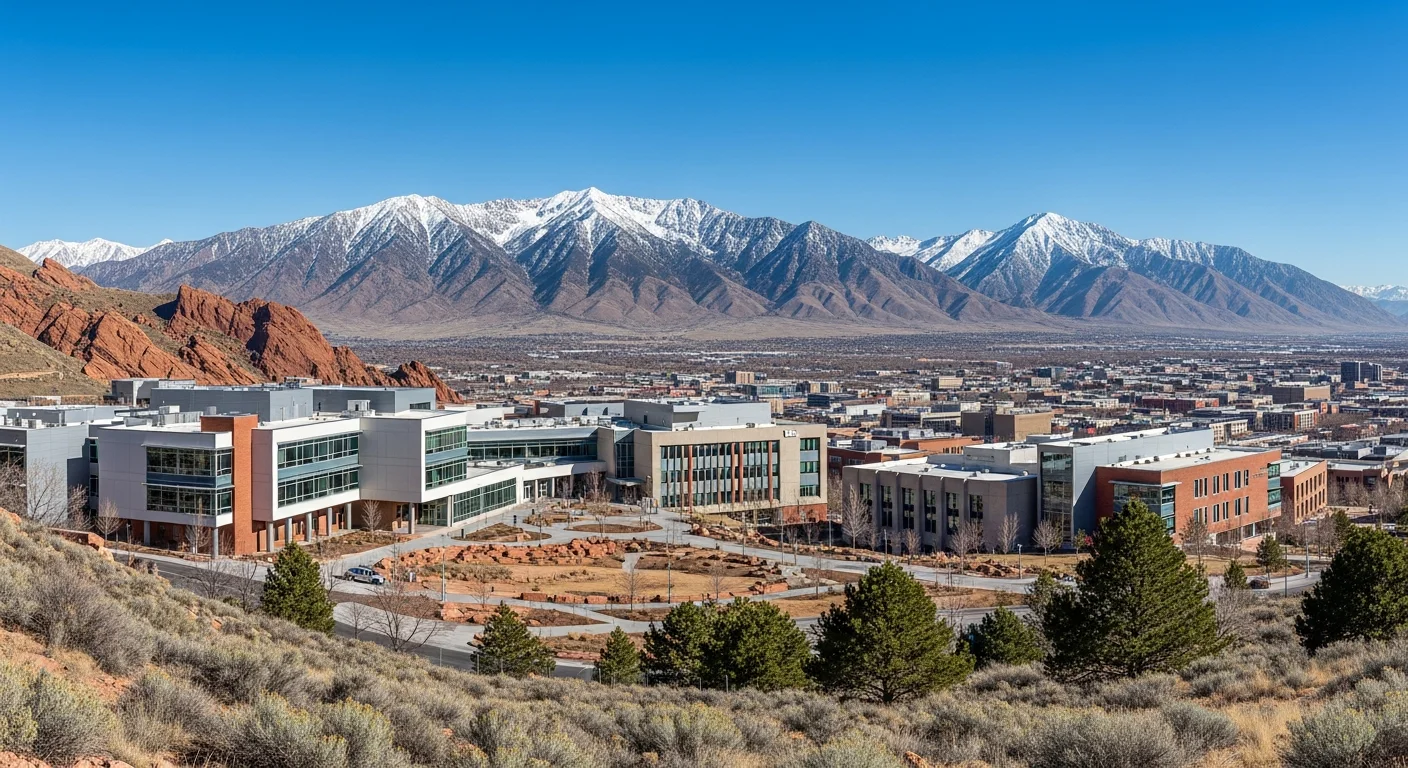
University campus in Utah
Updated July 13, 2026

Best Computer Programming Degree Programs in Utah, 2026 Rankings

Compare the top computer programming colleges in Utah. 10 accredited computer programming schools ranked by graduation rate, career outcomes, and value, from Weber State University to Western Governors University.

#1 ProgramWestern Governors
Avg Salary$108,000
Tuition From$5,471/yr
Job Growth+22%
On this page
Reviewed by Taylor Rupe, Founder & EditorSee methodology

6

Programs ranked

IPEDS 2024

$108,000

Utah median computer programming salary

BLS OEWS 2024

85/100

Top program score

Hakia methodology

11%

U.S. job growth (2023–33)

BLS projections

Key Takeaways

Best computer programming degree programs: Western Governors, Weber State, Utah Valley

Ranked by graduation rates, program outcomes, and institutional quality

IPEDS 2024

Tuition ranges from $4,180 to $40,896/year

Weber State offers the most affordable option at $5,471/yr

IPEDS 2024

Computer Programming degree programs available: 4 associate's, 4 master's, 2 doctoral in Utah

From community college pathways to advanced research degrees

IPEDS 2024

Utah community college transfer can save 40-60% on total degree costs

4 associate's programs provide transfer pathways to bachelor's degrees

Education Commission of the States

Major employers: Adobe, Qualtrics, Pluralsight, Domo

Tech hubs in Salt Lake City and Provo

Hakia Research 2026

Computer Programming degree programs near 28+ cities across Utah

Search by city to find programs within 200 miles of your location

IPEDS 2024

Updated July 13, 2026

How we ranked Utah Computer Programming programs

We rank 19 accredited computer programming programs in Utah using IPEDS 2024 institutional data, BLS OEWS 2024 state salary data, and College Scorecard outcomes. A 4-factor weighted composite is normalized to a 0–100 score. Schools cannot pay for placement; rankings are produced algorithmically.

Program completions (35%)Graduation rate (25%)Selectivity (20%)Career outcomes (20%)
See full methodology

Are Computer Programming Degree Programs in Utah Worth It?

Answer
$108,000
Yes. The best computer programming degree programs in Utah deliver strong ROI, graduates earn $108,000 median salary with +22% job growth through 2032. In-state tuition averages $11,531/year.

Source: BLS OEWS May 2024

Computer Programming Degree Rankings in Utah

Compare the top-ranked Computer Programming programs in Utah by degree level. Tuition, graduation rate, and Hakia Score for every accredited program.

Best Associate's Computer Programming Programs in Utah

2
Programs ranked
$14,752
Avg tuition/yr
53%
Avg grad rate

Program Landscape

Utah offers 4 accredited associate's degree programs in computer programming, providing an affordable entry point into the technology field. The top-ranked programs include Weber State, Utah Valley, Snow College, which combine rigorous technical curriculum with practical skills training.

Costs & Value

Community colleges in Utah offer these two-year programs at an average cost of $10,191/yr, significantly less than four-year university tuition. Students completing associate's degrees can pursue entry-level technical positions and transfer opportunities, with entry-level salaries averaging $59,400 in Utah.

Career Pathways

Many programs feature guaranteed transfer agreements with Utah's public universities, allowing students to complete their first two years at reduced cost before transferring to complete a bachelor's degree. The Salt Lake City, Provo, Lehi areas offer particularly strong job markets for associate's degree holders, with employers like Adobe, Qualtrics, Pluralsight hiring for technical support, junior development, and IT specialist positions.

Curriculum & Specializations

Programs typically include coursework in programming fundamentals, database management, networking basics, and software development. Among computer programming schools in Utah, these associate's programs offer the best value for students beginning their computer programming degrees in Utah.

🥇
Ensign College
Salt Lake City, UTPrivate nonprofit
$4,004
Tuition/yr
43%
Grad rate
76.9
Hakia Score

Best Bachelor's Computer Programming Programs in Utah

4
Programs ranked
$11,990
Avg tuition/yr
55%
Avg grad rate

Program Landscape

Utah ranks among the nation's top destinations for computer programming education, with 9 accredited bachelor's degree programs across 5 public and 3 private institutions. The highest-ranked programs are Western Governors, Weber State, Utah Valley, recognized for academic excellence, research opportunities, and strong industry connections.

Career Outcomes

Graduates from Utah computer programming programs earn a median salary of $91,800, 6% below the national average. The state's robust technology sector, anchored by the Salt Lake City, Provo, Lehi metropolitan areas, provides abundant internship and employment opportunities with companies including Adobe, Qualtrics, Pluralsight.

Costs & Value

Tuition ranges from $5,266 to $40,896 annually, with an average of $12,348/yr. Top programs maintain graduation rates above 88%, with the highest reaching 97%. Many programs hold ABET accreditation, the gold standard for computing education, ensuring curriculum meets rigorous industry standards.

Curriculum & Specializations

Students can choose from specializations including software engineering, cybersecurity, artificial intelligence, data science, and systems architecture. Strong industry partnerships provide access to co-op programs, capstone projects with real companies, and direct recruiting pipelines to Utah's leading technology employers. For students seeking computer programming degrees in Utah, these top-ranked computer programming schools offer the strongest combination of academic rigor and career preparation.

Computer Programming Degree Costs & Tuition in Utah

MetricValue
Average in-state tuition$11,531/year
Average out-of-state tuition$28,828/year
Community college tuition$2,883/year
4-year savings for residents$69,188
2+2 transfer pathway savings$17,296

Source: IPEDS 2024

Financial Aid & Scholarships for Computer Programming Students in Utah

State Aid Programs

Utah residents pursuing computer programming degrees have access to multiple financial aid pathways designed to make higher education more affordable. The Utah Opportunity Scholarship (https://ushe.edu/) provides both need-based and merit-based awards specifically for Utah residents attending institutions within the Utah System of Higher Education. These scholarships can significantly reduce the cost of attendance, particularly for students attending public universities and community colleges across the state. Additionally, all students are encouraged to complete the Free Application for Federal Student Aid (FAFSA) at StudentAid.gov to determine eligibility for federal grants, loans, and work-study opportunities that aren't limited by state residency.

Key Programs & Amounts

Beyond state and federal aid, many Utah institutions offer institutional scholarships and financial packages tailored to computer programming majors. When researching aid opportunities, students should explore programs at top-ranked institutions like Brigham Young University and University of Utah, which often have dedicated funding for STEM students. For comprehensive guidance on federal student aid options and loan management, Federal Student Aid provides detailed resources. Utah's transfer system (Utah Transfer Guides) also helps students understand how starting at a community college can reduce overall degree costs while maintaining a pathway to a bachelor's degree. Students should consult individual institution financial aid offices for current scholarship deadlines and award amounts.

Computer Programming Degree ROI Calculator, Utah

Use our interactive ROI calculator to estimate your return on investment for a computer programming degree in Utah. Enter your expected tuition costs, financial aid, and career goals to see projected payback periods and lifetime earnings. The calculator uses current salary data from BLS and tuition data from IPEDS to provide accurate estimates.

Computer Programming Degree ROI Calculator

Estimate your return on investment for a computer programming degree

Leave blank to use average cost for selected program type

20 years
10 years20 years30 years
20-Year ROI

+907%

Net gain divided by total investment. ROI above 200% is considered excellent for education investments.

Net Gain

$1,677,254

Your additional lifetime earnings with this degree vs. working without one, minus the total investment.

Break-Even

5 years

Years until your cumulative earnings exceed total investment. Shorter programs often break even faster due to lower opportunity cost.

COL-Adjusted Salary

$133,333

Your starting salary adjusted for local cost of living. This shows real purchasing power compared to a $100K national baseline.

Why does break-even change with program type? Your "total investment" includes both tuition AND opportunity cost (foregone earnings while in school). A 4-year full-time public university (in-state) means 4 years of not earning a salary ($140,000 in opportunity cost). Shorter full-time programs may have higher tuition but lower total investment because you return to the workforce sooner.

Detailed Breakdown

How we calculate your degree ROI using real salary data

Total Investment$185,000

Tuition plus opportunity cost (earnings you miss while in school)

Program Cost (Tuition)$45,000

Direct cost of the degree program

Opportunity Cost$140,000

4 years × $35K/year foregone salary while studying full-time

20-Year Earnings (with degree)$2,712,662

Projected career earnings starting after graduation, with salary growth

20-Year Earnings (without degree)$850,408

What you'd earn working at $35K/year with 2% annual growth

Starting Salary (Austin, TX)$140,000

Median salary for this role in your selected location (BLS 2024)

Annualized Return4.9%

Your investment's compound annual growth rate (similar to stock market returns)

Data sources: BLS OEWS May 2024, IPEDS 2024. Calculations use median salaries, 3% discount rate, and assume salary growth declines from 6% to 2% over career. Individual results will vary. | Powered by Hakia.com

Computer Programming Salaries by Metro Area

Median annual salary in Utah metro areas

Salt Lake City$119K
Provo$113K
Lehi$108K
View data table
CategoryValue
Salt Lake City$119K
Provo$113K
Lehi$108K

Source: BLS OEWS May 2024

Hakia.com

Top Employers Hiring Computer Programming Graduates in Utah

Find computer programming jobs in Utah. These major employers across Utah metro areas are actively hiring computer programming degree holders. Click employer names to view current job openings.

Computer Programming Jobs in Salt Lake City

UT
Adobe
tech
Goldman Sachs
finance
Pluralsight
edtech
Overstock.com
ecommerce

Computer Programming Jobs in Provo

UT
Qualtrics
tech
Vivint
iot
Ancestry.com
tech

Computer Programming Jobs in Lehi

UT
Domo
tech
MX Technologies
fintech
Podium
tech

Transfer Pathways for Computer Programming Degrees in Utah

State Transfer System

Utah provides strong pathways for students to transfer from two-year to four-year computer programming programs through the state's coordinated transfer system. The Utah Transfer Guides offer major-specific articulation agreements that allow students to complete associate's degrees at 5 two-year institutions, including Weber State University, Utah Valley University, Salt Lake Community College, and Snow College, and seamlessly transfer to bachelor's programs at universities like University of Utah, Utah State University, and Brigham Young University. These guides specify which courses transfer as equivalent credits, minimizing delays and ensuring students progress efficiently toward their bachelor's degree.

How Transfers Work

The Utah System of Higher Education (USHE) has established formalized agreements between community colleges and four-year institutions to streamline the transfer process for computer programming majors. Students beginning at community colleges benefit from lower tuition costs, with institutions like Salt Lake Community College charging $3,778 annually, before transitioning to public universities where average in-state tuition is $6,014. Many community college students save thousands of dollars during their first two years before transferring. Additionally, Utah offers the Utah Opportunity Scholarship, which provides need- and merit-based financial aid to qualifying residents, further reducing barriers to higher education. For financial planning and detailed transfer information, visit Federal Student Aid and the College Scorecard. Students should also explore related fields like Computer Science in Utah and Software Engineering in Utah for additional pathway options.

Why Pursue a Computer Programming Degree in Utah?

Industry & Workforce

Utah is a thriving hub for computer programming education and technology careers. The state offers 22 institutions with computer programming programs across all degree levels, from associate's to doctoral programs (IPEDS). In 2023, Utah institutions awarded 2,218 bachelor's degrees in computer programming, demonstrating strong demand and enrollment in the field. Major cities including Salt Lake City, Provo, and Orem serve as regional tech centers, home to major employers like Goldman Sachs, Adobe, Intermountain Healthcare, and the University of Utah itself.

Salary Outlook

The state's leading institutions, including Brigham Young University, University of Utah, and Weber State University, consistently rank among the nation's best computer programming programs. Utah's public universities offer exceptional affordability, with average public in-state tuition for four-year institutions at just $6,014 annually, compared to $19,392 for out-of-state students (College Scorecard). This cost advantage, combined with Utah's strong tech job market and proximity to Fortune 500 companies, makes the state an attractive choice for aspiring programmers. For more information on national rankings, explore Best Bachelor's Programs and Most Affordable Programs across the country. Students interested in related fields should also consider Software Engineering in Utah and Web Development in Utah.

Computer Programming Program Availability in Utah

10 Programs
Utah offers 10 accredited computer programming programs across public universities, private colleges, and community colleges. Top tech hubs include Salt Lake City, Provo, Lehi.

Source: IPEDS 2024

Computer Programming Job Market & Salary Data in Utah

Employment Outlook

Utah's computer programming job market is experiencing strong growth, driven by a combination of emerging tech hubs and established corporate presence across multiple metropolitan areas. The state's major employment centers are concentrated in the Salt Lake City metro, Provo-Orem metro, and Ogden-Clearfield regions, with additional opportunities expanding in secondary cities like St. George and West Jordan. According to the U.S. Bureau of Labor Statistics, Utah continues to see strong demand for software developers and computer programmers, supported by both large multinational employers and growing startup ecosystems. The state benefits from a young, educated workforce pipeline, with 22 institutions offering computer programming programs at various degree levels (IPEDS), including 9 bachelor's degree programs that produced 2,218 completions in 2023.

Salaries by Metro

The competitive salary landscape in Utah reflects national trends while maintaining relatively affordable cost of living compared to other major tech hubs. Bachelor's degree holders in computer programming can expect strong earning potential, particularly when graduating from top-ranked programs like those at Brigham Young University and Utah State University. Entry-level positions are readily available across Salt Lake City, Provo, and surrounding areas, while mid-career and senior positions concentrate in larger metro centers. The state's favorable business climate and tax environment continue to attract technology companies, creating sustained demand for skilled programmers. Students interested in exploring broader technology career paths may also consider related fields such as Software Engineering in Utah or Web Development in Utah, which offer complementary career trajectories and often feature similar employers and geographic opportunities.

Entry-Level (0-2 yrs)

New graduates and career changers

Senior (8+ yrs)

Technical leads and architects

Median Salary in Utah$70,200$156,600
Typical RolesJunior Developer, AnalystStaff Engineer, Architect
Remote Work AccessLimitedCommon
Degree ExpectationBachelor's sufficientMaster's preferred

Online vs On-Campus Computer Programming Programs in Utah

Online Programs

0 available in Utah

On-Campus Programs

Traditional classroom experience

Typical Tuition$10,378/yr$11,531/yr
Schedule FlexibilitySelf-paced or asyncFixed schedule
NetworkingVirtual cohortsIn-person, career fairs
Best ForWorking professionalsTraditional students
Completion Time2-4 years (flexible)4 years (standard)

Compare Computer Programming Programs in Other States

Computer Programming Degree Programs in Utah: FAQ

What are the best computer programming degree programs in Utah?
The best computer programming degree programs in Utah based on our methodology are: 1) Western Governors University (highly ranked), 2) Weber State University, and 3) Utah Valley University. Our rankings weight graduation rates (25%), program completions (35%), selectivity (20%), and career outcomes (20%). Utah offers 10 total accredited programs across 6 public and 3 private institutions. See our complete rankings for all 9 bachelor's programs.
How much do computer programming degree programs cost in Utah?
Computer Programming degree program costs in Utah vary significantly by institution type. In-state public tuition averages $11,531/year, while private institutions average $25,368/year. Community colleges offer the most affordable path at approximately $2,883/year for associate's degrees. The total 4-year cost ranges from $46,124 at public schools to $101,473 at private institutions before financial aid. Most students don't pay full sticker price, federal grants, state aid, and institutional scholarships can reduce costs by 30-60%.
What salary can computer programming degree graduates earn in Utah?
Computer Programming professionals in Utah earn a median salary of $108,000, which is competitive with the national average of $115,500. Entry-level positions typically start around $70,200, while senior roles exceed $156,600. Salaries vary by metro area: Salt Lake City ($118,800), Provo ($113,400) offer the highest compensation. Specialized roles like AI/ML engineers and cloud architects command premiums of 15-30% above median.
Are there online computer programming degree programs in Utah?
Yes, Utah offers 0 accredited online Computer Programming programs from state institutions. These programs award the same degree as on-campus options and include synchronous and asynchronous formats. Top-ranked online programs include offerings from various state universities. Online programs typically cost the same as on-campus tuition for in-state students. Many programs offer flexible scheduling for working professionals, with some offering accelerated completion in 2-3 years. Ensure any online program holds regional accreditation and ideally ABET accreditation for engineering programs.
What companies hire computer programming degree graduates in Utah?
Major Computer Programming employers in Utah include Adobe, Qualtrics, Pluralsight, Domo, Recursion. The Salt Lake City and Provo metro areas serve as primary tech hubs with thousands of open positions. Top employers maintain recruiting pipelines directly from Utah universities, with many offering internship-to-hire programs. Beyond tech giants, opportunities exist in healthcare IT, financial services, defense contractors, and growing startups. Utah's tech sector shows +22% projected job growth through 2033, outpacing most other industries.
Is a computer programming degree program worth it in Utah?
A computer programming degree program in Utah offers strong ROI with a $108,000 median salary and +22% projected job growth. At average in-state tuition of $11,531/year, graduates typically recoup their educational investment within 3-5 years. The degree opens doors to high-paying careers in software development ($122,040), data science, cybersecurity, and AI/ML. Beyond salary, benefits include job security, remote work flexibility, and clear advancement paths. Alternative paths like bootcamps exist for career changers, but bachelor's degrees provide broader career options and higher lifetime earnings.
How long do computer programming degree programs take in Utah?
Standard completion times for computer programming degree programs in Utah are: Associate's (2 years, 60 credits), Bachelor's (4 years, 120 credits), and Master's (1-2 years, 30-36 credits). However, actual timelines vary based on course load, transfer credits, and program format. Accelerated programs can compress a bachelor's to 3 years or a master's to 12 months. Part-time students typically need 5-6 years for a bachelor's degree. Utah community colleges offer a cost-effective "2+2" path: complete your associate's in 2 years, then transfer to a Utah university for the final 2 years of a bachelor's program.
What financial aid is available for computer programming degree students in Utah?
Utah computer programming degree students can access multiple financial aid sources. Federal aid includes Pell Grants (up to $7,395/year for qualifying students) and federal student loans. Utah state grants provide additional support for residents attending in-state schools. Institutional scholarships from universities can significantly reduce costs, many schools offer merit-based awards for STEM students. Work-study programs and teaching/research assistantships (especially for graduate students) provide income while building experience. Complete the FAFSA by Utah's priority deadline to maximize aid eligibility. Some employers also offer tuition reimbursement for employees pursuing CS degrees.

Data Sources

Institutional characteristics, completions, graduation rates

Utah salary and employment data

Official University Websites

Program details and admissions information

Last Updated: June 26, 2026. Rankings based on IPEDS 2024 data. Salary data from BLS OEWS May 2024.

Was this ranking helpful for your college search?
Taylor Rupe

Taylor Rupe

Co-founder & Editor (B.S. Computer Science, Oregon State • B.A. Psychology, University of Washington)

Taylor combines technical expertise in computer science with a deep understanding of human behavior and learning. His dual background drives Hakia's mission: leveraging technology to build authoritative educational resources that help people make better decisions about their academic and career paths.

The research behind the rankings

In-depth Computer Programming program profiles in Utah

Hand-researched detail on the top-ranked programs: degree pathways, research labs, industry partners, career outcomes, and admissions. Tap any school to expand.

Best Associate's Computer Programming programs

#2Neumont College of Computer ScienceSalt Lake City, UT

Why it stands out. Neumont's entire institution is dedicated exclusively to computer science, deploying a relentless project-driven curriculum with embedded internships and faculty who are active practitioners, producing graduates with shipped code portfolios.

Hakia insight. Neumont's single institutional focus on CS means every hire, curriculum decision, and resource allocation orbits job-readiness; compare this to community colleges balancing liberal arts, nursing, and trades—Neumont's obsession with outcome metrics produces measurably faster time-to-employment.

At the associate's level, neumont's entire institutional focus is computer science education, which means every resource, every hire, and every curriculum decision orbits around producing job-ready developers—not diluted across a broader university mission. The quarter-based system moves quickly, with intensive, project-centric courses that simulate professional sprint cycles. Students ship real software starting in year one: web applications, mobile apps, and backend systems built to spec, code-reviewed by faculty, and often deployed to actual users. The hands-on pedagogy is relentless; lectures are minimal and time is spent building, debugging, and collaborating in ways that mirror actual software teams. Internships aren't an optional add-on—they're embedded, with most students rotating through 2–3 paid internship terms during their degree. Faculty are practitioners first, many with active consulting or startup involvement, bringing current technical challenges directly into classroom discussions. The small, specialized student body creates an unusually tight network; peer learning accelerates when everyone around you is intensely focused on the same goal. Placement outcomes reflect this focus: students graduate with portfolios of shipped projects, not just theoretical credentials.

Programs offered

  • Associate of Science in Computer Programming · 2 years · on-campus
  • Associate of Applied Science in Computer Programming · 2 years · online

Industry partners

Local and regional tech firms

Career outcomes

Top employers: Google, Microsoft, Tesla, Oracle, 3M, HP, Amazon, Blizzard Entertainment, Dell EMC

Accreditation & certifications

Northwest Commission on Colleges and Universities (NWCCU)

Location advantage: Based in Salt Lake City tech ecosystem with proximity to regional tech employers and internship opportunities

Best Bachelor's Computer Programming programs

#1University of UtahSalt Lake City, UT

Why it stands out. Annual career fair with internship and job placement opportunities. Undergraduate research opportunities at R1 research university

Hakia insight. The University of Utah's Graphics Lab isn't just a showcase—undergraduates can co-author papers on rendering techniques that ship in Adobe products, transforming a capstone project into a professional publication.

The University of Utah Kahlert School of Computing offers a nationally-ranked Bachelor's program blending rigorous theory with practical application. Students gain hands-on experience through cutting-edge research opportunities, with 92% securing full-time employment before graduation. The program emphasizes real-world problem-solving across diverse computing domains including artificial intelligence, security, graphics, robotics, and networking. Students benefit from excellent access to Silicon Slopes and top-tier national tech companies for internships and career placement. The school hosts an annual career fair that directly leads to internship opportunities and job offers. As an R1 research university, undergraduates work with faculty actively engaged in research, providing exposure to current industry challenges and solutions.

Programs offered

  • Bachelor of Science in Computer Science, Data Science, Software Development, or Computer Engineering · 4 years · on-campus

Research labs & institutes

  • Graphics Lab — Computer graphics, visualization, and rendering
  • Human-Computer Interaction Laboratory — Interaction design and user interface research
  • Robotics Center — Robotics and autonomous systems
  • School of Computing – AI Research — Machine learning and deep learning applications

Industry partners

AdobeMicrosoftAmazonGoogleMetaApple

Notable faculty

  • Cem Yuksel (Computer graphics and rendering)
  • Kirk Olynyk (Machine learning and computer vision)
  • Elena Glassman (Human-computer interaction and educational technology)

Accreditation & certifications

ABET accredited (CS 2023)

Location advantage: Located in Salt Lake City's tech corridor with direct access to major employer headquarters Proximity to Adobe, Microsoft, and Amazon regional engineering offices Hub for Utah's startup ecosystem and venture capital activity Gateway to annual tech conferences and networking events in the region

#2Western Governors UniversitySalt Lake City, UT

Why it stands out. WGU's competency-based, fully online model allows working professionals to accelerate through the program by demonstrating mastery and earn industry-recognized certifications simultaneously with their degree.

Hakia insight. WGU's competency-based model means a student who already understands data structures doesn't pay tuition to re-learn it—they test out and move forward, making it genuinely possible to complete a degree in under two years while working full-time.

At the bachelor's level, WGU's computer programming offering is purpose-built for working professionals and career-changers who need flexibility without sacrificing rigor—the competency-based model means you advance by demonstrating mastery, not by sitting through a fixed semester calendar. This approach accelerates graduation for experienced learners while giving others the time they need to truly grasp difficult concepts. The curriculum covers full-stack web development, cloud technologies, and mobile application development with particular emphasis on frameworks and tools actively used in production environments today. Industry alignment is baked into program design: courses map directly to certifications like CompTIA Security+ and AWS, so you're building credentials alongside your degree. Mentors—working professionals in tech—guide your learning path and help you navigate real career transitions. The online-only format attracts students from across North America, creating a diverse cohort that enriches peer discussions and networking. Graduates often complete the program faster than traditional timelines and enter roles at intermediate levels rather than entry-level positions.

Programs offered

  • Bachelor of Science in Computer Programming · 4 years · on-campus
  • Bachelor of Arts in Computer Programming · 4 years · online

Accreditation & certifications

Competency-based accreditationPathway to CompTIA Security+Pathway to AWS certifications

Location advantage: Online format enables access from anywhere; serves national student population

#3Utah Valley UniversityOrem, UT

Why it stands out. 8-credit student teaching practicum (EDSC 4850) with secondary schools. Teacher Assessment Project capstone (EDSC 4990)

Hakia insight. UVU's 8-credit student teaching practicum produces an unusual graduate profile: computer scientists who understand pedagogy and can communicate technical concepts clearly—a competitive advantage in tech companies increasingly building internal training teams.

The Bachelor of Science in Computer Science Education prepares students to teach computer science and web development at the secondary level. The 121-credit program combines a strong foundation in software and web development (CS 1400, CS 1410, CS 2420, CS 2450, CS 2550, CS 2600, CS 3250, CS 3450) with education courses required for Utah teaching licensure with Computer Science and Web Development endorsements. Students complete a comprehensive education methods component including secondary curriculum instruction, classroom management, and an 8-credit student teaching practicum (EDSC 4850). The curriculum emphasizes pedagogical theory application, equitable technology integration, and multicultural education. Graduates qualify for secondary teaching positions with median salaries of $65,220 for secondary school teachers and $96,430 for postsecondary computer science teachers. The program requires a 3.0 GPA for matriculation and C+ or higher in core CS courses.

Programs offered

  • Bachelor of Science in Computer Science Education · 4 years · on-campus

Career outcomes

$65,220 median salary

Location advantage: Location in Utah Valley tech ecosystem with proximity to startups and regional software companies

#4Neumont College of Computer ScienceSalt Lake City, UT

Why it stands out. Neumont's entire institution is dedicated exclusively to computer science, deploying a relentless project-driven curriculum with embedded internships and faculty who are active practitioners, producing graduates with shipped code portfolios.

Hakia insight. Neumont's institutional laser-focus means even adjunct instructors must demonstrate shipped production code; a student's four-year curriculum is built by practitioners debugging real systems, not by academic traditionalists designing syllabi from textbooks.

At the bachelor's level, neumont's entire institutional focus is computer science education, which means every resource, every hire, and every curriculum decision orbits around producing job-ready developers—not diluted across a broader university mission. The quarter-based system moves quickly, with intensive, project-centric courses that simulate professional sprint cycles. Students ship real software starting in year one: web applications, mobile apps, and backend systems built to spec, code-reviewed by faculty, and often deployed to actual users. The hands-on pedagogy is relentless; lectures are minimal and time is spent building, debugging, and collaborating in ways that mirror actual software teams. Internships aren't an optional add-on—they're embedded, with most students rotating through 2–3 paid internship terms during their degree. Faculty are practitioners first, many with active consulting or startup involvement, bringing current technical challenges directly into classroom discussions. The small, specialized student body creates an unusually tight network; peer learning accelerates when everyone around you is intensely focused on the same goal. Placement outcomes reflect this focus: students graduate with portfolios of shipped projects, not just theoretical credentials.

Programs offered

  • Bachelor of Science in Computer Programming · 4 years · on-campus
  • Bachelor of Arts in Computer Programming · 4 years · online

Industry partners

Local and regional tech firms

Career outcomes

Top employers: Google, Microsoft, Tesla, Oracle, 3M, HP, Amazon, Blizzard Entertainment, Dell EMC

Accreditation & certifications

Northwest Commission on Colleges and Universities (NWCCU)

Location advantage: Based in Salt Lake City tech ecosystem with proximity to regional tech employers and internship opportunities