🥇
Rowan College of South Jersey-Gloucester Campus
Sewell, NJPublic
$4,620
Tuition/yr
39%
Grad rate
71.3
Hakia Score
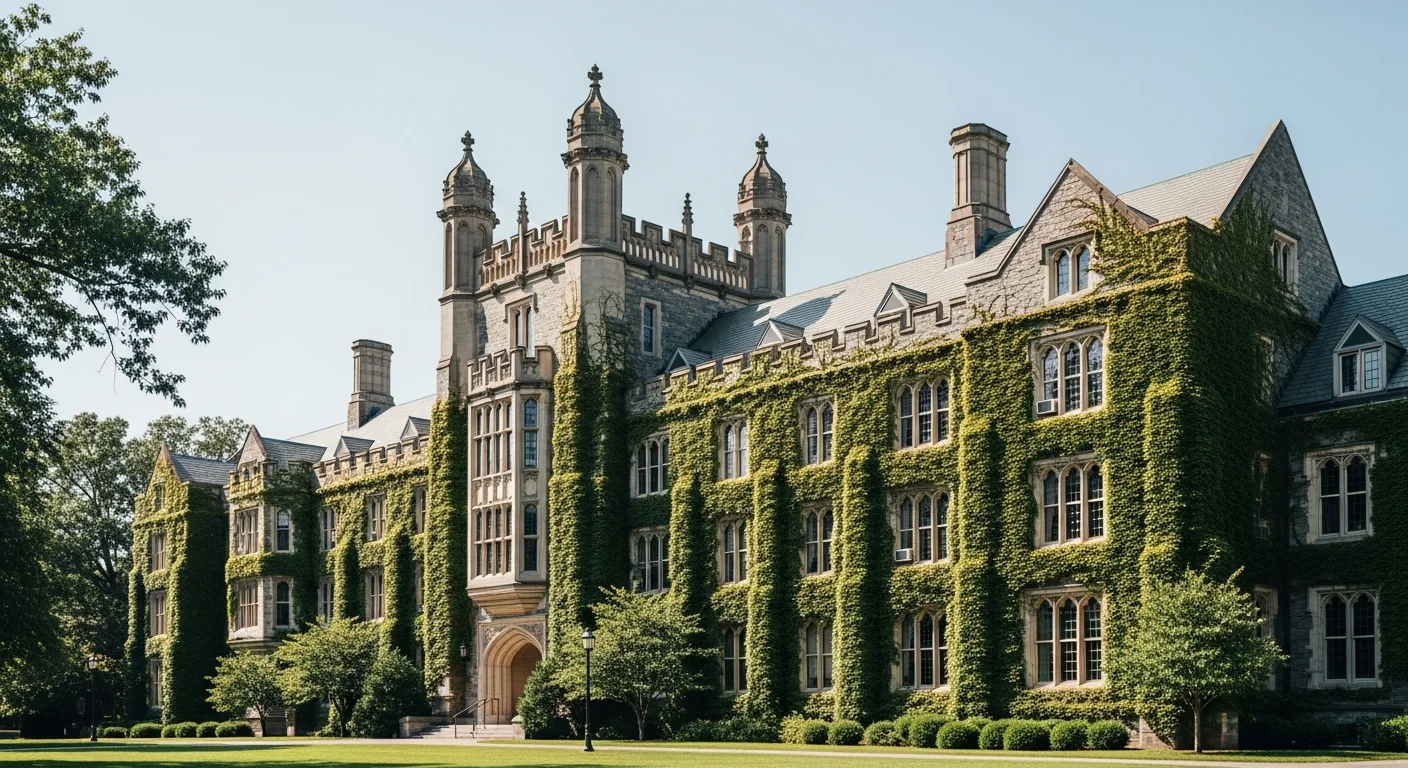
Compare the top computer programming colleges in New Jersey. 18 accredited computer programming schools ranked by graduation rate, career outcomes, and value, from Essex County College to Princeton University.
Best computer programming degree programs: Princeton, Stevens Institute of Tech..., Rowan
Ranked by graduation rates, program outcomes, and institutional quality
Tuition ranges from $4,440 to $59,710/year
Essex County College offers the most affordable option at $8,054/yr
Computer Programming degree programs available: 6 associate's, 7 master's, 2 doctoral in New Jersey
From community college pathways to advanced research degrees
2 online computer programming degree programs in New Jersey
Flexible scheduling for working professionals
New Jersey community college transfer can save 40-60% on total degree costs
6 associate's programs provide transfer pathways to bachelor's degrees
Education Commission of the States
Major employers: Johnson & Johnson, Prudential, Merck, Verizon
Tech hubs in Jersey City and Newark
Hakia Research 2026
Computer Programming degree programs near 86+ cities across New Jersey
Search by city to find programs within 200 miles of your location
Updated October 19, 2026
We rank 25 accredited computer programming programs in New Jersey using IPEDS 2024 institutional data, BLS OEWS 2024 state salary data, and College Scorecard outcomes. A 4-factor weighted composite is normalized to a 0–100 score. Schools cannot pay for placement; rankings are produced algorithmically.
Are Computer Programming Degree Programs in New Jersey Worth It?
Source: BLS OEWS May 2024
Compare the top-ranked Computer Programming programs in New Jersey by degree level. Tuition, graduation rate, and Hakia Score for every accredited program.
New Jersey offers 6 accredited associate's degree programs in computer programming, providing an affordable entry point into the technology field. The top-ranked programs include Essex County College, UCNJ Union College of Uni..., County College of Morris, which combine rigorous technical curriculum with practical skills training.
Community colleges in New Jersey offer these two-year programs at an average cost of $7,037/yr, significantly less than four-year university tuition. Students completing associate's degrees can pursue entry-level technical positions and transfer opportunities, with entry-level salaries averaging $67,540 in New Jersey.
Many programs feature guaranteed transfer agreements with New Jersey's public universities, allowing students to complete their first two years at reduced cost before transferring to complete a bachelor's degree. The Jersey City, Newark, Princeton areas offer particularly strong job markets for associate's degree holders, with employers like Johnson & Johnson, Prudential, Merck hiring for technical support, junior development, and IT specialist positions.
Programs typically include coursework in programming fundamentals, database management, networking basics, and software development. Among computer programming schools in New Jersey, these associate's programs offer the best value for students beginning their computer programming degrees in New Jersey.
New Jersey ranks among the nation's top destinations for computer programming education, with 10 accredited bachelor's degree programs across 3 public and 7 private institutions. The highest-ranked programs are Princeton, Stevens Institute of Tech..., Rowan, recognized for academic excellence, research opportunities, and strong industry connections.
Graduates from New Jersey computer programming programs earn a median salary of $104,380, 6% above the national average. The state's robust technology sector, anchored by the Jersey City, Newark, Princeton metropolitan areas, provides abundant internship and employment opportunities with companies including Johnson & Johnson, Prudential, Merck.
Tuition ranges from $11,250 to $59,710 annually, with an average of $34,477/yr. Top programs maintain graduation rates above 85%, with the highest reaching 97%. Many programs hold ABET accreditation, the gold standard for computing education, ensuring curriculum meets rigorous industry standards.
Students can choose from specializations including software engineering, cybersecurity, artificial intelligence, data science, and systems architecture. Strong industry partnerships provide access to co-op programs, capstone projects with real companies, and direct recruiting pipelines to New Jersey's leading technology employers. For students seeking computer programming degrees in New Jersey, these top-ranked computer programming schools offer the strongest combination of academic rigor and career preparation.
| Metric | Value |
|---|---|
| Average in-state tuition | $25,529/year |
| Average out-of-state tuition | $63,823/year |
| Community college tuition | $6,382/year |
| 4-year savings for residents | $153,176 |
| 2+2 transfer pathway savings | $38,294 |
Source: IPEDS 2024
The Tuition Aid Grant (TAG) is New Jersey's flagship need-based financial aid program, providing $2,176 to $14,404 per year depending on financial need and institution type (HESAA TAG Grant). TAG is administered by the Higher Education Student Assistance Authority (HESAA) and is available to NJ residents attending eligible in-state institutions. Unlike many state grants, TAG can be used at both public and private colleges, making it one of the most generous state grant programs in the nation. Students must complete the FAFSA by the April 15 deadline and demonstrate financial need based on the Student Aid Index (SAI).
Additional NJ state financial aid programs include:
Tech-specific scholarships and employer tuition assistance provide additional support for programming students. Companies like AT&T, Verizon, ADP, and Johnson & Johnson offer tuition reimbursement programs for employees pursuing computing degrees. NJIT provides merit scholarships ranging from $5,000 to full tuition for high-achieving students, plus departmental awards for CS majors. Professional organizations including the Association for Computing Machinery (ACM) and IEEE Computer Society offer national scholarships. Students should also explore coding bootcamp scholarships from organizations like Code.org and the National Center for Women & Information Technology (NCWIT) for supplemental training.
Use our interactive ROI calculator to estimate your return on investment for a computer programming degree in New Jersey. Enter your expected tuition costs, financial aid, and career goals to see projected payback periods and lifetime earnings. The calculator uses current salary data from BLS and tuition data from IPEDS to provide accurate estimates.
Estimate your return on investment for a computer programming degree
Leave blank to use average cost for selected program type
+1116%
Net gain divided by total investment. ROI above 200% is considered excellent for education investments.
$2,064,777
Your additional lifetime earnings with this degree vs. working without one, minus the total investment.
5 years
Years until your cumulative earnings exceed total investment. Shorter programs often break even faster due to lower opportunity cost.
$94,118
Your starting salary adjusted for local cost of living. This shows real purchasing power compared to a $100K national baseline.
Why does break-even change with program type? Your "total investment" includes both tuition AND opportunity cost (foregone earnings while in school). A 4-year full-time public university (in-state) means 4 years of not earning a salary ($140,000 in opportunity cost). Shorter full-time programs may have higher tuition but lower total investment because you return to the workforce sooner.
How we calculate your degree ROI using real salary data
Tuition plus opportunity cost (earnings you miss while in school)
Direct cost of the degree program
4 years × $35K/year foregone salary while studying full-time
Projected career earnings starting after graduation, with salary growth
What you'd earn working at $35K/year with 2% annual growth
Median salary for this role in your selected location (BLS 2024)
Your investment's compound annual growth rate (similar to stock market returns)
Data sources: BLS OEWS May 2024, IPEDS 2024. Calculations use median salaries, 3% discount rate, and assume salary growth declines from 6% to 2% over career. Individual results will vary. | Powered by Hakia.com
Median annual salary in New Jersey metro areas
| Category | Value |
|---|---|
| Jersey City | $135K |
| Newark | $129K |
| Princeton | $123K |
Source: BLS OEWS May 2024
Hakia.com
Find computer programming jobs in New Jersey. These major employers across New Jersey metro areas are actively hiring computer programming degree holders. Click employer names to view current job openings.
NJ Transfer is the state's comprehensive transfer articulation system, connecting all 18 community colleges to the state's public four-year institutions (NJ Transfer). Students who complete an Associate of Arts (AA) or Associate of Science (AS) degree at any NJ community college receive guaranteed junior standing at any NJ public university. This means all general education requirements are satisfied, and students enter the university with 60+ transferable credits. For programming students, this pathway eliminates the risk of losing credits during transfer and ensures a clear two-year path to a bachelor's degree.
Strategic course planning is essential for programming transfers.
Community college students should complete Calculus I and II, introductory programming (Java), data structures, and discrete mathematics during their first two years to stay on track for upper-division coursework at the receiving institution. NJ Transfer's course equivalency database allows students to verify exactly which courses will count toward their intended major before enrolling. Lampitt Law (NJ statute) guarantees that completed associate degrees transfer as a block, protecting students from losing individual course credits. Students should meet with advisors at both institutions to create a seamless transfer plan.
The 2+2 pathway offers significant financial savings.
Community college tuition in NJ averages $5,000-$7,000 per year for in-county residents, compared to $12,000-$17,000 at public four-year universities. Students who transfer after completing an AS degree save approximately $15,000-$20,000 over the full bachelor's degree. Bergen Community College, Middlesex College, and Brookdale Community College all offer well-structured CS transfer tracks. NJIT and Rutgers-Newark specifically recruit transfer students with articulation agreements ensuring smooth transitions. For students exploring different degree levels, see our associate's programming programs or bachelor's rankings.
New Jersey is one of the nation's most concentrated tech employment corridors, with the state's 12 Strategic Innovation Centers generating $17 billion in economic output and supporting 28,000 jobs (NJEDA Innovation Economy). For aspiring computer programmers, this translates into immediate career opportunities across financial services, pharmaceuticals, telecommunications, and e-commerce. The state's proximity to New York City means NJ programmers can access the largest tech job market in the eastern U.S. while benefiting from New Jersey's lower cost of living in many areas. Major employers like Audible, Panasonic, Samsung, and IBM maintain significant development centers in New Jersey, creating steady demand for programmers skilled in modern languages and frameworks.
Computer programmers in New Jersey earn between $70,000 and $100,000 annually, with senior developers and those in financial services exceeding $110,000 (BLS OEWS New Jersey May 2024, Glassdoor). The Jersey City and Newark financial district hosts Goldman Sachs, Prudential Financial, and Cognizant Technology Solutions, all of which employ large programming teams for trading platforms, risk modeling, and client-facing applications. New Jersey's tech job growth rate of 15% through 2034 outpaces the national average, driven by data center expansion from QTS, Equinix, and AWS in the northern part of the state.
Universities like NJIT, Rutgers, and Stevens Institute of Technology offer strong programming-focused curricula that feed directly into this employer pipeline (NJIT Computer Science, Stevens CS). NJIT's location in Newark places students minutes from major employers, while Rutgers' New Brunswick campus partners with pharmaceutical giants for health informatics programming roles. Compare New Jersey programs with those in New York, Pennsylvania, or explore national computer programming rankings.
Computer Programming Program Availability in New Jersey
Source: IPEDS 2024
New Jersey's programming job market benefits from a unique dual-market advantage straddling both the New York City and Philadelphia metro areas. The state employs over 116,000 tech workers across computer systems design, custom software development, and data processing services (CompTIA Cyberstates 2025). Financial services firms in Jersey City's waterfront district hire programmers for algorithmic trading systems, payment processing platforms, and compliance automation. Goldman Sachs' Jersey City campus alone employs thousands of technologists, with programmer roles starting at $85,000-$95,000 for entry-level positions and reaching $130,000+ for senior developers working on mission-critical financial infrastructure.
Key programming specializations driving NJ hiring include:
Entry-level programmer positions are accessible across the state, with community college graduates finding roles at smaller firms and mid-size companies. Bergen County and Morris County host numerous technology consultancies like Cognizant, Infosys, and Wipro that hire junior programmers and provide on-the-job training. The state's proximity to Manhattan allows NJ residents to commute to thousands of additional positions without relocating. For related career paths, explore software engineering degrees or web development programs.
New graduates and career changers
Technical leads and architects
2 available in New Jersey
Traditional classroom experience
Institutional characteristics, completions, graduation rates
New Jersey salary and employment data
Program details and admissions information
Last Updated: June 26, 2026. Rankings based on IPEDS 2024 data. Salary data from BLS OEWS May 2024.

Co-founder & Editor (B.S. Computer Science, Oregon State • B.A. Psychology, University of Washington)
Taylor combines technical expertise in computer science with a deep understanding of human behavior and learning. His dual background drives Hakia's mission: leveraging technology to build authoritative educational resources that help people make better decisions about their academic and career paths.
Hand-researched detail on the top-ranked programs: degree pathways, research labs, industry partners, career outcomes, and admissions. Tap any school to expand.
Hakia insight. Unlike most community colleges where credits are transferable abstractions, Rowan's Gloucester Campus follows a mapped pathway that guarantees your associate's coursework counts as your first two years of their four-year degree—you're not transferring into a program, you're already inside it.
At the associate's level, what sets this program apart is its deliberate alignment with Rowan University's four-year computer science degree—you're not just earning credits, you're following a mapped pathway that eliminates surprises when you transfer. Students enjoy modern facilities with up-to-date hardware and software, and the campus culture attracts serious students who treat their associate degree as the launchpad it actually is. South Jersey employers actively recruit from this program knowing the rigor and preparation they can expect.
Programs offered
Career outcomes
Top employers: South Jersey tech companies, Healthcare IT, Financial services, Manufacturing sector IT
Hakia insight. Atlantic Cape's curriculum co-designed with Atlantic County employers creates an unusual feedback loop: casino IT departments and healthcare systems literally shaped what you'll learn, so your capstone projects solve problems your future employers are actively facing.
At the associate's level, when you enroll in Atlantic Cape's computer programming program, you're joining a curriculum designed with input from the Atlantic County business community—that means your classes teach skills employers are actively hiring for right now. The program covers full-stack web development, database design, and IT fundamentals, delivered in a blend of classroom instruction and hands-on lab work. You'll have clear pathways to transfer to Rowan, Rutgers, or NJIT if you decide a bachelor's degree is your next step, and many students find entry-level positions at local tech firms, healthcare systems, or financial services companies before or after transferring. The Atlantic City region's growing digital economy means opportunities are real for programming associates graduates.
Programs offered
Career outcomes
Top employers: Atlantic City casinos (IT departments), Healthcare systems (Atlantic County), Financial services companies, Regional tech startups, Government IT agencies (Atlantic County)
Hakia insight. Mercer County's pipeline to Cognizant and BearingPoint isn't accidental—the program's lab-based curriculum mirrors the exact tech stacks these employers use in their New Jersey operations, meaning you're not just learning concepts, you're training on tools your first employer already relies on.
At the associate's level, if you want hands-on experience from day one, Mercer's computer programming track emphasizes lab-based learning with modern development environments and real-world problem-solving. You'll build a portfolio of projects in languages like Java, Python, and C++ while working alongside instructors who bring industry experience into the classroom. The college has strong articulation agreements with Rutgers and NJIT, making your path to a bachelor's degree seamless—many graduates transfer after their second year with junior status. Local employers in the Trenton area actively recruit Mercer graduates for help desk, junior developer, and systems support roles, and the program's focus on practical coding skills means you'll be job-ready even if you choose to enter the workforce after your associate degree.
Programs offered
Career outcomes
Top employers: Cognizant, BearingPoint, Accenture (New Jersey locations), Local government IT departments, Healthcare IT providers in Mercer County
Hakia insight. Essex County College's customizable electives let you build your degree toward either a four-year transfer or immediate workforce entry without declaring upfront—you decide in real time based on your actual performance and changing interests.
At the associate's level, rather than a one-size-fits-all degree, Essex County College lets you customize your pathway by selecting electives that build toward either transfer or direct workforce entry—you're in control of where this leads. The college's connection to Newark's rapidly expanding tech scene means employers come to campus recruiting, and the program's focus on diversity in tech creates an inclusive environment where first-generation students thrive. You'll graduate with both a degree and real networking relationships that accelerate your career launch.
Programs offered
Career outcomes
Top employers: Newark tech companies, Healthcare IT, Education sector IT, Local nonprofits with tech needs
Why it stands out. Rowan's programming education uniquely integrates engineering principles with software development, preparing students for technical roles that require systems-level understanding.
Hakia insight. Rowan's engineering-integrated approach means you're learning systems architecture and hardware constraints alongside software design—a rare combination at the bachelor's level that prepares you for technical leadership roles that pure CS programs don't address until mid-career.
At the bachelor's level, rowan's computer science program stands out for its engineering-integrated approach to programming education, reflecting the university's broader engineering identity. Students in the programming track gain exposure to systems-level thinking, embedded systems, and hardware-software interaction early in their studies—a perspective less common in pure computer science programs. The curriculum balances theoretical foundations with project-based learning in modern labs equipped with current development environments and IoT platforms. Faculty actively engage students in applied research spanning cybersecurity, software architecture, and data systems, creating pathways for undergraduates to contribute to real projects. The program's emphasis on engineering problem-solving and its collaborations with regional manufacturers and tech firms mean graduates often move into roles that demand both coding skill and systems thinking—valuable in automotive, industrial IoT, and enterprise software contexts.
Programs offered
Accreditation & certifications
Location advantage: Access to South Jersey manufacturing and industrial tech sector