University campus in Michigan
Updated January 2026

Best Artificial Intelligence Degree Programs in Michigan — 2026 Rankings

Explore 26 accredited artificial intelligence (AI) degree programs in Michigan. Compare schools by graduation rate, salary outcomes, and tuition—from Monroe County Community College to Michigan Technological University.

#1 ProgramMichigan Technological
Avg Salary$99,830
Tuition From$6,638/yr
Job Growth+22%

Key Takeaways

Top 3 ranked: Michigan Technological, Eastern Michigan, U of Michigan-Ann Arbor

Based on graduation rates, program outcomes, and institutional quality

IPEDS 2023

Tuition ranges from $4,656 to $55,226/year

Monroe County Community C... offers the most affordable option at $6,638/yr

IPEDS 2023

Degree levels: 4 associate's, 8 master's, 2 doctoral programs available in Michigan

From community college pathways to advanced research degrees

IPEDS 2023

8 Michigan programs offer online or hybrid formats

Flexible scheduling for working professionals

IPEDS 2023

Michigan community college transfer can save 40-60% on total degree costs

4 associate's programs provide transfer pathways to bachelor's degrees

Education Commission of the States

Major employers: Ford, GM, Quicken Loans, Duo Security

Tech hubs in Detroit and Ann Arbor

Hakia Research 2026

Artificial Intelligence programs available near 85+ cities across Michigan

Search by city to find programs within 200 miles of your location

IPEDS 2023

Updated February 2026

On This Page
$99,830
Is Artificial Intelligence in Michigan Worth It?
Yes. Artificial Intelligence degrees in Michigan deliver strong ROI—graduates earn $99,830 median salary with +22% job growth through 2032. In-state tuition averages $24,730/year.

Source: BLS OEWS May 2024

Best Artificial Intelligence Degree Programs in Michigan

Bachelor's Artificial Intelligence Degree Programs in Michigan

22 programs$99,830 median salary83% avg grad rate
22
Programs
$99,830
Median Salary
$27,835/yr
Avg Tuition
83%
Avg Grad Rate

Program Landscape

Michigan ranks among the nation's top destinations for artificial intelligence education, with 22 accredited bachelor's degree programs across 8 public and 14 private institutions. The highest-ranked programs are Michigan Technological, Eastern Michigan, U of Michigan-Ann Arbor, recognized for academic excellence, research opportunities, and strong industry connections.

Career Outcomes

Graduates from Michigan artificial intelligence programs earn a median salary of $84,856—14% below the national average. The state's robust technology sector, anchored by the Detroit, Ann Arbor, Grand Rapids metropolitan areas, provides abundant internship and employment opportunities with companies including Ford, GM, Quicken Loans.

Costs & Value

Tuition ranges from $12,460 to $55,226 annually, with an average of $27,835/yr. Top programs maintain graduation rates above 83%, with the highest reaching 92%. Many programs hold ABET accreditation, the gold standard for computing education, ensuring curriculum meets rigorous industry standards.

Curriculum & Specializations

Students can choose from specializations including software engineering, cybersecurity, artificial intelligence, data science, and systems architecture. Strong industry partnerships provide access to co-op programs, capstone projects with real companies, and direct recruiting pipelines to Michigan's leading technology employers. For students seeking artificial intelligence degrees in Michigan, these top-ranked artificial intelligence schools offer the strongest combination of academic rigor and career preparation.

Show:

Earn your bachelor's in Artificial Intelligence

(Sponsored)

Loading programs...

🥇

Michigan Technological University

Public
Houghton, MI
$19,429
Tuition/yr
90%
Grad Rate
73.6
Score
Website
🥈

Eastern Michigan University

Public
Ypsilanti, MI
$15,200
Tuition/yr
68.2
Score
Website
🥉

University of Michigan-Ann Arbor

Public
Ann Arbor, MI
$17,977
Tuition/yr
92%
Grad Rate
64.5
Score
Website
#4

Western Michigan University

Public
Kalamazoo, MI
$15,198
Tuition/yr
64.4
Score
Website
#5

Central Michigan University

Public
Mount Pleasant, MI
$13,862
Tuition/yr
60.2
Score
Website
#6

University of Michigan-Flint

Public
Flint, MI
$12,942
Tuition/yr
54.7
Score
Website
#7

Kettering University

Private
Flint, MI
$45,380
Tuition/yr
53.9
Score
Website
#8

Calvin University

Private
Grand Rapids, MI
$38,370
Tuition/yr
53.3
Score
Website
#9

Davenport University

Private
Grand Rapids, MI
$22,272
Tuition/yr
51.8
Score
Website
#10

Lawrence Technological University

Private
Southfield, MI
$40,672
Tuition/yr
48.9
Score
Website

Complete Artificial Intelligence Degree Program Rankings in Michigan

Best Associate's Artificial Intelligence Degree Programs in Michigan

### Program Landscape Michigan offers **4 accredited** associate's degree programs in artificial intelligence, providing an affordable entry point into the technology field. The top-ranked programs include **Davenport**, **Monroe County Community C...**, **Henry Ford College**, which combine rigorous technical curriculum with practical skills training. ### Costs & Value Community colleges in Michigan offer these two-year programs at an average cost of **$9,586/yr**—significantly less than four-year university tuition. Students completing associate's degrees can pursue entry-level technical positions and transfer opportunities, with entry-level salaries averaging **$54,907** in Michigan. ### Career Pathways Many programs feature guaranteed transfer agreements with Michigan's public universities, allowing students to complete their first two years at reduced cost before transferring to complete a bachelor's degree. The Detroit, Ann Arbor, Grand Rapids areas offer particularly strong job markets for associate's degree holders, with employers like Ford, GM, Quicken Loans hiring for technical support, junior development, and IT specialist positions. ### Curriculum & Specializations Programs typically include coursework in programming fundamentals, database management, networking basics, and software development. Among artificial intelligence schools in Michigan, these associate's programs offer the best value for students beginning their artificial intelligence degrees in Michigan.

  1. #1. Davenport University

    Hakia ranks Davenport University as the #1 associate's in artificial intelligence degree program in Michigan. This private institution in Grand Rapids, MI has annual tuition of $22,272. Ranking score: 37.6.

  2. #2. Monroe County Community College

    Hakia ranks Monroe County Community College as the #2 associate's in artificial intelligence degree program in Michigan. This public institution in Monroe, MI has annual tuition of $6,638. Ranking score: 36.4.

  3. #3. Henry Ford College

    Hakia ranks Henry Ford College as the #3 associate's in artificial intelligence degree program in Michigan. This public institution in Dearborn, MI has annual tuition of $4,656. Ranking score: 41.6.

  4. #4. Glen Oaks Community College

    Hakia ranks Glen Oaks Community College as the #4 associate's in artificial intelligence degree program in Michigan. This public institution in Centreville, MI has annual tuition of $4,776. Ranking score: 34.0.

Best Bachelor's Artificial Intelligence Degree Programs in Michigan

### Program Landscape Michigan ranks among the nation's top destinations for artificial intelligence education, with **22 accredited** bachelor's degree programs across **8 public** and **14 private** institutions. The highest-ranked programs are **Michigan Technological**, **Eastern Michigan**, **U of Michigan-Ann Arbor**, recognized for academic excellence, research opportunities, and strong industry connections. ### Career Outcomes Graduates from Michigan artificial intelligence programs earn a median salary of **$84,856**—14% below the national average. The state's robust technology sector, anchored by the Detroit, Ann Arbor, Grand Rapids metropolitan areas, provides abundant internship and employment opportunities with companies including Ford, GM, Quicken Loans. ### Costs & Value Tuition ranges from **$12,460** to **$55,226** annually, with an average of **$27,835/yr**. Top programs maintain graduation rates above **83%**, with the highest reaching **92%**. Many programs hold ABET accreditation, the gold standard for computing education, ensuring curriculum meets rigorous industry standards. ### Curriculum & Specializations Students can choose from specializations including software engineering, cybersecurity, artificial intelligence, data science, and systems architecture. Strong industry partnerships provide access to co-op programs, capstone projects with real companies, and direct recruiting pipelines to Michigan's leading technology employers. For students seeking artificial intelligence degrees in Michigan, these top-ranked artificial intelligence schools offer the strongest combination of academic rigor and career preparation.

  1. #1. Michigan Technological University

    Hakia ranks Michigan Technological University as the #1 bachelor's in artificial intelligence degree program in Michigan. This public institution in Houghton, MI has annual tuition of $19,429 and a 90% graduation rate. Ranking score: 73.6.

  2. #2. Eastern Michigan University

    Hakia ranks Eastern Michigan University as the #2 bachelor's in artificial intelligence degree program in Michigan. This public institution in Ypsilanti, MI has annual tuition of $15,200. Ranking score: 68.2.

  3. #3. University of Michigan-Ann Arbor

    Hakia ranks University of Michigan-Ann Arbor as the #3 bachelor's in artificial intelligence degree program in Michigan. This public institution in Ann Arbor, MI has annual tuition of $17,977 and a 92% graduation rate. Ranking score: 64.5.

  4. #4. Western Michigan University

    Hakia ranks Western Michigan University as the #4 bachelor's in artificial intelligence degree program in Michigan. This public institution in Kalamazoo, MI has annual tuition of $15,198. Ranking score: 64.4.

  5. #5. Central Michigan University

    Hakia ranks Central Michigan University as the #5 bachelor's in artificial intelligence degree program in Michigan. This public institution in Mount Pleasant, MI has annual tuition of $13,862. Ranking score: 60.2.

  6. #6. University of Michigan-Flint

    Hakia ranks University of Michigan-Flint as the #6 bachelor's in artificial intelligence degree program in Michigan. This public institution in Flint, MI has annual tuition of $12,942. Ranking score: 54.7.

  7. #7. Kettering University

    Hakia ranks Kettering University as the #7 bachelor's in artificial intelligence degree program in Michigan. This private institution in Flint, MI has annual tuition of $45,380. Ranking score: 53.9.

  8. #8. Calvin University

    Hakia ranks Calvin University as the #8 bachelor's in artificial intelligence degree program in Michigan. This private institution in Grand Rapids, MI has annual tuition of $38,370. Ranking score: 53.3.

  9. #9. Davenport University

    Hakia ranks Davenport University as the #9 bachelor's in artificial intelligence degree program in Michigan. This private institution in Grand Rapids, MI has annual tuition of $22,272. Ranking score: 51.8.

  10. #10. Lawrence Technological University

    Hakia ranks Lawrence Technological University as the #10 bachelor's in artificial intelligence degree program in Michigan. This private institution in Southfield, MI has annual tuition of $40,672. Ranking score: 48.9.

  11. #11. Michigan State University

    Hakia ranks Michigan State University as the #11 bachelor's in artificial intelligence degree program in Michigan. This public institution in East Lansing, MI has annual tuition of $16,930 and a 87% graduation rate. Ranking score: 48.0.

  12. #12. Spring Arbor University

    Hakia ranks Spring Arbor University as the #12 bachelor's in artificial intelligence degree program in Michigan. This private institution in Spring Arbor, MI has annual tuition of $31,940. Ranking score: 47.3.

  13. #13. Baker College

    Hakia ranks Baker College as the #13 bachelor's in artificial intelligence degree program in Michigan. This private institution in Owosso, MI has annual tuition of $12,460. Ranking score: 44.8.

  14. #14. Alma College

    Hakia ranks Alma College as the #14 bachelor's in artificial intelligence degree program in Michigan. This private institution in Alma, MI has annual tuition of $47,160. Ranking score: 44.5.

  15. #15. Andrews University

    Hakia ranks Andrews University as the #15 bachelor's in artificial intelligence degree program in Michigan. This private institution in Berrien Springs, MI has annual tuition of $32,400. Ranking score: 40.9.

  16. #16. University of Detroit Mercy

    Hakia ranks University of Detroit Mercy as the #16 bachelor's in artificial intelligence degree program in Michigan. This private institution in Detroit, MI has annual tuition of $32,300. Ranking score: 40.3.

  17. #17. Concordia University Ann Arbor

    Hakia ranks Concordia University Ann Arbor as the #17 bachelor's in artificial intelligence degree program in Michigan. This private institution in Ann Arbor, MI has annual tuition of $33,750 and a 65% graduation rate. Ranking score: 39.4.

  18. #18. Adrian College

    Hakia ranks Adrian College as the #18 bachelor's in artificial intelligence degree program in Michigan. This private institution in Adrian, MI has annual tuition of $39,280. Ranking score: 36.4.

  19. #19. Lake Superior State University

    Hakia ranks Lake Superior State University as the #19 bachelor's in artificial intelligence degree program in Michigan. This public institution in Sault Ste Marie, MI has annual tuition of $13,968. Ranking score: 36.4.

  20. #20. Cornerstone University

    Hakia ranks Cornerstone University as the #20 bachelor's in artificial intelligence degree program in Michigan. This private institution in Grand Rapids, MI has annual tuition of $28,300. Ranking score: 35.4.

  21. #21. Madonna University

    Hakia ranks Madonna University as the #21 bachelor's in artificial intelligence degree program in Michigan. This private institution in Livonia, MI has annual tuition of $27,360. Ranking score: 34.2.

  22. #22. Albion College

    Hakia ranks Albion College as the #22 bachelor's in artificial intelligence degree program in Michigan. This private institution in Albion, MI has annual tuition of $55,226. Ranking score: 33.4.

Online Bachelor's Artificial Intelligence Degree Programs in Michigan

### Online Program Options 8 Michigan institutions offer bachelor's artificial intelligence degrees with online or hybrid options, enabling students to earn accredited degrees while maintaining professional or personal commitments. Top-ranked online programs include **U of Michigan-Flint**, **Calvin**, **Baker College**, all regionally accredited and recognized by Michigan employers. ### Costs & Employer Recognition Online bachelor's programs average **$28,050/yr**—often comparable to or less than on-campus tuition. Michigan-based employers including Ford, GM, Quicken Loans value online credentials from accredited institutions, recognizing that program quality matters more than delivery format. The Detroit, Ann Arbor, Grand Rapids job market actively recruits graduates from online programs. ### Program Format These programs feature asynchronous coursework for maximum flexibility, with some offering synchronous sessions for collaborative learning. Students can typically complete **120 credit hours** in 4 years while working full-time. ### Technology & Flexibility Technology requirements include reliable internet access and a modern computer. Programs provide virtual labs, online tutoring, career services, and networking opportunities. Many offer start dates throughout the year and accelerated course formats for motivated students. Graduates earn the same degree as on-campus students, with no distinction on transcripts or diplomas. For students pursuing online artificial intelligence degrees in Michigan, these accredited artificial intelligence schools offer the flexibility and quality that today's learners demand.

  • University of Michigan-Flint - Flint, MI - Tuition: $12,942/year
  • Calvin University - Grand Rapids, MI - Tuition: $38,370/year
  • Baker College - Owosso, MI - Tuition: $12,460/year
  • Spring Arbor University - Spring Arbor, MI - Tuition: $31,940/year
  • Concordia University Ann Arbor - Ann Arbor, MI - Tuition: $33,750/year
  • Adrian College - Adrian, MI - Tuition: $39,280/year
  • Madonna University - Livonia, MI - Tuition: $27,360/year
  • Cornerstone University - Grand Rapids, MI - Tuition: $28,300/year

Best Master's Artificial Intelligence Degree Programs in Michigan

### Program Landscape Michigan offers **8** master's degree programs in artificial intelligence, designed for professionals seeking to advance into senior engineering, technical leadership, and specialized roles. The top programs—**Central Michigan**, **U of Michigan-Dearborn**, **Michigan Technological**—combine advanced technical training with research opportunities and leadership development. ### Career Outcomes Master's graduates in Michigan earn a median salary of **$99,830**, approximately **20-30% higher** than bachelor's degree holders. The concentration of technology companies in Detroit, Ann Arbor, Grand Rapids creates strong demand for graduate-level talent, with Ford, GM, Quicken Loans actively recruiting from these programs. ### Costs & Value Program formats include traditional full-time study (typically 2 years), part-time options for working professionals (2-3 years), and accelerated tracks. Tuition averages **$23,320/yr**, with many employers offering tuition reimbursement for graduate education. Some programs offer thesis and non-thesis tracks, allowing students to focus on research or professional development based on their career goals. ### Curriculum & Specializations Curriculum covers advanced topics including machine learning, distributed systems, software architecture, and technical management. Many programs include practicum experiences, industry capstone projects, or consulting engagements that provide real-world application of advanced concepts. Among Michigan's artificial intelligence schools at the graduate level, these programs stand out for both academic quality and career outcomes.

  1. #1. Central Michigan University

    Hakia ranks Central Michigan University as the #1 master's in artificial intelligence degree program in Michigan. This public institution in Mount Pleasant, MI has annual tuition of $13,862. Ranking score: 53.6.

  2. #2. University of Michigan-Dearborn

    Hakia ranks University of Michigan-Dearborn as the #2 master's in artificial intelligence degree program in Michigan. This public institution in Dearborn, MI has annual tuition of $14,544 and a 94% graduation rate. Ranking score: 54.6.

  3. #3. Michigan Technological University

    Hakia ranks Michigan Technological University as the #3 master's in artificial intelligence degree program in Michigan. This public institution in Houghton, MI has annual tuition of $19,429 and a 90% graduation rate. Ranking score: 59.7.

  4. #4. Lawrence Technological University

    Hakia ranks Lawrence Technological University as the #4 master's in artificial intelligence degree program in Michigan. This private institution in Southfield, MI has annual tuition of $40,672. Ranking score: 47.9.

  5. #5. Western Michigan University

    Hakia ranks Western Michigan University as the #5 master's in artificial intelligence degree program in Michigan. This public institution in Kalamazoo, MI has annual tuition of $15,198. Ranking score: 46.2.

  6. #6. Eastern Michigan University

    Hakia ranks Eastern Michigan University as the #6 master's in artificial intelligence degree program in Michigan. This public institution in Ypsilanti, MI has annual tuition of $15,200. Ranking score: 45.9.

  7. #7. Davenport University

    Hakia ranks Davenport University as the #7 master's in artificial intelligence degree program in Michigan. This private institution in Grand Rapids, MI has annual tuition of $22,272. Ranking score: 42.4.

  8. #8. Kettering University

    Hakia ranks Kettering University as the #8 master's in artificial intelligence degree program in Michigan. This private institution in Flint, MI has annual tuition of $45,380. Ranking score: 40.7.

Best Doctoral Artificial Intelligence Degree Programs in Michigan

### Program Landscape Michigan is home to **2** doctoral programs in artificial intelligence, preparing students for research positions, faculty appointments, and executive technical roles. Leading programs at **Michigan Technological**, **Western Michigan** are recognized for cutting-edge research, strong faculty publications, and competitive funding packages. ### Career Outcomes Doctoral graduates command premium salaries, with Michigan PhD holders earning a median of **$124,788**—reflecting the advanced expertise required for research and executive positions. The Detroit, Ann Arbor, Grand Rapids region's research universities and corporate R&D centers provide extensive collaboration opportunities with industry leaders like Ford, GM, Quicken Loans. ### Costs & Value PhD programs typically require 4-6 years of full-time study, including coursework, qualifying examinations, and original dissertation research. Many programs offer full funding through teaching or research assistantships, covering tuition and providing stipends of **$25,000–$40,000** annually. ### Curriculum & Specializations Research strengths across Michigan programs include artificial intelligence, cybersecurity, human-computer interaction, systems, and theoretical computer science. For aspiring researchers pursuing artificial intelligence degrees in Michigan, graduates go on to careers as university faculty, industry research scientists, or technical executives, contributing to advances in technology that impact millions of users worldwide.

  1. #1. Michigan Technological University

    Hakia ranks Michigan Technological University as the #1 doctoral in artificial intelligence degree program in Michigan. This public institution in Houghton, MI has annual tuition of $19,429 and a 90% graduation rate. Ranking score: 59.8.

  2. #2. Western Michigan University

    Hakia ranks Western Michigan University as the #2 doctoral in artificial intelligence degree program in Michigan. This public institution in Kalamazoo, MI has annual tuition of $15,198. Ranking score: 48.1.

Artificial Intelligence Tuition in Michigan

MetricValue
Average in-state tuition$24,730/year
Average out-of-state tuition$61,825/year
Community college tuition$6,183/year
4-year savings for residents$148,380
2+2 transfer pathway savings$37,094

Source: IPEDS 2023

Artificial Intelligence Financial Aid & Scholarships in Michigan

State Aid Programs

Michigan offers substantial financial aid opportunities for students pursuing artificial intelligence education, including state grants, federal aid, and specialized technology funding. Michigan State University reports that 79 percent of undergraduate students received aid that did not have to be repaid, with 22.8 percent of first-year students paying zero tuition after aid and 55 percent graduating with zero loan debt (MSU Aid). These statistics demonstrate significant opportunities to reduce educational costs.

Key Programs & Amounts

Ferris State University's AI and cybersecurity programs benefit from research funding by the National Science Foundation, National Security Agency, and Department of Defense (Ferris Funding). Students can pursue federal CyberCorps Scholarship for Service opportunities providing full tuition plus stipends for government employment commitments. Western Michigan University provides 99 percent of full-time undergraduate students with financial need receiving aid in 2024-25 (WMU Aid). Graduate students should explore research assistantships, teaching assistantships, and industry-sponsored fellowships available through AI research centers. Technology companies increasingly offer tuition assistance and internship stipends for AI students.

Calculate Your Artificial Intelligence Degree ROI in Michigan

Use our interactive ROI calculator to estimate your return on investment for a artificial intelligence degree in Michigan. Enter your expected tuition costs, financial aid, and career goals to see projected payback periods and lifetime earnings. The calculator uses current salary data from BLS and tuition data from IPEDS to provide accurate estimates.

Artificial Intelligence Degree ROI Calculator
Estimate your return on investment for a artificial intelligence degree
$

Leave blank to use average cost for selected program type

20 years
10 years20 years30 years
20-Year ROI

+697%

Net gain divided by total investment. ROI above 200% is considered excellent for education investments.

Net Gain

$1,289,731

Your additional lifetime earnings with this degree vs. working without one, minus the total investment.

Break-Even

6 years

Years until your cumulative earnings exceed total investment. Shorter programs often break even faster due to lower opportunity cost.

COL-Adjusted Salary

$141,176

Your starting salary adjusted for local cost of living. This shows real purchasing power compared to a $100K national baseline.

Why does break-even change with program type? Your "total investment" includes both tuition AND opportunity cost (foregone earnings while in school). A 4-year full-time public university (in-state) means 4 years of not earning a salary ($140,000 in opportunity cost). Shorter full-time programs may have higher tuition but lower total investment because you return to the workforce sooner.

Detailed Breakdown
How we calculate your degree ROI using real salary data
Total Investment$185,000

Tuition plus opportunity cost (earnings you miss while in school)

Program Cost (Tuition)$45,000

Direct cost of the degree program

Opportunity Cost$140,000

4 years × $35K/year foregone salary while studying full-time

20-Year Earnings (with degree)$2,325,139

Projected career earnings starting after graduation, with salary growth

20-Year Earnings (without degree)$850,408

What you'd earn working at $35K/year with 2% annual growth

Starting Salary (Detroit, MI)$120,000

Median salary for this role in your selected location (BLS 2024)

Annualized Return4.1%

Your investment's compound annual growth rate (similar to stock market returns)

Data sources: BLS OEWS May 2024, IPEDS 2023. Calculations use median salaries, 3% discount rate, and assume salary growth declines from 6% to 2% over career. Individual results will vary. | Powered by Hakia.com

Career Paths

Design and develop software applications and systems

Median Salary:$112,808

Analyze complex datasets and build predictive models

Median Salary:$93,840

Protect computer networks from cyber threats

Median Salary:$104,822

Manage cloud infrastructure and deployment pipelines

Median Salary:$110,811

Design and maintain cloud computing infrastructure

Median Salary:$107,816

Build and deploy machine learning models

Median Salary:$125,786
Artificial Intelligence Salaries by Metro Area

Median annual salary in Michigan metro areas

Hakia.com
View data table
Categoryvalue
Detroit$110K
Ann Arbor$105K
Grand Rapids$100K

Source: BLS OEWS May 2024

Hakia.com

Artificial Intelligence Jobs in Michigan: Top Employers Hiring

Find artificial intelligence jobs in Michigan. These major employers across Michigan metro areas are actively hiring artificial intelligence graduates. Click employer names to view current job openings.

Artificial Intelligence Jobs in Detroit Metro

MI

Detroit is the center of automotive innovation, leading in EV development and autonomous vehicle technology.

Nearby cities: Dearborn, Troy, Warren, Auburn Hills, Southfield

General Motors
Automotive/Mobility Tech
Ford Motor Company
Automotive/EV Tech
Stellantis
Automotive/Mobility
Waymo
Autonomous Vehicles
Cruise
Autonomous Vehicles
Rivian
Electric Vehicles
StockX
E-commerce
Microsoft
Enterprise Software

Artificial Intelligence Jobs in Ann Arbor

MI

Ann Arbor is anchored by University of Michigan, with strong tech research and startup ecosystem.

Nearby cities: Ypsilanti, Canton, Plymouth, Novi

Google
Search/Cloud/AI
Amazon
E-commerce/Cloud
Domino's
Restaurant Tech
Thomson Reuters
Legal/Financial Tech
Barracuda Networks
Cybersecurity

How to Apply to Artificial Intelligence Programs in Michigan

1

Research Program Requirements

Review admission requirements for artificial intelligence programs at your target schools. Requirements vary by institution and degree level.

2

Prepare Application Materials

Gather transcripts, test scores (SAT/ACT for undergrad, GRE for graduate), letters of recommendation, and personal statement.

3

Apply for Financial Aid

Complete the FAFSA by priority deadlines.

4

Submit Applications Before Deadlines

Apply early for priority consideration. Early action/decision deadlines are typically October-November; regular deadlines December-January.

5

Complete Enrollment Steps

Accept your offer, submit enrollment deposit, complete orientation requirements, and register for classes.

Artificial Intelligence Transfer Pathways in Michigan

State Transfer System

Michigan's Transfer Agreement provides clear pathways for students pursuing artificial intelligence education at four-year universities. The Michigan Transfer Agreement (MTA) allows students to complete at least 30 semester hours of college-level credit at community colleges that fulfill lower-division general education requirements at participating institutions (MiTransfer). Students must complete courses with at least a 2.0 grade in each course including English composition, mathematics, social sciences, humanities, and natural sciences.

How Transfers Work

AI programs have specific prerequisite requirements beyond the standard agreement, particularly in mathematics and programming. Students should complete calculus sequences, linear algebra, discrete mathematics, and introductory programming before transferring. Community colleges participating in the MTA include Oakland Community College, Washtenaw Community College, Grand Rapids Community College, and Lansing Community College, all of which offer foundational STEM coursework (Macomb MTA). All 15 Michigan public universities accept the MTA, including the University of Michigan, Michigan State University, and Michigan Tech. Students should work closely with advisors to ensure completion of calculus, statistics, and programming prerequisites that align with target AI program requirements.

Why Study Artificial Intelligence in Michigan?

Industry & Workforce

Michigan has positioned itself at the forefront of artificial intelligence education, leveraging its strong automotive and manufacturing heritage to pioneer AI applications in industrial settings. Ferris State University offers the first AI program in the United States accredited by the National Security Agency as a Center of Academic Excellence in Secure Artificial Intelligence, the only program of its kind in Michigan (Ferris AI). This groundbreaking designation addresses the critical security implications of AI development, preparing students to create trustworthy AI systems.

Salary Outlook

The University of Michigan's computer science programs integrate AI and machine learning throughout the curriculum, connecting students with research opportunities in autonomous vehicles, natural language processing, and robotics. Michigan Tech's engineering programs combine AI with traditional manufacturing expertise, creating graduates who understand both theoretical foundations and practical industrial applications. With Detroit's automotive industry investing billions in autonomous vehicle development and AI-powered manufacturing systems, Michigan students have unprecedented access to real-world AI deployment opportunities. The state's combination of world-class universities, major technology employers, and industrial innovation makes it an exceptional choice for AI education.

Artificial Intelligence Job Market in Michigan

Employment Outlook

Michigan's artificial intelligence job market offers exceptional growth opportunities driven by automotive industry transformation and manufacturing modernization. According to the Bureau of Labor Statistics, employment of software developers is projected to grow 15 percent from 2024 to 2034, with median annual wages of $133,080, while AI-focused data scientist positions offer median wages of $112,590 (BLS Software). The Detroit metropolitan area leads AI adoption for autonomous vehicles, with major employers including Ford, General Motors, and numerous technology startups.

Salaries by Metro

Michigan State University reports a 93 percent placement rate for recent graduates, with top employers conducting more than 15,000 interviews annually including technology and automotive companies (MSU Careers). AI specializations command salary premiums across industries, with machine learning engineers and AI researchers earning above median technology salaries. Career paths include AI researcher, machine learning engineer, data scientist, autonomous systems developer, natural language processing specialist, computer vision engineer, and robotics programmer. Michigan's unique position connecting traditional manufacturing with cutting-edge AI development creates opportunities for graduates to lead industrial transformation initiatives across the Great Lakes region.

Artificial Intelligence Curriculum & Specializations in Michigan

Core Requirements

Michigan artificial intelligence curricula combine theoretical foundations with practical applications in security, robotics, and industrial systems. Ferris State University's AI program covers cybersecurity integration, Internet of Things, machine learning, natural language processing, voice recognition, biometric data, and advanced technologies for personal, transportation, and industrial applications (Ferris Curriculum). Students learn to define, design, and deliver AI solutions while maintaining ethical standards and achieving meaningful impact.

Degree Pathways

The University of Michigan's computer science programs offer extensive AI and machine learning coursework including neural networks, deep learning, computer vision, robotics, and autonomous systems. Michigan Tech integrates AI with engineering disciplines, preparing students to apply machine learning to manufacturing optimization, predictive maintenance, and quality control systems. Core curriculum typically includes linear algebra, probability and statistics, algorithm design, data structures, machine learning fundamentals, deep learning architectures, and specialized electives in computer vision, natural language processing, or reinforcement learning. Capstone projects connect students with industry partners implementing AI solutions for real-world challenges. The emphasis on ethical AI development and security considerations distinguishes Michigan programs from competitors.

Online vs On-Campus Artificial Intelligence Programs in Michigan

Online Program Growth

Michigan universities offer flexible delivery options for artificial intelligence education, accommodating both traditional students and working professionals. Ferris State University's AI program, the first NSA-designated Secure AI program in the nation, offers courses through face-to-face, fully online, and hybrid formats combining live stream, online, and in-person instruction (Ferris Online). This flexibility allows students across Michigan to access cutting-edge AI education regardless of location.

Accredited Online Options

The University of Michigan offers online Master of Applied Data Science through Michigan Online, providing access to world-class faculty and curriculum for working professionals (UMich Online). Campus-based study provides enhanced access to research laboratories, GPU computing clusters, robotics facilities, and face-to-face collaboration with faculty. Western Michigan University offers programs with online and in-person options, allowing students to choose formats matching their schedules (WMU Programs). Graduate AI programs increasingly offer hybrid models combining intensive on-campus sessions with online coursework. Students should consider career goals, learning preferences, and access to computing resources when choosing delivery format, recognizing that hands-on AI development benefits from laboratory access.

Artificial Intelligence by City in Michigan

Michigan's major metropolitan areas each offer distinct advantages for artificial intelligence professionals. The Detroit metropolitan area leads AI adoption through automotive industry transformation, with Ford, General Motors, and technology startups developing autonomous vehicles and smart manufacturing systems. The City of Detroit has established Certified Tech Hubs providing digital literacy resources and workforce training to residents (Detroit Hubs).

Ann Arbor, home to the University of Michigan, features a thriving technology ecosystem with AI startups, research laboratories, and connections to major employers. The city's concentration of computer science talent creates networking opportunities and entrepreneurship pathways. Grand Rapids serves as a growing technology center with healthcare and manufacturing companies implementing AI solutions. Lansing benefits from Michigan State University's research programs and state government technology initiatives. The Upper Peninsula's Michigan Tech serves energy, mining, and environmental sectors applying AI to resource management. Kalamazoo's Western Michigan University connects students with regional manufacturing and pharmaceutical companies using machine learning for process optimization.

Compare Online Artificial Intelligence Programs in Michigan

View tuition costs, program formats & enrollment info

Find Artificial Intelligence Programs Near You in Michigan

Search by city to find accredited artificial intelligence programs ranked by our state methodology.

Artificial Intelligence Degree Programs by City in Michigan

Artificial Intelligence Degree Programs Near Detroit, Michigan

As the historic epicenter of automotive manufacturing, Detroit hosts major R&D operations for Ford and General Motors focused on autonomous vehicle systems, computer vision for driver assistance, and machine learning for predictive maintenance. Wayne State University operates AI and robotics research labs in the city, while the Detroit metro's concentration of automotive suppliers creates dense demand for embedded AI engineers and roboticists.

Detroit is located in Wayne County, Michigan.

Associate's Artificial Intelligence Degree Programs Near Detroit, Michigan
  1. Lansing Community College (Public) — State #1, 78.2 mi from Detroit. Tuition: $7,020/year.
  2. Glen Oaks Community College (Public) — State #2, 126.9 mi from Detroit. Tuition: $4,776/year.
  3. Alpena Community College (Public) — State #3, 188.7 mi from Detroit. Tuition: $7,485/year.
Bachelor's Artificial Intelligence Degree Programs Near Detroit, Michigan
  1. University of Michigan-Ann Arbor (Public) — State #1, 32.8 mi from Detroit. Tuition: $17,977/year. Graduation rate: 92%.
  2. Michigan State University (Public) — State #2, 74.4 mi from Detroit. Tuition: $16,930/year. Graduation rate: 87%.
  3. Wayne State University (Public) — State #3, in Detroit. Tuition: $13,660/year. Graduation rate: 89%.
Master's Artificial Intelligence Degree Programs Near Detroit, Michigan
  1. University of Michigan-Ann Arbor (Public) — State #1, 32.8 mi from Detroit. Tuition: $17,977/year. Graduation rate: 92%.
  2. Wayne State University (Public) — State #2, in Detroit. Tuition: $13,660/year. Graduation rate: 89%.
  3. Michigan State University (Public) — State #3, 74.4 mi from Detroit. Tuition: $16,930/year. Graduation rate: 87%.
Doctoral Artificial Intelligence Degree Programs Near Detroit, Michigan
  1. University of Michigan-Ann Arbor (Public) — State #1, 32.8 mi from Detroit. Tuition: $17,977/year. Graduation rate: 92%.
  2. Wayne State University (Public) — State #2, in Detroit. Tuition: $13,660/year. Graduation rate: 89%.
  3. Michigan State University (Public) — State #3, 74.4 mi from Detroit. Tuition: $16,930/year. Graduation rate: 87%.

Artificial Intelligence Degree Programs Near Grand Rapids, Michigan

Home to Steelcase and Herman Miller's smart furniture divisions, Grand Rapids is emerging as a hub for IoT and embedded AI applications in industrial design and workplace automation. Aquinas College and Calvin University support local tech education, though serious AI graduate work typically requires commuting to Ann Arbor (2 hours) or leveraging remote positions with larger Michigan tech employers.

Grand Rapids is located in Kent County, Michigan.

Associate's Artificial Intelligence Degree Programs Near Grand Rapids, Michigan
  1. Lansing Community College (Public) — State #1, 55.8 mi from Grand Rapids. Tuition: $7,020/year.
  2. Glen Oaks Community College (Public) — State #2, 74.1 mi from Grand Rapids. Tuition: $4,776/year.
  3. Alpena Community College (Public) — State #3, 181.8 mi from Grand Rapids. Tuition: $7,485/year.
Bachelor's Artificial Intelligence Degree Programs Near Grand Rapids, Michigan
  1. University of Michigan-Ann Arbor (Public) — State #1, 106.4 mi from Grand Rapids. Tuition: $17,977/year. Graduation rate: 92%.
  2. Michigan State University (Public) — State #2, 59.6 mi from Grand Rapids. Tuition: $16,930/year. Graduation rate: 87%.
  3. Wayne State University (Public) — State #3, 135.7 mi from Grand Rapids. Tuition: $13,660/year. Graduation rate: 89%.
Master's Artificial Intelligence Degree Programs Near Grand Rapids, Michigan
  1. University of Michigan-Ann Arbor (Public) — State #1, 106.4 mi from Grand Rapids. Tuition: $17,977/year. Graduation rate: 92%.
  2. Wayne State University (Public) — State #2, 135.7 mi from Grand Rapids. Tuition: $13,660/year. Graduation rate: 89%.
  3. Michigan State University (Public) — State #3, 59.6 mi from Grand Rapids. Tuition: $16,930/year. Graduation rate: 87%.
Doctoral Artificial Intelligence Degree Programs Near Grand Rapids, Michigan
  1. University of Michigan-Ann Arbor (Public) — State #1, 106.4 mi from Grand Rapids. Tuition: $17,977/year. Graduation rate: 92%.
  2. Wayne State University (Public) — State #2, 135.7 mi from Grand Rapids. Tuition: $13,660/year. Graduation rate: 89%.
  3. Michigan State University (Public) — State #3, 59.6 mi from Grand Rapids. Tuition: $16,930/year. Graduation rate: 87%.

Artificial Intelligence Degree Programs Near Flint, Michigan

Flint's automotive heritage and proximity to General Motors' technical centers create pockets of autonomous systems work, though the city itself offers limited standalone AI research infrastructure compared to larger Michigan metros. University of Michigan-Flint provides undergraduate computer science pathways, but graduate AI researchers typically relocate to Ann Arbor or seek roles in nearby Southfield/Troy for advanced work.

Flint is located in Genesee County, Michigan.

Associate's Artificial Intelligence Degree Programs Near Flint, Michigan
  1. Lansing Community College (Public) — State #1, 46.1 mi from Flint. Tuition: $7,020/year.
  2. Glen Oaks Community College (Public) — State #2, 118.9 mi from Flint. Tuition: $4,776/year.
  3. Alpena Community College (Public) — State #3, 144.2 mi from Flint. Tuition: $7,485/year.
Bachelor's Artificial Intelligence Degree Programs Near Flint, Michigan
  1. University of Michigan-Ann Arbor (Public) — State #1, 50.1 mi from Flint. Tuition: $17,977/year. Graduation rate: 92%.
  2. Michigan State University (Public) — State #2, 42.8 mi from Flint. Tuition: $16,930/year. Graduation rate: 87%.
  3. Wayne State University (Public) — State #3, 55.4 mi from Flint. Tuition: $13,660/year. Graduation rate: 89%.
Master's Artificial Intelligence Degree Programs Near Flint, Michigan
  1. University of Michigan-Ann Arbor (Public) — State #1, 50.1 mi from Flint. Tuition: $17,977/year. Graduation rate: 92%.
  2. Wayne State University (Public) — State #2, 55.4 mi from Flint. Tuition: $13,660/year. Graduation rate: 89%.
  3. Michigan State University (Public) — State #3, 42.8 mi from Flint. Tuition: $16,930/year. Graduation rate: 87%.
Doctoral Artificial Intelligence Degree Programs Near Flint, Michigan
  1. University of Michigan-Ann Arbor (Public) — State #1, 50.1 mi from Flint. Tuition: $17,977/year. Graduation rate: 92%.
  2. Wayne State University (Public) — State #2, 55.4 mi from Flint. Tuition: $13,660/year. Graduation rate: 89%.
  3. Michigan State University (Public) — State #3, 42.8 mi from Flint. Tuition: $16,930/year. Graduation rate: 87%.

Artificial Intelligence Degree Programs Near Southfield, Michigan

Southfield is a secondary tech hub hosting IT divisions of multiple Fortune 500 companies and consulting firms specializing in enterprise AI and data analytics for manufacturing clients. Lawrence Technological University in nearby Southfield offers engineering programs with AI electives, positioning the city as accessible for mid-career AI professionals seeking corporate roles rather than pure research.

Southfield is located in Oakland County, Michigan.

Associate's Artificial Intelligence Degree Programs Near Southfield, Michigan
  1. Lansing Community College (Public) — State #1, 68.8 mi from Southfield. Tuition: $7,020/year.
  2. Glen Oaks Community College (Public) — State #2, 121.8 mi from Southfield. Tuition: $4,776/year.
  3. Alpena Community College (Public) — State #3, 180.7 mi from Southfield. Tuition: $7,485/year.
Bachelor's Artificial Intelligence Degree Programs Near Southfield, Michigan
  1. University of Michigan-Ann Arbor (Public) — State #1, 28.1 mi from Southfield. Tuition: $17,977/year. Graduation rate: 92%.
  2. Michigan State University (Public) — State #2, 64.9 mi from Southfield. Tuition: $16,930/year. Graduation rate: 87%.
  3. Wayne State University (Public) — State #3, 12 mi from Southfield. Tuition: $13,660/year. Graduation rate: 89%.
Master's Artificial Intelligence Degree Programs Near Southfield, Michigan
  1. University of Michigan-Ann Arbor (Public) — State #1, 28.1 mi from Southfield. Tuition: $17,977/year. Graduation rate: 92%.
  2. Wayne State University (Public) — State #2, 12 mi from Southfield. Tuition: $13,660/year. Graduation rate: 89%.
  3. Michigan State University (Public) — State #3, 64.9 mi from Southfield. Tuition: $16,930/year. Graduation rate: 87%.
Doctoral Artificial Intelligence Degree Programs Near Southfield, Michigan
  1. University of Michigan-Ann Arbor (Public) — State #1, 28.1 mi from Southfield. Tuition: $17,977/year. Graduation rate: 92%.
  2. Wayne State University (Public) — State #2, 12 mi from Southfield. Tuition: $13,660/year. Graduation rate: 89%.
  3. Michigan State University (Public) — State #3, 64.9 mi from Southfield. Tuition: $16,930/year. Graduation rate: 87%.

Artificial Intelligence Degree Programs Near Kalamazoo, Michigan

Western Michigan University and Kalamazoo College anchor a smaller educational ecosystem, while the city's pharmaceutical and materials science industries increasingly employ machine learning engineers for drug discovery and materials optimization. The region's remote-work friendly environment and lower cost of living attract distributed AI teams, though on-site research positions remain limited compared to Ann Arbor.

Kalamazoo is located in Kalamazoo County, Michigan.

Associate's Artificial Intelligence Degree Programs Near Kalamazoo, Michigan
  1. Lansing Community College (Public) — State #1, 63.1 mi from Kalamazoo. Tuition: $7,020/year.
  2. Glen Oaks Community College (Public) — State #2, 26.7 mi from Kalamazoo. Tuition: $4,776/year.
  3. Monroe County Community College (Public) — State #4, 112.6 mi from Kalamazoo. Tuition: $6,638/year.
Bachelor's Artificial Intelligence Degree Programs Near Kalamazoo, Michigan
  1. University of Michigan-Ann Arbor (Public) — State #1, 96 mi from Kalamazoo. Tuition: $17,977/year. Graduation rate: 92%.
  2. Michigan State University (Public) — State #2, 66.2 mi from Kalamazoo. Tuition: $16,930/year. Graduation rate: 87%.
  3. Wayne State University (Public) — State #3, 130.1 mi from Kalamazoo. Tuition: $13,660/year. Graduation rate: 89%.
Master's Artificial Intelligence Degree Programs Near Kalamazoo, Michigan
  1. University of Michigan-Ann Arbor (Public) — State #1, 96 mi from Kalamazoo. Tuition: $17,977/year. Graduation rate: 92%.
  2. Wayne State University (Public) — State #2, 130.1 mi from Kalamazoo. Tuition: $13,660/year. Graduation rate: 89%.
  3. Michigan State University (Public) — State #3, 66.2 mi from Kalamazoo. Tuition: $16,930/year. Graduation rate: 87%.
Doctoral Artificial Intelligence Degree Programs Near Kalamazoo, Michigan
  1. University of Michigan-Ann Arbor (Public) — State #1, 96 mi from Kalamazoo. Tuition: $17,977/year. Graduation rate: 92%.
  2. Wayne State University (Public) — State #2, 130.1 mi from Kalamazoo. Tuition: $13,660/year. Graduation rate: 89%.
  3. Michigan State University (Public) — State #3, 66.2 mi from Kalamazoo. Tuition: $16,930/year. Graduation rate: 87%.

Artificial Intelligence Degree Programs Near Troy, Michigan

Troy serves as a northern Oakland County business corridor where automotive suppliers and tech consulting firms cluster, offering abundant mid-level AI engineering roles in autonomous systems and predictive analytics. While Troy itself lacks major research universities, proximity to University of Michigan (45 minutes) and Michigan State University makes it viable for researchers willing to commute for academic collaboration.

Troy is located in Oakland County, Michigan.

Associate's Artificial Intelligence Degree Programs Near Troy, Michigan
  1. Lansing Community College (Public) — State #1, 72.7 mi from Troy. Tuition: $7,020/year.
  2. Glen Oaks Community College (Public) — State #2, 129 mi from Troy. Tuition: $4,776/year.
  3. Alpena Community College (Public) — State #3, 175 mi from Troy. Tuition: $7,485/year.
Bachelor's Artificial Intelligence Degree Programs Near Troy, Michigan
  1. University of Michigan-Ann Arbor (Public) — State #1, 35.9 mi from Troy. Tuition: $17,977/year. Graduation rate: 92%.
  2. Michigan State University (Public) — State #2, 68.9 mi from Troy. Tuition: $16,930/year. Graduation rate: 87%.
  3. Wayne State University (Public) — State #3, 14.3 mi from Troy. Tuition: $13,660/year. Graduation rate: 89%.
Master's Artificial Intelligence Degree Programs Near Troy, Michigan
  1. University of Michigan-Ann Arbor (Public) — State #1, 35.9 mi from Troy. Tuition: $17,977/year. Graduation rate: 92%.
  2. Wayne State University (Public) — State #2, 14.3 mi from Troy. Tuition: $13,660/year. Graduation rate: 89%.
  3. Michigan State University (Public) — State #3, 68.9 mi from Troy. Tuition: $16,930/year. Graduation rate: 87%.
Doctoral Artificial Intelligence Degree Programs Near Troy, Michigan
  1. University of Michigan-Ann Arbor (Public) — State #1, 35.9 mi from Troy. Tuition: $17,977/year. Graduation rate: 92%.
  2. Wayne State University (Public) — State #2, 14.3 mi from Troy. Tuition: $13,660/year. Graduation rate: 89%.
  3. Michigan State University (Public) — State #3, 68.9 mi from Troy. Tuition: $16,930/year. Graduation rate: 87%.

Artificial Intelligence Degree Programs Near Ann Arbor, Michigan

The University of Michigan hosts one of the nation's top-tier computer science and robotics research programs, with labs specializing in autonomous systems, natural language processing, and computer vision that consistently produce leading AI researchers. The city's dense concentration of AI startups, university spinoffs, and tech talent creates unmatched opportunities for graduate students and postdocs in Michigan, alongside proximity to major automotive OEM research facilities.

Ann Arbor is located in Washtenaw County, Michigan.

Associate's Artificial Intelligence Degree Programs Near Ann Arbor, Michigan
  1. Lansing Community College (Public) — State #1, 54.8 mi from Ann Arbor. Tuition: $7,020/year.
  2. Glen Oaks Community College (Public) — State #2, 96.3 mi from Ann Arbor. Tuition: $4,776/year.
  3. Alpena Community College (Public) — State #3, 194.9 mi from Ann Arbor. Tuition: $7,485/year.
Bachelor's Artificial Intelligence Degree Programs Near Ann Arbor, Michigan
  1. University of Michigan-Ann Arbor (Public) — State #1, in Ann Arbor. Tuition: $17,977/year. Graduation rate: 92%.
  2. Michigan State University (Public) — State #2, 51.4 mi from Ann Arbor. Tuition: $16,930/year. Graduation rate: 87%.
  3. Wayne State University (Public) — State #3, 32.2 mi from Ann Arbor. Tuition: $13,660/year. Graduation rate: 89%.
Master's Artificial Intelligence Degree Programs Near Ann Arbor, Michigan
  1. University of Michigan-Ann Arbor (Public) — State #1, in Ann Arbor. Tuition: $17,977/year. Graduation rate: 92%.
  2. Wayne State University (Public) — State #2, 32.2 mi from Ann Arbor. Tuition: $13,660/year. Graduation rate: 89%.
  3. Michigan State University (Public) — State #3, 51.4 mi from Ann Arbor. Tuition: $16,930/year. Graduation rate: 87%.
Doctoral Artificial Intelligence Degree Programs Near Ann Arbor, Michigan
  1. University of Michigan-Ann Arbor (Public) — State #1, in Ann Arbor. Tuition: $17,977/year. Graduation rate: 92%.
  2. Wayne State University (Public) — State #2, 32.2 mi from Ann Arbor. Tuition: $13,660/year. Graduation rate: 89%.
  3. Michigan State University (Public) — State #3, 51.4 mi from Ann Arbor. Tuition: $16,930/year. Graduation rate: 87%.

Artificial Intelligence Degree Programs Near Lansing, Michigan

Michigan State University's Department of Computer Science and Engineering operates active AI research groups focused on robotics and machine learning, supported by the state capital's growing interest in smart city infrastructure and data-driven governance. Lansing offers a more affordable, quieter alternative to Ann Arbor for AI graduate students, though industry-side roles are fewer without the startup ecosystem of larger metros.

Lansing is located in Eaton County, Michigan.

Associate's Artificial Intelligence Degree Programs Near Lansing, Michigan
  1. Lansing Community College (Public) — State #1, in Lansing. Tuition: $7,020/year.
  2. Glen Oaks Community College (Public) — State #2, 74.8 mi from Lansing. Tuition: $4,776/year.
  3. Alpena Community College (Public) — State #3, 171.4 mi from Lansing. Tuition: $7,485/year.
Bachelor's Artificial Intelligence Degree Programs Near Lansing, Michigan
  1. University of Michigan-Ann Arbor (Public) — State #1, 53.9 mi from Lansing. Tuition: $17,977/year. Graduation rate: 92%.
  2. Michigan State University (Public) — State #2, 5.7 mi from Lansing. Tuition: $16,930/year. Graduation rate: 87%.
  3. Wayne State University (Public) — State #3, 81.7 mi from Lansing. Tuition: $13,660/year. Graduation rate: 89%.
Master's Artificial Intelligence Degree Programs Near Lansing, Michigan
  1. University of Michigan-Ann Arbor (Public) — State #1, 53.9 mi from Lansing. Tuition: $17,977/year. Graduation rate: 92%.
  2. Wayne State University (Public) — State #2, 81.7 mi from Lansing. Tuition: $13,660/year. Graduation rate: 89%.
  3. Michigan State University (Public) — State #3, 5.7 mi from Lansing. Tuition: $16,930/year. Graduation rate: 87%.
Doctoral Artificial Intelligence Degree Programs Near Lansing, Michigan
  1. University of Michigan-Ann Arbor (Public) — State #1, 53.9 mi from Lansing. Tuition: $17,977/year. Graduation rate: 92%.
  2. Wayne State University (Public) — State #2, 81.7 mi from Lansing. Tuition: $13,660/year. Graduation rate: 89%.
  3. Michigan State University (Public) — State #3, 5.7 mi from Lansing. Tuition: $16,930/year. Graduation rate: 87%.

Artificial Intelligence Degree Programs Near Port Huron, Michigan

This small Great Lakes industrial city lacks dedicated AI research infrastructure and universities, making it primarily relevant for remote work or relocation from larger Michigan hubs; the nearest significant AI employment is 50+ miles away in the Flint or Detroit corridors. Port Huron's aging manufacturing base offers limited on-site opportunities for AI specialists, though some automotive supply companies explore predictive maintenance solutions.

Port Huron is located in St. Clair County, Michigan.

Associate's Artificial Intelligence Degree Programs Near Port Huron, Michigan
  1. Lansing Community College (Public) — State #1, 108.2 mi from Port Huron. Tuition: $7,020/year.
  2. Glen Oaks Community College (Public) — State #2, 173.2 mi from Port Huron. Tuition: $4,776/year.
  3. Alpena Community College (Public) — State #3, 152.9 mi from Port Huron. Tuition: $7,485/year.
Bachelor's Artificial Intelligence Degree Programs Near Port Huron, Michigan
  1. University of Michigan-Ann Arbor (Public) — State #1, 82 mi from Port Huron. Tuition: $17,977/year. Graduation rate: 92%.
  2. Michigan State University (Public) — State #2, 104.6 mi from Port Huron. Tuition: $16,930/year. Graduation rate: 87%.
  3. Wayne State University (Public) — State #3, 53.9 mi from Port Huron. Tuition: $13,660/year. Graduation rate: 89%.
Master's Artificial Intelligence Degree Programs Near Port Huron, Michigan
  1. University of Michigan-Ann Arbor (Public) — State #1, 82 mi from Port Huron. Tuition: $17,977/year. Graduation rate: 92%.
  2. Wayne State University (Public) — State #2, 53.9 mi from Port Huron. Tuition: $13,660/year. Graduation rate: 89%.
  3. Michigan State University (Public) — State #3, 104.6 mi from Port Huron. Tuition: $16,930/year. Graduation rate: 87%.
Doctoral Artificial Intelligence Degree Programs Near Port Huron, Michigan
  1. University of Michigan-Ann Arbor (Public) — State #1, 82 mi from Port Huron. Tuition: $17,977/year. Graduation rate: 92%.
  2. Wayne State University (Public) — State #2, 53.9 mi from Port Huron. Tuition: $13,660/year. Graduation rate: 89%.
  3. Michigan State University (Public) — State #3, 104.6 mi from Port Huron. Tuition: $16,930/year. Graduation rate: 87%.

Artificial Intelligence Degree Programs Near Mount Pleasant, Michigan

Central Michigan University offers undergraduate computer science education in this smaller college town, but graduate AI research is minimal and the region lacks major tech employers or robotics companies. The location is most viable for remote workers or those pursuing teaching positions, with serious AI career development typically requiring relocation to Ann Arbor, Lansing, or southeastern Michigan metros.

Mount Pleasant is located in Isabella County, Michigan.

Associate's Artificial Intelligence Degree Programs Near Mount Pleasant, Michigan
  1. Lansing Community College (Public) — State #1, 60.5 mi from Mount Pleasant. Tuition: $7,020/year.
  2. Glen Oaks Community College (Public) — State #2, 123.8 mi from Mount Pleasant. Tuition: $4,776/year.
  3. Alpena Community College (Public) — State #3, 121.2 mi from Mount Pleasant. Tuition: $7,485/year.
Bachelor's Artificial Intelligence Degree Programs Near Mount Pleasant, Michigan
  1. University of Michigan-Ann Arbor (Public) — State #1, 105.1 mi from Mount Pleasant. Tuition: $17,977/year. Graduation rate: 92%.
  2. Michigan State University (Public) — State #2, 61.7 mi from Mount Pleasant. Tuition: $16,930/year. Graduation rate: 87%.
  3. Wayne State University (Public) — State #3, 121.2 mi from Mount Pleasant. Tuition: $13,660/year. Graduation rate: 89%.
Master's Artificial Intelligence Degree Programs Near Mount Pleasant, Michigan
  1. University of Michigan-Ann Arbor (Public) — State #1, 105.1 mi from Mount Pleasant. Tuition: $17,977/year. Graduation rate: 92%.
  2. Wayne State University (Public) — State #2, 121.2 mi from Mount Pleasant. Tuition: $13,660/year. Graduation rate: 89%.
  3. Michigan State University (Public) — State #3, 61.7 mi from Mount Pleasant. Tuition: $16,930/year. Graduation rate: 87%.
Doctoral Artificial Intelligence Degree Programs Near Mount Pleasant, Michigan
  1. University of Michigan-Ann Arbor (Public) — State #1, 105.1 mi from Mount Pleasant. Tuition: $17,977/year. Graduation rate: 92%.
  2. Wayne State University (Public) — State #2, 121.2 mi from Mount Pleasant. Tuition: $13,660/year. Graduation rate: 89%.
  3. Michigan State University (Public) — State #3, 61.7 mi from Mount Pleasant. Tuition: $16,930/year. Graduation rate: 87%.

Coding Bootcamps: An Alternative Pathway

Coding bootcamps offer an accelerated pathway into tech careers. For those in Michigan considering alternatives to traditional degrees, here's what you need to know about this intensive learning format.

What is a Coding Bootcamp?

A coding bootcamp is an intensive, short-term training program (typically 12-24 weeks) that teaches practical programming skills through hands-on projects. Unlike traditional degrees, bootcamps focus exclusively on job-ready skills and often include career services to help graduates land their first tech role.

Who Bootcamps Are Best For

  • Career changers looking to enter tech quickly
  • Professionals wanting to upskill or transition roles
  • Self-taught developers seeking structured training
  • Those unable to commit to a 4-year degree timeline

What People Love

Based on discussions from r/codingbootcamp, r/cscareerquestions, and r/learnprogramming

  • AI literacy is increasingly valuable across all tech roles
  • Learn to work with LLMs, RAG, and modern AI tools
  • AI bootcamps are newer, often more current than university courses
  • Companies need people who can apply AI, not just research it
  • Good stepping stone to AI product or AI engineering roles

Common Concerns

Honest feedback from bootcamp graduates and industry professionals

  • True AI research roles still require advanced degrees
  • Field moving so fast, curriculum may lag behind state-of-art
  • 'AI Engineer' title is poorly defined—roles vary wildly
  • Many AI roles are actually software engineering + API calls
  • Hype cycle makes it hard to separate real value from marketing
EXCLUSIVE OFFER

Save $1000 on Springboard Bootcamps

Springboard offers career-focused bootcamps with 1-on-1 mentorship from industry professionals. Their programs include a job guarantee—complete all requirements, and if you don't land a qualifying role, you may be eligible for a full tuition refund. Use our exclusive link to save $1000 on enrollment.

Programs for Artificial Intelligence careers:

  • Machine Learning Engineering & AI
  • Generative AI for Business
1-on-1 MentorshipJob GuaranteeFlexible Payment

We may earn a commission when you use our affiliate link and coupon.

Top Ranked Artificial Intelligence Degree Programs in Other States

StateTotal ProgramsMedian TuitionTop Program
Best Artificial Intelligence Degree Programs in California54$11,834University of California-Berkeley
Best Artificial Intelligence Degree Programs in Texas30$32,900Texas A & M University-College Station
Best Artificial Intelligence Degree Programs in New York42$21,236Cornell University
Best Artificial Intelligence Degree Programs in Florida20$32,800Full Sail University
Best Artificial Intelligence Degree Programs in Washington15$37,200University of Washington-Seattle Campus
Best Artificial Intelligence Degree Programs in Massachusetts35$47,636University of Massachusetts-Amherst
Best Artificial Intelligence Degree Programs in Illinois38$35,740University of Illinois Urbana-Champaign
Best Artificial Intelligence Degree Programs in Georgia13$9,790Georgia State University

Artificial Intelligence in Michigan: FAQ

How We Rank Artificial Intelligence Degree Programs

Based on 50 programs from IPEDS 2023

We analyzed 50 artificial intelligence degree programs in Michigan using IPEDS 2023 data and BLS labor statistics. Our rankings are produced algorithmically without editorial intervention, ensuring objectivity and reproducibility.

Ranking Factors

Program Completions35%

Number of graduates per year in this specific field (CIP code). Larger programs indicate established departments with more resources, course offerings, and career services. Measured from IPEDS Completions data.

Graduation Rate25%

Percentage of students completing their degree within 150% of expected time (6 years for bachelor's, 3 years for associate's). Higher rates indicate better student support and program quality. Source: IPEDS Graduation Rates survey.

Selectivity20%

Admission rate (lower = more selective). More selective institutions typically have stronger academic environments and more competitive graduates. For open-admission institutions, we use graduation rates as a proxy for quality.

Career Outcomes20%

Regional salary data for artificial intelligence graduates. Michigan median salary of $99,830 is factored into institutional scores based on local job market strength.

Ranking Categories

Best Programs

Overall quality using all four factors weighted as shown above. Ideal for students seeking the strongest academic experience.

Online Programs

Same methodology, filtered to schools with fully online or hybrid options (IPEDS Distance Education data). Some schools may have lower graduation rates due to different student demographics.

Most Affordable

Ranked primarily by net cost (tuition minus average institutional aid), with quality factors as tiebreakers. Best for cost-conscious students.

Data Sources

  • IPEDS 2023Institutional characteristics, completions, graduation rates
  • BLS OEWS 2024State and metro salary data by occupation
  • CIP Code MappingPrograms identified using Classification of Instructional Programs codes

Data Sources

Institutional characteristics, completions, graduation rates

Michigan salary and employment data

Official University Websites

Program details and admissions information

Last Updated: February 15, 2026. Rankings based on IPEDS 2023 data. Salary data from BLS OEWS May 2024.

Was this ranking helpful for your college search?
Taylor Rupe

Taylor Rupe

Co-founder & Editor (B.S. Computer Science, Oregon State • B.A. Psychology, University of Washington)

Taylor combines technical expertise in computer science with a deep understanding of human behavior and learning. His dual background drives Hakia's mission: leveraging technology to build authoritative educational resources that help people make better decisions about their academic and career paths.

Artificial Intelligence Degree Programs in Michigan — Detailed School Profiles

Best Associate's Artificial Intelligence Degree Programs in Michigan

Davenport University — Grand Rapids, MI

Key Distinction: A practice-first AI curriculum embedded in business-technology contexts, designed for working professionals and career-switchers seeking rapid employment outcomes.

Hakia Insight: Davenport's practitioner-first model compresses the theory-to-employment gap for career-switchers, teaching applied machine learning before foundational mathematics—a sequencing that accelerates job readiness at the cost of research flexibility.

At the associate's level, davenport's artificial intelligence program takes a practitioner-focused approach, emphasizing applied machine learning and data-driven decision-making over pure theory. The curriculum weaves together computer science fundamentals with hands-on projects in predictive analytics, natural language processing, and computer vision—skills that employers actively recruit for immediately after graduation. What distinguishes this program is its integration of real-world datasets and case studies from business and industry partners, allowing students to build portfolios of completed AI projects before they graduate. The program sits within Davenport's broader strength in business-technology convergence, which means you'll study AI not in isolation but in context: understanding how machine learning models solve actual supply chain problems, enhance customer analytics, and drive operational efficiency. Faculty bring industry experience alongside academic credentials, and many maintain active consulting relationships that create networking opportunities for students. For professionals seeking career acceleration or those transitioning into AI roles, Davenport offers flexibility through evening and hybrid delivery formats, recognizing that many students juggle work and education. Graduates typically move into roles like ML engineer, data scientist, or AI analyst at mid-market companies and Fortune 500 operations in the Midwest.

Programs Offered
  • Associate of Science in Artificial Intelligence — 2 years, on-campus
  • Associate of Applied Science in Artificial Intelligence — 2 years, online

Location Advantages: Access to Midwest corporate headquarters and business analytics centers

Monroe County Community College — Monroe, MI

Hakia Insight: Monroe County's location at the convergence of Detroit automotive suppliers, Ohio tech hubs, and cross-border logistics creates a rare regional labor market where associate's graduates face competition from only a handful of similar programs.

At the associate's level, strategically positioned near major Detroit-area employers and across the border from Ohio tech hubs, Monroe County CC's AI program opens doors to competitive entry-level positions in automotive data systems, logistics optimization, and smart manufacturing—fields where associates-level graduates are actively recruited. The program emphasizes industry certifications and real-time project experience, with many students completing internships before graduation. Transfer to Michigan State University or University of Michigan remains an option, but the workforce pipeline is particularly strong here.

Programs Offered
  • Associate of Science in Artificial Intelligence — 2 years, on-campus
  • Associate of Applied Science in Artificial Intelligence — 2 years, online
Career Outcomes

Top Employers: Automotive suppliers and OEMs, Logistics and distribution centers, Smart manufacturing facilities in Southeast Michigan.

Top Transfer Destinations
  • Michigan State University
  • University of Michigan
  • Wayne State University
Entry-Level Career Paths
  • Junior Data Analyst
  • Automotive Data Systems Technician
  • Machine Learning Operations Technician
  • Smart Manufacturing Support Specialist
  • Data Quality Technician
Included Certifications
  • CompTIA A+
  • AWS Cloud Practitioner
  • Microsoft Azure Fundamentals
  • Python Institute PCAP

Location Advantages:

Henry Ford College — Dearborn, MI

Hakia Insight: Henry Ford College's deep embedded relationships with Ford, GM, and Stellantis suppliers mean curriculum updates are co-designed with hiring managers—students learn what Ford's manufacturing AI teams actually need, not what textbooks predict they'll need.

At the associate's level, henry Ford College leverages its Detroit location and deep connections to the region's automotive and advanced manufacturing sectors, embedding AI coursework with real-world challenges in vehicle systems, supply chain optimization, and quality control automation. Students gain hands-on experience with industry-standard tools while completing certifications that employers in the region demand—the result is strong job placement for graduates pursuing immediate careers and equally robust transfer pathways to Wayne State, University of Michigan, and Michigan State for those continuing their studies. The program's competitive edge is its integration with Detroit's innovation ecosystem.

Programs Offered
  • Associate of Science in Artificial Intelligence — 2 years, on-campus
  • Associate of Applied Science in Artificial Intelligence — 2 years, online
Career Outcomes

Top Employers: Ford, General Motors, Stellantis suppliers, Automotive tech innovation firms, Detroit-area manufacturing and logistics companies.

Top Transfer Destinations
  • Wayne State University
  • University of Michigan
  • Michigan State University
Entry-Level Career Paths
  • Junior Data Analyst
  • Automotive Systems Data Technician
  • Manufacturing Data Specialist
  • AI Training Data Specialist
  • Quality Assurance Data Technician
Included Certifications
  • CompTIA A+
  • AWS Cloud Practitioner
  • Microsoft Azure Fundamentals
  • Google Cloud Associate Cloud Engineer
  • Cisco certifications (CCNA fundamentals)

Location Advantages:

Glen Oaks Community College — Centreville, MI

Hakia Insight: Glen Oaks flips the typical community college sequence by starting with real manufacturing and logistics problems from day one, then teaching the theory needed to solve them—a project-first pedagogy that makes foundational concepts stick harder than lecture-first approaches.

At the associate's level, rather than starting from theory, Glen Oaks structures its AI coursework around applied problem-solving in partnership with regional manufacturing and logistics companies—students build real solutions for predictive maintenance and process optimization. This hands-on, employer-driven approach means graduates leave with portfolio pieces and industry connections that directly translate to junior technician and analyst roles. Transfer pathways to Western Michigan University and Michigan State University remain open, but many students choose the workforce route after seeing immediate hiring interest from local employers.

Programs Offered
  • Associate of Science in Artificial Intelligence — 2 years, on-campus
  • Associate of Applied Science in Artificial Intelligence — 2 years, online
Career Outcomes

Top Employers: Regional manufacturing plants, Logistics and supply chain companies, Local industrial automation firms.

Top Transfer Destinations
  • Western Michigan University
  • Michigan State University
  • University of Michigan
Entry-Level Career Paths
  • Predictive Maintenance Technician
  • Data Operations Associate
  • Junior AI Systems Technician
  • Manufacturing Data Analyst
  • Process Automation Specialist
Included Certifications
  • CompTIA A+
  • AWS Cloud Practitioner
  • Microsoft Azure Fundamentals

Location Advantages:

Best Bachelor's Artificial Intelligence Degree Programs in Michigan

Michigan Technological University — Houghton, MI

Key Distinction: Student-run Michigan Tech Enterprises providing end-to-end product development and real-world engineering experience. Husky Game Development Enterprise—design and develop games while earning credit

Hakia Insight: Michigan Tech's student-run enterprises—including a game development studio where students earn credit while shipping shipped products—create portfolio pieces with real user traction, a credential that outweighs most internships on hiring conversations.

Michigan Tech's Bachelor of Science in Computer Science prepares students for careers in artificial intelligence, computer architecture, software engineering, human-computer interaction, and related fields. The program is ABET-accredited and emphasizes both computing theory and practical application through hands-on learning. Students can concentrate in Applications, Computer Systems, or Game Development. The curriculum supports undergraduate research opportunities at Michigan Tech's Center for Artificial Intelligence and through the H-STEM Complex, which focuses on cross-disciplinary health research including game-centric projects for early Alzheimer's detection. Michigan Tech ranks No. 2 for computer science in Michigan (Niche) and No. 14 among top public schools for internships in the US (Princeton Review). Recent graduates work at Fortune 500 companies including Netflix, Intel, Ford, Google, Microsoft, Apple, and Amazon. The program features unique elements including student-run Enterprise teams providing real-world product development, the Student Academic Mentors (SAM) peer mentoring program, access to the robotics lab, and career development through comprehensive Career Fair programming leading to co-ops, internships, and full-time positions. An 11:1 student-to-faculty ratio ensures close mentorship from expert faculty.

Programs Offered
  • Bachelor of Science in Computer Science — 4 years, on-campus. BS
Research Labs and Institutes
  • Robotics and AI Research Lab
Industry Partners
  • Bosch (corporate)
  • Siemens (corporate)
Career Outcomes

Top Employers: Intel, Google, Microsoft, Apple, Amazon, Adobe, IBM, Oracle.

Accreditations and Certifications
  • ABET accredited

Location Advantages: Strong partnerships with automotive and manufacturing suppliersAccess to advanced engineering laboratory facilitiesRegional hub for advanced manufacturing research

Eastern Michigan University — Ypsilanti, MI

Key Distinction: Eastern Michigan's AI program is uniquely positioned in educational technology and learning analytics, offering specialized pathways unavailable elsewhere and direct partnerships with K-12 systems and EdTech companies.

Hakia Insight: Eastern Michigan's specialization in learning analytics and educational AI is the only such pathway at scale among regional peers, creating a dedicated pipeline to EdTech companies like Coursera and Instructure where AI expertise in K-12 systems is acutely scarce.

At the bachelor's level, eastern Michigan's computer science program integrates AI and machine learning as core competencies rather than optional specializations, meaning every CS student gains exposure to foundational AI concepts. The distinguishing feature is EMU's partnership model with K-12 school districts and education technology companies—if you're interested in AI applications in educational technology, learning analytics, or intelligent tutoring systems, this program offers rare depth. Faculty research clusters around human-computer interaction informed by AI, predictive analytics for student success, and adaptive learning systems. The curriculum reflects this distinctive focus: courses in machine learning emphasize applications to real educational datasets, and many student projects involve working with local school districts on AI-driven retention and assessment tools. Graduate programs offer both thesis and project-based tracks, accommodating working professionals while maintaining rigor. EMU's location in Ypsilanti provides access to the Ann Arbor tech ecosystem (home to Google, Facebook, and numerous AI startups) without the cost of living and competitive admissions pressures of University of Michigan. Graduates report strong placement in education tech companies (Coursera, Instructure, Blackboard), tech consulting firms serving education, and data roles at regional employers.

Programs Offered
  • Bachelor of Science in Artificial Intelligence — 4 years, on-campus
  • Bachelor of Arts in Artificial Intelligence — 4 years, online
Research Labs and Institutes
  • Learning Analytics and Educational Data Mining Lab
Industry Partners
  • Coursera (corporate)
  • Instructure (corporate)
  • Ypsilanti Community Schools (nonprofit)

Location Advantages: Proximity to Ann Arbor tech ecosystem (~30 minutes) including Google, Facebook, and AI startupsAccess to K-12 school district partnerships for real-world AI application projectsLower cost of living and admissions barriers than University of Michigan

University of Michigan-Ann Arbor — Ann Arbor, MI

Key Distinction: Michigan-Ann Arbor is distinguished by world-leading AI research output, faculty mentorship at the frontier of the field, and unmatched access to research collaboration that directly shapes graduate careers.

Hakia Insight: Michigan-Ann Arbor's undergraduate AI students co-author research in labs like the Vision and Graphics Lab and LIT, publishing alongside faculty and PhDs—a level of early-stage research authorship that fundamentally changes graduate school trajectories and industry credibility.

At the bachelor's level, michigan's AI research enterprise stands as one of the nation's most robust, with the program drawing strength from multiple world-class research centers and faculty whose work shapes the field's trajectory. The Computer Science Division offers specialized pathways in machine learning, computer vision, natural language processing, and reinforcement learning—each supported by faculty conducting research published in top venues like NeurIPS, ICML, and ICCV. What distinguishes the experience is the genuine opportunity for graduate students to contribute to cutting-edge research from day one: students often join labs where their work appears in major conferences within their first or second year. The university's breadth is a significant advantage; AI students can draw on resources from the School of Information, the Engineering school, and collaborations across Ross Business School and the College of Medicine. Beyond academia, Michigan's location in the Ann Arbor tech corridor and connections to major tech companies (Google, Meta, Microsoft all maintain significant R&D presences in the region) create internship and career pathways that are exceptionally rich. The program particularly excels at preparing students for Ph.D. tracks or senior research roles; alumni populate faculty positions at peer institutions and lead AI research at major tech firms.

Programs Offered
  • Bachelor of Science in Artificial Intelligence — 4 years, on-campus
  • Bachelor of Arts in Artificial Intelligence — 4 years, online
Research Labs and Institutes
  • Michigan Artificial Intelligence Lab (AI Lab)
  • Vision and Graphics Lab
  • Language and Information Technologies Lab (LIT)
  • Robotics Institute
Industry Partners
  • Google (corporate)
  • Meta (corporate)
  • Microsoft (corporate)
  • Apple (corporate)
Career Outcomes

Median Salary: $NaN.

Notable Faculty
  • Honglak Lee — Deep learning and representation learning
  • Steve Joordens — Cognitive AI and human-computer interaction
Accreditations and Certifications
  • ABET accredited

Location Advantages: Proximity to Google, Meta, and Microsoft research officesAccess to Ann Arbor tech ecosystem and startup communityRegional connection to automotive AI development (Detroit)

Western Michigan University — Kalamazoo, MI

Key Distinction: WMU's AI program is distinguished by its industrial automation focus and direct pipeline to automotive and manufacturing sectors, offering specialized curriculum and internship pathways unavailable at comparable regional universities.

Hakia Insight: WMU's direct industrial automation pipeline to Ford and Stellantis suppliers means upperclass students don't compete in generic internship pools; positions are reserved and pre-vetted for WMU students, yielding both higher placement rates and specialized domain expertise unavailable at peer institutions.

At the bachelor's level, WMU's AI program distinguishes itself through a curriculum that bridges classical computer science fundamentals with contemporary machine learning applications, designed explicitly for students who want hands-on experience before specializing. The program emphasizes practical problem-solving through capstone projects in computer vision, natural language processing, and autonomous systems—areas where faculty maintain active research grants and industry collaborations. Students benefit from WMU's strong engineering school culture and close ties to manufacturing and automotive sectors in Southwest Michigan, where AI deployment in industrial automation and quality control is creating direct pathways to employment. The program structure allows flexibility: undergraduates can pursue AI as a concentration within computer science, while graduate students access specialized courses in deep learning, reinforcement learning, and AI ethics. Notable strengths include faculty expertise in applied machine learning for real-world datasets and a track record of placing graduates into roles at companies like Ford, Stellantis, and regional tech firms. The Kalamazoo location, while not a major tech hub, paradoxically offers advantages—students compete less intensely for internships and often secure positions with Fortune 500 companies' regional engineering centers before graduation.

Programs Offered
  • Bachelor of Science in Artificial Intelligence — 4 years, on-campus
  • Bachelor of Arts in Artificial Intelligence — 4 years, online
Research Labs and Institutes
  • Advanced Computing and Signal Processing Laboratory
Industry Partners
  • Ford Motor Company (corporate)
  • Stellantis (corporate)

Location Advantages: Proximity to Ford headquarters (Dearborn, ~2 hours)Access to automotive manufacturing and industrial automation centers in Southwest MichiganLower competition for internships compared to Silicon Valley or coastal tech hubs
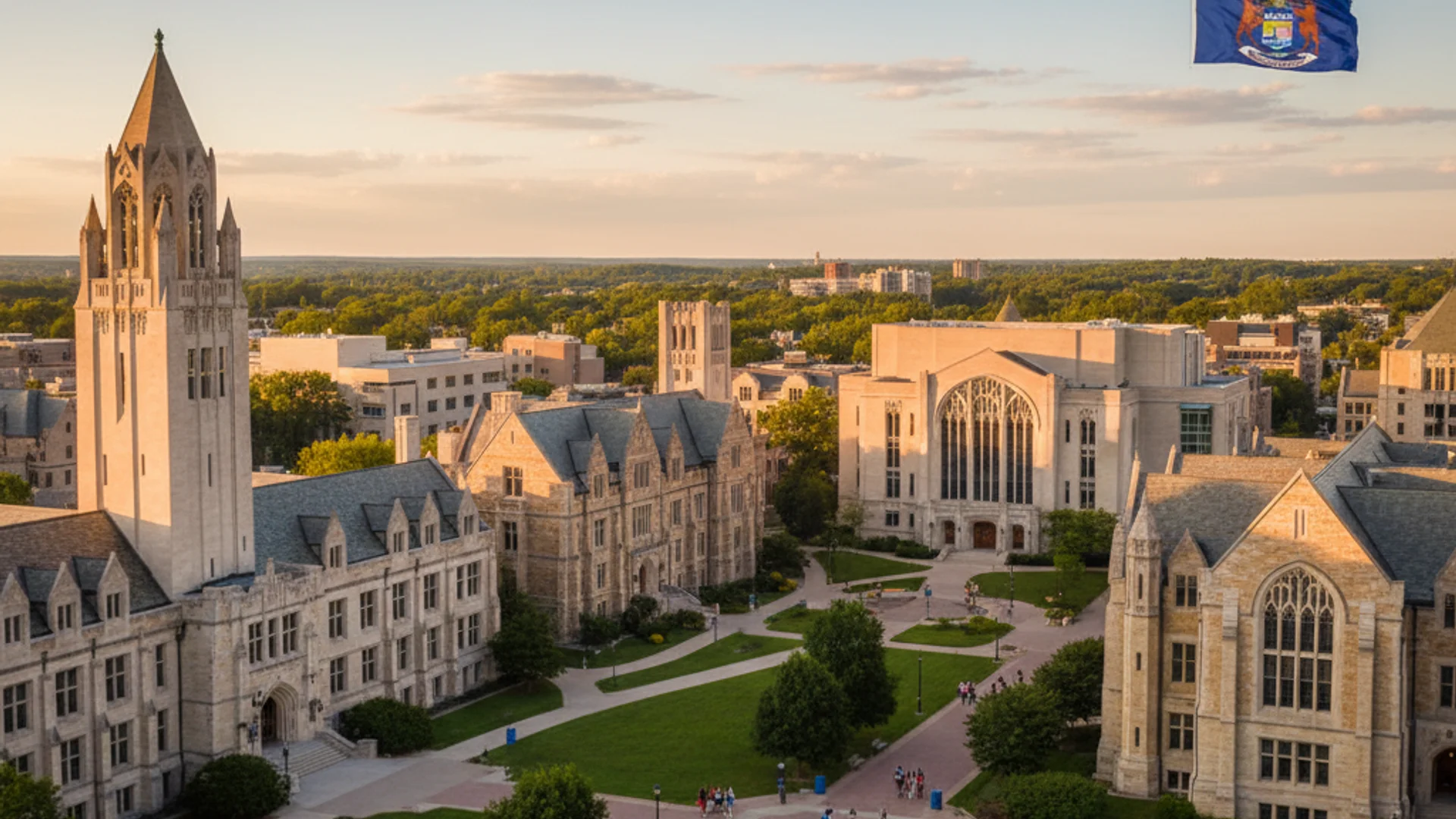

Central Michigan University — Mount Pleasant, MI

Key Distinction: Central Michigan's AI program stands out for its cross-disciplinary integration with business and engineering, preparing graduates for diverse industry roles beyond traditional AI specialist positions.

Hakia Insight: Central Michigan's cross-disciplinary design bridges the traditional divide between AI specialists and business/engineering generalists, producing graduates who can translate between data scientists and executives—a rarer skillset than pure technical depth.

At the bachelor's level, central Michigan's approach to AI education emphasizes breadth across business, engineering, and scientific applications rather than depth in a single specialization—ideal for students seeking versatility in emerging AI careers or transitioning into data-intensive roles. The program integrates AI concepts throughout the computer science curriculum with dedicated electives in machine learning, data mining, and neural networks, while also offering cross-disciplinary courses where business school and engineering school students collaborate on AI projects. CMU's strength lies in its strong ties to Michigan's mid-sized corporations and its focus on practical deployment: students work on real datasets from regional manufacturing, healthcare, and retail companies. The faculty maintain research interests in applied machine learning, knowledge representation, and AI systems architecture. Graduate offerings include both full-time and evening/weekend formats to accommodate working professionals, many of whom are already employed in data roles and seeking formal credentials. The career pipeline reflects this: graduates find employment not only as AI specialists but as data engineers, business analysts with ML skills, and technical leads in companies like Dart Container, Consumers Energy, and Beaumont Health System—employers actively recruiting from CMU's program.

Programs Offered
  • Bachelor of Science in Artificial Intelligence — 4 years, on-campus
  • Bachelor of Arts in Artificial Intelligence — 4 years, online
Industry Partners
  • Dart Container (corporate)
  • Consumers Energy (corporate)
  • Beaumont Health System (corporate)

Location Advantages: Proximity to mid-Michigan manufacturing, energy, and healthcare sectors (major AI adopters)Access to Dart Container, Consumers Energy, and regional corporate partnershipsCentral location (Mount Pleasant) between Detroit and Lansing tech corridors

University of Michigan-Flint — Flint, MI

Hakia Insight: Michigan-Flint's eight concentration tracks let undergrads specialize early—a structure typically reserved for master's programs—while sitting directly in the automotive corridor where they can convert classroom projects into internships.

At the bachelor's level, the MS in Artificial Intelligence program builds understanding of AI principles and real-world problem-solving applications. Students can choose from eight concentration tracks including machine learning and augmented/virtual reality.

Programs Offered
  • Bachelor of Science in Artificial Intelligence — 4 years, on-campus
  • Bachelor of Arts in Artificial Intelligence — 4 years, online
Research Labs and Institutes
  • GIS Center
  • Innovation Incubator

Location Advantages: Michigan technology corridor accessProximity to automotive industry hub

Kettering University — Flint, MI

Hakia Insight: Kettering's co-op model with Amazon, Bosch, and Ford means students alternate between classroom and paid industry work, compressing real-world experience into the degree itself rather than leaving it to post-graduation job hunting.

At the bachelor's level, specialized program focusing on AI applications in healthcare, agriculture, manufacturing, and military sectors. Covers deep learning algorithms and advanced AI implementation techniques.

Programs Offered
  • Bachelor of Science in Artificial Intelligence — 4 years, on-campus
  • Bachelor of Arts in Artificial Intelligence — 4 years, online
Research Labs and Institutes
  • Computer Operating Systems Lab
  • Cybersecurity Lab
  • Virtual Reality Lab
Industry Partners
  • Amazon (corporate)
  • Bosch (corporate)
  • Ford Motor Company (corporate)
  • Lab2Fab (startup)
Admissions

Acceptance Rate: Not specified%. GPA Requirement: Strong academic record required.

Accreditations and Certifications
  • ABET

Location Advantages: Strong automotive industry connections in MichiganAccess to major tech companies through co-op program

Calvin University — Grand Rapids, MI

Key Distinction: Calvin University offers comprehensive Artificial Intelligence programs preparing students for careers in technology.

Hakia Insight: Calvin's Grand Rapids location positions students in Michigan's second-largest tech hub without the tuition premium of larger research institutions, offering regional employer access with regional pricing.

Calvin University offers Artificial Intelligence programs in Grand Rapids, MI. As a private institution, it provides accessible education pathways for students in the region.

Davenport University — Grand Rapids, MI

Key Distinction: A practice-first AI curriculum embedded in business-technology contexts, designed for working professionals and career-switchers seeking rapid employment outcomes.

Hakia Insight: Davenport strips away academic theory in favor of applied machine learning embedded in business contexts—ideal for career-switchers who need employment-ready credentials in under four years without the research-track overhead.

At the bachelor's level, davenport's artificial intelligence program takes a practitioner-focused approach, emphasizing applied machine learning and data-driven decision-making over pure theory. The curriculum weaves together computer science fundamentals with hands-on projects in predictive analytics, natural language processing, and computer vision—skills that employers actively recruit for immediately after graduation. What distinguishes this program is its integration of real-world datasets and case studies from business and industry partners, allowing students to build portfolios of completed AI projects before they graduate. The program sits within Davenport's broader strength in business-technology convergence, which means you'll study AI not in isolation but in context: understanding how machine learning models solve actual supply chain problems, enhance customer analytics, and drive operational efficiency. Faculty bring industry experience alongside academic credentials, and many maintain active consulting relationships that create networking opportunities for students. For professionals seeking career acceleration or those transitioning into AI roles, Davenport offers flexibility through evening and hybrid delivery formats, recognizing that many students juggle work and education. Graduates typically move into roles like ML engineer, data scientist, or AI analyst at mid-market companies and Fortune 500 operations in the Midwest.

Programs Offered
  • Bachelor of Science in Artificial Intelligence — 4 years, on-campus
  • Bachelor of Arts in Artificial Intelligence — 4 years, online

Location Advantages: Access to Midwest corporate headquarters and business analytics centers

Lawrence Technological University — Southfield, MI

Key Distinction: Lawrence Tech uniquely anchors AI education within applied engineering and automotive/manufacturing industry partnerships, producing graduates ready for immediate deployment in industrial AI roles.

Hakia Insight: Lawrence Tech's Intelligent Systems Lab sits within arm's reach of GM and Ford's AI development centers, meaning capstone projects can address actual production problems rather than hypothetical cases.

At the bachelor's level, lawrence Tech's artificial intelligence focus emphasizes the intersection of AI with real-world engineering challenges, reflecting the university's strong tradition in applied technology. The program integrates machine learning, computer vision, and autonomous systems into a curriculum designed around hands-on project work and industry collaboration. Students engage directly with faculty who maintain active research partnerships with automotive and manufacturing firms—sectors where Michigan's economy has driven significant AI innovation. The program's strength lies in its practical orientation: rather than purely theoretical foundations, coursework balances algorithmic rigor with implementation across embedded systems, robotics, and industrial automation. Lawrence Tech's location in Southfield positions students within the Detroit metro AI ecosystem, creating direct pipeline opportunities with companies actively deploying machine learning in production environments. Internship placements are woven into the academic pathway, and many graduates move into roles where they're immediately applying neural networks and optimization techniques to tangible product challenges.

Programs Offered
  • Bachelor of Science in Artificial Intelligence — 4 years, on-campus
  • Bachelor of Arts in Artificial Intelligence — 4 years, online
Research Labs and Institutes
  • Intelligent Systems Lab
Industry Partners
  • General Motors (corporate)
  • Ford Motor Company (corporate)
Career Outcomes

Top Employers: General Motors, Ford Motor Company, Bosch, Siemens.

Location Advantages: Proximity to Detroit automotive and manufacturing ecosystemAccess to major OEM AI development centers

Best Master's Artificial Intelligence Degree Programs in Michigan

Central Michigan University — Mount Pleasant, MI

Key Distinction: Central Michigan's AI program stands out for its cross-disciplinary integration with business and engineering, preparing graduates for diverse industry roles beyond traditional AI specialist positions.

Hakia Insight: Central Michigan's cross-disciplinary integration with business and engineering produces graduates who can translate between data scientists and executives—a rarity among AI programs that typically produce specialists, not interpreters.

At the master's level, central Michigan's approach to AI education emphasizes breadth across business, engineering, and scientific applications rather than depth in a single specialization—ideal for students seeking versatility in emerging AI careers or transitioning into data-intensive roles. The program integrates AI concepts throughout the computer science curriculum with dedicated electives in machine learning, data mining, and neural networks, while also offering cross-disciplinary courses where business school and engineering school students collaborate on AI projects. CMU's strength lies in its strong ties to Michigan's mid-sized corporations and its focus on practical deployment: students work on real datasets from regional manufacturing, healthcare, and retail companies. The faculty maintain research interests in applied machine learning, knowledge representation, and AI systems architecture. Graduate offerings include both full-time and evening/weekend formats to accommodate working professionals, many of whom are already employed in data roles and seeking formal credentials. The career pipeline reflects this: graduates find employment not only as AI specialists but as data engineers, business analysts with ML skills, and technical leads in companies like Dart Container, Consumers Energy, and Beaumont Health System—employers actively recruiting from CMU's program.

Programs Offered
  • Master of Science in Artificial Intelligence — 1-2 years, on-campus
  • Master of Arts in Artificial Intelligence — 1-2 years, online
Industry Partners
  • Dart Container (corporate)
  • Consumers Energy (corporate)
  • Beaumont Health System (corporate)

Location Advantages: Proximity to mid-Michigan manufacturing, energy, and healthcare sectors (major AI adopters)Access to Dart Container, Consumers Energy, and regional corporate partnershipsCentral location (Mount Pleasant) between Detroit and Lansing tech corridors

University of Michigan-Dearborn — Dearborn, MI

Key Distinction: An engineering-grounded AI program uniquely positioned in automotive innovation, where machine learning addresses real autonomous systems and manufacturing challenges.

Hakia Insight: UM-Dearborn's Autonomous Vehicles Research Lab gives students direct entry into Ford's self-driving pipeline; unlike programs that teach autonomous systems theory, this one teaches the engineering constraints that actually ship in production vehicles.

At the master's level, UM-Dearborn's artificial intelligence and machine learning offerings are tightly integrated with the university's engineering and computer science programs, which have deep historical connections to Ford Motor Company and the broader automotive-industrial innovation ecosystem in Southeast Michigan. The curriculum emphasizes applications of AI to complex engineering problems—autonomous vehicle perception, predictive maintenance, manufacturing optimization, supply chain forecasting—giving students concrete, high-stakes contexts in which to develop machine learning and AI skills. Faculty expertise spans computer vision, reinforcement learning, robotics, and AI-enabled control systems, with many researchers holding active collaborations with automotive and industrial partners. Students work on capstone projects and research initiatives often sponsored by or aligned with industry needs, creating pathways to employment and internships. The program's strength lies in its ability to teach AI not as abstract theory but as a practical discipline for solving engineering and operational challenges—a distinction that appeals to students who want to see immediate impact. Graduate programs in computer science and engineering support thesis-based and coursework-based options, accommodating both research-focused and professional career tracks. UM-Dearborn's location and reputation create a direct pipeline to automotive, aerospace, and defense contractors, where AI and machine learning skills command premium salaries. The smaller scale compared to Ann Arbor means more accessible faculty and tighter cohorts, fostering collaboration and mentorship.

Programs Offered
  • Master of Science in Artificial Intelligence — 1-2 years, on-campus
  • Master of Arts in Artificial Intelligence — 1-2 years, online
Research Labs and Institutes
  • Autonomous Vehicles Research Laboratory
Industry Partners
  • Ford Motor Company (corporate)
Career Outcomes

Top Employers: Ford Motor Company, General Motors.

Accreditations and Certifications
  • ABET accredited

Location Advantages: Direct proximity to Ford Motor Company and major automotive suppliersAccess to Southeast Michigan automotive and industrial R&D centers

Michigan Technological University — Houghton, MI

Key Distinction: Michigan Tech distinguishes itself through embedded AI and systems-oriented machine learning projects, preparing students to deploy AI in real hardware and industrial environments.

Hakia Insight: Michigan Tech embeds AI into hardware-first capstones and robotics projects rather than treating it as a pure software discipline, producing graduates who understand the gap between inference speed in research papers and inference speed on an embedded device.

Michigan Tech's approach to artificial intelligence prioritizes hands-on learning through capstone projects, undergraduate research, and involvement with the university's network of advanced engineering laboratories. The program weaves AI fundamentals into core computer science coursework while offering specialized electives in machine learning, computer vision, data mining, and AI for robotics—allowing students to tailor their focus to applied domains. Faculty maintain active research programs in autonomous vehicles, IoT intelligence, and industrial AI applications, creating direct pathways for undergraduates and master's students to contribute to publishable work. What makes Michigan Tech distinctive is its emphasis on bringing AI concepts into real systems: students work on projects involving actual robotic platforms, embedded machine learning on microcontrollers, and data pipelines connected to industry sensor networks. The Upper Peninsula location, while geographically remote, hasn't prevented the program from building partnerships with automotive suppliers and advanced manufacturing firms that value the program's engineering-first culture. Graduates emerge with strong portfolios of implemented projects rather than purely theoretical knowledge, a positioning that serves them well in roles requiring rapid prototyping and systems integration of AI solutions.

Programs Offered
  • Master of Science in Artificial Intelligence — 1-2 years, on-campus
  • Master of Arts in Artificial Intelligence — 1-2 years, online
Research Labs and Institutes
  • Robotics and AI Research Lab
Industry Partners
  • Bosch (corporate)
  • Siemens (corporate)
Accreditations and Certifications
  • ABET accredited

Location Advantages: Strong partnerships with automotive and manufacturing suppliersAccess to advanced engineering laboratory facilitiesRegional hub for advanced manufacturing research

Lawrence Technological University — Southfield, MI

Key Distinction: Lawrence Tech uniquely anchors AI education within applied engineering and automotive/manufacturing industry partnerships, producing graduates ready for immediate deployment in industrial AI roles.

Hakia Insight: Lawrence Tech's master's students work alongside the same GM and Ford engineers who hire them, collapsing the typical gap between academic credentialing and industry credibility.

At the master's level, lawrence Tech's artificial intelligence focus emphasizes the intersection of AI with real-world engineering challenges, reflecting the university's strong tradition in applied technology. The program integrates machine learning, computer vision, and autonomous systems into a curriculum designed around hands-on project work and industry collaboration. Students engage directly with faculty who maintain active research partnerships with automotive and manufacturing firms—sectors where Michigan's economy has driven significant AI innovation. The program's strength lies in its practical orientation: rather than purely theoretical foundations, coursework balances algorithmic rigor with implementation across embedded systems, robotics, and industrial automation. Lawrence Tech's location in Southfield positions students within the Detroit metro AI ecosystem, creating direct pipeline opportunities with companies actively deploying machine learning in production environments. Internship placements are woven into the academic pathway, and many graduates move into roles where they're immediately applying neural networks and optimization techniques to tangible product challenges.

Programs Offered
  • Master of Science in Artificial Intelligence — 1-2 years, on-campus
  • Master of Arts in Artificial Intelligence — 1-2 years, online
Research Labs and Institutes
  • Intelligent Systems Lab
Industry Partners
  • General Motors (corporate)
  • Ford Motor Company (corporate)
Career Outcomes

Top Employers: General Motors, Ford Motor Company, Bosch, Siemens.

Location Advantages: Proximity to Detroit automotive and manufacturing ecosystemAccess to major OEM AI development centers

Western Michigan University — Kalamazoo, MI

Key Distinction: WMU's AI program is distinguished by its industrial automation focus and direct pipeline to automotive and manufacturing sectors, offering specialized curriculum and internship pathways unavailable at comparable regional universities.

Hakia Insight: WMU's Advanced Computing Lab feeds directly into Stellantis and Ford's automation divisions—students graduate with both specialized industrial automation skills and active recruiter relationships rather than generic ML expertise.

At the master's level, WMU's AI program distinguishes itself through a curriculum that bridges classical computer science fundamentals with contemporary machine learning applications, designed explicitly for students who want hands-on experience before specializing. The program emphasizes practical problem-solving through capstone projects in computer vision, natural language processing, and autonomous systems—areas where faculty maintain active research grants and industry collaborations. Students benefit from WMU's strong engineering school culture and close ties to manufacturing and automotive sectors in Southwest Michigan, where AI deployment in industrial automation and quality control is creating direct pathways to employment. The program structure allows flexibility: undergraduates can pursue AI as a concentration within computer science, while graduate students access specialized courses in deep learning, reinforcement learning, and AI ethics. Notable strengths include faculty expertise in applied machine learning for real-world datasets and a track record of placing graduates into roles at companies like Ford, Stellantis, and regional tech firms. The Kalamazoo location, while not a major tech hub, paradoxically offers advantages—students compete less intensely for internships and often secure positions with Fortune 500 companies' regional engineering centers before graduation.

Programs Offered
  • Master of Science in Artificial Intelligence — 1-2 years, on-campus
  • Master of Arts in Artificial Intelligence — 1-2 years, online
Research Labs and Institutes
  • Advanced Computing and Signal Processing Laboratory
Industry Partners
  • Ford Motor Company (corporate)
  • Stellantis (corporate)

Location Advantages: Proximity to Ford headquarters (Dearborn, ~2 hours)Access to automotive manufacturing and industrial automation centers in Southwest MichiganLower competition for internships compared to Silicon Valley or coastal tech hubs

Eastern Michigan University — Ypsilanti, MI

Key Distinction: Eastern Michigan's AI program is uniquely positioned in educational technology and learning analytics, offering specialized pathways unavailable elsewhere and direct partnerships with K-12 systems and EdTech companies.

Hakia Insight: Eastern Michigan's Learning Analytics Lab is one of the few AI programs where the research infrastructure itself serves K-12 districts in real time, meaning students ship code that actually changes how millions of students learn rather than optimizing hypothetical datasets.

At the master's level, eastern Michigan's computer science program integrates AI and machine learning as core competencies rather than optional specializations, meaning every CS student gains exposure to foundational AI concepts. The distinguishing feature is EMU's partnership model with K-12 school districts and education technology companies—if you're interested in AI applications in educational technology, learning analytics, or intelligent tutoring systems, this program offers rare depth. Faculty research clusters around human-computer interaction informed by AI, predictive analytics for student success, and adaptive learning systems. The curriculum reflects this distinctive focus: courses in machine learning emphasize applications to real educational datasets, and many student projects involve working with local school districts on AI-driven retention and assessment tools. Graduate programs offer both thesis and project-based tracks, accommodating working professionals while maintaining rigor. EMU's location in Ypsilanti provides access to the Ann Arbor tech ecosystem (home to Google, Facebook, and numerous AI startups) without the cost of living and competitive admissions pressures of University of Michigan. Graduates report strong placement in education tech companies (Coursera, Instructure, Blackboard), tech consulting firms serving education, and data roles at regional employers.

Programs Offered
  • Master of Science in Artificial Intelligence — 1-2 years, on-campus
  • Master of Arts in Artificial Intelligence — 1-2 years, online
Research Labs and Institutes
  • Learning Analytics and Educational Data Mining Lab
Industry Partners
  • Coursera (corporate)
  • Instructure (corporate)
  • Ypsilanti Community Schools (nonprofit)

Location Advantages: Proximity to Ann Arbor tech ecosystem (~30 minutes) including Google, Facebook, and AI startupsAccess to K-12 school district partnerships for real-world AI application projectsLower cost of living and admissions barriers than University of Michigan

Davenport University — Grand Rapids, MI

Key Distinction: A practice-first AI curriculum embedded in business-technology contexts, designed for working professionals and career-switchers seeking rapid employment outcomes.

Hakia Insight: Davenport's master's cohorts are predominantly working professionals, creating peer networks in finance, healthcare, and operations—a peer advantage that theoretical CS programs struggle to replicate.

At the master's level, davenport's artificial intelligence program takes a practitioner-focused approach, emphasizing applied machine learning and data-driven decision-making over pure theory. The curriculum weaves together computer science fundamentals with hands-on projects in predictive analytics, natural language processing, and computer vision—skills that employers actively recruit for immediately after graduation. What distinguishes this program is its integration of real-world datasets and case studies from business and industry partners, allowing students to build portfolios of completed AI projects before they graduate. The program sits within Davenport's broader strength in business-technology convergence, which means you'll study AI not in isolation but in context: understanding how machine learning models solve actual supply chain problems, enhance customer analytics, and drive operational efficiency. Faculty bring industry experience alongside academic credentials, and many maintain active consulting relationships that create networking opportunities for students. For professionals seeking career acceleration or those transitioning into AI roles, Davenport offers flexibility through evening and hybrid delivery formats, recognizing that many students juggle work and education. Graduates typically move into roles like ML engineer, data scientist, or AI analyst at mid-market companies and Fortune 500 operations in the Midwest.

Programs Offered
  • Master of Science in Artificial Intelligence — 1-2 years, on-campus
  • Master of Arts in Artificial Intelligence — 1-2 years, online

Location Advantages: Access to Midwest corporate headquarters and business analytics centers

Kettering University — Flint, MI

Hakia Insight: Kettering's sector-specific tracks (healthcare, agriculture, military, manufacturing) let master's students design a thesis around their industry rather than forcing all students through a generic AI curriculum regardless of where they'll work.

At the master's level, specialized program focusing on AI applications in healthcare, agriculture, manufacturing, and military sectors. Covers deep learning algorithms and advanced AI implementation techniques.

Programs Offered
  • Master of Science in Artificial Intelligence — 1-2 years, on-campus
  • Master of Arts in Artificial Intelligence — 1-2 years, online
Research Labs and Institutes
  • Computer Operating Systems Lab
  • Cybersecurity Lab
  • Virtual Reality Lab
Industry Partners
  • Amazon (corporate)
  • Bosch (corporate)
  • Ford Motor Company (corporate)
  • Lab2Fab (startup)
Admissions

Acceptance Rate: Not specified%. GPA Requirement: Strong academic record required.

Accreditations and Certifications
  • ABET

Location Advantages: Strong automotive industry connections in MichiganAccess to major tech companies through co-op program

Best Doctoral Artificial Intelligence Degree Programs in Michigan

Michigan Technological University — Houghton, MI

Key Distinction: Michigan Tech distinguishes itself through embedded AI and systems-oriented machine learning projects, preparing students to deploy AI in real hardware and industrial environments.

Hakia Insight: Michigan Tech's doctoral projects in embedded AI and robotics produce graduates who can design systems where the constraints aren't theoretical—they're thermal, latency, and power-budget realities that industrial employers actually care about.

At the doctoral level, michigan Tech's approach to artificial intelligence prioritizes hands-on learning through capstone projects, undergraduate research, and involvement with the university's network of advanced engineering laboratories. The program weaves AI fundamentals into core computer science coursework while offering specialized electives in machine learning, computer vision, data mining, and AI for robotics—allowing students to tailor their focus to applied domains. Faculty maintain active research programs in autonomous vehicles, IoT intelligence, and industrial AI applications, creating direct pathways for undergraduates and master's students to contribute to publishable work. What makes Michigan Tech distinctive is its emphasis on bringing AI concepts into real systems: students work on projects involving actual robotic platforms, embedded machine learning on microcontrollers, and data pipelines connected to industry sensor networks. The Upper Peninsula location, while geographically remote, hasn't prevented the program from building partnerships with automotive suppliers and advanced manufacturing firms that value the program's engineering-first culture. Graduates emerge with strong portfolios of implemented projects rather than purely theoretical knowledge, a positioning that serves them well in roles requiring rapid prototyping and systems integration of AI solutions.

Programs Offered
  • Doctor of Philosophy in Artificial Intelligence — 4-6 years, on-campus
  • Doctor of Science in Artificial Intelligence — 4-6 years, online
Research Labs and Institutes
  • Robotics and AI Research Lab
Industry Partners
  • Bosch (corporate)
  • Siemens (corporate)
Accreditations and Certifications
  • ABET accredited

Location Advantages: Strong partnerships with automotive and manufacturing suppliersAccess to advanced engineering laboratory facilitiesRegional hub for advanced manufacturing research

Western Michigan University — Kalamazoo, MI

Key Distinction: WMU's AI program is distinguished by its industrial automation focus and direct pipeline to automotive and manufacturing sectors, offering specialized curriculum and internship pathways unavailable at comparable regional universities.

Hakia Insight: WMU's doctoral candidates in industrial automation sit between foundational research and manufacturing floor, positioning them to author the papers that Ford and Stellantis actually read and implement, rather than publishing to other academics.

At the doctoral level, WMU's AI program distinguishes itself through a curriculum that bridges classical computer science fundamentals with contemporary machine learning applications, designed explicitly for students who want hands-on experience before specializing. The program emphasizes practical problem-solving through capstone projects in computer vision, natural language processing, and autonomous systems—areas where faculty maintain active research grants and industry collaborations. Students benefit from WMU's strong engineering school culture and close ties to manufacturing and automotive sectors in Southwest Michigan, where AI deployment in industrial automation and quality control is creating direct pathways to employment. The program structure allows flexibility: undergraduates can pursue AI as a concentration within computer science, while graduate students access specialized courses in deep learning, reinforcement learning, and AI ethics. Notable strengths include faculty expertise in applied machine learning for real-world datasets and a track record of placing graduates into roles at companies like Ford, Stellantis, and regional tech firms. The Kalamazoo location, while not a major tech hub, paradoxically offers advantages—students compete less intensely for internships and often secure positions with Fortune 500 companies' regional engineering centers before graduation.

Programs Offered
  • Doctor of Philosophy in Artificial Intelligence — 4-6 years, on-campus
  • Doctor of Science in Artificial Intelligence — 4-6 years, online
Research Labs and Institutes
  • Advanced Computing and Signal Processing Laboratory
Industry Partners
  • Ford Motor Company (corporate)
  • Stellantis (corporate)

Location Advantages: Proximity to Ford headquarters (Dearborn, ~2 hours)Access to automotive manufacturing and industrial automation centers in Southwest MichiganLower competition for internships compared to Silicon Valley or coastal tech hubs