University campus in Maryland
Updated January 2026

Best Artificial Intelligence Degree Programs in Maryland — 2026 Rankings

Explore 14 accredited artificial intelligence (AI) degree programs in Maryland. Compare schools by graduation rate, salary outcomes, and tuition—from University of Maryland-College Park to University of Maryland-College Park.

#1 ProgramU of Maryland-College Park
Avg Salary$122,420
Tuition From$9,889/yr
Job Growth+22%

Key Takeaways

Top 3 ranked: U of Maryland-College Park, U of Maryland-Baltimore C..., Towson

Based on graduation rates, program outcomes, and institutional quality

IPEDS 2023

Tuition ranges from $4,933 to $62,840/year

U of Maryland-College Park offers the most affordable option at $9,889/yr

IPEDS 2023

Degree levels: 7 master's, 4 doctoral programs available in Maryland

From community college pathways to advanced research degrees

IPEDS 2023

Major employers: NSA, Lockheed Martin, Johns Hopkins APL, Northrop Grumman

Tech hubs in Baltimore and Bethesda

Hakia Research 2026

Artificial Intelligence programs available near 43+ cities across Maryland

Search by city to find programs within 200 miles of your location

IPEDS 2023

Updated February 2026

On This Page
$122,420
Is Artificial Intelligence in Maryland Worth It?
Yes. Artificial Intelligence degrees in Maryland deliver strong ROI—graduates earn $122,420 median salary with +22% job growth through 2032. In-state tuition averages $24,478/year.

Source: BLS OEWS May 2024

Best Artificial Intelligence Degree Programs in Maryland

Bachelor's Artificial Intelligence Degree Programs in Maryland

11 programs$122,420 median salary74% avg grad rate
11
Programs
$122,420
Median Salary
$22,370/yr
Avg Tuition
74%
Avg Grad Rate

Program Landscape

Maryland ranks among the nation's top destinations for artificial intelligence education, with 11 accredited bachelor's degree programs across 6 public and 5 private institutions. The highest-ranked programs are U of Maryland-College Park, U of Maryland-Baltimore C..., Towson, recognized for academic excellence, research opportunities, and strong industry connections.

Career Outcomes

Graduates from Maryland artificial intelligence programs earn a median salary of $104,057—6% above the national average. The state's robust technology sector, anchored by the Baltimore, Bethesda, Rockville metropolitan areas, provides abundant internship and employment opportunities with companies including NSA, Lockheed Martin, Johns Hopkins APL.

Costs & Value

Tuition ranges from $4,933 to $55,480 annually, with an average of $22,370/yr. Top programs maintain graduation rates above 74%, with the highest reaching 92%. Many programs hold ABET accreditation, the gold standard for computing education, ensuring curriculum meets rigorous industry standards.

Curriculum & Specializations

Students can choose from specializations including software engineering, cybersecurity, artificial intelligence, data science, and systems architecture. Strong industry partnerships provide access to co-op programs, capstone projects with real companies, and direct recruiting pipelines to Maryland's leading technology employers. For students seeking artificial intelligence degrees in Maryland, these top-ranked artificial intelligence schools offer the strongest combination of academic rigor and career preparation.

Show:

Earn your bachelor's in Artificial Intelligence

(Sponsored)

Loading programs...

🥇

University of Maryland-College Park

Public
College Park, MD
$9,889
Tuition/yr
84%
Grad Rate
88.0
Score
Website
🥈

University of Maryland-Baltimore County

Public
Baltimore, MD
$9,238
Tuition/yr
90%
Grad Rate
69.2
Score
Website
🥉

Towson University

Public
Towson, MD
$7,382
Tuition/yr
91%
Grad Rate
61.7
Score
Website
#4

United States Naval Academy

Public
Annapolis, MD
$0
Tuition/yr
65.5
Score
Website
#5

Loyola University Maryland

Private
Baltimore, MD
$55,480
Tuition/yr
92%
Grad Rate
58.8
Score
Website
#6

Hood College

Private
Frederick, MD
$45,120
Tuition/yr
84%
Grad Rate
47.3
Score
Website
#7

Coppin State University

Public
Baltimore, MD
$4,933
Tuition/yr
48.3
Score
Website
#8

Washington Adventist University

Private
Takoma Park, MD
$23,400
Tuition/yr
43.1
Score
Website
#9

Washington College

Private
Chestertown, MD
$52,146
Tuition/yr
43.1
Score
Website
#10

Frostburg State University

Public
Frostburg, MD
$7,110
Tuition/yr
36.1
Score
Website

Complete Artificial Intelligence Degree Program Rankings in Maryland

Best Bachelor's Artificial Intelligence Degree Programs in Maryland

### Program Landscape Maryland ranks among the nation's top destinations for artificial intelligence education, with **11 accredited** bachelor's degree programs across **6 public** and **5 private** institutions. The highest-ranked programs are **U of Maryland-College Park**, **U of Maryland-Baltimore C...**, **Towson**, recognized for academic excellence, research opportunities, and strong industry connections. ### Career Outcomes Graduates from Maryland artificial intelligence programs earn a median salary of **$104,057**—6% above the national average. The state's robust technology sector, anchored by the Baltimore, Bethesda, Rockville metropolitan areas, provides abundant internship and employment opportunities with companies including NSA, Lockheed Martin, Johns Hopkins APL. ### Costs & Value Tuition ranges from **$4,933** to **$55,480** annually, with an average of **$22,370/yr**. Top programs maintain graduation rates above **74%**, with the highest reaching **92%**. Many programs hold ABET accreditation, the gold standard for computing education, ensuring curriculum meets rigorous industry standards. ### Curriculum & Specializations Students can choose from specializations including software engineering, cybersecurity, artificial intelligence, data science, and systems architecture. Strong industry partnerships provide access to co-op programs, capstone projects with real companies, and direct recruiting pipelines to Maryland's leading technology employers. For students seeking artificial intelligence degrees in Maryland, these top-ranked artificial intelligence schools offer the strongest combination of academic rigor and career preparation.

  1. #1. University of Maryland-College Park

    Hakia ranks University of Maryland-College Park as the #1 bachelor's in artificial intelligence degree program in Maryland. This public institution in College Park, MD has annual tuition of $9,889 and a 84% graduation rate. Ranking score: 88.0.

  2. #2. University of Maryland-Baltimore County

    Hakia ranks University of Maryland-Baltimore County as the #2 bachelor's in artificial intelligence degree program in Maryland. This public institution in Baltimore, MD has annual tuition of $9,238 and a 90% graduation rate. Ranking score: 69.2.

  3. #3. Towson University

    Hakia ranks Towson University as the #3 bachelor's in artificial intelligence degree program in Maryland. This public institution in Towson, MD has annual tuition of $7,382 and a 91% graduation rate. Ranking score: 61.7.

  4. #4. United States Naval Academy

    Hakia ranks United States Naval Academy as the #4 bachelor's in artificial intelligence degree program in Maryland. This public institution in Annapolis, MD has annual tuition of $0. Ranking score: 65.5.

  5. #5. Loyola University Maryland

    Hakia ranks Loyola University Maryland as the #5 bachelor's in artificial intelligence degree program in Maryland. This private institution in Baltimore, MD has annual tuition of $55,480 and a 92% graduation rate. Ranking score: 58.8.

  6. #6. Hood College

    Hakia ranks Hood College as the #6 bachelor's in artificial intelligence degree program in Maryland. This private institution in Frederick, MD has annual tuition of $45,120 and a 84% graduation rate. Ranking score: 47.3.

  7. #7. Coppin State University

    Hakia ranks Coppin State University as the #7 bachelor's in artificial intelligence degree program in Maryland. This public institution in Baltimore, MD has annual tuition of $4,933. Ranking score: 48.3.

  8. #8. Washington Adventist University

    Hakia ranks Washington Adventist University as the #8 bachelor's in artificial intelligence degree program in Maryland. This private institution in Takoma Park, MD has annual tuition of $23,400. Ranking score: 43.1.

  9. #9. Washington College

    Hakia ranks Washington College as the #9 bachelor's in artificial intelligence degree program in Maryland. This private institution in Chestertown, MD has annual tuition of $52,146. Ranking score: 43.1.

  10. #10. Frostburg State University

    Hakia ranks Frostburg State University as the #10 bachelor's in artificial intelligence degree program in Maryland. This public institution in Frostburg, MD has annual tuition of $7,110. Ranking score: 36.1.

  11. #11. Women's Institute of Torah Seminary and College

    Hakia ranks Women's Institute of Torah Seminary and College as the #11 bachelor's in artificial intelligence degree program in Maryland. This private institution in Baltimore, MD has annual tuition of $9,000 and a 2% graduation rate. Ranking score: 25.1.

Best Master's Artificial Intelligence Degree Programs in Maryland

### Program Landscape Maryland offers **7** master's degree programs in artificial intelligence, designed for professionals seeking to advance into senior engineering, technical leadership, and specialized roles. The top programs—**U of Maryland-Baltimore C...**, **U of Maryland-College Park**, **Towson**—combine advanced technical training with research opportunities and leadership development. ### Career Outcomes Master's graduates in Maryland earn a median salary of **$122,420**, approximately **20-30% higher** than bachelor's degree holders. The concentration of technology companies in Baltimore, Bethesda, Rockville creates strong demand for graduate-level talent, with NSA, Lockheed Martin, Johns Hopkins APL actively recruiting from these programs. ### Costs & Value Program formats include traditional full-time study (typically 2 years), part-time options for working professionals (2-3 years), and accelerated tracks. Tuition averages **$21,024/yr**, with many employers offering tuition reimbursement for graduate education. Some programs offer thesis and non-thesis tracks, allowing students to focus on research or professional development based on their career goals. ### Curriculum & Specializations Curriculum covers advanced topics including machine learning, distributed systems, software architecture, and technical management. Many programs include practicum experiences, industry capstone projects, or consulting engagements that provide real-world application of advanced concepts. Among Maryland's artificial intelligence schools at the graduate level, these programs stand out for both academic quality and career outcomes.

  1. #1. University of Maryland-Baltimore County

    Hakia ranks University of Maryland-Baltimore County as the #1 master's in artificial intelligence degree program in Maryland. This public institution in Baltimore, MD has annual tuition of $9,238 and a 90% graduation rate. Ranking score: 83.4.

  2. #2. University of Maryland-College Park

    Hakia ranks University of Maryland-College Park as the #2 master's in artificial intelligence degree program in Maryland. This public institution in College Park, MD has annual tuition of $9,889 and a 84% graduation rate. Ranking score: 80.0.

  3. #3. Towson University

    Hakia ranks Towson University as the #3 master's in artificial intelligence degree program in Maryland. This public institution in Towson, MD has annual tuition of $7,382 and a 91% graduation rate. Ranking score: 61.3.

  4. #4. Johns Hopkins University

    Hakia ranks Johns Hopkins University as the #4 master's in artificial intelligence degree program in Maryland. This private institution in Baltimore, MD has annual tuition of $62,840. Ranking score: 59.8.

  5. #5. Hood College

    Hakia ranks Hood College as the #5 master's in artificial intelligence degree program in Maryland. This private institution in Frederick, MD has annual tuition of $45,120 and a 84% graduation rate. Ranking score: 55.0.

  6. #6. Frostburg State University

    Hakia ranks Frostburg State University as the #6 master's in artificial intelligence degree program in Maryland. This public institution in Frostburg, MD has annual tuition of $7,110. Ranking score: 45.4.

  7. #7. Morgan State University

    Hakia ranks Morgan State University as the #7 master's in artificial intelligence degree program in Maryland. This public institution in Baltimore, MD has annual tuition of $5,587 and a 52% graduation rate. Ranking score: 42.8.

Best Doctoral Artificial Intelligence Degree Programs in Maryland

### Program Landscape Maryland is home to **4** doctoral programs in artificial intelligence, preparing students for research positions, faculty appointments, and executive technical roles. Leading programs at **U of Maryland-College Park**, **U of Maryland-Baltimore C...**, **Capitol Technology** are recognized for cutting-edge research, strong faculty publications, and competitive funding packages. ### Career Outcomes Doctoral graduates command premium salaries, with Maryland PhD holders earning a median of **$153,025**—reflecting the advanced expertise required for research and executive positions. The Baltimore, Bethesda, Rockville region's research universities and corporate R&D centers provide extensive collaboration opportunities with industry leaders like NSA, Lockheed Martin, Johns Hopkins APL. ### Costs & Value PhD programs typically require 4-6 years of full-time study, including coursework, qualifying examinations, and original dissertation research. Many programs offer full funding through teaching or research assistantships, covering tuition and providing stipends of **$25,000–$40,000** annually. ### Curriculum & Specializations Research strengths across Maryland programs include artificial intelligence, cybersecurity, human-computer interaction, systems, and theoretical computer science. For aspiring researchers pursuing artificial intelligence degrees in Maryland, graduates go on to careers as university faculty, industry research scientists, or technical executives, contributing to advances in technology that impact millions of users worldwide.

  1. #1. University of Maryland-College Park

    Hakia ranks University of Maryland-College Park as the #1 doctoral in artificial intelligence degree program in Maryland. This public institution in College Park, MD has annual tuition of $9,889 and a 84% graduation rate. Ranking score: 66.2.

  2. #2. University of Maryland-Baltimore County

    Hakia ranks University of Maryland-Baltimore County as the #2 doctoral in artificial intelligence degree program in Maryland. This public institution in Baltimore, MD has annual tuition of $9,238 and a 90% graduation rate. Ranking score: 77.2.

  3. #3. Capitol Technology University

    Hakia ranks Capitol Technology University as the #3 doctoral in artificial intelligence degree program in Maryland. This private institution in Laurel, MD has annual tuition of $26,088 and a 87% graduation rate. Ranking score: 51.0.

  4. #4. Morgan State University

    Hakia ranks Morgan State University as the #4 doctoral in artificial intelligence degree program in Maryland. This public institution in Baltimore, MD has annual tuition of $5,587 and a 52% graduation rate. Ranking score: 45.6.

Artificial Intelligence Tuition in Maryland

MetricValue
Average in-state tuition$24,478/year
Average out-of-state tuition$61,195/year
Community college tuition$6,120/year
4-year savings for residents$146,868
2+2 transfer pathway savings$36,716

Source: IPEDS 2023

Artificial Intelligence Financial Aid & Scholarships in Maryland

State Aid Programs

Maryland residents pursuing artificial intelligence degrees have access to multiple funding avenues at the state and federal levels. The primary state-specific resource is the Maryland Senatorial/Delegate Scholarship, which provides need-based awards distributed by state legislators to eligible Maryland residents. This program complements federal aid options available through the Free Application for Federal Student Aid (FAFSA), which determines eligibility for Pell Grants, Federal Work-Study, and Direct Loans. All Maryland institutions offering AI programs participate in federal aid programs, making it essential for students to complete the FAFSA to unlock both state and institutional funding opportunities.

Key Programs & Amounts

Beyond grants and federal aid, many Maryland institutions offer merit-based and need-based scholarships specific to STEM fields. Public four-year institutions in Maryland average $7,730 in annual in-state tuition, making them significantly more affordable than private alternatives. Community colleges provide an even more economical pathway, with institutions like Montgomery College and Community College of Baltimore County offering AI coursework at lower price points. For comprehensive information on federal aid eligibility and loan options, students should consult Federal Student Aid and work with their institution's financial aid office. Additionally, explore College Scorecard to compare net price estimates across Maryland AI programs and understand true out-of-pocket costs after aid is applied.

Calculate Your Artificial Intelligence Degree ROI in Maryland

Use our interactive ROI calculator to estimate your return on investment for a artificial intelligence degree in Maryland. Enter your expected tuition costs, financial aid, and career goals to see projected payback periods and lifetime earnings. The calculator uses current salary data from BLS and tuition data from IPEDS to provide accurate estimates.

Artificial Intelligence Degree ROI Calculator
Estimate your return on investment for a artificial intelligence degree
$

Leave blank to use average cost for selected program type

20 years
10 years20 years30 years
20-Year ROI

+1116%

Net gain divided by total investment. ROI above 200% is considered excellent for education investments.

Net Gain

$2,064,777

Your additional lifetime earnings with this degree vs. working without one, minus the total investment.

Break-Even

5 years

Years until your cumulative earnings exceed total investment. Shorter programs often break even faster due to lower opportunity cost.

COL-Adjusted Salary

$110,345

Your starting salary adjusted for local cost of living. This shows real purchasing power compared to a $100K national baseline.

Why does break-even change with program type? Your "total investment" includes both tuition AND opportunity cost (foregone earnings while in school). A 4-year full-time public university (in-state) means 4 years of not earning a salary ($140,000 in opportunity cost). Shorter full-time programs may have higher tuition but lower total investment because you return to the workforce sooner.

Detailed Breakdown
How we calculate your degree ROI using real salary data
Total Investment$185,000

Tuition plus opportunity cost (earnings you miss while in school)

Program Cost (Tuition)$45,000

Direct cost of the degree program

Opportunity Cost$140,000

4 years × $35K/year foregone salary while studying full-time

20-Year Earnings (with degree)$3,100,185

Projected career earnings starting after graduation, with salary growth

20-Year Earnings (without degree)$850,408

What you'd earn working at $35K/year with 2% annual growth

Starting Salary (Washington, DC)$160,000

Median salary for this role in your selected location (BLS 2024)

Annualized Return5.6%

Your investment's compound annual growth rate (similar to stock market returns)

Data sources: BLS OEWS May 2024, IPEDS 2023. Calculations use median salaries, 3% discount rate, and assume salary growth declines from 6% to 2% over career. Individual results will vary. | Powered by Hakia.com

Career Paths

Design and develop software applications and systems

Median Salary:$138,335

Analyze complex datasets and build predictive models

Median Salary:$115,075

Protect computer networks from cyber threats

Median Salary:$128,541

Manage cloud infrastructure and deployment pipelines

Median Salary:$135,886

Design and maintain cloud computing infrastructure

Median Salary:$132,214

Build and deploy machine learning models

Median Salary:$154,249
Artificial Intelligence Salaries by Metro Area

Median annual salary in Maryland metro areas

Hakia.com
View data table
Categoryvalue
Baltimore$135K
Bethesda$129K
Rockville$122K

Source: BLS OEWS May 2024

Hakia.com

Artificial Intelligence Jobs in Maryland: Top Employers Hiring

Find artificial intelligence jobs in Maryland. These major employers across Maryland metro areas are actively hiring artificial intelligence graduates. Click employer names to view current job openings.

Artificial Intelligence Jobs in Baltimore

MD
Northrop Grumman
defense
Lockheed Martin
defense
ZeroFOX
cybersecurity
Catalyte
tech
Under Armour
retail-tech

Artificial Intelligence Jobs in Bethesda-Rockville

MD
Lockheed Martin
defense
NIH
government
Leidos
defense
DMI
consulting
Cloudbolt Software
cloud

Artificial Intelligence Jobs in Columbia-Fort Meade

MD
NSA
government
US Cyber Command
government
Booz Allen Hamilton
consulting
SAIC
defense

How to Apply to Artificial Intelligence Programs in Maryland

1

Research Program Requirements

Review admission requirements for artificial intelligence programs at your target schools. Requirements vary by institution and degree level.

2

Prepare Application Materials

Gather transcripts, test scores (SAT/ACT for undergrad, GRE for graduate), letters of recommendation, and personal statement.

3

Apply for Financial Aid

Complete the FAFSA by priority deadlines.

4

Submit Applications Before Deadlines

Apply early for priority consideration. Early action/decision deadlines are typically October-November; regular deadlines December-January.

5

Complete Enrollment Steps

Accept your offer, submit enrollment deposit, complete orientation requirements, and register for classes.

Artificial Intelligence Transfer Pathways in Maryland

State Transfer System

Maryland's state transfer system, ARTSYS (Articulation System), provides streamlined pathways for students transitioning from community colleges to four-year universities. ARTSYS maps course equivalencies between Maryland institutions, ensuring that credits earned at 18 two-year institutions transfer seamlessly as equivalent coursework at 36 four-year institutions. This system is particularly valuable for artificial intelligence studies, where foundational mathematics, computer science, and programming courses completed at community colleges like Montgomery College, Community College of Baltimore County, Anne Arundel Community College, and College of Southern Maryland directly apply toward bachelor's degree requirements. Students beginning at these institutions can complete associate's degree programs—Maryland offers AI associate's pathways at select community colleges—then transfer with junior standing to complete bachelor's degrees at universities like University of Maryland-College Park or UMBC without repeating coursework.

How Transfers Work

To maximize transfer success, students should meet with academic advisors at their community college to confirm course selections align with target four-year institution requirements. Maryland's ARTSYS website allows students to search specific degree programs and view articulation agreements. Many four-year institutions participate in guaranteed admission agreements for associate's degree holders meeting GPA thresholds, streamlining the transfer process. After transfer, students typically spend two additional years completing upper-level AI coursework, capstones, and electives. The Maryland Senatorial/Delegate Scholarship program provides additional financial support for Maryland residents, including transfer students. For students exploring alternative pathways, consider best online AI programs and most affordable programs, which offer flexibility for working professionals and cost-conscious learners pursuing AI credentials across the state.

Why Study Artificial Intelligence in Maryland?

Industry & Workforce

Maryland has established itself as a premier destination for artificial intelligence education, with 25 institutions offering AI programs across all degree levels (IPEDS). The state produced 1,479 bachelor's degree completions in AI during 2023, demonstrating robust undergraduate enrollment and strong employer demand. Beyond traditional metrics, Maryland's geographic position places students within reach of major tech hubs including Baltimore, Columbia, and the Washington-Arlington-Alexandria metro area, where leading employers like Johns Hopkins, NIH, Lockheed Martin, and the University of Maryland actively recruit AI graduates (BLS State Data).

Salary Outlook

The state's top-ranked institutions deliver exceptional value and outcomes. University of Maryland-College Park leads with 960 completions and ranks nationally among the best AI programs, while University of Maryland-Baltimore County follows with 488 completions and ranks second in the state. Students pursuing graduate education will find 9 master's programs and 4 doctoral programs available, with Johns Hopkins University, University of Maryland-College Park, and UMBC leading the rankings. For affordability-conscious students, public in-state tuition averages just $7,730 at four-year institutions, significantly below national averages. Explore national best bachelor's programs and related fields like Machine Learning in Maryland to compare educational pathways and career outcomes across the state.

Artificial Intelligence Job Market in Maryland

Employment Outlook

Maryland's artificial intelligence job market is robust and growing, supported by a thriving tech ecosystem across multiple metropolitan regions. The state is home to major technology hubs in the Baltimore-Columbia-Towson metro area and the Washington-Arlington-Alexandria corridor (MD portion), which collectively represent some of the strongest markets for AI professionals on the East Coast. According to the U.S. Bureau of Labor Statistics, Maryland's technology sector continues to expand, with particular strength in the DC suburbs and Baltimore Metro areas where companies actively recruit AI specialists. Cities including Baltimore, Columbia, Germantown, Silver Spring, Rockville, Frederick, and Bethesda all maintain significant AI talent pipelines and job opportunities.

Salaries by Metro

The state's AI job market benefits from substantial institutional demand and private sector growth. Maryland institutions produced 1,479 bachelor's degree completions, 329 master's degrees, and 58 doctoral degrees in artificial intelligence during 2023, creating a steady pipeline of qualified professionals (IPEDS Program Data). This educational output supports both entry-level and advanced positions across the state. Students in top programs, including those at the University of Maryland-College Park and Johns Hopkins University, benefit from direct connections to employers actively hiring AI talent. For comprehensive career planning and salary data, prospective students should consult the College Scorecard and state-specific labor market information available through the BLS.

Artificial Intelligence Curriculum & Specializations in Maryland

Core Requirements

Artificial intelligence curricula in Maryland typically begin with foundational computer science and mathematics courses, including algorithms, data structures, discrete mathematics, linear algebra, and probability/statistics. Students progress to core AI courses covering machine learning, neural networks, natural language processing, computer vision, and knowledge representation. Many programs, particularly at University of Maryland-College Park and UMBC, emphasize both theoretical foundations and practical applications through hands-on projects and industry partnerships. Advanced electives allow specialization in areas such as deep learning, reinforcement learning, robotics, and AI ethics. Bachelor's programs generally require 1,479 cumulative completions across Maryland institutions, reflecting the substantial coursework and capstone projects expected of graduates. Related fields like Data Science in Maryland and Computer Science in Maryland offer complementary curriculum tracks.

Degree Pathways

Master's and doctoral programs intensify focus on research, advanced theory, and specialized applications. Master's students complete 30–36 credit hours including seminars, electives, and often a capstone project or thesis, with Maryland institutions graduating 329 master's completions annually. Doctoral programs require dissertations, original research contributions, and advanced coursework, producing approximately 58 doctoral completions per year. Many programs leverage Maryland's proximity to research institutions like Johns Hopkins and NIH, creating opportunities for collaborative research and internships. Laboratory work in machine learning, robotics, and AI systems development forms a critical component of graduate education. Students should inquire about research centers, faculty expertise, and industry partnerships when selecting programs. Explore best bachelor's programs nationally and best online programs to identify institutions matching your specialization interests.

Online vs On-Campus Artificial Intelligence Programs in Maryland

Online Program Growth

Maryland's AI programs span both traditional campus-based and fully online delivery formats, providing flexibility for working professionals and distance learners. The state's top-ranked online bachelor's programs include University of Maryland Eastern Shore ($5,637 tuition), which combines affordability with 78.1% graduation rate, and University of Maryland Global Campus ($7,632), specifically designed for online learners. Salisbury University also offers an online option with strong completion outcomes at 96.5% graduation rate. Online programs maintain academic rigor comparable to campus counterparts while accommodating schedules of military personnel, working professionals, and caregivers across Maryland and beyond. Many students appreciate the flexibility to study asynchronously while maintaining employment in Maryland's booming AI hubs like Baltimore, Columbia, and the DC suburbs.

Accredited Online Options

Campus-based programs, particularly at University of Maryland-College Park and University of Maryland-Baltimore County, offer hands-on lab access, direct faculty mentorship, and immersive networking with industry partners including Johns Hopkins, NIH, and Lockheed Martin. These institutions collectively produced 1,448 completions in AI programs, demonstrating strong enrollment and completion support. Hybrid models exist at many institutions, combining online coursework with periodic in-person residencies or lab components. When choosing delivery format, consider your career goals—research-focused roles may benefit from campus labs, while specialized technical positions often value online program flexibility. Explore similar flexibility in related fields by reviewing data science and data analytics programs, many of which offer comparable online and hybrid options tailored to Maryland's workforce needs.

Artificial Intelligence by City in Maryland

Maryland's major technology hubs span multiple regions, each offering distinct advantages for AI professionals. The Baltimore-Columbia-Towson metropolitan area serves as one of the primary centers for AI employment and education, hosting major institutions like University of Maryland-Baltimore County and Towson University. Columbia, a planned community between Baltimore and Washington, has emerged as a growing tech center with modern infrastructure and lower cost of living compared to nearby federal corridors. Baltimore itself offers a vibrant startup ecosystem, cultural amenities, and significant institutional employers including Johns Hopkins University. The surrounding areas of Towson provide additional employment opportunities and serve as home to several major educational institutions producing AI graduates annually.

The Washington DC suburbs—including Germantown, Silver Spring, Rockville, Frederick, and Bethesda—represent the highest-paying markets for AI professionals due to proximity to federal agencies, tech companies, and consulting firms. While cost of living is notably higher in these areas compared to Baltimore Metro, the concentration of employers and salary premiums often offset housing expenses. University of Maryland-College Park, located in College Park near the DC suburbs, produces the highest volume of AI graduates (960 completions) and benefits from direct pipelines to these employers. Students seeking affordable programs should consider institutions in Central Maryland and Western Maryland regions, which offer lower tuition while maintaining connections to statewide employers. For comprehensive cost-of-living and job market analysis, consult the College Scorecard and explore related programs in computer science and data analytics.

Compare Online Artificial Intelligence Programs in Maryland

View tuition costs, program formats & enrollment info

Find Artificial Intelligence Programs Near You in Maryland

Search by city to find accredited artificial intelligence programs ranked by our state methodology.

Artificial Intelligence Degree Programs by City in Maryland

Artificial Intelligence Degree Programs Near Baltimore, Maryland

Home to Johns Hopkins University's Whiting School of Engineering and the Johns Hopkins Applied Physics Laboratory (JHU/APL), Baltimore is a major hub for AI research in autonomous systems, computer vision, and defense-related machine learning applications. The city's concentration of government contractors and research institutions creates abundant opportunities for AI engineers and researchers working on mission-critical projects in robotics and intelligent systems.

Baltimore is located in Baltimore City, Maryland.

Associate's Artificial Intelligence Degree Programs Near Baltimore, Maryland
  1. Montgomery College (Public) — State #1, 32.8 mi from Baltimore. Tuition: $8,190/year.
  2. Community College of Baltimore County (Public) — State #2, in Baltimore. Tuition: $5,784/year.
  3. Anne Arundel Community College (Public) — State #3, 19.8 mi from Baltimore. Tuition: $6,984/year.
Bachelor's Artificial Intelligence Degree Programs Near Baltimore, Maryland
  1. University of Maryland-College Park (Public) — State #1, 29 mi from Baltimore. Tuition: $9,889/year. Graduation rate: 84%.
  2. University of Maryland-Baltimore County (Public) — State #2, in Baltimore. Tuition: $9,238/year. Graduation rate: 90%.
  3. Johns Hopkins University (Private) — State #3, in Baltimore. Tuition: $62,840/year.
Master's Artificial Intelligence Degree Programs Near Baltimore, Maryland
  1. Johns Hopkins University (Private) — State #1, in Baltimore. Tuition: $62,840/year.
  2. University of Maryland-College Park (Public) — State #2, 29 mi from Baltimore. Tuition: $9,889/year. Graduation rate: 84%.
  3. University of Maryland-Baltimore County (Public) — State #3, in Baltimore. Tuition: $9,238/year. Graduation rate: 90%.
Doctoral Artificial Intelligence Degree Programs Near Baltimore, Maryland
  1. Johns Hopkins University (Private) — State #1, in Baltimore. Tuition: $62,840/year.
  2. University of Maryland-College Park (Public) — State #2, 29 mi from Baltimore. Tuition: $9,889/year. Graduation rate: 84%.
  3. University of Maryland-Baltimore County (Public) — State #3, in Baltimore. Tuition: $9,238/year. Graduation rate: 90%.

Artificial Intelligence Degree Programs Near Annapolis, Maryland

While Annapolis itself is primarily known as Maryland's capital and a historic waterfront city, it lacks significant AI industry presence; however, proximity to Naval Academy research and nearby tech corridors in Columbia and Rockville makes it a residential option for commuters in the broader AI sector.

Annapolis is located in Anne Arundel County, Maryland.

Associate's Artificial Intelligence Degree Programs Near Annapolis, Maryland
  1. Montgomery College (Public) — State #1, 36 mi from Annapolis. Tuition: $8,190/year.
  2. Community College of Baltimore County (Public) — State #2, 25.7 mi from Annapolis. Tuition: $5,784/year.
  3. Anne Arundel Community College (Public) — State #3, 4.8 mi from Annapolis. Tuition: $6,984/year.
Bachelor's Artificial Intelligence Degree Programs Near Annapolis, Maryland
  1. University of Maryland-College Park (Public) — State #1, 23.6 mi from Annapolis. Tuition: $9,889/year. Graduation rate: 84%.
  2. University of Maryland-Baltimore County (Public) — State #2, 22 mi from Annapolis. Tuition: $9,238/year. Graduation rate: 90%.
  3. Johns Hopkins University (Private) — State #3, 24.9 mi from Annapolis. Tuition: $62,840/year.
Master's Artificial Intelligence Degree Programs Near Annapolis, Maryland
  1. Johns Hopkins University (Private) — State #1, 24.9 mi from Annapolis. Tuition: $62,840/year.
  2. University of Maryland-College Park (Public) — State #2, 23.6 mi from Annapolis. Tuition: $9,889/year. Graduation rate: 84%.
  3. University of Maryland-Baltimore County (Public) — State #3, 22 mi from Annapolis. Tuition: $9,238/year. Graduation rate: 90%.
Doctoral Artificial Intelligence Degree Programs Near Annapolis, Maryland
  1. Johns Hopkins University (Private) — State #1, 24.9 mi from Annapolis. Tuition: $62,840/year.
  2. University of Maryland-College Park (Public) — State #2, 23.6 mi from Annapolis. Tuition: $9,889/year. Graduation rate: 84%.
  3. University of Maryland-Baltimore County (Public) — State #3, 22 mi from Annapolis. Tuition: $9,238/year. Graduation rate: 90%.

Artificial Intelligence Degree Programs Near Frederick, Maryland

Frederick's strategic location between Baltimore and the DC metro area, combined with growing aerospace and defense contractor presence, positions it as an emerging hub for AI applications in autonomous systems and logistics optimization. The city offers lower cost-of-living compared to nearby Rockville while maintaining reasonable access to major research institutions and tech employers.

Frederick is located in Frederick County, Maryland.

Associate's Artificial Intelligence Degree Programs Near Frederick, Maryland
  1. Montgomery College (Public) — State #1, 26.7 mi from Frederick. Tuition: $8,190/year.
  2. Community College of Baltimore County (Public) — State #2, 50.2 mi from Frederick. Tuition: $5,784/year.
  3. Anne Arundel Community College (Public) — State #3, 55 mi from Frederick. Tuition: $6,984/year.
Bachelor's Artificial Intelligence Degree Programs Near Frederick, Maryland
  1. University of Maryland-College Park (Public) — State #1, 39.6 mi from Frederick. Tuition: $9,889/year. Graduation rate: 84%.
  2. University of Maryland-Baltimore County (Public) — State #2, 39.5 mi from Frederick. Tuition: $9,238/year. Graduation rate: 90%.
  3. Johns Hopkins University (Private) — State #3, 43 mi from Frederick. Tuition: $62,840/year.
Master's Artificial Intelligence Degree Programs Near Frederick, Maryland
  1. Johns Hopkins University (Private) — State #1, 43 mi from Frederick. Tuition: $62,840/year.
  2. University of Maryland-College Park (Public) — State #2, 39.6 mi from Frederick. Tuition: $9,889/year. Graduation rate: 84%.
  3. University of Maryland-Baltimore County (Public) — State #3, 39.5 mi from Frederick. Tuition: $9,238/year. Graduation rate: 90%.
Doctoral Artificial Intelligence Degree Programs Near Frederick, Maryland
  1. Johns Hopkins University (Private) — State #1, 43 mi from Frederick. Tuition: $62,840/year.
  2. University of Maryland-College Park (Public) — State #2, 39.6 mi from Frederick. Tuition: $9,889/year. Graduation rate: 84%.
  3. University of Maryland-Baltimore County (Public) — State #3, 39.5 mi from Frederick. Tuition: $9,238/year. Graduation rate: 90%.

Artificial Intelligence Degree Programs Near Laurel, Maryland

Laurel serves as a critical nexus for AI and robotics work, hosting the NASA Goddard Space Flight Center and numerous defense contractors focused on autonomous vehicle systems, computer vision, and robotics engineering. The concentration of federal research facilities and cleared security positions makes this an ideal location for AI specialists working on government-funded advanced technology projects.

Laurel is located in Prince George's County, Maryland.

Associate's Artificial Intelligence Degree Programs Near Laurel, Maryland
  1. Montgomery College (Public) — State #1, 16.4 mi from Laurel. Tuition: $8,190/year.
  2. Community College of Baltimore County (Public) — State #2, 26.3 mi from Laurel. Tuition: $5,784/year.
  3. Anne Arundel Community College (Public) — State #3, 18.7 mi from Laurel. Tuition: $6,984/year.
Bachelor's Artificial Intelligence Degree Programs Near Laurel, Maryland
  1. University of Maryland-College Park (Public) — State #1, 9.4 mi from Laurel. Tuition: $9,889/year. Graduation rate: 84%.
  2. University of Maryland-Baltimore County (Public) — State #2, 13 mi from Laurel. Tuition: $9,238/year. Graduation rate: 90%.
  3. Johns Hopkins University (Private) — State #3, 19.9 mi from Laurel. Tuition: $62,840/year.
Master's Artificial Intelligence Degree Programs Near Laurel, Maryland
  1. Johns Hopkins University (Private) — State #1, 19.9 mi from Laurel. Tuition: $62,840/year.
  2. University of Maryland-College Park (Public) — State #2, 9.4 mi from Laurel. Tuition: $9,889/year. Graduation rate: 84%.
  3. University of Maryland-Baltimore County (Public) — State #3, 13 mi from Laurel. Tuition: $9,238/year. Graduation rate: 90%.
Doctoral Artificial Intelligence Degree Programs Near Laurel, Maryland
  1. Johns Hopkins University (Private) — State #1, 19.9 mi from Laurel. Tuition: $62,840/year.
  2. University of Maryland-College Park (Public) — State #2, 9.4 mi from Laurel. Tuition: $9,889/year. Graduation rate: 84%.
  3. University of Maryland-Baltimore County (Public) — State #3, 13 mi from Laurel. Tuition: $9,238/year. Graduation rate: 90%.

Artificial Intelligence Degree Programs Near Rockville, Maryland

As Maryland's biotech and tech corridor epicenter, Rockville hosts major pharmaceutical companies, NIH facilities, and numerous AI/ML startups leveraging machine learning for drug discovery, genomics analysis, and healthcare applications. The city's proximity to the University of Maryland College Park's top-tier computer science and robotics programs creates a robust pipeline of talent and research collaboration opportunities.

Rockville is located in Montgomery County, Maryland.

Associate's Artificial Intelligence Degree Programs Near Rockville, Maryland
  1. Montgomery College (Public) — State #1, in Rockville. Tuition: $8,190/year.
  2. Community College of Baltimore County (Public) — State #2, 39.6 mi from Rockville. Tuition: $5,784/year.
  3. Anne Arundel Community College (Public) — State #3, 33.2 mi from Rockville. Tuition: $6,984/year.
Bachelor's Artificial Intelligence Degree Programs Near Rockville, Maryland
  1. University of Maryland-College Park (Public) — State #1, 11.6 mi from Rockville. Tuition: $9,889/year. Graduation rate: 84%.
  2. University of Maryland-Baltimore County (Public) — State #2, 25.7 mi from Rockville. Tuition: $9,238/year. Graduation rate: 90%.
  3. Johns Hopkins University (Private) — State #3, 32.4 mi from Rockville. Tuition: $62,840/year.
Master's Artificial Intelligence Degree Programs Near Rockville, Maryland
  1. Johns Hopkins University (Private) — State #1, 32.4 mi from Rockville. Tuition: $62,840/year.
  2. University of Maryland-College Park (Public) — State #2, 11.6 mi from Rockville. Tuition: $9,889/year. Graduation rate: 84%.
  3. University of Maryland-Baltimore County (Public) — State #3, 25.7 mi from Rockville. Tuition: $9,238/year. Graduation rate: 90%.
Doctoral Artificial Intelligence Degree Programs Near Rockville, Maryland
  1. Johns Hopkins University (Private) — State #1, 32.4 mi from Rockville. Tuition: $62,840/year.
  2. University of Maryland-College Park (Public) — State #2, 11.6 mi from Rockville. Tuition: $9,889/year. Graduation rate: 84%.
  3. University of Maryland-Baltimore County (Public) — State #3, 25.7 mi from Rockville. Tuition: $9,238/year. Graduation rate: 90%.

Artificial Intelligence Degree Programs Near Salisbury, Maryland

Salisbury is a smaller regional hub on the Eastern Shore with limited direct AI employment; professionals in this area typically pursue remote work opportunities with larger Maryland tech employers or rely on the nearby University of Maryland Eastern Shore's growing STEM programs.

Salisbury is located in Wicomico County, Maryland.

Associate's Artificial Intelligence Degree Programs Near Salisbury, Maryland
  1. Montgomery College (Public) — State #1, 100 mi from Salisbury. Tuition: $8,190/year.
  2. Community College of Baltimore County (Public) — State #2, 84.8 mi from Salisbury. Tuition: $5,784/year.
  3. Anne Arundel Community College (Public) — State #3, 70 mi from Salisbury. Tuition: $6,984/year.
Bachelor's Artificial Intelligence Degree Programs Near Salisbury, Maryland
  1. University of Maryland-College Park (Public) — State #1, 86.2 mi from Salisbury. Tuition: $9,889/year. Graduation rate: 84%.
  2. University of Maryland-Baltimore County (Public) — State #2, 87.7 mi from Salisbury. Tuition: $9,238/year. Graduation rate: 90%.
  3. Johns Hopkins University (Private) — State #3, 88.1 mi from Salisbury. Tuition: $62,840/year.
Master's Artificial Intelligence Degree Programs Near Salisbury, Maryland
  1. Johns Hopkins University (Private) — State #1, 88.1 mi from Salisbury. Tuition: $62,840/year.
  2. University of Maryland-College Park (Public) — State #2, 86.2 mi from Salisbury. Tuition: $9,889/year. Graduation rate: 84%.
  3. University of Maryland-Baltimore County (Public) — State #3, 87.7 mi from Salisbury. Tuition: $9,238/year. Graduation rate: 90%.
Doctoral Artificial Intelligence Degree Programs Near Salisbury, Maryland
  1. Johns Hopkins University (Private) — State #1, 88.1 mi from Salisbury. Tuition: $62,840/year.
  2. University of Maryland-College Park (Public) — State #2, 86.2 mi from Salisbury. Tuition: $9,889/year. Graduation rate: 84%.
  3. University of Maryland-Baltimore County (Public) — State #3, 87.7 mi from Salisbury. Tuition: $9,238/year. Graduation rate: 90%.

Artificial Intelligence Degree Programs Near Bel Air, Maryland

Bel Air is a smaller residential community in Harford County with minimal AI industry presence; proximity to the Aberdeen Proving Ground (U.S. Army research facility) offers some specialized robotics and autonomous systems opportunities, though most AI career advancement requires commuting to Baltimore or Columbia.

Bel Air is located in Harford County, Maryland.

Associate's Artificial Intelligence Degree Programs Near Bel Air, Maryland
  1. Montgomery College (Public) — State #1, 54.7 mi from Bel Air. Tuition: $8,190/year.
  2. Community College of Baltimore County (Public) — State #2, 16.1 mi from Bel Air. Tuition: $5,784/year.
  3. Anne Arundel Community College (Public) — State #3, 35.9 mi from Bel Air. Tuition: $6,984/year.
Bachelor's Artificial Intelligence Degree Programs Near Bel Air, Maryland
  1. University of Maryland-College Park (Public) — State #1, 51.2 mi from Bel Air. Tuition: $9,889/year. Graduation rate: 84%.
  2. University of Maryland-Baltimore County (Public) — State #2, 29.1 mi from Bel Air. Tuition: $9,238/year. Graduation rate: 90%.
  3. Johns Hopkins University (Private) — State #3, 22.2 mi from Bel Air. Tuition: $62,840/year.
Master's Artificial Intelligence Degree Programs Near Bel Air, Maryland
  1. Johns Hopkins University (Private) — State #1, 22.2 mi from Bel Air. Tuition: $62,840/year.
  2. University of Maryland-College Park (Public) — State #2, 51.2 mi from Bel Air. Tuition: $9,889/year. Graduation rate: 84%.
  3. University of Maryland-Baltimore County (Public) — State #3, 29.1 mi from Bel Air. Tuition: $9,238/year. Graduation rate: 90%.
Doctoral Artificial Intelligence Degree Programs Near Bel Air, Maryland
  1. Johns Hopkins University (Private) — State #1, 22.2 mi from Bel Air. Tuition: $62,840/year.
  2. University of Maryland-College Park (Public) — State #2, 51.2 mi from Bel Air. Tuition: $9,889/year. Graduation rate: 84%.
  3. University of Maryland-Baltimore County (Public) — State #3, 29.1 mi from Bel Air. Tuition: $9,238/year. Graduation rate: 90%.

Artificial Intelligence Degree Programs Near Columbia, Maryland

Columbia's planned community structure has attracted major tech companies and consulting firms specializing in AI applications for enterprise and healthcare, while proximity to Johns Hopkins and the University of Maryland creates a talent ecosystem for machine learning engineers and AI researchers. The city's corporate parks and tech-friendly infrastructure make it an increasingly attractive alternative to Rockville for established AI professionals seeking suburban amenities.

Columbia is located in Howard County, Maryland.

Associate's Artificial Intelligence Degree Programs Near Columbia, Maryland
  1. Montgomery College (Public) — State #1, 17.5 mi from Columbia. Tuition: $8,190/year.
  2. Community College of Baltimore County (Public) — State #2, 22.9 mi from Columbia. Tuition: $5,784/year.
  3. Anne Arundel Community College (Public) — State #3, 21 mi from Columbia. Tuition: $6,984/year.
Bachelor's Artificial Intelligence Degree Programs Near Columbia, Maryland
  1. University of Maryland-College Park (Public) — State #1, 15 mi from Columbia. Tuition: $9,889/year. Graduation rate: 84%.
  2. University of Maryland-Baltimore County (Public) — State #2, 8.9 mi from Columbia. Tuition: $9,238/year. Graduation rate: 90%.
  3. Johns Hopkins University (Private) — State #3, 15.7 mi from Columbia. Tuition: $62,840/year.
Master's Artificial Intelligence Degree Programs Near Columbia, Maryland
  1. Johns Hopkins University (Private) — State #1, 15.7 mi from Columbia. Tuition: $62,840/year.
  2. University of Maryland-College Park (Public) — State #2, 15 mi from Columbia. Tuition: $9,889/year. Graduation rate: 84%.
  3. University of Maryland-Baltimore County (Public) — State #3, 8.9 mi from Columbia. Tuition: $9,238/year. Graduation rate: 90%.
Doctoral Artificial Intelligence Degree Programs Near Columbia, Maryland
  1. Johns Hopkins University (Private) — State #1, 15.7 mi from Columbia. Tuition: $62,840/year.
  2. University of Maryland-College Park (Public) — State #2, 15 mi from Columbia. Tuition: $9,889/year. Graduation rate: 84%.
  3. University of Maryland-Baltimore County (Public) — State #3, 8.9 mi from Columbia. Tuition: $9,238/year. Graduation rate: 90%.

Artificial Intelligence Degree Programs Near Hagerstown, Maryland

Hagerstown is a smaller industrial city in western Maryland with limited AI sector presence; remote work and relocation to the Baltimore or Rockville metros are typically necessary for significant AI career opportunities, though local community colleges offer foundational computer science coursework.

Hagerstown is located in Washington County, Maryland.

Associate's Artificial Intelligence Degree Programs Near Hagerstown, Maryland
  1. Montgomery College (Public) — State #1, 46.8 mi from Hagerstown. Tuition: $8,190/year.
  2. Community College of Baltimore County (Public) — State #2, 67.5 mi from Hagerstown. Tuition: $5,784/year.
  3. Anne Arundel Community College (Public) — State #3, 75 mi from Hagerstown. Tuition: $6,984/year.
Bachelor's Artificial Intelligence Degree Programs Near Hagerstown, Maryland
  1. University of Maryland-College Park (Public) — State #1, 60 mi from Hagerstown. Tuition: $9,889/year. Graduation rate: 84%.
  2. University of Maryland-Baltimore County (Public) — State #2, 58.6 mi from Hagerstown. Tuition: $9,238/year. Graduation rate: 90%.
  3. Johns Hopkins University (Private) — State #3, 61 mi from Hagerstown. Tuition: $62,840/year.
Master's Artificial Intelligence Degree Programs Near Hagerstown, Maryland
  1. Johns Hopkins University (Private) — State #1, 61 mi from Hagerstown. Tuition: $62,840/year.
  2. University of Maryland-College Park (Public) — State #2, 60 mi from Hagerstown. Tuition: $9,889/year. Graduation rate: 84%.
  3. University of Maryland-Baltimore County (Public) — State #3, 58.6 mi from Hagerstown. Tuition: $9,238/year. Graduation rate: 90%.
Doctoral Artificial Intelligence Degree Programs Near Hagerstown, Maryland
  1. Johns Hopkins University (Private) — State #1, 61 mi from Hagerstown. Tuition: $62,840/year.
  2. University of Maryland-College Park (Public) — State #2, 60 mi from Hagerstown. Tuition: $9,889/year. Graduation rate: 84%.
  3. University of Maryland-Baltimore County (Public) — State #3, 58.6 mi from Hagerstown. Tuition: $9,238/year. Graduation rate: 90%.

Artificial Intelligence Degree Programs Near Towson, Maryland

Towson's location in Baltimore County provides suburban proximity to Johns Hopkins University's AI and robotics research programs while maintaining access to Baltimore's defense contractor ecosystem; Towson University itself offers computer science and engineering programs serving the regional tech workforce.

Towson is located in Baltimore County, Maryland.

Associate's Artificial Intelligence Degree Programs Near Towson, Maryland
  1. Montgomery College (Public) — State #1, 36 mi from Towson. Tuition: $8,190/year.
  2. Community College of Baltimore County (Public) — State #2, 7.4 mi from Towson. Tuition: $5,784/year.
  3. Anne Arundel Community College (Public) — State #3, 24.6 mi from Towson. Tuition: $6,984/year.
Bachelor's Artificial Intelligence Degree Programs Near Towson, Maryland
  1. University of Maryland-College Park (Public) — State #1, 33.6 mi from Towson. Tuition: $9,889/year. Graduation rate: 84%.
  2. University of Maryland-Baltimore County (Public) — State #2, 11.3 mi from Towson. Tuition: $9,238/year. Graduation rate: 90%.
  3. Johns Hopkins University (Private) — State #3, 4.9 mi from Towson. Tuition: $62,840/year.
Master's Artificial Intelligence Degree Programs Near Towson, Maryland
  1. Johns Hopkins University (Private) — State #1, 4.9 mi from Towson. Tuition: $62,840/year.
  2. University of Maryland-College Park (Public) — State #2, 33.6 mi from Towson. Tuition: $9,889/year. Graduation rate: 84%.
  3. University of Maryland-Baltimore County (Public) — State #3, 11.3 mi from Towson. Tuition: $9,238/year. Graduation rate: 90%.
Doctoral Artificial Intelligence Degree Programs Near Towson, Maryland
  1. Johns Hopkins University (Private) — State #1, 4.9 mi from Towson. Tuition: $62,840/year.
  2. University of Maryland-College Park (Public) — State #2, 33.6 mi from Towson. Tuition: $9,889/year. Graduation rate: 84%.
  3. University of Maryland-Baltimore County (Public) — State #3, 11.3 mi from Towson. Tuition: $9,238/year. Graduation rate: 90%.

Coding Bootcamps: An Alternative Pathway

Coding bootcamps offer an accelerated pathway into tech careers. For those in Maryland considering alternatives to traditional degrees, here's what you need to know about this intensive learning format.

What is a Coding Bootcamp?

A coding bootcamp is an intensive, short-term training program (typically 12-24 weeks) that teaches practical programming skills through hands-on projects. Unlike traditional degrees, bootcamps focus exclusively on job-ready skills and often include career services to help graduates land their first tech role.

Who Bootcamps Are Best For

  • Career changers looking to enter tech quickly
  • Professionals wanting to upskill or transition roles
  • Self-taught developers seeking structured training
  • Those unable to commit to a 4-year degree timeline

What People Love

Based on discussions from r/codingbootcamp, r/cscareerquestions, and r/learnprogramming

  • AI literacy is increasingly valuable across all tech roles
  • Learn to work with LLMs, RAG, and modern AI tools
  • AI bootcamps are newer, often more current than university courses
  • Companies need people who can apply AI, not just research it
  • Good stepping stone to AI product or AI engineering roles

Common Concerns

Honest feedback from bootcamp graduates and industry professionals

  • True AI research roles still require advanced degrees
  • Field moving so fast, curriculum may lag behind state-of-art
  • 'AI Engineer' title is poorly defined—roles vary wildly
  • Many AI roles are actually software engineering + API calls
  • Hype cycle makes it hard to separate real value from marketing
EXCLUSIVE OFFER

Save $1000 on Springboard Bootcamps

Springboard offers career-focused bootcamps with 1-on-1 mentorship from industry professionals. Their programs include a job guarantee—complete all requirements, and if you don't land a qualifying role, you may be eligible for a full tuition refund. Use our exclusive link to save $1000 on enrollment.

Programs for Artificial Intelligence careers:

  • Machine Learning Engineering & AI
  • Generative AI for Business
1-on-1 MentorshipJob GuaranteeFlexible Payment

We may earn a commission when you use our affiliate link and coupon.

Top Ranked Artificial Intelligence Degree Programs in Other States

StateTotal ProgramsMedian TuitionTop Program
Best Artificial Intelligence Degree Programs in California54$11,834University of California-Berkeley
Best Artificial Intelligence Degree Programs in Texas30$32,900Texas A & M University-College Station
Best Artificial Intelligence Degree Programs in New York42$21,236Cornell University
Best Artificial Intelligence Degree Programs in Florida20$32,800Full Sail University
Best Artificial Intelligence Degree Programs in Washington15$37,200University of Washington-Seattle Campus
Best Artificial Intelligence Degree Programs in Massachusetts35$47,636University of Massachusetts-Amherst
Best Artificial Intelligence Degree Programs in Illinois38$35,740University of Illinois Urbana-Champaign
Best Artificial Intelligence Degree Programs in Georgia13$9,790Georgia State University

Artificial Intelligence in Maryland: FAQ

How We Rank Artificial Intelligence Degree Programs

Based on 50 programs from IPEDS 2023

We analyzed 50 artificial intelligence degree programs in Maryland using IPEDS 2023 data and BLS labor statistics. Our rankings are produced algorithmically without editorial intervention, ensuring objectivity and reproducibility.

Ranking Factors

Program Completions35%

Number of graduates per year in this specific field (CIP code). Larger programs indicate established departments with more resources, course offerings, and career services. Measured from IPEDS Completions data.

Graduation Rate25%

Percentage of students completing their degree within 150% of expected time (6 years for bachelor's, 3 years for associate's). Higher rates indicate better student support and program quality. Source: IPEDS Graduation Rates survey.

Selectivity20%

Admission rate (lower = more selective). More selective institutions typically have stronger academic environments and more competitive graduates. For open-admission institutions, we use graduation rates as a proxy for quality.

Career Outcomes20%

Regional salary data for artificial intelligence graduates. Maryland median salary of $122,420 is factored into institutional scores based on local job market strength.

Ranking Categories

Best Programs

Overall quality using all four factors weighted as shown above. Ideal for students seeking the strongest academic experience.

Online Programs

Same methodology, filtered to schools with fully online or hybrid options (IPEDS Distance Education data). Some schools may have lower graduation rates due to different student demographics.

Most Affordable

Ranked primarily by net cost (tuition minus average institutional aid), with quality factors as tiebreakers. Best for cost-conscious students.

Data Sources

  • IPEDS 2023Institutional characteristics, completions, graduation rates
  • BLS OEWS 2024State and metro salary data by occupation
  • CIP Code MappingPrograms identified using Classification of Instructional Programs codes

Data Sources

Institutional characteristics, completions, graduation rates

Maryland salary and employment data

Official University Websites

Program details and admissions information

Last Updated: February 15, 2026. Rankings based on IPEDS 2023 data. Salary data from BLS OEWS May 2024.

Was this ranking helpful for your college search?
Taylor Rupe

Taylor Rupe

Co-founder & Editor (B.S. Computer Science, Oregon State • B.A. Psychology, University of Washington)

Taylor combines technical expertise in computer science with a deep understanding of human behavior and learning. His dual background drives Hakia's mission: leveraging technology to build authoritative educational resources that help people make better decisions about their academic and career paths.

Artificial Intelligence Degree Programs in Maryland — Detailed School Profiles

Best Bachelor's Artificial Intelligence Degree Programs in Maryland

University of Maryland-College Park — College Park, MD

Key Distinction: UMD's AI program uniquely balances rigorous research training with proximity to federal technology ecosystems, producing graduates competitive for both academia and government/defense sector careers.

Hakia Insight: UMD treats AI as foundational rather than specialized, meaning even non-AI-track undergrads graduate with machine learning competency—but the real advantage is the federal proximity: graduates slide into NSA, DARPA, and defense contractor roles that typically require security clearances, a career path most universities don't explicitly cultivate.

At the bachelor's level, UMD's artificial intelligence program stands out for its research-intensive curriculum that treats AI not as a specialized elective but as a foundational competency across computer science. The program emphasizes machine learning, natural language processing, and computer vision through a combination of rigorous theory courses and hands-on projects with real datasets. What distinguishes UMD is the deep integration with its research ecosystem—students frequently collaborate with faculty on published work, gaining experience in cutting-edge areas like reinforcement learning and knowledge representation. The proximity to the Washington D.C. corridor creates distinctive career pathways into federal agencies, defense contractors, and established tech firms, while the university's strong connections to industry leaders mean capstone projects often involve real-world problem sets from companies like Amazon and Microsoft. Graduates consistently report that the program's emphasis on both theoretical foundations and applied projects prepared them well for roles ranging from AI research scientist to machine learning engineer, with many pursuing advanced degrees at top institutions.

Programs Offered
  • Bachelor of Science in Artificial Intelligence — 4 years, on-campus
  • Bachelor of Arts in Artificial Intelligence — 4 years, online
Research Labs and Institutes
  • Center for Automation Research
  • Language and Intelligence Laboratory
  • Machine Learning Group
Industry Partners
  • Amazon (corporate)
  • Microsoft (corporate)
  • IBM (corporate)
  • NVIDIA (corporate)
Notable Faculty
  • Rama Chellappa — Computer vision and machine learning
  • Jordan Boyd-Graber — Natural language processing and machine learning
Accreditations and Certifications
  • ABET accredited

Location Advantages: Proximity to Washington D.C. federal agencies and intelligence communityAccess to major tech company offices in the regionStrong pipeline to defense and government technology sectors

University of Maryland-Baltimore County — Baltimore, MD

Key Distinction: ABET-accredited program. Optional specialization tracks in AI/ML, Data Science, Cybersecurity, and Game Development

Hakia Insight: UMBC's ABET accreditation plus specialization tracks in AI/ML and cybersecurity, combined with embedded relationships to Lockheed Martin and NSA, creates a credentialed pathway into defense contracting that rivals schools with far higher prestige—particularly valuable for students from the Baltimore region seeking stable, high-clearance careers.

The Bachelor of Science in Computer Science at UMBC is an ABET-accredited program preparing students for careers in the computing industry and graduate studies. The curriculum requires 120 credits with a minimum 2.0 GPA, including 75 credits in the major. Core coursework covers programming, discrete structures, data structures, operating systems, algorithms, software engineering, and ethics in information technology. Students may pursue optional tracks in Artificial Intelligence and Machine Learning, Data Science, Cybersecurity, or Game Development, each requiring 12-19 additional credits. The AI/ML track includes CMSC 471 (Introduction to Artificial Intelligence) and CMSC 478 (Introduction to Machine Learning) plus 6 credits from advanced electives including Computer Vision, Natural Language Processing, and Neural Networks. Computing jobs rank among the fastest growing and highest-paid fields according to the U.S. Bureau of Labor Statistics. UMBC graduates are employed by tech industry leaders, government agencies, the defense industry, and video game companies, with many admitted to top graduate programs. The program requires a laptop computer and offers four-year academic pathways to support on-time graduation.

Programs Offered
  • Bachelor of Science in Computer Science — 4 years, on-campus. BS
Research Labs and Institutes
  • Center for Accelerated Real Time Analytics (CARTA)
  • Cybersecurity Research Laboratory
Industry Partners
  • Lockheed Martin (corporate)
  • Northrop Grumman (corporate)
  • National Security Agency (government)
Notable Faculty
  • Dr. Yelena Yesha — Data analytics, machine learning, and cloud computing
  • Dr. Anupam Joshi — Cybersecurity, ontologies, and AI systems
Accreditations and Certifications
  • ABET accredited

Location Advantages: Proximity to Johns Hopkins University and Applied Physics LaboratoryAccess to Baltimore's growing tech startup ecosystemRelationships with defense and federal contractors in the region

Towson University — Towson, MD

Key Distinction: Towson's AI program prioritizes applied, hands-on learning with direct faculty mentorship and strong local industry connections, making it ideal for students seeking practical skills over pure research focus.

Hakia Insight: Towson's emphasis on applied learning with Under Armour connections positions graduates as practitioners rather than researchers, making them immediately productive in industry roles where theoretical depth matters less than the ability to ship working systems quickly.

At the bachelor's level, towson's approach to artificial intelligence centers on making advanced AI concepts accessible through hands-on, applied learning rather than purely theoretical study. The program integrates machine learning, data science, and intelligent systems throughout its computer science curriculum, with particular strength in practical applications that students can immediately understand and implement. Faculty emphasize real-world problem-solving, and the proximity to Baltimore's growing technology sector creates opportunities for internships and projects with local companies and startups exploring AI solutions. Students work on projects that bridge academic theory and industry need—from building recommendation systems to developing computer vision applications for local partners. The program's emphasis on mentorship and career preparation means students graduate not just with technical skills but with portfolios demonstrating applied AI work. While smaller than major research universities, Towson's advantage lies in direct access to faculty mentors and a program scaled for genuine student engagement rather than lecture hall anonymity.

Programs Offered
  • Bachelor of Science in Artificial Intelligence — 4 years, on-campus
  • Bachelor of Arts in Artificial Intelligence — 4 years, online
Industry Partners
  • Under Armour (corporate)

Location Advantages: Proximity to Baltimore's growing technology sectorAccess to Under Armour and other regional tech companies

United States Naval Academy — Annapolis, MD

Key Distinction: USNA's AI integration uniquely combines technical machine learning training with military applications and leadership development, producing officers equipped to lead AI-enabled naval systems.

Hakia Insight: The Naval Academy's AI curriculum isn't just technical training wrapped in military context—it produces officers who understand both the engineering and strategic implications of autonomous systems, a rare leadership asset that makes USNA graduates unusually valuable across the entire defense and intelligence ecosystem.

At the bachelor's level, the Naval Academy integrates artificial intelligence and machine learning into its computer science curriculum as essential tools for future naval officers who will manage increasingly autonomous systems and data-driven operations. Rather than a standalone AI major, the program weaves machine learning, data analysis, and intelligent systems throughout core coursework, ensuring all midshipmen develop foundational competency in these technologies. The distinctive feature of USNA's approach is the direct application focus: students apply AI concepts to naval problems—from autonomous vehicle control to signal processing and cybersecurity—creating immediate relevance to their future careers. The academy's unique environment combines rigorous technical training with military leadership development, producing graduates who understand both the engineering and strategic implications of AI systems. Midshipmen undertake capstone projects and research opportunities that often involve defense applications, and they graduate into a career path where AI expertise directly impacts their advancement and role assignments. The program benefits from significant resources dedicated to national security applications and access to real-world problems that civilian universities rarely encounter.

Programs Offered
  • Bachelor of Science in Artificial Intelligence — 4 years, on-campus
  • Bachelor of Arts in Artificial Intelligence — 4 years, online
Industry Partners
  • U.S. Department of Defense (government)
  • U.S. Navy (government)
Career Outcomes

Top Employers: National Security Agency, Defense Information Systems Agency, Naval Research Labs, Lockheed Martin, Rebellion Defense.

Accreditations and Certifications
  • ABET accredited

Location Advantages: Direct access to U.S. Navy research and operational facilitiesIntegration with defense technology development initiatives

Loyola University Maryland — Baltimore, MD

Key Distinction: Loyola differentiates through an explicit ethical AI curriculum embedded across all levels, rather than treating AI ethics as an elective add-on.

Hakia Insight: Loyola embeds ethical AI across the entire curriculum rather than quarantining it in an elective, meaning graduates develop an ethical reflex alongside technical skill—a competitive advantage as companies face mounting regulatory and reputational pressure around AI fairness and accountability.

At the bachelor's level, loyola's artificial intelligence program emphasizes ethical AI and responsible innovation—a curriculum philosophy that permeates coursework from foundational machine learning to advanced neural networks. Students engage with real-world AI ethics cases, algorithmic bias mitigation, and human-centered design principles alongside rigorous technical training in deep learning, natural language processing, and computer vision. The program benefits from Loyola's Jesuit mission, which translates into capstone projects focused on social impact: students have applied AI to healthcare access, environmental sustainability, and criminal justice reform. Faculty bring experience from industry and academia, fostering a collaborative environment where undergraduates and graduate students work together on applied research. The location in Baltimore provides internship pipelines to Johns Hopkins University's AI initiatives, the National Security Agency's research divisions, and regional healthcare IT firms increasingly investing in clinical AI applications. Career outcomes show strong placement in both tech companies and mission-driven organizations where ethical AI is a competitive advantage.

Programs Offered
  • Bachelor of Science in Artificial Intelligence — 4 years, on-campus
  • Bachelor of Arts in Artificial Intelligence — 4 years, online
Industry Partners
  • Johns Hopkins University (nonprofit)
  • National Security Agency (government)

Location Advantages: Proximity to Johns Hopkins University's AI researchProximity to National Security Agency (Fort Meade)Baltimore healthcare IT and biomedical innovation cluster

Hood College — Frederick, MD

Key Distinction: Hood combines rigorous AI technical training with deliberate liberal arts perspectives on technology ethics and impact, unusual in most AI programs.

Hakia Insight: Hood's liberal arts model means AI students graduate with genuine fluency in both technical systems and humanistic critique of technology's impact, a combination that produces unusually thoughtful technologists—particularly valuable for roles in policy, corporate strategy, and responsible AI advocacy.

At the bachelor's level, hood College's approach to artificial intelligence centers on small-scale, deeply mentored research—students work alongside faculty on real computational problems rather than through isolated coursework alone. The liberal arts context means AI students also engage humanities and social science perspectives on technology's impact, producing graduates who can articulate not just how AI works but why its design choices matter. Machine learning, data mining, and applications in natural language and image processing form the technical core, but the program intentionally surfaces questions about data provenance, algorithmic fairness, and technology's role in society. Faculty actively involve undergraduates in their own research, leading to co-authored publications and conference presentations that strengthen graduate school and job applications. Hood's location in Maryland's Frederick County provides some geographic distance from intense tech competition, allowing the program to focus on quality mentorship and research productivity rather than recruiting prestige. Graduates emerge as thoughtful technologists—prepared for both technical roles and leadership positions where they navigate the human and ethical dimensions of AI alongside the mathematical ones.

Programs Offered
  • Bachelor of Science in Artificial Intelligence — 4 years, on-campus
  • Bachelor of Arts in Artificial Intelligence — 4 years, online

Location Advantages: Liberal arts focus balancing technical and humanistic perspectives on AI

Coppin State University — Baltimore, MD

Key Distinction: Coppin prepares students from underrepresented backgrounds for AI careers through deliberate scaffolding and community-focused applied projects, not elite prerequisites.

Hakia Insight: Coppin's intentional scaffolding for underrepresented students—paired with applied community projects rather than abstract problem sets—creates a path into AI careers for students who might be screened out by credential-focused programs, while building practical portfolio work that speaks to employers seeking diversity in technical hiring.

At the bachelor's level, coppin State's computer science programs serve a student population historically underrepresented in AI and technology fields, with intentional scaffolding and support systems designed to build AI fluency from entry-level coursework through advanced specializations. Rather than assuming prior computing experience, the program offers foundational pathways that accelerate diverse learners into machine learning, data science, and AI applications. Hands-on projects dominate the curriculum—students apply clustering algorithms to urban datasets, build predictive models for workforce development, and collaborate on AI projects addressing Baltimore's economic and social challenges. Faculty emphasize mentorship and research inclusion, with undergraduates publishing findings alongside graduate peers. Partnerships with local nonprofits and city agencies create meaningful AI applications: students have contributed to projects on housing prediction, workforce training optimization, and community health analytics. The program's strength lies not in flashy specializations but in producing competent, confident AI practitioners who understand both technical depth and community context—a combination employers increasingly value.

Programs Offered
  • Bachelor of Science in Artificial Intelligence — 4 years, on-campus
  • Bachelor of Arts in Artificial Intelligence — 4 years, online
Industry Partners
  • City of Baltimore (government)
  • Baltimore community development nonprofits (nonprofit)

Location Advantages: Proximity to Baltimore's growing tech ecosystemCommunity partnerships enabling applied AI projects

Washington Adventist University — Takoma Park, MD

Hakia Insight: Limited public information suggests Washington Adventist remains a developing program; prospective students should seek direct contact to understand current faculty, labs, and industry partnerships before committing.

At the bachelor's level, washington Adventist University's artificial intelligence and computer science initiatives remain limited in public documentation; available information suggests foundational computer science instruction with some exposure to data science and programming fundamentals relevant to AI. For accurate, detailed information about any specialized AI program, research concentrations, faculty expertise, industry partnerships, and career outcomes at this institution, prospective students should contact the university's computer science department or admissions office directly.

Programs Offered
  • Bachelor of Science in Artificial Intelligence — 4 years, on-campus
  • Bachelor of Arts in Artificial Intelligence — 4 years, online

Location Advantages: Proximity to Washington, DC technology sector

Washington College — Chestertown, MD

Key Distinction: Washington College offers comprehensive Artificial Intelligence programs preparing students for careers in technology.

Hakia Insight: Washington College's exact program depth and partnerships remain unclear from available documentation; prospective students should request detailed curriculum and employer placement data directly from the institution.

Washington College offers Artificial Intelligence programs in Chestertown, MD. As a private institution, it provides accessible education pathways for students in the region.

Frostburg State University — Frostburg, MD

Key Distinction: Frostburg embeds AI and machine learning in a liberal arts framework, emphasizing ethical AI development and societal context alongside technical depth.

Hakia Insight: Frostburg's liberal arts integration means AI students emerge with the rare combination of technical depth and explicit training in how algorithmic systems affect society—positioning them for emerging roles in AI governance, ethics boards, and responsible innovation rather than just engineering positions.

At the bachelor's level, frostburg's computer science program integrates artificial intelligence and machine learning as core competencies within a liberal arts context, meaning students develop AI literacy alongside breadth in related domains like mathematics, statistics, and ethics. This interdisciplinary stance prepares graduates to think critically about AI's societal impact—increasingly important as organizations seek technologists who can navigate regulatory, fairness, and deployment challenges. The program leverages small class sizes and close faculty-student relationships to offer individualized research opportunities and mentorship. Students benefit from electives in neural networks, natural language processing, and data mining, with options to pursue independent study and applied projects. The Appalachian location, while rural, offers a distinctive advantage: graduates often find themselves in markets hungry for tech talent and willing to relocate, making Frostburg graduates competitive for roles nationwide.

Programs Offered
  • Bachelor of Science in Artificial Intelligence — 4 years, on-campus
  • Bachelor of Arts in Artificial Intelligence — 4 years, online

Location Advantages:

Best Master's Artificial Intelligence Degree Programs in Maryland

University of Maryland-Baltimore County — Baltimore, MD

Key Distinction: Flexible thesis vs. non-thesis track options. Thesis track includes 6 credits of independent thesis research (CMSC 799) with oral defense

Hakia Insight: UMBC's thesis vs. non-thesis flexibility with 6 credits of independent research in the thesis track lets working professionals structure their degree around career constraints without sacrificing research credibility—particularly valuable for mid-career defense and intelligence community employees seeking advancement without leaving their jobs.

UMBC's M.S. in Computer Science offers flexibility for working professionals with thesis and non-thesis track options. The thesis track requires 30 credits including 6 credits of thesis research (CMSC 799) with oral defense, while the non-thesis track requires 33 credits of coursework. Both tracks require completion of core courses including CMSC 641 Algorithms, plus electives in areas such as artificial intelligence, machine learning, cybersecurity, databases, and graphics. The program must be completed within five years with a minimum 3.0 GPA. While specific salary data and assistantship details are not provided in this content, the program offers strong research areas in AI including intelligent decision support, semantic representations, and interactive AI systems. Graduates are well-positioned for advancement in technology sectors leveraging AI and machine learning expertise.

Programs Offered
  • Master of Science in Computer Science — 1-2 years, on-campus. MS
Research Labs and Institutes
  • Center for Accelerated Real Time Analytics (CARTA)
  • Cybersecurity Research Laboratory
Industry Partners
  • Lockheed Martin (corporate)
  • Northrop Grumman (corporate)
  • National Security Agency (government)
Notable Faculty
  • Dr. Yelena Yesha — Data analytics, machine learning, and cloud computing
  • Dr. Anupam Joshi — Cybersecurity, ontologies, and AI systems
Accreditations and Certifications
  • ABET accredited

Location Advantages: Proximity to Johns Hopkins University and Applied Physics LaboratoryAccess to Baltimore's growing tech startup ecosystemRelationships with defense and federal contractors in the region

University of Maryland-College Park — College Park, MD

Key Distinction: Non-thesis, coursework-only track with practical, applied learning focus. Evening and weekend class scheduling specifically designed for working professionals

Hakia Insight: UMD's evening-and-weekend cohort model paired with its three active research labs (Center for Automation Research, Language and Intelligence Laboratory, Machine Learning Group) means working professionals can transition into Amazon, Microsoft, and NVIDIA roles without pausing their careers—a rare combination of schedule flexibility and lab credibility.

The Master of Science in Artificial Intelligence is a 30-credit, non-thesis program designed for working professionals, completed in less than 2 years. Instruction is delivered face-to-face at UMD College Park primarily in evenings to accommodate professionals. The program emphasizes practical, applied learning without research requirements, focusing on machine learning, deep learning, AI ethics, explainable AI, and human-centered AI. Students build expertise in mathematics, statistics, and computing while exploring societal implications and policy considerations. The curriculum includes core courses in probability/statistics, machine learning, data science, and safe/trustworthy AI, plus electives in generative AI, NLP, robotics, and cloud computing. Both full-time (4 semesters) and part-time (5 semesters) tracks are available, with flexible scheduling to support career advancement in the rapidly growing AI industry.

Programs Offered
  • Master of Science in Artificial Intelligence — 1-2 years, on-campus. MS
Research Labs and Institutes
  • Center for Automation Research
  • Language and Intelligence Laboratory
  • Machine Learning Group
Industry Partners
  • Amazon (corporate)
  • Microsoft (corporate)
  • IBM (corporate)
  • NVIDIA (corporate)
Notable Faculty
  • Rama Chellappa — Computer vision and machine learning
  • Jordan Boyd-Graber — Natural language processing and machine learning
Accreditations and Certifications
  • ABET accredited

Location Advantages: Proximity to Washington D.C. federal agencies and intelligence communityAccess to major tech company offices in the regionStrong pipeline to defense and government technology sectors

Towson University — Towson, MD

Key Distinction: Three specialized tracks: Software Engineering, Cybersecurity, Data Science. Thesis vs. coursework track options

Hakia Insight: Towson's Data Science track within its CS master's gives students a deliberate pathway that Towson itself rarely markets as an AI specialization, yet the program's Under Armour partnership creates direct pipelines into Baltimore's retail-tech sector where data science and AI overlap most tangibly.

Towson University's Master of Science in Computer Science is designed for working professionals seeking advanced technical expertise and career advancement. The program offers flexibility through three specialized tracks—Software Engineering, Cybersecurity, and Data Science—with both thesis and coursework options. Students can complete their degree part-time through convenient late afternoon, evening, and summer classes. Graduate assistantships are available to support students financially. The program emphasizes real-world connections through internship opportunities with local employers and industry conferences. Graduates advance into high-profile roles as software developers, web developers, computer security analysts, and e-commerce analysts. An accelerated combined B.S./M.S. pathway is also available for eligible undergraduates.

Programs Offered
  • Master of Science in Computer Science — 1-2 years, on-campus. MS
Industry Partners
  • Under Armour (corporate)

Location Advantages: Proximity to Baltimore's growing technology sectorAccess to Under Armour and other regional tech companies

Johns Hopkins University — Baltimore, MD

Key Distinction: Coursework-only track; no thesis requirement. Five flexible focus areas (Assured Autonomy, Decision and Leadership, Deep Learning, LLMs, Robotics) — no official transcript designation

Hakia Insight: Johns Hopkins' five focus areas (Assured Autonomy, Decision and Leadership, Deep Learning, LLMs, Robotics) carry no transcript designation, meaning students can pursue cutting-edge specialization in, say, surgical AI with Gregory Hager or LLM safety without signaling narrow expertise to employers—a credential flexibility most ranked programs don't offer.

Johns Hopkins' Master of Science in Artificial Intelligence is a 30-credit, coursework-based program designed for working professionals seeking advanced expertise in AI systems and applications. The program requires 10 graduate-level courses (2 core, 3 required, 5 electives) completed within five years, offering flexibility for part-time study. Students choose from five focus areas—Assured Autonomy, Decision and Leadership, Deep Learning, Large Language Models, and Robotics—without official transcript designation. The curriculum emphasizes practical AI application through courses in machine learning, generative AI, responsible AI, and domain-specific applications (healthcare, cybersecurity, robotics). No thesis requirement; coursework-only track. While specific salary data and assistantship details are not provided in the catalogue, the program targets mid-career professionals in tech, engineering, and leadership roles seeking AI specialization. Prerequisite coursework (calculus, linear algebra, probability, Python) may be completed provisionally at Johns Hopkins or other accredited institutions, enabling flexible entry for career changers.

Programs Offered
  • Artificial Intelligence, Master of Science — 1-2 years, on-campus. MS
Research Labs and Institutes
  • Johns Hopkins University Applied Physics Laboratory (APL)
  • Center for Imaging Science
  • Malone Center for Engineering in Healthcare
Industry Partners
  • Google (corporate)
  • Microsoft (corporate)
  • Amazon (corporate)
  • NVIDIA (corporate)
  • Defense Advanced Research Projects Agency (DARPA) (government)
  • National Institutes of Health (government)
Notable Faculty
  • Dr. Gregory Hager — Computer vision, robotics, and surgical AI
  • Dr. Alan Yuille — Computer vision, deep learning, and cognitive models
  • Dr. Rene Vidal — Machine learning, computer vision, and robotics
Accreditations and Certifications
  • ABET accredited

Location Advantages: Access to Johns Hopkins Applied Physics Laboratory (APL) for research and internshipsLocation in Baltimore's innovation corridor with proximity to federal research institutionsRelationships with leading technology companies in the region and nationwide

Hood College — Frederick, MD

Key Distinction: Hood combines rigorous AI technical training with deliberate liberal arts perspectives on technology ethics and impact, unusual in most AI programs.

Hakia Insight: Hood College's deliberate pairing of rigorous AI technical training with liberal arts ethics frameworks means graduates emerge equipped to articulate not just *how* their models work but *why* deployment choices matter—a rare credential in hiring for governance and policy-facing AI roles.

At the master's level, hood College's approach to artificial intelligence centers on small-scale, deeply mentored research—students work alongside faculty on real computational problems rather than through isolated coursework alone. The liberal arts context means AI students also engage humanities and social science perspectives on technology's impact, producing graduates who can articulate not just how AI works but why its design choices matter. Machine learning, data mining, and applications in natural language and image processing form the technical core, but the program intentionally surfaces questions about data provenance, algorithmic fairness, and technology's role in society. Faculty actively involve undergraduates in their own research, leading to co-authored publications and conference presentations that strengthen graduate school and job applications. Hood's location in Maryland's Frederick County provides some geographic distance from intense tech competition, allowing the program to focus on quality mentorship and research productivity rather than recruiting prestige. Graduates emerge as thoughtful technologists—prepared for both technical roles and leadership positions where they navigate the human and ethical dimensions of AI alongside the mathematical ones.

Programs Offered
  • Master of Science in Artificial Intelligence — 1-2 years, on-campus
  • Master of Arts in Artificial Intelligence — 1-2 years, online

Location Advantages: Liberal arts focus balancing technical and humanistic perspectives on AI

Frostburg State University — Frostburg, MD

Key Distinction: Frostburg embeds AI and machine learning in a liberal arts framework, emphasizing ethical AI development and societal context alongside technical depth.

Hakia Insight: Frostburg embeds machine learning within liberal arts coursework rather than treating ethics as a capstone add-on, producing graduates who can credibly speak to societal implications during technical interviews—an unusual advantage in companies building responsible AI teams.

At the master's level, frostburg's computer science program integrates artificial intelligence and machine learning as core competencies within a liberal arts context, meaning students develop AI literacy alongside breadth in related domains like mathematics, statistics, and ethics. This interdisciplinary stance prepares graduates to think critically about AI's societal impact—increasingly important as organizations seek technologists who can navigate regulatory, fairness, and deployment challenges. The program leverages small class sizes and close faculty-student relationships to offer individualized research opportunities and mentorship. Students benefit from electives in neural networks, natural language processing, and data mining, with options to pursue independent study and applied projects. The Appalachian location, while rural, offers a distinctive advantage: graduates often find themselves in markets hungry for tech talent and willing to relocate, making Frostburg graduates competitive for roles nationwide.

Programs Offered
  • Master of Science in Artificial Intelligence — 1-2 years, on-campus
  • Master of Arts in Artificial Intelligence — 1-2 years, online

Location Advantages:

Morgan State University — Baltimore, MD

Key Distinction: Morgan State's AI program distinctly centers on algorithmic fairness, bias detection, and ethical AI deployment—preparing graduates to build trustworthy systems and address the societal implications of machine learning.

Hakia Insight: Morgan State's explicit focus on algorithmic fairness and bias detection positions graduates as specialists in a domain where demand exceeds supply; fintech and healthcare companies in Baltimore actively recruit for this expertise, creating immediate market advantage.

At the master's level, morgan State's computer science department has built an AI track rooted in addressing bias, fairness, and ethical deployment of machine learning systems—a differentiator that reflects the institution's historical commitment to serving underrepresented populations in STEM. Rather than treating ethics as an afterthought, the program weaves responsible AI principles throughout the curriculum, from foundational courses onward, ensuring graduates think critically about algorithmic impact before writing code. Students work on projects that examine real-world algorithmic bias, participate in case studies on fairness in hiring and lending systems, and collaborate with faculty on research examining AI's societal implications. The university's location in Baltimore provides access to healthcare systems, financial institutions, and nonprofits eager to implement AI responsibly, creating internship and research opportunities focused on real social impact. Morgan State graduates have moved into roles at companies prioritizing AI ethics, governmental AI policy positions, and graduate programs emphasizing responsible innovation.

Programs Offered
  • Master of Science in Artificial Intelligence — 1-2 years, on-campus
  • Master of Arts in Artificial Intelligence — 1-2 years, online

Location Advantages: Baltimore's growing fintech and healthcare sectorsProximity to companies prioritizing responsible AI and algorithmic fairness
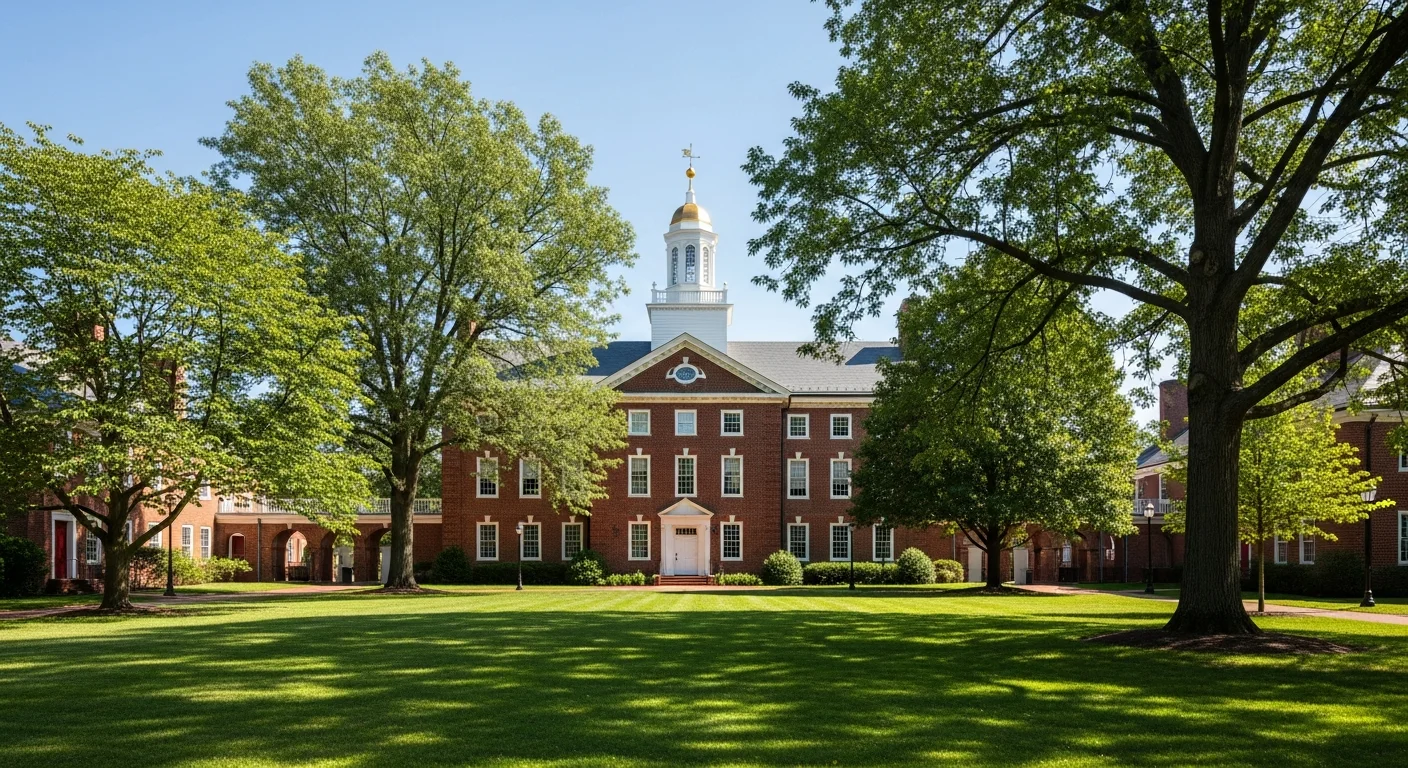

Best Doctoral Artificial Intelligence Degree Programs in Maryland

University of Maryland-College Park — College Park, MD

Key Distinction: UMD's AI program uniquely balances rigorous research training with proximity to federal technology ecosystems, producing graduates competitive for both academia and government/defense sector careers.

Hakia Insight: UMD's doctoral pipeline to both NSF-funded academic roles and the Defense Department's AI initiatives stems directly from its proximity to federal tech ecosystems and labs like the Center for Automation Research—students can shape national AI policy through government fellowships that other PhD programs rarely facilitate.

At the doctoral level, UMD's artificial intelligence program stands out for its research-intensive curriculum that treats AI not as a specialized elective but as a foundational competency across computer science. The program emphasizes machine learning, natural language processing, and computer vision through a combination of rigorous theory courses and hands-on projects with real datasets. What distinguishes UMD is the deep integration with its research ecosystem—students frequently collaborate with faculty on published work, gaining experience in cutting-edge areas like reinforcement learning and knowledge representation. The proximity to the Washington D.C. corridor creates distinctive career pathways into federal agencies, defense contractors, and established tech firms, while the university's strong connections to industry leaders mean capstone projects often involve real-world problem sets from companies like Amazon and Microsoft. Graduates consistently report that the program's emphasis on both theoretical foundations and applied projects prepared them well for roles ranging from AI research scientist to machine learning engineer, with many pursuing advanced degrees at top institutions.

Programs Offered
  • Doctor of Philosophy in Artificial Intelligence — 4-6 years, on-campus
  • Doctor of Science in Artificial Intelligence — 4-6 years, online
Research Labs and Institutes
  • Center for Automation Research
  • Language and Intelligence Laboratory
  • Machine Learning Group
Industry Partners
  • Amazon (corporate)
  • Microsoft (corporate)
  • IBM (corporate)
  • NVIDIA (corporate)
Notable Faculty
  • Rama Chellappa — Computer vision and machine learning
  • Jordan Boyd-Graber — Natural language processing and machine learning
Accreditations and Certifications
  • ABET accredited

Location Advantages: Proximity to Washington D.C. federal agencies and intelligence communityAccess to major tech company offices in the regionStrong pipeline to defense and government technology sectors

University of Maryland-Baltimore County — Baltimore, MD

Key Distinction: UMBC combines active AI research centers with proximity to Baltimore's tech and federal research ecosystem, creating robust internship and career pathways.

Hakia Insight: UMBC's Center for Accelerated Real Time Analytics (CARTA) and cybersecurity partnerships with Lockheed Martin and NSA create an unusual pathway where doctoral candidates publish in peer-reviewed venues *and* hold security clearances simultaneously—rare credential stacking for defense and intelligence careers.

At the doctoral level, UMBC's computer science and engineering programs have built a reputation for machine learning research and AI applications in domains ranging from cybersecurity to autonomous systems. The university operates several research centers where graduate and advanced undergraduate students contribute to funded projects, gaining hands-on experience with cutting-edge techniques and publishing alongside faculty. UMBC's location in the Baltimore tech corridor—with proximity to Johns Hopkins, federal laboratories, and growing startup ecosystems—creates networking and internship opportunities that extend far beyond campus. The curriculum balances theoretical foundations with industry-relevant specializations: students can concentrate in areas like deep learning, reinforcement learning, or AI for cybersecurity. Graduate students particularly benefit from the research-intensive environment, which emphasizes both thesis-based and project-based pathways. Career placement is strong, with graduates moving into roles at major tech firms, defense contractors, and research institutions. For those seeking an AI education embedded in an active research university with real-world application focus, UMBC offers rigorous training and clear industry pathways.

Programs Offered
  • Doctor of Philosophy in Artificial Intelligence — 4-6 years, on-campus
  • Doctor of Science in Artificial Intelligence — 4-6 years, online
Research Labs and Institutes
  • Center for Accelerated Real Time Analytics (CARTA)
  • Cybersecurity Research Laboratory
Industry Partners
  • Lockheed Martin (corporate)
  • Northrop Grumman (corporate)
  • National Security Agency (government)
Notable Faculty
  • Dr. Yelena Yesha — Data analytics, machine learning, and cloud computing
  • Dr. Anupam Joshi — Cybersecurity, ontologies, and AI systems
Accreditations and Certifications
  • ABET accredited

Location Advantages: Proximity to Johns Hopkins University and Applied Physics LaboratoryAccess to Baltimore's growing tech startup ecosystemRelationships with defense and federal contractors in the region

Capitol Technology University — Laurel, MD

Key Distinction: Capitol differentiates through AI specialization in cybersecurity and defense, with direct pipeline to federal agencies requiring security clearances.

Hakia Insight: Capitol Technology's explicit specialization in cybersecurity and defense AI narrows the competitive field dramatically; graduates with security clearances and DoD contractor experience face virtually no job search friction in their target sector.

At the doctoral level, capitol Technology's artificial intelligence program prioritizes hands-on cybersecurity and defense applications—a specialization that sets it apart in the crowded AI landscape. The curriculum weaves AI into threat detection, anomaly discovery, and secure system design from the ground up, giving students practical experience that directly translates to government and defense contractor roles. Small cohorts mean direct faculty mentorship and access to specialized labs where students build AI models for intrusion detection and vulnerability assessment. The university's strong partnerships with defense and intelligence agencies create a clear pipeline for students, with many securing security clearances during their studies—a significant credential in the federal AI job market. Capitol's location in the DC metropolitan area and its established relationships with agencies like the Department of Defense and the Cybersecurity and Infrastructure Security Agency (CISA) provide unmatched networking and recruiting opportunities. Graduates consistently land roles in roles like AI security analyst, threat intelligence engineer, and autonomous defense systems specialist, with salaries reflecting the high demand for these niche skills.

Programs Offered
  • Doctor of Philosophy in Artificial Intelligence — 4-6 years, on-campus
  • Doctor of Science in Artificial Intelligence — 4-6 years, online
Industry Partners
  • Department of Defense (government)
  • Cybersecurity and Infrastructure Security Agency (government)
Career Outcomes

Top Employers: Department of Defense contractors, Cybersecurity and Infrastructure Security Agency, Defense Intelligence Agency.

Location Advantages: Proximity to Department of Defense headquartersProximity to federal intelligence and cybersecurity agencies in Northern Virginia and DCSecurity clearance sponsorship opportunities

Morgan State University — Baltimore, MD

Key Distinction: Morgan State's AI program distinctly centers on algorithmic fairness, bias detection, and ethical AI deployment—preparing graduates to build trustworthy systems and address the societal implications of machine learning.

Hakia Insight: Morgan State's doctoral emphasis on fairness and ethical AI deployment differentiates its PhDs in a job market increasingly demanding researchers who can defend algorithmic decisions to regulators and audit boards, not just optimize model performance.

At the doctoral level, morgan State's computer science department has built an AI track rooted in addressing bias, fairness, and ethical deployment of machine learning systems—a differentiator that reflects the institution's historical commitment to serving underrepresented populations in STEM. Rather than treating ethics as an afterthought, the program weaves responsible AI principles throughout the curriculum, from foundational courses onward, ensuring graduates think critically about algorithmic impact before writing code. Students work on projects that examine real-world algorithmic bias, participate in case studies on fairness in hiring and lending systems, and collaborate with faculty on research examining AI's societal implications. The university's location in Baltimore provides access to healthcare systems, financial institutions, and nonprofits eager to implement AI responsibly, creating internship and research opportunities focused on real social impact. Morgan State graduates have moved into roles at companies prioritizing AI ethics, governmental AI policy positions, and graduate programs emphasizing responsible innovation.

Programs Offered
  • Doctor of Philosophy in Artificial Intelligence — 4-6 years, on-campus
  • Doctor of Science in Artificial Intelligence — 4-6 years, online

Location Advantages: Baltimore's growing fintech and healthcare sectorsProximity to companies prioritizing responsible AI and algorithmic fairness