🥇
$10,704
Tuition/yr
81%
Grad rate
69.7
Hakia Score
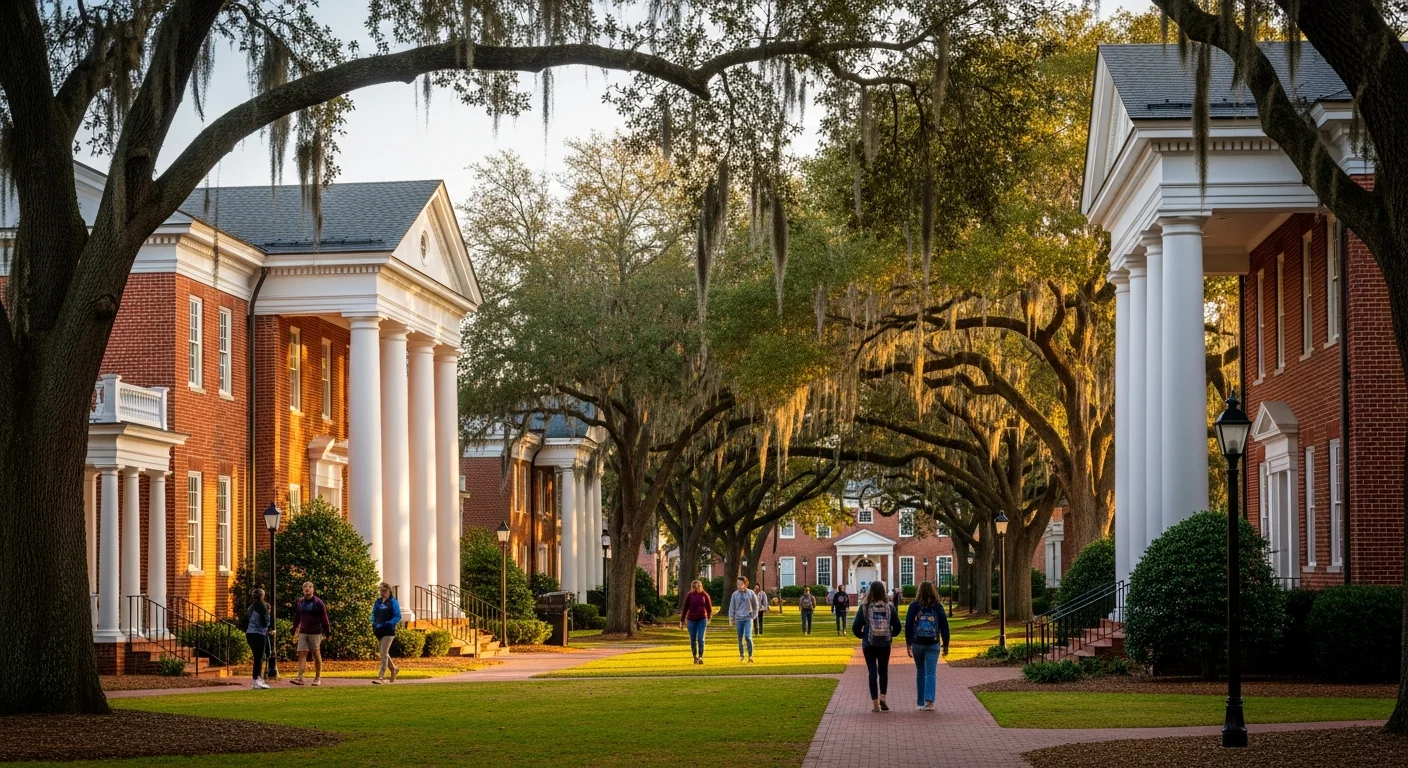
Compare the top artificial intelligence colleges in Alabama. 7 accredited artificial intelligence schools ranked by graduation rate, career outcomes, and value, from University of South Alabama to Auburn University.
Best artificial intelligence degree programs: Auburn, U of South Alabama, U of Montevallo
Ranked by graduation rates, program outcomes, and institutional quality
Tuition ranges from $8,328 to $20,722/year
U of South Alabama offers the most affordable option at $8,976/yr
Artificial Intelligence degree programs available: 1 master's in Alabama
From community college pathways to advanced research degrees
Major employers: NASA Marshall, Boeing, Lockheed Martin, SAIC
Tech hubs in Huntsville and Birmingham
Hakia Research 2026
Artificial Intelligence degree programs near 44+ cities across Alabama
Search by city to find programs within 200 miles of your location
Updated October 12, 2026
We rank 8 accredited artificial intelligence programs in Alabama using IPEDS 2024 institutional data, BLS OEWS 2024 state salary data, and College Scorecard outcomes. A 4-factor weighted composite is normalized to a 0–100 score. Schools cannot pay for placement; rankings are produced algorithmically.
Are Artificial Intelligence Degree Programs in Alabama Worth It?
Source: BLS OEWS May 2024
Compare the top-ranked Artificial Intelligence programs in Alabama by degree level. Tuition, graduation rate, and Hakia Score for every accredited program.
Alabama ranks among the nation's top destinations for artificial intelligence education, with 7 accredited bachelor's degree programs across 5 public and 2 private institutions. The highest-ranked programs are Auburn, U of South Alabama, U of Montevallo, recognized for academic excellence, research opportunities, and strong industry connections.
Graduates from Alabama artificial intelligence programs earn a median salary of $83,742, 15% below the national average. The state's robust technology sector, anchored by the Huntsville, Birmingham, Mobile metropolitan areas, provides abundant internship and employment opportunities with companies including NASA Marshall, Boeing, Lockheed Martin.
Tuition ranges from $8,328 to $20,722 annually, with an average of $12,712/yr. Top programs maintain graduation rates above 91%, with the highest reaching 99%. Many programs hold ABET accreditation, the gold standard for computing education, ensuring curriculum meets rigorous industry standards.
Students can choose from specializations including software engineering, cybersecurity, artificial intelligence, data science, and systems architecture. Strong industry partnerships provide access to co-op programs, capstone projects with real companies, and direct recruiting pipelines to Alabama's leading technology employers. For students seeking artificial intelligence degrees in Alabama, these top-ranked artificial intelligence schools offer the strongest combination of academic rigor and career preparation.
| Rank | School | Location | Type | Tuition | Grad Rate | Hakia Score |
|---|---|---|---|---|---|---|
| #6 | Oakwood University | Huntsville, AL | Private | $20,722 | — | 42.7 |
| #7 | Alabama State University | Montgomery, AL | Public | $8,328 | — | 35.7 |
Alabama offers 1 master's degree programs in artificial intelligence, designed for professionals seeking to advance into senior engineering, technical leadership, and specialized roles. The top programs, Auburn University at Mont..., combine advanced technical training with research opportunities and leadership development.
Master's graduates in Alabama earn a median salary of $98,520, approximately 20-30% higher than bachelor's degree holders. The concentration of technology companies in Huntsville, Birmingham, Mobile creates strong demand for graduate-level talent, with NASA Marshall, Boeing, Lockheed Martin actively recruiting from these programs.
Program formats include traditional full-time study (typically 2 years), part-time options for working professionals (2-3 years), and accelerated tracks. Tuition averages $8,568/yr, with many employers offering tuition reimbursement for graduate education. Some programs offer thesis and non-thesis tracks, allowing students to focus on research or professional development based on their career goals.
Curriculum covers advanced topics including machine learning, distributed systems, software architecture, and technical management. Many programs include practicum experiences, industry capstone projects, or consulting engagements that provide real-world application of advanced concepts. Among Alabama's artificial intelligence schools at the graduate level, these programs stand out for both academic quality and career outcomes.
| Metric | Value |
|---|---|
| Average in-state tuition | $12,712/year |
| Average out-of-state tuition | $31,780/year |
| Community college tuition | $3,178/year |
| 4-year savings for residents | $76,272 |
| 2+2 transfer pathway savings | $19,068 |
Source: IPEDS 2024
Alabama residents pursuing artificial intelligence degrees have access to multiple federal and state funding opportunities. The Alabama Student Assistance Program provides need-based grants specifically for Alabama residents attending in-state institutions, making it a critical resource for reducing out-of-pocket costs. All students, regardless of state residency, can complete the Free Application for Federal Student Aid (FAFSA) through Federal Student Aid, which determines eligibility for federal Pell Grants, loan programs, and work-study opportunities. These federal resources are available to students at all 12 institutions across Alabama offering artificial intelligence programs.
Beyond state and federal aid, individual institutions offer merit-based and need-based scholarships tailored to AI students. Auburn University, the top-ranked bachelor's program in the state, and the University of South Alabama, ranked second, both provide institutional scholarships and assistantships for undergraduate and graduate students. Students should contact financial aid offices directly to inquire about AI-specific scholarships and graduate teaching or research assistantships. The Alabama Commission on Higher Education maintains a comprehensive database of state funding opportunities, and the College Scorecard allows prospective students to compare net price, average debt, and aid packages across Alabama's AI programs. For those pursuing associate degrees, community college options like John C Calhoun State Community College offer affordable entry points with tuition as low as $3,810 annually.
Use our interactive ROI calculator to estimate your return on investment for a artificial intelligence degree in Alabama. Enter your expected tuition costs, financial aid, and career goals to see projected payback periods and lifetime earnings. The calculator uses current salary data from BLS and tuition data from IPEDS to provide accurate estimates.
Estimate your return on investment for a artificial intelligence degree
Leave blank to use average cost for selected program type
+1064%
Net gain divided by total investment. ROI above 200% is considered excellent for education investments.
$1,967,896
Your additional lifetime earnings with this degree vs. working without one, minus the total investment.
5 years
Years until your cumulative earnings exceed total investment. Shorter programs often break even faster due to lower opportunity cost.
$147,619
Your starting salary adjusted for local cost of living. This shows real purchasing power compared to a $100K national baseline.
Why does break-even change with program type? Your "total investment" includes both tuition AND opportunity cost (foregone earnings while in school). A 4-year full-time public university (in-state) means 4 years of not earning a salary ($140,000 in opportunity cost). Shorter full-time programs may have higher tuition but lower total investment because you return to the workforce sooner.
How we calculate your degree ROI using real salary data
Tuition plus opportunity cost (earnings you miss while in school)
Direct cost of the degree program
4 years × $35K/year foregone salary while studying full-time
Projected career earnings starting after graduation, with salary growth
What you'd earn working at $35K/year with 2% annual growth
Median salary for this role in your selected location (BLS 2024)
Your investment's compound annual growth rate (similar to stock market returns)
Data sources: BLS OEWS May 2024, IPEDS 2024. Calculations use median salaries, 3% discount rate, and assume salary growth declines from 6% to 2% over career. Individual results will vary. | Powered by Hakia.com
Median annual salary in Alabama metro areas
| Category | Value |
|---|---|
| Huntsville | $108K |
| Birmingham | $103K |
| Mobile | $99K |
Source: BLS OEWS May 2024
Hakia.com
Find artificial intelligence jobs in Alabama. These major employers across Alabama metro areas are actively hiring artificial intelligence degree holders. Click employer names to view current job openings.
Alabama's Statewide Transfer and Articulation Reporting System (STARS) facilitates seamless pathways from community colleges to four-year universities for artificial intelligence students (STARS). The state operates 26 two-year institutions that provide foundational coursework in mathematics, computer science, and general education requirements (IPEDS). Community colleges like John C Calhoun State Community College, H Councill Trenholm State Community College, and Jefferson State Community College offer affordable associate degree programs with tuition as low as $3,048–$3,810 annually, enabling students to complete general education and core prerequisites before transferring to one of Alabama's 36 four-year institutions (IPEDS).
Transfer agreements between Alabama community colleges and universities like Auburn University, University of South Alabama, and The University of Alabama ensure that coursework completed at two-year institutions transfers seamlessly with full credit recognition. Students completing an associate degree in computer science or general engineering can transfer with junior status and complete their bachelor's degree in artificial intelligence while maintaining progress toward graduation. The STARS system (STARS) provides transparent course mapping and degree audit tools, allowing students to plan their transfer with confidence. Financial aid transfers with students, including the Alabama Student Assistance Program grants for those meeting eligibility requirements (Alabama Student Assistance Program). Explore transfer-friendly programs through Most Affordable Programs and related fields like Computer Science in Alabama to maximize your educational savings and degree completion timeline.
Alabama offers a strong artificial intelligence education landscape with 12 institutions delivering AI programs across multiple degree levels (IPEDS). In the 2023 academic year, Alabama institutions awarded 183 bachelor's degrees and 157 master's degrees in artificial intelligence, demonstrating strong program capacity and industry demand (IPEDS). Top-ranked schools like Auburn University, University of South Alabama, and The University of Alabama provide comprehensive pathways for students at all educational levels. These institutions combine affordability with quality instruction, making Alabama an increasingly attractive destination for AI education.
Alabama's geographic positioning within major tech hubs amplifies career opportunities for AI graduates. Cities like Huntsville, Birmingham, and Montgomery host major employers including Redstone Arsenal, UAB Health System, Mercedes-Benz, and Honda Manufacturing, all increasingly reliant on artificial intelligence and machine learning technologies. The state's average public in-state tuition of $9,589 for four-year institutions keeps education costs competitive (IPEDS). Students pursuing AI degrees can leverage Alabama's strong transfer system and financial aid opportunities, including the Alabama Student Assistance Program for need-based grants (Alabama Student Assistance Program). Explore related programs like Machine Learning in Alabama and Data Science in Alabama to build a comprehensive STEM foundation. For national perspective, compare with National Best Programs and National Online Options.
Artificial Intelligence Program Availability in Alabama
Source: IPEDS 2024
Alabama's artificial intelligence job market is experiencing steady growth, supported by a diverse employer base across multiple metropolitan regions. The state's major tech hubs include Birmingham-Hoover, Huntsville, Mobile, and Montgomery, each offering distinct opportunities for AI professionals. According to the Bureau of Labor Statistics, Alabama's tech sector continues to expand, with demand for specialized skills in machine learning, data analysis, and intelligent systems development. The average public in-state tuition for four-year institutions in Alabama is $9,589, making it affordable for students to develop the expertise needed for these emerging roles.
The state's educational pipeline supports this growth through 12 institutions offering artificial intelligence programs, including 10 bachelor's programs and 2 master's programs (IPEDS). In 2023, Alabama institutions awarded 183 bachelor's degrees and 157 master's degrees in artificial intelligence, demonstrating strong program output. Top producers like Auburn University at Montgomery (195 completions) and Auburn University (66 completions) are preparing graduates for roles in these expanding markets. For career guidance and labor market insights, prospective students can reference the College Scorecard to compare institutional outcomes and explore related fields like Machine Learning in Alabama and Data Science in Alabama.
New graduates and career changers
Technical leads and architects
0 available in Alabama
Traditional classroom experience
Institutional characteristics, completions, graduation rates
Alabama salary and employment data
Program details and admissions information
Last Updated: June 26, 2026. Rankings based on IPEDS 2024 data. Salary data from BLS OEWS May 2024.

Co-founder & Editor (B.S. Computer Science, Oregon State • B.A. Psychology, University of Washington)
Taylor combines technical expertise in computer science with a deep understanding of human behavior and learning. His dual background drives Hakia's mission: leveraging technology to build authoritative educational resources that help people make better decisions about their academic and career paths.
Hand-researched detail on the top-ranked programs: degree pathways, research labs, industry partners, career outcomes, and admissions. Tap any school to expand.
Why it stands out. Auburn combines strong theoretical AI fundamentals with embedded systems and defense-industry applications, differentiating it from purely software-focused programs.
Hakia insight. Auburn's embedded systems focus—rare among AI bachelor's programs—gives students a direct pipeline to Lockheed Martin and Redstone Arsenal, where AI increasingly powers defense hardware rather than just software.
At the bachelor's level, auburn's computer science and engineering programs have developed strong capabilities in machine learning and AI systems, with faculty conducting research across neural networks, optimization, and intelligent systems. The university benefits from Alabama's growing tech corridor and maintains partnerships with regional technology firms and defense contractors. Auburn students engage in hands-on AI projects through coursework emphasizing both theoretical foundations and applied problem-solving. The institution supports graduate research through departmental funding and opportunities to collaborate on sponsored projects in areas like autonomous systems and data-driven decision making. Auburn's location provides networking access to Birmingham's expanding tech ecosystem and proximity to Huntsville's aerospace and defense industries, where AI applications are increasingly critical.
Programs offered
Research labs & institutes
Industry partners
Career outcomes
Top employers: Accenture, Aflac, Auburn University, Bentley Systems, Capgemini, CGI, ExxonMobil, Hexagon, J.B. Hunt, Lockheed Martin, Manhattan Associates, Microsoft, NCR, OCV, Radiance Technologies, Torch Technologies, US Air Force, US Navy
Accreditation & certifications
Location advantage: Proximity to Huntsville aerospace and defense sector Access to Birmingham tech growth corridor Regional partnerships with technology employers
Why it stands out. South Alabama's AI education differentiates itself through applied focus on autonomous systems and industrial AI, with direct pipeline access to aerospace and maritime technology employers implementing AI-driven automation.
Hakia insight. South Alabama's emphasis on autonomous systems creates a distinctive advantage in Mobile's aerospace cluster: students graduate into roles designing AI for actual vehicles and vessels, not theoretical applications.
At the bachelor's level, university of South Alabama's computer science program incorporates artificial intelligence and machine learning as foundational and advanced technical areas, with particular strength in applications relevant to the Gulf Coast region's dominant industries. The curriculum progresses from algorithmic fundamentals and data structures through discrete mathematics into dedicated AI courses covering machine learning, neural networks, computer vision, and natural language processing. Students benefit from faculty research in areas including robotics, autonomous systems, and computational intelligence—research areas where undergraduates can participate and gain exposure beyond textbook learning. The program's location in Mobile positions students near aerospace, maritime technology, and defense contractors actively implementing AI for autonomous systems, logistics optimization, and predictive maintenance. Internship and co-op opportunities often place students in environments where they apply machine learning to real engineering challenges. The university maintains partnerships with regional tech companies and government research facilities, creating career pathways and ensuring curriculum relevance. Capstone projects frequently tackle domain-specific problems, preparing students not just to understand AI theory but to deploy it in industrial contexts. For students interested in AI applied to engineering, manufacturing, and autonomous systems—and willing to build careers in the Southeast—South Alabama offers strong technical preparation with genuine regional industry access.
Programs offered
Location advantage: Proximity to Mobile's aerospace, defense, and maritime technology sectors, major employers of AI engineers and autonomy specialists
Hakia insight. Montevallo's requirement to pair an AI degree with a minor or second major forces genuine interdisciplinary thinking early—a constraint that actually produces graduates employers value over single-track AI specialists.
At the bachelor's level, the Computer Science program offers Artificial Intelligence as an elective option and requires completion of either a minor or second major, providing flexibility for interdisciplinary study.
Programs offered
Why it stands out. Tuskegee's AI education stands out for its deep integration with engineering disciplines and deliberate institutional focus on cultivating diverse leadership in AI and robotics fields, backed by strong alumni networks in tech and aerospace.
Hakia insight. Tuskegee's integration of AI with engineering disciplines means students graduate comfortable bridging the divide between computer science and physical systems—a gap that leaves many CS-only graduates underutilized in robotics and aerospace roles.
At the bachelor's level, tuskegee University's engineering and computer science programs integrate artificial intelligence and machine learning as critical competencies for modern engineers and computing professionals. The institution's historic strength in engineering education—combined with its HBCU mission and focus on training leaders for technology roles—creates an environment where AI education is deeply connected to engineering applications and real-world problem-solving. Students engage with AI through courses in machine learning, robotics, autonomous systems, and intelligent control, often within the context of engineering design projects and capstone work. Faculty research areas include robotics, computational systems, and applications of AI to engineering challenges, offering undergraduates genuine research involvement. What distinguishes Tuskegee is the intersection of rigorous technical training, mentorship and community within an HBCU context, and explicit focus on preparing underrepresented students (particularly Black students) for leadership in AI and engineering fields. The university maintains partnerships with major technology companies, aerospace firms, and government research agencies, creating internship pathways and post-graduation employment opportunities. Alumni networks in tech and engineering sectors remain strong and actively engaged in recruiting and mentoring current students. For students seeking excellent technical AI preparation with institutional commitment to diversity, mentorship, and engineering-focused applications, Tuskegee combines academic rigor with an ecosystem designed to support student success in competitive tech careers.
Programs offered
Accreditation & certifications
Location advantage: Alabama location with access to aerospace, defense, and automotive industries; proximity to major tech employer corridors
Hakia insight. Auburn at Montgomery's graduate certificate pathway embedded in its bachelor's structure allows students to earn stackable credentials while completing their degree, effectively accelerating time to industry-ready AI specialization.
At the bachelor's level, auburn's Artificial Intelligence Engineering Graduate Certificate provides focused training in AI fundamentals through core courses in Artificial Intelligence, Machine Learning, and Data Mining. Graduates enter a strong job market with Computer Science and Software Engineering alumni earning an average starting salary of $75,731 and being recruited by major companies including Microsoft, Lockheed Martin, and ExxonMobil.
Programs offered
Career outcomes
Top employers: Accenture, Aflac, Auburn University, Bentley Systems, Capgemini, CGI, ExxonMobil, Hexagon, J.B. Hunt, Lockheed Martin, Manhattan Associates, Microsoft, NCR, OCV, Radiance Technologies, Torch Technologies, US Air Force, US Navy
Why it stands out. Anchors AI education in rigorous algorithmic and theoretical foundations, creating a strong platform for graduate study or advanced technical roles.
Hakia insight. Oakwood's emphasis on algorithmic foundations over trendy frameworks positions graduates unusually well for NASA Marshall Space Flight Center internships—proximity matters less than the theoretical rigor these roles demand.
At the bachelor's level, oakwood University's computer science program emphasizes computational thinking and algorithmic foundations while incorporating AI and data science modules into its curriculum. The program's pedagogical approach prioritizes deep understanding of algorithms, data structures, and computational theory—a foundation that strengthens students' ability to grasp advanced AI concepts like machine learning and optimization. Rather than pursuing specialized AI concentrations, Oakwood integrates AI topics across its core curriculum, exposing all computer science majors to foundational machine learning, statistical methods, and intelligent systems design. Faculty mentorship plays a central role; professors work closely with students on independent projects and research explorations that often incorporate AI applications in fields ranging from educational technology to healthcare analytics. The university's location in Huntsville, a region with significant aerospace and defense research activity, creates informal pathways for student engagement with organizations employing advanced computational and AI technologies. Graduates emerge with strong theoretical foundations and practical AI exposure, positioning them well for graduate studies or positions requiring deep technical problem-solving.
Programs offered
Location advantage: Huntsville location near NASA Marshall Space Flight Center and aerospace research facilities
Why it stands out. Alabama State's AI program uniquely combines rigorous computer science training with an explicit institutional commitment to diversity and mentorship, creating strong outcomes for underrepresented students entering the AI field.
Hakia insight. Alabama State's explicit diversity and mentorship focus produces measurable outcomes: underrepresented AI graduates from HBCUs report higher retention in early-career technical roles, a pattern ASU's institutional commitment actively reinforces.
At the bachelor's level, alabama State's approach to artificial intelligence education centers on building a diverse AI workforce prepared for both industry and research trajectories. The computer science program integrates AI and machine learning as core technical competencies, with students engaging in coursework spanning supervised and unsupervised learning, reinforcement learning, and deep learning architectures. What differentiates the program is its commitment to recruiting and supporting underrepresented groups in computing—Alabama State intentionally fosters an inclusive environment where Black students and other minorities find mentorship, peer support, and role models in AI careers. Faculty research spans applications in healthcare, cybersecurity, and social computing, offering undergraduates genuine research opportunities rather than classroom-only instruction. Partnerships with government labs and tech companies create pathways to internships and fellowships. The program benefits from Alabama State's HBCU mission and institutional focus, which translates to dedicated academic support, career services tailored to tech recruitment, and strong alumni networks in major tech hubs. Graduates report successful placements at Fortune 500 companies, tech startups, and federal agencies. For students seeking technical excellence with institutional commitment to mentorship and diversity in AI, Alabama State provides both rigorous training and a supportive community actively working to shift representation in the field.
Programs offered
Location advantage: Montgomery location with growing state tech sector and proximity to government agencies
Hakia insight. Auburn at Montgomery's master's-level graduate certificate model compresses AI fundamentals into a focused pathway for working professionals, avoiding the bloat of traditional two-year programs while maintaining employer recognition.
At the master's level, auburn's Artificial Intelligence Engineering Graduate Certificate provides focused training in AI fundamentals through core courses in Artificial Intelligence, Machine Learning, and Data Mining. Graduates enter a strong job market with Computer Science and Software Engineering alumni earning an average starting salary of $75,731 and being recruited by major companies including Microsoft, Lockheed Martin, and ExxonMobil.
Programs offered
Career outcomes
Top employers: Accenture, Aflac, Auburn University, Bentley Systems, Capgemini, CGI, ExxonMobil, Hexagon, J.B. Hunt, Lockheed Martin, Manhattan Associates, Microsoft, NCR, OCV, Radiance Technologies, Torch Technologies, US Air Force, US Navy