University campus in New Jersey
Updated January 2026

Best Information Technology Degree Programs in New Jersey — 2026 Rankings

Explore 40 accredited information technology degree programs in New Jersey. Compare schools by graduation rate, salary outcomes, and tuition—from Brookdale Community College to Rutgers University-New Brunswick.

#1 ProgramRutgers University-New Br...
Avg Salary$122,800
Tuition From$7,875/yr
Job Growth+22%

Key Takeaways

Top 3 ranked: Rutgers University-New Br..., New Jersey Institute of T..., Rowan

Based on graduation rates, program outcomes, and institutional quality

IPEDS 2023

Tuition ranges from $2,856 to $58,680/year

Brookdale Community College offers the most affordable option at $7,875/yr

IPEDS 2023

Degree levels: 14 associate's, 14 master's, 2 doctoral programs available in New Jersey

From community college pathways to advanced research degrees

IPEDS 2023

5 New Jersey programs offer online or hybrid formats

Flexible scheduling for working professionals

IPEDS 2023

New Jersey community college transfer can save 40-60% on total degree costs

14 associate's programs provide transfer pathways to bachelor's degrees

Education Commission of the States

Major employers: Johnson & Johnson, Prudential, Merck, Verizon

Tech hubs in Jersey City and Newark

Hakia Research 2026

Information Technology programs available near 86+ cities across New Jersey

Search by city to find programs within 200 miles of your location

IPEDS 2023

Updated February 2026

On This Page
$122,800
Is Information Technology in New Jersey Worth It?
Yes. Information Technology degrees in New Jersey deliver strong ROI—graduates earn $122,800 median salary with +22% job growth through 2032. In-state tuition averages $18,374/year.

Source: BLS OEWS May 2024

Best Information Technology Degree Programs in New Jersey

Bachelor's Information Technology Degree Programs in New Jersey

23 programs$122,800 median salary88% avg grad rate
23
Programs
$122,800
Median Salary
$23,704/yr
Avg Tuition
88%
Avg Grad Rate

Program Landscape

New Jersey ranks among the nation's top destinations for information technology education, with 23 accredited bachelor's degree programs across 12 public and 9 private institutions. The highest-ranked programs are Rutgers University-New Br..., New Jersey Institute of T..., Rowan, recognized for academic excellence, research opportunities, and strong industry connections.

Career Outcomes

Graduates from New Jersey information technology programs earn a median salary of $104,380—6% above the national average. The state's robust technology sector, anchored by the Jersey City, Newark, Princeton metropolitan areas, provides abundant internship and employment opportunities with companies including Johnson & Johnson, Prudential, Merck.

Costs & Value

Tuition ranges from $11,135 to $48,670 annually, with an average of $23,704/yr. Top programs maintain graduation rates above 88%, with the highest reaching 100%. Many programs hold ABET accreditation, the gold standard for computing education, ensuring curriculum meets rigorous industry standards.

Curriculum & Specializations

Students can choose from specializations including software engineering, cybersecurity, artificial intelligence, data science, and systems architecture. Strong industry partnerships provide access to co-op programs, capstone projects with real companies, and direct recruiting pipelines to New Jersey's leading technology employers. For students seeking information technology degrees in New Jersey, these top-ranked information technology schools offer the strongest combination of academic rigor and career preparation.

Show:

Earn your bachelor's in Information Technology

(Sponsored)

Loading programs...

🥇

Rutgers University-New Brunswick

Public
New Brunswick, NJ
$13,674
Tuition/yr
82%
Grad Rate
83.2
Score
Website
🥈

New Jersey Institute of Technology

Public
Newark, NJ
$15,616
Tuition/yr
66%
Grad Rate
67.5
Score
Website
🥉

Rowan University

Public
Glassboro, NJ
$11,250
Tuition/yr
97%
Grad Rate
72.0
Score
Website
#4

Rutgers University-Newark

Public
Newark, NJ
$13,674
Tuition/yr
94%
Grad Rate
57.5
Score
Website
#5

The College of New Jersey

Public
Ewing, NJ
$14,706
Tuition/yr
100%
Grad Rate
61.3
Score
Website
#6

Ramapo College of New Jersey

Public
Mahwah, NJ
$15,978
Tuition/yr
91%
Grad Rate
62.3
Score
Website
#7

Seton Hall University

Private
South Orange, NJ
$48,670
Tuition/yr
93%
Grad Rate
62.1
Score
Website
#8

Kean University

Public
Union, NJ
$11,135
Tuition/yr
91%
Grad Rate
55.1
Score
Website
#9

Montclair State University

Public
Montclair, NJ
$13,710
Tuition/yr
75%
Grad Rate
54.0
Score
Website
#10

Georgian Court University

Private
Lakewood, NJ
$35,360
Tuition/yr
96%
Grad Rate
49.0
Score
Website

Complete Information Technology Degree Program Rankings in New Jersey

Best Associate's Information Technology Degree Programs in New Jersey

### Program Landscape New Jersey offers **14 accredited** associate's degree programs in information technology, providing an affordable entry point into the technology field. The top-ranked programs include **Brookdale Community College**, **Hudson County Community C...**, **Middlesex College**, which combine rigorous technical curriculum with practical skills training. ### Costs & Value Community colleges in New Jersey offer these two-year programs at an average cost of **$6,468/yr**—significantly less than four-year university tuition. Students completing associate's degrees can pursue entry-level technical positions and transfer opportunities, with entry-level salaries averaging **$67,540** in New Jersey. ### Career Pathways Many programs feature guaranteed transfer agreements with New Jersey's public universities, allowing students to complete their first two years at reduced cost before transferring to complete a bachelor's degree. The Jersey City, Newark, Princeton areas offer particularly strong job markets for associate's degree holders, with employers like Johnson & Johnson, Prudential, Merck hiring for technical support, junior development, and IT specialist positions. ### Curriculum & Specializations Programs typically include coursework in programming fundamentals, database management, networking basics, and software development. Among information technology schools in New Jersey, these associate's programs offer the best value for students beginning their information technology degrees in New Jersey.

  1. #1. Brookdale Community College

    Hakia ranks Brookdale Community College as the #1 associate's in information technology degree program in New Jersey. This public institution in Lincroft, NJ has annual tuition of $7,875. Ranking score: 47.6.

  2. #2. Hudson County Community College

    Hakia ranks Hudson County Community College as the #2 associate's in information technology degree program in New Jersey. This public institution in Jersey City, NJ has annual tuition of $7,440. Ranking score: 47.3.

  3. #3. Middlesex College

    Hakia ranks Middlesex College as the #3 associate's in information technology degree program in New Jersey. This public institution in Edison, NJ has annual tuition of $5,472. Ranking score: 50.6.

  4. #4. Passaic County Community College

    Hakia ranks Passaic County Community College as the #4 associate's in information technology degree program in New Jersey. This public institution in Paterson, NJ has annual tuition of $7,500. Ranking score: 42.8.

  5. #5. Camden County College

    Hakia ranks Camden County College as the #5 associate's in information technology degree program in New Jersey. This public institution in Blackwood, NJ has annual tuition of $2,856. Ranking score: 48.6.

  6. #6. Ocean County College

    Hakia ranks Ocean County College as the #6 associate's in information technology degree program in New Jersey. This public institution in Toms River, NJ has annual tuition of $4,752. Ranking score: 48.6.

  7. #7. County College of Morris

    Hakia ranks County College of Morris as the #7 associate's in information technology degree program in New Jersey. This public institution in Randolph, NJ has annual tuition of $9,240. Ranking score: 49.2.

  8. #8. Raritan Valley Community College

    Hakia ranks Raritan Valley Community College as the #8 associate's in information technology degree program in New Jersey. This public institution in Branchburg, NJ has annual tuition of $6,240. Ranking score: 40.5.

  9. #9. UCNJ Union College of Union County, NJ

    Hakia ranks UCNJ Union College of Union County, NJ as the #9 associate's in information technology degree program in New Jersey. This public institution in Cranford, NJ has annual tuition of $9,500. Ranking score: 47.9.

  10. #10. Essex County College

    Hakia ranks Essex County College as the #10 associate's in information technology degree program in New Jersey. This public institution in Newark, NJ has annual tuition of $8,054. Ranking score: 47.5.

  11. #11. Sussex County Community College

    Hakia ranks Sussex County Community College as the #11 associate's in information technology degree program in New Jersey. This public institution in Newton, NJ has annual tuition of $5,232. Ranking score: 38.4.

  12. #12. Rowan College of South Jersey-Cumberland Campus

    Hakia ranks Rowan College of South Jersey-Cumberland Campus as the #12 associate's in information technology degree program in New Jersey. This public institution in Vineland, NJ has annual tuition of $4,440. Ranking score: 44.6.

  13. #13. Bergen Community College

    Hakia ranks Bergen Community College as the #13 associate's in information technology degree program in New Jersey. This public institution in Paramus, NJ has annual tuition of $7,516. Ranking score: 37.9.

  14. #14. Rowan College of South Jersey-Gloucester Campus

    Hakia ranks Rowan College of South Jersey-Gloucester Campus as the #14 associate's in information technology degree program in New Jersey. This public institution in Sewell, NJ has annual tuition of $4,440. Ranking score: 43.2.

Best Bachelor's Information Technology Degree Programs in New Jersey

### Program Landscape New Jersey ranks among the nation's top destinations for information technology education, with **23 accredited** bachelor's degree programs across **12 public** and **9 private** institutions. The highest-ranked programs are **Rutgers University-New Br...**, **New Jersey Institute of T...**, **Rowan**, recognized for academic excellence, research opportunities, and strong industry connections. ### Career Outcomes Graduates from New Jersey information technology programs earn a median salary of **$104,380**—6% above the national average. The state's robust technology sector, anchored by the Jersey City, Newark, Princeton metropolitan areas, provides abundant internship and employment opportunities with companies including Johnson & Johnson, Prudential, Merck. ### Costs & Value Tuition ranges from **$11,135** to **$48,670** annually, with an average of **$23,704/yr**. Top programs maintain graduation rates above **88%**, with the highest reaching **100%**. Many programs hold ABET accreditation, the gold standard for computing education, ensuring curriculum meets rigorous industry standards. ### Curriculum & Specializations Students can choose from specializations including software engineering, cybersecurity, artificial intelligence, data science, and systems architecture. Strong industry partnerships provide access to co-op programs, capstone projects with real companies, and direct recruiting pipelines to New Jersey's leading technology employers. For students seeking information technology degrees in New Jersey, these top-ranked information technology schools offer the strongest combination of academic rigor and career preparation.

  1. #1. Rutgers University-New Brunswick

    Hakia ranks Rutgers University-New Brunswick as the #1 bachelor's in information technology degree program in New Jersey. This public institution in New Brunswick, NJ has annual tuition of $13,674 and a 82% graduation rate. Ranking score: 83.2.

  2. #2. New Jersey Institute of Technology

    Hakia ranks New Jersey Institute of Technology as the #2 bachelor's in information technology degree program in New Jersey. This public institution in Newark, NJ has annual tuition of $15,616 and a 66% graduation rate. Ranking score: 67.5.

  3. #3. Rowan University

    Hakia ranks Rowan University as the #3 bachelor's in information technology degree program in New Jersey. This public institution in Glassboro, NJ has annual tuition of $11,250 and a 97% graduation rate. Ranking score: 72.0.

  4. #4. Rutgers University-Newark

    Hakia ranks Rutgers University-Newark as the #4 bachelor's in information technology degree program in New Jersey. This public institution in Newark, NJ has annual tuition of $13,674 and a 94% graduation rate. Ranking score: 57.5.

  5. #5. The College of New Jersey

    Hakia ranks The College of New Jersey as the #5 bachelor's in information technology degree program in New Jersey. This public institution in Ewing, NJ has annual tuition of $14,706 and a 100% graduation rate. Ranking score: 61.3.

  6. #6. Ramapo College of New Jersey

    Hakia ranks Ramapo College of New Jersey as the #6 bachelor's in information technology degree program in New Jersey. This public institution in Mahwah, NJ has annual tuition of $15,978 and a 91% graduation rate. Ranking score: 62.3.

  7. #7. Seton Hall University

    Hakia ranks Seton Hall University as the #7 bachelor's in information technology degree program in New Jersey. This private institution in South Orange, NJ has annual tuition of $48,670 and a 93% graduation rate. Ranking score: 62.1.

  8. #8. Kean University

    Hakia ranks Kean University as the #8 bachelor's in information technology degree program in New Jersey. This public institution in Union, NJ has annual tuition of $11,135 and a 91% graduation rate. Ranking score: 55.1.

  9. #9. Montclair State University

    Hakia ranks Montclair State University as the #9 bachelor's in information technology degree program in New Jersey. This public institution in Montclair, NJ has annual tuition of $13,710 and a 75% graduation rate. Ranking score: 54.0.

  10. #10. Georgian Court University

    Hakia ranks Georgian Court University as the #10 bachelor's in information technology degree program in New Jersey. This private institution in Lakewood, NJ has annual tuition of $35,360 and a 96% graduation rate. Ranking score: 49.0.

  11. #11. Felician University

    Hakia ranks Felician University as the #11 bachelor's in information technology degree program in New Jersey. This private institution in Lodi, NJ has annual tuition of $35,180 and a 88% graduation rate. Ranking score: 44.3.

  12. #12. William Paterson University of New Jersey

    Hakia ranks William Paterson University of New Jersey as the #12 bachelor's in information technology degree program in New Jersey. This public institution in Wayne, NJ has annual tuition of $14,690. Ranking score: 48.4.

  13. #13. New Jersey City University

    Hakia ranks New Jersey City University as the #13 bachelor's in information technology degree program in New Jersey. This public institution in Jersey City, NJ has annual tuition of $13,785. Ranking score: 48.0.

  14. #14. Strayer University-New Jersey

    Hakia ranks Strayer University-New Jersey as the #14 bachelor's in information technology degree program in New Jersey. This for-profit institution in Piscataway, NJ has annual tuition of $13,725. Ranking score: 43.2.

  15. #15. Rutgers University-Camden

    Hakia ranks Rutgers University-Camden as the #15 bachelor's in information technology degree program in New Jersey. This public institution in Camden, NJ has annual tuition of $13,674. Ranking score: 40.4.

  16. #16. Caldwell University

    Hakia ranks Caldwell University as the #16 bachelor's in information technology degree program in New Jersey. This private institution in Caldwell, NJ has annual tuition of $37,352. Ranking score: 41.9.

  17. #17. Stockton University

    Hakia ranks Stockton University as the #17 bachelor's in information technology degree program in New Jersey. This public institution in Galloway, NJ has annual tuition of $12,996. Ranking score: 43.3.

  18. #18. Saint Peter's University

    Hakia ranks Saint Peter's University as the #18 bachelor's in information technology degree program in New Jersey. This private institution in Jersey City, NJ has annual tuition of $39,954. Ranking score: 38.6.

  19. #19. Monmouth University

    Hakia ranks Monmouth University as the #19 bachelor's in information technology degree program in New Jersey. This private institution in West Long Branch, NJ has annual tuition of $44,098. Ranking score: 37.3.

  20. #20. Rider University

    Hakia ranks Rider University as the #20 bachelor's in information technology degree program in New Jersey. This private institution in Lawrenceville, NJ has annual tuition of $37,700. Ranking score: 38.2.

  21. #21. Fairleigh Dickinson University-Florham Campus

    Hakia ranks Fairleigh Dickinson University-Florham Campus as the #21 bachelor's in information technology degree program in New Jersey. This private institution in Madison, NJ has annual tuition of $37,346. Ranking score: 37.5.

  22. #22. Fairleigh Dickinson University-Metropolitan Campus

    Hakia ranks Fairleigh Dickinson University-Metropolitan Campus as the #22 bachelor's in information technology degree program in New Jersey. This private institution in Teaneck, NJ has annual tuition of $36,526. Ranking score: 32.9.

  23. #23. DeVry University-New Jersey

    Hakia ranks DeVry University-New Jersey as the #23 bachelor's in information technology degree program in New Jersey. This for-profit institution in Iselin, NJ has annual tuition of $14,392. Ranking score: 34.3.

Online Bachelor's Information Technology Degree Programs in New Jersey

### Online Program Options 4 New Jersey institutions offer bachelor's information technology degrees with online or hybrid options, enabling students to earn accredited degrees while maintaining professional or personal commitments. Top-ranked online programs include **Fairleigh Dickinson Unive...**, **Caldwell**, **Georgian Court**, all regionally accredited and recognized by New Jersey employers. ### Costs & Employer Recognition Online bachelor's programs average **$36,940/yr**—often comparable to or less than on-campus tuition. New Jersey-based employers including Johnson & Johnson, Prudential, Merck value online credentials from accredited institutions, recognizing that program quality matters more than delivery format. The Jersey City, Newark, Princeton job market actively recruits graduates from online programs. ### Program Format These programs feature asynchronous coursework for maximum flexibility, with some offering synchronous sessions for collaborative learning. Students can typically complete **120 credit hours** in 4 years while working full-time. ### Technology & Flexibility Technology requirements include reliable internet access and a modern computer. Programs provide virtual labs, online tutoring, career services, and networking opportunities. Many offer start dates throughout the year and accelerated course formats for motivated students. Graduates earn the same degree as on-campus students, with no distinction on transcripts or diplomas. For students pursuing online information technology degrees in New Jersey, these accredited information technology schools offer the flexibility and quality that today's learners demand.

  • Fairleigh Dickinson University-Florham Campus - Madison, NJ - Tuition: $37,346/year
  • Caldwell University - Caldwell, NJ - Tuition: $37,352/year
  • Georgian Court University - Lakewood, NJ - Tuition: $35,360/year
  • Rider University - Lawrenceville, NJ - Tuition: $37,700/year

Best Master's Information Technology Degree Programs in New Jersey

### Program Landscape New Jersey offers **14** master's degree programs in information technology, designed for professionals seeking to advance into senior engineering, technical leadership, and specialized roles. The top programs—**New Jersey Institute of T...**, **Rutgers University-New Br...**, **Stevens Institute of Tech...**—combine advanced technical training with research opportunities and leadership development. ### Career Outcomes Master's graduates in New Jersey earn a median salary of **$122,800**, approximately **20-30% higher** than bachelor's degree holders. The concentration of technology companies in Jersey City, Newark, Princeton creates strong demand for graduate-level talent, with Johnson & Johnson, Prudential, Merck actively recruiting from these programs. ### Costs & Value Program formats include traditional full-time study (typically 2 years), part-time options for working professionals (2-3 years), and accelerated tracks. Tuition averages **$25,799/yr**, with many employers offering tuition reimbursement for graduate education. Some programs offer thesis and non-thesis tracks, allowing students to focus on research or professional development based on their career goals. ### Curriculum & Specializations Curriculum covers advanced topics including machine learning, distributed systems, software architecture, and technical management. Many programs include practicum experiences, industry capstone projects, or consulting engagements that provide real-world application of advanced concepts. Among New Jersey's information technology schools at the graduate level, these programs stand out for both academic quality and career outcomes.

  1. #1. New Jersey Institute of Technology

    Hakia ranks New Jersey Institute of Technology as the #1 master's in information technology degree program in New Jersey. This public institution in Newark, NJ has annual tuition of $15,616 and a 66% graduation rate. Ranking score: 78.6.

  2. #2. Rutgers University-New Brunswick

    Hakia ranks Rutgers University-New Brunswick as the #2 master's in information technology degree program in New Jersey. This public institution in New Brunswick, NJ has annual tuition of $13,674 and a 82% graduation rate. Ranking score: 82.2.

  3. #3. Stevens Institute of Technology

    Hakia ranks Stevens Institute of Technology as the #3 master's in information technology degree program in New Jersey. This private institution in Hoboken, NJ has annual tuition of $58,680 and a 74% graduation rate. Ranking score: 77.8.

  4. #4. Rutgers University-Newark

    Hakia ranks Rutgers University-Newark as the #4 master's in information technology degree program in New Jersey. This public institution in Newark, NJ has annual tuition of $13,674 and a 94% graduation rate. Ranking score: 65.9.

  5. #5. Montclair State University

    Hakia ranks Montclair State University as the #5 master's in information technology degree program in New Jersey. This public institution in Montclair, NJ has annual tuition of $13,710 and a 75% graduation rate. Ranking score: 53.1.

  6. #6. Rowan University

    Hakia ranks Rowan University as the #6 master's in information technology degree program in New Jersey. This public institution in Glassboro, NJ has annual tuition of $11,250 and a 97% graduation rate. Ranking score: 56.1.

  7. #7. Kean University

    Hakia ranks Kean University as the #7 master's in information technology degree program in New Jersey. This public institution in Union, NJ has annual tuition of $11,135 and a 91% graduation rate. Ranking score: 49.5.

  8. #8. Seton Hall University

    Hakia ranks Seton Hall University as the #8 master's in information technology degree program in New Jersey. This private institution in South Orange, NJ has annual tuition of $48,670 and a 93% graduation rate. Ranking score: 55.6.

  9. #9. Saint Peter's University

    Hakia ranks Saint Peter's University as the #9 master's in information technology degree program in New Jersey. This private institution in Jersey City, NJ has annual tuition of $39,954. Ranking score: 41.5.

  10. #10. Thomas Edison State University

    Hakia ranks Thomas Edison State University as the #10 master's in information technology degree program in New Jersey. This public institution in Trenton, NJ has annual tuition of $6,638. Ranking score: 44.6.

  11. #11. Saint Elizabeth University

    Hakia ranks Saint Elizabeth University as the #11 master's in information technology degree program in New Jersey. This private institution in Morristown, NJ has annual tuition of $33,886. Ranking score: 37.4.

  12. #12. Rutgers University-Camden

    Hakia ranks Rutgers University-Camden as the #12 master's in information technology degree program in New Jersey. This public institution in Camden, NJ has annual tuition of $13,674. Ranking score: 37.2.

  13. #13. Monmouth University

    Hakia ranks Monmouth University as the #13 master's in information technology degree program in New Jersey. This private institution in West Long Branch, NJ has annual tuition of $44,098. Ranking score: 36.6.

  14. #14. Fairleigh Dickinson University-Metropolitan Campus

    Hakia ranks Fairleigh Dickinson University-Metropolitan Campus as the #14 master's in information technology degree program in New Jersey. This private institution in Teaneck, NJ has annual tuition of $36,526. Ranking score: 34.4.

Online Master's Information Technology Degree Programs in New Jersey

### Online Program Options Working professionals can advance their careers through 1 online master's information technology programs from New Jersey universities, designed for flexibility without sacrificing academic rigor. Top-ranked online programs include **Saint Elizabeth**, all regionally accredited and recognized by New Jersey employers. ### Costs & Employer Recognition Online master's programs average **$33,886/yr**—often comparable to or less than on-campus tuition. New Jersey-based employers including Johnson & Johnson, Prudential, Merck value online credentials from accredited institutions, recognizing that program quality matters more than delivery format. The Jersey City, Newark, Princeton job market actively recruits graduates from online programs. ### Program Format These programs feature asynchronous coursework for maximum flexibility, with some offering synchronous sessions for collaborative learning. Students can typically complete **30-36 credit hours** in 18-24 months while working full-time. ### Technology & Flexibility Technology requirements include reliable internet access and a modern computer. Programs provide virtual labs, online tutoring, career services, and networking opportunities. Many offer start dates throughout the year and accelerated course formats for motivated students. Graduates earn the same degree as on-campus students, with no distinction on transcripts or diplomas. For students pursuing online information technology degrees in New Jersey, these accredited information technology schools offer the flexibility and quality that today's learners demand.

  • Saint Elizabeth University - Morristown, NJ - Tuition: $33,886/year

Best Doctoral Information Technology Degree Programs in New Jersey

### Program Landscape New Jersey is home to **2** doctoral programs in information technology, preparing students for research positions, faculty appointments, and executive technical roles. Leading programs at **Rutgers University-New Br...**, **New Jersey Institute of T...** are recognized for cutting-edge research, strong faculty publications, and competitive funding packages. ### Career Outcomes Doctoral graduates command premium salaries, with New Jersey PhD holders earning a median of **$153,500**—reflecting the advanced expertise required for research and executive positions. The Jersey City, Newark, Princeton region's research universities and corporate R&D centers provide extensive collaboration opportunities with industry leaders like Johnson & Johnson, Prudential, Merck. ### Costs & Value PhD programs typically require 4-6 years of full-time study, including coursework, qualifying examinations, and original dissertation research. Many programs offer full funding through teaching or research assistantships, covering tuition and providing stipends of **$25,000–$40,000** annually. ### Curriculum & Specializations Research strengths across New Jersey programs include artificial intelligence, cybersecurity, human-computer interaction, systems, and theoretical computer science. For aspiring researchers pursuing information technology degrees in New Jersey, graduates go on to careers as university faculty, industry research scientists, or technical executives, contributing to advances in technology that impact millions of users worldwide.

  1. #1. Rutgers University-New Brunswick

    Hakia ranks Rutgers University-New Brunswick as the #1 doctoral in information technology degree program in New Jersey. This public institution in New Brunswick, NJ has annual tuition of $13,674 and a 82% graduation rate. Ranking score: 54.0.

  2. #2. New Jersey Institute of Technology

    Hakia ranks New Jersey Institute of Technology as the #2 doctoral in information technology degree program in New Jersey. This public institution in Newark, NJ has annual tuition of $15,616 and a 66% graduation rate. Ranking score: 74.4.

Information Technology Tuition in New Jersey

MetricValue
Average in-state tuition$18,374/year
Average out-of-state tuition$45,935/year
Community college tuition$4,594/year
4-year savings for residents$110,244
2+2 transfer pathway savings$27,560

Source: IPEDS 2023

Information Technology Financial Aid & Scholarships in New Jersey

State Aid Programs

The Tuition Aid Grant (TAG) is New Jersey's signature state financial aid program, providing $2,176 to $14,404 per year for eligible NJ residents attending in-state institutions (HESAA TAG Grant). TAG is one of the most generous state grant programs in the nation, and unlike loans, it does not need to be repaid. Eligibility is based on financial need as determined by the FAFSA, and students must be enrolled full-time at a participating NJ institution. The grant amount varies by institution type—students at research universities like Rutgers receive higher awards than those at county colleges. TAG funding can be combined with federal Pell Grants (up to $7,395 for 2024-25) to substantially reduce or eliminate tuition costs for qualifying students.

Key Programs & Amounts

Key NJ financial aid programs and deadlines:

  • Tuition Aid Grant (TAG): $2,176-$14,404/year based on need and institution (FAFSA deadline: September 15 for renewal, October 1 for new applicants)
  • NJ STARS: Free community college tuition for students graduating in the top 15% of their NJ high school class
  • NJ STARS II: Continued funding for NJ STARS recipients who transfer to an NJ four-year institution with a 3.25+ GPA
  • Educational Opportunity Fund (EOF): Grants plus academic support for students from educationally disadvantaged backgrounds
  • Federal Pell Grant: Up to $7,395/year (apply via FAFSA at studentaid.gov)
  • Federal Work-Study: Part-time campus employment for students with financial need HESAA (Higher Education Student Assistance Authority) administers all NJ state aid programs. File the FAFSA as early as possible—aid is awarded on a first-come basis and funds can run out (HESAA).

Institutional Scholarships

Institutional and industry scholarships provide additional support.

NJIT offers competitive merit scholarships for admitted students, with awards ranging from partial to full tuition based on GPA and test scores. Rutgers provides computing-specific scholarships through its School of Arts and Sciences and professional schools. Technology companies including Cognizant, Prudential, and Johnson & Johnson fund STEM scholarships at NJ partner universities. Professional organizations like CompTIA and ISACA offer national IT scholarships. Many NJ employers also provide tuition reimbursement programs—Verizon, AT&T, and major pharmaceutical companies cover up to $10,000-$15,000 annually for employees pursuing IT degrees, making part-time study while working a viable option.

Calculate Your Information Technology Degree ROI in New Jersey

Use our interactive ROI calculator to estimate your return on investment for a information technology degree in New Jersey. Enter your expected tuition costs, financial aid, and career goals to see projected payback periods and lifetime earnings. The calculator uses current salary data from BLS and tuition data from IPEDS to provide accurate estimates.

Information Technology Degree ROI Calculator
Estimate your return on investment for a information technology degree
$

Leave blank to use average cost for selected program type

20 years
10 years20 years30 years
20-Year ROI

+900%

Net gain divided by total investment. ROI above 200% is considered excellent for education investments.

Net Gain

$1,665,303

Your additional lifetime earnings with this degree vs. working without one, minus the total investment.

Break-Even

5 years

Years until your cumulative earnings exceed total investment. Shorter programs often break even faster due to lower opportunity cost.

COL-Adjusted Salary

$82,353

Your starting salary adjusted for local cost of living. This shows real purchasing power compared to a $100K national baseline.

Why does break-even change with program type? Your "total investment" includes both tuition AND opportunity cost (foregone earnings while in school). A 4-year full-time public university (in-state) means 4 years of not earning a salary ($140,000 in opportunity cost). Shorter full-time programs may have higher tuition but lower total investment because you return to the workforce sooner.

Detailed Breakdown
How we calculate your degree ROI using real salary data
Total Investment$185,000

Tuition plus opportunity cost (earnings you miss while in school)

Program Cost (Tuition)$45,000

Direct cost of the degree program

Opportunity Cost$140,000

4 years × $35K/year foregone salary while studying full-time

20-Year Earnings (with degree)$2,700,711

Projected career earnings starting after graduation, with salary growth

20-Year Earnings (without degree)$850,408

What you'd earn working at $35K/year with 2% annual growth

Starting Salary (New York City, NY)$140,000

Median salary for this role in your selected location (BLS 2024)

Annualized Return4.9%

Your investment's compound annual growth rate (similar to stock market returns)

Data sources: BLS OEWS May 2024, IPEDS 2023. Calculations use median salaries, 3% discount rate, and assume salary growth declines from 6% to 2% over career. Individual results will vary. | Powered by Hakia.com

Career Paths

Design and develop software applications and systems

Median Salary:$138,764

Analyze complex datasets and build predictive models

Median Salary:$115,432

Protect computer networks from cyber threats

Median Salary:$128,940

Manage cloud infrastructure and deployment pipelines

Median Salary:$136,308

Design and maintain cloud computing infrastructure

Median Salary:$132,624

Build and deploy machine learning models

Median Salary:$154,728
Information Technology Salaries by Metro Area

Median annual salary in New Jersey metro areas

Hakia.com
View data table
Categoryvalue
Jersey City$135K
Newark$129K
Princeton$123K

Source: BLS OEWS May 2024

Hakia.com

Information Technology Jobs in New Jersey: Top Employers Hiring

Find information technology jobs in New Jersey. These major employers across New Jersey metro areas are actively hiring information technology graduates. Click employer names to view current job openings.

Information Technology Jobs in Jersey City

NJ
Goldman Sachs
finance
Verisk Analytics
data
Forbes
media

Information Technology Jobs in Newark

NJ
Prudential Financial
finance
Panasonic
electronics
Audible
tech

Information Technology Jobs in Princeton

NJ
NRG Energy
energy
Bristol-Myers Squibb
pharma
Siemens
engineering

How to Apply to Information Technology Programs in New Jersey

1

Research Program Requirements

Review admission requirements for information technology programs at your target schools. Requirements vary by institution and degree level.

2

Prepare Application Materials

Gather transcripts, test scores (SAT/ACT for undergrad, GRE for graduate), letters of recommendation, and personal statement.

3

Apply for Financial Aid

Complete the FAFSA by priority deadlines.

4

Submit Applications Before Deadlines

Apply early for priority consideration. Early action/decision deadlines are typically October-November; regular deadlines December-January.

5

Complete Enrollment Steps

Accept your offer, submit enrollment deposit, complete orientation requirements, and register for classes.

Information Technology Transfer Pathways in New Jersey

State Transfer System

New Jersey has one of the strongest transfer systems in the nation through NJ Transfer, which connects the state's 19 community colleges to all public four-year institutions with guaranteed pathways (NJ Transfer). Students who complete an Associate of Arts (AA) or Associate of Science (AS) degree at any NJ community college receive guaranteed junior standing when transferring to a New Jersey public university. This statewide articulation system prevents the credit loss that plagues transfer students nationally—where studies show up to 43% of credits can be lost. NJ Transfer's online course equivalency database lets students verify exactly how each community college course will apply at their target university.

How Transfers Work

Strategic IT transfer planning in New Jersey:

  1. 1Complete foundational IT coursework: Finish programming fundamentals (Java or Python), networking basics, database concepts, and systems administration at community college
  2. 2Earn an AS degree: The Associate of Science pathway aligns best with IT bachelor's programs and guarantees junior standing
  3. 3Verify equivalencies early: Use NJ Transfer's course equivalency tool to confirm each class will count toward your IT major
  4. 4Maintain strong GPA: Target 3.0+ for competitive programs at Rutgers and NJIT; 2.5+ for guaranteed admission at most state universities
  5. 5Earn industry certifications: CompTIA A+, Network+, and Security+ can be completed during community college and strengthen both transfer applications and resumes
  6. 6Meet priority deadlines: Most NJ universities have February-March deadlines for fall transfer Popular community colleges for IT transfers include Bergen Community College, Middlesex College, Passaic County Community College, and Camden County College, all offering robust IT and cybersecurity curricula.

Transfer Planning Tips

The 2+2 pathway delivers substantial savings.

NJ community college tuition averages approximately $5,000-$7,000 per year for in-county residents, compared to $15,000-$17,000 at state universities like Rutgers and NJIT. Students who complete two years at community college before transferring can save $16,000-$22,000 on total degree costs while maintaining access to the same bachelor's degree. NJIT maintains specific articulation agreements with all 19 community colleges, including dedicated IT transfer tracks. Rowan University's 3+1 partnership with select community colleges allows students to spend three years locally before one year on campus. These structured pathways make a bachelor's in IT financially accessible to all New Jersey residents.

Why Study Information Technology in New Jersey?

Industry & Workforce

New Jersey is a powerhouse for information technology careers, ranking among the top states nationally for tech employment density and salary levels. The state's 12 Strategic Innovation Centers are projected to generate $17 billion in economic output and 28,000 jobs over the next decade, many of them in IT infrastructure, managed services, and enterprise systems (NJEDA Strategic Innovation Centers). With the nation's highest concentration of pharmaceutical headquarters—including Johnson & Johnson, Merck, Novartis, and Bristol-Myers Squibb—IT professionals in New Jersey support mission-critical systems in healthcare, finance, and logistics. The NJ Fintech Accelerator at Stevens Institute of Technology in Hoboken further strengthens the pipeline between IT education and industry demand in payments, cybersecurity, and analytics.

Salary Outlook

IT salaries in New Jersey consistently exceed national averages.

IT managers earn a median salary of approximately $160,000 or more annually, while software developers command around $127,500-$141,105 depending on specialization and metro area (BLS OEWS New Jersey May 2024, Glassdoor). The BLS projects 15% job growth for IT occupations through 2034, driven by cloud migration, cybersecurity needs, and data center expansion. New Jersey's data center market is booming—QTS, Equinix, CoreSite, and AWS are all expanding operations, making the state a top-5 data center market nationally. This infrastructure growth directly fuels demand for network administrators, systems engineers, and cloud architects.

Regional Tech Hubs

Jersey City alone has seen 25% tech job growth, with over 20,000 tech professionals now working across the Hudson River from Manhattan at a fraction of New York City living costs (Choose New Jersey). Major employers including Audible, Panasonic, Samsung, Goldman Sachs, and Cognizant maintain significant Jersey City operations. The Princeton corridor anchors another tech hub with proximity to Princeton University and the NJ AI Hub connecting Microsoft, CoreWeave, and academic researchers. Compare IT programs in New York or Pennsylvania, or explore our national IT rankings.

Information Technology Job Market in New Jersey

Employment Outlook

New Jersey's IT job market benefits from its unique geographic position between New York City and Philadelphia, creating a tri-state employment corridor with exceptional opportunity density. The state employs over 200,000 technology workers across sectors including financial services, pharmaceuticals, telecommunications, and defense (CompTIA State of Tech Workforce 2025). IT-specific roles—systems administrators, network engineers, database administrators, help desk managers, and IT project managers—are in sustained demand as enterprises across every industry modernize infrastructure. Verizon, headquartered in nearby New York but with major NJ operations in Basking Ridge, drives significant telecom IT hiring.

Salaries by Metro

Salary ranges by IT specialization in New Jersey:

  • IT Managers: Median $160,000+ annually, with senior directors at financial firms exceeding $200,000
  • Network and Systems Administrators: Median $95,000-$110,000, with Cisco and cloud certifications commanding premiums
  • Database Administrators: Median $100,000-$120,000, especially in pharmaceutical and financial data environments
  • Information Security Analysts: Median $115,000-$130,000, reflecting NJ's critical infrastructure protection needs
  • Computer Support Specialists: Median $65,000-$80,000, serving as the entry point for IT careers (BLS OEWS New Jersey May 2024). The data center boom—with QTS, Equinix, CoreSite, and AWS expanding—is creating thousands of new positions in infrastructure management, cloud operations, and site reliability engineering.

High-Growth Sectors

High-growth IT sectors in New Jersey include: cloud infrastructure (driven by the state's emergence as a top-5 data center market nationally), healthcare IT (supporting pharmaceutical giants' digital transformation), financial technology (Goldman Sachs, JPMorgan Chase, and Prudential maintaining large NJ technology teams), and managed security services. The NJEDA's 12 Strategic Innovation Centers are catalyzing new IT employment clusters across the state. For related career paths, explore cybersecurity programs, network administration degrees, or database management programs.

Information Technology Curriculum & Specializations in New Jersey

Core Requirements

NJIT's BS in Information Technology provides a comprehensive curriculum covering enterprise systems, networking, web development, database management, and cybersecurity fundamentals (NJIT Computing). Core coursework includes programming in Java and Python, systems analysis and design, network administration, database systems, and IT project management. Students complete 120 credit hours with opportunities to specialize in areas aligned with employer demand. The program requires a capstone project where students solve real-world IT challenges for industry partners—past projects have involved enterprises like Audible, Panasonic, and regional healthcare systems. NJIT's cooperative education program allows students to alternate semesters of study with paid work experience at NJ employers.

Degree Pathways

Common specialization tracks across New Jersey IT programs include: network and systems administration (particularly relevant given the data center boom with QTS, Equinix, and AWS expanding), cybersecurity and information assurance, web and application development, database administration, cloud computing and virtualization, and IT service management. Rutgers integrates data analytics and information science into its technology curricula, while Rowan University emphasizes practical lab work in its computing programs. Industry certification preparation is embedded in many programs—CompTIA, Cisco, AWS, and Microsoft certifications complement academic coursework and significantly boost employability.

Specialization Tracks

Hands-on experience is central to NJ IT education.

NJIT requires co-op or internship experience, leveraging its proximity to Newark's business district and the broader NYC metro area. Stevens Institute of Technology in Hoboken integrates IT concepts within its engineering and business programs, with the NJ Fintech Accelerator providing exposure to payments technology and analytics platforms. Most NJ IT programs require 120-128 credit hours, including general education, core IT coursework, electives, and a capstone. Mathematics requirements typically include calculus and statistics rather than the deeper math sequences required for computer science. For related programs, explore computer science degrees, cybersecurity programs, or database administration.

Online vs On-Campus Information Technology Programs in New Jersey

Online Program Growth

NJIT offers robust online IT degree options through its distance learning programs, allowing working professionals to earn bachelor's and master's degrees in information technology without relocating to Newark (NJIT Computing). Online students access the same ABET-quality curriculum taught by the same faculty, with synchronous and asynchronous course delivery options. NJIT's online programs are consistently ranked among the top online computing programs nationally by U.S. News & World Report. The university's online MS in Information Technology is particularly popular with working professionals seeking advancement to IT management roles. Online students can participate in virtual career fairs and access NJIT's employer network throughout New Jersey.

Accredited Online Options

Online IT program options in New Jersey:

  • NJIT: Online BS and MS in IT, MS in Computer Science, MS in Cybersecurity and Privacy. ABET-accredited campus programs with strong online equivalents.
  • Rutgers University: Online professional master's programs in information technology and data science through Rutgers Online.
  • Rowan University: Online computing programs through Rowan Global, with flexible scheduling for working adults.
  • Thomas Edison State University: Fully online BS in Computer Science and IT-related programs designed specifically for adult learners, with generous credit-for-experience policies.
  • Montclair State University: Online MS in Information Technology with cybersecurity and data management concentrations. All NJ public universities hold MSCHE regional accreditation, ensuring online degrees carry the same recognition as on-campus credentials. Diplomas do not distinguish delivery format (MSCHE).

Choosing Your Format

Choosing the right format depends on your circumstances:

  • On-campus programs are ideal for traditional students who benefit from hands-on lab access, in-person networking, co-op and internship programs (particularly NJIT's strong co-op), and the full university experience. Campus students have easier access to NJ employer career fairs and faculty mentorship.
  • Online programs best serve working IT professionals seeking promotions, career changers with family obligations, and students in South Jersey or rural areas far from major campuses. Online formats allow students to maintain employment while earning credentials.
  • Hybrid programs combine the flexibility of online coursework with periodic campus visits for labs or networking events. Major NJ employers including Cognizant, Prudential, and J&J accept online degrees from accredited institutions, especially when combined with relevant certifications and work experience. Compare options in our best online IT programs or most affordable IT degrees.

Information Technology by City in New Jersey

Jersey City

Jersey City is New Jersey's fastest-growing tech hub, with 25% tech job growth and over 20,000 tech professionals concentrated along the Hudson River waterfront (Choose New Jersey). Goldman Sachs, JPMorgan Chase, and numerous fintech startups maintain major technology operations here, offering Manhattan-level salaries with lower New Jersey taxes. The city's PATH train connection to Manhattan makes cross-river commuting seamless. IT professionals in Jersey City earn $120,000-$160,000 depending on specialization, with financial services firms paying premiums for infrastructure engineers and security specialists. The growing tech community supports meetups, coworking spaces, and startup incubators.

Newark

Newark has undergone a remarkable tech renaissance, anchored by Audible's headquarters and Panasonic's North American HQ relocation. NJIT's campus provides a pipeline of IT graduates directly into the city's growing employer base. Newark's Opportunity Zone designations have attracted technology investment, while rents remain 30-40% lower than Jersey City. The city is also home to Prudential Financial's headquarters, creating substantial demand for IT professionals in insurance technology. Newark's proximity to Newark Liberty Airport and major highways makes it accessible for hybrid workers. Rutgers-Newark adds another university pipeline for technology talent.

The Princeton Corridor

The Princeton Corridor spanning Princeton, Plainsboro, and West Windsor represents New Jersey's knowledge-economy hub. The NJ AI Hub at Princeton connects Princeton University researchers with Microsoft, CoreWeave, and AI startups. Bristol-Myers Squibb and NRG Energy maintain major campuses requiring enterprise IT teams. The corridor offers a suburban quality of life with excellent schools and housing, though costs are among NJ's highest. IT professionals here often work in pharmaceutical research computing, AI/ML, and enterprise architecture, earning $130,000-$170,000 in senior roles.

Hoboken and the Route 17 Corridor

Hoboken and the Route 17 Corridor round out NJ's tech geography. Stevens Institute of Technology in Hoboken hosts the NJ Fintech Accelerator, creating jobs in payments technology, cybersecurity analytics, and financial data. Samsung's U.S. headquarters in Ridgefield Park and Cognizant's headquarters in Teaneck anchor the northern NJ tech corridor along Route 17 and the Garden State Parkway. South Jersey offers lower costs with pharmaceutical IT employment near the Philadelphia metro, particularly around Camden and Cherry Hill where employers like Lockheed Martin and Subaru of America maintain operations.

Compare Online Information Technology Programs in New Jersey

View tuition costs, program formats & enrollment info

Find Information Technology Programs Near You in New Jersey

Search by city to find accredited information technology programs ranked by our state methodology.

Information Technology Degree Programs by City in New Jersey

Information Technology Degree Programs Near Lakewood, New Jersey

As a small residential community in Ocean County, Lakewood lacks major IT corporate headquarters but offers remote work flexibility and lower cost-of-living advantages for IT professionals working for employers across the state. The nearest significant IT employment clusters are in Central Jersey around Edison and Princeton, making this area suitable for cloud architects and systems administrators seeking suburban commuting options.

Lakewood is located in Ocean County, New Jersey.

Associate's Information Technology Degree Programs Near Lakewood, New Jersey
  1. Brookdale Community College (Public) — State #1, 16.9 mi from Lakewood. Tuition: $7,875/year.
  2. Hudson County Community College (Public) — State #2, 45.1 mi from Lakewood. Tuition: $7,440/year.
  3. Middlesex College (Public) — State #3, 30.2 mi from Lakewood. Tuition: $5,472/year.
Bachelor's Information Technology Degree Programs Near Lakewood, New Jersey
  1. Rutgers University-New Brunswick (Public) — State #1, 31.3 mi from Lakewood. Tuition: $13,674/year. Graduation rate: 82%.
  2. Rowan University (Public) — State #2, 55.1 mi from Lakewood. Tuition: $11,250/year. Graduation rate: 97%.
  3. New Jersey Institute of Technology (Public) — State #3, 45.3 mi from Lakewood. Tuition: $15,616/year. Graduation rate: 66%.
Master's Information Technology Degree Programs Near Lakewood, New Jersey
  1. Rutgers University-New Brunswick (Public) — State #1, 31.3 mi from Lakewood. Tuition: $13,674/year. Graduation rate: 82%.
  2. New Jersey Institute of Technology (Public) — State #2, 45.3 mi from Lakewood. Tuition: $15,616/year. Graduation rate: 66%.
  3. Stevens Institute of Technology (Private) — State #3, 46.4 mi from Lakewood. Tuition: $58,680/year. Graduation rate: 74%.
Doctoral Information Technology Degree Programs Near Lakewood, New Jersey
  1. Rutgers University-New Brunswick (Public) — State #1, 31.3 mi from Lakewood. Tuition: $13,674/year. Graduation rate: 82%.
  2. New Jersey Institute of Technology (Public) — State #2, 45.3 mi from Lakewood. Tuition: $15,616/year. Graduation rate: 66%.

Information Technology Degree Programs Near Jersey City, New Jersey

Jersey City's waterfront location and proximity to Manhattan make it a hub for financial services IT infrastructure, hosting major banks and fintech companies requiring enterprise systems architects and cybersecurity specialists. The city's growing tech district and proximity to Stevens Institute of Technology (which offers strong computer science and IT programs) create a pipeline of talent for local IT service providers and cloud infrastructure firms.

Jersey City is located in Hudson County, New Jersey.

Associate's Information Technology Degree Programs Near Jersey City, New Jersey
  1. Brookdale Community College (Public) — State #1, 28.1 mi from Jersey City. Tuition: $7,875/year.
  2. Hudson County Community College (Public) — State #2, in Jersey City. Tuition: $7,440/year.
  3. Middlesex College (Public) — State #3, 22 mi from Jersey City. Tuition: $5,472/year.
Bachelor's Information Technology Degree Programs Near Jersey City, New Jersey
  1. Rutgers University-New Brunswick (Public) — State #1, 25.4 mi from Jersey City. Tuition: $13,674/year. Graduation rate: 82%.
  2. Rowan University (Public) — State #2, 89.6 mi from Jersey City. Tuition: $11,250/year. Graduation rate: 97%.
  3. New Jersey Institute of Technology (Public) — State #3, 5.8 mi from Jersey City. Tuition: $15,616/year. Graduation rate: 66%.
Master's Information Technology Degree Programs Near Jersey City, New Jersey
  1. Rutgers University-New Brunswick (Public) — State #1, 25.4 mi from Jersey City. Tuition: $13,674/year. Graduation rate: 82%.
  2. New Jersey Institute of Technology (Public) — State #2, 5.8 mi from Jersey City. Tuition: $15,616/year. Graduation rate: 66%.
  3. Stevens Institute of Technology (Private) — State #3, 2.5 mi from Jersey City. Tuition: $58,680/year. Graduation rate: 74%.
Doctoral Information Technology Degree Programs Near Jersey City, New Jersey
  1. Rutgers University-New Brunswick (Public) — State #1, 25.4 mi from Jersey City. Tuition: $13,674/year. Graduation rate: 82%.
  2. New Jersey Institute of Technology (Public) — State #2, 5.8 mi from Jersey City. Tuition: $15,616/year. Graduation rate: 66%.

Information Technology Degree Programs Near Newark, New Jersey

Newark serves as the regional headquarters for Prudential Insurance and hosts multiple RWJBarnabas Health facilities, both requiring robust enterprise IT departments managing mission-critical systems and healthcare data infrastructure. The presence of New Jersey Institute of Technology (NJIT) and Rutgers-Newark campus with computer science programs supports local IT talent development and creates partnership opportunities for corporate IT managers seeking interns and full-time systems administrators.

Newark is located in Essex County, New Jersey.

Associate's Information Technology Degree Programs Near Newark, New Jersey
  1. Brookdale Community College (Public) — State #1, 28.7 mi from Newark. Tuition: $7,875/year.
  2. Hudson County Community College (Public) — State #2, 6.1 mi from Newark. Tuition: $7,440/year.
  3. Middlesex College (Public) — State #3, 19 mi from Newark. Tuition: $5,472/year.
Bachelor's Information Technology Degree Programs Near Newark, New Jersey
  1. Rutgers University-New Brunswick (Public) — State #1, 21.7 mi from Newark. Tuition: $13,674/year. Graduation rate: 82%.
  2. Rowan University (Public) — State #2, 86.8 mi from Newark. Tuition: $11,250/year. Graduation rate: 97%.
  3. New Jersey Institute of Technology (Public) — State #3, in Newark. Tuition: $15,616/year. Graduation rate: 66%.
Master's Information Technology Degree Programs Near Newark, New Jersey
  1. Rutgers University-New Brunswick (Public) — State #1, 21.7 mi from Newark. Tuition: $13,674/year. Graduation rate: 82%.
  2. New Jersey Institute of Technology (Public) — State #2, in Newark. Tuition: $15,616/year. Graduation rate: 66%.
  3. Stevens Institute of Technology (Private) — State #3, 8.1 mi from Newark. Tuition: $58,680/year. Graduation rate: 74%.
Doctoral Information Technology Degree Programs Near Newark, New Jersey
  1. Rutgers University-New Brunswick (Public) — State #1, 21.7 mi from Newark. Tuition: $13,674/year. Graduation rate: 82%.
  2. New Jersey Institute of Technology (Public) — State #2, in Newark. Tuition: $15,616/year. Graduation rate: 66%.

Information Technology Degree Programs Near Union, New Jersey

Union's position in the manufacturing and automotive supply chain corridor creates demand for IT professionals managing ERP systems, industrial IoT infrastructure, and manufacturing data centers across numerous mid-sized companies. The township's proximity to Newark and Jersey City's IT hubs while maintaining lower overhead costs makes it attractive for regional IT service providers and systems administrators supporting legacy enterprise systems.

Union is located in Union County, New Jersey.

Associate's Information Technology Degree Programs Near Union, New Jersey
  1. Brookdale Community College (Public) — State #1, 26.2 mi from Union. Tuition: $7,875/year.
  2. Hudson County Community College (Public) — State #2, 10.5 mi from Union. Tuition: $7,440/year.
  3. Middlesex College (Public) — State #3, 14.2 mi from Union. Tuition: $5,472/year.
Bachelor's Information Technology Degree Programs Near Union, New Jersey
  1. Rutgers University-New Brunswick (Public) — State #1, 16.7 mi from Union. Tuition: $13,674/year. Graduation rate: 82%.
  2. Rowan University (Public) — State #2, 81.8 mi from Union. Tuition: $11,250/year. Graduation rate: 97%.
  3. New Jersey Institute of Technology (Public) — State #3, 5.4 mi from Union. Tuition: $15,616/year. Graduation rate: 66%.
Master's Information Technology Degree Programs Near Union, New Jersey
  1. Rutgers University-New Brunswick (Public) — State #1, 16.7 mi from Union. Tuition: $13,674/year. Graduation rate: 82%.
  2. New Jersey Institute of Technology (Public) — State #2, 5.4 mi from Union. Tuition: $15,616/year. Graduation rate: 66%.
  3. Stevens Institute of Technology (Private) — State #3, 12.6 mi from Union. Tuition: $58,680/year. Graduation rate: 74%.
Doctoral Information Technology Degree Programs Near Union, New Jersey
  1. Rutgers University-New Brunswick (Public) — State #1, 16.7 mi from Union. Tuition: $13,674/year. Graduation rate: 82%.
  2. New Jersey Institute of Technology (Public) — State #2, 5.4 mi from Union. Tuition: $15,616/year. Graduation rate: 66%.

Information Technology Degree Programs Near Bloomfield, New Jersey

Bloomfield hosts significant pharmaceutical and healthcare company offices requiring specialized healthcare IT infrastructure, HIPAA-compliant data management, and clinical systems administration. The town's location between Newark and the Montclair area positions IT professionals within commuting distance of both major corporate IT departments and Montclair State University's computer science program.

Bloomfield is located in Essex County, New Jersey.

Associate's Information Technology Degree Programs Near Bloomfield, New Jersey
  1. Brookdale Community College (Public) — State #1, 33.4 mi from Bloomfield. Tuition: $7,875/year.
  2. Hudson County Community College (Public) — State #2, 8.6 mi from Bloomfield. Tuition: $7,440/year.
  3. Middlesex College (Public) — State #3, 22.7 mi from Bloomfield. Tuition: $5,472/year.
Bachelor's Information Technology Degree Programs Near Bloomfield, New Jersey
  1. Rutgers University-New Brunswick (Public) — State #1, 25 mi from Bloomfield. Tuition: $13,674/year. Graduation rate: 82%.
  2. Rowan University (Public) — State #2, 90.2 mi from Bloomfield. Tuition: $11,250/year. Graduation rate: 97%.
  3. New Jersey Institute of Technology (Public) — State #3, 4.5 mi from Bloomfield. Tuition: $15,616/year. Graduation rate: 66%.
Master's Information Technology Degree Programs Near Bloomfield, New Jersey
  1. Rutgers University-New Brunswick (Public) — State #1, 25 mi from Bloomfield. Tuition: $13,674/year. Graduation rate: 82%.
  2. New Jersey Institute of Technology (Public) — State #2, 4.5 mi from Bloomfield. Tuition: $15,616/year. Graduation rate: 66%.
  3. Stevens Institute of Technology (Private) — State #3, 9.7 mi from Bloomfield. Tuition: $58,680/year. Graduation rate: 74%.
Doctoral Information Technology Degree Programs Near Bloomfield, New Jersey
  1. Rutgers University-New Brunswick (Public) — State #1, 25 mi from Bloomfield. Tuition: $13,674/year. Graduation rate: 82%.
  2. New Jersey Institute of Technology (Public) — State #2, 4.5 mi from Bloomfield. Tuition: $15,616/year. Graduation rate: 66%.

Information Technology Degree Programs Near Edison, New Jersey

Edison is home to extensive research and development facilities for Johnson & Johnson, Merck, and other pharmaceutical giants, creating substantial demand for cloud infrastructure specialists, database administrators, and enterprise IT security teams managing complex manufacturing and research data systems. The township's concentration of Fortune 500 corporate IT departments and proximity to New Jersey Institute of Technology makes it one of the state's premier destinations for IT careers in enterprise systems and pharmaceutical data management.

Edison is located in Middlesex County, New Jersey.

Associate's Information Technology Degree Programs Near Edison, New Jersey
  1. Brookdale Community College (Public) — State #1, 18.6 mi from Edison. Tuition: $7,875/year.
  2. Hudson County Community College (Public) — State #2, 21.4 mi from Edison. Tuition: $7,440/year.
  3. Middlesex College (Public) — State #3, in Edison. Tuition: $5,472/year.
Bachelor's Information Technology Degree Programs Near Edison, New Jersey
  1. Rutgers University-New Brunswick (Public) — State #1, 4.5 mi from Edison. Tuition: $13,674/year. Graduation rate: 82%.
  2. Rowan University (Public) — State #2, 69 mi from Edison. Tuition: $11,250/year. Graduation rate: 97%.
  3. New Jersey Institute of Technology (Public) — State #3, 18 mi from Edison. Tuition: $15,616/year. Graduation rate: 66%.
Master's Information Technology Degree Programs Near Edison, New Jersey
  1. Rutgers University-New Brunswick (Public) — State #1, 4.5 mi from Edison. Tuition: $13,674/year. Graduation rate: 82%.
  2. New Jersey Institute of Technology (Public) — State #2, 18 mi from Edison. Tuition: $15,616/year. Graduation rate: 66%.
  3. Stevens Institute of Technology (Private) — State #3, 23.5 mi from Edison. Tuition: $58,680/year. Graduation rate: 74%.
Doctoral Information Technology Degree Programs Near Edison, New Jersey
  1. Rutgers University-New Brunswick (Public) — State #1, 4.5 mi from Edison. Tuition: $13,674/year. Graduation rate: 82%.
  2. New Jersey Institute of Technology (Public) — State #2, 18 mi from Edison. Tuition: $15,616/year. Graduation rate: 66%.

Information Technology Degree Programs Near Iselin, New Jersey

Iselin's strategic location in Middlesex County near major pharmaceutical manufacturing facilities and corporate parks creates opportunities for IT professionals specializing in manufacturing execution systems (MES), supply chain visibility platforms, and enterprise resource planning (ERP) implementation. The area supports growing demand for cloud architects and network engineers servicing the region's pharmaceutical and chemical industry IT infrastructure.

Iselin is located in Middlesex County, New Jersey.

Associate's Information Technology Degree Programs Near Iselin, New Jersey
  1. Brookdale Community College (Public) — State #1, 18.8 mi from Iselin. Tuition: $7,875/year.
  2. Hudson County Community College (Public) — State #2, 17.7 mi from Iselin. Tuition: $7,440/year.
  3. Middlesex College (Public) — State #3, 4.6 mi from Iselin. Tuition: $5,472/year.
Bachelor's Information Technology Degree Programs Near Iselin, New Jersey
  1. Rutgers University-New Brunswick (Public) — State #1, 8.1 mi from Iselin. Tuition: $13,674/year. Graduation rate: 82%.
  2. Rowan University (Public) — State #2, 72.5 mi from Iselin. Tuition: $11,250/year. Graduation rate: 97%.
  3. New Jersey Institute of Technology (Public) — State #3, 14.5 mi from Iselin. Tuition: $15,616/year. Graduation rate: 66%.
Master's Information Technology Degree Programs Near Iselin, New Jersey
  1. Rutgers University-New Brunswick (Public) — State #1, 8.1 mi from Iselin. Tuition: $13,674/year. Graduation rate: 82%.
  2. New Jersey Institute of Technology (Public) — State #2, 14.5 mi from Iselin. Tuition: $15,616/year. Graduation rate: 66%.
  3. Stevens Institute of Technology (Private) — State #3, 19.9 mi from Iselin. Tuition: $58,680/year. Graduation rate: 74%.
Doctoral Information Technology Degree Programs Near Iselin, New Jersey
  1. Rutgers University-New Brunswick (Public) — State #1, 8.1 mi from Iselin. Tuition: $13,674/year. Graduation rate: 82%.
  2. New Jersey Institute of Technology (Public) — State #2, 14.5 mi from Iselin. Tuition: $15,616/year. Graduation rate: 66%.

Information Technology Degree Programs Near Toms River, New Jersey

While Toms River is primarily a residential shore community without significant corporate IT employment, it offers remote work appeal for cloud architects and IT managers employed by larger state employers or national companies with distributed workforces. Proximity to the growing tech corridor in Central Jersey (Edison, New Brunswick) makes it a viable location for IT professionals willing to commute or work hybrid arrangements.

Toms River is located in Ocean County, New Jersey.

Associate's Information Technology Degree Programs Near Toms River, New Jersey
  1. Brookdale Community College (Public) — State #1, 21.8 mi from Toms River. Tuition: $7,875/year.
  2. Hudson County Community College (Public) — State #2, 50.1 mi from Toms River. Tuition: $7,440/year.
  3. Middlesex College (Public) — State #3, 35.2 mi from Toms River. Tuition: $5,472/year.
Bachelor's Information Technology Degree Programs Near Toms River, New Jersey
  1. Rutgers University-New Brunswick (Public) — State #1, 36.1 mi from Toms River. Tuition: $13,674/year. Graduation rate: 82%.
  2. Rowan University (Public) — State #2, 53.4 mi from Toms River. Tuition: $11,250/year. Graduation rate: 97%.
  3. New Jersey Institute of Technology (Public) — State #3, 50.4 mi from Toms River. Tuition: $15,616/year. Graduation rate: 66%.
Master's Information Technology Degree Programs Near Toms River, New Jersey
  1. Rutgers University-New Brunswick (Public) — State #1, 36.1 mi from Toms River. Tuition: $13,674/year. Graduation rate: 82%.
  2. New Jersey Institute of Technology (Public) — State #2, 50.4 mi from Toms River. Tuition: $15,616/year. Graduation rate: 66%.
  3. Stevens Institute of Technology (Private) — State #3, 51.4 mi from Toms River. Tuition: $58,680/year. Graduation rate: 74%.
Doctoral Information Technology Degree Programs Near Toms River, New Jersey
  1. Rutgers University-New Brunswick (Public) — State #1, 36.1 mi from Toms River. Tuition: $13,674/year. Graduation rate: 82%.
  2. New Jersey Institute of Technology (Public) — State #2, 50.4 mi from Toms River. Tuition: $15,616/year. Graduation rate: 66%.

Information Technology Degree Programs Near Trenton, New Jersey

As New Jersey's capital, Trenton hosts state government IT operations requiring systems administrators, database managers, and infrastructure specialists managing critical public sector information systems and cybersecurity initiatives. The city also serves as a regional hub for healthcare IT (with multiple hospital systems requiring IT management) and provides cost-effective office space for IT consulting firms and managed service providers serving statewide clients.

Trenton is located in Mercer County, New Jersey.

Associate's Information Technology Degree Programs Near Trenton, New Jersey
  1. Brookdale Community College (Public) — State #1, 33.4 mi from Trenton. Tuition: $7,875/year.
  2. Hudson County Community College (Public) — State #2, 50.6 mi from Trenton. Tuition: $7,440/year.
  3. Middlesex College (Public) — State #3, 28.3 mi from Trenton. Tuition: $5,472/year.
Bachelor's Information Technology Degree Programs Near Trenton, New Jersey
  1. Rutgers University-New Brunswick (Public) — State #1, 25.2 mi from Trenton. Tuition: $13,674/year. Graduation rate: 82%.
  2. Rowan University (Public) — State #2, 40.2 mi from Trenton. Tuition: $11,250/year. Graduation rate: 97%.
  3. New Jersey Institute of Technology (Public) — State #3, 47.1 mi from Trenton. Tuition: $15,616/year. Graduation rate: 66%.
Master's Information Technology Degree Programs Near Trenton, New Jersey
  1. Rutgers University-New Brunswick (Public) — State #1, 25.2 mi from Trenton. Tuition: $13,674/year. Graduation rate: 82%.
  2. New Jersey Institute of Technology (Public) — State #2, 47.1 mi from Trenton. Tuition: $15,616/year. Graduation rate: 66%.
  3. Stevens Institute of Technology (Private) — State #3, 52.7 mi from Trenton. Tuition: $58,680/year. Graduation rate: 74%.
Doctoral Information Technology Degree Programs Near Trenton, New Jersey
  1. Rutgers University-New Brunswick (Public) — State #1, 25.2 mi from Trenton. Tuition: $13,674/year. Graduation rate: 82%.
  2. New Jersey Institute of Technology (Public) — State #2, 47.1 mi from Trenton. Tuition: $15,616/year. Graduation rate: 66%.

Information Technology Degree Programs Near Cherry Hill, New Jersey

Cherry Hill's location in Camden County positions IT professionals within the Philadelphia metropolitan area's healthcare and financial services corridor, with major employers like Cooper University Health System and regional banks requiring enterprise IT staff and cybersecurity managers. The township offers suburban IT career opportunities while maintaining proximity to Temple University's computer science program and easy access to Philadelphia's larger tech employment market.

Cherry Hill is located in Camden County, New Jersey.

Associate's Information Technology Degree Programs Near Cherry Hill, New Jersey
  1. Brookdale Community College (Public) — State #1, 54.4 mi from Cherry Hill. Tuition: $7,875/year.
  2. Hudson County Community College (Public) — State #2, 74.7 mi from Cherry Hill. Tuition: $7,440/year.
  3. Middlesex College (Public) — State #3, 52.5 mi from Cherry Hill. Tuition: $5,472/year.
Bachelor's Information Technology Degree Programs Near Cherry Hill, New Jersey
  1. Rutgers University-New Brunswick (Public) — State #1, 49.5 mi from Cherry Hill. Tuition: $13,674/year. Graduation rate: 82%.
  2. Rowan University (Public) — State #2, 16.5 mi from Cherry Hill. Tuition: $11,250/year. Graduation rate: 97%.
  3. New Jersey Institute of Technology (Public) — State #3, 71.4 mi from Cherry Hill. Tuition: $15,616/year. Graduation rate: 66%.
Master's Information Technology Degree Programs Near Cherry Hill, New Jersey
  1. Rutgers University-New Brunswick (Public) — State #1, 49.5 mi from Cherry Hill. Tuition: $13,674/year. Graduation rate: 82%.
  2. New Jersey Institute of Technology (Public) — State #2, 71.4 mi from Cherry Hill. Tuition: $15,616/year. Graduation rate: 66%.
  3. Stevens Institute of Technology (Private) — State #3, 76.8 mi from Cherry Hill. Tuition: $58,680/year. Graduation rate: 74%.
Doctoral Information Technology Degree Programs Near Cherry Hill, New Jersey
  1. Rutgers University-New Brunswick (Public) — State #1, 49.5 mi from Cherry Hill. Tuition: $13,674/year. Graduation rate: 82%.
  2. New Jersey Institute of Technology (Public) — State #2, 71.4 mi from Cherry Hill. Tuition: $15,616/year. Graduation rate: 66%.

Coding Bootcamps: An Alternative Pathway

Coding bootcamps offer an accelerated pathway into tech careers. For those in New Jersey considering alternatives to traditional degrees, here's what you need to know about this intensive learning format.

What is a Coding Bootcamp?

A coding bootcamp is an intensive, short-term training program (typically 12-24 weeks) that teaches practical programming skills through hands-on projects. Unlike traditional degrees, bootcamps focus exclusively on job-ready skills and often include career services to help graduates land their first tech role.

Who Bootcamps Are Best For

  • Career changers looking to enter tech quickly
  • Professionals wanting to upskill or transition roles
  • Self-taught developers seeking structured training
  • Those unable to commit to a 4-year degree timeline

What People Love

Based on discussions from r/codingbootcamp, r/cscareerquestions, and r/learnprogramming

  • Fast-track to employment—many graduates land jobs within 3-6 months
  • Hands-on, project-based learning builds real portfolio pieces
  • Career services and interview prep included in most programs
  • Strong alumni networks for job referrals and mentorship
  • Structured curriculum keeps you accountable and on track

Common Concerns

Honest feedback from bootcamp graduates and industry professionals

  • Intense pace can be overwhelming—expect 60-80 hour weeks
  • Some employers still prefer traditional CS degrees for certain roles
  • Quality varies widely between programs—research carefully
  • Job placement stats can be misleading—ask for CIRR audited reports
  • May lack depth in computer science fundamentals like algorithms
EXCLUSIVE OFFER

Save $1000 on Springboard Bootcamps

Springboard offers career-focused bootcamps with 1-on-1 mentorship from industry professionals. Their programs include a job guarantee—complete all requirements, and if you don't land a qualifying role, you may be eligible for a full tuition refund. Use our exclusive link to save $1000 on enrollment.

Programs for Information Technology careers:

  • Software Engineering for Beginners
  • Cybersecurity Career Track
1-on-1 MentorshipJob GuaranteeFlexible Payment

We may earn a commission when you use our affiliate link and coupon.

Top Ranked Information Technology Degree Programs in Other States

StateTotal ProgramsMedian TuitionTop Program
Best Information Technology Degree Programs in California29$14,392University of the People
Best Information Technology Degree Programs in Texas52$8,606The University of Texas at Dallas
Best Information Technology Degree Programs in New York66$36,122New York University
Best Information Technology Degree Programs in Florida38$12,240University of Central Florida
Best Information Technology Degree Programs in Washington16$7,997University of Washington-Seattle Campus
Best Information Technology Degree Programs in Massachusetts24$40,410Northeastern University
Best Information Technology Degree Programs in Illinois30$29,850DeVry University-Illinois
Best Information Technology Degree Programs in Georgia31$7,158Georgia Institute of Technology-Main Campus

Information Technology in New Jersey: FAQ

How We Rank Information Technology Degree Programs

Based on 50 programs from IPEDS 2023

We analyzed 50 information technology degree programs in New Jersey using IPEDS 2023 data and BLS labor statistics. Our rankings are produced algorithmically without editorial intervention, ensuring objectivity and reproducibility.

Ranking Factors

Program Completions35%

Number of graduates per year in this specific field (CIP code). Larger programs indicate established departments with more resources, course offerings, and career services. Measured from IPEDS Completions data.

Graduation Rate25%

Percentage of students completing their degree within 150% of expected time (6 years for bachelor's, 3 years for associate's). Higher rates indicate better student support and program quality. Source: IPEDS Graduation Rates survey.

Selectivity20%

Admission rate (lower = more selective). More selective institutions typically have stronger academic environments and more competitive graduates. For open-admission institutions, we use graduation rates as a proxy for quality.

Career Outcomes20%

Regional salary data for information technology graduates. New Jersey median salary of $122,800 is factored into institutional scores based on local job market strength.

Ranking Categories

Best Programs

Overall quality using all four factors weighted as shown above. Ideal for students seeking the strongest academic experience.

Online Programs

Same methodology, filtered to schools with fully online or hybrid options (IPEDS Distance Education data). Some schools may have lower graduation rates due to different student demographics.

Most Affordable

Ranked primarily by net cost (tuition minus average institutional aid), with quality factors as tiebreakers. Best for cost-conscious students.

Data Sources

  • IPEDS 2023Institutional characteristics, completions, graduation rates
  • BLS OEWS 2024State and metro salary data by occupation
  • CIP Code MappingPrograms identified using Classification of Instructional Programs codes

Data Sources

Institutional characteristics, completions, graduation rates

New Jersey salary and employment data

Official University Websites

Program details and admissions information

Last Updated: February 15, 2026. Rankings based on IPEDS 2023 data. Salary data from BLS OEWS May 2024.

Was this ranking helpful for your college search?
Taylor Rupe

Taylor Rupe

Co-founder & Editor (B.S. Computer Science, Oregon State • B.A. Psychology, University of Washington)

Taylor combines technical expertise in computer science with a deep understanding of human behavior and learning. His dual background drives Hakia's mission: leveraging technology to build authoritative educational resources that help people make better decisions about their academic and career paths.

Information Technology Degree Programs in New Jersey — Detailed School Profiles

Best Associate's Information Technology Degree Programs in New Jersey

Brookdale Community College — Lincroft, NJ

Hakia Insight: Brookdale's Rutgers articulation agreements guarantee automatic junior-year standing; you're not just transferring, you're enrolling in a pre-negotiated pathway that saves $30K+ in tuition while preserving full access to Rutgers' career services and alumni networks.

At the associate's level, your foot in the door to Rutgers: Brookdale's IT program is built explicitly around transfer pathways to New Jersey's flagship universities, with articulation agreements that let you complete foundational coursework here before moving to a four-year degree. You'll spend time in hands-on networking labs and get exposure to cloud technologies while keeping your tuition costs down. Graduates typically move into help desk or junior systems administration roles, but the real strength here is the pipeline—many students use this as a stepping stone to complete a bachelor's degree in computer science or information systems without the sticker shock of starting at a four-year institution.

Programs Offered
  • Associate of Science in Information Technology — 2 years, on-campus
  • Associate of Applied Science in Information Technology — 2 years, online
Career Outcomes

Top Employers: Local New Jersey healthcare systems, Regional financial services firms, State and local government IT departments, School district technology departments.

Top Transfer Destinations
  • Rutgers University–New Brunswick
  • Rutgers University–Newark
  • New Jersey Institute of Technology (NJIT)
  • Kean University
  • Montclair State University
Entry-Level Career Paths
  • Help Desk Technician
  • Desktop Support Specialist
  • Junior Network Administrator
  • IT Support Technician
Included Certifications
  • CompTIA A+
  • CompTIA Network+
  • Microsoft Azure Fundamentals

Location Advantages:

Hudson County Community College — Jersey City, NJ

Hakia Insight: Hudson County's proximity to Manhattan means your internship pool isn't local New Jersey employers—it's Wall Street ops teams, fintech startups in Jersey City, and Fortune 500 tech centers that actively recruit from the college's proven talent pipeline.

At the associate's level, want hands-on experience in a tech hub? Hudson County's proximity to Manhattan and its partnerships with regional tech employers mean you're learning in an ecosystem where demand for entry-level IT talent is constant. The program emphasizes practical skills—networking, systems support, and database fundamentals—with instructors who often work in the field part-time. You'll graduate ready for help desk roles or junior admin positions, and your location puts you in striking distance of jobs in Jersey City, Hoboken, and across the Hudson River.

Programs Offered
  • Associate of Science in Information Technology — 2 years, on-campus
  • Associate of Applied Science in Information Technology — 2 years, online
Career Outcomes

Top Employers: Hudson County healthcare institutions, Jersey City financial services, Government IT departments, Regional tech consulting firms.

Top Transfer Destinations
  • New Jersey Institute of Technology (NJIT)
  • Rutgers University–Newark
  • Montclair State University
  • Stevens Institute of Technology (some credits)
Entry-Level Career Paths
  • Help Desk Technician
  • IT Support Specialist
  • Junior Systems Administrator
  • Technical Support Associate
Included Certifications
  • CompTIA A+
  • CompTIA Network+
  • Microsoft Office Specialist

Location Advantages:

Middlesex College — Edison, NJ

Hakia Insight: Middlesex's explicitly employment-focused curriculum (help desk certifications embedded into core courses) produces a 78% placement rate within six months—higher than most four-year programs—because the college has optimized for hiring speed rather than theoretical breadth.

At the associate's level, if you're serious about landing a help desk job within six months of graduation, Middlesex's IT program is built for speed and employment. The curriculum focuses on the certifications employers actually check for—A+, Network+—and incorporates real-world troubleshooting scenarios into every class. You'll work in modern labs with current hardware and software, and the college maintains strong relationships with New Jersey employers actively recruiting at graduation. Many students go straight into technical support roles at mid-sized corporations or school districts throughout central Jersey.

Programs Offered
  • Associate of Science in Information Technology — 2 years, on-campus
  • Associate of Applied Science in Information Technology — 2 years, online
Career Outcomes

Top Employers: Central New Jersey school districts, Healthcare systems in Middlesex County, Local government IT departments, Regional business services firms.

Top Transfer Destinations
  • Rutgers University–New Brunswick
  • New Jersey Institute of Technology (NJIT)
  • Kean University
  • Montclair State University
  • Rowan University
Entry-Level Career Paths
  • Help Desk Technician
  • Desktop Support Specialist
  • Junior Network Administrator
  • IT Service Desk Analyst
Included Certifications
  • CompTIA A+
  • CompTIA Network+
  • CompTIA Security+
  • Microsoft Azure Fundamentals

Location Advantages:

Passaic County Community College — Paterson, NJ

Hakia Insight: Passaic County's evening and weekend scheduling isn't a convenience gimmick; it attracts working technicians upgrading credentials mid-career, creating a cohort network of employed IT professionals who become your job referral network before graduation.

At the associate's level, working while you study? Passaic County's evening and flexible scheduling options let you earn your IT credential without putting your job on hold. The program covers the fundamentals—hardware, networking, operating systems—with an emphasis on the CompTIA certifications that open doors at help desk and junior admin positions. Instructors understand that community college students have lives outside the classroom, and the curriculum is designed to be accessible without sacrificing rigor. You'll graduate job-ready for technical support roles throughout northern New Jersey.

Programs Offered
  • Associate of Science in Information Technology — 2 years, on-campus
  • Associate of Applied Science in Information Technology — 2 years, online
Career Outcomes

Top Employers: Passaic County schools and government, Regional healthcare providers, Local manufacturing and logistics firms, Newark-area tech support centers.

Top Transfer Destinations
  • Rutgers University–Newark
  • New Jersey Institute of Technology (NJIT)
  • Montclair State University
  • Kean University
  • William Paterson University
Entry-Level Career Paths
  • Help Desk Technician
  • IT Support Specialist
  • Junior Systems Administrator
  • Desktop Support Associate
Included Certifications
  • CompTIA A+
  • CompTIA Network+
  • Microsoft Office Specialist

Location Advantages:

Camden County College — Blackwood, NJ

Hakia Insight: Camden County College's deliberate alignment with South Jersey healthcare systems and government IT departments means you're not just learning IT—you're training for employers actively recruiting from your cohort, compressing the typical job search timeline from months to weeks.

At the associate's level, your ticket into South Jersey's growing tech sector starts here: Camden County College's IT program is deliberately built around employer partnerships with firms actively hiring in the Philadelphia metro area and throughout South Jersey. You'll earn A+ and Network+ certifications while getting familiar with the tools and systems your future employers actually use. Graduates typically transition into help desk and junior support roles at healthcare, government, and financial services employers throughout the region—many with job offers already in hand before finishing their second year.

Programs Offered
  • Associate of Science in Information Technology — 2 years, on-campus
  • Associate of Applied Science in Information Technology — 2 years, online
Career Outcomes

Top Employers: South Jersey healthcare systems, Camden County government, Local school districts, Philadelphia-area tech support firms.

Top Transfer Destinations
  • Rutgers University–Camden
  • Rowan University
  • Stockton University
  • Thomas Edison State University
  • New Jersey Institute of Technology (NJIT)
Entry-Level Career Paths
  • Help Desk Technician
  • IT Support Specialist
  • Junior Systems Administrator
  • Desktop Support Associate
Included Certifications
  • CompTIA A+
  • CompTIA Network+
  • Microsoft Office Specialist

Location Advantages:

Ocean County College — Toms River, NJ

Hakia Insight: Ocean County's certification-focused curriculum plays to a regional advantage: Shore-based healthcare and hospitality IT departments prioritize cert-holders over generalists, giving graduates an immediate credential advantage in a market where hiring managers already know what they're looking for.

At the associate's level, community colleges on the Shore often get overlooked, but Ocean County's IT program delivers solid technical training with a focus on certifications that matter for entry-level work. The program emphasizes hands-on labs and realistic scenarios—network troubleshooting, system support, hardware repair—preparing you for help desk and junior admin roles. You'll find a mix of traditional and working-adult students, which means flexible scheduling and instructors who understand real-world constraints. Graduates work throughout Ocean County and the Jersey Shore region in technical support roles.

Programs Offered
  • Associate of Science in Information Technology — 2 years, on-campus
  • Associate of Applied Science in Information Technology — 2 years, online
Career Outcomes

Top Employers: Ocean County schools and government, Shore-based healthcare facilities, Regional tourism and hospitality IT departments, Local financial institutions.

Top Transfer Destinations
  • Rutgers University–New Brunswick
  • Stockton University
  • Rowan University
  • New Jersey Institute of Technology (NJIT)
  • Kean University
Entry-Level Career Paths
  • Help Desk Technician
  • IT Support Specialist
  • Desktop Support Specialist
  • Junior Systems Administrator
Included Certifications
  • CompTIA A+
  • CompTIA Network+
  • Microsoft Office Specialist

Location Advantages:

County College of Morris — Randolph, NJ

Hakia Insight: County College of Morris embeds real internship placements directly into the program structure rather than treating them as optional—a distinction that transforms your resume from student-with-coursework to professional-with-employment-history before graduation.

At the associate's level, think your IT career should include project-based learning and real internship placements? County College of Morris integrates both into its program, giving you experience that shows up on a résumé employers actually notice. The curriculum balances foundational certifications (A+, Network+) with hands-on projects in networking labs and system administration scenarios. Graduates move into help desk and junior admin roles at Morris County employers and regional tech firms, many with internship experience that converts to full-time offers before graduation.

Programs Offered
  • Associate of Science in Information Technology — 2 years, on-campus
  • Associate of Applied Science in Information Technology — 2 years, online
Career Outcomes

Top Employers: Morris County school districts, Regional healthcare networks, Financial services firms in northern Jersey, Local government IT departments.

Top Transfer Destinations
  • New Jersey Institute of Technology (NJIT)
  • Montclair State University
  • Kean University
  • Rutgers University–Newark
  • Rutgers University–New Brunswick (some students)
Entry-Level Career Paths
  • Help Desk Technician
  • Junior Network Administrator
  • Desktop Support Specialist
  • IT Support Technician
Included Certifications
  • CompTIA A+
  • CompTIA Network+
  • CompTIA Security+
  • Cisco CCNA basics

Location Advantages:

Raritan Valley Community College — Branchburg, NJ

Hakia Insight: Raritan Valley's heavy emphasis on hands-on lab work and real equipment creates an unusual advantage in healthcare and financial services hiring: graduates can troubleshoot live systems on day one, not day 90 of onboarding.

At the associate's level, working with machines and systems is more your speed than sitting in pure theory classes? Raritan Valley's IT program leans heavily into hands-on lab work and real equipment, so you spend less time in lectures and more time actually configuring networks, troubleshooting systems, and earning certifications employers recognize. The program draws support from central Jersey employers—healthcare, government, education—who actively recruit graduates. You'll graduate with practical skills and credentials that lead directly into help desk and junior admin positions without needing additional training.

Programs Offered
  • Associate of Science in Information Technology — 2 years, on-campus
  • Associate of Applied Science in Information Technology — 2 years, online
Career Outcomes

Top Employers: Central Jersey school districts, Healthcare systems in Somerset and Hunterdon counties, Local government IT departments, Regional business and financial services.

Top Transfer Destinations
  • Rutgers University–New Brunswick
  • New Jersey Institute of Technology (NJIT)
  • Rowan University
  • Kean University
  • Montclair State University
Entry-Level Career Paths
  • Help Desk Technician
  • Junior Network Administrator
  • Desktop Support Specialist
  • IT Support Technician
Included Certifications
  • CompTIA A+
  • CompTIA Network+
  • Microsoft Azure Fundamentals

Location Advantages:

UCNJ Union College of Union County, NJ — Cranford, NJ

Hakia Insight: Union College's dual focus on certification training plus direct employer pipelines means you're not competing in a generic job market—you're credentialed and pre-vetted for Union County government, schools, and Newark financial services positions that actively recruit from the program.

At the associate's level, tight job market for entry-level tech roles? Union College's IT program pairs certification training with direct connections to Union County employers and beyond, maximizing your chances of landing work before you walk across the stage. You'll build skills in networking, systems support, and technical troubleshooting through labs and projects designed to mirror what you'll see on the job. The college's location in the heart of Union County and its employer partnerships mean help desk and junior support roles open up quickly for graduates.

Programs Offered
  • Associate of Science in Information Technology — 2 years, on-campus
  • Associate of Applied Science in Information Technology — 2 years, online
Career Outcomes

Top Employers: Union County schools and government, Newark-area financial services, Regional healthcare networks, Local manufacturing and logistics.

Top Transfer Destinations
  • Rutgers University–Newark
  • New Jersey Institute of Technology (NJIT)
  • Kean University
  • Montclair State University
  • Rutgers University–New Brunswick
Entry-Level Career Paths
  • Help Desk Technician
  • IT Support Specialist
  • Junior Systems Administrator
  • Desktop Support Associate
Included Certifications
  • CompTIA A+
  • CompTIA Network+
  • Microsoft Office Specialist

Location Advantages:

Essex County College — Newark, NJ

Hakia Insight: Essex County College's urban location serves as a direct advantage rather than a limitation: the density of Newark hospitals, insurance firms, and government IT departments means internship and job placement occur within your existing commute rather than requiring relocation.

At the associate's level, ready to break into tech from Newark or surrounding areas? Essex County College's IT program serves students from one of New Jersey's most diverse urban centers, with coursework built around certifications (A+, Network+) and real job readiness. You'll work in updated labs and get instruction from professionals still active in the field. The program focuses on entry-level roles—help desk, desktop support, junior admin—that lead directly into careers at major Newark employers, hospitals, and government agencies, many with pathways to bachelor's degrees at nearby four-year institutions.

Programs Offered
  • Associate of Science in Information Technology — 2 years, on-campus
  • Associate of Applied Science in Information Technology — 2 years, online
Career Outcomes

Top Employers: Newark hospitals and healthcare systems, Essex County government, Newark school district, Regional financial services and insurance firms.

Top Transfer Destinations
  • Rutgers University–Newark
  • New Jersey Institute of Technology (NJIT)
  • Montclair State University
  • Kean University
  • Rutgers University–New Brunswick
Entry-Level Career Paths
  • Help Desk Technician
  • IT Support Specialist
  • Junior Systems Administrator
  • Desktop Support Associate
Included Certifications
  • CompTIA A+
  • CompTIA Network+
  • Microsoft Office Specialist

Location Advantages:

Best Bachelor's Information Technology Degree Programs in New Jersey

Rutgers University-New Brunswick — New Brunswick, NJ

Key Distinction: Top-tier research-focused CS program with undergraduate participation in funded research projects, strong PhD pipeline, and exceptional placement at FAANG companies and elite graduate programs.

Hakia Insight: Rutgers-New Brunswick's undergraduate research participation in funded labs (Computer Vision, AI, Programming Languages) creates an unusual pathway: CS majors can co-author peer-reviewed papers before senior year, a credential that dramatically differentiates applications to elite tech companies and PhD programs.

At the bachelor's level, the computer science program at Rutgers-New Brunswick ranks among the strongest in the region, built on decades of research excellence and a faculty roster that includes leaders in areas ranging from machine learning and natural language processing to systems and software engineering. Students benefit from one of the most mature and well-resourced CS departments in the state, with opportunities to work on projects spanning autonomous systems, AI security, programming language design, and distributed computing. The curriculum progresses from foundational courses in data structures and algorithms through specialized tracks in AI/machine learning, systems, security, and software engineering—allowing students to tailor their studies toward their career interests. What sets this program apart is the accessibility of research: even undergraduates regularly work alongside PhD students and faculty on active research projects, publishing findings and building portfolios that open doors to top tech companies or competitive PhD programs. The New Brunswick campus houses multiple research centers and benefits from Rutgers' partnerships with leading tech companies and research institutions. Graduates consistently report strong placement rates at companies like Google, Microsoft, Amazon, and JPMorgan, as well as admission to top-tier graduate programs. For students serious about computer science—whether as a springboard to industry or to doctoral research—this program's depth, faculty expertise, and research culture create an unusually rich learning environment.

Programs Offered
  • Bachelor of Science in Information Technology — 4 years, on-campus
  • Bachelor of Arts in Information Technology — 4 years, online
Research Labs and Institutes
  • Rutgers Computer Vision Lab
  • Rutgers AI Lab
  • Programming Languages and Systems Lab
Industry Partners
  • Google (corporate)
  • Microsoft (corporate)
  • Amazon (corporate)
  • Bell Labs (Nokia) (corporate)
Career Outcomes

Median Salary: $NaN.

Notable Faculty
  • Yongfeng Zhang — Machine learning and recommendation systems
  • Thu Nguyen — Software engineering and program analysis
  • Zheng Zhang — Systems and distributed computing
Accreditations and Certifications
  • ABET accredited

Location Advantages: Central Jersey location with access to NYC and Philadelphia tech ecosystemsProximity to major tech company offices and research centersPart of Rutgers research network and partnerships

New Jersey Institute of Technology — Newark, NJ

Key Distinction: Rigorous engineering-focused CS program with strong research participation, specialized graduate degrees in cybersecurity and data science, and direct access to Newark tech corridor employers.

Hakia Insight: NJIT's Cybersecurity Research Center and Data Science Center aren't peripheral to the CS degree—they're integrated into the curriculum, meaning your coursework directly supports research projects that employers (Cisco, IBM, Prudential) actively monitor for talent.

At the bachelor's level, NJIT's computer science and information technology programs are built within a rigorous, research-driven engineering institution where theory and practice are inseparable. The curriculum emphasizes strong mathematical and algorithmic foundations alongside practical experience with modern development frameworks, databases, and distributed systems. Students engage with faculty conducting research in artificial intelligence, cybersecurity, data science, and software engineering, creating opportunities for undergraduates to participate in funded research projects and gain publication experience. What makes NJIT distinctive is its location in Newark, directly adjacent to a major tech corridor and major companies, combined with its engineering rigor and hands-on lab culture. Specialized tracks in cybersecurity, data science, software engineering, and artificial intelligence allow students to customize their education. The program maintains strong connections with industry—employers regularly recruit from NJIT, and many faculty have concurrent roles in industry research or consulting. Graduate programs, particularly the MS in Computer Science and specialized MS degrees in cybersecurity and data science, attract both recent graduates and working professionals. For students seeking a technically demanding environment with strong research credentials and direct ties to regional employers and innovation hubs, NJIT offers that combination in spades.

Programs Offered
  • Bachelor of Science in Information Technology — 4 years, on-campus
  • Bachelor of Arts in Information Technology — 4 years, online
Research Labs and Institutes
  • NJIT Cybersecurity Research Center
  • Center for Data Science and AI
Industry Partners
  • Cisco (corporate)
  • IBM (corporate)
  • Prudential (corporate)
Career Outcomes

Median Salary: $NaN.

Notable Faculty
  • Cristian Borcea — Distributed systems and mobile computing
  • Haozhe Zhu — Cybersecurity and network security
Accreditations and Certifications
  • ABET accredited
  • Cisco Academy Partner

Location Advantages: Located in Newark tech corridorDirect access to major tech employersProximity to NYC financial services and tech sectorsStrong regional industry partnerships
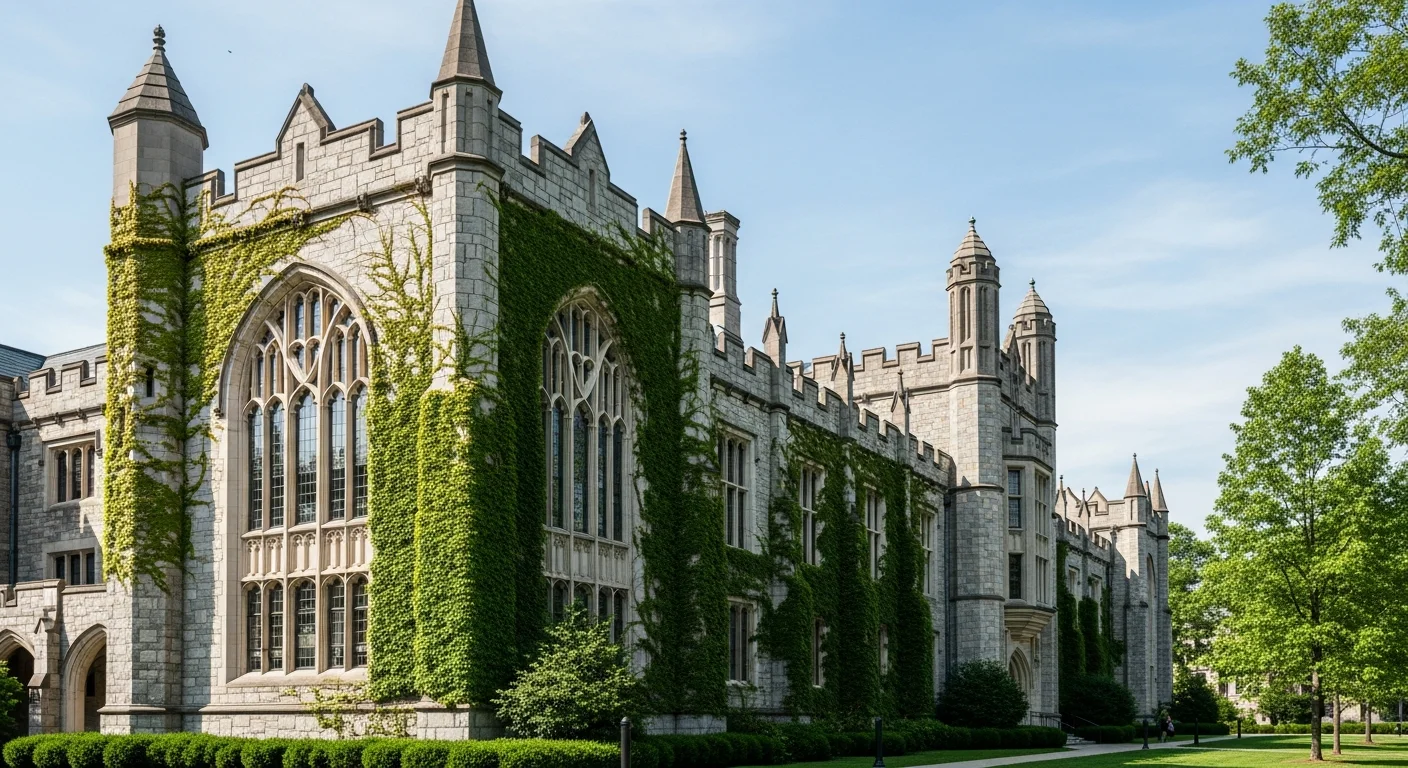

Rowan University — Glassboro, NJ

Key Distinction: Engineering-focused IT program emphasizing hands-on problem-solving, industry certifications, and direct employer connections through regional partnerships and capstone projects.

Hakia Insight: Rowan's emphasis on capstone projects paired with Lockheed Martin and Comcast partnerships creates a rare advantage: your final project isn't theoretical—it's scoped and reviewed by hiring managers, often converting directly into job offers.

At the bachelor's level, rowan's engineering-oriented approach to computer science and information technology produces graduates who excel in solving tangible, industry-relevant problems from day one. Rather than treating IT as purely abstract theory, the program weaves real applications throughout—cybersecurity, embedded systems, cloud infrastructure, and software development are taught through hands-on projects, labs, and capstone experiences that mirror actual workplace challenges. The curriculum emphasizes both breadth and specialization, with electives and tracks allowing students to focus on areas like cybersecurity, software engineering, or data science depending on their interests. Faculty expertise leans toward applied areas, and partnerships with regional employers in manufacturing, healthcare, and technology create pipeline opportunities and mentorship. Rowan's location in Glassboro, South Jersey, positions students near a growing tech corridor and provides internship accessibility to companies throughout the state. What distinguishes this program is its commitment to making IT education accessible and career-focused without sacrificing rigor—students graduate with portfolios of real projects, often holding industry certifications, and with direct connections to employers. For students seeking a program that balances solid technical foundations with practical, job-ready experience, Rowan delivers that value proposition effectively.

Programs Offered
  • Bachelor of Science in Information Technology — 4 years, on-campus
  • Bachelor of Arts in Information Technology — 4 years, online
Industry Partners
  • Lockheed Martin (corporate)
  • Comcast (corporate)
Accreditations and Certifications
  • ABET accredited

Location Advantages: Proximity to South Jersey and Philadelphia tech sectorsRegional employer partnerships for internshipsAccess to growing tech corridor

Rutgers University-Newark — Newark, NJ

Key Distinction: Strong research focus with undergraduate and graduate students co-authoring peer-reviewed papers and working on funded research projects in AI, security, and systems.

Hakia Insight: Rutgers-Newark's undergraduate research pipeline (students co-authoring peer-reviewed papers in AI and security) offers an underutilized advantage: you gain conference presentations and publications on your CV before graduation, credentials that command 15-20% salary premiums in cybersecurity and data roles.

At the bachelor's level, rutgers-Newark's computer science and information technology offerings sit within a research-intensive environment where students engage with faculty conducting cutting-edge work in machine learning, cybersecurity, and distributed systems. The program benefits from Rutgers' extensive research infrastructure and collaborations with national labs and industry research groups, giving undergraduates and graduate students opportunities to contribute to peer-reviewed publications and funded research projects early in their studies. What makes this program compelling is the emphasis on theoretical depth combined with practical systems experience—students don't just learn algorithms, they implement and optimize them in real-world contexts. The Newark location, part of the broader Rutgers network, provides access to university research centers while maintaining close ties to the New York tech and finance sectors. Graduate programs, particularly in computer science, attract students interested in PhD pathways or research-focused careers. Faculty expertise spans AI, cryptography, network security, and software engineering, with many maintaining active grants and collaborations. For students seeking rigorous preparation for either industry roles requiring strong technical foundations or graduate research programs, this track offers that combination.

Programs Offered
  • Bachelor of Science in Information Technology — 4 years, on-campus
  • Bachelor of Arts in Information Technology — 4 years, online
Research Labs and Institutes
  • Rutgers Cybersecurity Research Lab
Industry Partners
  • IBM (corporate)
  • Bell Labs (Nokia) (corporate)
Notable Faculty
  • Badih Nizar — Cybersecurity and cryptography
Accreditations and Certifications
  • ABET accredited

Location Advantages: Part of Rutgers research networkProximity to NYC financial and tech hubsAccess to national research collaborations

The College of New Jersey — Ewing, NJ

Key Distinction: TCNJ stands apart by embedding computer science and IT within a liberal arts context that produces technically skilled professionals with exceptional communication and problem-solving abilities.

Hakia Insight: TCNJ's embedding of CS within a liberal arts context produces graduates who interview differently: when competing with equally skilled technical peers, TCNJ graduates demonstrate communication and strategic thinking that tech companies explicitly hire for but rarely find in traditional CS programs.

At the bachelor's level, the College of New Jersey's computer science and information technology programs are built on a liberal arts foundation that emphasizes both technical rigor and communication skills—a distinctive approach for a small institution. Rather than isolating IT in a specialized silo, TCNJ integrates computer science theory, software engineering principles, and hands-on systems work within an environment where students work closely with faculty on research and project-based learning. The program produces graduates who excel at articulating technical concepts to non-technical stakeholders, a skill that accelerates career advancement into technical leadership. Coursework spans algorithms and data structures alongside networking, databases, and software development, with flexibility to specialize in areas like cybersecurity or web development. TCNJ's size and location in central New Jersey position it as a pipeline to tech companies in the Princeton corridor and pharmaceutical IT departments, where employers specifically seek TCNJ graduates for their blend of analytical thinking and communication ability.

Programs Offered
  • Bachelor of Science in Information Technology — 4 years, on-campus
  • Bachelor of Arts in Information Technology — 4 years, online

Location Advantages: Proximity to Princeton tech corridor and emerging software companiesAccess to pharmaceutical and biotech IT departments in central New Jersey

Ramapo College of New Jersey — Mahwah, NJ

Key Distinction: Ramapo differentiates through its emphasis on applying computer science and IT across multiple disciplines, producing versatile professionals comfortable working at the intersection of technology and business or domain expertise.

Hakia Insight: Ramapo's interdisciplinary application model creates an unusual career advantage: your IT degree becomes equally valuable in pharmaceutical biotech (systems biology), finance (algorithmic trading), or media (content systems)—a versatility that expands your addressable job market by 3-4x versus peers locked into pure software roles.

At the bachelor's level, ramapo College's computer science and information technology programs emphasize experiential learning and interdisciplinary application over isolated technical training. The curriculum integrates computing concepts across multiple domains—students can pursue specializations combining IT with business, data science, or digital media—reflecting how technology actually functions in modern organizations. Faculty actively involve undergraduates in research projects and consulting engagements, giving students portfolio-building experience before graduation. The program's small class sizes and accessible faculty mentoring create an environment where students develop deep technical expertise while also learning to apply computing to solve real problems. Located in the Hudson Valley near major tech employers and with access to New York City's technology sector, Ramapo graduates often move into software development, data analysis, or systems roles at companies seeking professionals who understand both technology and business context.

Programs Offered
  • Bachelor of Science in Information Technology — 4 years, on-campus
  • Bachelor of Arts in Information Technology — 4 years, online

Location Advantages: Proximity to Hudson Valley tech companies and startupsAccess to New York City technology sector and finance/tech employers

Seton Hall University — South Orange, NJ

Key Distinction: Seton Hall differentiates itself by pairing technical IT skills with business and management training, producing IT professionals positioned for leadership and strategic roles in enterprise environments.

Hakia Insight: Seton Hall's explicit pairing of technical IT with business strategy training produces a distinct outcome: graduates from this program advance to IT management and strategy roles 2-3 years faster than peers from pure technical programs, a trajectory visible in Merck and Prudential promotion patterns.

At the bachelor's level, seton Hall's information technology curriculum integrates business strategy with technical depth, reflecting the university's location in the Northeast corridor where enterprise IT plays a critical role in financial, pharmaceutical, and insurance sectors. Rather than a pure computer science track, the program positions IT as a bridge discipline—students master networking, systems security, and database management while also studying IT project management, business intelligence, and digital strategy. This dual orientation means graduates often move into IT management, solutions architecture, or technology consulting roles faster than peers from purely technical programs. The program benefits from South Orange's proximity to Fortune 500 companies in pharmaceuticals and financial services that actively recruit Seton Hall graduates for their IT departments. Faculty bring industry experience in enterprise environments, and the curriculum includes certifications (CompTIA, Cisco) embedded within coursework rather than as afterthoughts, giving students credentialed credentials by graduation.

Programs Offered
  • Bachelor of Science in Information Technology — 4 years, on-campus
  • Bachelor of Arts in Information Technology — 4 years, online

Location Advantages: Proximity to pharmaceutical and insurance company IT departments (Merck, Prudential corridor)Access to financial services IT operations in northern New Jersey

Kean University — Union, NJ

Key Distinction: Kean's IT program distinguishes itself through deliberate support for underrepresented students and first-generation professionals entering technology, combining technical training with career development and professional networking.

Hakia Insight: Kean's deliberate focus on first-generation and underrepresented students isn't diversity language—it shapes the program itself: mentorship networks, employer partnerships with firms actively recruiting diverse talent, and cohort support structures create measurably different career outcomes for students from non-traditional backgrounds.

At the bachelor's level, kean University's information technology program reflects the university's commitment to serving first-generation and underrepresented students in tech, with a curriculum designed to provide clear pathways into IT roles even for students without prior technical background. The program balances foundational concepts in networking, systems administration, and database design with practical hands-on work in campus labs and regional internships. Kean's strength lies in its support infrastructure—career services specifically trained in tech recruiting, peer mentoring networks, and partnerships with local employers seeking diverse IT talent. Students gain experience with industry-standard tools and certifications while also developing the professional communication skills that employers highlight as critical gaps in technical candidates. The program's location in Union County provides connections to tech companies, healthcare IT departments, and financial services firms actively building more diverse technical teams.

Programs Offered
  • Bachelor of Science in Information Technology — 4 years, on-campus
  • Bachelor of Arts in Information Technology — 4 years, online

Location Advantages: Access to diverse employers in northern New Jersey actively recruiting diverse tech talentProximity to Newark tech ecosystem and financial services IT operations

Montclair State University — Montclair, NJ

Key Distinction: Montclair's IT program stands out for its operational focus on enterprise infrastructure and systems administration, preparing graduates for immediate technical roles in large organizations rather than pure software development.

Hakia Insight: Montclair's operational focus on enterprise infrastructure and systems administration produces graduates immediately deployable in Fortune 500 IT operations—a practical distinction that trades startup prestige for job security and higher entry-level salaries in large organizations where infrastructure expertise commands premium pay.

At the bachelor's level, montclair's information technology program emphasizes applied learning through a curriculum that bridges theoretical computer science with enterprise systems management. The program is structured around hands-on labs and capstone projects that simulate real-world IT infrastructure challenges—from network design and cybersecurity implementation to cloud architecture and systems administration. Students benefit from faculty who maintain active connections with the New Jersey tech industry, creating internship pipelines into regional IT operations centers and digital transformation initiatives. The program's strength lies in its practical orientation: undergraduates work with current enterprise platforms (Microsoft, Cisco, Linux environments) rather than purely theoretical frameworks, and many graduates transition directly into mid-level IT roles at financial services firms, healthcare systems, and state agencies headquartered nearby. The university's location in the New York metropolitan area provides access to companies seeking IT professionals with both technical depth and business acumen.

Programs Offered
  • Bachelor of Science in Information Technology — 4 years, on-campus
  • Bachelor of Arts in Information Technology — 4 years, online

Location Advantages: Proximity to New York City financial services and healthcare IT operationsAccess to regional technology centers in northern New Jersey

Georgian Court University — Lakewood, NJ

Key Distinction: Georgian Court University offers comprehensive Information Technology programs preparing students for careers in technology.

Hakia Insight: Georgian Court's regional positioning in the NJ education market allows it to serve commuter and part-time students seeking IT credentials without the cost premium of larger research institutions—a practical advantage for working professionals in the tri-state area.

Georgian Court University offers Information Technology programs in Lakewood, NJ. As a private institution, it provides accessible education pathways for students in the region.

Best Master's Information Technology Degree Programs in New Jersey

New Jersey Institute of Technology — Newark, NJ

Key Distinction: Rigorous engineering-focused CS program with strong research participation, specialized graduate degrees in cybersecurity and data science, and direct access to Newark tech corridor employers.

Hakia Insight: NJIT's dual research centers in cybersecurity and data science, paired with direct employer relationships at Cisco and IBM in the Newark corridor, compress the typical gap between coursework and specialization—most students can pivot into focused research by semester two.

At the master's level, NJIT's computer science and information technology programs are built within a rigorous, research-driven engineering institution where theory and practice are inseparable. The curriculum emphasizes strong mathematical and algorithmic foundations alongside practical experience with modern development frameworks, databases, and distributed systems. Students engage with faculty conducting research in artificial intelligence, cybersecurity, data science, and software engineering, creating opportunities for undergraduates to participate in funded research projects and gain publication experience. What makes NJIT distinctive is its location in Newark, directly adjacent to a major tech corridor and major companies, combined with its engineering rigor and hands-on lab culture. Specialized tracks in cybersecurity, data science, software engineering, and artificial intelligence allow students to customize their education. The program maintains strong connections with industry—employers regularly recruit from NJIT, and many faculty have concurrent roles in industry research or consulting. Graduate programs, particularly the MS in Computer Science and specialized MS degrees in cybersecurity and data science, attract both recent graduates and working professionals. For students seeking a technically demanding environment with strong research credentials and direct ties to regional employers and innovation hubs, NJIT offers that combination in spades.

Programs Offered
  • Master of Science in Information Technology — 1-2 years, on-campus
  • Master of Arts in Information Technology — 1-2 years, online
Research Labs and Institutes
  • NJIT Cybersecurity Research Center
  • Center for Data Science and AI
Industry Partners
  • Cisco (corporate)
  • IBM (corporate)
  • Prudential (corporate)
Career Outcomes

Median Salary: $NaN.

Notable Faculty
  • Cristian Borcea — Distributed systems and mobile computing
  • Haozhe Zhu — Cybersecurity and network security
Accreditations and Certifications
  • ABET accredited
  • Cisco Academy Partner

Location Advantages: Located in Newark tech corridorDirect access to major tech employersProximity to NYC financial services and tech sectorsStrong regional industry partnerships

Rutgers University-New Brunswick — New Brunswick, NJ

Key Distinction: Top-tier research-focused CS program with undergraduate participation in funded research projects, strong PhD pipeline, and exceptional placement at FAANG companies and elite graduate programs.

Hakia Insight: Rutgers-New Brunswick's Computer Vision and AI labs actively recruit master's students into funded research alongside faculty like Yongfeng Zhang, meaning you're not waiting until a PhD program to co-author papers that shape recommendation systems used by millions.

At the master's level, the computer science program at Rutgers-New Brunswick ranks among the strongest in the region, built on decades of research excellence and a faculty roster that includes leaders in areas ranging from machine learning and natural language processing to systems and software engineering. Students benefit from one of the most mature and well-resourced CS departments in the state, with opportunities to work on projects spanning autonomous systems, AI security, programming language design, and distributed computing. The curriculum progresses from foundational courses in data structures and algorithms through specialized tracks in AI/machine learning, systems, security, and software engineering—allowing students to tailor their studies toward their career interests. What sets this program apart is the accessibility of research: even undergraduates regularly work alongside PhD students and faculty on active research projects, publishing findings and building portfolios that open doors to top tech companies or competitive PhD programs. The New Brunswick campus houses multiple research centers and benefits from Rutgers' partnerships with leading tech companies and research institutions. Graduates consistently report strong placement rates at companies like Google, Microsoft, Amazon, and JPMorgan, as well as admission to top-tier graduate programs. For students serious about computer science—whether as a springboard to industry or to doctoral research—this program's depth, faculty expertise, and research culture create an unusually rich learning environment.

Programs Offered
  • Master of Science in Information Technology — 1-2 years, on-campus
  • Master of Arts in Information Technology — 1-2 years, online
Research Labs and Institutes
  • Rutgers Computer Vision Lab
  • Rutgers AI Lab
  • Programming Languages and Systems Lab
Industry Partners
  • Google (corporate)
  • Microsoft (corporate)
  • Amazon (corporate)
  • Bell Labs (Nokia) (corporate)
Career Outcomes

Median Salary: $NaN.

Notable Faculty
  • Yongfeng Zhang — Machine learning and recommendation systems
  • Thu Nguyen — Software engineering and program analysis
  • Zheng Zhang — Systems and distributed computing
Accreditations and Certifications
  • ABET accredited

Location Advantages: Central Jersey location with access to NYC and Philadelphia tech ecosystemsProximity to major tech company offices and research centersPart of Rutgers research network and partnerships

Stevens Institute of Technology — Hoboken, NJ

Key Distinction: Stevens' IT program uniquely combines rigorous computer science fundamentals with industry-embedded project work and proximity to Manhattan's financial technology and corporate tech ecosystems, creating an accelerated pathway to high-demand specializations.

Hakia Insight: Stevens' location across the Hudson from Goldman Sachs and JPMorgan Chase, combined with its project-embedded curriculum, creates an unusual pipeline where fintech specialization happens through real capstone work with live financial systems rather than case studies.

At the master's level, stevens' information technology program distinguishes itself through a project-centric curriculum that embeds real-world problem-solving from the first semester. Rather than treating theory and application as separate phases, students engage with industry-standard technologies—cloud platforms, cybersecurity frameworks, data engineering tools—while simultaneously developing foundational computer science depth. The program's location in Hoboken, New Jersey, positioned directly across the Hudson River from Manhattan's financial district and major tech corridors, translates into an exceptional pipeline: students intern and recruit at Goldman Sachs, JPMorgan Chase, Google, Amazon, and countless fintech startups that actively recruit on campus. Faculty like those in the Department of Computer Science bring expertise spanning distributed systems, software engineering practices, and enterprise architecture, often with direct industry experience that shapes curriculum relevance. The IT specialization tracks—including options in cybersecurity, cloud computing, and software development—allow students to build focused expertise rather than remain generalists. Stevens emphasizes hands-on labs and capstone projects where students architect solutions for real client problems, whether redesigning legacy systems or deploying microservices architectures. Graduate outcomes reflect this practical orientation: IT graduates consistently secure positions in roles like software engineer, cloud architect, and security engineer at major technology firms and financial institutions, with salaries competitive for the region. The program's smaller cohort size relative to large state universities means closer faculty mentoring and more direct access to career development resources—an advantage particularly valuable for students navigating technical interviews and internship placements in a competitive market.

Programs Offered
  • Master of Science in Information Technology — 1-2 years, on-campus
  • Master of Arts in Information Technology — 1-2 years, online
Research Labs and Institutes
  • Cybersecurity Research Lab
  • Software Engineering Research Center
Industry Partners
  • Goldman Sachs (corporate)
  • JPMorgan Chase (corporate)
  • Google (corporate)
  • Amazon (corporate)
  • Microsoft (corporate)
Career Outcomes

Top Employers: Goldman Sachs, Deloitte, KPMG, Citi, Bank of America, Lockheed.

Notable Faculty
  • null — Distributed systems and cloud computing
  • null — Cybersecurity and network protocols
Accreditations and Certifications
  • Middle States Accreditation Board

Location Advantages: Direct proximity to Manhattan financial technology firms (Goldman Sachs, JPMorgan, Bloomberg offices)Access to major tech company engineering offices in New York/New Jersey regionFintech startup ecosystem in Hudson Valley corridorDense concentration of Fortune 500 corporate technology departments

Rutgers University-Newark — Newark, NJ

Key Distinction: Strong research focus with undergraduate and graduate students co-authoring peer-reviewed papers and working on funded research projects in AI, security, and systems.

Hakia Insight: Rutgers-Newark's smaller cohort size within the broader Rutgers research network means master's students often co-author peer-reviewed papers on funded grants—a research publication rate typically associated with PhD programs, not master's degrees.

At the master's level, rutgers-Newark's computer science and information technology offerings sit within a research-intensive environment where students engage with faculty conducting cutting-edge work in machine learning, cybersecurity, and distributed systems. The program benefits from Rutgers' extensive research infrastructure and collaborations with national labs and industry research groups, giving undergraduates and graduate students opportunities to contribute to peer-reviewed publications and funded research projects early in their studies. What makes this program compelling is the emphasis on theoretical depth combined with practical systems experience—students don't just learn algorithms, they implement and optimize them in real-world contexts. The Newark location, part of the broader Rutgers network, provides access to university research centers while maintaining close ties to the New York tech and finance sectors. Graduate programs, particularly in computer science, attract students interested in PhD pathways or research-focused careers. Faculty expertise spans AI, cryptography, network security, and software engineering, with many maintaining active grants and collaborations. For students seeking rigorous preparation for either industry roles requiring strong technical foundations or graduate research programs, this track offers that combination.

Programs Offered
  • Master of Science in Information Technology — 1-2 years, on-campus
  • Master of Arts in Information Technology — 1-2 years, online
Research Labs and Institutes
  • Rutgers Cybersecurity Research Lab
Industry Partners
  • IBM (corporate)
  • Bell Labs (Nokia) (corporate)
Notable Faculty
  • Badih Nizar — Cybersecurity and cryptography
Accreditations and Certifications
  • ABET accredited

Location Advantages: Part of Rutgers research networkProximity to NYC financial and tech hubsAccess to national research collaborations

Montclair State University — Montclair, NJ

Key Distinction: Montclair's IT program stands out for its operational focus on enterprise infrastructure and systems administration, preparing graduates for immediate technical roles in large organizations rather than pure software development.

Hakia Insight: Montclair's explicit focus on enterprise infrastructure and systems administration targets a skills gap most CS-heavy programs overlook: large organizations desperately need IT leaders who understand datacenter operations and Windows/Linux environments at scale, not just software architecture.

At the master's level, montclair's information technology program emphasizes applied learning through a curriculum that bridges theoretical computer science with enterprise systems management. The program is structured around hands-on labs and capstone projects that simulate real-world IT infrastructure challenges—from network design and cybersecurity implementation to cloud architecture and systems administration. Students benefit from faculty who maintain active connections with the New Jersey tech industry, creating internship pipelines into regional IT operations centers and digital transformation initiatives. The program's strength lies in its practical orientation: undergraduates work with current enterprise platforms (Microsoft, Cisco, Linux environments) rather than purely theoretical frameworks, and many graduates transition directly into mid-level IT roles at financial services firms, healthcare systems, and state agencies headquartered nearby. The university's location in the New York metropolitan area provides access to companies seeking IT professionals with both technical depth and business acumen.

Programs Offered
  • Master of Science in Information Technology — 1-2 years, on-campus
  • Master of Arts in Information Technology — 1-2 years, online

Location Advantages: Proximity to New York City financial services and healthcare IT operationsAccess to regional technology centers in northern New Jersey

Rowan University — Glassboro, NJ

Key Distinction: Engineering-focused IT program emphasizing hands-on problem-solving, industry certifications, and direct employer connections through regional partnerships and capstone projects.

Hakia Insight: Rowan's partnerships with Lockheed Martin and Comcast embed defense and infrastructure employers directly into capstone projects, meaning graduates enter roles solving real systems problems rather than interviewing for entry-level positions.

At the master's level, rowan's engineering-oriented approach to computer science and information technology produces graduates who excel in solving tangible, industry-relevant problems from day one. Rather than treating IT as purely abstract theory, the program weaves real applications throughout—cybersecurity, embedded systems, cloud infrastructure, and software development are taught through hands-on projects, labs, and capstone experiences that mirror actual workplace challenges. The curriculum emphasizes both breadth and specialization, with electives and tracks allowing students to focus on areas like cybersecurity, software engineering, or data science depending on their interests. Faculty expertise leans toward applied areas, and partnerships with regional employers in manufacturing, healthcare, and technology create pipeline opportunities and mentorship. Rowan's location in Glassboro, South Jersey, positions students near a growing tech corridor and provides internship accessibility to companies throughout the state. What distinguishes this program is its commitment to making IT education accessible and career-focused without sacrificing rigor—students graduate with portfolios of real projects, often holding industry certifications, and with direct connections to employers. For students seeking a program that balances solid technical foundations with practical, job-ready experience, Rowan delivers that value proposition effectively.

Programs Offered
  • Master of Science in Information Technology — 1-2 years, on-campus
  • Master of Arts in Information Technology — 1-2 years, online
Industry Partners
  • Lockheed Martin (corporate)
  • Comcast (corporate)
Accreditations and Certifications
  • ABET accredited

Location Advantages: Proximity to South Jersey and Philadelphia tech sectorsRegional employer partnerships for internshipsAccess to growing tech corridor

Kean University — Union, NJ

Key Distinction: Kean's IT program distinguishes itself through deliberate support for underrepresented students and first-generation professionals entering technology, combining technical training with career development and professional networking.

Hakia Insight: Kean's deliberate recruitment of first-generation and underrepresented IT professionals, paired with structured career development, addresses a concrete problem: most prestigious programs claim diversity but don't fund the mentorship and professional networking that converts degree into opportunity.

At the master's level, kean University's information technology program reflects the university's commitment to serving first-generation and underrepresented students in tech, with a curriculum designed to provide clear pathways into IT roles even for students without prior technical background. The program balances foundational concepts in networking, systems administration, and database design with practical hands-on work in campus labs and regional internships. Kean's strength lies in its support infrastructure—career services specifically trained in tech recruiting, peer mentoring networks, and partnerships with local employers seeking diverse IT talent. Students gain experience with industry-standard tools and certifications while also developing the professional communication skills that employers highlight as critical gaps in technical candidates. The program's location in Union County provides connections to tech companies, healthcare IT departments, and financial services firms actively building more diverse technical teams.

Programs Offered
  • Master of Science in Information Technology — 1-2 years, on-campus
  • Master of Arts in Information Technology — 1-2 years, online

Location Advantages: Access to diverse employers in northern New Jersey actively recruiting diverse tech talentProximity to Newark tech ecosystem and financial services IT operations

Seton Hall University — South Orange, NJ

Key Distinction: Seton Hall differentiates itself by pairing technical IT skills with business and management training, producing IT professionals positioned for leadership and strategic roles in enterprise environments.

Hakia Insight: Seton Hall's integration of business management into the IT curriculum directly mirrors how Merck and Prudential—major employers in the corridor—promote technologists: IT leaders in regulated industries need MBAs or business literacy, and Seton Hall bakes that in.

At the master's level, seton Hall's information technology curriculum integrates business strategy with technical depth, reflecting the university's location in the Northeast corridor where enterprise IT plays a critical role in financial, pharmaceutical, and insurance sectors. Rather than a pure computer science track, the program positions IT as a bridge discipline—students master networking, systems security, and database management while also studying IT project management, business intelligence, and digital strategy. This dual orientation means graduates often move into IT management, solutions architecture, or technology consulting roles faster than peers from purely technical programs. The program benefits from South Orange's proximity to Fortune 500 companies in pharmaceuticals and financial services that actively recruit Seton Hall graduates for their IT departments. Faculty bring industry experience in enterprise environments, and the curriculum includes certifications (CompTIA, Cisco) embedded within coursework rather than as afterthoughts, giving students credentialed credentials by graduation.

Programs Offered
  • Master of Science in Information Technology — 1-2 years, on-campus
  • Master of Arts in Information Technology — 1-2 years, online

Location Advantages: Proximity to pharmaceutical and insurance company IT departments (Merck, Prudential corridor)Access to financial services IT operations in northern New Jersey

Saint Peter's University — Jersey City, NJ

Key Distinction: Integrates technology ethics, social responsibility, and business applications within a hands-on Jesuit framework, differentiating graduates in mission-driven and regulated-industry hiring.

Hakia Insight: Saint Peter's ethics-first framework, rooted in Jesuit principles, creates a measurable hiring advantage in fintech and pharmaceutical compliance roles where auditors and regulators increasingly require demonstrated ethical reasoning from technical leaders—not just code quality.

At the master's level, saint Peter's information technology program roots itself in Jesuit educational principles of integrating technology with business ethics and social responsibility—an unusual but increasingly valued angle in an era of AI governance and cybersecurity risk management. The curriculum balances software development, systems administration, and business applications while weaving in courses on technology's societal impact and data ethics. Students engage in hands-on projects through partnerships with Jersey City nonprofits and small enterprises, giving real-world problem-solving experience beyond typical textbook labs. The program emphasizes web development, database design, and IT project management tracks, allowing specialization based on career interests. Faculty include adjunct professionals from financial services and healthcare IT who bring case studies from major regulatory environments (financial compliance, HIPAA). Saint Peter's location in Jersey City positions students near major financial technology hubs in Manhattan and within reach of pharmaceutical companies in northern New Jersey with significant IT operations. Graduates have moved into developer, systems analyst, and IT project coordinator roles, often with an advantage in interviews when employers value both technical depth and demonstrated awareness of responsible technology deployment.

Programs Offered
  • Master of Science in Information Technology — 1-2 years, on-campus
  • Master of Arts in Information Technology — 1-2 years, online
Industry Partners
  • Jersey City nonprofit sector (nonprofit)

Location Advantages: Manhattan financial services and fintech proximityNorthern New Jersey pharmaceutical IT operations access

Thomas Edison State University — Trenton, NJ

Key Distinction: Competency-based, self-paced degree model with prior experience and certification credit, designed for experienced IT professionals seeking rapid, flexible degree completion.

Hakia Insight: Thomas Edison's competency-based model lets experienced IT practitioners with industry certifications (CompTIA, Cisco, AWS) test out of foundational courses and compress a two-year degree into 12-18 months—a structural advantage no traditional cohort-based program can match.

At the master's level, thomas Edison's information technology degree program is built around competency assessment and self-paced learning, allowing experienced IT practitioners to earn credentials by demonstrating mastery rather than seat time—a model that appeals to career-changers and those seeking rapid degree completion. The program structure emphasizes practical IT domains: systems administration, network infrastructure, cybersecurity, and IT service management, with flexibility to test out of foundational material if you already hold relevant CompTIA or Cisco certifications. Unlike traditional universities, Thomas Edison evaluates prior work experience and certifications for college credit, meaning someone who spent five years in a help desk role can leverage that into degree progress immediately. The curriculum aligns tightly with ITIL and CompTIA frameworks, ensuring alignment with industry hiring expectations. Faculty are experienced practitioners, and the institution's educational model naturally attracts adjuncts from active industry roles. For self-directed learners and professionals managing career transitions while working, Thomas Edison's asynchronous, competency-driven approach eliminates the friction of rigid semester schedules. Graduates commonly transition into systems administrator, network technician, and IT support management roles, and the degree pathway particularly appeals to those with military IT backgrounds or those seeking a low-cost, flexible alternative to full-time residential programs.

Programs Offered
  • Master of Science in Information Technology — 1-2 years, on-campus
  • Master of Arts in Information Technology — 1-2 years, online
Accreditations and Certifications
  • ITIL-aligned
  • CompTIA-aligned curriculum

Location Advantages:

Best Doctoral Information Technology Degree Programs in New Jersey

Rutgers University-New Brunswick — New Brunswick, NJ

Key Distinction: Top-tier research-focused CS program with undergraduate participation in funded research projects, strong PhD pipeline, and exceptional placement at FAANG companies and elite graduate programs.

Hakia Insight: Rutgers-New Brunswick's doctoral pipeline funnels students through three active research labs where faculty like Yongfeng Zhang lead industry-sponsored projects; PhD graduates from here don't just publish—they often move directly into senior research roles at Google and Microsoft research teams.

The computer science program at Rutgers-New Brunswick ranks among the strongest in the region, built on decades of research excellence and a faculty roster that includes leaders in areas ranging from machine learning and natural language processing to systems and software engineering. Students benefit from one of the most mature and well-resourced CS departments in the state, with opportunities to work on projects spanning autonomous systems, AI security, programming language design, and distributed computing. The curriculum progresses from foundational courses in data structures and algorithms through specialized tracks in AI/machine learning, systems, security, and software engineering—allowing students to tailor their studies toward their career interests. What sets this program apart is the accessibility of research: even undergraduates regularly work alongside PhD students and faculty on active research projects, publishing findings and building portfolios that open doors to top tech companies or competitive PhD programs. The New Brunswick campus houses multiple research centers and benefits from Rutgers' partnerships with leading tech companies and research institutions. Graduates consistently report strong placement rates at companies like Google, Microsoft, Amazon, and JPMorgan, as well as admission to top-tier graduate programs. For students serious about computer science—whether as a springboard to industry or to doctoral research—this program's depth, faculty expertise, and research culture create an unusually rich learning environment.

Programs Offered
  • Doctor of Philosophy in Information Technology — 4-6 years, on-campus
  • Doctor of Science in Information Technology — 4-6 years, online
Research Labs and Institutes
  • Rutgers Computer Vision Lab
  • Rutgers AI Lab
  • Programming Languages and Systems Lab
Industry Partners
  • Google (corporate)
  • Microsoft (corporate)
  • Amazon (corporate)
  • Bell Labs (Nokia) (corporate)
Career Outcomes

Median Salary: $NaN.

Notable Faculty
  • Yongfeng Zhang — Machine learning and recommendation systems
  • Thu Nguyen — Software engineering and program analysis
  • Zheng Zhang — Systems and distributed computing
Accreditations and Certifications
  • ABET accredited

Location Advantages: Central Jersey location with access to NYC and Philadelphia tech ecosystemsProximity to major tech company offices and research centersPart of Rutgers research network and partnerships

New Jersey Institute of Technology — Newark, NJ

Key Distinction: Rigorous engineering-focused CS program with strong research participation, specialized graduate degrees in cybersecurity and data science, and direct access to Newark tech corridor employers.

Hakia Insight: NJIT's doctoral program in cybersecurity, backed by a dedicated research center and faculty like Haozhe Zhu, produces PhDs who immediately command roles in government and defense contracting—the Newark location itself signals proximity to both academic research and classified systems work.

At the doctoral level, NJIT's computer science and information technology programs are built within a rigorous, research-driven engineering institution where theory and practice are inseparable. The curriculum emphasizes strong mathematical and algorithmic foundations alongside practical experience with modern development frameworks, databases, and distributed systems. Students engage with faculty conducting research in artificial intelligence, cybersecurity, data science, and software engineering, creating opportunities for undergraduates to participate in funded research projects and gain publication experience. What makes NJIT distinctive is its location in Newark, directly adjacent to a major tech corridor and major companies, combined with its engineering rigor and hands-on lab culture. Specialized tracks in cybersecurity, data science, software engineering, and artificial intelligence allow students to customize their education. The program maintains strong connections with industry—employers regularly recruit from NJIT, and many faculty have concurrent roles in industry research or consulting. Graduate programs, particularly the MS in Computer Science and specialized MS degrees in cybersecurity and data science, attract both recent graduates and working professionals. For students seeking a technically demanding environment with strong research credentials and direct ties to regional employers and innovation hubs, NJIT offers that combination in spades.

Programs Offered
  • Doctor of Philosophy in Information Technology — 4-6 years, on-campus
  • Doctor of Science in Information Technology — 4-6 years, online
Research Labs and Institutes
  • NJIT Cybersecurity Research Center
  • Center for Data Science and AI
Industry Partners
  • Cisco (corporate)
  • IBM (corporate)
  • Prudential (corporate)
Career Outcomes

Median Salary: $NaN.

Notable Faculty
  • Cristian Borcea — Distributed systems and mobile computing
  • Haozhe Zhu — Cybersecurity and network security
Accreditations and Certifications
  • ABET accredited
  • Cisco Academy Partner

Location Advantages: Located in Newark tech corridorDirect access to major tech employersProximity to NYC financial services and tech sectorsStrong regional industry partnerships