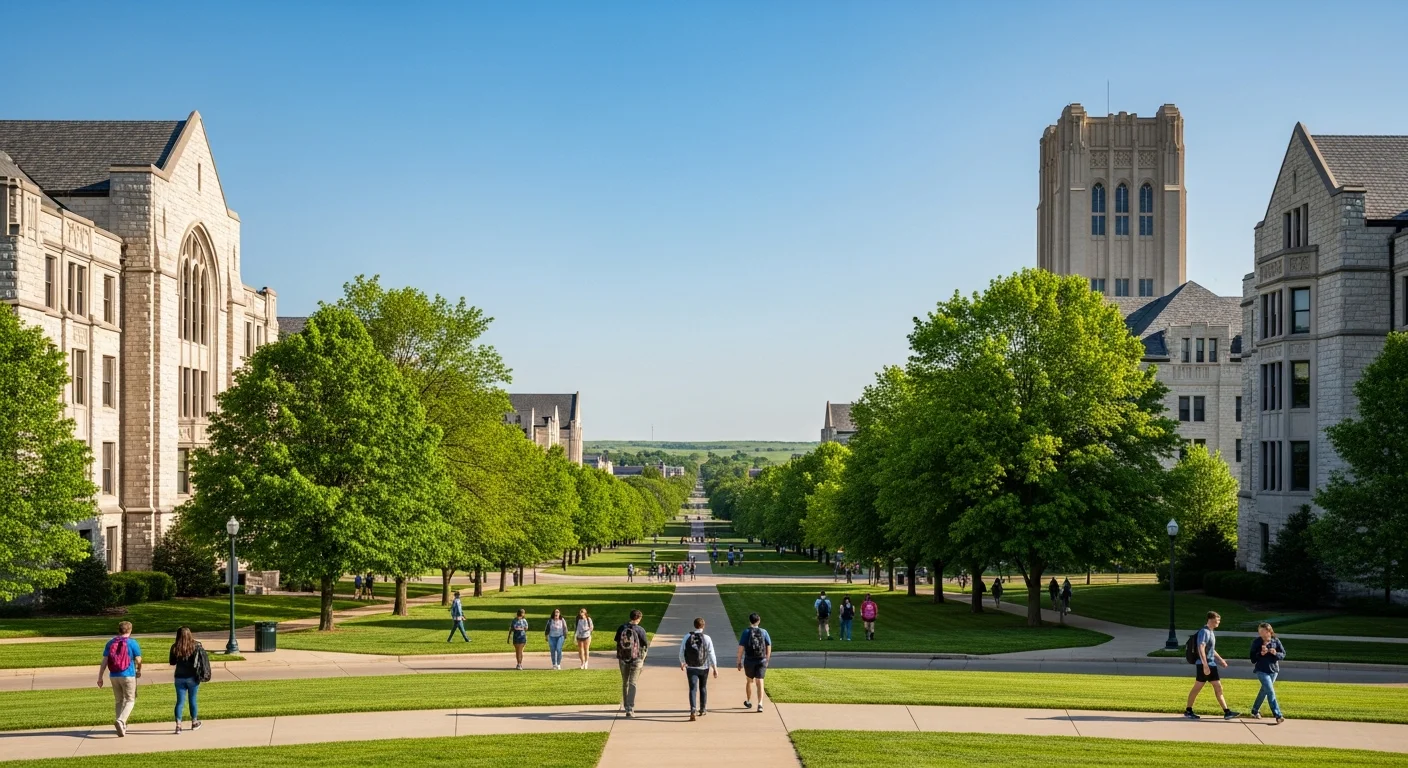
University campus near Manhattan, Kansas
Updated February 2026

Best Cybersecurity Degree Programs in Manhattan, Kansas — 2026 Rankings

3 accredited cybersecurity programs near Manhattan ranked by IPEDS data. 1 NSA-designated school. Median cybersecurity salary: $102,000. An estimated 110 open positions in the metro area.

#1 ProgramKansas State University
Median Salary$102,000
Schools3
Job Growth+33%

Key Takeaways

3 cybersecurity programs from 3 public and 0 private institutions

2 schools physically in Manhattan, plus 1 within 50 miles. Tuition ranges from $5,976 (Manhattan Area Technical College) to $9,964 (Kansas State University).

IPEDS 2023

Median cybersecurity salary: $102,000 — 18% below the national median

Security engineers earn up to $110,160, while cybersecurity managers command $147,900 in the Manhattan metro area. Source: BLS OEWS Kansas state median, May 2024.

BLS OEWS May 2024

An estimated 110 open cybersecurity positions in the Manhattan metro area

Kansas has 3,000 total cybersecurity openings — 4% concentrated in the Manhattan metro. Nationally, 26% of cybersecurity roles remain unfilled.

CyberSeek/CompTIA 2025

1 NSA Center of Academic Excellence designated school

Kansas State University hold NSA/DHS CAE designation — the federal gold standard for cybersecurity education. CAE students may qualify for CyberCorps: Scholarship for Service (full tuition + stipend).

NSA CAE Community

Updated February 2026

On This Page

Best Cybersecurity Degree Programs in Manhattan, Kansas

Bachelor's Cybersecurity Degree Programs in Manhattan, Kansas

2 programs$91,000 median salary93% avg grad rate
2
Programs
$91,000
Median Salary
$9,714/yr
Avg Tuition
93%
Avg Grad Rate

Hakia ranks 2 accredited bachelor's cybersecurity programs within 50 miles of Manhattan — 2 public institutions. 1 is physically located in Manhattan, with the rest accessible via short commutes. The top-ranked programs include Kansas State University, Washburn University.

Annual tuition ranges from $9,464 to $9,964 (average: $9,714). A four-year cybersecurity degree covers core topics including network defense, ethical hacking, digital forensics, and security policy — preparing graduates for roles as security analyst, penetration tester, or incident response specialist. The average graduation rate across these programs is 93%.

Graduates with a bachelor's degree in cybersecurity from Manhattan-area schools can expect starting salaries in the range of $89,760 to $96,900 in the local market, with roles such as security analyst, penetration tester, or incident response specialist. The Manhattan metro area has an estimated 110 open cybersecurity positions, and the BLS projects +33% job growth through 2033.

Kansas State University holds NSA Center of Academic Excellence (CAE) designation at this level — the federal gold standard for cybersecurity education. CAE students may qualify for the CyberCorps: Scholarship for Service program, covering full tuition plus a stipend.

Show:

Earn your bachelor's in Cybersecurity

(Sponsored)

Loading programs...

🥇

Kansas State University

PublicNSA CAE
Manhattan, KS
$9,964
Tuition/yr
$332
Per Credit
80.0
Score
Website
🥈

Washburn University

Public
Near Manhattan, KS
$9,464
Tuition/yr
$315
Per Credit
93%
Grad Rate
75.0
Score
Website

Complete Cybersecurity Degree Program Rankings in Manhattan, Kansas

Best Associate's Cybersecurity Degree Programs in Manhattan, Kansas

Hakia ranks **1 accredited associate's cybersecurity program** within 50 miles of Manhattan — 1 public institution. 1 is physically located in Manhattan, with the rest accessible via short commutes. The top-ranked programs include **Manhattan Area Technical College**. Tuition for associate's programs ranges from **$5,976** to **$5,976** per year. Community colleges typically offer the most affordable entry into cybersecurity, and many have articulation agreements with nearby four-year universities for seamless credit transfer. Students can complete foundational coursework in networking, operating systems, and security fundamentals while earning industry certifications like CompTIA Security+ or CySA+. Graduates with a associate's degree in cybersecurity from Manhattan-area schools can expect starting salaries in the range of **$66,300 to $79,560** in the local market, with roles such as SOC analyst, IT security technician, or network security associate. The Manhattan metro area has an estimated **110 open cybersecurity positions**, and the BLS projects **+33% job growth** through 2033.

  1. #1. Manhattan Area Technical College

    Hakia ranks Manhattan Area Technical College as the #1 associate's in cybersecurity degree program in Manhattan, Kansas. This public institution in Manhattan, KS has annual tuition of $5,976 ($199/credit). Ranking score: 80.0.

Best Bachelor's Cybersecurity Degree Programs in Manhattan, Kansas

Hakia ranks **2 accredited bachelor's cybersecurity programs** within 50 miles of Manhattan — 2 public institutions. 1 is physically located in Manhattan, with the rest accessible via short commutes. The top-ranked programs include **Kansas State University**, **Washburn University**. Annual tuition ranges from **$9,464** to **$9,964** (average: $9,714). A four-year cybersecurity degree covers core topics including network defense, ethical hacking, digital forensics, and security policy — preparing graduates for roles as security analyst, penetration tester, or incident response specialist. The average graduation rate across these programs is **93%**. Graduates with a bachelor's degree in cybersecurity from Manhattan-area schools can expect starting salaries in the range of **$89,760 to $96,900** in the local market, with roles such as security analyst, penetration tester, or incident response specialist. The Manhattan metro area has an estimated **110 open cybersecurity positions**, and the BLS projects **+33% job growth** through 2033. **Kansas State University** holds NSA Center of Academic Excellence (CAE) designation at this level — the federal gold standard for cybersecurity education. CAE students may qualify for the CyberCorps: Scholarship for Service program, covering full tuition plus a stipend.

  1. #1. Kansas State University

    Hakia ranks Kansas State University as the #1 bachelor's in cybersecurity degree program in Manhattan, Kansas. This public institution in Manhattan, KS has annual tuition of $9,964 ($332/credit). Ranking score: 80.0. NSA/DHS Center of Academic Excellence designation: CAE-R.

  2. #2. Washburn University

    Hakia ranks Washburn University as the #2 bachelor's in cybersecurity degree program in Manhattan, Kansas. This public institution in Near Manhattan, KS has annual tuition of $9,464 ($315/credit) and a 93% graduation rate. Ranking score: 75.0.

Best Doctoral Cybersecurity Degree Programs in Manhattan, Kansas

Hakia ranks **1 accredited doctoral cybersecurity program** within 50 miles of Manhattan — 1 public institution. 1 is physically located in Manhattan, with the rest accessible via short commutes. The top-ranked programs include **Kansas State University**. Doctoral program tuition ranges from **$9,964** to **$9,964** per year, though many programs offer research assistantships, teaching fellowships, or full-tuition waivers. Ph.D. programs in cybersecurity typically take 4-6 years and focus on original research in areas like cryptography, AI-driven threat detection, or privacy engineering. Graduates with a doctoral degree in cybersecurity from Manhattan-area schools can expect starting salaries in the range of **$124,440 to $147,900** in the local market, with roles such as chief information security officer, research scientist, or university professor. The Manhattan metro area has an estimated **110 open cybersecurity positions**, and the BLS projects **+33% job growth** through 2033. **Kansas State University** holds NSA Center of Academic Excellence (CAE) designation at this level — the federal gold standard for cybersecurity education. CAE students may qualify for the CyberCorps: Scholarship for Service program, covering full tuition plus a stipend.

  1. #1. Kansas State University

    Hakia ranks Kansas State University as the #1 doctoral in cybersecurity degree program in Manhattan, Kansas. This public institution in Manhattan, KS has annual tuition of $9,964 ($332/credit). Ranking score: 80.0. NSA/DHS Center of Academic Excellence designation: CAE-R.

Why Study Cybersecurity in Manhattan, Kansas

Manhattan is home to a growing cybersecurity education ecosystem with 3 accredited programs across 1 associate's, 2 bachelor's, 1 doctoral degree levels within 50 miles. 2 of these institutions are physically located in Manhattan, with the remaining schools accessible via short commutes from surrounding communities in the Manhattan metro area.

1 school near Manhattan holds NSA Center of Academic Excellence (CAE) designation: Kansas State University. The CAE program, jointly sponsored by the NSA and DHS, certifies schools whose cybersecurity curricula meet rigorous federal standards aligned with the NICE Cybersecurity Workforce Framework. Students at CAE-designated schools may qualify for the CyberCorps: Scholarship for Service program, which covers full tuition plus a $25,000-$34,000 annual stipend in exchange for government service after graduation.

The Manhattan metro area cybersecurity job market is substantial, with an estimated 110 open positions and a median salary of $102,000 for information security analysts (BLS OEWS May 2024). The Bureau of Labor Statistics projects +33% job growth for cybersecurity roles through 2033, making it one of the fastest-growing occupations in the U.S. economy. For students in Manhattan, this translates to strong local hiring prospects upon graduation.

Among the top-ranked programs, Kansas State University leads the bachelor's rankings. See our complete rankings below for detailed program comparisons across all degree levels.

$102,000
Median Cybersecurity Salary in Manhattan
18% below the national median, but Manhattan's lower cost of living can offset the difference. Entry-level analysts start around $89,760.

Source: BLS OEWS Kansas state median, May 2024

Cybersecurity Salaries by Role: Manhattan vs. National Average

RoleManhattan MetroNational MedianDifference
Security Analyst
$89,760
$109,921
-18%
Penetration Tester
$96,900
$118,665
-18%
Security Engineer
$110,160
$134,903
-18%
Security Architect
$124,440
$152,390
-18%
Cybersecurity Manager / CISO
$147,900
$181,120
-18%

Source: BLS OEWS Kansas state median, May 2024. Role estimates derived from BLS SOC 15-1212 median.

Cybersecurity Salaries in Manhattan: What to Expect by Role

Cybersecurity professionals in the Manhattan metro area earn a median salary of $102,000, which is 18% below the national median of $124,910 (BLS OEWS May 2024, SOC 15-1212: Information Security Analysts). This positions Manhattan as a market where cybersecurity salaries are offset by Manhattan's generally lower cost of living compared to coastal tech hubs.

Entry-level security analysts in Manhattan can expect starting salaries around $89,760, making cybersecurity one of the highest-paying entry points in the tech sector. With 2-5 years of experience, penetration testers — who simulate cyberattacks to identify vulnerabilities — earn approximately $96,900. Senior technical roles like security engineers command $110,160, while security architects who design enterprise defense systems earn up to $124,440.

At the management level, cybersecurity managers and CISOs in the Manhattan metro area can earn $147,900 or more — a 65% premium over entry-level positions. This career trajectory from analyst to manager typically spans 8-12 years, with certifications like CISSP (82,494 openings nationally), CompTIA Security+ (70,019 openings), and CISA (52,337 openings) significantly accelerating advancement and salary growth.

Security clearances provide an additional salary boost of approximately $25,000 per year. Professionals with Top Secret/SCI clearances can earn between $104,000 and $185,000 nationally, making this a particularly lucrative path for graduates near Manhattan. For a deeper dive into cybersecurity compensation trends, see our Cybersecurity Analyst Salary Guide. You can also explore related fields like Information Security and Network Administration for adjacent career paths.

Top Cybersecurity Employers in Manhattan

The Manhattan cybersecurity job market spans 3 major sectors, with employers actively recruiting for roles ranging from entry-level SOC analysts to senior security architects. Here are the key employers driving cybersecurity hiring locally:

Defense

Spirit AeroSystems — Aerospace manufacturing company with significant cybersecurity focus on protecting advanced manufacturing and defense contractor systems.

Textron Aviation — Aircraft manufacturing facility with cybersecurity operations protecting proprietary aircraft design and manufacturing processes.

Government

University of Kansas — Major research institution operating IT infrastructure and research networks requiring cybersecurity teams and incident response.

Energy

Koch Industries — Energy and industrial conglomerate with operations in the region operating SCADA and industrial control system security programs.

These employers represent a cross-section of the Manhattan metro area area's cybersecurity hiring market. Many maintain partnerships with local universities for internships, co-ops, and direct hiring pipelines — making a degree from a Manhattan-area school particularly valuable for breaking into the field.

1
Notable Cyber Incidents Affecting Manhattan Organizations
Including the University of Kansas ransomware (2020). These incidents demonstrate why local employers urgently need trained cybersecurity professionals.

Notable Cyber Incidents in the Manhattan Area

Cyber threats are not abstract risks for Manhattan — they have directly impacted local organizations, underscoring the urgent need for trained cybersecurity professionals in the Manhattan metro area:

University of Kansas (2020)ransomware. Ransomware attack disrupted campus IT systems and forced the university to implement enhanced security measures.

These incidents represent just a fraction of the cyber threats facing Manhattan-area organizations. According to CyberSeek data, the Manhattan metro area has an estimated 110 open cybersecurity positions, and the nationwide supply-to-demand ratio stands at just 74% — meaning roughly one in four cybersecurity roles goes unfilled. For students considering a cybersecurity degree, these real-world incidents demonstrate that the skills learned in programs near Manhattan directly translate to preventing and responding to threats that affect their own community.

Cybersecurity Job Market in the Manhattan metro area

The cybersecurity job market in the Manhattan metro area reflects a broader national talent crisis. Kansas has approximately 3,000 open cybersecurity positions (CyberSeek, January 2026), with an estimated 110 concentrated in the Manhattan metro area. Nationally, there are 514,359 unfilled cybersecurity roles across the United States, and the workforce gap continues to widen — the global shortfall reached 4.8 million positions in 2024, a 41% increase since 2022.

The supply-to-demand ratio for cybersecurity talent nationally is approximately 74% — meaning for every 100 cybersecurity jobs posted, only about 74 qualified candidates are available. This ratio has been declining steadily (from 116% in 2020 to 74% in 2025), which means cybersecurity graduates face increasingly favorable job prospects. For Manhattan students specifically, this translates to strong local hiring demand and competitive starting salaries.

The Bureau of Labor Statistics projects +33% growth in information security analyst employment through 2033, compared to just 4% for all occupations. This makes cybersecurity the 6th fastest-growing occupation in the United States. Within Kansas, the combination of growing digital transformation across industries is driving sustained demand for cybersecurity talent.

Most in-demand certifications that complement a cybersecurity degree from Manhattan schools include CISSP (82,494 job postings nationally), CompTIA Security+ (70,019 postings), and CISA (52,337 postings). Many of the top-ranked programs near Manhattan integrate certification preparation into their curricula, giving graduates a competitive edge in this seller's market. For statewide job market trends and additional programs, see our Kansas Cybersecurity Rankings.

Cybersecurity Degree Costs in Manhattan

Cybersecurity degree programs near Manhattan range from $5,976/year at Manhattan Area Technical College to $9,964/year at Kansas State University.

Return on investment is compelling: with a median cybersecurity salary of $102,000 in the Manhattan area versus a high school diploma median of $42,000 (BLS 2024), a four-year bachelor's degree at a typical tuition rate (approximately $38,856 total) can be recouped in roughly 0.6 years of the annual salary premium. Community college cybersecurity programs offer an even faster path — a two-year associate's degree for as little as $11,952 provides foundational credentials for entry-level SOC analyst or IT security roles paying $76,500+.

Ways to reduce costs: Federal financial aid (FAFSA), Kansas state grants, institutional scholarships, and cybersecurity-specific funding like the CyberCorps: Scholarship for Service program (full tuition + $25,000-$34,000 annual stipend). Many employers in the Manhattan area also offer tuition reimbursement for employees pursuing cybersecurity degrees — check with local employers listed in our employer section above.

Cybersecurity Bootcamps: An Alternative Pathway

Not ready for a 2-4 year degree commitment? Cybersecurity bootcamps offer an accelerated pathway into the field, typically lasting 3-9 months. While bootcamps cannot replace the depth of a formal degree, they can provide practical skills and certifications that help you land entry-level roles like SOC analyst or junior penetration tester — especially when combined with certifications like CompTIA Security+ or CEH.

What is a Coding Bootcamp?

A cybersecurity bootcamp is an intensive, short-term training program focused on practical security skills. Unlike degree programs, bootcamps emphasize hands-on labs, tool proficiency (Wireshark, Burp Suite, Metasploit), and industry certifications over academic theory. Most programs include career coaching and portfolio development to help graduates transition into cybersecurity roles.

Who Bootcamps Are Best For

  • Career changers from IT, networking, or software development
  • Military veterans transitioning to civilian cybersecurity roles
  • IT professionals looking to specialize in security
  • Recent graduates who want practical skills alongside their degree

What People Love

Based on discussions from r/codingbootcamp, r/cscareerquestions, and r/learnprogramming

  • Cybersecurity demand is massive—skills shortage works in your favor
  • Certifications (Security+, CEH) often included in programs
  • Hands-on labs with real security tools and simulations
  • Many entry paths: SOC analyst, pentesting, GRC compliance
  • High-paying field once you get your foot in the door

Common Concerns

Honest feedback from bootcamp graduates and industry professionals

  • Entry-level security often requires IT/networking experience first
  • Certifications matter more than bootcamp credentials in security
  • SOC analyst burnout is real—long hours monitoring alerts
  • Many roles require security clearances, limiting options
  • Bootcamp may not teach offensive security depth for pentesting
EXCLUSIVE OFFER

Save $1,000 on Springboard Bootcamps

Springboard offers mentor-led cybersecurity bootcamps with a job guarantee — if you don't land a role within 6 months of graduating, you get a full tuition refund. Use our exclusive Hakia partner link to save $1,000 on enrollment.

Programs for Cybersecurity careers:

  • Cybersecurity Career Track
  • Tech Sales Career Track
1-on-1 MentorshipJob GuaranteeFlexible Payment

We may earn a commission when you use our affiliate link and coupon.

Cybersecurity Degree Programs in Manhattan: Frequently Asked Questions

How We Rank Cybersecurity Degree Programs

Based on 50 programs from IPEDS 2023

We analyzed 50 cybersecurity degree programs using IPEDS 2023 data and BLS labor statistics. Our rankings are produced algorithmically without editorial intervention, ensuring objectivity and reproducibility.

Ranking Factors

Program Completions35%

Number of graduates per year in this specific field (CIP code). Larger programs indicate established departments with more resources, course offerings, and career services. Measured from IPEDS Completions data.

Graduation Rate25%

Percentage of students completing their degree within 150% of expected time (6 years for bachelor's, 3 years for associate's). Higher rates indicate better student support and program quality. Source: IPEDS Graduation Rates survey.

Selectivity20%

Admission rate (lower = more selective). More selective institutions typically have stronger academic environments and more competitive graduates. For open-admission institutions, we use graduation rates as a proxy for quality.

Career Outcomes20%

Regional salary data for cybersecurity graduates. Regional median salary is factored into institutional scores based on local job market strength.

Ranking Categories

Best Programs

Overall quality using all four factors weighted as shown above. Ideal for students seeking the strongest academic experience.

Online Programs

Same methodology, filtered to schools with fully online or hybrid options (IPEDS Distance Education data). Some schools may have lower graduation rates due to different student demographics.

Most Affordable

Ranked primarily by net cost (tuition minus average institutional aid), with quality factors as tiebreakers. Best for cost-conscious students.

Data Sources

  • IPEDS 2023Institutional characteristics, completions, graduation rates
  • BLS OEWS 2024State and metro salary data by occupation
  • CIP Code MappingPrograms identified using Classification of Instructional Programs codes

Data Sources

U.S. Department of Education institutional data: enrollment, completions, graduation rates, tuition, and institutional characteristics for all Title IV schools

Occupational Employment and Wage Statistics for Information Security Analysts (SOC 15-1212). National median: $124,910.

Cybersecurity workforce supply and demand data powered by CompTIA and NICE. Kansas: 3,000 openings. National: 514,359 openings, 26% vacancy rate.

National Centers of Academic Excellence in Cybersecurity program designations. 1 designated school near Manhattan.

Last Updated: February 18, 2026. Rankings based on IPEDS 2023 institutional data. Salary data from BLS OEWS May 2024 release. Job market data from CyberSeek (January 2026). NSA CAE designations verified as of February 2026.

Taylor Rupe

Taylor Rupe

Co-founder & Editor (B.S. Computer Science, Oregon State • B.A. Psychology, University of Washington)

Taylor combines technical expertise in computer science with a deep understanding of human behavior and learning. His dual background drives Hakia's mission: leveraging technology to build authoritative educational resources that help people make better decisions about their academic and career paths.

Cybersecurity Degree Programs in Manhattan, Kansas — Detailed School Profiles

Best Associate's Cybersecurity Degree Programs in Manhattan, Kansas

Manhattan Area Technical College — Manhattan, KS

Being nestled in a college town with Kansas State University nearby gives you unique advantages: access to advanced technical resources, proximity to academic rigor, and a talent pipeline many employers actively recruit from. Manhattan Area Tech's cybersecurity curriculum focuses on practical security administration and network defense, with curriculum that aligns closely with industry certifications. You'll complete your associate degree in two years ready for help desk, junior admin, or junior analyst roles; many graduates then transfer to K-State's cybersecurity bachelor's program with full credit recognition. The location itself is an asset—employers in the Manhattan area know the quality of the program.

Programs Offered
  • AAS in Cybersecurity — 2 years, on-campus
Career Outcomes

Top Employers: Kansas State University IT services, Local Manhattan-area government, Regional healthcare IT departments, Educational institutions in central Kansas.

Top Transfer Destinations
  • Kansas State University
  • Wichita State University
  • University of Kansas
Entry-Level Career Paths
  • Help Desk Technician
  • Junior Systems Administrator
  • IT Support Specialist
  • Junior Network Administrator
  • Junior Cybersecurity Analyst
Included Certifications
  • CompTIA A+
  • CompTIA Network+
  • CompTIA Security+

Location Advantages:

Best Bachelor's Cybersecurity Degree Programs in Manhattan, Kansas

Kansas State University — Manhattan, KS

Key Distinction: Kansas State leverages land-grant research infrastructure and multi-disciplinary expertise to offer undergraduates access to advanced labs, federal funding-backed research, and elite employer pipelines unavailable at peer institutions.

Kansas State's cybersecurity program benefits from the research and computing infrastructure of a major land-grant university, offering students pathways into both industry careers and graduate-level research that smaller regional programs cannot match. The program draws on expertise across multiple departments—computer science, electrical engineering, and business—creating opportunities for students to pursue specialized tracks in areas like critical infrastructure security, cloud security, or security policy depending on their interests and career goals. K-State operates advanced laboratory facilities where students conduct hands-on experiments in network security, malware analysis, and cryptographic systems, with faculty engaged in ongoing cybersecurity research funded by federal agencies like NSF and DHS. The distinctive strength of K-State's program lies in its combination of rigorous academic coursework, access to research opportunities for undergraduates, and industry partnerships with major technology companies and defense contractors. Students interested in graduate education—Master's or PhD-level research in cybersecurity—find clear pathways and mentorship from faculty with active grant funding. For career-focused undergraduates, the program's connections to Fortune 500 companies, government agencies, and security firms translate into internship pipelines and strong recruiting relationships. The university's location in Manhattan, Kansas, combined with its national research reputation, creates a unique environment where students can engage with cutting-edge security research while building practical skills.

Programs Offered
  • BS in Computer Science with Cybersecurity Focus — 4 years, on-campus
  • MS in Computer Science with Cybersecurity Specialization — 2 years, on-campus
Research Labs and Institutes
  • K-State Information Security Laboratory
Industry Partners
  • Garmin (corporate)
  • Cerner (corporate)
Accreditations and Certifications
  • National Center of Academic Excellence for Research in Cybersecurity by the NSA and DHS

Location Advantages: Land-grant research institution status enabling federal funding and partnershipsProximity to major employers including technology and aerospace sectors

Washburn University — Near Manhattan, KS

Key Distinction: Washburn stands apart by weaving governance, risk, and compliance fundamentals throughout its cybersecurity program, preparing professionals who understand business impact alongside technical controls.

Washburn's cybersecurity program takes a deliberately practical approach, designed for working professionals and traditional students alike who want security expertise without losing sight of business context. The curriculum balances technical depth in areas like network defense and cryptography with governance, risk, and compliance topics—recognizing that many cybersecurity careers involve as much policy and audit as packet sniffing. The smaller class sizes typical of Washburn enable mentorship relationships between faculty and students, fostering a collaborative learning environment where questions about real-world trade-offs get substantive answers. Courses often use case studies drawn from recent breaches or regulatory changes, keeping content current and relevant. The program's flexibility—offering both on-campus and hybrid delivery options—accommodates students juggling work and education. Faculty draw on consulting experience and industry certifications, bringing credibility and practical wisdom to discussions of threat modeling, risk assessment, and security operations. Graduates often move into mid-career roles where they apply cybersecurity knowledge in compliance, audit, or security management contexts.

Programs Offered
  • BS in Cybersecurity — 4 years, on-campus
  • MS in Cybersecurity — 2 years, hybrid

Location Advantages: Located in Topeka, Kansas state capitalAccess to state government and regulatory bodies

Best Doctoral Cybersecurity Degree Programs in Manhattan, Kansas

Kansas State University — Manhattan, KS

Key Distinction: Kansas State leverages land-grant research infrastructure and multi-disciplinary expertise to offer undergraduates access to advanced labs, federal funding-backed research, and elite employer pipelines unavailable at peer institutions.

Kansas State's cybersecurity program benefits from the research and computing infrastructure of a major land-grant university, offering students pathways into both industry careers and graduate-level research that smaller regional programs cannot match. The program draws on expertise across multiple departments—computer science, electrical engineering, and business—creating opportunities for students to pursue specialized tracks in areas like critical infrastructure security, cloud security, or security policy depending on their interests and career goals. K-State operates advanced laboratory facilities where students conduct hands-on experiments in network security, malware analysis, and cryptographic systems, with faculty engaged in ongoing cybersecurity research funded by federal agencies like NSF and DHS. The distinctive strength of K-State's program lies in its combination of rigorous academic coursework, access to research opportunities for undergraduates, and industry partnerships with major technology companies and defense contractors. Students interested in graduate education—Master's or PhD-level research in cybersecurity—find clear pathways and mentorship from faculty with active grant funding. For career-focused undergraduates, the program's connections to Fortune 500 companies, government agencies, and security firms translate into internship pipelines and strong recruiting relationships. The university's location in Manhattan, Kansas, combined with its national research reputation, creates a unique environment where students can engage with cutting-edge security research while building practical skills.

Programs Offered
  • BS in Computer Science with Cybersecurity Focus — 4 years, on-campus
  • MS in Computer Science with Cybersecurity Specialization — 2 years, on-campus
Research Labs and Institutes
  • K-State Information Security Laboratory
Industry Partners
  • Garmin (corporate)
  • Cerner (corporate)
Accreditations and Certifications
  • National Center of Academic Excellence for Research in Cybersecurity by the NSA and DHS

Location Advantages: Land-grant research institution status enabling federal funding and partnershipsProximity to major employers including technology and aerospace sectors