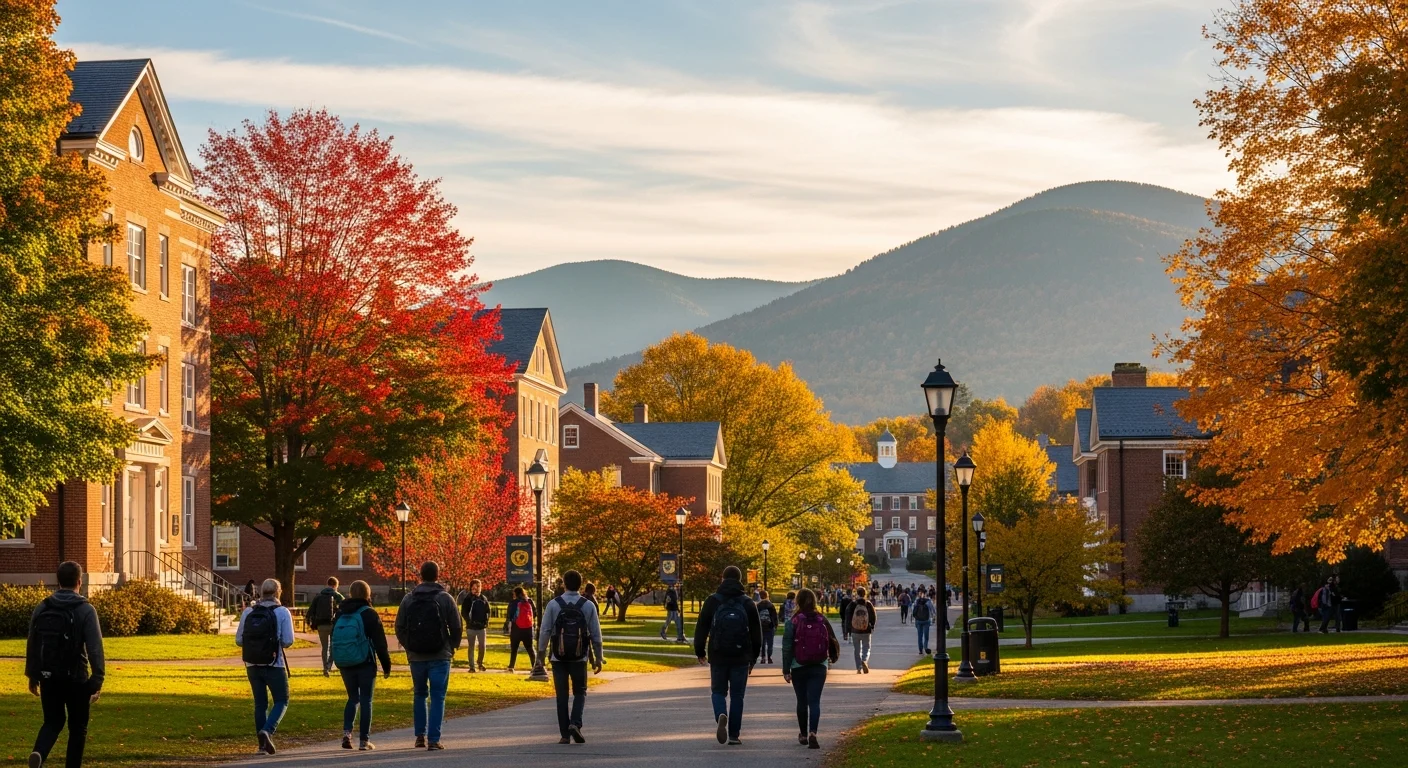
University campus in Vermont
Updated January 2026

Best Computer Science Degree Programs in Vermont — 2026 Rankings

Explore 9 accredited computer science (CS) degree programs in Vermont. Compare schools by graduation rate, salary outcomes, and tuition—from Community College of Vermont to University of Vermont.

#1 ProgramU of Vermont
Avg Salary$98,760
Tuition From$6,720/yr
Job Growth+22%

Key Takeaways

Top 3 ranked: U of Vermont, Middlebury College, Champlain College

Based on graduation rates, program outcomes, and institutional quality

IPEDS 2023

Tuition ranges from $6,720 to $64,800/year

Community College of Vermont offers the most affordable option at $6,720/yr

IPEDS 2023

Degree levels: 2 associate's, 1 master's, 1 doctoral programs available in Vermont

From community college pathways to advanced research degrees

IPEDS 2023

Vermont community college transfer can save 40-60% on total degree costs

2 associate's programs provide transfer pathways to bachelor's degrees

Education Commission of the States

Major employers: GlobalFoundries, Dealer.com, MyWebGrocer, Faraday

Tech hubs in Burlington and Montpelier

Hakia Research 2026

Computer Science programs available near 17+ cities across Vermont

Search by city to find programs within 200 miles of your location

IPEDS 2023

Updated February 2026

On This Page
$98,760
Is Computer Science in Vermont Worth It?
Yes. Computer Science degrees in Vermont deliver strong ROI—graduates earn $98,760 median salary with +22% job growth through 2032. In-state tuition averages $40,608/year.

Source: BLS OEWS May 2024

Best Computer Science Degree Programs in Vermont

Bachelor's Computer Science Degree Programs in Vermont

8 programs$98,760 median salary91% avg grad rate
8
Programs
$98,760
Median Salary
$44,845/yr
Avg Tuition
91%
Avg Grad Rate

Program Landscape

Vermont ranks among the nation's top destinations for computer science education, with 8 accredited bachelor's degree programs across 2 public and 6 private institutions. The highest-ranked programs are U of Vermont, Middlebury College, Champlain College, recognized for academic excellence, research opportunities, and strong industry connections.

Career Outcomes

Graduates from Vermont computer science programs earn a median salary of $83,946—14% below the national average. The state's robust technology sector, anchored by the Burlington, Montpelier, Rutland metropolitan areas, provides abundant internship and employment opportunities with companies including GlobalFoundries, Dealer.com, MyWebGrocer.

Costs & Value

Tuition ranges from $9,984 to $64,800 annually, with an average of $44,845/yr. Top programs maintain graduation rates above 91%, with the highest reaching 91%. Many programs hold ABET accreditation, the gold standard for computing education, ensuring curriculum meets rigorous industry standards.

Curriculum & Specializations

Students can choose from specializations including software engineering, cybersecurity, artificial intelligence, data science, and systems architecture. Strong industry partnerships provide access to co-op programs, capstone projects with real companies, and direct recruiting pipelines to Vermont's leading technology employers. For students seeking computer science degrees in Vermont, these top-ranked computer science schools offer the strongest combination of academic rigor and career preparation.

Show:

Earn your bachelor's in Computer Science

(Sponsored)

Loading programs...

🥇

University of Vermont

Public
Burlington, VT
$16,280
Tuition/yr
91%
Grad Rate
83.3
Score
Website
🥈

Middlebury College

Private
Middlebury, VT
$64,800
Tuition/yr
76.5
Score
Website
🥉

Champlain College

Private
Burlington, VT
$45,100
Tuition/yr
49.3
Score
Website
#4

Landmark College

Private
Putney, VT
$64,290
Tuition/yr
48.1
Score
Website
#5

Bennington College

Private
Bennington, VT
$63,802
Tuition/yr
47.9
Score
Website
#6

Norwich University

Private
Northfield, VT
$46,860
Tuition/yr
42.7
Score
Website
#7

Saint Michael's College

Private
Colchester, VT
$47,640
Tuition/yr
38.5
Score
Website
#8

Vermont State University

Public
Randolph, VT
$9,984
Tuition/yr
37.1
Score
Website

Complete Computer Science Degree Program Rankings in Vermont

Best Associate's Computer Science Degree Programs in Vermont

### Program Landscape Vermont offers **2 accredited** associate's degree programs in computer science, providing an affordable entry point into the technology field. The top-ranked programs include **Community College of Vermont**, **Landmark College**, which combine rigorous technical curriculum with practical skills training. ### Costs & Value Community colleges in Vermont offer these two-year programs at an average cost of **$35,505/yr**—significantly less than four-year university tuition. Students completing associate's degrees can pursue entry-level technical positions and transfer opportunities, with entry-level salaries averaging **$54,318** in Vermont. ### Career Pathways Many programs feature guaranteed transfer agreements with Vermont's public universities, allowing students to complete their first two years at reduced cost before transferring to complete a bachelor's degree. The Burlington, Montpelier, Rutland areas offer particularly strong job markets for associate's degree holders, with employers like GlobalFoundries, Dealer.com, MyWebGrocer hiring for technical support, junior development, and IT specialist positions. ### Curriculum & Specializations Programs typically include coursework in programming fundamentals, database management, networking basics, and software development. Among computer science schools in Vermont, these associate's programs offer the best value for students beginning their computer science degrees in Vermont.

  1. #1. Community College of Vermont

    Hakia ranks Community College of Vermont as the #1 associate's in computer science degree program in Vermont. This public institution in Montpelier, VT has annual tuition of $6,720. Ranking score: 42.3.

  2. #2. Landmark College

    Hakia ranks Landmark College as the #2 associate's in computer science degree program in Vermont. This private institution in Putney, VT has annual tuition of $64,290. Ranking score: 43.2.

Best Bachelor's Computer Science Degree Programs in Vermont

### Program Landscape Vermont ranks among the nation's top destinations for computer science education, with **8 accredited** bachelor's degree programs across **2 public** and **6 private** institutions. The highest-ranked programs are **U of Vermont**, **Middlebury College**, **Champlain College**, recognized for academic excellence, research opportunities, and strong industry connections. ### Career Outcomes Graduates from Vermont computer science programs earn a median salary of **$83,946**—14% below the national average. The state's robust technology sector, anchored by the Burlington, Montpelier, Rutland metropolitan areas, provides abundant internship and employment opportunities with companies including GlobalFoundries, Dealer.com, MyWebGrocer. ### Costs & Value Tuition ranges from **$9,984** to **$64,800** annually, with an average of **$44,845/yr**. Top programs maintain graduation rates above **91%**, with the highest reaching **91%**. Many programs hold ABET accreditation, the gold standard for computing education, ensuring curriculum meets rigorous industry standards. ### Curriculum & Specializations Students can choose from specializations including software engineering, cybersecurity, artificial intelligence, data science, and systems architecture. Strong industry partnerships provide access to co-op programs, capstone projects with real companies, and direct recruiting pipelines to Vermont's leading technology employers. For students seeking computer science degrees in Vermont, these top-ranked computer science schools offer the strongest combination of academic rigor and career preparation.

  1. #1. University of Vermont

    Hakia ranks University of Vermont as the #1 bachelor's in computer science degree program in Vermont. This public institution in Burlington, VT has annual tuition of $16,280 and a 91% graduation rate. Ranking score: 83.3.

  2. #2. Middlebury College

    Hakia ranks Middlebury College as the #2 bachelor's in computer science degree program in Vermont. This private institution in Middlebury, VT has annual tuition of $64,800. Ranking score: 76.5.

  3. #3. Champlain College

    Hakia ranks Champlain College as the #3 bachelor's in computer science degree program in Vermont. This private institution in Burlington, VT has annual tuition of $45,100. Ranking score: 49.3.

  4. #4. Landmark College

    Hakia ranks Landmark College as the #4 bachelor's in computer science degree program in Vermont. This private institution in Putney, VT has annual tuition of $64,290. Ranking score: 48.1.

  5. #5. Bennington College

    Hakia ranks Bennington College as the #5 bachelor's in computer science degree program in Vermont. This private institution in Bennington, VT has annual tuition of $63,802. Ranking score: 47.9.

  6. #6. Norwich University

    Hakia ranks Norwich University as the #6 bachelor's in computer science degree program in Vermont. This private institution in Northfield, VT has annual tuition of $46,860. Ranking score: 42.7.

  7. #7. Saint Michael's College

    Hakia ranks Saint Michael's College as the #7 bachelor's in computer science degree program in Vermont. This private institution in Colchester, VT has annual tuition of $47,640. Ranking score: 38.5.

  8. #8. Vermont State University

    Hakia ranks Vermont State University as the #8 bachelor's in computer science degree program in Vermont. This public institution in Randolph, VT has annual tuition of $9,984. Ranking score: 37.1.

Best Master's Computer Science Degree Programs in Vermont

### Program Landscape Vermont offers **1** master's degree programs in computer science, designed for professionals seeking to advance into senior engineering, technical leadership, and specialized roles. The top programs—**U of Vermont**—combine advanced technical training with research opportunities and leadership development. ### Career Outcomes Master's graduates in Vermont earn a median salary of **$98,760**, approximately **20-30% higher** than bachelor's degree holders. The concentration of technology companies in Burlington, Montpelier, Rutland creates strong demand for graduate-level talent, with GlobalFoundries, Dealer.com, MyWebGrocer actively recruiting from these programs. ### Costs & Value Program formats include traditional full-time study (typically 2 years), part-time options for working professionals (2-3 years), and accelerated tracks. Tuition averages **$16,280/yr**, with many employers offering tuition reimbursement for graduate education. Some programs offer thesis and non-thesis tracks, allowing students to focus on research or professional development based on their career goals. ### Curriculum & Specializations Curriculum covers advanced topics including machine learning, distributed systems, software architecture, and technical management. Many programs include practicum experiences, industry capstone projects, or consulting engagements that provide real-world application of advanced concepts. Among Vermont's computer science schools at the graduate level, these programs stand out for both academic quality and career outcomes.

  1. #1. University of Vermont

    Hakia ranks University of Vermont as the #1 master's in computer science degree program in Vermont. This public institution in Burlington, VT has annual tuition of $16,280 and a 91% graduation rate. Ranking score: 75.9.

Best Doctoral Computer Science Degree Programs in Vermont

### Program Landscape Vermont is home to **1** doctoral programs in computer science, preparing students for research positions, faculty appointments, and executive technical roles. Leading programs at **U of Vermont** are recognized for cutting-edge research, strong faculty publications, and competitive funding packages. ### Career Outcomes Doctoral graduates command premium salaries, with Vermont PhD holders earning a median of **$123,450**—reflecting the advanced expertise required for research and executive positions. The Burlington, Montpelier, Rutland region's research universities and corporate R&D centers provide extensive collaboration opportunities with industry leaders like GlobalFoundries, Dealer.com, MyWebGrocer. ### Costs & Value PhD programs typically require 4-6 years of full-time study, including coursework, qualifying examinations, and original dissertation research. Many programs offer full funding through teaching or research assistantships, covering tuition and providing stipends of **$25,000–$40,000** annually. ### Curriculum & Specializations Research strengths across Vermont programs include artificial intelligence, cybersecurity, human-computer interaction, systems, and theoretical computer science. For aspiring researchers pursuing computer science degrees in Vermont, graduates go on to careers as university faculty, industry research scientists, or technical executives, contributing to advances in technology that impact millions of users worldwide.

  1. #1. University of Vermont

    Hakia ranks University of Vermont as the #1 doctoral in computer science degree program in Vermont. This public institution in Burlington, VT has annual tuition of $16,280 and a 91% graduation rate. Ranking score: 57.5.

Computer Science Tuition in Vermont

MetricValue
Average in-state tuition$40,608/year
Average out-of-state tuition$101,520/year
Community college tuition$10,152/year
4-year savings for residents$243,648
2+2 transfer pathway savings$60,912

Source: IPEDS 2023

Computer Science Financial Aid & Scholarships in Vermont

State Aid Programs

Vermont residents pursuing computer science degrees have access to multiple layers of financial support. The Vermont Incentive Grant provides need-based funding specifically for Vermont residents attending approved institutions, making it a cornerstone of state-level aid. Students should also complete the FAFSA through (Federal Student Aid) to access federal grants, loans, and work-study opportunities. The Free Application for Federal Student Aid (FAFSA) remains the gateway to all federal funding, regardless of institution type or program.

Key Programs & Amounts

Many Vermont institutions offering computer science degrees provide institutional scholarships and merit-based aid packages. The (Vermont State Colleges System) administers transfer agreements that help community college students transition affordably to four-year programs, reducing overall costs. Students starting at the Community College of Vermont can leverage these pathways while maintaining financial momentum. Additionally, the (Vermont Incentive Grant) program is administered through the Vermont Student Assistance Corporation, ensuring coordinated support across the state's higher education landscape. Prospective students should contact financial aid offices directly to learn about program-specific scholarships and employer partnerships that may reduce out-of-pocket costs. For comprehensive aid planning, the (College Scorecard) provides institution-specific financial aid and affordability data to help students make informed decisions about their computer science education in Vermont.

Calculate Your Computer Science Degree ROI in Vermont

Use our interactive ROI calculator to estimate your return on investment for a computer science degree in Vermont. Enter your expected tuition costs, financial aid, and career goals to see projected payback periods and lifetime earnings. The calculator uses current salary data from BLS and tuition data from IPEDS to provide accurate estimates.

Computer Science Degree ROI Calculator
Estimate your return on investment for a computer science degree
$

Leave blank to use average cost for selected program type

20 years
10 years20 years30 years
20-Year ROI

+907%

Net gain divided by total investment. ROI above 200% is considered excellent for education investments.

Net Gain

$1,677,254

Your additional lifetime earnings with this degree vs. working without one, minus the total investment.

Break-Even

5 years

Years until your cumulative earnings exceed total investment. Shorter programs often break even faster due to lower opportunity cost.

COL-Adjusted Salary

$133,333

Your starting salary adjusted for local cost of living. This shows real purchasing power compared to a $100K national baseline.

Why does break-even change with program type? Your "total investment" includes both tuition AND opportunity cost (foregone earnings while in school). A 4-year full-time public university (in-state) means 4 years of not earning a salary ($140,000 in opportunity cost). Shorter full-time programs may have higher tuition but lower total investment because you return to the workforce sooner.

Detailed Breakdown
How we calculate your degree ROI using real salary data
Total Investment$185,000

Tuition plus opportunity cost (earnings you miss while in school)

Program Cost (Tuition)$45,000

Direct cost of the degree program

Opportunity Cost$140,000

4 years × $35K/year foregone salary while studying full-time

20-Year Earnings (with degree)$2,712,662

Projected career earnings starting after graduation, with salary growth

20-Year Earnings (without degree)$850,408

What you'd earn working at $35K/year with 2% annual growth

Starting Salary (Austin, TX)$140,000

Median salary for this role in your selected location (BLS 2024)

Annualized Return4.9%

Your investment's compound annual growth rate (similar to stock market returns)

Data sources: BLS OEWS May 2024, IPEDS 2023. Calculations use median salaries, 3% discount rate, and assume salary growth declines from 6% to 2% over career. Individual results will vary. | Powered by Hakia.com

Career Paths

Design and develop software applications and systems

Median Salary:$111,599

Analyze complex datasets and build predictive models

Median Salary:$92,834

Protect computer networks from cyber threats

Median Salary:$103,698

Manage cloud infrastructure and deployment pipelines

Median Salary:$109,624

Design and maintain cloud computing infrastructure

Median Salary:$106,661

Build and deploy machine learning models

Median Salary:$124,438
Computer Science Salaries by Metro Area

Median annual salary in Vermont metro areas

Hakia.com
View data table
Categoryvalue
Burlington$109K
Montpelier$104K
Rutland$99K

Source: BLS OEWS May 2024

Hakia.com

Computer Science Jobs in Vermont: Top Employers Hiring

Find computer science jobs in Vermont. These major employers across Vermont metro areas are actively hiring computer science graduates. Click employer names to view current job openings.

Computer Science Jobs in Burlington

VT
GlobalFoundries
semiconductor
Dealer.com
tech
Green Mountain Power
energy
University of Vermont
education

How to Apply to Computer Science Programs in Vermont

1

Research Program Requirements

Review admission requirements for computer science programs at your target schools. Requirements vary by institution and degree level.

2

Prepare Application Materials

Gather transcripts, test scores (SAT/ACT for undergrad, GRE for graduate), letters of recommendation, and personal statement.

3

Apply for Financial Aid

Complete the FAFSA by priority deadlines.

4

Submit Applications Before Deadlines

Apply early for priority consideration. Early action/decision deadlines are typically October-November; regular deadlines December-January.

5

Complete Enrollment Steps

Accept your offer, submit enrollment deposit, complete orientation requirements, and register for classes.

Computer Science Transfer Pathways in Vermont

State Transfer System

Vermont's transfer system is designed to facilitate seamless academic progression from community colleges to four-year institutions. The Vermont Transfer Agreements provide formal pathways that ensure course credits earned at two-year institutions like Community College of Vermont transfer directly toward bachelor's degrees at Vermont State University and other public colleges (Vermont State Colleges System). These agreements eliminate redundancy and reduce time-to-degree, saving students both time and tuition costs. Students completing associate's degrees in computer science—18 completions statewide in 2023—are well-positioned to pursue bachelor's degrees with clear articulation agreements in place (IPEDS).

How Transfers Work

Community College of Vermont represents the state's dedicated two-year institution and is a key entry point for transfer-bound students, offering 13 computer science completions and tuition of just $6,720. The Vermont Transfer Agreements specify which computer science courses satisfy requirements at four-year institutions, allowing students to complete foundational coursework affordably before pursuing bachelor's degrees at the University of Vermont, Champlain College, or other institutions. Vermont residents may also access need-based support through the Vermont Incentive Grant at approved institutions. For comprehensive transfer planning, students should consult advisors at Community College of Vermont and review program-specific articulation agreements with destination institutions. Exploring national online computer science programs can provide additional flexibility for working students.

Why Study Computer Science in Vermont?

Industry & Workforce

Vermont offers a robust ecosystem for computer science education with 12 institutions delivering programs across multiple degree levels, from associate's to doctoral degrees (IPEDS). In 2023, Vermont institutions awarded 185 bachelor's degrees, 18 associate's degrees, 8 master's degrees, and 1 doctoral degree in computer science, demonstrating strong institutional commitment to the field. The University of Vermont leads the state with 93 completions, followed by Middlebury College with 45 completions, establishing Vermont as a serious destination for computer science study (IPEDS).

Salary Outlook

Vermont's major employment hubs in Burlington-South Burlington and throughout Chittenden County attract technology talent and innovation. Major employers including the University of Vermont Medical Center and GlobalFoundries create meaningful internship and career opportunities for graduates. For those seeking affordable education, Vermont State University offers tuition at just $9,984, while the University of Vermont provides strong value at $16,280 for in-state students. Prospective students can explore national computer science rankings and salary data to understand return on investment. Related fields like Software Engineering in Vermont and Cybersecurity in Vermont offer complementary pathways for specialized careers.

Computer Science Job Market in Vermont

Employment Outlook

Vermont's computer science job market is growing steadily, with opportunities concentrated in key metropolitan areas and regional tech hubs. The Burlington-South Burlington metro area represents the strongest job market in the state, serving as the primary technology employment center. According to BLS State Data, Vermont offers competitive opportunities for computer science professionals across multiple sectors. Major employment centers extend beyond Burlington to include Rutland, Montpelier, and Bennington, creating a distributed network of career opportunities throughout the state. The relatively small but focused tech workforce in Vermont means that graduates from programs like University of Vermont's computer science bachelor's degree often find direct pathways to employment in their region.

Salaries by Metro

Vermont's educational infrastructure supports the job market with 12 institutions offering computer science programs at various levels, including 8 bachelor's-granting institutions and 1 master's program. The state's public institutions maintain affordable tuition, with average in-state costs at $13,132 for four-year programs, making Vermont education accessible for students seeking local careers. Data from IPEDS shows that Vermont institutions completed 185 bachelor's degrees in computer science in 2023, providing a steady pipeline of local talent. Students interested in exploring broader national trends can reference national best computer science programs and affordable options nationally. Vermont's smaller market size compared to tech hubs in California or Texas means that personal networking and direct employer relationships often play crucial roles in career advancement.

Computer Science Curriculum & Specializations in Vermont

Core Requirements

Computer science programs across Vermont typically follow a rigorous core curriculum covering foundational areas essential to professional practice. Standard coursework includes Data Structures, Algorithms, Operating Systems, Database Management Systems, Software Engineering, and Theory of Computation. Most bachelor's programs require strong mathematical foundations including Discrete Mathematics, Linear Algebra, and Calculus. Upper-level courses often include Web Development, Artificial Intelligence, Cybersecurity, and Systems Programming. Many Vermont institutions integrate practical experience through capstone projects and internship requirements, connecting students with major employers in the region.

Degree Pathways

Specialization options enable students to tailor their education to career interests. Students may focus on Artificial Intelligence in Vermont, Cybersecurity in Vermont, or Data Science in Vermont, depending on institutional offerings. Associate's programs, particularly at Community College of Vermont and through Vermont's transfer system, provide foundational courses that prepare students for seamless progression to bachelor's degrees. Master's programs at the University of Vermont emphasize research and advanced topics. The integration of industry partnerships with employers like GlobalFoundries and Vermont Health Care enriches curriculum relevance. For comprehensive program details and course listings, prospective students should consult individual institution catalogs and the Vermont State Colleges System.

Online vs On-Campus Computer Science Programs in Vermont

Online Program Growth

Vermont offers both in-person and online computer science pathways to accommodate diverse student needs. Norwich University leads Vermont's online bachelor's offerings, ranked #1 for online computer science programs at $46,860 annually, followed by Vermont State University at $9,984—making online study particularly accessible for cost-conscious learners. Campus-based programs dominate Vermont's offerings, with 8 institutions awarding bachelor's degrees and 1 institution offering master's degrees in computer science. The University of Vermont and Middlebury College provide traditional residential experiences with the highest completion rates (93 and 45 students respectively), ideal for students seeking hands-on labs, collaborative research, and immersive campus communities.

Accredited Online Options

Students should evaluate trade-offs between formats based on career goals and learning preferences. Campus programs at institutions like Champlain College and Landmark College offer networking with employers in Burlington and surrounding regions, mentorship from faculty, and access to on-campus research. Online options through Norwich University and Vermont State University provide flexibility for working professionals and geographically dispersed learners while maintaining rigorous curriculum standards. Many Vermont institutions blend formats, offering hybrid courses that combine online lectures with in-person labs and capstone projects. For comprehensive program comparisons, the (National Best Online Programs) ranking provides context alongside Vermont's offerings. Students should also explore related fields like (Software Engineering in Vermont), (Data Science in Vermont), and (Cybersecurity in Vermont) to find specialized programs aligned with career interests.

Computer Science by City in Vermont

The Burlington-South Burlington metropolitan area dominates Vermont's computer science job market and offers the highest concentration of tech industry activity. This region serves as home to University of Vermont, which produced 93 computer science completions in 2023—more than half of the state's 185 total bachelor's degree completions. Burlington's role as Vermont's largest city ensures robust networking opportunities, diverse employer base, and strong quality of life amenities. Secondary employment hubs in Rutland, Montpelier, and Bennington provide alternatives for professionals seeking smaller communities or specific industry focuses. According to IPEDS data, the concentration of major employers near Burlington-South Burlington creates natural career pathways for graduates of regional institutions. The region's affordable cost of living compared to major tech hubs makes Vermont an attractive option for professionals balancing career growth with lifestyle considerations.

Middlebury College, located in Central Vermont, contributes 45 completions annually and serves as a regional talent source for employers throughout Chittenden and Central Vermont counties. Champlain College in Burlington operates as a second major pipeline directly into the metro area's job market with 19 completions. Students considering Vermont education should note that public in-state tuition averages $13,132, with Vermont State University offering particularly affordable options at $9,984. For those seeking to understand Vermont in a broader context, comparisons with computer science in California, computer science in Texas, and computer science in New York reveal Vermont's niche as an affordable, community-focused alternative. The state's smaller population means most professionals remain within 30-60 minutes of major employers, creating concentrated geographic opportunity zones.

Compare Online Computer Science Programs in Vermont

View tuition costs, program formats & enrollment info

Find Computer Science Programs Near You in Vermont

Search by city to find accredited computer science programs ranked by our state methodology.

Computer Science Degree Programs by City in Vermont

Computer Science Degree Programs Near Montpelier, Vermont

As Vermont's capital, Montpelier hosts state government IT infrastructure projects and serves as a hub for policy-focused tech work, though the local tech employment market is limited compared to larger metros. Remote work opportunities dominate for CS professionals here, with many commuting digitally to Boston or New York tech companies while enjoying lower cost-of-living than those cities.

Montpelier is located in Washington County, Vermont.

Associate's Computer Science Degree Programs Near Montpelier, Vermont
  1. Community College of Vermont (Public) — State #1, in Montpelier. Tuition: $6,720/year.
  2. Landmark College (Private) — State #2, 88.9 mi from Montpelier. Tuition: $64,290/year.
Bachelor's Computer Science Degree Programs Near Montpelier, Vermont
  1. University of Vermont (Public) — State #1, 34.2 mi from Montpelier. Tuition: $16,280/year. Graduation rate: 91%.
  2. Middlebury College (Private) — State #2, 34.8 mi from Montpelier. Tuition: $64,800/year.
  3. Norwich University (Private) — State #3, 9.6 mi from Montpelier. Tuition: $46,860/year.
Master's Computer Science Degree Programs Near Montpelier, Vermont
  1. University of Vermont (Public) — State #1, 34.2 mi from Montpelier. Tuition: $16,280/year. Graduation rate: 91%.
  2. Norwich University (Private) — State #2, 9.6 mi from Montpelier. Tuition: $46,860/year.

Computer Science Degree Programs Near Burlington, Vermont

Burlington's tech ecosystem centers on University of Vermont's Computer Science program and a growing startup scene in the Church Street marketplace area, attracting fintech and health-tech ventures. Major employers like UVM Medical Center and regional healthcare systems drive demand for full-stack developers and systems architects, while the city's proximity to Canadian markets creates opportunities in cross-border software development.

Burlington is located in Chittenden County, Vermont.

Associate's Computer Science Degree Programs Near Burlington, Vermont
  1. Community College of Vermont (Public) — State #1, 33.7 mi from Burlington. Tuition: $6,720/year.
  2. Landmark College (Private) — State #2, 109 mi from Burlington. Tuition: $64,290/year.
Bachelor's Computer Science Degree Programs Near Burlington, Vermont
  1. University of Vermont (Public) — State #1, in Burlington. Tuition: $16,280/year. Graduation rate: 91%.
  2. Middlebury College (Private) — State #2, 32.2 mi from Burlington. Tuition: $64,800/year.
  3. Norwich University (Private) — State #3, 35.3 mi from Burlington. Tuition: $46,860/year.
Master's Computer Science Degree Programs Near Burlington, Vermont
  1. University of Vermont (Public) — State #1, in Burlington. Tuition: $16,280/year. Graduation rate: 91%.
  2. Norwich University (Private) — State #2, 35.3 mi from Burlington. Tuition: $46,860/year.

Computer Science Degree Programs Near Bennington, Vermont

Bennington College's computer science and digital arts programs create a small but creative tech community focused on media technology and interactive systems rather than traditional software engineering. The rural setting limits direct tech employment, making this location best suited for remote workers in creative computing roles or those willing to commute to Albany, NY's tech corridor.

Bennington is located in Bennington County, Vermont.

Associate's Computer Science Degree Programs Near Bennington, Vermont
  1. Community College of Vermont (Public) — State #1, 99.8 mi from Bennington. Tuition: $6,720/year.
  2. Landmark College (Private) — State #2, 36.9 mi from Bennington. Tuition: $64,290/year.
Bachelor's Computer Science Degree Programs Near Bennington, Vermont
  1. University of Vermont (Public) — State #1, 107.7 mi from Bennington. Tuition: $16,280/year. Graduation rate: 91%.
  2. Middlebury College (Private) — State #2, 75.3 mi from Bennington. Tuition: $64,800/year.
  3. Norwich University (Private) — State #3, 89.2 mi from Bennington. Tuition: $46,860/year.
Master's Computer Science Degree Programs Near Bennington, Vermont
  1. University of Vermont (Public) — State #1, 107.7 mi from Bennington. Tuition: $16,280/year. Graduation rate: 91%.
  2. Norwich University (Private) — State #2, 89.2 mi from Bennington. Tuition: $46,860/year.

Computer Science Degree Programs Near Colchester, Vermont

Located just north of Burlington in Chittenden County, Colchester provides easier access to GlobalFoundries' semiconductor operations and UVM's research initiatives while offering more affordable housing than downtown Burlington. The town serves as a commuter base for tech workers targeting Burlington's startup clusters and UVM's computer science labs without the urban pricing.

Colchester is located in Chittenden County, Vermont.

Associate's Computer Science Degree Programs Near Colchester, Vermont
  1. Community College of Vermont (Public) — State #1, 32.8 mi from Colchester. Tuition: $6,720/year.
  2. Landmark College (Private) — State #2, 109.8 mi from Colchester. Tuition: $64,290/year.
Bachelor's Computer Science Degree Programs Near Colchester, Vermont
  1. University of Vermont (Public) — State #1, 1.9 mi from Colchester. Tuition: $16,280/year. Graduation rate: 91%.
  2. Middlebury College (Private) — State #2, 33.5 mi from Colchester. Tuition: $64,800/year.
  3. Norwich University (Private) — State #3, 35 mi from Colchester. Tuition: $46,860/year.
Master's Computer Science Degree Programs Near Colchester, Vermont
  1. University of Vermont (Public) — State #1, 1.9 mi from Colchester. Tuition: $16,280/year. Graduation rate: 91%.
  2. Norwich University (Private) — State #2, 35 mi from Colchester. Tuition: $46,860/year.

Computer Science Degree Programs Near Middlebury, Vermont

Middlebury College's Computer Science department and liberal arts tech focus attract students interested in intersecting CS with humanities and social impact computing, though local tech job density remains low. Remote work and freelance opportunities dominate for graduates, with the scenic downtown supporting digital nomad lifestyles and small web development consultancies.

Middlebury is located in Addison County, Vermont.

Associate's Computer Science Degree Programs Near Middlebury, Vermont
  1. Community College of Vermont (Public) — State #1, 35.3 mi from Middlebury. Tuition: $6,720/year.
  2. Landmark College (Private) — State #2, 78.7 mi from Middlebury. Tuition: $64,290/year.
Bachelor's Computer Science Degree Programs Near Middlebury, Vermont
  1. University of Vermont (Public) — State #1, 32.4 mi from Middlebury. Tuition: $16,280/year. Graduation rate: 91%.
  2. Middlebury College (Private) — State #2, in Middlebury. Tuition: $64,800/year.
  3. Norwich University (Private) — State #3, 27.2 mi from Middlebury. Tuition: $46,860/year.
Master's Computer Science Degree Programs Near Middlebury, Vermont
  1. University of Vermont (Public) — State #1, 32.4 mi from Middlebury. Tuition: $16,280/year. Graduation rate: 91%.
  2. Norwich University (Private) — State #2, 27.2 mi from Middlebury. Tuition: $46,860/year.

Computer Science Degree Programs Near Northfield, Vermont

Northfield's proximity to Norwich University's engineering and computer science programs creates modest local interest in defense tech and systems engineering, but the town itself offers minimal tech employment outside academic research. This rural location functions primarily as a residential base for remote workers or those commuting to the Montpelier/Central Vermont region.

Northfield is located in Washington County, Vermont.

Associate's Computer Science Degree Programs Near Northfield, Vermont
  1. Community College of Vermont (Public) — State #1, 10.6 mi from Northfield. Tuition: $6,720/year.
  2. Landmark College (Private) — State #2, 80.7 mi from Northfield. Tuition: $64,290/year.
Bachelor's Computer Science Degree Programs Near Northfield, Vermont
  1. University of Vermont (Public) — State #1, 35.3 mi from Northfield. Tuition: $16,280/year. Graduation rate: 91%.
  2. Middlebury College (Private) — State #2, 27.2 mi from Northfield. Tuition: $64,800/year.
  3. Norwich University (Private) — State #3, in Northfield. Tuition: $46,860/year.
Master's Computer Science Degree Programs Near Northfield, Vermont
  1. University of Vermont (Public) — State #1, 35.3 mi from Northfield. Tuition: $16,280/year. Graduation rate: 91%.
  2. Norwich University (Private) — State #2, in Northfield. Tuition: $46,860/year.

Computer Science Degree Programs Near Putney, Vermont

Putney's alternative community ethos has attracted independent software developers, designers, and small tech consultancies focused on progressive tech and open-source projects, supported by a strong remote-work culture. The town lacks major employers but offers artist-friendly infrastructure and lower overhead costs, drawing freelance full-stack developers and tech entrepreneurs building bootstrapped ventures.

Putney is located in Windham County, Vermont.

Associate's Computer Science Degree Programs Near Putney, Vermont
  1. Community College of Vermont (Public) — State #1, 90.1 mi from Putney. Tuition: $6,720/year.
  2. Landmark College (Private) — State #2, in Putney. Tuition: $64,290/year.
Bachelor's Computer Science Degree Programs Near Putney, Vermont
  1. University of Vermont (Public) — State #1, 109.1 mi from Putney. Tuition: $16,280/year. Graduation rate: 91%.
  2. Middlebury College (Private) — State #2, 78.7 mi from Putney. Tuition: $64,800/year.
  3. Norwich University (Private) — State #3, 80.7 mi from Putney. Tuition: $46,860/year.
Master's Computer Science Degree Programs Near Putney, Vermont
  1. University of Vermont (Public) — State #1, 109.1 mi from Putney. Tuition: $16,280/year. Graduation rate: 91%.
  2. Norwich University (Private) — State #2, 80.7 mi from Putney. Tuition: $46,860/year.

Computer Science Degree Programs Near Randolph, Vermont

Randolph sits in Vermont's rural interior with limited direct tech employment but serves as an affordable residential option for remote workers commuting digitally to Boston or tech companies nationwide. The town's proximity to Vermont Tech's engineering programs provides some local technical talent pipeline, though most CS graduates relocate to larger metros.

Randolph is located in Orange County, Vermont.

Associate's Computer Science Degree Programs Near Randolph, Vermont
  1. Community College of Vermont (Public) — State #1, 23.6 mi from Randolph. Tuition: $6,720/year.
  2. Landmark College (Private) — State #2, 66.7 mi from Randolph. Tuition: $64,290/year.
Bachelor's Computer Science Degree Programs Near Randolph, Vermont
  1. University of Vermont (Public) — State #1, 47.3 mi from Randolph. Tuition: $16,280/year. Graduation rate: 91%.
  2. Middlebury College (Private) — State #2, 28.8 mi from Randolph. Tuition: $64,800/year.
  3. Norwich University (Private) — State #3, 14.1 mi from Randolph. Tuition: $46,860/year.
Master's Computer Science Degree Programs Near Randolph, Vermont
  1. University of Vermont (Public) — State #1, 47.3 mi from Randolph. Tuition: $16,280/year. Graduation rate: 91%.
  2. Norwich University (Private) — State #2, 14.1 mi from Randolph. Tuition: $46,860/year.

Computer Science Degree Programs Near Brattleboro, Vermont

Brattleboro's creative community and southern Vermont location have fostered a small but active web development and digital media cluster, with several independent shops and small agencies serving regional clients. The town's affordability and artist infrastructure attract remote-first software engineers and designers, though meaningful local tech employment requires commuting to Hartford, CT or working completely remotely.

Brattleboro is located in Windham County, Vermont.

Associate's Computer Science Degree Programs Near Brattleboro, Vermont
  1. Community College of Vermont (Public) — State #1, 96 mi from Brattleboro. Tuition: $6,720/year.
  2. Landmark College (Private) — State #2, 6.6 mi from Brattleboro. Tuition: $64,290/year.
Bachelor's Computer Science Degree Programs Near Brattleboro, Vermont
  1. University of Vermont (Public) — State #1, 114 mi from Brattleboro. Tuition: $16,280/year. Graduation rate: 91%.
  2. Middlebury College (Private) — State #2, 83.1 mi from Brattleboro. Tuition: $64,800/year.
  3. Norwich University (Private) — State #3, 86.4 mi from Brattleboro. Tuition: $46,860/year.
Master's Computer Science Degree Programs Near Brattleboro, Vermont
  1. University of Vermont (Public) — State #1, 114 mi from Brattleboro. Tuition: $16,280/year. Graduation rate: 91%.
  2. Norwich University (Private) — State #2, 86.4 mi from Brattleboro. Tuition: $46,860/year.

Computer Science Degree Programs Near Castleton, Vermont

Castleton University's computer science program and technology initiatives create some local academic and applied computing opportunities, but the rural Rutland County location limits broader tech industry presence. The town functions as an affordable base for remote workers and recent graduates, with most career advancement requiring relocation to larger Vermont cities or out-of-state tech hubs.

Castleton is located in Rutland County, Vermont.

Associate's Computer Science Degree Programs Near Castleton, Vermont
  1. Community College of Vermont (Public) — State #1, 55.4 mi from Castleton. Tuition: $6,720/year.
  2. Landmark College (Private) — State #2, 55.1 mi from Castleton. Tuition: $64,290/year.
Bachelor's Computer Science Degree Programs Near Castleton, Vermont
  1. University of Vermont (Public) — State #1, 60 mi from Castleton. Tuition: $16,280/year. Graduation rate: 91%.
  2. Middlebury College (Private) — State #2, 27.7 mi from Castleton. Tuition: $64,800/year.
  3. Norwich University (Private) — State #3, 45 mi from Castleton. Tuition: $46,860/year.
Master's Computer Science Degree Programs Near Castleton, Vermont
  1. University of Vermont (Public) — State #1, 60 mi from Castleton. Tuition: $16,280/year. Graduation rate: 91%.
  2. Norwich University (Private) — State #2, 45 mi from Castleton. Tuition: $46,860/year.

Coding Bootcamps: An Alternative Pathway

Coding bootcamps offer an accelerated pathway into tech careers. For those in Vermont considering alternatives to traditional degrees, here's what you need to know about this intensive learning format.

What is a Coding Bootcamp?

A coding bootcamp is an intensive, short-term training program (typically 12-24 weeks) that teaches practical programming skills through hands-on projects. Unlike traditional degrees, bootcamps focus exclusively on job-ready skills and often include career services to help graduates land their first tech role.

Who Bootcamps Are Best For

  • Career changers looking to enter tech quickly
  • Professionals wanting to upskill or transition roles
  • Self-taught developers seeking structured training
  • Those unable to commit to a 4-year degree timeline

What People Love

Based on discussions from r/codingbootcamp, r/cscareerquestions, and r/learnprogramming

  • Get job-ready in months instead of 4 years
  • Learn modern tech stacks actually used in industry
  • Build portfolio projects that demonstrate practical skills
  • Many bootcamp grads report landing $70-100K+ starting salaries
  • 1-on-1 mentorship helps bridge knowledge gaps quickly

Common Concerns

Honest feedback from bootcamp graduates and industry professionals

  • May struggle with algorithm-heavy interviews at FAANG companies
  • Lacks depth in systems programming and low-level concepts
  • Some hiring managers filter out bootcamp grads automatically
  • Requires significant self-study to fill CS fundamentals gaps
  • Current market (2025-2026) is competitive for entry-level roles
EXCLUSIVE OFFER

Save $1000 on Springboard Bootcamps

Springboard offers career-focused bootcamps with 1-on-1 mentorship from industry professionals. Their programs include a job guarantee—complete all requirements, and if you don't land a qualifying role, you may be eligible for a full tuition refund. Use our exclusive link to save $1000 on enrollment.

Programs for Computer Science careers:

  • Software Engineering Career Track
  • Software Engineering for Beginners
1-on-1 MentorshipJob GuaranteeFlexible Payment

We may earn a commission when you use our affiliate link and coupon.

Top Ranked Computer Science Degree Programs in Other States

StateTotal ProgramsMedian TuitionTop Program
Best Computer Science Degree Programs in California61$11,834University of California-Berkeley
Best Computer Science Degree Programs in Texas62$9,003The University of Texas at Dallas
Best Computer Science Degree Programs in New York72$36,920Cornell University
Best Computer Science Degree Programs in Florida34$26,240University of Central Florida
Best Computer Science Degree Programs in Washington19$19,920University of Washington-Seattle Campus
Best Computer Science Degree Programs in Massachusetts46$44,812Northeastern University
Best Computer Science Degree Programs in Illinois47$32,660University of Illinois Urbana-Champaign
Best Computer Science Degree Programs in Georgia25$7,158Georgia Institute of Technology-Main Campus

Computer Science in Vermont: FAQ

How We Rank Computer Science Degree Programs

Based on 50 programs from IPEDS 2023

We analyzed 50 computer science degree programs in Vermont using IPEDS 2023 data and BLS labor statistics. Our rankings are produced algorithmically without editorial intervention, ensuring objectivity and reproducibility.

Ranking Factors

Program Completions35%

Number of graduates per year in this specific field (CIP code). Larger programs indicate established departments with more resources, course offerings, and career services. Measured from IPEDS Completions data.

Graduation Rate25%

Percentage of students completing their degree within 150% of expected time (6 years for bachelor's, 3 years for associate's). Higher rates indicate better student support and program quality. Source: IPEDS Graduation Rates survey.

Selectivity20%

Admission rate (lower = more selective). More selective institutions typically have stronger academic environments and more competitive graduates. For open-admission institutions, we use graduation rates as a proxy for quality.

Career Outcomes20%

Regional salary data for computer science graduates. Vermont median salary of $98,760 is factored into institutional scores based on local job market strength.

Ranking Categories

Best Programs

Overall quality using all four factors weighted as shown above. Ideal for students seeking the strongest academic experience.

Online Programs

Same methodology, filtered to schools with fully online or hybrid options (IPEDS Distance Education data). Some schools may have lower graduation rates due to different student demographics.

Most Affordable

Ranked primarily by net cost (tuition minus average institutional aid), with quality factors as tiebreakers. Best for cost-conscious students.

Data Sources

  • IPEDS 2023Institutional characteristics, completions, graduation rates
  • BLS OEWS 2024State and metro salary data by occupation
  • CIP Code MappingPrograms identified using Classification of Instructional Programs codes

Data Sources

Institutional characteristics, completions, graduation rates

Vermont salary and employment data

Official University Websites

Program details and admissions information

Last Updated: February 15, 2026. Rankings based on IPEDS 2023 data. Salary data from BLS OEWS May 2024.

Was this ranking helpful for your college search?
Taylor Rupe

Taylor Rupe

Co-founder & Editor (B.S. Computer Science, Oregon State • B.A. Psychology, University of Washington)

Taylor combines technical expertise in computer science with a deep understanding of human behavior and learning. His dual background drives Hakia's mission: leveraging technology to build authoritative educational resources that help people make better decisions about their academic and career paths.

Computer Science Degree Programs in Vermont — Detailed School Profiles

Best Associate's Computer Science Degree Programs in Vermont

Community College of Vermont — Montpelier, VT

Hakia Insight: CCV's placement into Vermont state government and K–12 IT support roles reflects a deliberately local-first model that trades national brand recognition for job security—your degree maps directly to the regional employers who will actually hire you.

At the associate's level, if you're looking to build practical IT skills without the four-year commitment, CCV's computer science program gives you hands-on experience in networking, systems administration, and web development that employers actually want. The program emphasizes real-world problem-solving through labs and projects, preparing you either to jump directly into entry-level technical roles or to transfer into a bachelor's degree program at UVM or other state universities. Many students appreciate the flexibility of CCV's online and hybrid options, which let you balance work and other commitments while still getting quality instruction in foundational programming, database management, and IT infrastructure. Graduates often move into help desk, junior developer, or network support positions within Vermont's growing tech sector, or they use their associates as a springboard to complete a four-year degree with less debt.

Programs Offered
  • Associate of Science in Computer Science — 2 years, on-campus
  • Associate of Applied Science in Computer Science — 2 years, online
Career Outcomes

Top Employers: Vermont state government IT departments, Local healthcare IT teams, Small-to-mid-size Vermont tech companies, Educational institutions (K–12 and higher ed IT support), Regional financial services firms.

Top Transfer Destinations
  • University of Vermont (UVM) — Computer Science or related engineering programs
  • Vermont State University (formerly Vermont State Colleges) — Information Technology or Computer Science tracks
Entry-Level Career Paths
  • Help Desk Technician
  • IT Support Specialist
  • Junior Web Developer
  • Junior Systems Administrator
  • Network Support Technician
  • Technical Support Associate
Included Certifications
  • CompTIA A+ (or exam vouchers toward it)
  • CompTIA Network+
  • AWS Cloud Practitioner
  • Microsoft Azure Fundamentals

Location Advantages:

Landmark College — Putney, VT

Key Distinction: Landmark College's computer science program is explicitly designed for neurodivergent learners, with multisensory instruction, individualized support, and explicit accommodations embedded into curriculum and pedagogy.

Hakia Insight: Landmark's neurodivergent-centered pedagogy isn't an accommodation add-on but a curriculum foundation, meaning your peers and instructors are explicitly trained in multisensory instruction and executive function support from day one—not retrofitted after admission.

At the associate's level, landmark College's computer science offerings are designed with neurodivergent learners in mind—the institution's entire educational model prioritizes explicit instruction, structured support systems, and individualized accommodations that make technical content accessible without diluting rigor. For students with ADHD, dyslexia, autism spectrum differences, or learning disabilities, the college's multisensory teaching methods, reduced student-to-faculty ratios, and embedded academic coaching transform computer science from a gatekeeping filter into a genuinely learnable discipline. The curriculum covers foundational programming, web development, and systems thinking with particular attention to scaffolding abstract concepts and providing frequent feedback loops. Faculty training in neurodiversity-affirming pedagogy means explanations account for different processing styles, and assessments move beyond time-pressured exams. While Landmark is smaller and less research-focused than institutions with separate CS departments, the program's strength lies in enabling talented students who have been historically screened out of traditional computer science pipelines to develop genuine competence and confidence. Graduates transition to mainstream tech companies, bootcamps, or four-year transfer programs with foundational skills and documented accommodations they can advocate for throughout their careers.

Programs Offered
  • Associate of Science in Computer Science — 2 years, on-campus
  • Associate of Applied Science in Computer Science — 2 years, online
Career Outcomes

Top Employers: Hasbro, Inc., JPMorgan Chase & Co., BroadFutures, InventiveLabs, BioTek, C & S Wholesale Grocers.

Location Advantages: Vermont locationStrong disability services and neuroaffirming environment

Best Bachelor's Computer Science Degree Programs in Vermont

University of Vermont — Burlington, VT

Key Distinction: Hands-on experiential learning exercises integrated with lecture-based instruction. Paid summer internship opportunities available to many students

Hakia Insight: UVM's paid summer internship pipeline paired with proximity to Burlington's biotech cluster and Boston's tech market creates an unusual triple advantage: you gain paid work experience, sector-specific networking, and a geographic bridge between two hiring markets.

The B.S. in Computer Science at University of Vermont provides a solid foundation in both applied and theoretical aspects of computing through a mixture of lecture-based and hands-on experiential learning exercises. The program requires a minimum of 120 credit hours and offers significant depth in computer science, mathematics, and statistics, with flexibility in electives. Students have the opportunity to pursue a minor, though it is not required. Many students complete paid internships over the summer, gaining practical industry experience. The curriculum prepares graduates for careers in computing or advanced study at the graduate level.

Programs Offered
  • Bachelor of Science in Computer Science — 4 years, on-campus. BS
Research Labs and Institutes
  • Computational Molecular Biology Lab
  • Machine Learning and Data Analytics Lab
Industry Partners
  • IBM (corporate)
  • Microsoft (corporate)
  • Local biotech and health-tech firms (startup)
Notable Faculty
  • null — Machine learning and data science
  • null — Cybersecurity and systems
Accreditations and Certifications
  • ABET accredited (BS)

Location Advantages: Proximity to Burlington tech ecosystemAccess to biotech and health-tech sector growthGateway to Boston tech market

Middlebury College — Middlebury, VT

Key Distinction: Middlebury's computer science program achieves elite research-university intellectual depth and graduate outcomes while maintaining the mentorship, community, and teaching excellence of a premier liberal arts college.

Hakia Insight: Middlebury's research lab infrastructure and Google/Microsoft/Meta recruitment patterns rival R1 institutions, yet the 15:1 student-faculty ratio means you'll know your advisors by name—a combination most doctoral universities can't replicate.

At the bachelor's level, middlebury's computer science program stands as one of the strongest undergraduate CS offerings in the United States, combining an elite liberal arts commitment to teaching excellence with cutting-edge technical depth that rivals small research universities. The curriculum is notably flexible—students can pursue deep specialization in artificial intelligence, systems, computational biology, or data science, or craft individualized tracks blending CS with physics, neuroscience, or economics. The faculty, many active in research, mentor undergraduates as genuine collaborators rather than assistants; many students co-author publications and present at conferences. The program emphasizes both breadth and depth, ensuring graduates understand core CS theory while gaining hands-on expertise in contemporary tools and frameworks. Middlebury's location in rural Vermont deliberately fosters intense intellectual community; students work closely in project-based courses and collaborate on research that produces publishable outcomes. Graduates secure positions at top-tier tech companies (Google, Apple, Microsoft, Meta) at rates comparable to much larger universities, as well as pathways to elite graduate programs; Middlebury CS alumni are particularly sought by companies valuing rigorous thinking and communication skills. The program's distinctive strength lies in its ability to combine residential college intimacy with intellectual resources and outcomes typically associated with much larger institutions.

Programs Offered
  • Bachelor of Science in Computer Science — 4 years, on-campus
  • Bachelor of Arts in Computer Science — 4 years, online
Research Labs and Institutes
  • Middlebury Computer Science Research Lab
Industry Partners
  • Google (corporate)
  • Microsoft (corporate)
  • Apple (corporate)
  • Meta (corporate)
Notable Faculty
  • null — Artificial intelligence and machine learning
  • null — Systems and programming languages
  • null — Computational biology
Accreditations and Certifications
  • ABET accredited

Location Advantages: Access to Boston tech corridor (2 hours)Rural setting conducive to deep intellectual focusStrong reputation in Silicon Valley and NYC tech markets

Champlain College — Burlington, VT

Key Distinction: Senior Seminar Project (CMIT 450) - independent capstone project in 15-week course. Hands-on learning experiences throughout curriculum

Hakia Insight: Champlain's CMIT 450 capstone demands a solo, 15-week independent project rather than a group thesis, forcing you to own every technical decision and failure—employers notice this kind of individual accountability on resumes.

Champlain College's online Bachelor of Science in Computer Science is a 120-credit program designed to equip students with theoretical knowledge and practical skills in modern computing. The curriculum combines foundational mathematics and programming courses with core topics in computer architecture, data structures, algorithms, and systems administration. Students engage with emerging technologies including Blockchain and Quantum Computing, alongside advanced courses in programming paradigms, compilers, and computational logic. The program culminates in a Senior Seminar Project (CMIT 450) where students develop an independent capstone project related to their major after completing 90 credits. The curriculum emphasizes hands-on learning through extensive lab exercises, particularly in Linux systems administration courses conducted in virtual machine environments. Graduates are positioned for careers in software engineering, data science, cybersecurity, and artificial intelligence. The online format allows completion in 3.5 years with 2 courses per term, requiring 15-18 hours of weekly commitment.

Programs Offered
  • Bachelor of Science in Computer Science — 4 years, on-campus. BS
Industry Partners
  • IBM (corporate)
  • Microsoft (corporate)
Career Outcomes

Top Employers: Intel.

Location Advantages: Proximity to Boston tech corridorRegional financial services companiesNortheast startup ecosystem

Landmark College — Putney, VT

Key Distinction: Project-oriented curriculum emphasizing hands-on learning. Credit-bearing internship opportunities with major employer partners

Hakia Insight: Landmark's credit-bearing internships embedded in the major (not tacked on after graduation) mean your coursework literally happens inside employer environments, compressing the typical gap between classroom theory and production systems.

Landmark College's Bachelor of Science in Computer Science is a 121-credit program emphasizing project-oriented, hands-on learning. The curriculum covers high-level programming languages (Java, C, C++), networking, operating systems, database management, and software engineering. Students complete a capstone project or targeted 4000-level internship, gaining practical experience through credit-bearing internship opportunities with major employers including JPMorgan Chase, EY, Dell, AT&T, Stanley Black & Decker, and Hasbro. The college maintains partnerships with neurodiverse-friendly workforce programs (Broad Futures, Disability IN, Neurodiversity Pathways). Graduates pursue careers as software developers, cybersecurity specialists, systems engineers, and hardware engineers. According to the U.S. Bureau of Labor Statistics, the median annual wage for computer and information technology occupations was $104,420 in May 2023, with employment projected to grow much faster than average through 2032.

Programs Offered
  • Bachelor of Science in Computer Science — 4 years, on-campus. BS
Career Outcomes

Median Salary: $NaN.

Location Advantages: Vermont locationStrong disability services and neuroaffirming environment

Bennington College — Bennington, VT

Key Distinction: Bennington offers computer science study through independent pathways rather than a rigid major, appealing to self-directed students who want to integrate CS with creative or interdisciplinary goals.

Hakia Insight: Bennington's independent-study architecture lets you build a cross-disciplinary degree (say, CS + creative writing + philosophy) that a traditional major would penalize—unusual leverage if you want to work in AI ethics, game design, or human-computer interaction where generalists outperform narrow specialists.

At the bachelor's level, bennington's approach to computer science emerges from the college's larger commitment to independent study and student-driven inquiry—the program welcomes students who want to shape their own technical focus rather than follow a preset sequence. This flexibility attracts students pursuing interdisciplinary goals: combining CS with music technology, digital humanities, systems design for social impact, or creative coding. While Bennington does not maintain a separate computer science major with the institutional infrastructure of larger universities, engaged students work closely with faculty advisors to construct rigorous computer science coursework, often pairing technical study with practical project work in domains that matter to them. The college's intensive semester structure (with off-campus work terms) creates natural opportunities for internships and independent projects that deepen applied skills. For prospective students drawn to small, collaborative learning environments and who have clarity about how computer science serves a larger intellectual or creative goal, Bennington's model fosters deep technical engagement alongside humanistic context. The program suits self-directed learners who thrive with faculty mentorship and aren't seeking a standardized, industry-aligned curriculum.

Programs Offered
  • Bachelor of Science in Computer Science — 4 years, on-campus
  • Bachelor of Arts in Computer Science — 4 years, online

Location Advantages: Rural Vermont location conducive to deep focusAccess to Northeast liberal arts network

Norwich University — Northfield, VT

Key Distinction: 100% online delivery with multiple start dates per year. Hands-on learning environment with expert faculty instruction

Hakia Insight: Norwich's CyFER center and partnership with CISA embed you in federal cybersecurity infrastructure while you study online—most programs offer either government access *or* flexibility, rarely both.

Norwich University's Bachelor of Science in Computer Science & Information Systems is a 100% online program designed for working professionals and military-connected students. The 90-credit program can be completed in approximately 18 months and emphasizes hands-on learning through expert faculty instruction in low- to high-level programming, system design, software engineering, and networking. The curriculum embeds national security principles and practices throughout, preparing graduates for high-level positions in government, military, and private sector technology roles. Students work alongside peers worldwide in an interactive online classroom environment and apply fundamental computer science knowledge to real-world challenges. The program accepts up to 90 transfer credits, making it accessible to students with prior coursework. Norwich's military heritage and leadership focus provide additional development in critical thinking, ethics, and leadership skills alongside technical competencies.

Programs Offered
  • Bachelor of Science in Computer Science & Information Systems — 4 years, on-campus. BS
Research Labs and Institutes
  • Center for Cybersecurity and Forensics Education and Research (CyFER)
  • Global Cyber Threat Observatory
  • Norwich University Artificial Intelligence (AI) Center
Industry Partners
  • Northrop Grumman (corporate)
  • Raytheon Technologies (corporate)
  • CISA (government)
Notable Faculty
  • Dr. Michael E. Battig — Director of Senator Patrick Leahy School of Cybersecurity and Advanced Computing
  • Dr. Huw O. L. Read — Cybersecurity and forensics education and research, cyber threat analysis
  • Dr. Matthew Bovee — Computer Security and Information Assurance
  • Dr. Charles Snow — Computer Science
  • Dr. Kris Rowley — Cybersecurity education and Department of Defense cyber programs
Accreditations and Certifications
  • National Security Agency Center of Academic Excellence in Cyber Defense
  • National Center of Digital Forensics Academic Excellence (CDFAE)
  • New England Commission of Higher Education (NECHE)

Location Advantages: Proximity to federal agencies in New EnglandAccess to defense contractor headquarters and R&D facilities

Saint Michael's College — Colchester, VT

Key Distinction: Saint Michael's computer science program uniquely integrates technical excellence with a liberal arts emphasis on ethics and technology's societal impact, cultivating developers who think critically about their work's human consequences.

Hakia Insight: Saint Michael's deliberate integration of ethics into the CS curriculum (not as an elective but as core inquiry) produces graduates who can articulate *why* they code, a rare skill that differentiates you in interviews at companies like Salesforce and Patagonia that actively recruit for values alignment.

At the bachelor's level, saint Michael's computer science program operates within a liberal arts framework that deliberately integrates technical depth with philosophical inquiry into technology's societal role—a distinctive approach in an increasingly utilitarian field. The curriculum weaves computer science into broader interdisciplinary conversations, allowing students to pursue concentrations that combine coding with ethics, environmental science, or business while maintaining rigorous programming fundamentals. Faculty encourage reflection on technology's human impact, a philosophy that resonates with employers seeking developers who think beyond optimization metrics. Hands-on learning happens through collaborative projects, undergraduate research opportunities, and partnerships with regional nonprofits and businesses seeking technology solutions. The tight-knit residential community supports peer learning and mentorship, particularly valuable for students exploring whether computer science aligns with their values. Graduates often pursue roles emphasizing impact—sustainable tech, social enterprise, nonprofit technology, and mission-driven startups—though the program equally prepares students for traditional software and data careers. The blend of technical competence and humanistic reflection creates professionals who articulate not just *how* to build systems, but *why* particular technical choices matter.

Programs Offered
  • Bachelor of Science in Computer Science — 4 years, on-campus
  • Bachelor of Arts in Computer Science — 4 years, online

Location Advantages: Access to Burlington tech communityProximity to nonprofit and social enterprise sector in Vermont

Vermont State University — Randolph, VT

Key Distinction: Vermont State's computer science program is deliberately designed for accessibility and regional economic impact, training adaptable full-stack developers and data professionals for Vermont's startup and remote-work economy.

Hakia Insight: Vermont State's full-stack curriculum explicitly targets Vermont's remote-work and startup economy—if you plan to stay in-state or join distributed teams, this program's local network density and practical focus beat the national prestige calculus.

At the bachelor's level, vermont State University's computer science offering reflects the practical, applied philosophy of a regional public institution serving workforce development and regional innovation. The program balances foundational computer science theory with hands-on experience in emerging technologies, with particular emphasis on web development, full-stack applications, and data analytics—skills directly aligned with Vermont's growing tech startup ecosystem and remote work market. Students benefit from smaller class sizes and accessible faculty mentorship, creating pathways for underrepresented students and non-traditional learners to enter the field. The program maintains partnerships with local tech companies and participates in regional innovation initiatives, offering internship and capstone opportunities that often convert to full-time roles. Graduates typically find placements in Vermont-based tech firms, as well as remote positions with larger organizations, reflecting the program's strength in preparing adaptable, self-directed technologists rather than specialists in narrow domains. Career services emphasize entrepreneurship and freelance technical work, recognizing the reality of Vermont's distributed tech landscape.

Programs Offered
  • Bachelor of Science in Computer Science — 4 years, on-campus
  • Bachelor of Arts in Computer Science — 4 years, online
Research Labs and Institutes
  • Renewable Energy Lab
  • Weather Center
  • TV Studio
Industry Partners
  • Local Vermont tech startups (startup)
  • NSF (National Science Foundation) (sponsor)
  • College Board (collaborator)
  • UT OnRamps (partner)
  • UTeach (collaborator)
Career Outcomes

Top Employers: Vermont-based tech companies, Remote-first tech firms.

Notable Faculty
  • Dr. Bradley Beth — Computer science education, game-based learning, natural language modeling

Location Advantages: Embedded in Vermont's startup and innovation communityAccess to remote-work tech companies

Best Master's Computer Science Degree Programs in Vermont

University of Vermont — Burlington, VT

Key Distinction: Three track options: thesis, project, and coursework-only for flexibility. Graduate assistantships available for qualified applicants (requires TOEFL iBT 100+ or IELTS 7.0+)

Hakia Insight: UVM's three-track structure (thesis, project, coursework-only) means you can earn a master's while maintaining full-time work, pursuing research, or hedging your career path—rare flexibility at public research universities where thesis is often mandatory.

The Master of Science in Computer Science at University of Vermont offers flexible pathways for working professionals through three distinct options: thesis, project, and coursework-only tracks. The thesis and project options require finding an eligible faculty advisor and include 6+ credits of research, ideal for those pursuing advanced specialization. The coursework-only option (30 credits, 6+ at 6000-level) suits professionals seeking faster completion without research requirements. All students take 4 core CS courses and pass comprehensive exams. The program emphasizes advanced technical competency with courses across systems, algorithms, and specialized domains. Graduate assistantships are available for qualified international applicants (TOEFL iBT 100+/IELTS 7.0+), providing financial support. The flexible structure accommodates part-time study while maintaining rigorous 6000-level coursework standards, making it ideal for mid-career salary advancement and specialized technical expertise in competitive tech markets.

Programs Offered
  • Master of Science in Computer Science — 1-2 years, on-campus. MS
Research Labs and Institutes
  • Computational Molecular Biology Lab
  • Machine Learning and Data Analytics Lab
Industry Partners
  • IBM (corporate)
  • Microsoft (corporate)
  • Local biotech and health-tech firms (startup)
Notable Faculty
  • null — Machine learning and data science
  • null — Cybersecurity and systems
Accreditations and Certifications
  • ABET accredited (BS)

Location Advantages: Proximity to Burlington tech ecosystemAccess to biotech and health-tech sector growthGateway to Boston tech market

Best Doctoral Computer Science Degree Programs in Vermont

University of Vermont — Burlington, VT

Key Distinction: UVM's computer science program combines research university depth in emerging fields like AI and data science with public institution accessibility, producing graduates competitive for both graduate school and industry leadership roles.

Hakia Insight: UVM's dual access to Computational Molecular Biology and Machine Learning labs while maintaining public-university tuition rates creates an unusual arbitrage: biotech/AI research depth at 40% below peer R1 institutions.

At the doctoral level, UVM's computer science program benefits from research university infrastructure while maintaining the accessibility and student-centered teaching typical of a flagship public institution. The curriculum offers multiple specialization pathways—data science, artificial intelligence, cybersecurity, and software engineering—allowing students to tailor technical depth to career interests while completing a rigorous core. Research opportunities span machine learning applications in healthcare and climate science, systems research, and human-computer interaction, with students regularly contributing to faculty-led projects and publishing outcomes. UVM's location in Burlington provides proximity to growing biotech and health-tech clusters while maintaining partnerships with established tech firms; graduates move into roles spanning startups, healthcare IT, government research, and major software companies. The program emphasizes both theoretical foundations and practical development skills, preparing students for competitive graduate school admissions and immediate industry entry. UVM's scale supports specialized facilities, visiting tech industry speakers, and recruiting partnerships that smaller liberal arts programs cannot match, creating a pipeline effect where strong student work attracts internship and job opportunities.

Programs Offered
  • Doctor of Philosophy in Computer Science — 4-6 years, on-campus
  • Doctor of Science in Computer Science — 4-6 years, online
Research Labs and Institutes
  • Computational Molecular Biology Lab
  • Machine Learning and Data Analytics Lab
Industry Partners
  • IBM (corporate)
  • Microsoft (corporate)
  • Local biotech and health-tech firms (startup)
Notable Faculty
  • null — Machine learning and data science
  • null — Cybersecurity and systems
Accreditations and Certifications
  • ABET accredited (BS)

Location Advantages: Proximity to Burlington tech ecosystemAccess to biotech and health-tech sector growthGateway to Boston tech market