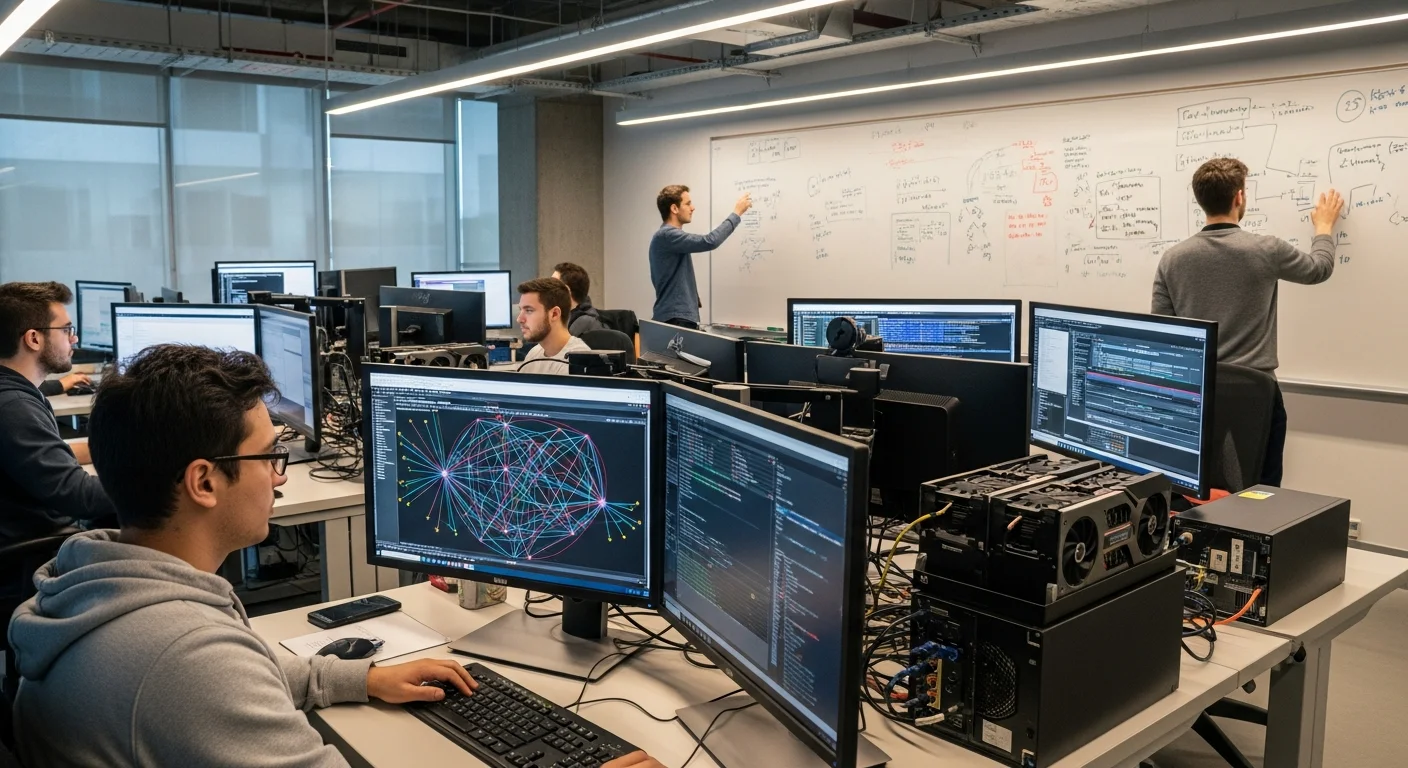
- 1.Hakia ranks the best machine learning degree programs in 2026, our top-ranked machine learning programs are University of Washington-Seattle Campus, Carnegie Mellon University, and University of Southern California, selected based on graduation rates, program size, and career outcomes.
- 2.Best value: University of Central Florida offers machine learning degrees at just $4,478/year with a 93% graduation rate.
- 3.91 accredited machine learning programs available nationwide, with options at every degree level from associate's to doctoral.
Source: BLS OEWS 2024, NSF 2024
Best Machine Learning Programs - Top 10
These are the best machine learning programs in the United States based on a methodology that considers graduation rates, program size, institutional reputation, and career outcomes. Rankings are updated annually using data from IPEDS and BLS.
Best Machine Learning Programs - Top 10
University of Washington-Seattle Campus
Doctoral: Very High Research (R1)
UW's engineering-focused AI/ML program is uniquely designed as a stackable degree system where working engineers can earn certificates that build toward a master's, with Boeing Company funding support and specializations spanning everything from robotics to materials science.
University of Washington-Seattle Campus Machine Learning Program Overview
Hakia ranks University of Washington-Seattle Campus as the #1 in machine learning degree program.
University of Washington-Seattle Campus's Machine Learning program graduates 303 students annually with a 97% graduation rate. Research opportunities include the AI Institute for Dynamic Systems and AI Center for Dynamics & Control. Deep ties to Seattle tech industry Graduates find positions at JP Morgan Chase & Co., Parsons Corporation, IBM.
Hakia Insight: Students at University of Washington-Seattle Campus benefit from active collaborations with Boeing Company and Amazon, connecting classroom learning to the workforce.
Degree Programs
Research Labs & Institutes
Real-time learning and control of complex dynamic systems
Data-driven discovery and control of dynamical systems
Data-intensive discovery across all fields using large, complex datasets
Scale-independent Multimodal Automated Real Time Systems
Location Advantages
- •Deep ties to Seattle tech industry
- •Four miles from downtown Seattle
- •Access to major employers like Amazon, Microsoft, Boeing
Industry Partners
Career Outcomes
JP Morgan Chase & Co., Parsons Corporation, IBM, Costco IT, Toyota
Certifications & Designations
Admissions
Carnegie Mellon University
Doctoral: Very High Research (R1)
CMU houses the world's first academic machine learning department, founded in 2006, and has maintained the #1 ranking in artificial intelligence since 1997 according to U.S. News & World Report.
Carnegie Mellon University Machine Learning Program Overview
Hakia ranks Carnegie Mellon University as the #2 in machine learning degree program.
Carnegie Mellon University's Machine Learning program graduates 178 students annually with a 98% graduation rate. Students benefit from cutting-edge research at the Machine Learning Department. Pittsburgh's growing tech ecosystem Graduates find positions at Major technology companies, AI startups, Research institutions.
Hakia Insight: Carnegie Mellon University leverages partnerships with Amazon and Bosch Group to offer students real-world project experience valued by employers.
Degree Programs
Research Labs & Institutes
World's first academic ML department with research spanning theoretical foundations to real-world applications
Location Advantages
- •Pittsburgh's growing tech ecosystem
- •Proximity to major East Coast tech hubs
- •Strong connections to government research facilities
Industry Partners
Career Outcomes
Major technology companies, AI startups, Research institutions
Certifications & Designations
Admissions
University of Southern California
Doctoral: Very High Research (R1)
USC houses the MS in Computer Science - Artificial Intelligence, the first dedicated AI master's program in the United States, while its interdisciplinary approach uniquely combines machine learning with wireless communications, social impact applications, and entertainment industry connections in the heart of Los Angeles.
University of Southern California Machine Learning Program Overview
Hakia ranks University of Southern California as the #3 in machine learning degree program.
University of Southern California's Machine Learning program graduates 357 students annually with a 92% graduation rate. Research opportunities include the USC Center for Artificial Intelligence in Society and Machine Learning and Data Mining Lab (Melady). Los Angeles tech ecosystem with proximity to major entertainment and aerospace industries Graduates find positions at Amazon, Google, Meta.
Hakia Insight: Students at University of Southern California benefit from active collaborations with Amazon and Meta, connecting classroom learning to the workforce.
Degree Programs
Research Labs & Institutes
AI applications for social good including combating human trafficking and wildlife conservation
Advanced machine learning algorithms and data mining techniques
Human-robot interaction, socially assistive robotics, and multi-robot systems
Data science applications in social sciences and network analysis
Machine learning applications in wireless communications
Location Advantages
- •Los Angeles tech ecosystem with proximity to major entertainment and aerospace industries
- •Strong connections to Silicon Beach startups and established tech companies
- •Year-round networking and internship opportunities in diverse industries
Industry Partners
Career Outcomes
Amazon, Google, Meta, Microsoft, Uber
Certifications & Designations
Admissions
Syracuse University
Doctoral: Very High Research (R1)
Syracuse University's iSchool has been pioneering information science education since 1928 and uniquely integrates human-centered design principles into AI education, ensuring graduates develop both advanced technical skills and ethical frameworks for responsible AI deployment.
Syracuse University Machine Learning Program Overview
Hakia ranks Syracuse University as the #4 in machine learning degree program.
Syracuse University's Machine Learning program graduates 233 students annually with a 99% graduation rate. Research opportunities include the Shan Research Group (SRG) and BioInspired Institute. Central New York region with healthcare and financial sector presence Graduates find positions at NetApp, ADP, PayPal.
Hakia Insight: Syracuse University's industry network, including NetApp and ADP, provides students with internship and hiring pathways.
Degree Programs
Research Labs & Institutes
Smart, Hybrid, Active and Nature-inspired Materials, Mechanics, and Machines with machine learning applications
Interdisciplinary research including AI applications in biomedical engineering
Location Advantages
- •Central New York region with healthcare and financial sector presence
- •Access to NYC and Boston tech hubs via proximity
- •Regional insurance and finance industry connections
Industry Partners
Career Outcomes
NetApp, ADP, PayPal, SmartestEnergy
Certifications & Designations
Admissions
University of California-Irvine
Doctoral: Very High Research (R1)
Home to the world-famous UCI Machine Learning Repository with 688 datasets used by millions of researchers globally, plus the unique HPI Research Center partnership with Germany's leading tech institute launched in 2020.
University of California-Irvine Machine Learning Program Overview
Hakia ranks University of California-Irvine as the #5 in machine learning degree program.
University of California-Irvine's Machine Learning program graduates 90 students annually with a 96% graduation rate. Research opportunities include the Center for Machine Learning and Intelligent Systems and HPI Research Center in Machine Learning and Data Science. Orange County location 4 miles from Pacific Ocean
Hakia Insight: University of California-Irvine's HPI Research Center in Machine Learning and Data Science creates a direct research-to-career pipeline with Various industry partners, bridging academic research and industry practice.
Degree Programs
Research Labs & Institutes
Addresses challenges of the modern data-driven world, using computer algorithms to discover useful information from vast data archives
Partnership with Hasso Plattner Institute promoting research and educational activities in ML and data science
Understanding information processing capabilities of biological visual systems and developing computational systems for visual media
Maintains 688 datasets as a service to the machine learning community worldwide
Location Advantages
- •Orange County location 4 miles from Pacific Ocean
- •45 miles south of Los Angeles
- •Pleasant year-round climate
- •Access to dual-career academic partner programs
Industry Partners
Career Outcomes
Certifications & Designations
Admissions
Indiana University-Bloomington
Doctoral: Very High Research (R1)
IU's machine learning programs operate from the $35 million Luddy AI Center within the unique Mind, Brain, and Machine Quad, building unprecedented collaboration between AI researchers and cognitive scientists, psychologists, and neuroscientists.
Indiana University-Bloomington Machine Learning Program Overview
Hakia ranks Indiana University-Bloomington as the #6 in machine learning degree program.
Indiana University-Bloomington's Machine Learning program graduates 292 students annually with a 84% graduation rate. Research opportunities include the Luddy Artificial Intelligence Center and Vehicle Autonomy and Intelligence Lab. Access to Big Red 200 supercomputer - one of fastest university-owned systems Graduates find positions at IBM, Yahoo!, Amazon.
Hakia Insight: Indiana University-Bloomington's industry network, including IBM and Amazon, provides students with internship and hiring pathways.
Degree Programs
Research Labs & Institutes
Human-centered AI research spanning theoretical foundations to societal applications
Robot systems for navigation in difficult environments and emergency response
Personalized speech enhancement and recognition systems
Machine learning for detecting bias and hate speech on social platforms
Location Advantages
- •Access to Big Red 200 supercomputer - one of fastest university-owned systems
- •Mind, Brain, and Machine Quad building interdisciplinary collaboration
- •Strong connections between engineering, psychology, and cognitive science departments
Industry Partners
Career Outcomes
IBM, Yahoo!, Amazon, Cerner, Expedia
Certifications & Designations
Admissions
University of Pennsylvania
Doctoral: Very High Research (R1)
Penn's MSE-AI is taught by some of the top AI researchers in the world and uniquely emphasizes ethical AI training alongside technical rigor, preparing graduates not just to build AI tools but to responsibly shape the future of this technology.
University of Pennsylvania Machine Learning Program Overview
Hakia ranks University of Pennsylvania as the #7 in machine learning degree program.
University of Pennsylvania's Machine Learning program graduates 98 students annually with a 100% graduation rate. Students benefit from cutting-edge research at the GRASP Lab (General Robotics, Automation, Sensing & Perception). Access to Philadelphia's growing tech ecosystem
Hakia Insight: University of Pennsylvania's industry network, including AWS and Google, provides students with internship and hiring pathways.
Degree Programs
Research Labs & Institutes
Premier research center in robotics, vision, perception, control, and learning
Location Advantages
- •Access to Philadelphia's growing tech ecosystem
- •Ivy League research environment
- •Strong connections to both academic and industry AI research
Industry Partners
Career Outcomes
Admissions
University at Albany
Doctoral: Very High Research (R1)
UAlbany is one of the few universities to integrate topological data analysis as a core component of its data science curriculum, offering specialized training in this emerging field alongside traditional machine learning and statistics.
University at Albany Machine Learning Program Overview
Hakia ranks University at Albany as the #8 in machine learning degree program.
University at Albany's Machine Learning program graduates 132 students annually with a 99% graduation rate. Research opportunities include the High Performance Computing Center and AI Supercomputer Lab. Part of SUNY Empire AI initiative
Hakia Insight: Students at University at Albany benefit from active collaborations with Leibniz Institute of Photonic Technology and AIM Photonics, connecting classroom learning to the workforce.
Degree Programs
Research Labs & Institutes
Scientific computing and AI workloads
Machine learning and deep learning workloads using NVIDIA DGX systems
Location Advantages
- •Part of SUNY Empire AI initiative
- •Access to New York State's artificial intelligence computing center
- •Connection to broader SUNY research network
Industry Partners
Career Outcomes
Certifications & Designations
Admissions
Massachusetts Institute of Technology
Doctoral: Very High Research (R1)
MIT pioneered many foundational concepts in artificial intelligence and machine learning, housing CSAIL - one of the world's largest and most influential AI research laboratories - where faculty and students work alongside the creators of fundamental algorithms that power modern ML systems.
Massachusetts Institute of Technology Machine Learning Program Overview
Hakia ranks Massachusetts Institute of Technology as the #9 in machine learning degree program.
Massachusetts Institute of Technology offers comprehensive Machine Learning programs at multiple degree levels, combining rigorous academics with practical experience. Research opportunities include the Computer Science and Artificial Intelligence Laboratory (CSAIL) and Institute for Data, Systems, and Society (IDSS). Cambridge/Boston AI ecosystem
Hakia Insight: Massachusetts Institute of Technology graduates earn $150,000, driven by the program's industry connections and hands-on machine learning curriculum.
Degree Programs
Research Labs & Institutes
Largest AI research lab at MIT, covering ML theory, computer vision, NLP, robotics
Data science and machine learning applications to societal challenges
Mathematical foundations of ML, optimization, and decision-making systems
Location Advantages
- •Cambridge/Boston AI ecosystem
- •Proximity to major tech companies and startups
- •Access to research hospitals for healthcare AI applications
Industry Partners
Career Outcomes
Certifications & Designations
Admissions
New York University
Doctoral: Very High Research (R1)
NYU houses Yann LeCun's legendary CILVR lab and created the world's first 'AI degree' through its MS in Emerging Technologies program, where every student must demonstrate AI fluency regardless of their chosen specialization.
New York University Machine Learning Program Overview
Hakia ranks New York University as the #10 in machine learning degree program.
New York University offers comprehensive Machine Learning programs at multiple degree levels, combining rigorous academics with practical experience. Research opportunities include the CILVR (Computational Intelligence, Learning, Vision, and Robotics) and Machine Learning for Language (ML²) Group. Brooklyn's rapidly growing tech ecosystem Graduates find positions at Amazon, Microsoft, Google.
Hakia Insight: New York University's Machine Learning for Language (ML²) Group and Algorithms and Foundations Group position students at the forefront of machine learning research.
Degree Programs
Research Labs & Institutes
AI, machine learning, computer perception, natural language understanding, robotics, and healthcare applications
State-of-the-art machine learning methods for natural language processing with emphasis on neural network models
Mathematical and theoretical tools applied to machine learning, systems, and computational biology
Statistics tools, algorithms, and theory for data science and machine learning applications
Location Advantages
- •Brooklyn's rapidly growing tech ecosystem
- •Direct access to NYC's AI and fintech industries
- •Partnership opportunities with Manhattan-based tech companies
- •NYU's global network spanning Abu Dhabi and Shanghai campuses
Career Outcomes
Amazon, Microsoft, Google, Meta, Bloomberg
Admissions
Best Machine Learning Programs - Top 10 — Complete Program Data
#1. University of Washington-Seattle Campus Machine Learning Program
Hakia ranks University of Washington-Seattle Campus as the #1 in machine learning degree program. Location: Seattle, WA | Type: Public | Tuition: $11,524/year | Graduation Rate: 97% | Score: 97.5
What makes University of Washington-Seattle Campus stand out: UW's engineering-focused AI/ML program is uniquely designed as a stackable degree system where working engineers can earn certificates that build toward a master's, with Boeing Company funding support and specializations spanning everything from robotics to materials science.
Hakia Insight: Students at University of Washington-Seattle Campus benefit from active collaborations with Boeing Company and Amazon, connecting classroom learning to the workforce.
Program Overview: The University of Washington-Seattle Campus offers two distinct machine learning pathways: the Master of Science in Artificial Intelligence and Machine Learning for Engineering and the Master of Science in Data Science. The AI/ML for Engineering program is a flexible, stackable degree launching Fall 2026 that's specifically designed for working engineers who want to apply AI and ML to physical systems like manufacturing, robotics, and chemical processes. Built with Boeing Company funding support, this program can be completed fully online part-time or as a full-time student, combining foundational AI/ML skills with domain-specific training across multiple engineering disciplines. The complementary MSDS program has been operating since earlier and focuses on professional data science careers, meeting evenings on campus with an industry-relevant curriculum covering statistical modeling, data visualization, and software engineering. Both programs leverage UW's position as a top-10 global university with deep Seattle tech industry connections.
Degree Programs: BS in Computer Science (AI/Machine Learning track) (4 years); MS in Machine Learning (2 years); MS in Computer Science (AI track) (2 years); PhD in Computer Science (AI/ML) (5-6 years)
Research Labs: AI Institute for Dynamic Systems - Real-time learning and control of complex dynamic systems; AI Center for Dynamics & Control - Data-driven discovery and control of dynamical systems; eScience Institute - Data-intensive discovery across all fields using large, complex datasets; SMARTS Lab - Scale-independent Multimodal Automated Real Time Systems
Industry Partners: Boeing Company, Amazon, JP Morgan Chase & Co., Costco IT, Zillow
Career Outcomes: | Top Employers: JP Morgan Chase & Co., Parsons Corporation, IBM, Costco IT, Toyota, Northrop Grumman, Zillow, Seattle Children's Hospital | Common Roles: Software Engineer, Research Scientist, Data Scientist, Consultant
Notable Faculty: Steve Brunton (Machine learning for dynamical systems, sparse sensing, dimensionality reduction); Ashis Banerjee (Automated decision-making for cyber-physical systems, optimization, machine learning); Taylor Kessler Faulkner (AI, human-robot interaction, assistive robotics)
Admissions: GPA: 3.0 minimum cumulative GPA required
Accreditations: ABET accredited
#2. Carnegie Mellon University Machine Learning Program
Hakia ranks Carnegie Mellon University as the #2 in machine learning degree program. Location: Pittsburgh, PA | Type: Private | Tuition: $62,260/year | Graduation Rate: 98% | Score: 94.4
What makes Carnegie Mellon University stand out: CMU houses the world's first academic machine learning department, founded in 2006, and has maintained the #1 ranking in artificial intelligence since 1997 according to U.S. News & World Report.
Hakia Insight: Carnegie Mellon University leverages partnerships with Amazon and Bosch Group to offer students real-world project experience valued by employers.
Program Overview: Carnegie Mellon's Master's in Machine Learning program emerges from the world's first academic machine learning department, founded in 2006. This intensive 16-month program can be completed in three semesters by motivated students, though many take four semesters to deepen their research experience or strengthen foundational skills. The curriculum demands six rigorous core courses spanning probabilistic graphical models to optimization theory, three specialized electives, and a full-time summer practicum that often leads to coveted industry positions. Students work alongside faculty who literally wrote the textbooks on machine learning, with access to advanced research labs studying everything from deep reinforcement learning to AI ethics. The program welcomes students from diverse academic backgrounds - computer science majors study alongside physics PhDs and mathematics graduates - united by exceptional analytical skills and programming proficiency.
Degree Programs: MS (16 months (3-4 semesters)); PhD; Fifth-Year MS; Joint PhD in Statistics and Machine Learning; Joint PhD in Machine Learning and Public Policy; Joint PhD in Neural Computation and Machine Learning
Research Labs: Machine Learning Department - World's first academic ML department with research spanning theoretical foundations to real-world applications
Industry Partners: Amazon, Bosch Group
Career Outcomes: | Top Employers: Major technology companies, AI startups, Research institutions | Common Roles: Machine Learning Engineer, AI Software Engineer, Research Scientist, Data Scientist
Notable Faculty: Zico Kolter (Department Head, AI and machine learning)
Admissions: GPA: 3.9/4.0 average for admitted students
Accreditations: STEM program designation for international students
#3. University of Southern California Machine Learning Program
Hakia ranks University of Southern California as the #3 in machine learning degree program. Location: Los Angeles, CA | Type: Private | Tuition: $66,640/year | Graduation Rate: 92% | Score: 92.5
What makes University of Southern California stand out: USC houses the MS in Computer Science - Artificial Intelligence, the first dedicated AI master's program in the United States, while its interdisciplinary approach uniquely combines machine learning with wireless communications, social impact applications, and entertainment industry connections in the heart of Los Angeles.
Hakia Insight: Students at University of Southern California benefit from active collaborations with Amazon and Meta, connecting classroom learning to the workforce.
Program Overview: USC's Viterbi School of Engineering offers a comprehensive suite of machine learning and data science programs that bridge theoretical foundations with real-world applications. The flagship MS in Electrical and Computer Engineering - Machine Learning and Data Science provides focused, rigorous training in data science techniques, machine learning, and signal processing within the wireless communications domain. Complementing this is the MS in Computer Science - Artificial Intelligence, one of the nation's first dedicated AI master's programs, offering specialized tracks in deep learning, computer vision, natural language processing, and robotics. For students seeking broader data science foundations, the MS in Applied Data Science trains professionals from diverse backgrounds through hands-on experiences and a unique professional practicum, emphasizing practical skills in Python programming, database management, and big data infrastructure. All programs require 32 units and can be completed in 1.5-2 years full-time. USC's machine learning ecosystem spans multiple research centers including the USC Center for Artificial Intelligence in Society, the Robotics and Autonomous Systems Center, and specialized labs like the Machine Learning and Data Mining Lab (Melady) and the Computational Social Science Laboratory. Students benefit from LA's tech corridor proximity and USC's extensive alumni network, with graduates placing at top-tier companies like Amazon, Google, Meta, and emerging AI startups.
Degree Programs: MS in Electrical and Computer Engineering - Machine Learning and Data Science (1.5-2 years); MS in Computer Science - Artificial Intelligence (1.5-2 years); MS in Applied Data Science (1.5-2 years)
Research Labs: USC Center for Artificial Intelligence in Society - AI applications for social good including combating human trafficking and wildlife conservation; Machine Learning and Data Mining Lab (Melady) - Advanced machine learning algorithms and data mining techniques; Robotics and Autonomous Systems Center (RASC) - Human-robot interaction, socially assistive robotics, and multi-robot systems; Computational Social Science Laboratory - Data science applications in social sciences and network analysis; Wireless Devices and Systems (WiDeS) Lab - Machine learning applications in wireless communications
Industry Partners: Amazon, Meta, Capital One, Boeing, Intel, Google, Apple, Microsoft, Uber, Qualcomm
Career Outcomes: | Top Employers: Amazon, Google, Meta, Microsoft, Uber, TikTok, Goldman Sachs, Applied Materials | Common Roles: Software Development Engineer, Machine Learning Engineer, Data Scientist, Applied Scientist, Computer Vision Engineer
Notable Faculty: Prof. Andreas Molisch (Wireless communications and machine learning integration); Prof. Xiaohui Chen (High-dimensional statistics, machine learning, optimal transport)
Admissions:
Accreditations: OPT STEM extension eligible
#4. Syracuse University Machine Learning Program
Hakia ranks Syracuse University as the #4 in machine learning degree program. Location: Syracuse, NY | Type: Private | Tuition: $61,310/year | Graduation Rate: 99% | Score: 84.3
What makes Syracuse University stand out: Syracuse University's iSchool has been pioneering information science education since 1928 and uniquely integrates human-centered design principles into AI education, ensuring graduates develop both advanced technical skills and ethical frameworks for responsible AI deployment.
Hakia Insight: Syracuse University's industry network, including NetApp and ADP, provides students with internship and hiring pathways.
Program Overview: Syracuse University's machine learning and AI programs are housed within the innovative School of Information Studies (iSchool), which offers a distinctive interdisciplinary approach combining technology with human-centered design. The flagship Master of Science in Applied Human-Centered Artificial Intelligence is a 31-credit, on-campus program that can be completed in as little as one year, emphasizing hands-on projects and portfolio development. The program emphasizes responsible AI development, featuring core courses in Natural Language Processing, Deep Learning in Practice, and Responsible AI. Students work in state-of-the-art facilities while engaging with faculty like Professor Wanliang Shan, who leads research in soft robotics and machine learning applications. The iSchool also offers a complementary MS in Applied Data Science (34 credits) with specialized tracks in AI, Big Data, and Visual Analytics, available both on-campus and online through their established distance learning platform.
Degree Programs: MS in Applied Human-Centered Artificial Intelligence (1 year minimum); MS in Applied Data Science (Variable); MS in Sport Analytics (Variable)
Research Labs: Shan Research Group (SRG) - Smart, Hybrid, Active and Nature-inspired Materials, Mechanics, and Machines with machine learning applications; BioInspired Institute - Interdisciplinary research including AI applications in biomedical engineering
Industry Partners: NetApp, ADP, PayPal, Uber
Career Outcomes: Placement Rate: 96% for iSchool undergraduates (2024), 90% for Applied Data Science masters (2024) | Top Employers: NetApp, ADP, PayPal, SmartestEnergy | Common Roles: Machine Learning Engineer, Data Scientist, Software Engineer, Business Intelligence Developer, Research Scientist, Big Data Architect
Notable Faculty: Dr. Wanliang Shan (Machine learning applications in soft robotics and materials engineering); Dr. Jaime Banks (Social AI and human-machine interaction research); Dr. Jenny Stromer-Galley (Political communication, social media, and digital behavior analysis); Dr. Michael Fudge (Cloud computing, data science, and human-centered design)
Admissions: GPA: 3.0 minimum for Applied Data Science program
Accreditations: Middle States Commission on Higher Education accreditation, American Library Association accreditation (since 1928)
#5. University of California-Irvine Machine Learning Program
Hakia ranks University of California-Irvine as the #5 in machine learning degree program. Location: Irvine, CA | Type: Public | Tuition: $11,834/year | Graduation Rate: 96% | Score: 75.3
What makes University of California-Irvine stand out: Home to the world-famous UCI Machine Learning Repository with 688 datasets used by millions of researchers globally, plus the unique HPI Research Center partnership with Germany's leading tech institute launched in 2020.
Hakia Insight: University of California-Irvine's HPI Research Center in Machine Learning and Data Science creates a direct research-to-career pipeline with Various industry partners, bridging academic research and industry practice.
Program Overview: UC Irvine's machine learning programs span multiple pathways through the Donald Bren School of Information and Computer Sciences, one of only five computing-focused schools among Association of American Universities (AAU) members. The flagship MS in Computer Science offers deep specialization in artificial intelligence and machine learning through its comprehensive core curriculum, with students choosing from seven specialized areas including the dedicated Artificial Intelligence track featuring courses like COMPSCI 273A Machine Learning. For professionals seeking applied expertise, the Master of Data Science (MDS) program provides both full-time and part-time options with industry-focused curriculum emphasizing experiential learning in statistical modeling, machine learning, data management, and AI. The school maintains over 688 datasets in the renowned UCI Machine Learning Repository, serving millions of researchers worldwide and providing students unique access to advanced data resources. With approximately 4,000 undergraduates, 600 master's students, and 400 doctoral students, the school creates an exceptional research environment supported by over 50 Computer Science faculty including 15 ACM Fellows, 13 IEEE Fellows, and 15 AAAS Fellows. Students benefit from the Center for Machine Learning and Intelligent Systems connecting more than thirty faculty across disciplines, plus specialized research centers like the Computational Vision Lab and the HPI Research Center in Machine Learning and Data Science established in 2020. The programs emphasize real-world application through industry capstone projects, with MDS students working directly on data science problems with corporate partners.
Degree Programs: BS (4 years); MS; PhD
Research Labs: Center for Machine Learning and Intelligent Systems - Addresses challenges of the modern data-driven world, using computer algorithms to discover useful information from vast data archives; HPI Research Center in Machine Learning and Data Science - Partnership with Hasso Plattner Institute promoting research and educational activities in ML and data science; Computational Vision Lab - Understanding information processing capabilities of biological visual systems and developing computational systems for visual media; UCI Machine Learning Repository - Maintains 688 datasets as a service to the machine learning community worldwide
Industry Partners: Various industry partners
Career Outcomes: | Common Roles: Data Scientist, Machine Learning Engineer, Research positions
Notable Faculty: undefined (50+ Computer Science faculty including 15 ACM Fellows, 13 IEEE Fellows, 15 AAAS Fellows, plus AAAI Fellows and Academia Europea Members)
Admissions:
Accreditations: Minority Serving Institution (MSI), Hispanic-Serving Institution (HSI), Asian American and Native American Pacific Islander-Serving Institution (AANAPISI)
#6. Indiana University-Bloomington Machine Learning Program
Hakia ranks Indiana University-Bloomington as the #6 in machine learning degree program. Location: Bloomington, IN | Type: Public | Tuition: $10,312/year | Graduation Rate: 84% | Score: 74.0
What makes Indiana University-Bloomington stand out: IU's machine learning programs operate from the $35 million Luddy AI Center within the unique Mind, Brain, and Machine Quad, building unprecedented collaboration between AI researchers and cognitive scientists, psychologists, and neuroscientists.
Hakia Insight: Indiana University-Bloomington's industry network, including IBM and Amazon, provides students with internship and hiring pathways.
Program Overview: Indiana University-Bloomington offers machine learning education through multiple pathways within the Luddy School of Informatics, Computing, and Engineering. The flagship program is the PhD in Intelligent Systems Engineering, which advances engineering using artificial intelligence, embedded computing, and sophisticated data interpretation. Students can also pursue machine learning through the MS in Computer Science, which explores AI, machine learning, and big data applications, or the comprehensive Data Science programs that include foundational machine learning coursework across five specialized tracks. The university's $35 million Luddy Artificial Intelligence Center, opened in 2021, serves as the hub for AI and machine learning research, bringing together over 60 faculty members from across the university in the Mind, Brain, and Machine Quad. What sets IU apart is its interdisciplinary approach - the Luddy AI Center connects faculty from nearly every college, creating unique collaboration opportunities between computer science, psychology, cognitive science, and neuroscience. Students gain hands-on experience through practical projects and research early in their studies, with access to advanced cyberinfrastructure including Big Red 200, one of the fastest university-owned supercomputers in the country.
Degree Programs: PhD in Intelligent Systems Engineering (4-6 years); MS in Intelligent Systems Engineering (1.5-2 years); MS in Computer Science (1.5-2 years); BS in Data Science (4 years)
Research Labs: Luddy Artificial Intelligence Center - Human-centered AI research spanning theoretical foundations to societal applications; Vehicle Autonomy and Intelligence Lab - Robot systems for navigation in difficult environments and emergency response; Natural Language Processing Lab - Personalized speech enhancement and recognition systems; Observatory on Social Media - Machine learning for detecting bias and hate speech on social platforms
Industry Partners: IBM, Amazon, Yahoo!
Career Outcomes: Placement Rate: 100% within 6 months (MS Computer Science 2022) | Top Employers: IBM, Yahoo!, Amazon, Cerner, Expedia | Common Roles: Software Engineer, Technical Consultant, Security Consultant, Data Scientist, Research Scientist
Notable Faculty: David Crandall (Computer vision, machine learning for image and video understanding); Filippo Menczer (Web science, information filtering, and network analysis)
Admissions:
Accreditations: STEM eligible via the U.S. Department of Education
#7. University of Pennsylvania Machine Learning Program
Hakia ranks University of Pennsylvania as the #7 in machine learning degree program. Location: Philadelphia, PA | Type: Private | Tuition: $58,620/year | Graduation Rate: 100% | Score: 73.7
What makes University of Pennsylvania stand out: Penn's MSE-AI is taught by some of the top AI researchers in the world and uniquely emphasizes ethical AI training alongside technical rigor, preparing graduates not just to build AI tools but to responsibly shape the future of this technology.
Hakia Insight: University of Pennsylvania's industry network, including AWS and Google, provides students with internship and hiring pathways.
Program Overview: Penn Engineering's Master of Science in Engineering in Artificial Intelligence (MSE-AI Online) is a fully online, asynchronous program that equips students with both advanced technical skills and strong ethical frameworks for AI development. Known as The Raj and Neera Singh Program in Artificial Intelligence, this degree covers classical AI, natural language processing, generative AI, and modern deep learning while preparing students to address AI's societal risks head-on. The program is designed for professionals with computer science or engineering backgrounds who want to stay ahead of industry demand while studying from anywhere in the world. Students benefit from Penn's world-renowned AI faculty and engage with real-world tools and environments through hands-on assignments, all while being part of a tight-knit online community supported by strong engagement platforms.
Degree Programs: BSE (4 years); MSE (1.5-2 years)
Research Labs: GRASP Lab (General Robotics, Automation, Sensing & Perception) - Premier research center in robotics, vision, perception, control, and learning
Industry Partners: AWS, Google
Career Outcomes: | Common Roles: AI Startup Founders, AI Model Developers, AI Integration Specialists
Notable Faculty: Chris Callison-Burch (Computer and Information Science, Natural Language Processing); George J. Pappas (Electrical and Systems Engineering, Transportation); Rajeev Alur (Computer and Information Science); Michael Kearns (Management & Technology)
Admissions:
#8. University at Albany Machine Learning Program
Hakia ranks University at Albany as the #8 in machine learning degree program. Location: Albany, NY | Type: Public | Tuition: $7,070/year | Graduation Rate: 99% | Score: 72.8
What makes University at Albany stand out: UAlbany is one of the few universities to integrate topological data analysis as a core component of its data science curriculum, offering specialized training in this emerging field alongside traditional machine learning and statistics.
Hakia Insight: Students at University at Albany benefit from active collaborations with Leibniz Institute of Photonic Technology and AIM Photonics, connecting classroom learning to the workforce.
Program Overview: The University at Albany offers a Master of Science in Data Science that uniquely positions itself at the intersection of mathematics, machine learning, and advanced topological data analysis. Housed in the Department of Mathematics within the College of Arts and Sciences, this program provides comprehensive training across three core areas: topological data analysis, machine learning, and statistics. Students gain hands-on experience with current industry tools including Python, R, TensorFlow, and specialized topological data analysis software like Ayasdi's Mapper, Eirene, and Ripser. The program features a flexible curriculum structure with core requirements, specialized tracks, and practical components including comprehensive data analysis projects with oral presentations. Students can tailor their learning path through electives and practicum courses in either topological data analysis or machine learning. The program is designated as STEM, offering international students extended Optional Practical Training opportunities of up to 36 months. UAlbany also offers a unique 4+1 accelerated option for current undergraduates, allowing completion of both degrees in just five years.
Degree Programs: BS in Computer Science (ML concentration) (4 years); MS in Computer Science (2 years)
Research Labs: High Performance Computing Center - Scientific computing and AI workloads; AI Supercomputer Lab - Machine learning and deep learning workloads using NVIDIA DGX systems
Industry Partners: Leibniz Institute of Photonic Technology, AIM Photonics
Career Outcomes: | Common Roles: Algorithm developer, Business intelligence analyst, Data scientist, Data architect, Data engineer, Machine learning engineer, Distributed systems engineer
Notable Faculty: Dr. Igor Lednev (Raman spectroscopy, machine learning for forensic applications and medical diagnostics)
Admissions: GPA: 3.0 minimum for accelerated option | Acceptance Rate: Rolling admissions
Accreditations: STEM designation, F-1 STEM OPT extension eligible
#9. Massachusetts Institute of Technology Machine Learning Program
Hakia ranks Massachusetts Institute of Technology as the #9 in machine learning degree program. Location: Cambridge, MA | Type: Private | Tuition: $59,750/year | Score: 70.6
What makes Massachusetts Institute of Technology stand out: MIT pioneered many foundational concepts in artificial intelligence and machine learning, housing CSAIL - one of the world's largest and most influential AI research laboratories - where faculty and students work alongside the creators of fundamental algorithms that power modern ML systems.
Hakia Insight: Massachusetts Institute of Technology graduates earn $150,000, driven by the program's industry connections and hands-on machine learning curriculum.
Program Overview: MIT doesn't offer a traditional standalone master's degree specifically titled "Machine Learning," but provides several pathways for advanced ML education through its world-renowned Computer Science and Artificial Intelligence Laboratory (CSAIL), the Institute for Data, Systems, and Society (IDSS), and the Laboratory for Information and Decision Systems (LIDS). Students can pursue ML through the SM (Scientiae Magister) degree programs in departments like Electrical Engineering and Computer Science, or through specialized programs like the Master of Business Analytics (MBAn) at MIT Sloan, which heavily incorporates machine learning techniques. The Institute also offers a comprehensive Professional Certificate Program in Machine Learning & Artificial Intelligence, requiring 16+ days of qualifying courses taught by leading MIT faculty from CSAIL, IDSS, and LIDS. MIT's approach to ML education is deeply interdisciplinary, combining rigorous mathematical foundations with advanced research applications. Faculty like Regina Barzilay (natural language processing), Tommi Jaakkola (machine learning theory), and Stefanie Jegelka (graph neural networks) lead breakthrough research while teaching students. The programs emphasize both theoretical understanding and practical implementation, with students often working on real-world problems in healthcare, robotics, climate science, and other domains where MIT's research groups are making significant contributions.
Degree Programs: SM in Electrical Engineering and Computer Science (1-2 years); Master of Business Analytics (MBAn) (1 year); Professional Certificate in ML & AI (Varies (36 months max))
Research Labs: Computer Science and Artificial Intelligence Laboratory (CSAIL) - Largest AI research lab at MIT, covering ML theory, computer vision, NLP, robotics; Institute for Data, Systems, and Society (IDSS) - Data science and machine learning applications to societal challenges; Laboratory for Information and Decision Systems (LIDS) - Mathematical foundations of ML, optimization, and decision-making systems
Industry Partners: Google, Microsoft, Amazon, OpenAI, IBM, DeepMind
Career Outcomes: Placement Rate: 95%+
Notable Faculty: Regina Barzilay (Natural language processing and healthcare AI); Tommi S. Jaakkola (Machine learning theory and probabilistic models); Stefanie Jegelka (Graph neural networks and optimization); Antonio Torralba (Computer vision and visual AI); Vivienne Sze (Efficient deep learning systems and hardware)
Admissions:
Accreditations: ABET accredited
#10. New York University Machine Learning Program
Hakia ranks New York University as the #10 in machine learning degree program. Location: New York, NY | Type: Private | Tuition: $60,438/year | Score: 70.5
What makes New York University stand out: NYU houses Yann LeCun's legendary CILVR lab and created the world's first 'AI degree' through its MS in Emerging Technologies program, where every student must demonstrate AI fluency regardless of their chosen specialization.
Hakia Insight: New York University's Machine Learning for Language (ML²) Group and Algorithms and Foundations Group position students at the forefront of machine learning research.
Program Overview: NYU's machine learning ecosystem spans multiple programs across the Tandon School of Engineering, creating one of the most comprehensive AI education platforms in the country. The traditional MS in Computer Science offers extensive machine learning specialization options, while the innovative MS in Emerging Technologies serves as what NYU calls an 'AI degree for today's world,' allowing students to customize their curriculum across advanced fields with mandatory AI fluency components. Both programs benefit from NYU's powerhouse AI research infrastructure, including the renowned CILVR lab (Computational Intelligence, Learning, Vision, and Robotics) led by Yann LeCun, the Turing Award winner who pioneered convolutional neural networks and serves as Meta's Chief AI Scientist. Students can choose between traditional on-campus experiences in Brooklyn's vibrant tech corridor or fully online formats that maintain the same rigorous curriculum standards. What sets NYU apart is its unique blend of theoretical depth and practical application, with students working alongside faculty who are literally writing the future of AI. The Emerging Technologies program represents a particularly innovative approach, requiring 6 credits of applied AI courses as core curriculum while allowing students to explore nine different concentration areas from cybersecurity to robotics. Meanwhile, the Computer Science MS provides the foundational rigor that has made NYU a breeding ground for AI leaders, with graduates securing roles at top tech companies and contributing to breakthrough research in machine learning, computer vision, and natural language processing.
Degree Programs: MS in Computer Science with Machine Learning & AI Concentration (2 years); MS in Emerging Technologies with Machine Learning & AI Concentration (2 years)
Research Labs: CILVR (Computational Intelligence, Learning, Vision, and Robotics) - AI, machine learning, computer perception, natural language understanding, robotics, and healthcare applications; Machine Learning for Language (ML²) Group - State-of-the-art machine learning methods for natural language processing with emphasis on neural network models; Algorithms and Foundations Group - Mathematical and theoretical tools applied to machine learning, systems, and computational biology; STAT Research Group - Statistics tools, algorithms, and theory for data science and machine learning applications
Career Outcomes: | Top Employers: Amazon, Microsoft, Google, Meta, Bloomberg, JPMorgan Chase | Common Roles: AI Engineer, Data Scientist, Machine Learning Engineer, Research Engineer, Software Engineer, Product Manager
Notable Faculty: Yann LeCun (Convolutional neural networks, deep learning, AI); Kyunghyun Cho (Natural language processing, neural machine translation); Joan Bruna (Mathematical foundations of deep learning, geometric deep learning); Lerrel Pinto (Robotics, reinforcement learning, computer vision)
Admissions:
Our rankings methodology weighs program strength (25%), graduation rate (20%), career outcomes (15%), institutional quality (12%), industry recognition (10%), selectivity (10%), and data transparency (8%). Learn more about our methodology →
Who Should Study Machine Learning?
Machine learning is ideal for students with strong mathematical backgrounds who enjoy working with data, algorithms, and statistical analysis. Success requires comfort with linear algebra, calculus, statistics, and programming, requiring prior computer science or data science coursework.
- Strong mathematical foundation in linear algebra, calculus, probability, and statistics
- Programming experience in Python, R, or similar languages used in data science
- Analytical mindset with interest in pattern recognition and data-driven insights
- Research orientation, many ML roles involve experimental work and hypothesis testing
- Persistence and curiosity. ML involves extensive experimentation and iterative improvement
Most successful ML students have undergraduate degrees in computer science, mathematics, physics, engineering, or related quantitative fields. Career changers should consider building foundations through AI/ML bootcamps or data science programs first.
Machine Learning Programs by Degree Level
Top-ranked undergraduate programs nationwide
Top graduate programs for specialization and advancement
PhD programs for research and academic careers
Flexible online programs for working professionals
Machine Learning Programs by Degree Level
Top-ranked undergraduate programs nationwide
Top graduate programs for specialization and advancement
PhD programs for research and academic careers
Flexible online programs for working professionals
Best Machine Learning Programs - Bachelor's
A bachelor's degree in machine learning is the standard credential for entry-level positions. These 4-year programs provide comprehensive training and hands-on experience.
Best Machine Learning Programs - Top 3 Bachelor's
University of Washington-Seattle Campus
303 graduates, 97% grad rate, Score: 97.5
Carnegie Mellon University
33 graduates, 98% grad rate, Score: 85.0
University of California-Irvine
90 graduates, 96% grad rate, Score: 75.3
4. University of Southern California (Los Angeles, CA) - Score: 75.1, Tuition: $66,640
5. Indiana University-Bloomington (Bloomington, IN) - Score: 74.0, Tuition: $10,312
6. University at Albany (Albany, NY) - Score: 72.8, Tuition: $7,070
7. Massachusetts Institute of Technology (Cambridge, MA) - Score: 70.6, Tuition: $59,750
8. University of Michigan-Ann Arbor (Ann Arbor, MI) - Score: 68.6, Tuition: $17,977
9. University of Massachusetts-Amherst (Amherst, MA) - Score: 64.1, Tuition: $16,591
10. Rochester Institute of Technology (Rochester, NY) - Score: 62.7, Tuition: $55,784
Best Machine Learning Programs - Master's
A master's degree in machine learning prepares students for senior and specialized roles. These 1-2 year programs offer advanced expertise and leadership training.
Best Machine Learning Programs - Top 3 Master's
Carnegie Mellon University
178 graduates, 98% grad rate, Score: 94.4
University of Southern California
357 graduates, 92% grad rate, Score: 92.5
Syracuse University
233 graduates, 99% grad rate, Score: 84.3
4. University of Washington-Seattle Campus (Seattle, WA) - Score: 81.7, Tuition: $11,524
5. University of Pennsylvania (Philadelphia, PA) - Score: 73.7, Tuition: $58,620
6. New York University (New York, NY) - Score: 70.5, Tuition: $60,438
7. Northwestern University (Evanston, IL) - Score: 67.5, Tuition: $64,887
8. Clark University (Worcester, MA) - Score: 66.2, Tuition: $54,760
9. University of California-Irvine (Irvine, CA) - Score: 65.7, Tuition: $11,834
10. Northeastern University (Boston, MA) - Score: 65.4, Tuition: $62,000
Best Machine Learning Programs - Online
Online machine learning programs offer flexibility for working professionals. Top accredited programs provide the same curriculum quality as on-campus alternatives.
Best Machine Learning Programs - Top 3 Online
University of Washington-Seattle Campus
303 graduates, 97% grad rate, Score: 97.5
Carnegie Mellon University
33 graduates, 98% grad rate, Score: 85.0
Syracuse University
233 graduates, 99% grad rate, Score: 84.3
4. University of California-Irvine (Irvine, CA) - Score: 75.3, Tuition: $11,834
5. University of Southern California (Los Angeles, CA) - Score: 75.1, Tuition: $66,640
6. Indiana University-Bloomington (Bloomington, IN) - Score: 74.0, Tuition: $10,312
7. University of Pennsylvania (Philadelphia, PA) - Score: 73.7, Tuition: $58,620
8. University at Albany (Albany, NY) - Score: 72.8, Tuition: $7,070
9. Massachusetts Institute of Technology (Cambridge, MA) - Score: 70.6, Tuition: $59,750
10. New York University (New York, NY) - Score: 70.5, Tuition: $60,438
Best Machine Learning Programs - Associate's
An associate's degree in machine learning provides a 2-year pathway into the field. These programs are ideal for career starters or those planning to transfer to a 4-year program.
Best Machine Learning Programs - Top 3 Associate's
Weber State University
139 graduates, 92% grad rate, Score: 64.5
Rochester Institute of Technology
3 graduates, 90% grad rate, Score: 59.4
Santa Monica College
46 graduates, 95% grad rate, Score: 55.7
4. Southern New Hampshire University (Manchester, NH) - Score: 54.4, Tuition: $15,450
5. Green River College (Auburn, WA) - Score: 53.5, Tuition: $4,074
6. Utah Valley University (Orem, UT) - Score: 53.0, Tuition: $5,614
7. CUNY New York City College of Technology (Brooklyn, NY) - Score: 52.5, Tuition: $6,930
8. MiraCosta College (Oceanside, CA) - Score: 52.4, Tuition: $1,104
9. Columbia Basin College (Pasco, WA) - Score: 51.3, Tuition: $5,514
10. De Anza College (Cupertino, CA) - Score: 51.0, Tuition: $1,395
Best Machine Learning Programs - Graduate
Graduate programs in machine learning (PhD and doctoral degrees) prepare students for research, academic, and senior leadership positions.
Best Machine Learning Programs - Top 3 Graduate
Carnegie Mellon University
28 graduates, 98% grad rate, Score: 90.0
University of California-Irvine
3 graduates, 96% grad rate, Score: 66.0
Indiana University-Bloomington
19 graduates, 84% grad rate, Score: 60.3
4. University of Florida (Gainesville, FL) - Score: 60.2, Tuition: $4,477
5. Clemson University (Clemson, SC) - Score: 60.0, Tuition: $14,038
6. Pennsylvania State University-Main Campus (University Park, PA) - Score: 58.8, Tuition: $19,672
7. Northern Arizona University (Flagstaff, AZ) - Score: 57.7, Tuition: $11,015
8. University of Pittsburgh-Pittsburgh Campus (Pittsburgh, PA) - Score: 56.3, Tuition: $20,154
9. Capitol Technology University (Laurel, MD) - Score: 55.8, Tuition: $26,088
10. University of Iowa (Iowa City, IA) - Score: 53.8, Tuition: $9,016
Most Affordable Machine Learning Programs
Looking for quality machine learning education without the hefty price tag? These programs offer the best value, balancing tuition costs with strong academic outcomes and career prospects. Our Value Score factors in graduation rates, program strength, and institutional quality relative to cost.
Top 5 Most Affordable Machine Learning Programs
| Rank | Institution | Location | Tuition | Value Score | Grad Rate |
|---|---|---|---|---|---|
| 1 | University of Central Florida | Orlando, FL | $4,478 | 122.8 | 93% |
| 2 | University of Louisiana at Lafayette | Lafayette, LA | $5,407 | 111.3 | 98% |
| 3 | San Jose State University | San Jose, CA | $5,742 | 109.9 | 100% |
| 4 | University of North Florida | Jacksonville, FL | $3,996 | 107.2 | 82% |
| 5 | Florida Atlantic University | Boca Raton, FL | $2,522 | 106.2 | 77% |
Machine Learning Career Outcomes
Machine learning offers some of the highest-paying and fastest-growing careers in technology. The BLS projects 35% job growth for data scientists and AI/ML roles through 2032, much faster than average. For detailed compensation analysis, see our AI/ML engineer salary guide.
Career Paths
Research Scientist
SOC 15-2041Conduct advanced research in machine learning algorithms and AI applications in industry or academia.
Computer Vision Engineer
SOC 15-1252Specialize in algorithms that enable computers to interpret and process visual information.
Machine Learning Curriculum Overview
ML programs combine computer science theory, advanced mathematics, and practical implementation. Core areas include statistical learning theory, optimization, algorithms, and hands-on experience with real-world datasets.
- Mathematical Foundations: Linear algebra, multivariate calculus, probability theory, statistics
- Core ML: Supervised learning, unsupervised learning, reinforcement learning, neural networks
- Programming: Python/R programming, TensorFlow/PyTorch, scikit-learn, data manipulation
- Theory: Statistical learning theory, optimization methods, computational complexity
- Applications: Computer vision, natural language processing, robotics, recommender systems
- Research Methods: Experimental design, model evaluation, research methodology, thesis/capstone
Most programs require significant project work, often culminating in a thesis or capstone project involving original research or industry collaboration. Internships at tech companies or research labs are highly encouraged.
Machine Learning Programs by State
Machine Learning vs Related Fields
Machine learning is the most mathematically intensive computing field. Success requires genuine comfort with linear algebra, calculus, probability theory, and optimization, not just using libraries, but understanding why algorithms work and when they'll fail.
ML distinguishes itself from traditional programming through its empirical nature. Rather than writing explicit rules, you design experiments, tune hyperparameters, analyze results, and iterate. This scientific approach requires patience with ambiguity and comfort with experimentation.
The field is highly competitive, with top positions requiring exceptional mathematical ability and research experience. However, many valuable ML roles exist that don't require PhD-level expertise, applied ML engineers who deploy and maintain models, ML ops specialists, and domain experts who apply ML to specific industries.
Machine Learning & AI Career Track
+$25K avg salary increase·9 months
- University of Arizona graduate certificate included
- 1-on-1 mentorship from industry professionals
- Money-back job guarantee
Affiliate link · We may earn a commission at no extra cost to you.
- You want to specialize specifically in ML algorithms and applications
- You have strong math/stats background and enjoy theoretical work
- Your goal is ML engineer, research scientist, or data scientist roles
- You're interested in advanced AI research and development
- You want broader AI knowledge including robotics, NLP, computer vision
- You're interested in AI ethics, policy, and societal implications
- You prefer interdisciplinary approach over pure technical focus
- You want flexibility across various AI application areas
- You want to focus on business insights and analytics over algorithms
- You prefer working with business stakeholders and domain experts
- You're more interested in descriptive/predictive analytics than AI
- You want roles in traditional industries undergoing digital transformation
- You want maximum career flexibility across all tech roles
- You're unsure about specializing in AI/ML specifically
- You want strong software engineering foundations
- You prefer broader computer science theory and applications
Is a Machine Learning Degree Worth It?
For students with appropriate backgrounds and career goals, yes. The combination of high salaries ($95,000+ starting, $142,820+ mid-career), exceptional job growth (35%), and expanding applications across industries makes ML degrees highly valuable for the right candidates.
When it's worth it: You have strong mathematical foundations, programming experience, genuine interest in AI/ML research or applications, and career goals aligned with ML engineering, data science, or research roles.
When to consider alternatives: You lack mathematical prerequisites (consider CS first), want general software development careers (CS may be better), have budget constraints (bootcamps or online courses), or prefer applied work over research-oriented roles.
The field is highly competitive and requires continuous learning as technologies evolve rapidly. Success depends on strong technical foundations, practical experience, and staying current with research developments.
Alternative Paths to Machine Learning Careers
While ML degrees provide comprehensive education, alternatives exist for different goals and timelines
- AI & Machine Learning Bootcamps. Intensive programs for career switchers with technical backgrounds
- AI/ML Certifications. Professional credentials for specific skills and technologies
- Computer Science Master's with AI track. Broader CS foundation plus ML specialization
- Data Science Degrees. Focus on analytics with some ML components
- Self-study through online courses, books, and projects. Requires strong self-direction
Many professionals combine approaches, starting with online courses or bootcamps, then pursuing formal education for advancement. For detailed guidance, see How to Become an AI Engineer.
Coding Bootcamps: An Alternative Pathway
Coding bootcamps offer an accelerated pathway into machine learning careers. For those considering alternatives to traditional degrees, here's what you need to know about this intensive learning format.
What is a Coding Bootcamp?
A coding bootcamp is an intensive, short-term training program (typically 12-24 weeks) that teaches practical programming skills through hands-on projects. Unlike traditional degrees, bootcamps focus exclusively on job-ready skills and often include career services to help graduates land their first tech role.
Who Bootcamps Are Best For
- Career changers looking to enter tech quickly
- Professionals wanting to upskill or transition roles
- Self-taught developers seeking structured training
- Those unable to commit to a 4-year degree timeline
What People Love
Based on discussions from r/codingbootcamp, r/cscareerquestions, and r/learnprogramming
- ML/AI skills command premium salaries in the market
- Hands-on projects with real ML frameworks (PyTorch, TensorFlow)
- Industry moving toward applied ML, practical skills valued
- Mentors often work at top AI companies
- GenAI boom has created new categories of ML roles
Common Concerns
Honest feedback from bootcamp graduates and industry professionals
- Serious ML roles require advanced degrees (MS/PhD)
- Math foundations (linear algebra, calculus, stats) may be rushed
- ML engineer roles are highly competitive
- Bootcamp may prepare you for 'ML-adjacent' not core ML work
- Need strong software engineering skills on top of ML knowledge
Save $1000 on Springboard Bootcamps
Springboard offers career-focused bootcamps with 1-on-1 mentorship from industry professionals. Their programs include a job guarantee, complete all requirements, and if you don't land a qualifying role, you may be eligible for a full tuition refund. Use our exclusive link to save $1000 on enrollment.
Programs for Machine Learning careers:
- Machine Learning Engineering Career Track
We may earn a commission when you use our affiliate link and coupon.
More Bootcamp Resources
Machine Learning Degree FAQ
Based on 742 programs from IPEDS 2023
Our rankings are based on analysis of machine learning degree programs nationwide using IPEDS 2023 data and BLS labor statistics. Rankings are produced algorithmically without editorial intervention, ensuring objectivity and reproducibility.
Ranking Factors
Number of graduates per year in this specific field (CIP code). Larger programs indicate established departments with more resources, course offerings, and career services. Measured from IPEDS Completions data.
Percentage of students completing their degree within 150% of expected time (6 years for bachelor's, 3 years for associate's). Higher rates indicate better student support and program quality. Source: IPEDS Graduation Rates survey.
Admission rate (lower = more selective). More selective institutions have stronger academic environments and more competitive graduates. For open-admission institutions, we use graduation rates as a proxy for quality.
National salary data for machine learning graduates, factored into institutional scores based on job market strength.
Ranking Categories
Overall quality using all four factors weighted as shown above. Ideal for students seeking the strongest academic experience.
Same methodology, filtered to schools with fully online or hybrid options (IPEDS Distance Education data). Some schools may have lower graduation rates due to different student demographics.
Ranked primarily by net cost (tuition minus average institutional aid), with quality factors as tiebreakers. Best for cost-conscious students.
Data Sources
- IPEDS 2023 — Institutional characteristics, completions, graduation rates
- BLS OEWS 2024 — National and metro salary data by occupation
- CIP Code Mapping — Programs identified using Classification of Instructional Programs codes
Related Resources

Taylor Rupe
Co-founder & Editor (B.S. Computer Science, Oregon State • B.A. Psychology, University of Washington)
Taylor combines technical expertise in computer science with a deep understanding of human behavior and learning. His dual background drives Hakia's mission: leveraging technology to build authoritative educational resources that help people make better decisions about their academic and career paths.