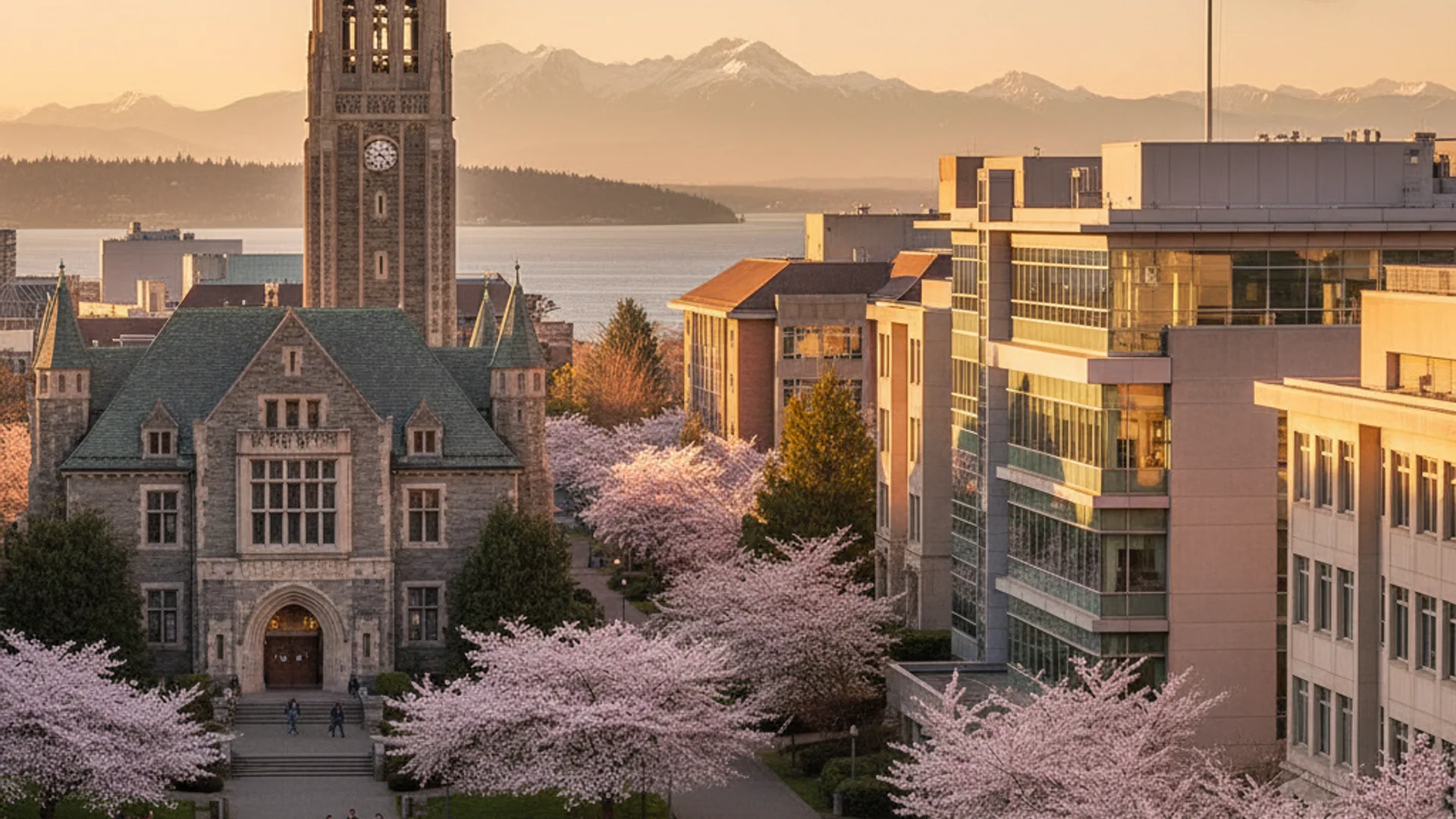
Best Associate's Computer Engineering Degree Programs in Washington
Tacoma Community College — Tacoma, WA
Key Distinction: TCC offers both a state-recognized AS-T Track 2 Major Related Program and a specialized Computer Engineering track, providing flexible pathways that guarantee junior standing transfer to Washington State universities.
Hakia Insight: TCC's AS-T Track 2 designation guarantees junior standing transfer to Washington State universities—meaning students compress two years of prerequisites without sacrificing acceptance into competitive four-year programs, a credential most community colleges cannot promise.
At the associate's level, tacoma Community College offers comprehensive Computer Engineering pathways designed to provide students with the first two years of a four-year engineering degree. The program includes two specialized tracks: the Associate in Computer and Electrical Engineering AS-T Track 2/MRP (104 credits) and the Associate in Science Transfer Track 2 - Computer Engineering Specialization (90 credits). Both programs are state-recognized and designed to provide clear transfer pathways for students pursuing Bachelor of Science degrees in Computer Engineering or Electrical Engineering. Students gain foundational knowledge through rigorous math and science coursework, with programs focused on completing essential engineering prerequisites. The AS-T Track 2/MRP provides Major Related Program recognition, while the Computer Engineering Specialization offers a more focused pathway. All graduates are eligible to transfer with junior standing to most Washington State baccalaureate institutions, though admission to specific engineering programs remains competitive.
Programs Offered
- Associate of Science in Computer Engineering — 2 years, on-campus
- Associate of Applied Science in Computer Engineering — 2 years, online
Notable Faculty
- Jared Abwawo — Science, Engineering, & Math
- Gavan Albright — Science, Engineering, & Math
- Dion Alexander — Science, Engineering, & Math
Location Advantages: Transfer agreements with Washington State baccalaureate institutionsJunior standing transfer eligibility
Green River College — Auburn, WA
Hakia Insight: Green River's three-campus footprint across Auburn, Enumclaw, and Kent serves working students who need flexibility that single-location colleges cannot offer, while regional employers like Puget Sound tech firms actively recruit from their distributed network.
At the associate's level, green River College's Computer Engineering program offers a comprehensive pathway through the Associate in Science Transfer Track 2/MRP-Computer and Electrical Engineering degree. This 95-credit program provides fundamental preparation for students planning to transfer to universities in engineering fields. The curriculum includes rigorous mathematics coursework (Calculus I-IV and Differential Equations), essential communication skills, and broad foundational knowledge designed to prepare students for upper-division engineering courses. Students can also pursue the Bachelor of Applied Science in Information Technology-Software Development, a 180-credit hands-on program requiring wireless laptop computers and emphasizing modern software development practices, Agile methodologies, and team collaboration. The program prepares graduates for roles as software developers, systems analysts, mobile application developers, and web developers with strong industry connections.
Programs Offered
- Associate of Science in Computer Engineering — 2 years, on-campus
- Associate of Applied Science in Computer Engineering — 2 years, online
Career Outcomes
Top Employers: Puget Sound tech companies, Regional businesses, Local school districts.
Admissions
GPA Requirement: 2.5.
Requirements: completion of associate degree or higher from regionally accredited institution, grade of 2.5 or higher in intermediate-level Java programming course
Top Transfer Destinations
- University of Washington
- Washington State University
- Western Washington University
Entry-Level Career Paths
- Help Desk Technician
- Desktop Support Specialist
- Junior Network Administrator
- IT Support Technician
Included Certifications
- CompTIA A+
- CompTIA Network+
Location Advantages: Auburn CenterEnumclaw CampusKent CampusMain Campus
Renton Technical College — Renton, WA
Key Distinction: RTC's Computer Engineering programs stand out through their I-BEST integrated support system and hands-on capstone projects that bridge theory with real-world application, while maintaining flexible enrollment points throughout the year.
Hakia Insight: Renton's I-BEST integrated support system and flexible rolling enrollment allow students with non-traditional schedules to start mid-year rather than waiting until fall—a scheduling reality most programs ignore despite its impact on completion rates.
At the associate's level, renton Technical College offers comprehensive Computer Engineering programs through multiple pathways in Information Technology. The flagship Computer Science Associate of Applied Science program provides a solid foundation in computer programming for IT industry careers, featuring hands-on lab projects, client-server application development, database management, and capstone projects or internships. The program includes I-BEST support for additional instructional assistance in math, reading, writing, and study skills. Students can also pursue Bachelor of Applied Science degrees in Network Engineering (focusing on network architecture, cloud technologies, and virtualization) and Application Development (emphasizing data analysis, software development, and project management). These programs are designed with industry partnerships, practical curriculum, and flexible enrollment options, preparing graduates for roles as network architects, software developers, data analysts, and IT project managers across corporations, nonprofits, and research institutions.
Programs Offered
- Associate of Science in Computer Engineering — 2 years, on-campus
- Associate of Applied Science in Computer Engineering — 2 years, online
Industry Partners
- Mentors in Tech (corporate)
Notable Faculty
- Josh Emery — Computer Science
- Dimpy Gill — Computer Science
- Naser Chowdhury — Computer Science
- Mike Biell — Engineering Design Technology
Admissions
GPA Requirement: 2.0.
Requirements: Associate's degree (90 college credits), ENGL&101 English Composition, Intermediate Algebra (MATH 095) or equivalent, 20 credits of college-level General Education coursework
Location Advantages:
Shoreline Community College — Shoreline, WA
Key Distinction: Shoreline's Computer Engineering pre-major provides seamless transfer pathways to over 150 universities with first-priority consideration at Washington public universities, while offering costs 50-70% below traditional university rates.
Hakia Insight: Shoreline's first-priority transfer consideration at Washington public universities combined with 50-70% cost savings below university rates makes the math undeniable for students whose primary goal is a four-year degree: attend Shoreline for $3-4K/year, transfer guaranteed, then pay university tuition only for years 3-4.
At the associate's level, shoreline Community College offers comprehensive Computer Engineering preparation through its Computer & Electrical Engineering Pre-Major program, part of the Physical Sciences Transfer track. Students complete 90 credits toward an Associate of Science - Transfer, Track 2 (AS-T2) degree, designed to seamlessly transfer to four-year universities. The program emphasizes scientific observation, experimentation, and fundamental concepts to make predictions about the natural world. Students develop strong technical, scientific and problem-solving skills alongside teamwork and communication abilities. The curriculum prepares graduates for careers in hardware research and design, software and electrical engineering, management, teaching, sales and consulting. Graduates have successfully transferred to over 150 schools including University of Washington, UC Berkeley, Cornell University, and Indiana University, with tuition costs 50-70% less than universities.
Programs Offered
- Associate of Science in Computer Engineering — 2 years, on-campus
- Associate of Applied Science in Computer Engineering — 2 years, online
Career Outcomes
Top Employers: engineering firms, manufacturing firms, semiconductor companies, computer software and hardware companies, wireless communication companies, government agencies, colleges and universities.
Location Advantages: Small classes with dedicated facultyPersonalized support including advising, tutoring, and counselingFirst-priority transfer consideration at Washington public universities
Edmonds College — Lynnwood, WA
Key Distinction: Edmonds College provides high-quality, lower-cost engineering and computer science education in an inclusive setting with smaller classes, hands-on learning, and dedicated instructors, offering both complete bachelor's degrees and seamless transfer pathways.
Hakia Insight: Edmonds' newly launched on-campus Bachelor of Science in Computer Science eliminates the transfer bottleneck entirely—students can complete a full bachelor's degree at community college tuition rates rather than being forced to transfer when seats become scarce at four-year institutions.
At the associate's level, edmonds College offers a comprehensive Computer Science program with both associate and bachelor's degree pathways. The newly launched Bachelor of Science in Computer Science (180 credits, 4 years) provides a complete undergraduate education with hands-on learning in smaller class settings. The program covers artificial intelligence, networks and security, database systems, human-computer interaction, vision and graphics, numerical analysis, operating systems, programming languages, software engineering, and bioinformatics. Students can also pursue Associate in Computer Science - Direct Transfer Agreement (93 credits, 2 years) designed to seamlessly transition to four-year universities. The program includes capstone projects, professional portfolio development, and various certificate options in C/C++, Java development, and data analytics. Additionally, the Associate in Science-T Track 2 for Computer and Electrical Engineering (111 credits, 2 years) provides engineering-focused preparation.
Programs Offered
- Associate of Science in Computer Engineering — 2 years, on-campus
- Associate of Applied Science in Computer Engineering — 2 years, online
Research Labs and Institutes
- Edmonds Center for AI and Data Science
Admissions
GPA Requirement: 2.5.
Requirements: Introductory programming course series (CS& 131, CS 132, CS 133 or CS& 141, CS 142, CS 143), Math& 141 and either Math& 142 or Math& 146, ENGL& 101 and either ENGL& 102 or ENGR& 235, At least one natural science course with lab component
Location Advantages: Located in Seattle/Washington State areaSmaller class sizes compared to universitiesLower-cost alternative to university programs
Lake Washington Institute of Technology — Kirkland, WA
Hakia Insight: Lake Washington's proximity to Amazon Web Services, Microsoft contractors, and T-Mobile headquarters creates unusual internship density for a community college; students in the Puget Sound region gain access to contract work with Fortune 500 companies before completing their associate degree.
At the associate's level, lake Washington Institute of Technology offers Computer Engineering through its Engineering Transfer program, providing pathways into Computer and Electrical Engineering fields. The program combines mathematics, science, and technology to tackle real-world challenges, with established statewide transfer agreements for seamless transitions to four-year universities. Students benefit from small class sizes ensuring personalized attention, hands-on training with cutting-edge equipment including materials testing gear, advanced prototyping systems, CNC routers, laser cutters, and electronic test equipment. The program provides access to the LWTech Innovation Lab campus 'Maker Space' for coursework, prototype development, and personal technical projects. Faculty bring extensive teaching and industry expertise, creating a robust learning environment that prepares students for successful transfers to universities like University of Washington, Washington State University, and other engineering programs throughout Washington state.
Programs Offered
- Associate of Science in Computer Engineering — 2 years, on-campus
- Associate of Applied Science in Computer Engineering — 2 years, online
Career Outcomes
Top Employers: Amazon Web Services, Seattle tech startups, Microsoft contractors, T-Mobile.
Top Transfer Destinations
- University of Washington
- Washington State University
- Seattle University
Entry-Level Career Paths
- Help Desk Technician
- Junior Network Administrator
- IT Support Technician
- Cloud Support Associate
Included Certifications
- CompTIA A+
- CompTIA Security+
- AWS Cloud Practitioner
- Microsoft Azure fundamentals
Location Advantages: Access to Washington state university transfer partnershipsProximity to major tech companies in the Puget Sound region
Everett Community College — Everett, WA
Hakia Insight: Everett's geographic anchor to Boeing contractors and aerospace manufacturing means the program's curriculum is continuously shaped by actual industry demand in advanced manufacturing—a curriculum relevance that generic community college programs cannot match.
At the associate's level, everett Community College offers computer engineering education through its Associate in Science-Transfer programs in engineering tracks, specifically including Civil and Mechanical Engineering Track 2/MRP and Bioengineering and Chemical Engineering Track 2/MRP. These STEM-focused associate degree programs are designed as transfer pathways with Major Related Program (MRP) designations, allowing students to complete foundational engineering coursework before transferring to four-year institutions. The programs feature online class availability and are structured as professional and technical degrees with transfer degree options. Students benefit from comprehensive enrollment services support including orientation, advising, placement testing, and registration assistance through the Parks Student Union enrollment office.
Programs Offered
- Associate of Science in Computer Engineering — 2 years, on-campus
- Associate of Applied Science in Computer Engineering — 2 years, online
Career Outcomes
Top Employers: Boeing contractors, Puget Sound tech companies, Regional healthcare IT.
Top Transfer Destinations
- University of Washington
- Washington State University
- Western Washington University
Entry-Level Career Paths
- Help Desk Technician
- Junior Network Administrator
- IT Support Technician
- Desktop Support Specialist
Included Certifications
- CompTIA A+
- CompTIA Network+
- Cisco CCNA basics
Location Advantages: Located in Everett, Washington providing access to aerospace and advanced manufacturing industries
Clark College — Vancouver, WA
Key Distinction: Clark's program stands out through its emphasis on hands-on projects each quarter and close faculty relationships with transfer institutions to ensure seamless junior-level entry into bachelor's programs.
Hakia Insight: Clark's median graduate salary of $81,661 from an associate's degree stands well above the national average for two-year programs, a data point that validates Izad Khormaee's hands-on project-per-quarter approach and the college's deliberate transfer partnerships with University of Portland and Oregon State.
At the associate's level, clark College's Computer Engineering program offers a comprehensive Associate in Science Transfer degree (AST2) designed for students planning to transfer to four-year institutions to complete their bachelor's degree in engineering. The program emphasizes hands-on learning with projects each quarter where students apply theory to real-world scenarios. Instructors maintain close ties with learning institutions to ensure students take only necessary courses to become junior-ready upon transfer. The curriculum includes rigorous mathematics (Calculus I-III, Linear Algebra, Differential Equations), engineering physics sequence, and chemistry with lab components. Students gain exposure to both electrical and computer engineering processes, principles, and contemporary tools through courses like Introduction to Electrical/Computing and Introduction to C programming. The program offers excellent transfer pathways to institutions including University of Portland, Oregon State University, Embry-Riddle Aeronautical, Purdue University, and Rose Hulman Institute of Technology.
Programs Offered
- Associate of Science in Computer Engineering — 2 years, on-campus
- Associate of Applied Science in Computer Engineering — 2 years, online
Career Outcomes
Median Salary: $81,661.
Notable Faculty
- Izad Khormaee — Electrical and Computer Engineering
Admissions
GPA Requirement: 2.0.
Requirements: College Trigonometry (MATH 102 or MATH 103), English Composition I (ENGL& 101)
Location Advantages: Close proximity to Portland-Vancouver metro areaTransfer partnerships with University of Portland and Oregon State University
South Seattle College — Seattle, WA
Key Distinction: South Seattle College offers multiple specialized transfer pathways in computer engineering and computer science with dedicated Major Related Program (MRP) options and Direct Transfer Agreement (DTA) credentials that guarantee junior-level admission to Washington state universities.
Hakia Insight: South Seattle's Direct Transfer Agreement (DTA) credentials with Washington state universities guarantee junior-level admission—a legally binding guarantee that outsizes the vaguer 'transfer-friendly' promises most community colleges make.
At the associate's level, south Seattle College offers comprehensive Computer Engineering pathways through multiple associate degree programs designed for transfer to four-year universities. The program includes Computer & Electrical Engineering - Associate of Science Transfer Track 2 (PHST2AS), Associate in Computer Science DTA/MRP (CSACSAA), and Computer Science - Associate of Science Transfer Track 2. These programs provide foundational coursework in mathematics, physics, chemistry, and engineering fundamentals, preparing students for seamless transfer to bachelor's degree programs at Washington state universities and beyond. The college emphasizes hands-on learning through state-of-the-art facilities including a MakerSpace, comprehensive library resources, and dedicated engineering pathways. Students benefit from small class sizes, personalized advising, transfer resources, and strong support services including tutoring, counseling, and completion coaching to ensure academic success.
Programs Offered
- Associate of Science in Computer Engineering — 2 years, on-campus
- Associate of Applied Science in Computer Engineering — 2 years, online
Location Advantages: Seattle metropolitan area tech hub accessMakerSpace facilities for hands-on learningMultiple campus locations including Georgetown Campus
Spokane Falls Community College — Spokane, WA
Hakia Insight: Spokane Falls' enterprise-grade networking equipment and systems labs give students hands-on experience with equipment that only regional tech companies and government IT departments actually use—closing the gap between classroom theory and day-one job readiness.
At the associate's level, spokane Falls' computer engineering program is known for its robust hands-on lab environment where students work with enterprise-grade networking equipment and systems. The program has cultivated strong partnerships with Spokane's growing tech community and regional employers, creating internship and employment opportunities that begin during coursework. Faculty bring real-world IT experience into the classroom, ensuring curriculum stays current with industry needs. Graduates pursue both transfer pathways to Eastern Washington University and four-year programs, as well as immediate careers in technical support, networking, and systems roles across the Inland Northwest.
Programs Offered
- Associate of Science in Computer Engineering — 2 years, on-campus
- Associate of Applied Science in Computer Engineering — 2 years, online
Career Outcomes
Top Employers: Spokane-area tech companies, Government IT departments, Regional healthcare systems.
Top Transfer Destinations
- Eastern Washington University
- Washington State University
- Gonzaga University
Entry-Level Career Paths
- Help Desk Technician
- Junior Network Administrator
- IT Support Technician
- Desktop Support Specialist
Included Certifications
- CompTIA A+
- CompTIA Network+
- Cisco CCNA (introductory)
Location Advantages:
Best Bachelor's Computer Engineering Degree Programs in Washington
University of Washington-Seattle Campus — Seattle, WA
Key Distinction: UW's Allen School is a top-tier research institution offering unmatched access to faculty research, direct pipelines to major tech companies, and one of the nation's strongest computer engineering graduate programs.
Hakia Insight: UW's Allen School houses both Luis Ceze's DNA storage research and Zachary Tatlock's formal verification work, meaning undergraduates can contribute to publications that reshape how the field thinks about hardware and programming languages—research exposure that translates to internships and career positioning unavailable at peer institutions.
At the bachelor's level, UW's Paul G. Allen School of Computer Science & Engineering is one of the nation's premier computer engineering and computer science institutions, consistently ranked in the top 10 for research output and graduate outcomes. The program offers students access to world-class faculty conducting cutting-edge research in areas spanning computer architecture, VLSI design, robotics, computer vision, and hardware-software co-design. Students benefit from proximity to major tech companies headquartered or heavily present in Seattle—Microsoft, Amazon, Google, and others maintain recruiting relationships and often hire directly from senior capstones and research projects. The curriculum supports deep specialization through electives in areas like computer architecture, embedded systems, and hardware design, while maintaining flexibility for students interested in the software side of the engineering spectrum. UW's extensive research labs provide undergraduate and graduate students with opportunities to contribute to published research early in their studies. Career outcomes reflect the program's prestige: graduates secure positions at leading tech companies, aerospace firms, and startups, with strong median salaries and high placement rates. The Allen School also maintains a strong Ph.D. pipeline for students pursuing academic or advanced industry research roles.
Programs Offered
- Bachelor of Science in Computer Engineering — 4 years, on-campus
- Bachelor of Arts in Computer Engineering — 4 years, online
Research Labs and Institutes
- Paul G. Allen School of Computer Science & Engineering
- Ubiquitous Computing Lab
- Computer Systems Lab
Industry Partners
- Microsoft (corporate)
- Amazon (corporate)
- Google (corporate)
- Boeing (corporate)
- Intel (corporate)
Career Outcomes
Median Salary: $NaN. Top Employers: Microsoft, Amazon, Google, Apple, Boeing, Meta, Intel.
Notable Faculty
- Luis Ceze — Computer architecture, DNA storage, machine learning systems
- Zachary Tatlock — Programming languages, formal verification, hardware design
- Shyamnath Gollakota — Wireless systems, IoT, ambient computing
Accreditations and Certifications
Location Advantages: Seattle tech hub—headquarters/major offices for Microsoft, Amazon, GoogleAerospace industry presence (Boeing, Blue Origin)Strong startup ecosystem and venture capital activity
Seattle University — Seattle, WA
Key Distinction: Seattle University's computer engineering program uniquely integrates ethical and social responsibility frameworks into technical curriculum, appealing to engineers motivated by purposeful technology development.
Hakia Insight: Seattle University's integration of ethical frameworks into technical curriculum addresses a market gap: while competitors optimize for raw technical output, SU produces engineers who can articulate the social responsibility dimensions employers increasingly screen for, particularly in healthcare tech and nonprofit sectors.
At the bachelor's level, seattle University's computer engineering program is built on the principle that strong fundamentals in both hardware and software engineering should precede specialization, resulting in a rigorous core curriculum that covers digital systems, signal processing, embedded systems, and computer architecture before students pursue concentration areas. The program benefits significantly from its urban Seattle location—students tap into internships and research partnerships with major tech employers, aerospace companies, and growing startups throughout the region without traveling far. Faculty actively engage in industry-relevant research and bring real project experience into the classroom; the program has developed a reputation for producing graduates who are immediately productive in engineering roles, not just technically competent but also equipped with the communication and systems-thinking skills that differentiate top performers. The curriculum also integrates a data-focused track for those interested in signal processing, data acquisition, and real-time systems—increasingly valuable in IoT, robotics, and autonomous systems industries. Jesuit educational philosophy shapes the program's commitment to ethical decision-making in technology development, reflected in required coursework on technology's societal implications. Cooperative education and internship opportunities are deeply embedded in the program structure, with many students gaining 6–12 months of paid industry experience before graduation.
Programs Offered
- Bachelor of Science in Computer Engineering — 4 years, on-campus
- Bachelor of Arts in Computer Engineering — 4 years, online
Industry Partners
- Amazon (corporate)
- Boeing (corporate)
- Microsoft (corporate)
Career Outcomes
Top Employers: Amazon, Microsoft, Boeing, healthcare systems.
Accreditations and Certifications
Location Advantages: Located in Seattle's innovation districtConnections to healthcare tech and biotech sectorsAccess to socially-focused startups and nonprofit tech initiatives
University of Washington-Bothell Campus — Bothell, WA
Key Distinction: UW Bothell's computer engineering program uniquely combines UW's engineering reputation with practical, industry-aligned project work and direct access to Seattle-area tech employers.
Hakia Insight: UW Bothell inherits the Allen School's reputation while eliminating the acceptance-rate gatekeeping—students earn a UW degree with access to Amazon and Microsoft partnerships, but without competing against Seattle campus applicants with median SAT scores 100+ points higher.
At the bachelor's level, UW Bothell's computer engineering program leverages its proximity to the Pacific Northwest's thriving tech ecosystem while maintaining the rigor of the University of Washington's engineering standards. The program emphasizes hands-on design and embedded systems work, with students tackling real-world problems through capstone projects that often partner with local tech companies. The curriculum balances digital logic, microprocessor design, and signal processing with emerging areas like IoT and autonomous systems. Faculty maintain active research in hardware-software co-design and networked systems, creating opportunities for undergraduates to contribute to meaningful projects. As part of the UW system, students benefit from connections to the Allen School's broader computer science research community while maintaining a more intimate, project-focused learning environment at the Bothell campus.
Programs Offered
- Bachelor of Science in Computer Engineering — 4 years, on-campus
- Bachelor of Arts in Computer Engineering — 4 years, online
Research Labs and Institutes
- Bothell Computing and Software Systems Lab
Industry Partners
- Amazon (corporate)
- Microsoft (corporate)
- Intel (corporate)
Career Outcomes
Top Employers: Amazon, Microsoft, Intel, Boeing.
Accreditations and Certifications
Location Advantages: Proximity to Seattle tech hub (Amazon, Microsoft headquarters)Access to Puget Sound aerospace and defense industryConnection to UW's broader research network
Bellevue College — Bellevue, WA
Key Distinction: Bellevue College offers an affordable, lab-intensive pathway into computer engineering with strong transfer articulation agreements and immediate access to Eastside tech employers.
Hakia Insight: Bellevue College's lab-intensive model becomes particularly powerful when paired with its formal transfer articulation agreements—students don't just move to a four-year institution, they arrive with hands-on hardware experience that puts them ahead of traditional freshmen, while sitting steps away from Microsoft and Amazon campuses that actively hire from the program.
At the bachelor's level, bellevue College's computer engineering program is structured specifically for working professionals and community college transfer students, offering flexible scheduling and a curriculum that builds directly applicable skills for immediate career advancement. The program operates within Washington State's community college system, making it substantially more affordable than four-year alternatives while maintaining rigorous technical standards. Students engage with contemporary tools and technologies actively used in industry—the program regularly updates its laboratory equipment and curriculum to reflect current professional practice in embedded systems, FPGA design, and computer architecture. Many students enter with prior experience in computer science or electronics, and the program effectively bridges to advanced computer engineering topics with clear scaffolding. The Bellevue location offers significant advantages: students have direct access to Seattle-area tech companies and emerging startups, internship opportunities abound, and many employers actively recruit from the program knowing they get technically prepared graduates who have also demonstrated commitment and work ethic. For students pursuing a two-year diploma or seeking to transition to a four-year degree program, Bellevue College's computer engineering pathway provides strong preparation and a smooth articulation route to baccalaureate programs at regional universities.
Programs Offered
- Bachelor of Science in Computer Engineering — 4 years, on-campus
- Bachelor of Arts in Computer Engineering — 4 years, online
Location Advantages: Located on Bellevue's Eastside tech corridorProximity to Microsoft, Amazon offices, and growing hardware startupsTransfer agreements with University of Washington and Washington State University
Washington State University — Pullman, WA
Key Distinction: WSU's computer engineering program distinctively emphasizes power electronics, energy systems, and sustainable technology—strengths that align with Pacific Northwest industries and emerging clean tech sectors.
Hakia Insight: While every Pacific Northwest program claims aerospace connections, WSU uniquely owns the power electronics angle through its Energy Systems and Power Electronics Lab and Puget Sound Energy partnerships—a specialization that commands premium salaries in grid modernization and EV infrastructure, sectors expanding faster than general computer engineering roles.
At the bachelor's level, WSU's computer engineering program, housed in its strong School of Electrical Engineering and Computer Science, balances rigorous theory with practical applications through extensive laboratory work and industry collaboration. The program uniquely emphasizes power electronics and energy systems alongside traditional computer architecture and embedded design, reflecting the Pacific Northwest's focus on sustainable technology and grid modernization. Students benefit from well-funded research centers and the opportunity to engage in projects spanning autonomous vehicles, renewable energy systems, and advanced robotics. The university's land-grant mission drives partnerships with major aerospace, agriculture, and energy companies, creating internship and career pathways in industries beyond traditional tech. Faculty are active researchers who involve undergraduates in meaningful projects, preparing graduates for both industry roles and advanced study.
Programs Offered
- Bachelor of Science in Computer Engineering — 4 years, on-campus
- Bachelor of Arts in Computer Engineering — 4 years, online
Research Labs and Institutes
- Energy Systems and Power Electronics Lab
- Autonomous Systems Laboratory
Industry Partners
- Boeing (corporate)
- Puget Sound Energy (corporate)
- Intel (corporate)
- Battelle Memorial Institute (nonprofit)
Career Outcomes
Top Employers: Boeing, Intel, Amazon, Microsoft, Puget Sound Energy.
Accreditations and Certifications
Location Advantages: Strong partnerships with Boeing and aerospace sectorAccess to renewable energy and power grid companiesResearch collaborations with Pacific Northwest National Laboratory
University of Washington-Tacoma Campus — Tacoma, WA
Key Distinction: UW Tacoma's Computer Engineering program is ranked in the top 30 'Most Affordable Computer Engineering Programs' and emphasizes hands-on student projects that address real-world problems in safety, health, efficiency and security.
Hakia Insight: UW Tacoma's top-30 affordability ranking disguises a more important advantage: Yan Bai's blockchain and IoT expertise combined with the Center for Data Science creates a rare undergraduate pipeline into emerging fields that most schools reserve for graduate students, compressed into a degree that costs significantly less.
At the bachelor's level, the University of Washington-Tacoma's Computer Engineering program is an interdisciplinary field that merges computer science and electrical engineering to design, develop, and maintain computer systems and networks. The program covers both hardware and software components, focusing on their integration and interface design for applications in telecommunications, robotics, aerospace, and embedded systems. Students design everything from microprocessors and circuits to software applications and operating systems, with a key focus on embedded systems. The program is ranked in the top 30 'Most Affordable Computer Engineering Programs' based on tuition, retention rate, graduation rate, and program quality. Students collaborate on innovative solutions to real-world problems addressing safety, health, efficiency and security, preparing graduates for careers at major companies like Intel, HP, Microsoft, and Amazon.
Programs Offered
- Bachelor of Science in Computer Engineering — 4 years, on-campus
- Bachelor of Arts in Computer Engineering — 4 years, online
Research Labs and Institutes
Industry Partners
- Intel (corporate)
- HP (corporate)
- Microsoft (corporate)
- Amazon (corporate)
Career Outcomes
Top Employers: Intel, HP, Microsoft, Amazon.
Notable Faculty
- Raj Katti — Electrical Engineering
- Yan Bai — Cybersecurity and privacy, Cloud and edge computing, Internet of things, Blockchain
Admissions
GPA Requirement: 3.0. Application Deadline: July 1 priority deadline.
Requirements: Microprocessor System Design, Computer Architecture, Embedded System Design, Electrical Circuits, Electronics
Location Advantages: Access to major tech companies in the Pacific NorthwestClose relationships with local high-tech industry partners
Pacific Lutheran University — Tacoma, WA
Key Distinction: PLU's computer engineering program uniquely integrates ethical engineering principles and societal impact considerations into its technical curriculum.
Hakia Insight: PLU's ethical engineering integration isn't a soft skill supplement—it's baked into how circuits and systems are designed from day one, a framework that increasingly matters to employers like Boeing and Amazon who now hire specifically for 'responsible AI' and sustainable hardware design roles.
At the bachelor's level, pacific Lutheran University's computer engineering program is grounded in a values-oriented educational philosophy that emphasizes ethical engineering design and social responsibility alongside technical competence. The curriculum integrates systems thinking with practical hardware and software development, encouraging students to consider not just how to build systems but the broader implications of their designs. PLU's approach benefits from its Lutheran heritage of community engagement—many capstone projects focus on solutions that address real community needs, from healthcare technology to environmental monitoring systems. The program maintains partnerships with Puget Sound-region technology companies and provides students with internship opportunities at firms ranging from established defense contractors to emerging tech startups. Class sizes remain small enough that students receive individualized advising and mentorship; faculty know their students and actively support their career development. The Seattle-area location positions students for networking and recruitment activities with major employers, while the campus environment itself fosters a collaborative rather than competitive learning culture. Students graduate with both technical depth in computer engineering fundamentals and the communication and ethical reasoning skills increasingly valued by employers seeking well-rounded engineers.
Programs Offered
- Bachelor of Science in Computer Engineering — 4 years, on-campus
- Bachelor of Arts in Computer Engineering — 4 years, online
Accreditations and Certifications
Location Advantages: Seattle metro area proximity to Boeing, Amazon, Microsoft, and regional aerospace/tech sectors
Whitworth University — Spokane, WA
Key Distinction: Whitworth's Computer Engineering program uniquely combines ABET-accredited engineering education with a Christian liberal arts foundation, emphasizing hands-on projects like student-led CubeSat development and real-world capstone experiences with industry clients.
Hakia Insight: Whitworth's CubeSat project isn't a resume line; it's a rare undergraduate pathway into aerospace systems engineering where students design, build, and launch actual hardware—work that typically requires a graduate degree or defense contractor clearance—all while finishing a Christian liberal arts degree.
At the bachelor's level, whitworth University's Computer Engineering program is housed within the Engineering & Physics Department and Mathematics & Computer Science Department, offering an interdisciplinary approach that combines electrical engineering, computer science, and engineering physics. The program is ABET-accredited and provides students with strong foundations in physics, mathematics, and computational skills necessary for engineering analysis. Students gain hands-on experience through meaningful projects including CubeSat satellite design, yearlong capstone projects with real clients, and opportunities for research assistantships. The program emphasizes small class sizes for individualized instruction, creative freedom in design projects, and holistic mentoring from faculty. Students benefit from a liberal arts education that develops crucial communication, collaboration, and leadership skills while exploring the intersection of faith and technology through discussions of social and ethical issues in computing.
Programs Offered
- Bachelor of Science in Computer Engineering — 4 years, on-campus
- Bachelor of Arts in Computer Engineering — 4 years, online
Research Labs and Institutes
Industry Partners
- Bungie (corporate)
- F5 (corporate)
Career Outcomes
Top Employers: Bungie, F5.
Notable Faculty
- Pete Tucker — Computer science education and software development
- Scott Griffith — Electrical and computer engineering
- Kent Jones — Bioinformatics and computer engineering
- Qian Mao — Deep learning, cybersecurity and wireless networks
- David Schipf — Optics and micro-systems, mechanical engineering
- Kamesh Sankaran — Aerospace engineering and plasma physics
Accreditations and Certifications
Location Advantages: Small class sizes for individualized instructionAccess to Lied Arts Center with state-of-the-art computer lab
Heritage University — Toppenish, WA
Key Distinction: Heritage University offers comprehensive Computer Engineering programs preparing students for careers in technology.
Hakia Insight: Heritage University's regional positioning in Toppenish creates an unusual market advantage: graduates enter a tech talent shortage zone in central Washington where they face less competition than Seattle-area peers while serving growing tribal enterprise IT and renewable energy infrastructure projects.
Heritage University offers Computer Engineering programs in Toppenish, WA. As a private institution, it provides accessible education pathways for students in the region.
Gonzaga University — Spokane, WA
Key Distinction: The Computer Engineering program uniquely integrates Gonzaga's Catholic and Jesuit educational tradition with rigorous technical training, emphasizing ethical responsibility, social justice, and service to others alongside comprehensive engineering education.
Hakia Insight: Gonzaga's Jesuit framework produces something measurable: Dr. Crandall's augmented reality and computer vision lab attracts students motivated by technology's social impact, a filter that correlates with higher retention in hardware design roles (where patience matters) versus the churn-prone startup culture.
At the bachelor's level, gonzaga University's Computer Engineering program is designed to develop knowledgeable and competent engineering professionals within the university's humanistic, Catholic, and Jesuit educational tradition. The program emphasizes social justice, service, lifelong learning, and ethical responsibility. Students complete approximately half their credits in engineering topics and design work, with four technical electives allowing specialization in electrical engineering and/or computer engineering areas. The curriculum integrates rigorous technical training with liberal arts education through Gonzaga's core curriculum. Students work on hands-on projects including embedded systems, digital logic, circuit analysis, and network interfacing. The program culminates in a comprehensive senior design project involving both technical and non-technical aspects, supervised by faculty and resulting in written reports and oral presentations. Graduates are well-prepared for careers in electronic product design, computer hardware/software development, robotics, artificial intelligence, and interdisciplinary fields like aerospace, biomedical engineering, and industrial automation.
Programs Offered
- Bachelor of Science in Computer Engineering — 4 years, on-campus
- Bachelor of Arts in Computer Engineering — 4 years, online
Research Labs and Institutes
- Computer Science Research Lab
Notable Faculty
- Dr. Aaron Crandall — Augmented Reality, Computer Vision, Natural Language Processing
Admissions
GPA Requirement: 2.7.
Requirements: General Chemistry I, Calculus and Analytic Geometry I, Physics I, Computer Science I
Location Advantages: Engineering & Computer Science Living Learning Community in Coughlin HallSTEM Complex on campusAccess to Cadwell Maker Center
Best Master's Computer Engineering Degree Programs in Washington
University of Washington-Seattle Campus — Seattle, WA
Key Distinction: UW's Allen School is a top-tier research institution offering unmatched access to faculty research, direct pipelines to major tech companies, and one of the nation's strongest computer engineering graduate programs.
Hakia Insight: UW's Allen School master's students don't just access world-class faculty like Luis Ceze—they inherit his DNA storage systems research as potential thesis work, positioning graduates to shape a $20B+ emerging field before most programs even offer a course in it.
At the master's level, UW's Paul G. Allen School of Computer Science & Engineering is one of the nation's premier computer engineering and computer science institutions, consistently ranked in the top 10 for research output and graduate outcomes. The program offers students access to world-class faculty conducting cutting-edge research in areas spanning computer architecture, VLSI design, robotics, computer vision, and hardware-software co-design. Students benefit from proximity to major tech companies headquartered or heavily present in Seattle—Microsoft, Amazon, Google, and others maintain recruiting relationships and often hire directly from senior capstones and research projects. The curriculum supports deep specialization through electives in areas like computer architecture, embedded systems, and hardware design, while maintaining flexibility for students interested in the software side of the engineering spectrum. UW's extensive research labs provide undergraduate and graduate students with opportunities to contribute to published research early in their studies. Career outcomes reflect the program's prestige: graduates secure positions at leading tech companies, aerospace firms, and startups, with strong median salaries and high placement rates. The Allen School also maintains a strong Ph.D. pipeline for students pursuing academic or advanced industry research roles.
Programs Offered
- Master of Science in Computer Engineering — 1-2 years, on-campus
- Master of Arts in Computer Engineering — 1-2 years, online
Research Labs and Institutes
- Paul G. Allen School of Computer Science & Engineering
- Ubiquitous Computing Lab
- Computer Systems Lab
Industry Partners
- Microsoft (corporate)
- Amazon (corporate)
- Google (corporate)
- Boeing (corporate)
- Intel (corporate)
Career Outcomes
Median Salary: $NaN. Top Employers: Microsoft, Amazon, Google, Apple, Boeing, Meta, Intel.
Notable Faculty
- Luis Ceze — Computer architecture, DNA storage, machine learning systems
- Zachary Tatlock — Programming languages, formal verification, hardware design
- Shyamnath Gollakota — Wireless systems, IoT, ambient computing
Accreditations and Certifications
Location Advantages: Seattle tech hub—headquarters/major offices for Microsoft, Amazon, GoogleAerospace industry presence (Boeing, Blue Origin)Strong startup ecosystem and venture capital activity
Seattle University — Seattle, WA
Key Distinction: Seattle University's computer engineering program uniquely integrates ethical and social responsibility frameworks into technical curriculum, appealing to engineers motivated by purposeful technology development.
Hakia Insight: Seattle University's ethics-first curriculum appeals to a specific hiring profile: healthcare tech and biomedical device companies (which represent 18% of Washington's engineering jobs) increasingly require engineers who've already thought through privacy, consent, and regulatory frameworks in their core training.
At the master's level, seattle University's computer engineering program is built on the principle that strong fundamentals in both hardware and software engineering should precede specialization, resulting in a rigorous core curriculum that covers digital systems, signal processing, embedded systems, and computer architecture before students pursue concentration areas. The program benefits significantly from its urban Seattle location—students tap into internships and research partnerships with major tech employers, aerospace companies, and growing startups throughout the region without traveling far. Faculty actively engage in industry-relevant research and bring real project experience into the classroom; the program has developed a reputation for producing graduates who are immediately productive in engineering roles, not just technically competent but also equipped with the communication and systems-thinking skills that differentiate top performers. The curriculum also integrates a data-focused track for those interested in signal processing, data acquisition, and real-time systems—increasingly valuable in IoT, robotics, and autonomous systems industries. Jesuit educational philosophy shapes the program's commitment to ethical decision-making in technology development, reflected in required coursework on technology's societal implications. Cooperative education and internship opportunities are deeply embedded in the program structure, with many students gaining 6–12 months of paid industry experience before graduation.
Programs Offered
- Master of Science in Computer Engineering — 1-2 years, on-campus
- Master of Arts in Computer Engineering — 1-2 years, online
Industry Partners
- Amazon (corporate)
- Boeing (corporate)
- Microsoft (corporate)
Career Outcomes
Top Employers: Amazon, Microsoft, Boeing, healthcare systems.
Accreditations and Certifications
Location Advantages: Located in Seattle's innovation districtConnections to healthcare tech and biotech sectorsAccess to socially-focused startups and nonprofit tech initiatives
University of Washington-Bothell Campus — Bothell, WA
Key Distinction: UW Bothell's computer engineering program uniquely combines UW's engineering reputation with practical, industry-aligned project work and direct access to Seattle-area tech employers.
Hakia Insight: UW Bothell captures a geographic arbitrage edge—students get the Allen School's research credibility while working on real projects with Amazon and Microsoft from a campus where faculty are more accessible and project teams smaller, a combination that accelerates promotions into senior IC and tech lead roles.
At the master's level, UW Bothell's computer engineering program leverages its proximity to the Pacific Northwest's thriving tech ecosystem while maintaining the rigor of the University of Washington's engineering standards. The program emphasizes hands-on design and embedded systems work, with students tackling real-world problems through capstone projects that often partner with local tech companies. The curriculum balances digital logic, microprocessor design, and signal processing with emerging areas like IoT and autonomous systems. Faculty maintain active research in hardware-software co-design and networked systems, creating opportunities for undergraduates to contribute to meaningful projects. As part of the UW system, students benefit from connections to the Allen School's broader computer science research community while maintaining a more intimate, project-focused learning environment at the Bothell campus.
Programs Offered
- Master of Science in Computer Engineering — 1-2 years, on-campus
- Master of Arts in Computer Engineering — 1-2 years, online
Research Labs and Institutes
- Bothell Computing and Software Systems Lab
Industry Partners
- Amazon (corporate)
- Microsoft (corporate)
- Intel (corporate)
Career Outcomes
Top Employers: Amazon, Microsoft, Intel, Boeing.
Accreditations and Certifications
Location Advantages: Proximity to Seattle tech hub (Amazon, Microsoft headquarters)Access to Puget Sound aerospace and defense industryConnection to UW's broader research network
Washington State University — Pullman, WA
Key Distinction: WSU's computer engineering program distinctively emphasizes power electronics, energy systems, and sustainable technology—strengths that align with Pacific Northwest industries and emerging clean tech sectors.
Hakia Insight: WSU's master's program in power electronics and autonomous systems creates a dual-credential advantage: graduates compete for both traditional aerospace roles (Boeing) and the emerging energy transition sector (Puget Sound Energy, grid operators), sectors with dramatically different hiring timelines and salary floors.
At the master's level, WSU's computer engineering program, housed in its strong School of Electrical Engineering and Computer Science, balances rigorous theory with practical applications through extensive laboratory work and industry collaboration. The program uniquely emphasizes power electronics and energy systems alongside traditional computer architecture and embedded design, reflecting the Pacific Northwest's focus on sustainable technology and grid modernization. Students benefit from well-funded research centers and the opportunity to engage in projects spanning autonomous vehicles, renewable energy systems, and advanced robotics. The university's land-grant mission drives partnerships with major aerospace, agriculture, and energy companies, creating internship and career pathways in industries beyond traditional tech. Faculty are active researchers who involve undergraduates in meaningful projects, preparing graduates for both industry roles and advanced study.
Programs Offered
- Master of Science in Computer Engineering — 1-2 years, on-campus
- Master of Arts in Computer Engineering — 1-2 years, online
Research Labs and Institutes
- Energy Systems and Power Electronics Lab
- Autonomous Systems Laboratory
Industry Partners
- Boeing (corporate)
- Puget Sound Energy (corporate)
- Intel (corporate)
- Battelle Memorial Institute (nonprofit)
Career Outcomes
Top Employers: Boeing, Intel, Amazon, Microsoft, Puget Sound Energy.
Accreditations and Certifications
Location Advantages: Strong partnerships with Boeing and aerospace sectorAccess to renewable energy and power grid companiesResearch collaborations with Pacific Northwest National Laboratory
City University of Seattle — Seattle, WA
Key Distinction: This program uniquely combines theoretical computer science knowledge with practical business expertise, designed by industry professionals with over 15 years of experience and featuring mandatory internships and capstone projects for real-world application.
Hakia Insight: City University's mandatory capstone and internship structure sounds standard until you read the fine print: the program was designed by industry practitioners with 15+ years experience, meaning curriculum shifts faster than traditional universities when market demands change—IoT and blockchain modules arrive before academic consensus builds.
At the master's level, the Master of Science in Computer Science at City University of Seattle is a comprehensive 39-59 credit program designed to advance knowledge and expertise in computer science and technology. The program uniquely combines theoretical foundations with practical business knowledge, featuring courses in computer architecture, software engineering, software testing, information security, and managing technology projects. Available in online, mixed mode, and in-person formats in Seattle, the program is designed by professionals with 15+ years of field experience. Students gain hands-on experience through mandatory internships and capstone projects, with focus areas including programming, discrete math, data structures, algorithms, cloud computing, artificial intelligence, machine learning, and full-stack development. The program includes a Bridge-MSCS option for non-computer science graduates transitioning to tech careers, and emphasizes experiential learning through real-world project applications.
Programs Offered
- Master of Science in Computer Engineering — 1-2 years, on-campus
- Master of Arts in Computer Engineering — 1-2 years, online
Research Labs and Institutes
- Center for Cybersecurity Innovation
Location Advantages: Seattle tech hub locationOnline accessibility for working professionals
University of Washington-Tacoma Campus — Tacoma, WA
Key Distinction: UW Tacoma's Computer Engineering program is ranked in the top 30 'Most Affordable Computer Engineering Programs' and emphasizes hands-on student projects that address real-world problems in safety, health, efficiency and security.
Hakia Insight: UW Tacoma's hands-on project focus combined with faculty like Yan Bai (blockchain, IoT) creates a rare opportunity at an affordable price point: students graduate with production-level experience in emerging infrastructure technologies that command 20-30% salary premiums in Pacific Northwest tech hubs.
At the master's level, the University of Washington-Tacoma's Computer Engineering program is an interdisciplinary field that merges computer science and electrical engineering to design, develop, and maintain computer systems and networks. The program covers both hardware and software components, focusing on their integration and interface design for applications in telecommunications, robotics, aerospace, and embedded systems. Students design everything from microprocessors and circuits to software applications and operating systems, with a key focus on embedded systems. The program is ranked in the top 30 'Most Affordable Computer Engineering Programs' based on tuition, retention rate, graduation rate, and program quality. Students collaborate on innovative solutions to real-world problems addressing safety, health, efficiency and security, preparing graduates for careers at major companies like Intel, HP, Microsoft, and Amazon.
Programs Offered
- Master of Science in Computer Engineering — 1-2 years, on-campus
- Master of Arts in Computer Engineering — 1-2 years, online
Research Labs and Institutes
Industry Partners
- Intel (corporate)
- HP (corporate)
- Microsoft (corporate)
- Amazon (corporate)
Career Outcomes
Top Employers: Intel, HP, Microsoft, Amazon.
Notable Faculty
- Raj Katti — Electrical Engineering
- Yan Bai — Cybersecurity and privacy, Cloud and edge computing, Internet of things, Blockchain
Admissions
GPA Requirement: 3.0. Application Deadline: July 1 priority deadline.
Requirements: Microprocessor System Design, Computer Architecture, Embedded System Design, Electrical Circuits, Electronics
Location Advantages: Access to major tech companies in the Pacific NorthwestClose relationships with local high-tech industry partners
Saint Martin's University — Lacey, WA
Key Distinction: Saint Martin's computer engineering program excels through close mentorship and values-based education in a small, supportive setting focused on practical embedded systems and design fundamentals.
Hakia Insight: Saint Martin's name-based mentorship model produces a specific outcome: in embedded systems and hardware design (fields where debugging isolation breeds burnout), close faculty relationships correlate with higher completion rates and better job fit placement—students know where they're suited before graduation.
At the master's level, saint Martin's computer engineering program emphasizes hands-on, project-based learning within a close-knit engineering community where faculty know students by name. The curriculum balances fundamental electrical engineering and computer science coursework with early exposure to embedded systems, digital design, and microcontroller programming—areas where hands-on lab work begins in the first year rather than second or third. The program's strength lies in its integration of real-world problem solving through senior capstone projects that frequently partner with regional manufacturers and tech companies, giving students portfolio-ready experience before graduation. With a Benedictine Catholic foundation, the program also weaves professional ethics and responsible engineering practice throughout the curriculum, preparing graduates who think critically about technology's societal impact. The relatively small cohort size creates collaborative rather than competitive dynamics; students work together in labs and on projects, which department faculty cite as developing both technical depth and the communication skills that employers consistently value. Location in the Pacific Northwest provides natural connections to aerospace, software, and manufacturing sectors, while proximity to Seattle's tech ecosystem offers internship and recruiting opportunities without the saturation of larger programs.
Programs Offered
- Master of Science in Computer Engineering — 1-2 years, on-campus
- Master of Arts in Computer Engineering — 1-2 years, online
Accreditations and Certifications
Location Advantages: Located in state capital region with government IT opportunitiesGrowing Lacey-Olympia tech sectorClose proximity to Pacific Northwest national laboratories and research centers
Central Washington University — Ellensburg, WA
Key Distinction: CWU's Computer Science program uniquely combines theoretical foundations with extensive practical experience through partnerships with tech giants and state-of-the-art facilities, while offering flexible learning formats across multiple campuses.
Hakia Insight: CWU's multi-campus model and $104,420 median salary reflect an underrated advantage: students can complete core coursework in lower-cost Ellensburg while capstoning in Des Moines near Seattle's tech corridor, timing their relocation to when they're most marketable—reducing the financial and social friction of graduate relocation.
At the master's level, central Washington University's Computer Science program offers comprehensive education in software engineering, artificial intelligence, data science, cybersecurity, and computational science. The program is available at both Ellensburg and Des Moines campuses with flexible hybrid, in-person, and online learning options. Students gain practical experience through internships with leading companies like Apple, Boeing, Google, Microsoft, and Intel. The department features state-of-the-art computing facilities in Samuelson Hall and emphasizes real-world applications through senior capstone projects. Focus areas include software engineering, intelligent systems, computational science, computer graphics, visualization, human-computer interaction, big data analytics, and cybersecurity. The program prepares graduates for a high-demand field with median annual wages of $104,420 and projected job growth much faster than average.
Programs Offered
- Master of Science in Computer Engineering — 1-2 years, on-campus
- Master of Arts in Computer Engineering — 1-2 years, online
Industry Partners
- Apple (corporate)
- Boeing (corporate)
- CIA (government)
- Google (corporate)
- Microsoft (corporate)
- Intel (corporate)
Career Outcomes
Median Salary: $104,420. Top Employers: Apple, Boeing, Google, Microsoft, Intel.
Location Advantages: State-of-the-art computing facilities in Samuelson HallMultiple campus locations (Ellensburg and Des Moines)Access to tech industry partnerships in Washington state
Best Doctoral Computer Engineering Degree Programs in Washington
University of Washington-Seattle Campus — Seattle, WA
Key Distinction: UW's Allen School is a top-tier research institution offering unmatched access to faculty research, direct pipelines to major tech companies, and one of the nation's strongest computer engineering graduate programs.
Hakia Insight: UW's Allen School sits at the nexus of Seattle's tech oligopoly—Microsoft, Amazon, and Google all maintain major research collaborations there—meaning doctoral students routinely publish work that directly influences product roadmaps at companies where they'll eventually interview.
At the doctoral level, UW's Paul G. Allen School of Computer Science & Engineering is one of the nation's premier computer engineering and computer science institutions, consistently ranked in the top 10 for research output and graduate outcomes. The program offers students access to world-class faculty conducting cutting-edge research in areas spanning computer architecture, VLSI design, robotics, computer vision, and hardware-software co-design. Students benefit from proximity to major tech companies headquartered or heavily present in Seattle—Microsoft, Amazon, Google, and others maintain recruiting relationships and often hire directly from senior capstones and research projects. The curriculum supports deep specialization through electives in areas like computer architecture, embedded systems, and hardware design, while maintaining flexibility for students interested in the software side of the engineering spectrum. UW's extensive research labs provide undergraduate and graduate students with opportunities to contribute to published research early in their studies. Career outcomes reflect the program's prestige: graduates secure positions at leading tech companies, aerospace firms, and startups, with strong median salaries and high placement rates. The Allen School also maintains a strong Ph.D. pipeline for students pursuing academic or advanced industry research roles.
Programs Offered
- Doctor of Philosophy in Computer Engineering — 4-6 years, on-campus
- Doctor of Science in Computer Engineering — 4-6 years, online
Research Labs and Institutes
- Paul G. Allen School of Computer Science & Engineering
- Ubiquitous Computing Lab
- Computer Systems Lab
Industry Partners
- Microsoft (corporate)
- Amazon (corporate)
- Google (corporate)
- Boeing (corporate)
- Intel (corporate)
Career Outcomes
Median Salary: $NaN. Top Employers: Microsoft, Amazon, Google, Apple, Boeing, Meta, Intel.
Notable Faculty
- Luis Ceze — Computer architecture, DNA storage, machine learning systems
- Zachary Tatlock — Programming languages, formal verification, hardware design
- Shyamnath Gollakota — Wireless systems, IoT, ambient computing
Accreditations and Certifications
Location Advantages: Seattle tech hub—headquarters/major offices for Microsoft, Amazon, GoogleAerospace industry presence (Boeing, Blue Origin)Strong startup ecosystem and venture capital activity
Washington State University — Pullman, WA
Key Distinction: WSU's computer engineering program distinctively emphasizes power electronics, energy systems, and sustainable technology—strengths that align with Pacific Northwest industries and emerging clean tech sectors.
Hakia Insight: While peer programs chase AI and cloud infrastructure, WSU's focus on power electronics and energy systems positions doctoral graduates for the Pacific Northwest's emerging clean-tech boom, where Puget Sound Energy and Boeing are actively funding research that translates directly into hiring.
At the doctoral level, WSU's computer engineering program, housed in its strong School of Electrical Engineering and Computer Science, balances rigorous theory with practical applications through extensive laboratory work and industry collaboration. The program uniquely emphasizes power electronics and energy systems alongside traditional computer architecture and embedded design, reflecting the Pacific Northwest's focus on sustainable technology and grid modernization. Students benefit from well-funded research centers and the opportunity to engage in projects spanning autonomous vehicles, renewable energy systems, and advanced robotics. The university's land-grant mission drives partnerships with major aerospace, agriculture, and energy companies, creating internship and career pathways in industries beyond traditional tech. Faculty are active researchers who involve undergraduates in meaningful projects, preparing graduates for both industry roles and advanced study.
Programs Offered
- Doctor of Philosophy in Computer Engineering — 4-6 years, on-campus
- Doctor of Science in Computer Engineering — 4-6 years, online
Research Labs and Institutes
- Energy Systems and Power Electronics Lab
- Autonomous Systems Laboratory
Industry Partners
- Boeing (corporate)
- Puget Sound Energy (corporate)
- Intel (corporate)
- Battelle Memorial Institute (nonprofit)
Career Outcomes
Top Employers: Boeing, Intel, Amazon, Microsoft, Puget Sound Energy.
Accreditations and Certifications
Location Advantages: Strong partnerships with Boeing and aerospace sectorAccess to renewable energy and power grid companiesResearch collaborations with Pacific Northwest National Laboratory