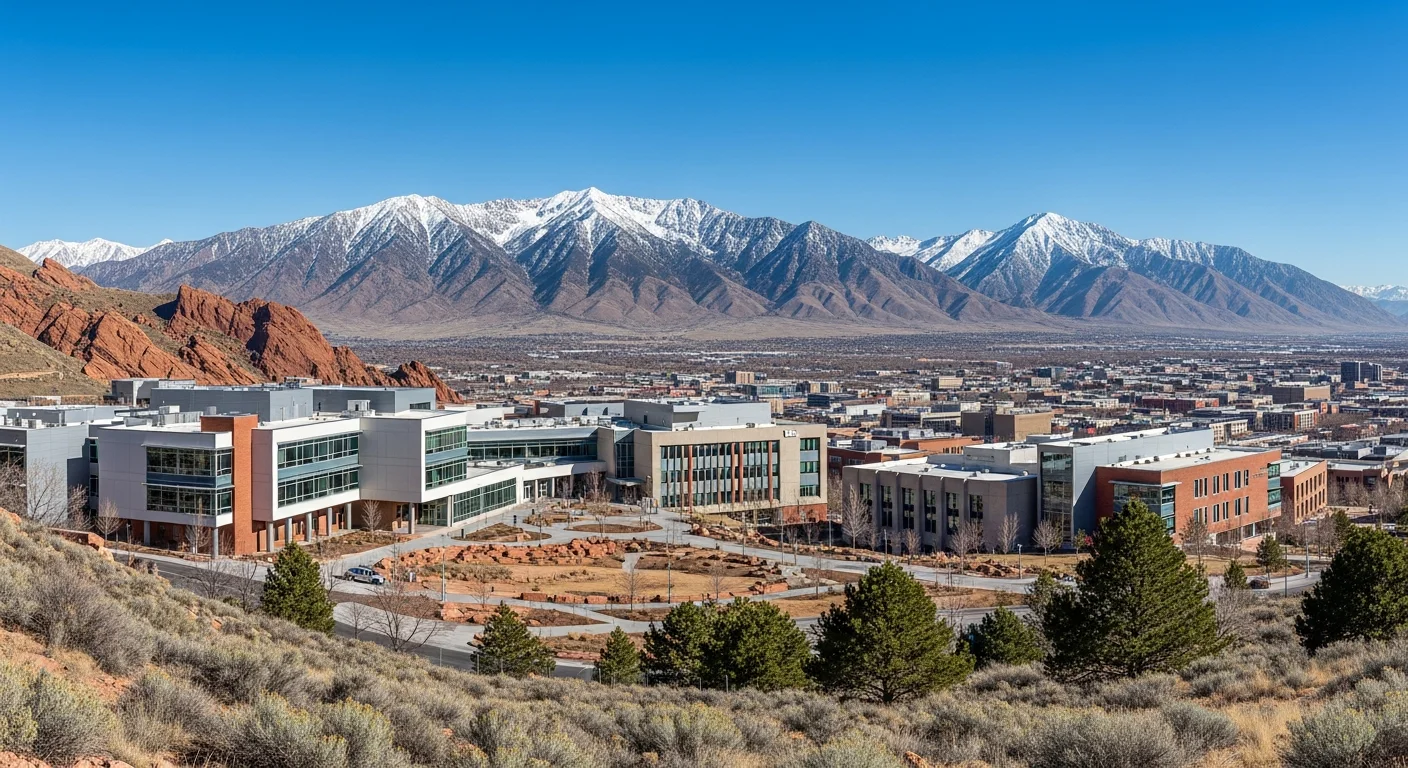
University campus in Utah
Updated January 2026

Best Computer Engineering Degree Programs in Utah — 2026 Rankings

Explore 11 accredited computer engineering degree programs in Utah. Compare schools by graduation rate, salary outcomes, and tuition—from Weber State University to Western Governors University.

#1 ProgramWestern Governors
Avg Salary$108,000
Tuition From$5,471/yr
Job Growth+22%

Key Takeaways

Top 3 ranked: Western Governors, Brigham Young, Weber State

Based on graduation rates, program outcomes, and institutional quality

IPEDS 2023

Tuition ranges from $3,778 to $40,896/year

Weber State offers the most affordable option at $5,471/yr

IPEDS 2023

Degree levels: 4 associate's, 5 master's, 3 doctoral programs available in Utah

From community college pathways to advanced research degrees

IPEDS 2023

Utah community college transfer can save 40-60% on total degree costs

4 associate's programs provide transfer pathways to bachelor's degrees

Education Commission of the States

Major employers: Adobe, Qualtrics, Pluralsight, Domo

Tech hubs in Salt Lake City and Provo

Hakia Research 2026

Computer Engineering programs available near 28+ cities across Utah

Search by city to find programs within 200 miles of your location

IPEDS 2023

Updated February 2026

On This Page
$108,000
Is Computer Engineering in Utah Worth It?
Yes. Computer Engineering degrees in Utah deliver strong ROI—graduates earn $108,000 median salary with +22% job growth through 2032. In-state tuition averages $9,180/year.

Source: BLS OEWS May 2024

Best Computer Engineering Degree Programs in Utah

Bachelor's Computer Engineering Degree Programs in Utah

10 programs$108,000 median salary90% avg grad rate
10
Programs
$108,000
Median Salary
$9,720/yr
Avg Tuition
90%
Avg Grad Rate

Program Landscape

Utah ranks among the nation's top destinations for computer engineering education, with 10 accredited bachelor's degree programs across 7 public and 3 private institutions. The highest-ranked programs are Western Governors, Brigham Young, Weber State, recognized for academic excellence, research opportunities, and strong industry connections.

Career Outcomes

Graduates from Utah computer engineering programs earn a median salary of $91,800—6% below the national average. The state's robust technology sector, anchored by the Salt Lake City, Provo, Lehi metropolitan areas, provides abundant internship and employment opportunities with companies including Adobe, Qualtrics, Pluralsight.

Costs & Value

Tuition ranges from $4,180 to $40,896 annually, with an average of $9,720/yr. Top programs maintain graduation rates above 90%, with the highest reaching 100%. Many programs hold ABET accreditation, the gold standard for computing education, ensuring curriculum meets rigorous industry standards.

Curriculum & Specializations

Students can choose from specializations including software engineering, cybersecurity, artificial intelligence, data science, and systems architecture. Strong industry partnerships provide access to co-op programs, capstone projects with real companies, and direct recruiting pipelines to Utah's leading technology employers. For students seeking computer engineering degrees in Utah, these top-ranked computer engineering schools offer the strongest combination of academic rigor and career preparation.

Show:

Earn your bachelor's in Computer Engineering

(Sponsored)

Loading programs...

🥇

Western Governors University

Private
Salt Lake City, UT
$7,710
Tuition/yr
75.9
Score
Website
🥈

Brigham Young University

Private
Provo, UT
$6,496
Tuition/yr
91%
Grad Rate
67.7
Score
Website
🥉

Weber State University

Public
Ogden, UT
$5,471
Tuition/yr
92%
Grad Rate
65.1
Score
Website
#4

Utah Valley University

Public
Orem, UT
$5,614
Tuition/yr
92%
Grad Rate
64.2
Score
Website
#5

University of Utah

Public
Salt Lake City, UT
$8,175
Tuition/yr
72%
Grad Rate
59.7
Score
Website
#6

Snow College

Public
Ephraim, UT
$4,180
Tuition/yr
100%
Grad Rate
52.5
Score
Website
#7

Utah State University

Public
Logan, UT
$7,387
Tuition/yr
100%
Grad Rate
52.3
Score
Website
#8

Southern Utah University

Public
Cedar City, UT
$6,006
Tuition/yr
86%
Grad Rate
44.2
Score
Website
#9

Utah Tech University

Public
Saint George, UT
$5,266
Tuition/yr
43.8
Score
Website
#10

Westminster University

Private
Salt Lake City, UT
$40,896
Tuition/yr
37.1
Score
Website

Complete Computer Engineering Degree Program Rankings in Utah

Best Associate's Computer Engineering Degree Programs in Utah

### Program Landscape Utah offers **4 accredited** associate's degree programs in computer engineering, providing an affordable entry point into the technology field. The top-ranked programs include **Weber State**, **Utah Valley**, **Snow College**, which combine rigorous technical curriculum with practical skills training. ### Costs & Value Community colleges in Utah offer these two-year programs at an average cost of **$4,761/yr**—significantly less than four-year university tuition. Students completing associate's degrees can pursue entry-level technical positions and transfer opportunities, with entry-level salaries averaging **$59,400** in Utah. ### Career Pathways Many programs feature guaranteed transfer agreements with Utah's public universities, allowing students to complete their first two years at reduced cost before transferring to complete a bachelor's degree. The Salt Lake City, Provo, Lehi areas offer particularly strong job markets for associate's degree holders, with employers like Adobe, Qualtrics, Pluralsight hiring for technical support, junior development, and IT specialist positions. ### Curriculum & Specializations Programs typically include coursework in programming fundamentals, database management, networking basics, and software development. Among computer engineering schools in Utah, these associate's programs offer the best value for students beginning their computer engineering degrees in Utah.

  1. #1. Weber State University

    Hakia ranks Weber State University as the #1 associate's in computer engineering degree program in Utah. This public institution in Ogden, UT has annual tuition of $5,471 and a 92% graduation rate. Ranking score: 64.9.

  2. #2. Utah Valley University

    Hakia ranks Utah Valley University as the #2 associate's in computer engineering degree program in Utah. This public institution in Orem, UT has annual tuition of $5,614 and a 92% graduation rate. Ranking score: 54.0.

  3. #3. Snow College

    Hakia ranks Snow College as the #3 associate's in computer engineering degree program in Utah. This public institution in Ephraim, UT has annual tuition of $4,180 and a 100% graduation rate. Ranking score: 54.9.

  4. #4. Salt Lake Community College

    Hakia ranks Salt Lake Community College as the #4 associate's in computer engineering degree program in Utah. This public institution in Salt Lake City, UT has annual tuition of $3,778. Ranking score: 35.2.

Best Bachelor's Computer Engineering Degree Programs in Utah

### Program Landscape Utah ranks among the nation's top destinations for computer engineering education, with **10 accredited** bachelor's degree programs across **7 public** and **3 private** institutions. The highest-ranked programs are **Western Governors**, **Brigham Young**, **Weber State**, recognized for academic excellence, research opportunities, and strong industry connections. ### Career Outcomes Graduates from Utah computer engineering programs earn a median salary of **$91,800**—6% below the national average. The state's robust technology sector, anchored by the Salt Lake City, Provo, Lehi metropolitan areas, provides abundant internship and employment opportunities with companies including Adobe, Qualtrics, Pluralsight. ### Costs & Value Tuition ranges from **$4,180** to **$40,896** annually, with an average of **$9,720/yr**. Top programs maintain graduation rates above **90%**, with the highest reaching **100%**. Many programs hold ABET accreditation, the gold standard for computing education, ensuring curriculum meets rigorous industry standards. ### Curriculum & Specializations Students can choose from specializations including software engineering, cybersecurity, artificial intelligence, data science, and systems architecture. Strong industry partnerships provide access to co-op programs, capstone projects with real companies, and direct recruiting pipelines to Utah's leading technology employers. For students seeking computer engineering degrees in Utah, these top-ranked computer engineering schools offer the strongest combination of academic rigor and career preparation.

  1. #1. Western Governors University

    Hakia ranks Western Governors University as the #1 bachelor's in computer engineering degree program in Utah. This private institution in Salt Lake City, UT has annual tuition of $7,710. Ranking score: 75.9.

  2. #2. Brigham Young University

    Hakia ranks Brigham Young University as the #2 bachelor's in computer engineering degree program in Utah. This private institution in Provo, UT has annual tuition of $6,496 and a 91% graduation rate. Ranking score: 67.7.

  3. #3. Weber State University

    Hakia ranks Weber State University as the #3 bachelor's in computer engineering degree program in Utah. This public institution in Ogden, UT has annual tuition of $5,471 and a 92% graduation rate. Ranking score: 65.1.

  4. #4. Utah Valley University

    Hakia ranks Utah Valley University as the #4 bachelor's in computer engineering degree program in Utah. This public institution in Orem, UT has annual tuition of $5,614 and a 92% graduation rate. Ranking score: 64.2.

  5. #5. University of Utah

    Hakia ranks University of Utah as the #5 bachelor's in computer engineering degree program in Utah. This public institution in Salt Lake City, UT has annual tuition of $8,175 and a 72% graduation rate. Ranking score: 59.7.

  6. #6. Snow College

    Hakia ranks Snow College as the #6 bachelor's in computer engineering degree program in Utah. This public institution in Ephraim, UT has annual tuition of $4,180 and a 100% graduation rate. Ranking score: 52.5.

  7. #7. Utah State University

    Hakia ranks Utah State University as the #7 bachelor's in computer engineering degree program in Utah. This public institution in Logan, UT has annual tuition of $7,387 and a 100% graduation rate. Ranking score: 52.3.

  8. #8. Southern Utah University

    Hakia ranks Southern Utah University as the #8 bachelor's in computer engineering degree program in Utah. This public institution in Cedar City, UT has annual tuition of $6,006 and a 86% graduation rate. Ranking score: 44.2.

  9. #9. Utah Tech University

    Hakia ranks Utah Tech University as the #9 bachelor's in computer engineering degree program in Utah. This public institution in Saint George, UT has annual tuition of $5,266. Ranking score: 43.8.

  10. #10. Westminster University

    Hakia ranks Westminster University as the #10 bachelor's in computer engineering degree program in Utah. This private institution in Salt Lake City, UT has annual tuition of $40,896. Ranking score: 37.1.

Best Master's Computer Engineering Degree Programs in Utah

### Program Landscape Utah offers **5** master's degree programs in computer engineering, designed for professionals seeking to advance into senior engineering, technical leadership, and specialized roles. The top programs—**U of Utah**, **Weber State**, **Brigham Young**—combine advanced technical training with research opportunities and leadership development. ### Career Outcomes Master's graduates in Utah earn a median salary of **$108,000**, approximately **20-30% higher** than bachelor's degree holders. The concentration of technology companies in Salt Lake City, Provo, Lehi creates strong demand for graduate-level talent, with Adobe, Qualtrics, Pluralsight actively recruiting from these programs. ### Costs & Value Program formats include traditional full-time study (typically 2 years), part-time options for working professionals (2-3 years), and accelerated tracks. Tuition averages **$6,629/yr**, with many employers offering tuition reimbursement for graduate education. Some programs offer thesis and non-thesis tracks, allowing students to focus on research or professional development based on their career goals. ### Curriculum & Specializations Curriculum covers advanced topics including machine learning, distributed systems, software architecture, and technical management. Many programs include practicum experiences, industry capstone projects, or consulting engagements that provide real-world application of advanced concepts. Among Utah's computer engineering schools at the graduate level, these programs stand out for both academic quality and career outcomes.

  1. #1. University of Utah

    Hakia ranks University of Utah as the #1 master's in computer engineering degree program in Utah. This public institution in Salt Lake City, UT has annual tuition of $8,175 and a 72% graduation rate. Ranking score: 77.9.

  2. #2. Weber State University

    Hakia ranks Weber State University as the #2 master's in computer engineering degree program in Utah. This public institution in Ogden, UT has annual tuition of $5,471 and a 92% graduation rate. Ranking score: 64.0.

  3. #3. Brigham Young University

    Hakia ranks Brigham Young University as the #3 master's in computer engineering degree program in Utah. This private institution in Provo, UT has annual tuition of $6,496 and a 91% graduation rate. Ranking score: 61.9.

  4. #4. Utah State University

    Hakia ranks Utah State University as the #4 master's in computer engineering degree program in Utah. This public institution in Logan, UT has annual tuition of $7,387 and a 100% graduation rate. Ranking score: 46.9.

  5. #5. Utah Valley University

    Hakia ranks Utah Valley University as the #5 master's in computer engineering degree program in Utah. This public institution in Orem, UT has annual tuition of $5,614 and a 92% graduation rate. Ranking score: 60.3.

Best Doctoral Computer Engineering Degree Programs in Utah

### Program Landscape Utah is home to **3** doctoral programs in computer engineering, preparing students for research positions, faculty appointments, and executive technical roles. Leading programs at **U of Utah**, **Utah State**, **Brigham Young** are recognized for cutting-edge research, strong faculty publications, and competitive funding packages. ### Career Outcomes Doctoral graduates command premium salaries, with Utah PhD holders earning a median of **$135,000**—reflecting the advanced expertise required for research and executive positions. The Salt Lake City, Provo, Lehi region's research universities and corporate R&D centers provide extensive collaboration opportunities with industry leaders like Adobe, Qualtrics, Pluralsight. ### Costs & Value PhD programs typically require 4-6 years of full-time study, including coursework, qualifying examinations, and original dissertation research. Many programs offer full funding through teaching or research assistantships, covering tuition and providing stipends of **$25,000–$40,000** annually. ### Curriculum & Specializations Research strengths across Utah programs include artificial intelligence, cybersecurity, human-computer interaction, systems, and theoretical computer science. For aspiring researchers pursuing computer engineering degrees in Utah, graduates go on to careers as university faculty, industry research scientists, or technical executives, contributing to advances in technology that impact millions of users worldwide.

  1. #1. University of Utah

    Hakia ranks University of Utah as the #1 doctoral in computer engineering degree program in Utah. This public institution in Salt Lake City, UT has annual tuition of $8,175 and a 72% graduation rate. Ranking score: 41.8.

  2. #2. Utah State University

    Hakia ranks Utah State University as the #2 doctoral in computer engineering degree program in Utah. This public institution in Logan, UT has annual tuition of $7,387 and a 100% graduation rate. Ranking score: 60.1.

  3. #3. Brigham Young University

    Hakia ranks Brigham Young University as the #3 doctoral in computer engineering degree program in Utah. This private institution in Provo, UT has annual tuition of $6,496 and a 91% graduation rate. Ranking score: 58.1.

Computer Engineering Tuition in Utah

MetricValue
Average in-state tuition$9,180/year
Average out-of-state tuition$22,950/year
Community college tuition$2,295/year
4-year savings for residents$55,080
2+2 transfer pathway savings$13,770

Source: IPEDS 2023

Computer Engineering Financial Aid & Scholarships in Utah

State Aid Programs

Utah residents pursuing computer engineering degrees have access to several financial aid options designed to make higher education more affordable. The Utah Opportunity Scholarship provides both need- and merit-based awards specifically for Utah residents, making it a key resource for students across the state's 25 institutions offering computer engineering programs (Utah System of Higher Education). Additionally, federal financial aid through the Free Application for Federal Student Aid (FAFSA) is available to all eligible students, regardless of residency status. Students should complete their FAFSA as early as possible to maximize their eligibility for grants, loans, and work-study opportunities (Federal Student Aid).

Key Programs & Amounts

Many Utah institutions offering computer engineering degrees provide institutional scholarships and assistantships to qualified students. Top-ranked programs like Brigham Young University, University of Utah, and Utah State University offer competitive merit scholarships that can significantly reduce out-of-pocket costs. For students attending public four-year institutions in Utah, the average in-state tuition is $6,014 (IPEDS), making the state relatively affordable compared to national averages. Students should also explore employer sponsorships through major employers in the state, including Intermountain Healthcare, Goldman Sachs, and Adobe, many of which offer tuition reimbursement programs for technical degree holders. Visit the College Scorecard for institution-specific aid data and outcomes.

Calculate Your Computer Engineering Degree ROI in Utah

Use our interactive ROI calculator to estimate your return on investment for a computer engineering degree in Utah. Enter your expected tuition costs, financial aid, and career goals to see projected payback periods and lifetime earnings. The calculator uses current salary data from BLS and tuition data from IPEDS to provide accurate estimates.

Computer Engineering Degree ROI Calculator
Estimate your return on investment for a computer engineering degree
$

Leave blank to use average cost for selected program type

20 years
10 years20 years30 years
20-Year ROI

+907%

Net gain divided by total investment. ROI above 200% is considered excellent for education investments.

Net Gain

$1,677,254

Your additional lifetime earnings with this degree vs. working without one, minus the total investment.

Break-Even

5 years

Years until your cumulative earnings exceed total investment. Shorter programs often break even faster due to lower opportunity cost.

COL-Adjusted Salary

$133,333

Your starting salary adjusted for local cost of living. This shows real purchasing power compared to a $100K national baseline.

Why does break-even change with program type? Your "total investment" includes both tuition AND opportunity cost (foregone earnings while in school). A 4-year full-time public university (in-state) means 4 years of not earning a salary ($140,000 in opportunity cost). Shorter full-time programs may have higher tuition but lower total investment because you return to the workforce sooner.

Detailed Breakdown
How we calculate your degree ROI using real salary data
Total Investment$185,000

Tuition plus opportunity cost (earnings you miss while in school)

Program Cost (Tuition)$45,000

Direct cost of the degree program

Opportunity Cost$140,000

4 years × $35K/year foregone salary while studying full-time

20-Year Earnings (with degree)$2,712,662

Projected career earnings starting after graduation, with salary growth

20-Year Earnings (without degree)$850,408

What you'd earn working at $35K/year with 2% annual growth

Starting Salary (Austin, TX)$140,000

Median salary for this role in your selected location (BLS 2024)

Annualized Return4.9%

Your investment's compound annual growth rate (similar to stock market returns)

Data sources: BLS OEWS May 2024, IPEDS 2023. Calculations use median salaries, 3% discount rate, and assume salary growth declines from 6% to 2% over career. Individual results will vary. | Powered by Hakia.com

Career Paths

Design and develop software applications and systems

Median Salary:$122,040

Analyze complex datasets and build predictive models

Median Salary:$101,520

Protect computer networks from cyber threats

Median Salary:$113,400

Manage cloud infrastructure and deployment pipelines

Median Salary:$119,880

Design and maintain cloud computing infrastructure

Median Salary:$116,640

Build and deploy machine learning models

Median Salary:$136,080
Computer Engineering Salaries by Metro Area

Median annual salary in Utah metro areas

Hakia.com
View data table
Categoryvalue
Salt Lake City$119K
Provo$113K
Lehi$108K

Source: BLS OEWS May 2024

Hakia.com

Computer Engineering Jobs in Utah: Top Employers Hiring

Find computer engineering jobs in Utah. These major employers across Utah metro areas are actively hiring computer engineering graduates. Click employer names to view current job openings.

Computer Engineering Jobs in Salt Lake City

UT
Adobe
tech
Goldman Sachs
finance
Pluralsight
edtech
Overstock.com
ecommerce

Computer Engineering Jobs in Provo

UT
Qualtrics
tech
Vivint
iot
Ancestry.com
tech

Computer Engineering Jobs in Lehi

UT
Domo
tech
MX Technologies
fintech
Podium
tech

How to Apply to Computer Engineering Programs in Utah

1

Research Program Requirements

Review admission requirements for computer engineering programs at your target schools. Requirements vary by institution and degree level.

2

Prepare Application Materials

Gather transcripts, test scores (SAT/ACT for undergrad, GRE for graduate), letters of recommendation, and personal statement.

3

Apply for Financial Aid

Complete the FAFSA by priority deadlines.

4

Submit Applications Before Deadlines

Apply early for priority consideration. Early action/decision deadlines are typically October-November; regular deadlines December-January.

5

Complete Enrollment Steps

Accept your offer, submit enrollment deposit, complete orientation requirements, and register for classes.

Computer Engineering Transfer Pathways in Utah

State Transfer System

Utah's transfer system is designed to streamline the pathway from community colleges to four-year universities, making it affordable and efficient for students to earn computer engineering degrees. The Utah System of Higher Education provides articulation agreements and transfer guides that outline specific coursework requirements for smooth transitions. Six two-year institutions in Utah—including Salt Lake Community College, Weber State University's college division, Utah Valley University, and Snow College—offer associate's degrees in computer engineering (Utah Transfer Guides). These programs align with bachelor's degree requirements, ensuring that credits transfer without loss and allowing students to complete their first two years at lower tuition costs (averaging $4,180 to $5,614 annually) before advancing to four-year institutions. This pathway is particularly valuable for students seeking affordability without compromising academic quality.

How Transfers Work

Major receiving institutions for computer engineering transfers include Brigham Young University, University of Utah, Utah State University, Weber State University, and Utah Valley University. Utah Valley University (#5 on the most affordable list at $5,614 tuition) and Weber State University ($5,471 tuition) are particularly popular transfer destinations, offering strong programs with competitive costs. The Utah Opportunity Scholarship (Utah Opportunity Scholarship) provides need- and merit-based financial aid to residents, further reducing transfer students' out-of-pocket costs. Prospective transfer students should meet with academic advisors at their community college to select courses aligned with specific bachelor's program requirements, review major-specific transfer pathways through Utah Transfer Guides, and explore related technical fields like Network Administration in Utah or Information Technology in Utah that may offer alternative or complementary career paths. The transfer route is an excellent strategy for controlling costs while accessing Utah's excellent engineering education.

Why Study Computer Engineering in Utah?

Industry & Workforce

Utah has established itself as a premier destination for computer engineering education, with 25 institutions offering programs across all degree levels (IPEDS). The state awarded 1,857 bachelor's degrees in computer engineering in 2023, reflecting robust enrollment and completion rates. Leading institutions like Brigham Young University, University of Utah, and Weber State University consistently rank among the nation's best, combining rigorous academics with practical industry experience. The concentration of top-tier programs across the Wasatch Front—spanning Salt Lake City, Provo, and Ogden—creates a dynamic educational ecosystem where students benefit from proximity to major tech employers and research opportunities.

Salary Outlook

Utah's tech economy presents exceptional career prospects for computer engineering graduates. The state hosts major employers including Adobe, Goldman Sachs, Intermountain Healthcare, and the University of Utah's own engineering divisions. Students graduating from Utah programs gain direct access to these employers through internships, research partnerships, and job placements. Public in-state tuition averages just $6,014 annually for four-year institutions, making Utah one of the most affordable states for engineering education (College Scorecard). With affordable tuition, strong academic programs, and a thriving tech corridor, Utah offers exceptional value for aspiring computer engineers seeking world-class education without excessive debt. Explore related programs like Computer Science in Utah and Software Engineering in Utah to find your ideal pathway.

Computer Engineering Job Market in Utah

Employment Outlook

Utah's computer engineering job market is experiencing robust growth, supported by a diverse and expanding technology sector across multiple metropolitan regions. The state has established itself as a significant hub for tech employment, with major concentrations in the Salt Lake City, Provo-Orem, and Ogden-Clearfield metro areas. According to the Bureau of Labor Statistics, Utah continues to attract technology professionals across various specializations, with computer engineering roles seeing steady demand across both established firms and emerging startups. The Salt Lake Valley region, in particular, has become a focal point for technology innovation and employment, drawing talent from across the nation.

Salaries by Metro

Major employers in Utah's computer engineering sector span healthcare, financial services, technology, and education industries. Companies like Goldman Sachs, Adobe, and Intermountain Healthcare actively recruit computer engineering graduates, creating substantial career pathways for degree holders. The Provo-Orem metro area, home to Brigham Young University and Utah Valley University, serves as a secondary tech hub with significant employer presence. Additionally, the University of Utah and Weber State University in the Salt Lake City and Davis County regions respectively contribute to a robust pipeline of talent meeting regional employer demand. Career opportunities extend across cities including Salt Lake City, West Valley City, Provo, West Jordan, Orem, Sandy, Ogden, and St. George, each offering distinct employment landscapes. For detailed salary and employment projections specific to Utah, consult the BLS occupational data and explore national best practices in computer engineering.

Computer Engineering Curriculum & Specializations in Utah

Core Requirements

Computer engineering curricula in Utah are designed to blend hardware and software principles, creating graduates prepared for diverse technical roles. Core courses typically include digital logic design, computer architecture, microprocessors, embedded systems, signal processing, and programming languages (C++, Python, Java). Most programs require strong foundations in mathematics (calculus, linear algebra, differential equations) and physics, ensuring students understand the fundamental principles underlying hardware design and software implementation. Specialized tracks allow students to focus on areas such as VLSI design, robotics, telecommunications, or power systems. Utah's top-ranked programs, including Weber State University and Utah Valley University, incorporate hands-on laboratory work where students design circuits, program microcontrollers, and develop prototype systems. Many programs culminate in capstone design projects where students work in teams to solve real-world engineering challenges, often in collaboration with industry partners (ABET).

Degree Pathways

Research opportunities and industry partnerships enrich the computer engineering experience at Utah institutions. The University of Utah and Brigham Young University maintain robust research programs in areas including machine learning, wireless networks, and power electronics. Students at these institutions gain exposure to cutting-edge technologies and contribute to published research alongside faculty mentors. Weber State University and Utah Valley University emphasize applied learning, connecting classroom instruction directly to industry needs through internship programs and guest lectures from Adobe, Goldman Sachs, and other major employers. Many programs offer electives in advanced topics such as cybersecurity, cloud computing, and artificial intelligence, reflecting current industry demands. For comprehensive curriculum details and to compare options across degree levels, explore Computer Science in Utah programs and consult the College Scorecard for program-specific outcomes.

Online vs On-Campus Computer Engineering Programs in Utah

Online Program Growth

Utah offers robust options for both traditional campus-based and online computer engineering programs, giving students flexibility to choose the format that best fits their needs. For online learners, Utah State University ranks as the top option with $7,387 annual tuition and a 99.50% graduation rate, offering asynchronous coursework ideal for working professionals. The University of Utah provides another strong online alternative at $8,175 tuition, while Southern Utah University offers a more affordable online option at $6,006. These programs maintain the same rigorous curriculum and accreditation standards as campus counterparts, ensuring that online graduates are equally prepared for careers in the field. Online formats eliminate commute times and allow students to balance education with work and family obligations—a significant advantage for career-changers and non-traditional students.

Accredited Online Options

Campus-based programs in Utah provide the traditional experience with direct faculty interaction, on-campus labs, and networking opportunities. Brigham Young University, ranked #1 for bachelor's programs, and University of Utah, ranked #3, offer immersive campus experiences with access to cutting-edge equipment and research facilities. Weber State University and Utah Valley University provide excellent mid-range alternatives with strong graduation rates and affordable tuition. Many institutions now offer hybrid models combining online flexibility with periodic on-campus intensives for labs and hands-on projects. For comprehensive program comparisons across formats, consult our best online programs and best bachelor's programs rankings to identify the format and school that align with your learning style and career goals.

Computer Engineering by City in Utah

Salt Lake City

Salt Lake City stands as Utah's premier destination for computer engineering careers, offering the largest concentration of employers, highest salary potential, and most diverse technology sector opportunities. The city serves as the headquarters region for major firms including Intermountain Healthcare, Adobe, and Goldman Sachs operations. West Valley City and Sandy, located within the Salt Lake Valley metro area, provide suburban alternatives with strong employment markets and lower cost-of-living compared to downtown Salt Lake City. University of Utah, located in Salt Lake City, ranks as the state's leading computer engineering program by several metrics, with graduates well-positioned for immediate employment in the surrounding region.

The Provo-Orem corridor, anchored by Brigham Young University and Utah Valley University, represents Utah's secondary tech hub with growing employer presence and strong educational infrastructure. This region offers slightly lower living costs than Salt Lake City while maintaining robust employment opportunities. Ogden, located in Davis County near Weber State University and the Ogden-Clearfield metro area, provides additional career pathways with more affordable housing options. St. George in Southern Utah, while smaller, increasingly attracts remote positions and tech startup activity. For students prioritizing affordability, most affordable computer engineering programs offer educational options in these regions, with schools like Snow College ($4,180 tuition) and Utah Tech University ($5,266 tuition) providing cost-effective pathways. Compare cost structures across online Bachelor's programs to maximize flexibility and value.

Compare Online Computer Engineering Programs in Utah

View tuition costs, program formats & enrollment info

Find Computer Engineering Programs Near You in Utah

Search by city to find accredited computer engineering programs ranked by our state methodology.

Computer Engineering Degree Programs by City in Utah

Computer Engineering Degree Programs Near Salt Lake City, Utah

As Utah's tech hub, Salt Lake City hosts major software and hardware firms including Adobe's significant engineering presence, plus proximity to the University of Utah's Computer Engineering program and extensive networking opportunities across the state's tech ecosystem. The city's diverse economy and established venture capital scene make it ideal for embedded systems engineers and hardware startups looking to scale beyond prototype phases.

Salt Lake City is located in Salt Lake County, Utah.

Associate's Computer Engineering Degree Programs Near Salt Lake City, Utah
  1. Weber State University (Public) — State #1, 32.1 mi from Salt Lake City. Tuition: $5,471/year. Graduation rate: 92%.
  2. Salt Lake Community College (Public) — State #2, in Salt Lake City. Tuition: $3,778/year.
  3. Utah Valley University (Public) — State #3, 32.2 mi from Salt Lake City. Tuition: $5,614/year. Graduation rate: 92%.
Bachelor's Computer Engineering Degree Programs Near Salt Lake City, Utah
  1. Brigham Young University (Private) — State #1, 35.3 mi from Salt Lake City. Tuition: $6,496/year. Graduation rate: 91%.
  2. Utah State University (Public) — State #2, 69.9 mi from Salt Lake City. Tuition: $7,387/year. Graduation rate: 100%.
  3. University of Utah (Public) — State #3, in Salt Lake City. Tuition: $8,175/year. Graduation rate: 72%.
Master's Computer Engineering Degree Programs Near Salt Lake City, Utah
  1. University of Utah (Public) — State #1, in Salt Lake City. Tuition: $8,175/year. Graduation rate: 72%.
  2. Brigham Young University (Private) — State #2, 35.3 mi from Salt Lake City. Tuition: $6,496/year. Graduation rate: 91%.
  3. Utah State University (Public) — State #3, 69.9 mi from Salt Lake City. Tuition: $7,387/year. Graduation rate: 100%.
Doctoral Computer Engineering Degree Programs Near Salt Lake City, Utah
  1. Brigham Young University (Private) — State #1, 35.3 mi from Salt Lake City. Tuition: $6,496/year. Graduation rate: 91%.
  2. University of Utah (Public) — State #2, in Salt Lake City. Tuition: $8,175/year. Graduation rate: 72%.
  3. Utah State University (Public) — State #3, 69.9 mi from Salt Lake City. Tuition: $7,387/year. Graduation rate: 100%.

Computer Engineering Degree Programs Near Provo, Utah

Brigham Young University's Computer Engineering program is one of the region's strongest, and Provo serves as a hub for tech startups and software companies that increasingly work on hardware integration and IoT solutions. The proximity to BYU's labs and the local tech corridor around University Avenue creates direct pathways for embedded systems work and FPGA design roles.

Provo is located in Utah County, Utah.

Associate's Computer Engineering Degree Programs Near Provo, Utah
  1. Weber State University (Public) — State #1, 67.4 mi from Provo. Tuition: $5,471/year. Graduation rate: 92%.
  2. Salt Lake Community College (Public) — State #2, 33.2 mi from Provo. Tuition: $3,778/year.
  3. Utah Valley University (Public) — State #3, 4 mi from Provo. Tuition: $5,614/year. Graduation rate: 92%.
Bachelor's Computer Engineering Degree Programs Near Provo, Utah
  1. Brigham Young University (Private) — State #1, in Provo. Tuition: $6,496/year. Graduation rate: 91%.
  2. Utah State University (Public) — State #2, 103.9 mi from Provo. Tuition: $7,387/year. Graduation rate: 100%.
  3. University of Utah (Public) — State #3, 37.3 mi from Provo. Tuition: $8,175/year. Graduation rate: 72%.
Master's Computer Engineering Degree Programs Near Provo, Utah
  1. University of Utah (Public) — State #1, 37.3 mi from Provo. Tuition: $8,175/year. Graduation rate: 72%.
  2. Brigham Young University (Private) — State #2, in Provo. Tuition: $6,496/year. Graduation rate: 91%.
  3. Utah State University (Public) — State #3, 103.9 mi from Provo. Tuition: $7,387/year. Graduation rate: 100%.
Doctoral Computer Engineering Degree Programs Near Provo, Utah
  1. Brigham Young University (Private) — State #1, in Provo. Tuition: $6,496/year. Graduation rate: 91%.
  2. University of Utah (Public) — State #2, 37.3 mi from Provo. Tuition: $8,175/year. Graduation rate: 72%.
  3. Utah State University (Public) — State #3, 103.9 mi from Provo. Tuition: $7,387/year. Graduation rate: 100%.

Computer Engineering Degree Programs Near Saint George, Utah

This small city of ~80,000 in southwestern Utah lacks major semiconductor or aerospace manufacturers, making it better suited for remote hardware engineering roles or relocation only if tied to family or personal reasons; the nearest tech clusters are 4+ hours away in Salt Lake City or Las Vegas.

Saint George is located in Washington County, Utah.

Associate's Computer Engineering Degree Programs Near Saint George, Utah
  1. Snow College (Public) — State #4, 190.2 mi from Saint George. Tuition: $4,180/year. Graduation rate: 100%.
Bachelor's Computer Engineering Degree Programs Near Saint George, Utah
  1. Southern Utah University (Public) — State #6, 48.7 mi from Saint George. Tuition: $6,006/year. Graduation rate: 86%.
  2. Snow College (Public) — State #7, 190.2 mi from Saint George. Tuition: $4,180/year. Graduation rate: 100%.
  3. Utah Tech University (Public) — State #9, in Saint George. Tuition: $5,266/year.

Computer Engineering Degree Programs Near Logan, Utah

Utah State University offers a Computer Engineering program and hosts relevant research labs, while the city's smaller size and proximity to outdoor recreation appeal to engineers seeking work-life balance outside major metro pressure. However, employer diversity is limited—most hardware engineering positions require commuting to Salt Lake City or securing remote roles.

Logan is located in Cache County, Utah.

Associate's Computer Engineering Degree Programs Near Logan, Utah
  1. Weber State University (Public) — State #1, 39 mi from Logan. Tuition: $5,471/year. Graduation rate: 92%.
  2. Salt Lake Community College (Public) — State #2, 74.8 mi from Logan. Tuition: $3,778/year.
  3. Utah Valley University (Public) — State #3, 101.7 mi from Logan. Tuition: $5,614/year. Graduation rate: 92%.
Bachelor's Computer Engineering Degree Programs Near Logan, Utah
  1. Brigham Young University (Private) — State #1, 104.1 mi from Logan. Tuition: $6,496/year. Graduation rate: 91%.
  2. Utah State University (Public) — State #2, in Logan. Tuition: $7,387/year. Graduation rate: 100%.
  3. University of Utah (Public) — State #3, 68.3 mi from Logan. Tuition: $8,175/year. Graduation rate: 72%.
Master's Computer Engineering Degree Programs Near Logan, Utah
  1. University of Utah (Public) — State #1, 68.3 mi from Logan. Tuition: $8,175/year. Graduation rate: 72%.
  2. Brigham Young University (Private) — State #2, 104.1 mi from Logan. Tuition: $6,496/year. Graduation rate: 91%.
  3. Utah State University (Public) — State #3, in Logan. Tuition: $7,387/year. Graduation rate: 100%.
Doctoral Computer Engineering Degree Programs Near Logan, Utah
  1. Brigham Young University (Private) — State #1, 104.1 mi from Logan. Tuition: $6,496/year. Graduation rate: 91%.
  2. University of Utah (Public) — State #2, 68.3 mi from Logan. Tuition: $8,175/year. Graduation rate: 72%.
  3. Utah State University (Public) — State #3, in Logan. Tuition: $7,387/year. Graduation rate: 100%.

Computer Engineering Degree Programs Near Cedar City, Utah

This rural community of ~35,000 has minimal computer engineering employment and no dedicated engineering programs; those seeking semiconductor or embedded systems careers should plan either remote work arrangements or eventual relocation to Salt Lake City or Provo.

Cedar City is located in Iron County, Utah.

Associate's Computer Engineering Degree Programs Near Cedar City, Utah
  1. Utah Valley University (Public) — State #3, 194.3 mi from Cedar City. Tuition: $5,614/year. Graduation rate: 92%.
  2. Snow College (Public) — State #4, 141.6 mi from Cedar City. Tuition: $4,180/year. Graduation rate: 100%.
Bachelor's Computer Engineering Degree Programs Near Cedar City, Utah
  1. Brigham Young University (Private) — State #1, 193.7 mi from Cedar City. Tuition: $6,496/year. Graduation rate: 91%.
  2. Utah Valley University (Public) — State #5, 194.3 mi from Cedar City. Tuition: $5,614/year. Graduation rate: 92%.
  3. Southern Utah University (Public) — State #6, in Cedar City. Tuition: $6,006/year. Graduation rate: 86%.
Master's Computer Engineering Degree Programs Near Cedar City, Utah
  1. Brigham Young University (Private) — State #2, 193.7 mi from Cedar City. Tuition: $6,496/year. Graduation rate: 91%.
  2. Utah Valley University (Public) — State #5, 194.3 mi from Cedar City. Tuition: $5,614/year. Graduation rate: 92%.
Doctoral Computer Engineering Degree Programs Near Cedar City, Utah
  1. Brigham Young University (Private) — State #1, 193.7 mi from Cedar City. Tuition: $6,496/year. Graduation rate: 91%.

Computer Engineering Degree Programs Near Murray, Utah

Located adjacent to Salt Lake City in the same metro area, Murray benefits from proximity to the University of Utah's Computer Engineering program and serves as a more affordable residential alternative to downtown while maintaining easy access to Salt Lake City's major tech employers and aerospace/defense contracting firms.

Murray is located in Salt Lake County, Utah.

Associate's Computer Engineering Degree Programs Near Murray, Utah
  1. Weber State University (Public) — State #1, 37.5 mi from Murray. Tuition: $5,471/year. Graduation rate: 92%.
  2. Salt Lake Community College (Public) — State #2, 2.7 mi from Murray. Tuition: $3,778/year.
  3. Utah Valley University (Public) — State #3, 27.3 mi from Murray. Tuition: $5,614/year. Graduation rate: 92%.
Bachelor's Computer Engineering Degree Programs Near Murray, Utah
  1. Brigham Young University (Private) — State #1, 30.6 mi from Murray. Tuition: $6,496/year. Graduation rate: 91%.
  2. Utah State University (Public) — State #2, 75.4 mi from Murray. Tuition: $7,387/year. Graduation rate: 100%.
  3. University of Utah (Public) — State #3, 8.2 mi from Murray. Tuition: $8,175/year. Graduation rate: 72%.
Master's Computer Engineering Degree Programs Near Murray, Utah
  1. University of Utah (Public) — State #1, 8.2 mi from Murray. Tuition: $8,175/year. Graduation rate: 72%.
  2. Brigham Young University (Private) — State #2, 30.6 mi from Murray. Tuition: $6,496/year. Graduation rate: 91%.
  3. Utah State University (Public) — State #3, 75.4 mi from Murray. Tuition: $7,387/year. Graduation rate: 100%.
Doctoral Computer Engineering Degree Programs Near Murray, Utah
  1. Brigham Young University (Private) — State #1, 30.6 mi from Murray. Tuition: $6,496/year. Graduation rate: 91%.
  2. University of Utah (Public) — State #2, 8.2 mi from Murray. Tuition: $8,175/year. Graduation rate: 72%.
  3. Utah State University (Public) — State #3, 75.4 mi from Murray. Tuition: $7,387/year. Graduation rate: 100%.

Computer Engineering Degree Programs Near Orem, Utah

Orem sits in the heart of Utah County's tech corridor alongside Provo, with abundant software and hardware development companies, plus direct access to BYU's engineering resources and the nearby University of Utah's programs through easy commuting. The concentration of startups and established tech firms here makes it a secondary hub for embedded systems and IoT work after Salt Lake City.

Orem is located in Utah County, Utah.

Associate's Computer Engineering Degree Programs Near Orem, Utah
  1. Weber State University (Public) — State #1, 64.2 mi from Orem. Tuition: $5,471/year. Graduation rate: 92%.
  2. Salt Lake Community College (Public) — State #2, 29.5 mi from Orem. Tuition: $3,778/year.
  3. Utah Valley University (Public) — State #3, in Orem. Tuition: $5,614/year. Graduation rate: 92%.
Bachelor's Computer Engineering Degree Programs Near Orem, Utah
  1. Brigham Young University (Private) — State #1, 4.4 mi from Orem. Tuition: $6,496/year. Graduation rate: 91%.
  2. Utah State University (Public) — State #2, 101.1 mi from Orem. Tuition: $7,387/year. Graduation rate: 100%.
  3. University of Utah (Public) — State #3, 34.1 mi from Orem. Tuition: $8,175/year. Graduation rate: 72%.
Master's Computer Engineering Degree Programs Near Orem, Utah
  1. University of Utah (Public) — State #1, 34.1 mi from Orem. Tuition: $8,175/year. Graduation rate: 72%.
  2. Brigham Young University (Private) — State #2, 4.4 mi from Orem. Tuition: $6,496/year. Graduation rate: 91%.
  3. Utah State University (Public) — State #3, 101.1 mi from Orem. Tuition: $7,387/year. Graduation rate: 100%.
Doctoral Computer Engineering Degree Programs Near Orem, Utah
  1. Brigham Young University (Private) — State #1, 4.4 mi from Orem. Tuition: $6,496/year. Graduation rate: 91%.
  2. University of Utah (Public) — State #2, 34.1 mi from Orem. Tuition: $8,175/year. Graduation rate: 72%.
  3. Utah State University (Public) — State #3, 101.1 mi from Orem. Tuition: $7,387/year. Graduation rate: 100%.

Computer Engineering Degree Programs Near Ogden, Utah

Ogden's aerospace and defense heritage through historical ties to Hill Air Force Base provides niche opportunities in avionics and embedded systems, though modern tech employment is limited compared to Salt Lake City; the city is better positioned for engineers already specialized in aerospace-grade embedded systems or willing to commute south.

Ogden is located in Weber County, Utah.

Associate's Computer Engineering Degree Programs Near Ogden, Utah
  1. Weber State University (Public) — State #1, in Ogden. Tuition: $5,471/year. Graduation rate: 92%.
  2. Salt Lake Community College (Public) — State #2, 38.5 mi from Ogden. Tuition: $3,778/year.
  3. Utah Valley University (Public) — State #3, 66.6 mi from Ogden. Tuition: $5,614/year. Graduation rate: 92%.
Bachelor's Computer Engineering Degree Programs Near Ogden, Utah
  1. Brigham Young University (Private) — State #1, 69.4 mi from Ogden. Tuition: $6,496/year. Graduation rate: 91%.
  2. Utah State University (Public) — State #2, 36.1 mi from Ogden. Tuition: $7,387/year. Graduation rate: 100%.
  3. University of Utah (Public) — State #3, 32.7 mi from Ogden. Tuition: $8,175/year. Graduation rate: 72%.
Master's Computer Engineering Degree Programs Near Ogden, Utah
  1. University of Utah (Public) — State #1, 32.7 mi from Ogden. Tuition: $8,175/year. Graduation rate: 72%.
  2. Brigham Young University (Private) — State #2, 69.4 mi from Ogden. Tuition: $6,496/year. Graduation rate: 91%.
  3. Utah State University (Public) — State #3, 36.1 mi from Ogden. Tuition: $7,387/year. Graduation rate: 100%.
Doctoral Computer Engineering Degree Programs Near Ogden, Utah
  1. Brigham Young University (Private) — State #1, 69.4 mi from Ogden. Tuition: $6,496/year. Graduation rate: 91%.
  2. University of Utah (Public) — State #2, 32.7 mi from Ogden. Tuition: $8,175/year. Graduation rate: 72%.
  3. Utah State University (Public) — State #3, 36.1 mi from Ogden. Tuition: $7,387/year. Graduation rate: 100%.

Computer Engineering Degree Programs Near Draper, Utah

Located in South Salt Lake County, Draper is part of the greater Salt Lake City tech ecosystem and hosts several software and hardware companies, offering suburban living with direct metro access to Goldman Sachs offices and other major employers without downtown proximity demands.

Draper is located in Salt Lake County, Utah.

Associate's Computer Engineering Degree Programs Near Draper, Utah
  1. Weber State University (Public) — State #1, 46.8 mi from Draper. Tuition: $5,471/year. Graduation rate: 92%.
  2. Salt Lake Community College (Public) — State #2, 11 mi from Draper. Tuition: $3,778/year.
  3. Utah Valley University (Public) — State #3, 18.8 mi from Draper. Tuition: $5,614/year. Graduation rate: 92%.
Bachelor's Computer Engineering Degree Programs Near Draper, Utah
  1. Brigham Young University (Private) — State #1, 22.5 mi from Draper. Tuition: $6,496/year. Graduation rate: 91%.
  2. Utah State University (Public) — State #2, 84.8 mi from Draper. Tuition: $7,387/year. Graduation rate: 100%.
  3. University of Utah (Public) — State #3, 17.3 mi from Draper. Tuition: $8,175/year. Graduation rate: 72%.
Master's Computer Engineering Degree Programs Near Draper, Utah
  1. University of Utah (Public) — State #1, 17.3 mi from Draper. Tuition: $8,175/year. Graduation rate: 72%.
  2. Brigham Young University (Private) — State #2, 22.5 mi from Draper. Tuition: $6,496/year. Graduation rate: 91%.
  3. Utah State University (Public) — State #3, 84.8 mi from Draper. Tuition: $7,387/year. Graduation rate: 100%.
Doctoral Computer Engineering Degree Programs Near Draper, Utah
  1. Brigham Young University (Private) — State #1, 22.5 mi from Draper. Tuition: $6,496/year. Graduation rate: 91%.
  2. University of Utah (Public) — State #2, 17.3 mi from Draper. Tuition: $8,175/year. Graduation rate: 72%.
  3. Utah State University (Public) — State #3, 84.8 mi from Draper. Tuition: $7,387/year. Graduation rate: 100%.

Computer Engineering Degree Programs Near Layton, Utah

North of Salt Lake City in Davis County, Layton provides suburban positioning near Hill Air Force Base (home to aerospace and defense contracting) and commuting distance to Salt Lake City's main tech corridor, making it suitable for engineers seeking aerospace embedded systems roles or those preferring quieter communities with regional access.

Layton is located in Davis County, Utah.

Associate's Computer Engineering Degree Programs Near Layton, Utah
  1. Weber State University (Public) — State #1, 8 mi from Layton. Tuition: $5,471/year. Graduation rate: 92%.
  2. Salt Lake Community College (Public) — State #2, 28.4 mi from Layton. Tuition: $3,778/year.
  3. Utah Valley University (Public) — State #3, 57.1 mi from Layton. Tuition: $5,614/year. Graduation rate: 92%.
Bachelor's Computer Engineering Degree Programs Near Layton, Utah
  1. Brigham Young University (Private) — State #1, 60.1 mi from Layton. Tuition: $6,496/year. Graduation rate: 91%.
  2. Utah State University (Public) — State #2, 46.4 mi from Layton. Tuition: $7,387/year. Graduation rate: 100%.
  3. University of Utah (Public) — State #3, 23.3 mi from Layton. Tuition: $8,175/year. Graduation rate: 72%.
Master's Computer Engineering Degree Programs Near Layton, Utah
  1. University of Utah (Public) — State #1, 23.3 mi from Layton. Tuition: $8,175/year. Graduation rate: 72%.
  2. Brigham Young University (Private) — State #2, 60.1 mi from Layton. Tuition: $6,496/year. Graduation rate: 91%.
  3. Utah State University (Public) — State #3, 46.4 mi from Layton. Tuition: $7,387/year. Graduation rate: 100%.
Doctoral Computer Engineering Degree Programs Near Layton, Utah
  1. Brigham Young University (Private) — State #1, 60.1 mi from Layton. Tuition: $6,496/year. Graduation rate: 91%.
  2. University of Utah (Public) — State #2, 23.3 mi from Layton. Tuition: $8,175/year. Graduation rate: 72%.
  3. Utah State University (Public) — State #3, 46.4 mi from Layton. Tuition: $7,387/year. Graduation rate: 100%.

Coding Bootcamps: An Alternative Pathway

Coding bootcamps offer an accelerated pathway into tech careers. For those in Utah considering alternatives to traditional degrees, here's what you need to know about this intensive learning format.

What is a Coding Bootcamp?

A coding bootcamp is an intensive, short-term training program (typically 12-24 weeks) that teaches practical programming skills through hands-on projects. Unlike traditional degrees, bootcamps focus exclusively on job-ready skills and often include career services to help graduates land their first tech role.

Who Bootcamps Are Best For

  • Career changers looking to enter tech quickly
  • Professionals wanting to upskill or transition roles
  • Self-taught developers seeking structured training
  • Those unable to commit to a 4-year degree timeline

What People Love

Based on discussions from r/codingbootcamp, r/cscareerquestions, and r/learnprogramming

  • Fast-track to employment—many graduates land jobs within 3-6 months
  • Hands-on, project-based learning builds real portfolio pieces
  • Career services and interview prep included in most programs
  • Strong alumni networks for job referrals and mentorship
  • Structured curriculum keeps you accountable and on track

Common Concerns

Honest feedback from bootcamp graduates and industry professionals

  • Intense pace can be overwhelming—expect 60-80 hour weeks
  • Some employers still prefer traditional CS degrees for certain roles
  • Quality varies widely between programs—research carefully
  • Job placement stats can be misleading—ask for CIRR audited reports
  • May lack depth in computer science fundamentals like algorithms
EXCLUSIVE OFFER

Save $1000 on Springboard Bootcamps

Springboard offers career-focused bootcamps with 1-on-1 mentorship from industry professionals. Their programs include a job guarantee—complete all requirements, and if you don't land a qualifying role, you may be eligible for a full tuition refund. Use our exclusive link to save $1000 on enrollment.

Programs for Computer Engineering careers:

  • Software Engineering Career Track
  • Machine Learning Engineering & AI
1-on-1 MentorshipJob GuaranteeFlexible Payment

We may earn a commission when you use our affiliate link and coupon.

Top Ranked Computer Engineering Degree Programs in Other States

StateTotal ProgramsMedian TuitionTop Program
Best Computer Engineering Degree Programs in California59$11,834University of California-Berkeley
Best Computer Engineering Degree Programs in Texas45$9,003Texas A & M University-College Station
Best Computer Engineering Degree Programs in New York53$31,100Cornell University
Best Computer Engineering Degree Programs in Florida29$14,274Florida International University
Best Computer Engineering Degree Programs in Washington17$31,899University of Washington-Seattle Campus
Best Computer Engineering Degree Programs in Massachusetts36$52,800University of Massachusetts-Amherst
Best Computer Engineering Degree Programs in Illinois40$35,740University of Illinois Urbana-Champaign
Best Computer Engineering Degree Programs in Georgia14$9,790Kennesaw State University

Computer Engineering in Utah: FAQ

How We Rank Computer Engineering Degree Programs

Based on 50 programs from IPEDS 2023

We analyzed 50 computer engineering degree programs in Utah using IPEDS 2023 data and BLS labor statistics. Our rankings are produced algorithmically without editorial intervention, ensuring objectivity and reproducibility.

Ranking Factors

Program Completions35%

Number of graduates per year in this specific field (CIP code). Larger programs indicate established departments with more resources, course offerings, and career services. Measured from IPEDS Completions data.

Graduation Rate25%

Percentage of students completing their degree within 150% of expected time (6 years for bachelor's, 3 years for associate's). Higher rates indicate better student support and program quality. Source: IPEDS Graduation Rates survey.

Selectivity20%

Admission rate (lower = more selective). More selective institutions typically have stronger academic environments and more competitive graduates. For open-admission institutions, we use graduation rates as a proxy for quality.

Career Outcomes20%

Regional salary data for computer engineering graduates. Utah median salary of $108,000 is factored into institutional scores based on local job market strength.

Ranking Categories

Best Programs

Overall quality using all four factors weighted as shown above. Ideal for students seeking the strongest academic experience.

Online Programs

Same methodology, filtered to schools with fully online or hybrid options (IPEDS Distance Education data). Some schools may have lower graduation rates due to different student demographics.

Most Affordable

Ranked primarily by net cost (tuition minus average institutional aid), with quality factors as tiebreakers. Best for cost-conscious students.

Data Sources

  • IPEDS 2023Institutional characteristics, completions, graduation rates
  • BLS OEWS 2024State and metro salary data by occupation
  • CIP Code MappingPrograms identified using Classification of Instructional Programs codes

Data Sources

Institutional characteristics, completions, graduation rates

Utah salary and employment data

Official University Websites

Program details and admissions information

Last Updated: February 15, 2026. Rankings based on IPEDS 2023 data. Salary data from BLS OEWS May 2024.

Was this ranking helpful for your college search?
Taylor Rupe

Taylor Rupe

Co-founder & Editor (B.S. Computer Science, Oregon State • B.A. Psychology, University of Washington)

Taylor combines technical expertise in computer science with a deep understanding of human behavior and learning. His dual background drives Hakia's mission: leveraging technology to build authoritative educational resources that help people make better decisions about their academic and career paths.

Computer Engineering Degree Programs in Utah — Detailed School Profiles

Best Associate's Computer Engineering Degree Programs in Utah

Weber State University — Ogden, UT

Key Distinction: Weber State emphasizes hands-on laboratory experience and capstone projects with real industrial applications, positioning graduates for immediate impact in embedded systems and control engineering roles.

Hakia Insight: Weber State's partnership with Hill Air Force Base gives associate's students direct pathways into control systems and embedded roles with security clearance sponsorship, a credential advantage most two-year programs cannot offer.

At the associate's level, weber State's computer engineering program builds strength through hands-on laboratory work and capstone projects that require students to design and build real systems—power supplies, motor controllers, robotics platforms, and signal processing applications. The curriculum balances analog and digital domains with particular emphasis on embedded systems, giving graduates a competitive edge in the industrial automation and IoT sectors that dominate the broader Wasatch region. Faculty maintain active research in areas like renewable energy conversion, autonomous systems, and wireless sensor networks, and undergraduates gain direct involvement through senior design partnerships. The program benefits from Weber State's location near manufacturing hubs and tech companies; internship pipelines connect students to positions in robotics, control systems, and hardware development at firms throughout northern Utah. Class sizes remain manageable, meaning you get meaningful mentorship from instructors who know your strengths and can guide you toward specialized research opportunities or industry projects. The on-campus labs—well-equipped with oscilloscopes, logic analyzers, FPGA boards, and embedded development kits—feel less like teaching spaces and more like working engineering environments where you solve real problems. Graduates frequently move into roles in industrial IoT, renewable energy systems, and precision manufacturing, leveraging both their technical depth and the practical troubleshooting mindset the program instills.

Programs Offered
  • Associate of Science in Computer Engineering — 2 years, on-campus
  • Associate of Applied Science in Computer Engineering — 2 years, online
Research Labs and Institutes
  • Renewable Energy and Power Electronics Laboratory
Industry Partners
  • Hill Air Force Base (government)
  • Autoliv (corporate)
Accreditations and Certifications
  • ABET accredited

Location Advantages: Proximity to Hill Air Force Base and northern Utah manufacturing/tech corridorAccess to industrial internship opportunities in control systems and robotics

Utah Valley University — Orem, UT

Key Distinction: UVU's program emphasizes industry-aligned capstone projects and faculty with active careers in engineering, ensuring curriculum and mentorship reflect current marketplace demands.

Hakia Insight: UVU's model of employing faculty with active engineering careers means your capstone advisor isn't teaching theory in a vacuum—they're solving today's problems at regional employers and bringing that specificity back to your project.

At the associate's level, UVU's computer engineering program thrives on applied learning and industry alignment, with curriculum shaped by regular feedback from employers in the Wasatch technology corridor and beyond. The program emphasizes practical skills alongside theory: students design and prototype circuits, program microcontrollers, work with FPGAs, and tackle real embedded systems challenges in well-resourced labs. The faculty intentionally maintain connections to industry—many teach part-time while working in engineering roles—bringing current project examples and hiring networks directly into the classroom. UVU's capstone sequence pairs students with actual company problems, whether that's optimizing power consumption in IoT devices, designing control systems for manufacturing equipment, or developing diagnostic firmware for medical instruments; this pipeline means employers see student work in action and often hire before graduation. The program's growth has attracted increasingly sophisticated equipment and expanded faculty expertise in robotics, wireless systems, and embedded platforms. Because UVU serves many non-traditional students—working adults, career-changers, students with family obligations—the program offers flexibility in pacing and delivery while maintaining rigor; you're learning alongside peers who bring real-world experience into group projects. Graduates report high satisfaction with job readiness and rapid advancement into senior technical roles, a testament to the program's focus on skills that matter immediately in the marketplace. If you want an engineering education grounded in current industry practice, taught by instructors actively working in the field, UVU delivers that directly.

Programs Offered
  • Associate of Science in Computer Engineering — 2 years, on-campus
  • Associate of Applied Science in Computer Engineering — 2 years, online
Career Outcomes

Top Employers: United States Air Force.

Accreditations and Certifications
  • ABET Engineering Accreditation Commission

Location Advantages: Located in Utah Valley tech corridor with strong employer connectionsAccess to internships and permanent positions with regional technology companies

Snow College — Ephraim, UT

Key Distinction: Snow College delivers computer engineering fundamentals in a small, student-centered environment where faculty mentorship is direct and projects emphasize practical industry problems.

Hakia Insight: Snow College's deliberately small cohort model means computer engineering coursework stays embedded in real faculty mentorship rather than scaling into lecture halls, a structural advantage for students who need hands-on feedback before transferring.

At the associate's level, snow College takes a deliberately smaller, student-centered approach to engineering education, where computer engineering coursework is embedded within a broader engineering program structure that emphasizes fundamentals and direct faculty-student relationships. The program focuses on the core competencies—digital logic, microcontroller programming, circuit analysis, and embedded systems design—taught in a setting where class sizes allow instructors to know each student's strengths and learning style. You'll work in well-maintained labs with modern equipment: FPGA development boards, microcontroller kits, oscilloscopes, and simulation software that mirror tools you'll encounter in industry. The engineering faculty deliberately maintain engagement with regional employers and design projects that reflect practical problems—internships often lead to permanent positions with employers already familiar with Snow College's graduate quality. While the program doesn't operate massive research centers, upper-level students often undertake meaningful capstone projects in partnership with local companies or addressing real engineering challenges. Snow College's location in central Utah near outdoor recreation and a lower-cost environment means less student debt and stronger community ties; many graduates work for regional employers or remain in Utah's growing tech corridor. For students seeking a rigorous but human-scaled engineering education where you're known by name rather than student ID, where faculty mentorship is genuine and accessible, Snow College delivers solid preparation for embedded systems, controls, and hardware roles without the anonymity of larger programs.

Programs Offered
  • Associate of Science in Computer Engineering — 2 years, on-campus
  • Associate of Applied Science in Computer Engineering — 2 years, online
Accreditations and Certifications
  • ABET

Location Advantages: Central Utah location with lower cost of livingRegional internship connections in manufacturing and tech

Salt Lake Community College — Salt Lake City, UT

Hakia Insight: SLCC's employer network (Adobe, Goldman Sachs, State of Utah IT) spans both creative tech and financial services infrastructure, giving associate's graduates unusual optionality across industry verticals most community college programs don't reach.

At the associate's level, you'll build real hands-on skills in hardware troubleshooting, networking, and systems administration through SLCC's computer engineering program, with direct pathways into Utah's tech workforce or transfer to four-year universities. The program emphasizes practical lab experience alongside theoretical foundations, preparing you for immediate employment as a technician or IT support specialist while keeping doors open for bachelor's-level advancement. Many graduates stay local and move into positions at major employers like Adobe, Goldman Sachs, and state government IT departments that actively recruit from SLCC, or transfer to University of Utah or Utah State to complete engineering degrees with junior-level standing.

Programs Offered
  • Associate of Science in Computer Engineering — 2 years, on-campus
  • Associate of Applied Science in Computer Engineering — 2 years, online
Career Outcomes

Top Employers: Adobe, Goldman Sachs, State of Utah IT departments, University of Utah IT, Local healthcare IT departments, Regional financial institutions.

Top Transfer Destinations
  • University of Utah
  • Utah State University
  • Brigham Young University
Entry-Level Career Paths
  • Help Desk Technician
  • IT Support Specialist
  • Network Technician
  • Systems Support Technician
  • Computer Technician
  • Technical Support Specialist
Included Certifications
  • CompTIA A+
  • CompTIA Network+
  • Cisco CCNA Fundamentals

Location Advantages:

Best Bachelor's Computer Engineering Degree Programs in Utah

Western Governors University — Salt Lake City, UT

Key Distinction: WGU's competency-based computer engineering degree prioritizes demonstrated mastery over seat time, allowing students to accelerate through material they've already mastered while diving deeper into areas of weakness.

Hakia Insight: WGU's competency-based model with Microsoft and Intel partnerships means you can compress a four-year degree if you arrive with strong self-directed learning habits, while full-time employees can stretch it without penalty—flexibility most bachelor's programs penalize.

At the bachelor's level, WGU's Bachelor of Science in Computer Engineering stands out for its competency-based model, where students progress by demonstrating mastery rather than logging seat time—a fundamental shift that appeals to working professionals and self-directed learners. The program emphasizes practical hardware-software integration through project-based assessments covering digital logic, microprocessor design, embedded systems, and signal processing. Students work with real circuit simulation tools and FPGA platforms to validate their designs before moving forward, ensuring hands-on competency in both theoretical foundations and applied problem-solving. The online format paired with asynchronous coursework means you can pursue this degree while maintaining employment, and many cohorts include students from defense contractors, aerospace firms, and tech companies who bring industry context into peer discussions. WGU's partnerships with industry bodies ensure the curriculum stays aligned with what employers actually need—the program regularly incorporates feedback from companies like Microsoft and Intel to shape learning outcomes. Graduates report strong placement in embedded systems roles, IoT development, and hardware validation positions, with many advancing into leadership tracks within their organizations. The combination of rigor, flexibility, and industry-embedded design makes this particularly attractive if you're balancing education with career momentum.

Programs Offered
  • Bachelor of Science in Computer Engineering — 4 years, on-campus
  • Bachelor of Arts in Computer Engineering — 4 years, online
Industry Partners
  • Microsoft (corporate)
  • Intel (corporate)

Location Advantages: Online-first model serves distributed tech workforce across North America

Brigham Young University — Provo, UT

Key Distinction: BYU integrates undergraduate research and industry-sponsored capstone projects throughout the curriculum, enabling students to build publication-quality work alongside rigorous theoretical training.

Hakia Insight: BYU students regularly co-author publication-quality work through industry-sponsored capstones with Zebra, iRobot, and Space Dynamics Lab during their undergraduate years—a research credential most peers won't have until grad school.

At the bachelor's level, BYU's computer engineering program is distinguished by its integration of rigorous theoretical coursework with sustained research opportunities, where even undergraduate students often contribute to faculty-led projects in areas like robotics, wireless communication, and power systems. The curriculum structure deliberately weaves together advanced mathematics, signal processing, and digital design with real-world applications—you'll study electromagnetics alongside antenna design, control theory alongside autonomous vehicle projects. Faculty maintain strong connections to industry and conduct externally funded research; undergraduates benefit by working on problems that matter beyond the classroom, whether that's optimizing drone flight controllers or designing fault-tolerant communication networks. The program's capstone sequence is notably ambitious: many teams tackle projects with genuine industrial sponsors, and some results have been published in peer-reviewed venues. BYU's scale—large enough to support sophisticated labs and diverse faculty expertise, yet small enough that professors know students by name—creates a rare environment for mentorship. The university's location in the Provo tech ecosystem and extensive alumni network in Silicon Valley and regional tech hubs opens pathways to internships and permanent roles at companies actively recruiting BYU graduates. Graduates emerge with both strong fundamentals and a portfolio of meaningful design projects, making them highly competitive for roles in hardware startups, defense contractors, and tech companies seeking engineers who can hit the ground running.

Programs Offered
  • Bachelor of Science in Computer Engineering — 4 years, on-campus
  • Bachelor of Arts in Computer Engineering — 4 years, online
Research Labs and Institutes
  • Robotics and Dynamics Laboratory
  • Communications and Signal Processing Laboratory
  • Power Electronics and Renewable Energy Laboratory
Industry Partners
  • Zebra Technologies (corporate)
  • Space Dynamics Laboratory (government)
  • iRobot (corporate)
Notable Faculty
  • null — Robotics and control systems
  • null — Wireless communication and signal processing
Admissions

GPA Requirement: 3.0. Application Deadline: Fall: January 15, Winter: August 15.

Accreditations and Certifications
  • ABET Engineering Accreditation Commission

Location Advantages: Located in Provo tech hub with strong connections to Silicon ValleyProximity to aerospace and defense contractorsExtensive alumni network in technology sector

Weber State University — Ogden, UT

Key Distinction: Weber State emphasizes hands-on laboratory experience and capstone projects with real industrial applications, positioning graduates for immediate impact in embedded systems and control engineering roles.

Hakia Insight: Weber State's embedded systems focus combined with Hill Air Force Base proximity creates a rare pipeline where capstone projects directly feed into post-graduation roles in control systems and power electronics with security clearance pathways already in place.

At the bachelor's level, weber State's computer engineering program builds strength through hands-on laboratory work and capstone projects that require students to design and build real systems—power supplies, motor controllers, robotics platforms, and signal processing applications. The curriculum balances analog and digital domains with particular emphasis on embedded systems, giving graduates a competitive edge in the industrial automation and IoT sectors that dominate the broader Wasatch region. Faculty maintain active research in areas like renewable energy conversion, autonomous systems, and wireless sensor networks, and undergraduates gain direct involvement through senior design partnerships. The program benefits from Weber State's location near manufacturing hubs and tech companies; internship pipelines connect students to positions in robotics, control systems, and hardware development at firms throughout northern Utah. Class sizes remain manageable, meaning you get meaningful mentorship from instructors who know your strengths and can guide you toward specialized research opportunities or industry projects. The on-campus labs—well-equipped with oscilloscopes, logic analyzers, FPGA boards, and embedded development kits—feel less like teaching spaces and more like working engineering environments where you solve real problems. Graduates frequently move into roles in industrial IoT, renewable energy systems, and precision manufacturing, leveraging both their technical depth and the practical troubleshooting mindset the program instills.

Programs Offered
  • Bachelor of Science in Computer Engineering — 4 years, on-campus
  • Bachelor of Arts in Computer Engineering — 4 years, online
Research Labs and Institutes
  • Renewable Energy and Power Electronics Laboratory
Industry Partners
  • Hill Air Force Base (government)
  • Autoliv (corporate)
Accreditations and Certifications
  • ABET accredited

Location Advantages: Proximity to Hill Air Force Base and northern Utah manufacturing/tech corridorAccess to industrial internship opportunities in control systems and robotics

Utah Valley University — Orem, UT

Key Distinction: UVU's program emphasizes industry-aligned capstone projects and faculty with active careers in engineering, ensuring curriculum and mentorship reflect current marketplace demands.

Hakia Insight: UVU's faculty maintain active careers outside academia while teaching, ensuring your capstone mentorship reflects current market demands rather than academic trends from five years ago.

At the bachelor's level, UVU's computer engineering program thrives on applied learning and industry alignment, with curriculum shaped by regular feedback from employers in the Wasatch technology corridor and beyond. The program emphasizes practical skills alongside theory: students design and prototype circuits, program microcontrollers, work with FPGAs, and tackle real embedded systems challenges in well-resourced labs. The faculty intentionally maintain connections to industry—many teach part-time while working in engineering roles—bringing current project examples and hiring networks directly into the classroom. UVU's capstone sequence pairs students with actual company problems, whether that's optimizing power consumption in IoT devices, designing control systems for manufacturing equipment, or developing diagnostic firmware for medical instruments; this pipeline means employers see student work in action and often hire before graduation. The program's growth has attracted increasingly sophisticated equipment and expanded faculty expertise in robotics, wireless systems, and embedded platforms. Because UVU serves many non-traditional students—working adults, career-changers, students with family obligations—the program offers flexibility in pacing and delivery while maintaining rigor; you're learning alongside peers who bring real-world experience into group projects. Graduates report high satisfaction with job readiness and rapid advancement into senior technical roles, a testament to the program's focus on skills that matter immediately in the marketplace. If you want an engineering education grounded in current industry practice, taught by instructors actively working in the field, UVU delivers that directly.

Programs Offered
  • Bachelor of Science in Computer Engineering — 4 years, on-campus
  • Bachelor of Arts in Computer Engineering — 4 years, online
Career Outcomes

Top Employers: United States Air Force.

Accreditations and Certifications
  • ABET Engineering Accreditation Commission

Location Advantages: Located in Utah Valley tech corridor with strong employer connectionsAccess to internships and permanent positions with regional technology companies

University of Utah — Salt Lake City, UT

Key Distinction: U of Utah's computer engineering program stands out for its research-driven curriculum and integration with a vibrant Salt Lake City tech community, creating dual pathways into both industry and academia.

Hakia Insight: University of Utah's dual pathways into both the Kahlert School of Computing and Salt Lake City's hyperscaler ecosystem (Google, Microsoft, Adobe offices) give you research credentials and immediate industry access in the same degree, eliminating the typical choice between academia and industry.

At the bachelor's level, the University of Utah's computer engineering program leverages the school's research-intensive mission and Salt Lake City's robust tech ecosystem to offer students dual pathways into either industry-focused roles or graduate research. The curriculum emphasizes signal processing, computer architecture, and systems design, with particular strength in areas like VLSI and digital signal processing—fields where the program has built genuine research depth. Students benefit from proximity to major tech employers (Adobe, Workiva, and numerous startups) and access to research opportunities through the university's engineering colleges and centers; many undergraduates publish or present work before graduating. The program attracts faculty with active NSF and industry-funded research agendas, meaning classroom instruction naturally incorporates current research problems and methodologies. Graduates succeed in both startup environments and large-scale systems roles at companies like Google, Microsoft, and Intel, with the program's research culture preparing those interested in doctoral work to pursue competitive PhD programs.

Programs Offered
  • Bachelor of Science in Computer Engineering — 4 years, on-campus
  • Bachelor of Arts in Computer Engineering — 4 years, online
Research Labs and Institutes
  • Kahlert School of Computing
Industry Partners
  • Adobe (corporate)
  • Workiva (corporate)
  • Microsoft (corporate)
  • Google (corporate)
  • Intel (corporate)
Career Outcomes

Top Employers: Google, Microsoft, Intel, Adobe.

Admissions

GPA Requirement: 3.0+ Cumulative GPA (3.5+ recommended).

Requirements:

Accreditations and Certifications
  • ABET accredited

Location Advantages: Salt Lake City tech hub with major employers (Adobe, Workiva, Microsoft, Google)Access to startup ecosystem and emerging companies

Snow College — Ephraim, UT

Key Distinction: Snow College delivers computer engineering fundamentals in a small, student-centered environment where faculty mentorship is direct and projects emphasize practical industry problems.

Hakia Insight: Snow College's small cohort model preserves direct faculty mentorship through senior design, a structural advantage that disappears at programs where capstones become bottleneck courses with 200+ students per professor.

At the bachelor's level, snow College takes a deliberately smaller, student-centered approach to engineering education, where computer engineering coursework is embedded within a broader engineering program structure that emphasizes fundamentals and direct faculty-student relationships. The program focuses on the core competencies—digital logic, microcontroller programming, circuit analysis, and embedded systems design—taught in a setting where class sizes allow instructors to know each student's strengths and learning style. You'll work in well-maintained labs with modern equipment: FPGA development boards, microcontroller kits, oscilloscopes, and simulation software that mirror tools you'll encounter in industry. The engineering faculty deliberately maintain engagement with regional employers and design projects that reflect practical problems—internships often lead to permanent positions with employers already familiar with Snow College's graduate quality. While the program doesn't operate massive research centers, upper-level students often undertake meaningful capstone projects in partnership with local companies or addressing real engineering challenges. Snow College's location in central Utah near outdoor recreation and a lower-cost environment means less student debt and stronger community ties; many graduates work for regional employers or remain in Utah's growing tech corridor. For students seeking a rigorous but human-scaled engineering education where you're known by name rather than student ID, where faculty mentorship is genuine and accessible, Snow College delivers solid preparation for embedded systems, controls, and hardware roles without the anonymity of larger programs.

Programs Offered
  • Bachelor of Science in Computer Engineering — 4 years, on-campus
  • Bachelor of Arts in Computer Engineering — 4 years, online
Accreditations and Certifications
  • ABET

Location Advantages: Central Utah location with lower cost of livingRegional internship connections in manufacturing and tech

Utah State University — Logan, UT

Key Distinction: Capstone design project requirement during senior year. Concurrent bachelor's/master's program option allowing graduate coursework during senior year

Hakia Insight: Utah State's concurrent bachelor's/master's option lets you compress two degrees while still accessing ATK and NASA partnership projects, an acceleration path that typically requires reapplication and re-credentialing at most universities.

The Computer Engineering BS program at Utah State University combines programming software and hardware with electronics and circuits knowledge. Students design and build computers, workstations, and computer-based systems for various applications. The program is accredited by EAC-ABET and requires completion of a capstone design project during senior year. The Electrical and Computer Engineering Department ranks in the top 100 nationally according to U.S. News & World Report. Graduates achieve nearly 100% job placement with among the highest starting salaries of all degree programs at USU. The program offers a concurrent bachelor's/master's option, allowing students to begin graduate coursework during their senior year and complete both degrees concurrently over two years. Career opportunities span software publishing, computer systems design, telecommunications, quality control, and both private and government sectors.

Programs Offered
  • Computer Engineering - BS — 4 years, on-campus. BS
Research Labs and Institutes
  • Utah State University Embedded Systems Lab
Industry Partners
  • ATK (Alliant Techsystems) (corporate)
  • NASA (government)
Admissions

GPA Requirement: 2.7 high school GPA or 2.8 transfer GPA. Application Deadline: Fall: January 1, Spring: July 1.

Requirements: Complete capstone design project during senior year, No grades less than C- in required courses, No more than 3 repeats in required Math, Science, and Engineering courses

Accreditations and Certifications
  • ABET accredited

Location Advantages: Proximity to aerospace and defense contractors (ATK, NASA facilities)Access to Utah's growing tech corridor

Southern Utah University — Cedar City, UT

Key Distinction: SUU's computer engineering program emphasizes accessible, hands-on, project-based learning tailored to regional industry needs and direct employment pathways.

Hakia Insight: SUU's dual BA/BS structure is uncommon at the bachelor's level—the BA track allows engineering students to substitute humanities electives for some technical courses, creating a genuine pathway for students drawn to engineering problem-solving but hesitant about pure technical depth.

At the bachelor's level, computer engineering at Southern Utah University is built around accessible, project-centered learning that emphasizes practical problem-solving and regional industry relevance. Rather than pursuing research specialization, the program focuses on producing well-rounded engineers capable of working across hardware design, embedded systems, and systems integration—a practical middle ground that appeals to students seeking direct industry employment. The smaller class sizes and close faculty mentorship create an environment where students work on real-world projects tied to regional tech needs and local business partnerships. The curriculum covers the standard computer engineering foundations—digital logic, microprocessors, computer architecture—but with consistent emphasis on real hardware implementation and hands-on lab work rather than theoretical depth. Graduates typically move into technical roles at mid-sized tech companies, regional manufacturers, and local IT operations, where the program's focus on breadth and practical competency proves valuable. For students in southern Utah and the region, SUU offers convenient access to a degree that balances rigor with affordability and places graduates into solid engineering careers.

Programs Offered
  • Bachelor of Science in Computer Engineering — 4 years, on-campus
  • Bachelor of Arts in Computer Engineering — 4 years, online
Accreditations and Certifications
  • ABET accredited

Location Advantages: Regional tech hub in southern UtahProximity to mid-sized regional employers

Utah Tech University — Saint George, UT

Key Distinction: Utah Tech's computer engineering program is distinguished by its industry-aligned, applied curriculum and direct partnerships that accelerate placement into technical engineering roles.

Hakia Insight: Utah Tech's community college heritage means its computer engineering curriculum was built by employers, not academics; this manufacturing-partnership DNA translates into internship pipelines that often convert to permanent roles before graduation.

At the bachelor's level, utah Tech University's computer engineering program has evolved from its technical college roots to offer a career-accelerated pathway emphasizing applied systems engineering and rapid time-to-employment. The curriculum prioritizes working knowledge of digital design, microcontroller programming, and embedded systems with heavy lab components—students spend substantial time on hardware design and implementation from the first year onward. The program has built partnerships with regional manufacturers and tech firms seeking engineers with strong hands-on capability and minimal ramp-up time; many students secure internships and full-time roles through these direct industry connections before or immediately after graduation. Faculty come with industry backgrounds and maintain active connections to employers, meaning course content remains tightly aligned with what regional companies actually need. Graduates succeed in technical engineering roles across manufacturing, automotive, and regional tech, with employers valuing their practical orientation and readiness to contribute immediately. This pathway appeals particularly to students seeking efficiency and fast entry into engineering careers rather than extended research or graduate education tracks.

Programs Offered
  • Bachelor of Science in Computer Engineering — 4 years, on-campus
  • Bachelor of Arts in Computer Engineering — 4 years, online
Accreditations and Certifications
  • ABET accredited

Location Advantages: Regional manufacturing and tech partnerships

Westminster University — Salt Lake City, UT

Key Distinction: Westminster's computer engineering program is distinctive for integrating rigorous technical training with liberal arts breadth, producing engineers skilled in both technical depth and professional communication.

Hakia Insight: Westminster's liberal arts engineering model isn't just about soft skills—graduates report measurable advantages in cross-functional aerospace roles at nearby contractors, where the ability to bridge engineering and business language often accelerates promotion.

At the bachelor's level, westminster University approaches computer engineering as an integrated discipline within a liberal arts engineering context, emphasizing both technical depth and broader professional competencies—communication, ethics, and systems thinking—that distinguish graduates in the job market. The program balances core computer engineering coursework in digital systems, computer architecture, and embedded design with meaningful coursework in design methodology, technical communication, and engineering practice. Westminster's location in the Denver metro area and connections to Colorado's tech and aerospace sectors create internship and employment opportunities at companies seeking engineers with polish and cross-functional capability. The smaller engineering school setting allows for close advising and projects that often have real-world sponsors or partner companies, giving students experience navigating both technical and organizational realities. Graduates report success in roles ranging from embedded systems engineer to systems architect, often at companies that value not just technical problem-solving but the ability to work in teams, communicate complex ideas, and think beyond the immediate technical scope. For students seeking a computer engineering education grounded in rigorous fundamentals but expanded by liberal arts breadth, Westminster offers a distinctive pathway.

Programs Offered
  • Bachelor of Science in Computer Engineering — 4 years, on-campus
  • Bachelor of Arts in Computer Engineering — 4 years, online
Accreditations and Certifications
  • ABET accredited

Location Advantages: Access to Denver metro tech and aerospace companiesProximity to Colorado's growing engineering ecosystem

Best Master's Computer Engineering Degree Programs in Utah

University of Utah — Salt Lake City, UT

Key Distinction: Thesis vs non-thesis coursework tracks available. Project option (ECE 6950 Special Study 3-6 credits)

Hakia Insight: University of Utah's non-thesis option with project-based alternatives (ECE 6950) is explicitly designed for the Adobe and Microsoft engineers already in Salt Lake City who want a master's without pausing careers—a structural advantage competitors don't match.

The MS in Electrical & Computer Engineering offers both thesis and non-thesis coursework tracks to accommodate working professionals. The program requires 30+ graduate credits with flexible completion options including part-time study (supervisory committee selection by third semester for part-time students). Students can choose from three final exam options: coursework (approved course with B+ grade), project (ECE 6950 Special Study 3-6 credits), or thesis (ECE 6970 Thesis Research 6-10 credits). The program offers two required course pathways - graduate seminars or computer engineering focus tracks. Remote learning students are accommodated with modified seminar requirements. Students must maintain 3.0+ GPA and complete coursework within 4 consecutive years. The program includes extensive allied coursework options across engineering, computer science, and related technical departments. International students have specific credit hour requirements, and tuition benefit students receive coverage for 9-12 credits per semester.

Programs Offered
  • Master of Science in Electrical and Computer Engineering — 1-2 years, on-campus. MS
Research Labs and Institutes
  • Kahlert School of Computing
Industry Partners
  • Adobe (corporate)
  • Workiva (corporate)
  • Microsoft (corporate)
  • Google (corporate)
  • Intel (corporate)
Career Outcomes

Top Employers: Google, Microsoft, Intel, Adobe.

Admissions

GPA Requirement: 3.0+ Cumulative GPA (3.5+ recommended).

Requirements: 30+ credits of graduate-level coursework, 18+ Advanced ECE credits (6000-level and above), Cumulative GPA of 3.0+, Grades of C- or higher, Complete within 4 consecutive years

Accreditations and Certifications
  • ABET accredited

Location Advantages: Salt Lake City tech hub with major employers (Adobe, Workiva, Microsoft, Google)Access to startup ecosystem and emerging companies

Weber State University — Ogden, UT

Key Distinction: Weber State emphasizes hands-on laboratory experience and capstone projects with real industrial applications, positioning graduates for immediate impact in embedded systems and control engineering roles.

Hakia Insight: Weber State's Renewable Energy and Power Electronics lab isn't incidental; Hill Air Force Base's proximity means capstone projects often become funded proposals, giving students a rare pathway from coursework directly to defense contracts.

At the master's level, weber State's computer engineering program builds strength through hands-on laboratory work and capstone projects that require students to design and build real systems—power supplies, motor controllers, robotics platforms, and signal processing applications. The curriculum balances analog and digital domains with particular emphasis on embedded systems, giving graduates a competitive edge in the industrial automation and IoT sectors that dominate the broader Wasatch region. Faculty maintain active research in areas like renewable energy conversion, autonomous systems, and wireless sensor networks, and undergraduates gain direct involvement through senior design partnerships. The program benefits from Weber State's location near manufacturing hubs and tech companies; internship pipelines connect students to positions in robotics, control systems, and hardware development at firms throughout northern Utah. Class sizes remain manageable, meaning you get meaningful mentorship from instructors who know your strengths and can guide you toward specialized research opportunities or industry projects. The on-campus labs—well-equipped with oscilloscopes, logic analyzers, FPGA boards, and embedded development kits—feel less like teaching spaces and more like working engineering environments where you solve real problems. Graduates frequently move into roles in industrial IoT, renewable energy systems, and precision manufacturing, leveraging both their technical depth and the practical troubleshooting mindset the program instills.

Programs Offered
  • Master of Science in Computer Engineering — 1-2 years, on-campus
  • Master of Arts in Computer Engineering — 1-2 years, online
Research Labs and Institutes
  • Renewable Energy and Power Electronics Laboratory
Industry Partners
  • Hill Air Force Base (government)
  • Autoliv (corporate)
Accreditations and Certifications
  • ABET accredited

Location Advantages: Proximity to Hill Air Force Base and northern Utah manufacturing/tech corridorAccess to industrial internship opportunities in control systems and robotics

Brigham Young University — Provo, UT

Key Distinction: Thesis track available for direct enrollment. Coursework track available with special approval only

Hakia Insight: BYU's thesis-track-only default (with coursework requiring special approval) signals a deliberate PhD-pipeline strategy; paired with partnerships at iRobot and Space Dynamics Lab, this creates fewer but higher-signal research opportunities than schools offering both tracks equally.

The MS in Electrical & Computer Engineering is primarily research-focused with both thesis and coursework track options, though the coursework option requires special approval and is not available for direct enrollment. The program is exclusively in-person with no online or remote options, limiting flexibility for working professionals. Students work closely with faculty advisors on leading-edge research and development, contributing to published scholarly articles. The thesis track requires 30 credits including 6 credits of thesis research and 24 credits of graduate-level technical electives. Graduate assistantship opportunities may be available through research and teaching experiences (ECEn 697R Research and ECEn 592R Teaching Experience courses). The program emphasizes technical leadership preparation and innovative research contributions, positioning graduates for advanced roles in electrical and computer engineering fields.

Programs Offered
  • Master of Science in Electrical & Computer Engineering — 1-2 years, on-campus. MS
Research Labs and Institutes
  • Robotics and Dynamics Laboratory
  • Communications and Signal Processing Laboratory
  • Power Electronics and Renewable Energy Laboratory
Industry Partners
  • Zebra Technologies (corporate)
  • Space Dynamics Laboratory (government)
  • iRobot (corporate)
Notable Faculty
  • null — Robotics and control systems
  • null — Wireless communication and signal processing
Admissions

GPA Requirement: 3.0. Application Deadline: Fall: January 15, Winter: August 15.

Requirements: Study list submitted during first semester, Advisory committee approval, Thesis (for thesis option), Final oral examination with public presentation (for thesis option)

Accreditations and Certifications
  • ABET Engineering Accreditation Commission

Location Advantages: Located in Provo tech hub with strong connections to Silicon ValleyProximity to aerospace and defense contractorsExtensive alumni network in technology sector

Utah State University — Logan, UT

Key Distinction: Two track options: Plan A thesis-based for PhD preparation/research careers, Plan B project-based for industry design roles. Plan A requires 6 credits thesis research, Plan B requires 3 credits design project plus 3 credits thesis research

Hakia Insight: Utah State's Plan B (project-based, non-thesis) explicitly requires only 3 credits of thesis research alongside design work—the lowest thesis burden among peer programs—making it genuinely accessible for working engineers at ATK and NASA who need a degree without a 12-month research commitment.

The Master of Science in Computer Engineering at Utah State University is a research-based degree offering two distinct tracks for working professionals. Plan A is thesis-focused, designed for those pursuing PhD programs or research careers in industry/government labs, requiring 24 credit hours of coursework plus 6 credits of thesis research. Plan B emphasizes practical engineering design with a formal project report, ideal for advanced industry design roles, requiring 24 credit hours plus 3 credits each of design project and thesis research. Both tracks require 30 total credits with a 3.0 GPA minimum and offer substantial coursework in core computer engineering sequences. The program allows up to 1 credit of industry internship that directly relates to research, providing real-world application. Students must complete at least 12 credits in electrical/computer engineering with advanced 6000/7000-level coursework, ensuring deep technical expertise for career advancement in engineering leadership roles.

Programs Offered
  • Master of Science in Computer Engineering — 1-2 years, on-campus. MS
Research Labs and Institutes
  • Utah State University Embedded Systems Lab
Industry Partners
  • ATK (Alliant Techsystems) (corporate)
  • NASA (government)
Career Outcomes

Top Employers: ATK, NASA, Lockheed Martin.

Admissions

GPA Requirement: 2.7 high school GPA or 2.8 transfer GPA. Application Deadline: Fall: January 1, Spring: July 1.

Requirements: Minimum 3.0 GPA, C or better grade in each course, At least 12 credits in Electrical or Computer Engineering, At least two sequences with one in core Computer Engineering, Final course must be 6000- or 7000-level, Responsible Conduct of Research training first semester, Written proposal with committee approval

Accreditations and Certifications
  • ABET accredited

Location Advantages: Proximity to aerospace and defense contractors (ATK, NASA facilities)Access to Utah's growing tech corridor

Utah Valley University — Orem, UT

Key Distinction: UVU's program emphasizes industry-aligned capstone projects and faculty with active careers in engineering, ensuring curriculum and mentorship reflect current marketplace demands.

Hakia Insight: UVU's requirement that faculty maintain active industry careers (not just consult) means capstone mentorship reflects real-time Wasatch corridor problems, not textbook case studies—a structural quality difference that shows in employer feedback loops.

At the master's level, UVU's computer engineering program thrives on applied learning and industry alignment, with curriculum shaped by regular feedback from employers in the Wasatch technology corridor and beyond. The program emphasizes practical skills alongside theory: students design and prototype circuits, program microcontrollers, work with FPGAs, and tackle real embedded systems challenges in well-resourced labs. The faculty intentionally maintain connections to industry—many teach part-time while working in engineering roles—bringing current project examples and hiring networks directly into the classroom. UVU's capstone sequence pairs students with actual company problems, whether that's optimizing power consumption in IoT devices, designing control systems for manufacturing equipment, or developing diagnostic firmware for medical instruments; this pipeline means employers see student work in action and often hire before graduation. The program's growth has attracted increasingly sophisticated equipment and expanded faculty expertise in robotics, wireless systems, and embedded platforms. Because UVU serves many non-traditional students—working adults, career-changers, students with family obligations—the program offers flexibility in pacing and delivery while maintaining rigor; you're learning alongside peers who bring real-world experience into group projects. Graduates report high satisfaction with job readiness and rapid advancement into senior technical roles, a testament to the program's focus on skills that matter immediately in the marketplace. If you want an engineering education grounded in current industry practice, taught by instructors actively working in the field, UVU delivers that directly.

Programs Offered
  • Master of Science in Computer Engineering — 1-2 years, on-campus
  • Master of Arts in Computer Engineering — 1-2 years, online
Career Outcomes

Top Employers: United States Air Force.

Accreditations and Certifications
  • ABET Engineering Accreditation Commission

Location Advantages: Located in Utah Valley tech corridor with strong employer connectionsAccess to internships and permanent positions with regional technology companies

Best Doctoral Computer Engineering Degree Programs in Utah

University of Utah — Salt Lake City, UT

Key Distinction: Fellowship funding opportunities available. Can earn Master's degree (30 credits) on pathway to PhD

Hakia Insight: University of Utah's BS-to-PhD pathway explicitly permits earning a terminal master's en route (at 30 credits)—a hedge unavailable at most PhD programs—meaning students who discover industry suits them better don't leave empty-handed after year two.

The BS to PhD pathway in Electrical & Computer Engineering at the University of Utah takes an additional 4-5 years to complete after earning a BS degree. Students are required to publish at least 3 journal articles before graduation. The program encourages early research involvement through undergraduate research courses (ECE 3970, ECE 3980). Students can earn a Master's degree (30 credits) on the way to their PhD, which helps determine research areas and begin publications. Those completing their MS at Utah have no additional course requirements for the PhD and typically need 2-3 years of additional research time. The program offers funding through fellowships and assistantships, with students encouraged to secure faculty funding and supervision. Research opportunities include internships with industry and national labs, and students can earn up to 6 graduate-level credits as undergraduates that transfer to their graduate degree.

Programs Offered
  • BS to PhD Pathway in Electrical & Computer Engineering — 4-6 years, on-campus. PhD
Research Labs and Institutes
  • Kahlert School of Computing
Industry Partners
  • Adobe (corporate)
  • Workiva (corporate)
  • Microsoft (corporate)
  • Google (corporate)
  • Intel (corporate)
Career Outcomes

Top Employers: Google, Microsoft, Intel, Adobe.

Admissions

GPA Requirement: 3.0+ Cumulative GPA (3.5+ recommended).

Requirements: Publish at least 3 journal articles, Complete Milestone MS if applying directly to PhD

Accreditations and Certifications
  • ABET accredited

Location Advantages: Salt Lake City tech hub with major employers (Adobe, Workiva, Microsoft, Google)Access to startup ecosystem and emerging companies

Utah State University — Logan, UT

Key Distinction: Top-100 ranked department by U.S. News & World Report. $2 million annual research funding

Hakia Insight: Utah State's $2M annual research budget in a top-100 department with near-perfect fellowship funding rates is unusual transparency; most PhD programs hide placement and funding data, but USU's willingness to publish these numbers suggests confidence in outcomes.

The Electrical Engineering PhD program at Utah State University is housed in a top-100 ranked department that brings in approximately $2 million in research funding annually. Students have nearly 100% job placement with among the highest starting salaries. The program offers research areas in control systems, electromagnetics and microwaves, space systems, and signals and communication. PhD students must complete comprehensive qualifying exams after 18 credits post-Masters (42 post-Bachelors), consisting of both written and oral components created by their supervisory committee. A dissertation research proposal defense of 15-20 pages is required during the same semester as comprehensive exams. Most graduate students receive financial assistance through fellowships, teaching assistantships, or research assistantships, with funding decisions based on academic credentials. Students have regular access to faculty mentoring for both research and career guidance. The department accepts applications with deadlines of January 1 for fall and July 1 for spring semesters.

Programs Offered
  • Electrical Engineering - PhD — 4-6 years, on-campus. PhD
Research Labs and Institutes
  • Utah State University Embedded Systems Lab
Industry Partners
  • ATK (Alliant Techsystems) (corporate)
  • NASA (government)
Admissions

GPA Requirement: 2.7 high school GPA or 2.8 transfer GPA. Application Deadline: Fall: January 1, Spring: July 1.

Requirements: Comprehensive qualifying exam after 18 credits post-Masters or 42 credits post-Bachelors, Written exam by supervisory committee, Oral examination, Dissertation research proposal defense (15-20 pages), Dissertation completion

Accreditations and Certifications
  • ABET accredited

Location Advantages: Proximity to aerospace and defense contractors (ATK, NASA facilities)Access to Utah's growing tech corridor

Brigham Young University — Provo, UT

Key Distinction: Generous financial support packages including stipend, tuition coverage, and conference travel funding. Competitive funding awarded based on GPA, test scores, experience, and recommendations

Hakia Insight: BYU's doctoral support package explicitly includes conference travel funding—a line item most programs omit—which compounds into measurable publication and networking advantages by year three when early-career visibility determines postdoc and faculty offers.

The Electrical and Computer Engineering Department's doctoral program at BYU offers generous financial support packages to PhD students on a competitive basis, including stipends, tuition coverage, and travel funding for technical conferences. The department has a strong tradition of high-quality research and publication in top conferences and journals. PhD students work closely with faculty advisors in collaborative research environments. Preference is given to PhD applicants for financial assistance over MS students. The program requires students to identify research interests and potential faculty advisors during the application process, emphasizing the importance of faculty-student research partnerships. International applicants without an MS degree are unlikely to be admitted directly into the PhD program without strong faculty support.

Programs Offered
  • Doctor of Philosophy in Electrical and Computer Engineering — 4-6 years, on-campus. PhD
Research Labs and Institutes
  • Robotics and Dynamics Laboratory
  • Communications and Signal Processing Laboratory
  • Power Electronics and Renewable Energy Laboratory
Industry Partners
  • Zebra Technologies (corporate)
  • Space Dynamics Laboratory (government)
  • iRobot (corporate)
Notable Faculty
  • null — Robotics and control systems
  • null — Wireless communication and signal processing
Admissions

GPA Requirement: 3.0. Application Deadline: Fall: January 15, Winter: August 15.

Requirements: Personal statement describing research interests, Three letters of recommendation, Identification of potential faculty advisor, Ecclesiastical endorsement

Accreditations and Certifications
  • ABET Engineering Accreditation Commission

Location Advantages: Located in Provo tech hub with strong connections to Silicon ValleyProximity to aerospace and defense contractorsExtensive alumni network in technology sector