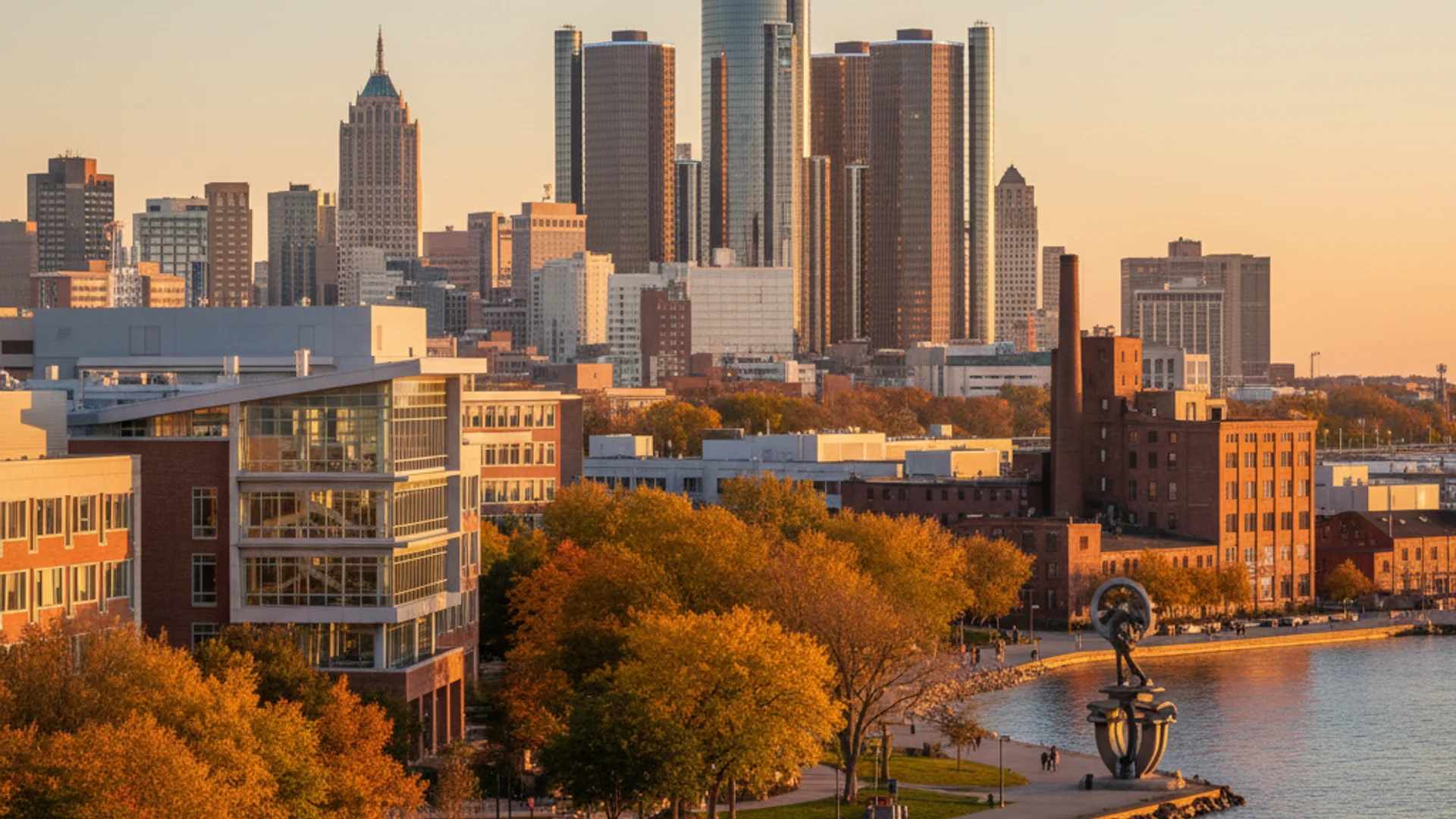
University campus in Michigan
Updated January 2026

Best Colleges for Web Development in Michigan 2026 Rankings

Explore 26 accredited web development degree programs in Michigan. Compare schools by graduation rate, salary outcomes, and tuition—from Macomb Community College to University of Michigan-Dearborn.

#1 ProgramU of Michigan-Dearborn
Avg Salary$99,830
Tuition From$6,240/yr
Job Growth+22%

Key Takeaways

Top 3 ranked: U of Michigan-Dearborn, College for Creative Studies, Michigan State

Based on graduation rates, program outcomes, and institutional quality

IPEDS 2023

Tuition ranges from $2,660 to $49,950/year

Macomb Community College offers the most affordable option at $6,240/yr

IPEDS 2023

Degree levels: 18 associate's, 3 master's programs available in Michigan

From community college pathways to advanced research degrees

IPEDS 2023

7 Michigan programs offer online or hybrid formats

Flexible scheduling for working professionals

IPEDS 2023

Michigan community college transfer can save 40-60% on total degree costs

18 associate's programs provide transfer pathways to bachelor's degrees

Education Commission of the States

Major employers: Ford, GM, Quicken Loans, Duo Security

Tech hubs in Detroit and Ann Arbor

Hakia Research 2026

Web Development programs available near 85+ cities across Michigan

Search by city to find programs within 200 miles of your location

IPEDS 2023

Updated February 2026

On This Page
$99,830
Is Web Development in Michigan Worth It?
Yes. Web Development degrees in Michigan deliver strong ROI—graduates earn $99,830 median salary with +22% job growth through 2032. In-state tuition averages $11,396/year.

Source: BLS OEWS May 2024

Best Web Development Degree Programs in Michigan

Bachelor's Web Development Programs in Michigan

6 programs$99,830 median salary92% avg grad rate
6
Programs
$99,830
Median Salary
$22,708/yr
Avg Tuition
92%
Avg Grad Rate

Program Landscape

Michigan ranks among the nation's top destinations for web development education, with 6 accredited bachelor's degree programs across 3 public and 3 private institutions. The highest-ranked programs are U of Michigan-Dearborn, College for Creative Studies, Michigan State, recognized for academic excellence, research opportunities, and strong industry connections.

Career Outcomes

Graduates from Michigan web development programs earn a median salary of $84,856—14% below the national average. The state's robust technology sector, anchored by the Detroit, Ann Arbor, Grand Rapids metropolitan areas, provides abundant internship and employment opportunities with companies including Ford, GM, Quicken Loans.

Costs & Value

Tuition ranges from $12,460 to $49,950 annually, with an average of $22,708/yr. Top programs maintain graduation rates above 92%, with the highest reaching 96%. Many programs hold ABET accreditation, the gold standard for computing education, ensuring curriculum meets rigorous industry standards.

Curriculum & Specializations

Students can choose from specializations including software engineering, cybersecurity, artificial intelligence, data science, and systems architecture. Strong industry partnerships provide access to co-op programs, capstone projects with real companies, and direct recruiting pipelines to Michigan's leading technology employers. For students seeking web development degrees in Michigan, these top-ranked web development schools offer the strongest combination of academic rigor and career preparation.

Show:

Earn your bachelor's in Web Development

(Sponsored)

Loading programs...

#1

University of Michigan-Dearborn

Public
Dearborn, MI
$14,544
Tuition
94%
Grad Rate
73.3
Score
Website
#2

College for Creative Studies

Private
Detroit, MI
$49,950
Tuition
92%
Grad Rate
59.1
Score
Website
#3

Michigan State University

Public
East Lansing, MI
$16,930
Tuition
87%
Grad Rate
53.2
Score
Website
#4

Siena Heights University

Private
Adrian, MI
$28,500
Tuition
96%
Grad Rate
48.4
Score
Website
#5

Central Michigan University

Public
Mount Pleasant, MI
$13,862
Tuition
44.2
Score
Website
#6

Baker College

Private
Owosso, MI
$12,460
Tuition
42.0
Score
Website

Complete Web Development Program Rankings in Michigan

Best Associate's Web Development Programs in Michigan

### Program Landscape Michigan offers **18 accredited** associate's degree programs in web development, providing an affordable entry point into the technology field. The top-ranked programs include **Macomb Community College**, **Washtenaw Community College**, **Wayne County Community Co...**, which combine rigorous technical curriculum with practical skills training. ### Costs & Value Community colleges in Michigan offer these two-year programs at an average cost of **$6,098/yr**—significantly less than four-year university tuition. Students completing associate's degrees can pursue entry-level technical positions and transfer opportunities, with entry-level salaries averaging **$54,907** in Michigan. ### Career Pathways Many programs feature guaranteed transfer agreements with Michigan's public universities, allowing students to complete their first two years at reduced cost before transferring to complete a bachelor's degree. The Detroit, Ann Arbor, Grand Rapids areas offer particularly strong job markets for associate's degree holders, with employers like Ford, GM, Quicken Loans hiring for technical support, junior development, and IT specialist positions. ### Curriculum & Specializations Programs typically include coursework in programming fundamentals, database management, networking basics, and software development. Among web development schools in Michigan, these associate's programs offer the best value for students beginning their web development degrees in Michigan.

  1. #1. Macomb Community College

    Location: Warren, MI | Type: Public | Tuition: $6,240/year | Score: 63.5

  2. #2. Washtenaw Community College

    Location: Ann Arbor, MI | Type: Public | Tuition: $4,224/year | Score: 59.1

  3. #3. Wayne County Community College District

    Location: Detroit, MI | Type: Public | Tuition: $2,909/year | Score: 53.3

  4. #4. Schoolcraft Community College District

    Location: Livonia, MI | Type: Public | Tuition: $5,044/year | Score: 50.8

  5. #5. Grand Rapids Community College

    Location: Grand Rapids, MI | Type: Public | Tuition: $7,590/year | Score: 50.2

  6. #6. Oakland Community College

    Location: Auburn Hills, MI | Type: Public | Tuition: $5,340/year | Score: 48.6

  7. #7. Henry Ford College

    Location: Dearborn, MI | Type: Public | Tuition: $4,656/year | Score: 51.8

  8. #8. Mott Community College

    Location: Flint, MI | Type: Public | Tuition: $4,646/year | Score: 42.7

  9. #9. Delta College

    Location: University Center, MI | Type: Public | Tuition: $6,420/year | Score: 46.1

  10. #10. Lake Michigan College

    Location: Benton Harbor, MI | Type: Public | Tuition: $7,500/year | Score: 45.2

  11. #11. Kalamazoo Valley Community College

    Location: Kalamazoo, MI | Type: Public | Tuition: $6,420/year | Score: 37.6

  12. #12. Bay Mills Community College

    Location: Brimley, MI | Type: Public | Tuition: $2,660/year | Score: 35.6

  13. #13. St Clair County Community College

    Location: Port Huron, MI | Type: Public | Tuition: $8,506/year | Score: 38.4

  14. #14. Muskegon Community College

    Location: Muskegon, MI | Type: Public | Tuition: $9,720/year | Score: 38.4

  15. #15. Jackson College

    Location: Jackson, MI | Type: Public | Tuition: $6,270/year | Score: 43.2

  16. #16. Northwestern Michigan College

    Location: Traverse City, MI | Type: Public | Tuition: $8,874/year | Score: 44.3

  17. #17. Gogebic Community College

    Location: Ironwood, MI | Type: Public | Tuition: $6,107/year | Score: 35.6

  18. #18. Monroe County Community College

    Location: Monroe, MI | Type: Public | Tuition: $6,638/year | Score: 34.2

Online Associate's Web Development Programs in Michigan

### Online Program Options Michigan's community colleges offer 5 online associate's web development programs, providing flexible pathways for students balancing education with work or family responsibilities. Top-ranked online programs include **Washtenaw Community College**, **Kalamazoo Valley Communit...**, **St Clair County Community...**, all regionally accredited and recognized by Michigan employers. ### Costs & Employer Recognition Online associate's programs average **$6,826/yr**—often comparable to or less than on-campus tuition. Michigan-based employers including Ford, GM, Quicken Loans value online credentials from accredited institutions, recognizing that program quality matters more than delivery format. The Detroit, Ann Arbor, Grand Rapids job market actively recruits graduates from online programs. ### Program Format These programs feature asynchronous coursework for maximum flexibility, with some offering synchronous sessions for collaborative learning. Students can typically complete **60 credit hours** in 2 years while working full-time. ### Technology & Flexibility Technology requirements include reliable internet access and a modern computer. Programs provide virtual labs, online tutoring, career services, and networking opportunities. Many offer start dates throughout the year and accelerated course formats for motivated students. Graduates earn the same degree as on-campus students, with no distinction on transcripts or diplomas. For students pursuing online web development degrees in Michigan, these accredited web development schools offer the flexibility and quality that today's learners demand.

  • Washtenaw Community College - Ann Arbor, MI - Tuition: $4,224/year
  • Kalamazoo Valley Community College - Kalamazoo, MI - Tuition: $6,420/year
  • St Clair County Community College - Port Huron, MI - Tuition: $8,506/year
  • Northwestern Michigan College - Traverse City, MI - Tuition: $8,874/year
  • Gogebic Community College - Ironwood, MI - Tuition: $6,107/year

Best Bachelor's Web Development Programs in Michigan

### Program Landscape Michigan ranks among the nation's top destinations for web development education, with **6 accredited** bachelor's degree programs across **3 public** and **3 private** institutions. The highest-ranked programs are **U of Michigan-Dearborn**, **College for Creative Studies**, **Michigan State**, recognized for academic excellence, research opportunities, and strong industry connections. ### Career Outcomes Graduates from Michigan web development programs earn a median salary of **$84,856**—14% below the national average. The state's robust technology sector, anchored by the Detroit, Ann Arbor, Grand Rapids metropolitan areas, provides abundant internship and employment opportunities with companies including Ford, GM, Quicken Loans. ### Costs & Value Tuition ranges from **$12,460** to **$49,950** annually, with an average of **$22,708/yr**. Top programs maintain graduation rates above **92%**, with the highest reaching **96%**. Many programs hold ABET accreditation, the gold standard for computing education, ensuring curriculum meets rigorous industry standards. ### Curriculum & Specializations Students can choose from specializations including software engineering, cybersecurity, artificial intelligence, data science, and systems architecture. Strong industry partnerships provide access to co-op programs, capstone projects with real companies, and direct recruiting pipelines to Michigan's leading technology employers. For students seeking web development degrees in Michigan, these top-ranked web development schools offer the strongest combination of academic rigor and career preparation.

  1. #1. University of Michigan-Dearborn

    Location: Dearborn, MI | Type: Public | Tuition: $14,544/year | Graduation Rate: 94% | Score: 73.3

  2. #2. College for Creative Studies

    Location: Detroit, MI | Type: Private | Tuition: $49,950/year | Graduation Rate: 92% | Score: 59.1

  3. #3. Michigan State University

    Location: East Lansing, MI | Type: Public | Tuition: $16,930/year | Graduation Rate: 87% | Score: 53.2

  4. #4. Siena Heights University

    Location: Adrian, MI | Type: Private | Tuition: $28,500/year | Graduation Rate: 96% | Score: 48.4

  5. #5. Central Michigan University

    Location: Mount Pleasant, MI | Type: Public | Tuition: $13,862/year | Score: 44.2

  6. #6. Baker College

    Location: Owosso, MI | Type: Private | Tuition: $12,460/year | Score: 42.0

Online Bachelor's Web Development Programs in Michigan

### Online Program Options 2 Michigan institutions offer bachelor's web development degrees with online or hybrid options, enabling students to earn accredited degrees while maintaining professional or personal commitments. Top-ranked online programs include **Central Michigan**, **Siena Heights**, all regionally accredited and recognized by Michigan employers. ### Costs & Employer Recognition Online bachelor's programs average **$21,181/yr**—often comparable to or less than on-campus tuition. Michigan-based employers including Ford, GM, Quicken Loans value online credentials from accredited institutions, recognizing that program quality matters more than delivery format. The Detroit, Ann Arbor, Grand Rapids job market actively recruits graduates from online programs. ### Program Format These programs feature asynchronous coursework for maximum flexibility, with some offering synchronous sessions for collaborative learning. Students can typically complete **120 credit hours** in 4 years while working full-time. ### Technology & Flexibility Technology requirements include reliable internet access and a modern computer. Programs provide virtual labs, online tutoring, career services, and networking opportunities. Many offer start dates throughout the year and accelerated course formats for motivated students. Graduates earn the same degree as on-campus students, with no distinction on transcripts or diplomas. For students pursuing online web development degrees in Michigan, these accredited web development schools offer the flexibility and quality that today's learners demand.

  • Central Michigan University - Mount Pleasant, MI - Tuition: $13,862/year
  • Siena Heights University - Adrian, MI - Tuition: $28,500/year

Best Master's Web Development Programs in Michigan

### Program Landscape Michigan offers **3** master's degree programs in web development, designed for professionals seeking to advance into senior engineering, technical leadership, and specialized roles. The top programs—**U of Michigan-Dearborn**, **U of Detroit Mercy**, **U of Michigan-Ann Arbor**—combine advanced technical training with research opportunities and leadership development. ### Career Outcomes Master's graduates in Michigan earn a median salary of **$99,830**, approximately **20-30% higher** than bachelor's degree holders. The concentration of technology companies in Detroit, Ann Arbor, Grand Rapids creates strong demand for graduate-level talent, with Ford, GM, Quicken Loans actively recruiting from these programs. ### Costs & Value Program formats include traditional full-time study (typically 2 years), part-time options for working professionals (2-3 years), and accelerated tracks. Tuition averages **$21,607/yr**, with many employers offering tuition reimbursement for graduate education. Some programs offer thesis and non-thesis tracks, allowing students to focus on research or professional development based on their career goals. ### Curriculum & Specializations Curriculum covers advanced topics including machine learning, distributed systems, software architecture, and technical management. Many programs include practicum experiences, industry capstone projects, or consulting engagements that provide real-world application of advanced concepts. Among Michigan's web development schools at the graduate level, these programs stand out for both academic quality and career outcomes.

  1. #1. University of Michigan-Dearborn

    Location: Dearborn, MI | Type: Public | Tuition: $14,544/year | Graduation Rate: 94% | Score: 70.2

  2. #2. University of Detroit Mercy

    Location: Detroit, MI | Type: Private | Tuition: $32,300/year | Score: 52.0

  3. #3. University of Michigan-Ann Arbor

    Location: Ann Arbor, MI | Type: Public | Tuition: $17,977/year | Graduation Rate: 92% | Score: 58.8

Web Development Tuition in Michigan

MetricValue
Average in-state tuition$11,396/year
Average out-of-state tuition$28,490/year
Community college tuition$2,849/year
4-year savings for residents$68,376
2+2 transfer pathway savings$17,094

Source: IPEDS 2023

Web Development Financial Aid & Scholarships in Michigan

State Aid Programs

Michigan provides financial aid for web development students through state programs, federal assistance, and institutional awards that can substantially reduce educational costs. The Michigan Competitive Scholarship provides need-based aid for Michigan residents attending in-state institutions, while the Tuition Incentive Program helps qualifying students cover tuition at community colleges and universities. Federal Pell Grants offer up to $7,395 annually based on financial need.

Key Programs & Amounts

Community college certificate programs offer the most affordable pathway, with Lake Michigan College and Northwestern Michigan College charging significantly less than university tuition while providing workforce-ready credentials. Central Michigan University's 15-credit Web Development Certificate requires only a portion of full tuition costs, making it accessible for students already enrolled in degree programs (CMU Financial)).

Institutional Scholarships

University of Michigan and Michigan State offer substantial institutional aid for undergraduate computer science students, with need-based grants and merit scholarships reducing net cost for qualified applicants. Graduate assistantships at research universities provide tuition waivers plus stipends for students pursuing advanced degrees. Many Michigan employers including automotive companies, healthcare systems, and technology firms offer tuition reimbursement for employees pursuing web development credentials—particularly valuable given the state's concentration of major employers. FAFSA completion is required for most financial aid programs.

Calculate Your Web Development Degree ROI in Michigan

Use our interactive ROI calculator to estimate your return on investment for a web development degree in Michigan. Enter your expected tuition costs, financial aid, and career goals to see projected payback periods and lifetime earnings. The calculator uses current salary data from BLS and tuition data from IPEDS to provide accurate estimates.

Web Development Degree ROI Calculator
Estimate your return on investment for a web development degree
$

Leave blank to use average cost for selected program type

20 years
10 years20 years30 years
20-Year ROI

+435%

Net gain divided by total investment. ROI above 200% is considered excellent for education investments.

Net Gain

$804,358

Your additional lifetime earnings with this degree vs. working without one, minus the total investment.

Break-Even

7 years

Years until your cumulative earnings exceed total investment. Shorter programs often break even faster due to lower opportunity cost.

COL-Adjusted Salary

$111,765

Your starting salary adjusted for local cost of living. This shows real purchasing power compared to a $100K national baseline.

Why does break-even change with program type? Your "total investment" includes both tuition AND opportunity cost (foregone earnings while in school). A 4-year full-time public university (in-state) means 4 years of not earning a salary ($140,000 in opportunity cost). Shorter full-time programs may have higher tuition but lower total investment because you return to the workforce sooner.

Detailed Breakdown
How we calculate your degree ROI using real salary data
Total Investment$185,000

Tuition plus opportunity cost (earnings you miss while in school)

Program Cost (Tuition)$45,000

Direct cost of the degree program

Opportunity Cost$140,000

4 years × $35K/year foregone salary while studying full-time

20-Year Earnings (with degree)$1,839,765

Projected career earnings starting after graduation, with salary growth

20-Year Earnings (without degree)$850,408

What you'd earn working at $35K/year with 2% annual growth

Starting Salary (Detroit, MI)$95,000

Median salary for this role in your selected location (BLS 2024)

Annualized Return2.9%

Your investment's compound annual growth rate (similar to stock market returns)

Data sources: BLS OEWS May 2024, IPEDS 2023. Calculations use median salaries, 3% discount rate, and assume salary growth declines from 6% to 2% over career. Individual results will vary. | Powered by Hakia.com

Career Paths

Design and develop software applications and systems

Median Salary:$112,808

Analyze complex datasets and build predictive models

Median Salary:$93,840

Protect computer networks from cyber threats

Median Salary:$104,822

Manage cloud infrastructure and deployment pipelines

Median Salary:$110,811

Design and maintain cloud computing infrastructure

Median Salary:$107,816

Build and deploy machine learning models

Median Salary:$125,786
Web Development Salaries by Metro Area

Median annual salary in Michigan metro areas

Hakia.com
View data table
Categoryvalue
Detroit$110K
Ann Arbor$105K
Grand Rapids$100K

Source: BLS OEWS May 2024

Hakia.com

Web Development Jobs in Michigan: Top Employers Hiring

Find web development jobs in Michigan. These major employers across Michigan metro areas are actively hiring web development graduates. Click employer names to view current job openings.

Web Development Jobs in Detroit Metro

MI

Detroit is the center of automotive innovation, leading in EV development and autonomous vehicle technology.

Nearby cities: Dearborn, Troy, Warren, Auburn Hills, Southfield

General Motors
Automotive/Mobility Tech
Ford Motor Company
Automotive/EV Tech
Stellantis
Automotive/Mobility
Waymo
Autonomous Vehicles
Cruise
Autonomous Vehicles
Rivian
Electric Vehicles
StockX
E-commerce
Microsoft
Enterprise Software

Web Development Jobs in Ann Arbor

MI

Ann Arbor is anchored by University of Michigan, with strong tech research and startup ecosystem.

Nearby cities: Ypsilanti, Canton, Plymouth, Novi

Google
Search/Cloud/AI
Amazon
E-commerce/Cloud
Domino's
Restaurant Tech
Thomson Reuters
Legal/Financial Tech
Barracuda Networks
Cybersecurity

How to Apply to Web Development Programs in Michigan

1

Research Program Requirements

Review admission requirements for web development programs at your target schools. Requirements vary by institution and degree level.

2

Prepare Application Materials

Gather transcripts, test scores (SAT/ACT for undergrad, GRE for graduate), letters of recommendation, and personal statement.

3

Apply for Financial Aid

Complete the FAFSA by priority deadlines.

4

Submit Applications Before Deadlines

Apply early for priority consideration. Early action/decision deadlines are typically October-November; regular deadlines December-January.

5

Complete Enrollment Steps

Accept your offer, submit enrollment deposit, complete orientation requirements, and register for classes.

Web Development Transfer Pathways in Michigan

State Transfer System

Michigan's community college system provides affordable pathways to web development education through transfer agreements with four-year universities and stackable credentials enabling career entry at multiple points. The Michigan Transfer Agreement (MTA) facilitates credit transfer between participating institutions, enabling students to complete general education requirements at community colleges before transferring to university computer science or web development programs.

How Transfers Work

Lake Michigan College's Web Development certificate can serve as a standalone credential or complement to degree programs, providing flexibility for students pursuing multiple educational goals (LMC Transfer). Students can enter the workforce with certificate credentials while continuing toward associate or bachelor's degrees. Northwestern Michigan College's progressive certificate structure similarly enables students to stack credentials over time.

Transfer Planning Tips

Central Michigan University's Web Development Certificate is available to current students or transfer applicants, enabling community college graduates to add specialized credentials to their education (CMU Transfer)). Transfer students targeting University of Michigan or Michigan State computer science programs should complete calculus, introductory programming, and data structures courses with strong grades. Academic advisors at both community colleges and universities can create customized transfer plans maximizing credit application and ensuring prerequisite completion for competitive program admission.

Why Study Web Development in Michigan?

Industry & Workforce

Michigan offers diverse pathways to web development careers through major research universities, regional institutions, and community college certificate programs serving students across the state. Michigan State University, University of Michigan, and Western Michigan University provide comprehensive computer science education including web development coursework, while community colleges offer focused certificate programs for rapid entry into the workforce (MI Web Development Schools). The state's automotive industry transformation toward connected vehicles and digital services creates unique web development opportunities combining technology with Michigan's manufacturing heritage.

Salary Outlook

Central Michigan University offers a Web Development Undergraduate Certificate designed for anyone looking to build websites and web applications, providing skills to create functional websites by combining front-end and back-end technologies (CMU Web Dev)). The 15-credit program can be completed part-time with upcoming start dates in Fall 2025 and Spring 2026. Northwestern Michigan College combines Computer Information Technology and Visual Communication coursework into progressive certificates in web development. Lake Michigan College's certificate program develops skills in popular web design and programming languages as a standalone credential or complement to degree programs.

Regional Tech Hubs

The Detroit User Experience meetup, Ann Arbor Web Developers group, and Lansing Area JavaScript Meetup demonstrate Michigan's active web development community providing networking and professional development opportunities for students and professionals.

Web Development Job Market in Michigan

Employment Outlook

Michigan's web development job market reflects the state's economic diversification from manufacturing toward technology, with strong demand across automotive, financial services, and healthcare sectors. The mean annual wage for software developers in Michigan is $101,800, providing competitive compensation relative to the state's moderate cost of living (BLS Michigan). Web Developer salaries in Michigan average $89,601 annually, with entry-level positions starting around $72,227 and senior developers earning up to $106,727.

Salaries by Metro

Detroit's salary data shows Web Developers earning approximately $90,993 annually, with Ann Arbor slightly higher at $91,467 reflecting its concentration of technology employers and university influence (Salary.com Michigan). Front End Web Developers earn an average of $88,509 while entry-level developers start at $82,060. Senior Web Developers command $116,069 on average, with top earners reaching $131,306.

High-Growth Sectors

Top paying employers include Amazon Web Services, Ford Motor Company, and Ally Financial, reflecting the diversity of industries requiring web development talent (Michigan Employers). The Media & Communication sector leads compensation at $89,902 median, followed by Information Technology at $86,148. Degree completions in web development near Downtown Detroit have grown over the past five years, indicating increasing interest in the field.

Web Development Curriculum & Specializations in Michigan

Core Requirements

Michigan web development curricula range from focused certificate programs teaching specific technologies to comprehensive computer science degrees providing theoretical foundations alongside practical skills. Central Michigan University's Web Development Certificate covers front-end and back-end technologies, equipping students to create functional websites and web applications (CMU Curriculum)). The 15-credit program can be completed alongside other studies, adding marketable credentials to any degree path.

Degree Pathways

Lake Michigan College's certificate develops skills in popular web design and programming languages, preparing students for immediate workforce entry or continued education (LMC Curriculum). Northwestern Michigan College combines Computer Information Technology fundamentals with Visual Communication courses addressing both technical implementation and design principles through three progressive certificates.

Specialization Tracks

The College for Creative Studies in Detroit, with approximately 1,400 students, offers graphic design programs including entry into interactive media for web and smartphone applications—emphasizing the visual and user experience aspects of web development (CCS Detroit). Michigan's research universities including University of Michigan and Michigan State integrate web development concepts within broader computer science curricula covering software engineering, databases, and user interface design. Programs increasingly incorporate modern frameworks including React, Angular, Vue.js, Node.js, and full-stack development practices reflecting industry requirements.

Online vs On-Campus Web Development Programs in Michigan

Online Program Growth

Michigan institutions provide diverse delivery options for web development education, accommodating students who prefer in-person instruction, fully online learning, or hybrid approaches. Central Michigan University's Web Development Certificate can be completed part-time on campus, with flexible scheduling accommodating working students (CMU Format)). Online options through CMU Global Campus extend access to students throughout Michigan and beyond.

Accredited Online Options

Franklin University offers online web development programs accessible to Michigan students, providing flexibility for those unable to attend in-person classes (Franklin Online). Many community colleges including Lake Michigan College and Northwestern Michigan College offer hybrid formats combining online coursework with hands-on laboratory sessions for practical skill development.

Choosing Your Format

On-campus programs at University of Michigan and Michigan State provide access to computer labs, faculty mentorship, and collaborative learning environments that accelerate skill development. Campus-based study facilitates networking through career fairs, hackathons, and the active meetup community including Detroit User Experience and Ann Arbor Web Developers groups. AGI Training offers web design certificate programs in Michigan with both in-person and online instructor-led options (AGI Michigan). Students should evaluate career goals, learning preferences, and schedule constraints when selecting delivery format—practical portfolio development remains essential regardless of modality.

Web Development by City in Michigan

Detroit and Ann Arbor anchor Michigan's web development employment, with distinct characteristics creating varied opportunities across the region. Detroit's downtown revival has attracted technology companies including Rocket Companies (headquarters employing 20,000 team members), creating a concentration of web development positions within walking distance (Detroit Tech Hub). The city's lower cost of living compared to coastal tech hubs provides excellent value for web developers earning competitive salaries.

Ann Arbor combines University of Michigan's research environment with a vibrant technology scene, offering web development positions at companies including WebFX and numerous startups. The city's college-town atmosphere attracts talent while proximity to Detroit expands employment options. Salary data shows Ann Arbor web developers earning $91,467 on average, slightly above Detroit's $90,993 (Ann Arbor Salary).

Grand Rapids, Michigan's second-largest city, offers growing technology opportunities with lower living costs than Detroit or Ann Arbor. Cornerstone University in Grand Rapids hires web developers at $50,000 to $53,000. Troy, Bloomfield Hills, and other Oakland County communities host corporate offices requiring web development talent. Lansing's state government and Michigan State University create additional opportunities. Remote work policies have expanded geographic flexibility, enabling web developers throughout Michigan to access opportunities regardless of physical location.

Compare Online Web Development Programs in Michigan

View tuition costs, program formats & enrollment info

Find Web Development Programs Near You in Michigan

Search by city to find accredited web development programs ranked by our state methodology.

Web Development Programs by City in Michigan

Web Development Programs Near Detroit, MI

Detroit's tech scene is anchored by major automotive software development—Ford's mobility initiatives and GM's connected vehicle platforms drive demand for full-stack developers and cloud engineers. The city hosts a growing startup ecosystem in Corktown and downtown, with digital agencies and e-commerce platforms capitalizing on post-industrial revitalization, plus Wayne State University offers relevant computer science programs.

Detroit is located in Wayne County, Michigan.

Associate's Web Development Programs Near Detroit
  1. Macomb Community College (Public) — State Rank #1, 12 mi from Detroit. Tuition: $6,240/year.
  2. Washtenaw Community College (Public) — State Rank #2, 29.5 mi from Detroit. Tuition: $4,224/year.
  3. Wayne County Community College District (Public) — State Rank #3, in Detroit. Tuition: $2,909/year.
Bachelor's Web Development Programs Near Detroit
  1. University of Michigan-Ann Arbor (Public) — State Rank #1, 32.8 mi from Detroit. Tuition: $17,977/year. Graduation rate: 92%.
  2. Michigan State University (Public) — State Rank #2, 74.4 mi from Detroit. Tuition: $16,930/year. Graduation rate: 87%.
  3. Wayne State University (Public) — State Rank #3, in Detroit. Tuition: $13,660/year. Graduation rate: 89%.
Master's Web Development Programs Near Detroit
  1. University of Michigan-Ann Arbor (Public) — State Rank #1, 32.8 mi from Detroit. Tuition: $17,977/year. Graduation rate: 92%.
  2. Wayne State University (Public) — State Rank #2, in Detroit. Tuition: $13,660/year. Graduation rate: 89%.
  3. Michigan State University (Public) — State Rank #3, 74.4 mi from Detroit. Tuition: $16,930/year. Graduation rate: 87%.
Doctoral Web Development Programs Near Detroit
  1. Michigan State University (Public) — State Rank #1, 74.4 mi from Detroit. Tuition: $16,930/year. Graduation rate: 87%.
  2. Wayne State University (Public) — State Rank #2, in Detroit. Tuition: $13,660/year. Graduation rate: 89%.

Web Development Programs Near Grand Rapids, MI

Grand Rapids is home to a robust digital agency cluster and furniture e-commerce sector, with companies like Steelcase and Herman Miller requiring sophisticated web applications for B2B operations. Calvin University and Aquinas College provide local talent pipelines, while the city's lower cost of living compared to coastal tech hubs attracts remote-first web development teams.

Grand Rapids is located in Kent County, Michigan.

Associate's Web Development Programs Near Grand Rapids
  1. Macomb Community College (Public) — State Rank #1, 137.5 mi from Grand Rapids. Tuition: $6,240/year.
  2. Washtenaw Community College (Public) — State Rank #2, 110 mi from Grand Rapids. Tuition: $4,224/year.
  3. Wayne County Community College District (Public) — State Rank #3, 137.1 mi from Grand Rapids. Tuition: $2,909/year.
Bachelor's Web Development Programs Near Grand Rapids
  1. University of Michigan-Ann Arbor (Public) — State Rank #1, 106.4 mi from Grand Rapids. Tuition: $17,977/year. Graduation rate: 92%.
  2. Michigan State University (Public) — State Rank #2, 59.6 mi from Grand Rapids. Tuition: $16,930/year. Graduation rate: 87%.
  3. Wayne State University (Public) — State Rank #3, 135.7 mi from Grand Rapids. Tuition: $13,660/year. Graduation rate: 89%.
Master's Web Development Programs Near Grand Rapids
  1. University of Michigan-Ann Arbor (Public) — State Rank #1, 106.4 mi from Grand Rapids. Tuition: $17,977/year. Graduation rate: 92%.
  2. Wayne State University (Public) — State Rank #2, 135.7 mi from Grand Rapids. Tuition: $13,660/year. Graduation rate: 89%.
  3. Michigan State University (Public) — State Rank #3, 59.6 mi from Grand Rapids. Tuition: $16,930/year. Graduation rate: 87%.
Doctoral Web Development Programs Near Grand Rapids
  1. Michigan State University (Public) — State Rank #1, 59.6 mi from Grand Rapids. Tuition: $16,930/year. Graduation rate: 87%.
  2. Wayne State University (Public) — State Rank #2, 135.7 mi from Grand Rapids. Tuition: $13,660/year. Graduation rate: 89%.

Web Development Programs Near Flint, MI

Flint is a smaller, post-industrial city best suited for remote web development work or freelancing, though University of Michigan–Flint offers computer science coursework locally. Developers seeking affordable living costs may base themselves here while contracting for employers in Detroit or Grand Rapids, roughly 1.5 hours away.

Flint is located in Genesee County, Michigan.

Associate's Web Development Programs Near Flint
  1. Macomb Community College (Public) — State Rank #1, 51.1 mi from Flint. Tuition: $6,240/year.
  2. Washtenaw Community College (Public) — State Rank #2, 51.2 mi from Flint. Tuition: $4,224/year.
  3. Wayne County Community College District (Public) — State Rank #3, 57.6 mi from Flint. Tuition: $2,909/year.
Bachelor's Web Development Programs Near Flint
  1. University of Michigan-Ann Arbor (Public) — State Rank #1, 50.1 mi from Flint. Tuition: $17,977/year. Graduation rate: 92%.
  2. Michigan State University (Public) — State Rank #2, 42.8 mi from Flint. Tuition: $16,930/year. Graduation rate: 87%.
  3. Wayne State University (Public) — State Rank #3, 55.4 mi from Flint. Tuition: $13,660/year. Graduation rate: 89%.
Master's Web Development Programs Near Flint
  1. University of Michigan-Ann Arbor (Public) — State Rank #1, 50.1 mi from Flint. Tuition: $17,977/year. Graduation rate: 92%.
  2. Wayne State University (Public) — State Rank #2, 55.4 mi from Flint. Tuition: $13,660/year. Graduation rate: 89%.
  3. Michigan State University (Public) — State Rank #3, 42.8 mi from Flint. Tuition: $16,930/year. Graduation rate: 87%.
Doctoral Web Development Programs Near Flint
  1. Michigan State University (Public) — State Rank #1, 42.8 mi from Flint. Tuition: $16,930/year. Graduation rate: 87%.
  2. Wayne State University (Public) — State Rank #2, 55.4 mi from Flint. Tuition: $13,660/year. Graduation rate: 89%.

Web Development Programs Near Southfield, MI

Southfield is a corporate hub just outside Detroit with significant demand for enterprise web developers and SaaS engineers supporting financial services, healthcare IT, and automotive suppliers headquartered in the area. Major companies like Ally Financial and Blue Cross Blue Shield of Michigan drive job opportunities for full-stack developers, with Lawrence Technological University nearby offering specialized tech programs.

Southfield is located in Oakland County, Michigan.

Associate's Web Development Programs Near Southfield
  1. Macomb Community College (Public) — State Rank #1, 14.3 mi from Southfield. Tuition: $6,240/year.
  2. Washtenaw Community College (Public) — State Rank #2, 25.6 mi from Southfield. Tuition: $4,224/year.
  3. Wayne County Community College District (Public) — State Rank #3, 14 mi from Southfield. Tuition: $2,909/year.
Bachelor's Web Development Programs Near Southfield
  1. University of Michigan-Ann Arbor (Public) — State Rank #1, 28.1 mi from Southfield. Tuition: $17,977/year. Graduation rate: 92%.
  2. Michigan State University (Public) — State Rank #2, 64.9 mi from Southfield. Tuition: $16,930/year. Graduation rate: 87%.
  3. Wayne State University (Public) — State Rank #3, 12 mi from Southfield. Tuition: $13,660/year. Graduation rate: 89%.
Master's Web Development Programs Near Southfield
  1. University of Michigan-Ann Arbor (Public) — State Rank #1, 28.1 mi from Southfield. Tuition: $17,977/year. Graduation rate: 92%.
  2. Wayne State University (Public) — State Rank #2, 12 mi from Southfield. Tuition: $13,660/year. Graduation rate: 89%.
  3. Michigan State University (Public) — State Rank #3, 64.9 mi from Southfield. Tuition: $16,930/year. Graduation rate: 87%.
Doctoral Web Development Programs Near Southfield
  1. Michigan State University (Public) — State Rank #1, 64.9 mi from Southfield. Tuition: $16,930/year. Graduation rate: 87%.
  2. Wayne State University (Public) — State Rank #2, 12 mi from Southfield. Tuition: $13,660/year. Graduation rate: 89%.

Web Development Programs Near Kalamazoo, MI

Kalamazoo's economy centers on Pfizer's massive operations and Western Michigan University's engineering programs, creating demand for healthcare software developers and web engineers supporting biotech applications. The city also hosts growing e-commerce and logistics tech companies, making it a strong alternative to saturated West Coast markets for mid-level developers.

Kalamazoo is located in Kalamazoo County, Michigan.

Associate's Web Development Programs Near Kalamazoo
  1. Macomb Community College (Public) — State Rank #1, 135.8 mi from Kalamazoo. Tuition: $6,240/year.
  2. Washtenaw Community College (Public) — State Rank #2, 99.6 mi from Kalamazoo. Tuition: $4,224/year.
  3. Wayne County Community College District (Public) — State Rank #3, 130.8 mi from Kalamazoo. Tuition: $2,909/year.
Bachelor's Web Development Programs Near Kalamazoo
  1. University of Michigan-Ann Arbor (Public) — State Rank #1, 96 mi from Kalamazoo. Tuition: $17,977/year. Graduation rate: 92%.
  2. Michigan State University (Public) — State Rank #2, 66.2 mi from Kalamazoo. Tuition: $16,930/year. Graduation rate: 87%.
  3. Wayne State University (Public) — State Rank #3, 130.1 mi from Kalamazoo. Tuition: $13,660/year. Graduation rate: 89%.
Master's Web Development Programs Near Kalamazoo
  1. University of Michigan-Ann Arbor (Public) — State Rank #1, 96 mi from Kalamazoo. Tuition: $17,977/year. Graduation rate: 92%.
  2. Wayne State University (Public) — State Rank #2, 130.1 mi from Kalamazoo. Tuition: $13,660/year. Graduation rate: 89%.
  3. Michigan State University (Public) — State Rank #3, 66.2 mi from Kalamazoo. Tuition: $16,930/year. Graduation rate: 87%.
Doctoral Web Development Programs Near Kalamazoo
  1. Michigan State University (Public) — State Rank #1, 66.2 mi from Kalamazoo. Tuition: $16,930/year. Graduation rate: 87%.
  2. Wayne State University (Public) — State Rank #2, 130.1 mi from Kalamazoo. Tuition: $13,660/year. Graduation rate: 89%.

Web Development Programs Near Troy, MI

Troy is an Oakland County tech corridor packed with systems integrators, IT consulting firms, and Fortune 500 corporate offices requiring custom web application development and enterprise software support. The proximity to major employers like Beaumont Health and automotive suppliers, combined with no state income tax advantages for some roles, makes it attractive for experienced front-end and back-end engineers.

Troy is located in Oakland County, Michigan.

Associate's Web Development Programs Near Troy
  1. Macomb Community College (Public) — State Rank #1, 9.4 mi from Troy. Tuition: $6,240/year.
  2. Washtenaw Community College (Public) — State Rank #2, 33.6 mi from Troy. Tuition: $4,224/year.
  3. Wayne County Community College District (Public) — State Rank #3, 16.6 mi from Troy. Tuition: $2,909/year.
Bachelor's Web Development Programs Near Troy
  1. University of Michigan-Ann Arbor (Public) — State Rank #1, 35.9 mi from Troy. Tuition: $17,977/year. Graduation rate: 92%.
  2. Michigan State University (Public) — State Rank #2, 68.9 mi from Troy. Tuition: $16,930/year. Graduation rate: 87%.
  3. Wayne State University (Public) — State Rank #3, 14.3 mi from Troy. Tuition: $13,660/year. Graduation rate: 89%.
Master's Web Development Programs Near Troy
  1. University of Michigan-Ann Arbor (Public) — State Rank #1, 35.9 mi from Troy. Tuition: $17,977/year. Graduation rate: 92%.
  2. Wayne State University (Public) — State Rank #2, 14.3 mi from Troy. Tuition: $13,660/year. Graduation rate: 89%.
  3. Michigan State University (Public) — State Rank #3, 68.9 mi from Troy. Tuition: $16,930/year. Graduation rate: 87%.
Doctoral Web Development Programs Near Troy
  1. Michigan State University (Public) — State Rank #1, 68.9 mi from Troy. Tuition: $16,930/year. Graduation rate: 87%.
  2. Wayne State University (Public) — State Rank #2, 14.3 mi from Troy. Tuition: $13,660/year. Graduation rate: 89%.

Web Development Programs Near Ann Arbor, MI

Ann Arbor is Michigan's top destination for web developers, hosting the University of Michigan's top-tier computer science program and a thriving startup ecosystem focused on edtech, healthtech, and SaaS applications. Major employers like Google, Facebook, and Amazon maintain significant engineering operations here, alongside venture-backed companies like Duo Security and Bazaarvoice.

Ann Arbor is located in Washtenaw County, Michigan.

Associate's Web Development Programs Near Ann Arbor
  1. Macomb Community College (Public) — State Rank #1, 40.1 mi from Ann Arbor. Tuition: $6,240/year.
  2. Washtenaw Community College (Public) — State Rank #2, in Ann Arbor. Tuition: $4,224/year.
  3. Wayne County Community College District (Public) — State Rank #3, 32.6 mi from Ann Arbor. Tuition: $2,909/year.
Bachelor's Web Development Programs Near Ann Arbor
  1. University of Michigan-Ann Arbor (Public) — State Rank #1, in Ann Arbor. Tuition: $17,977/year. Graduation rate: 92%.
  2. Michigan State University (Public) — State Rank #2, 51.4 mi from Ann Arbor. Tuition: $16,930/year. Graduation rate: 87%.
  3. Wayne State University (Public) — State Rank #3, 32.2 mi from Ann Arbor. Tuition: $13,660/year. Graduation rate: 89%.
Master's Web Development Programs Near Ann Arbor
  1. University of Michigan-Ann Arbor (Public) — State Rank #1, in Ann Arbor. Tuition: $17,977/year. Graduation rate: 92%.
  2. Wayne State University (Public) — State Rank #2, 32.2 mi from Ann Arbor. Tuition: $13,660/year. Graduation rate: 89%.
  3. Michigan State University (Public) — State Rank #3, 51.4 mi from Ann Arbor. Tuition: $16,930/year. Graduation rate: 87%.
Doctoral Web Development Programs Near Ann Arbor
  1. Michigan State University (Public) — State Rank #1, 51.4 mi from Ann Arbor. Tuition: $16,930/year. Graduation rate: 87%.
  2. Wayne State University (Public) — State Rank #2, 32.2 mi from Ann Arbor. Tuition: $13,660/year. Graduation rate: 89%.

Web Development Programs Near Lansing, MI

Lansing's government and education sectors—centered around Michigan State University and state offices—create demand for civic tech, e-learning platforms, and database-driven web applications. MSU's computer science program supplies local talent, and the state capital's focus on digital transformation initiatives offers stable employment for developers comfortable with enterprise government contracts.

Lansing is located in Eaton County, Michigan.

Associate's Web Development Programs Near Lansing
  1. Macomb Community College (Public) — State Rank #1, 83.7 mi from Lansing. Tuition: $6,240/year.
  2. Washtenaw Community College (Public) — State Rank #2, 57.4 mi from Lansing. Tuition: $4,224/year.
  3. Wayne County Community College District (Public) — State Rank #3, 83.1 mi from Lansing. Tuition: $2,909/year.
Bachelor's Web Development Programs Near Lansing
  1. University of Michigan-Ann Arbor (Public) — State Rank #1, 53.9 mi from Lansing. Tuition: $17,977/year. Graduation rate: 92%.
  2. Michigan State University (Public) — State Rank #2, 5.7 mi from Lansing. Tuition: $16,930/year. Graduation rate: 87%.
  3. Wayne State University (Public) — State Rank #3, 81.7 mi from Lansing. Tuition: $13,660/year. Graduation rate: 89%.
Master's Web Development Programs Near Lansing
  1. University of Michigan-Ann Arbor (Public) — State Rank #1, 53.9 mi from Lansing. Tuition: $17,977/year. Graduation rate: 92%.
  2. Wayne State University (Public) — State Rank #2, 81.7 mi from Lansing. Tuition: $13,660/year. Graduation rate: 89%.
  3. Michigan State University (Public) — State Rank #3, 5.7 mi from Lansing. Tuition: $16,930/year. Graduation rate: 87%.
Doctoral Web Development Programs Near Lansing
  1. Michigan State University (Public) — State Rank #1, 5.7 mi from Lansing. Tuition: $16,930/year. Graduation rate: 87%.
  2. Wayne State University (Public) — State Rank #2, 81.7 mi from Lansing. Tuition: $13,660/year. Graduation rate: 89%.

Web Development Programs Near Port Huron, MI

Port Huron is a small, rural city best approached as a remote work base rather than a local job market for web developers, though it offers low living costs and proximity to both Detroit (1 hour south) and emerging tech in the Thumb region. Developers here typically freelance or contract for clients elsewhere while benefiting from affordable housing and lakefront community.

Port Huron is located in St. Clair County, Michigan.

Associate's Web Development Programs Near Port Huron
  1. Macomb Community College (Public) — State Rank #1, 42.9 mi from Port Huron. Tuition: $6,240/year.
  2. Washtenaw Community College (Public) — State Rank #2, 79.9 mi from Port Huron. Tuition: $4,224/year.
  3. Wayne County Community College District (Public) — State Rank #3, 55.3 mi from Port Huron. Tuition: $2,909/year.
Bachelor's Web Development Programs Near Port Huron
  1. University of Michigan-Ann Arbor (Public) — State Rank #1, 82 mi from Port Huron. Tuition: $17,977/year. Graduation rate: 92%.
  2. Michigan State University (Public) — State Rank #2, 104.6 mi from Port Huron. Tuition: $16,930/year. Graduation rate: 87%.
  3. Wayne State University (Public) — State Rank #3, 53.9 mi from Port Huron. Tuition: $13,660/year. Graduation rate: 89%.
Master's Web Development Programs Near Port Huron
  1. University of Michigan-Ann Arbor (Public) — State Rank #1, 82 mi from Port Huron. Tuition: $17,977/year. Graduation rate: 92%.
  2. Wayne State University (Public) — State Rank #2, 53.9 mi from Port Huron. Tuition: $13,660/year. Graduation rate: 89%.
  3. Michigan State University (Public) — State Rank #3, 104.6 mi from Port Huron. Tuition: $16,930/year. Graduation rate: 87%.
Doctoral Web Development Programs Near Port Huron
  1. Michigan State University (Public) — State Rank #1, 104.6 mi from Port Huron. Tuition: $16,930/year. Graduation rate: 87%.
  2. Wayne State University (Public) — State Rank #2, 53.9 mi from Port Huron. Tuition: $13,660/year. Graduation rate: 89%.

Web Development Programs Near Mount Pleasant, MI

Mount Pleasant is a small college town centered around Central Michigan University's engineering and computer science programs, making it better suited for students or instructors than working developers seeking industry jobs. Remote-first developers may base themselves here affordably, but most tech employment requires commuting to Lansing, Flint, or Detroit.

Mount Pleasant is located in Isabella County, Michigan.

Associate's Web Development Programs Near Mount Pleasant
  1. Macomb Community College (Public) — State Rank #1, 117.8 mi from Mount Pleasant. Tuition: $6,240/year.
  2. Washtenaw Community College (Public) — State Rank #2, 107.8 mi from Mount Pleasant. Tuition: $4,224/year.
  3. Wayne County Community College District (Public) — State Rank #3, 123.3 mi from Mount Pleasant. Tuition: $2,909/year.
Bachelor's Web Development Programs Near Mount Pleasant
  1. University of Michigan-Ann Arbor (Public) — State Rank #1, 105.1 mi from Mount Pleasant. Tuition: $17,977/year. Graduation rate: 92%.
  2. Michigan State University (Public) — State Rank #2, 61.7 mi from Mount Pleasant. Tuition: $16,930/year. Graduation rate: 87%.
  3. Wayne State University (Public) — State Rank #3, 121.2 mi from Mount Pleasant. Tuition: $13,660/year. Graduation rate: 89%.
Master's Web Development Programs Near Mount Pleasant
  1. University of Michigan-Ann Arbor (Public) — State Rank #1, 105.1 mi from Mount Pleasant. Tuition: $17,977/year. Graduation rate: 92%.
  2. Wayne State University (Public) — State Rank #2, 121.2 mi from Mount Pleasant. Tuition: $13,660/year. Graduation rate: 89%.
  3. Michigan State University (Public) — State Rank #3, 61.7 mi from Mount Pleasant. Tuition: $16,930/year. Graduation rate: 87%.
Doctoral Web Development Programs Near Mount Pleasant
  1. Michigan State University (Public) — State Rank #1, 61.7 mi from Mount Pleasant. Tuition: $16,930/year. Graduation rate: 87%.
  2. Wayne State University (Public) — State Rank #2, 121.2 mi from Mount Pleasant. Tuition: $13,660/year. Graduation rate: 89%.

Coding Bootcamps: An Alternative Pathway

Coding bootcamps offer an accelerated pathway into tech careers. For those in Michigan considering alternatives to traditional degrees, here's what you need to know about this intensive learning format.

What is a Coding Bootcamp?

A coding bootcamp is an intensive, short-term training program (typically 12-24 weeks) that teaches practical programming skills through hands-on projects. Unlike traditional degrees, bootcamps focus exclusively on job-ready skills and often include career services to help graduates land their first tech role.

Who Bootcamps Are Best For

  • Career changers looking to enter tech quickly
  • Professionals wanting to upskill or transition roles
  • Self-taught developers seeking structured training
  • Those unable to commit to a 4-year degree timeline

What People Love

Based on discussions from r/codingbootcamp, r/cscareerquestions, and r/learnprogramming

  • Web dev is the most accessible path into software careers
  • JavaScript/React skills are in constant demand
  • Freelance opportunities available while job hunting
  • Visible, tangible projects to show in portfolio
  • Full-stack skills make you versatile for small companies

Common Concerns

Honest feedback from bootcamp graduates and industry professionals

  • Web dev jobs are competitive—oversaturated with bootcamp grads
  • Frameworks change rapidly—what you learn may be outdated
  • Many 'web developer' roles are actually front-end only
  • Self-taught devs can learn the same material for free
  • Entry-level web dev salaries may be lower than other software roles
EXCLUSIVE OFFER

Save $1000 on Springboard Bootcamps

Springboard offers career-focused bootcamps with 1-on-1 mentorship from industry professionals. Their programs include a job guarantee—complete all requirements, and if you don't land a qualifying role, you may be eligible for a full tuition refund. Use our exclusive link to save $1000 on enrollment.

Programs for Web Development careers:

  • Software Engineering for Beginners
  • Software Engineering Career Track
1-on-1 MentorshipJob GuaranteeFlexible Payment

We may earn a commission when you use our affiliate link and coupon.

Top Ranked Web Development Degree Programs in Other States

StateTotal ProgramsMedian TuitionTop Program
Best Colleges For Web Development in California11$49,100Otis College of Art and Design
Best Colleges For Web Development in Texas9$11,678The University of Texas at Dallas
Best Colleges For Web Development in New York19$18,950School of Visual Arts
Best Colleges For Web Development in Florida12$14,392University of Central Florida
Best Colleges For Web Development in Washington5$4,623Eastern Washington University
Best Colleges For Web Development in Massachusetts7$41,970Lesley University
Best Colleges For Web Development in Illinois9$30,734DePaul University
Best Colleges For Web Development in Georgia5$12,360Kennesaw State University

Web Development in Michigan: FAQ

How We Rank Web Development Programs

Based on 26 programs from IPEDS 2023

We analyzed 26 web development programs in Michigan using IPEDS 2023 data and BLS labor statistics. Our rankings are produced algorithmically without editorial intervention, ensuring objectivity and reproducibility.

Ranking Factors

Program Completions35%

Number of graduates per year in this specific field (CIP code). Larger programs indicate established departments with more resources, course offerings, and career services. Measured from IPEDS Completions data.

Graduation Rate25%

Percentage of students completing their degree within 150% of expected time (6 years for bachelor's, 3 years for associate's). Higher rates indicate better student support and program quality. Source: IPEDS Graduation Rates survey.

Selectivity20%

Admission rate (lower = more selective). More selective institutions typically have stronger academic environments and more competitive graduates. For open-admission institutions, we use graduation rates as a proxy for quality.

Career Outcomes20%

Regional salary data for web development graduates. Michigan median salary of $99,830 is factored into institutional scores based on local job market strength.

Ranking Categories

Best Programs

Overall quality using all four factors weighted as shown above. Ideal for students seeking the strongest academic experience.

Online Programs

Same methodology, filtered to schools with fully online or hybrid options (IPEDS Distance Education data). Some schools may have lower graduation rates due to different student demographics.

Most Affordable

Ranked primarily by net cost (tuition minus average institutional aid), with quality factors as tiebreakers. Best for cost-conscious students.

Data Sources

  • IPEDS 2023Institutional characteristics, completions, graduation rates
  • BLS OEWS 2024State and metro salary data by occupation
  • CIP Code MappingPrograms identified using Classification of Instructional Programs codes

Data Sources

Institutional characteristics, completions, graduation rates

Michigan salary and employment data

Official University Websites

Program details and admissions information

Last Updated: February 15, 2026. Rankings based on IPEDS 2023 data. Salary data from BLS OEWS May 2024.

Was this ranking helpful for your college search?
Taylor Rupe

Taylor Rupe

Co-founder & Editor (B.S. Computer Science, Oregon State • B.A. Psychology, University of Washington)

Taylor combines technical expertise in computer science with a deep understanding of human behavior and learning. His dual background drives Hakia's mission: leveraging technology to build authoritative educational resources that help people make better decisions about their academic and career paths.

Web Development Program Details at Michigan Schools

Associate's Web Development Programs in Michigan

Macomb Community College — Warren, MI

Hakia Insight: Macomb's formal partnership pipeline to Michigan State and University of Michigan means transfer credits are pre-negotiated and your path to a bachelor's is literally designed into the curriculum, eliminating the credit-loss and time-penalty most associate's students face.

At the associate's level, with a strong partnership pipeline to Michigan State University and University of Michigan, Macomb's web development program emphasizes transfer readiness from day one. You'll build a portfolio across HTML, CSS, JavaScript, and backend frameworks while taking courses designed to map directly onto 4-year degree requirements. The program's biggest advantage? A dedicated transfer advisor who knows exactly which credits move seamlessly, so you're not wasting time or money repeating coursework. Graduates commonly land junior web developer roles immediately or use the AS as a springboard to finish a bachelor's degree without losing progress. The hands-on lab environment means you're coding from week one, not watching lectures.

Programs Offered
  • Associate of Science in Web Development — 2 years, on-campus
  • Associate of Applied Science in Web Development — 2 years, online
Career Outcomes

Top Employers: Local tech startups in Macomb County, Detroit-area digital agencies, Healthcare IT departments, Financial services firms.

Top Transfer Destinations
  • Michigan State University
  • University of Michigan
  • Michigan Technological University
  • Wayne State University
Entry-Level Career Paths
  • Junior Web Developer
  • Front-End Developer
  • Web Support Technician
  • QA Web Tester
Included Certifications
  • Google IT Support Professional Certificate
  • CompTIA A+
  • Microsoft Azure Fundamentals

Location Advantages:

Washtenaw Community College — Ann Arbor, MI

Hakia Insight: Washtenaw's location minutes from Ann Arbor's software epicenter and Detroit's automotive tech boom creates an unusual density of employer scouts on campus—you're not competing with regional talent; you're competing for a seat at tables where hiring happens continuously.

At the associate's level, washtenaw's web development program sits in a region dense with tech talent and employer demand—you're minutes from Ann Arbor's software ecosystem, Detroit's automotive tech transformation, and a sprawling tech services sector that struggles to fill junior developer and support roles. The curriculum emphasizes both front-end polish (UX/UI principles, responsive design) and back-end logic (databases, server-side scripting) so graduates are genuinely versatile on day one, and partnerships with local tech companies and UX agencies mean internship opportunities often appear before you graduate. Transfer pipelines to University of Michigan and Michigan State are formalized, and the college's location makes commuting from across SE Michigan feasible. Graduates commonly land in junior web developer, IT support, and web services roles within weeks of completing the program.

Programs Offered
  • Associate of Science in Web Development — 2 years, on-campus
  • Associate of Applied Science in Web Development — 2 years, online
Industry Partners
  • Ann Arbor software companies (corporate)
  • Area employers in tech sector (corporate)
Career Outcomes

Top Employers: Marketing teams, Ad agencies, Tech companies.

Admissions

Acceptance Rate: Open admission%. GPA Requirement: None.

Top Transfer Destinations
  • University of Michigan
  • Michigan State University
  • Wayne State University
  • Eastern Michigan University
Entry-Level Career Paths
  • Junior Web Developer
  • Help Desk Technician
  • Web Support Specialist
  • Junior Front-End Developer
  • IT Support Technician
Included Certifications
  • CompTIA A+
  • Google IT Support Professional Certificate
  • Adobe Certified Associate (optional)

Location Advantages: Located in top college townAccess to University of Michigan opportunitiesStrong local tech industry connections

Wayne County Community College District — Detroit, MI

Hakia Insight: Wayne County's portfolio-building model through real Detroit-area digital agency partnerships means when you interview, your examples are client work (rebrand a nonprofit site, build a lead-gen funnel for an agency) rather than academic projects—an immediately credible difference to hiring managers.

At the associate's level, you'll get real-world project experience through Wayne County's partnerships with Detroit-area tech companies and digital marketing firms—meaning your portfolio isn't hypothetical; it's built on actual client work. The program covers responsive design, JavaScript frameworks, and database basics while keeping you connected to industry professionals through guest lectures and networking events. Students appreciate the flexibility: day, evening, and online options let you work while you study. Many graduates land positions within 6 months, either in support roles that lead to developer positions or directly as junior developers if they build strong portfolios.

Programs Offered
  • Associate of Science in Web Development — 2 years, on-campus
  • Associate of Applied Science in Web Development — 2 years, online
Career Outcomes

Top Employers: Detroit-area digital agencies, Ford Motor Company IT departments, Healthcare systems (Henry Ford Health), Local tech consulting firms.

Top Transfer Destinations
  • Wayne State University
  • University of Michigan-Dearborn
  • Michigan State University
  • Lawrence Technological University
Entry-Level Career Paths
  • Web Support Technician
  • Junior Web Developer
  • Front-End Developer
  • IT Help Desk Technician
Included Certifications
  • CompTIA A+
  • Google IT Support Professional Certificate
  • Microsoft Office Specialist

Location Advantages:

Schoolcraft Community College District — Livonia, MI

Hakia Insight: Schoolcraft's emphasis on collaborative, project-based learning mirrors the actual structure of professional development shops, giving students a rare advantage: you enter your first job already fluent in the daily rhythms and communication patterns of web teams.

At the associate's level, schoolcraft's web development track is known for balancing theory and practice—you won't just code in isolation; you'll work in collaborative projects that mirror professional development teams. The curriculum stresses problem-solving and communication alongside HTML, CSS, JavaScript, and backend technologies. Instructors maintain connections with employers in the Livonia and greater Detroit region, so job leads circulate fast. The program's strength lies in its emphasis on employability skills: version control, code documentation, and agile methodologies. Graduates often step into support roles or junior developer positions with confidence they can handle real-world workflows.

Programs Offered
  • Associate of Science in Web Development — 2 years, on-campus
  • Associate of Applied Science in Web Development — 2 years, online
Career Outcomes

Top Employers: Livonia-area tech companies, Detroit digital agencies, Software development firms, Corporate IT departments.

Top Transfer Destinations
  • Wayne State University
  • University of Michigan
  • Michigan State University
  • Lawrence Technological University
Entry-Level Career Paths
  • Junior Web Developer
  • Web Support Technician
  • Front-End Developer
  • QA Tester - Web Applications
Included Certifications
  • CompTIA A+
  • Google IT Support Professional Certificate
  • GitHub Fundamentals

Location Advantages:

Grand Rapids Community College — Grand Rapids, MI

Hakia Insight: GRCC sits in Grand Rapids' unusually dense startup scene and actively recruits from the program—meaning your degree has algorithmic visibility to employers who are actively hiring right now, not recruiting defensively when they need bodies.

At the associate's level, GRCC's web development program leverages Grand Rapids' thriving tech scene—you're in a city with a booming startup ecosystem and major employers actively recruiting from the program. Coursework emphasizes both front-end polish and backend logic, with electives in e-commerce, content management systems, and web security. The college invests in modern labs and keeps curriculum updated with industry feedback, so you're learning technologies companies actually use today. Internship opportunities are abundant, and many students convert internships into permanent positions. The program's geographic advantage means networking directly with employers isn't theoretical; it's built into the experience.

Programs Offered
  • Associate of Science in Web Development — 2 years, on-campus
  • Associate of Applied Science in Web Development — 2 years, online
Career Outcomes

Top Employers: Rapid Growth Studios, Local Grand Rapids startups, Advertising and digital agencies, Healthcare IT (Spectrum Health), Professional services firms.

Top Transfer Destinations
  • Michigan State University
  • University of Michigan
  • Grand Valley State University
  • Western Michigan University
Entry-Level Career Paths
  • Junior Web Developer
  • Front-End Developer
  • Web Technician
  • WordPress Developer
Included Certifications
  • CompTIA A+
  • Google IT Support Professional Certificate
  • WordPress Developer Certification pathway

Location Advantages:

Oakland Community College — Auburn Hills, MI

Hakia Insight: Oakland Community College's distributed multi-campus model solves a hidden problem: you can attend part-time near your job or home while accessing the same web development curriculum, a flexibility that makes completion rates and post-graduation focus dramatically higher than traditional full-time programs.

At the associate's level, oakland Community College's distributed campuses across Oakland County mean you can find a location convenient to your life while learning web development at a serious level. The program doesn't skimp on depth: you'll tackle responsive design, JavaScript, databases, and frameworks in a 2-year track with real hands-on labs. What sets Oakland apart is its intentional focus on soft skills—communication, teamwork, problem-solving—because employers consistently say that's where new graduates struggle. You'll also get exposure to various career paths within web development, so by graduation you have clarity on whether you want front-end, back-end, or full-stack specialization.

Programs Offered
  • Associate of Science in Web Development — 2 years, on-campus
  • Associate of Applied Science in Web Development — 2 years, online
Career Outcomes

Top Employers: Oakland County tech firms, Insurance and financial services companies, Healthcare systems, Automotive supplier IT departments.

Top Transfer Destinations
  • Michigan State University
  • University of Michigan
  • Wayne State University
  • Oakland University
Entry-Level Career Paths
  • Junior Web Developer
  • Web Support Technician
  • Front-End Developer
  • IT Help Desk Technician
Included Certifications
  • CompTIA A+
  • Google IT Support Professional Certificate
  • Microsoft Azure Fundamentals

Location Advantages:

Henry Ford College — Dearborn, MI

Hakia Insight: Henry Ford College's location in Dearborn creates a direct pipeline into Ford IT divisions and the automotive supplier ecosystem—a sector that's rapidly digitizing and pays web developers $65K–$85K for roles that require no startup-speed hustle or relocation.

At the associate's level, henry Ford College, rooted in Dearborn's automotive and tech corridor, connects web development students directly to employers in one of Michigan's most active tech hiring regions. The curriculum balances front-end and back-end skills while emphasizing real-world problem-solving through projects and case studies. You'll work with current technologies and get exposure to industry certifications. The college's location means internship and job placement opportunities are plentiful—many students have job offers before graduation. Instructors often have industry experience, so classroom discussions reflect actual workplace challenges. It's not just about learning code; it's about understanding how to apply it in professional settings.

Programs Offered
  • Associate of Science in Web Development — 2 years, on-campus
  • Associate of Applied Science in Web Development — 2 years, online
Career Outcomes

Top Employers: Ford Motor Company IT divisions, Dearborn-area tech companies, Digital agencies, Financial services IT departments.

Top Transfer Destinations
  • Wayne State University
  • University of Michigan-Dearborn
  • Michigan State University
  • Lawrence Technological University
Entry-Level Career Paths
  • Junior Web Developer
  • Web Technician
  • Front-End Developer
  • IT Support Technician
Included Certifications
  • CompTIA A+
  • Google IT Support Professional Certificate
  • Microsoft Azure Fundamentals

Location Advantages:

Mott Community College — Flint, MI

Hakia Insight: Mott's positioning in Flint—where manufacturing employers urgently need tech talent and face acute hiring shortages—means graduates aren't competing against hundreds of peers; they're filling genuine gaps at companies like Genesys that actively sponsor promotions from within.

At the associate's level, mott's web development program is built on a manufacturing-to-tech transition mission: the college sits in Flint, where employers urgently need tech talent, and the program delivers. You'll learn practical web technologies—HTML, CSS, JavaScript, databases, and frameworks—in a hands-on, project-driven environment where instructors understand real job demands. Mott keeps tuition accessible and offers flexible scheduling, so working students can progress without sacrificing income. Graduates find positions in local tech companies, healthcare IT, and manufacturing-adjacent software roles. The program's biggest win is employer trust: local hiring managers know Mott graduates arrive job-ready.

Programs Offered
  • Associate of Science in Web Development — 2 years, on-campus
  • Associate of Applied Science in Web Development — 2 years, online
Career Outcomes

Top Employers: Local Flint-area tech companies, Healthcare systems (Genesys), Manufacturing IT departments, Regional software firms.

Top Transfer Destinations
  • University of Michigan-Flint
  • Michigan State University
  • Wayne State University
  • Michigan Technological University
Entry-Level Career Paths
  • Junior Web Developer
  • Web Support Technician
  • IT Help Desk Technician
  • Front-End Developer
Included Certifications
  • CompTIA A+
  • Google IT Support Professional Certificate
  • Microsoft Office Specialist

Location Advantages:

Delta College — University Center, MI

Hakia Insight: Delta's GM ASEP partnership opens an unusual pathway: automotive suppliers across Michigan's Saginaw, Bay City, and Midland regions are desperate for web developers but rarely recruit at competitive colleges, giving graduates nearly zero competition for six-figure manufacturing IT careers.

At the associate's level, web development certificate program covering website design and development technologies. Students learn HTML, CSS, JavaScript, and modern web development frameworks.

Programs Offered
  • Associate of Science in Web Development — 2 years, on-campus
  • Associate of Applied Science in Web Development — 2 years, online
Industry Partners
  • GM ASEP (corporate)
Admissions

Acceptance Rate: Open enrollment%. GPA Requirement: N/A.

Location Advantages: Located in Michigan's tech corridorMultiple campus locations including Bay City, Midland, and Saginaw

Lake Michigan College — Benton Harbor, MI

Key Distinction: Lake Michigan College offers comprehensive Web Development programs preparing students for careers in technology.

Hakia Insight: Lake Michigan College's proximity to Chicago's tech corridor—just 140 miles north—positions Benton Harbor students to tap into one of the Midwest's largest startup ecosystems without the cost-of-living premium of urban enrollment.

Lake Michigan College offers Web Development programs in Benton Harbor, MI. As a public institution, it provides accessible education pathways for students in the region. Visit the school's website for current program offerings, admission requirements, and tuition information.

Bachelor's Web Development Programs in Michigan

University of Michigan-Dearborn — Dearborn, MI

Key Distinction: Dearborn's web program prioritizes applied learning and industry problem-solving, with particular strength in connecting web technologies to manufacturing, automotive, and enterprise transformation sectors.

Hakia Insight: UMD-Dearborn's Ford and GM partnerships aren't just prestige names; they mean students tackle real digital transformation projects in their third year, giving graduates a rare competitive edge when those same companies recruit full-time.

At the bachelor's level, UMD's web development program takes a hands-on, project-driven approach designed for students who thrive with immediate practical application. Rather than burying technical content in theory-first curricula, the program threads real-world projects throughout coursework: students build functional websites and applications while simultaneously learning underlying principles. The track emphasizes modern web frameworks and tools—JavaScript/TypeScript, React, Node.js, MongoDB—from early semesters, allowing rapid prototyping and portfolio building. Faculty maintain active connections to the Detroit automotive and manufacturing tech sectors, meaning case studies and guest lectures frequently center on how web technologies serve non-tech industries undergoing digital transformation. This orientation sets Dearborn graduates apart: they're comfortable solving web problems for enterprise clients, not just startups. The program's smaller size relative to Ann Arbor creates tighter student-faculty relationships and more accessible mentorship; professors know who you are by the second semester. Capstone experiences involve collaborating with local businesses to build real production systems, ensuring students graduate with professional projects they can defend to employers. The engineering school context means web developers here also engage with IoT, embedded systems, and industrial applications—broadening the scope of what "web development" can mean.

Programs Offered
  • Bachelor of Science in Web Development — 4 years, on-campus
  • Bachelor of Arts in Web Development — 4 years, online
Industry Partners
  • Ford Motor Company (corporate)
  • General Motors (corporate)
Accreditations and Certifications
  • ABET accredited (Computer Science)

Location Advantages: Located in Dearborn, Michigan—automotive industry hub with Ford headquartersDirect pipeline to automotive tech jobs and digital transformation initiativesAccess to manufacturing and enterprise software challenges (IoT, legacy system modernization)

College for Creative Studies — Detroit, MI

Hakia Insight: College for Creative Studies bridges a gap most pure CS programs miss—its web development degree sits at the intersection of design and engineering, letting students emerge with both front-end craft and backend competency that employers struggle to find in either discipline alone.

At the bachelor's level, no specific Web Development program was found in the provided content. The college offers User Experience Design and other art/design programs but no dedicated Web Development curriculum was explicitly mentioned.

Programs Offered
  • Bachelor of Science in Web Development — 4 years, on-campus
  • Bachelor of Arts in Web Development — 4 years, online

Location Advantages:

Michigan State University — East Lansing, MI

Key Distinction: Michigan State integrates web development within a research-focused CS program, preparing graduates with both engineering rigor and academic depth uncommon at code-focused schools.

Hakia Insight: Michigan State's Pervasive Technology Institute isn't a recruitment line; undergrads co-author papers on web-scale systems alongside faculty, meaning graduates can list peer-reviewed research on their resume before taking their first job.

At the bachelor's level, michigan State's computer science program provides web development education within a research-intensive environment where students engage with cutting-edge topics like human-computer interaction, distributed systems, and machine learning—all with direct applications to modern web platforms. The program distinguishes itself through substantial research opportunities; undergraduates regularly contribute to faculty-led projects that explore everything from responsive interface design to backend performance optimization, building portfolios that impress both academic and industry audiences. MSU's location in East Lansing and strong ties to major tech companies create robust internship and recruiting pipelines, particularly from firms seeking graduates with both breadth and research experience. The curriculum balances theoretical computer science foundations with practical web technologies, producing graduates who understand not just how to build websites but why certain architectural decisions matter at scale. Many graduates pursue backend engineering, full-stack development, or transition into specialized roles like database architecture or cloud infrastructure—careers that demand the deeper technical reasoning MSU emphasizes.

Programs Offered
  • Bachelor of Science in Web Development — 4 years, on-campus
  • Bachelor of Arts in Web Development — 4 years, online
Research Labs and Institutes
  • Pervasive Technology Institute
Industry Partners
  • Google (corporate)
  • Microsoft (corporate)
  • Amazon (corporate)
Career Outcomes

Top Employers: Echo Global Logistics, Arthrex, UWM (United Wholesale Mortgage), Aldi, Clark Schaefer Hackett, Jackson Oakland County Government, Sachse Construction.

Accreditations and Certifications
  • ABET accredited

Location Advantages: East Lansing region with growing tech communityStrong national tech company recruiting presence

Siena Heights University — Adrian, MI

Key Distinction: Siena Heights University offers comprehensive Web Development programs preparing students for careers in technology.

Hakia Insight: Siena Heights' smaller cohort size in Adrian creates intensive mentorship conditions where faculty know each student's strengths by sophomore year, translating to hyper-personalized job placement guidance that larger state schools simply cannot replicate.

Siena Heights University offers Web Development programs in Adrian, MI. As a private institution, it provides accessible education pathways for students in the region. Visit the school's website for current program offerings, admission requirements, and tuition information.

Central Michigan University — Mount Pleasant, MI

Key Distinction: Central Michigan University offers comprehensive Web Development programs preparing students for careers in technology.

Hakia Insight: Central Michigan's regional footprint across Michigan through satellite campuses means you can complete your degree part-time while working at a local employer, then leverage CMU's statewide alumni network for career transitions.

Central Michigan University offers Web Development programs in Mount Pleasant, MI. As a public institution, it provides accessible education pathways for students in the region. Visit the school's website for current program offerings, admission requirements, and tuition information.

Baker College — Owosso, MI

Key Distinction: Baker's web development program prioritizes industry-aligned, project-based learning with embedded employer partnerships that directly connect students to job placement.

Hakia Insight: Baker College's Detroit metro location and embedded employer partnerships mean your capstone project often becomes your first contract gig—some students graduate with paying clients already lined up, skipping the typical post-grad job search entirely.

At the bachelor's level, baker College's web development program emphasizes rapid industry adoption through a practical, project-based curriculum that prioritizes hands-on coding from day one. Rather than spending semesters on theory, students build real applications across frontend frameworks (React, Vue), backend systems (Node.js, Python), and full-stack architectures, with capstone projects that mirror actual client work. The program reflects Baker's career-focused mission: coursework is designed in consultation with regional employers to ensure graduates hit the ground running with in-demand skills. Faculty include practitioners who bring current industry experience into the classroom, and the program maintains close ties with Michigan's growing tech sector, particularly in the Detroit metropolitan area. Graduates typically enter roles as junior developers, full-stack engineers, or web application developers within months of graduation, with many placed through the college's employer network before completing their degree.

Programs Offered
  • Bachelor of Science in Web Development — 4 years, on-campus
  • Bachelor of Arts in Web Development — 4 years, online

Location Advantages: Detroit metropolitan area tech marketRegional employer network

Master's Web Development Programs in Michigan

University of Michigan-Dearborn — Dearborn, MI

Key Distinction: Dearborn's web program prioritizes applied learning and industry problem-solving, with particular strength in connecting web technologies to manufacturing, automotive, and enterprise transformation sectors.

Hakia Insight: UMD-Dearborn's master's program uniquely positions graduates for the exploding automotive software market—Ford and GM are actively transforming their tech stacks, creating an unusually stable pipeline for specialized web talent in legacy-industry modernization.

At the master's level, UMD's web development program takes a hands-on, project-driven approach designed for students who thrive with immediate practical application. Rather than burying technical content in theory-first curricula, the program threads real-world projects throughout coursework: students build functional websites and applications while simultaneously learning underlying principles. The track emphasizes modern web frameworks and tools—JavaScript/TypeScript, React, Node.js, MongoDB—from early semesters, allowing rapid prototyping and portfolio building. Faculty maintain active connections to the Detroit automotive and manufacturing tech sectors, meaning case studies and guest lectures frequently center on how web technologies serve non-tech industries undergoing digital transformation. This orientation sets Dearborn graduates apart: they're comfortable solving web problems for enterprise clients, not just startups. The program's smaller size relative to Ann Arbor creates tighter student-faculty relationships and more accessible mentorship; professors know who you are by the second semester. Capstone experiences involve collaborating with local businesses to build real production systems, ensuring students graduate with professional projects they can defend to employers. The engineering school context means web developers here also engage with IoT, embedded systems, and industrial applications—broadening the scope of what "web development" can mean.

Programs Offered
  • Master of Science in Web Development — 1-2 years, on-campus
  • Master of Arts in Web Development — 1-2 years, online
Industry Partners
  • Ford Motor Company (corporate)
  • General Motors (corporate)
Accreditations and Certifications
  • ABET accredited (Computer Science)

Location Advantages: Located in Dearborn, Michigan—automotive industry hub with Ford headquartersDirect pipeline to automotive tech jobs and digital transformation initiativesAccess to manufacturing and enterprise software challenges (IoT, legacy system modernization)

University of Detroit Mercy — Detroit, MI

Key Distinction: University of Detroit Mercy embeds ethical design and community impact into web development education, preparing graduates for socially conscious technology careers.

Hakia Insight: University of Detroit Mercy's Jesuit ethics framework means you'll spend time on accessibility, privacy-by-design, and civic tech—skills that make you immediately hireable at mission-driven companies (nonprofits, social enterprises, impact-focused startups) while competitors chase unicorns.

At the master's level, the University of Detroit Mercy's computer science program, grounded in the institution's Jesuit mission of educating students for meaningful contribution to society, approaches web development with both technical rigor and ethical awareness. The curriculum integrates human-centered design principles alongside backend and frontend technologies, ensuring graduates think about accessibility, privacy, and user impact—not just functionality. UDM's location in Detroit and deep roots in the local community create unique partnerships with nonprofits, social enterprises, and civic tech organizations, offering students opportunities to build web applications that solve real community problems rather than purely commercial challenges. Small class sizes and faculty accessibility mean students receive mentorship that shapes not just technical skills but professional judgment. The program produces graduates who excel in roles requiring both engineering competence and stakeholder communication—project leads, civic tech developers, and engineers at mission-driven companies.

Programs Offered
  • Master of Science in Web Development — 1-2 years, on-campus
  • Master of Arts in Web Development — 1-2 years, online

Location Advantages: Detroit—emerging tech hub with civic tech and social impact focusAccess to nonprofit and community technology partnerships

University of Michigan-Ann Arbor — Ann Arbor, MI

Key Distinction: Michigan's web development track combines rigorous CS fundamentals with industry-standard full-stack practice, anchored by faculty research in HCI and software engineering that keeps curriculum aligned with evolving web standards.

Hakia Insight: Michigan's Barzan Mozafari teaches database optimization for web-scale systems—research that directly influences curriculum, so you're learning query patterns that power actual Google and Microsoft infrastructure, not textbook examples.

At the master's level, michigan's web development curriculum emphasizes full-stack competency with a strong theoretical foundation in computer science fundamentals. Students progress through a carefully sequenced program that begins with core CS principles—data structures, algorithms, and discrete mathematics—before specializing in web technologies including frontend frameworks (React, Vue), backend systems (Node.js, Python), and database design. The program distinguishes itself through its integration of software engineering best practices alongside web-specific skills, meaning graduates leave with both production-ready coding experience and the architectural thinking needed for complex systems. Ann Arbor's proximity to major tech employers—Google, Microsoft, Amazon all maintain significant regional presence—creates internship pipelines and networking opportunities that translate directly into career placement. Faculty research in human-computer interaction and software engineering informs curriculum design, particularly in courses addressing accessibility, performance optimization, and scalable architecture. Students benefit from the university's comprehensive computer science ecosystem: collaborative projects with peers in AI, systems, and databases expose web developers to cross-disciplinary problem-solving. Capstone projects often involve real-world clients or open-source contributions, pushing students beyond classroom exercises into professional-grade development work.

Programs Offered
  • Master of Science in Web Development — 1-2 years, on-campus
  • Master of Arts in Web Development — 1-2 years, online
Research Labs and Institutes
  • Software Engineering and Programming Languages Lab
  • Computer Science and Engineering Division
Industry Partners
  • Google (corporate)
  • Microsoft (corporate)
  • Amazon (corporate)
Notable Faculty
  • Barzan Mozafari — Database systems, web-scale data management, query optimization
Accreditations and Certifications
  • ABET accredited (Computer Science)

Location Advantages: Major tech hub with Google, Microsoft, Amazon regional offices driving internship/job pipelinesStrong startup ecosystem in SE Michigan (Detroit/Ann Arbor corridor)Proximity to Fortune 500 headquarters (automotive, finance, tech)