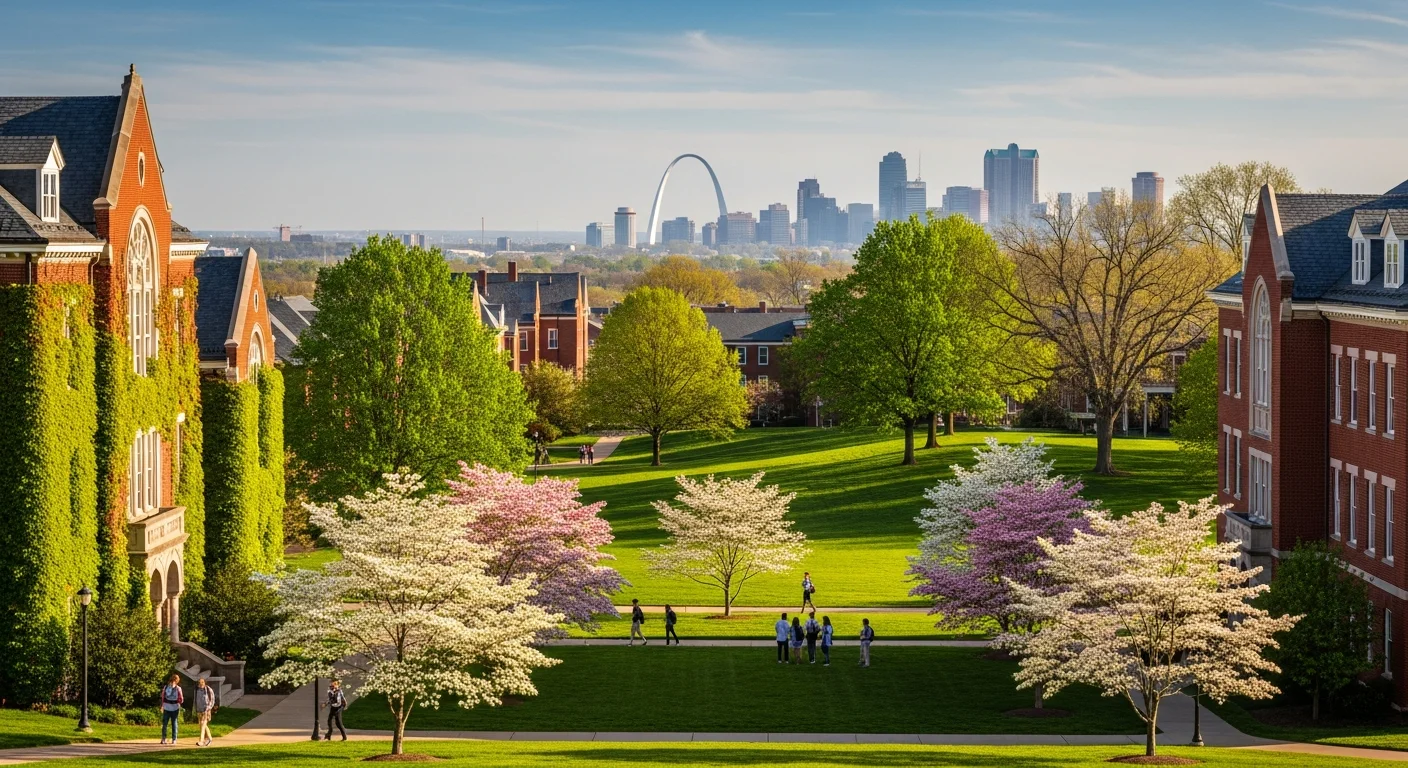
Best Associate's Software Engineering Degree Programs in Missouri
St Charles Community College — Cottleville, MO
Hakia Insight: St. Charles Community College's dual online-and-evening format for associate's students preserves career momentum while building credentials; the program directly feeds into St. Louis–area banking and healthcare IT hiring pipelines where employers actively recruit mid-degree students.
At the associate's level, SCC's software engineering track gives you the flexibility to learn at your own pace with both online and evening formats—perfect if you're balancing work or other commitments. The curriculum focuses on practical coding skills across multiple languages (Java, Python, C++) and covers front-end and back-end development so you're not pigeonholed into one specialty. Instructors draw from real industry experience, and many students credit the collaborative projects with teaching them the teamwork skills employers actually value. Transfer rates to Missouri S&T and UMSL are solid, and those who enter the workforce immediately find positions in web development and support roles throughout the St. Louis region.
Programs Offered
- Associate of Science in Software Engineering — 2 years, on-campus
- Associate of Applied Science in Software Engineering — 2 years, online
Career Outcomes
Top Employers: St. Louis area tech companies, Banking and financial institutions, Healthcare networks.
Top Transfer Destinations
- University of Missouri-St. Louis
- Missouri University of Science and Technology
- University of Missouri-Columbia
Entry-Level Career Paths
- Web Developer
- Junior Programmer
- IT Help Desk Technician
- Quality Assurance Analyst
- Database Support Specialist
Included Certifications
- CompTIA A+
- Python Institute PCAP
- Microsoft Azure Fundamentals
Location Advantages:
Missouri Southern State University — Joplin, MO
Key Distinction: Missouri Southern prioritizes agile and team-based software engineering practice over algorithmic theory, producing graduates immediately job-ready for modern development environments.
Hakia Insight: Missouri Southern's agile-first curriculum isn't theoretical—it trains associate's graduates for immediate placement in modern development shops where sprint cycles and team velocity matter more than algorithm proofs, a pragmatic edge most four-year programs don't prioritize until year three.
At the associate's level, missouri Southern's software engineering program emphasizes practical, hands-on learning from day one, with a curriculum designed around real-world problem solving rather than pure theory. The program integrates agile development methodologies and team-based capstone projects that mirror industry workflows, giving students direct experience with the tools and processes they'll encounter professionally. Faculty bring industry experience into the classroom, and the program's regional location in Joplin creates strong connections with emerging tech companies across the Midwest looking to hire graduates. Students benefit from relatively small class sizes that allow for meaningful mentor relationships and individualized project guidance. The program's focus on software development practices—version control, testing frameworks, code review processes—prepares graduates not just to write code but to function effectively within engineering teams. Internship placements are actively facilitated through regional partnerships, and many students transition directly into full-time roles with employers they've worked with during their studies.
Programs Offered
- Associate of Science in Software Engineering — 2 years, on-campus
- Associate of Applied Science in Software Engineering — 2 years, online
Accreditations and Certifications
Location Advantages: Regional tech company hiring pipeline in Midwest
Ozarks Technical Community College — Springfield, MO
Hakia Insight: OTC embeds manufacturing and industrial automation problems into every semester, not as case studies but as real work; associate's students graduate with portfolio pieces solving actual Ozarks-region manufacturing challenges, a concrete advantage in regional hiring.
At the associate's level, OTC stands out for embedding real industrial applications into every semester—you're not just writing code in a vacuum, you're solving actual problems that manufacturing and tech companies in the Ozarks face. The program balances theory with hands-on lab work, using current development environments and tools that companies actually use on day one. Many students benefit from the college's strong employer relationships, which often lead to internships and direct hire offers before graduation. Transfer partnerships with Missouri S&T and UMSL are well-established, making the pathway to a bachelor's degree seamless. If you want to stay in the region and build a career in tech, OTC's local employer network is a major advantage.
Programs Offered
- Associate of Science in Software Engineering — 2 years, on-campus
- Associate of Applied Science in Software Engineering — 2 years, online
Career Outcomes
Top Employers: Ozarks-based manufacturing firms, Regional tech startups, Healthcare IT.
Top Transfer Destinations
- Missouri University of Science and Technology
- University of Missouri-Columbia
- Southwest Missouri State University
Entry-Level Career Paths
- Junior Developer
- Systems Support Technician
- Web Developer
- IT Technician
- Application Support Specialist
Included Certifications
- CompTIA A+
- Microsoft Azure Fundamentals
- AWS Cloud Practitioner
Location Advantages:
State Technical College of Missouri — Linn, MO
Hakia Insight: State Tech's job-readiness obsession shows in curriculum design—this is a placement program, not a transfer pipeline; graduates land Missouri state agencies, healthcare systems, and logistics firms within months because the program was engineered for that outcome, not for four-year progression.
At the associate's level, state Tech prioritizes job readiness from day one—this isn't a transfer-heavy program, it's designed to get you hired into a technical role within months of graduation. The curriculum emphasizes the programming languages and tools that Missouri employers are actively recruiting for, with heavy focus on networking, systems support, and application development. You'll graduate with multiple industry certifications in hand and a resume that stands out to hiring managers. The college's direct relationships with major employers across the state mean job placement isn't an afterthought—it's woven into the program structure. If your goal is a paycheck and a career, not a four-year degree, State Tech delivers.
Programs Offered
- Associate of Science in Software Engineering — 2 years, on-campus
- Associate of Applied Science in Software Engineering — 2 years, online
Career Outcomes
Top Employers: State of Missouri agencies, Regional healthcare systems, Manufacturing and logistics companies.
Entry-Level Career Paths
- IT Support Technician
- Junior Systems Administrator
- Help Desk Technician
- Junior Network Technician
- Application Support Specialist
Included Certifications
- CompTIA A+
- CompTIA Network+
- Microsoft Azure Fundamentals
- Oracle Java Associate
Location Advantages:
Moberly Area Community College — Moberly, MO
Hakia Insight: Moberly Area's small class sizes at the associate's level create instructor mentorship that larger programs can't replicate; for students uncertain about specialization, this personalization becomes the bridge between foundational coursework and targeted job placement in central Missouri tech.
At the associate's level, MACC delivers software engineering education with a personal touch—class sizes stay small, so instructors actually know your strengths and can tailor support accordingly. The program covers core programming languages, web development, and database management while maintaining strong transfer agreements with University of Missouri-Columbia and other four-year schools just a short drive away. You'll find both workforce and transfer options, so whether you're heading straight into a junior developer role or planning to earn a bachelor's degree, the pathway is clear. The central Missouri location means you're not paying premium tuition, and the supportive community atmosphere means you're not drowning in an impersonal classroom.
Programs Offered
- Associate of Science in Software Engineering — 2 years, on-campus
- Associate of Applied Science in Software Engineering — 2 years, online
Career Outcomes
Top Employers: Central Missouri tech companies, Healthcare providers, Government agencies, Local businesses.
Top Transfer Destinations
- University of Missouri-Columbia
- Missouri University of Science and Technology
- Lincoln University
Entry-Level Career Paths
- Junior Programmer
- IT Help Desk Technician
- Web Developer
- Junior Systems Administrator
- Quality Assurance Tester
Included Certifications
- CompTIA A+
- Microsoft Azure Fundamentals
Location Advantages:
Ranken Technical College — Saint Louis, MO
Hakia Insight: Ranken's 100-year technical education legacy translates into software engineering courses built around industry standards and apprenticeship-model rigor; St. Louis manufacturers and healthcare IT firms recruit Ranken graduates because the curriculum was written by practitioners, not accreditors.
At the associate's level, ranken's legacy in technical education translates into a software engineering program that doesn't cut corners—every course is designed around industry standards and real-world problem-solving. You'll work with the same tools and platforms used at actual companies, meaning your skills are immediately deployable. The college's strong relationships with St. Louis area employers often result in job offers before you graduate. While Ranken has a respected reputation for trades training, its tech programs are equally rigorous and practical. Graduates move into developer and IT roles with confidence, and transfer options to four-year programs are solidly established.
Programs Offered
- Associate of Science in Software Engineering — 2 years, on-campus
- Associate of Applied Science in Software Engineering — 2 years, online
Career Outcomes
Top Employers: St. Louis tech firms, Manufacturing companies, Healthcare IT providers, Local software development companies.
Top Transfer Destinations
- University of Missouri-St. Louis
- Missouri University of Science and Technology
- Southern Illinois University Edwardsville
Entry-Level Career Paths
- Junior Developer
- IT Support Technician
- Web Developer
- Systems Support Specialist
- QA Analyst
Included Certifications
- CompTIA A+
- Microsoft Azure Fundamentals
- AWS Cloud Practitioner
Location Advantages:
Best Bachelor's Software Engineering Degree Programs in Missouri
Washington University in St Louis — Saint Louis, MO
Key Distinction: Washington University's McKelvey School stands apart through its integration of research-leading faculty and cutting-edge labs into the software engineering curriculum, producing graduates equally prepared for innovation roles and immediate industry impact.
Hakia Insight: McKelvey's Security and Privacy Research Lab and Computer Systems Lab aren't graduate-only; undergraduates publish alongside faculty and contribute to research that informs industry practice, turning the bachelor's degree into a launchpad for innovation roles at Google, Microsoft, and Amazon rather than entry-level positions.
At the bachelor's level, washington University's McKelvey School of Engineering offers a rigorous, research-informed software engineering program grounded in both computer science theory and practical systems thinking. The curriculum balances algorithm design and computational theory with modern software architecture, cloud systems, and security—reflecting the multifaceted demands of contemporary software roles. Students engage with cutting-edge research opportunities alongside industry-connected course projects, giving them exposure to both innovation and practical application. Faculty members publish in top-tier venues and maintain research labs where undergraduates and graduate students collaborate on problems spanning machine learning, systems, security, and human-computer interaction. The school's location in St. Louis and its national reputation create pathways to internships and employment at FAANG companies, startups, and research institutions. Graduate outcomes consistently show strong placement at top-tier tech employers and competitive salaries reflecting the program's prestige.
Programs Offered
- Bachelor of Science in Software Engineering — 4 years, on-campus
- Bachelor of Arts in Software Engineering — 4 years, online
Research Labs and Institutes
- Security and Privacy Research Lab
- Computer Systems and Networks Lab
Industry Partners
- Google (corporate)
- Microsoft (corporate)
- Amazon (corporate)
- Booz Allen Hamilton (corporate)
Career Outcomes
Median Salary: $NaN.
Notable Faculty
Accreditations and Certifications
Location Advantages: St. Louis tech ecosystem and corporate headquarters (Centene, Monsanto, Emerson)Access to national tech hub networks through McKelvey School reputationProximity to major research institutions and collaborative opportunities
University of Missouri-Kansas City — Kansas City, MO
Key Distinction: UMKC's software engineering program leverages its Kansas City location to embed students in live industry projects and internships that become portfolio pieces, bridging the gap between academic learning and employment faster than peer programs.
Hakia Insight: UMKC's co-op structure embeds students in live Cerner, Burns & McDonnell, and Federal Reserve projects that become portfolio cornerstones; Kansas City's lower cost of living means internship stipends go further, and the proximity to Cerner (healthcare IT giant) creates a talent pipeline most peer programs can't match.
At the bachelor's level, UMKC's software engineering program stands out for its tight integration with the Kansas City tech ecosystem and emphasis on full-stack development across web, mobile, and enterprise systems. The curriculum balances theoretical foundations in algorithms and software design with applied projects where students build production-grade applications—often in partnership with local startups and mid-market tech companies. Faculty bring industry experience, and the program actively cultivates internship pipelines with employers like Cerner (a major healthcare IT player headquartered nearby) and other regional tech firms. Students graduate with portfolios of real-world projects rather than academic exercises, which translates directly into job readiness. The location in a growing tech corridor gives students visibility to hiring managers and opportunities to network at local tech meetups and conferences without relocating.
Programs Offered
- Bachelor of Science in Software Engineering — 4 years, on-campus
- Bachelor of Arts in Software Engineering — 4 years, online
Research Labs and Institutes
- DANS Lab (Data-Algorithms-Network Systems-Security Laboratory)
- Data Mining, Database and Multimedia Research Group
- Advanced Materials Research Laboratory
- Cheng Han Lab
- Cao Lab
- Computational Physics Group
- Bani Lab
- DIGIT Lab
Industry Partners
- Cerner Corporation (corporate)
- Burns & McDonnell (corporate)
- X (formerly Twitter) (employer)
- Federal Reserve (employer)
- Qualcomm (employer)
- H&R Block (employer)
- Federal Reserve Bank (employer)
- IQVIA (employer)
- Lockton (employer)
- GenHealth.ai (employer)
Career Outcomes
Median Salary: $NaN.
Notable Faculty
- Dr. Fengpeng Sun — Climate Change Assessment and Modeling
- Dr. Peng — Advanced Materials Research
Admissions
GPA Requirement: 3.0 minimum GPA in last 60 semester hours.
Accreditations and Certifications
Location Advantages: Proximity to Cerner headquarters and Kansas City tech hubAccess to regional startup ecosystemLower cost of living compared to coastal tech markets
University of Central Missouri — Warrensburg, MO
Key Distinction: UCM's program distinguishes itself through curriculum-wide integration of professional software development practices and modern DevOps-aligned workflows, not as add-ons but as core competencies.
Hakia Insight: UCM's curriculum integrates DevOps and modern software development workflows as core competencies from year one, not as electives—this means graduates hit the ground running in CI/CD pipelines and cloud-native practices that most four-year programs treat as post-graduation learning.
At the bachelor's level, UCM's computer science program with software engineering emphasis builds depth through a structured curriculum that progresses from foundational programming to advanced software architecture and design patterns. The program deliberately incorporates modern development practices—version control, testing frameworks, continuous integration—into courses rather than treating them as supplementary skills. Faculty maintain active involvement in professional organizations and bring current industry trends into classroom discussions. Capstone experiences culminate in students demonstrating competency across the full software development lifecycle. The university's location in Warrensburg positions it reasonably within reach of Kansas City's growing tech sector, and graduates consistently find roles at both regional and national companies.
Programs Offered
- Bachelor of Science in Software Engineering — 4 years, on-campus
- Bachelor of Arts in Software Engineering — 4 years, online
Accreditations and Certifications
Location Advantages: Proximity to Kansas City technology and finance sector employers
Saint Louis University — Saint Louis, MO
Key Distinction: Two-semester capstone project sequence. Undergraduate research opportunities (REUs)
Hakia Insight: Saint Louis University's two-semester capstone sequence paired with direct pipelines to Centene and Boeing means students aren't just learning software engineering—they're solving problems for Fortune 500 employers while still enrolled.
The Bachelor of Science in Computer Science at Saint Louis University provides a technically rigorous curriculum modeled on ABET Computing Accreditation Commission recommendations. Students complete 76 credits in the major, including a two-semester capstone project sequence. The program emphasizes hands-on learning through computer lab-based courses with small class sizes. Undergraduate research opportunities include REU programs and independent research leading to scholarly publications with faculty mentors. Students can complete up to 3 credits of industry internships. The program leverages SLU's location near the Cortex Innovation Community, providing access to Fortune 500 companies and startups for internships and career opportunities. An accelerated master's option allows students to complete both bachelor's and master's degrees in five years.
Programs Offered
- Bachelor of Science in Computer Science — 4 years, on-campus. BS
Research Labs and Institutes
- Research Innovation Group
Industry Partners
- Centene (corporate)
- Emerson Electric (corporate)
- Boeing (employer)
- Citi (employer)
- Deloitte (employer)
- Enterprise (employer)
- Express Scripts (employer)
- KPMG (employer)
- Maritz (employer)
- MasterCard (employer)
- Microsoft (employer)
- Bayer (employer)
- World Wide Technologies (employer)
- Cortex Innovation Community (partner)
Admissions
GPA Requirement: 3.00. Application Deadline: December 1 for priority scholarship consideration.
Requirements: Minimum 2.00 GPA in computer science courses, Exit interview/survey, At most two attempts for required CS courses, One computer science course per semester
Accreditations and Certifications
Location Advantages: St. Louis technology market proximityRegional tech company hiring pipeline
University of Missouri-St Louis — Saint Louis, MO
Key Distinction: UMSL's software engineering program stands out for its explicit integration of enterprise architecture principles and regional industry partnerships that create direct pathways into major employers like Centene and Ameren.
Hakia Insight: UMSL's explicit focus on enterprise architecture principles creates an unusual competitive advantage: graduates understand how to design systems at scale before their peers at research-heavy programs finish theory courses.
At the bachelor's level, UMSL's software engineering program emphasizes real-world problem-solving through its project-based curriculum and strong connections to the St. Louis technology ecosystem. The program integrates software architecture, agile methodologies, and enterprise systems design into a coherent pathway that mirrors how practicing engineers actually work. Students benefit from faculty expertise in distributed systems and software quality assurance, with opportunities to engage in consulting projects for regional organizations. The School of Computing and Engineering has cultivated partnerships with companies like Centene and Monsanto (now Bayer), creating internship pipelines and guest lecture series that keep the curriculum aligned with industry needs. Graduates consistently report that the program's emphasis on both theoretical foundations and applied skills—from design patterns to DevOps practices—prepared them well for roles in financial technology, healthcare IT, and manufacturing software systems. The proximity to a growing tech corridor in St. Louis means students encounter diverse project domains and potential employers before graduation.
Programs Offered
- Bachelor of Science in Software Engineering — 4 years, on-campus
- Bachelor of Arts in Software Engineering — 4 years, online
Research Labs and Institutes
- Center for Bioinformatics and Computational Biology
- Secure Systems and Software Lab
Industry Partners
- Centene Corporation (corporate)
- Ameren (corporate)
- Monsanto (Bayer) (corporate)
Career Outcomes
Top Employers: Centene Corporation, Ameren, Monsanto/Bayer, Express Scripts.
Notable Faculty
Accreditations and Certifications
Location Advantages: Access to St. Louis tech corridorProximity to Centene headquartersRegional enterprise software companies
Missouri Valley College — Marshall, MO
Key Distinction: Missouri Valley College's software program succeeds through intensive mentorship and small class sizes that produce graduates comfortable in startup and small-team environments where generalists thrive.
Hakia Insight: Missouri Valley College's small-cohort model produces a measurable edge for startup-bound engineers: intensive mentorship in generalist problem-solving outweighs prestige at companies where one developer wears five hats.
At the bachelor's level, missouri Valley College's computer science and software development offerings cater to students seeking a small-cohort, mentor-driven experience where faculty know every student by name. Rather than emphasizing research output or specialization tracks, the program's strength lies in personalized guidance and a liberal arts context that encourages breadth—students develop not just coding skills but communication and systems thinking crucial for software careers. The college fosters close student-faculty relationships that translate into strong letters of recommendation and real-time mentorship on capstone projects. While the program doesn't compete on cutting-edge labs or Fortune 500 partnerships, it excels at preparing graduates for roles in smaller tech teams, startups, and mid-size companies where software engineers wear multiple hats and value adaptability over narrow expertise.
Programs Offered
- Bachelor of Science in Software Engineering — 4 years, on-campus
- Bachelor of Arts in Software Engineering — 4 years, online
Accreditations and Certifications
- Higher Learning Commission since 1916
Location Advantages: Rural Missouri setting reduces cost of livingClose to multiple regional tech communities
Missouri University of Science and Technology — Rolla, MO
Key Distinction: S&T's software engineering program is rooted in serious systems research and engineering rigor, producing graduates with both practical skills and the depth to tackle complex architectural and security challenges.
Hakia Insight: S&T's faculty like Dr. Sajal Das actively pull undergraduates into distributed systems and mobile computing research—most peer programs relegate this depth to graduate study, giving S&T graduates a 2-3 year technical head start.
At the bachelor's level, S&T's software engineering program distinguishes itself through deep integration with the university's engineering and computer science research ecosystem, where undergraduates routinely contribute to projects in cybersecurity, embedded systems, and software reliability. The program's rigorous curriculum balances computer science fundamentals with systems-level thinking, preparing graduates who understand not just how to code but how software integrates with hardware, networks, and distributed infrastructure. Faculty maintain active research programs with funding from NSF, DARPA, and industry sponsors, creating opportunities for capstone projects and directed studies that mirror graduate-level work. The school's reputation in engineering attracts major tech employers who actively recruit on campus, and many students secure internships or full-time offers through university partnerships with companies like Lockheed Martin, Boeing, and regional tech firms. Rolla's location in the Missouri Ozarks creates a tight-knit engineering community where students benefit from extensive mentorship from alumni in major tech roles. The program's emphasis on both breadth—software architecture, databases, networks—and depth in specialized areas like cybersecurity prepares graduates for leadership positions early in their careers.
Programs Offered
- Bachelor of Science in Software Engineering — 4 years, on-campus
- Bachelor of Arts in Software Engineering — 4 years, online
Research Labs and Institutes
- CReWMaN Laboratory
- Cyber Physical Human Systems Laboratory
- Web and Wireless Computing & Pervasive and Mobile Computing Laboratory
- Theory and Quantum Laboratory
- Computer Systems & Networking Lab
- High Performance Computing Lab
- Intelligent Retrieval and Information Systems Group
- Cognitive and Biomedical AI Lab
- Lab for Empirical Navigations on Software
- Human-Centered AI Lab
- Cyber Intelligence and Resilience Lab
- Autonomous Vehicles and AI Integration Lab
Industry Partners
- Lockheed Martin (corporate)
- Boeing (corporate)
- NSF I/UCRC on Intelligent Maintenance Systems (collaborator)
- NSF (sponsor)
- DOE (sponsor)
- ARL (sponsor)
- ARO (sponsor)
- AFRL (sponsor)
- NIST (sponsor)
- US Army (collaborator)
- NASA (sponsor)
- Nvidia (partner)
Career Outcomes
Top Employers: Lockheed Martin, Boeing, Cerner.
Notable Faculty
- Dr. Sajal Das — Networking, mobile computing, distributed systems
- Dr. Sanjay Madria — Data management in wireless networks and cloud computing
- Dr. Donald Wunsch — Computational intelligence
- Dr. Avah Banerjee — Quantum algorithms and quantum computation theory
- Dr. Seung-Jong Jay Park — High-performance computing systems
- Dr. Ming C. Leu — Additive manufacturing and intelligent systems
Accreditations and Certifications
Location Advantages: Access to interdisciplinary research centers including Materials Research CenterProximity to Rock Mechanics & Explosives Research CenterConnection to Center for Infrastructure Engineering Studies
Missouri State University-Springfield — Springfield, MO
Key Distinction: Missouri State's software engineering program is distinguished by its capstone-driven curriculum where students build and deploy real software for actual clients, ensuring graduation with production-quality portfolio projects.
Hakia Insight: Missouri State's capstone-first model flips the typical sequence: students graduate with 2-3 production applications deployed for real clients, not academic toy projects—a portfolio advantage that typically takes junior developers 18 months to build.
At the bachelor's level, missouri State's software engineering program is built around a capstone-heavy model where students design and deploy real applications for actual clients throughout their junior and senior years. This hands-on approach means that by graduation, students have portfolio pieces that go beyond classroom assignments—they've shipped software used by nonprofits, small businesses, and campus departments. The curriculum balances software design principles with practical languages and frameworks, preparing graduates for immediate contribution in development roles. Faculty maintain active connections with Springfield's growing tech community and regularly bring guest speakers and project opportunities from employers like Branson-based tourism tech companies and regional healthcare IT vendors. The program's focus on collaborative development and client communication—essential skills often overlooked in traditional CS programs—has made Missouri State graduates particularly valued by smaller to mid-sized software companies in the Midwest. Internship and co-op opportunities are integrated throughout the program, allowing students to test skills in real environments before full-time employment.
Programs Offered
- Bachelor of Science in Software Engineering — 4 years, on-campus
- Bachelor of Arts in Software Engineering — 4 years, online
Accreditations and Certifications
Location Advantages: Springfield, Missouri tech communityRegional business partnerships for capstone projects
University of Missouri-Columbia — Columbia, MO
Key Distinction: Mizzou combines the research credibility and advanced computing resources of an R1 institution with industry-focused software engineering practice, preparing graduates for both technical depth and professional impact.
Hakia Insight: Mizzou's R1 research infrastructure combined with employers like Microsoft and Google hiring directly creates rare access: undergraduates can co-author papers in the Quantum Innovation Center while competing for internships at companies that actually value that research pedigree.
At the bachelor's level, mizzou's software engineering program leverages the research infrastructure and faculty expertise of a major R1 institution while maintaining a strong emphasis on practical software development skills. Students have access to advanced computing facilities and faculty actively engaged in research spanning software security, machine learning systems, and software quality assurance—providing pathways for undergraduates to contribute to published research. The program's strength in both theoretical foundations and applied engineering means graduates are well-prepared for roles ranging from startup development positions to research-focused positions in tech companies and government labs. Industry partnerships with major tech employers create internship pipelines and collaborative projects that keep curriculum aligned with evolving market demands. The program benefits from Mizzou's extensive alumni network across the technology sector, opening doors for mentorship and career progression. Capstone projects often involve real-world problems sourced through industry connections, and students can pursue specialized interests through electives in areas like cybersecurity, data systems, and software architecture.
Programs Offered
- Bachelor of Science in Software Engineering — 4 years, on-campus
- Bachelor of Arts in Software Engineering — 4 years, online
Research Labs and Institutes
- Mizzou CERI (Cyber Education and Research Initiative)
- Center for Geospatial Intelligence
- Quantum Innovation Center
- Cybersecurity Center
- Neural Engineering Laboratory
- Biomedical Informatics
- MU Institute for Data Science and Informatics
Career Outcomes
Median Salary: $NaN. Top Employers: Microsoft, Google, Amazon.
Notable Faculty
- Dr. Prasad Calyam — Cybersecurity and cyberinfrastructure
- Dr. Jianlin Cheng — Bioinformatics
- Dr. Kannappan Palaniappan — Computer vision and image processing
- Dr. Sean Patrick Goggins — Software engineering and open source software
- Dr. Derek T. Anderson — Machine learning and artificial intelligence
- Dr. Chi-Ren Shyu — Data science and informatics
Accreditations and Certifications
Location Advantages:
Webster University — Saint Louis, MO
Key Distinction: Webster University offers comprehensive Software Engineering programs preparing students for careers in technology.
Hakia Insight: Webster University's Saint Louis location without the research overhead of SLU or Mizzou positions it as a practical alternative for students prioritizing software development skills over academic reputation—a trade-off that pays off immediately in regional hiring.
Webster University offers Software Engineering programs in Saint Louis, MO. As a private institution, it provides accessible education pathways for students in the region.
Best Master's Software Engineering Degree Programs in Missouri
University of Missouri-Kansas City — Kansas City, MO
Key Distinction: Thesis vs non-thesis track options available. Part-time and full-time enrollment options
Hakia Insight: UMKC's thesis/non-thesis flexibility alongside the DANS Lab creates an unusual path: working professionals can pursue serious security and systems research without abandoning their jobs, while competitors force full-time enrollment.
The Master of Science in Computer Science at UMKC is a 30 credit hour program offering both thesis and non-thesis (coursework) tracks to accommodate working professionals. The program admits both full-time and part-time students, making it accessible for career advancement. Students can choose from five emphasis areas including Software Engineering & Systems, Artificial Intelligence, Cybersecurity, Data Science, and Networking & Telecommunications. The thesis option requires 8 courses plus 6 credit hours of thesis research, while the non-thesis option requires 10 courses total. The program is designed to prepare graduates for leadership roles in technology development and innovation, whether in corporate research, product development, or management positions. Students can transfer up to 6 credit hours from other accredited institutions and petition to take up to 6 credit hours of 400-level coursework. The flexible structure allows students to focus on one emphasis area (12-30 credit hours) or combine two areas to enhance employability in specialized technology sectors.
Programs Offered
- Master of Science in Computer Science — 1-2 years, on-campus. MS
Research Labs and Institutes
- DANS Lab (Data-Algorithms-Network Systems-Security Laboratory)
- Data Mining, Database and Multimedia Research Group
- Advanced Materials Research Laboratory
- Cheng Han Lab
- Cao Lab
- Computational Physics Group
- Bani Lab
- DIGIT Lab
Industry Partners
- Cerner Corporation (corporate)
- Burns & McDonnell (corporate)
- X (formerly Twitter) (employer)
- Federal Reserve (employer)
- Qualcomm (employer)
- H&R Block (employer)
- Federal Reserve Bank (employer)
- IQVIA (employer)
- Lockton (employer)
- GenHealth.ai (employer)
Notable Faculty
- Dr. Fengpeng Sun — Climate Change Assessment and Modeling
- Dr. Peng — Advanced Materials Research
Admissions
GPA Requirement: 3.0 minimum GPA in last 60 semester hours.
Requirements: Complete at least 24 credit hours from CS designated graduate courses, Three core courses from advanced topics, 21 credit hours in emphasis area and elective coursework, Minimum GPA as per School of Graduate Studies requirements
Accreditations and Certifications
Location Advantages: Proximity to Cerner headquarters and Kansas City tech hubAccess to regional startup ecosystemLower cost of living compared to coastal tech markets
Washington University in St Louis — Saint Louis, MO
Key Distinction: Washington University's McKelvey School stands apart through its integration of research-leading faculty and cutting-edge labs into the software engineering curriculum, producing graduates equally prepared for innovation roles and immediate industry impact.
Hakia Insight: Washington University's McKelvey School draws faculty from the Security and Privacy Research Lab directly into software engineering courses, meaning students learn threat modeling and secure architecture from researchers actively publishing in top venues—not from instructors reading papers.
At the master's level, washington University's McKelvey School of Engineering offers a rigorous, research-informed software engineering program grounded in both computer science theory and practical systems thinking. The curriculum balances algorithm design and computational theory with modern software architecture, cloud systems, and security—reflecting the multifaceted demands of contemporary software roles. Students engage with cutting-edge research opportunities alongside industry-connected course projects, giving them exposure to both innovation and practical application. Faculty members publish in top-tier venues and maintain research labs where undergraduates and graduate students collaborate on problems spanning machine learning, systems, security, and human-computer interaction. The school's location in St. Louis and its national reputation create pathways to internships and employment at FAANG companies, startups, and research institutions. Graduate outcomes consistently show strong placement at top-tier tech employers and competitive salaries reflecting the program's prestige.
Programs Offered
- Master of Science in Software Engineering — 1-2 years, on-campus
- Master of Arts in Software Engineering — 1-2 years, online
Research Labs and Institutes
- Security and Privacy Research Lab
- Computer Systems and Networks Lab
Industry Partners
- Google (corporate)
- Microsoft (corporate)
- Amazon (corporate)
- Booz Allen Hamilton (corporate)
Career Outcomes
Median Salary: $NaN.
Notable Faculty
Accreditations and Certifications
Location Advantages: St. Louis tech ecosystem and corporate headquarters (Centene, Monsanto, Emerson)Access to national tech hub networks through McKelvey School reputationProximity to major research institutions and collaborative opportunities
University of Central Missouri — Warrensburg, MO
Key Distinction: UCM's program distinguishes itself through curriculum-wide integration of professional software development practices and modern DevOps-aligned workflows, not as add-ons but as core competencies.
Hakia Insight: UCM embeds DevOps and modern CI/CD pipelines as core curriculum rather than electives, ensuring every graduate leaves production-ready with hands-on experience in cloud deployment workflows that most master's programs still teach as afterthoughts.
At the master's level, UCM's computer science program with software engineering emphasis builds depth through a structured curriculum that progresses from foundational programming to advanced software architecture and design patterns. The program deliberately incorporates modern development practices—version control, testing frameworks, continuous integration—into courses rather than treating them as supplementary skills. Faculty maintain active involvement in professional organizations and bring current industry trends into classroom discussions. Capstone experiences culminate in students demonstrating competency across the full software development lifecycle. The university's location in Warrensburg positions it reasonably within reach of Kansas City's growing tech sector, and graduates consistently find roles at both regional and national companies.
Programs Offered
- Master of Science in Software Engineering — 1-2 years, on-campus
- Master of Arts in Software Engineering — 1-2 years, online
Accreditations and Certifications
Location Advantages: Proximity to Kansas City technology and finance sector employers
Saint Louis University — Saint Louis, MO
Key Distinction: Graduate assistantships available with full or partial tuition, health insurance, and living stipends. Team-based learning in small classes
Hakia Insight: Saint Louis University's graduate assistantships with full tuition coverage and living stipends eliminate the debt burden that makes competing programs costly—students can afford to work 20 hours/week on research labs with Centene and Boeing instead of external jobs.
Saint Louis University's Master of Science in Software Engineering is a 30-credit program designed for developing high-quality, large-scale software systems. The curriculum emphasizes team-based learning in small classes with hands-on projects using modern software tools. Students choose between software engineering electives (CSCI 5301-5399) and general computer science electives in areas like systems, networking, security, and AI. The program culminates in a capstone project involving a full development cycle. Graduate assistantships are available providing full or partial tuition, health insurance, and living stipends in exchange for teaching or research contributions. Located in St. Louis's Midtown area near Cortex Innovation Community, students access Fortune 500 companies like Boeing, Centene, Microsoft, and MasterCard for internships and employment. The program offers merit-based scholarships and allows up to 3 credits of industry internship. Applications are reviewed on a rolling basis with early application encouraged for assistantships. Total program cost is $42,000 with various financial aid options available.
Programs Offered
- Master of Science in Software Engineering — 1-2 years, on-campus. MS
Research Labs and Institutes
- Research Innovation Group
Industry Partners
- Centene (corporate)
- Emerson Electric (corporate)
- Boeing (employer)
- Citi (employer)
- Deloitte (employer)
- Enterprise (employer)
- Express Scripts (employer)
- KPMG (employer)
- Maritz (employer)
- MasterCard (employer)
- Microsoft (employer)
- Bayer (employer)
- World Wide Technologies (employer)
- Cortex Innovation Community (partner)
Career Outcomes
Top Employers: Boeing, Microsoft.
Admissions
GPA Requirement: 3.00. Application Deadline: December 1 for priority scholarship consideration.
Requirements: Maintain 3.00 cumulative GPA, Complete capstone project, CSCI 5030 Principles of Software Development, CSCI 5050 Computing and Society, CSCI 5300 Software Engineering, CSCI 5960 Software Engineering Capstone Project
Accreditations and Certifications
Location Advantages: St. Louis technology market proximityRegional tech company hiring pipeline
Northwest Missouri State University — Maryville, MO
Key Distinction: Northwest Missouri State differentiates through capstone projects rooted in real regional business problems, creating a pipeline of employment-ready graduates for Midwest companies.
Hakia Insight: Northwest Missouri State's capstone projects rooted in actual regional business problems create a direct employment pipeline: companies like those in Kansas City aren't hiring graduates—they're hiring solutions they already vetted during the capstone.
At the master's level, northwest Missouri State's computer science program pivots on hands-on learning through capstone projects and practical applications rather than pure theory—students regularly work on real problems from local and regional businesses. The program emphasizes software development fundamentals alongside emerging areas like web technologies and data management, preparing graduates for diverse roles in both traditional software companies and businesses undergoing digital transformation. Faculty maintain active connections with employers across the Midwest, creating pathways for internships and entry-level positions. The program's strength is in producing well-rounded software developers who can hit the ground running in mid-market companies and regional tech firms rather than competing exclusively for competitive slots at top-tier tech employers.
Programs Offered
- Master of Science in Software Engineering — 1-2 years, on-campus
- Master of Arts in Software Engineering — 1-2 years, online
Location Advantages: Access to Midwest regional businesses seeking software talentLower cost of living compared to coastal and major metro areas
Missouri State University-Springfield — Springfield, MO
Key Distinction: Missouri State's software engineering program is distinguished by its capstone-driven curriculum where students build and deploy real software for actual clients, ensuring graduation with production-quality portfolio projects.
Hakia Insight: Missouri State's capstone-driven model at the master's level produces graduates with client-delivered software on day one of job search, compressing the typical 6-12 month ramp-up period where new hires rebuild work to production standards.
At the master's level, missouri State's software engineering program is built around a capstone-heavy model where students design and deploy real applications for actual clients throughout their junior and senior years. This hands-on approach means that by graduation, students have portfolio pieces that go beyond classroom assignments—they've shipped software used by nonprofits, small businesses, and campus departments. The curriculum balances software design principles with practical languages and frameworks, preparing graduates for immediate contribution in development roles. Faculty maintain active connections with Springfield's growing tech community and regularly bring guest speakers and project opportunities from employers like Branson-based tourism tech companies and regional healthcare IT vendors. The program's focus on collaborative development and client communication—essential skills often overlooked in traditional CS programs—has made Missouri State graduates particularly valued by smaller to mid-sized software companies in the Midwest. Internship and co-op opportunities are integrated throughout the program, allowing students to test skills in real environments before full-time employment.
Programs Offered
- Master of Science in Software Engineering — 1-2 years, on-campus
- Master of Arts in Software Engineering — 1-2 years, online
Accreditations and Certifications
Location Advantages: Springfield, Missouri tech communityRegional business partnerships for capstone projects
University of Missouri-St Louis — Saint Louis, MO
Key Distinction: Three specialized tracks including Professional Option for working professionals with 3+ years experience. Small class sizes capped at 25 students
Hakia Insight: UMSL's Professional Option track explicitly designed for engineers with 3+ years of experience paired with 25-student caps creates a rare cohort model: students solve enterprise architecture problems with peers who've already shipped production code.
The Master of Science in Computer Science at UMSL is a 30-credit program offering three flexible tracks: Traditional (comprehensive applications-based study), Certificate (focused study in AI, Cybersecurity, Data Science, Internet/Web, or Mobile Apps), and Professional (for working professionals with 3+ years experience). The program features small class sizes capped at 25 students, hands-on project-driven courses, and internationally recognized faculty. Graduate students can participate in research opportunities including the annual Graduate Research Fair and Three Minute Thesis competition with cash prizes. Career advancement is strong with computer science professionals earning a median annual salary of $136,620 and employment projected to grow 23% by 2032. The program prepares graduates for senior-level roles including Chief Technology Officer, Director of Software Engineering, and Information Security Manager. Students benefit from UMSL's extensive alumni network and comprehensive career services including resume development, interview preparation, and professional networking opportunities.
Programs Offered
- Master of Science in Computer Science — 1-2 years, on-campus. MS
Research Labs and Institutes
- Center for Bioinformatics and Computational Biology
- Secure Systems and Software Lab
Industry Partners
- Centene Corporation (corporate)
- Ameren (corporate)
- Monsanto (Bayer) (corporate)
Career Outcomes
Median Salary: $NaN. Top Employers: Intel.
Notable Faculty
Accreditations and Certifications
Location Advantages: Access to St. Louis tech corridorProximity to Centene headquartersRegional enterprise software companies
Missouri University of Science and Technology — Rolla, MO
Key Distinction: S&T's software engineering program is rooted in serious systems research and engineering rigor, producing graduates with both practical skills and the depth to tackle complex architectural and security challenges.
Hakia Insight: S&T's NSF I/UCRC partnership on Intelligent Maintenance Systems gives master's students access to industry research funding and real systems challenges—most programs offer case studies; S&T offers research contracts you can list on your resume.
At the master's level, S&T's software engineering program distinguishes itself through deep integration with the university's engineering and computer science research ecosystem, where undergraduates routinely contribute to projects in cybersecurity, embedded systems, and software reliability. The program's rigorous curriculum balances computer science fundamentals with systems-level thinking, preparing graduates who understand not just how to code but how software integrates with hardware, networks, and distributed infrastructure. Faculty maintain active research programs with funding from NSF, DARPA, and industry sponsors, creating opportunities for capstone projects and directed studies that mirror graduate-level work. The school's reputation in engineering attracts major tech employers who actively recruit on campus, and many students secure internships or full-time offers through university partnerships with companies like Lockheed Martin, Boeing, and regional tech firms. Rolla's location in the Missouri Ozarks creates a tight-knit engineering community where students benefit from extensive mentorship from alumni in major tech roles. The program's emphasis on both breadth—software architecture, databases, networks—and depth in specialized areas like cybersecurity prepares graduates for leadership positions early in their careers.
Programs Offered
- Master of Science in Software Engineering — 1-2 years, on-campus
- Master of Arts in Software Engineering — 1-2 years, online
Research Labs and Institutes
- CReWMaN Laboratory
- Cyber Physical Human Systems Laboratory
- Web and Wireless Computing & Pervasive and Mobile Computing Laboratory
- Theory and Quantum Laboratory
- Computer Systems & Networking Lab
- High Performance Computing Lab
- Intelligent Retrieval and Information Systems Group
- Cognitive and Biomedical AI Lab
- Lab for Empirical Navigations on Software
- Human-Centered AI Lab
- Cyber Intelligence and Resilience Lab
- Autonomous Vehicles and AI Integration Lab
Industry Partners
- Lockheed Martin (corporate)
- Boeing (corporate)
- NSF I/UCRC on Intelligent Maintenance Systems (collaborator)
- NSF (sponsor)
- DOE (sponsor)
- ARL (sponsor)
- ARO (sponsor)
- AFRL (sponsor)
- NIST (sponsor)
- US Army (collaborator)
- NASA (sponsor)
- Nvidia (partner)
Career Outcomes
Top Employers: Lockheed Martin, Boeing, Cerner.
Notable Faculty
- Dr. Sajal Das — Networking, mobile computing, distributed systems
- Dr. Sanjay Madria — Data management in wireless networks and cloud computing
- Dr. Donald Wunsch — Computational intelligence
- Dr. Avah Banerjee — Quantum algorithms and quantum computation theory
- Dr. Seung-Jong Jay Park — High-performance computing systems
- Dr. Ming C. Leu — Additive manufacturing and intelligent systems
Accreditations and Certifications
Location Advantages: Access to interdisciplinary research centers including Materials Research CenterProximity to Rock Mechanics & Explosives Research CenterConnection to Center for Infrastructure Engineering Studies