University campus in Minnesota
Updated January 2026

Best Software Engineering Degree Programs in Minnesota — 2026 Rankings

Explore 41 accredited software engineering degree programs in Minnesota. Compare schools by graduation rate, salary outcomes, and tuition—from Normandale Community College to University of Minnesota-Twin Cities.

#1 ProgramU of Minnesota-Twin Cities
Avg Salary$106,790
Tuition From$5,347/yr
Job Growth+22%

Key Takeaways

Top 3 ranked: U of Minnesota-Twin Cities, Carleton College, St Olaf College

Based on graduation rates, program outcomes, and institutional quality

IPEDS 2023

Tuition ranges from $4,433 to $65,043/year

Normandale Community College offers the most affordable option at $5,347/yr

IPEDS 2023

Degree levels: 15 associate's, 5 master's, 1 doctoral programs available in Minnesota

From community college pathways to advanced research degrees

IPEDS 2023

10 Minnesota programs offer online or hybrid formats

Flexible scheduling for working professionals

IPEDS 2023

Minnesota community college transfer can save 40-60% on total degree costs

15 associate's programs provide transfer pathways to bachelor's degrees

Education Commission of the States

Major employers: Target, UnitedHealth, Best Buy, 3M

Tech hubs in Minneapolis and St. Paul

Hakia Research 2026

Software Engineering programs available near 53+ cities across Minnesota

Search by city to find programs within 200 miles of your location

IPEDS 2023

Updated February 2026

On This Page
$106,790
Is Software Engineering in Minnesota Worth It?
Yes. Software Engineering degrees in Minnesota deliver strong ROI—graduates earn $106,790 median salary with +22% job growth through 2032. In-state tuition averages $19,614/year.

Source: BLS OEWS May 2024

Best Software Engineering Degree Programs in Minnesota

Bachelor's Software Engineering Degree Programs in Minnesota

25 programs$106,790 median salary82% avg grad rate
25
Programs
$106,790
Median Salary
$28,074/yr
Avg Tuition
82%
Avg Grad Rate

Program Landscape

Minnesota ranks among the nation's top destinations for software engineering education, with 25 accredited bachelor's degree programs across 11 public and 14 private institutions. The highest-ranked programs are U of Minnesota-Twin Cities, Carleton College, St Olaf College, recognized for academic excellence, research opportunities, and strong industry connections.

Career Outcomes

Graduates from Minnesota software engineering programs earn a median salary of $90,772—8% below the national average. The state's robust technology sector, anchored by the Minneapolis, St. Paul, Bloomington metropolitan areas, provides abundant internship and employment opportunities with companies including Target, UnitedHealth, Best Buy.

Costs & Value

Tuition ranges from $8,356 to $65,043 annually, with an average of $28,074/yr. Top programs maintain graduation rates above 82%, with the highest reaching 97%. Many programs hold ABET accreditation, the gold standard for computing education, ensuring curriculum meets rigorous industry standards.

Curriculum & Specializations

Students can choose from specializations including software engineering, cybersecurity, artificial intelligence, data science, and systems architecture. Strong industry partnerships provide access to co-op programs, capstone projects with real companies, and direct recruiting pipelines to Minnesota's leading technology employers. For students seeking software engineering degrees in Minnesota, these top-ranked software engineering schools offer the strongest combination of academic rigor and career preparation.

Show:

Earn your bachelor's in Software Engineering

(Sponsored)

Loading programs...

🥇

University of Minnesota-Twin Cities

Public
Minneapolis, MN
$14,496
Tuition/yr
92%
Grad Rate
81.2
Score
Website
🥈

Carleton College

Private
Northfield, MN
$65,043
Tuition/yr
97%
Grad Rate
94.0
Score
Website
🥉

St Olaf College

Private
Northfield, MN
$56,970
Tuition/yr
95%
Grad Rate
70.5
Score
Website
#4

Metropolitan State University

Public
Saint Paul, MN
$8,571
Tuition/yr
75%
Grad Rate
50.4
Score
Website
#5

University of St Thomas

Private
Saint Paul, MN
$50,788
Tuition/yr
89%
Grad Rate
67.3
Score
Website
#6

Southwest Minnesota State University

Public
Marshall, MN
$8,840
Tuition/yr
94%
Grad Rate
56.1
Score
Website
#7

Minnesota State University-Mankato

Public
Mankato, MN
$8,356
Tuition/yr
95%
Grad Rate
60.5
Score
Website
#8

University of Minnesota-Crookston

Public
Crookston, MN
$11,478
Tuition/yr
82%
Grad Rate
49.0
Score
Website
#9

Bethany Lutheran College

Private
Mankato, MN
$29,280
Tuition/yr
72%
Grad Rate
49.2
Score
Website
#10

University of Minnesota-Duluth

Public
Duluth, MN
$12,766
Tuition/yr
43.9
Score
Website

Complete Software Engineering Degree Program Rankings in Minnesota

Best Associate's Software Engineering Degree Programs in Minnesota

### Program Landscape Minnesota offers **15 accredited** associate's degree programs in software engineering, providing an affordable entry point into the technology field. The top-ranked programs include **Normandale Community College**, **Anoka-Ramsey Community Co...**, **Saint Paul College**, which combine rigorous technical curriculum with practical skills training. ### Costs & Value Community colleges in Minnesota offer these two-year programs at an average cost of **$6,135/yr**—significantly less than four-year university tuition. Students completing associate's degrees can pursue entry-level technical positions and transfer opportunities, with entry-level salaries averaging **$58,735** in Minnesota. ### Career Pathways Many programs feature guaranteed transfer agreements with Minnesota's public universities, allowing students to complete their first two years at reduced cost before transferring to complete a bachelor's degree. The Minneapolis, St. Paul, Bloomington areas offer particularly strong job markets for associate's degree holders, with employers like Target, UnitedHealth, Best Buy hiring for technical support, junior development, and IT specialist positions. ### Curriculum & Specializations Programs typically include coursework in programming fundamentals, database management, networking basics, and software development. Among software engineering schools in Minnesota, these associate's programs offer the best value for students beginning their software engineering degrees in Minnesota.

  1. #1. Normandale Community College

    Hakia ranks Normandale Community College as the #1 associate's in software engineering degree program in Minnesota. This public institution in Bloomington, MN has annual tuition of $5,347. Ranking score: 52.1.

  2. #2. Anoka-Ramsey Community College

    Hakia ranks Anoka-Ramsey Community College as the #2 associate's in software engineering degree program in Minnesota. This public institution in Coon Rapids, MN has annual tuition of $4,942. Ranking score: 49.5.

  3. #3. Saint Paul College

    Hakia ranks Saint Paul College as the #3 associate's in software engineering degree program in Minnesota. This public institution in Saint Paul, MN has annual tuition of $5,486. Ranking score: 57.1.

  4. #4. North Hennepin Community College

    Hakia ranks North Hennepin Community College as the #4 associate's in software engineering degree program in Minnesota. This public institution in Brooklyn Park, MN has annual tuition of $4,502. Ranking score: 48.2.

  5. #5. Minneapolis Community and Technical College

    Hakia ranks Minneapolis Community and Technical College as the #5 associate's in software engineering degree program in Minnesota. This public institution in Minneapolis, MN has annual tuition of $5,264. Ranking score: 47.5.

  6. #6. Rochester Community and Technical College

    Hakia ranks Rochester Community and Technical College as the #6 associate's in software engineering degree program in Minnesota. This public institution in Rochester, MN has annual tuition of $5,556. Ranking score: 46.1.

  7. #7. Dakota County Technical College

    Hakia ranks Dakota County Technical College as the #7 associate's in software engineering degree program in Minnesota. This public institution in Rosemount, MN has annual tuition of $5,759. Ranking score: 52.3.

  8. #8. Century College

    Hakia ranks Century College as the #8 associate's in software engineering degree program in Minnesota. This public institution in White Bear Lake, MN has annual tuition of $5,475. Ranking score: 51.8.

  9. #9. Minnesota State Community and Technical College

    Hakia ranks Minnesota State Community and Technical College as the #9 associate's in software engineering degree program in Minnesota. This public institution in Fergus Falls, MN has annual tuition of $5,424. Ranking score: 43.6.

  10. #10. St Cloud Technical and Community College

    Hakia ranks St Cloud Technical and Community College as the #10 associate's in software engineering degree program in Minnesota. This public institution in Saint Cloud, MN has annual tuition of $4,433. Ranking score: 42.1.

  11. #11. Inver Hills Community College

    Hakia ranks Inver Hills Community College as the #11 associate's in software engineering degree program in Minnesota. This public institution in Inver Grove Heights, MN has annual tuition of $5,420. Ranking score: 42.1.

  12. #12. Ridgewater College

    Hakia ranks Ridgewater College as the #12 associate's in software engineering degree program in Minnesota. This public institution in Willmar, MN has annual tuition of $5,473. Ranking score: 48.9.

  13. #13. Rasmussen University-Minnesota

    Hakia ranks Rasmussen University-Minnesota as the #13 associate's in software engineering degree program in Minnesota. This for-profit institution in St. Cloud, MN has annual tuition of $10,207 and a 56% graduation rate. Ranking score: 51.7.

  14. #14. Minnesota State College Southeast

    Hakia ranks Minnesota State College Southeast as the #14 associate's in software engineering degree program in Minnesota. This public institution in Winona, MN has annual tuition of $6,374. Ranking score: 46.7.

  15. #15. Herzing University-Minneapolis

    Hakia ranks Herzing University-Minneapolis as the #15 associate's in software engineering degree program in Minnesota. This private institution in St. Louis Park, MN has annual tuition of $12,360 and a 35% graduation rate. Ranking score: 28.6.

Online Associate's Software Engineering Degree Programs in Minnesota

### Online Program Options Minnesota's community colleges offer 3 online associate's software engineering programs, providing flexible pathways for students balancing education with work or family responsibilities. Top-ranked online programs include **Rasmussen University-Minn...**, **Minnesota State College S...**, **Herzing University-Minnea...**, all regionally accredited and recognized by Minnesota employers. ### Costs & Employer Recognition Online associate's programs average **$9,647/yr**—often comparable to or less than on-campus tuition. Minnesota-based employers including Target, UnitedHealth, Best Buy value online credentials from accredited institutions, recognizing that program quality matters more than delivery format. The Minneapolis, St. Paul, Bloomington job market actively recruits graduates from online programs. ### Program Format These programs feature asynchronous coursework for maximum flexibility, with some offering synchronous sessions for collaborative learning. Students can typically complete **60 credit hours** in 2 years while working full-time. ### Technology & Flexibility Technology requirements include reliable internet access and a modern computer. Programs provide virtual labs, online tutoring, career services, and networking opportunities. Many offer start dates throughout the year and accelerated course formats for motivated students. Graduates earn the same degree as on-campus students, with no distinction on transcripts or diplomas. For students pursuing online software engineering degrees in Minnesota, these accredited software engineering schools offer the flexibility and quality that today's learners demand.

  • Rasmussen University-Minnesota - St. Cloud, MN - Tuition: $10,207/year
  • Minnesota State College Southeast - Winona, MN - Tuition: $6,374/year
  • Herzing University-Minneapolis - St. Louis Park, MN - Tuition: $12,360/year

Best Bachelor's Software Engineering Degree Programs in Minnesota

### Program Landscape Minnesota ranks among the nation's top destinations for software engineering education, with **25 accredited** bachelor's degree programs across **11 public** and **14 private** institutions. The highest-ranked programs are **U of Minnesota-Twin Cities**, **Carleton College**, **St Olaf College**, recognized for academic excellence, research opportunities, and strong industry connections. ### Career Outcomes Graduates from Minnesota software engineering programs earn a median salary of **$90,772**—8% below the national average. The state's robust technology sector, anchored by the Minneapolis, St. Paul, Bloomington metropolitan areas, provides abundant internship and employment opportunities with companies including Target, UnitedHealth, Best Buy. ### Costs & Value Tuition ranges from **$8,356** to **$65,043** annually, with an average of **$28,074/yr**. Top programs maintain graduation rates above **82%**, with the highest reaching **97%**. Many programs hold ABET accreditation, the gold standard for computing education, ensuring curriculum meets rigorous industry standards. ### Curriculum & Specializations Students can choose from specializations including software engineering, cybersecurity, artificial intelligence, data science, and systems architecture. Strong industry partnerships provide access to co-op programs, capstone projects with real companies, and direct recruiting pipelines to Minnesota's leading technology employers. For students seeking software engineering degrees in Minnesota, these top-ranked software engineering schools offer the strongest combination of academic rigor and career preparation.

  1. #1. University of Minnesota-Twin Cities

    Hakia ranks University of Minnesota-Twin Cities as the #1 bachelor's in software engineering degree program in Minnesota. This public institution in Minneapolis, MN has annual tuition of $14,496 and a 92% graduation rate. Ranking score: 81.2.

  2. #2. Carleton College

    Hakia ranks Carleton College as the #2 bachelor's in software engineering degree program in Minnesota. This private institution in Northfield, MN has annual tuition of $65,043 and a 97% graduation rate. Ranking score: 94.0.

  3. #3. St Olaf College

    Hakia ranks St Olaf College as the #3 bachelor's in software engineering degree program in Minnesota. This private institution in Northfield, MN has annual tuition of $56,970 and a 95% graduation rate. Ranking score: 70.5.

  4. #4. Metropolitan State University

    Hakia ranks Metropolitan State University as the #4 bachelor's in software engineering degree program in Minnesota. This public institution in Saint Paul, MN has annual tuition of $8,571 and a 75% graduation rate. Ranking score: 50.4.

  5. #5. University of St Thomas

    Hakia ranks University of St Thomas as the #5 bachelor's in software engineering degree program in Minnesota. This private institution in Saint Paul, MN has annual tuition of $50,788 and a 89% graduation rate. Ranking score: 67.3.

  6. #6. Southwest Minnesota State University

    Hakia ranks Southwest Minnesota State University as the #6 bachelor's in software engineering degree program in Minnesota. This public institution in Marshall, MN has annual tuition of $8,840 and a 94% graduation rate. Ranking score: 56.1.

  7. #7. Minnesota State University-Mankato

    Hakia ranks Minnesota State University-Mankato as the #7 bachelor's in software engineering degree program in Minnesota. This public institution in Mankato, MN has annual tuition of $8,356 and a 95% graduation rate. Ranking score: 60.5.

  8. #8. University of Minnesota-Crookston

    Hakia ranks University of Minnesota-Crookston as the #8 bachelor's in software engineering degree program in Minnesota. This public institution in Crookston, MN has annual tuition of $11,478 and a 82% graduation rate. Ranking score: 49.0.

  9. #9. Bethany Lutheran College

    Hakia ranks Bethany Lutheran College as the #9 bachelor's in software engineering degree program in Minnesota. This private institution in Mankato, MN has annual tuition of $29,280 and a 72% graduation rate. Ranking score: 49.2.

  10. #10. University of Minnesota-Duluth

    Hakia ranks University of Minnesota-Duluth as the #10 bachelor's in software engineering degree program in Minnesota. This public institution in Duluth, MN has annual tuition of $12,766. Ranking score: 43.9.

  11. #11. Minnesota State University Moorhead

    Hakia ranks Minnesota State University Moorhead as the #11 bachelor's in software engineering degree program in Minnesota. This public institution in Moorhead, MN has annual tuition of $8,838. Ranking score: 54.9.

  12. #12. Winona State University

    Hakia ranks Winona State University as the #12 bachelor's in software engineering degree program in Minnesota. This public institution in Winona, MN has annual tuition of $8,388. Ranking score: 59.9.

  13. #13. North Central University

    Hakia ranks North Central University as the #13 bachelor's in software engineering degree program in Minnesota. This private institution in Minneapolis, MN has annual tuition of $28,500 and a 94% graduation rate. Ranking score: 46.7.

  14. #14. Saint Cloud State University

    Hakia ranks Saint Cloud State University as the #14 bachelor's in software engineering degree program in Minnesota. This public institution in Saint Cloud, MN has annual tuition of $8,811. Ranking score: 41.5.

  15. #15. Gustavus Adolphus College

    Hakia ranks Gustavus Adolphus College as the #15 bachelor's in software engineering degree program in Minnesota. This private institution in Saint Peter, MN has annual tuition of $53,570. Ranking score: 53.9.

  16. #16. Concordia University-Saint Paul

    Hakia ranks Concordia University-Saint Paul as the #16 bachelor's in software engineering degree program in Minnesota. This private institution in Saint Paul, MN has annual tuition of $25,000 and a 66% graduation rate. Ranking score: 50.8.

  17. #17. Augsburg University

    Hakia ranks Augsburg University as the #17 bachelor's in software engineering degree program in Minnesota. This private institution in Minneapolis, MN has annual tuition of $43,142 and a 63% graduation rate. Ranking score: 51.2.

  18. #18. Concordia College at Moorhead

    Hakia ranks Concordia College at Moorhead as the #18 bachelor's in software engineering degree program in Minnesota. This private institution in Moorhead, MN has annual tuition of $29,400. Ranking score: 49.7.

  19. #19. University of Minnesota-Morris

    Hakia ranks University of Minnesota-Morris as the #19 bachelor's in software engineering degree program in Minnesota. This public institution in Morris, MN has annual tuition of $12,932. Ranking score: 50.7.

  20. #20. Bemidji State University

    Hakia ranks Bemidji State University as the #20 bachelor's in software engineering degree program in Minnesota. This public institution in Bemidji, MN has annual tuition of $8,994. Ranking score: 45.3.

  21. #21. Saint Johns University

    Hakia ranks Saint Johns University as the #21 bachelor's in software engineering degree program in Minnesota. This private institution in Collegeville, MN has annual tuition of $52,700. Ranking score: 49.1.

  22. #22. University of Northwestern-St Paul

    Hakia ranks University of Northwestern-St Paul as the #22 bachelor's in software engineering degree program in Minnesota. This private institution in Saint Paul, MN has annual tuition of $35,970. Ranking score: 44.4.

  23. #23. Saint Mary's University of Minnesota

    Hakia ranks Saint Mary's University of Minnesota as the #23 bachelor's in software engineering degree program in Minnesota. This private institution in Winona, MN has annual tuition of $42,500. Ranking score: 42.3.

  24. #24. College of Saint Benedict

    Hakia ranks College of Saint Benedict as the #24 bachelor's in software engineering degree program in Minnesota. This private institution in Saint Joseph, MN has annual tuition of $52,700. Ranking score: 40.7.

  25. #25. Dunwoody College of Technology

    Hakia ranks Dunwoody College of Technology as the #25 bachelor's in software engineering degree program in Minnesota. This private institution in Minneapolis, MN has annual tuition of $23,825 and a 52% graduation rate. Ranking score: 38.4.

Online Bachelor's Software Engineering Degree Programs in Minnesota

### Online Program Options 7 Minnesota institutions offer bachelor's software engineering degrees with online or hybrid options, enabling students to earn accredited degrees while maintaining professional or personal commitments. Top-ranked online programs include **Saint Johns**, **Concordia University-Sain...**, **Concordia College at Moor...**, all regionally accredited and recognized by Minnesota employers. ### Costs & Employer Recognition Online bachelor's programs average **$35,678/yr**—often comparable to or less than on-campus tuition. Minnesota-based employers including Target, UnitedHealth, Best Buy value online credentials from accredited institutions, recognizing that program quality matters more than delivery format. The Minneapolis, St. Paul, Bloomington job market actively recruits graduates from online programs. ### Program Format These programs feature asynchronous coursework for maximum flexibility, with some offering synchronous sessions for collaborative learning. Students can typically complete **120 credit hours** in 4 years while working full-time. ### Technology & Flexibility Technology requirements include reliable internet access and a modern computer. Programs provide virtual labs, online tutoring, career services, and networking opportunities. Many offer start dates throughout the year and accelerated course formats for motivated students. Graduates earn the same degree as on-campus students, with no distinction on transcripts or diplomas. For students pursuing online software engineering degrees in Minnesota, these accredited software engineering schools offer the flexibility and quality that today's learners demand.

  • Saint Johns University - Collegeville, MN - Tuition: $52,700/year
  • Concordia University-Saint Paul - Saint Paul, MN - Tuition: $25,000/year
  • Concordia College at Moorhead - Moorhead, MN - Tuition: $29,400/year
  • University of Northwestern-St Paul - Saint Paul, MN - Tuition: $35,970/year
  • University of Minnesota-Crookston - Crookston, MN - Tuition: $11,478/year
  • Saint Mary's University of Minnesota - Winona, MN - Tuition: $42,500/year
  • College of Saint Benedict - Saint Joseph, MN - Tuition: $52,700/year

Best Master's Software Engineering Degree Programs in Minnesota

### Program Landscape Minnesota offers **5** master's degree programs in software engineering, designed for professionals seeking to advance into senior engineering, technical leadership, and specialized roles. The top programs—**U of Minnesota-Twin Cities**, **Metropolitan State**, **Saint Cloud State**—combine advanced technical training with research opportunities and leadership development. ### Career Outcomes Master's graduates in Minnesota earn a median salary of **$106,790**, approximately **20-30% higher** than bachelor's degree holders. The concentration of technology companies in Minneapolis, St. Paul, Bloomington creates strong demand for graduate-level talent, with Target, UnitedHealth, Best Buy actively recruiting from these programs. ### Costs & Value Program formats include traditional full-time study (typically 2 years), part-time options for working professionals (2-3 years), and accelerated tracks. Tuition averages **$10,991/yr**, with many employers offering tuition reimbursement for graduate education. Some programs offer thesis and non-thesis tracks, allowing students to focus on research or professional development based on their career goals. ### Curriculum & Specializations Curriculum covers advanced topics including machine learning, distributed systems, software architecture, and technical management. Many programs include practicum experiences, industry capstone projects, or consulting engagements that provide real-world application of advanced concepts. Among Minnesota's software engineering schools at the graduate level, these programs stand out for both academic quality and career outcomes.

  1. #1. University of Minnesota-Twin Cities

    Hakia ranks University of Minnesota-Twin Cities as the #1 master's in software engineering degree program in Minnesota. This public institution in Minneapolis, MN has annual tuition of $14,496 and a 92% graduation rate. Ranking score: 84.8.

  2. #2. Metropolitan State University

    Hakia ranks Metropolitan State University as the #2 master's in software engineering degree program in Minnesota. This public institution in Saint Paul, MN has annual tuition of $8,571 and a 75% graduation rate. Ranking score: 46.7.

  3. #3. Saint Cloud State University

    Hakia ranks Saint Cloud State University as the #3 master's in software engineering degree program in Minnesota. This public institution in Saint Cloud, MN has annual tuition of $8,811. Ranking score: 45.7.

  4. #4. University of Minnesota-Duluth

    Hakia ranks University of Minnesota-Duluth as the #4 master's in software engineering degree program in Minnesota. This public institution in Duluth, MN has annual tuition of $12,766. Ranking score: 42.5.

  5. #5. Walden University

    Hakia ranks Walden University as the #5 master's in software engineering degree program in Minnesota. This for-profit institution in Minneapolis, MN has annual tuition of $10,313 and a 33% graduation rate. Ranking score: 42.6.

Best Doctoral Software Engineering Degree Programs in Minnesota

### Program Landscape Minnesota is home to **1** doctoral programs in software engineering, preparing students for research positions, faculty appointments, and executive technical roles. Leading programs at **U of Minnesota-Twin Cities** are recognized for cutting-edge research, strong faculty publications, and competitive funding packages. ### Career Outcomes Doctoral graduates command premium salaries, with Minnesota PhD holders earning a median of **$133,488**—reflecting the advanced expertise required for research and executive positions. The Minneapolis, St. Paul, Bloomington region's research universities and corporate R&D centers provide extensive collaboration opportunities with industry leaders like Target, UnitedHealth, Best Buy. ### Costs & Value PhD programs typically require 4-6 years of full-time study, including coursework, qualifying examinations, and original dissertation research. Many programs offer full funding through teaching or research assistantships, covering tuition and providing stipends of **$25,000–$40,000** annually. ### Curriculum & Specializations Research strengths across Minnesota programs include artificial intelligence, cybersecurity, human-computer interaction, systems, and theoretical computer science. For aspiring researchers pursuing software engineering degrees in Minnesota, graduates go on to careers as university faculty, industry research scientists, or technical executives, contributing to advances in technology that impact millions of users worldwide.

  1. #1. University of Minnesota-Twin Cities

    Hakia ranks University of Minnesota-Twin Cities as the #1 doctoral in software engineering degree program in Minnesota. This public institution in Minneapolis, MN has annual tuition of $14,496 and a 92% graduation rate. Ranking score: 58.5.

Software Engineering Tuition in Minnesota

MetricValue
Average in-state tuition$19,614/year
Average out-of-state tuition$49,035/year
Community college tuition$4,904/year
4-year savings for residents$117,684
2+2 transfer pathway savings$29,420

Source: IPEDS 2023

Software Engineering Financial Aid & Scholarships in Minnesota

State Aid Programs

Minnesota offers robust financial aid opportunities for software engineering students through both state and federal programs. The Minnesota State Grant is one of the largest state need-based grant programs in the nation, providing critical support for Minnesota residents pursuing higher education. Students should complete the Free Application for Federal Student Aid (FAFSA) through Federal Student Aid to access federal grants, loans, and work-study opportunities. These resources apply to software engineering programs at all institution types—from community colleges to research universities—making quality education more accessible across the state.

Key Programs & Amounts

Beyond state and federal aid, many Minnesota institutions offer institution-specific scholarships and merit-based awards. The Minnesota Office of Higher Education coordinates state aid programs and provides comprehensive guidance on available funding. Students enrolled in ABET-accredited software engineering programs may also qualify for discipline-specific scholarships. Using the College Scorecard, prospective students can estimate aid packages and compare net prices across Minnesota's 52 institutions offering software engineering degrees. Planning ahead and exploring all aid sources can significantly reduce the out-of-pocket cost of earning a software engineering degree in Minnesota.

Calculate Your Software Engineering Degree ROI in Minnesota

Use our interactive ROI calculator to estimate your return on investment for a software engineering degree in Minnesota. Enter your expected tuition costs, financial aid, and career goals to see projected payback periods and lifetime earnings. The calculator uses current salary data from BLS and tuition data from IPEDS to provide accurate estimates.

Software Engineering Degree ROI Calculator
Estimate your return on investment for a software engineering degree
$

Leave blank to use average cost for selected program type

20 years
10 years20 years30 years
20-Year ROI

+697%

Net gain divided by total investment. ROI above 200% is considered excellent for education investments.

Net Gain

$1,289,731

Your additional lifetime earnings with this degree vs. working without one, minus the total investment.

Break-Even

6 years

Years until your cumulative earnings exceed total investment. Shorter programs often break even faster due to lower opportunity cost.

COL-Adjusted Salary

$120,000

Your starting salary adjusted for local cost of living. This shows real purchasing power compared to a $100K national baseline.

Why does break-even change with program type? Your "total investment" includes both tuition AND opportunity cost (foregone earnings while in school). A 4-year full-time public university (in-state) means 4 years of not earning a salary ($140,000 in opportunity cost). Shorter full-time programs may have higher tuition but lower total investment because you return to the workforce sooner.

Detailed Breakdown
How we calculate your degree ROI using real salary data
Total Investment$185,000

Tuition plus opportunity cost (earnings you miss while in school)

Program Cost (Tuition)$45,000

Direct cost of the degree program

Opportunity Cost$140,000

4 years × $35K/year foregone salary while studying full-time

20-Year Earnings (with degree)$2,325,139

Projected career earnings starting after graduation, with salary growth

20-Year Earnings (without degree)$850,408

What you'd earn working at $35K/year with 2% annual growth

Starting Salary (Minneapolis, MN)$120,000

Median salary for this role in your selected location (BLS 2024)

Annualized Return4.1%

Your investment's compound annual growth rate (similar to stock market returns)

Data sources: BLS OEWS May 2024, IPEDS 2023. Calculations use median salaries, 3% discount rate, and assume salary growth declines from 6% to 2% over career. Individual results will vary. | Powered by Hakia.com

Career Paths

Design and develop software applications and systems

Median Salary:$120,673

Analyze complex datasets and build predictive models

Median Salary:$100,383

Protect computer networks from cyber threats

Median Salary:$112,130

Manage cloud infrastructure and deployment pipelines

Median Salary:$118,537

Design and maintain cloud computing infrastructure

Median Salary:$115,333

Build and deploy machine learning models

Median Salary:$134,555
Software Engineering Salaries by Metro Area

Median annual salary in Minnesota metro areas

Hakia.com
View data table
Categoryvalue
Minneapolis$117K
St. Paul$112K
Bloomington$107K

Source: BLS OEWS May 2024

Hakia.com

Software Engineering Jobs in Minnesota: Top Employers Hiring

Find software engineering jobs in Minnesota. These major employers across Minnesota metro areas are actively hiring software engineering graduates. Click employer names to view current job openings.

Software Engineering Jobs in Minneapolis-St. Paul

MN
Target
retail-tech
UnitedHealth Group
healthcare
Best Buy
retail-tech
3M
manufacturing
Medtronic
medtech

How to Apply to Software Engineering Programs in Minnesota

1

Research Program Requirements

Review admission requirements for software engineering programs at your target schools. Requirements vary by institution and degree level.

2

Prepare Application Materials

Gather transcripts, test scores (SAT/ACT for undergrad, GRE for graduate), letters of recommendation, and personal statement.

3

Apply for Financial Aid

Complete the FAFSA by priority deadlines.

4

Submit Applications Before Deadlines

Apply early for priority consideration. Early action/decision deadlines are typically October-November; regular deadlines December-January.

5

Complete Enrollment Steps

Accept your offer, submit enrollment deposit, complete orientation requirements, and register for classes.

Software Engineering Transfer Pathways in Minnesota

State Transfer System

Minnesota's transfer ecosystem is facilitated by the Minnesota Transfer Curriculum (MnTC), a statewide system enabling seamless general education transfer between institutions. The MnTC ensures that 18 associate's degree programs across Minnesota's community colleges can transition smoothly into bachelor's degree programs at four-year institutions, eliminating redundant coursework and accelerating degree completion. This articulation framework is essential for students beginning at community colleges like Normandale Community College (tuition $5,347), Anoka-Ramsey Community College (tuition $4,942), and North Hennepin Community College (tuition $4,502), which collectively serve thousands of software engineering students annually (Minnesota Transfer Curriculum (MnTC)).

How Transfers Work

Transfer agreements between 29 two-year institutions and 27 four-year bachelor's programs create clear pathways to advanced degrees. Students completing associate's degrees in software engineering can transition directly into junior-level coursework at universities like Metropolitan State University (tuition $8,571), Saint Cloud State University (tuition $8,811), and the University of Minnesota-Duluth. The Minnesota State Grant program provides need-based financial aid to resident students throughout their transfer journey (Minnesota State Grant). Many four-year institutions offer guaranteed admission and course credit recognition for MnTC-compliant transfer credits. Students interested in exploring career pathways should consider computer science programs and mobile development specializations to expand employment opportunities (Minnesota Office of Higher Education).

Why Study Software Engineering in Minnesota?

Industry & Workforce

Minnesota offers a robust and diverse software engineering education landscape with 52 institutions offering programs across all degree levels, from associate's degrees through doctoral studies (IPEDS). The state produced 1,341 bachelor's degree completions in software engineering in 2023, demonstrating strong program capacity and student demand. The University of Minnesota-Twin Cities leads the state with 812 completions, making it a powerhouse for software engineering education in the region. For students seeking advanced credentials, 6 institutions offer master's programs, with 155 total completions annually, providing clear pathways to leadership roles in the field (IPEDS).

Salary Outlook

Minnesota's tech ecosystem spans major metropolitan areas and employment centers. The Minneapolis-St. Paul-Bloomington metro, along with Rochester and Duluth, host significant concentrations of software engineering employers including Target, UnitedHealth Group, 3M, and Mayo Clinic. Public in-state tuition averages $10,088 at four-year institutions, making Minnesota competitive on affordability (IPEDS). Students can explore related fields like web development and mobile development to expand career options. The state's commitment to education quality is reflected in top-ranked programs at Carleton College and the University of St Thomas, which consistently rank among national best bachelor's programs.

Software Engineering Job Market in Minnesota

Employment Outlook

Minnesota's software engineering job market is robust and growing, supported by a strong educational infrastructure and major technology employers. The state hosts 52 institutions offering software engineering programs across associate's, bachelor's, master's, and doctoral levels (IPEDS), with 1,341 bachelor's completions annually demonstrating consistent workforce development. The Twin Cities metro area—encompassing Minneapolis, St. Paul, and Bloomington—serves as the primary hub for software engineering opportunities, attracting talent from across the region and nation. Beyond the metro, secondary markets in Rochester and Duluth provide additional career pathways in specialized sectors.

Salaries by Metro

Current employment data from the Bureau of Labor Statistics highlights Minnesota's competitive compensation packages and job availability (BLS State Data). The state's major employers—including Mayo Clinic, Target, UnitedHealth Group, and 3M—actively recruit software engineers for roles spanning healthcare technology, retail systems, financial technology, and manufacturing innovation. University of Minnesota-Twin Cities alone produces 812 completions, establishing a substantial pipeline of local talent. For prospective graduates seeking comparative opportunities, explore national best bachelor's programs and national online options to understand how Minnesota institutions compete nationally.

Software Engineering Curriculum & Specializations in Minnesota

Core Requirements

Software engineering curricula in Minnesota follow industry-standard frameworks emphasizing core competencies in design, development, and testing. Typical bachelor's degree programs require 120–128 credit hours spanning four years and include foundational courses in data structures, object-oriented programming, web development, and software design patterns. Advanced coursework covers software architecture, agile methodologies, quality assurance, and cybersecurity. Many programs integrate capstone projects where students design and develop real-world software solutions. The University of Minnesota-Twin Cities, which produced 812 completions in 2023, offers research opportunities through faculty-led labs focused on emerging technologies. Students can explore complementary specializations in computer programming and web development to deepen expertise (IPEDS).

Degree Pathways

Master's programs emphasize advanced software engineering principles, research methodology, and industry applications. Core courses typically include advanced software design, software project management, and distributed systems. Many programs offer electives in machine learning, cloud computing, and DevOps practices. Capstone or thesis requirements allow students to conduct original research or contribute to industry-sponsored projects. Programs at Metropolitan State University (tuition $8,571) and Saint Cloud State University (tuition $8,811) balance affordability with rigorous technical training. Associate's degree programs focus on practical skills, with curricula centered on programming fundamentals, database design, and introduction to web technologies. All programs emphasize collaborative problem-solving and communication skills essential for modern software teams (IPEDS).

Online vs On-Campus Software Engineering Programs in Minnesota

Online Program Growth

Minnesota's software engineering landscape includes both traditional on-campus programs and flexible online options. Southwest Minnesota State University and Minnesota State University-Mankato lead the online bachelor's rankings with competitive tuition rates of $8,840 and $8,356 respectively and graduation rates exceeding 94%. Online programs offer flexibility for working professionals and non-traditional students, allowing them to balance career and education. University of Minnesota-Duluth ($12,766) also provides online software engineering coursework for students seeking distance learning options while maintaining the academic rigor of a major research institution.

Accredited Online Options

Campus-based programs, particularly at the University of Minnesota-Twin Cities—the state's leading institution with 812 completions—offer immersive learning experiences, hands-on labs, and direct access to faculty research. Carleton College and St Olaf College provide residential liberal arts experiences emphasizing collaborative learning. The choice between online and campus depends on individual circumstances: online formats suit flexible schedules and working professionals, while campus programs enable networking, mentorship, and participation in research. Many institutions offer hybrid models combining online coursework with periodic on-campus components. Students should explore program formats at Metropolitan State University, Saint Cloud State University, and other state institutions to find the delivery method matching their goals and lifestyle.

Software Engineering by City in Minnesota

The Minneapolis-St. Paul-Bloomington metro area dominates Minnesota's software engineering landscape, hosting the state's largest concentration of tech employers, highest concentration of universities, and greatest job opportunities. This region includes Brooklyn Park, Plymouth, and Eagan as secondary employment centers. The Twin Cities area is home to University of Minnesota-Twin Cities (812 annual completions), Carleton College (69 completions), Metropolitan State University (116 completions), and University of St Thomas, providing strong local talent pipelines. Cost of living remains competitive compared to coastal tech hubs, while average public in-state tuition stands at $10,088 annually, making resident education highly affordable (IPEDS).

Rochester

Rochester, home to Mayo Clinic, represents a specialized secondary market with robust healthcare technology roles and lower cost of living. Duluth in Northern Minnesota serves as a growing tertiary hub with University of Minnesota-Duluth (78 completions annually) providing local graduates for regional employers. These distributed metros offer lifestyle and economic tradeoffs—Rochester and Duluth provide smaller-city benefits with quality employment, while the Twin Cities delivers maximum opportunity density and salary potential. Explore most affordable programs to identify budget-friendly pathways into Minnesota's job markets. For comparative analysis, review Software Engineering in California, Texas, and New York to understand regional salary and opportunity differences.

Compare Online Software Engineering Programs in Minnesota

View tuition costs, program formats & enrollment info

Find Software Engineering Programs Near You in Minnesota

Search by city to find accredited software engineering programs ranked by our state methodology.

Software Engineering Degree Programs by City in Minnesota

Software Engineering Degree Programs Near Minneapolis, Minnesota

As Minnesota's tech hub, Minneapolis hosts major software employers like Thomson Reuters, Best Buy's corporate tech division, and countless SaaS startups in the North Loop and downtown corridors. The University of Minnesota's Computer Science and Software Engineering programs feed directly into local companies, and the city's competitive salaries for DevOps and platform engineers reflect its concentration of enterprise software development.

Minneapolis is located in Hennepin County, Minnesota.

Associate's Software Engineering Degree Programs Near Minneapolis, Minnesota
  1. Normandale Community College (Public) — State #1, 10.4 mi from Minneapolis. Tuition: $5,347/year.
  2. Anoka-Ramsey Community College (Public) — State #2, 14.4 mi from Minneapolis. Tuition: $4,942/year.
  3. Saint Paul College (Public) — State #3, 7.8 mi from Minneapolis. Tuition: $5,486/year.
Bachelor's Software Engineering Degree Programs Near Minneapolis, Minnesota
  1. University of Minnesota-Twin Cities (Public) — State #1, in Minneapolis. Tuition: $14,496/year. Graduation rate: 92%.
  2. Carleton College (Private) — State #2, 35.7 mi from Minneapolis. Tuition: $65,043/year. Graduation rate: 97%.
  3. Metropolitan State University (Public) — State #3, 9.4 mi from Minneapolis. Tuition: $8,571/year. Graduation rate: 75%.
Master's Software Engineering Degree Programs Near Minneapolis, Minnesota
  1. University of Minnesota-Twin Cities (Public) — State #1, in Minneapolis. Tuition: $14,496/year. Graduation rate: 92%.
  2. University of St Thomas (Private) — State #2, 4.3 mi from Minneapolis. Tuition: $50,788/year. Graduation rate: 89%.
  3. Metropolitan State University (Public) — State #3, 9.4 mi from Minneapolis. Tuition: $8,571/year. Graduation rate: 75%.
Doctoral Software Engineering Degree Programs Near Minneapolis, Minnesota
  1. University of Minnesota-Twin Cities (Public) — State #1, in Minneapolis. Tuition: $14,496/year. Graduation rate: 92%.
  2. Walden University (For-Profit) — State #2, in Minneapolis. Tuition: $10,313/year. Graduation rate: 33%.

Software Engineering Degree Programs Near Saint Paul, Minnesota

Saint Paul's economy is anchored by UnitedHealth Group, one of the nation's largest software employers, alongside 3M's significant software and automation divisions—creating abundant opportunities for enterprise software engineers and QA specialists. The city's lower cost of living compared to coastal tech hubs, combined with proximity to University of Minnesota's engineering programs, makes it attractive for early-career software engineers.

Saint Paul is located in Ramsey County, Minnesota.

Associate's Software Engineering Degree Programs Near Saint Paul, Minnesota
  1. Normandale Community College (Public) — State #1, 12.9 mi from Saint Paul. Tuition: $5,347/year.
  2. Anoka-Ramsey Community College (Public) — State #2, 17.1 mi from Saint Paul. Tuition: $4,942/year.
  3. Saint Paul College (Public) — State #3, in Saint Paul. Tuition: $5,486/year.
Bachelor's Software Engineering Degree Programs Near Saint Paul, Minnesota
  1. University of Minnesota-Twin Cities (Public) — State #1, 3.9 mi from Saint Paul. Tuition: $14,496/year. Graduation rate: 92%.
  2. Carleton College (Private) — State #2, 34.9 mi from Saint Paul. Tuition: $65,043/year. Graduation rate: 97%.
  3. Metropolitan State University (Public) — State #3, in Saint Paul. Tuition: $8,571/year. Graduation rate: 75%.
Master's Software Engineering Degree Programs Near Saint Paul, Minnesota
  1. University of Minnesota-Twin Cities (Public) — State #1, 3.9 mi from Saint Paul. Tuition: $14,496/year. Graduation rate: 92%.
  2. University of St Thomas (Private) — State #2, in Saint Paul. Tuition: $50,788/year. Graduation rate: 89%.
  3. Metropolitan State University (Public) — State #3, in Saint Paul. Tuition: $8,571/year. Graduation rate: 75%.
Doctoral Software Engineering Degree Programs Near Saint Paul, Minnesota
  1. University of Minnesota-Twin Cities (Public) — State #1, 3.9 mi from Saint Paul. Tuition: $14,496/year. Graduation rate: 92%.
  2. Walden University (For-Profit) — State #2, 5.5 mi from Saint Paul. Tuition: $10,313/year. Graduation rate: 33%.

Software Engineering Degree Programs Near Bloomington, Minnesota

Home to Target's massive tech headquarters and one of Minnesota's largest software engineering centers, Bloomington offers concentrated demand for full-stack developers, cloud infrastructure engineers, and product managers working on retail and e-commerce platforms. The city benefits from both Target's internal talent development programs and proximity to Minneapolis's broader tech ecosystem.

Bloomington is located in Hennepin County, Minnesota.

Associate's Software Engineering Degree Programs Near Bloomington, Minnesota
  1. Normandale Community College (Public) — State #1, in Bloomington. Tuition: $5,347/year.
  2. Anoka-Ramsey Community College (Public) — State #2, 23.6 mi from Bloomington. Tuition: $4,942/year.
  3. Saint Paul College (Public) — State #3, 13.1 mi from Bloomington. Tuition: $5,486/year.
Bachelor's Software Engineering Degree Programs Near Bloomington, Minnesota
  1. University of Minnesota-Twin Cities (Public) — State #1, 10.6 mi from Bloomington. Tuition: $14,496/year. Graduation rate: 92%.
  2. Carleton College (Private) — State #2, 26.8 mi from Bloomington. Tuition: $65,043/year. Graduation rate: 97%.
  3. Metropolitan State University (Public) — State #3, 14.8 mi from Bloomington. Tuition: $8,571/year. Graduation rate: 75%.
Master's Software Engineering Degree Programs Near Bloomington, Minnesota
  1. University of Minnesota-Twin Cities (Public) — State #1, 10.6 mi from Bloomington. Tuition: $14,496/year. Graduation rate: 92%.
  2. University of St Thomas (Private) — State #2, 10 mi from Bloomington. Tuition: $50,788/year. Graduation rate: 89%.
  3. Metropolitan State University (Public) — State #3, 14.8 mi from Bloomington. Tuition: $8,571/year. Graduation rate: 75%.
Doctoral Software Engineering Degree Programs Near Bloomington, Minnesota
  1. University of Minnesota-Twin Cities (Public) — State #1, 10.6 mi from Bloomington. Tuition: $14,496/year. Graduation rate: 92%.
  2. Walden University (For-Profit) — State #2, 10.7 mi from Bloomington. Tuition: $10,313/year. Graduation rate: 33%.

Software Engineering Degree Programs Near Rochester, Minnesota

Rochester's economy is dominated by Mayo Clinic, which operates one of the largest healthcare software development operations in the Midwest, with significant investments in electronic health records, telemedicine platforms, and medical device integration software. Software engineers and DevOps specialists here work on mission-critical healthcare systems with stable employment and specialized domain expertise opportunities unavailable in most tech markets.

Rochester is located in Olmsted County, Minnesota.

Associate's Software Engineering Degree Programs Near Rochester, Minnesota
  1. Normandale Community College (Public) — State #1, 69.5 mi from Rochester. Tuition: $5,347/year.
  2. Anoka-Ramsey Community College (Public) — State #2, 89.8 mi from Rochester. Tuition: $4,942/year.
  3. Saint Paul College (Public) — State #3, 70.6 mi from Rochester. Tuition: $5,486/year.
Bachelor's Software Engineering Degree Programs Near Rochester, Minnesota
  1. University of Minnesota-Twin Cities (Public) — State #1, 75 mi from Rochester. Tuition: $14,496/year. Graduation rate: 92%.
  2. Carleton College (Private) — State #2, 45.1 mi from Rochester. Tuition: $65,043/year. Graduation rate: 97%.
  3. Metropolitan State University (Public) — State #3, 70.4 mi from Rochester. Tuition: $8,571/year. Graduation rate: 75%.
Master's Software Engineering Degree Programs Near Rochester, Minnesota
  1. University of Minnesota-Twin Cities (Public) — State #1, 75 mi from Rochester. Tuition: $14,496/year. Graduation rate: 92%.
  2. University of St Thomas (Private) — State #2, 72.1 mi from Rochester. Tuition: $50,788/year. Graduation rate: 89%.
  3. Metropolitan State University (Public) — State #3, 70.4 mi from Rochester. Tuition: $8,571/year. Graduation rate: 75%.
Doctoral Software Engineering Degree Programs Near Rochester, Minnesota
  1. University of Minnesota-Twin Cities (Public) — State #1, 75 mi from Rochester. Tuition: $14,496/year. Graduation rate: 92%.
  2. Walden University (For-Profit) — State #2, 76.3 mi from Rochester. Tuition: $10,313/year. Graduation rate: 33%.

Software Engineering Degree Programs Near Saint Cloud, Minnesota

As a smaller regional hub (pop. ~68,881), Saint Cloud lacks a major software engineering cluster but offers remote work advantages and lower living costs for engineers working for Twin Cities or national companies. St. Cloud State University's Computer Science program serves the local market, though most graduates migrate to Minneapolis or Saint Paul for concentrated tech employment.

Saint Cloud is located in Stearns County, Minnesota.

Associate's Software Engineering Degree Programs Near Saint Cloud, Minnesota
  1. Normandale Community College (Public) — State #1, 64.9 mi from Saint Cloud. Tuition: $5,347/year.
  2. Anoka-Ramsey Community College (Public) — State #2, 47.7 mi from Saint Cloud. Tuition: $4,942/year.
  3. Saint Paul College (Public) — State #3, 66.5 mi from Saint Cloud. Tuition: $5,486/year.
Bachelor's Software Engineering Degree Programs Near Saint Cloud, Minnesota
  1. University of Minnesota-Twin Cities (Public) — State #1, 60.8 mi from Saint Cloud. Tuition: $14,496/year. Graduation rate: 92%.
  2. Carleton College (Private) — State #2, 90.6 mi from Saint Cloud. Tuition: $65,043/year. Graduation rate: 97%.
  3. Metropolitan State University (Public) — State #3, 67.5 mi from Saint Cloud. Tuition: $8,571/year. Graduation rate: 75%.
Master's Software Engineering Degree Programs Near Saint Cloud, Minnesota
  1. University of Minnesota-Twin Cities (Public) — State #1, 60.8 mi from Saint Cloud. Tuition: $14,496/year. Graduation rate: 92%.
  2. University of St Thomas (Private) — State #2, 63.9 mi from Saint Cloud. Tuition: $50,788/year. Graduation rate: 89%.
  3. Metropolitan State University (Public) — State #3, 67.5 mi from Saint Cloud. Tuition: $8,571/year. Graduation rate: 75%.
Doctoral Software Engineering Degree Programs Near Saint Cloud, Minnesota
  1. University of Minnesota-Twin Cities (Public) — State #1, 60.8 mi from Saint Cloud. Tuition: $14,496/year. Graduation rate: 92%.
  2. Walden University (For-Profit) — State #2, 59.3 mi from Saint Cloud. Tuition: $10,313/year. Graduation rate: 33%.

Software Engineering Degree Programs Near Duluth, Minnesota

Duluth (pop. ~87,000) is a genuinely small tech market without major software employers, making it best suited for remote software engineers seeking lower cost of living and outdoor lifestyle; the University of Minnesota Duluth offers Computer Science programs but has limited local job placement for software roles. Consider Duluth as a location-independent base rather than a destination for on-site software engineering work.

Duluth is located in St. Louis County, Minnesota.

Associate's Software Engineering Degree Programs Near Duluth, Minnesota
  1. Normandale Community College (Public) — State #1, 148.6 mi from Duluth. Tuition: $5,347/year.
  2. Anoka-Ramsey Community College (Public) — State #2, 127.6 mi from Duluth. Tuition: $4,942/year.
  3. Saint Paul College (Public) — State #3, 137 mi from Duluth. Tuition: $5,486/year.
Bachelor's Software Engineering Degree Programs Near Duluth, Minnesota
  1. University of Minnesota-Twin Cities (Public) — State #1, 137.7 mi from Duluth. Tuition: $14,496/year. Graduation rate: 92%.
  2. Carleton College (Private) — State #2, 169.6 mi from Duluth. Tuition: $65,043/year. Graduation rate: 97%.
  3. Metropolitan State University (Public) — State #3, 135.9 mi from Duluth. Tuition: $8,571/year. Graduation rate: 75%.
Master's Software Engineering Degree Programs Near Duluth, Minnesota
  1. University of Minnesota-Twin Cities (Public) — State #1, 137.7 mi from Duluth. Tuition: $14,496/year. Graduation rate: 92%.
  2. University of St Thomas (Private) — State #2, 138.7 mi from Duluth. Tuition: $50,788/year. Graduation rate: 89%.
  3. Metropolitan State University (Public) — State #3, 135.9 mi from Duluth. Tuition: $8,571/year. Graduation rate: 75%.
Doctoral Software Engineering Degree Programs Near Duluth, Minnesota
  1. University of Minnesota-Twin Cities (Public) — State #1, 137.7 mi from Duluth. Tuition: $14,496/year. Graduation rate: 92%.
  2. Walden University (For-Profit) — State #2, 137.7 mi from Duluth. Tuition: $10,313/year. Graduation rate: 33%.

Software Engineering Degree Programs Near Winona, Minnesota

Winona (pop. ~27,000) is a rural college town without notable software employers; Winona State University offers Computer Science education but remote work is the primary path for software engineers based here. The city functions as an affordable living option for distributed software engineers rather than a tech job market.

Winona is located in Winona County, Minnesota.

Associate's Software Engineering Degree Programs Near Winona, Minnesota
  1. Normandale Community College (Public) — State #1, 99.3 mi from Winona. Tuition: $5,347/year.
  2. Anoka-Ramsey Community College (Public) — State #2, 114.6 mi from Winona. Tuition: $4,942/year.
  3. Saint Paul College (Public) — State #3, 95.5 mi from Winona. Tuition: $5,486/year.
Bachelor's Software Engineering Degree Programs Near Winona, Minnesota
  1. University of Minnesota-Twin Cities (Public) — State #1, 101.3 mi from Winona. Tuition: $14,496/year. Graduation rate: 92%.
  2. Carleton College (Private) — State #2, 79.9 mi from Winona. Tuition: $65,043/year. Graduation rate: 97%.
  3. Metropolitan State University (Public) — State #3, 94.6 mi from Winona. Tuition: $8,571/year. Graduation rate: 75%.
Master's Software Engineering Degree Programs Near Winona, Minnesota
  1. University of Minnesota-Twin Cities (Public) — State #1, 101.3 mi from Winona. Tuition: $14,496/year. Graduation rate: 92%.
  2. University of St Thomas (Private) — State #2, 98.2 mi from Winona. Tuition: $50,788/year. Graduation rate: 89%.
  3. Metropolitan State University (Public) — State #3, 94.6 mi from Winona. Tuition: $8,571/year. Graduation rate: 75%.
Doctoral Software Engineering Degree Programs Near Winona, Minnesota
  1. University of Minnesota-Twin Cities (Public) — State #1, 101.3 mi from Winona. Tuition: $14,496/year. Graduation rate: 92%.
  2. Walden University (For-Profit) — State #2, 102.8 mi from Winona. Tuition: $10,313/year. Graduation rate: 33%.

Software Engineering Degree Programs Near Bemidji, Minnesota

Bemidji (pop. ~15,000) is a small regional center in northern Minnesota with no significant software industry presence; Bemidji State University provides foundational CS education, but software engineers must rely on remote positions with out-of-state employers. This location works for remote-first DevOps or backend engineers prioritizing lifestyle and cost of living over local job opportunities.

Bemidji is located in Beltrami County, Minnesota.

Associate's Software Engineering Degree Programs Near Bemidji, Minnesota
  1. Normandale Community College (Public) — State #1, 195.8 mi from Bemidji. Tuition: $5,347/year.
  2. Anoka-Ramsey Community College (Public) — State #2, 173.6 mi from Bemidji. Tuition: $4,942/year.
  3. Saint Paul College (Public) — State #3, 192.6 mi from Bemidji. Tuition: $5,486/year.
Bachelor's Software Engineering Degree Programs Near Bemidji, Minnesota
  1. University of Minnesota-Twin Cities (Public) — State #1, 188.5 mi from Bemidji. Tuition: $14,496/year. Graduation rate: 92%.
  2. Metropolitan State University (Public) — State #3, 192.8 mi from Bemidji. Tuition: $8,571/year. Graduation rate: 75%.
  3. University of St Thomas (Private) — State #4, 191.3 mi from Bemidji. Tuition: $50,788/year. Graduation rate: 89%.
Master's Software Engineering Degree Programs Near Bemidji, Minnesota
  1. University of Minnesota-Twin Cities (Public) — State #1, 188.5 mi from Bemidji. Tuition: $14,496/year. Graduation rate: 92%.
  2. University of St Thomas (Private) — State #2, 191.3 mi from Bemidji. Tuition: $50,788/year. Graduation rate: 89%.
  3. Metropolitan State University (Public) — State #3, 192.8 mi from Bemidji. Tuition: $8,571/year. Graduation rate: 75%.
Doctoral Software Engineering Degree Programs Near Bemidji, Minnesota
  1. University of Minnesota-Twin Cities (Public) — State #1, 188.5 mi from Bemidji. Tuition: $14,496/year. Graduation rate: 92%.
  2. Walden University (For-Profit) — State #2, 187.4 mi from Bemidji. Tuition: $10,313/year. Graduation rate: 33%.

Software Engineering Degree Programs Near Brooklyn Park, Minnesota

Brooklyn Park, a northwest suburb of Minneapolis, is experiencing growth as a secondary tech employment area with mid-sized software and IT services firms, though it lacks the employer concentration of downtown Minneapolis or Bloomington. The city offers more affordable housing than central Minneapolis while maintaining reasonable commute times to major tech employers in the Twin Cities.

Brooklyn Park is located in Hennepin County, Minnesota.

Associate's Software Engineering Degree Programs Near Brooklyn Park, Minnesota
  1. Normandale Community College (Public) — State #1, 19 mi from Brooklyn Park. Tuition: $5,347/year.
  2. Anoka-Ramsey Community College (Public) — State #2, 5.2 mi from Brooklyn Park. Tuition: $4,942/year.
  3. Saint Paul College (Public) — State #3, 17.1 mi from Brooklyn Park. Tuition: $5,486/year.
Bachelor's Software Engineering Degree Programs Near Brooklyn Park, Minnesota
  1. University of Minnesota-Twin Cities (Public) — State #1, 11.6 mi from Brooklyn Park. Tuition: $14,496/year. Graduation rate: 92%.
  2. Carleton College (Private) — State #2, 45.6 mi from Brooklyn Park. Tuition: $65,043/year. Graduation rate: 97%.
  3. Metropolitan State University (Public) — State #3, 18.2 mi from Brooklyn Park. Tuition: $8,571/year. Graduation rate: 75%.
Master's Software Engineering Degree Programs Near Brooklyn Park, Minnesota
  1. University of Minnesota-Twin Cities (Public) — State #1, 11.6 mi from Brooklyn Park. Tuition: $14,496/year. Graduation rate: 92%.
  2. University of St Thomas (Private) — State #2, 14.6 mi from Brooklyn Park. Tuition: $50,788/year. Graduation rate: 89%.
  3. Metropolitan State University (Public) — State #3, 18.2 mi from Brooklyn Park. Tuition: $8,571/year. Graduation rate: 75%.
Doctoral Software Engineering Degree Programs Near Brooklyn Park, Minnesota
  1. University of Minnesota-Twin Cities (Public) — State #1, 11.6 mi from Brooklyn Park. Tuition: $14,496/year. Graduation rate: 92%.
  2. Walden University (For-Profit) — State #2, 10.2 mi from Brooklyn Park. Tuition: $10,313/year. Graduation rate: 33%.

Software Engineering Degree Programs Near Northfield, Minnesota

Northfield (pop. ~20,000) is a liberal arts college town home to Carleton College and St. Olaf College, which offer strong Computer Science programs, but lacks meaningful local software employment outside academic technology roles. Remote work is essential for software engineers based in Northfield, though the town's affordability and quality of life appeal to distributed engineers willing to commute occasionally to Twin Cities positions.

Northfield is located in Rice County, Minnesota.

Associate's Software Engineering Degree Programs Near Northfield, Minnesota
  1. Normandale Community College (Public) — State #1, 26.6 mi from Northfield. Tuition: $5,347/year.
  2. Anoka-Ramsey Community College (Public) — State #2, 49.9 mi from Northfield. Tuition: $4,942/year.
  3. Saint Paul College (Public) — State #3, 33.8 mi from Northfield. Tuition: $5,486/year.
Bachelor's Software Engineering Degree Programs Near Northfield, Minnesota
  1. University of Minnesota-Twin Cities (Public) — State #1, 35.5 mi from Northfield. Tuition: $14,496/year. Graduation rate: 92%.
  2. Carleton College (Private) — State #2, in Northfield. Tuition: $65,043/year. Graduation rate: 97%.
  3. Metropolitan State University (Public) — State #3, 34.5 mi from Northfield. Tuition: $8,571/year. Graduation rate: 75%.
Master's Software Engineering Degree Programs Near Northfield, Minnesota
  1. University of Minnesota-Twin Cities (Public) — State #1, 35.5 mi from Northfield. Tuition: $14,496/year. Graduation rate: 92%.
  2. University of St Thomas (Private) — State #2, 33.3 mi from Northfield. Tuition: $50,788/year. Graduation rate: 89%.
  3. Metropolitan State University (Public) — State #3, 34.5 mi from Northfield. Tuition: $8,571/year. Graduation rate: 75%.
Doctoral Software Engineering Degree Programs Near Northfield, Minnesota
  1. University of Minnesota-Twin Cities (Public) — State #1, 35.5 mi from Northfield. Tuition: $14,496/year. Graduation rate: 92%.
  2. Walden University (For-Profit) — State #2, 36.2 mi from Northfield. Tuition: $10,313/year. Graduation rate: 33%.

Coding Bootcamps: An Alternative Pathway

Coding bootcamps offer an accelerated pathway into tech careers. For those in Minnesota considering alternatives to traditional degrees, here's what you need to know about this intensive learning format.

What is a Coding Bootcamp?

A coding bootcamp is an intensive, short-term training program (typically 12-24 weeks) that teaches practical programming skills through hands-on projects. Unlike traditional degrees, bootcamps focus exclusively on job-ready skills and often include career services to help graduates land their first tech role.

Who Bootcamps Are Best For

  • Career changers looking to enter tech quickly
  • Professionals wanting to upskill or transition roles
  • Self-taught developers seeking structured training
  • Those unable to commit to a 4-year degree timeline

What People Love

Based on discussions from r/codingbootcamp, r/cscareerquestions, and r/learnprogramming

  • Focus on practical skills that matter day-to-day on the job
  • Learn full-stack development, not just theory
  • Career changers often succeed—bootcamps welcome non-CS backgrounds
  • Many programs offer job guarantees or money-back options
  • Graduate with production-quality projects to show employers

Common Concerns

Honest feedback from bootcamp graduates and industry professionals

  • Fast pace means less time to deeply understand concepts
  • Self-taught developers question if bootcamp is worth the cost
  • Success depends heavily on your effort outside class hours
  • May need additional prep for technical interviews
  • Not all bootcamps teach best practices for enterprise code
EXCLUSIVE OFFER

Save $1000 on Springboard Bootcamps

Springboard offers career-focused bootcamps with 1-on-1 mentorship from industry professionals. Their programs include a job guarantee—complete all requirements, and if you don't land a qualifying role, you may be eligible for a full tuition refund. Use our exclusive link to save $1000 on enrollment.

Programs for Software Engineering careers:

  • Software Engineering Career Track
  • Software Engineering for Beginners
1-on-1 MentorshipJob GuaranteeFlexible Payment

We may earn a commission when you use our affiliate link and coupon.

Top Ranked Software Engineering Degree Programs in Other States

StateTotal ProgramsMedian TuitionTop Program
Best Software Engineering Degree Programs in California59$11,834University of California-Berkeley
Best Software Engineering Degree Programs in Texas36$21,728Texas A & M University-College Station
Best Software Engineering Degree Programs in New York48$31,100Cornell University
Best Software Engineering Degree Programs in Florida29$13,844Full Sail University
Best Software Engineering Degree Programs in Washington19$19,920University of Washington-Seattle Campus
Best Software Engineering Degree Programs in Massachusetts35$48,552University of Massachusetts-Amherst
Best Software Engineering Degree Programs in Illinois42$35,740University of Illinois Urbana-Champaign
Best Software Engineering Degree Programs in Georgia15$9,790Georgia State University

Software Engineering in Minnesota: FAQ

How We Rank Software Engineering Degree Programs

Based on 50 programs from IPEDS 2023

We analyzed 50 software engineering degree programs in Minnesota using IPEDS 2023 data and BLS labor statistics. Our rankings are produced algorithmically without editorial intervention, ensuring objectivity and reproducibility.

Ranking Factors

Program Completions35%

Number of graduates per year in this specific field (CIP code). Larger programs indicate established departments with more resources, course offerings, and career services. Measured from IPEDS Completions data.

Graduation Rate25%

Percentage of students completing their degree within 150% of expected time (6 years for bachelor's, 3 years for associate's). Higher rates indicate better student support and program quality. Source: IPEDS Graduation Rates survey.

Selectivity20%

Admission rate (lower = more selective). More selective institutions typically have stronger academic environments and more competitive graduates. For open-admission institutions, we use graduation rates as a proxy for quality.

Career Outcomes20%

Regional salary data for software engineering graduates. Minnesota median salary of $106,790 is factored into institutional scores based on local job market strength.

Ranking Categories

Best Programs

Overall quality using all four factors weighted as shown above. Ideal for students seeking the strongest academic experience.

Online Programs

Same methodology, filtered to schools with fully online or hybrid options (IPEDS Distance Education data). Some schools may have lower graduation rates due to different student demographics.

Most Affordable

Ranked primarily by net cost (tuition minus average institutional aid), with quality factors as tiebreakers. Best for cost-conscious students.

Data Sources

  • IPEDS 2023Institutional characteristics, completions, graduation rates
  • BLS OEWS 2024State and metro salary data by occupation
  • CIP Code MappingPrograms identified using Classification of Instructional Programs codes

Data Sources

Institutional characteristics, completions, graduation rates

Minnesota salary and employment data

Official University Websites

Program details and admissions information

Last Updated: February 15, 2026. Rankings based on IPEDS 2023 data. Salary data from BLS OEWS May 2024.

Was this ranking helpful for your college search?
Taylor Rupe

Taylor Rupe

Co-founder & Editor (B.S. Computer Science, Oregon State • B.A. Psychology, University of Washington)

Taylor combines technical expertise in computer science with a deep understanding of human behavior and learning. His dual background drives Hakia's mission: leveraging technology to build authoritative educational resources that help people make better decisions about their academic and career paths.

Software Engineering Degree Programs in Minnesota — Detailed School Profiles

Best Associate's Software Engineering Degree Programs in Minnesota

Normandale Community College — Bloomington, MN

Hakia Insight: Normandale's transfer agreements to University of Minnesota mean your associate degree isn't a terminal credential—it's a cost-optimized bridge where you complete core CS prerequisites for $3,500/year before paying Minnesota's flagship tuition, cutting four-year software engineering debt by 40%.

At the associate's level, your pathway to the University of Minnesota starts here—Normandale's software engineering program is specifically designed with transfer agreements that let you complete your first two years then move directly into U of M's computer science pipeline. Students gain hands-on experience in object-oriented programming, web development, and database design while building a portfolio that impresses four-year institutions. The college's location in the technology-rich southwest metro means internship opportunities with local tech firms, and many graduates report seamless transitions to bachelor's programs where they hit the ground running with junior-level standing.

Programs Offered
  • Associate of Science in Software Engineering — 2 years, on-campus
  • Associate of Applied Science in Software Engineering — 2 years, online
Career Outcomes

Top Employers: Target, Best Buy, 3M, UnitedHealth Group, Minneapolis tech startups.

Top Transfer Destinations
  • University of Minnesota - Twin Cities
  • Minnesota State University - Mankato
  • Winona State University
Entry-Level Career Paths
  • Junior Software Developer
  • QA Tester
  • Help Desk Technician
  • Systems Support Specialist
Included Certifications
  • CompTIA A+
  • Oracle Certified Associate Java Programmer

Location Advantages:

Anoka-Ramsey Community College — Coon Rapids, MN

Hakia Insight: Anoka-Ramsey embeds live client projects into the curriculum, not as capstone filler but as ongoing coursework—graduates have portfolio pieces and Cargill/Medtronic references by graduation, competitive advantages that two-year programs rarely offer.

At the associate's level, if you want real-world coding experience before you graduate, Anoka-Ramsey embeds live project work into its software engineering curriculum—students don't just study programming theory, they build actual applications used by campus departments and local nonprofits. The program emphasizes full-stack development across multiple languages and frameworks, preparing you equally well for immediate employment or transfer to universities like St. Cloud State or the University of Minnesota. With flexible scheduling including evening and weekend classes, working students can earn their degree without sacrificing their current job.

Programs Offered
  • Associate of Science in Software Engineering — 2 years, on-campus
  • Associate of Applied Science in Software Engineering — 2 years, online
Career Outcomes

Top Employers: Cargill, Medtronic, UnitedHealth Group, Mayo Clinic, Local tech consultancies.

Top Transfer Destinations
  • St. Cloud State University
  • University of Minnesota - Twin Cities
  • Minnesota State University - Mankato
Entry-Level Career Paths
  • Application Developer
  • Web Developer
  • Technical Support Specialist
  • QA Test Analyst
Included Certifications
  • CompTIA A+
  • Microsoft Azure Fundamentals

Location Advantages:

Saint Paul College — Saint Paul, MN

Hakia Insight: Saint Paul College's AWS and Azure integration from day one means graduates don't need bootcamp remediation—they enter three-tier architecture debates immediately, filling the cloud-competency gap that makes most associate degree holders unemployable at UnitedHealth Group and 3M.

At the associate's level, cloud computing isn't an add-on here—it's woven throughout Saint Paul College's software engineering program from day one, so you graduate with AWS and Azure experience that employers are actively hiring for right now. You'll work in modern labs with current development tools, learning DevOps practices and containerization alongside traditional programming fundamentals. The college's strong connections to the St. Paul business community mean guest lectures from working engineers and direct pathways to internships that often convert into full-time offers before you complete your degree.

Programs Offered
  • Associate of Science in Software Engineering — 2 years, on-campus
  • Associate of Applied Science in Software Engineering — 2 years, online
Career Outcomes

Top Employers: 3M, State of Minnesota IT, UnitedHealth Group, Securian, Local consulting firms.

Top Transfer Destinations
  • University of Minnesota - Twin Cities
  • Minnesota State University - St. Paul
  • Winona State University
Entry-Level Career Paths
  • Junior Full-Stack Developer
  • Cloud Support Associate
  • QA Automation Tester
  • Systems Administrator
Included Certifications
  • AWS Cloud Practitioner
  • CompTIA A+
  • Microsoft Azure Fundamentals

Location Advantages:

North Hennepin Community College — Brooklyn Park, MN

Hakia Insight: North Hennepin's smaller cohort size (usually 15-25 students per cohort) creates individual mentoring relationships with faculty that community college students at larger institutions never access—a structural advantage in job placement and peer networking at Minneapolis-area firms.

At the associate's level, don't let the smaller campus fool you—North Hennepin punches above its weight with a software engineering program that prioritizes hands-on lab work and individual mentoring from instructors who are still active in the field. You'll build projects in Java, Python, and web technologies while having genuine access to your professors for code reviews and career guidance. Graduates consistently move into positions at tech companies across the Twin Cities and transfer to four-year programs with strong GPAs and completed coursework that stacks directly onto bachelor's degrees.

Programs Offered
  • Associate of Science in Software Engineering — 2 years, on-campus
  • Associate of Applied Science in Software Engineering — 2 years, online
Career Outcomes

Top Employers: Tech startups in Brooklyn Park, UnitedHealth Group, Minneapolis-area tech firms, State IT departments.

Top Transfer Destinations
  • University of Minnesota - Twin Cities
  • Minnesota State University - Mankato
  • St. Cloud State University
Entry-Level Career Paths
  • Junior Developer
  • Help Desk Technician
  • QA Tester
  • Technical Support Analyst
Included Certifications
  • CompTIA A+
  • Oracle Java Programmer

Location Advantages:

Minneapolis Community and Technical College — Minneapolis, MN

Hakia Insight: MCTC's wraparound support model—peer mentoring, financial aid navigation, career coaching—transforms associate degree outcomes for underrepresented students; graduate employment rates at Target and UnitedHealth Group suggest the college solves barriers that technical skill alone cannot.

At the associate's level, MCTC's software engineering program deliberately bridges the gap between underrepresented populations and tech careers—the college provides wraparound support services, peer tutoring, and a cohort-based learning model that builds community alongside coding skills. You'll master full-stack development, mobile app creation, and version control in a diverse classroom where collaboration is built into every project. The urban Minneapolis location connects you directly to internship opportunities with Fortune 500 companies and startups, with many MCTC graduates landing jobs before degree completion.

Programs Offered
  • Associate of Science in Software Engineering — 2 years, on-campus
  • Associate of Applied Science in Software Engineering — 2 years, online
Career Outcomes

Top Employers: Target, Best Buy, UnitedHealth Group, Allianz, Minneapolis tech startups.

Top Transfer Destinations
  • University of Minnesota - Twin Cities
  • Minnesota State University - Mankato
  • Metropolitan State University
Entry-Level Career Paths
  • Junior Developer
  • Web Developer
  • QA Automation Engineer
  • Technical Support Specialist
Included Certifications
  • CompTIA A+
  • AWS Cloud Practitioner

Location Advantages:

Rochester Community and Technical College — Rochester, MN

Hakia Insight: Rochester's proximity to Mayo Clinic creates a rare pipeline for associate's students: healthcare software internships aren't a post-graduation aspiration but a freshman-year reality, with direct hiring pathways into one of the world's largest medical technology employers.

At the associate's level, rochester's software engineering program has a unique advantage: Mayo Clinic is literally down the road, and that creates internship and employment opportunities in healthcare technology that most community colleges can't offer. You'll study core programming fundamentals and web development while potentially working on projects that touch real-world medical software systems. The smaller student body means personal attention from instructors, and the tight-knit Rochester tech community creates mentorship connections that last well beyond graduation.

Programs Offered
  • Associate of Science in Software Engineering — 2 years, on-campus
  • Associate of Applied Science in Software Engineering — 2 years, online
Career Outcomes

Top Employers: Mayo Clinic, IBM Rochester, Rochester tech service firms, State IT departments.

Top Transfer Destinations
  • University of Minnesota - Twin Cities
  • St. Cloud State University
  • Minnesota State University - Mankato
Entry-Level Career Paths
  • Junior Developer
  • Healthcare IT Support
  • QA Tester
  • Technical Support Analyst
Included Certifications
  • CompTIA A+
  • Microsoft Azure Fundamentals

Location Advantages:

Dakota County Technical College — Rosemount, MN

Hakia Insight: Dakota County's concentration of Medtronic, 3M, and Eaton means DCTC graduates enter a labor market where embedded systems and industrial IoT expertise command immediate premium placement—skills most two-year programs treat as electives.

At the associate's level, manufacturing and industrial tech companies dominate the Dakota County area, and DCTC's software engineering program strategically builds connections to those employers while teaching cutting-edge programming languages and frameworks. The curriculum includes embedded systems and IoT development alongside web and app programming—skills that set you apart from graduates at other community colleges. Graduates often start in roles immediately after degree completion, with many employers offering tuition reimbursement for continued education.

Programs Offered
  • Associate of Science in Software Engineering — 2 years, on-campus
  • Associate of Applied Science in Software Engineering — 2 years, online
Career Outcomes

Top Employers: Medtronic, 3M, Eaton, Manufacturing firms in Dakota County, Regional tech companies.

Top Transfer Destinations
  • University of Minnesota - Twin Cities
  • Minnesota State University - Mankato
  • Winona State University
Entry-Level Career Paths
  • Junior Software Developer
  • Embedded Systems Technician
  • QA Analyst
  • Technical Support Specialist
Included Certifications
  • CompTIA A+
  • AWS Cloud Practitioner

Location Advantages:

Century College — White Bear Lake, MN

Hakia Insight: Century's faculty write production code for clients in the afternoons, so when they teach morning classes, the curriculum reflects what broke yesterday in actual systems, not what textbooks say should work in theory.

At the associate's level, at Century, your software engineering education stays current through faculty who teach morning classes and write code for clients in the afternoon—this means the curriculum isn't just theoretically sound, it's actually aligned with what employers are hiring for right now. The program emphasizes full-stack development with strong database and backend components, which is exactly what mid-sized and enterprise companies need. With locations in multiple communities and flexible course scheduling, Century makes it possible to earn your degree while managing work and family responsibilities.

Programs Offered
  • Associate of Science in Software Engineering — 2 years, on-campus
  • Associate of Applied Science in Software Engineering — 2 years, online
Career Outcomes

Top Employers: 3M, UnitedHealth Group, Regional tech firms, St. Paul area companies, Startups.

Top Transfer Destinations
  • University of Minnesota - Twin Cities
  • Minnesota State University - Mankato
  • St. Cloud State University
Entry-Level Career Paths
  • Full-Stack Developer
  • Backend Developer
  • QA Test Engineer
  • Junior Systems Administrator
Included Certifications
  • CompTIA A+
  • Microsoft Azure Fundamentals

Location Advantages:

Minnesota State Community and Technical College — Fergus Falls, MN

Hakia Insight: Minnesota State Community and Technical College's rural service area forces a design choice most programs avoid: teaching students to build reliable systems on constrained infrastructure and unreliable networks—a skillset increasingly valuable as distributed and edge computing dominate industry.

At the associate's level, M State's service area spans multiple rural and semi-rural communities, and the software engineering program reflects that reality by delivering strong technical skills alongside entrepreneurship training so graduates can launch their own tech ventures or find careers in underserved regions where remote work opportunities are expanding. You'll learn professional development practices, version control, and full-stack programming in cohorts where everyone knows each other and collaboration comes naturally. This creates a support network that extends well after graduation.

Programs Offered
  • Associate of Science in Software Engineering — 2 years, on-campus
  • Associate of Applied Science in Software Engineering — 2 years, online
Career Outcomes

Top Employers: Regional tech firms, State IT departments, Startups in service area, Remote opportunities.

Top Transfer Destinations
  • University of Minnesota - Twin Cities
  • Minnesota State University - Moorhead
  • St. Cloud State University
Entry-Level Career Paths
  • Junior Developer
  • Web Developer
  • Technical Support Specialist
  • QA Analyst
Included Certifications
  • CompTIA A+
  • AWS Cloud Practitioner

Location Advantages:

St Cloud Technical and Community College — Saint Cloud, MN

Hakia Insight: St. Cloud's hands-on lab emphasis paired with central Minnesota's government IT dominance creates an uncommon advantage: students graduate with direct relationships in public sector hiring, where security clearances and stability matter more than startup cachet.

At the associate's level, you'll get hands-on experience with modern development stacks in St. Cloud's software engineering program, where labs emphasize real-world coding projects alongside foundational computer science. The college maintains strong pipelines to Minnesota State University, Mankato and St. Cloud State University, so your credits transfer smoothly if you decide to pursue a bachelor's degree. Employers in the central Minnesota tech corridor actively recruit graduates for junior developer and support roles, and the program's focus on both web and systems development gives you flexibility in your first career moves.

Programs Offered
  • Associate of Science in Software Engineering — 2 years, on-campus
  • Associate of Applied Science in Software Engineering — 2 years, online
Career Outcomes

Top Employers: Local government IT departments, Healthcare IT services, Regional software firms, Small to mid-size tech companies in central Minnesota.

Top Transfer Destinations
  • Minnesota State University, Mankato
  • St. Cloud State University
  • University of Minnesota - Twin Cities
Entry-Level Career Paths
  • Junior Software Developer
  • Help Desk Technician
  • Systems Support Specialist
  • QA Test Technician
Included Certifications
  • CompTIA A+
  • Microsoft Azure Fundamentals

Location Advantages:

Best Bachelor's Software Engineering Degree Programs in Minnesota

University of Minnesota-Twin Cities — Minneapolis, MN

Key Distinction: A large-scale public program with deep industry partnerships in the Upper Midwest and curriculum-wide emphasis on enterprise systems, cloud architecture, and DevOps practices.

Hakia Insight: St. Thomas embeds ethics and impact into the major—not as a separate course but threaded through systems design—which resonates with defense contractors and healthcare companies increasingly required by federal procurement to demonstrate values-aligned engineering cultures.

At the bachelor's level, minnesota's software engineering program distinguishes itself through a curriculum built around real-world systems and scalability challenges. The program emphasizes both theoretical foundations and practical application, with particular strength in cloud computing, distributed systems, and enterprise software architecture. Students engage with large-scale projects that mirror industry problems—database design, microservices architectures, and system reliability—rather than isolated academic exercises. The Twin Cities location provides direct pipelines to Target, UnitedHealth Group, 3M, and a growing fintech ecosystem, with many faculty maintaining active industry collaborations. A standout feature is the program's integration of DevOps and infrastructure-as-code throughout the curriculum, preparing graduates for modern CI/CD workflows from their first systems course. The capstone requirement typically involves partnering with regional companies, giving students portfolio-ready projects before graduation. Graduates consistently report strong placement in senior-level roles at Fortune 500 companies and mid-market tech firms, with particular success in cloud engineering and backend systems positions.

Programs Offered
  • Bachelor of Science in Software Engineering — 4 years, on-campus
  • Bachelor of Arts in Software Engineering — 4 years, online
Research Labs and Institutes
  • Laboratory for Software Engineering Research (LASER)
  • Dependable Computing Systems Laboratory
Industry Partners
  • Target (corporate)
  • UnitedHealth Group (corporate)
  • 3M (corporate)
  • Microsoft (corporate)
Notable Faculty
  • Mats P. E. Heimdahl — Software safety, formal methods, and requirements specification
  • Cristian Cadar — Program analysis and software testing
Accreditations and Certifications
  • ABET accredited

Location Advantages: Proximity to Fortune 500 headquarters (Target, UnitedHealth, 3M) in Twin Cities metroAccess to growing fintech and healthcare IT sectors

Carleton College — Northfield, MN

Key Distinction: A theory-grounded liberal arts approach that combines rigorous CS fundamentals with hands-on systems projects, producing engineers known for strong problem-solving and adaptability at selective tech companies.

Hakia Insight: Carleton's theory-first CS curriculum produces problem-solvers Google and Stripe explicitly recruit for, but the real edge is invisible on paper: a 3.5-person-per-advisor ratio that catches and corrects weak foundations before students internship, unlike most theory-heavy programs.

At the bachelor's level, carleton's computer science program, while not software engineering-specific, offers a rigorous, theory-first approach that produces engineers highly valued by top-tier tech companies. The liberal arts context shapes a distinctive pedagogical philosophy: students build systems while simultaneously studying algorithms, language design, and computational theory—avoiding the false split between academic rigor and practical skill. The curriculum includes significant systems coursework (operating systems, databases, networks) paired with collaborative capstone projects where teams architect real applications. What sets Carleton apart is the intensive mentorship model: faculty maintain active research groups where undergraduates contribute to publications, and the 10:1 student-faculty ratio means engineering problems get attacked with genuine intellectual depth rather than rote application of patterns. Internships and post-graduation placements lean toward companies that value problem-solving over raw specialization—Google, Microsoft, Stripe, and research labs—rather than high-volume hiring. The program's small cohort size (roughly 30-40 majors per class) creates an unusually collaborative peer environment where students push each other intellectually. Graduates consistently report that the breadth of their technical foundation and the habit of rigorous thinking gave them significant advantages in technical interviews and in navigating novel engineering challenges early in their careers.

Programs Offered
  • Bachelor of Science in Software Engineering — 4 years, on-campus
  • Bachelor of Arts in Software Engineering — 4 years, online
Research Labs and Institutes
  • Carleton Computer Science Lab
Industry Partners
  • Google (corporate)
  • Microsoft (corporate)
  • Stripe (corporate)
Notable Faculty
  • Joshua Tate — Programming languages and systems
  • Andy Exo — Algorithms and theory of computation

Location Advantages: Midwest location with strong recruiting from major tech firmsProximity to diverse internship opportunities across US

St Olaf College — Northfield, MN

Key Distinction: A liberal arts computer science program distinguished by cross-disciplinary computational thinking, meaningful research opportunities, and graduates prepared for diverse software engineering roles beyond traditional tech.

Hakia Insight: St. Olaf's cross-disciplinary computational thinking emphasis means graduates are equally comfortable building agricultural data platforms as they are web services—a versatility that makes them invaluable in the Upper Midwest's healthcare and agtech sectors where most software engineers see only consumer tech as legitimate.

At the bachelor's level, st. Olaf's computer science program merges liberal arts breadth with serious systems engineering, particularly distinguishing itself through an unusually strong emphasis on computational thinking across the curriculum. Students don't just take CS courses; they apply computational methods in physics, biology, music, and other disciplines, building deep intuition for when and how to apply algorithmic thinking. The software engineering aspects are woven throughout: students design databases for music analysis projects, implement distributed systems for scientific simulations, and build applications that solve real problems in campus and community contexts. The program benefits from St. Olaf's collaborative culture—capstones frequently involve partnerships with faculty in other departments or with regional nonprofits and small companies, exposing students to the full software lifecycle. Like its peer liberal arts institutions, St. Olaf maintains a small, research-active faculty group where undergraduates meaningfully contribute to work. The location in southern Minnesota, while remote from major tech hubs, provides advantages in internship and project diversity: students work with healthcare IT systems, agricultural technology, and educational software rather than being funneled into a single industry. Graduates enter the workforce with both strong fundamentals and a demonstrated ability to learn across domains—precisely what companies need for roles ranging from backend infrastructure to product engineering.

Programs Offered
  • Bachelor of Science in Software Engineering — 4 years, on-campus
  • Bachelor of Arts in Software Engineering — 4 years, online
Research Labs and Institutes
  • St. Olaf Computer Science Research Group

Location Advantages: Access to diverse software applications in healthcare, education, and agricultural technology in the Upper Midwest

Metropolitan State University — Saint Paul, MN

Key Distinction: An accessible, practice-focused program designed for working professionals and career-changers, emphasizing enterprise application development and immediate job-market readiness.

Hakia Insight: Metropolitan State's 3.0 GPA floor and working-professional design attract career-changers who bring domain expertise (healthcare, finance, operations) into software roles, making them immediately productive in enterprise contexts where fresh CS graduates typically struggle for two years.

At the bachelor's level, metropolitan State's computer science and software engineering program is designed for working professionals and career-changers who need flexibility without sacrificing technical depth. The curriculum balances applied software development (Java, Python, web frameworks, databases) with foundational theory, and the evening/hybrid format allows students to test concepts immediately in their jobs. The program has carved out particular strength in business applications and enterprise software—courses in system design, databases, and distributed systems are taught with real-world complexity rather than textbook simplicity. Many faculty bring direct industry experience, creating a classroom culture oriented toward problems that actually matter to employers. The Minnesota public university system positioning gives Metro State strong connections to regional employers, and the student body's diversity of background and professional experience enriches group projects and case-based learning. Graduates entering the job market often have an advantage: they've already spent years in technical roles or adjacent positions, and they exit with immediately applicable skills. The program is particularly effective for people transitioning from IT support, business analysis, or technical roles into software engineering positions.

Programs Offered
  • Bachelor of Science in Software Engineering — 4 years, on-campus
  • Bachelor of Arts in Software Engineering — 4 years, online
Research Labs and Institutes
  • Cybersecurity Teaching and Research Lab
Industry Partners
  • Target (corporate)
  • UnitedHealth Group (corporate)
Admissions

GPA Requirement: 3.0 minimum. Application Deadline: Fall: August 1, Spring: December 1, Summer: April 1.

Accreditations and Certifications
  • NSA National Center of Academic Excellence in Cyber Defense (NCAE-CD)
  • NSA National Center of Academic Excellence in Cyber Operations (NCAE-CO)

Location Advantages: Twin Cities proximity to major employers in tech and healthcare

University of St Thomas — Saint Paul, MN

Key Distinction: St. Thomas uniquely embeds professional ethics and impact-oriented thinking into its software engineering curriculum while maintaining competitive technical rigor and strong regional tech industry connections.

Hakia Insight: University of St Thomas's partnerships with Comprehensive Carbon Impact (CCI) and Michigan Energetics Technology Center (ETC) translate research into real-world experience — a key differentiator for hiring managers in Minnesota.

At the bachelor's level, university of St. Thomas' computer science and software engineering program reflects its Catholic intellectual tradition while equipping students with competitive technical skills for major technology careers. The curriculum integrates ethics, professional responsibility, and broader societal impact into computer science coursework—not as an afterthought, but as central to how engineers make decisions. Students benefit from UST's location in the Twin Cities, with internship and employment pipelines to regional tech leaders as well as national companies with Minnesota operations. The program maintains strong connections with industry advisory boards, ensuring curriculum remains relevant to what employers actually need; simultaneously, students engage in collaborative projects that develop both technical depth and communication abilities. Graduates report strong placement outcomes in software development, data engineering, and systems roles, with many advancing quickly into leadership positions that value the kind of thoughtful, values-aware problem-solving the program cultivates.

Programs Offered
  • Bachelor of Science in Software Engineering — 4 years, on-campus
  • Bachelor of Arts in Software Engineering — 4 years, online
Research Labs and Institutes
  • Center for Applied AI
  • Center for Microgrid Research
  • START Center (St. Thomas Applied & Renewable Technologies Center)
  • Center for Advanced Manufacturing
  • Center for Engineering Education
  • Design Center (Lab)
Industry Partners
  • Comprehensive Carbon Impact (CCI) (sponsor)
  • Michigan Energetics Technology Center (ETC) (sponsor)
  • US Army Ground Vehicle Systems Center (GVSC) (sponsor)
  • US Army Research Lab (ARL) (sponsor)
  • Minnesota Department of Commerce (sponsor)
  • U.S. Army Engineer Research and Development Center (sponsor)
  • National Science Foundation (sponsor)
  • Xcel Energy (sponsor)
  • Shell Oil Company (employer)
Notable Faculty
  • Dr. Don Weinkauf — Dean of Engineering, chemical engineering research
  • Dr. Mahmoud Kabalan — Microgrid research and distributed energy systems
  • Dr. Kundan Nepal — Sustainable energy systems and embedded computing
  • Dr. Ron Chiang — Distributed systems, cloud computing, and high-performance computer architectures
  • Dr. John Wentz — Sustainable manufacturing processes and microfiltration
  • Dr. Mohamed Moustafa — Microgrid technology and renewable energy integration
Admissions

GPA Requirement: 2.7 minimum.

Location Advantages: Twin Cities tech hub proximityRegional employer partnerships

Southwest Minnesota State University — Marshall, MN

Key Distinction: SMSU's software engineering program combines hands-on project work with regional industry partnerships that begin in the freshman year, creating a pipeline from classroom to employment.

Hakia Insight: SMSU's freshman-year industry engagement (not internships—actual ongoing partnerships) means students aren't competing for summer positions; they're building portfolios and professional networks while their peers are still writing toy projects.

At the bachelor's level, SMSU's software engineering program emphasizes practical application through a project-based curriculum that mirrors real-world development workflows. Students engage with modern development stacks and agile methodologies from their first courses, building portfolio pieces that directly demonstrate competency to employers. The program leverages SMSU's location in Minnesota's technology corridor to facilitate internship placements with regional tech firms and Fortune 500 companies with significant presence in the Twin Cities area. Faculty bring industry experience alongside academic rigor, and the program maintains strong connections with local development shops and consulting firms. Graduates typically transition into mid-level developer and engineer roles within 6 months of graduation, with particular strength in web development, cloud infrastructure, and business application domains. The smaller class sizes mean students receive direct mentorship rather than lecture-hall anonymity, and senior capstone projects often emerge from genuine industry partnerships where students solve real business problems.

Programs Offered
  • Bachelor of Science in Software Engineering — 4 years, on-campus
  • Bachelor of Arts in Software Engineering — 4 years, online
Research Labs and Institutes
  • Schwans IT Learning Center
Industry Partners
  • 3M (corporate)
  • Best Buy (corporate)
Career Outcomes

Top Employers: 3M, Best Buy, Imation, Regional consulting firms.

Notable Faculty
  • Dr. Dan Kaiser — Computer Science
  • Dr. Annamalai Alagappan — Computer Science
  • Dr. Shushuang Man — Computer Science
  • Dr. Kourosh Mortezapour — Computer Science
  • Dr. Oluleye Babatunde — Computer Science
Accreditations and Certifications
  • ABET accredited

Location Advantages: Proximity to Twin Cities tech corridorAccess to Minnesota's Fortune 500 company headquarters

Minnesota State University-Mankato — Mankato, MN

Key Distinction: Mandatory industry engagement each semester through paid co-op positions or industry-sponsored projects. Work-based learning environment with industry partners

Hakia Insight: Mankato's mandatory paid co-op each semester isn't a nice-to-have—it's structural, forcing students to reconcile classroom theory with real constraints daily, and employers like Mayo and Imation use these rotations as extended hiring interviews.

The Software Engineering BS at Minnesota State University-Mankato is an upper-division transfer program requiring two years of prior study. The program uniquely emphasizes work-based learning with mandatory industry partnerships each semester - students either complete paid co-op positions with employers or work on industry-sponsored projects. This hands-on approach ensures students gain real-world experience while contributing as team members on actual software engineering projects. The curriculum combines strong mathematical foundations (Calculus I & II, Linear Algebra, Discrete Mathematics, Statistics) with comprehensive computer science coursework including programming, data structures, algorithms, and computer architecture. Students must complete science electives from different disciplines and technical communication requirements. The program's distinctive feature is its semester-by-semester industry engagement, providing continuous practical experience throughout the upper-division coursework.

Programs Offered
  • Bachelor of Science in Software Engineering — 4 years, on-campus. BS
Research Labs and Institutes
  • Microelectronics Lab
Industry Partners
  • Imation (corporate)
  • Mayo Clinic (corporate)
Career Outcomes

Median Salary: $NaN. Top Employers: Mayo Clinic, Imation, Hormel, Twin Cities tech firms.

Notable Faculty
  • Dr. Puteri Megat Hamari — Diamond microstructures and microelectronic monolithic and freestanding boron-doped diamond resistors
  • Dr. Bhushan Dharmadhikari — Nanobio interface, nanocomposite materials, computational modeling, nanomaterials, nano sensors, MEMS, and VLSI devices
Accreditations and Certifications
  • ABET accredited

Location Advantages: Central Minnesota location with connections to Twin Cities tech communityProximity to Mayo Clinic and healthcare IT innovation

University of Minnesota-Crookston — Crookston, MN

Key Distinction: University of Minnesota-Crookston offers comprehensive Software Engineering programs preparing students for careers in technology.

Hakia Insight: UMN-Crookston's software engineering program operates within the broader UMN system, granting students access to research infrastructure and recruiting networks typically unavailable at regional campuses, while maintaining lower tuition and closer faculty mentorship.

University of Minnesota-Crookston offers Software Engineering programs in Crookston, MN. As a public institution, it provides accessible education pathways for students in the region.

Bethany Lutheran College — Mankato, MN

Key Distinction: Bethany Lutheran College offers comprehensive Software Engineering programs preparing students for careers in technology.

Hakia Insight: Bethany Lutheran's private institution status creates flexibility in curriculum design that public systems can't match—smaller class sizes and faculty who can pivot quickly when industry needs shift, valuable in a region where manufacturing-to-software transitions happen rapidly.

Bethany Lutheran College offers Software Engineering programs in Mankato, MN. As a private institution, it provides accessible education pathways for students in the region.

University of Minnesota-Duluth — Duluth, MN

Key Distinction: UMD's program uniquely emphasizes human-centered software design and regional industry specialization (forestry tech, remote infrastructure), preparing engineers for both technical and user-focused challenges.

Hakia Insight: UMD's emphasis on biomedical informatics and computational linguistics (Khan and Pedersen's labs) pairs with NASA partnerships to produce engineers comfortable in domains where traditional CS degrees leave gaps—robotics, sensor systems, and human-computer interaction that industrial employers increasingly demand.

At the bachelor's level, UMD's software engineering program balances rigorous theory with real-world application through a capstone sequence where students tackle industry-sponsored projects across sectors from healthcare to manufacturing to regional tech startups. The program deliberately integrates human-centered design principles early, recognizing that modern software engineering requires understanding users alongside code. Faculty expertise spans software testing, mobile development, and embedded systems, with particular strength in applications for the region's unique industries—forestry technology, mining operations software, and remote infrastructure management. Students benefit from close ties with both the academic research community and small-to-medium enterprises seeking engineering talent. The combination of strong theory and applied project work produces graduates who move confidently into either software development roles or graduate study in computer science. Duluth's location offers an advantage for students seeking internships and jobs in regional tech companies while avoiding the salary-inflation and hyper-competitive hiring markets of larger metros.

Programs Offered
  • Bachelor of Science in Software Engineering — 4 years, on-campus
  • Bachelor of Arts in Software Engineering — 4 years, online
Research Labs and Institutes
  • Viz & MMAD Lab (Motion and Media Across Disciplines)
  • Laboratory for Advanced Research in Systems (LARS)
  • Research Instrumentation Lab (RIL)
  • Advanced Materials Center
  • Research and Field Studies Center
Industry Partners
  • NASA (collaborator)
Notable Faculty
  • Dr. Arshia Khan — Biomedical and Health Informatics, Robotics and wearable sensors
  • Dr. Ted Pedersen — Computational Linguistics and Natural Language Processing
  • Dr. Rich Maclin — Data Mining and Machine Learning
  • Dr. Jomara Sandbulte — Software Engineering and Human-Computer Interaction
  • Dr. Andrew Sutton — Analysis of Algorithms, Theory of Evolutionary Computation
  • Dr. Peter Peterson — Operating Systems & Security
  • Dr. Pete Willemsen — Perception and Computer Graphics, Virtual Environments
Accreditations and Certifications
  • ABET accredited

Location Advantages: Access to regional tech industries in forestry, mining, and remote infrastructureGateway to northern Minnesota and Great Lakes technology ecosystems

Best Master's Software Engineering Degree Programs in Minnesota

University of Minnesota-Twin Cities — Minneapolis, MN

Key Distinction: A large-scale public program with deep industry partnerships in the Upper Midwest and curriculum-wide emphasis on enterprise systems, cloud architecture, and DevOps practices.

Hakia Insight: Minnesota's LASER lab and Dependable Computing Systems Laboratory give master's students direct access to research on the exact enterprise systems their Fortune 500 neighbors (Target, UnitedHealth, 3M) are building, collapsing the gap between coursework and the problems they'll solve on day one.

At the master's level, minnesota's software engineering program distinguishes itself through a curriculum built around real-world systems and scalability challenges. The program emphasizes both theoretical foundations and practical application, with particular strength in cloud computing, distributed systems, and enterprise software architecture. Students engage with large-scale projects that mirror industry problems—database design, microservices architectures, and system reliability—rather than isolated academic exercises. The Twin Cities location provides direct pipelines to Target, UnitedHealth Group, 3M, and a growing fintech ecosystem, with many faculty maintaining active industry collaborations. A standout feature is the program's integration of DevOps and infrastructure-as-code throughout the curriculum, preparing graduates for modern CI/CD workflows from their first systems course. The capstone requirement typically involves partnering with regional companies, giving students portfolio-ready projects before graduation. Graduates consistently report strong placement in senior-level roles at Fortune 500 companies and mid-market tech firms, with particular success in cloud engineering and backend systems positions.

Programs Offered
  • Master of Science in Software Engineering — 1-2 years, on-campus
  • Master of Arts in Software Engineering — 1-2 years, online
Research Labs and Institutes
  • Laboratory for Software Engineering Research (LASER)
  • Dependable Computing Systems Laboratory
Industry Partners
  • Target (corporate)
  • UnitedHealth Group (corporate)
  • 3M (corporate)
  • Microsoft (corporate)
Notable Faculty
  • Mats P. E. Heimdahl — Software safety, formal methods, and requirements specification
  • Cristian Cadar — Program analysis and software testing
Accreditations and Certifications
  • ABET accredited

Location Advantages: Proximity to Fortune 500 headquarters (Target, UnitedHealth, 3M) in Twin Cities metroAccess to growing fintech and healthcare IT sectors

Metropolitan State University — Saint Paul, MN

Key Distinction: Thesis vs project track options. Evening and weekend classes available

Hakia Insight: Metropolitan State's thesis-versus-project track flexibility is rare at the master's level; choose a thesis and you're building publishable research alongside Target and UnitedHealth engineers, or choose projects and ship portfolio work without the dissertation burden.

The Master of Science in Computer Science is a 34-credit program focusing on distributed systems and computer security with both thesis and project track options. Students can choose coursework-only (project option) or research-intensive (thesis option) paths, both requiring written reports and oral defense. The program offers evening and weekend classes to accommodate working professionals. Graduate assistantships are available through the department. The curriculum includes 28 credits of coursework plus either a 4-credit applied project or original thesis. Core requirements include computer security, distributed systems, and research methodologies. The program is designed to enhance careers in computing by balancing theory and practice, helping professionals respond to rapid technological changes and advance to senior technical roles.

Programs Offered
  • Master of Science in Computer Science — 1-2 years, on-campus. MS
Research Labs and Institutes
  • Cybersecurity Teaching and Research Lab
Industry Partners
  • Target (corporate)
  • UnitedHealth Group (corporate)
Admissions

GPA Requirement: 3.0 minimum. Application Deadline: Fall: August 1, Spring: December 1, Summer: April 1.

Requirements: Computer security course (4 credits), Distributed systems course (4 credits), Second course in security or distributed systems (4 credits), Research seminar (2 credits), Electives (16 credits), Applied project or thesis with oral defense (4 credits)

Accreditations and Certifications
  • NSA National Center of Academic Excellence in Cyber Defense (NCAE-CD)
  • NSA National Center of Academic Excellence in Cyber Operations (NCAE-CO)

Location Advantages: Twin Cities proximity to major employers in tech and healthcare

Saint Cloud State University — Saint Cloud, MN

Key Distinction: Coursework-based program (no thesis). Fully online with synchronous options

Hakia Insight: Saint Cloud State's fully online PSM allows working professionals to earn credentials while staying employed—rare among research-backed programs—yet still connects them to four distinct industry partners (GeoComm, Ameriprise, Bosch, Boston Scientific) across fintech, insurance, and medical devices.

The Professional Science Masters in Software Engineering is designed for working professionals seeking to advance their careers in computing fields. The program offers flexible online delivery with synchronous options to accommodate professional schedules. Students can choose from coursework-focused tracks with no thesis requirement, making it ideal for working professionals. The program integrates 20% MBA coursework, preparing graduates for management roles in the industry. Graduate assistantships are available across campus departments. Prior industry experience may be considered for credit, and the program is regularly reviewed by an industry advisory board. Graduates gain current skills in software design, construction, analysis, testing, deployment and maintenance using state-of-the-art methods. The program requires minimum two years post-graduation work experience in computing, making it specifically targeted for career advancement rather than entry-level preparation.

Programs Offered
  • Professional Science Masters in Software Engineering — 1-2 years, on-campus. PSM
Research Labs and Institutes
  • Student Centered Cybersecurity Laboratory
  • Visualization Laboratory
  • Autonomous Systems Laboratory
  • Statistical Consulting and Research Center
Industry Partners
  • GeoComm (partner)
  • Ameriprise (employer)
  • Bosch (employer)
  • Boston Scientific (employer)
  • Garmin (employer)
  • Genesis10 (employer)
  • Honeywell (employer)
  • IBM (employer)
  • Infinite Campus (employer)
  • Lexis/Nexis (employer)
  • Proto Labs (employer)
  • Sanford Health (employer)
  • SUPERVALU (employer)
  • UnitedHealth Group (employer)
  • Wells Fargo (employer)
Accreditations and Certifications
  • ABET accredited

Location Advantages: Proximity to Twin Cities tech sectorAccess to Minnesota-based software companies

University of Minnesota-Duluth — Duluth, MN

Key Distinction: Graduate assistantships available. Research-focused curriculum

Hakia Insight: UMD's partnership with NASA and research labs like LARS position computer science master's students in robotics and biomedical systems work that most peers won't touch until industry; faculty like Dr. Khan (wearable sensors and health informatics) blur the line between academia and applied engineering.

The M.S. in Computer Science is a research-focused two-year program designed for students with undergraduate degrees in computer science or computer engineering. The program emphasizes foundational studies for graduates pursuing either a Ph.D. or industry careers as computer scientists. Students can apply for graduate assistantships. The curriculum covers mathematics and statistics, computational problem solving, software design and analysis, programming languages, algorithms, data structures, and computer organization. Students develop specialized knowledge in research areas, prepare professional research papers, and work collaboratively with peers and faculty experts on diverse research projects spanning biomedical informatics, machine learning, software engineering, HCI, computer networking, and computer graphics.

Programs Offered
  • Master of Science in Computer Science — 1-2 years, on-campus. MS
Research Labs and Institutes
  • Viz & MMAD Lab (Motion and Media Across Disciplines)
  • Laboratory for Advanced Research in Systems (LARS)
  • Research Instrumentation Lab (RIL)
  • Advanced Materials Center
  • Research and Field Studies Center
Industry Partners
  • NASA (collaborator)
Notable Faculty
  • Dr. Arshia Khan — Biomedical and Health Informatics, Robotics and wearable sensors
  • Dr. Ted Pedersen — Computational Linguistics and Natural Language Processing
  • Dr. Rich Maclin — Data Mining and Machine Learning
  • Dr. Jomara Sandbulte — Software Engineering and Human-Computer Interaction
  • Dr. Andrew Sutton — Analysis of Algorithms, Theory of Evolutionary Computation
  • Dr. Peter Peterson — Operating Systems & Security
  • Dr. Pete Willemsen — Perception and Computer Graphics, Virtual Environments
Accreditations and Certifications
  • ABET accredited

Location Advantages: Access to regional tech industries in forestry, mining, and remote infrastructureGateway to northern Minnesota and Great Lakes technology ecosystems

Walden University — Minneapolis, MN

Key Distinction: Walden distinguishes itself as a fully online, working-professional-focused software engineering program that delivers university-credible education without requiring the traditional commitment of campus residency or full-time study.

Hakia Insight: Walden's fully online MS in Software Engineering eliminates geographic arbitrage—you're not moving to Minneapolis or sitting in evening classes; the trade-off is real, but so is the ability to earn while you learn without geographic displacement.

At the master's level, walden's software engineering and computer science offerings are designed explicitly for working professionals, with flexible online delivery that allows students to progress at their own pace while maintaining employment and other commitments. The curriculum balances breadth across software development methodologies, systems design, and emerging technologies with the option to concentrate in areas like cloud computing or cybersecurity. Rather than traditional lectures, courses emphasize applied projects and case studies drawn from real industry scenarios, with peer collaboration and faculty mentorship happening asynchronously. The online format attracts a diverse cohort of students—career-changers, international learners, and experienced professionals seeking credentials—which enriches discussions and networking opportunities. Walden's strength lies in its ability to deliver rigorous computer science education without requiring geographic relocation or abandonment of existing careers, making advanced software engineering knowledge accessible to populations underserved by traditional campus-based programs.

Programs Offered
  • Master of Science in Software Engineering — 1-2 years, on-campus
  • Master of Arts in Software Engineering — 1-2 years, online
Industry Partners
  • IBM (collaborator)

Location Advantages: Fully online delivery eliminates geographic barriers
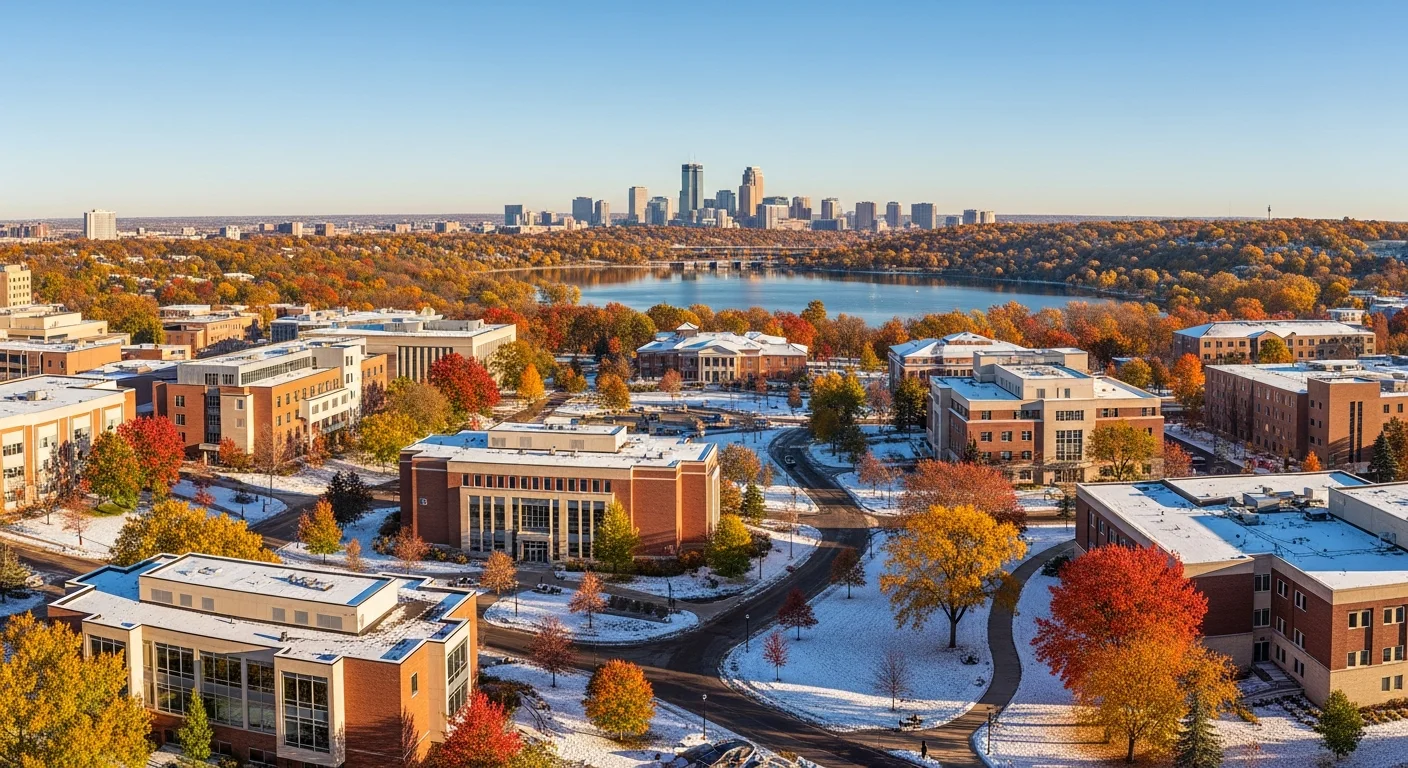
Best Doctoral Software Engineering Degree Programs in Minnesota

University of Minnesota-Twin Cities — Minneapolis, MN

Key Distinction: A large-scale public program with deep industry partnerships in the Upper Midwest and curriculum-wide emphasis on enterprise systems, cloud architecture, and DevOps practices.

Hakia Insight: Minnesota's doctoral program pairs Heimdahl's formal methods expertise with real-time access to Target, UnitedHealth, and Microsoft's production systems; this is rare—most PhD students study abstractions, but Minnesota PhD candidates can validate their research against Fortune 500 infrastructure.

At the doctoral level, minnesota's software engineering program distinguishes itself through a curriculum built around real-world systems and scalability challenges. The program emphasizes both theoretical foundations and practical application, with particular strength in cloud computing, distributed systems, and enterprise software architecture. Students engage with large-scale projects that mirror industry problems—database design, microservices architectures, and system reliability—rather than isolated academic exercises. The Twin Cities location provides direct pipelines to Target, UnitedHealth Group, 3M, and a growing fintech ecosystem, with many faculty maintaining active industry collaborations. A standout feature is the program's integration of DevOps and infrastructure-as-code throughout the curriculum, preparing graduates for modern CI/CD workflows from their first systems course. The capstone requirement typically involves partnering with regional companies, giving students portfolio-ready projects before graduation. Graduates consistently report strong placement in senior-level roles at Fortune 500 companies and mid-market tech firms, with particular success in cloud engineering and backend systems positions.

Programs Offered
  • Doctor of Philosophy in Software Engineering — 4-6 years, on-campus
  • Doctor of Science in Software Engineering — 4-6 years, online
Research Labs and Institutes
  • Laboratory for Software Engineering Research (LASER)
  • Dependable Computing Systems Laboratory
Industry Partners
  • Target (corporate)
  • UnitedHealth Group (corporate)
  • 3M (corporate)
  • Microsoft (corporate)
Notable Faculty
  • Mats P. E. Heimdahl — Software safety, formal methods, and requirements specification
  • Cristian Cadar — Program analysis and software testing
Accreditations and Certifications
  • ABET accredited

Location Advantages: Proximity to Fortune 500 headquarters (Target, UnitedHealth, 3M) in Twin Cities metroAccess to growing fintech and healthcare IT sectors
