University campus in Vermont
Updated January 2026

Best Information Technology Degree Programs in Vermont — 2026 Rankings

Compare the top information technology colleges in Vermont. 5 accredited information technology schools ranked by graduation rate, career outcomes, and value—from Community College of Vermont to Norwich University.

#1 ProgramNorwich
Avg Salary$98,760
Tuition From$6,720/yr
Job Growth+22%

Key Takeaways

Best information technology degree programs: Norwich, U of Vermont, Vermont State

Ranked by graduation rates, program outcomes, and institutional quality

IPEDS 2023

Tuition ranges from $6,720 to $47,640/year

Community College of Vermont offers the most affordable option at $6,720/yr

IPEDS 2023

Information Technology degree programs available: 2 associate's, 1 master's in Vermont

From community college pathways to advanced research degrees

IPEDS 2023

Vermont community college transfer can save 40-60% on total degree costs

2 associate's programs provide transfer pathways to bachelor's degrees

Education Commission of the States

Major employers: GlobalFoundries, Dealer.com, MyWebGrocer, Faraday

Tech hubs in Burlington and Montpelier

Hakia Research 2026

Information Technology degree programs near 17+ cities across Vermont

Search by city to find programs within 200 miles of your location

IPEDS 2023

Updated February 2026

On This Page
$98,760
Are Information Technology Degree Programs in Vermont Worth It?
Yes. The best information technology degree programs in Vermont deliver strong ROI—graduates earn $98,760 median salary with +22% job growth through 2032. In-state tuition averages $25,497/year.

Source: BLS OEWS May 2024

Best Information Technology Degree Programs in Vermont

Bachelor's Information Technology Degree Programs in Vermont

4 programs$98,760 median salary91% avg grad rate
4
Programs
$98,760
Median Salary
$30,191/yr
Avg Tuition
91%
Avg Grad Rate

Program Landscape

Vermont ranks among the nation's top destinations for information technology education, with 4 accredited bachelor's degree programs across 2 public and 2 private institutions. The highest-ranked programs are Norwich, U of Vermont, Vermont State, recognized for academic excellence, research opportunities, and strong industry connections.

Career Outcomes

Graduates from Vermont information technology programs earn a median salary of $83,946—14% below the national average. The state's robust technology sector, anchored by the Burlington, Montpelier, Rutland metropolitan areas, provides abundant internship and employment opportunities with companies including GlobalFoundries, Dealer.com, MyWebGrocer.

Costs & Value

Tuition ranges from $9,984 to $47,640 annually, with an average of $30,191/yr. Top programs maintain graduation rates above 91%, with the highest reaching 91%. Many programs hold ABET accreditation, the gold standard for computing education, ensuring curriculum meets rigorous industry standards.

Curriculum & Specializations

Students can choose from specializations including software engineering, cybersecurity, artificial intelligence, data science, and systems architecture. Strong industry partnerships provide access to co-op programs, capstone projects with real companies, and direct recruiting pipelines to Vermont's leading technology employers. For students seeking information technology degrees in Vermont, these top-ranked information technology schools offer the strongest combination of academic rigor and career preparation.

Show:

Earn your bachelor's in Information Technology

(Sponsored)

Loading programs...

🥇

Norwich University

PrivateNSA CAE
Northfield, VT
$46,860
Tuition/yr
$880
Per Credit
66.3
Score
Website
🥈

University of Vermont

Public
Burlington, VT
$16,280
Tuition/yr
$678
Per Credit
91%
Grad Rate
70.8
Score
Website
🥉

Vermont State University

Public
Randolph, VT
$9,984
Tuition/yr
$416
Per Credit
54.2
Score
Website
#4

Saint Michael's College

Private
Colchester, VT
$47,640
Tuition/yr
$1,530
Per Credit
40.9
Score
Website

Complete Information Technology Degree Program Rankings in Vermont

Best Associate's Information Technology Degree Programs in Vermont

### Program Landscape Vermont offers **2 accredited** associate's degree programs in information technology, providing an affordable entry point into the technology field. The top-ranked programs include **Community College of Vermont**, **Vermont State**, which combine rigorous technical curriculum with practical skills training. ### Costs & Value Community colleges in Vermont offer these two-year programs at an average cost of **$8,352/yr**—significantly less than four-year university tuition. Students completing associate's degrees can pursue entry-level technical positions and transfer opportunities, with entry-level salaries averaging **$54,318** in Vermont. ### Career Pathways Many programs feature guaranteed transfer agreements with Vermont's public universities, allowing students to complete their first two years at reduced cost before transferring to complete a bachelor's degree. The Burlington, Montpelier, Rutland areas offer particularly strong job markets for associate's degree holders, with employers like GlobalFoundries, Dealer.com, MyWebGrocer hiring for technical support, junior development, and IT specialist positions. ### Curriculum & Specializations Programs typically include coursework in programming fundamentals, database management, networking basics, and software development. Among information technology schools in Vermont, these associate's programs offer the best value for students beginning their information technology degrees in Vermont.

  1. #1. Community College of Vermont

    Hakia ranks Community College of Vermont as the #1 associate's in information technology degree program in Vermont. This public institution in Montpelier, VT has annual tuition of $6,720 ($280/credit). Ranking score: 59.3.

  2. #2. Vermont State University

    Hakia ranks Vermont State University as the #2 associate's in information technology degree program in Vermont. This public institution in Randolph, VT has annual tuition of $9,984 ($416/credit). Ranking score: 38.8.

Best Bachelor's Information Technology Degree Programs in Vermont

### Program Landscape Vermont ranks among the nation's top destinations for information technology education, with **4 accredited** bachelor's degree programs across **2 public** and **2 private** institutions. The highest-ranked programs are **Norwich**, **U of Vermont**, **Vermont State**, recognized for academic excellence, research opportunities, and strong industry connections. ### Career Outcomes Graduates from Vermont information technology programs earn a median salary of **$83,946**—14% below the national average. The state's robust technology sector, anchored by the Burlington, Montpelier, Rutland metropolitan areas, provides abundant internship and employment opportunities with companies including GlobalFoundries, Dealer.com, MyWebGrocer. ### Costs & Value Tuition ranges from **$9,984** to **$47,640** annually, with an average of **$30,191/yr**. Top programs maintain graduation rates above **91%**, with the highest reaching **91%**. Many programs hold ABET accreditation, the gold standard for computing education, ensuring curriculum meets rigorous industry standards. ### Curriculum & Specializations Students can choose from specializations including software engineering, cybersecurity, artificial intelligence, data science, and systems architecture. Strong industry partnerships provide access to co-op programs, capstone projects with real companies, and direct recruiting pipelines to Vermont's leading technology employers. For students seeking information technology degrees in Vermont, these top-ranked information technology schools offer the strongest combination of academic rigor and career preparation.

  1. #1. Norwich University

    Hakia ranks Norwich University as the #1 bachelor's in information technology degree program in Vermont. This private institution in Northfield, VT has annual tuition of $46,860 ($880/credit). Ranking score: 66.3. NSA/DHS Center of Academic Excellence designation: CAE-CDE.

  2. #2. University of Vermont

    Hakia ranks University of Vermont as the #2 bachelor's in information technology degree program in Vermont. This public institution in Burlington, VT has annual tuition of $16,280 ($678/credit) and a 91% graduation rate. Ranking score: 70.8.

  3. #3. Vermont State University

    Hakia ranks Vermont State University as the #3 bachelor's in information technology degree program in Vermont. This public institution in Randolph, VT has annual tuition of $9,984 ($416/credit). Ranking score: 54.2.

  4. #4. Saint Michael's College

    Hakia ranks Saint Michael's College as the #4 bachelor's in information technology degree program in Vermont. This private institution in Colchester, VT has annual tuition of $47,640 ($1530/credit). Ranking score: 40.9.

Best Master's Information Technology Degree Programs in Vermont

### Program Landscape Vermont offers **1** master's degree programs in information technology, designed for professionals seeking to advance into senior engineering, technical leadership, and specialized roles. The top programs—**Norwich**—combine advanced technical training with research opportunities and leadership development. ### Career Outcomes Master's graduates in Vermont earn a median salary of **$98,760**, approximately **20-30% higher** than bachelor's degree holders. The concentration of technology companies in Burlington, Montpelier, Rutland creates strong demand for graduate-level talent, with GlobalFoundries, Dealer.com, MyWebGrocer actively recruiting from these programs. ### Costs & Value Program formats include traditional full-time study (typically 2 years), part-time options for working professionals (2-3 years), and accelerated tracks. Tuition averages **$46,860/yr**, with many employers offering tuition reimbursement for graduate education. Some programs offer thesis and non-thesis tracks, allowing students to focus on research or professional development based on their career goals. ### Curriculum & Specializations Curriculum covers advanced topics including machine learning, distributed systems, software architecture, and technical management. Many programs include practicum experiences, industry capstone projects, or consulting engagements that provide real-world application of advanced concepts. Among Vermont's information technology schools at the graduate level, these programs stand out for both academic quality and career outcomes.

  1. #1. Norwich University

    Hakia ranks Norwich University as the #1 master's in information technology degree program in Vermont. This private institution in Northfield, VT has annual tuition of $46,860 ($880/credit). Ranking score: 66.3. NSA/DHS Center of Academic Excellence designation: CAE-CDE.

Information Technology Degree Costs & Tuition in Vermont

MetricValue
Average in-state tuition$25,497/year
Average out-of-state tuition$63,743/year
Community college tuition$6,374/year
4-year savings for residents$152,984
2+2 transfer pathway savings$38,246

Source: IPEDS 2023

Financial Aid & Scholarships for Information Technology Students in Vermont

State Aid Programs

Vermont residents pursuing Information Technology degrees have access to multiple layers of financial support. The Vermont Incentive Grant program provides need-based grants specifically for Vermont residents attending approved institutions, making it a critical resource for reducing out-of-pocket costs. To apply for federal aid, all students must complete the Free Application for Federal Student Aid (FAFSA) through Federal Student Aid, which determines eligibility for Pell Grants, federal loans, and work-study opportunities. The Vermont State Colleges System also participates in Vermont Transfer Agreements, which help reduce costs for students beginning at two-year institutions like Community College of Vermont before transferring to four-year programs.

Key Programs & Amounts

Individual institutions offer additional merit-based and need-based scholarships to attract talented IT students. When evaluating financial aid packages, prospective students should compare total cost of attendance across institutions and explore institutional aid offerings. The College Scorecard provides transparent data on average aid amounts and net price by institution. For more information about state-specific aid programs, visit the Vermont Incentive Grant website. Students should also investigate scholarships through professional organizations in information technology and cybersecurity fields, which often support undergraduate and graduate study. Learn more about related IT pathways through our guides on Cybersecurity in Vermont and Information Systems in Vermont.

Information Technology Degree ROI Calculator — Vermont

Use our interactive ROI calculator to estimate your return on investment for a information technology degree in Vermont. Enter your expected tuition costs, financial aid, and career goals to see projected payback periods and lifetime earnings. The calculator uses current salary data from BLS and tuition data from IPEDS to provide accurate estimates.

Information Technology Degree ROI Calculator
Estimate your return on investment for a information technology degree
$

Leave blank to use average cost for selected program type

20 years
10 years20 years30 years
20-Year ROI

+692%

Net gain divided by total investment. ROI above 200% is considered excellent for education investments.

Net Gain

$1,279,487

Your additional lifetime earnings with this degree vs. working without one, minus the total investment.

Break-Even

6 years

Years until your cumulative earnings exceed total investment. Shorter programs often break even faster due to lower opportunity cost.

COL-Adjusted Salary

$114,286

Your starting salary adjusted for local cost of living. This shows real purchasing power compared to a $100K national baseline.

Why does break-even change with program type? Your "total investment" includes both tuition AND opportunity cost (foregone earnings while in school). A 4-year full-time public university (in-state) means 4 years of not earning a salary ($140,000 in opportunity cost). Shorter full-time programs may have higher tuition but lower total investment because you return to the workforce sooner.

Detailed Breakdown
How we calculate your degree ROI using real salary data
Total Investment$185,000

Tuition plus opportunity cost (earnings you miss while in school)

Program Cost (Tuition)$45,000

Direct cost of the degree program

Opportunity Cost$140,000

4 years × $35K/year foregone salary while studying full-time

20-Year Earnings (with degree)$2,314,895

Projected career earnings starting after graduation, with salary growth

20-Year Earnings (without degree)$850,408

What you'd earn working at $35K/year with 2% annual growth

Starting Salary (Austin, TX)$120,000

Median salary for this role in your selected location (BLS 2024)

Annualized Return4.1%

Your investment's compound annual growth rate (similar to stock market returns)

Data sources: BLS OEWS May 2024, IPEDS 2023. Calculations use median salaries, 3% discount rate, and assume salary growth declines from 6% to 2% over career. Individual results will vary. | Powered by Hakia.com

Information Technology Salaries by Metro Area

Median annual salary in Vermont metro areas

Hakia.com
View data table
Categoryvalue
Burlington$109K
Montpelier$104K
Rutland$99K

Source: BLS OEWS May 2024

Hakia.com

Top Employers Hiring Information Technology Graduates in Vermont

Find information technology jobs in Vermont. These major employers across Vermont metro areas are actively hiring information technology degree holders. Click employer names to view current job openings.

Information Technology Jobs in Burlington

VT
GlobalFoundries
semiconductor
Dealer.com
tech
Green Mountain Power
energy
University of Vermont
education

Admission Requirements for Information Technology Degree Programs in Vermont

1

Research Program Requirements

Review admission requirements for information technology programs at your target schools. Requirements vary by institution and degree level.

2

Prepare Application Materials

Gather transcripts, test scores (SAT/ACT for undergrad, GRE for graduate), letters of recommendation, and personal statement.

3

Apply for Financial Aid

Complete the FAFSA by priority deadlines.

4

Submit Applications Before Deadlines

Apply early for priority consideration. Early action/decision deadlines are typically October-November; regular deadlines December-January.

5

Complete Enrollment Steps

Accept your offer, submit enrollment deposit, complete orientation requirements, and register for classes.

Transfer Pathways for Information Technology Degrees in Vermont

State Transfer System

Vermont's transfer system provides clear pathways for students beginning their Information Technology studies at community colleges and advancing to four-year institutions. The Vermont Transfer Agreements framework facilitates seamless credit transfer from Community College of Vermont to Vermont State University and other state colleges, eliminating duplicate coursework and reducing time-to-degree (Vermont Transfer Agreements). With 1 two-year institution (Community College of Vermont) and 5 four-year institutions offering bachelor's degrees in IT, the state supports a strong 2+2 model. Community College of Vermont's associate degree program, which awarded 13 completions in 2023, serves as a primary entry point for students seeking affordable foundational IT education before transferring to institutions like Vermont State University, home of 21 bachelor's degree completions.

How Transfers Work

Transfer students benefit from articulation agreements that guarantee junior-level standing upon admission to upper-level IT programs at four-year institutions, protecting both tuition investment and academic progress. The Vermont Incentive Grant continues to support transferred students who remain Vermont residents (Vermont VSAC), ensuring affordability throughout the degree pathway. Students transitioning from Community College of Vermont to Vermont State University (tuition $9,984) or other public four-year institutions experience minimal credential gaps. Advising centers at all participating institutions guide transfer course selection and timeline planning. For students exploring specialized career paths, consider related programs during your transfer planning through Information Systems in Vermont, Network Administration in Vermont, and Cloud Computing in Vermont.

Why Pursue an Information Technology Degree in Vermont?

Industry & Workforce

Vermont offers a growing landscape for Information Technology education with 8 institutions delivering programs across associate, bachelor, and master degree levels (IPEDS). In 2023, Vermont schools awarded 69 bachelor's degrees, 14 associate degrees, and 14 master's degrees in Information Technology, demonstrating strong institutional commitment to workforce development in this field. The state's strong higher education infrastructure includes both public and private institutions positioned in vibrant tech hubs like the Burlington-South Burlington metro area and Montpelier, creating direct pathways to employment with major employers including University of Vermont Medical Center, GlobalFoundries, and Vermont Health Care.

Salary Outlook

Affordability is a significant advantage for Vermont residents pursuing IT degrees. Public four-year institutions offer an average in-state tuition of $13,132, far below the national average, while the Vermont Incentive Grant provides need-based financial aid to residents at approved institutions (Vermont VSAC). Top-ranked programs like Norwich University and Vermont State University deliver rigorous curriculum paired with strong industry connections. Additionally, Vermont's quality of life, outdoor recreation, and emerging startup ecosystem attract both students and employers seeking innovation-focused talent. For comparative context on national opportunities, explore best IT bachelor's programs nationwide or most affordable IT programs nationally.

5 Programs
Information Technology Program Availability in Vermont
Vermont offers 5 accredited information technology programs across public universities, private colleges, and community colleges. Top tech hubs include Burlington, Montpelier, Rutland.

Source: IPEDS 2023

Information Technology Job Market & Salary Data in Vermont

Employment Outlook

Vermont's information technology job market is supported by a diverse range of employers and growing demand across the state. According to the Bureau of Labor Statistics, the state offers competitive opportunities for IT professionals in major metropolitan areas including Burlington-South Burlington, Rutland, Montpelier, and Bennington. The Burlington-South Burlington metro area represents the strongest regional tech hub, with significant employment concentration in healthcare IT, manufacturing, and professional services sectors. Recent data indicates that Vermont has 8 institutions offering Information Technology programs at various credential levels, with 69 bachelor's degree completions annually, demonstrating consistent pipeline development for the workforce.

Salaries by Metro

Career pathways in Vermont extend beyond traditional IT roles, with emerging opportunities in cybersecurity, cloud computing, and network administration. Students interested in related specializations should explore Cybersecurity in Vermont, Cloud Computing in Vermont, and Network Administration in Vermont programs to understand the full spectrum of career options. The state's geographic positioning in the Northeast Kingdom and Chittenden County regions provides access to employers across multiple sectors. For comprehensive national context, review best Information Technology bachelor's programs nationally and most affordable IT programs to benchmark Vermont opportunities against peers in neighboring states like New York and Massachusetts.

Entry-Level (0-2 yrs)

New graduates and career changers

Senior (8+ yrs)

Technical leads and architects

Median Salary in Vermont$64,194$143,202
Typical RolesJunior Developer, AnalystStaff Engineer, Architect
Remote Work AccessLimitedCommon
Degree ExpectationBachelor's sufficientMaster's preferred

What You'll Learn in Information Technology Degree Programs in Vermont

Core Requirements

Information Technology curricula in Vermont balance foundational computer science concepts with practical, industry-focused training. Core coursework across programs includes database management, systems administration, network infrastructure, cybersecurity fundamentals, and software development principles. Associate degree programs at Community College of Vermont emphasize hands-on technical skills through labs and certifications, preparing graduates for immediate workforce entry in technical support and systems roles. Bachelor's degree programs at Norwich University and Vermont State University expand on this foundation with courses in cloud computing, enterprise architecture, IT project management, and emerging technologies. Many programs integrate real-world case studies and capstone projects that require students to design and implement solutions for actual business challenges.

Degree Pathways

Advanced coursework in master's programs, particularly at Norwich University, focuses on strategic IT leadership, cybersecurity strategy, cloud infrastructure management, and IT governance. Specialization options allow students to concentrate in areas such as network administration, systems engineering, and information security. Vermont institutions increasingly incorporate industry certifications (CompTIA, Cisco, Microsoft) directly into curricula, enabling graduates to earn credentials while completing degrees. Capstone projects and internship requirements with regional employers like GlobalFoundries and University of Vermont Medical Center provide experiential learning and networking opportunities. For students interested in complementary specializations, explore Cloud Computing in Vermont and Cybersecurity in Vermont to understand focused career pathways within the broader IT field.

Information Technology Specialization Tracks

Information Systems

Specialize in information systems through electives and capstone projects within your information technology degree.

Network Administration

Specialize in network administration through electives and capstone projects within your information technology degree.

Cloud Computing

Specialize in cloud computing through electives and capstone projects within your information technology degree.

Cybersecurity

Specialize in cybersecurity through electives and capstone projects within your information technology degree.

Online vs On-Campus Information Technology Programs in Vermont

Online Programs

0 available in Vermont

On-Campus Programs

Traditional classroom experience

Typical Tuition$22,947/yr$25,497/yr
Schedule FlexibilitySelf-paced or asyncFixed schedule
NetworkingVirtual cohortsIn-person, career fairs
Best ForWorking professionalsTraditional students
Completion Time2-4 years (flexible)4 years (standard)

Information Technology Schools by City in Vermont

Burlington and South Burlington form Vermont's premier technology hub, anchoring the Burlington-South Burlington metropolitan area with the highest concentration of IT employment and career opportunities. This region hosts major employers including the University of Vermont Medical Center and serves as the geographic center for Vermont's tech sector growth. The University of Vermont, located in Burlington, ranks as the state's #1 bachelor's IT program by reputation and offers in-state tuition of $16,280 for public students, making it accessible to regional talent. Montpelier, the state capital in Central Vermont, provides opportunities in government technology and administrative systems. Rutland in Southern Vermont and the Northeast Kingdom region round out Vermont's geographic employment landscape, offering smaller but growing technology markets for professionals seeking alternative urban settings with lower costs of living.

Cost of living varies significantly across Vermont's major cities, with Burlington-South Burlington representing the highest-cost region balanced by stronger salary opportunities, while Montpelier and Rutland offer more affordable housing and lower expenses. Community College of Vermont, with 13 annual completions and tuition of only $6,720, serves as the most affordable entry point and maintains transfer agreements through the Vermont Transfer Agreements system that help seamless progression to four-year institutions like Vermont State University ($9,984 tuition). Prospective students should compare affordability across states by reviewing most affordable IT programs nationally and programs in neighboring New York and Texas. Norwich University, while higher-cost at $46,860 tuition, provides unmatched networking within the Burlington metro region and serves as the state's IT leader with 54 completions annually.

Compare Online Information Technology Programs in Vermont

View tuition costs, program formats & enrollment info

Find Information Technology Programs Near You in Vermont

Search by city to find accredited information technology programs ranked by our state methodology.

Information Technology Degree Programs by City in Vermont

Information Technology Degree Programs Near Montpelier, Vermont

As Vermont's capital, Montpelier hosts state government IT infrastructure and administrative systems that create demand for systems administrators and enterprise support roles within the Department of Information and Innovation. The city's proximity to Waterbury (home to Vermont's central IT operations hub) and nearby Norwich University makes it a strategic location for IT professionals managing public sector technology stacks.

Montpelier is located in Washington County, Vermont.

Associate's Information Technology Degree Programs Near Montpelier, Vermont
  1. Community College of Vermont (Public) — State #1, in Montpelier. Tuition: $6,720/year.
Bachelor's Information Technology Degree Programs Near Montpelier, Vermont
  1. University of Vermont (Public) — State #1, 34.2 mi from Montpelier. Tuition: $16,280/year. Graduation rate: 91%.
  2. Norwich University (Private) — State #2, 9.6 mi from Montpelier. Tuition: $46,860/year.
  3. Vermont State University (Public) — State #3, 22.4 mi from Montpelier. Tuition: $9,984/year.
Master's Information Technology Degree Programs Near Montpelier, Vermont
  1. Norwich University (Private) — State #1, 9.6 mi from Montpelier. Tuition: $46,860/year.

Information Technology Degree Programs Near Burlington, Vermont

Burlington's position as Vermont's largest city anchors a tech corridor supported by the University of Vermont's computer science programs and a growing ecosystem of software development firms and managed IT service providers serving the region's healthcare and education sectors. Major employers like UVM Medical Center operate complex enterprise systems requiring cloud architects and database administrators, while the city's venture capital activity increasingly attracts startups in fintech and cybersecurity.

Burlington is located in Chittenden County, Vermont.

Associate's Information Technology Degree Programs Near Burlington, Vermont
  1. Community College of Vermont (Public) — State #1, 33.7 mi from Burlington. Tuition: $6,720/year.
Bachelor's Information Technology Degree Programs Near Burlington, Vermont
  1. University of Vermont (Public) — State #1, in Burlington. Tuition: $16,280/year. Graduation rate: 91%.
  2. Norwich University (Private) — State #2, 35.3 mi from Burlington. Tuition: $46,860/year.
  3. Vermont State University (Public) — State #3, 47.3 mi from Burlington. Tuition: $9,984/year.
Master's Information Technology Degree Programs Near Burlington, Vermont
  1. Norwich University (Private) — State #1, 35.3 mi from Burlington. Tuition: $46,860/year.

Information Technology Degree Programs Near Northfield, Vermont

This small Washington County town is home to Norwich University, which offers specialized IT and cybersecurity degree programs with hands-on infrastructure labs, making it valuable for students seeking immersive technical education before entering the workforce. The university's own IT operations provide internship and entry-level opportunities in network administration and systems engineering.

Northfield is located in Washington County, Vermont.

Associate's Information Technology Degree Programs Near Northfield, Vermont
  1. Community College of Vermont (Public) — State #1, 10.6 mi from Northfield. Tuition: $6,720/year.
Bachelor's Information Technology Degree Programs Near Northfield, Vermont
  1. University of Vermont (Public) — State #1, 35.3 mi from Northfield. Tuition: $16,280/year. Graduation rate: 91%.
  2. Norwich University (Private) — State #2, in Northfield. Tuition: $46,860/year.
  3. Vermont State University (Public) — State #3, 14.1 mi from Northfield. Tuition: $9,984/year.
Master's Information Technology Degree Programs Near Northfield, Vermont
  1. Norwich University (Private) — State #1, in Northfield. Tuition: $46,860/year.

Information Technology Degree Programs Near Randolph, Vermont

Randolph serves as a quiet hub for remote IT work and consulting, with solid broadband infrastructure and proximity to the White River Junction tech corridor that's emerging as a secondary employment center for software developers and cloud consultants. The town's lower cost of living compared to Burlington makes it attractive for IT managers relocating from higher-cost regions while maintaining remote contracts with out-of-state employers.

Randolph is located in Orange County, Vermont.

Associate's Information Technology Degree Programs Near Randolph, Vermont
  1. Community College of Vermont (Public) — State #1, 23.6 mi from Randolph. Tuition: $6,720/year.
Bachelor's Information Technology Degree Programs Near Randolph, Vermont
  1. University of Vermont (Public) — State #1, 47.3 mi from Randolph. Tuition: $16,280/year. Graduation rate: 91%.
  2. Norwich University (Private) — State #2, 14.1 mi from Randolph. Tuition: $46,860/year.
  3. Vermont State University (Public) — State #3, in Randolph. Tuition: $9,984/year.
Master's Information Technology Degree Programs Near Randolph, Vermont
  1. Norwich University (Private) — State #1, 14.1 mi from Randolph. Tuition: $46,860/year.

Information Technology Degree Programs Near Bennington, Vermont

Bennington College's computer science and information systems programs supply local talent to the southern Vermont region, while the town's proximity to the Massachusetts border positions it near larger tech employers in western Massachusetts and the Albany, NY metro area for IT professionals seeking broader career mobility. The city itself has invested in broadband infrastructure to support remote work and small technology consulting firms.

Bennington is located in Bennington County, Vermont.

Associate's Information Technology Degree Programs Near Bennington, Vermont
  1. Community College of Vermont (Public) — State #1, 99.8 mi from Bennington. Tuition: $6,720/year.
Bachelor's Information Technology Degree Programs Near Bennington, Vermont
  1. University of Vermont (Public) — State #1, 107.7 mi from Bennington. Tuition: $16,280/year. Graduation rate: 91%.
  2. Norwich University (Private) — State #2, 89.2 mi from Bennington. Tuition: $46,860/year.
  3. Vermont State University (Public) — State #3, 77.3 mi from Bennington. Tuition: $9,984/year.
Master's Information Technology Degree Programs Near Bennington, Vermont
  1. Norwich University (Private) — State #1, 89.2 mi from Bennington. Tuition: $46,860/year.

Information Technology Degree Programs Near Brattleboro, Vermont

Brattleboro's strong broadband infrastructure and creative tech community support a growing cohort of IT consultants and software developers working with out-of-state clients, while proximity to Five College Consortium institutions (40 minutes away) provides access to advanced computer science coursework and networking. The town's investment in digital infrastructure and tech-friendly business climate makes it increasingly viable for cloud engineers and cybersecurity specialists seeking non-traditional work arrangements.

Brattleboro is located in Windham County, Vermont.

Associate's Information Technology Degree Programs Near Brattleboro, Vermont
  1. Community College of Vermont (Public) — State #1, 96 mi from Brattleboro. Tuition: $6,720/year.
Bachelor's Information Technology Degree Programs Near Brattleboro, Vermont
  1. University of Vermont (Public) — State #1, 114 mi from Brattleboro. Tuition: $16,280/year. Graduation rate: 91%.
  2. Norwich University (Private) — State #2, 86.4 mi from Brattleboro. Tuition: $46,860/year.
  3. Vermont State University (Public) — State #3, 72.5 mi from Brattleboro. Tuition: $9,984/year.
Master's Information Technology Degree Programs Near Brattleboro, Vermont
  1. Norwich University (Private) — State #1, 86.4 mi from Brattleboro. Tuition: $46,860/year.

Information Technology Degree Programs Near Castleton, Vermont

Castleton University offers information systems and cybersecurity bachelor's degrees with emphasis on practical enterprise systems experience, preparing graduates for IT roles in healthcare and education sectors across central Vermont. The university's IT operations and partnerships with regional medical centers provide direct pathways into systems administration and data management positions.

Castleton is located in Rutland County, Vermont.

Associate's Information Technology Degree Programs Near Castleton, Vermont
  1. Community College of Vermont (Public) — State #1, 55.4 mi from Castleton. Tuition: $6,720/year.
Bachelor's Information Technology Degree Programs Near Castleton, Vermont
  1. University of Vermont (Public) — State #1, 60 mi from Castleton. Tuition: $16,280/year. Graduation rate: 91%.
  2. Norwich University (Private) — State #2, 45 mi from Castleton. Tuition: $46,860/year.
  3. Vermont State University (Public) — State #3, 36.7 mi from Castleton. Tuition: $9,984/year.
Master's Information Technology Degree Programs Near Castleton, Vermont
  1. Norwich University (Private) — State #1, 45 mi from Castleton. Tuition: $46,860/year.

Information Technology Degree Programs Near Colchester, Vermont

Colchester's location in the Burlington metropolitan area provides direct access to University of Vermont's engineering and computer science programs while maintaining proximity to major employers like UVM Medical Center and GlobalFoundries' nearby operations in South Burlington that employ IT infrastructure specialists. The town serves as a residential hub for IT professionals working in the Chittenden County tech cluster without the higher cost of living in Burlington proper.

Colchester is located in Chittenden County, Vermont.

Associate's Information Technology Degree Programs Near Colchester, Vermont
  1. Community College of Vermont (Public) — State #1, 32.8 mi from Colchester. Tuition: $6,720/year.
Bachelor's Information Technology Degree Programs Near Colchester, Vermont
  1. University of Vermont (Public) — State #1, 1.9 mi from Colchester. Tuition: $16,280/year. Graduation rate: 91%.
  2. Norwich University (Private) — State #2, 35 mi from Colchester. Tuition: $46,860/year.
  3. Vermont State University (Public) — State #3, 47.4 mi from Colchester. Tuition: $9,984/year.
Master's Information Technology Degree Programs Near Colchester, Vermont
  1. Norwich University (Private) — State #1, 35 mi from Colchester. Tuition: $46,860/year.

Information Technology Degree Programs Near Craftsbury Common, Vermont

This rural Orleans County location offers minimal local IT employment but appeals to experienced remote IT architects and cybersecurity consultants seeking lifestyle changes, with improving broadband connectivity supporting asynchronous work for distributed teams. The nearest significant IT employment centers are in the Burlington area (90 minutes south) or Montpelier region, making this viable only for established professionals with remote arrangements already in place.

Craftsbury Common is located in Orleans County, Vermont.

Associate's Information Technology Degree Programs Near Craftsbury Common, Vermont
  1. Community College of Vermont (Public) — State #1, 27.3 mi from Craftsbury Common. Tuition: $6,720/year.
Bachelor's Information Technology Degree Programs Near Craftsbury Common, Vermont
  1. University of Vermont (Public) — State #1, 41.9 mi from Craftsbury Common. Tuition: $16,280/year. Graduation rate: 91%.
  2. Norwich University (Private) — State #2, 37.9 mi from Craftsbury Common. Tuition: $46,860/year.
  3. Vermont State University (Public) — State #3, 50.4 mi from Craftsbury Common. Tuition: $9,984/year.
Master's Information Technology Degree Programs Near Craftsbury Common, Vermont
  1. Norwich University (Private) — State #1, 37.9 mi from Craftsbury Common. Tuition: $46,860/year.

Information Technology Degree Programs Near Johnson, Vermont

Johnson's home to Northern Vermont University's computer science and information technology programs, which focus on practical systems administration and network engineering skills needed by regional employers in healthcare and state government. The university's own data center operations and IT infrastructure provide internship opportunities and direct employment pathways for graduates entering the Lamoille County job market.

Johnson is located in Lamoille County, Vermont.

Associate's Information Technology Degree Programs Near Johnson, Vermont
  1. Community College of Vermont (Public) — State #1, 25.4 mi from Johnson. Tuition: $6,720/year.
Bachelor's Information Technology Degree Programs Near Johnson, Vermont
  1. University of Vermont (Public) — State #1, 28.3 mi from Johnson. Tuition: $16,280/year. Graduation rate: 91%.
  2. Norwich University (Private) — State #2, 34.7 mi from Johnson. Tuition: $46,860/year.
  3. Vermont State University (Public) — State #3, 48.6 mi from Johnson. Tuition: $9,984/year.
Master's Information Technology Degree Programs Near Johnson, Vermont
  1. Norwich University (Private) — State #1, 34.7 mi from Johnson. Tuition: $46,860/year.

Coding Bootcamps: An Alternative Pathway

Coding bootcamps offer an accelerated pathway into tech careers. For those in Vermont considering alternatives to traditional degrees, here's what you need to know about this intensive learning format.

What is a Coding Bootcamp?

A coding bootcamp is an intensive, short-term training program (typically 12-24 weeks) that teaches practical programming skills through hands-on projects. Unlike traditional degrees, bootcamps focus exclusively on job-ready skills and often include career services to help graduates land their first tech role.

Who Bootcamps Are Best For

  • Career changers looking to enter tech quickly
  • Professionals wanting to upskill or transition roles
  • Self-taught developers seeking structured training
  • Those unable to commit to a 4-year degree timeline

What People Love

Based on discussions from r/codingbootcamp, r/cscareerquestions, and r/learnprogramming

  • Fast-track to employment—many graduates land jobs within 3-6 months
  • Hands-on, project-based learning builds real portfolio pieces
  • Career services and interview prep included in most programs
  • Strong alumni networks for job referrals and mentorship
  • Structured curriculum keeps you accountable and on track

Common Concerns

Honest feedback from bootcamp graduates and industry professionals

  • Intense pace can be overwhelming—expect 60-80 hour weeks
  • Some employers still prefer traditional CS degrees for certain roles
  • Quality varies widely between programs—research carefully
  • Job placement stats can be misleading—ask for CIRR audited reports
  • May lack depth in computer science fundamentals like algorithms
EXCLUSIVE OFFER

Save $1000 on Springboard Bootcamps

Springboard offers career-focused bootcamps with 1-on-1 mentorship from industry professionals. Their programs include a job guarantee—complete all requirements, and if you don't land a qualifying role, you may be eligible for a full tuition refund. Use our exclusive link to save $1000 on enrollment.

Programs for Information Technology careers:

  • Software Engineering for Beginners
  • Cybersecurity Career Track
1-on-1 MentorshipJob GuaranteeFlexible Payment

We may earn a commission when you use our affiliate link and coupon.

Best Information Technology Degree Programs in Other States

StateTotal ProgramsMedian TuitionTop Program
Best Information Technology Degree Programs in California29$14,392University of the People
Best Information Technology Degree Programs in Texas52$8,606The University of Texas at Dallas
Best Information Technology Degree Programs in New York66$36,122New York University
Best Information Technology Degree Programs in Florida38$12,240University of Central Florida
Best Information Technology Degree Programs in Washington16$7,997University of Washington-Seattle Campus
Best Information Technology Degree Programs in Massachusetts24$40,410Northeastern University
Best Information Technology Degree Programs in Illinois30$29,850DeVry University-Illinois
Best Information Technology Degree Programs in Georgia31$7,158Georgia Institute of Technology-Main Campus

Information Technology Degree Programs in Vermont: FAQ

How We Rank Information Technology Degree Programs

Based on 5 programs from IPEDS 2023

We analyzed 5 information technology degree programs in Vermont using IPEDS 2023 data and BLS labor statistics. Our rankings are produced algorithmically without editorial intervention, ensuring objectivity and reproducibility.

Ranking Factors

Program Completions35%

Number of graduates per year in this specific field (CIP code). Larger programs indicate established departments with more resources, course offerings, and career services. Measured from IPEDS Completions data.

Graduation Rate25%

Percentage of students completing their degree within 150% of expected time (6 years for bachelor's, 3 years for associate's). Higher rates indicate better student support and program quality. Source: IPEDS Graduation Rates survey.

Selectivity20%

Admission rate (lower = more selective). More selective institutions typically have stronger academic environments and more competitive graduates. For open-admission institutions, we use graduation rates as a proxy for quality.

Career Outcomes20%

Regional salary data for information technology graduates. Vermont median salary of $98,760 is factored into institutional scores based on local job market strength.

Ranking Categories

Best Programs

Overall quality using all four factors weighted as shown above. Ideal for students seeking the strongest academic experience.

Online Programs

Same methodology, filtered to schools with fully online or hybrid options (IPEDS Distance Education data). Some schools may have lower graduation rates due to different student demographics.

Most Affordable

Ranked primarily by net cost (tuition minus average institutional aid), with quality factors as tiebreakers. Best for cost-conscious students.

Data Sources

  • IPEDS 2023Institutional characteristics, completions, graduation rates
  • BLS OEWS 2024State and metro salary data by occupation
  • CIP Code MappingPrograms identified using Classification of Instructional Programs codes

Data Sources

Institutional characteristics, completions, graduation rates

Vermont salary and employment data

Official University Websites

Program details and admissions information

Last Updated: February 22, 2026. Rankings based on IPEDS 2023 data. Salary data from BLS OEWS May 2024.

Was this ranking helpful for your college search?
Taylor Rupe

Taylor Rupe

Co-founder & Editor (B.S. Computer Science, Oregon State • B.A. Psychology, University of Washington)

Taylor combines technical expertise in computer science with a deep understanding of human behavior and learning. His dual background drives Hakia's mission: leveraging technology to build authoritative educational resources that help people make better decisions about their academic and career paths.

Information Technology Degree Programs in Vermont — Detailed School Profiles

Best Associate's Information Technology Degree Programs in Vermont

Community College of Vermont — Montpelier, VT

Hakia Insight: Community College of Vermont's placement into University of Vermont and Vermont state agencies creates a recognized pathway where an associate's degree functions as a direct entry credential rather than a transfer requirement—employers in the region treat it as terminal and promotable.

At the associate's level, you'll gain hands-on experience with networking, systems administration, and help desk support—the foundational skills employers actually need on day one. CCV's IT program emphasizes practical troubleshooting and real-world scenarios, preparing you to support both small businesses and larger organizations across Vermont. Many graduates move directly into help desk or junior technician roles while simultaneously transferring to University of Vermont or Champlain College to complete their bachelor's degree without losing credits. The program's flexibility through evening and online options makes it accessible if you're working or managing other responsibilities, and the strong regional employer connections mean internship and job placement opportunities are built into your path from the start.

Programs Offered
  • Associate of Science in Information Technology — 2 years, on-campus
  • Associate of Applied Science in Information Technology — 2 years, online
Career Outcomes

Top Employers: University of Vermont, Vermont state government agencies, Local healthcare systems, Vermont businesses and nonprofits, Regional technology service providers.

Top Transfer Destinations
  • University of Vermont
  • Champlain College
  • Vermont Technical College
Entry-Level Career Paths
  • Help Desk Technician
  • Desktop Support Specialist
  • IT Support Technician
  • Junior Network Administrator
  • Field Service Technician
  • Systems Support Specialist
Included Certifications
  • CompTIA A+
  • CompTIA Network+
  • Microsoft certifications (Azure Fundamentals or similar)
  • Cisco CCNA (introduction level)

Location Advantages:

Vermont State University — Randolph, VT

Key Distinction: Vermont State University's IT program uniquely prioritizes employer-informed curriculum and real-world organizational problem-solving, preparing graduates for immediate impact in Vermont's healthcare, government, and regional business IT roles.

Hakia Insight: Vermont State's embedded partnerships with the Vermont Department of Health and Agency of Digital Services mean your coursework solves *actual* government IT problems, giving you portfolio pieces and reference contacts before graduation that rival internship credentials.

At the associate's level, vermont State University's information technology offerings focus on applied problem-solving and workforce readiness through a curriculum designed with direct input from Vermont employers and regional industry councils. Rather than treating IT as pure computer science, the program emphasizes the business context of technology decisions—how systems serve organizational goals, how infrastructure choices impact operations, and how IT professionals communicate technical concepts to non-technical stakeholders. Students engage in capstone projects that address real challenges from partner organizations, from small Vermont businesses modernizing legacy systems to state agencies improving service delivery. The program values accessible entry points for students from diverse backgrounds, including those transitioning from other fields or returning to education after work experience, reflecting Vermont's demographic realities and labor market needs. Faculty combine teaching with active consulting and industry engagement, bringing current practices directly into coursework. Graduates find strong placement in healthcare IT, local government technology roles, and small-to-mid-sized company infrastructure positions—the backbone of Vermont's economy. The program also supports professional certifications like CompTIA and AWS, recognizing that credentials matter in hiring decisions. For students seeking relevant, pragmatic IT education rooted in real organizational needs rather than purely theoretical foundations, Vermont State University delivers a program calibrated to regional job market realities and employer expectations.

Programs Offered
  • Associate of Science in Information Technology — 2 years, on-campus
  • Associate of Applied Science in Information Technology — 2 years, online
Research Labs and Institutes
  • Renewable Energy Lab
  • Weather Center
  • TV Studio Workstations
  • Computer and Electronics Labs
  • Solar Training Roof
Industry Partners
  • Vermont Department of Health (government)
  • Vermont Agency of Digital Services (government)
  • Local Vermont healthcare systems (nonprofit)
Notable Faculty
  • Lauren Provost — Information Technology
  • Craig Damon — Computer Information Systems
  • Keith Tookey — Computer Information Systems
  • Leslie Damon — Information Technology
  • Bill Kuker — Information Technology
Accreditations and Certifications
  • CompTIA A+
  • CompTIA Network+
  • AWS Certified Cloud Practitioner eligible

Location Advantages: Direct partnerships with Vermont government agenciesAccess to regional healthcare IT employmentSmall-business and local economy IT infrastructure focus

Best Bachelor's Information Technology Degree Programs in Vermont

Norwich University — Northfield, VT

Key Distinction: Partnership with Hack The Box for hands-on cybersecurity challenges. Industry-recognized HTB certifications (CBBH, CDSA, CPTS)

Hakia Insight: Norwich's exclusive Hack The Box partnership delivers three industry-recognized certifications (CBBH, CDSA, CPTS) embedded in tuition—credentials employers verify independently, bypassing resume screening and accelerating clearance eligibility for DoD roles.

Norwich University's online Bachelor of Science in Cybersecurity program is designed as one of the first universities designated as a Center for Academic Excellence in Cyber Defense Education by the NSA and DHS. The curriculum emphasizes hands-on experience through a unique partnership with Hack The Box (HTB), providing real-world cybersecurity challenges aligned to industry standards. Students gain practical skills in computer forensics, compliance, and vulnerability management while earning industry-recognized certifications including HTB Certified Bug Bounty Hunter (HTB CBBH), HTB Certified Defensive Security Analyst (HTB CDSA), and HTB Certified Penetration Testing Specialist (HTB CPTS). The program offers two concentration tracks: computer forensics and vulnerability management, or information warfare and security management. Instructors have over ten years of cybersecurity experience and provide one-on-one guidance. The flexible online format allows students to transfer up to 90 credits and complete the program in an average of 18 months. The HTB certifications directly align with DoD job roles, giving graduates an edge in securing critical positions in federal agencies.

Programs Offered
  • Bachelor of Science in Cybersecurity — 4 years, on-campus. BS
Industry Partners
  • U.S. Department of Defense (government)
  • Lockheed Martin (corporate)
  • Raytheon Technologies (corporate)
  • General Dynamics (corporate)
Admissions

GPA Requirement: 3.5 or higher for Graduate Apprenticeships. Application Deadline: February 27, 2026 (Spring B), April 24, 2026 (Summer A), June 19, 2026 (Summer B).

Accreditations and Certifications
  • NSA Center of Academic Excellence in Cyber Defense Education
  • Defense Cyber Crime Center Center of Digital Forensics Academic Excellence

Location Advantages: Access to DoD contracting ecosystemSecurity clearance eligibility supportVermont location near Northeast defense hub
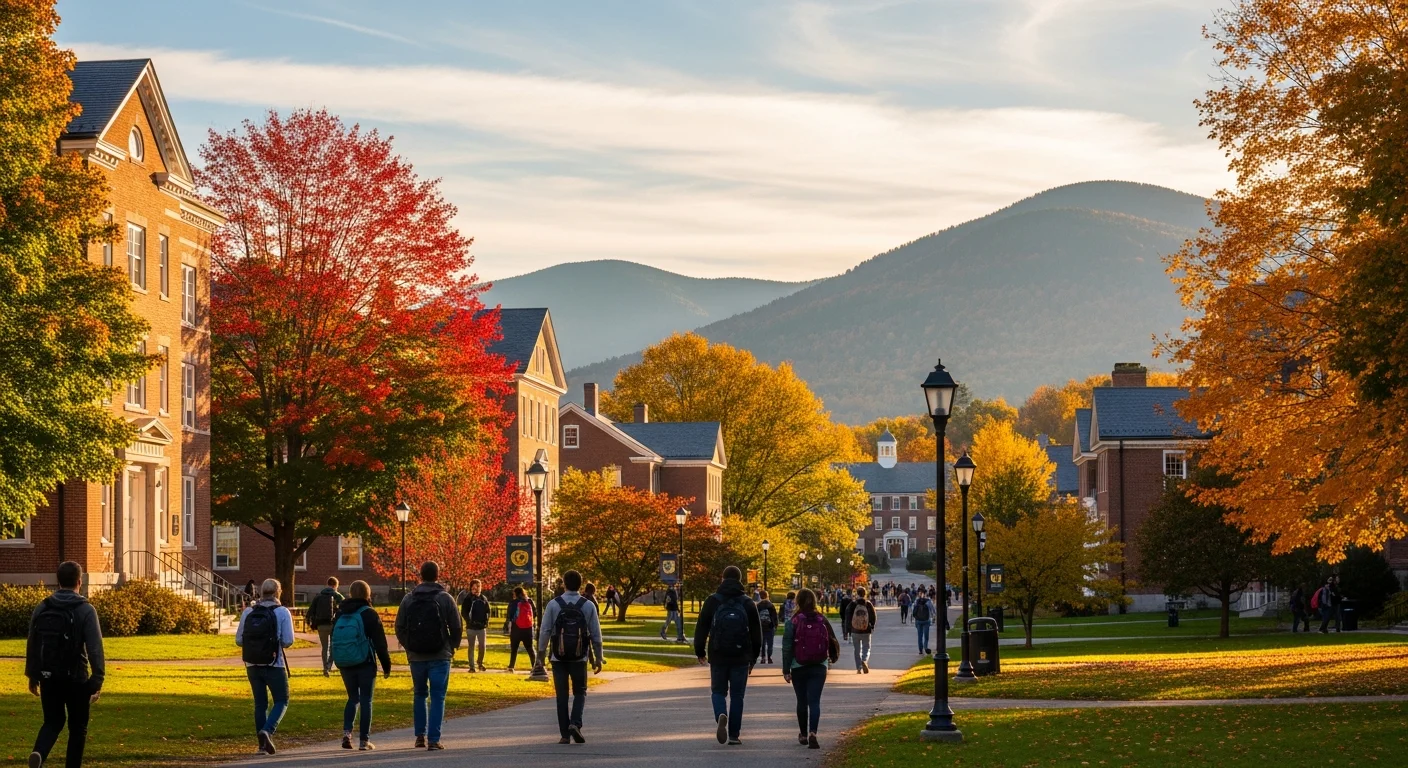

University of Vermont — Burlington, VT

Key Distinction: UVM's IT program stands out for weaving real-world internships and regional employer partnerships directly into its curriculum, producing graduates immediately capable in cybersecurity and enterprise systems roles.

Hakia Insight: UVM's deliberate weaving of internships into the curriculum (not as optional add-ons) plus IBM and Microsoft partnerships mean you graduate with a vetted work history in enterprise systems, not just theoretical knowledge—regional financial services firms track UVM placement cohorts for immediate hiring.

At the bachelor's level, UVM's information technology program emphasizes practical, hands-on learning grounded in current industry standards and emerging technologies. The curriculum balances foundational computer science theory with applied coursework in cybersecurity, cloud computing, and enterprise systems—areas where Vermont employers and regional tech firms actively recruit. What distinguishes this program is its integration of real-world projects and internship opportunities with companies across New England, allowing students to build portfolios while still in school. Faculty bring industry experience alongside academic credentials, and the program maintains close ties with Burlington's growing tech ecosystem and regional financial services companies that rely heavily on IT infrastructure. Graduates report strong placement rates in systems administration, network engineering, and cybersecurity roles, with many staying in the Northeast or relocating to major tech hubs with competitive offers. The program's smaller cohort size means students get meaningful faculty mentorship and aren't lost in massive lecture halls—a significant advantage for those who thrive with direct guidance. UVM also offers flexibility through evening and online options for working professionals, recognizing that IT talent often develops through both traditional and non-linear paths. The combination of theoretical rigor, practical skill-building, and strong regional employer relationships creates a program where students graduate job-ready rather than requiring extensive on-the-job training.

Programs Offered
  • Bachelor of Science in Information Technology — 4 years, on-campus
  • Bachelor of Arts in Information Technology — 4 years, online
Industry Partners
  • IBM (corporate)
  • Microsoft (corporate)
  • Champlain College (partnership) (nonprofit)
Accreditations and Certifications
  • National Accrediting Agency for Clinical Laboratory Science

Location Advantages: Proximity to Burlington tech ecosystemAccess to regional financial services IT infrastructureNew England tech company recruitment corridor

Vermont State University — Randolph, VT

Key Distinction: Mandatory internships and co-ops. Two-part senior capstone project (CIS 4721/4722)

Hakia Insight: Vermont State's mandatory internship and co-op requirement, combined with the two-part capstone (4721/4722), forces you to ship real work twice and defend it formally—employers can verify you've deployed systems under supervision, a claim most bachelor's graduates can't make.

The Information Technology B.S. program at Vermont State combines classroom learning with real-world experience through mandatory internships and co-ops. Students develop technical skills to design, build, and deploy software systems, data networks, and telecommunication infrastructures. The curriculum includes hands-on labs for network installation and maintenance, system administration, and web development. A two-part senior capstone project (CIS 4721/4722) provides culminating experience. The program offers two specialization tracks: Infrastructure and Security. Students gain experience with Linux/Windows system administration, network routing, database systems, and cybersecurity. Graduates achieve 100% job placement or graduate school enrollment within six months. The program leverages state-of-the-art computer and electronics labs, with faculty from military, Fortune 500, and startup backgrounds. Strong industry partnerships provide internship opportunities and career pathways.

Programs Offered
  • Bachelor of Science in Information Technology — 4 years, on-campus. BS
Research Labs and Institutes
  • Renewable Energy Lab
  • Weather Center
  • TV Studio Workstations
  • Computer and Electronics Labs
  • Solar Training Roof
Industry Partners
  • Vermont Department of Health (government)
  • Vermont Agency of Digital Services (government)
  • Local Vermont healthcare systems (nonprofit)
Notable Faculty
  • Lauren Provost — Information Technology
  • Craig Damon — Computer Information Systems
  • Keith Tookey — Computer Information Systems
  • Leslie Damon — Information Technology
  • Bill Kuker — Information Technology
Accreditations and Certifications
  • CompTIA A+
  • CompTIA Network+
  • AWS Certified Cloud Practitioner eligible

Location Advantages: Direct partnerships with Vermont government agenciesAccess to regional healthcare IT employmentSmall-business and local economy IT infrastructure focus

Saint Michael's College — Colchester, VT

Hakia Insight: Saint Michael's College's dual BA/BS pathway allows students to customize their IT degree with liberal arts breadth—rare among technical programs—positioning graduates for both technical roles and cross-functional leadership positions that increasingly require cultural fluency alongside coding skills.

Programs Offered
  • Bachelor of Science in Information Technology — 4 years, on-campus
  • Bachelor of Arts in Information Technology — 4 years, online

Location Advantages:

Best Master's Information Technology Degree Programs in Vermont

Norwich University — Northfield, VT

Key Distinction: Graduate Apprenticeships with full tuition waiver, room and board coverage, and hourly stipends. Concurrent pathway allows earning up to 12 graduate credits during undergraduate program

Hakia Insight: Norwich's Graduate Apprenticeships eliminate the false choice between earning and learning: participants receive full tuition coverage plus hourly stipends while working directly with Defense Department contractors like Lockheed Martin and Raytheon, effectively getting paid to complete a security-cleared master's degree.

Norwich University offers multiple master's degree pathways for working professionals, including fully online programs designed for working adults and lifelong learners. The Accelerated Master's programs provide two tracks: Concurrent (earn up to 12 graduate credits while completing undergraduate degree) and Sequential (waive up to 6 graduate credits from prior coursework). Graduate Apprenticeships offer exceptional value with full tuition waiver, room and board coverage, and hourly stipends in select departments like Information Technology, Facilities Management, and Athletics. Online programs are 100% remote with flexible scheduling for working professionals. Transfer credit policy allows previously completed coursework to be applied toward graduate study, reducing time and costs. Alumni receive tuition discounts, and scholarship opportunities are available. The programs emphasize career advancement and professional development, with generous transfer credit recognition ensuring prior academic work is valued.

Programs Offered
  • Master's Degree Programs — 1-2 years, on-campus. MS
Industry Partners
  • U.S. Department of Defense (government)
  • Lockheed Martin (corporate)
  • Raytheon Technologies (corporate)
  • General Dynamics (corporate)
Admissions

GPA Requirement: 3.5 or higher for Graduate Apprenticeships. Application Deadline: February 27, 2026 (Spring B), April 24, 2026 (Summer A), June 19, 2026 (Summer B).

Requirements: Interview for Graduate Apprenticeships, Personal statement, Letter of recommendation, Resume or CV

Accreditations and Certifications
  • NSA Center of Academic Excellence in Cyber Defense Education
  • Defense Cyber Crime Center Center of Digital Forensics Academic Excellence

Location Advantages: Access to DoD contracting ecosystemSecurity clearance eligibility supportVermont location near Northeast defense hub