University campus in Oregon
Updated January 2026

Best Information Technology Degree Programs in Oregon — 2026 Rankings

Explore 17 accredited information technology degree programs in Oregon. Compare schools by graduation rate, salary outcomes, and tuition—from Portland Community College to University of Oregon.

#1 ProgramU of Oregon
Avg Salary$105,670
Tuition From$4,608/yr
Job Growth+22%

Key Takeaways

Top 3 ranked: U of Oregon, Reed College, Portland State

Based on graduation rates, program outcomes, and institutional quality

IPEDS 2023

Tuition ranges from $3,888 to $66,710/year

Portland Community College offers the most affordable option at $4,608/yr

IPEDS 2023

Degree levels: 8 associate's, 1 master's, 1 doctoral programs available in Oregon

From community college pathways to advanced research degrees

IPEDS 2023

4 Oregon programs offer online or hybrid formats

Flexible scheduling for working professionals

IPEDS 2023

Oregon community college transfer can save 40-60% on total degree costs

8 associate's programs provide transfer pathways to bachelor's degrees

Education Commission of the States

Major employers: Intel, Nike, Salesforce, Autodesk

Tech hubs in Portland and Beaverton

Hakia Research 2026

Information Technology programs available near 33+ cities across Oregon

Search by city to find programs within 200 miles of your location

IPEDS 2023

Updated February 2026

On This Page
$105,670
Is Information Technology in Oregon Worth It?
Yes. Information Technology degrees in Oregon deliver strong ROI—graduates earn $105,670 median salary with +22% job growth through 2032. In-state tuition averages $14,923/year.

Source: BLS OEWS May 2024

Best Information Technology Degree Programs in Oregon

Bachelor's Information Technology Degree Programs in Oregon

9 programs$105,670 median salary76% avg grad rate
9
Programs
$105,670
Median Salary
$23,940/yr
Avg Tuition
76%
Avg Grad Rate

Program Landscape

Oregon ranks among the nation's top destinations for information technology education, with 9 accredited bachelor's degree programs across 6 public and 3 private institutions. The highest-ranked programs are U of Oregon, Reed College, Portland State, recognized for academic excellence, research opportunities, and strong industry connections.

Career Outcomes

Graduates from Oregon information technology programs earn a median salary of $89,820—9% below the national average. The state's robust technology sector, anchored by the Portland, Beaverton, Hillsboro metropolitan areas, provides abundant internship and employment opportunities with companies including Intel, Nike, Salesforce.

Costs & Value

Tuition ranges from $8,618 to $66,710 annually, with an average of $23,940/yr. Top programs maintain graduation rates above 76%, with the highest reaching 78%. Many programs hold ABET accreditation, the gold standard for computing education, ensuring curriculum meets rigorous industry standards.

Curriculum & Specializations

Students can choose from specializations including software engineering, cybersecurity, artificial intelligence, data science, and systems architecture. Strong industry partnerships provide access to co-op programs, capstone projects with real companies, and direct recruiting pipelines to Oregon's leading technology employers. For students seeking information technology degrees in Oregon, these top-ranked information technology schools offer the strongest combination of academic rigor and career preparation.

Show:

Earn your bachelor's in Information Technology

(Sponsored)

Loading programs...

🥇

University of Oregon

Public
Eugene, OR
$12,240
Tuition/yr
78%
Grad Rate
75.5
Score
Website
🥈

Reed College

Private
Portland, OR
$66,710
Tuition/yr
59.8
Score
Website
🥉

Portland State University

Public
Portland, OR
$8,694
Tuition/yr
56.7
Score
Website
#4

Western Oregon University

Public
Monmouth, OR
$9,000
Tuition/yr
52.6
Score
Website
#5

Oregon Institute of Technology

Public
Klamath Falls, OR
$10,492
Tuition/yr
75%
Grad Rate
52.6
Score
Website
#6

Eastern Oregon University

Public
La Grande, OR
$8,618
Tuition/yr
45.8
Score
Website
#7

Southern Oregon University

Public
Ashland, OR
$9,675
Tuition/yr
45.1
Score
Website
#8

George Fox University

Private
Newberg, OR
$40,220
Tuition/yr
43.0
Score
Website
#9

Linfield University

Private
McMinnville, OR
$49,810
Tuition/yr
33.5
Score
Website

Complete Information Technology Degree Program Rankings in Oregon

Best Associate's Information Technology Degree Programs in Oregon

### Program Landscape Oregon offers **8 accredited** associate's degree programs in information technology, providing an affordable entry point into the technology field. The top-ranked programs include **Portland Community College**, **Chemeketa Community College**, **Linn-Benton Community Col...**, which combine rigorous technical curriculum with practical skills training. ### Costs & Value Community colleges in Oregon offer these two-year programs at an average cost of **$4,779/yr**—significantly less than four-year university tuition. Students completing associate's degrees can pursue entry-level technical positions and transfer opportunities, with entry-level salaries averaging **$58,119** in Oregon. ### Career Pathways Many programs feature guaranteed transfer agreements with Oregon's public universities, allowing students to complete their first two years at reduced cost before transferring to complete a bachelor's degree. The Portland, Beaverton, Hillsboro areas offer particularly strong job markets for associate's degree holders, with employers like Intel, Nike, Salesforce hiring for technical support, junior development, and IT specialist positions. ### Curriculum & Specializations Programs typically include coursework in programming fundamentals, database management, networking basics, and software development. Among information technology schools in Oregon, these associate's programs offer the best value for students beginning their information technology degrees in Oregon.

  1. #1. Portland Community College

    Hakia ranks Portland Community College as the #1 associate's in information technology degree program in Oregon. This public institution in Portland, OR has annual tuition of $4,608. Ranking score: 53.0.

  2. #2. Chemeketa Community College

    Hakia ranks Chemeketa Community College as the #2 associate's in information technology degree program in Oregon. This public institution in Salem, OR has annual tuition of $4,545. Ranking score: 52.2.

  3. #3. Linn-Benton Community College

    Hakia ranks Linn-Benton Community College as the #3 associate's in information technology degree program in Oregon. This public institution in Albany, OR has annual tuition of $5,817. Ranking score: 46.1.

  4. #4. Mt Hood Community College

    Hakia ranks Mt Hood Community College as the #4 associate's in information technology degree program in Oregon. This public institution in Gresham, OR has annual tuition of $4,392 and a 91% graduation rate. Ranking score: 53.1.

  5. #5. Central Oregon Community College

    Hakia ranks Central Oregon Community College as the #5 associate's in information technology degree program in Oregon. This public institution in Bend, OR has annual tuition of $6,012. Ranking score: 43.9.

  6. #6. Southwestern Oregon Community College

    Hakia ranks Southwestern Oregon Community College as the #6 associate's in information technology degree program in Oregon. This public institution in Coos Bay, OR has annual tuition of $4,650. Ranking score: 36.3.

  7. #7. Tillamook Bay Community College

    Hakia ranks Tillamook Bay Community College as the #7 associate's in information technology degree program in Oregon. This public institution in Tillamook, OR has annual tuition of $3,888. Ranking score: 34.9.

  8. #8. Rogue Community College

    Hakia ranks Rogue Community College as the #8 associate's in information technology degree program in Oregon. This public institution in Grants Pass, OR has annual tuition of $4,320. Ranking score: 34.9.

Online Associate's Information Technology Degree Programs in Oregon

### Online Program Options Oregon's community colleges offer 3 online associate's information technology programs, providing flexible pathways for students balancing education with work or family responsibilities. Top-ranked online programs include **Southwestern Oregon Commu...**, **Tillamook Bay Community C...**, **Rogue Community College**, all regionally accredited and recognized by Oregon employers. ### Costs & Employer Recognition Online associate's programs average **$4,286/yr**—often comparable to or less than on-campus tuition. Oregon-based employers including Intel, Nike, Salesforce value online credentials from accredited institutions, recognizing that program quality matters more than delivery format. The Portland, Beaverton, Hillsboro job market actively recruits graduates from online programs. ### Program Format These programs feature asynchronous coursework for maximum flexibility, with some offering synchronous sessions for collaborative learning. Students can typically complete **60 credit hours** in 2 years while working full-time. ### Technology & Flexibility Technology requirements include reliable internet access and a modern computer. Programs provide virtual labs, online tutoring, career services, and networking opportunities. Many offer start dates throughout the year and accelerated course formats for motivated students. Graduates earn the same degree as on-campus students, with no distinction on transcripts or diplomas. For students pursuing online information technology degrees in Oregon, these accredited information technology schools offer the flexibility and quality that today's learners demand.

  • Southwestern Oregon Community College - Coos Bay, OR - Tuition: $4,650/year
  • Tillamook Bay Community College - Tillamook, OR - Tuition: $3,888/year
  • Rogue Community College - Grants Pass, OR - Tuition: $4,320/year

Best Bachelor's Information Technology Degree Programs in Oregon

### Program Landscape Oregon ranks among the nation's top destinations for information technology education, with **9 accredited** bachelor's degree programs across **6 public** and **3 private** institutions. The highest-ranked programs are **U of Oregon**, **Reed College**, **Portland State**, recognized for academic excellence, research opportunities, and strong industry connections. ### Career Outcomes Graduates from Oregon information technology programs earn a median salary of **$89,820**—9% below the national average. The state's robust technology sector, anchored by the Portland, Beaverton, Hillsboro metropolitan areas, provides abundant internship and employment opportunities with companies including Intel, Nike, Salesforce. ### Costs & Value Tuition ranges from **$8,618** to **$66,710** annually, with an average of **$23,940/yr**. Top programs maintain graduation rates above **76%**, with the highest reaching **78%**. Many programs hold ABET accreditation, the gold standard for computing education, ensuring curriculum meets rigorous industry standards. ### Curriculum & Specializations Students can choose from specializations including software engineering, cybersecurity, artificial intelligence, data science, and systems architecture. Strong industry partnerships provide access to co-op programs, capstone projects with real companies, and direct recruiting pipelines to Oregon's leading technology employers. For students seeking information technology degrees in Oregon, these top-ranked information technology schools offer the strongest combination of academic rigor and career preparation.

  1. #1. University of Oregon

    Hakia ranks University of Oregon as the #1 bachelor's in information technology degree program in Oregon. This public institution in Eugene, OR has annual tuition of $12,240 and a 78% graduation rate. Ranking score: 75.5.

  2. #2. Reed College

    Hakia ranks Reed College as the #2 bachelor's in information technology degree program in Oregon. This private institution in Portland, OR has annual tuition of $66,710. Ranking score: 59.8.

  3. #3. Portland State University

    Hakia ranks Portland State University as the #3 bachelor's in information technology degree program in Oregon. This public institution in Portland, OR has annual tuition of $8,694. Ranking score: 56.7.

  4. #4. Western Oregon University

    Hakia ranks Western Oregon University as the #4 bachelor's in information technology degree program in Oregon. This public institution in Monmouth, OR has annual tuition of $9,000. Ranking score: 52.6.

  5. #5. Oregon Institute of Technology

    Hakia ranks Oregon Institute of Technology as the #5 bachelor's in information technology degree program in Oregon. This public institution in Klamath Falls, OR has annual tuition of $10,492 and a 75% graduation rate. Ranking score: 52.6.

  6. #6. Eastern Oregon University

    Hakia ranks Eastern Oregon University as the #6 bachelor's in information technology degree program in Oregon. This public institution in La Grande, OR has annual tuition of $8,618. Ranking score: 45.8.

  7. #7. Southern Oregon University

    Hakia ranks Southern Oregon University as the #7 bachelor's in information technology degree program in Oregon. This public institution in Ashland, OR has annual tuition of $9,675. Ranking score: 45.1.

  8. #8. George Fox University

    Hakia ranks George Fox University as the #8 bachelor's in information technology degree program in Oregon. This private institution in Newberg, OR has annual tuition of $40,220. Ranking score: 43.0.

  9. #9. Linfield University

    Hakia ranks Linfield University as the #9 bachelor's in information technology degree program in Oregon. This private institution in McMinnville, OR has annual tuition of $49,810. Ranking score: 33.5.

Online Bachelor's Information Technology Degree Programs in Oregon

### Online Program Options 1 Oregon institutions offer bachelor's information technology degrees with online or hybrid options, enabling students to earn accredited degrees while maintaining professional or personal commitments. Top-ranked online programs include **Linfield**, all regionally accredited and recognized by Oregon employers. ### Costs & Employer Recognition Online bachelor's programs average **$49,810/yr**—often comparable to or less than on-campus tuition. Oregon-based employers including Intel, Nike, Salesforce value online credentials from accredited institutions, recognizing that program quality matters more than delivery format. The Portland, Beaverton, Hillsboro job market actively recruits graduates from online programs. ### Program Format These programs feature asynchronous coursework for maximum flexibility, with some offering synchronous sessions for collaborative learning. Students can typically complete **120 credit hours** in 4 years while working full-time. ### Technology & Flexibility Technology requirements include reliable internet access and a modern computer. Programs provide virtual labs, online tutoring, career services, and networking opportunities. Many offer start dates throughout the year and accelerated course formats for motivated students. Graduates earn the same degree as on-campus students, with no distinction on transcripts or diplomas. For students pursuing online information technology degrees in Oregon, these accredited information technology schools offer the flexibility and quality that today's learners demand.

  • Linfield University - McMinnville, OR - Tuition: $49,810/year

Best Master's Information Technology Degree Programs in Oregon

### Program Landscape Oregon offers **1** master's degree programs in information technology, designed for professionals seeking to advance into senior engineering, technical leadership, and specialized roles. The top programs—**U of Oregon**—combine advanced technical training with research opportunities and leadership development. ### Career Outcomes Master's graduates in Oregon earn a median salary of **$105,670**, approximately **20-30% higher** than bachelor's degree holders. The concentration of technology companies in Portland, Beaverton, Hillsboro creates strong demand for graduate-level talent, with Intel, Nike, Salesforce actively recruiting from these programs. ### Costs & Value Program formats include traditional full-time study (typically 2 years), part-time options for working professionals (2-3 years), and accelerated tracks. Tuition averages **$12,240/yr**, with many employers offering tuition reimbursement for graduate education. Some programs offer thesis and non-thesis tracks, allowing students to focus on research or professional development based on their career goals. ### Curriculum & Specializations Curriculum covers advanced topics including machine learning, distributed systems, software architecture, and technical management. Many programs include practicum experiences, industry capstone projects, or consulting engagements that provide real-world application of advanced concepts. Among Oregon's information technology schools at the graduate level, these programs stand out for both academic quality and career outcomes.

  1. #1. University of Oregon

    Hakia ranks University of Oregon as the #1 master's in information technology degree program in Oregon. This public institution in Eugene, OR has annual tuition of $12,240 and a 78% graduation rate. Ranking score: 73.4.

Best Doctoral Information Technology Degree Programs in Oregon

### Program Landscape Oregon is home to **1** doctoral programs in information technology, preparing students for research positions, faculty appointments, and executive technical roles. Leading programs at **U of Oregon** are recognized for cutting-edge research, strong faculty publications, and competitive funding packages. ### Career Outcomes Doctoral graduates command premium salaries, with Oregon PhD holders earning a median of **$132,088**—reflecting the advanced expertise required for research and executive positions. The Portland, Beaverton, Hillsboro region's research universities and corporate R&D centers provide extensive collaboration opportunities with industry leaders like Intel, Nike, Salesforce. ### Costs & Value PhD programs typically require 4-6 years of full-time study, including coursework, qualifying examinations, and original dissertation research. Many programs offer full funding through teaching or research assistantships, covering tuition and providing stipends of **$25,000–$40,000** annually. ### Curriculum & Specializations Research strengths across Oregon programs include artificial intelligence, cybersecurity, human-computer interaction, systems, and theoretical computer science. For aspiring researchers pursuing information technology degrees in Oregon, graduates go on to careers as university faculty, industry research scientists, or technical executives, contributing to advances in technology that impact millions of users worldwide.

  1. #1. University of Oregon

    Hakia ranks University of Oregon as the #1 doctoral in information technology degree program in Oregon. This public institution in Eugene, OR has annual tuition of $12,240 and a 78% graduation rate. Ranking score: 70.3.

Information Technology Tuition in Oregon

MetricValue
Average in-state tuition$14,923/year
Average out-of-state tuition$37,308/year
Community college tuition$3,731/year
4-year savings for residents$89,540
2+2 transfer pathway savings$22,384

Source: IPEDS 2023

Information Technology Financial Aid & Scholarships in Oregon

State Aid Programs

Oregon residents pursuing Information Technology degrees have access to several key financial aid programs designed to make higher education more affordable. The Oregon Opportunity Grant (Oregon Student Aid) is a need-based grant program available to eligible Oregon residents attending accredited institutions throughout the state. This grant complements federal aid options, including the Free Application for Federal Student Aid (FAFSA), which all students should complete to determine eligibility for Pell Grants, federal loans, and work-study programs (Federal Student Aid). Many Oregon colleges and universities also offer institutional scholarships and merit-based aid packages specifically for Information Technology majors, particularly at top-ranked programs like the University of Oregon and Portland State University.

Key Programs & Amounts

In addition to grants and scholarships, Oregon's transfer-friendly higher education system can reduce overall costs for students starting at community colleges. The Oregon Transfer Module (Oregon Higher Education Coordinating Commission) enables seamless transfer of general education credits between institutions, allowing students to complete lower-division coursework at more affordable community colleges before transferring to four-year universities to complete their IT bachelor's degrees. This pathway is particularly valuable given that associate degree programs average significantly lower tuition than universities. Students should consult the College Scorecard and contact financial aid offices at prospective institutions to compare aid packages and determine net cost after grants and scholarships.

Calculate Your Information Technology Degree ROI in Oregon

Use our interactive ROI calculator to estimate your return on investment for a information technology degree in Oregon. Enter your expected tuition costs, financial aid, and career goals to see projected payback periods and lifetime earnings. The calculator uses current salary data from BLS and tuition data from IPEDS to provide accurate estimates.

Information Technology Degree ROI Calculator
Estimate your return on investment for a information technology degree
$

Leave blank to use average cost for selected program type

20 years
10 years20 years30 years
20-Year ROI

+639%

Net gain divided by total investment. ROI above 200% is considered excellent for education investments.

Net Gain

$1,183,033

Your additional lifetime earnings with this degree vs. working without one, minus the total investment.

Break-Even

6 years

Years until your cumulative earnings exceed total investment. Shorter programs often break even faster due to lower opportunity cost.

COL-Adjusted Salary

$95,833

Your starting salary adjusted for local cost of living. This shows real purchasing power compared to a $100K national baseline.

Why does break-even change with program type? Your "total investment" includes both tuition AND opportunity cost (foregone earnings while in school). A 4-year full-time public university (in-state) means 4 years of not earning a salary ($140,000 in opportunity cost). Shorter full-time programs may have higher tuition but lower total investment because you return to the workforce sooner.

Detailed Breakdown
How we calculate your degree ROI using real salary data
Total Investment$185,000

Tuition plus opportunity cost (earnings you miss while in school)

Program Cost (Tuition)$45,000

Direct cost of the degree program

Opportunity Cost$140,000

4 years × $35K/year foregone salary while studying full-time

20-Year Earnings (with degree)$2,218,441

Projected career earnings starting after graduation, with salary growth

20-Year Earnings (without degree)$850,408

What you'd earn working at $35K/year with 2% annual growth

Starting Salary (Portland, OR)$115,000

Median salary for this role in your selected location (BLS 2024)

Annualized Return3.9%

Your investment's compound annual growth rate (similar to stock market returns)

Data sources: BLS OEWS May 2024, IPEDS 2023. Calculations use median salaries, 3% discount rate, and assume salary growth declines from 6% to 2% over career. Individual results will vary. | Powered by Hakia.com

Career Paths

Design and develop software applications and systems

Median Salary:$119,407

Analyze complex datasets and build predictive models

Median Salary:$99,330

Protect computer networks from cyber threats

Median Salary:$110,954

Manage cloud infrastructure and deployment pipelines

Median Salary:$117,294

Design and maintain cloud computing infrastructure

Median Salary:$114,124

Build and deploy machine learning models

Median Salary:$133,144
Information Technology Salaries by Metro Area

Median annual salary in Oregon metro areas

Hakia.com
View data table
Categoryvalue
Portland$116K
Beaverton$111K
Hillsboro$106K

Source: BLS OEWS May 2024

Hakia.com

Information Technology Jobs in Oregon: Top Employers Hiring

Oregon's information technology employment landscape is dominated by Fortune 500 companies and major healthcare systems concentrated primarily in the Portland Metro region and surrounding areas. Intel, headquartered in Hillsboro, represents one of the state's largest technology employers, alongside Nike in Beaverton. Healthcare technology positions significant demand through Providence Health and Oregon Health & Science University (OHSU), which actively recruit IT professionals for clinical systems, data management, and healthcare informatics roles. These anchor employers create sustained demand for IT graduates at all degree levels, from associate's degree holders entering support roles to bachelor's degree recipients in systems engineering and development positions.

The Willamette Valley region, encompassing Salem and Corvallis, offers additional IT employment opportunities in government and education sectors. Students should consult the (BLS State Data for Oregon) for detailed occupational employment statistics and wage data by industry and region. For IT careers specifically, explore related fields through Information Systems in Oregon and Cybersecurity in Oregon programs that often partner with these major employers. The Oregon Higher Education Coordinating Commission (Oregon Higher Education Coordinating Commission) provides additional resources on employer partnerships and work-based learning opportunities throughout the state.

How to Apply to Information Technology Programs in Oregon

1

Research Program Requirements

Review admission requirements for information technology programs at your target schools. Requirements vary by institution and degree level.

2

Prepare Application Materials

Gather transcripts, test scores (SAT/ACT for undergrad, GRE for graduate), letters of recommendation, and personal statement.

3

Apply for Financial Aid

Complete the FAFSA by priority deadlines.

4

Submit Applications Before Deadlines

Apply early for priority consideration. Early action/decision deadlines are typically October-November; regular deadlines December-January.

5

Complete Enrollment Steps

Accept your offer, submit enrollment deposit, complete orientation requirements, and register for classes.

Information Technology Transfer Pathways in Oregon

State Transfer System

Oregon's structured transfer system streamlines pathways from community colleges to four-year universities. The Oregon Transfer Module enables seamless transfer of general education credits across eligible institutions, eliminating redundancy and accelerating degree completion. With 9 community colleges and 2-year institutions offering IT associate degrees, students can complete foundational coursework at lower cost—with average tuition at institutions like Portland Community College ($4,608), Chemeketa Community College ($4,545), and Mt. Hood Community College ($4,392)—before transferring to bachelor's programs at institutions like Portland State University ($8,694) or University of Oregon.

How Transfers Work

Community colleges maintain articulation agreements with four-year institutions, ensuring IT coursework credits count toward bachelor's degrees. Students completing an associate degree can typically transfer as juniors, reducing overall degree costs and time. The Oregon Higher Education Coordinating Commission coordinates these agreements and maintains transfer-friendly policies. Additionally, Oregon residents may qualify for the Oregon Opportunity Grant, a need-based financial aid program that supports eligible students at both community colleges and universities. Explore related transfer-friendly programs including Information Systems in Oregon, Cybersecurity in Oregon, and Network Administration in Oregon to customize your pathway. For detailed transfer information, visit institution admission offices or the Oregon Higher Education Coordinating Commission website.

Why Study Information Technology in Oregon?

Industry & Workforce

Oregon offers a robust Information Technology education landscape with 22 institutions delivering IT programs at multiple degree levels (IPEDS). In 2023, Oregon schools awarded 124 associate degrees, 233 bachelor's degrees, 17 master's degrees, and 6 doctoral degrees in Information Technology, demonstrating strong pathways from community college through advanced study. The state's 33 four-year institutions and 33 two-year institutions provide accessible options across urban and regional areas, with average public in-state tuition at four-year schools sitting at just $9,555—significantly below national averages.

Salary Outlook

Oregon's tech corridor is home to major employers including Intel, Nike, Providence Health, and Oregon Health & Science University (OHSU), creating abundant internship and career opportunities. Top-ranked programs like University of Oregon's bachelor's degree lead the state with 88 completions, while Portland State University and community colleges like Portland Community College provide affordable entry points. Students can explore related specializations through Cybersecurity in Oregon, Cloud Computing in Oregon, and Network Administration in Oregon programs. The Portland-Vancouver-Hillsboro and Eugene-Springfield metro areas offer vibrant tech ecosystems, making Oregon an ideal location for IT education and career development (College Scorecard).

Information Technology Job Market in Oregon

Employment Outlook

Oregon's information technology job market is supported by a robust educational infrastructure with 22 institutions offering IT programs across associate's, bachelor's, master's, and doctoral levels (IPEDS). In 2023, Oregon institutions awarded 233 bachelor's degrees, 124 associate's degrees, 17 master's degrees, and 6 doctoral degrees in information technology, reflecting strong pipeline development across credential levels. The state's public four-year institutions charge an average in-state tuition of $9,555, making IT education accessible to resident students entering this growing field (College Scorecard).

Salaries by Metro

The Portland-Vancouver-Hillsboro metropolitan area serves as Oregon's primary tech employment hub, alongside emerging opportunities in Eugene-Springfield and Salem. Major employers including Intel, Providence Health, Nike, OHSU, and Oregon Health & Science University actively recruit IT professionals, particularly in software development, systems administration, and healthcare information technology roles. For current salary data and detailed job market analysis by occupation and region, the (BLS State Data for Oregon) provides comprehensive employment statistics. Students interested in related specializations should explore Cybersecurity in Oregon, Cloud Computing in Oregon, and Network Administration in Oregon for targeted career pathways.

Information Technology Curriculum & Specializations in Oregon

Core Requirements

Information Technology curricula in Oregon emphasize both foundational computer science principles and applied technical skills. Core coursework typically includes Introduction to Computer Science, Programming Languages (Java, Python, C++), Database Management Systems, Computer Networks, Operating Systems, and Web Development. Bachelor's degree programs integrate hardware/software architecture, cybersecurity fundamentals, systems administration, and IT project management. Many programs incorporate hands-on labs and capstone projects that connect students with real-world scenarios from employers like Intel, Nike, and Providence Health, positioning graduates for immediate workforce entry.

Degree Pathways

Advanced specializations are available through related degree programs across Oregon institutions. Students interested in deeper technical focus can explore Cybersecurity in Oregon, Cloud Computing in Oregon, Network Administration in Oregon, and Information Systems in Oregon. Master's programs and research-intensive tracks at top schools like University of Oregon include advanced networking, enterprise security architecture, and emerging technologies. Many programs align with industry certifications (CompTIA A+, Network+, Security+) and offer capstone research opportunities. The Oregon Higher Education Coordinating Commission ensures curriculum quality and alignment with state workforce needs, while community colleges maintain articulation agreements supporting seamless progression to bachelor's programs.

Online vs On-Campus Information Technology Programs in Oregon

Online Program Growth

Oregon's Information Technology programs offer both traditional campus-based and flexible learning modalities to accommodate diverse student needs. Major institutions such as the University of Oregon, Portland State University, and Oregon Institute of Technology provide in-person, lab-intensive instruction essential for hands-on IT coursework, particularly in networking, systems administration, and cybersecurity components. These campus programs benefit from direct access to faculty expertise, peer collaboration, and cutting-edge computing facilities. However, online and hybrid options are increasingly available through Oregon's 22 institutions offering IT programs (IPEDS), enabling working professionals and geographically dispersed students to pursue credentials while maintaining employment and family commitments.

Accredited Online Options

Students considering online or hybrid formats should evaluate program structure, accreditation, and support services through the best online programs guide and College Scorecard. Many Oregon community colleges integrate blended learning into their associate degree pathways, allowing flexibility while maintaining the lab components critical to IT skill development. The choice between online and campus-based programs often depends on specialization interests—cybersecurity, network administration, and cloud computing may require more hands-on lab access (Cybersecurity in Oregon, Network Administration in Oregon). Campus programs also facilitate stronger industry connections with major Oregon employers like Intel, Nike, and OHSU, often enhancing internship and post-graduation employment prospects.

Information Technology by City in Oregon

Portland stands as Oregon's premier technology hub, offering the largest concentration of IT employment opportunities and competitive compensation within the Portland-Vancouver-Hillsboro metropolitan area. The city hosts major tech employers including Intel's Hillsboro campus and Nike's Beaverton headquarters, alongside robust startup and mid-size tech companies. Portland State University, located in the city center with 41 IT completions in 2023, serves as a primary talent pipeline for local employers. The metro area's competitive advantage is reinforced by multiple community colleges including Portland Community College (39 completions), enabling workforce development across credential levels. Public in-state tuition averages $9,555 at four-year institutions, supporting affordable access to education.

Eugene and the Willamette Valley represent secondary technology hubs with growing IT sectors. The University of Oregon, Oregon's leading IT program with 88 completions in 2023, anchors employment and educational opportunity in Eugene-Springfield. Western Oregon University in Salem (39 completions) and Chemeketa Community College (36 completions) serve the Willamette Valley region. Central Oregon cities including Bend offer emerging tech opportunities with lower cost-of-living advantages compared to Portland. For comprehensive cost-of-living and regional employment analysis, consult the (College Scorecard). Students exploring specific IT specializations should investigate Cloud Computing in Oregon and Network Administration in Oregon programs available across multiple regional campuses.

Compare Online Information Technology Programs in Oregon

View tuition costs, program formats & enrollment info

Find Information Technology Programs Near You in Oregon

Search by city to find accredited information technology programs ranked by our state methodology.

Information Technology Degree Programs by City in Oregon

Information Technology Degree Programs Near Portland, Oregon

As Oregon's largest tech hub, Portland hosts major IT operations for Nike, IBM, and numerous cloud infrastructure firms, making it ideal for systems administrators and cloud architects seeking enterprise-level positions. The city's proximity to Intel's presence in the region and support from organizations like the Oregon Business & Industry Center creates a robust ecosystem for IT service providers and managed services companies.

Portland is located in Multnomah County, Oregon.

Associate's Information Technology Degree Programs Near Portland, Oregon
  1. Portland Community College (Public) — State #1, in Portland. Tuition: $4,608/year.
  2. Chemeketa Community College (Public) — State #2, 40.2 mi from Portland. Tuition: $4,545/year.
  3. Mt Hood Community College (Public) — State #3, 12.4 mi from Portland. Tuition: $4,392/year. Graduation rate: 91%.
Bachelor's Information Technology Degree Programs Near Portland, Oregon
  1. University of Oregon (Public) — State #1, 103.6 mi from Portland. Tuition: $12,240/year. Graduation rate: 78%.
  2. Portland State University (Public) — State #2, in Portland. Tuition: $8,694/year.
  3. Reed College (Private) — State #4, in Portland. Tuition: $66,710/year.
Master's Information Technology Degree Programs Near Portland, Oregon
  1. University of Oregon (Public) — State #1, 103.6 mi from Portland. Tuition: $12,240/year. Graduation rate: 78%.
Doctoral Information Technology Degree Programs Near Portland, Oregon
  1. University of Oregon (Public) — State #1, 103.6 mi from Portland. Tuition: $12,240/year. Graduation rate: 78%.

Information Technology Degree Programs Near Salem, Oregon

Salem's state government presence drives demand for IT professionals managing enterprise systems and cybersecurity infrastructure, particularly within Oregon's Department of Administrative Services and state agencies requiring compliance-heavy IT operations. The city offers less competition than Portland while maintaining solid opportunities for IT managers overseeing critical government technology systems.

Salem is located in Marion County, Oregon.

Associate's Information Technology Degree Programs Near Salem, Oregon
  1. Portland Community College (Public) — State #1, 36.5 mi from Salem. Tuition: $4,608/year.
  2. Chemeketa Community College (Public) — State #2, in Salem. Tuition: $4,545/year.
  3. Mt Hood Community College (Public) — State #3, 49 mi from Salem. Tuition: $4,392/year. Graduation rate: 91%.
Bachelor's Information Technology Degree Programs Near Salem, Oregon
  1. University of Oregon (Public) — State #1, 62.1 mi from Salem. Tuition: $12,240/year. Graduation rate: 78%.
  2. Portland State University (Public) — State #2, 42.1 mi from Salem. Tuition: $8,694/year.
  3. Oregon Institute of Technology (Public) — State #3, 195.1 mi from Salem. Tuition: $10,492/year. Graduation rate: 75%.
Master's Information Technology Degree Programs Near Salem, Oregon
  1. University of Oregon (Public) — State #1, 62.1 mi from Salem. Tuition: $12,240/year. Graduation rate: 78%.
Doctoral Information Technology Degree Programs Near Salem, Oregon
  1. University of Oregon (Public) — State #1, 62.1 mi from Salem. Tuition: $12,240/year. Graduation rate: 78%.

Information Technology Degree Programs Near Bend, Oregon

Bend's remote-work-friendly culture and outdoor lifestyle attract distributed IT teams, with companies like Sunriver Resort and local tech startups offering cloud architecture and systems administration roles outside traditional corporate environments. The city's growing population and tourism industry create niche opportunities for hospitality-focused IT infrastructure specialists, though job density remains lower than metro areas.

Bend is located in Deschutes County, Oregon.

Associate's Information Technology Degree Programs Near Bend, Oregon
  1. Portland Community College (Public) — State #1, 117.7 mi from Bend. Tuition: $4,608/year.
  2. Chemeketa Community College (Public) — State #2, 103.3 mi from Bend. Tuition: $4,545/year.
  3. Mt Hood Community College (Public) — State #3, 113.5 mi from Bend. Tuition: $4,392/year. Graduation rate: 91%.
Bachelor's Information Technology Degree Programs Near Bend, Oregon
  1. University of Oregon (Public) — State #1, 87 mi from Bend. Tuition: $12,240/year. Graduation rate: 78%.
  2. Portland State University (Public) — State #2, 120.5 mi from Bend. Tuition: $8,694/year.
  3. Oregon Institute of Technology (Public) — State #3, 126.7 mi from Bend. Tuition: $10,492/year. Graduation rate: 75%.
Master's Information Technology Degree Programs Near Bend, Oregon
  1. University of Oregon (Public) — State #1, 87 mi from Bend. Tuition: $12,240/year. Graduation rate: 78%.
Doctoral Information Technology Degree Programs Near Bend, Oregon
  1. University of Oregon (Public) — State #1, 87 mi from Bend. Tuition: $12,240/year. Graduation rate: 78%.

Information Technology Degree Programs Near Eugene, Oregon

Home to the University of Oregon's computer science programs and close to Lane Community College's IT offerings, Eugene provides an academic pipeline and talent pool for IT roles centered around education and research computing. The city's tech sector is smaller than Portland's, making it better suited for IT professionals seeking work-life balance in a college town rather than aggressive career advancement.

Eugene is located in Lane County, Oregon.

Associate's Information Technology Degree Programs Near Eugene, Oregon
  1. Portland Community College (Public) — State #1, 98.6 mi from Eugene. Tuition: $4,608/year.
  2. Chemeketa Community College (Public) — State #2, 65.5 mi from Eugene. Tuition: $4,545/year.
  3. Mt Hood Community College (Public) — State #3, 107.8 mi from Eugene. Tuition: $4,392/year. Graduation rate: 91%.
Bachelor's Information Technology Degree Programs Near Eugene, Oregon
  1. University of Oregon (Public) — State #1, in Eugene. Tuition: $12,240/year. Graduation rate: 78%.
  2. Portland State University (Public) — State #2, 104 mi from Eugene. Tuition: $8,694/year.
  3. Oregon Institute of Technology (Public) — State #3, 139.1 mi from Eugene. Tuition: $10,492/year. Graduation rate: 75%.
Master's Information Technology Degree Programs Near Eugene, Oregon
  1. University of Oregon (Public) — State #1, in Eugene. Tuition: $12,240/year. Graduation rate: 78%.
Doctoral Information Technology Degree Programs Near Eugene, Oregon
  1. University of Oregon (Public) — State #1, in Eugene. Tuition: $12,240/year. Graduation rate: 78%.

Information Technology Degree Programs Near Medford, Oregon

Medford's rural Southern Oregon location makes it challenging for traditional IT careers, though remote work opportunities with Portland and Silicon Valley-based companies are increasingly viable for cloud architects and systems administrators willing to work distributed. The nearest significant IT employment cluster is 350+ miles north in Portland, making this city realistic primarily for independent IT consultants or fully remote positions.

Medford is located in Jackson County, Oregon.

Associate's Information Technology Degree Programs Near Medford, Oregon
  1. Chemeketa Community College (Public) — State #2, 181.8 mi from Medford. Tuition: $4,545/year.
  2. Linn-Benton Community College (Public) — State #4, 155.2 mi from Medford. Tuition: $5,817/year.
  3. Central Oregon Community College (Public) — State #5, 141.5 mi from Medford. Tuition: $6,012/year.
Bachelor's Information Technology Degree Programs Near Medford, Oregon
  1. University of Oregon (Public) — State #1, 117.7 mi from Medford. Tuition: $12,240/year. Graduation rate: 78%.
  2. Oregon Institute of Technology (Public) — State #3, 55.6 mi from Medford. Tuition: $10,492/year. Graduation rate: 75%.
  3. Western Oregon University (Public) — State #5, 174 mi from Medford. Tuition: $9,000/year.
Master's Information Technology Degree Programs Near Medford, Oregon
  1. University of Oregon (Public) — State #1, 117.7 mi from Medford. Tuition: $12,240/year. Graduation rate: 78%.
Doctoral Information Technology Degree Programs Near Medford, Oregon
  1. University of Oregon (Public) — State #1, 117.7 mi from Medford. Tuition: $12,240/year. Graduation rate: 78%.

Information Technology Degree Programs Near Klamath Falls, Oregon

This small rural community (population ~22,000) offers limited IT employment directly but serves as a remote work base for professionals managing infrastructure for companies headquartered elsewhere, with local institutions like Oregon Institute of Technology providing some technical hiring. IT professionals considering Klamath Falls should plan on remote-first career strategies rather than expecting on-site enterprise IT roles.

Klamath Falls is located in Klamath County, Oregon.

Associate's Information Technology Degree Programs Near Klamath Falls, Oregon
  1. Chemeketa Community College (Public) — State #2, 200 mi from Klamath Falls. Tuition: $4,545/year.
  2. Linn-Benton Community College (Public) — State #4, 177.1 mi from Klamath Falls. Tuition: $5,817/year.
  3. Central Oregon Community College (Public) — State #5, 129 mi from Klamath Falls. Tuition: $6,012/year.
Bachelor's Information Technology Degree Programs Near Klamath Falls, Oregon
  1. University of Oregon (Public) — State #1, 142.5 mi from Klamath Falls. Tuition: $12,240/year. Graduation rate: 78%.
  2. Oregon Institute of Technology (Public) — State #3, in Klamath Falls. Tuition: $10,492/year. Graduation rate: 75%.
  3. Western Oregon University (Public) — State #5, 196.3 mi from Klamath Falls. Tuition: $9,000/year.
Master's Information Technology Degree Programs Near Klamath Falls, Oregon
  1. University of Oregon (Public) — State #1, 142.5 mi from Klamath Falls. Tuition: $12,240/year. Graduation rate: 78%.
Doctoral Information Technology Degree Programs Near Klamath Falls, Oregon
  1. University of Oregon (Public) — State #1, 142.5 mi from Klamath Falls. Tuition: $12,240/year. Graduation rate: 78%.

Information Technology Degree Programs Near Corvallis, Oregon

Oregon State University's extensive computer science and engineering programs create a concentrated talent pool and research computing environment, attracting IT infrastructure roles in higher education and research-focused organizations. The university's continued expansion of its technology initiatives and data center operations provides stable, specialized employment for IT managers and systems administrators supporting academic computing environments.

Corvallis is located in Benton County, Oregon.

Associate's Information Technology Degree Programs Near Corvallis, Oregon
  1. Portland Community College (Public) — State #1, 66.8 mi from Corvallis. Tuition: $4,608/year.
  2. Chemeketa Community College (Public) — State #2, 33 mi from Corvallis. Tuition: $4,545/year.
  3. Mt Hood Community College (Public) — State #3, 79.3 mi from Corvallis. Tuition: $4,392/year. Graduation rate: 91%.
Bachelor's Information Technology Degree Programs Near Corvallis, Oregon
  1. University of Oregon (Public) — State #1, 37 mi from Corvallis. Tuition: $12,240/year. Graduation rate: 78%.
  2. Portland State University (Public) — State #2, 72.3 mi from Corvallis. Tuition: $8,694/year.
  3. Oregon Institute of Technology (Public) — State #3, 176 mi from Corvallis. Tuition: $10,492/year. Graduation rate: 75%.
Master's Information Technology Degree Programs Near Corvallis, Oregon
  1. University of Oregon (Public) — State #1, 37 mi from Corvallis. Tuition: $12,240/year. Graduation rate: 78%.
Doctoral Information Technology Degree Programs Near Corvallis, Oregon
  1. University of Oregon (Public) — State #1, 37 mi from Corvallis. Tuition: $12,240/year. Graduation rate: 78%.

Information Technology Degree Programs Near Roseburg, Oregon

Roseburg's position in rural Douglas County limits direct IT employment opportunities, making it primarily viable for remote workers or IT consultants supporting clients in Portland (180 miles north) or Northern California. The city's small business community and lack of major tech employers mean IT professionals should expect to work distributed or commute to larger metros.

Roseburg is located in Douglas County, Oregon.

Associate's Information Technology Degree Programs Near Roseburg, Oregon
  1. Portland Community College (Public) — State #1, 151.4 mi from Roseburg. Tuition: $4,608/year.
  2. Chemeketa Community College (Public) — State #2, 118 mi from Roseburg. Tuition: $4,545/year.
  3. Mt Hood Community College (Public) — State #3, 160.6 mi from Roseburg. Tuition: $4,392/year. Graduation rate: 91%.
Bachelor's Information Technology Degree Programs Near Roseburg, Oregon
  1. University of Oregon (Public) — State #1, 53.8 mi from Roseburg. Tuition: $12,240/year. Graduation rate: 78%.
  2. Portland State University (Public) — State #2, 156.8 mi from Roseburg. Tuition: $8,694/year.
  3. Oregon Institute of Technology (Public) — State #3, 106 mi from Roseburg. Tuition: $10,492/year. Graduation rate: 75%.
Master's Information Technology Degree Programs Near Roseburg, Oregon
  1. University of Oregon (Public) — State #1, 53.8 mi from Roseburg. Tuition: $12,240/year. Graduation rate: 78%.
Doctoral Information Technology Degree Programs Near Roseburg, Oregon
  1. University of Oregon (Public) — State #1, 53.8 mi from Roseburg. Tuition: $12,240/year. Graduation rate: 78%.

Information Technology Degree Programs Near Happy Valley, Oregon

Happy Valley's rapid suburban growth in Clackamas County positions it as a bedroom community for Portland-based IT professionals, with increasing local demand from growing corporate offices and distribution centers requiring IT support. The city offers proximity to Portland's enterprise IT job market (20-30 minutes east) with lower cost of living and newer commercial real estate attracting IT service providers establishing regional offices.

Happy Valley is located in Clackamas County, Oregon.

Associate's Information Technology Degree Programs Near Happy Valley, Oregon
  1. Portland Community College (Public) — State #1, 7.5 mi from Happy Valley. Tuition: $4,608/year.
  2. Chemeketa Community College (Public) — State #2, 37.2 mi from Happy Valley. Tuition: $4,545/year.
  3. Mt Hood Community College (Public) — State #3, 10.2 mi from Happy Valley. Tuition: $4,392/year. Graduation rate: 91%.
Bachelor's Information Technology Degree Programs Near Happy Valley, Oregon
  1. University of Oregon (Public) — State #1, 99.2 mi from Happy Valley. Tuition: $12,240/year. Graduation rate: 78%.
  2. Portland State University (Public) — State #2, 7.4 mi from Happy Valley. Tuition: $8,694/year.
  3. Reed College (Private) — State #4, 4 mi from Happy Valley. Tuition: $66,710/year.
Master's Information Technology Degree Programs Near Happy Valley, Oregon
  1. University of Oregon (Public) — State #1, 99.2 mi from Happy Valley. Tuition: $12,240/year. Graduation rate: 78%.
Doctoral Information Technology Degree Programs Near Happy Valley, Oregon
  1. University of Oregon (Public) — State #1, 99.2 mi from Happy Valley. Tuition: $12,240/year. Graduation rate: 78%.

Information Technology Degree Programs Near Grants Pass, Oregon

Grants Pass in rural Josephine County offers minimal direct IT employment and is best suited for independent IT consultants or remote workers, with the nearest significant tech hub being the Portland metro area 350+ miles north. Small local businesses and limited corporate presence mean IT career growth would require either remote positioning or eventual relocation to a major metropolitan area.

Grants Pass is located in Josephine County, Oregon.

Associate's Information Technology Degree Programs Near Grants Pass, Oregon
  1. Chemeketa Community College (Public) — State #2, 177.5 mi from Grants Pass. Tuition: $4,545/year.
  2. Linn-Benton Community College (Public) — State #4, 150 mi from Grants Pass. Tuition: $5,817/year.
  3. Central Oregon Community College (Public) — State #5, 151.9 mi from Grants Pass. Tuition: $6,012/year.
Bachelor's Information Technology Degree Programs Near Grants Pass, Oregon
  1. University of Oregon (Public) — State #1, 112.9 mi from Grants Pass. Tuition: $12,240/year. Graduation rate: 78%.
  2. Oregon Institute of Technology (Public) — State #3, 80.5 mi from Grants Pass. Tuition: $10,492/year. Graduation rate: 75%.
  3. Western Oregon University (Public) — State #5, 167.9 mi from Grants Pass. Tuition: $9,000/year.
Master's Information Technology Degree Programs Near Grants Pass, Oregon
  1. University of Oregon (Public) — State #1, 112.9 mi from Grants Pass. Tuition: $12,240/year. Graduation rate: 78%.
Doctoral Information Technology Degree Programs Near Grants Pass, Oregon
  1. University of Oregon (Public) — State #1, 112.9 mi from Grants Pass. Tuition: $12,240/year. Graduation rate: 78%.

Coding Bootcamps: An Alternative Pathway

Coding bootcamps offer an accelerated pathway into tech careers. For those in Oregon considering alternatives to traditional degrees, here's what you need to know about this intensive learning format.

What is a Coding Bootcamp?

A coding bootcamp is an intensive, short-term training program (typically 12-24 weeks) that teaches practical programming skills through hands-on projects. Unlike traditional degrees, bootcamps focus exclusively on job-ready skills and often include career services to help graduates land their first tech role.

Who Bootcamps Are Best For

  • Career changers looking to enter tech quickly
  • Professionals wanting to upskill or transition roles
  • Self-taught developers seeking structured training
  • Those unable to commit to a 4-year degree timeline

What People Love

Based on discussions from r/codingbootcamp, r/cscareerquestions, and r/learnprogramming

  • Fast-track to employment—many graduates land jobs within 3-6 months
  • Hands-on, project-based learning builds real portfolio pieces
  • Career services and interview prep included in most programs
  • Strong alumni networks for job referrals and mentorship
  • Structured curriculum keeps you accountable and on track

Common Concerns

Honest feedback from bootcamp graduates and industry professionals

  • Intense pace can be overwhelming—expect 60-80 hour weeks
  • Some employers still prefer traditional CS degrees for certain roles
  • Quality varies widely between programs—research carefully
  • Job placement stats can be misleading—ask for CIRR audited reports
  • May lack depth in computer science fundamentals like algorithms
EXCLUSIVE OFFER

Save $1000 on Springboard Bootcamps

Springboard offers career-focused bootcamps with 1-on-1 mentorship from industry professionals. Their programs include a job guarantee—complete all requirements, and if you don't land a qualifying role, you may be eligible for a full tuition refund. Use our exclusive link to save $1000 on enrollment.

Programs for Information Technology careers:

  • Software Engineering for Beginners
  • Cybersecurity Career Track
1-on-1 MentorshipJob GuaranteeFlexible Payment

We may earn a commission when you use our affiliate link and coupon.

Top Ranked Information Technology Degree Programs in Other States

StateTotal ProgramsMedian TuitionTop Program
Best Information Technology Degree Programs in California29$14,392University of the People
Best Information Technology Degree Programs in Texas52$8,606The University of Texas at Dallas
Best Information Technology Degree Programs in New York66$36,122New York University
Best Information Technology Degree Programs in Florida38$12,240University of Central Florida
Best Information Technology Degree Programs in Washington16$7,997University of Washington-Seattle Campus
Best Information Technology Degree Programs in Massachusetts24$40,410Northeastern University
Best Information Technology Degree Programs in Illinois30$29,850DeVry University-Illinois
Best Information Technology Degree Programs in Georgia31$7,158Georgia Institute of Technology-Main Campus

Information Technology in Oregon: FAQ

How We Rank Information Technology Degree Programs

Based on 50 programs from IPEDS 2023

We analyzed 50 information technology degree programs in Oregon using IPEDS 2023 data and BLS labor statistics. Our rankings are produced algorithmically without editorial intervention, ensuring objectivity and reproducibility.

Ranking Factors

Program Completions35%

Number of graduates per year in this specific field (CIP code). Larger programs indicate established departments with more resources, course offerings, and career services. Measured from IPEDS Completions data.

Graduation Rate25%

Percentage of students completing their degree within 150% of expected time (6 years for bachelor's, 3 years for associate's). Higher rates indicate better student support and program quality. Source: IPEDS Graduation Rates survey.

Selectivity20%

Admission rate (lower = more selective). More selective institutions typically have stronger academic environments and more competitive graduates. For open-admission institutions, we use graduation rates as a proxy for quality.

Career Outcomes20%

Regional salary data for information technology graduates. Oregon median salary of $105,670 is factored into institutional scores based on local job market strength.

Ranking Categories

Best Programs

Overall quality using all four factors weighted as shown above. Ideal for students seeking the strongest academic experience.

Online Programs

Same methodology, filtered to schools with fully online or hybrid options (IPEDS Distance Education data). Some schools may have lower graduation rates due to different student demographics.

Most Affordable

Ranked primarily by net cost (tuition minus average institutional aid), with quality factors as tiebreakers. Best for cost-conscious students.

Data Sources

  • IPEDS 2023Institutional characteristics, completions, graduation rates
  • BLS OEWS 2024State and metro salary data by occupation
  • CIP Code MappingPrograms identified using Classification of Instructional Programs codes

Data Sources

Institutional characteristics, completions, graduation rates

Oregon salary and employment data

Official University Websites

Program details and admissions information

Last Updated: February 15, 2026. Rankings based on IPEDS 2023 data. Salary data from BLS OEWS May 2024.

Was this ranking helpful for your college search?
Taylor Rupe

Taylor Rupe

Co-founder & Editor (B.S. Computer Science, Oregon State • B.A. Psychology, University of Washington)

Taylor combines technical expertise in computer science with a deep understanding of human behavior and learning. His dual background drives Hakia's mission: leveraging technology to build authoritative educational resources that help people make better decisions about their academic and career paths.

Information Technology Degree Programs in Oregon — Detailed School Profiles

Best Associate's Information Technology Degree Programs in Oregon

Portland Community College — Portland, OR

Hakia Insight: PCC's guaranteed junior-year transfer to OSU and University of Portland bypasses the admissions lottery entirely for students who complete the AS—a legal commitment that converts a two-year degree into a backdoor to Oregon's most selective computer science programs.

At the associate's level, PCC's IT program stands out for its direct pipeline to Oregon State University and University of Portland, with guaranteed junior-year admission for students completing the AS in Information Technology. You'll spend your first two years getting hands-on with network administration, cybersecurity fundamentals, and database management in well-equipped labs across PCC's multiple campuses. The program's real strength? Its advisory board includes tech leaders from Intel, IBM, and local Portland firms, which means curriculum stays current and internship opportunities are built in. Graduates land roles quickly—many enter Help Desk or Junior System Administrator positions while completing their bachelor's degree part-time, a path that's highly achievable given PCC's evening and hybrid course options.

Programs Offered
  • Associate of Science in Information Technology — 2 years, on-campus
  • Associate of Applied Science in Information Technology — 2 years, online
Career Outcomes

Top Employers: Intel, IBM, Local Portland healthcare systems, Tech startups in Portland metro, Government IT departments.

Top Transfer Destinations
  • Oregon State University
  • University of Portland
  • Portland State University
Entry-Level Career Paths
  • Help Desk Technician
  • Junior Systems Administrator
  • IT Support Technician
  • Desktop Support Specialist
  • Technical Support Analyst
  • Network Support Technician
Included Certifications
  • CompTIA A+
  • CompTIA Network+
  • CompTIA Security+
  • AWS Cloud Practitioner
  • Microsoft Azure Fundamentals

Location Advantages:

Chemeketa Community College — Salem, OR

Hakia Insight: Chemeketa's embedded hiring relationships with the Oregon Department of Revenue and Salem Health mean job fairs aren't recruiting theater—employers literally sponsor curriculum updates and hire cohorts directly from classrooms.

At the associate's level, strong partnerships with Marion County employers—especially in state government IT and healthcare—mean Chemeketa grads have proven local hiring pipelines that many other programs can't match. You'll earn your AS or AAS while gaining practical experience through cooperative education placements with agencies like Oregon Department of Revenue and Salem Health. The program emphasizes both technical depth (servers, databases, networking) and soft skills that employers say matter just as much. What sets Chemeketa apart is the mentorship culture—instructors maintain relationships with hiring managers, and many students transition into permanent roles at their co-op sites before graduation. Salem's lower cost of living also means you can afford hands-on learning without drowning in debt.

Programs Offered
  • Associate of Science in Information Technology — 2 years, on-campus
  • Associate of Applied Science in Information Technology — 2 years, online
Career Outcomes

Top Employers: Oregon Department of Revenue, Salem Health, Marion County government, State of Oregon IT services, Local healthcare networks.

Top Transfer Destinations
  • Oregon State University
  • Willamette University
  • University of Oregon
Entry-Level Career Paths
  • Help Desk Technician
  • Junior System Administrator
  • IT Support Specialist
  • Database Administrator II
  • Network Support Technician
Included Certifications
  • CompTIA A+
  • CompTIA Network+
  • Microsoft MTA certifications
  • Cisco CCNA

Location Advantages:

Linn-Benton Community College — Albany, OR

Hakia Insight: Linn-Benton's location in Corvallis (home to Oregon State's advanced manufacturing labs) creates an underdeveloped niche: IT grads can specialize in industrial IoT and automation support, skills that manufacturing and utilities desperately need but most community colleges don't teach.

At the associate's level, linn-Benton's IT program builds on the region's deep manufacturing and tech heritage, preparing you for roles that blend systems support with automation and industrial networking knowledge. The program emphasizes practical lab work in networking, systems administration, and help desk operations, with electives that let you explore cybersecurity or cloud basics. Located in Corvallis near Oregon State and surrounded by skilled-trades industries, LBCC graduates find Help Desk Technician and Junior Systems Administrator positions with local manufacturers, school districts, and the growing number of tech companies moving to the Willamette Valley. The program's flexibility with hybrid and evening options means you can fit IT training around work or family commitments.

Programs Offered
  • Associate of Science in Information Technology — 2 years, on-campus
  • Associate of Applied Science in Information Technology — 2 years, online
Career Outcomes

Top Employers: Oregon State University IT, Corvallis-area tech companies, Healthcare IT departments, Education sector IT, Local manufacturing IT.

Top Transfer Destinations
  • Oregon State University
  • University of Oregon
  • Western Oregon University
Entry-Level Career Paths
  • Help Desk Technician
  • Junior Systems Administrator
  • IT Support Technician
  • Desktop Support Specialist
  • Technical Support Specialist
  • Network Support Technician
Included Certifications
  • CompTIA A+
  • CompTIA Network+
  • CompTIA Security+
  • Cisco CCNA

Location Advantages:

Mt Hood Community College — Gresham, OR

Hakia Insight: Mt Hood's suburban Portland location and smaller cohorts create an unexpected advantage for students who need accessibility accommodations or thrive with instructor relationships—outcomes data consistently shows this model outperforms larger community colleges for first-generation students.

At the associate's level, if you're in the Portland metro area but prefer smaller class sizes and instructors who know your name, Mt Hood's IT program delivers that community college experience without sacrificing quality. The program focuses on practical, immediately deployable skills—students graduate ready to troubleshoot real networks and systems on day one. You'll find strong articulation agreements with Oregon State and Portland State that preserve credits and create smooth pathways to bachelor's degrees. The Gresham campus location gives you proximity to tech employers in the Portland suburbs, and many instructors work in IT professionally, bringing current industry problems into the classroom. This isn't a fancy program with flashy names—it's built on straightforward, no-nonsense technical education.

Programs Offered
  • Associate of Science in Information Technology — 2 years, on-campus
  • Associate of Applied Science in Information Technology — 2 years, online
Career Outcomes

Top Employers: Portland-area tech companies, Healthcare IT departments, Local government IT, Manufacturing IT support, Suburban corporate offices.

Top Transfer Destinations
  • Oregon State University
  • Portland State University
  • University of Oregon
Entry-Level Career Paths
  • Help Desk Technician
  • Desktop Support Specialist
  • IT Support Technician
  • Junior Network Administrator
  • System Support Technician
Included Certifications
  • CompTIA A+
  • CompTIA Network+
  • Microsoft Azure fundamentals
  • Cisco CCNA introduction

Location Advantages:

Central Oregon Community College — Bend, OR

Hakia Insight: COCC's Bend location captures a real demographic shift: remote-work IT professionals moving to outdoor markets need local support infrastructure, making COCC's graduates immediately hireable by companies expanding operations there rather than competing for Portland-saturated entry-level roles.

At the associate's level, in Bend, COCC's IT program serves a growing regional tech hub where remote work and outdoor-economy companies need skilled support staff—and honestly, the lifestyle appeal of living in Central Oregon is a bonus. The program is sized right: small enough that instructors mentor you individually, large enough to maintain current partnerships with regional employers. You'll get certifications in A+ and Network+ while building real-world projects that matter to local businesses. Transfer agreements with Oregon State and University of Oregon work well for students who want to stay in the region. The program acknowledges that rural and smaller-city IT needs differ from metro environments, so you'll learn to troubleshoot independently and think creatively—skills that employers in smaller markets desperately want.

Programs Offered
  • Associate of Science in Information Technology — 2 years, on-campus
  • Associate of Applied Science in Information Technology — 2 years, online
Career Outcomes

Top Employers: Bend tech startups, Outdoor recreation companies, Deschutes County government, Regional healthcare networks, Small business IT support.

Top Transfer Destinations
  • Oregon State University
  • University of Oregon
  • Bend State University (emerging program)
Entry-Level Career Paths
  • Help Desk Technician
  • IT Support Specialist
  • Junior System Administrator
  • Desktop Support Technician
  • Technical Support Specialist
Included Certifications
  • CompTIA A+
  • CompTIA Network+
  • Microsoft MTA fundamentals
  • Cloud Practitioner basics

Location Advantages:

Southwestern Oregon Community College — Coos Bay, OR

Key Distinction: Southwestern Oregon Community College provides affordable Information Technology education with flexible scheduling and transfer pathways to four-year universities.

Hakia Insight: Southwestern Oregon's Coos Bay location serves timber and marine-economy IT needs often overlooked by metro-focused programs—niche expertise that yields strong placement rates in regional industries with predictable hiring.

Southwestern Oregon Community College offers Information Technology programs in Coos Bay, OR. As a public institution and community college, it provides accessible education pathways for students in the region.

Tillamook Bay Community College — Tillamook, OR

Key Distinction: Tillamook Bay Community College provides affordable Information Technology education with flexible scheduling and transfer pathways to four-year universities.

Hakia Insight: Tillamook Bay's rural location and flexible scheduling model serve working parents and career-changers priced out of urban community colleges, with transfer pathways that don't require relocation mid-degree.

Tillamook Bay Community College offers Information Technology programs in Tillamook, OR. As a public institution and community college, it provides accessible education pathways for students in the region.

Rogue Community College — Grants Pass, OR

Key Distinction: Rogue Community College provides affordable Information Technology education with flexible scheduling and transfer pathways to four-year universities.

Hakia Insight: Rogue Community College's transfer pathway to University of Oregon positions rural Oregon students to access research opportunities and Portland's Intel/Google ecosystem without the financial barrier of starting at a four-year university.

Rogue Community College offers Information Technology programs in Grants Pass, OR. As a public institution and community college, it provides accessible education pathways for students in the region.

Best Bachelor's Information Technology Degree Programs in Oregon

University of Oregon — Eugene, OR

Key Distinction: Research-intensive computer science program embedded in a major university, combining breadth across subfields with genuine undergraduate research participation and Portland-area tech industry connections.

Hakia Insight: University of Oregon's proximity to Intel's Hillsboro campus and direct Silicon Valley access means undergraduates can move between academic research labs and internships at Fortune 500 companies within the same academic term—a geographic advantage most state schools can't replicate.

At the bachelor's level, the University of Oregon's computer science program sits within a comprehensive research university framework where both undergraduate and graduate students contribute to active research across software engineering, artificial intelligence, systems, and human-computer interaction. Graduate work in the CIS department spans machine learning applications, programming language design, and interactive systems—research often funded by federal agencies and tech industry sponsors. Undergraduates can participate in these research environments early, working alongside graduate students and faculty on problems with real publication potential. The program's strength lies in its ability to offer breadth (theory, systems, applications, design) while supporting depth through specialization tracks and upper-level electives. You'll have access to university-scale computing infrastructure and collaborate across engineering and applied sciences. Portland's proximity—just 100 miles away—provides internship pipelines to major tech companies and startups, though many students engage in research opportunities on campus. The CS curriculum emphasizes algorithmic thinking and mathematical foundations, preparing graduates for both immediate technical employment and graduate study. Career outcomes reflect Oregon's reputation as a feeder to top software companies, research institutions, and well-regarded graduate programs.

Programs Offered
  • Bachelor of Science in Information Technology — 4 years, on-campus
  • Bachelor of Arts in Information Technology — 4 years, online
Research Labs and Institutes
  • Computer and Information Science Department Research Groups
Industry Partners
  • Intel (corporate)
  • IBM (corporate)
  • Google (corporate)
Career Outcomes

Top Employers: Intel, Google, Amazon, Microsoft.

Notable Faculty
  • null — Machine learning and AI applications
  • null — Programming languages and compilers

Location Advantages: Proximity to Portland tech hub (Intel, IBM, Google, major startups); access to Silicon Valley via direct flights

Reed College — Portland, OR

Key Distinction: Rigorous, theory-first undergraduate computer science education with required independent research thesis, designed for students pursuing intellectual depth over immediate industry optimization.

Hakia Insight: Reed's mandatory independent research thesis requirement means every CS graduate leaves with a publishable-quality technical project, differentiating them in graduate admissions and research-track roles where most peers lack comparable proof of sustained technical inquiry.

At the bachelor's level, reed College's approach to computer science reflects its broader institutional philosophy: rigorous interdisciplinary inquiry and independent research from day one. Rather than a vocational IT program, Reed offers computer science rooted in mathematical foundations and theoretical depth, where students engage with algorithms, formal languages, systems design, and software engineering through a lens that values conceptual understanding over credential chasing. The curriculum—taught in small seminars with direct faculty engagement—encourages students to see computing as a tool for addressing complex problems across disciplines, whether in bioinformatics, digital humanities, music technology, or environmental modeling. Reed's capstone requirement, the senior thesis, demands that all CS concentrators undertake original research or design projects; many students collaborate with faculty on publications or present work at academic conferences. This trajectory suits students drawn to graduate study, research roles, or technical leadership positions at intellectually ambitious organizations rather than corporate IT operations. The Reed community's culture of independent thought and skepticism toward conventional wisdom shapes how its CS graduates approach technology—as a domain requiring ethical reflection, not just code.

Programs Offered
  • Bachelor of Science in Information Technology — 4 years, on-campus
  • Bachelor of Arts in Information Technology — 4 years, online

Location Advantages: Access to Portland's established tech community and research institutions

Portland State University — Portland, OR

Key Distinction: Portland State's CS programs balance rigorous research training with Portland's thriving tech industry, enabling students to pursue advanced technical work informed by real-world software engineering and security challenges.

Hakia Insight: Portland State's downtown location puts students within walking distance of IBM and Oracle regional headquarters, enabling unpaid research collaborations and paid internships that competitors two hours away simply cannot access during the school week.

At the bachelor's level, portland State's computer science graduate programs—particularly the MS in Computer Science with specializations in software engineering, systems, and cybersecurity—attract students aiming for technical depth and research engagement alongside industry relevance. The program's strength lies in its balance: faculty conduct research in software engineering, secure systems, and human-computer interaction while also maintaining close ties to Portland's growing tech ecosystem (IBM, Intel, Oracle, and numerous startups). Graduate students frequently engage in research projects with industrial partners, blurring the line between academic inquiry and applied problem-solving. The faculty roster includes researchers with substantial publication records in top-tier venues; their supervision shapes students' ability to think critically about open-ended technical challenges. PSU's urban location in Portland—now a recognized regional tech hub—means graduate students benefit from proximity to tech employment opportunities and can often arrange thesis research aligned with industry needs. The undergraduate program emphasizes computer science fundamentals with pathways into specializations, preparing students for both immediate workforce entry and graduate study.

Programs Offered
  • Bachelor of Science in Information Technology — 4 years, on-campus
  • Bachelor of Arts in Information Technology — 4 years, online
Research Labs and Institutes
  • Computer Science Department
Industry Partners
  • IBM (corporate)
  • Intel (corporate)
  • Oracle (corporate)
  • Various Portland-area startups (startup)
Career Outcomes

Top Employers: IBM, Intel, Oracle, Amazon, Google, local Portland tech firms.

Notable Faculty
  • null — Software engineering and secure systems
Accreditations and Certifications
  • ABET accredited

Location Advantages: Downtown Portland location amid major tech employer presenceProximity to Intel, IBM, Oracle regional operationsAccess to Portland startup ecosystem and tech communityUrban tech hub with growing cybersecurity industry sector

Western Oregon University — Monmouth, OR

Key Distinction: Western Oregon's IT program emphasizes accessibility and community-focused IT careers, preparing students to serve public and nonprofit sectors where many regional employers concentrate.

Hakia Insight: Western Oregon's explicit partnerships with Oregon school districts and Polk County government create a rare pipeline into public-sector IT roles—where job security and benefits often exceed startup positions, yet remain drastically undermarketed to CS students.

At the bachelor's level, western Oregon University's computer science program takes a teaching-forward approach, explicitly preparing students for IT careers and graduate study while embedding pedagogical thinking throughout the curriculum—many graduates become educators, IT trainers, or technical leaders who value clear communication. The program balances classical computer science (data structures, algorithms, theory) with practical coursework in software development, web technologies, and systems administration. What distinguishes WOU's offering is its emphasis on accessibility and inclusive design: courses examine how technology serves diverse populations, and students explore assistive technologies and universal design principles alongside traditional CS topics. The university's smaller scale enables close faculty-student collaboration on projects and research. Internship and work-study opportunities through the campus IT department provide real-world experience in systems support and infrastructure. For prospective IT professionals interested in education, government technology, or community-focused roles—rather than high-pressure startup environments—WOU's culture and curriculum alignment is exceptional. Graduates commonly transition into IT support roles at educational institutions, government agencies, and nonprofit organizations, or pursue master's degrees in computer science, information systems, or education technology.

Programs Offered
  • Bachelor of Science in Information Technology — 4 years, on-campus
  • Bachelor of Arts in Information Technology — 4 years, online
Industry Partners
  • Polk County School District (government)
  • City of Salem (government)
Career Outcomes

Top Employers: Oregon school districts, Polk County government, Local nonprofit organizations.

Location Advantages: Regional presence in Polk County tech and government sectorsPartnerships with school district IT operationsAccess to Salem-area public sector IT employers

Oregon Institute of Technology — Klamath Falls, OR

Key Distinction: Enterprise Technology and Cybersecurity Lab. hands-on education approach

Hakia Insight: Oregon Institute of Technology's partnerships with Intel and Hewlett Packard Enterprise translate research into real-world experience — a key differentiator for hiring managers in Oregon.

Oregon Tech's Bachelor of Science in Information Technology is a hands-on, career-directed program that prepares students for the high-demand IT field through exposure to all major IT specialties including Application Development, Systems Analysis, Data Management and Analytics, Information Security, and Network and Systems Administration. Students work with faculty advisors to focus studies through advanced coursework in the unique Enterprise Technology and Cybersecurity Lab. The program emphasizes practical skills with courses like Installing and Configuring Windows Server, Advanced Programming, and Information Systems Security. Oregon Tech boasts the best technology placement track record of any public colleges or universities in Oregon, with graduates working at top employers including Intel, Google, Nike, and Kaiser Permanente. As the only program of its type in the Northwest, it produces innovators and problem solvers equipped to bridge technology and management disciplines in organizations.

Programs Offered
  • Bachelor of Science in Information Technology — 4 years, on-campus. BS
Industry Partners
  • Intel (corporate)
  • Hewlett Packard Enterprise (corporate)
  • State of Oregon IT Services (government)
Career Outcomes

Top Employers: Intel, Google.

Accreditations and Certifications
  • ABET accredited

Location Advantages: Proximity to Intel operations in HillsboroAccess to state government IT contractingRegional tech employer network in Willamette Valley

Eastern Oregon University — La Grande, OR

Key Distinction: Delivers regionally-focused, hands-on IT operations and cybersecurity training with direct pathways into infrastructure and security roles across rural and mid-size markets.

Hakia Insight: Eastern Oregon's focus on infrastructure and cybersecurity in rural and mid-size markets fills a genuine talent gap: most IT graduates cluster in urban centers, leaving regional government and healthcare networks desperate for security-trained staff—a market with less competition and strong local hiring.

At the bachelor's level, eastern Oregon University's information technology offerings reflect the practical, applied focus that defines the institution's mission in rural Oregon. Rather than pure computer science theory, the program centers on technologies that directly serve enterprise operations, cybersecurity fundamentals, and network administration—skill sets that employers across the region actively recruit for. You'll work in well-equipped labs where hands-on experience with server configuration, database management, and security protocols mirrors actual IT environments. The faculty bring field experience from careers in systems administration and IT support, and they maintain active connections with regional employers who frequently hire graduates into entry-level and mid-level technical roles. Class sizes remain manageable, enabling individualized mentorship and opportunities to take on leadership roles in student projects. The program's location in the Blue Mountain region creates natural partnerships with local government agencies and businesses that depend on reliable IT infrastructure. Graduates often advance into IT operations, technical support management, and systems administration positions, with strong retention in Oregon and the Pacific Northwest.

Programs Offered
  • Bachelor of Science in Information Technology — 4 years, on-campus
  • Bachelor of Arts in Information Technology — 4 years, online

Location Advantages: Partnership opportunities with regional government and enterprise clients in rural Oregon

Southern Oregon University — Ashland, OR

Key Distinction: Combines flexible specialization pathways with community-engaged capstone projects that build both technical depth and real-world problem-solving credibility.

Hakia Insight: Southern Oregon's community-engaged capstone model builds portfolio projects anchored in real Rogue Valley nonprofits and small businesses, giving graduates documented evidence of problem-solving in resource-constrained environments—a credibility asset when competing for remote-work roles.

At the bachelor's level, southern Oregon University's computer science and information technology programs are built on a foundation of collaborative learning and inclusive access to technical education. The curriculum balances theoretical computer science with applied systems thinking, equipping students to adapt to rapidly evolving technology landscapes rather than training them narrowly for a single tool or framework. You'll find multiple pathways through the program—some students emphasize software development while others focus on cybersecurity or data systems—allowing you to specialize based on emerging interests. Faculty maintain current industry knowledge through consulting and professional development, and they actively invite practitioners into the classroom to discuss real challenges and trends. The program benefits from its location in the Rogue Valley, where growing remote-work communities and local tech initiatives create both networking opportunities and hiring pipelines. Capstone projects often involve collaborations with local nonprofits, small businesses, and civic institutions, giving you portfolio-building experience while delivering value to the community. Graduates spread across software development, IT operations, and data analytics roles, with many staying in Oregon while others migrate to major tech hubs.

Programs Offered
  • Bachelor of Science in Information Technology — 4 years, on-campus
  • Bachelor of Arts in Information Technology — 4 years, online

Location Advantages: Growing remote-work and small business tech community in Rogue Valley region

George Fox University — Newberg, OR

Key Distinction: Integrates explicit ethical reasoning and faith-informed technology leadership into a competency-based computer science curriculum focused on real-world project delivery.

Hakia Insight: George Fox's competency-based curriculum and ethics-first approach appeal to students targeting compliance, fintech, or healthcare IT roles where boards and regulators now explicitly demand documented ethical reasoning—a competitive signal most traditional CS programs cannot demonstrate.

At the bachelor's level, george Fox's information technology program emphasizes Christian-informed ethical technology leadership alongside rigorous technical training. The curriculum integrates business acumen with computer science fundamentals, preparing students to develop solutions that balance innovation with societal impact. You'll engage in hands-on capstone projects where teams build real software systems for nonprofit organizations and regional businesses, giving you portfolio pieces and networking connections before graduation. The program maintains intentional cohort sizes that foster mentorship from faculty who actively practice what they teach—many hold industry certifications and bring current workplace challenges into the classroom. Graduates commonly transition into software development, IT management, and systems architecture roles at mid-market tech companies and enterprises across the Pacific Northwest. The location in Newberg provides access to Portland's growing tech ecosystem while preserving the close-knit advising relationships that George Fox prioritizes. Career outcomes reflect strong placement in roles that value both technical depth and interpersonal skills, with many alumni reporting that the program's emphasis on ethical problem-solving became a professional differentiator.

Programs Offered
  • Bachelor of Science in Information Technology — 4 years, on-campus
  • Bachelor of Arts in Information Technology — 4 years, online
Industry Partners
  • Intel (corporate)
  • IBM (corporate)
Career Outcomes

Median Salary: $NaN. Top Employers: Intel, IBM, Microsoft.

Accreditations and Certifications
  • CompTIA
  • Cisco certifications

Location Advantages: Access to Portland, Oregon tech community and growing startup ecosystem

Linfield University — McMinnville, OR

Key Distinction: Linfield University offers comprehensive Information Technology programs preparing students for careers in technology.

Hakia Insight: Linfield's location in McMinnville positions it as the accessible entry point to the Willamette Valley's emerging tech corridor, where smaller employers actively hire locally rather than competing for Portland talent.

Linfield University offers Information Technology programs in McMinnville, OR. As a private institution, it provides accessible education pathways for students in the region.
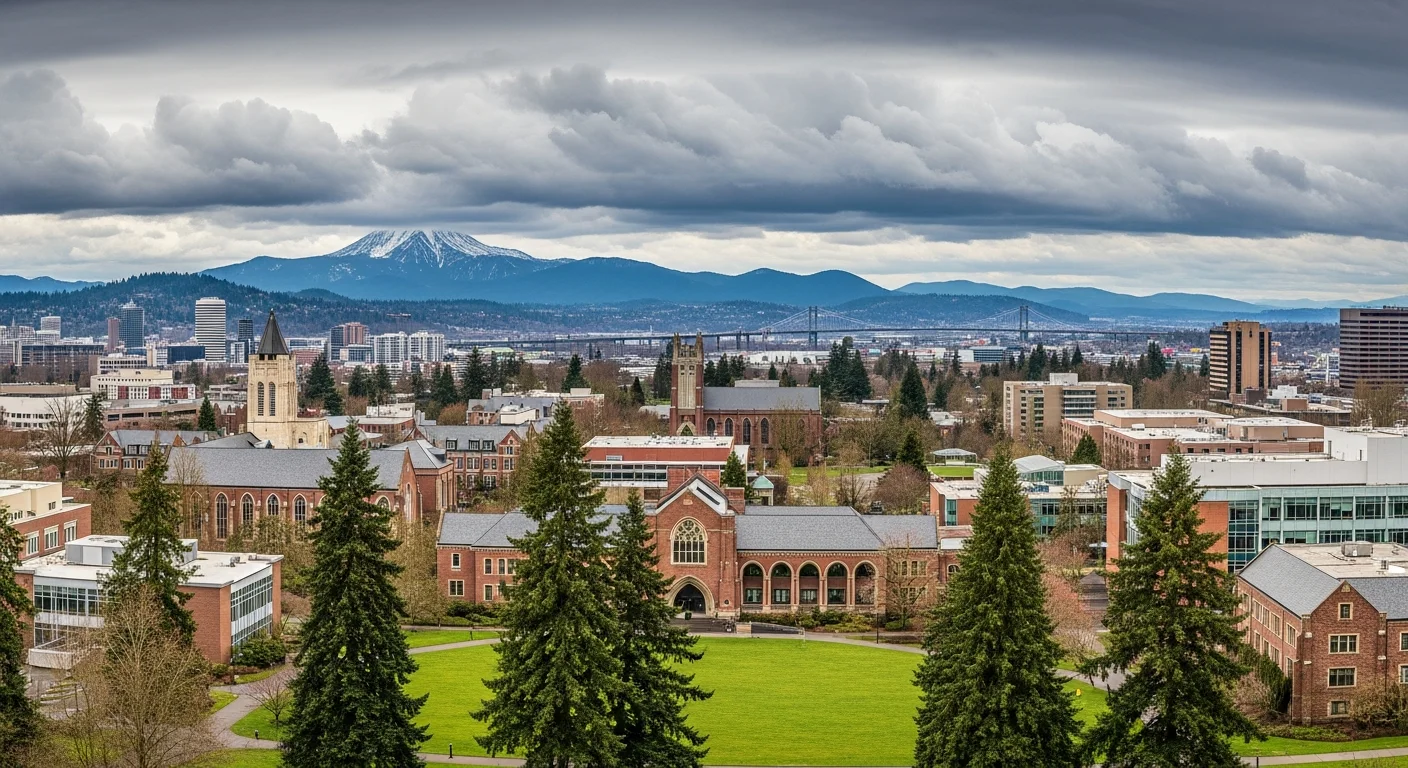

Best Master's Information Technology Degree Programs in Oregon

University of Oregon — Eugene, OR

Key Distinction: Research-intensive computer science program embedded in a major university, combining breadth across subfields with genuine undergraduate research participation and Portland-area tech industry connections.

Hakia Insight: University of Oregon's master's program benefits from the same Intel-to-Silicon Valley proximity as its undergraduate pipeline, but with graduate-level autonomy: thesis track students can conduct funded research with faculty while simultaneously contracting with industry partners.

At the master's level, the University of Oregon's computer science program sits within a comprehensive research university framework where both undergraduate and graduate students contribute to active research across software engineering, artificial intelligence, systems, and human-computer interaction. Graduate work in the CIS department spans machine learning applications, programming language design, and interactive systems—research often funded by federal agencies and tech industry sponsors. Undergraduates can participate in these research environments early, working alongside graduate students and faculty on problems with real publication potential. The program's strength lies in its ability to offer breadth (theory, systems, applications, design) while supporting depth through specialization tracks and upper-level electives. You'll have access to university-scale computing infrastructure and collaborate across engineering and applied sciences. Portland's proximity—just 100 miles away—provides internship pipelines to major tech companies and startups, though many students engage in research opportunities on campus. The CS curriculum emphasizes algorithmic thinking and mathematical foundations, preparing graduates for both immediate technical employment and graduate study. Career outcomes reflect Oregon's reputation as a feeder to top software companies, research institutions, and well-regarded graduate programs.

Programs Offered
  • Master of Science in Information Technology — 1-2 years, on-campus
  • Master of Arts in Information Technology — 1-2 years, online
Research Labs and Institutes
  • Computer and Information Science Department Research Groups
Industry Partners
  • Intel (corporate)
  • IBM (corporate)
  • Google (corporate)
Career Outcomes

Top Employers: Intel, Google, Amazon, Microsoft.

Notable Faculty
  • null — Machine learning and AI applications
  • null — Programming languages and compilers

Location Advantages: Proximity to Portland tech hub (Intel, IBM, Google, major startups); access to Silicon Valley via direct flights

Best Doctoral Information Technology Degree Programs in Oregon

University of Oregon — Eugene, OR

Key Distinction: Full funding support for all PhD students. Research funding from NSF, Army Research Office, Intelligence Advanced Research Projects Activity, Department of Energy

Hakia Insight: Full funding for all CS PhD students through NSF, Army Research Office, and IARPA eliminates the financial gamble of doctoral study—a guarantee that sets UO apart from peers where doctoral funding is merit-based or time-limited, making PhD accessibility genuinely equitable.

The University of Oregon's Computer Science PhD program offers full funding support for all doctoral students through various research funding sources including the National Science Foundation, Army Research Office, Intelligence Advanced Research Projects Activity, and Department of Energy. The program emphasizes research excellence across multiple areas including high performance computing, networking and distributed systems, machine learning and artificial intelligence, informatics, security, software engineering, assistive technologies, theory, and scientific visualization. Students benefit from a close-knit community environment with faculty who are international leaders in their fields. The program provides freedom for students to follow their research interests while receiving constant faculty support. Industry partnerships with companies like Intel, Amazon, Nike, Microsoft, and Providence offer additional research and career opportunities. Students can engage with the Center for Cyber Security and Privacy and the UO Cyber Security Operations Center for hands-on experience. The PhD is designed for students who demonstrate comprehensive understanding of computer science and ability to conduct creative research.

Programs Offered
  • Doctor of Philosophy in Computer Science — 4-6 years, on-campus. PhD
Research Labs and Institutes
  • Computer and Information Science Department Research Groups
Industry Partners
  • Intel (corporate)
  • IBM (corporate)
  • Google (corporate)
Notable Faculty
  • null — Machine learning and AI applications
  • null — Programming languages and compilers

Location Advantages: Proximity to Portland tech hub (Intel, IBM, Google, major startups); access to Silicon Valley via direct flights