University campus in Oklahoma
Updated January 2026

Best Information Technology Degree Programs in Oklahoma — 2026 Rankings

Compare the top information technology colleges in Oklahoma. 24 accredited information technology schools ranked by graduation rate, career outcomes, and value—from Oklahoma State University Institute of Technology to Oklahoma State University-Main Campus.

#1 ProgramOklahoma State
Avg Salary$89,340
Tuition From$4,574/yr
Job Growth+22%

Key Takeaways

Best information technology degree programs: Oklahoma State, Oklahoma State University..., East Central

Ranked by graduation rates, program outcomes, and institutional quality

IPEDS 2023

Tuition ranges from $3,000 to $32,500/year

Oklahoma State University... offers the most affordable option at $4,574/yr

IPEDS 2023

Information Technology degree programs available: 10 associate's, 2 master's, 1 doctoral in Oklahoma

From community college pathways to advanced research degrees

IPEDS 2023

7 online information technology degree programs in Oklahoma

Flexible scheduling for working professionals

IPEDS 2023

Oklahoma community college transfer can save 40-60% on total degree costs

10 associate's programs provide transfer pathways to bachelor's degrees

Education Commission of the States

Major employers: Paycom, Devon Energy, ONEOK, Love's Travel Stops

Tech hubs in Oklahoma City and Tulsa

Hakia Research 2026

Information Technology degree programs near 50+ cities across Oklahoma

Search by city to find programs within 200 miles of your location

IPEDS 2023

Updated February 2026

On This Page
$89,340
Are Information Technology Degree Programs in Oklahoma Worth It?
Yes. The best information technology degree programs in Oklahoma deliver strong ROI—graduates earn $89,340 median salary with +22% job growth through 2032. In-state tuition averages $9,808/year.

Source: BLS OEWS May 2024

Best Information Technology Degree Programs in Oklahoma

Bachelor's Information Technology Degree Programs in Oklahoma

16 programs$89,340 median salary87% avg grad rate
16
Programs
$89,340
Median Salary
$12,912/yr
Avg Tuition
87%
Avg Grad Rate

Program Landscape

Oklahoma ranks among the nation's top destinations for information technology education, with 16 accredited bachelor's degree programs across 11 public and 5 private institutions. The highest-ranked programs are Oklahoma State, Oklahoma State University..., East Central, recognized for academic excellence, research opportunities, and strong industry connections.

Career Outcomes

Graduates from Oklahoma information technology programs earn a median salary of $75,939—23% below the national average. The state's robust technology sector, anchored by the Oklahoma City, Tulsa, Norman metropolitan areas, provides abundant internship and employment opportunities with companies including Paycom, Devon Energy, ONEOK.

Costs & Value

Tuition ranges from $3,960 to $32,500 annually, with an average of $12,912/yr. Top programs maintain graduation rates above 87%, with the highest reaching 96%. Many programs hold ABET accreditation, the gold standard for computing education, ensuring curriculum meets rigorous industry standards.

Curriculum & Specializations

Students can choose from specializations including software engineering, cybersecurity, artificial intelligence, data science, and systems architecture. Strong industry partnerships provide access to co-op programs, capstone projects with real companies, and direct recruiting pipelines to Oklahoma's leading technology employers. For students seeking information technology degrees in Oklahoma, these top-ranked information technology schools offer the strongest combination of academic rigor and career preparation.

Show:

Earn your bachelor's in Information Technology

(Sponsored)

Loading programs...

🥇

Oklahoma State University-Main Campus

PublicNSA CAE
Stillwater, OK
$5,417
Tuition/yr
$181
Per Credit
83%
Grad Rate
77.6
Score
Website
🥈

Oklahoma State University Institute of Technology

Public
Okmulgee, OK
$4,574
Tuition/yr
$152
Per Credit
57.9
Score
Website
🥉

East Central University

Public
Ada, OK
$6,300
Tuition/yr
$210
Per Credit
63.1
Score
Website
#4

University of Central Oklahoma

Public
Edmond, OK
$7,284
Tuition/yr
$243
Per Credit
61.1
Score
Website
#5

Northwestern Oklahoma State University

Public
Alva, OK
$5,448
Tuition/yr
$227
Per Credit
95%
Grad Rate
56.4
Score
Website
#6

Southern Nazarene University

Private
Bethany, OK
$28,000
Tuition/yr
$933
Per Credit
81%
Grad Rate
54.8
Score
Website
#7

University of Oklahoma-Norman Campus

Public
Norman, OK
$5,070
Tuition/yr
$169
Per Credit
88%
Grad Rate
55.1
Score
Website
#8

Oklahoma City University

Private
Oklahoma City, OK
$29,836
Tuition/yr
$980
Per Credit
79%
Grad Rate
46.6
Score
Website
#9

Cameron University

Public
Lawton, OK
$5,220
Tuition/yr
$174
Per Credit
45.7
Score
Website
#10

Oral Roberts University

Private
Tulsa, OK
$32,500
Tuition/yr
$1,342
Per Credit
96%
Grad Rate
46.3
Score
Website

Complete Information Technology Degree Program Rankings in Oklahoma

Best Associate's Information Technology Degree Programs in Oklahoma

### Program Landscape Oklahoma offers **10 accredited** associate's degree programs in information technology, providing an affordable entry point into the technology field. The top-ranked programs include **Oklahoma State University...**, **Oklahoma City Community C...**, **Cameron**, which combine rigorous technical curriculum with practical skills training. ### Costs & Value Community colleges in Oklahoma offer these two-year programs at an average cost of **$3,859/yr**—significantly less than four-year university tuition. Students completing associate's degrees can pursue entry-level technical positions and transfer opportunities, with entry-level salaries averaging **$49,137** in Oklahoma. ### Career Pathways Many programs feature guaranteed transfer agreements with Oklahoma's public universities, allowing students to complete their first two years at reduced cost before transferring to complete a bachelor's degree. The Oklahoma City, Tulsa, Norman areas offer particularly strong job markets for associate's degree holders, with employers like Paycom, Devon Energy, ONEOK hiring for technical support, junior development, and IT specialist positions. ### Curriculum & Specializations Programs typically include coursework in programming fundamentals, database management, networking basics, and software development. Among information technology schools in Oklahoma, these associate's programs offer the best value for students beginning their information technology degrees in Oklahoma.

  1. #1. Oklahoma State University Institute of Technology

    Hakia ranks Oklahoma State University Institute of Technology as the #1 associate's in information technology degree program in Oklahoma. This public institution in Okmulgee, OK has annual tuition of $4,574 ($152/credit). Ranking score: 68.3.

  2. #2. Oklahoma City Community College

    Hakia ranks Oklahoma City Community College as the #2 associate's in information technology degree program in Oklahoma. This public institution in Oklahoma City, OK has annual tuition of $3,025 ($135/credit). Ranking score: 57.1. NSA/DHS Center of Academic Excellence designation: CAE-2Y.

  3. #3. Cameron University

    Hakia ranks Cameron University as the #3 associate's in information technology degree program in Oklahoma. This public institution in Lawton, OK has annual tuition of $5,220 ($174/credit). Ranking score: 52.0.

  4. #4. Oklahoma State University-Oklahoma City

    Hakia ranks Oklahoma State University-Oklahoma City as the #4 associate's in information technology degree program in Oklahoma. This public institution in Oklahoma City, OK has annual tuition of $3,119 ($130/credit). Ranking score: 43.4.

  5. #5. Northeastern Oklahoma A&M College

    Hakia ranks Northeastern Oklahoma A&M College as the #5 associate's in information technology degree program in Oklahoma. This public institution in Miami, OK has annual tuition of $3,000 ($165/credit). Ranking score: 42.6.

  6. #6. Eastern Oklahoma State College

    Hakia ranks Eastern Oklahoma State College as the #6 associate's in information technology degree program in Oklahoma. This public institution in Wilburton, OK has annual tuition of $3,463 ($159/credit). Ranking score: 41.8.

  7. #7. Rogers State University

    Hakia ranks Rogers State University as the #7 associate's in information technology degree program in Oklahoma. This public institution in Claremore, OK has annual tuition of $4,676 ($167/credit). Ranking score: 40.9.

  8. #8. Carl Albert State College

    Hakia ranks Carl Albert State College as the #8 associate's in information technology degree program in Oklahoma. This public institution in Poteau, OK has annual tuition of $3,000 ($100/credit). Ranking score: 39.7.

  9. #9. Northern Oklahoma College

    Hakia ranks Northern Oklahoma College as the #9 associate's in information technology degree program in Oklahoma. This public institution in Tonkawa, OK has annual tuition of $3,681 ($123/credit). Ranking score: 39.7.

  10. #10. Murray State College

    Hakia ranks Murray State College as the #10 associate's in information technology degree program in Oklahoma. This public institution in Tishomingo, OK has annual tuition of $4,830 ($140/credit). Ranking score: 39.7.

Online Associate's Information Technology Degree Programs in Oklahoma

### Online Program Options Oklahoma's community colleges offer 5 online associate's information technology programs, providing flexible pathways for students balancing education with work or family responsibilities. Top-ranked online programs include **Eastern Oklahoma State Co...**, **Rogers State**, **Carl Albert State College**, all regionally accredited and recognized by Oklahoma employers. ### Costs & Employer Recognition Online associate's programs average **$3,930/yr**—often comparable to or less than on-campus tuition. Oklahoma-based employers including Paycom, Devon Energy, ONEOK value online credentials from accredited institutions, recognizing that program quality matters more than delivery format. The Oklahoma City, Tulsa, Norman job market actively recruits graduates from online programs. ### Program Format These programs feature asynchronous coursework for maximum flexibility, with some offering synchronous sessions for collaborative learning. Students can typically complete **60 credit hours** in 2 years while working full-time. ### Technology & Flexibility Technology requirements include reliable internet access and a modern computer. Programs provide virtual labs, online tutoring, career services, and networking opportunities. Many offer start dates throughout the year and accelerated course formats for motivated students. Graduates earn the same degree as on-campus students, with no distinction on transcripts or diplomas. For students pursuing online information technology degrees in Oklahoma, these accredited information technology schools offer the flexibility and quality that today's learners demand.

  • Eastern Oklahoma State College - Wilburton, OK - Tuition: $3,463/year
  • Rogers State University - Claremore, OK - Tuition: $4,676/year
  • Carl Albert State College - Poteau, OK - Tuition: $3,000/year
  • Northern Oklahoma College - Tonkawa, OK - Tuition: $3,681/year
  • Murray State College - Tishomingo, OK - Tuition: $4,830/year

Best Bachelor's Information Technology Degree Programs in Oklahoma

### Program Landscape Oklahoma ranks among the nation's top destinations for information technology education, with **16 accredited** bachelor's degree programs across **11 public** and **5 private** institutions. The highest-ranked programs are **Oklahoma State**, **Oklahoma State University...**, **East Central**, recognized for academic excellence, research opportunities, and strong industry connections. ### Career Outcomes Graduates from Oklahoma information technology programs earn a median salary of **$75,939**—23% below the national average. The state's robust technology sector, anchored by the Oklahoma City, Tulsa, Norman metropolitan areas, provides abundant internship and employment opportunities with companies including Paycom, Devon Energy, ONEOK. ### Costs & Value Tuition ranges from **$3,960** to **$32,500** annually, with an average of **$12,912/yr**. Top programs maintain graduation rates above **87%**, with the highest reaching **96%**. Many programs hold ABET accreditation, the gold standard for computing education, ensuring curriculum meets rigorous industry standards. ### Curriculum & Specializations Students can choose from specializations including software engineering, cybersecurity, artificial intelligence, data science, and systems architecture. Strong industry partnerships provide access to co-op programs, capstone projects with real companies, and direct recruiting pipelines to Oklahoma's leading technology employers. For students seeking information technology degrees in Oklahoma, these top-ranked information technology schools offer the strongest combination of academic rigor and career preparation.

  1. #1. Oklahoma State University-Main Campus

    Hakia ranks Oklahoma State University-Main Campus as the #1 bachelor's in information technology degree program in Oklahoma. This public institution in Stillwater, OK has annual tuition of $5,417 ($181/credit) and a 83% graduation rate. Ranking score: 77.6. NSA/DHS Center of Academic Excellence designation: CAE-CDE, CAE-R.

  2. #2. Oklahoma State University Institute of Technology

    Hakia ranks Oklahoma State University Institute of Technology as the #2 bachelor's in information technology degree program in Oklahoma. This public institution in Okmulgee, OK has annual tuition of $4,574 ($152/credit). Ranking score: 57.9.

  3. #3. East Central University

    Hakia ranks East Central University as the #3 bachelor's in information technology degree program in Oklahoma. This public institution in Ada, OK has annual tuition of $6,300 ($210/credit). Ranking score: 63.1.

  4. #4. University of Central Oklahoma

    Hakia ranks University of Central Oklahoma as the #4 bachelor's in information technology degree program in Oklahoma. This public institution in Edmond, OK has annual tuition of $7,284 ($243/credit). Ranking score: 61.1.

  5. #5. Northwestern Oklahoma State University

    Hakia ranks Northwestern Oklahoma State University as the #5 bachelor's in information technology degree program in Oklahoma. This public institution in Alva, OK has annual tuition of $5,448 ($227/credit) and a 95% graduation rate. Ranking score: 56.4.

  6. #6. Southern Nazarene University

    Hakia ranks Southern Nazarene University as the #6 bachelor's in information technology degree program in Oklahoma. This private institution in Bethany, OK has annual tuition of $28,000 ($933/credit) and a 81% graduation rate. Ranking score: 54.8.

  7. #7. University of Oklahoma-Norman Campus

    Hakia ranks University of Oklahoma-Norman Campus as the #7 bachelor's in information technology degree program in Oklahoma. This public institution in Norman, OK has annual tuition of $5,070 ($169/credit) and a 88% graduation rate. Ranking score: 55.1.

  8. #8. Oklahoma City University

    Hakia ranks Oklahoma City University as the #8 bachelor's in information technology degree program in Oklahoma. This private institution in Oklahoma City, OK has annual tuition of $29,836 ($980/credit) and a 79% graduation rate. Ranking score: 46.6.

  9. #9. Cameron University

    Hakia ranks Cameron University as the #9 bachelor's in information technology degree program in Oklahoma. This public institution in Lawton, OK has annual tuition of $5,220 ($174/credit). Ranking score: 45.7.

  10. #10. Oral Roberts University

    Hakia ranks Oral Roberts University as the #10 bachelor's in information technology degree program in Oklahoma. This private institution in Tulsa, OK has annual tuition of $32,500 ($1342/credit) and a 96% graduation rate. Ranking score: 46.3.

  11. #11. Langston University

    Hakia ranks Langston University as the #11 bachelor's in information technology degree program in Oklahoma. This public institution in Langston, OK has annual tuition of $4,518 ($151/credit). Ranking score: 42.6.

  12. #12. Oklahoma Panhandle State University

    Hakia ranks Oklahoma Panhandle State University as the #12 bachelor's in information technology degree program in Oklahoma. This public institution in Goodwell, OK has annual tuition of $3,960 ($165/credit). Ranking score: 42.6.

  13. #13. Southeastern Oklahoma State University

    Hakia ranks Southeastern Oklahoma State University as the #13 bachelor's in information technology degree program in Oklahoma. This public institution in Durant, OK has annual tuition of $6,600 ($220/credit). Ranking score: 42.8.

  14. #14. Southwestern Oklahoma State University

    Hakia ranks Southwestern Oklahoma State University as the #14 bachelor's in information technology degree program in Oklahoma. This public institution in Weatherford, OK has annual tuition of $6,969 ($277/credit). Ranking score: 42.3.

  15. #15. Oklahoma Baptist University

    Hakia ranks Oklahoma Baptist University as the #15 bachelor's in information technology degree program in Oklahoma. This private institution in Shawnee, OK has annual tuition of $30,340 ($986/credit). Ranking score: 37.1.

  16. #16. Oklahoma Christian University

    Hakia ranks Oklahoma Christian University as the #16 bachelor's in information technology degree program in Oklahoma. This private institution in Edmond, OK has annual tuition of $24,550 ($900/credit). Ranking score: 30.3.

Online Bachelor's Information Technology Degree Programs in Oklahoma

### Online Program Options 2 Oklahoma institutions offer bachelor's information technology degrees with online or hybrid options, enabling students to earn accredited degrees while maintaining professional or personal commitments. Top-ranked online programs include **Oklahoma Baptist**, **Oklahoma Christian**, all regionally accredited and recognized by Oklahoma employers. ### Costs & Employer Recognition Online bachelor's programs average **$27,445/yr**—often comparable to or less than on-campus tuition. Oklahoma-based employers including Paycom, Devon Energy, ONEOK value online credentials from accredited institutions, recognizing that program quality matters more than delivery format. The Oklahoma City, Tulsa, Norman job market actively recruits graduates from online programs. ### Program Format These programs feature asynchronous coursework for maximum flexibility, with some offering synchronous sessions for collaborative learning. Students can typically complete **120 credit hours** in 4 years while working full-time. ### Technology & Flexibility Technology requirements include reliable internet access and a modern computer. Programs provide virtual labs, online tutoring, career services, and networking opportunities. Many offer start dates throughout the year and accelerated course formats for motivated students. Graduates earn the same degree as on-campus students, with no distinction on transcripts or diplomas. For students pursuing online information technology degrees in Oklahoma, these accredited information technology schools offer the flexibility and quality that today's learners demand.

  • Oklahoma Baptist University - Shawnee, OK - Tuition: $30,340/year
  • Oklahoma Christian University - Edmond, OK - Tuition: $24,550/year

Best Master's Information Technology Degree Programs in Oklahoma

### Program Landscape Oklahoma offers **2** master's degree programs in information technology, designed for professionals seeking to advance into senior engineering, technical leadership, and specialized roles. The top programs—**Oklahoma State**, **Oklahoma City**—combine advanced technical training with research opportunities and leadership development. ### Career Outcomes Master's graduates in Oklahoma earn a median salary of **$89,340**, approximately **20-30% higher** than bachelor's degree holders. The concentration of technology companies in Oklahoma City, Tulsa, Norman creates strong demand for graduate-level talent, with Paycom, Devon Energy, ONEOK actively recruiting from these programs. ### Costs & Value Program formats include traditional full-time study (typically 2 years), part-time options for working professionals (2-3 years), and accelerated tracks. Tuition averages **$17,627/yr**, with many employers offering tuition reimbursement for graduate education. Some programs offer thesis and non-thesis tracks, allowing students to focus on research or professional development based on their career goals. ### Curriculum & Specializations Curriculum covers advanced topics including machine learning, distributed systems, software architecture, and technical management. Many programs include practicum experiences, industry capstone projects, or consulting engagements that provide real-world application of advanced concepts. Among Oklahoma's information technology schools at the graduate level, these programs stand out for both academic quality and career outcomes.

  1. #1. Oklahoma State University-Main Campus

    Hakia ranks Oklahoma State University-Main Campus as the #1 master's in information technology degree program in Oklahoma. This public institution in Stillwater, OK has annual tuition of $5,417 ($181/credit) and a 83% graduation rate. Ranking score: 77.6. NSA/DHS Center of Academic Excellence designation: CAE-CDE, CAE-R.

  2. #2. Oklahoma City University

    Hakia ranks Oklahoma City University as the #2 master's in information technology degree program in Oklahoma. This private institution in Oklahoma City, OK has annual tuition of $29,836 ($980/credit) and a 79% graduation rate. Ranking score: 66.4.

Best Doctoral Information Technology Degree Programs in Oklahoma

### Program Landscape Oklahoma is home to **1** doctoral programs in information technology, preparing students for research positions, faculty appointments, and executive technical roles. Leading programs at **Oklahoma State** are recognized for cutting-edge research, strong faculty publications, and competitive funding packages. ### Career Outcomes Doctoral graduates command premium salaries, with Oklahoma PhD holders earning a median of **$111,675**—reflecting the advanced expertise required for research and executive positions. The Oklahoma City, Tulsa, Norman region's research universities and corporate R&D centers provide extensive collaboration opportunities with industry leaders like Paycom, Devon Energy, ONEOK. ### Costs & Value PhD programs typically require 4-6 years of full-time study, including coursework, qualifying examinations, and original dissertation research. Many programs offer full funding through teaching or research assistantships, covering tuition and providing stipends of **$25,000–$40,000** annually. ### Curriculum & Specializations Research strengths across Oklahoma programs include artificial intelligence, cybersecurity, human-computer interaction, systems, and theoretical computer science. For aspiring researchers pursuing information technology degrees in Oklahoma, graduates go on to careers as university faculty, industry research scientists, or technical executives, contributing to advances in technology that impact millions of users worldwide.

  1. #1. Oklahoma State University-Main Campus

    Hakia ranks Oklahoma State University-Main Campus as the #1 doctoral in information technology degree program in Oklahoma. This public institution in Stillwater, OK has annual tuition of $5,417 ($181/credit) and a 83% graduation rate. Ranking score: 58.0. NSA/DHS Center of Academic Excellence designation: CAE-CDE, CAE-R.

Information Technology Degree Costs & Tuition in Oklahoma

MetricValue
Average in-state tuition$9,808/year
Average out-of-state tuition$24,520/year
Community college tuition$2,452/year
4-year savings for residents$58,848
2+2 transfer pathway savings$14,712

Source: IPEDS 2023

Financial Aid & Scholarships for Information Technology Students in Oklahoma

State Aid Programs

Oklahoma students pursuing Information Technology degrees have access to multiple layers of financial support. Federal aid through the Free Application for Federal Student Aid (FAFSA) is available to all eligible students, and detailed information about federal grants, loans, and work-study opportunities can be found at (Federal Student Aid). Additionally, Oklahoma offers a state-specific grant program called Oklahoma's Promise, which covers tuition at Oklahoma public institutions for students who enroll in the program while in 8th–10th grade. This program represents a significant opportunity for early planners to eliminate tuition costs at participating schools.

Key Programs & Amounts

Beyond state and federal programs, many Oklahoma institutions offer institutional scholarships and merit-based aid directly to IT students. Schools like Oklahoma State University-Main Campus and the University of Oklahoma-Norman Campus provide competitive financial packages to qualified applicants. The Oklahoma State Regents for Higher Education (Official Site) administers state aid programs and can provide guidance on eligibility requirements. Students should also explore related IT program options, such as Information Systems in Oklahoma or Cybersecurity in Oklahoma, which may offer additional scholarship opportunities. For comprehensive comparison of aid packages across schools, consulting the College Scorecard provides transparent institutional data.

Information Technology Degree ROI Calculator — Oklahoma

Use our interactive ROI calculator to estimate your return on investment for a information technology degree in Oklahoma. Enter your expected tuition costs, financial aid, and career goals to see projected payback periods and lifetime earnings. The calculator uses current salary data from BLS and tuition data from IPEDS to provide accurate estimates.

Information Technology Degree ROI Calculator
Estimate your return on investment for a information technology degree
$

Leave blank to use average cost for selected program type

20 years
10 years20 years30 years
20-Year ROI

+692%

Net gain divided by total investment. ROI above 200% is considered excellent for education investments.

Net Gain

$1,279,487

Your additional lifetime earnings with this degree vs. working without one, minus the total investment.

Break-Even

6 years

Years until your cumulative earnings exceed total investment. Shorter programs often break even faster due to lower opportunity cost.

COL-Adjusted Salary

$114,286

Your starting salary adjusted for local cost of living. This shows real purchasing power compared to a $100K national baseline.

Why does break-even change with program type? Your "total investment" includes both tuition AND opportunity cost (foregone earnings while in school). A 4-year full-time public university (in-state) means 4 years of not earning a salary ($140,000 in opportunity cost). Shorter full-time programs may have higher tuition but lower total investment because you return to the workforce sooner.

Detailed Breakdown
How we calculate your degree ROI using real salary data
Total Investment$185,000

Tuition plus opportunity cost (earnings you miss while in school)

Program Cost (Tuition)$45,000

Direct cost of the degree program

Opportunity Cost$140,000

4 years × $35K/year foregone salary while studying full-time

20-Year Earnings (with degree)$2,314,895

Projected career earnings starting after graduation, with salary growth

20-Year Earnings (without degree)$850,408

What you'd earn working at $35K/year with 2% annual growth

Starting Salary (Austin, TX)$120,000

Median salary for this role in your selected location (BLS 2024)

Annualized Return4.1%

Your investment's compound annual growth rate (similar to stock market returns)

Data sources: BLS OEWS May 2024, IPEDS 2023. Calculations use median salaries, 3% discount rate, and assume salary growth declines from 6% to 2% over career. Individual results will vary. | Powered by Hakia.com

Information Technology Salaries by Metro Area

Median annual salary in Oklahoma metro areas

Hakia.com
View data table
Categoryvalue
Oklahoma City$98K
Tulsa$94K
Norman$89K

Source: BLS OEWS May 2024

Hakia.com

Top Employers Hiring Information Technology Graduates in Oklahoma

Find information technology jobs in Oklahoma. These major employers across Oklahoma metro areas are actively hiring information technology degree holders. Click employer names to view current job openings.

Information Technology Jobs in Oklahoma City

OK
Paycom
tech
Tinker Air Force Base
military
Devon Energy
energy
Love's Travel Stops
retail

Information Technology Jobs in Tulsa

OK
ONEOK
energy
Oseberg
data
Tulsa Remote
tech-incentive
QuikTrip
retail

Admission Requirements for Information Technology Degree Programs in Oklahoma

1

Research Program Requirements

Review admission requirements for information technology programs at your target schools. Requirements vary by institution and degree level.

2

Prepare Application Materials

Gather transcripts, test scores (SAT/ACT for undergrad, GRE for graduate), letters of recommendation, and personal statement.

3

Apply for Financial Aid

Complete the FAFSA by priority deadlines.

4

Submit Applications Before Deadlines

Apply early for priority consideration. Early action/decision deadlines are typically October-November; regular deadlines December-January.

5

Complete Enrollment Steps

Accept your offer, submit enrollment deposit, complete orientation requirements, and register for classes.

Transfer Pathways for Information Technology Degrees in Oklahoma

State Transfer System

Oklahoma provides strong transfer pathways for students pursuing Information Technology degrees through the Oklahoma Course Transfer and Articulation system, which facilitates seamless credit transfer between institutions. The state's 28 two-year institutions awarded 191 associate's degrees in IT during 2023, creating a strong foundation for students transferring to bachelor's programs. Community colleges like Oklahoma City Community College (tuition $3,025), Oklahoma State University-Oklahoma City (tuition $3,119), and Northeastern Oklahoma A&M College (tuition $3,000) offer affordable starting points for students seeking to complete general education and foundational IT coursework before transferring to four-year universities. These pathways reduce both time-to-degree and overall educational costs while maintaining academic quality.

How Transfers Work

Transfer students from Oklahoma's community colleges can seamlessly transition to bachelor's degree programs at institutions like Oklahoma State University Institute of Technology (ranked #3, tuition $4,574) or East Central University (66 completions). The state's transfer system ensures that courses completed at two-year institutions count toward bachelor's degree requirements, eliminating credit loss and unnecessary repetition. Students should use Oklahoma Course Transfer and Articulation to identify approved course equivalencies and plan their transfer timeline. Consider exploring information systems in Oklahoma and network administration in Oklahoma as complementary transfer-friendly specializations. Additionally, investigate Oklahoma's Promise financial aid program, which covers tuition at public institutions and supports transfer pathways. For comprehensive guidance, consult Federal Student Aid resources and individual institutional transfer offices.

Why Pursue an Information Technology Degree in Oklahoma?

Industry & Workforce

Oklahoma offers a strong Information Technology education landscape with 32 institutions providing IT programs across all degree levels, from associate's to doctoral studies (IPEDS). The state produced 1,820 IT program completions in 2023, with 477 bachelor's degrees awarded, making Oklahoma a significant pipeline for IT talent. Leading institutions like Oklahoma State University-Main Campus generated 254 completions alone, while the state's two-year colleges contributed 191 associate's degrees, demonstrating a comprehensive educational pathway for students at every stage of their academic journey.

Salary Outlook

The financial advantage of studying IT in Oklahoma is substantial. Average public in-state tuition at four-year institutions sits at just $5,487 annually, with some programs like Oklahoma State University Institute of Technology charging only $4,574 per year. Oklahoma's major tech hubs in Oklahoma City and Tulsa, home to employers like Integris Health, University of Oklahoma, and Tinker Air Force Base, provide exceptional career opportunities for graduates. Students seeking quality education at affordable prices should explore Oklahoma's Promise, which covers tuition at Oklahoma public institutions for eligible students. For comparative context, see our rankings of information technology programs nationally and explore related specializations like cybersecurity in Oklahoma and cloud computing in Oklahoma.

24 Programs
Information Technology Program Availability in Oklahoma
Oklahoma offers 24 accredited information technology programs across public universities, private colleges, and community colleges. Top tech hubs include Oklahoma City, Tulsa, Norman.

Source: IPEDS 2023

Information Technology Job Market & Salary Data in Oklahoma

Employment Outlook

Oklahoma's information technology job market is supported by a strong educational pipeline with 32 institutions offering IT programs at various degree levels (IPEDS). The state produced 477 bachelor's degree completions, 191 associate's degree completions, and 150 master's degree completions in 2023, demonstrating strong workforce development in technology fields. Major metropolitan areas like Oklahoma City and Tulsa serve as primary employment hubs, with significant demand across healthcare, government, and aerospace sectors. For current salary and employment trend data specific to Oklahoma, the Bureau of Labor Statistics State Data provides detailed occupational outlooks and wage information for IT professionals.

Salaries by Metro

The state's commitment to affordable education makes technology careers accessible to more students. Public four-year institutions charge an average in-state tuition of just $5,487, while two-year programs average significantly less, making Oklahoma one of the most cost-effective states for IT education (Oklahoma State Regents for Higher Education). Programs like Oklahoma's Promise provide additional financial support, covering tuition at public institutions for eligible students. This affordability, combined with strong regional employer presence, creates favorable conditions for both entry-level and advanced IT career pathways. Students interested in specialized fields should explore related programs in Cybersecurity in Oklahoma and Network Administration in Oklahoma to identify niche opportunities aligned with current market demands.

Entry-Level (0-2 yrs)

New graduates and career changers

Senior (8+ yrs)

Technical leads and architects

Median Salary in Oklahoma$58,071$129,543
Typical RolesJunior Developer, AnalystStaff Engineer, Architect
Remote Work AccessLimitedCommon
Degree ExpectationBachelor's sufficientMaster's preferred

What You'll Learn in Information Technology Degree Programs in Oklahoma

Core Requirements

Information Technology curricula in Oklahoma are designed to balance foundational computer science principles with applied technical skills. Core coursework includes Database Management, Systems Administration, Network Fundamentals, Computer Architecture, Software Development, Information Security, and Web Technologies. Associate's degree programs, such as those at Oklahoma State University Institute of Technology (tuition $4,574), focus on practical, hands-on training in systems administration, networking, and IT support, often completed in two years. Bachelor's programs at institutions like Oklahoma State University-Main Campus provide deeper theoretical knowledge combined with industry-relevant applications, including software engineering principles, cloud computing infrastructure, cybersecurity fundamentals, and enterprise systems management.

Degree Pathways

Many programs culminate in capstone projects or senior research experiences where students apply their knowledge to real-world IT challenges. Oklahoma institutions often incorporate internship requirements and partnerships with major regional employers including Tinker Air Force Base and Integris Health, providing students with practical experience in diverse IT environments. Master's programs emphasize advanced specializations such as cloud architecture, IT management, and information assurance. Students should explore complementary specializations through programs in cybersecurity in Oklahoma and cloud computing in Oklahoma to expand their expertise. For comprehensive curriculum details and program comparisons, consult IPEDS institutional profiles and review individual school websites for course sequences and specialization options.

Information Technology Specialization Tracks

Information Systems

Specialize in information systems through electives and capstone projects within your information technology degree.

Network Administration

Specialize in network administration through electives and capstone projects within your information technology degree.

Cloud Computing

Specialize in cloud computing through electives and capstone projects within your information technology degree.

Cybersecurity

Specialize in cybersecurity through electives and capstone projects within your information technology degree.

Online vs On-Campus Information Technology Programs in Oklahoma

Online Programs

7 available in Oklahoma

On-Campus Programs

Traditional classroom experience

Typical Tuition$8,827/yr$9,808/yr
Schedule FlexibilitySelf-paced or asyncFixed schedule
NetworkingVirtual cohortsIn-person, career fairs
Best ForWorking professionalsTraditional students
Completion Time2-4 years (flexible)4 years (standard)

Information Technology Schools by City in Oklahoma

Oklahoma City and Tulsa represent the state's strongest technology job markets, with Oklahoma City serving as the larger employment hub. Oklahoma City hosts headquarters and major operations for Integris Health and Tinker Air Force Base, both significant IT employers. Tulsa offers complementary opportunities in aviation and energy sectors. Beyond these metros, emerging tech communities exist in Norman (home to University of Oklahoma), Edmond, Broken Arrow, and Stillwater (home to Oklahoma State University-Main Campus). Each city offers distinct advantages: Norman and Stillwater benefit from university-driven innovation and research, while Oklahoma City and Tulsa provide diverse private sector opportunities. The Oklahoma Course Transfer and Articulation system facilitates student mobility between institutions across these regions.

Cost of living in Oklahoma cities remains highly competitive compared to national averages, with average public in-state tuition at $5,487 making education particularly affordable. University of Oklahoma-Norman Campus (tuition $5,070) and Oklahoma State University-Main Campus (tuition $5,417) offer exceptional value in their respective regions. Smaller cities like Stillwater and Norman provide lower living costs while maintaining proximity to major employers through commutable distances to Oklahoma City. Students seeking flexible learning options should explore Information Technology best online programs and most affordable programs to identify additional opportunities. For financial planning assistance, resources through Federal Student Aid and Oklahoma's Promise can substantially reduce education costs across all cities.

Compare Online Information Technology Programs in Oklahoma

View tuition costs, program formats & enrollment info

Information Technology Programs by City in Oklahoma

Find Information Technology Programs Near You in Oklahoma

Search by city to find accredited information technology programs ranked by our state methodology.

Information Technology Degree Programs by City in Oklahoma

Information Technology Degree Programs Near Tulsa, Oklahoma

Tulsa's energy sector creates substantial demand for enterprise IT infrastructure and cybersecurity expertise, with major oil and gas companies requiring sophisticated data management and cloud migration services. The University of Tulsa offers an accredited Computer Science program, and the city's tech corridor around downtown hosts regional headquarters for IT consulting firms and managed service providers serving Fortune 500 clients.

Tulsa is located in Tulsa County, Oklahoma.

Associate's Information Technology Degree Programs Near Tulsa, Oklahoma
  1. Oklahoma State University Institute of Technology (Public) — State #1, 34.2 mi from Tulsa. Tuition: $4,574/year.
  2. Oklahoma City Community College (Public) — State #2, 106 mi from Tulsa. Tuition: $3,025/year.
  3. Oklahoma State University-Oklahoma City (Public) — State #3, 103.9 mi from Tulsa. Tuition: $3,119/year.
Bachelor's Information Technology Degree Programs Near Tulsa, Oklahoma
  1. Oklahoma State University-Main Campus (Public) — State #1, 64.8 mi from Tulsa. Tuition: $5,417/year. Graduation rate: 83%.
  2. University of Oklahoma-Norman Campus (Public) — State #2, 106.8 mi from Tulsa. Tuition: $5,070/year. Graduation rate: 88%.
  3. Oklahoma State University Institute of Technology (Public) — State #3, 34.2 mi from Tulsa. Tuition: $4,574/year.
Master's Information Technology Degree Programs Near Tulsa, Oklahoma
  1. Oklahoma State University-Main Campus (Public) — State #1, 64.8 mi from Tulsa. Tuition: $5,417/year. Graduation rate: 83%.
  2. Oklahoma City University (Private) — State #2, 101.2 mi from Tulsa. Tuition: $29,836/year. Graduation rate: 79%.

Information Technology Degree Programs Near Oklahoma City, Oklahoma

As Oklahoma's capital and largest metro, OKC hosts Integris Health's massive IT operations, American Airlines' corporate systems, and state government IT departments, creating abundant positions for systems administrators, database managers, and enterprise architects. Oklahoma City University and the University of Oklahoma provide nearby IT degree pathways, while the city's downtown tech cluster and numerous data center facilities make it the state's primary hub for IT career advancement.

Oklahoma City is located in Oklahoma County, Oklahoma.

Associate's Information Technology Degree Programs Near Oklahoma City, Oklahoma
  1. Oklahoma State University Institute of Technology (Public) — State #1, 91.2 mi from Oklahoma City. Tuition: $4,574/year.
  2. Oklahoma City Community College (Public) — State #2, in Oklahoma City. Tuition: $3,025/year.
  3. Oklahoma State University-Oklahoma City (Public) — State #3, in Oklahoma City. Tuition: $3,119/year.
Bachelor's Information Technology Degree Programs Near Oklahoma City, Oklahoma
  1. Oklahoma State University-Main Campus (Public) — State #1, 51.7 mi from Oklahoma City. Tuition: $5,417/year. Graduation rate: 83%.
  2. University of Oklahoma-Norman Campus (Public) — State #2, 20.1 mi from Oklahoma City. Tuition: $5,070/year. Graduation rate: 88%.
  3. Oklahoma State University Institute of Technology (Public) — State #3, 91.2 mi from Oklahoma City. Tuition: $4,574/year.
Master's Information Technology Degree Programs Near Oklahoma City, Oklahoma
  1. Oklahoma State University-Main Campus (Public) — State #1, 51.7 mi from Oklahoma City. Tuition: $5,417/year. Graduation rate: 83%.
  2. Oklahoma City University (Private) — State #2, in Oklahoma City. Tuition: $29,836/year. Graduation rate: 79%.

Information Technology Degree Programs Near Shawnee, Oklahoma

This small city (population ~30,000) sits within commuting distance of Oklahoma City's thriving tech sector, making it attractive for remote IT workers or those seeking affordable housing while accessing OKC's enterprise IT jobs and consulting opportunities. Oklahoma Baptist University is located here, though serious IT career growth requires proximity to Oklahoma City's major employers.

Shawnee is located in Pottawatomie County, Oklahoma.

Associate's Information Technology Degree Programs Near Shawnee, Oklahoma
  1. Oklahoma State University Institute of Technology (Public) — State #1, 57.1 mi from Shawnee. Tuition: $4,574/year.
  2. Oklahoma City Community College (Public) — State #2, 37 mi from Shawnee. Tuition: $3,025/year.
  3. Oklahoma State University-Oklahoma City (Public) — State #3, 38.1 mi from Shawnee. Tuition: $3,119/year.
Bachelor's Information Technology Degree Programs Near Shawnee, Oklahoma
  1. Oklahoma State University-Main Campus (Public) — State #1, 51.4 mi from Shawnee. Tuition: $5,417/year. Graduation rate: 83%.
  2. University of Oklahoma-Norman Campus (Public) — State #2, 32.4 mi from Shawnee. Tuition: $5,070/year. Graduation rate: 88%.
  3. Oklahoma State University Institute of Technology (Public) — State #3, 57.1 mi from Shawnee. Tuition: $4,574/year.
Master's Information Technology Degree Programs Near Shawnee, Oklahoma
  1. Oklahoma State University-Main Campus (Public) — State #1, 51.4 mi from Shawnee. Tuition: $5,417/year. Graduation rate: 83%.
  2. Oklahoma City University (Private) — State #2, 36.1 mi from Shawnee. Tuition: $29,836/year. Graduation rate: 79%.

Information Technology Degree Programs Near Okmulgee, Oklahoma

Okmulgee is a rural community of ~12,000 with limited local IT infrastructure. IT professionals here rely on remote work arrangements or commute to Tulsa (45 minutes) for technology sector employment with energy companies and managed service providers. The town lacks a dedicated IT degree program, making it better suited for established remote IT workers than those beginning careers in the field.

Okmulgee is located in Okmulgee County, Oklahoma.

Associate's Information Technology Degree Programs Near Okmulgee, Oklahoma
  1. Oklahoma State University Institute of Technology (Public) — State #1, in Okmulgee. Tuition: $4,574/year.
  2. Oklahoma City Community College (Public) — State #2, 93.3 mi from Okmulgee. Tuition: $3,025/year.
  3. Oklahoma State University-Oklahoma City (Public) — State #3, 93.1 mi from Okmulgee. Tuition: $3,119/year.
Bachelor's Information Technology Degree Programs Near Okmulgee, Oklahoma
  1. Oklahoma State University-Main Campus (Public) — State #1, 71.9 mi from Okmulgee. Tuition: $5,417/year. Graduation rate: 83%.
  2. University of Oklahoma-Norman Campus (Public) — State #2, 89.7 mi from Okmulgee. Tuition: $5,070/year. Graduation rate: 88%.
  3. Oklahoma State University Institute of Technology (Public) — State #3, in Okmulgee. Tuition: $4,574/year.
Master's Information Technology Degree Programs Near Okmulgee, Oklahoma
  1. Oklahoma State University-Main Campus (Public) — State #1, 71.9 mi from Okmulgee. Tuition: $5,417/year. Graduation rate: 83%.
  2. Oklahoma City University (Private) — State #2, 90.6 mi from Okmulgee. Tuition: $29,836/year. Graduation rate: 79%.

Information Technology Degree Programs Near Stillwater, Oklahoma

Oklahoma State University's strong Computer Science and Information Systems programs create a tech-educated talent pool, and the university's own IT operations require systems administrators, network engineers, and infrastructure specialists across its sprawling campus. Stillwater's proximity to Tulsa (1 hour) offers additional opportunities with energy sector IT employers, while the college town supports a growing ecosystem of tech startups and small IT service firms.

Stillwater is located in Payne County, Oklahoma.

Associate's Information Technology Degree Programs Near Stillwater, Oklahoma
  1. Oklahoma State University Institute of Technology (Public) — State #1, 72.6 mi from Stillwater. Tuition: $4,574/year.
  2. Oklahoma City Community College (Public) — State #2, 57.1 mi from Stillwater. Tuition: $3,025/year.
  3. Oklahoma State University-Oklahoma City (Public) — State #3, 52.2 mi from Stillwater. Tuition: $3,119/year.
Bachelor's Information Technology Degree Programs Near Stillwater, Oklahoma
  1. Oklahoma State University-Main Campus (Public) — State #1, in Stillwater. Tuition: $5,417/year. Graduation rate: 83%.
  2. University of Oklahoma-Norman Campus (Public) — State #2, 65.7 mi from Stillwater. Tuition: $5,070/year. Graduation rate: 88%.
  3. Oklahoma State University Institute of Technology (Public) — State #3, 72.6 mi from Stillwater. Tuition: $4,574/year.
Master's Information Technology Degree Programs Near Stillwater, Oklahoma
  1. Oklahoma State University-Main Campus (Public) — State #1, in Stillwater. Tuition: $5,417/year. Graduation rate: 83%.
  2. Oklahoma City University (Private) — State #2, 49.8 mi from Stillwater. Tuition: $29,836/year. Graduation rate: 79%.

Information Technology Degree Programs Near Lawton, Oklahoma

Lawton's economy centers on Tinker Air Force Base's massive defense and aerospace operations, which employ IT specialists in cybersecurity, database administration, and enterprise systems management for military-grade infrastructure. Cameron University offers nearby Computer Science coursework, though advancement to senior IT roles requires federal security clearances and familiarity with DoD IT compliance standards.

Lawton is located in Comanche County, Oklahoma.

Associate's Information Technology Degree Programs Near Lawton, Oklahoma
  1. Oklahoma State University Institute of Technology (Public) — State #1, 157.5 mi from Lawton. Tuition: $4,574/year.
  2. Oklahoma City Community College (Public) — State #2, 72.9 mi from Lawton. Tuition: $3,025/year.
  3. Oklahoma State University-Oklahoma City (Public) — State #3, 77.1 mi from Lawton. Tuition: $3,119/year.
Bachelor's Information Technology Degree Programs Near Lawton, Oklahoma
  1. Oklahoma State University-Main Campus (Public) — State #1, 130.1 mi from Lawton. Tuition: $5,417/year. Graduation rate: 83%.
  2. University of Oklahoma-Norman Campus (Public) — State #2, 69.8 mi from Lawton. Tuition: $5,070/year. Graduation rate: 88%.
  3. Oklahoma State University Institute of Technology (Public) — State #3, 157.5 mi from Lawton. Tuition: $4,574/year.
Master's Information Technology Degree Programs Near Lawton, Oklahoma
  1. Oklahoma State University-Main Campus (Public) — State #1, 130.1 mi from Lawton. Tuition: $5,417/year. Graduation rate: 83%.
  2. Oklahoma City University (Private) — State #2, 79.6 mi from Lawton. Tuition: $29,836/year. Graduation rate: 79%.

Information Technology Degree Programs Near Durant, Oklahoma

Durant is a small college town (population ~17,000) with limited local IT employer base. Southeastern Oklahoma State University provides IT education locally, but career growth for IT professionals requires either remote work or relocation to Dallas-Fort Worth (2 hours south) or Oklahoma City (2.5 hours north). The city serves better as an affordable place to earn a degree before pursuing IT careers in larger metros.

Durant is located in Bryan County, Oklahoma.

Associate's Information Technology Degree Programs Near Durant, Oklahoma
  1. Oklahoma State University Institute of Technology (Public) — State #1, 115.1 mi from Durant. Tuition: $4,574/year.
  2. Oklahoma City Community College (Public) — State #2, 117 mi from Durant. Tuition: $3,025/year.
  3. Oklahoma State University-Oklahoma City (Public) — State #3, 122.4 mi from Durant. Tuition: $3,119/year.
Bachelor's Information Technology Degree Programs Near Durant, Oklahoma
  1. Oklahoma State University-Main Campus (Public) — State #1, 151.6 mi from Durant. Tuition: $5,417/year. Graduation rate: 83%.
  2. University of Oklahoma-Norman Campus (Public) — State #2, 102.9 mi from Durant. Tuition: $5,070/year. Graduation rate: 88%.
  3. Oklahoma State University Institute of Technology (Public) — State #3, 115.1 mi from Durant. Tuition: $4,574/year.
Master's Information Technology Degree Programs Near Durant, Oklahoma
  1. Oklahoma State University-Main Campus (Public) — State #1, 151.6 mi from Durant. Tuition: $5,417/year. Graduation rate: 83%.
  2. Oklahoma City University (Private) — State #2, 122.3 mi from Durant. Tuition: $29,836/year. Graduation rate: 79%.

Information Technology Degree Programs Near Muskogee, Oklahoma

This rural city of ~37,000 lacks a significant IT services sector or major data center presence, making it challenging for IT career growth without remote work arrangements or commuting to Tulsa (1 hour). Rogers State University offers some IT coursework, but students transfer to Tulsa or Oklahoma City to access enterprise IT employment.

Muskogee is located in Muskogee County, Oklahoma.

Associate's Information Technology Degree Programs Near Muskogee, Oklahoma
  1. Oklahoma State University Institute of Technology (Public) — State #1, 34.6 mi from Muskogee. Tuition: $4,574/year.
  2. Oklahoma City Community College (Public) — State #2, 127.5 mi from Muskogee. Tuition: $3,025/year.
  3. Oklahoma State University-Oklahoma City (Public) — State #3, 127 mi from Muskogee. Tuition: $3,119/year.
Bachelor's Information Technology Degree Programs Near Muskogee, Oklahoma
  1. Oklahoma State University-Main Campus (Public) — State #1, 99.3 mi from Muskogee. Tuition: $5,417/year. Graduation rate: 83%.
  2. University of Oklahoma-Norman Campus (Public) — State #2, 124 mi from Muskogee. Tuition: $5,070/year. Graduation rate: 88%.
  3. Oklahoma State University Institute of Technology (Public) — State #3, 34.6 mi from Muskogee. Tuition: $4,574/year.
Master's Information Technology Degree Programs Near Muskogee, Oklahoma
  1. Oklahoma State University-Main Campus (Public) — State #1, 99.3 mi from Muskogee. Tuition: $5,417/year. Graduation rate: 83%.
  2. Oklahoma City University (Private) — State #2, 124.5 mi from Muskogee. Tuition: $29,836/year. Graduation rate: 79%.

Information Technology Degree Programs Near Ada, Oklahoma

Ada is a rural community of ~16,000 centered around East Central University. While the university operates its own IT infrastructure requiring technical staff, the surrounding area has minimal commercial IT services industry or data center activity. IT professionals in Ada are better positioned as remote workers or those seeking niche university IT roles rather than broad career advancement in the technology sector.

Ada is located in Pontotoc County, Oklahoma.

Associate's Information Technology Degree Programs Near Ada, Oklahoma
  1. Oklahoma State University Institute of Technology (Public) — State #1, 72.8 mi from Ada. Tuition: $4,574/year.
  2. Oklahoma City Community College (Public) — State #2, 66.7 mi from Ada. Tuition: $3,025/year.
  3. Oklahoma State University-Oklahoma City (Public) — State #3, 71.2 mi from Ada. Tuition: $3,119/year.
Bachelor's Information Technology Degree Programs Near Ada, Oklahoma
  1. Oklahoma State University-Main Campus (Public) — State #1, 96.8 mi from Ada. Tuition: $5,417/year. Graduation rate: 83%.
  2. University of Oklahoma-Norman Campus (Public) — State #2, 53.5 mi from Ada. Tuition: $5,070/year. Graduation rate: 88%.
  3. Oklahoma State University Institute of Technology (Public) — State #3, 72.8 mi from Ada. Tuition: $4,574/year.
Master's Information Technology Degree Programs Near Ada, Oklahoma
  1. Oklahoma State University-Main Campus (Public) — State #1, 96.8 mi from Ada. Tuition: $5,417/year. Graduation rate: 83%.
  2. Oklahoma City University (Private) — State #2, 70.6 mi from Ada. Tuition: $29,836/year. Graduation rate: 79%.

Information Technology Degree Programs Near Bethany, Oklahoma

Bethany is a small suburb of ~20,000 immediately west of Oklahoma City, offering affordable housing while maintaining direct access to OKC's strong IT job market across Integris Health, American Airlines, state government, and regional tech consulting firms. Southern Nazarene University provides some IT education locally, though the University of Oklahoma and Oklahoma City University offer more comprehensive IT degree programs just 15 minutes east.

Bethany is located in Oklahoma County, Oklahoma.

Associate's Information Technology Degree Programs Near Bethany, Oklahoma
  1. Oklahoma State University Institute of Technology (Public) — State #1, 95.5 mi from Bethany. Tuition: $4,574/year.
  2. Oklahoma City Community College (Public) — State #2, 9.4 mi from Bethany. Tuition: $3,025/year.
  3. Oklahoma State University-Oklahoma City (Public) — State #3, 4 mi from Bethany. Tuition: $3,119/year.
Bachelor's Information Technology Degree Programs Near Bethany, Oklahoma
  1. Oklahoma State University-Main Campus (Public) — State #1, 52.7 mi from Bethany. Tuition: $5,417/year. Graduation rate: 83%.
  2. University of Oklahoma-Norman Campus (Public) — State #2, 23.6 mi from Bethany. Tuition: $5,070/year. Graduation rate: 88%.
  3. Oklahoma State University Institute of Technology (Public) — State #3, 95.5 mi from Bethany. Tuition: $4,574/year.
Master's Information Technology Degree Programs Near Bethany, Oklahoma
  1. Oklahoma State University-Main Campus (Public) — State #1, 52.7 mi from Bethany. Tuition: $5,417/year. Graduation rate: 83%.
  2. Oklahoma City University (Private) — State #2, 5.4 mi from Bethany. Tuition: $29,836/year. Graduation rate: 79%.

Coding Bootcamps: An Alternative Pathway

Coding bootcamps offer an accelerated pathway into tech careers. For those in Oklahoma considering alternatives to traditional degrees, here's what you need to know about this intensive learning format.

What is a Coding Bootcamp?

A coding bootcamp is an intensive, short-term training program (typically 12-24 weeks) that teaches practical programming skills through hands-on projects. Unlike traditional degrees, bootcamps focus exclusively on job-ready skills and often include career services to help graduates land their first tech role.

Who Bootcamps Are Best For

  • Career changers looking to enter tech quickly
  • Professionals wanting to upskill or transition roles
  • Self-taught developers seeking structured training
  • Those unable to commit to a 4-year degree timeline

What People Love

Based on discussions from r/codingbootcamp, r/cscareerquestions, and r/learnprogramming

  • Fast-track to employment—many graduates land jobs within 3-6 months
  • Hands-on, project-based learning builds real portfolio pieces
  • Career services and interview prep included in most programs
  • Strong alumni networks for job referrals and mentorship
  • Structured curriculum keeps you accountable and on track

Common Concerns

Honest feedback from bootcamp graduates and industry professionals

  • Intense pace can be overwhelming—expect 60-80 hour weeks
  • Some employers still prefer traditional CS degrees for certain roles
  • Quality varies widely between programs—research carefully
  • Job placement stats can be misleading—ask for CIRR audited reports
  • May lack depth in computer science fundamentals like algorithms
EXCLUSIVE OFFER

Save $1000 on Springboard Bootcamps

Springboard offers career-focused bootcamps with 1-on-1 mentorship from industry professionals. Their programs include a job guarantee—complete all requirements, and if you don't land a qualifying role, you may be eligible for a full tuition refund. Use our exclusive link to save $1000 on enrollment.

Programs for Information Technology careers:

  • Software Engineering for Beginners
  • Cybersecurity Career Track
1-on-1 MentorshipJob GuaranteeFlexible Payment

We may earn a commission when you use our affiliate link and coupon.

Best Information Technology Degree Programs in Other States

StateTotal ProgramsMedian TuitionTop Program
Best Information Technology Degree Programs in California29$14,392University of the People
Best Information Technology Degree Programs in Texas52$8,606The University of Texas at Dallas
Best Information Technology Degree Programs in New York66$36,122New York University
Best Information Technology Degree Programs in Florida38$12,240University of Central Florida
Best Information Technology Degree Programs in Washington16$7,997University of Washington-Seattle Campus
Best Information Technology Degree Programs in Massachusetts24$40,410Northeastern University
Best Information Technology Degree Programs in Illinois30$29,850DeVry University-Illinois
Best Information Technology Degree Programs in Georgia31$7,158Georgia Institute of Technology-Main Campus

Information Technology Degree Programs in Oklahoma: FAQ

How We Rank Information Technology Degree Programs

Based on 24 programs from IPEDS 2023

We analyzed 24 information technology degree programs in Oklahoma using IPEDS 2023 data and BLS labor statistics. Our rankings are produced algorithmically without editorial intervention, ensuring objectivity and reproducibility.

Ranking Factors

Program Completions35%

Number of graduates per year in this specific field (CIP code). Larger programs indicate established departments with more resources, course offerings, and career services. Measured from IPEDS Completions data.

Graduation Rate25%

Percentage of students completing their degree within 150% of expected time (6 years for bachelor's, 3 years for associate's). Higher rates indicate better student support and program quality. Source: IPEDS Graduation Rates survey.

Selectivity20%

Admission rate (lower = more selective). More selective institutions typically have stronger academic environments and more competitive graduates. For open-admission institutions, we use graduation rates as a proxy for quality.

Career Outcomes20%

Regional salary data for information technology graduates. Oklahoma median salary of $89,340 is factored into institutional scores based on local job market strength.

Ranking Categories

Best Programs

Overall quality using all four factors weighted as shown above. Ideal for students seeking the strongest academic experience.

Online Programs

Same methodology, filtered to schools with fully online or hybrid options (IPEDS Distance Education data). Some schools may have lower graduation rates due to different student demographics.

Most Affordable

Ranked primarily by net cost (tuition minus average institutional aid), with quality factors as tiebreakers. Best for cost-conscious students.

Data Sources

  • IPEDS 2023Institutional characteristics, completions, graduation rates
  • BLS OEWS 2024State and metro salary data by occupation
  • CIP Code MappingPrograms identified using Classification of Instructional Programs codes

Data Sources

Institutional characteristics, completions, graduation rates

Oklahoma salary and employment data

Official University Websites

Program details and admissions information

Last Updated: February 22, 2026. Rankings based on IPEDS 2023 data. Salary data from BLS OEWS May 2024.

Was this ranking helpful for your college search?
Taylor Rupe

Taylor Rupe

Co-founder & Editor (B.S. Computer Science, Oregon State • B.A. Psychology, University of Washington)

Taylor combines technical expertise in computer science with a deep understanding of human behavior and learning. His dual background drives Hakia's mission: leveraging technology to build authoritative educational resources that help people make better decisions about their academic and career paths.

Information Technology Degree Programs in Oklahoma — Detailed School Profiles

Best Associate's Information Technology Degree Programs in Oklahoma

Oklahoma State University Institute of Technology — Okmulgee, OK

Key Distinction: OSUIT's two-year applied IT degree combines intensive classroom instruction with hands-on laboratory work in a semester-alternating format, producing job-ready graduates with practical expertise in enterprise infrastructure.

Hakia Insight: OSUIT's semester-alternating classroom-lab model produces graduates fluent in enterprise infrastructure before they graduate, a credential pattern that typically requires on-the-job apprenticeships at other schools—proximity to Oklahoma's energy sector means immediate internship pipelines into oil, gas, and utilities IT operations.

At the associate's level, OSUIT's information technology curriculum is built on a unique applied engineering model where students alternate between classroom-based theory and hands-on laboratory work, completing the degree in two years with intensive, semester-long technical projects. The program excels in network infrastructure, industrial control systems, and IT operations—specializations aligned with Oklahoma's energy sector and advanced manufacturing base. Faculty expertise skews toward enterprise-scale systems and cybersecurity implementation, reflecting both academic training and long careers in IT operations at major corporations. The Institute's location in Okmah, Oklahoma, while rural, is strategically positioned to serve regional industrial plants, refineries, and utilities that depend heavily on robust IT infrastructure; many OSUIT students complete internships at these sites. What makes this program distinctive is its accelerated format and embedded hands-on labs—you're not just learning networking theory, you're configuring actual routers and switches in a production-like environment. Graduates enter roles as network technicians, systems operators, and IT specialists, with particular strength in securing positions within energy companies and manufacturing firms across the region.

Programs Offered
  • Associate of Science in Information Technology — 2 years, on-campus
  • Associate of Applied Science in Information Technology — 2 years, online
Industry Partners
  • Adobe (collaborator)
  • Microsoft (collaborator)
  • Cisco Systems (collaborator)
  • VMware (collaborator)
  • Oracle (collaborator)
  • CompTIA (collaborator)
  • IBM (collaborator)
  • Citrix Systems (collaborator)
  • HP ExpertOne (collaborator)
  • Juniper Networks (collaborator)
  • NetApp (collaborator)
  • Symantec (collaborator)
Notable Faculty
  • Melissa Garrison — Student Success & Career Advising
  • Melody Carlock — Student Success & Career Advising
  • Howard Licht — IT Lab Coordination

Location Advantages: Proximity to Oklahoma energy sector (oil, gas, utilities)Strong relationships with regional manufacturing and industrial facilities

Oklahoma City Community College — Oklahoma City, OK

Hakia Insight: OCCC's placement anchors (Tinker Air Force Base, Integris Health, State of Oklahoma IT Services) aren't aspirational—they're active recruiting partners, meaning students build portfolios on real infrastructure problems rather than simulated labs.

At the associate's level, you'll get hands-on experience in OCCC's well-equipped labs working with current networking and systems technologies—this isn't theory-heavy coursework. The program emphasizes practical skills in A+, Network+, and security fundamentals, positioning you for immediate entry into help desk and technical support roles across Oklahoma City's growing tech sector. Many students complete their associate degree here and transfer seamlessly to OSU or OU's four-year programs, while others move directly into positions at local healthcare systems, financial institutions, and government agencies that actively recruit from OCCC's pipeline. The real strength here is the balance: you're job-ready in two years, but your credits transfer cleanly if you decide to pursue a bachelor's degree.

Programs Offered
  • Associate of Science in Information Technology — 2 years, on-campus
  • Associate of Applied Science in Information Technology — 2 years, online
Career Outcomes

Top Employers: Integris Health, Mercy Hospital, State of Oklahoma (IT Services), Tinker Air Force Base, Local banking and financial institutions, School districts across Oklahoma City metro.

Top Transfer Destinations
  • Oklahoma State University (OSU)
  • University of Oklahoma (OU)
  • University of Central Oklahoma (UCO)
Entry-Level Career Paths
  • Help Desk Technician
  • Desktop Support Specialist
  • Junior System Administrator
  • Technical Support Associate
  • Network Support Technician
Included Certifications
  • CompTIA A+
  • CompTIA Network+
  • CompTIA Security+
  • Microsoft Azure Fundamentals

Location Advantages:

Cameron University — Lawton, OK

Key Distinction: Cameron's IT program uniquely bridges technical systems knowledge and business strategy, preparing graduates for IT management and strategic consulting roles rather than purely technical positions.

Hakia Insight: While most associate IT programs train technicians, Cameron explicitly positions graduates for IT management tracks by embedding business strategy alongside systems knowledge, a distinction that meaningfully accelerates salary progression into supervisor and consulting roles.

At the associate's level, cameron University's information technology program takes a business-informed approach to computer science, recognizing that modern IT professionals must understand enterprise strategy, project management, and organizational change alongside technical depth. The curriculum integrates courses in IT governance, business systems analysis, and enterprise architecture—preparing students not just to manage systems, but to align technology with business objectives. Faculty bring backgrounds in both academic computer science and real-world IT consulting, shaping a program that attracts students interested in IT management and strategic technology roles. The program offers specialization options in cybersecurity and network administration, allowing students to develop marketable depth while maintaining breadth across the IT landscape. Located in Lawton, Oklahoma, Cameron's IT graduates feed into local government, military contracting, and regional corporate IT departments; the proximity to Fort Sill and its associated technology infrastructure creates unique internship and networking opportunities. Students benefit from capstone projects that often partner with regional organizations, providing practical exposure to real IT challenges and building professional networks before graduation.

Programs Offered
  • Associate of Science in Information Technology — 2 years, on-campus
  • Associate of Applied Science in Information Technology — 2 years, online

Location Advantages: Proximity to Fort Sill and military contracting organizationsStrong ties to Lawton-area government and corporate IT departments

Oklahoma State University-Oklahoma City — Oklahoma City, OK

Hakia Insight: OSU-OKC's advantage isn't just the Oklahoma State name—it's a direct articulation pathway to OSU's four-year degree, letting students earn an associate while building relationships with faculty who already know their work and can mentor them through the bachelor's transition.

At the associate's level, OSU-OKC's information technology program builds directly on Oklahoma State University's reputation for rigorous technical education—you're getting a piece of a four-year university's curriculum in a two-year format. The program focuses on networking, systems administration, and cybersecurity fundamentals, with instructors who bring industry experience into every classroom. Graduates often have a smoother transition into OSU's Stillwater campus for a bachelor's degree, or they move into mid-level technical roles faster than typical associate-degree holders because of the university-level coursework rigor. If you want community college affordability with university-quality instruction and the OSU alumni network behind you, this is a compelling option.

Programs Offered
  • Associate of Science in Information Technology — 2 years, on-campus
  • Associate of Applied Science in Information Technology — 2 years, online
Career Outcomes

Top Employers: Tinker Air Force Base, State of Oklahoma agencies, Oklahoma City metro school districts, Healthcare systems in central Oklahoma, Regional banking institutions.

Top Transfer Destinations
  • Oklahoma State University (Stillwater)
  • University of Oklahoma (OU)
  • University of Central Oklahoma (UCO)
Entry-Level Career Paths
  • Help Desk Technician
  • Network Support Specialist
  • Junior System Administrator
  • Technical Support Associate
  • Desktop Support Technician
Included Certifications
  • CompTIA A+
  • CompTIA Network+
  • Cisco CCNA (introduction level)
  • Microsoft Azure Fundamentals

Location Advantages:

Northeastern Oklahoma A&M College — Miami, OK

Hakia Insight: Northeastern's sub-500 student body means IT majors aren't numbers in a 200-person lecture; instructors know individual coding patterns and learning gaps, allowing personalized technical mentorship that scales poorly at urban community colleges and becomes expensive at four-year universities.

At the associate's level, small class sizes mean you actually know your instructors and get personalized attention on technical projects—this isn't a factory setting. NEO A&M's information technology program in Miami serves northeastern Oklahoma with practical networking and systems training that prepares you for immediate employment in the region's growing tech positions, or for transfer to four-year universities. You'll work in labs with current equipment and get real-world problem-solving experience from instructors embedded in the local business community. The program's intimate scale is perfect if you learn better with direct instructor feedback and want to build genuine professional relationships before you transfer or enter the workforce.

Programs Offered
  • Associate of Science in Information Technology — 2 years, on-campus
  • Associate of Applied Science in Information Technology — 2 years, online
Career Outcomes

Top Employers: Northeastern Oklahoma school districts, Regional healthcare providers, Local government agencies, Small to mid-size businesses in northeast Oklahoma, Tahlequah area employers.

Top Transfer Destinations
  • Oklahoma State University (OSU)
  • University of Oklahoma (OU)
  • Northeastern State University (NSU)
Entry-Level Career Paths
  • Help Desk Technician
  • Desktop Support Specialist
  • Junior System Administrator
  • Technical Support Associate
  • Network Support Technician
Included Certifications
  • CompTIA A+
  • CompTIA Network+
  • Microsoft Azure Fundamentals

Location Advantages:

Eastern Oklahoma State College — Wilburton, OK

Key Distinction: Eastern Oklahoma State College offers comprehensive Information Technology programs preparing students for careers in technology.

Hakia Insight: Eastern Oklahoma State College provides accessible IT pathways for students in rural southeastern Oklahoma with regional employer connections.

Eastern Oklahoma State College offers Information Technology programs in Wilburton, OK. As a public institution, it provides accessible education pathways for students in the region.

Rogers State University — Claremore, OK

Key Distinction: Rogers State University offers comprehensive Information Technology programs preparing students for careers in technology.

Hakia Insight: Rogers State University's Claremore location positions graduates for placement in the growing Tulsa metro tech corridor while maintaining lower tuition than urban alternatives.

Rogers State University offers Information Technology programs in Claremore, OK. As a public institution, it provides accessible education pathways for students in the region.

Carl Albert State College — Poteau, OK

Key Distinction: Carl Albert State College offers comprehensive Information Technology programs preparing students for careers in technology.

Hakia Insight: Carl Albert State College delivers IT education in southeastern Oklahoma with strong regional networking and employer relationships.

Carl Albert State College offers Information Technology programs in Poteau, OK. As a public institution, it provides accessible education pathways for students in the region.

Northern Oklahoma College — Tonkawa, OK

Key Distinction: Northern Oklahoma College offers comprehensive Information Technology programs preparing students for careers in technology.

Hakia Insight: Northern Oklahoma College serves the panhandle region with accessible, community-connected IT education and local employer placement pathways.

Northern Oklahoma College offers Information Technology programs in Tonkawa, OK. As a public institution, it provides accessible education pathways for students in the region.

Murray State College — Tishomingo, OK

Key Distinction: Murray State College offers comprehensive Information Technology programs preparing students for careers in technology.

Hakia Insight: Murray State College provides IT training in rural southern Oklahoma with direct access to regional healthcare, government, and small business IT opportunities.

Murray State College offers Information Technology programs in Tishomingo, OK. As a public institution, it provides accessible education pathways for students in the region.

Best Bachelor's Information Technology Degree Programs in Oklahoma

Oklahoma State University-Main Campus — Stillwater, OK

Key Distinction: A comprehensive R1 computer science program combining research intensity, specialization tracks, and strong graduate pathways with solid undergraduate outcomes at major technology employers.

Hakia Insight: OSU's R1 research classification means undergrads in the School of Electrical and Computer Engineering can co-author papers and contribute to federally-funded projects—a research resume-builder that Google, Microsoft, and Amazon hiring managers weight heavily and most state universities don't offer until grad school.

At the bachelor's level, oklahoma State University's computer science program ranks among the strongest in the region, with research-active faculty, well-equipped laboratories, and a curriculum spanning from systems-level programming and networking to machine learning and cybersecurity. The program balances rigorous theoretical training—algorithms, complexity theory, discrete mathematics—with contemporary applied work in areas like autonomous systems, data science, and secure software engineering. Students access advanced computing facilities and participate in faculty-led research projects, many of which receive external funding from the National Science Foundation, Department of Defense, and industry sponsors. Specialization tracks allow students to concentrate in cybersecurity, software engineering, networks, or computing systems, depending on career goals. Graduate degree pathways (MS and PhD) extend research opportunities and advanced technical training. OSU's location in Stillwater, combined with its R1 research status and robust industry partnerships, creates an environment where ambitious students can pursue both depth and breadth in computing—and where career outcomes typically include positions at major tech companies, government research labs, and established software firms.

Programs Offered
  • Bachelor of Science in Information Technology — 4 years, on-campus
  • Bachelor of Arts in Information Technology — 4 years, online
Research Labs and Institutes
  • School of Electrical and Computer Engineering
Industry Partners
  • Google (corporate)
  • Microsoft (corporate)
  • Amazon (corporate)
  • Lockheed Martin (corporate)
  • U.S. Department of Defense (government)
Accreditations and Certifications
  • ABET accredited

Location Advantages: Regional proximity to Oklahoma City and Tulsa tech sectorsAccess to federal research funding and defense-related opportunitiesStrong OKC-area startup and corporate technology ecosystem

Oklahoma State University Institute of Technology — Okmulgee, OK

Key Distinction: Capstone project requirement. Industry partnerships providing internship opportunities

Hakia Insight: OSUIT's mandatory capstone with live industry partners (Microsoft, Cisco, Adobe, VMware) means your degree-culminating project isn't theoretical; it's a production system or solved business problem you can point to in interviews, significantly stronger than portfolio projects built in isolation.

The Bachelor of Technology in Information Technologies with a Software Development option at OSUIT emphasizes hands-on, project-based learning from introductory courses through the required capstone project. The curriculum covers cutting-edge programming languages and development frameworks, staying current through strong industry partnerships with leading technology companies. These partnerships provide students with internship opportunities, guest lectures, and direct employment pathways upon graduation. Students build real applications and systems throughout the program, gaining practical experience valued by employers. The program is ABET-accredited by the Computing Accreditation Commission under both General Criteria and Program Criteria for Information Technology. Available both on-campus in Okmulgee and online, the program prepares graduates for high-demand careers in the thriving tech industry through industry-focused curriculum and strong employer connections.

Programs Offered
  • Bachelor of Technology in Information Technologies — 4 years, on-campus. BTech
Industry Partners
  • Adobe (collaborator)
  • Microsoft (collaborator)
  • Cisco Systems (collaborator)
  • VMware (collaborator)
  • Oracle (collaborator)
  • CompTIA (collaborator)
  • IBM (collaborator)
  • Citrix Systems (collaborator)
  • HP ExpertOne (collaborator)
  • Juniper Networks (collaborator)
  • NetApp (collaborator)
  • Symantec (collaborator)
Notable Faculty
  • Melissa Garrison — Student Success & Career Advising
  • Melody Carlock — Student Success & Career Advising
  • Howard Licht — IT Lab Coordination

Location Advantages: Proximity to Oklahoma energy sector (oil, gas, utilities)Strong relationships with regional manufacturing and industrial facilities

East Central University — Ada, OK

Key Distinction: ECU's IT program stands out for embedding industry certifications (CompTIA, Cisco, Microsoft) directly into the degree pathway, ensuring graduates enter the workforce with immediately marketable credentials.

Hakia Insight: ECU's embedded certification pathway (CompTIA, Cisco, Microsoft woven into coursework rather than bolted on) means you graduate with three marketable credentials already earned—a $1,500–$3,000 value prop that gives you a hiring advantage over peers who must certify independently.

At the bachelor's level, east Central University's information technology program emphasizes practical, hands-on skill development with a curriculum designed around real-world workplace demands. The program balances foundational computer science theory with applied coursework in networking, systems administration, database management, and cybersecurity—areas where regional employers consistently report talent gaps. What distinguishes ECU's approach is its strong focus on certifications and industry-recognized credentials; students are encouraged and supported to earn CompTIA, Cisco, and Microsoft certifications alongside their degree work, making graduates immediately job-ready. The faculty bring direct industry experience, particularly in enterprise IT infrastructure and small-to-medium business technology solutions, which shapes both classroom instruction and capstone projects. Located in Ada, Oklahoma, the program benefits from close partnerships with regional employers and healthcare systems that provide internship opportunities and real-world problem sets. Graduates typically move into IT support, network administration, and systems analyst roles, with many staying within Oklahoma's growing tech sector where their credentials are in high demand.

Programs Offered
  • Bachelor of Science in Information Technology — 4 years, on-campus
  • Bachelor of Arts in Information Technology — 4 years, online
Accreditations and Certifications
  • CompTIA A+
  • CompTIA Network+
  • Cisco CCNA pathway
  • Microsoft certifications

Location Advantages: Proximity to regional healthcare systems seeking IT talentStrong relationships with Oklahoma-based small and mid-sized businesses

University of Central Oklahoma — Edmond, OK

Key Distinction: UCO's IT program combines computer science rigor with modern specializations in cloud, cybersecurity, and data systems, positioned in Oklahoma's fastest-growing tech corridor with direct access to employer networks.

Hakia Insight: UCO's positioning in Edmond, Oklahoma City's fastest-growing tech suburb, creates a reverse-commute advantage: you study computer science theory while interning at fintech and healthcare IT firms that are actively relocating to the OKC corridor, building networks before graduation that peers in isolated college towns don't access.

At the bachelor's level, the University of Central Oklahoma's information technology program distinguishes itself through a rigorous foundation in computer science theory paired with modern applied specializations in cloud computing, cybersecurity, and data systems. Rather than treating IT as purely operational, UCO emphasizes how information technology drives innovation and competitive advantage, embedding case studies and emerging technologies throughout the curriculum. The program benefits from UCO's location in Edmond, a growing suburban tech corridor near Oklahoma City's downtown tech district, which translates to robust internship pipelines with local startups, consulting firms, and established tech companies. Faculty members balance teaching with active industry engagement and research—several hold expertise in cybersecurity architectures, cloud infrastructure, and IT systems design informed by practical consulting work. Students can pursue complementary coursework in business analytics and software engineering, allowing customization toward either technical depth or broader IT leadership paths. UCO's proximity to Oklahoma City's rapidly diversifying tech ecosystem (fintech, healthcare IT, software development) means graduates have strong employment connections and access to companies actively hiring IT talent across multiple specializations.

Programs Offered
  • Bachelor of Science in Information Technology — 4 years, on-campus
  • Bachelor of Arts in Information Technology — 4 years, online

Location Advantages: Located in Edmond, Oklahoma City's fastest-growing tech suburbAccess to Oklahoma City's diversifying tech ecosystem (fintech, healthcare IT, software)Proximity to regional startups and consulting firms

Northwestern Oklahoma State University — Alva, OK

Key Distinction: Northwestern's IT program uniquely prepares graduates for technology leadership in rural communities and small organizations, where IT generalists with strong communication skills command premium value.

Hakia Insight: Northwestern's explicit focus on IT leadership in rural schools and small organizations creates a different career lane—IT generalists who understand both technical depth and organizational communication command outsized compensation and autonomy in communities where IT specialists are scarce, a positioning few programs deliberately cultivate.

At the bachelor's level, at Northwestern, the information technology program serves a dual purpose: preparing students for IT careers while also building capacity for schools and rural organizations across the Oklahoma Panhandle to adopt and maintain technology solutions. This mission-driven context means the curriculum emphasizes not just technical competency but also change management, technical communication, and IT support in resource-constrained environments—skills that transfer directly to small businesses, rural healthcare, school districts, and nonprofit organizations. The program covers network administration, cybersecurity fundamentals, database design, and systems support with particular attention to cost-effective infrastructure choices and remote support technologies. Faculty understand the real-world constraints of IT in rural communities and design projects accordingly. Graduates often find strong placement in school technology coordinators roles, small business IT management, and nonprofit positions—sectors where they can make significant impact and earn competitive salaries without requiring relocation to major metropolitan areas. For students who prefer smaller communities or want to serve underserved regions, Northwestern's IT program offers genuine advantages in relevance and post-graduation fit.

Programs Offered
  • Bachelor of Science in Information Technology — 4 years, on-campus
  • Bachelor of Arts in Information Technology — 4 years, online
Industry Partners
  • Chartwells (collaborator)
  • Compass Group USA (collaborator)
Notable Faculty
  • Craig Ricke — Information Technology Administration
  • Mark Bagley — Computer Science
  • Dalton Moser — Database Analysis and Programming

Location Advantages: Serves Oklahoma Panhandle region; strong placement pipeline with rural schools and small businesses

Southern Nazarene University — Bethany, OK

Key Distinction: SNU's IT program combines technical rigor with deliberate professional development and personalized career advising in a supportive, values-centered environment.

Hakia Insight: SNU's dual BS/BA structure in IT is rare at this institutional size, allowing students to customize toward either technical depth or business breadth without losing career momentum—a flexibility that typically requires switching schools or programs.

At the bachelor's level, southern Nazarene University's information technology program balances technical skill-building with intentional professional development and career preparation. The curriculum covers networking, systems administration, cybersecurity, and web technologies while deliberately integrating communication, leadership, and ethical reasoning—creating graduates who can both troubleshoot systems and lead teams or consult with business stakeholders. SNU's smaller scale means faculty know students individually and can tailor advising around career interests, whether that's security operations, cloud infrastructure, IT management, or business analysis. Hands-on labs simulate enterprise environments, and partnerships with regional employers create internship and job placement pipelines. The program's emphasis on industry certifications aligns coursework with CompTIA, Microsoft, and Cisco credentials, making graduates competitive for entry-level positions immediately upon graduation. For students seeking personalized mentoring, a values-centered community, and practical preparation for IT careers without extensive relocation, SNU offers a focused alternative to larger programs.

Programs Offered
  • Bachelor of Science in Information Technology — 4 years, on-campus
  • Bachelor of Arts in Information Technology — 4 years, online
Accreditations and Certifications
  • CompTIA A+
  • CompTIA Security+

Location Advantages: Oklahoma City metro area proximity to state government, healthcare, and growing tech startup ecosystem

University of Oklahoma-Norman Campus — Norman, OK

Key Distinction: Capstone course as mini-internship with company projects. Required field project with real-world organizations

Hakia Insight: OU's capstone model transforms the final semester into a paid apprenticeship with real companies rather than theoretical case studies, meaning graduates enter their first job having already shipped production code alongside Microsoft and Cisco engineers.

The Management Information Systems bachelor's program trains students to use information technology for business value creation. The curriculum includes hands-on learning with technology, interaction with industry leaders, and coursework in programming, database design, systems design, enterprise systems, data analytics, cybersecurity, and project management. A key feature is the capstone course functioning as a mini-internship where students work with real companies on guided projects to analyze business needs and propose technology solutions. The program includes a required field project with real-world organizations. The MIS division maintains strong industry relationships through the Center for MIS Studies, with business organizations and federal agencies providing curriculum input, scholarships, and collaboration opportunities. Graduates pursue roles as business analysts, IT auditors, data scientists, and advance to executive positions at major companies including Devon Energy, ConocoPhillips, Accenture, and AT&T. The program is housed within the AACSB-accredited Price College of Business.

Programs Offered
  • Bachelor of Business Administration in Management Information Systems — 4 years, on-campus. BBA
Research Labs and Institutes
  • AI2ES IDEA Lab
  • Virtual Reality, Interactive Simulation, and Biomedical (VRISB) Lab
  • Telecommunication and Network Research Lab
  • 3 Sigma Lab
  • The Pan Lab
Industry Partners
  • Microsoft (corporate)
  • Cisco (corporate)
Notable Faculty
  • Dr. Shishir Shah — Computer vision, AI systems integration, and biomedical image analysis
  • Dr. Mohammed Atiquzzaman — Wireless and mobile computing, satellite networks
  • Dr. Amy McGovern — Artificial intelligence and machine learning for meteorology
  • Dr. John Antonio — Embedded high performance computing and reconfigurable computing
  • Dr. Qi Cheng — Cryptography and theoretical computer science
Accreditations and Certifications
  • CompTIA A+
  • CompTIA Security+

Location Advantages: Proximity to Oklahoma City tech sector and regional corporate headquarters

Oklahoma City University — Oklahoma City, OK

Key Distinction: OCU's IT program uniquely emphasizes business transformation and digital strategy, differentiating it from purely technical IT programs.

Hakia Insight: OCU's Ronnie K. Irani Center for Data Analytics gives undergrads direct access to applied research on Oklahoma City's energy and healthcare sectors—industries actively recruiting—rather than relegating analytics to electives or grad school.

At the bachelor's level, oklahoma City University's information technology curriculum prioritizes business-aligned computing and digital transformation—ideal for students interested in how technology drives organizational change rather than pure infrastructure or coding. The program weaves together IT fundamentals, business process management, cloud computing, and emerging technologies like AI and data analytics, positioning graduates for business analyst, IT project management, and digital strategy roles. OCU's location in Oklahoma's capital places students near state government IT operations, healthcare systems, energy sector technology offices, and growing fintech startups. Faculty bring consulting and enterprise architecture experience, frequently bringing case studies from live client engagements into the classroom. The smaller cohort size means more direct mentorship and networking with professors who maintain active industry connections. Many graduates move into IT consulting firms, healthcare IT, or banking technology roles—pathways where business acumen combined with technical skills commands premium compensation. OCU's business school adjacency also allows IT students to access finance and management coursework, creating a distinctive hybrid profile for employers seeking technically-literate business leaders.

Programs Offered
  • Bachelor of Science in Information Technology — 4 years, on-campus
  • Bachelor of Arts in Information Technology — 4 years, online
Research Labs and Institutes
  • Ronnie K. Irani Center for Data Analytics
Notable Faculty
  • Robert Greve, Ph.D. — Information Technology and Competitive Enterprise
  • Andy Khader — Information Technology
  • Jacob Dearmon, Ph.D. — Economics and Data Analytics

Location Advantages: Located in Oklahoma City near state government IT departments, healthcare technology centers, and energy sector operations
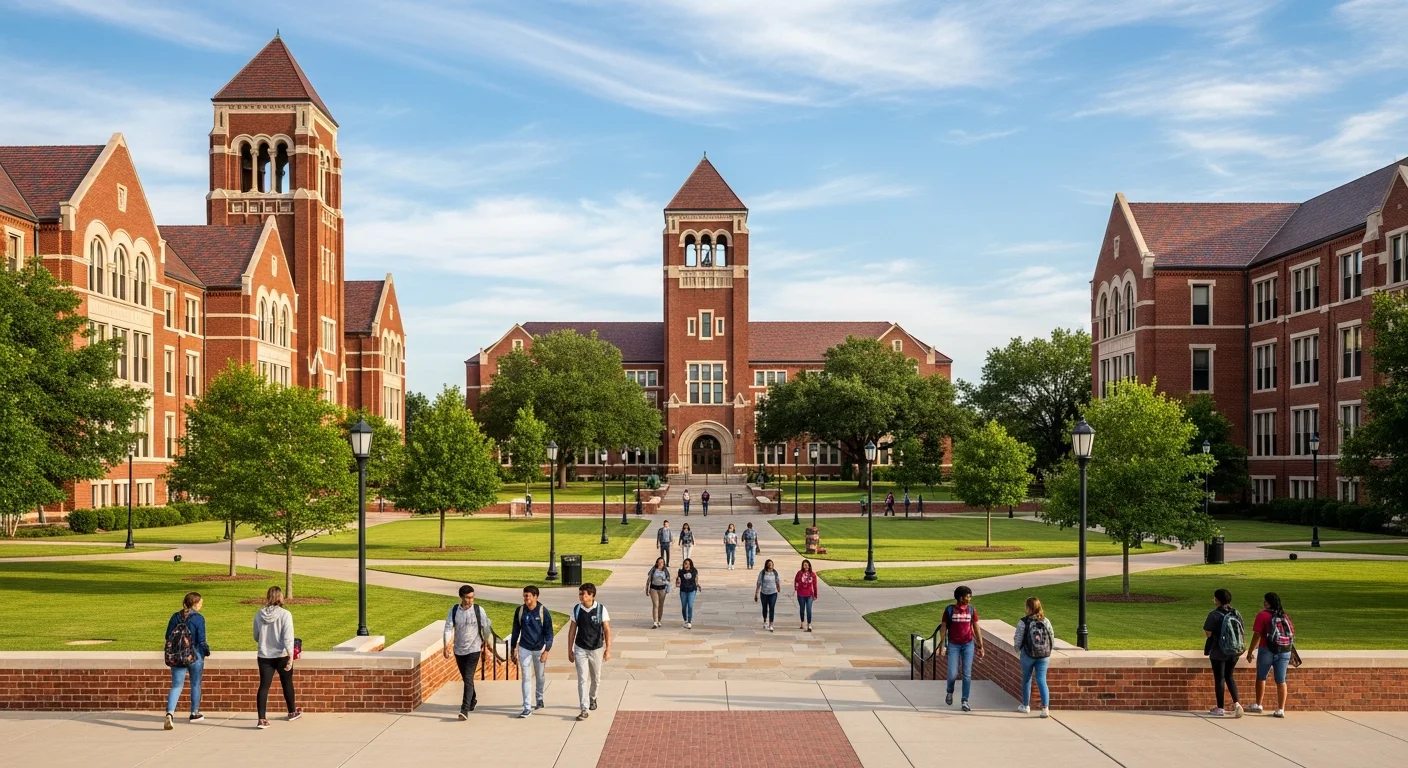

Cameron University — Lawton, OK

Key Distinction: Cameron's IT program uniquely bridges technical systems knowledge and business strategy, preparing graduates for IT management and strategic consulting roles rather than purely technical positions.

Hakia Insight: Cameron's proximity to Fort Sill military contracting creates an unusual pipeline: IT graduates move directly into defense-sector roles that require security clearances and strategic systems thinking, career paths most regional peers don't develop until mid-career.

At the bachelor's level, cameron University's information technology program takes a business-informed approach to computer science, recognizing that modern IT professionals must understand enterprise strategy, project management, and organizational change alongside technical depth. The curriculum integrates courses in IT governance, business systems analysis, and enterprise architecture—preparing students not just to manage systems, but to align technology with business objectives. Faculty bring backgrounds in both academic computer science and real-world IT consulting, shaping a program that attracts students interested in IT management and strategic technology roles. The program offers specialization options in cybersecurity and network administration, allowing students to develop marketable depth while maintaining breadth across the IT landscape. Located in Lawton, Oklahoma, Cameron's IT graduates feed into local government, military contracting, and regional corporate IT departments; the proximity to Fort Sill and its associated technology infrastructure creates unique internship and networking opportunities. Students benefit from capstone projects that often partner with regional organizations, providing practical exposure to real IT challenges and building professional networks before graduation.

Programs Offered
  • Bachelor of Science in Information Technology — 4 years, on-campus
  • Bachelor of Arts in Information Technology — 4 years, online

Location Advantages: Proximity to Fort Sill and military contracting organizationsStrong ties to Lawton-area government and corporate IT departments

Oral Roberts University — Tulsa, OK

Key Distinction: ORU's IT program uniquely emphasizes ethical computing and values-centered leadership, preparing graduates for careers where integrity and judgment are as important as technical skills.

Hakia Insight: ORU embeds ethical frameworks into technical curriculum rather than isolating them in gen-ed, meaning graduates can articulate *why* they made architectural choices—a competitive advantage in leadership screening for companies navigating compliance and governance.

At the bachelor's level, oral Roberts University's information technology program integrates technical depth with ethical computing and digital stewardship—reflecting the institution's values-centered approach to education. The curriculum covers standard IT competencies in systems, networks, and security while uniquely emphasizing cybersecurity ethics, technology's societal impact, and responsible IT leadership. This humanistic framing attracts students who want technical careers but also care about doing technology work thoughtfully; it also differentiates ORU graduates when interviewing for positions requiring security clearances or roles in regulated industries like finance and healthcare where ethical judgment matters. The program benefits from ORU's location in Tulsa, a metropolitan area with growing tech adoption in energy companies, aerospace, healthcare systems, and downstream industries. Faculty combine technical expertise with pastoral oversight—creating a mentoring environment where students discuss not just technical problems but career decisions and professional ethics. Hands-on labs provide experience with current systems and security tools. For students seeking a values-centered institution with rigorous IT training and a supportive community, ORU offers a genuinely distinctive pathway into technology careers.

Programs Offered
  • Bachelor of Science in Information Technology — 4 years, on-campus
  • Bachelor of Arts in Information Technology — 4 years, online

Location Advantages: Tulsa location provides access to energy sector IT operations, aerospace technology, and regional healthcare systems

Best Master's Information Technology Degree Programs in Oklahoma

Oklahoma State University-Main Campus — Stillwater, OK

Key Distinction: A comprehensive R1 computer science program combining research intensity, specialization tracks, and strong graduate pathways with solid undergraduate outcomes at major technology employers.

Hakia Insight: OSU's School of Electrical and Computer Engineering feeds PhD students directly into Google, Microsoft, and Amazon research roles, but the MS track lets professionals specialize (AI, systems, networks) without the 5-year commitment—practical for mid-career pivots.

At the master's level, oklahoma State University's computer science program ranks among the strongest in the region, with research-active faculty, well-equipped laboratories, and a curriculum spanning from systems-level programming and networking to machine learning and cybersecurity. The program balances rigorous theoretical training—algorithms, complexity theory, discrete mathematics—with contemporary applied work in areas like autonomous systems, data science, and secure software engineering. Students access advanced computing facilities and participate in faculty-led research projects, many of which receive external funding from the National Science Foundation, Department of Defense, and industry sponsors. Specialization tracks allow students to concentrate in cybersecurity, software engineering, networks, or computing systems, depending on career goals. Graduate degree pathways (MS and PhD) extend research opportunities and advanced technical training. OSU's location in Stillwater, combined with its R1 research status and robust industry partnerships, creates an environment where ambitious students can pursue both depth and breadth in computing—and where career outcomes typically include positions at major tech companies, government research labs, and established software firms.

Programs Offered
  • Master of Science in Information Technology — 1-2 years, on-campus
  • Master of Arts in Information Technology — 1-2 years, online
Research Labs and Institutes
  • School of Electrical and Computer Engineering
Industry Partners
  • Google (corporate)
  • Microsoft (corporate)
  • Amazon (corporate)
  • Lockheed Martin (corporate)
  • U.S. Department of Defense (government)
Accreditations and Certifications
  • ABET accredited

Location Advantages: Regional proximity to Oklahoma City and Tulsa tech sectorsAccess to federal research funding and defense-related opportunitiesStrong OKC-area startup and corporate technology ecosystem

Oklahoma City University — Oklahoma City, OK

Key Distinction: Asynchronous online delivery for working professionals. STEM-designated program

Hakia Insight: OCU's asynchronous MS in Applied AI & Machine Learning carries STEM designation, unlocking OPT visa extensions for international graduates—a detail that shifts the program's ROI dramatically for non-US students working in Oklahoma's energy and healthcare sectors.

Oklahoma City University's online Master of Science in Applied Artificial Intelligence & Machine Learning is a STEM-designated program focusing on deep learning techniques and business applications. This 30-credit program is delivered entirely through asynchronous online study, providing maximum flexibility for working professionals to advance their careers. Students master advanced machine-learning methods including neural networks, CNNs, and RNNs, with emphasis on practical implementation for business challenges like customer segmentation, predictive analytics, and natural-language processing. The curriculum covers rapidly evolving generative AI and large language models for business automation and innovation. Offered by the AACSB-accredited Meinders School of Business (top 4.5% globally), the program features small class sizes, competitive tuition with transparent pricing, and professors with real-world experience. Employment in computer and information technology occupations is projected to grow much faster than average through 2033 according to the U.S. Bureau of Labor Statistics.

Programs Offered
  • Master of Science in Applied Artificial Intelligence & Machine Learning — 1-2 years, on-campus. MS
Research Labs and Institutes
  • Ronnie K. Irani Center for Data Analytics
Notable Faculty
  • Robert Greve, Ph.D. — Information Technology and Competitive Enterprise
  • Andy Khader — Information Technology
  • Jacob Dearmon, Ph.D. — Economics and Data Analytics

Location Advantages: Located in Oklahoma City near state government IT departments, healthcare technology centers, and energy sector operations

Best Doctoral Information Technology Degree Programs in Oklahoma

Oklahoma State University-Main Campus — Stillwater, OK

Key Distinction: A comprehensive R1 computer science program combining research intensity, specialization tracks, and strong graduate pathways with solid undergraduate outcomes at major technology employers.

Hakia Insight: OSU's doctoral program sits within a School of Electrical and Computer Engineering that attracts federal research funding across aerospace and defense—meaning PhD students fund themselves through grants while solving problems directly relevant to Lockheed Martin and regional aerospace companies.

At the doctoral level, oklahoma State University's computer science program ranks among the strongest in the region, with research-active faculty, well-equipped laboratories, and a curriculum spanning from systems-level programming and networking to machine learning and cybersecurity. The program balances rigorous theoretical training—algorithms, complexity theory, discrete mathematics—with contemporary applied work in areas like autonomous systems, data science, and secure software engineering. Students access advanced computing facilities and participate in faculty-led research projects, many of which receive external funding from the National Science Foundation, Department of Defense, and industry sponsors. Specialization tracks allow students to concentrate in cybersecurity, software engineering, networks, or computing systems, depending on career goals. Graduate degree pathways (MS and PhD) extend research opportunities and advanced technical training. OSU's location in Stillwater, combined with its R1 research status and robust industry partnerships, creates an environment where ambitious students can pursue both depth and breadth in computing—and where career outcomes typically include positions at major tech companies, government research labs, and established software firms.

Programs Offered
  • Doctor of Philosophy in Information Technology — 4-6 years, on-campus
  • Doctor of Science in Information Technology — 4-6 years, online
Research Labs and Institutes
  • School of Electrical and Computer Engineering
Industry Partners
  • Google (corporate)
  • Microsoft (corporate)
  • Amazon (corporate)
  • Lockheed Martin (corporate)
  • U.S. Department of Defense (government)
Accreditations and Certifications
  • ABET accredited

Location Advantages: Regional proximity to Oklahoma City and Tulsa tech sectorsAccess to federal research funding and defense-related opportunitiesStrong OKC-area startup and corporate technology ecosystem