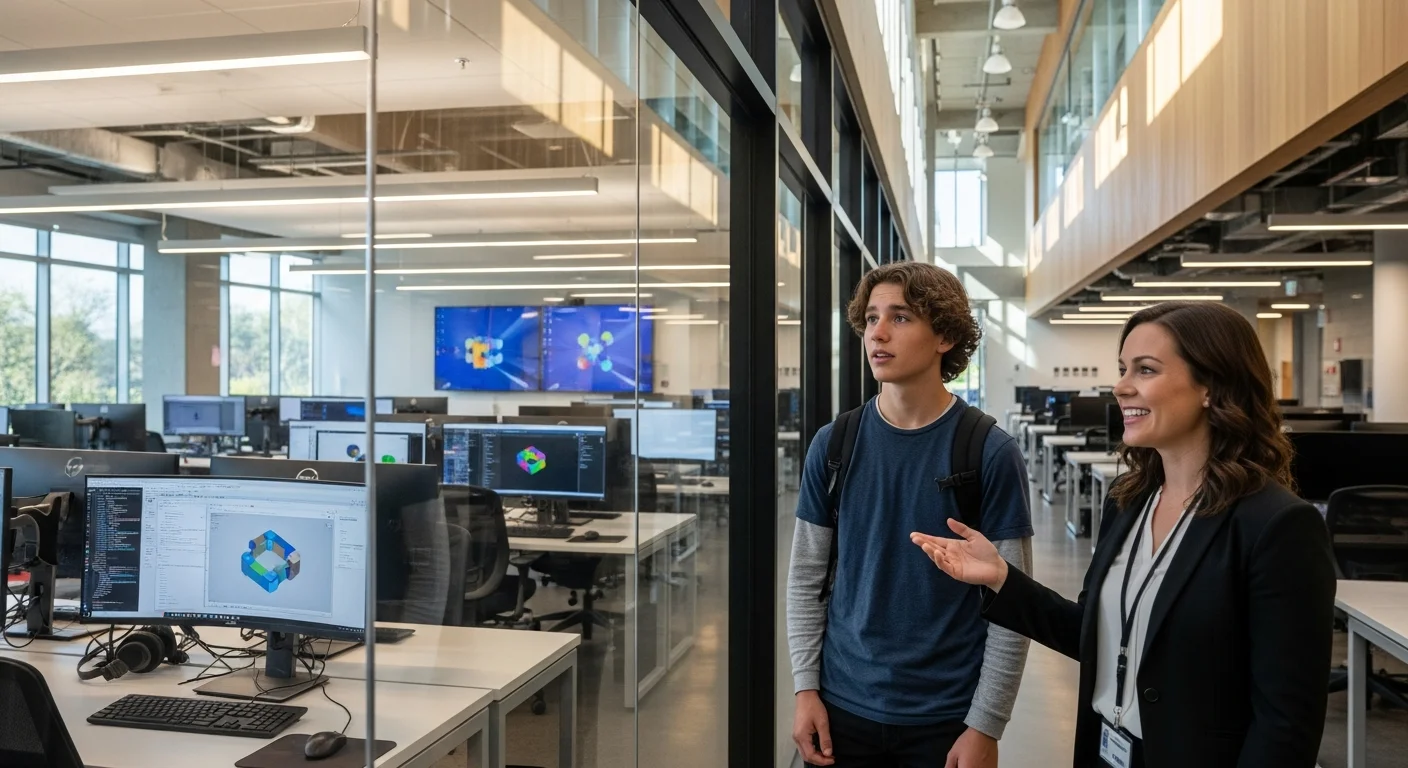
- 1.Program rankings matter less than fit: career services, specializations, and cost-to-outcome ratio are better predictors of success
- 2.Total cost varies 10x: from $7,000 (Georgia Tech OMSCS) to $200,000+ (elite private schools) for similar career outcomes
- 3.Online vs on-campus choice impacts networking and structure more than employer perception in tech (86% view equally)
- 4.Research opportunities and faculty mentorship become critical if you're considering graduate school or research careers
- 5.Location affects internship access and post-graduation opportunities: tech hubs offer 40% more entry-level positions
Find Programs That Fit Your Goals
Compare accredited programs across all tech fields.
Or Browse by Program
How to Approach CS Program Comparison
Choosing a computer science program is a high-stakes decision affecting your next 4+ years and career trajectory. Unlike other fields where rankings dominate, CS success depends more on individual factors: your learning style, financial situation, career goals, and personal circumstances.
This framework organizes decision factors into seven categories, each weighted by importance for different student profiles. Rather than prescribing one 'best' program, we'll help you identify your priorities and find programs that maximize your return on investment.
The key insight: a $200,000 degree from an elite school isn't automatically better than a $25,000 degree from a solid state university if both lead to similar career outcomes. Your job is to find the highest value program that fits your specific situation.
2,100+
CS Programs Nationwide
$7K - $200K
Cost Range
25%
Job Growth Rate
$75,000
Median Starting Salary
450+
Online Programs
350+
ABET Accredited
Academic Quality: What Actually Matters
Academic quality isn't just about rankings. For CS specifically, these factors predict student success better than U.S. News rankings:
- ABET accreditation ensures curriculum meets industry standards (critical for certain employers)
- Faculty-to-student ratio affects access to mentorship and research opportunities
- Curriculum currency: programs teaching modern frameworks, cloud technologies, and AI/ML
- Industry connections through advisory boards, guest lectures, and partnership programs
- Research opportunities if you're considering graduate school or research careers
Red flags include outdated curricula (still teaching only Java or C++), no industry partnerships, extremely large class sizes (300+ students), or lack of practical project requirements. Strong programs require capstone projects, internships, or co-op experiences.
For program-specific rankings and detailed curriculum analysis, see our guides to best CS bachelor's programs and top online CS degrees.
Total Cost of Ownership: Beyond Sticker Price
CS program costs range from $7,000 (Georgia Tech OMSCS) to over $200,000 (elite private schools), but total cost includes opportunity cost, living expenses, and time to degree. Here's how to calculate true cost:
- Tuition and fees (in-state vs out-of-state vs private)
- Living expenses (on-campus, off-campus, or continue working)
- Opportunity cost (4 years of potential salary if working instead)
- Time to graduation (some programs take 5-6 years)
- Financial aid and scholarships (merit-based aid varies significantly)
Example calculation: A $30,000/year state university with $15,000 living costs for 4 years costs $180,000 total plus $200,000 in lost wages (4 years × $50,000 starting salary). Total opportunity cost: $380,000.
Compare this to working while completing an online degree for $15,000 total cost with no opportunity cost. The financial difference can exceed $350,000, enough to justify careful consideration of program format and cost structure.
For detailed cost breakdowns and ROI calculations, use our CS Degree ROI Calculator to compare programs based on your specific financial situation.
Cost Comparison by Program Type
| Tuition Range | Opportunity Cost | Time to Graduate | ||
|---|---|---|---|---|
| Online (Working) | $7,000 - $50,000 | None | $7,000 - $50,000 | 3-6 years |
| In-State Public | $40,000 - $80,000 | $200,000 | $300,000 - $400,000 | 4 years |
| Out-of-State Public | $80,000 - $160,000 | $200,000 | $350,000 - $500,000 | 4 years |
| Private University | $160,000 - $240,000 | $200,000 | $450,000 - $600,000 | 4 years |
| Community College + Transfer | $25,000 - $60,000 | $200,000 | $275,000 - $360,000 | 4-5 years |
Online vs On-Campus: When Each Format Wins
The online vs on-campus decision significantly impacts cost, experience, and outcomes. For CS specifically, employer perception has equalized, 86% of hiring managers view accredited online and on-campus CS degrees equally according to 2024 SHRM data.
However, the learning experience differs substantially. Online programs require exceptional self-discipline but offer flexibility and cost savings. On-campus programs provide structure, networking, and research opportunities but require full-time commitment and higher costs.
Completion rates also differ: online programs average 60% graduation rates versus 80% for on-campus. Cohort-based online programs (with fixed schedules and peer groups) show significantly better completion rates than fully self-paced options.
For detailed analysis of both formats including cost comparisons and career outcomes, see our comprehensive online vs on-campus degrees guide.
Choosing Your Program Format
- You're a working professional who can't quit your job
- Cost is a major concern (online costs 40-60% less)
- You're self-disciplined and motivated to study independently
- Geographic constraints prevent attending preferred on-campus programs
- You prefer learning at your own pace within structured deadlines
- You're 18-22 years old and can commit to full-time study
- You thrive with structure, accountability, and peer interaction
- Networking and campus recruiting are high priorities
- You want research opportunities or plan to pursue graduate school
- Cost is less of a concern due to family support or scholarships
- You want flexibility but occasional in-person interaction
- Programs offer optional residencies or local meetups
- You can supplement online learning with local tech community involvement
- You need the cost benefits of online but prefer some structure
Specialized CS Programs: When to Choose Focus Over Breadth
Many schools now offer specialized CS degrees: Data Science, Cybersecurity, AI/Machine Learning, Software Engineering, and Game Development. The question is whether to choose specialized programs or traditional CS with electives.
Specialized programs offer deeper focus but less flexibility. Traditional CS provides broader foundation but may lack depth in emerging areas. Your choice should align with career certainty and learning preference.
- Choose specialized programs if you're certain about career direction and want industry-specific skills
- Choose traditional CS if you're unsure about specialization or want maximum career flexibility
- Consider schools offering strong elective tracks within CS degrees as a middle ground
- Research whether specialized programs are taught by CS faculty or separate departments
Market demand varies by specialization: AI/ML engineering shows 45% growth, while traditional software development maintains steady 25% growth. Choose based on your interests and risk tolerance.
Broad foundation covering algorithms, systems, programming languages, mathematics, and theory with specialization through electives.
Key Skills
Common Jobs
- • Software Developer
- • Systems Analyst
- • Technical Lead
- • Product Manager
Focused curricula targeting specific industry needs: cybersecurity, data science, AI/ML, or game development.
Key Skills
Common Jobs
- • Data Scientist
- • Security Analyst
- • AI Engineer
- • Game Developer
Engineering approach to software development emphasizing project management, quality assurance, and team collaboration.
Key Skills
Common Jobs
- • Software Engineer
- • DevOps Engineer
- • Technical Manager
- • Solutions Architect
Location Impact: Tech Hubs vs Cost of Living Trade-offs
Program location affects internship opportunities, post-graduation job access, and networking potential. Tech hubs (Silicon Valley, Seattle, Austin, Boston) offer 40% more entry-level positions but programs cost 20-30% more due to living expenses.
Regional considerations include local industry presence, cost of living during school, and alumni networks. Schools in tech hubs provide easier access to internships and recruiting events, while programs in lower-cost areas offer better value with remote work increasingly common.
- Tech hub programs: higher costs but more internship and networking opportunities
- Regional programs: lower costs, often strong local industry connections
- State flagships: balance of cost, reputation, and alumni networks
- Online programs: location-independent but require proactive networking
Post-graduation, many students relocate regardless of where they studied. The key is whether the program provides sufficient networking and skills to compete nationally, not just locally.
Personal Fit Assessment: Matching Your Learning Style
Beyond rankings and costs, personal fit determines success. This includes learning style, social preferences, academic background, and life circumstances. The 'best' program is the one where you'll thrive and complete your degree.
Key fit factors often overlooked:
- Class size preference: large lectures vs small seminars
- Support system needs: tutoring, office hours, study groups
- Timeline flexibility: can you commit 4 years full-time?
- Technology access: reliable internet and computer for online programs
- Financial runway: can you afford not working for 4 years?
Consider visiting campuses, attending virtual info sessions, or speaking with current students and alumni. Program culture varies significantly between schools, even those with similar academic profiles.
For students considering career changes, programs specifically designed for adult learners often provide better support than traditional programs. Look for bridge programs, prerequisite support, and career change services.
CS Program Decision Matrix
- ABET accreditation status
- Faculty credentials and industry experience
- Curriculum modernity and specialization options
- Research opportunities if planning graduate school
- Capstone project and practical experience requirements
- Total cost including opportunity cost
- Financial aid and scholarship availability
- Expected starting salary in target location
- Time to degree completion
- Ability to work while studying
- Industry partnerships and internship placement rates
- Career counseling and resume/interview support
- Alumni network strength and accessibility
- Job placement statistics and employer relationships
- Technical interview preparation resources
- Learning format preference (online vs on-campus)
- Class size and student-faculty ratio
- Geographic location and climate preferences
- Campus culture and social environment
- Support services for your demographic
- Schedule flexibility for working students
- Part-time vs full-time program options
- Transfer credit policies and degree completion time
- Online learning technology and platform quality
- Hybrid options combining online and in-person elements
Avoid These Common CS Program Selection Mistakes
Students often make predictable mistakes when choosing CS programs. Learning from others' experiences can save you thousands of dollars and years of your life:
- Choosing based solely on rankings without considering cost-to-outcome ratio
- Underestimating the difficulty of online programs and overestimating your self-discipline
- Focusing on prestige while ignoring practical factors like career services and industry connections
- Not researching actual curriculum content, some 'CS' programs are more IT or business-focused
- Failing to consider opportunity cost, a $200K degree isn't worth it if a $30K degree leads to the same job
- Choosing specialized programs before understanding if you actually want that specialization
- Ignoring completion rates and support systems, especially for online programs
- Not speaking with recent graduates to understand actual outcomes vs marketing claims
The biggest mistake is decision paralysis. While research is important, perfect information doesn't exist. Make a decision based on your priorities, commit to success in your chosen program, and focus on building skills rather than second-guessing your choice.
Your CS Program Selection Action Plan
Define Your Constraints
List your non-negotiables: budget, timeline, location preferences, and life circumstances. Be honest about what you can and can't do.
Research 8-12 Programs
Include a mix of online/on-campus, public/private, and general/specialized programs. Use our ranking guides as starting points.
Calculate Total Costs
Use our ROI calculator to compare true costs including opportunity cost, living expenses, and time to degree.
Contact Current Students
Reach out via LinkedIn or program forums. Ask about workload, support systems, job placement, and honest program assessment.
Attend Info Sessions
Virtual or in-person sessions reveal program culture and let you ask specific questions about curriculum and outcomes.
Apply to 3-5 Programs
Include safety, target, and reach schools. Apply early for better scholarship consideration.
Visit Finalist Programs
If possible, visit campuses or attend virtual open houses. Campus culture and facilities can be deciding factors.
Make Your Decision
Weigh all factors using the decision matrix above. Choose the program that best fits your situation and commit to success.
Frequently Asked Questions About Choosing CS Programs
Related Program Rankings & Guides
Career & Skills Resources
Data Sources & Methodology
Tuition, enrollment, and graduation rate data
Career outlook and salary statistics
ROI analysis and career outcome studies
Program accreditation status verification
Employer perception and hiring practice data
Career services and job placement statistics

Taylor Rupe
Co-founder & Editor (B.S. Computer Science, Oregon State • B.A. Psychology, University of Washington)
Taylor combines technical expertise in computer science with a deep understanding of human behavior and learning. His dual background drives Hakia's mission: leveraging technology to build authoritative educational resources that help people make better decisions about their academic and career paths.