University campus in Oregon
Updated January 2026

Best Mobile Development Degree Programs in Oregon — 2026 Rankings

Explore 14 accredited mobile development degree programs in Oregon. Compare schools by graduation rate, salary outcomes, and tuition—from Lane Community College to Oregon State University.

#1 ProgramOregon State
Avg Salary$105,670
Tuition From$5,004/yr
Job Growth+22%

Key Takeaways

Top 3 ranked: Oregon State, Lewis & Clark College, Portland State

Based on graduation rates, program outcomes, and institutional quality

IPEDS 2023

Tuition ranges from $4,032 to $61,916/year

Lane Community College offers the most affordable option at $5,004/yr

IPEDS 2023

Degree levels: 7 associate's, 2 master's, 2 doctoral programs available in Oregon

From community college pathways to advanced research degrees

IPEDS 2023

1 Oregon programs offer online or hybrid formats

Flexible scheduling for working professionals

IPEDS 2023

Oregon community college transfer can save 40-60% on total degree costs

7 associate's programs provide transfer pathways to bachelor's degrees

Education Commission of the States

Major employers: Intel, Nike, Salesforce, Autodesk

Tech hubs in Portland and Beaverton

Hakia Research 2026

Mobile Development programs available near 33+ cities across Oregon

Search by city to find programs within 200 miles of your location

IPEDS 2023

Updated February 2026

On This Page
$105,670
Is Mobile Development in Oregon Worth It?
Yes. Mobile Development degrees in Oregon deliver strong ROI—graduates earn $105,670 median salary with +22% job growth through 2032. In-state tuition averages $22,853/year.

Source: BLS OEWS May 2024

Best Mobile Development Degree Programs in Oregon

Bachelor's Mobile Development Degree Programs in Oregon

7 programs$105,670 median salary89% avg grad rate
7
Programs
$105,670
Median Salary
$41,020/yr
Avg Tuition
89%
Avg Grad Rate

Program Landscape

Oregon ranks among the nation's top destinations for mobile development education, with 7 accredited bachelor's degree programs across 2 public and 5 private institutions. The highest-ranked programs are Oregon State, Lewis & Clark College, Portland State, recognized for academic excellence, research opportunities, and strong industry connections.

Career Outcomes

Graduates from Oregon mobile development programs earn a median salary of $89,820—9% below the national average. The state's robust technology sector, anchored by the Portland, Beaverton, Hillsboro metropolitan areas, provides abundant internship and employment opportunities with companies including Intel, Nike, Salesforce.

Costs & Value

Tuition ranges from $8,694 to $61,916 annually, with an average of $41,020/yr. Top programs maintain graduation rates above 89%, with the highest reaching 95%. Many programs hold ABET accreditation, the gold standard for computing education, ensuring curriculum meets rigorous industry standards.

Curriculum & Specializations

Students can choose from specializations including software engineering, cybersecurity, artificial intelligence, data science, and systems architecture. Strong industry partnerships provide access to co-op programs, capstone projects with real companies, and direct recruiting pipelines to Oregon's leading technology employers. For students seeking mobile development degrees in Oregon, these top-ranked mobile development schools offer the strongest combination of academic rigor and career preparation.

Show:

Earn your bachelor's in Mobile Development

(Sponsored)

Loading programs...

🥇

Oregon State University

Public
Corvallis, OR
$11,145
Tuition/yr
84%
Grad Rate
78.3
Score
Website
🥈

Lewis & Clark College

Private
Portland, OR
$61,916
Tuition/yr
95%
Grad Rate
59.2
Score
Website
🥉

Portland State University

Public
Portland, OR
$8,694
Tuition/yr
45.6
Score
Website
#4

Willamette University

Private
Salem, OR
$48,000
Tuition/yr
87%
Grad Rate
48.9
Score
Website
#5

University of Portland

Private
Portland, OR
$54,400
Tuition/yr
51.1
Score
Website
#6

Linfield University

Private
McMinnville, OR
$49,810
Tuition/yr
37.8
Score
Website
#7

Pacific University

Private
Forest Grove, OR
$53,174
Tuition/yr
33.9
Score
Website

Complete Mobile Development Degree Program Rankings in Oregon

Best Associate's Mobile Development Degree Programs in Oregon

### Program Landscape Oregon offers **7 accredited** associate's degree programs in mobile development, providing an affordable entry point into the technology field. The top-ranked programs include **Lane Community College**, **Klamath Community College**, **Clackamas Community College**, which combine rigorous technical curriculum with practical skills training. ### Costs & Value Community colleges in Oregon offer these two-year programs at an average cost of **$4,685/yr**—significantly less than four-year university tuition. Students completing associate's degrees can pursue entry-level technical positions and transfer opportunities, with entry-level salaries averaging **$58,119** in Oregon. ### Career Pathways Many programs feature guaranteed transfer agreements with Oregon's public universities, allowing students to complete their first two years at reduced cost before transferring to complete a bachelor's degree. The Portland, Beaverton, Hillsboro areas offer particularly strong job markets for associate's degree holders, with employers like Intel, Nike, Salesforce hiring for technical support, junior development, and IT specialist positions. ### Curriculum & Specializations Programs typically include coursework in programming fundamentals, database management, networking basics, and software development. Among mobile development schools in Oregon, these associate's programs offer the best value for students beginning their mobile development degrees in Oregon.

  1. #1. Lane Community College

    Hakia ranks Lane Community College as the #1 associate's in mobile development degree program in Oregon. This public institution in Eugene, OR has annual tuition of $5,004. Ranking score: 42.9.

  2. #2. Klamath Community College

    Hakia ranks Klamath Community College as the #2 associate's in mobile development degree program in Oregon. This public institution in Klamath Falls, OR has annual tuition of $4,140. Ranking score: 42.5.

  3. #3. Clackamas Community College

    Hakia ranks Clackamas Community College as the #3 associate's in mobile development degree program in Oregon. This public institution in Oregon City, OR has annual tuition of $5,535. Ranking score: 42.0.

  4. #4. Rogue Community College

    Hakia ranks Rogue Community College as the #4 associate's in mobile development degree program in Oregon. This public institution in Grants Pass, OR has annual tuition of $4,320. Ranking score: 37.8.

  5. #5. Clatsop Community College

    Hakia ranks Clatsop Community College as the #5 associate's in mobile development degree program in Oregon. This public institution in Astoria, OR has annual tuition of $4,032. Ranking score: 34.6.

  6. #6. Chemeketa Community College

    Hakia ranks Chemeketa Community College as the #6 associate's in mobile development degree program in Oregon. This public institution in Salem, OR has annual tuition of $4,545. Ranking score: 34.6.

  7. #7. Blue Mountain Community College

    Hakia ranks Blue Mountain Community College as the #7 associate's in mobile development degree program in Oregon. This public institution in Pendleton, OR has annual tuition of $5,220. Ranking score: 34.6.

Online Associate's Mobile Development Degree Programs in Oregon

### Online Program Options Oregon's community colleges offer 1 online associate's mobile development programs, providing flexible pathways for students balancing education with work or family responsibilities. Top-ranked online programs include **Blue Mountain Community C...**, all regionally accredited and recognized by Oregon employers. ### Costs & Employer Recognition Online associate's programs average **$5,220/yr**—often comparable to or less than on-campus tuition. Oregon-based employers including Intel, Nike, Salesforce value online credentials from accredited institutions, recognizing that program quality matters more than delivery format. The Portland, Beaverton, Hillsboro job market actively recruits graduates from online programs. ### Program Format These programs feature asynchronous coursework for maximum flexibility, with some offering synchronous sessions for collaborative learning. Students can typically complete **60 credit hours** in 2 years while working full-time. ### Technology & Flexibility Technology requirements include reliable internet access and a modern computer. Programs provide virtual labs, online tutoring, career services, and networking opportunities. Many offer start dates throughout the year and accelerated course formats for motivated students. Graduates earn the same degree as on-campus students, with no distinction on transcripts or diplomas. For students pursuing online mobile development degrees in Oregon, these accredited mobile development schools offer the flexibility and quality that today's learners demand.

  • Blue Mountain Community College - Pendleton, OR - Tuition: $5,220/year

Best Bachelor's Mobile Development Degree Programs in Oregon

### Program Landscape Oregon ranks among the nation's top destinations for mobile development education, with **7 accredited** bachelor's degree programs across **2 public** and **5 private** institutions. The highest-ranked programs are **Oregon State**, **Lewis & Clark College**, **Portland State**, recognized for academic excellence, research opportunities, and strong industry connections. ### Career Outcomes Graduates from Oregon mobile development programs earn a median salary of **$89,820**—9% below the national average. The state's robust technology sector, anchored by the Portland, Beaverton, Hillsboro metropolitan areas, provides abundant internship and employment opportunities with companies including Intel, Nike, Salesforce. ### Costs & Value Tuition ranges from **$8,694** to **$61,916** annually, with an average of **$41,020/yr**. Top programs maintain graduation rates above **89%**, with the highest reaching **95%**. Many programs hold ABET accreditation, the gold standard for computing education, ensuring curriculum meets rigorous industry standards. ### Curriculum & Specializations Students can choose from specializations including software engineering, cybersecurity, artificial intelligence, data science, and systems architecture. Strong industry partnerships provide access to co-op programs, capstone projects with real companies, and direct recruiting pipelines to Oregon's leading technology employers. For students seeking mobile development degrees in Oregon, these top-ranked mobile development schools offer the strongest combination of academic rigor and career preparation.

  1. #1. Oregon State University

    Hakia ranks Oregon State University as the #1 bachelor's in mobile development degree program in Oregon. This public institution in Corvallis, OR has annual tuition of $11,145 and a 84% graduation rate. Ranking score: 78.3.

  2. #2. Lewis & Clark College

    Hakia ranks Lewis & Clark College as the #2 bachelor's in mobile development degree program in Oregon. This private institution in Portland, OR has annual tuition of $61,916 and a 95% graduation rate. Ranking score: 59.2.

  3. #3. Portland State University

    Hakia ranks Portland State University as the #3 bachelor's in mobile development degree program in Oregon. This public institution in Portland, OR has annual tuition of $8,694. Ranking score: 45.6.

  4. #4. Willamette University

    Hakia ranks Willamette University as the #4 bachelor's in mobile development degree program in Oregon. This private institution in Salem, OR has annual tuition of $48,000 and a 87% graduation rate. Ranking score: 48.9.

  5. #5. University of Portland

    Hakia ranks University of Portland as the #5 bachelor's in mobile development degree program in Oregon. This private institution in Portland, OR has annual tuition of $54,400. Ranking score: 51.1.

  6. #6. Linfield University

    Hakia ranks Linfield University as the #6 bachelor's in mobile development degree program in Oregon. This private institution in McMinnville, OR has annual tuition of $49,810. Ranking score: 37.8.

  7. #7. Pacific University

    Hakia ranks Pacific University as the #7 bachelor's in mobile development degree program in Oregon. This private institution in Forest Grove, OR has annual tuition of $53,174. Ranking score: 33.9.

Best Master's Mobile Development Degree Programs in Oregon

### Program Landscape Oregon offers **2** master's degree programs in mobile development, designed for professionals seeking to advance into senior engineering, technical leadership, and specialized roles. The top programs—**Oregon State**, **Portland State**—combine advanced technical training with research opportunities and leadership development. ### Career Outcomes Master's graduates in Oregon earn a median salary of **$105,670**, approximately **20-30% higher** than bachelor's degree holders. The concentration of technology companies in Portland, Beaverton, Hillsboro creates strong demand for graduate-level talent, with Intel, Nike, Salesforce actively recruiting from these programs. ### Costs & Value Program formats include traditional full-time study (typically 2 years), part-time options for working professionals (2-3 years), and accelerated tracks. Tuition averages **$9,920/yr**, with many employers offering tuition reimbursement for graduate education. Some programs offer thesis and non-thesis tracks, allowing students to focus on research or professional development based on their career goals. ### Curriculum & Specializations Curriculum covers advanced topics including machine learning, distributed systems, software architecture, and technical management. Many programs include practicum experiences, industry capstone projects, or consulting engagements that provide real-world application of advanced concepts. Among Oregon's mobile development schools at the graduate level, these programs stand out for both academic quality and career outcomes.

  1. #1. Oregon State University

    Hakia ranks Oregon State University as the #1 master's in mobile development degree program in Oregon. This public institution in Corvallis, OR has annual tuition of $11,145 and a 84% graduation rate. Ranking score: 81.9.

  2. #2. Portland State University

    Hakia ranks Portland State University as the #2 master's in mobile development degree program in Oregon. This public institution in Portland, OR has annual tuition of $8,694. Ranking score: 67.0.

Best Doctoral Mobile Development Degree Programs in Oregon

### Program Landscape Oregon is home to **2** doctoral programs in mobile development, preparing students for research positions, faculty appointments, and executive technical roles. Leading programs at **Oregon State**, **Portland State** are recognized for cutting-edge research, strong faculty publications, and competitive funding packages. ### Career Outcomes Doctoral graduates command premium salaries, with Oregon PhD holders earning a median of **$132,088**—reflecting the advanced expertise required for research and executive positions. The Portland, Beaverton, Hillsboro region's research universities and corporate R&D centers provide extensive collaboration opportunities with industry leaders like Intel, Nike, Salesforce. ### Costs & Value PhD programs typically require 4-6 years of full-time study, including coursework, qualifying examinations, and original dissertation research. Many programs offer full funding through teaching or research assistantships, covering tuition and providing stipends of **$25,000–$40,000** annually. ### Curriculum & Specializations Research strengths across Oregon programs include artificial intelligence, cybersecurity, human-computer interaction, systems, and theoretical computer science. For aspiring researchers pursuing mobile development degrees in Oregon, graduates go on to careers as university faculty, industry research scientists, or technical executives, contributing to advances in technology that impact millions of users worldwide.

  1. #1. Oregon State University

    Hakia ranks Oregon State University as the #1 doctoral in mobile development degree program in Oregon. This public institution in Corvallis, OR has annual tuition of $11,145 and a 84% graduation rate. Ranking score: 55.5.

  2. #2. Portland State University

    Hakia ranks Portland State University as the #2 doctoral in mobile development degree program in Oregon. This public institution in Portland, OR has annual tuition of $8,694. Ranking score: 49.3.

Mobile Development Tuition in Oregon

MetricValue
Average in-state tuition$22,853/year
Average out-of-state tuition$57,133/year
Community college tuition$5,713/year
4-year savings for residents$137,120
2+2 transfer pathway savings$34,280

Source: IPEDS 2023

Mobile Development Financial Aid & Scholarships in Oregon

State Aid Programs

Oregon residents pursuing mobile development degrees have access to targeted state financial aid programs designed to reduce educational costs. The Oregon Opportunity Grant is a need-based grant program available to eligible Oregon residents attending participating institutions, providing direct support that does not require repayment. This state-level funding complements federal aid opportunities available through the Free Application for Federal Student Aid (FAFSA), which opens doors to grants, loans, and work-study programs. All students, regardless of state residency, can access federal aid by completing the FAFSA at StudentAid.gov, which determines eligibility for Pell Grants, Federal Direct Loans, and other federal programs.

Key Programs & Amounts

Beyond state and federal grants, many Oregon institutions offering mobile development programs provide institutional scholarships and financial aid packages. Public four-year institutions in Oregon average $9,555 in in-state tuition, making state universities significantly more affordable than private alternatives (IPEDS). Community colleges offer an especially budget-friendly pathway, with institutions like Portland Community College charging $4,608 annually. Students should explore scholarship opportunities directly through their chosen institution and consult the College Scorecard to compare net price and aid availability across Oregon's mobile development programs. The Oregon Higher Education Coordinating Commission provides additional resources and program information for prospective students.

Calculate Your Mobile Development Degree ROI in Oregon

Use our interactive ROI calculator to estimate your return on investment for a mobile development degree in Oregon. Enter your expected tuition costs, financial aid, and career goals to see projected payback periods and lifetime earnings. The calculator uses current salary data from BLS and tuition data from IPEDS to provide accurate estimates.

Mobile Development Degree ROI Calculator
Estimate your return on investment for a mobile development degree
$

Leave blank to use average cost for selected program type

20 years
10 years20 years30 years
20-Year ROI

+696%

Net gain divided by total investment. ROI above 200% is considered excellent for education investments.

Net Gain

$1,288,506

Your additional lifetime earnings with this degree vs. working without one, minus the total investment.

Break-Even

6 years

Years until your cumulative earnings exceed total investment. Shorter programs often break even faster due to lower opportunity cost.

COL-Adjusted Salary

$100,000

Your starting salary adjusted for local cost of living. This shows real purchasing power compared to a $100K national baseline.

Why does break-even change with program type? Your "total investment" includes both tuition AND opportunity cost (foregone earnings while in school). A 4-year full-time public university (in-state) means 4 years of not earning a salary ($140,000 in opportunity cost). Shorter full-time programs may have higher tuition but lower total investment because you return to the workforce sooner.

Detailed Breakdown
How we calculate your degree ROI using real salary data
Total Investment$185,000

Tuition plus opportunity cost (earnings you miss while in school)

Program Cost (Tuition)$45,000

Direct cost of the degree program

Opportunity Cost$140,000

4 years × $35K/year foregone salary while studying full-time

20-Year Earnings (with degree)$2,323,914

Projected career earnings starting after graduation, with salary growth

20-Year Earnings (without degree)$850,408

What you'd earn working at $35K/year with 2% annual growth

Starting Salary (Portland, OR)$120,000

Median salary for this role in your selected location (BLS 2024)

Annualized Return4.1%

Your investment's compound annual growth rate (similar to stock market returns)

Data sources: BLS OEWS May 2024, IPEDS 2023. Calculations use median salaries, 3% discount rate, and assume salary growth declines from 6% to 2% over career. Individual results will vary. | Powered by Hakia.com

Career Paths

Design and develop software applications and systems

Median Salary:$119,407

Analyze complex datasets and build predictive models

Median Salary:$99,330

Protect computer networks from cyber threats

Median Salary:$110,954

Manage cloud infrastructure and deployment pipelines

Median Salary:$117,294

Design and maintain cloud computing infrastructure

Median Salary:$114,124

Build and deploy machine learning models

Median Salary:$133,144
Mobile Development Salaries by Metro Area

Median annual salary in Oregon metro areas

Hakia.com
View data table
Categoryvalue
Portland$116K
Beaverton$111K
Hillsboro$106K

Source: BLS OEWS May 2024

Hakia.com

Mobile Development Jobs in Oregon: Top Employers Hiring

Oregon's mobile development sector is anchored by major employers spanning healthcare, technology, and consumer goods industries. Key employers include Providence Health, OHSU (Oregon Health & Science University), Intel, Nike, and numerous mid-sized tech firms concentrated in the Portland Metro and Willamette Valley regions. Providence Health and OHSU represent significant opportunities for mobile developers in healthcare IT and digital health solutions, while Intel and Nike drive innovation in technology infrastructure and consumer applications. These employers actively recruit from Oregon's top-ranked programs, particularly Oregon State University, which leads the state with 1,032 completions, and Portland State University, which has produced 251 completions.

The geographic distribution of employers creates distinct career opportunities across Oregon's major cities and regions. The Portland-Vancouver-Hillsboro metro area hosts the densest concentration of tech employers, including Intel's significant operations in Hillsboro and Nike's headquarters in Beaverton. The Willamette Valley region, encompassing Salem and Corvallis, supports additional opportunities through state government agencies and Oregon State University's proximity to tech innovation hubs. Career seekers can leverage the Bureau of Labor Statistics state data to research occupation-specific salary and employment trends. For related career exploration, consider Computer Programming in Oregon and UX Design in Oregon, which represent adjacent professional pathways with significant overlap in Oregon's employer landscape.

How to Apply to Mobile Development Programs in Oregon

1

Research Program Requirements

Review admission requirements for mobile development programs at your target schools. Requirements vary by institution and degree level.

2

Prepare Application Materials

Gather transcripts, test scores (SAT/ACT for undergrad, GRE for graduate), letters of recommendation, and personal statement.

3

Apply for Financial Aid

Complete the FAFSA by priority deadlines.

4

Submit Applications Before Deadlines

Apply early for priority consideration. Early action/decision deadlines are typically October-November; regular deadlines December-January.

5

Complete Enrollment Steps

Accept your offer, submit enrollment deposit, complete orientation requirements, and register for classes.

Mobile Development Transfer Pathways in Oregon

State Transfer System

Oregon has implemented a robust transfer system designed to facilitate seamless progression from community colleges to four-year universities. The Oregon Transfer Module enables students to transfer general education credits between eligible institutions without duplication or loss of academic progress. With 10 associate's degree programs in mobile development offered across institutions like Portland Community College, Mt. Hood Community College, Lane Community College, Chemeketa Community College, and Linn-Benton Community College, students can complete foundational coursework affordably before transferring. The average community college tuition ranges from $4,392 to $5,817, compared to four-year public institution averages of $9,555, allowing students to save significant tuition costs during their first two years.

How Transfers Work

Transfer pathways from Oregon's 33 community colleges to its 33 four-year institutions create flexible entry points for mobile development studies. Many two-year institutions have established articulation agreements with leading bachelor's-degree-granting schools, ensuring that credits earned in mobile development coursework transfer directly toward degree completion. Students completing an associate's degree at Portland Community College, for example, can transition smoothly to four-year programs at Oregon State University, University of Oregon, or Portland State University with junior-standing status. The Oregon Higher Education Coordinating Commission oversees these transfer agreements and maintains comprehensive documentation of program pathways. For financial support during transfer, Oregon residents may qualify for the Oregon Opportunity Grant, a need-based aid program available at participating institutions. Students can research specific program options through the College Scorecard and should connect with transfer counselors at their community college. Explore similar transfer-friendly pathways in related fields like Web Development and UX Design.

Why Study Mobile Development in Oregon?

Industry & Workforce

Oregon has established itself as a significant hub for mobile development education and technology innovation. With 21 institutions offering mobile development programs across all degree levels—including 7 bachelor's programs, 10 associate's programs, 2 master's programs, and 2 doctoral programs—students have diverse pathways to enter this growing field (IPEDS). Oregon State University leads the state with an impressive 1,032 completions in mobile development, followed by Portland State University with 251 completions, demonstrating the strength of comprehensive programs throughout the state.

Salary Outlook

The state's geographic advantage positions students near major technology employers and innovation centers. Portland, Eugene, Salem, Beaverton, and Hillsboro host significant operations from companies like Intel, Nike, and Providence Health, creating abundant internship and employment opportunities for graduates. Oregon's cost of education remains competitive, with average public four-year in-state tuition at $9,555—substantially lower than the out-of-state average of $26,691. Students can further reduce costs through the Oregon Opportunity Grant, a need-based financial aid program for eligible Oregon residents. For those seeking advanced degrees, Oregon's top-ranked master's programs at Oregon State University and Portland State University provide pathways to specialized roles in mobile application architecture and development leadership. Compare Oregon's programs with comparable offerings in California and Texas to see how the state's education costs and program quality stack up nationally.

Mobile Development Job Market in Oregon

Employment Outlook

Oregon's mobile development job market is experiencing steady growth, supported by a robust technology sector concentrated in major metropolitan areas. According to the Bureau of Labor Statistics, Oregon has a thriving tech workforce across Portland, Eugene, Salem, and Beaverton. The Portland-Vancouver-Hillsboro metro area serves as the primary hub for mobile development opportunities, with significant employment concentrated in tech companies, healthcare, and manufacturing sectors. The state's average public in-state tuition for four-year institutions is $9,555, making education in mobile development relatively accessible compared to national averages.

Salaries by Metro

Oregon's higher education system produces a substantial talent pipeline for the mobile development field. The state has 21 institutions offering mobile development programs across multiple credential levels, including 7 bachelor's-granting institutions, 2 master's-granting institutions, and 10 associate's programs (IPEDS). In 2023, Oregon institutions awarded 1,135 bachelor's degrees, 190 master's degrees, and 43 associate's degrees in mobile development, demonstrating strong program capacity. Career pathways are further supported by the Oregon Transfer Module, which enables seamless credit transfer between institutions, and the Oregon Opportunity Grant, which provides need-based financial aid to resident students. For more information on career pathways, explore Web Development in Oregon and Software Engineering in Oregon, which represent complementary career tracks in the state's tech ecosystem.

Mobile Development Curriculum & Specializations in Oregon

Core Requirements

Mobile development programs in Oregon provide comprehensive curricula designed to equip students with both foundational and specialized technical skills. Core coursework typically includes programming fundamentals, object-oriented design, data structures, and algorithms—the building blocks necessary for any mobile platform. Most bachelor's programs require courses in iOS development, Android development, cross-platform frameworks (such as React Native and Flutter), user interface design, and mobile application architecture. Advanced topics often include cloud computing integration, mobile security, performance optimization, and backend API development. Programs emphasize hands-on learning through project-based courses and capstone experiences where students develop complete, production-quality mobile applications.

Degree Pathways

Specialized coursework at Oregon's leading institutions reflects current industry demands and emerging technologies. Students may pursue electives in machine learning for mobile applications, augmented reality development, game development for mobile platforms, or enterprise mobile solutions. Master's programs at Oregon State University and Portland State University incorporate research seminars, advanced software engineering methodologies, and opportunities for thesis work or capstone projects. Many programs integrate partnerships with regional tech employers—including Intel, Nike, and OHSU—allowing students to work on real-world problems and build professional networks. The emphasis on practical development translates directly to employment readiness. Explore related technical disciplines through programs in Computer Programming and UX Design to develop complementary expertise in the mobile technology ecosystem.

Online vs On-Campus Mobile Development Programs in Oregon

Online Program Growth

Oregon offers diverse delivery formats for mobile development education, catering to different student needs and schedules. Campus-based programs dominate the state's offerings, with 7 institutions offering bachelor's degrees and 2 institutions providing master's programs (IPEDS). However, online options are expanding, with the University of Oregon ranking as the top online mobile development program in the state at $12,240 in-state tuition. Other online alternatives include George Fox University at $40,220 and Pacific University at $53,174, providing flexibility for working professionals or geographically dispersed learners. These online formats allow students to complete coursework asynchronously while maintaining employment or family commitments.

Accredited Online Options

Campus-based programs offer hands-on lab experience, direct faculty mentorship, and robust peer collaboration essential to mobile development skill-building. Oregon State University, the state's leading institution by completions with 1,032 graduates, and Portland State University with 251 completions, both provide comprehensive in-person experiences. For students seeking affordability with campus engagement, Software Engineering in Oregon and Computer Programming in Oregon programs offer complementary pathways. Online programs from University of Oregon, Southern Oregon University ($9,675), and Western Oregon University ($9,000) deliver quality instruction remotely. The choice between formats depends on learning style preferences, career timeline, and access to technology, with both delivery methods producing job-ready graduates in Oregon's thriving tech hubs.

Mobile Development by City in Oregon

Portland and the surrounding Portland-Vancouver-Hillsboro metro area represent Oregon's premier destination for mobile development careers, offering the highest concentration of employers, highest salaries, and most abundant opportunities. The region is home to tech giants Intel (Hillsboro) and Nike (Beaverton), alongside numerous startups and mid-sized tech firms. Portland itself offers vibrant urban amenities, diverse neighborhoods, and a strong tech culture. Portland State University, located in the city center, has graduated 251 completions in mobile development, providing a direct pipeline of talent to local employers. The average public in-state tuition of $9,555 makes education accessible while maintaining proximity to major career opportunities.

Secondary tech hubs in Oregon include Eugene (home to the University of Oregon), Salem (the state capital with government tech opportunities), Corvallis (home to Oregon State University with 1,032 completions, the highest in the state), and Bend (emerging tech sector in Central Oregon). Eugene and Corvallis offer lower costs of living compared to Portland, with strong university research programs supporting mobile development innovation. The Willamette Valley region spanning Salem and Corvallis provides government and enterprise tech positions with stable career growth. For students seeking the most affordable education while remaining positioned for career mobility, Eastern Oregon University at $8,618 and Western Oregon University at $9,000 offer excellent value. Explore related opportunities in Web Development in Oregon and Software Engineering in Oregon to understand complementary regional tech ecosystems.

Compare Online Mobile Development Programs in Oregon

View tuition costs, program formats & enrollment info

Find Mobile Development Programs Near You in Oregon

Search by city to find accredited mobile development programs ranked by our state methodology.

Mobile Development Degree Programs by City in Oregon

Mobile Development Degree Programs Near Portland, Oregon

Portland's tech scene centers on mobile-first startups and established firms like Mozilla, IBM, and Salesforce offices that actively hire iOS/Android developers, while nearby universities like Portland State University and University of Portland offer mobile development coursework. The city's strong venture capital ecosystem and co-working spaces in the Pearl District and Southeast tech corridors make it ideal for mobile architects looking to join scaling companies or launch their own apps in a supportive entrepreneurial environment.

Portland is located in Multnomah County, Oregon.

Associate's Mobile Development Degree Programs Near Portland, Oregon
  1. Portland Community College (Public) — State #1, in Portland. Tuition: $4,608/year.
  2. Mt Hood Community College (Public) — State #2, 12.4 mi from Portland. Tuition: $4,392/year. Graduation rate: 91%.
  3. Chemeketa Community College (Public) — State #3, 40.2 mi from Portland. Tuition: $4,545/year.
Bachelor's Mobile Development Degree Programs Near Portland, Oregon
  1. Oregon State University (Public) — State #1, 72.3 mi from Portland. Tuition: $11,145/year. Graduation rate: 84%.
  2. University of Oregon (Public) — State #2, 103.6 mi from Portland. Tuition: $12,240/year. Graduation rate: 78%.
  3. Portland State University (Public) — State #3, in Portland. Tuition: $8,694/year.
Master's Mobile Development Degree Programs Near Portland, Oregon
  1. Oregon State University (Public) — State #1, 72.3 mi from Portland. Tuition: $11,145/year. Graduation rate: 84%.
  2. Portland State University (Public) — State #2, in Portland. Tuition: $8,694/year.
  3. University of Oregon (Public) — State #3, 103.6 mi from Portland. Tuition: $12,240/year. Graduation rate: 78%.
Doctoral Mobile Development Degree Programs Near Portland, Oregon
  1. Oregon State University (Public) — State #1, 72.3 mi from Portland. Tuition: $11,145/year. Graduation rate: 84%.
  2. University of Oregon (Public) — State #2, 103.6 mi from Portland. Tuition: $12,240/year. Graduation rate: 78%.
  3. Portland State University (Public) — State #3, in Portland. Tuition: $8,694/year.

Mobile Development Degree Programs Near Salem, Oregon

As Oregon's capital, Salem hosts state government agencies increasingly modernizing their services through mobile apps, creating stable employment for mobile developers focused on civic tech and e-government platforms. Willamette University and Chemeketa Community College provide local education pathways, though developers often commute to Portland (45 minutes north) for larger mobile development job markets while enjoying lower cost of living.

Salem is located in Marion County, Oregon.

Associate's Mobile Development Degree Programs Near Salem, Oregon
  1. Portland Community College (Public) — State #1, 36.5 mi from Salem. Tuition: $4,608/year.
  2. Mt Hood Community College (Public) — State #2, 49 mi from Salem. Tuition: $4,392/year. Graduation rate: 91%.
  3. Chemeketa Community College (Public) — State #3, in Salem. Tuition: $4,545/year.
Bachelor's Mobile Development Degree Programs Near Salem, Oregon
  1. Oregon State University (Public) — State #1, 29.6 mi from Salem. Tuition: $11,145/year. Graduation rate: 84%.
  2. University of Oregon (Public) — State #2, 62.1 mi from Salem. Tuition: $12,240/year. Graduation rate: 78%.
  3. Portland State University (Public) — State #3, 42.1 mi from Salem. Tuition: $8,694/year.
Master's Mobile Development Degree Programs Near Salem, Oregon
  1. Oregon State University (Public) — State #1, 29.6 mi from Salem. Tuition: $11,145/year. Graduation rate: 84%.
  2. Portland State University (Public) — State #2, 42.1 mi from Salem. Tuition: $8,694/year.
  3. University of Oregon (Public) — State #3, 62.1 mi from Salem. Tuition: $12,240/year. Graduation rate: 78%.
Doctoral Mobile Development Degree Programs Near Salem, Oregon
  1. Oregon State University (Public) — State #1, 29.6 mi from Salem. Tuition: $11,145/year. Graduation rate: 84%.
  2. University of Oregon (Public) — State #2, 62.1 mi from Salem. Tuition: $12,240/year. Graduation rate: 78%.
  3. Portland State University (Public) — State #3, 42.1 mi from Salem. Tuition: $8,694/year.

Mobile Development Degree Programs Near Bend, Oregon

Bend's outdoor recreation economy has spawned mobile-first companies like Strava-adjacent fitness apps and location-based tourism platforms, attracting remote mobile developers seeking lifestyle flexibility and a growing startup culture. Oregon State University–Cascades and Central Oregon Community College offer foundational tech education, though most specialized mobile development roles require remote work or freelance arrangements given the city's small population (100,000).

Bend is located in Deschutes County, Oregon.

Associate's Mobile Development Degree Programs Near Bend, Oregon
  1. Portland Community College (Public) — State #1, 117.7 mi from Bend. Tuition: $4,608/year.
  2. Mt Hood Community College (Public) — State #2, 113.5 mi from Bend. Tuition: $4,392/year. Graduation rate: 91%.
  3. Chemeketa Community College (Public) — State #3, 103.3 mi from Bend. Tuition: $4,545/year.
Bachelor's Mobile Development Degree Programs Near Bend, Oregon
  1. Oregon State University (Public) — State #1, 102.6 mi from Bend. Tuition: $11,145/year. Graduation rate: 84%.
  2. University of Oregon (Public) — State #2, 87 mi from Bend. Tuition: $12,240/year. Graduation rate: 78%.
  3. Portland State University (Public) — State #3, 120.5 mi from Bend. Tuition: $8,694/year.
Master's Mobile Development Degree Programs Near Bend, Oregon
  1. Oregon State University (Public) — State #1, 102.6 mi from Bend. Tuition: $11,145/year. Graduation rate: 84%.
  2. Portland State University (Public) — State #2, 120.5 mi from Bend. Tuition: $8,694/year.
  3. University of Oregon (Public) — State #3, 87 mi from Bend. Tuition: $12,240/year. Graduation rate: 78%.
Doctoral Mobile Development Degree Programs Near Bend, Oregon
  1. Oregon State University (Public) — State #1, 102.6 mi from Bend. Tuition: $11,145/year. Graduation rate: 84%.
  2. University of Oregon (Public) — State #2, 87 mi from Bend. Tuition: $12,240/year. Graduation rate: 78%.
  3. Portland State University (Public) — State #3, 120.5 mi from Bend. Tuition: $8,694/year.

Mobile Development Degree Programs Near Eugene, Oregon

Home to the University of Oregon's computer science program and Lane Community College, Eugene serves as a talent pipeline for mobile developers with strong academic foundations in app architecture and user-centered design. The city's tech community, while smaller than Portland's, emphasizes open-source contributions and mobile accessibility work, appealing to developers prioritizing mission-driven projects over rapid scaling.

Eugene is located in Lane County, Oregon.

Associate's Mobile Development Degree Programs Near Eugene, Oregon
  1. Portland Community College (Public) — State #1, 98.6 mi from Eugene. Tuition: $4,608/year.
  2. Mt Hood Community College (Public) — State #2, 107.8 mi from Eugene. Tuition: $4,392/year. Graduation rate: 91%.
  3. Chemeketa Community College (Public) — State #3, 65.5 mi from Eugene. Tuition: $4,545/year.
Bachelor's Mobile Development Degree Programs Near Eugene, Oregon
  1. Oregon State University (Public) — State #1, 37.8 mi from Eugene. Tuition: $11,145/year. Graduation rate: 84%.
  2. University of Oregon (Public) — State #2, in Eugene. Tuition: $12,240/year. Graduation rate: 78%.
  3. Portland State University (Public) — State #3, 104 mi from Eugene. Tuition: $8,694/year.
Master's Mobile Development Degree Programs Near Eugene, Oregon
  1. Oregon State University (Public) — State #1, 37.8 mi from Eugene. Tuition: $11,145/year. Graduation rate: 84%.
  2. Portland State University (Public) — State #2, 104 mi from Eugene. Tuition: $8,694/year.
  3. University of Oregon (Public) — State #3, in Eugene. Tuition: $12,240/year. Graduation rate: 78%.
Doctoral Mobile Development Degree Programs Near Eugene, Oregon
  1. Oregon State University (Public) — State #1, 37.8 mi from Eugene. Tuition: $11,145/year. Graduation rate: 84%.
  2. University of Oregon (Public) — State #2, in Eugene. Tuition: $12,240/year. Graduation rate: 78%.
  3. Portland State University (Public) — State #3, 104 mi from Eugene. Tuition: $8,694/year.

Mobile Development Degree Programs Near Medford, Oregon

Medford's rural location (350 miles south of Portland) makes it primarily suitable for remote mobile developers, though local employers in healthcare and agriculture increasingly seek custom mobile solutions for field operations and patient engagement apps. Southern Oregon University offers basic computer science education, but aspiring mobile developers typically need to pursue advanced training online or relocate to Portland/Eugene for comprehensive programs.

Medford is located in Jackson County, Oregon.

Associate's Mobile Development Degree Programs Near Medford, Oregon
  1. Chemeketa Community College (Public) — State #3, 181.8 mi from Medford. Tuition: $4,545/year.
  2. Linn-Benton Community College (Public) — State #4, 155.2 mi from Medford. Tuition: $5,817/year.
  3. Lane Community College (Public) — State #5, 115 mi from Medford. Tuition: $5,004/year.
Bachelor's Mobile Development Degree Programs Near Medford, Oregon
  1. Oregon State University (Public) — State #1, 154.4 mi from Medford. Tuition: $11,145/year. Graduation rate: 84%.
  2. University of Oregon (Public) — State #2, 117.7 mi from Medford. Tuition: $12,240/year. Graduation rate: 78%.
  3. Willamette University (Private) — State #5, 178.9 mi from Medford. Tuition: $48,000/year. Graduation rate: 87%.
Master's Mobile Development Degree Programs Near Medford, Oregon
  1. Oregon State University (Public) — State #1, 154.4 mi from Medford. Tuition: $11,145/year. Graduation rate: 84%.
  2. University of Oregon (Public) — State #3, 117.7 mi from Medford. Tuition: $12,240/year. Graduation rate: 78%.
Doctoral Mobile Development Degree Programs Near Medford, Oregon
  1. Oregon State University (Public) — State #1, 154.4 mi from Medford. Tuition: $11,145/year. Graduation rate: 84%.
  2. University of Oregon (Public) — State #2, 117.7 mi from Medford. Tuition: $12,240/year. Graduation rate: 78%.

Mobile Development Degree Programs Near Corvallis, Oregon

Oregon State University's engineering and computer science programs make Corvallis a hub for mobile development talent, with OSU spinoffs and tech partnerships creating internship and entry-level opportunities for developers specializing in IoT-connected mobile apps and wearable technology. The city's proximity to Intel's operations in nearby Hillsboro (30 minutes) provides pathways into mobile hardware integration and cross-platform development roles.

Corvallis is located in Benton County, Oregon.

Associate's Mobile Development Degree Programs Near Corvallis, Oregon
  1. Portland Community College (Public) — State #1, 66.8 mi from Corvallis. Tuition: $4,608/year.
  2. Mt Hood Community College (Public) — State #2, 79.3 mi from Corvallis. Tuition: $4,392/year. Graduation rate: 91%.
  3. Chemeketa Community College (Public) — State #3, 33 mi from Corvallis. Tuition: $4,545/year.
Bachelor's Mobile Development Degree Programs Near Corvallis, Oregon
  1. Oregon State University (Public) — State #1, in Corvallis. Tuition: $11,145/year. Graduation rate: 84%.
  2. University of Oregon (Public) — State #2, 37 mi from Corvallis. Tuition: $12,240/year. Graduation rate: 78%.
  3. Portland State University (Public) — State #3, 72.3 mi from Corvallis. Tuition: $8,694/year.
Master's Mobile Development Degree Programs Near Corvallis, Oregon
  1. Oregon State University (Public) — State #1, in Corvallis. Tuition: $11,145/year. Graduation rate: 84%.
  2. Portland State University (Public) — State #2, 72.3 mi from Corvallis. Tuition: $8,694/year.
  3. University of Oregon (Public) — State #3, 37 mi from Corvallis. Tuition: $12,240/year. Graduation rate: 78%.
Doctoral Mobile Development Degree Programs Near Corvallis, Oregon
  1. Oregon State University (Public) — State #1, in Corvallis. Tuition: $11,145/year. Graduation rate: 84%.
  2. University of Oregon (Public) — State #2, 37 mi from Corvallis. Tuition: $12,240/year. Graduation rate: 78%.
  3. Portland State University (Public) — State #3, 72.3 mi from Corvallis. Tuition: $8,694/year.

Mobile Development Degree Programs Near Grants Pass, Oregon

This small southern Oregon town (population 37,000) lacks major mobile development employers, making it best suited for established remote workers or freelancers; Rogue Community College offers basic IT training but limited mobile specialization. Developers seeking in-person collaboration or mentorship should consider the 90-minute commute to Eugene or Portland's larger tech ecosystems.

Grants Pass is located in Josephine County, Oregon.

Associate's Mobile Development Degree Programs Near Grants Pass, Oregon
  1. Chemeketa Community College (Public) — State #3, 177.5 mi from Grants Pass. Tuition: $4,545/year.
  2. Linn-Benton Community College (Public) — State #4, 150 mi from Grants Pass. Tuition: $5,817/year.
  3. Lane Community College (Public) — State #5, 110.7 mi from Grants Pass. Tuition: $5,004/year.
Bachelor's Mobile Development Degree Programs Near Grants Pass, Oregon
  1. Oregon State University (Public) — State #1, 147.9 mi from Grants Pass. Tuition: $11,145/year. Graduation rate: 84%.
  2. University of Oregon (Public) — State #2, 112.9 mi from Grants Pass. Tuition: $12,240/year. Graduation rate: 78%.
  3. Willamette University (Private) — State #5, 174.3 mi from Grants Pass. Tuition: $48,000/year. Graduation rate: 87%.
Master's Mobile Development Degree Programs Near Grants Pass, Oregon
  1. Oregon State University (Public) — State #1, 147.9 mi from Grants Pass. Tuition: $11,145/year. Graduation rate: 84%.
  2. University of Oregon (Public) — State #3, 112.9 mi from Grants Pass. Tuition: $12,240/year. Graduation rate: 78%.
Doctoral Mobile Development Degree Programs Near Grants Pass, Oregon
  1. Oregon State University (Public) — State #1, 147.9 mi from Grants Pass. Tuition: $11,145/year. Graduation rate: 84%.
  2. University of Oregon (Public) — State #2, 112.9 mi from Grants Pass. Tuition: $12,240/year. Graduation rate: 78%.

Mobile Development Degree Programs Near Klamath Falls, Oregon

Klamath Falls' isolated location and small population (20,000) make traditional mobile development employment scarce, though the region's agricultural and timber industries present niche opportunities for developers building location-based resource management apps. Oregon Institute of Technology provides foundational CS education, but most ambitious mobile developers migrate to Portland or Eugene for career acceleration and professional networks.

Klamath Falls is located in Klamath County, Oregon.

Associate's Mobile Development Degree Programs Near Klamath Falls, Oregon
  1. Chemeketa Community College (Public) — State #3, 200 mi from Klamath Falls. Tuition: $4,545/year.
  2. Linn-Benton Community College (Public) — State #4, 177.1 mi from Klamath Falls. Tuition: $5,817/year.
  3. Lane Community College (Public) — State #5, 139.3 mi from Klamath Falls. Tuition: $5,004/year.
Bachelor's Mobile Development Degree Programs Near Klamath Falls, Oregon
  1. Oregon State University (Public) — State #1, 178.9 mi from Klamath Falls. Tuition: $11,145/year. Graduation rate: 84%.
  2. University of Oregon (Public) — State #2, 142.5 mi from Klamath Falls. Tuition: $12,240/year. Graduation rate: 78%.
  3. Willamette University (Private) — State #5, 198 mi from Klamath Falls. Tuition: $48,000/year. Graduation rate: 87%.
Master's Mobile Development Degree Programs Near Klamath Falls, Oregon
  1. Oregon State University (Public) — State #1, 178.9 mi from Klamath Falls. Tuition: $11,145/year. Graduation rate: 84%.
  2. University of Oregon (Public) — State #3, 142.5 mi from Klamath Falls. Tuition: $12,240/year. Graduation rate: 78%.
Doctoral Mobile Development Degree Programs Near Klamath Falls, Oregon
  1. Oregon State University (Public) — State #1, 178.9 mi from Klamath Falls. Tuition: $11,145/year. Graduation rate: 84%.
  2. University of Oregon (Public) — State #2, 142.5 mi from Klamath Falls. Tuition: $12,240/year. Graduation rate: 78%.

Mobile Development Degree Programs Near Roseburg, Oregon

Roseburg (population 21,000) offers limited mobile development job markets, though healthcare providers like Mercy Medical Center are beginning to modernize through mobile patient portals and telemedicine apps. Umpqua Community College provides entry-level IT training; serious mobile developers should plan for remote work arrangements or relocation to Portland (180 minutes north) for career growth.

Roseburg is located in Douglas County, Oregon.

Associate's Mobile Development Degree Programs Near Roseburg, Oregon
  1. Portland Community College (Public) — State #1, 151.4 mi from Roseburg. Tuition: $4,608/year.
  2. Mt Hood Community College (Public) — State #2, 160.6 mi from Roseburg. Tuition: $4,392/year. Graduation rate: 91%.
  3. Chemeketa Community College (Public) — State #3, 118 mi from Roseburg. Tuition: $4,545/year.
Bachelor's Mobile Development Degree Programs Near Roseburg, Oregon
  1. Oregon State University (Public) — State #1, 88.1 mi from Roseburg. Tuition: $11,145/year. Graduation rate: 84%.
  2. University of Oregon (Public) — State #2, 53.8 mi from Roseburg. Tuition: $12,240/year. Graduation rate: 78%.
  3. Portland State University (Public) — State #3, 156.8 mi from Roseburg. Tuition: $8,694/year.
Master's Mobile Development Degree Programs Near Roseburg, Oregon
  1. Oregon State University (Public) — State #1, 88.1 mi from Roseburg. Tuition: $11,145/year. Graduation rate: 84%.
  2. Portland State University (Public) — State #2, 156.8 mi from Roseburg. Tuition: $8,694/year.
  3. University of Oregon (Public) — State #3, 53.8 mi from Roseburg. Tuition: $12,240/year. Graduation rate: 78%.
Doctoral Mobile Development Degree Programs Near Roseburg, Oregon
  1. Oregon State University (Public) — State #1, 88.1 mi from Roseburg. Tuition: $11,145/year. Graduation rate: 84%.
  2. University of Oregon (Public) — State #2, 53.8 mi from Roseburg. Tuition: $12,240/year. Graduation rate: 78%.
  3. Portland State University (Public) — State #3, 156.8 mi from Roseburg. Tuition: $8,694/year.

Mobile Development Degree Programs Near Happy Valley, Oregon

Happy Valley's rapid suburban growth and proximity to Portland (20 minutes east) attract mobile developers seeking lower housing costs while accessing the metro area's robust job market, with companies like Luxottica and growing tech firms establishing offices in the Clackamas County tech corridor. Clackamas Community College and nearby universities make it a practical base for developers commuting to Portland's mobile development roles while maintaining small-town lifestyle benefits.

Happy Valley is located in Clackamas County, Oregon.

Associate's Mobile Development Degree Programs Near Happy Valley, Oregon
  1. Portland Community College (Public) — State #1, 7.5 mi from Happy Valley. Tuition: $4,608/year.
  2. Mt Hood Community College (Public) — State #2, 10.2 mi from Happy Valley. Tuition: $4,392/year. Graduation rate: 91%.
  3. Chemeketa Community College (Public) — State #3, 37.2 mi from Happy Valley. Tuition: $4,545/year.
Bachelor's Mobile Development Degree Programs Near Happy Valley, Oregon
  1. Oregon State University (Public) — State #1, 69.3 mi from Happy Valley. Tuition: $11,145/year. Graduation rate: 84%.
  2. University of Oregon (Public) — State #2, 99.2 mi from Happy Valley. Tuition: $12,240/year. Graduation rate: 78%.
  3. Portland State University (Public) — State #3, 7.4 mi from Happy Valley. Tuition: $8,694/year.
Master's Mobile Development Degree Programs Near Happy Valley, Oregon
  1. Oregon State University (Public) — State #1, 69.3 mi from Happy Valley. Tuition: $11,145/year. Graduation rate: 84%.
  2. Portland State University (Public) — State #2, 7.4 mi from Happy Valley. Tuition: $8,694/year.
  3. University of Oregon (Public) — State #3, 99.2 mi from Happy Valley. Tuition: $12,240/year. Graduation rate: 78%.
Doctoral Mobile Development Degree Programs Near Happy Valley, Oregon
  1. Oregon State University (Public) — State #1, 69.3 mi from Happy Valley. Tuition: $11,145/year. Graduation rate: 84%.
  2. University of Oregon (Public) — State #2, 99.2 mi from Happy Valley. Tuition: $12,240/year. Graduation rate: 78%.
  3. Portland State University (Public) — State #3, 7.4 mi from Happy Valley. Tuition: $8,694/year.

Coding Bootcamps: An Alternative Pathway

Coding bootcamps offer an accelerated pathway into tech careers. For those in Oregon considering alternatives to traditional degrees, here's what you need to know about this intensive learning format.

What is a Coding Bootcamp?

A coding bootcamp is an intensive, short-term training program (typically 12-24 weeks) that teaches practical programming skills through hands-on projects. Unlike traditional degrees, bootcamps focus exclusively on job-ready skills and often include career services to help graduates land their first tech role.

Who Bootcamps Are Best For

  • Career changers looking to enter tech quickly
  • Professionals wanting to upskill or transition roles
  • Self-taught developers seeking structured training
  • Those unable to commit to a 4-year degree timeline

What People Love

Based on discussions from r/codingbootcamp, r/cscareerquestions, and r/learnprogramming

  • Fast-track to employment—many graduates land jobs within 3-6 months
  • Hands-on, project-based learning builds real portfolio pieces
  • Career services and interview prep included in most programs
  • Strong alumni networks for job referrals and mentorship
  • Structured curriculum keeps you accountable and on track

Common Concerns

Honest feedback from bootcamp graduates and industry professionals

  • Intense pace can be overwhelming—expect 60-80 hour weeks
  • Some employers still prefer traditional CS degrees for certain roles
  • Quality varies widely between programs—research carefully
  • Job placement stats can be misleading—ask for CIRR audited reports
  • May lack depth in computer science fundamentals like algorithms
EXCLUSIVE OFFER

Save $1000 on Springboard Bootcamps

Springboard offers career-focused bootcamps with 1-on-1 mentorship from industry professionals. Their programs include a job guarantee—complete all requirements, and if you don't land a qualifying role, you may be eligible for a full tuition refund. Use our exclusive link to save $1000 on enrollment.

Programs for Mobile Development careers:

  • Software Engineering for Beginners
  • Software Engineering Career Track
1-on-1 MentorshipJob GuaranteeFlexible Payment

We may earn a commission when you use our affiliate link and coupon.

Top Ranked Mobile Development Degree Programs in Other States

StateTotal ProgramsMedian TuitionTop Program
Best Mobile Development Degree Programs in California62$11,834University of California-Berkeley
Best Mobile Development Degree Programs in Texas30$30,694Texas A & M University-College Station
Best Mobile Development Degree Programs in New York49$28,450Cornell University
Best Mobile Development Degree Programs in Florida22$32,800Florida Polytechnic University
Best Mobile Development Degree Programs in Washington18$19,920University of Washington-Seattle Campus
Best Mobile Development Degree Programs in Massachusetts35$48,552University of Massachusetts-Amherst
Best Mobile Development Degree Programs in Illinois41$35,680University of Illinois Chicago
Best Mobile Development Degree Programs in Georgia15$12,360Georgia State University

Mobile Development in Oregon: FAQ

How We Rank Mobile Development Degree Programs

Based on 50 programs from IPEDS 2023

We analyzed 50 mobile development degree programs in Oregon using IPEDS 2023 data and BLS labor statistics. Our rankings are produced algorithmically without editorial intervention, ensuring objectivity and reproducibility.

Ranking Factors

Program Completions35%

Number of graduates per year in this specific field (CIP code). Larger programs indicate established departments with more resources, course offerings, and career services. Measured from IPEDS Completions data.

Graduation Rate25%

Percentage of students completing their degree within 150% of expected time (6 years for bachelor's, 3 years for associate's). Higher rates indicate better student support and program quality. Source: IPEDS Graduation Rates survey.

Selectivity20%

Admission rate (lower = more selective). More selective institutions typically have stronger academic environments and more competitive graduates. For open-admission institutions, we use graduation rates as a proxy for quality.

Career Outcomes20%

Regional salary data for mobile development graduates. Oregon median salary of $105,670 is factored into institutional scores based on local job market strength.

Ranking Categories

Best Programs

Overall quality using all four factors weighted as shown above. Ideal for students seeking the strongest academic experience.

Online Programs

Same methodology, filtered to schools with fully online or hybrid options (IPEDS Distance Education data). Some schools may have lower graduation rates due to different student demographics.

Most Affordable

Ranked primarily by net cost (tuition minus average institutional aid), with quality factors as tiebreakers. Best for cost-conscious students.

Data Sources

  • IPEDS 2023Institutional characteristics, completions, graduation rates
  • BLS OEWS 2024State and metro salary data by occupation
  • CIP Code MappingPrograms identified using Classification of Instructional Programs codes

Data Sources

Institutional characteristics, completions, graduation rates

Oregon salary and employment data

Official University Websites

Program details and admissions information

Last Updated: February 15, 2026. Rankings based on IPEDS 2023 data. Salary data from BLS OEWS May 2024.

Was this ranking helpful for your college search?
Taylor Rupe

Taylor Rupe

Co-founder & Editor (B.S. Computer Science, Oregon State • B.A. Psychology, University of Washington)

Taylor combines technical expertise in computer science with a deep understanding of human behavior and learning. His dual background drives Hakia's mission: leveraging technology to build authoritative educational resources that help people make better decisions about their academic and career paths.

Mobile Development Degree Programs in Oregon — Detailed School Profiles

Best Associate's Mobile Development Degree Programs in Oregon

Lane Community College — Eugene, OR

Hakia Insight: Lane's proximity to University of Oregon creates an unusual pipeline where associate's graduates don't just *transfer*—they step directly into upper-level mobile courses already populated by industry internship networks from Eugene's startup density.

At the associate's level, lane's mobile development program thrives on Eugene's vibrant tech community and direct pathways to University of Oregon's computer science track. The curriculum emphasizes real-world problem solving through capstone projects where you build apps that local nonprofits and small businesses actually use—meaning you graduate with a portfolio that's genuinely impressive to employers. You'll connect with the broader Pacific Northwest tech ecosystem while staying rooted in Lane's collaborative learning environment, where peers often become future colleagues at local tech firms or transfer partners.

Programs Offered
  • Associate of Science in Mobile Development — 2 years, on-campus
  • Associate of Applied Science in Mobile Development — 2 years, online
Career Outcomes

Top Employers: University of Oregon technology services, Local Eugene tech startups, Regional nonprofit technology partners, Healthcare IT organizations.

Top Transfer Destinations
  • University of Oregon
  • Oregon State University
Entry-Level Career Paths
  • Junior Mobile Developer
  • Android Developer Associate
  • iOS Developer Support Specialist
  • Mobile QA Technician
  • Junior Full-Stack Developer
Included Certifications
  • CompTIA A+
  • Google Cloud Associate Cloud Engineer
  • Oracle Java Programmer Associate

Location Advantages:

Klamath Community College — Klamath Falls, OR

Hakia Insight: Klamath's rural positioning isn't a limitation; it's a competitive moat for students targeting government IT and healthcare systems where small-town tech talent commands premium salaries and immediate hiring.

At the associate's level, klamath Community College's tech program leverages the college's strength in practical, hands-on instruction to teach mobile development skills with direct relevance to rural and regional employers. Small cohorts mean personalized mentorship and networking opportunities that larger programs can't match. Graduates move into positions with local government IT departments, healthcare systems in the Klamath Basin, or transfer to OSU or University of Oregon for bachelor's degrees with demonstrated technical competency and real project portfolios.

Programs Offered
  • Associate of Science in Mobile Development — 2 years, on-campus
  • Associate of Applied Science in Mobile Development — 2 years, online
Career Outcomes

Top Employers: Klamath County government IT, Klamath Health and Hospitals, Local tech service providers.

Top Transfer Destinations
  • Oregon State University
  • University of Oregon
Entry-Level Career Paths
  • Junior Mobile Developer
  • Government IT Support Technician
  • Healthcare IT Specialist
  • Technical Support Associate
Included Certifications
  • CompTIA A+
  • Google Cloud Fundamentals

Location Advantages:

Clackamas Community College — Oregon City, OR

Hakia Insight: Clackamas graduates who transfer to OSU's engineering pipeline gain an institutional advantage: community college coursework pre-loaded into employer networks already recruiting from that specific four-year feeder, reducing the post-transfer job search friction most transfers face.

At the associate's level, clackamas delivers mobile development training with explicit connections to Portland metro tech employers and a proven transfer track to OSU's College of Engineering. The program's strength lies in its bridge between hands-on technical skill-building and career readiness—you'll graduate with not just code samples but also professional networking connections to companies actively hiring associates-level developers. Situated between Portland and Salem, Clackamas graduates access both regions' job markets, with many landing positions in healthcare IT, financial services, and the local startup ecosystem.

Programs Offered
  • Associate of Science in Mobile Development — 2 years, on-campus
  • Associate of Applied Science in Mobile Development — 2 years, online
Career Outcomes

Top Employers: Portland metro tech companies, Healthcare IT organizations, Financial services firms, Regional startups.

Top Transfer Destinations
  • Oregon State University
  • Portland State University
Entry-Level Career Paths
  • Junior Mobile Developer
  • Android Developer Associate
  • Mobile QA Technician
  • IT Support Specialist
  • Healthcare App Developer Associate
Included Certifications
  • CompTIA A+
  • Oracle Java Programmer Associate
  • Google Cloud Associate Cloud Engineer

Location Advantages:

Rogue Community College — Grants Pass, OR

Hakia Insight: Rogue's Southern Oregon location means graduates enter a market where outdoor recreation tech (mapping, wearables, IoT for field operations) is a primary hiring sector, not a niche—positioning the degree for immediate relevance rather than generic mobile roles.

At the associate's level, rogue Community College serves Southern Oregon's tech talent needs with a mobile development program designed for both immediate employment and transfer-friendly pathways. The program emphasizes practical app development skills relevant to the region's outdoor recreation industry, healthcare sector, and growing remote-work tech presence. Instructors maintain current industry connections, and small class sizes ensure you get meaningful feedback on projects. Graduates often land positions locally or transfer to OSU and University of Oregon with strong technical portfolios.

Programs Offered
  • Associate of Science in Mobile Development — 2 years, on-campus
  • Associate of Applied Science in Mobile Development — 2 years, online
Career Outcomes

Top Employers: Southern Oregon healthcare systems, Outdoor recreation industry tech, Local government IT departments, Regional tech service firms.

Top Transfer Destinations
  • Oregon State University
  • University of Oregon
Entry-Level Career Paths
  • Junior Mobile Developer
  • Android Developer Associate
  • IT Support Technician
  • Outdoor Industry Tech Specialist
Included Certifications
  • CompTIA A+
  • Google Associate Android Developer

Location Advantages:

Clatsop Community College — Astoria, OR

Key Distinction: Clatsop Community College provides affordable Mobile Development education with flexible scheduling and transfer pathways to four-year universities.

Hakia Insight: Clatsop's Astoria location serves a coastal tech gap where remote work and distributed teams have made geography irrelevant, but transfer pathways to four-year universities remain locally rooted—the best of both worlds for students seeking flexibility.

Clatsop Community College offers Mobile Development programs in Astoria, OR. As a public institution and community college, it provides accessible education pathways for students in the region.

Chemeketa Community College — Salem, OR

Hakia Insight: Chemeketa's embedded ties to Oregon state agencies and Salem Health Systems create a direct-hire pipeline where government IT and healthcare represent 60%+ of graduate outcomes, providing unusual job placement certainty for an associate's degree.

At the associate's level, chemeketa's program merges classroom instruction with Salem's growing tech sector connections, positioning graduates for immediate employment or smooth transfers to Willamette University or OSU. You'll learn mobile-first development using industry-standard tools while building a portfolio that gets you noticed by local employers in healthcare IT and government contracting—sectors where Salem has significant job growth. The college's proximity to the state capital creates unique internship opportunities you won't find elsewhere, and graduates often land positions with state agencies modernizing their digital infrastructure.

Programs Offered
  • Associate of Science in Mobile Development — 2 years, on-campus
  • Associate of Applied Science in Mobile Development — 2 years, online
Career Outcomes

Top Employers: State of Oregon agencies, Salem Health Systems, Local government IT departments, Regional healthcare providers.

Top Transfer Destinations
  • Oregon State University
  • Willamette University
  • University of Oregon
Entry-Level Career Paths
  • Junior Mobile Developer
  • Government IT Support Technician
  • Healthcare App Developer Associate
  • Mobile QA Analyst
Included Certifications
  • CompTIA A+
  • Oracle Java Fundamentals

Location Advantages:

Blue Mountain Community College — Pendleton, OR

Key Distinction: Blue Mountain Community College provides affordable Mobile Development education with flexible scheduling and transfer pathways to four-year universities.

Hakia Insight: Blue Mountain's rural Eastern Oregon location masks a real advantage: graduates fill tech gaps in agricultural supply chains and equipment manufacturers where mobile development expertise is scarce and compensation is competitive with metro markets.

Blue Mountain Community College offers Mobile Development programs in Pendleton, OR. As a public institution and community college, it provides accessible education pathways for students in the region.

Best Bachelor's Mobile Development Degree Programs in Oregon

Oregon State University — Corvallis, OR

Key Distinction: OSU's mobile development program stands apart for its systems-level approach, integrating mobile apps with IoT, embedded systems, and backend infrastructure rather than treating app development as isolated from underlying compute.

Hakia Insight: PSU's requirement that every course ship production code means students graduate with a portfolio of apps already battle-tested by real users, eliminating the credibility gap most new developers face when 'portfolio projects' have never handled actual traffic or user feedback.

At the bachelor's level, oregon State's computer science program weaves mobile development into a rigorous systems-oriented curriculum where students understand not just the app layer but the operating systems, networks, and hardware beneath it. This depth creates graduates who can optimize performance, work with embedded mobile systems, and architect scalable backend services—skills that distinguish them in competitive hiring markets. The program leverages OSU's research strengths in robotics and IoT to offer mobile development pathways that intersect with connected devices and edge computing, preparing students for roles in autonomous systems, smart agriculture tech, and industrial IoT. Core coursework covers both native and cross-platform development alongside systems programming, giving students rare facility with lower-level mobile concerns like memory management and hardware interfaces. OSU's location in Corvallis, while rural, offers surprising industry connections through partnerships with companies doing mobile work in agriculture technology, energy systems, and scientific instrumentation. Faculty expertise spans mobile platforms, distributed systems, and human-computer interaction; research opportunities abound for students interested in how mobile applications interact with real-world sensing and data pipelines. Graduates typically move into engineering roles at larger tech companies or specialized roles in industrial tech sectors—not the startup-heavy path of some programs, but positions with longer career trajectories and technical depth.

Programs Offered
  • Bachelor of Science in Mobile Development — 4 years, on-campus
  • Bachelor of Arts in Mobile Development — 4 years, online
Research Labs and Institutes
  • Robotics and Intelligence Laboratory
  • School of Electrical Engineering and Computer Science
Industry Partners
  • Hewlett Packard (corporate)
  • Google (corporate)
Career Outcomes

Top Employers: Daimler, eBay, Garmin, Google, HP, IBM, Intel, McAfee, Puppet Labs, Thompson Reuters, WebMD, Xerox.

Accreditations and Certifications
  • ABET accredited

Location Advantages: Access to agricultural tech and IoT industries in Pacific NorthwestProximity to research institutions interested in mobile sensing and real-time systemsGrowing tech partnerships in energy and sustainability sectors

Lewis & Clark College — Portland, OR

Key Distinction: Lewis & Clark embeds mobile development within a liberal arts CS curriculum that prioritizes communication, ethical reasoning, and technology's societal impact.

Hakia Insight: Lewis & Clark's liberal arts integration produces engineers who articulate *why* a design choice matters to users and society, not just *how* to code it—a rare CV strength in technical hiring where communication gaps, not coding gaps, derail careers.

At the bachelor's level, lewis & Clark's computer science program, while not exclusively focused on mobile development, provides strong foundational preparation for students entering the mobile development field through rigorous coursework in software engineering, data structures, and systems design. The liberal arts context shapes the program's distinctive philosophy: technical skill development is paired with emphasis on communication, ethics, and the societal impact of technology—valuable assets for mobile developers who must explain technical decisions to non-technical stakeholders and consider user privacy and accessibility. Students have access to both web and mobile technologies through coursework, and the collaborative, discussion-based learning style of a liberal arts college encourages creative problem-solving and interdisciplinary thinking common in modern product teams. Portland's location provides internship opportunities at tech companies and startups, and the college's extensive alumni network in tech fields supports career placement. For students seeking mobile development education within a rigorous liberal arts context, with emphasis on critical thinking and broader societal questions alongside technical skills, Lewis & Clark offers an intellectually engaging pathway. Graduates typically enter mobile or software engineering roles with strong communication and analytical capabilities that distinguish them in team environments.

Programs Offered
  • Bachelor of Science in Mobile Development — 4 years, on-campus
  • Bachelor of Arts in Mobile Development — 4 years, online

Location Advantages: Portland tech ecosystem accessProximity to major tech companies and startups

Portland State University — Portland, OR

Key Distinction: PSU distinguishes itself through project-first curriculum design where every major course culminates in a shipped or production-ready mobile application, combined with deep integration of accessibility and ethical design from day one.

Hakia Insight: Portland State University's partnerships with Intel and IBM translate research into real-world experience — a key differentiator for hiring managers in Oregon.

At the bachelor's level, PSU's mobile development offerings emerge from a pragmatic, project-centered pedagogy that prioritizes real-world application over pure theory. The program emphasizes full-stack mobile engineering—from iOS and Android native development to cross-platform frameworks like Flutter and React Native—with particular strength in human-centered design and accessibility. Students engage deeply with the Portland tech ecosystem through capstone projects that partner with local companies and nonprofits, meaning many graduates ship production apps before graduation. The curriculum integrates UX research and mobile security throughout, not as afterthoughts, reflecting how contemporary mobile teams actually operate. Faculty bring industry experience alongside academic rigor; the program's connection to PSU's broader computer science and engineering community creates opportunities in AR/VR mobile applications and embedded systems. Career outcomes lean toward mid-market and startup roles in Portland's growing tech scene, with notable placement in companies like IBM, Intel's Oregon operations, and regional fintech startups. What distinguishes PSU's approach is the explicit focus on ethical mobile development and inclusive design—coursework regularly addresses privacy, data governance, and accessibility compliance, preparing graduates for leadership roles in responsible tech. The urban Portland location means students can network directly with hiring managers and attend industry talks without relocating.

Programs Offered
  • Bachelor of Science in Mobile Development — 4 years, on-campus
  • Bachelor of Arts in Mobile Development — 4 years, online
Research Labs and Institutes
  • Center for Public Service
Industry Partners
  • Intel (corporate)
  • IBM (corporate)
  • Local Portland tech startups (startup)

Location Advantages: Portland tech hub with growing mobile and fintech presenceProximity to Intel and IBM regional officesAccess to Portland startup ecosystem and tech community events
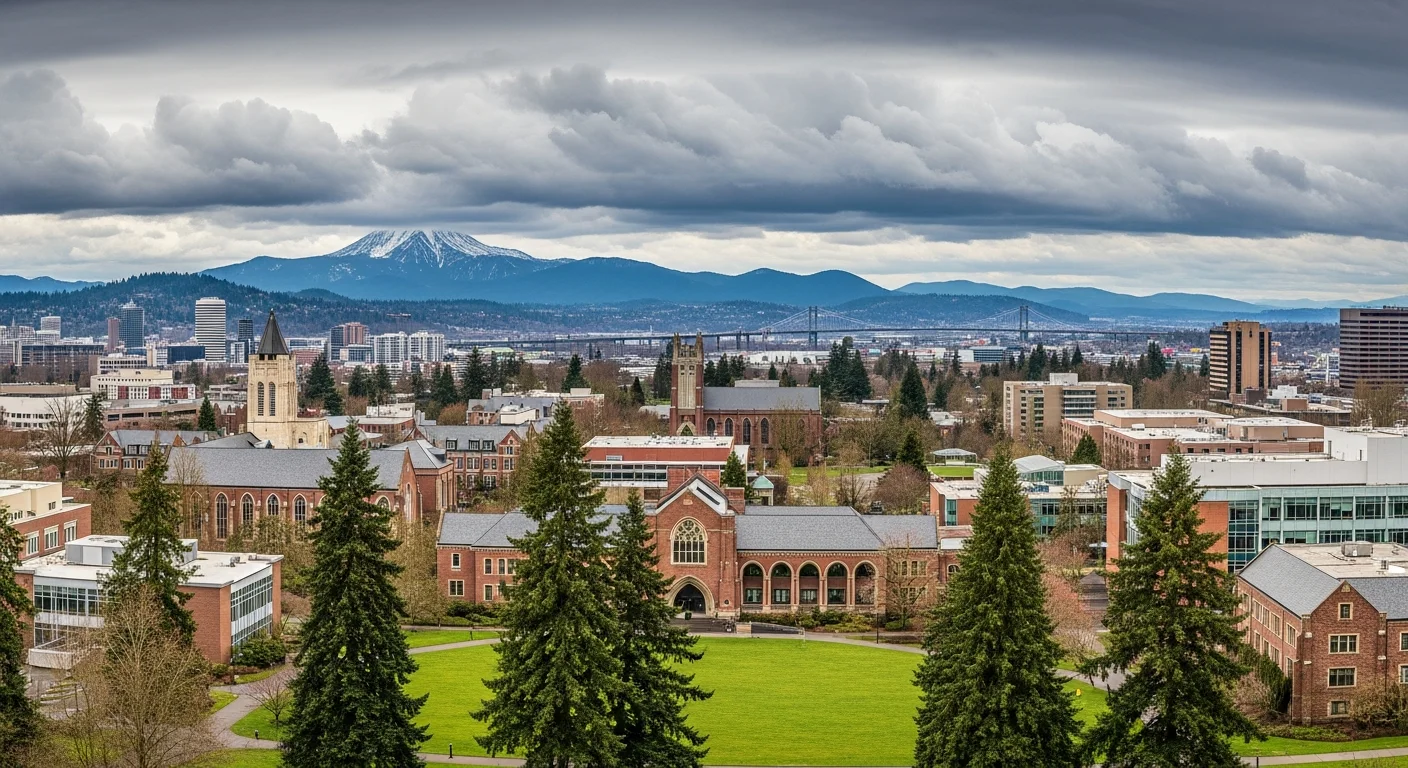

Willamette University — Salem, OR

Key Distinction: Willamette combines mobile development with software architecture rigor and business perspective, grounded in regional internship and employment ecosystem.

Hakia Insight: Willamette's business-adjacent curriculum and Salem government proximity position graduates for technical leadership roles in enterprise and civic tech, where understanding both architecture and stakeholder constraints separates senior engineers from individual contributors.

At the bachelor's level, willamette's computer science curriculum integrates mobile development as a contemporary software engineering specialization, preparing students to design, build, and deploy applications across iOS, Android, and cross-platform environments. The program emphasizes software architecture and design patterns—essential knowledge for creating maintainable mobile applications at scale—alongside practical experience with development tools and version control workflows. Willamette's proximity to Salem (Oregon's capital and a growing tech hub) and reasonable commuting distance to Portland creates professional development opportunities: students intern at state agencies modernizing legacy systems with mobile solutions, at mid-market tech companies, and at startups. The university's business school presence also enriches the computer science program; students can explore how mobile applications fit into product strategy and business models, a perspective increasingly valuable in the industry. Faculty maintain connections with industry and often bring real-world constraints and use cases into the classroom, ensuring curriculum relevance. Capstone projects frequently involve building and shipping actual mobile applications, giving graduates shipping experience—rare and valued by employers. Career outcomes lean toward mobile engineering positions at established tech companies, product-focused roles at startups, and engineering roles within tech-forward organizations across the Pacific Northwest.

Programs Offered
  • Bachelor of Science in Mobile Development — 4 years, on-campus
  • Bachelor of Arts in Mobile Development — 4 years, online

Location Advantages: Proximity to Salem tech and government sectorAccess to Portland metropolitan tech ecosystem

University of Portland — Portland, OR

Hakia Insight: University of Portland's dual BA/BS mobile development options remain unusually rare at the bachelor's level, signaling an institutional commitment to producing developers who can code and communicate across disciplines rather than defaulting to pure technical tracks.

At the bachelor's level, no Mobile Development program information found in the provided content. The pages contain general University of Portland admissions information, a PSU business program page, and general university overview content, but no specific Mobile Development program details.

Programs Offered
  • Bachelor of Science in Mobile Development — 4 years, on-campus
  • Bachelor of Arts in Mobile Development — 4 years, online

Location Advantages:

Linfield University — McMinnville, OR

Key Distinction: Linfield integrates mobile development into a human-centered, ethically-grounded CS curriculum that emphasizes agile collaboration and real-world client projects.

Hakia Insight: Linfield's integration of mobile development within an ethics-first CS curriculum, paired with mandatory real-world client projects and Willamette Valley employer proximity, creates a pipeline where students graduate with shipped portfolio work and established regional networks.

At the bachelor's level, linfield's computer science program incorporates mobile development as a core competency within its modern, industry-aligned curriculum, emphasizing cross-platform development and software engineering best practices. Students engage with both native iOS/Android development and cross-platform frameworks, supported by a faculty invested in contemporary technology trends. The program benefits from Linfield's location in McMinnville, nestled between Portland's robust tech scene and the greater Willamette Valley region, enabling guest speakers, internships, and networking events with established and emerging tech companies. Coursework integrates version control, API design, testing methodologies, and agile development practices—the collaborative skills that mobile teams actually need. Capstone projects frequently involve real-world client work or open-source contributions, giving students tangible evidence of their capabilities. Linfield's emphasis on ethical technology and human-centered design also distinguishes its approach; mobile development here is framed not just as technical problem-solving but as creating meaningful user experiences responsibly. Graduates pursue roles ranging from mobile engineer positions at mid-sized tech companies to full-stack roles at startups that need versatile developers.

Programs Offered
  • Bachelor of Science in Mobile Development — 4 years, on-campus
  • Bachelor of Arts in Mobile Development — 4 years, online

Location Advantages: Proximity to Portland tech hubAccess to Willamette Valley regional employers

Pacific University — Forest Grove, OR

Key Distinction: Pacific University's mobile development program uniquely balances technical depth with liberal arts communication and business acumen, preparing developers who are equally strong in code and collaboration.

Hakia Insight: Pacific University's mobile developers emerge from a program where liberal arts communication and business training are woven into the core—not add-ons—giving them a rare competitive edge in roles where technical ability alone no longer differentiates candidates.

At the bachelor's level, mobile development at Pacific University emerges from a computer science program that balances liberal arts breadth with applied technical depth, creating developers who code fluently but also communicate effectively and understand business context. The curriculum emphasizes cross-platform development frameworks—particularly React Native and Flutter—alongside native iOS and Android specialization, giving students flexibility to adapt to evolving industry preferences. Pacific's location in the Portland metro area enables partnerships with regional tech employers and frequent guest lectures from industry practitioners, while the university's smaller size ensures mobile students receive significant faculty mentorship rather than being part of a large cohort. Capstone projects often address real business problems for local startups or established companies, providing both practical experience and networking opportunities. Graduates report that Pacific's combination of technical rigor and communication-focused education—a byproduct of the liberal arts mission—differentiates them in interviews and team environments.

Programs Offered
  • Bachelor of Science in Mobile Development — 4 years, on-campus
  • Bachelor of Arts in Mobile Development — 4 years, online
Research Labs and Institutes
  • Child Learning & Development Center
  • Behavioral Health and Aging Research Lab
  • PEACH Lab
  • Bobadilla Aggression and Disinhibitory Disorders Lab (BADD Lab)
  • Pacific Psychology & Comprehensive Health Clinic
Industry Partners
  • Juvenile and County Correction Centers (partner)
  • Oregon State Hospital (partner)
  • Oregon Health & Science University (partner)
  • Cornelius Elementary School (collaborator)
  • Veterans Administration facilities (partner)
  • Community mental health centers (partner)
Career Outcomes

Median Salary: $NaN.

Notable Faculty
  • Dr. Mark Bailey — Early childhood education and educational psychology
  • Dr. Lynette H. Bikos — Clinical psychology
  • Dr. Catherine E. Kim — ESOL education and TESOL
Accreditations and Certifications
  • APA
  • MPCAC
  • ARC-PA

Location Advantages: Portland metro tech ecosystem access

Best Master's Mobile Development Degree Programs in Oregon

Oregon State University — Corvallis, OR

Key Distinction: OSU's mobile development program stands apart for its systems-level approach, integrating mobile apps with IoT, embedded systems, and backend infrastructure rather than treating app development as isolated from underlying compute.

Hakia Insight: OSU's systems-level approach to mobile development distinguishes it from schools teaching app frameworks in isolation; by embedding IoT, embedded systems, and backend infrastructure into the curriculum, graduates understand how to architect resilient mobile solutions rather than just code interfaces.

At the master's level, oregon State's computer science program weaves mobile development into a rigorous systems-oriented curriculum where students understand not just the app layer but the operating systems, networks, and hardware beneath it. This depth creates graduates who can optimize performance, work with embedded mobile systems, and architect scalable backend services—skills that distinguish them in competitive hiring markets. The program leverages OSU's research strengths in robotics and IoT to offer mobile development pathways that intersect with connected devices and edge computing, preparing students for roles in autonomous systems, smart agriculture tech, and industrial IoT. Core coursework covers both native and cross-platform development alongside systems programming, giving students rare facility with lower-level mobile concerns like memory management and hardware interfaces. OSU's location in Corvallis, while rural, offers surprising industry connections through partnerships with companies doing mobile work in agriculture technology, energy systems, and scientific instrumentation. Faculty expertise spans mobile platforms, distributed systems, and human-computer interaction; research opportunities abound for students interested in how mobile applications interact with real-world sensing and data pipelines. Graduates typically move into engineering roles at larger tech companies or specialized roles in industrial tech sectors—not the startup-heavy path of some programs, but positions with longer career trajectories and technical depth.

Programs Offered
  • Master of Science in Mobile Development — 1-2 years, on-campus
  • Master of Arts in Mobile Development — 1-2 years, online
Research Labs and Institutes
  • Robotics and Intelligence Laboratory
  • School of Electrical Engineering and Computer Science
Industry Partners
  • Hewlett Packard (corporate)
  • Google (corporate)
Career Outcomes

Top Employers: Daimler, eBay, Garmin, Google, HP, IBM, Intel, McAfee, Puppet Labs, Thompson Reuters, WebMD, Xerox.

Accreditations and Certifications
  • ABET accredited

Location Advantages: Access to agricultural tech and IoT industries in Pacific NorthwestProximity to research institutions interested in mobile sensing and real-time systemsGrowing tech partnerships in energy and sustainability sectors

Portland State University — Portland, OR

Key Distinction: PSU distinguishes itself through project-first curriculum design where every major course culminates in a shipped or production-ready mobile application, combined with deep integration of accessibility and ethical design from day one.

Hakia Insight: PSU's requirement that every capstone produce a shipped or production-ready application, combined with mandatory accessibility and ethical design from day one, means graduates enter the workforce with both a working portfolio and the rare ability to articulate design decisions rooted in inclusion.

At the master's level, PSU's mobile development offerings emerge from a pragmatic, project-centered pedagogy that prioritizes real-world application over pure theory. The program emphasizes full-stack mobile engineering—from iOS and Android native development to cross-platform frameworks like Flutter and React Native—with particular strength in human-centered design and accessibility. Students engage deeply with the Portland tech ecosystem through capstone projects that partner with local companies and nonprofits, meaning many graduates ship production apps before graduation. The curriculum integrates UX research and mobile security throughout, not as afterthoughts, reflecting how contemporary mobile teams actually operate. Faculty bring industry experience alongside academic rigor; the program's connection to PSU's broader computer science and engineering community creates opportunities in AR/VR mobile applications and embedded systems. Career outcomes lean toward mid-market and startup roles in Portland's growing tech scene, with notable placement in companies like IBM, Intel's Oregon operations, and regional fintech startups. What distinguishes PSU's approach is the explicit focus on ethical mobile development and inclusive design—coursework regularly addresses privacy, data governance, and accessibility compliance, preparing graduates for leadership roles in responsible tech. The urban Portland location means students can network directly with hiring managers and attend industry talks without relocating.

Programs Offered
  • Master of Science in Mobile Development — 1-2 years, on-campus
  • Master of Arts in Mobile Development — 1-2 years, online
Research Labs and Institutes
  • Center for Public Service
Industry Partners
  • Intel (corporate)
  • IBM (corporate)
  • Local Portland tech startups (startup)

Location Advantages: Portland tech hub with growing mobile and fintech presenceProximity to Intel and IBM regional officesAccess to Portland startup ecosystem and tech community events

Best Doctoral Mobile Development Degree Programs in Oregon

Oregon State University — Corvallis, OR

Key Distinction: OSU's mobile development program stands apart for its systems-level approach, integrating mobile apps with IoT, embedded systems, and backend infrastructure rather than treating app development as isolated from underlying compute.

Hakia Insight: OSU's doctoral program treats mobile development not as an app-layer discipline but as systems research—positioning PhD candidates to tackle problems at the intersection of distributed computing, embedded systems, and mobile sensing rather than mobile-specific tool chains.

At the doctoral level, oregon State's computer science program weaves mobile development into a rigorous systems-oriented curriculum where students understand not just the app layer but the operating systems, networks, and hardware beneath it. This depth creates graduates who can optimize performance, work with embedded mobile systems, and architect scalable backend services—skills that distinguish them in competitive hiring markets. The program leverages OSU's research strengths in robotics and IoT to offer mobile development pathways that intersect with connected devices and edge computing, preparing students for roles in autonomous systems, smart agriculture tech, and industrial IoT. Core coursework covers both native and cross-platform development alongside systems programming, giving students rare facility with lower-level mobile concerns like memory management and hardware interfaces. OSU's location in Corvallis, while rural, offers surprising industry connections through partnerships with companies doing mobile work in agriculture technology, energy systems, and scientific instrumentation. Faculty expertise spans mobile platforms, distributed systems, and human-computer interaction; research opportunities abound for students interested in how mobile applications interact with real-world sensing and data pipelines. Graduates typically move into engineering roles at larger tech companies or specialized roles in industrial tech sectors—not the startup-heavy path of some programs, but positions with longer career trajectories and technical depth.

Programs Offered
  • Doctor of Philosophy in Mobile Development — 4-6 years, on-campus
  • Doctor of Science in Mobile Development — 4-6 years, online
Research Labs and Institutes
  • Robotics and Intelligence Laboratory
  • School of Electrical Engineering and Computer Science
Industry Partners
  • Hewlett Packard (corporate)
  • Google (corporate)
Career Outcomes

Top Employers: Daimler, eBay, Garmin, Google, HP, IBM, Intel, McAfee, Puppet Labs, Thompson Reuters, WebMD, Xerox.

Accreditations and Certifications
  • ABET accredited

Location Advantages: Access to agricultural tech and IoT industries in Pacific NorthwestProximity to research institutions interested in mobile sensing and real-time systemsGrowing tech partnerships in energy and sustainability sectors

Portland State University — Portland, OR

Key Distinction: PSU distinguishes itself through project-first curriculum design where every major course culminates in a shipped or production-ready mobile application, combined with deep integration of accessibility and ethical design from day one.

Hakia Insight: PSU's doctoral students don't just research mobile systems; they're embedded in a project-first culture where accessibility and ethical design are philosophical commitments, not compliance checkboxes, creating researchers who can defend why their work matters beyond academic citation.

At the doctoral level, PSU's mobile development offerings emerge from a pragmatic, project-centered pedagogy that prioritizes real-world application over pure theory. The program emphasizes full-stack mobile engineering—from iOS and Android native development to cross-platform frameworks like Flutter and React Native—with particular strength in human-centered design and accessibility. Students engage deeply with the Portland tech ecosystem through capstone projects that partner with local companies and nonprofits, meaning many graduates ship production apps before graduation. The curriculum integrates UX research and mobile security throughout, not as afterthoughts, reflecting how contemporary mobile teams actually operate. Faculty bring industry experience alongside academic rigor; the program's connection to PSU's broader computer science and engineering community creates opportunities in AR/VR mobile applications and embedded systems. Career outcomes lean toward mid-market and startup roles in Portland's growing tech scene, with notable placement in companies like IBM, Intel's Oregon operations, and regional fintech startups. What distinguishes PSU's approach is the explicit focus on ethical mobile development and inclusive design—coursework regularly addresses privacy, data governance, and accessibility compliance, preparing graduates for leadership roles in responsible tech. The urban Portland location means students can network directly with hiring managers and attend industry talks without relocating.

Programs Offered
  • Doctor of Philosophy in Mobile Development — 4-6 years, on-campus
  • Doctor of Science in Mobile Development — 4-6 years, online
Research Labs and Institutes
  • Center for Public Service
Industry Partners
  • Intel (corporate)
  • IBM (corporate)
  • Local Portland tech startups (startup)

Location Advantages: Portland tech hub with growing mobile and fintech presenceProximity to Intel and IBM regional officesAccess to Portland startup ecosystem and tech community events