University campus in Missouri
Updated January 2026

Best Mobile Development Degree Programs in Missouri — 2026 Rankings

Explore 25 accredited mobile development degree programs in Missouri. Compare schools by graduation rate, salary outcomes, and tuition—from St Charles Community College to Washington University in St Louis.

#1 ProgramWashington University in ...
Avg Salary$104,000
Tuition From$5,010/yr
Job Growth+22%

Key Takeaways

Top 3 ranked: Washington University in ..., U of Missouri-Kansas City, U of Missouri-St Louis

Based on graduation rates, program outcomes, and institutional quality

IPEDS 2023

Tuition ranges from $4,512 to $61,750/year

St Charles Community College offers the most affordable option at $5,010/yr

IPEDS 2023

Degree levels: 6 associate's, 8 master's, 1 doctoral programs available in Missouri

From community college pathways to advanced research degrees

IPEDS 2023

4 Missouri programs offer online or hybrid formats

Flexible scheduling for working professionals

IPEDS 2023

Missouri community college transfer can save 40-60% on total degree costs

6 associate's programs provide transfer pathways to bachelor's degrees

Education Commission of the States

Major employers: Cerner, World Wide Technology, Bayer, Mastercard

Tech hubs in Kansas City and St. Louis

Hakia Research 2026

Mobile Development programs available near 62+ cities across Missouri

Search by city to find programs within 200 miles of your location

IPEDS 2023

Updated February 2026

On This Page
$104,000
Is Mobile Development in Missouri Worth It?
Yes. Mobile Development degrees in Missouri deliver strong ROI—graduates earn $104,000 median salary with +22% job growth through 2032. In-state tuition averages $18,256/year.

Source: BLS OEWS May 2024

Best Mobile Development Degree Programs in Missouri

Bachelor's Mobile Development Degree Programs in Missouri

19 programs$104,000 median salary79% avg grad rate
19
Programs
$104,000
Median Salary
$21,613/yr
Avg Tuition
79%
Avg Grad Rate

Program Landscape

Missouri ranks among the nation's top destinations for mobile development education, with 19 accredited bachelor's degree programs across 7 public and 12 private institutions. The highest-ranked programs are Washington University in ..., U of Missouri-Kansas City, U of Missouri-St Louis, recognized for academic excellence, research opportunities, and strong industry connections.

Career Outcomes

Graduates from Missouri mobile development programs earn a median salary of $88,400—10% below the national average. The state's robust technology sector, anchored by the Kansas City, St. Louis metropolitan areas, provides abundant internship and employment opportunities with companies including Cerner, World Wide Technology, Bayer.

Costs & Value

Tuition ranges from $6,442 to $61,750 annually, with an average of $21,613/yr. Top programs maintain graduation rates above 79%, with the highest reaching 98%. Many programs hold ABET accreditation, the gold standard for computing education, ensuring curriculum meets rigorous industry standards.

Curriculum & Specializations

Students can choose from specializations including software engineering, cybersecurity, artificial intelligence, data science, and systems architecture. Strong industry partnerships provide access to co-op programs, capstone projects with real companies, and direct recruiting pipelines to Missouri's leading technology employers. For students seeking mobile development degrees in Missouri, these top-ranked mobile development schools offer the strongest combination of academic rigor and career preparation.

Show:

Earn your bachelor's in Mobile Development

(Sponsored)

Loading programs...

🥇

Washington University in St Louis

Private
Saint Louis, MO
$61,750
Tuition/yr
97%
Grad Rate
95.7
Score
Website
🥈

University of Missouri-Kansas City

Public
Kansas City, MO
$11,190
Tuition/yr
98%
Grad Rate
71.5
Score
Website
🥉

University of Missouri-St Louis

Public
Saint Louis, MO
$14,400
Tuition/yr
45.5
Score
Website
#4

University of Central Missouri

Public
Warrensburg, MO
$8,325
Tuition/yr
57.8
Score
Website
#5

Saint Louis University

Private
Saint Louis, MO
$52,260
Tuition/yr
92%
Grad Rate
56.5
Score
Website
#6

Missouri Valley College

Private
Marshall, MO
$21,300
Tuition/yr
93%
Grad Rate
49.4
Score
Website
#7

Missouri State University-Springfield

Public
Springfield, MO
$7,812
Tuition/yr
38.0
Score
Website
#8

Lindenwood University

Private
Saint Charles, MO
$19,900
Tuition/yr
39.9
Score
Website
#9

Webster University

Private
Saint Louis, MO
$30,530
Tuition/yr
40.3
Score
Website
#10

Missouri Western State University

Public
Saint Joseph, MO
$7,740
Tuition/yr
41.2
Score
Website

Complete Mobile Development Degree Program Rankings in Missouri

Best Associate's Mobile Development Degree Programs in Missouri

### Program Landscape Missouri offers **6 accredited** associate's degree programs in mobile development, providing an affordable entry point into the technology field. The top-ranked programs include **St Charles Community College**, **Missouri Southern State**, **Ozarks Technical Communit...**, which combine rigorous technical curriculum with practical skills training. ### Costs & Value Community colleges in Missouri offer these two-year programs at an average cost of **$7,627/yr**—significantly less than four-year university tuition. Students completing associate's degrees can pursue entry-level technical positions and transfer opportunities, with entry-level salaries averaging **$57,200** in Missouri. ### Career Pathways Many programs feature guaranteed transfer agreements with Missouri's public universities, allowing students to complete their first two years at reduced cost before transferring to complete a bachelor's degree. The Kansas City, St. Louis areas offer particularly strong job markets for associate's degree holders, with employers like Cerner, World Wide Technology, Bayer hiring for technical support, junior development, and IT specialist positions. ### Curriculum & Specializations Programs typically include coursework in programming fundamentals, database management, networking basics, and software development. Among mobile development schools in Missouri, these associate's programs offer the best value for students beginning their mobile development degrees in Missouri.

  1. #1. St Charles Community College

    Hakia ranks St Charles Community College as the #1 associate's in mobile development degree program in Missouri. This public institution in Cottleville, MO has annual tuition of $5,010. Ranking score: 40.1.

  2. #2. Missouri Southern State University

    Hakia ranks Missouri Southern State University as the #2 associate's in mobile development degree program in Missouri. This public institution in Joplin, MO has annual tuition of $8,400. Ranking score: 32.2.

  3. #3. Ozarks Technical Community College

    Hakia ranks Ozarks Technical Community College as the #3 associate's in mobile development degree program in Missouri. This public institution in Springfield, MO has annual tuition of $4,512. Ranking score: 36.3.

  4. #4. State Technical College of Missouri

    Hakia ranks State Technical College of Missouri as the #4 associate's in mobile development degree program in Missouri. This public institution in Linn, MO has annual tuition of $6,270. Ranking score: 41.9.

  5. #5. Moberly Area Community College

    Hakia ranks Moberly Area Community College as the #5 associate's in mobile development degree program in Missouri. This public institution in Moberly, MO has annual tuition of $5,370. Ranking score: 34.3.

  6. #6. Ranken Technical College

    Hakia ranks Ranken Technical College as the #6 associate's in mobile development degree program in Missouri. This private institution in Saint Louis, MO has annual tuition of $16,200 and a 56% graduation rate. Ranking score: 42.3.

Best Bachelor's Mobile Development Degree Programs in Missouri

### Program Landscape Missouri ranks among the nation's top destinations for mobile development education, with **19 accredited** bachelor's degree programs across **7 public** and **12 private** institutions. The highest-ranked programs are **Washington University in ...**, **U of Missouri-Kansas City**, **U of Missouri-St Louis**, recognized for academic excellence, research opportunities, and strong industry connections. ### Career Outcomes Graduates from Missouri mobile development programs earn a median salary of **$88,400**—10% below the national average. The state's robust technology sector, anchored by the Kansas City, St. Louis metropolitan areas, provides abundant internship and employment opportunities with companies including Cerner, World Wide Technology, Bayer. ### Costs & Value Tuition ranges from **$6,442** to **$61,750** annually, with an average of **$21,613/yr**. Top programs maintain graduation rates above **79%**, with the highest reaching **98%**. Many programs hold ABET accreditation, the gold standard for computing education, ensuring curriculum meets rigorous industry standards. ### Curriculum & Specializations Students can choose from specializations including software engineering, cybersecurity, artificial intelligence, data science, and systems architecture. Strong industry partnerships provide access to co-op programs, capstone projects with real companies, and direct recruiting pipelines to Missouri's leading technology employers. For students seeking mobile development degrees in Missouri, these top-ranked mobile development schools offer the strongest combination of academic rigor and career preparation.

  1. #1. Washington University in St Louis

    Hakia ranks Washington University in St Louis as the #1 bachelor's in mobile development degree program in Missouri. This private institution in Saint Louis, MO has annual tuition of $61,750 and a 97% graduation rate. Ranking score: 95.7.

  2. #2. University of Missouri-Kansas City

    Hakia ranks University of Missouri-Kansas City as the #2 bachelor's in mobile development degree program in Missouri. This public institution in Kansas City, MO has annual tuition of $11,190 and a 98% graduation rate. Ranking score: 71.5.

  3. #3. University of Missouri-St Louis

    Hakia ranks University of Missouri-St Louis as the #3 bachelor's in mobile development degree program in Missouri. This public institution in Saint Louis, MO has annual tuition of $14,400. Ranking score: 45.5.

  4. #4. University of Central Missouri

    Hakia ranks University of Central Missouri as the #4 bachelor's in mobile development degree program in Missouri. This public institution in Warrensburg, MO has annual tuition of $8,325. Ranking score: 57.8.

  5. #5. Saint Louis University

    Hakia ranks Saint Louis University as the #5 bachelor's in mobile development degree program in Missouri. This private institution in Saint Louis, MO has annual tuition of $52,260 and a 92% graduation rate. Ranking score: 56.5.

  6. #6. Missouri Valley College

    Hakia ranks Missouri Valley College as the #6 bachelor's in mobile development degree program in Missouri. This private institution in Marshall, MO has annual tuition of $21,300 and a 93% graduation rate. Ranking score: 49.4.

  7. #7. Missouri State University-Springfield

    Hakia ranks Missouri State University-Springfield as the #7 bachelor's in mobile development degree program in Missouri. This public institution in Springfield, MO has annual tuition of $7,812. Ranking score: 38.0.

  8. #8. Lindenwood University

    Hakia ranks Lindenwood University as the #8 bachelor's in mobile development degree program in Missouri. This private institution in Saint Charles, MO has annual tuition of $19,900. Ranking score: 39.9.

  9. #9. Webster University

    Hakia ranks Webster University as the #9 bachelor's in mobile development degree program in Missouri. This private institution in Saint Louis, MO has annual tuition of $30,530. Ranking score: 40.3.

  10. #10. Missouri Western State University

    Hakia ranks Missouri Western State University as the #10 bachelor's in mobile development degree program in Missouri. This public institution in Saint Joseph, MO has annual tuition of $7,740. Ranking score: 41.2.

  11. #11. College of the Ozarks

    Hakia ranks College of the Ozarks as the #11 bachelor's in mobile development degree program in Missouri. This private institution in Point Lookout, MO has annual tuition of $20,800. Ranking score: 45.2.

  12. #12. Maryville University of Saint Louis

    Hakia ranks Maryville University of Saint Louis as the #12 bachelor's in mobile development degree program in Missouri. This private institution in Saint Louis, MO has annual tuition of $24,766 and a 86% graduation rate. Ranking score: 40.7.

  13. #13. Truman State University

    Hakia ranks Truman State University as the #13 bachelor's in mobile development degree program in Missouri. This public institution in Kirksville, MO has annual tuition of $9,132. Ranking score: 36.6.

  14. #14. Columbia College

    Hakia ranks Columbia College as the #14 bachelor's in mobile development degree program in Missouri. This private institution in Columbia, MO has annual tuition of $12,268. Ranking score: 39.1.

  15. #15. Northwest Missouri State University

    Hakia ranks Northwest Missouri State University as the #15 bachelor's in mobile development degree program in Missouri. This public institution in Maryville, MO has annual tuition of $6,442. Ranking score: 38.9.

  16. #16. Southwest Baptist University

    Hakia ranks Southwest Baptist University as the #16 bachelor's in mobile development degree program in Missouri. This private institution in Bolivar, MO has annual tuition of $27,290. Ranking score: 31.5.

  17. #17. Rockhurst University

    Hakia ranks Rockhurst University as the #17 bachelor's in mobile development degree program in Missouri. This private institution in Kansas City, MO has annual tuition of $41,900. Ranking score: 34.7.

  18. #18. Central Methodist University-College of Liberal Arts and Sciences

    Hakia ranks Central Methodist University-College of Liberal Arts and Sciences as the #18 bachelor's in mobile development degree program in Missouri. This private institution in Fayette, MO has annual tuition of $26,360. Ranking score: 32.4.

  19. #19. Central Methodist University-College of Graduate and Extended Studies

    Hakia ranks Central Methodist University-College of Graduate and Extended Studies as the #19 bachelor's in mobile development degree program in Missouri. This private institution in Fayette, MO has annual tuition of $6,480 and a 6% graduation rate. Ranking score: 21.4.

Online Bachelor's Mobile Development Degree Programs in Missouri

### Online Program Options 4 Missouri institutions offer bachelor's mobile development degrees with online or hybrid options, enabling students to earn accredited degrees while maintaining professional or personal commitments. Top-ranked online programs include **Webster**, **Southwest Baptist**, **Rockhurst**, all regionally accredited and recognized by Missouri employers. ### Costs & Employer Recognition Online bachelor's programs average **$26,550/yr**—often comparable to or less than on-campus tuition. Missouri-based employers including Cerner, World Wide Technology, Bayer value online credentials from accredited institutions, recognizing that program quality matters more than delivery format. The Kansas City, St. Louis job market actively recruits graduates from online programs. ### Program Format These programs feature asynchronous coursework for maximum flexibility, with some offering synchronous sessions for collaborative learning. Students can typically complete **120 credit hours** in 4 years while working full-time. ### Technology & Flexibility Technology requirements include reliable internet access and a modern computer. Programs provide virtual labs, online tutoring, career services, and networking opportunities. Many offer start dates throughout the year and accelerated course formats for motivated students. Graduates earn the same degree as on-campus students, with no distinction on transcripts or diplomas. For students pursuing online mobile development degrees in Missouri, these accredited mobile development schools offer the flexibility and quality that today's learners demand.

  • Webster University - Saint Louis, MO - Tuition: $30,530/year
  • Southwest Baptist University - Bolivar, MO - Tuition: $27,290/year
  • Rockhurst University - Kansas City, MO - Tuition: $41,900/year
  • Central Methodist University-College of Graduate and Extended Studies - Fayette, MO - Tuition: $6,480/year

Best Master's Mobile Development Degree Programs in Missouri

### Program Landscape Missouri offers **8** master's degree programs in mobile development, designed for professionals seeking to advance into senior engineering, technical leadership, and specialized roles. The top programs—**U of Missouri-Kansas City**, **Washington University in ...**, **U of Central Missouri**—combine advanced technical training with research opportunities and leadership development. ### Career Outcomes Master's graduates in Missouri earn a median salary of **$104,000**, approximately **20-30% higher** than bachelor's degree holders. The concentration of technology companies in Kansas City, St. Louis creates strong demand for graduate-level talent, with Cerner, World Wide Technology, Bayer actively recruiting from these programs. ### Costs & Value Program formats include traditional full-time study (typically 2 years), part-time options for working professionals (2-3 years), and accelerated tracks. Tuition averages **$22,760/yr**, with many employers offering tuition reimbursement for graduate education. Some programs offer thesis and non-thesis tracks, allowing students to focus on research or professional development based on their career goals. ### Curriculum & Specializations Curriculum covers advanced topics including machine learning, distributed systems, software architecture, and technical management. Many programs include practicum experiences, industry capstone projects, or consulting engagements that provide real-world application of advanced concepts. Among Missouri's mobile development schools at the graduate level, these programs stand out for both academic quality and career outcomes.

  1. #1. University of Missouri-Kansas City

    Hakia ranks University of Missouri-Kansas City as the #1 master's in mobile development degree program in Missouri. This public institution in Kansas City, MO has annual tuition of $11,190 and a 98% graduation rate. Ranking score: 73.3.

  2. #2. Washington University in St Louis

    Hakia ranks Washington University in St Louis as the #2 master's in mobile development degree program in Missouri. This private institution in Saint Louis, MO has annual tuition of $61,750 and a 97% graduation rate. Ranking score: 74.8.

  3. #3. University of Central Missouri

    Hakia ranks University of Central Missouri as the #3 master's in mobile development degree program in Missouri. This public institution in Warrensburg, MO has annual tuition of $8,325. Ranking score: 71.4.

  4. #4. Saint Louis University

    Hakia ranks Saint Louis University as the #4 master's in mobile development degree program in Missouri. This private institution in Saint Louis, MO has annual tuition of $52,260 and a 92% graduation rate. Ranking score: 48.1.

  5. #5. Northwest Missouri State University

    Hakia ranks Northwest Missouri State University as the #5 master's in mobile development degree program in Missouri. This public institution in Maryville, MO has annual tuition of $6,442. Ranking score: 50.3.

  6. #6. Missouri State University-Springfield

    Hakia ranks Missouri State University-Springfield as the #6 master's in mobile development degree program in Missouri. This public institution in Springfield, MO has annual tuition of $7,812. Ranking score: 48.1.

  7. #7. University of Missouri-St Louis

    Hakia ranks University of Missouri-St Louis as the #7 master's in mobile development degree program in Missouri. This public institution in Saint Louis, MO has annual tuition of $14,400. Ranking score: 44.9.

  8. #8. Lindenwood University

    Hakia ranks Lindenwood University as the #8 master's in mobile development degree program in Missouri. This private institution in Saint Charles, MO has annual tuition of $19,900. Ranking score: 41.0.

Best Doctoral Mobile Development Degree Programs in Missouri

### Program Landscape Missouri is home to **1** doctoral programs in mobile development, preparing students for research positions, faculty appointments, and executive technical roles. Leading programs at **Washington University in ...** are recognized for cutting-edge research, strong faculty publications, and competitive funding packages. ### Career Outcomes Doctoral graduates command premium salaries, with Missouri PhD holders earning a median of **$130,000**—reflecting the advanced expertise required for research and executive positions. The Kansas City, St. Louis region's research universities and corporate R&D centers provide extensive collaboration opportunities with industry leaders like Cerner, World Wide Technology, Bayer. ### Costs & Value PhD programs typically require 4-6 years of full-time study, including coursework, qualifying examinations, and original dissertation research. Many programs offer full funding through teaching or research assistantships, covering tuition and providing stipends of **$25,000–$40,000** annually. ### Curriculum & Specializations Research strengths across Missouri programs include artificial intelligence, cybersecurity, human-computer interaction, systems, and theoretical computer science. For aspiring researchers pursuing mobile development degrees in Missouri, graduates go on to careers as university faculty, industry research scientists, or technical executives, contributing to advances in technology that impact millions of users worldwide.

  1. #1. Washington University in St Louis

    Hakia ranks Washington University in St Louis as the #1 doctoral in mobile development degree program in Missouri. This private institution in Saint Louis, MO has annual tuition of $61,750 and a 97% graduation rate. Ranking score: 59.8.

Mobile Development Tuition in Missouri

MetricValue
Average in-state tuition$18,256/year
Average out-of-state tuition$45,640/year
Community college tuition$4,564/year
4-year savings for residents$109,536
2+2 transfer pathway savings$27,384

Source: IPEDS 2023

Mobile Development Financial Aid & Scholarships in Missouri

State Aid Programs

Missouri students pursuing mobile development degrees have access to multiple layers of financial support. The state's flagship aid program, the Access Missouri Grant, provides need-based grants up to $2,850 per year for eligible students at public institutions. This grant is administered through the Missouri Department of Higher Education and significantly reduces the net cost of attendance at the state's public universities and community colleges. Additionally, all students should complete the Free Application for Federal Student Aid (FAFSA) to determine eligibility for federal Pell Grants, federal loans, and work-study opportunities through Federal Student Aid. These federal programs can provide thousands of dollars in aid regardless of state residency.

Key Programs & Amounts

Beyond state and federal aid, many Missouri institutions offer institutional scholarships and merit-based awards for mobile development students. Public four-year universities in Missouri average $8,649 in annual in-state tuition, making them affordable compared to national peers. Community colleges present even lower entry costs, with some programs charging under $5,000 annually. Students should also explore the Missouri Core Transfer Curriculum (CORE 42), which guarantees transfer of 42 credit hours statewide—allowing students to complete general education coursework at lower-cost community colleges before transferring to four-year programs. For comprehensive financial planning, the Federal Student Aid website and College Scorecard provide aid estimators and net price calculators for specific institutions.

Calculate Your Mobile Development Degree ROI in Missouri

Use our interactive ROI calculator to estimate your return on investment for a mobile development degree in Missouri. Enter your expected tuition costs, financial aid, and career goals to see projected payback periods and lifetime earnings. The calculator uses current salary data from BLS and tuition data from IPEDS to provide accurate estimates.

Mobile Development Degree ROI Calculator
Estimate your return on investment for a mobile development degree
$

Leave blank to use average cost for selected program type

20 years
10 years20 years30 years
20-Year ROI

+749%

Net gain divided by total investment. ROI above 200% is considered excellent for education investments.

Net Gain

$1,385,336

Your additional lifetime earnings with this degree vs. working without one, minus the total investment.

Break-Even

6 years

Years until your cumulative earnings exceed total investment. Shorter programs often break even faster due to lower opportunity cost.

COL-Adjusted Salary

$119,048

Your starting salary adjusted for local cost of living. This shows real purchasing power compared to a $100K national baseline.

Why does break-even change with program type? Your "total investment" includes both tuition AND opportunity cost (foregone earnings while in school). A 4-year full-time public university (in-state) means 4 years of not earning a salary ($140,000 in opportunity cost). Shorter full-time programs may have higher tuition but lower total investment because you return to the workforce sooner.

Detailed Breakdown
How we calculate your degree ROI using real salary data
Total Investment$185,000

Tuition plus opportunity cost (earnings you miss while in school)

Program Cost (Tuition)$45,000

Direct cost of the degree program

Opportunity Cost$140,000

4 years × $35K/year foregone salary while studying full-time

20-Year Earnings (with degree)$2,420,744

Projected career earnings starting after graduation, with salary growth

20-Year Earnings (without degree)$850,408

What you'd earn working at $35K/year with 2% annual growth

Starting Salary (Austin, TX)$125,000

Median salary for this role in your selected location (BLS 2024)

Annualized Return4.3%

Your investment's compound annual growth rate (similar to stock market returns)

Data sources: BLS OEWS May 2024, IPEDS 2023. Calculations use median salaries, 3% discount rate, and assume salary growth declines from 6% to 2% over career. Individual results will vary. | Powered by Hakia.com

Career Paths

Design and develop software applications and systems

Median Salary:$117,520

Analyze complex datasets and build predictive models

Median Salary:$97,760

Protect computer networks from cyber threats

Median Salary:$109,200

Manage cloud infrastructure and deployment pipelines

Median Salary:$115,440

Design and maintain cloud computing infrastructure

Median Salary:$112,320

Build and deploy machine learning models

Median Salary:$131,040
Mobile Development Salaries by Metro Area

Median annual salary in Missouri metro areas

Hakia.com
View data table
Categoryvalue
Kansas City$114K
St. Louis$109K

Source: BLS OEWS May 2024

Hakia.com

Mobile Development Jobs in Missouri: Top Employers Hiring

Find mobile development jobs in Missouri. These major employers across Missouri metro areas are actively hiring mobile development graduates. Click employer names to view current job openings.

Mobile Development Jobs in Kansas City

MO
Cerner/Oracle Health
healthtech
Garmin
tech
H&R Block
fintech
Sprint/T-Mobile
telecom

Mobile Development Jobs in St. Louis

MO
Bayer
pharma
Edward Jones
finance
World Wide Technology
tech
Mastercard
fintech
Boeing
aerospace

How to Apply to Mobile Development Programs in Missouri

1

Research Program Requirements

Review admission requirements for mobile development programs at your target schools. Requirements vary by institution and degree level.

2

Prepare Application Materials

Gather transcripts, test scores (SAT/ACT for undergrad, GRE for graduate), letters of recommendation, and personal statement.

3

Apply for Financial Aid

Complete the FAFSA by priority deadlines.

4

Submit Applications Before Deadlines

Apply early for priority consideration. Early action/decision deadlines are typically October-November; regular deadlines December-January.

5

Complete Enrollment Steps

Accept your offer, submit enrollment deposit, complete orientation requirements, and register for classes.

Mobile Development Transfer Pathways in Missouri

State Transfer System

Missouri's statewide transfer system, the Missouri Core Transfer Curriculum (CORE 42), guarantees seamless transfer of 42 credit hours between public institutions throughout the state. This agreement eliminates barriers for students beginning mobile development studies at community colleges and transitioning to bachelor's degree programs, ensuring credits count directly toward degree completion. With 7 associate's programs and 21 two-year institutions across Missouri, students have abundant affordable pathways to four-year degrees. Top community colleges like Metropolitan Community College-Kansas City ($7,110 tuition) and St Charles Community College ($5,010 tuition) provide foundational coursework in programming, web basics, and mobile development fundamentals that transfer directly to bachelor's programs at institutions like University of Missouri-Kansas City ($11,190 tuition) and Northwest Missouri State University ($6,442 tuition).

How Transfers Work

Articulation agreements between specific community colleges and four-year universities further streamline the transfer process, allowing students to complete 2+2 pathways (two years at community college, two years at university) while maintaining progress toward mobile development degrees. The Access Missouri Grant program provides need-based financial aid up to $2,850 per year at both community colleges and public universities, making the complete pathway financially accessible. Students transferring into four-year programs maintain eligibility for federal aid through Federal Student Aid, enabling continuation of scholarships and loans. This coordinated system empowers students to begin affordably at community colleges while gaining guaranteed access to renowned bachelor's and master's programs.

Transfer Planning Tips

Students exploring transfer options should also investigate related programs like Software Engineering in Missouri, Computer Programming in Missouri, and Web Development in Missouri to identify additional pathway opportunities aligned with career goals. The Missouri Department of Higher Education maintains comprehensive transfer guides and articulation agreement databases.

Why Study Mobile Development in Missouri?

Industry & Workforce

Missouri offers a robust mobile development education landscape with 39 institutions offering programs across all degree levels, from associate's to doctoral degrees (IPEDS). The state produced 2,470 master's degree completions in mobile development during 2023, demonstrating strong graduate-level opportunity and employer demand. Whether you're seeking an affordable community college pathway or a prestigious research university education, Missouri's diverse institutional ecosystem serves diverse career goals and budgets.

Salary Outlook

Missouri's major tech hubs—particularly the St. Louis and Kansas City metropolitan areas—host significant employers in healthcare technology, finance, and software development. Companies like Cerner, Express Scripts, and BJC HealthCare actively recruit mobile development talent, creating direct pathways from graduation to employment. The state's average public in-state tuition for four-year institutions is just $8,649, making Missouri significantly more affordable than national alternatives (Missouri Department of Higher Education). Top-ranked programs like Washington University in St. Louis and University of Missouri-Kansas City combine academic excellence with access to thriving regional job markets, while more affordable options like Harris-Stowe State University ($5,808 tuition) provide quality education without substantial debt burden.

Regional Tech Hubs

Students can explore related technical pathways through Web Development in Missouri, Software Engineering in Missouri, and Computer Programming in Missouri to build complementary skills. Missouri's commitment to higher education accessibility is further supported by the Access Missouri Grant program, which provides need-based aid up to $2,850 per year at public institutions, easing the financial burden for eligible students.

Mobile Development Job Market in Missouri

Employment Outlook

Missouri's mobile development job market reflects strong institutional support and regional tech growth. The state hosts 39 institutions offering mobile development programs across all degree levels, from associate's to doctoral degrees (IPEDS). In 2023, Missouri produced 657 bachelor's degree completions and 2,470 master's degree completions in mobile development, demonstrating robust pipeline growth. The state's average public in-state tuition at four-year institutions is $8,649, making higher education accessible for aspiring developers seeking credentials in this competitive field (IPEDS).

Salaries by Metro

Major metropolitan areas drive employment opportunities for mobile developers throughout Missouri. Kansas City, St. Louis, and Springfield serve as tech hubs with significant employer presence and competitive salaries tracked by the (BLS). The St. Louis and Kansas City metro regions particularly concentrate technology roles across healthcare, financial services, and corporate sectors. For current salary data and job growth projections specific to Missouri, the (BLS State Data) provides comprehensive occupational employment statistics. Students interested in related technical fields should explore (Web Development in Missouri), (Software Engineering in Missouri), and (Computer Programming in Missouri) for complementary career pathways and skill development.

Mobile Development Curriculum & Specializations in Missouri

Core Requirements

Mobile development curricula in Missouri emphasize both foundational computer science principles and hands-on application development across iOS, Android, and cross-platform frameworks. Associate's degree programs typically include courses in web fundamentals, introduction to programming, mobile app basics, and industry-standard tools. Bachelor's programs, available at 22 institutions including top-ranked University of Missouri-Columbia and Washington University in St. Louis, expand to advanced coursework in object-oriented programming, mobile UI/UX design, backend services, cloud integration, and mobile security. Students develop portfolio projects and capstone applications demonstrating real-world problem-solving skills sought by employers like Cerner and Express Scripts.

Degree Pathways

Master's level programs at 9 institutions incorporate advanced specializations such as mobile systems architecture, machine learning integration, IoT applications, and mobile enterprise solutions. These programs often emphasize research methodologies, independent study projects, and collaboration with industry partners. Many top programs feature laboratories and partnerships with regional technology companies, enabling students to work on production-level applications. Graduate students typically complete capstone projects or thesis work synthesizing theoretical knowledge with practical implementation challenges relevant to Missouri's robust healthcare, finance, and technology sectors.

Specialization Tracks

Students seeking comprehensive technical preparation should also explore related Software Engineering in Missouri and Web Development in Missouri programs, which complement mobile development expertise with full-stack capabilities. The integration of agile methodologies, version control systems, and collaborative development practices across all curriculum levels ensures graduates are immediately productive in professional environments.

Online vs On-Campus Mobile Development Programs in Missouri

Online Program Growth

Missouri offers strong options for both traditional campus-based and online mobile development programs. For students seeking flexibility, the top online bachelor's programs in the state include the University of Missouri-Columbia ($13,008 tuition, 80.40% graduation rate), Saint Louis University ($52,260 tuition, 92.30% graduation rate), and Maryville University of Saint Louis ($24,766 tuition, 86.30% graduation rate). These institutions provide fully accredited degree programs that can be completed asynchronously, allowing working professionals and non-traditional students to balance studies with career and family obligations. Online programs typically offer the same rigor and curriculum as campus counterparts while eliminating commute times and providing greater scheduling flexibility.

Accredited Online Options

Campus-based programs remain popular for students who benefit from hands-on learning, networking, and in-person mentorship. Top-ranked institutions like Washington University in St Louis (96.90% graduation rate) and University of Missouri-Kansas City (98.10% graduation rate) provide immersive experiences with access to modern development labs, collaborative spaces, and direct faculty interaction. Many Missouri institutions now offer hybrid models combining online coursework with periodic in-person lab sessions and capstone projects. When choosing between online and campus options, consider your learning style, location, and career timeline. For more detailed comparisons of web development programs and software engineering alternatives in Missouri, review program-specific accreditation through ABET and employment outcomes on the College Scorecard.

Mobile Development by City in Missouri

St. Louis and Kansas City

St. Louis and Kansas City serve as Missouri's premier tech hubs for mobile development professionals. St. Louis hosts major employers including Express Scripts and extensive healthcare technology infrastructure, while Kansas City supports a vibrant startup ecosystem and corporate tech divisions. Both metros offer competitive salaries, diverse career pathways, and strong educational institutions. The University of Missouri-Kansas City (734 completions), Washington University in St. Louis (314 completions), and Saint Louis University provide top-tier programs preparing graduates for immediate employment in these competitive markets (IPEDS).

Springfield, Columbia, and surrounding regions

Springfield, Columbia, and surrounding regions offer emerging opportunities with lower cost-of-living compared to major metros. Springfield hosts Missouri State University-Springfield (165 completions), while Columbia centers around the University of Missouri-Columbia, producing substantial graduate talent. The state's average out-of-state tuition at four-year public institutions is $18,073, making these secondary markets attractive for relocation-conscious professionals (IPEDS). Students should review (Mobile Development in California), (Mobile Development in Texas), and (Mobile Development in New York) to compare regional markets, cost structures, and career prospects before selecting educational institutions and preferred work locations.

Compare Online Mobile Development Programs in Missouri

View tuition costs, program formats & enrollment info

Find Mobile Development Programs Near You in Missouri

Search by city to find accredited mobile development programs ranked by our state methodology.

Mobile Development Degree Programs by City in Missouri

Mobile Development Degree Programs Near Kansas City, Missouri

Kansas City's tech corridor has attracted mobile-first companies and fintech startups focused on mobile payments and financial apps, complementing major employers like Cerner who actively hire mobile developers for healthcare solutions. The city hosts a strong startup ecosystem with accelerators like Techstars Kansas City and proximity to universities like UMKC, creating competitive salaries for iOS/Android developers and mobile architects working in commerce and health tech.

Kansas City is located in Jackson County, Missouri.

Associate's Mobile Development Degree Programs Near Kansas City, Missouri
  1. Metropolitan Community College-Kansas City (Public) — State #1, in Kansas City. Tuition: $7,110/year.
  2. Ozarks Technical Community College (Public) — State #3, 144.3 mi from Kansas City. Tuition: $4,512/year.
  3. State Technical College of Missouri (Public) — State #4, 154 mi from Kansas City. Tuition: $6,270/year.
Bachelor's Mobile Development Degree Programs Near Kansas City, Missouri
  1. University of Missouri-Kansas City (Public) — State #2, in Kansas City. Tuition: $11,190/year. Graduation rate: 98%.
  2. University of Missouri-Columbia (Public) — State #3, 120.9 mi from Kansas City. Tuition: $13,008/year. Graduation rate: 80%.
  3. Missouri University of Science and Technology (Public) — State #5, 169 mi from Kansas City. Tuition: $13,008/year.
Master's Mobile Development Degree Programs Near Kansas City, Missouri
  1. University of Missouri-Kansas City (Public) — State #2, in Kansas City. Tuition: $11,190/year. Graduation rate: 98%.
  2. University of Missouri-Columbia (Public) — State #4, 120.9 mi from Kansas City. Tuition: $13,008/year. Graduation rate: 80%.
  3. Missouri University of Science and Technology (Public) — State #7, 169 mi from Kansas City. Tuition: $13,008/year.
Doctoral Mobile Development Degree Programs Near Kansas City, Missouri
  1. University of Missouri-Columbia (Public) — State #2, 120.9 mi from Kansas City. Tuition: $13,008/year. Graduation rate: 80%.
  2. Missouri University of Science and Technology (Public) — State #3, 169 mi from Kansas City. Tuition: $13,008/year.

Mobile Development Degree Programs Near Saint Louis, Missouri

Saint Louis is home to major healthcare IT employers like BJC HealthCare and SSM Health, both heavily investing in mobile patient engagement apps and telehealth platforms that demand experienced mobile developers. The city's lower cost of living compared to coastal tech hubs, combined with Washington University's engineering programs and a growing mobile commerce sector, makes it attractive for developers seeking better work-life balance without sacrificing career growth.

Saint Louis is located in St. Louis City, Missouri.

Associate's Mobile Development Degree Programs Near Saint Louis, Missouri
  1. St Charles Community College (Public) — State #2, 19.8 mi from Saint Louis. Tuition: $5,010/year.
  2. Ozarks Technical Community College (Public) — State #3, 189 mi from Saint Louis. Tuition: $4,512/year.
  3. State Technical College of Missouri (Public) — State #4, 81.9 mi from Saint Louis. Tuition: $6,270/year.
Bachelor's Mobile Development Degree Programs Near Saint Louis, Missouri
  1. Washington University in St Louis (Private) — State #1, in Saint Louis. Tuition: $61,750/year. Graduation rate: 97%.
  2. University of Missouri-Columbia (Public) — State #3, 110.7 mi from Saint Louis. Tuition: $13,008/year. Graduation rate: 80%.
  3. Saint Louis University (Private) — State #4, in Saint Louis. Tuition: $52,260/year. Graduation rate: 92%.
Master's Mobile Development Degree Programs Near Saint Louis, Missouri
  1. Washington University in St Louis (Private) — State #1, in Saint Louis. Tuition: $61,750/year. Graduation rate: 97%.
  2. Saint Louis University (Private) — State #3, in Saint Louis. Tuition: $52,260/year. Graduation rate: 92%.
  3. University of Missouri-Columbia (Public) — State #4, 110.7 mi from Saint Louis. Tuition: $13,008/year. Graduation rate: 80%.
Doctoral Mobile Development Degree Programs Near Saint Louis, Missouri
  1. Washington University in St Louis (Private) — State #1, in Saint Louis. Tuition: $61,750/year. Graduation rate: 97%.
  2. University of Missouri-Columbia (Public) — State #2, 110.7 mi from Saint Louis. Tuition: $13,008/year. Graduation rate: 80%.
  3. Missouri University of Science and Technology (Public) — State #3, 92.1 mi from Saint Louis. Tuition: $13,008/year.

Mobile Development Degree Programs Near Springfield, Missouri

Springfield is a smaller tech hub with limited mobile development employment, but remote work opportunities with St. Louis and Kansas City companies are accessible, and Missouri State University offers computer science programs that feed local IT talent. Developers here typically build for regional e-commerce and healthcare clients or work remotely for larger firms, making it suitable only for those prioritizing affordability and community over job density.

Springfield is located in Greene County, Missouri.

Associate's Mobile Development Degree Programs Near Springfield, Missouri
  1. Metropolitan Community College-Kansas City (Public) — State #1, 147.7 mi from Springfield. Tuition: $7,110/year.
  2. St Charles Community College (Public) — State #2, 179.8 mi from Springfield. Tuition: $5,010/year.
  3. Ozarks Technical Community College (Public) — State #3, in Springfield. Tuition: $4,512/year.
Bachelor's Mobile Development Degree Programs Near Springfield, Missouri
  1. Washington University in St Louis (Private) — State #1, 190.4 mi from Springfield. Tuition: $61,750/year. Graduation rate: 97%.
  2. University of Missouri-Kansas City (Public) — State #2, 145.4 mi from Springfield. Tuition: $11,190/year. Graduation rate: 98%.
  3. University of Missouri-Columbia (Public) — State #3, 131.5 mi from Springfield. Tuition: $13,008/year. Graduation rate: 80%.
Master's Mobile Development Degree Programs Near Springfield, Missouri
  1. Washington University in St Louis (Private) — State #1, 190.4 mi from Springfield. Tuition: $61,750/year. Graduation rate: 97%.
  2. University of Missouri-Kansas City (Public) — State #2, 145.4 mi from Springfield. Tuition: $11,190/year. Graduation rate: 98%.
  3. Saint Louis University (Private) — State #3, 193.5 mi from Springfield. Tuition: $52,260/year. Graduation rate: 92%.
Doctoral Mobile Development Degree Programs Near Springfield, Missouri
  1. Washington University in St Louis (Private) — State #1, 190.4 mi from Springfield. Tuition: $61,750/year. Graduation rate: 97%.
  2. University of Missouri-Columbia (Public) — State #2, 131.5 mi from Springfield. Tuition: $13,008/year. Graduation rate: 80%.
  3. Missouri University of Science and Technology (Public) — State #3, 97.6 mi from Springfield. Tuition: $13,008/year.

Mobile Development Degree Programs Near St. Louis, Missouri

St. Louis County encompasses the broader metro area where Cerner, Express Scripts, and smaller mobile app agencies concentrate their development teams, offering more competitive mobility within the tech job market. Washington University and Saint Louis University both produce mobile development talent, and the region's healthcare IT sector particularly values developers experienced with HIPAA-compliant apps and wearable health integrations.

St. Louis is located in St. Louis County, Missouri.

Associate's Mobile Development Degree Programs Near St. Louis, Missouri
  1. St Charles Community College (Public) — State #2, 19.8 mi from St. Louis. Tuition: $5,010/year.
  2. Ozarks Technical Community College (Public) — State #3, 187.5 mi from St. Louis. Tuition: $4,512/year.
  3. State Technical College of Missouri (Public) — State #4, 80.9 mi from St. Louis. Tuition: $6,270/year.
Bachelor's Mobile Development Degree Programs Near St. Louis, Missouri
  1. Washington University in St Louis (Private) — State #1, 2.7 mi from St. Louis. Tuition: $61,750/year. Graduation rate: 97%.
  2. University of Missouri-Columbia (Public) — State #3, 110.2 mi from St. Louis. Tuition: $13,008/year. Graduation rate: 80%.
  3. Saint Louis University (Private) — State #4, 5.3 mi from St. Louis. Tuition: $52,260/year. Graduation rate: 92%.
Master's Mobile Development Degree Programs Near St. Louis, Missouri
  1. Washington University in St Louis (Private) — State #1, 2.7 mi from St. Louis. Tuition: $61,750/year. Graduation rate: 97%.
  2. Saint Louis University (Private) — State #3, 5.3 mi from St. Louis. Tuition: $52,260/year. Graduation rate: 92%.
  3. University of Missouri-Columbia (Public) — State #4, 110.2 mi from St. Louis. Tuition: $13,008/year. Graduation rate: 80%.
Doctoral Mobile Development Degree Programs Near St. Louis, Missouri
  1. Washington University in St Louis (Private) — State #1, 2.7 mi from St. Louis. Tuition: $61,750/year. Graduation rate: 97%.
  2. University of Missouri-Columbia (Public) — State #2, 110.2 mi from St. Louis. Tuition: $13,008/year. Graduation rate: 80%.
  3. Missouri University of Science and Technology (Public) — State #3, 90.7 mi from St. Louis. Tuition: $13,008/year.

Mobile Development Degree Programs Near Columbia, Missouri

Columbia's economy centers on the University of Missouri and healthcare services, with Mizzou's computer science and engineering programs providing a talent pipeline for local mobile development roles in health IT and educational apps. The city's smaller size means fewer entry-level positions, but developers can leverage university partnerships and remote work opportunities with larger Missouri employers like Cerner's satellite offices.

Columbia is located in Boone County, Missouri.

Associate's Mobile Development Degree Programs Near Columbia, Missouri
  1. Metropolitan Community College-Kansas City (Public) — State #1, 121.3 mi from Columbia. Tuition: $7,110/year.
  2. St Charles Community College (Public) — State #2, 92.2 mi from Columbia. Tuition: $5,010/year.
  3. Ozarks Technical Community College (Public) — State #3, 130.5 mi from Columbia. Tuition: $4,512/year.
Bachelor's Mobile Development Degree Programs Near Columbia, Missouri
  1. Washington University in St Louis (Private) — State #1, 111.1 mi from Columbia. Tuition: $61,750/year. Graduation rate: 97%.
  2. University of Missouri-Kansas City (Public) — State #2, 120.8 mi from Columbia. Tuition: $11,190/year. Graduation rate: 98%.
  3. University of Missouri-Columbia (Public) — State #3, in Columbia. Tuition: $13,008/year. Graduation rate: 80%.
Master's Mobile Development Degree Programs Near Columbia, Missouri
  1. Washington University in St Louis (Private) — State #1, 111.1 mi from Columbia. Tuition: $61,750/year. Graduation rate: 97%.
  2. University of Missouri-Kansas City (Public) — State #2, 120.8 mi from Columbia. Tuition: $11,190/year. Graduation rate: 98%.
  3. Saint Louis University (Private) — State #3, 115.2 mi from Columbia. Tuition: $52,260/year. Graduation rate: 92%.
Doctoral Mobile Development Degree Programs Near Columbia, Missouri
  1. Washington University in St Louis (Private) — State #1, 111.1 mi from Columbia. Tuition: $61,750/year. Graduation rate: 97%.
  2. University of Missouri-Columbia (Public) — State #2, in Columbia. Tuition: $13,008/year. Graduation rate: 80%.
  3. Missouri University of Science and Technology (Public) — State #3, 75.5 mi from Columbia. Tuition: $13,008/year.

Mobile Development Degree Programs Near Joplin, Missouri

Joplin is a rural community with minimal mobile development job market, though it offers affordable living and is within reasonable commuting distance to Kansas City's tech scene for those seeking remote-hybrid arrangements. The city is better suited for freelance mobile developers or those working fully remote while maintaining lower overhead costs.

Joplin is located in Jasper County, Missouri.

Associate's Mobile Development Degree Programs Near Joplin, Missouri
  1. Metropolitan Community College-Kansas City (Public) — State #1, 137.2 mi from Joplin. Tuition: $7,110/year.
  2. Ozarks Technical Community College (Public) — State #3, 68.1 mi from Joplin. Tuition: $4,512/year.
  3. State Technical College of Missouri (Public) — State #4, 175.3 mi from Joplin. Tuition: $6,270/year.
Bachelor's Mobile Development Degree Programs Near Joplin, Missouri
  1. University of Missouri-Kansas City (Public) — State #2, 134.8 mi from Joplin. Tuition: $11,190/year. Graduation rate: 98%.
  2. University of Missouri-Columbia (Public) — State #3, 174.8 mi from Joplin. Tuition: $13,008/year. Graduation rate: 80%.
  3. Missouri University of Science and Technology (Public) — State #5, 161.2 mi from Joplin. Tuition: $13,008/year.
Master's Mobile Development Degree Programs Near Joplin, Missouri
  1. University of Missouri-Kansas City (Public) — State #2, 134.8 mi from Joplin. Tuition: $11,190/year. Graduation rate: 98%.
  2. University of Missouri-Columbia (Public) — State #4, 174.8 mi from Joplin. Tuition: $13,008/year. Graduation rate: 80%.
  3. Missouri University of Science and Technology (Public) — State #7, 161.2 mi from Joplin. Tuition: $13,008/year.
Doctoral Mobile Development Degree Programs Near Joplin, Missouri
  1. University of Missouri-Columbia (Public) — State #2, 174.8 mi from Joplin. Tuition: $13,008/year. Graduation rate: 80%.
  2. Missouri University of Science and Technology (Public) — State #3, 161.2 mi from Joplin. Tuition: $13,008/year.

Mobile Development Degree Programs Near Cape Girardeau, Missouri

Cape Girardeau is a small regional center with limited native mobile development employers, though Southeast Missouri State University provides some computer science programs and connectivity to remote opportunities. Developers here would primarily rely on freelance work or fully remote positions with national firms, making it most practical for established developers seeking rural lifestyle benefits.

Cape Girardeau is located in Cape Girardeau County, Missouri.

Associate's Mobile Development Degree Programs Near Cape Girardeau, Missouri
  1. St Charles Community College (Public) — State #2, 117.3 mi from Cape Girardeau. Tuition: $5,010/year.
  2. State Technical College of Missouri (Public) — State #4, 147.5 mi from Cape Girardeau. Tuition: $6,270/year.
  3. Saint Louis Community College (Public) — State #5, 111.2 mi from Cape Girardeau. Tuition: $4,440/year.
Bachelor's Mobile Development Degree Programs Near Cape Girardeau, Missouri
  1. Washington University in St Louis (Private) — State #1, 102.2 mi from Cape Girardeau. Tuition: $61,750/year. Graduation rate: 97%.
  2. University of Missouri-Columbia (Public) — State #3, 189.1 mi from Cape Girardeau. Tuition: $13,008/year. Graduation rate: 80%.
  3. Saint Louis University (Private) — State #4, 99.9 mi from Cape Girardeau. Tuition: $52,260/year. Graduation rate: 92%.
Master's Mobile Development Degree Programs Near Cape Girardeau, Missouri
  1. Washington University in St Louis (Private) — State #1, 102.2 mi from Cape Girardeau. Tuition: $61,750/year. Graduation rate: 97%.
  2. Saint Louis University (Private) — State #3, 99.9 mi from Cape Girardeau. Tuition: $52,260/year. Graduation rate: 92%.
  3. University of Missouri-Columbia (Public) — State #4, 189.1 mi from Cape Girardeau. Tuition: $13,008/year. Graduation rate: 80%.
Doctoral Mobile Development Degree Programs Near Cape Girardeau, Missouri
  1. Washington University in St Louis (Private) — State #1, 102.2 mi from Cape Girardeau. Tuition: $61,750/year. Graduation rate: 97%.
  2. University of Missouri-Columbia (Public) — State #2, 189.1 mi from Cape Girardeau. Tuition: $13,008/year. Graduation rate: 80%.
  3. Missouri University of Science and Technology (Public) — State #3, 129.8 mi from Cape Girardeau. Tuition: $13,008/year.

Mobile Development Degree Programs Near Kirksville, Missouri

Kirksville's economy is dominated by Truman State University and healthcare providers, offering minimal on-site mobile development positions but potential for academic collaborations or remote work arrangements. The town's small size and rural setting make it viable only for remote-first developers or those willing to commute to larger metro areas for career advancement.

Kirksville is located in Adair County, Missouri.

Associate's Mobile Development Degree Programs Near Kirksville, Missouri
  1. Metropolitan Community College-Kansas City (Public) — State #1, 132.1 mi from Kirksville. Tuition: $7,110/year.
  2. St Charles Community College (Public) — State #2, 143 mi from Kirksville. Tuition: $5,010/year.
  3. State Technical College of Missouri (Public) — State #4, 125.8 mi from Kirksville. Tuition: $6,270/year.
Bachelor's Mobile Development Degree Programs Near Kirksville, Missouri
  1. Washington University in St Louis (Private) — State #1, 161.2 mi from Kirksville. Tuition: $61,750/year. Graduation rate: 97%.
  2. University of Missouri-Kansas City (Public) — State #2, 133.2 mi from Kirksville. Tuition: $11,190/year. Graduation rate: 98%.
  3. University of Missouri-Columbia (Public) — State #3, 87 mi from Kirksville. Tuition: $13,008/year. Graduation rate: 80%.
Master's Mobile Development Degree Programs Near Kirksville, Missouri
  1. Washington University in St Louis (Private) — State #1, 161.2 mi from Kirksville. Tuition: $61,750/year. Graduation rate: 97%.
  2. University of Missouri-Kansas City (Public) — State #2, 133.2 mi from Kirksville. Tuition: $11,190/year. Graduation rate: 98%.
  3. Saint Louis University (Private) — State #3, 164.8 mi from Kirksville. Tuition: $52,260/year. Graduation rate: 92%.
Doctoral Mobile Development Degree Programs Near Kirksville, Missouri
  1. Washington University in St Louis (Private) — State #1, 161.2 mi from Kirksville. Tuition: $61,750/year. Graduation rate: 97%.
  2. University of Missouri-Columbia (Public) — State #2, 87 mi from Kirksville. Tuition: $13,008/year. Graduation rate: 80%.
  3. Missouri University of Science and Technology (Public) — State #3, 160.4 mi from Kirksville. Tuition: $13,008/year.

Mobile Development Degree Programs Near Marshall, Missouri

Marshall is a small rural community with essentially no mobile development industry presence; developers here would need to work entirely remote or commute 45+ minutes to Columbia or Kansas City. It is not a practical location for someone seeking in-person mobile development roles or early-career mentorship.

Marshall is located in Saline County, Missouri.

Associate's Mobile Development Degree Programs Near Marshall, Missouri
  1. Metropolitan Community College-Kansas City (Public) — State #1, 74.4 mi from Marshall. Tuition: $7,110/year.
  2. St Charles Community College (Public) — State #2, 139.7 mi from Marshall. Tuition: $5,010/year.
  3. Ozarks Technical Community College (Public) — State #3, 130.3 mi from Marshall. Tuition: $4,512/year.
Bachelor's Mobile Development Degree Programs Near Marshall, Missouri
  1. Washington University in St Louis (Private) — State #1, 158.7 mi from Marshall. Tuition: $61,750/year. Graduation rate: 97%.
  2. University of Missouri-Kansas City (Public) — State #2, 74.2 mi from Marshall. Tuition: $11,190/year. Graduation rate: 98%.
  3. University of Missouri-Columbia (Public) — State #3, 48.1 mi from Marshall. Tuition: $13,008/year. Graduation rate: 80%.
Master's Mobile Development Degree Programs Near Marshall, Missouri
  1. Washington University in St Louis (Private) — State #1, 158.7 mi from Marshall. Tuition: $61,750/year. Graduation rate: 97%.
  2. University of Missouri-Kansas City (Public) — State #2, 74.2 mi from Marshall. Tuition: $11,190/year. Graduation rate: 98%.
  3. Saint Louis University (Private) — State #3, 162.8 mi from Marshall. Tuition: $52,260/year. Graduation rate: 92%.
Doctoral Mobile Development Degree Programs Near Marshall, Missouri
  1. Washington University in St Louis (Private) — State #1, 158.7 mi from Marshall. Tuition: $61,750/year. Graduation rate: 97%.
  2. University of Missouri-Columbia (Public) — State #2, 48.1 mi from Marshall. Tuition: $13,008/year. Graduation rate: 80%.
  3. Missouri University of Science and Technology (Public) — State #3, 110.6 mi from Marshall. Tuition: $13,008/year.

Mobile Development Degree Programs Near Moberly, Missouri

Moberly is a rural town with no established mobile development sector, though it offers extremely affordable living for remote developers working with national companies or clients. Career growth would require relocation or sustained remote work, making it suitable only for established developers prioritizing low cost of living over job market access.

Moberly is located in Randolph County, Missouri.

Associate's Mobile Development Degree Programs Near Moberly, Missouri
  1. Metropolitan Community College-Kansas City (Public) — State #1, 117.3 mi from Moberly. Tuition: $7,110/year.
  2. St Charles Community College (Public) — State #2, 106.4 mi from Moberly. Tuition: $5,010/year.
  3. Ozarks Technical Community College (Public) — State #3, 158.1 mi from Moberly. Tuition: $4,512/year.
Bachelor's Mobile Development Degree Programs Near Moberly, Missouri
  1. Washington University in St Louis (Private) — State #1, 125.8 mi from Moberly. Tuition: $61,750/year. Graduation rate: 97%.
  2. University of Missouri-Kansas City (Public) — State #2, 117.5 mi from Moberly. Tuition: $11,190/year. Graduation rate: 98%.
  3. University of Missouri-Columbia (Public) — State #3, 32.5 mi from Moberly. Tuition: $13,008/year. Graduation rate: 80%.
Master's Mobile Development Degree Programs Near Moberly, Missouri
  1. Washington University in St Louis (Private) — State #1, 125.8 mi from Moberly. Tuition: $61,750/year. Graduation rate: 97%.
  2. University of Missouri-Kansas City (Public) — State #2, 117.5 mi from Moberly. Tuition: $11,190/year. Graduation rate: 98%.
  3. Saint Louis University (Private) — State #3, 129.8 mi from Moberly. Tuition: $52,260/year. Graduation rate: 92%.
Doctoral Mobile Development Degree Programs Near Moberly, Missouri
  1. Washington University in St Louis (Private) — State #1, 125.8 mi from Moberly. Tuition: $61,750/year. Graduation rate: 97%.
  2. University of Missouri-Columbia (Public) — State #2, 32.5 mi from Moberly. Tuition: $13,008/year. Graduation rate: 80%.
  3. Missouri University of Science and Technology (Public) — State #3, 106.7 mi from Moberly. Tuition: $13,008/year.

Coding Bootcamps: An Alternative Pathway

Coding bootcamps offer an accelerated pathway into tech careers. For those in Missouri considering alternatives to traditional degrees, here's what you need to know about this intensive learning format.

What is a Coding Bootcamp?

A coding bootcamp is an intensive, short-term training program (typically 12-24 weeks) that teaches practical programming skills through hands-on projects. Unlike traditional degrees, bootcamps focus exclusively on job-ready skills and often include career services to help graduates land their first tech role.

Who Bootcamps Are Best For

  • Career changers looking to enter tech quickly
  • Professionals wanting to upskill or transition roles
  • Self-taught developers seeking structured training
  • Those unable to commit to a 4-year degree timeline

What People Love

Based on discussions from r/codingbootcamp, r/cscareerquestions, and r/learnprogramming

  • Fast-track to employment—many graduates land jobs within 3-6 months
  • Hands-on, project-based learning builds real portfolio pieces
  • Career services and interview prep included in most programs
  • Strong alumni networks for job referrals and mentorship
  • Structured curriculum keeps you accountable and on track

Common Concerns

Honest feedback from bootcamp graduates and industry professionals

  • Intense pace can be overwhelming—expect 60-80 hour weeks
  • Some employers still prefer traditional CS degrees for certain roles
  • Quality varies widely between programs—research carefully
  • Job placement stats can be misleading—ask for CIRR audited reports
  • May lack depth in computer science fundamentals like algorithms
EXCLUSIVE OFFER

Save $1000 on Springboard Bootcamps

Springboard offers career-focused bootcamps with 1-on-1 mentorship from industry professionals. Their programs include a job guarantee—complete all requirements, and if you don't land a qualifying role, you may be eligible for a full tuition refund. Use our exclusive link to save $1000 on enrollment.

Programs for Mobile Development careers:

  • Software Engineering for Beginners
  • Software Engineering Career Track
1-on-1 MentorshipJob GuaranteeFlexible Payment

We may earn a commission when you use our affiliate link and coupon.

Top Ranked Mobile Development Degree Programs in Other States

StateTotal ProgramsMedian TuitionTop Program
Best Mobile Development Degree Programs in California62$11,834University of California-Berkeley
Best Mobile Development Degree Programs in Texas30$30,694Texas A & M University-College Station
Best Mobile Development Degree Programs in New York49$28,450Cornell University
Best Mobile Development Degree Programs in Florida22$32,800Florida Polytechnic University
Best Mobile Development Degree Programs in Washington18$19,920University of Washington-Seattle Campus
Best Mobile Development Degree Programs in Massachusetts35$48,552University of Massachusetts-Amherst
Best Mobile Development Degree Programs in Illinois41$35,680University of Illinois Chicago
Best Mobile Development Degree Programs in Georgia15$12,360Georgia State University

Mobile Development in Missouri: FAQ

How We Rank Mobile Development Degree Programs

Based on 50 programs from IPEDS 2023

We analyzed 50 mobile development degree programs in Missouri using IPEDS 2023 data and BLS labor statistics. Our rankings are produced algorithmically without editorial intervention, ensuring objectivity and reproducibility.

Ranking Factors

Program Completions35%

Number of graduates per year in this specific field (CIP code). Larger programs indicate established departments with more resources, course offerings, and career services. Measured from IPEDS Completions data.

Graduation Rate25%

Percentage of students completing their degree within 150% of expected time (6 years for bachelor's, 3 years for associate's). Higher rates indicate better student support and program quality. Source: IPEDS Graduation Rates survey.

Selectivity20%

Admission rate (lower = more selective). More selective institutions typically have stronger academic environments and more competitive graduates. For open-admission institutions, we use graduation rates as a proxy for quality.

Career Outcomes20%

Regional salary data for mobile development graduates. Missouri median salary of $104,000 is factored into institutional scores based on local job market strength.

Ranking Categories

Best Programs

Overall quality using all four factors weighted as shown above. Ideal for students seeking the strongest academic experience.

Online Programs

Same methodology, filtered to schools with fully online or hybrid options (IPEDS Distance Education data). Some schools may have lower graduation rates due to different student demographics.

Most Affordable

Ranked primarily by net cost (tuition minus average institutional aid), with quality factors as tiebreakers. Best for cost-conscious students.

Data Sources

  • IPEDS 2023Institutional characteristics, completions, graduation rates
  • BLS OEWS 2024State and metro salary data by occupation
  • CIP Code MappingPrograms identified using Classification of Instructional Programs codes

Data Sources

Institutional characteristics, completions, graduation rates

Missouri salary and employment data

Official University Websites

Program details and admissions information

Last Updated: February 15, 2026. Rankings based on IPEDS 2023 data. Salary data from BLS OEWS May 2024.

Was this ranking helpful for your college search?
Taylor Rupe

Taylor Rupe

Co-founder & Editor (B.S. Computer Science, Oregon State • B.A. Psychology, University of Washington)

Taylor combines technical expertise in computer science with a deep understanding of human behavior and learning. His dual background drives Hakia's mission: leveraging technology to build authoritative educational resources that help people make better decisions about their academic and career paths.

Mobile Development Degree Programs in Missouri — Detailed School Profiles

Best Associate's Mobile Development Degree Programs in Missouri

St Charles Community College — Cottleville, MO

Hakia Insight: St Charles Community College embeds mobile development within active projects for local healthcare IT vendors and small businesses, meaning your associate degree includes deployed code that generates revenue, not hypothetical scenarios.

At the associate's level, the mobile development pathway here emphasizes practical, project-based learning where you'll build real applications students and small businesses actually use. You'll start with foundational programming and progress to full-stack mobile development across multiple platforms. St. Charles Community College positions itself as a launch pad for both immediate employment and transfer, with many graduates moving into junior developer roles at St. Louis-area firms or continuing at four-year universities. The program balances theory with portfolio building—by graduation, you'll have 4-5 completed projects to show employers.

Programs Offered
  • Associate of Science in Mobile Development — 2 years, on-campus
  • Associate of Applied Science in Mobile Development — 2 years, online
Career Outcomes

Top Employers: Graybar Electric, Olin Corporation (IT services), Local software development agencies, St. Louis-area healthcare IT vendors.

Top Transfer Destinations
  • Saint Louis University
  • Washington University in St. Louis
  • University of Missouri - St. Louis
  • Missouri University of Science and Technology
Entry-Level Career Paths
  • Junior Mobile Developer
  • Android Application Developer
  • iOS Developer
  • Mobile Application Tester
  • Mobile Support Technician
Included Certifications
  • CompTIA A+
  • Oracle Java Fundamentals
  • Google Associate Android Developer

Location Advantages:

Missouri Southern State University — Joplin, MO

Key Distinction: Missouri Southern prioritizes portfolio-ready project work and regional employer partnerships over theory, making it ideal for students seeking immediate industry relevance.

Hakia Insight: Missouri Southern's Kansas City proximity puts associate degree graduates within commuting distance of a tech corridor underserved by four-year programs, collapsing the usual time-to-employment gap for two-year credentials.

At the associate's level, missouri Southern's mobile development curriculum emphasizes practical, hands-on learning with a strong focus on cross-platform development frameworks like React Native and Flutter. Students gain experience building production-grade applications rather than academic exercises, with upper-level courses offering specializations in iOS/Android native development and mobile UX design. The program benefits from close ties to regional employers in the healthcare and financial services sectors, who frequently host student projects and internships. Faculty bring real-world development experience, and the relatively small cohort size means students receive individualized mentorship. Career placement rates reflect strong regional demand, with graduates moving into junior developer roles at established companies and startups throughout the Midwest.

Programs Offered
  • Associate of Science in Mobile Development — 2 years, on-campus
  • Associate of Applied Science in Mobile Development — 2 years, online

Location Advantages: Regional proximity to Kansas City tech ecosystem

Ozarks Technical Community College — Springfield, MO

Hakia Insight: OTC's Ozarks-focused curriculum acknowledges that many students want technical skills without geographic displacement—a regional commitment that builds stronger employer relationships than programs treating the associate degree as a pipeline to bachelor's completion elsewhere.

At the associate's level, working in tech but want to stay in the Ozarks region? OTC's mobile development program is designed for students who value quality education without leaving Southwest Missouri. The curriculum focuses on cross-platform development tools and frameworks that employers in Springfield and beyond actively seek. Students work with current technologies in well-equipped labs and benefit from partnerships with regional employers in healthcare, retail tech, and business services. Graduates often transition into junior developer positions at Springfield-based tech companies or transfer to four-year programs with accumulated credits.

Programs Offered
  • Associate of Science in Mobile Development — 2 years, on-campus
  • Associate of Applied Science in Mobile Development — 2 years, online
Career Outcomes

Top Employers: Springfield area healthcare systems, Regional retail technology firms, Local software development companies, Business service providers.

Top Transfer Destinations
  • Missouri State University
  • University of Missouri - Columbia
  • Missouri University of Science and Technology
Entry-Level Career Paths
  • Junior Mobile Developer
  • Android Developer
  • Mobile Application Technician
  • IT Support Specialist - Mobile Applications
  • Quality Assurance Technician
Included Certifications
  • CompTIA A+
  • CompTIA Network+
  • Oracle Java Associate

Location Advantages:

State Technical College of Missouri — Linn, MO

Hakia Insight: State Tech's 'maker's mindset' approach means you build production-quality applications from semester one rather than spending the first year on theory, compressing time-to-portfolio readiness by an entire year compared to traditional sequences.

At the associate's level, state Tech's reputation is built on rigorous technical training with a maker's mindset—you don't just learn theory, you build production-quality applications from day one. The mobile development program integrates embedded systems knowledge with app development, giving graduates an edge in IoT and device-oriented mobile projects that larger programs overlook. Employer feedback drives curriculum updates quarterly, ensuring you're learning tools companies are hiring for right now. Alumni frequently describe the program as the hardest and most rewarding technical education in Missouri, with job placement rates that reflect the demand for graduates' skills.

Programs Offered
  • Associate of Science in Mobile Development — 2 years, on-campus
  • Associate of Applied Science in Mobile Development — 2 years, online
Career Outcomes

Top Employers: Manufacturing and industrial automation firms, Aerospace contractors, Regional tech innovators, Telecom and networking companies.

Top Transfer Destinations
  • University of Missouri - Rolla (Missouri University of Science and Technology)
  • University of Missouri - Columbia
  • Missouri Tech State Universities
Entry-Level Career Paths
  • Junior Mobile Developer
  • Embedded Systems Developer
  • IoT Application Developer
  • Mobile Systems Technician
  • Hardware-Software Integration Technician
Included Certifications
  • CompTIA A+
  • CompTIA Network+
  • Oracle Java Associate
  • Cisco CCNA (foundation)

Location Advantages:

Moberly Area Community College — Moberly, MO

Hakia Insight: MACC's small cohorts in central Missouri create genuine peer accountability and faculty mentorship at an associate level, where students at larger programs often experience the anonymity of introductory lectures despite smaller class sizes.

At the associate's level, MACC brings mobile development education to central Missouri with a program built for students who value personalized instruction and small class sizes. You won't be anonymous in a lecture hall—instructors know your name, your goals, and your learning style. The mobile development track starts with programming fundamentals and progresses through iOS and Android development, with flexibility to pursue a two-year degree or exit with a certificate for immediate employment. Many students here are working adults, so the program accommodates schedules while maintaining rigor; graduates report strong satisfaction with their preparation for junior developer roles.

Programs Offered
  • Associate of Science in Mobile Development — 2 years, on-campus
  • Associate of Applied Science in Mobile Development — 2 years, online
Career Outcomes

Top Employers: Regional healthcare providers, Small to mid-sized Missouri software companies, Local businesses expanding tech capabilities, State and local government IT departments.

Top Transfer Destinations
  • University of Missouri - Columbia
  • Missouri State University
  • University of Missouri - Rolla
Entry-Level Career Paths
  • Junior Mobile Developer
  • Mobile Application Developer
  • IT Support Technician - Applications
  • Quality Assurance Technician
  • Junior Developer
Included Certifications
  • CompTIA A+
  • Oracle Java Fundamentals

Location Advantages:

Ranken Technical College — Saint Louis, MO

Hakia Insight: Ranken's program was built backward from employer demand—St. Louis healthcare systems and regional software agencies defined the curriculum first, meaning graduates arrive with skills companies are actively hiring for rather than skills companies hope to retrain.

At the associate's level, ranken's mobile development program came from listening to St. Louis employers who said they needed graduates comfortable with both cutting-edge frameworks and solid engineering fundamentals. The curriculum blends software craftsmanship with real-world project management, so you graduate not just able to code but able to work on teams that ship products. Internship placements are built into the program structure, not optional—you'll have work experience before you graduate. Ranken's graduate network actively supports job placement, and many alumni report staying at their internship companies as full-time developers.

Programs Offered
  • Associate of Science in Mobile Development — 2 years, on-campus
  • Associate of Applied Science in Mobile Development — 2 years, online
Career Outcomes

Top Employers: Centene Corporation, Olin Corporation IT divisions, St. Louis area software agencies, Regional healthcare technology vendors.

Top Transfer Destinations
  • University of Missouri - St. Louis
  • Saint Louis University
  • Washington University in St. Louis
Entry-Level Career Paths
  • Junior Mobile Developer
  • Mobile Application Developer
  • Android Developer
  • iOS Developer
  • Mobile Application Quality Assurance Technician
Included Certifications
  • CompTIA A+
  • Oracle Java Fundamentals
  • Google Associate Android Developer

Location Advantages:

Best Bachelor's Mobile Development Degree Programs in Missouri

Washington University in St Louis — Saint Louis, MO

Key Distinction: Integration of research-backed mobile systems education with early industry access and entrepreneurship support creates a pathway to leadership roles in mobile technology.

Hakia Insight: Washington University's Systems and Networking Lab gives undergrads direct access to research infrastructure typically reserved for graduate programs, letting them co-author work on mobile systems architecture while simultaneously recruiting from Apple, Google, and Microsoft.

At the bachelor's level, washington University's mobile development pathway sits within one of the nation's strongest computer science programs, where students can specialize in mobile systems architecture, HCI for mobile platforms, and distributed app development. The program is distinguished by its research-first culture: undergraduates regularly co-author papers on mobile security, augmented reality interfaces, and edge computing for IoT devices, often presenting at ACM conferences. Faculty members—many of whom hold NSF grants and collaborate with industry labs—embed mobile projects into courses on operating systems, networks, and software engineering, ensuring theoretical rigor alongside practical skill-building. Internship placements are facilitated through Washington University's deep ties to tech giants (Apple, Google, Microsoft) and venture-backed firms in the St. Louis startup scene, with many students securing positions before sophomore year. The university's Skandalaris Center for Entrepreneurship also funnels mobile development students into accelerators and pitch competitions, where several cohorts have launched their own ventures. Graduates emerge with both strong systems thinking and polished portfolios, typically landing at tier-one tech companies or leading specialized roles in fintech, healthcare software, and game development studios.

Programs Offered
  • Bachelor of Science in Mobile Development — 4 years, on-campus
  • Bachelor of Arts in Mobile Development — 4 years, online
Research Labs and Institutes
  • Systems and Networking Lab
  • Human-Computer Interaction Lab
Industry Partners
  • Apple (corporate)
  • Google (corporate)
  • Microsoft (corporate)
Accreditations and Certifications
  • ABET accredited

Location Advantages: Access to St. Louis startup ecosystem and venture capitalProximity to major tech company regional offices

University of Missouri-Kansas City — Kansas City, MO

Key Distinction: UMKC distinguishes itself by embedding mobile development within a research-informed curriculum, preparing students for both industry roles and advanced graduate study.

Hakia Insight: UMKC's Vision Research Center and Shock and Trauma partnerships mean mobile development students can build real clinical applications—not case studies—for Children's Mercy and Saint Luke's, transforming their portfolio into evidence of shipped healthcare software.

At the bachelor's level, UMKC's computer science curriculum treats mobile development as a critical specialization within a research-informed undergraduate program; students don't just learn to build apps—they engage with the research questions driving mobile platform evolution. The program maintains active research initiatives in mobile security, cross-platform performance optimization, and emerging interaction paradigms, and undergraduate mobile courses are deliberately scaffolded to prepare students for research participation. Upper-level electives in mobile systems architecture and advanced mobile security give students exposure to graduate-level thinking while still undergraduates. UMKC's location in Kansas City, combined with the institution's commitment to regional economic development, creates strong connections to Midwest tech employers and startups; the computer science department actively facilitates internships and research partnerships. Faculty expertise spans both foundational computer science (algorithms, systems) and applied mobile engineering, ensuring that coursework develops both depth and breadth. For students interested in graduate study or research-oriented careers, UMKC's mobile development pathway provides unusually strong preparation through early research mentorship and exposure to scholarly literature in the field.

Programs Offered
  • Bachelor of Science in Mobile Development — 4 years, on-campus
  • Bachelor of Arts in Mobile Development — 4 years, online
Research Labs and Institutes
  • Vision Research Center
  • Shock and Trauma Research Center
  • NextGen Biomedical Informatics Center
  • Fetal Development Research Laboratory
  • Proteomics Core Facility
  • Biological Mass Spectrometry and Proteomics Facility
  • Center of Excellence in the Study of Dental and Musculoskeletal Tissues
Industry Partners
  • Children's Mercy (collaborator)
  • Saint Luke's Research (collaborator)
  • University Health Research (collaborator)
  • Sabates Eye Centers, P.C. (collaborator)
  • International City/County Management Association (collaborator)
  • Nonprofit Connect (collaborator)
  • Council of Nonprofits (collaborator)
Notable Faculty
  • Dr. Nelson Sabates — Ophthalmology and vision research
  • Dr. Samantha Herretes — Ophthalmology
  • Dr. Paula Monaghan-Nichols — Biomedical Sciences
  • Dr. Michael Wacker — Biomedical Sciences

Location Advantages: Kansas City tech sectorMidwest startup ecosystem access

University of Missouri-St Louis — Saint Louis, MO

Key Distinction: UMSL combines mobile development with embedded HCI principles, preparing graduates to design user-centered applications rather than simply implement features.

Hakia Insight: UMSL embeds HCI principles directly into mobile development rather than as a separate elective, which means graduates don't just ship features—they're trained to solve the behavioral and neurodynamic insights their Edward Jones and Scale AI employers actually need.

At the bachelor's level, UMSL's mobile development program emphasizes practical, project-based learning within a computer science curriculum that prioritizes real-world application. Students engage with iOS and Android development through dedicated coursework, gaining hands-on experience building production-quality applications while working alongside faculty who maintain active connections to the St. Louis tech ecosystem. The program is structured to move quickly from foundational programming into mobile-specific frameworks and design patterns, with students typically shipping their own apps by the end of their second year. What distinguishes this pathway is its integration of human-computer interaction principles—mobile developers here learn to architect user experiences, not just write code. The nearby presence of major employers and growing startup activity in the region creates internship and recruitment pipelines that directly feed into competitive entry-level positions.

Programs Offered
  • Bachelor of Science in Mobile Development — 4 years, on-campus
  • Bachelor of Arts in Mobile Development — 4 years, online
Research Labs and Institutes
  • Missouri Institute of Mental Health
  • Community Innovation and Action Center
  • Center for Neurodynamics
Industry Partners
  • Edward Jones (collaborator)
  • Nidec Americas Holding Corporation (partner)
  • Scale AI (partner)
Notable Faculty
  • Dr. Chris Spilling — Chemistry
  • Dr. Kimberly Werner — Behavioral neuroscience psychology and addiction epidemiology
Accreditations and Certifications
  • Commission on Collegiate Nursing Education (CCNE)
  • Council on Accreditation of Counseling and Related Educational Programs (CACREP)
  • Higher Learning Commission

Location Advantages: St. Louis tech corridor with growing mobile/software development sector

University of Central Missouri — Warrensburg, MO

Key Distinction: Integration of mobile development with cross-disciplinary collaboration and regional enterprise partnerships creates developers skilled at both technical execution and business-aligned product thinking.

Hakia Insight: One hour from Kansas City's startup ecosystem, UCM positions students to consult on live mobile projects for regional manufacturers while still enrolled, bridging the gap between academic coursework and entrepreneurial execution that most programs leave to post-graduation.

At the bachelor's level, the University of Central Missouri's mobile development concentration emerges from a computer science program that balances theoretical foundations with entrepreneurial mindset—students learn mobile development not in isolation but as part of a broader software engineering education. The curriculum spans native development (iOS and Android), cross-platform frameworks (React Native), and backend services necessary to ship production apps. What sets UCM apart is the embedded connection to the university's business and engineering ecosystem: mobile development students collaborate regularly with business school classmates on startup projects, and the university's innovation partnerships with regional manufacturers and enterprises create real deployment opportunities. Faculty expertise spans mobile security, performance optimization, and user experience design, with instructors who have shipped commercial apps and understand industry workflows. The Warrensburg campus location provides surprising advantages—proximity to Kansas City's growing tech scene (just an hour away) without the cost-of-living burden, and deep roots with regional companies across finance, logistics, and healthcare that actively hire graduates. Students emerge with solid development chops and the soft skills for cross-functional teamwork, positioning them well for roles ranging from startup founding to technical leadership at established firms.

Programs Offered
  • Bachelor of Science in Mobile Development — 4 years, on-campus
  • Bachelor of Arts in Mobile Development — 4 years, online

Location Advantages: One hour from Kansas City tech hub and startup ecosystemConnections to regional enterprises and manufacturers seeking mobile solutions

Saint Louis University — Saint Louis, MO

Key Distinction: SLU's mobile program uniquely prioritizes security architecture and ethical design from day one, producing graduates ready for senior-track roles in regulated industries.

Hakia Insight: SLU's emphasis on security architecture from day one isn't theoretical—Centene, a Fortune 500 healthcare giant, actively recruits graduates because they arrive understanding compliance and ethical design in regulated systems, compressing years of on-the-job learning.

At the bachelor's level, SLU's mobile and cloud computing specialization integrates native and cross-platform development with cloud infrastructure design, preparing students for the full technical stack expected in modern mobile roles. The program emphasizes security and reliability from the ground up, with required coursework in mobile app security, data protection, and secure API design—differentiators in a field where security vulnerabilities carry high costs. Students complete capstone projects often sponsored by St. Louis-based financial services and healthcare companies, providing real business context and networking. The Jesuit institution's emphasis on ethical technology use permeates the curriculum, and faculty include industry practitioners with extensive mobile product experience. Graduates report strong placement into senior-track mobile engineering positions, often with titles like "Mobile Engineer II" or "Senior Developer" rather than junior roles.

Programs Offered
  • Bachelor of Science in Mobile Development — 4 years, on-campus
  • Bachelor of Arts in Mobile Development — 4 years, online
Research Labs and Institutes
  • Open Source Software Center
  • Sinquefield Center for Applied Economic Research
  • Center for Vaccine Development
Industry Partners
  • Centene Corporation (corporate)
  • Graybar (corporate)
  • Facebook (partner)
  • RGA Reinsurance Company (partner)
  • 1904labs (partner)
  • Edward Jones (partner)
  • World Wide Technology (partner)
  • Exegy (partner)
  • AT&T (partner)
  • MasterCard (employer)
  • United States Airforce (collaborator)
Career Outcomes

Top Employers: Centene, Graybar, Emerson, Mastercard.

Notable Faculty
  • Dr. Min Hyung Choi — Computer Science Department Leadership
  • Dr. Michael Goldwasser — Computer Science
  • Dr. Flavio Esposito — Computer Science Graduate Programs
  • Dr. Abby Stylianou — Computer Science
  • Daniel Shown — Open Source Software
Accreditations and Certifications
  • ABET accredited

Location Advantages: St. Louis financial services and healthcare hubs; strong local employer relationships

Missouri Valley College — Marshall, MO

Key Distinction: Smaller cohort sizes and faculty-mentored capstone projects with actual client work create a mobile development program that prioritizes portfolio-building and personalized career guidance over scale.

Hakia Insight: Missouri Valley's tight cohorts mean students work on actual client capstone projects where failure has real consequences, creating portfolio pieces that outweigh internship experience when competing for roles at Kansas City agencies and startups.

At the bachelor's level, missouri Valley College's mobile development coursework emphasizes practical, project-based learning within a tight-knit computer science program where students work directly with faculty mentors on real applications. The curriculum balances native iOS and Android development with cross-platform frameworks like React Native and Flutter, giving students exposure to the full spectrum of mobile ecosystems. What distinguishes the experience here is the emphasis on small cohorts—you're not competing for attention in lecture halls of 300—and faculty who maintain active connections to regional tech firms. Students typically complete capstone projects that solve problems for local businesses or nonprofits, building portfolios that resonate with employers. The college's location in Marshall, Missouri, while rural, paradoxically strengthens industry relationships; partnerships with Kansas City-based tech companies and startups provide internship pathways and guest lectures. Graduates commonly transition into roles at mid-market software firms, fintech startups, and corporate innovation labs across the Midwest, with many citing the one-on-one mentorship and real-world project experience as decisive advantages in job interviews.

Programs Offered
  • Bachelor of Science in Mobile Development — 4 years, on-campus
  • Bachelor of Arts in Mobile Development — 4 years, online

Location Advantages: Proximity to Kansas City tech ecosystem and startup community

Missouri State University-Springfield — Springfield, MO

Key Distinction: Missouri State teaches mobile development as software engineering, embedding version control, testing, and deployment practices from day one rather than treating them as optional add-ons.

Hakia Insight: Missouri State treats mobile development as software engineering from day one—version control, testing, and CI/CD aren't optional topics squeezed into the final semester, they're woven into every project, making graduates immediately productive in team environments.

At the bachelor's level, missouri State's computer science program incorporates mobile development as part of a software engineering emphasis that stresses design methodology and team collaboration. The mobile track here focuses on teaching students not just how to build apps, but how to architect them—version control, testing frameworks, continuous integration, and deployment pipelines are baked into mobile coursework from the start. Students work in peer-reviewed development teams on term-long projects, mirroring actual software shops. The program benefits from Springfield's growing regional tech presence and maintains partnerships with local companies that frequently recruit graduates. What stands out is the engineering discipline: mobile development isn't treated as a separate specialty but as one expression of solid software engineering principles, which gives graduates an advantage when moving between roles or technologies later in their careers.

Programs Offered
  • Bachelor of Science in Mobile Development — 4 years, on-campus
  • Bachelor of Arts in Mobile Development — 4 years, online
Accreditations and Certifications
  • ABET accredited

Location Advantages: Springfield regional tech growth

Lindenwood University — Saint Charles, MO

Key Distinction: Lindenwood's mobile development pathway combines native and emerging framework expertise with flexible entry points and embedded real-world project experience.

Hakia Insight: Lindenwood's emphasis on rapid skill acquisition with native and emerging frameworks lets students pivot between iOS, Android, and cross-platform tools without rebuilding their foundation, a flexibility that tracks closer to how working developers actually operate.

At the bachelor's level, lindenwood integrates mobile app development into its computer science curriculum with an emphasis on rapid skill acquisition and industry relevance. The program blends native iOS and Android development with emerging frameworks, allowing students to choose specialization tracks based on career goals—whether that's game development on mobile platforms, enterprise applications, or consumer-facing products. Faculty connections to the St. Louis area tech community are leveraged to bring real-world projects into the classroom; students often work on actual client work or contribute to open-source mobile libraries. The distinctive element is Lindenwood's flexibility in format and pacing: the program accommodates both traditional four-year undergraduates and accelerated pathways for students entering with prior technical experience, making it accessible to career-changers. Graduates report strong placement rates, particularly among local employers, with many landing positions before graduation through project-based networking.

Programs Offered
  • Bachelor of Science in Mobile Development — 4 years, on-campus
  • Bachelor of Arts in Mobile Development — 4 years, online

Location Advantages: Proximity to St. Louis tech hub and regional companies

Webster University — Saint Louis, MO

Key Distinction: Webster University offers comprehensive Mobile Development programs preparing students for careers in technology.

Hakia Insight: Webster University's mobile development offering provides an accessible private institution alternative in the St. Louis market, balancing personalized instruction with proximity to established regional tech employers.

Webster University offers Mobile Development programs in Saint Louis, MO. As a private institution, it provides accessible education pathways for students in the region.

Missouri Western State University — Saint Joseph, MO

Key Distinction: Missouri Western's program excels at translating industry advisory input directly into curriculum, ensuring graduates arrive job-ready with production-quality portfolio projects.

Hakia Insight: Missouri Western's industry advisory board doesn't just consult—it actively shapes which production-quality portfolio projects students build, so graduates arrive with Swift and Kotlin projects that match what Kansas City employers are actually reviewing in technical interviews.

At the bachelor's level, missouri Western's computer science program delivers mobile development instruction through a practical lens: students learn platform-specific development (Swift, Kotlin) alongside cross-platform solutions, but the pedagogical emphasis remains on shipping products that solve genuine problems. The curriculum is structured to move students from foundational mobile UI/UX principles in year two directly into specialized tracks in iOS or Android development by year three, with electives in emerging areas like wearables and IoT integration. What distinguishes this program is the embedded industry advisory board—practitioners from regional tech companies and startups sit on curriculum committees, meaning course content stays calibrated to hiring realities. The capstone experience often involves semester-long partnerships with local organizations, resulting in production applications that graduates can reference in job interviews. Faculty members balance academic rigor with pragmatism, emphasizing code quality, testing practices, and version control workflows that employers actually expect on day one.

Programs Offered
  • Bachelor of Science in Mobile Development — 4 years, on-campus
  • Bachelor of Arts in Mobile Development — 4 years, online

Location Advantages: Kansas City metropolitan area tech access

Best Master's Mobile Development Degree Programs in Missouri

University of Missouri-Kansas City — Kansas City, MO

Key Distinction: UMKC distinguishes itself by embedding mobile development within a research-informed curriculum, preparing students for both industry roles and advanced graduate study.

Hakia Insight: UMKC's master's program leverages its biomedical research infrastructure to let mobile developers specialize in healthcare app architecture, giving graduates a rare depth in one of the highest-paying and most regulated segments of mobile development.

At the master's level, UMKC's computer science curriculum treats mobile development as a critical specialization within a research-informed undergraduate program; students don't just learn to build apps—they engage with the research questions driving mobile platform evolution. The program maintains active research initiatives in mobile security, cross-platform performance optimization, and emerging interaction paradigms, and undergraduate mobile courses are deliberately scaffolded to prepare students for research participation. Upper-level electives in mobile systems architecture and advanced mobile security give students exposure to graduate-level thinking while still undergraduates. UMKC's location in Kansas City, combined with the institution's commitment to regional economic development, creates strong connections to Midwest tech employers and startups; the computer science department actively facilitates internships and research partnerships. Faculty expertise spans both foundational computer science (algorithms, systems) and applied mobile engineering, ensuring that coursework develops both depth and breadth. For students interested in graduate study or research-oriented careers, UMKC's mobile development pathway provides unusually strong preparation through early research mentorship and exposure to scholarly literature in the field.

Programs Offered
  • Master of Science in Mobile Development — 1-2 years, on-campus
  • Master of Arts in Mobile Development — 1-2 years, online
Research Labs and Institutes
  • Vision Research Center
  • Shock and Trauma Research Center
  • NextGen Biomedical Informatics Center
  • Fetal Development Research Laboratory
  • Proteomics Core Facility
  • Biological Mass Spectrometry and Proteomics Facility
  • Center of Excellence in the Study of Dental and Musculoskeletal Tissues
Industry Partners
  • Children's Mercy (collaborator)
  • Saint Luke's Research (collaborator)
  • University Health Research (collaborator)
  • Sabates Eye Centers, P.C. (collaborator)
  • International City/County Management Association (collaborator)
  • Nonprofit Connect (collaborator)
  • Council of Nonprofits (collaborator)
Notable Faculty
  • Dr. Nelson Sabates — Ophthalmology and vision research
  • Dr. Samantha Herretes — Ophthalmology
  • Dr. Paula Monaghan-Nichols — Biomedical Sciences
  • Dr. Michael Wacker — Biomedical Sciences

Location Advantages: Kansas City tech sectorMidwest startup ecosystem access

Washington University in St Louis — Saint Louis, MO

Key Distinction: Integration of research-backed mobile systems education with early industry access and entrepreneurship support creates a pathway to leadership roles in mobile technology.

Hakia Insight: At the master's level, Washington University's proximity to Apple and Google regional offices transforms coursework from abstract systems design into ongoing industry collaboration, with grad students often pivoting class projects into part-time consulting roles.

At the master's level, washington University's mobile development pathway sits within one of the nation's strongest computer science programs, where students can specialize in mobile systems architecture, HCI for mobile platforms, and distributed app development. The program is distinguished by its research-first culture: undergraduates regularly co-author papers on mobile security, augmented reality interfaces, and edge computing for IoT devices, often presenting at ACM conferences. Faculty members—many of whom hold NSF grants and collaborate with industry labs—embed mobile projects into courses on operating systems, networks, and software engineering, ensuring theoretical rigor alongside practical skill-building. Internship placements are facilitated through Washington University's deep ties to tech giants (Apple, Google, Microsoft) and venture-backed firms in the St. Louis startup scene, with many students securing positions before sophomore year. The university's Skandalaris Center for Entrepreneurship also funnels mobile development students into accelerators and pitch competitions, where several cohorts have launched their own ventures. Graduates emerge with both strong systems thinking and polished portfolios, typically landing at tier-one tech companies or leading specialized roles in fintech, healthcare software, and game development studios.

Programs Offered
  • Master of Science in Mobile Development — 1-2 years, on-campus
  • Master of Arts in Mobile Development — 1-2 years, online
Research Labs and Institutes
  • Systems and Networking Lab
  • Human-Computer Interaction Lab
Industry Partners
  • Apple (corporate)
  • Google (corporate)
  • Microsoft (corporate)
Accreditations and Certifications
  • ABET accredited

Location Advantages: Access to St. Louis startup ecosystem and venture capitalProximity to major tech company regional offices

University of Central Missouri — Warrensburg, MO

Key Distinction: Integration of mobile development with cross-disciplinary collaboration and regional enterprise partnerships creates developers skilled at both technical execution and business-aligned product thinking.

Hakia Insight: UCM's master's program sits between Kansas City startups and manufacturers in need of mobile solutions, positioning graduates as technical leaders who understand both product strategy and enterprise operations rather than pure engineers.

At the master's level, the University of Central Missouri's mobile development concentration emerges from a computer science program that balances theoretical foundations with entrepreneurial mindset—students learn mobile development not in isolation but as part of a broader software engineering education. The curriculum spans native development (iOS and Android), cross-platform frameworks (React Native), and backend services necessary to ship production apps. What sets UCM apart is the embedded connection to the university's business and engineering ecosystem: mobile development students collaborate regularly with business school classmates on startup projects, and the university's innovation partnerships with regional manufacturers and enterprises create real deployment opportunities. Faculty expertise spans mobile security, performance optimization, and user experience design, with instructors who have shipped commercial apps and understand industry workflows. The Warrensburg campus location provides surprising advantages—proximity to Kansas City's growing tech scene (just an hour away) without the cost-of-living burden, and deep roots with regional companies across finance, logistics, and healthcare that actively hire graduates. Students emerge with solid development chops and the soft skills for cross-functional teamwork, positioning them well for roles ranging from startup founding to technical leadership at established firms.

Programs Offered
  • Master of Science in Mobile Development — 1-2 years, on-campus
  • Master of Arts in Mobile Development — 1-2 years, online

Location Advantages: One hour from Kansas City tech hub and startup ecosystemConnections to regional enterprises and manufacturers seeking mobile solutions

Saint Louis University — Saint Louis, MO

Key Distinction: SLU's mobile program uniquely prioritizes security architecture and ethical design from day one, producing graduates ready for senior-track roles in regulated industries.

Hakia Insight: SLU's master's track in mobile and cloud infrastructure for regulated industries (built on Centene's recruiting demand) produces graduates commanding senior IC or staff engineer roles immediately, skipping the two-year IC grind typical at less specialized programs.

At the master's level, SLU's mobile and cloud computing specialization integrates native and cross-platform development with cloud infrastructure design, preparing students for the full technical stack expected in modern mobile roles. The program emphasizes security and reliability from the ground up, with required coursework in mobile app security, data protection, and secure API design—differentiators in a field where security vulnerabilities carry high costs. Students complete capstone projects often sponsored by St. Louis-based financial services and healthcare companies, providing real business context and networking. The Jesuit institution's emphasis on ethical technology use permeates the curriculum, and faculty include industry practitioners with extensive mobile product experience. Graduates report strong placement into senior-track mobile engineering positions, often with titles like "Mobile Engineer II" or "Senior Developer" rather than junior roles.

Programs Offered
  • Master of Science in Mobile Development — 1-2 years, on-campus
  • Master of Arts in Mobile Development — 1-2 years, online
Research Labs and Institutes
  • Open Source Software Center
  • Sinquefield Center for Applied Economic Research
  • Center for Vaccine Development
Industry Partners
  • Centene Corporation (corporate)
  • Graybar (corporate)
  • Facebook (partner)
  • RGA Reinsurance Company (partner)
  • 1904labs (partner)
  • Edward Jones (partner)
  • World Wide Technology (partner)
  • Exegy (partner)
  • AT&T (partner)
  • MasterCard (employer)
  • United States Airforce (collaborator)
Career Outcomes

Top Employers: Centene, Graybar, Emerson, Mastercard.

Notable Faculty
  • Dr. Min Hyung Choi — Computer Science Department Leadership
  • Dr. Michael Goldwasser — Computer Science
  • Dr. Flavio Esposito — Computer Science Graduate Programs
  • Dr. Abby Stylianou — Computer Science
  • Daniel Shown — Open Source Software
Accreditations and Certifications
  • ABET accredited

Location Advantages: St. Louis financial services and healthcare hubs; strong local employer relationships

Northwest Missouri State University — Maryville, MO

Key Distinction: Application-first curriculum with client-facing projects and strong regional employer relationships produces mobile developers prepared for independent problem-solving and immediate job impact.

Hakia Insight: Northwest Missouri State's regional employer network in agriculture and manufacturing tech means master's students aren't just learning mobile development—they're solving supply-chain and IoT problems that command premium salaries in underserved verticals.

At the master's level, at Northwest Missouri State, the mobile development program prioritizes hands-on development through a curriculum that moves quickly from fundamentals to shipping real applications. Students work across iOS (Swift), Android (Kotlin/Java), and web-based mobile technologies, but the program's strength lies in its applied focus: nearly every course includes a project component, and the capstone sequence connects students directly with nonprofits and small businesses needing mobile solutions. Faculty maintain active industry consulting practices, bringing real-world problem-solving into the classroom rather than treating mobile development as an abstract domain. The university's location in Maryville provides an interesting advantage—while away from major tech hubs, this has fostered strong relationships with regional employers in agriculture technology, healthcare, and manufacturing who increasingly need custom mobile apps. Internship opportunities are plentiful and often lead directly to job offers. Graduates tend to excel in environments where they can own a project end-to-end, finding success at regional tech companies, enterprise software firms, and as solo or team-based consultants building niche mobile products. The program's emphasis on finished products over research papers means students graduate with functional portfolios that speak louder than theoretical credentials.

Programs Offered
  • Master of Science in Mobile Development — 1-2 years, on-campus
  • Master of Arts in Mobile Development — 1-2 years, online

Location Advantages: Strong connections to regional employers in agriculture, healthcare, and manufacturing tech

Missouri State University-Springfield — Springfield, MO

Key Distinction: Missouri State teaches mobile development as software engineering, embedding version control, testing, and deployment practices from day one rather than treating them as optional add-ons.

Hakia Insight: Missouri State embeds version control and deployment infrastructure into every assignment rather than relegating them to capstones, so graduates arrive at jobs already fluent in the engineering practices that separate junior developers from productive ones.

At the master's level, missouri State's computer science program incorporates mobile development as part of a software engineering emphasis that stresses design methodology and team collaboration. The mobile track here focuses on teaching students not just how to build apps, but how to architect them—version control, testing frameworks, continuous integration, and deployment pipelines are baked into mobile coursework from the start. Students work in peer-reviewed development teams on term-long projects, mirroring actual software shops. The program benefits from Springfield's growing regional tech presence and maintains partnerships with local companies that frequently recruit graduates. What stands out is the engineering discipline: mobile development isn't treated as a separate specialty but as one expression of solid software engineering principles, which gives graduates an advantage when moving between roles or technologies later in their careers.

Programs Offered
  • Master of Science in Mobile Development — 1-2 years, on-campus
  • Master of Arts in Mobile Development — 1-2 years, online
Accreditations and Certifications
  • ABET accredited

Location Advantages: Springfield regional tech growth

University of Missouri-St Louis — Saint Louis, MO

Key Distinction: Three program options: Traditional, Certificate-focused, and Professional (for 3+ years industry experience). Five certificate specializations embedded in curriculum: AI, Cybersecurity, Data Science, Internet/Web, Mobile Apps and Computing

Hakia Insight: UMSL's Professional track option explicitly targets engineers with 3+ years of experience, creating cohorts where classmates bring real debugging war stories—a structure that transforms a master's degree from credential-chasing into peer-driven problem-solving.

The Master of Science in Computer Science at UMSL is a 30-credit graduate program designed for working professionals seeking career advancement in computer science. The program offers three flexible options: Traditional (comprehensive coursework), Certificate (focused study in AI, Cybersecurity, Data Science, Internet/Web, or Mobile Apps), and Professional (for candidates with 3+ years industry experience). All courses emphasize hands-on, project-based learning with small class sizes (capped at 25 students). While the page does not explicitly specify part-time/evening scheduling, thesis vs. coursework tracks, graduate assistantship stipends, or embedded professional certifications for this program, UMSL advertises flexible scheduling across the institution (evening, weekends, 4-16 week formats). Graduates advance to senior-level roles such as Software Developer, Mobile App Developer, AI Specialist, and Information Security Manager. According to the U.S. Bureau of Labor Statistics, computer and information research scientists earn a median annual salary of $136,620 with 23% projected employment growth through 2032, representing significant advancement over bachelor's-level positions.

Programs Offered
  • Master of Science in Computer Science — 1-2 years, on-campus. MS
Research Labs and Institutes
  • Missouri Institute of Mental Health
  • Community Innovation and Action Center
  • Center for Neurodynamics
Industry Partners
  • Edward Jones (collaborator)
  • Nidec Americas Holding Corporation (partner)
  • Scale AI (partner)
Career Outcomes

Median Salary: $NaN. Top Employers: Intel.

Notable Faculty
  • Dr. Chris Spilling — Chemistry
  • Dr. Kimberly Werner — Behavioral neuroscience psychology and addiction epidemiology
Accreditations and Certifications
  • Commission on Collegiate Nursing Education (CCNE)
  • Council on Accreditation of Counseling and Related Educational Programs (CACREP)
  • Higher Learning Commission

Location Advantages: St. Louis tech corridor with growing mobile/software development sector

Lindenwood University — Saint Charles, MO

Key Distinction: Lindenwood's mobile development pathway combines native and emerging framework expertise with flexible entry points and embedded real-world project experience.

Hakia Insight: Lindenwood's flexible entry points and native/emerging framework blend let career-switchers start with Swift or Kotlin depending on target job market, rather than forcing everyone through a one-size-fits-all curriculum.

At the master's level, lindenwood integrates mobile app development into its computer science curriculum with an emphasis on rapid skill acquisition and industry relevance. The program blends native iOS and Android development with emerging frameworks, allowing students to choose specialization tracks based on career goals—whether that's game development on mobile platforms, enterprise applications, or consumer-facing products. Faculty connections to the St. Louis area tech community are leveraged to bring real-world projects into the classroom; students often work on actual client work or contribute to open-source mobile libraries. The distinctive element is Lindenwood's flexibility in format and pacing: the program accommodates both traditional four-year undergraduates and accelerated pathways for students entering with prior technical experience, making it accessible to career-changers. Graduates report strong placement rates, particularly among local employers, with many landing positions before graduation through project-based networking.

Programs Offered
  • Master of Science in Mobile Development — 1-2 years, on-campus
  • Master of Arts in Mobile Development — 1-2 years, online

Location Advantages: Proximity to St. Louis tech hub and regional companies
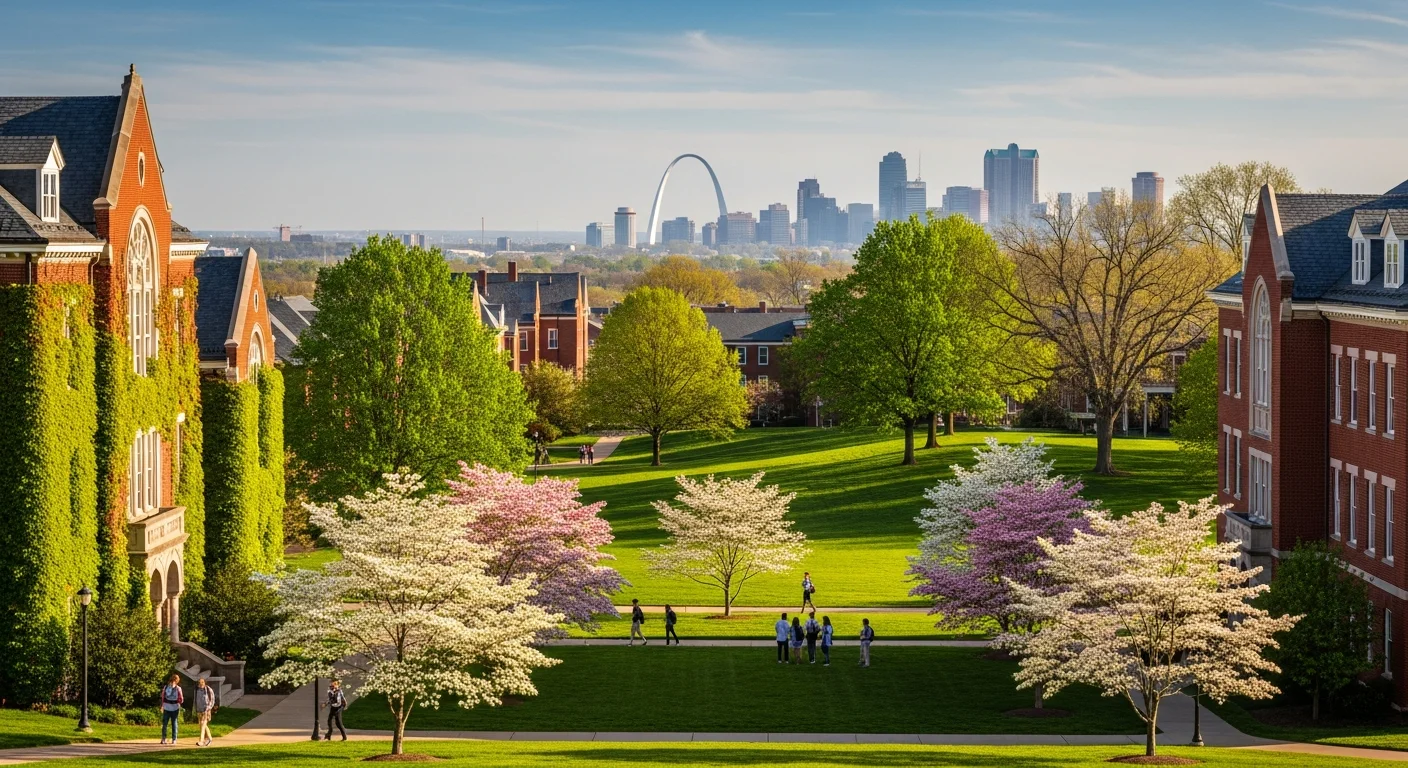
Best Doctoral Mobile Development Degree Programs in Missouri

Washington University in St Louis — Saint Louis, MO

Key Distinction: Integration of research-backed mobile systems education with early industry access and entrepreneurship support creates a pathway to leadership roles in mobile technology.

Hakia Insight: Washington University's Systems and Networking Lab plus partnerships with Apple, Google, and Microsoft means doctoral students can author research on mobile architectures that directly influences how billions of users experience apps—rare leverage for someone still early in their career.

At the doctoral level, washington University's mobile development pathway sits within one of the nation's strongest computer science programs, where students can specialize in mobile systems architecture, HCI for mobile platforms, and distributed app development. The program is distinguished by its research-first culture: undergraduates regularly co-author papers on mobile security, augmented reality interfaces, and edge computing for IoT devices, often presenting at ACM conferences. Faculty members—many of whom hold NSF grants and collaborate with industry labs—embed mobile projects into courses on operating systems, networks, and software engineering, ensuring theoretical rigor alongside practical skill-building. Internship placements are facilitated through Washington University's deep ties to tech giants (Apple, Google, Microsoft) and venture-backed firms in the St. Louis startup scene, with many students securing positions before sophomore year. The university's Skandalaris Center for Entrepreneurship also funnels mobile development students into accelerators and pitch competitions, where several cohorts have launched their own ventures. Graduates emerge with both strong systems thinking and polished portfolios, typically landing at tier-one tech companies or leading specialized roles in fintech, healthcare software, and game development studios.

Programs Offered
  • Doctor of Philosophy in Mobile Development — 4-6 years, on-campus
  • Doctor of Science in Mobile Development — 4-6 years, online
Research Labs and Institutes
  • Systems and Networking Lab
  • Human-Computer Interaction Lab
Industry Partners
  • Apple (corporate)
  • Google (corporate)
  • Microsoft (corporate)
Accreditations and Certifications
  • ABET accredited

Location Advantages: Access to St. Louis startup ecosystem and venture capitalProximity to major tech company regional offices
