University campus in Minnesota
Updated January 2026

Best Mobile Development Degree Programs in Minnesota — 2026 Rankings

Explore 40 accredited mobile development degree programs in Minnesota. Compare schools by graduation rate, salary outcomes, and tuition—from Minneapolis Community and Technical College to University of Minnesota-Twin Cities.

#1 ProgramU of Minnesota-Twin Cities
Avg Salary$106,790
Tuition From$5,264/yr
Job Growth+22%

Key Takeaways

Top 3 ranked: U of Minnesota-Twin Cities, Carleton College, St Olaf College

Based on graduation rates, program outcomes, and institutional quality

IPEDS 2023

Tuition ranges from $4,433 to $65,043/year

Minneapolis Community and... offers the most affordable option at $5,264/yr

IPEDS 2023

Degree levels: 17 associate's, 4 master's, 1 doctoral programs available in Minnesota

From community college pathways to advanced research degrees

IPEDS 2023

4 Minnesota programs offer online or hybrid formats

Flexible scheduling for working professionals

IPEDS 2023

Minnesota community college transfer can save 40-60% on total degree costs

17 associate's programs provide transfer pathways to bachelor's degrees

Education Commission of the States

Major employers: Target, UnitedHealth, Best Buy, 3M

Tech hubs in Minneapolis and St. Paul

Hakia Research 2026

Mobile Development programs available near 53+ cities across Minnesota

Search by city to find programs within 200 miles of your location

IPEDS 2023

Updated February 2026

On This Page
$106,790
Is Mobile Development in Minnesota Worth It?
Yes. Mobile Development degrees in Minnesota deliver strong ROI—graduates earn $106,790 median salary with +22% job growth through 2032. In-state tuition averages $19,569/year.

Source: BLS OEWS May 2024

Best Mobile Development Degree Programs in Minnesota

Bachelor's Mobile Development Degree Programs in Minnesota

23 programs$106,790 median salary85% avg grad rate
23
Programs
$106,790
Median Salary
$28,981/yr
Avg Tuition
85%
Avg Grad Rate

Program Landscape

Minnesota ranks among the nation's top destinations for mobile development education, with 23 accredited bachelor's degree programs across 10 public and 13 private institutions. The highest-ranked programs are U of Minnesota-Twin Cities, Carleton College, St Olaf College, recognized for academic excellence, research opportunities, and strong industry connections.

Career Outcomes

Graduates from Minnesota mobile development programs earn a median salary of $90,772—8% below the national average. The state's robust technology sector, anchored by the Minneapolis, St. Paul, Bloomington metropolitan areas, provides abundant internship and employment opportunities with companies including Target, UnitedHealth, Best Buy.

Costs & Value

Tuition ranges from $8,356 to $65,043 annually, with an average of $28,981/yr. Top programs maintain graduation rates above 85%, with the highest reaching 97%. Many programs hold ABET accreditation, the gold standard for computing education, ensuring curriculum meets rigorous industry standards.

Curriculum & Specializations

Students can choose from specializations including software engineering, cybersecurity, artificial intelligence, data science, and systems architecture. Strong industry partnerships provide access to co-op programs, capstone projects with real companies, and direct recruiting pipelines to Minnesota's leading technology employers. For students seeking mobile development degrees in Minnesota, these top-ranked mobile development schools offer the strongest combination of academic rigor and career preparation.

Show:

Earn your bachelor's in Mobile Development

(Sponsored)

Loading programs...

🥇

University of Minnesota-Twin Cities

Public
Minneapolis, MN
$14,496
Tuition/yr
92%
Grad Rate
81.2
Score
Website
🥈

Carleton College

Private
Northfield, MN
$65,043
Tuition/yr
97%
Grad Rate
89.2
Score
Website
🥉

St Olaf College

Private
Northfield, MN
$56,970
Tuition/yr
95%
Grad Rate
67.6
Score
Website
#4

Metropolitan State University

Public
Saint Paul, MN
$8,571
Tuition/yr
75%
Grad Rate
72.8
Score
Website
#5

Southwest Minnesota State University

Public
Marshall, MN
$8,840
Tuition/yr
94%
Grad Rate
54.6
Score
Website
#6

University of St Thomas

Private
Saint Paul, MN
$50,788
Tuition/yr
89%
Grad Rate
60.3
Score
Website
#7

Bethany Lutheran College

Private
Mankato, MN
$29,280
Tuition/yr
72%
Grad Rate
48.3
Score
Website
#8

University of Minnesota-Duluth

Public
Duluth, MN
$12,766
Tuition/yr
44.6
Score
Website
#9

Minnesota State University-Mankato

Public
Mankato, MN
$8,356
Tuition/yr
95%
Grad Rate
49.8
Score
Website
#10

Minnesota State University Moorhead

Public
Moorhead, MN
$8,838
Tuition/yr
52.5
Score
Website

Complete Mobile Development Degree Program Rankings in Minnesota

Best Associate's Mobile Development Degree Programs in Minnesota

### Program Landscape Minnesota offers **17 accredited** associate's degree programs in mobile development, providing an affordable entry point into the technology field. The top-ranked programs include **Minneapolis Community and...**, **Normandale Community College**, **Anoka-Ramsey Community Co...**, which combine rigorous technical curriculum with practical skills training. ### Costs & Value Community colleges in Minnesota offer these two-year programs at an average cost of **$6,837/yr**—significantly less than four-year university tuition. Students completing associate's degrees can pursue entry-level technical positions and transfer opportunities, with entry-level salaries averaging **$58,735** in Minnesota. ### Career Pathways Many programs feature guaranteed transfer agreements with Minnesota's public universities, allowing students to complete their first two years at reduced cost before transferring to complete a bachelor's degree. The Minneapolis, St. Paul, Bloomington areas offer particularly strong job markets for associate's degree holders, with employers like Target, UnitedHealth, Best Buy hiring for technical support, junior development, and IT specialist positions. ### Curriculum & Specializations Programs typically include coursework in programming fundamentals, database management, networking basics, and software development. Among mobile development schools in Minnesota, these associate's programs offer the best value for students beginning their mobile development degrees in Minnesota.

  1. #1. Minneapolis Community and Technical College

    Hakia ranks Minneapolis Community and Technical College as the #1 associate's in mobile development degree program in Minnesota. This public institution in Minneapolis, MN has annual tuition of $5,264. Ranking score: 49.4.

  2. #2. Normandale Community College

    Hakia ranks Normandale Community College as the #2 associate's in mobile development degree program in Minnesota. This public institution in Bloomington, MN has annual tuition of $5,347. Ranking score: 49.4.

  3. #3. Anoka-Ramsey Community College

    Hakia ranks Anoka-Ramsey Community College as the #3 associate's in mobile development degree program in Minnesota. This public institution in Coon Rapids, MN has annual tuition of $4,942. Ranking score: 47.1.

  4. #4. Saint Paul College

    Hakia ranks Saint Paul College as the #4 associate's in mobile development degree program in Minnesota. This public institution in Saint Paul, MN has annual tuition of $5,486. Ranking score: 55.5.

  5. #5. North Hennepin Community College

    Hakia ranks North Hennepin Community College as the #5 associate's in mobile development degree program in Minnesota. This public institution in Brooklyn Park, MN has annual tuition of $4,502. Ranking score: 46.0.

  6. #6. Rochester Community and Technical College

    Hakia ranks Rochester Community and Technical College as the #6 associate's in mobile development degree program in Minnesota. This public institution in Rochester, MN has annual tuition of $5,556. Ranking score: 44.2.

  7. #7. Century College

    Hakia ranks Century College as the #7 associate's in mobile development degree program in Minnesota. This public institution in White Bear Lake, MN has annual tuition of $5,475. Ranking score: 50.7.

  8. #8. Dakota County Technical College

    Hakia ranks Dakota County Technical College as the #8 associate's in mobile development degree program in Minnesota. This public institution in Rosemount, MN has annual tuition of $5,759. Ranking score: 50.3.

  9. #9. Minnesota State Community and Technical College

    Hakia ranks Minnesota State Community and Technical College as the #9 associate's in mobile development degree program in Minnesota. This public institution in Fergus Falls, MN has annual tuition of $5,424. Ranking score: 42.0.

  10. #10. Ridgewater College

    Hakia ranks Ridgewater College as the #10 associate's in mobile development degree program in Minnesota. This public institution in Willmar, MN has annual tuition of $5,473. Ranking score: 49.4.

  11. #11. Riverland Community College

    Hakia ranks Riverland Community College as the #11 associate's in mobile development degree program in Minnesota. This public institution in Austin, MN has annual tuition of $5,585. Ranking score: 41.2.

  12. #12. St Cloud Technical and Community College

    Hakia ranks St Cloud Technical and Community College as the #12 associate's in mobile development degree program in Minnesota. This public institution in Saint Cloud, MN has annual tuition of $4,433. Ranking score: 40.7.

  13. #13. Inver Hills Community College

    Hakia ranks Inver Hills Community College as the #13 associate's in mobile development degree program in Minnesota. This public institution in Inver Grove Heights, MN has annual tuition of $5,420. Ranking score: 40.7.

  14. #14. Minnesota State College Southeast

    Hakia ranks Minnesota State College Southeast as the #14 associate's in mobile development degree program in Minnesota. This public institution in Winona, MN has annual tuition of $6,374. Ranking score: 45.5.

  15. #15. Lake Superior College

    Hakia ranks Lake Superior College as the #15 associate's in mobile development degree program in Minnesota. This public institution in Duluth, MN has annual tuition of $4,996. Ranking score: 44.0.

  16. #16. Dunwoody College of Technology

    Hakia ranks Dunwoody College of Technology as the #16 associate's in mobile development degree program in Minnesota. This private institution in Minneapolis, MN has annual tuition of $23,825 and a 52% graduation rate. Ranking score: 35.7.

  17. #17. Herzing University-Minneapolis

    Hakia ranks Herzing University-Minneapolis as the #17 associate's in mobile development degree program in Minnesota. This private institution in St. Louis Park, MN has annual tuition of $12,360 and a 35% graduation rate. Ranking score: 28.1.

Online Associate's Mobile Development Degree Programs in Minnesota

### Online Program Options Minnesota's community colleges offer 1 online associate's mobile development programs, providing flexible pathways for students balancing education with work or family responsibilities. Top-ranked online programs include **Herzing University-Minnea...**, all regionally accredited and recognized by Minnesota employers. ### Costs & Employer Recognition Online associate's programs average **$12,360/yr**—often comparable to or less than on-campus tuition. Minnesota-based employers including Target, UnitedHealth, Best Buy value online credentials from accredited institutions, recognizing that program quality matters more than delivery format. The Minneapolis, St. Paul, Bloomington job market actively recruits graduates from online programs. ### Program Format These programs feature asynchronous coursework for maximum flexibility, with some offering synchronous sessions for collaborative learning. Students can typically complete **60 credit hours** in 2 years while working full-time. ### Technology & Flexibility Technology requirements include reliable internet access and a modern computer. Programs provide virtual labs, online tutoring, career services, and networking opportunities. Many offer start dates throughout the year and accelerated course formats for motivated students. Graduates earn the same degree as on-campus students, with no distinction on transcripts or diplomas. For students pursuing online mobile development degrees in Minnesota, these accredited mobile development schools offer the flexibility and quality that today's learners demand.

  • Herzing University-Minneapolis - St. Louis Park, MN - Tuition: $12,360/year

Best Bachelor's Mobile Development Degree Programs in Minnesota

### Program Landscape Minnesota ranks among the nation's top destinations for mobile development education, with **23 accredited** bachelor's degree programs across **10 public** and **13 private** institutions. The highest-ranked programs are **U of Minnesota-Twin Cities**, **Carleton College**, **St Olaf College**, recognized for academic excellence, research opportunities, and strong industry connections. ### Career Outcomes Graduates from Minnesota mobile development programs earn a median salary of **$90,772**—8% below the national average. The state's robust technology sector, anchored by the Minneapolis, St. Paul, Bloomington metropolitan areas, provides abundant internship and employment opportunities with companies including Target, UnitedHealth, Best Buy. ### Costs & Value Tuition ranges from **$8,356** to **$65,043** annually, with an average of **$28,981/yr**. Top programs maintain graduation rates above **85%**, with the highest reaching **97%**. Many programs hold ABET accreditation, the gold standard for computing education, ensuring curriculum meets rigorous industry standards. ### Curriculum & Specializations Students can choose from specializations including software engineering, cybersecurity, artificial intelligence, data science, and systems architecture. Strong industry partnerships provide access to co-op programs, capstone projects with real companies, and direct recruiting pipelines to Minnesota's leading technology employers. For students seeking mobile development degrees in Minnesota, these top-ranked mobile development schools offer the strongest combination of academic rigor and career preparation.

  1. #1. University of Minnesota-Twin Cities

    Hakia ranks University of Minnesota-Twin Cities as the #1 bachelor's in mobile development degree program in Minnesota. This public institution in Minneapolis, MN has annual tuition of $14,496 and a 92% graduation rate. Ranking score: 81.2.

  2. #2. Carleton College

    Hakia ranks Carleton College as the #2 bachelor's in mobile development degree program in Minnesota. This private institution in Northfield, MN has annual tuition of $65,043 and a 97% graduation rate. Ranking score: 89.2.

  3. #3. St Olaf College

    Hakia ranks St Olaf College as the #3 bachelor's in mobile development degree program in Minnesota. This private institution in Northfield, MN has annual tuition of $56,970 and a 95% graduation rate. Ranking score: 67.6.

  4. #4. Metropolitan State University

    Hakia ranks Metropolitan State University as the #4 bachelor's in mobile development degree program in Minnesota. This public institution in Saint Paul, MN has annual tuition of $8,571 and a 75% graduation rate. Ranking score: 72.8.

  5. #5. Southwest Minnesota State University

    Hakia ranks Southwest Minnesota State University as the #5 bachelor's in mobile development degree program in Minnesota. This public institution in Marshall, MN has annual tuition of $8,840 and a 94% graduation rate. Ranking score: 54.6.

  6. #6. University of St Thomas

    Hakia ranks University of St Thomas as the #6 bachelor's in mobile development degree program in Minnesota. This private institution in Saint Paul, MN has annual tuition of $50,788 and a 89% graduation rate. Ranking score: 60.3.

  7. #7. Bethany Lutheran College

    Hakia ranks Bethany Lutheran College as the #7 bachelor's in mobile development degree program in Minnesota. This private institution in Mankato, MN has annual tuition of $29,280 and a 72% graduation rate. Ranking score: 48.3.

  8. #8. University of Minnesota-Duluth

    Hakia ranks University of Minnesota-Duluth as the #8 bachelor's in mobile development degree program in Minnesota. This public institution in Duluth, MN has annual tuition of $12,766. Ranking score: 44.6.

  9. #9. Minnesota State University-Mankato

    Hakia ranks Minnesota State University-Mankato as the #9 bachelor's in mobile development degree program in Minnesota. This public institution in Mankato, MN has annual tuition of $8,356 and a 95% graduation rate. Ranking score: 49.8.

  10. #10. Minnesota State University Moorhead

    Hakia ranks Minnesota State University Moorhead as the #10 bachelor's in mobile development degree program in Minnesota. This public institution in Moorhead, MN has annual tuition of $8,838. Ranking score: 52.5.

  11. #11. Winona State University

    Hakia ranks Winona State University as the #11 bachelor's in mobile development degree program in Minnesota. This public institution in Winona, MN has annual tuition of $8,388. Ranking score: 56.4.

  12. #12. North Central University

    Hakia ranks North Central University as the #12 bachelor's in mobile development degree program in Minnesota. This private institution in Minneapolis, MN has annual tuition of $28,500 and a 94% graduation rate. Ranking score: 45.8.

  13. #13. Gustavus Adolphus College

    Hakia ranks Gustavus Adolphus College as the #13 bachelor's in mobile development degree program in Minnesota. This private institution in Saint Peter, MN has annual tuition of $53,570. Ranking score: 51.4.

  14. #14. Concordia University-Saint Paul

    Hakia ranks Concordia University-Saint Paul as the #14 bachelor's in mobile development degree program in Minnesota. This private institution in Saint Paul, MN has annual tuition of $25,000 and a 66% graduation rate. Ranking score: 49.3.

  15. #15. Augsburg University

    Hakia ranks Augsburg University as the #15 bachelor's in mobile development degree program in Minnesota. This private institution in Minneapolis, MN has annual tuition of $43,142 and a 63% graduation rate. Ranking score: 49.1.

  16. #16. Concordia College at Moorhead

    Hakia ranks Concordia College at Moorhead as the #16 bachelor's in mobile development degree program in Minnesota. This private institution in Moorhead, MN has annual tuition of $29,400. Ranking score: 47.7.

  17. #17. University of Minnesota-Morris

    Hakia ranks University of Minnesota-Morris as the #17 bachelor's in mobile development degree program in Minnesota. This public institution in Morris, MN has annual tuition of $12,932. Ranking score: 48.4.

  18. #18. Saint Cloud State University

    Hakia ranks Saint Cloud State University as the #18 bachelor's in mobile development degree program in Minnesota. This public institution in Saint Cloud, MN has annual tuition of $8,811. Ranking score: 38.0.

  19. #19. Bemidji State University

    Hakia ranks Bemidji State University as the #19 bachelor's in mobile development degree program in Minnesota. This public institution in Bemidji, MN has annual tuition of $8,994. Ranking score: 43.7.

  20. #20. Saint Johns University

    Hakia ranks Saint Johns University as the #20 bachelor's in mobile development degree program in Minnesota. This private institution in Collegeville, MN has annual tuition of $52,700. Ranking score: 46.5.

  21. #21. University of Northwestern-St Paul

    Hakia ranks University of Northwestern-St Paul as the #21 bachelor's in mobile development degree program in Minnesota. This private institution in Saint Paul, MN has annual tuition of $35,970. Ranking score: 42.3.

  22. #22. Saint Mary's University of Minnesota

    Hakia ranks Saint Mary's University of Minnesota as the #22 bachelor's in mobile development degree program in Minnesota. This private institution in Winona, MN has annual tuition of $42,500. Ranking score: 40.6.

  23. #23. College of Saint Benedict

    Hakia ranks College of Saint Benedict as the #23 bachelor's in mobile development degree program in Minnesota. This private institution in Saint Joseph, MN has annual tuition of $52,700. Ranking score: 39.2.

Online Bachelor's Mobile Development Degree Programs in Minnesota

### Online Program Options 3 Minnesota institutions offer bachelor's mobile development degrees with online or hybrid options, enabling students to earn accredited degrees while maintaining professional or personal commitments. Top-ranked online programs include **U of Northwestern-St Paul**, **Saint Mary's University o...**, **College of Saint Benedict**, all regionally accredited and recognized by Minnesota employers. ### Costs & Employer Recognition Online bachelor's programs average **$43,723/yr**—often comparable to or less than on-campus tuition. Minnesota-based employers including Target, UnitedHealth, Best Buy value online credentials from accredited institutions, recognizing that program quality matters more than delivery format. The Minneapolis, St. Paul, Bloomington job market actively recruits graduates from online programs. ### Program Format These programs feature asynchronous coursework for maximum flexibility, with some offering synchronous sessions for collaborative learning. Students can typically complete **120 credit hours** in 4 years while working full-time. ### Technology & Flexibility Technology requirements include reliable internet access and a modern computer. Programs provide virtual labs, online tutoring, career services, and networking opportunities. Many offer start dates throughout the year and accelerated course formats for motivated students. Graduates earn the same degree as on-campus students, with no distinction on transcripts or diplomas. For students pursuing online mobile development degrees in Minnesota, these accredited mobile development schools offer the flexibility and quality that today's learners demand.

  • University of Northwestern-St Paul - Saint Paul, MN - Tuition: $35,970/year
  • Saint Mary's University of Minnesota - Winona, MN - Tuition: $42,500/year
  • College of Saint Benedict - Saint Joseph, MN - Tuition: $52,700/year

Best Master's Mobile Development Degree Programs in Minnesota

### Program Landscape Minnesota offers **4** master's degree programs in mobile development, designed for professionals seeking to advance into senior engineering, technical leadership, and specialized roles. The top programs—**U of Minnesota-Twin Cities**, **Metropolitan State**, **Saint Cloud State**—combine advanced technical training with research opportunities and leadership development. ### Career Outcomes Master's graduates in Minnesota earn a median salary of **$106,790**, approximately **20-30% higher** than bachelor's degree holders. The concentration of technology companies in Minneapolis, St. Paul, Bloomington creates strong demand for graduate-level talent, with Target, UnitedHealth, Best Buy actively recruiting from these programs. ### Costs & Value Program formats include traditional full-time study (typically 2 years), part-time options for working professionals (2-3 years), and accelerated tracks. Tuition averages **$11,161/yr**, with many employers offering tuition reimbursement for graduate education. Some programs offer thesis and non-thesis tracks, allowing students to focus on research or professional development based on their career goals. ### Curriculum & Specializations Curriculum covers advanced topics including machine learning, distributed systems, software architecture, and technical management. Many programs include practicum experiences, industry capstone projects, or consulting engagements that provide real-world application of advanced concepts. Among Minnesota's mobile development schools at the graduate level, these programs stand out for both academic quality and career outcomes.

  1. #1. University of Minnesota-Twin Cities

    Hakia ranks University of Minnesota-Twin Cities as the #1 master's in mobile development degree program in Minnesota. This public institution in Minneapolis, MN has annual tuition of $14,496 and a 92% graduation rate. Ranking score: 84.8.

  2. #2. Metropolitan State University

    Hakia ranks Metropolitan State University as the #2 master's in mobile development degree program in Minnesota. This public institution in Saint Paul, MN has annual tuition of $8,571 and a 75% graduation rate. Ranking score: 51.0.

  3. #3. Saint Cloud State University

    Hakia ranks Saint Cloud State University as the #3 master's in mobile development degree program in Minnesota. This public institution in Saint Cloud, MN has annual tuition of $8,811. Ranking score: 42.2.

  4. #4. University of Minnesota-Duluth

    Hakia ranks University of Minnesota-Duluth as the #4 master's in mobile development degree program in Minnesota. This public institution in Duluth, MN has annual tuition of $12,766. Ranking score: 41.0.

Best Doctoral Mobile Development Degree Programs in Minnesota

### Program Landscape Minnesota is home to **1** doctoral programs in mobile development, preparing students for research positions, faculty appointments, and executive technical roles. Leading programs at **U of Minnesota-Twin Cities** are recognized for cutting-edge research, strong faculty publications, and competitive funding packages. ### Career Outcomes Doctoral graduates command premium salaries, with Minnesota PhD holders earning a median of **$133,488**—reflecting the advanced expertise required for research and executive positions. The Minneapolis, St. Paul, Bloomington region's research universities and corporate R&D centers provide extensive collaboration opportunities with industry leaders like Target, UnitedHealth, Best Buy. ### Costs & Value PhD programs typically require 4-6 years of full-time study, including coursework, qualifying examinations, and original dissertation research. Many programs offer full funding through teaching or research assistantships, covering tuition and providing stipends of **$25,000–$40,000** annually. ### Curriculum & Specializations Research strengths across Minnesota programs include artificial intelligence, cybersecurity, human-computer interaction, systems, and theoretical computer science. For aspiring researchers pursuing mobile development degrees in Minnesota, graduates go on to careers as university faculty, industry research scientists, or technical executives, contributing to advances in technology that impact millions of users worldwide.

  1. #1. University of Minnesota-Twin Cities

    Hakia ranks University of Minnesota-Twin Cities as the #1 doctoral in mobile development degree program in Minnesota. This public institution in Minneapolis, MN has annual tuition of $14,496 and a 92% graduation rate. Ranking score: 56.3.

Mobile Development Tuition in Minnesota

MetricValue
Average in-state tuition$19,569/year
Average out-of-state tuition$48,923/year
Community college tuition$4,892/year
4-year savings for residents$117,416
2+2 transfer pathway savings$29,354

Source: IPEDS 2023

Mobile Development Financial Aid & Scholarships in Minnesota

State Aid Programs

Minnesota offers robust financial aid opportunities for mobile development students through both state and federal programs. The Minnesota State Grant is one of the largest need-based grant programs in the nation, providing direct financial support to eligible Minnesota residents pursuing higher education. This program complements federal aid options available through the Free Application for Federal Student Aid (FAFSA), which opens the door to Pell Grants, federal student loans, and work-study opportunities for students nationwide. Minnesota residents attending in-state institutions benefit from additional institutional scholarships and merit-based aid packages, particularly at the state's top-ranked schools.

Key Programs & Amounts

To access federal financial aid, all students must complete the FAFSA through StudentAid.gov, which determines eligibility for grants, loans, and other assistance programs. The Minnesota Office of Higher Education administers state-specific grants and can provide guidance on maximizing aid packages. Students should also explore institutional scholarships directly through their chosen school. Many Minnesota institutions, including those ranked among the best bachelor's programs and most affordable options, offer competitive merit scholarships to attract qualified applicants. Additionally, students considering related fields like web development or software engineering may find overlapping aid opportunities through technology-focused scholarship programs.

Calculate Your Mobile Development Degree ROI in Minnesota

Use our interactive ROI calculator to estimate your return on investment for a mobile development degree in Minnesota. Enter your expected tuition costs, financial aid, and career goals to see projected payback periods and lifetime earnings. The calculator uses current salary data from BLS and tuition data from IPEDS to provide accurate estimates.

Mobile Development Degree ROI Calculator
Estimate your return on investment for a mobile development degree
$

Leave blank to use average cost for selected program type

20 years
10 years20 years30 years
20-Year ROI

+539%

Net gain divided by total investment. ROI above 200% is considered excellent for education investments.

Net Gain

$998,017

Your additional lifetime earnings with this degree vs. working without one, minus the total investment.

Break-Even

6 years

Years until your cumulative earnings exceed total investment. Shorter programs often break even faster due to lower opportunity cost.

COL-Adjusted Salary

$105,000

Your starting salary adjusted for local cost of living. This shows real purchasing power compared to a $100K national baseline.

Why does break-even change with program type? Your "total investment" includes both tuition AND opportunity cost (foregone earnings while in school). A 4-year full-time public university (in-state) means 4 years of not earning a salary ($140,000 in opportunity cost). Shorter full-time programs may have higher tuition but lower total investment because you return to the workforce sooner.

Detailed Breakdown
How we calculate your degree ROI using real salary data
Total Investment$185,000

Tuition plus opportunity cost (earnings you miss while in school)

Program Cost (Tuition)$45,000

Direct cost of the degree program

Opportunity Cost$140,000

4 years × $35K/year foregone salary while studying full-time

20-Year Earnings (with degree)$2,033,425

Projected career earnings starting after graduation, with salary growth

20-Year Earnings (without degree)$850,408

What you'd earn working at $35K/year with 2% annual growth

Starting Salary (Minneapolis, MN)$105,000

Median salary for this role in your selected location (BLS 2024)

Annualized Return3.4%

Your investment's compound annual growth rate (similar to stock market returns)

Data sources: BLS OEWS May 2024, IPEDS 2023. Calculations use median salaries, 3% discount rate, and assume salary growth declines from 6% to 2% over career. Individual results will vary. | Powered by Hakia.com

Career Paths

Design and develop software applications and systems

Median Salary:$120,673

Analyze complex datasets and build predictive models

Median Salary:$100,383

Protect computer networks from cyber threats

Median Salary:$112,130

Manage cloud infrastructure and deployment pipelines

Median Salary:$118,537

Design and maintain cloud computing infrastructure

Median Salary:$115,333

Build and deploy machine learning models

Median Salary:$134,555
Mobile Development Salaries by Metro Area

Median annual salary in Minnesota metro areas

Hakia.com
View data table
Categoryvalue
Minneapolis$117K
St. Paul$112K
Bloomington$107K

Source: BLS OEWS May 2024

Hakia.com

Mobile Development Jobs in Minnesota: Top Employers Hiring

Find mobile development jobs in Minnesota. These major employers across Minnesota metro areas are actively hiring mobile development graduates. Click employer names to view current job openings.

Mobile Development Jobs in Minneapolis-St. Paul

MN
Target
retail-tech
UnitedHealth Group
healthcare
Best Buy
retail-tech
3M
manufacturing
Medtronic
medtech

How to Apply to Mobile Development Programs in Minnesota

1

Research Program Requirements

Review admission requirements for mobile development programs at your target schools. Requirements vary by institution and degree level.

2

Prepare Application Materials

Gather transcripts, test scores (SAT/ACT for undergrad, GRE for graduate), letters of recommendation, and personal statement.

3

Apply for Financial Aid

Complete the FAFSA by priority deadlines.

4

Submit Applications Before Deadlines

Apply early for priority consideration. Early action/decision deadlines are typically October-November; regular deadlines December-January.

5

Complete Enrollment Steps

Accept your offer, submit enrollment deposit, complete orientation requirements, and register for classes.

Mobile Development Transfer Pathways in Minnesota

State Transfer System

Minnesota's transfer infrastructure is anchored by the Minnesota Transfer Curriculum (MnTC), a statewide system enabling seamless general education credit transfer between the state's 29 two-year institutions and 52 four-year institutions (IPEDS). This framework allows students to complete associate's programs at affordable community colleges—such as Minneapolis Community and Technical College ($5,264 tuition), Normandale Community College ($5,347), and Anoka-Ramsey Community College ($4,942)—and transition directly into bachelor's programs at four-year universities with full credit recognition. The MnTC system guarantees that 275 annual associate's degree completions establish a clear educational pipeline, reducing time to degree and lowering overall costs for transfer students.

How Transfers Work

Transfer pathways into mobile development bachelor's programs at institutions like University of Minnesota-Twin Cities, Metropolitan State University, and Saint Cloud State University are strengthened by articulation agreements between community colleges and universities. Students should consult the Minnesota Office of Higher Education and Minnesota State Grant program resources for financial aid continuity across transfers. The Minnesota Transfer Curriculum (MnTC) eliminates redundant coursework, allowing students to complete foundational coursework affordably at two-year institutions before advancing to specialized mobile development courses. This strategic pathway maximizes affordability while maintaining quality, making Minnesota an exceptionally accessible state for mobile development education.

Why Study Mobile Development in Minnesota?

Industry & Workforce

Minnesota has emerged as a robust hub for mobile development education, with 51 institutions offering programs across all degree levels (IPEDS). The state's commitment to tech talent development is evident in its offerings: 20 associate's programs, 25 bachelor's programs, 5 master's programs, and 1 doctoral program, producing 1,621 completions annually across all levels. The University of Minnesota-Twin Cities alone accounts for 719 completions, establishing Minnesota as a serious player in mobile development education nationally.

Salary Outlook

Minnesota's major metropolitan areas—Minneapolis, St. Paul, and the surrounding Twin Cities region—host world-class employers including Target, UnitedHealth Group, 3M, and Mayo Clinic, creating abundant career opportunities for graduates. The state's public four-year institutions offer exceptional value, with average in-state tuition of just $10,088, significantly below national averages. Top-ranked programs like University of Minnesota-Twin Cities and Carleton College provide pathways to high-demand careers. For students seeking affordable options, Metropolitan State University combines quality education with tuition of only $8,571, making Minnesota an attractive destination for aspiring mobile developers.

Mobile Development Job Market in Minnesota

Employment Outlook

Minnesota's mobile development job market is experiencing robust growth, supported by a strong technology sector concentrated in major metropolitan areas. The state hosts a diverse employer base spanning healthcare, retail, technology, and financial services industries. According to the Bureau of Labor Statistics, Minnesota's tech workforce continues to expand, with mobile development roles increasingly in demand across the Minneapolis-St. Paul-Bloomington metro area, Rochester, and Duluth regions. The state's economy benefits from major corporate headquarters and innovation centers that actively recruit mobile developers, creating competitive salary opportunities and career advancement pathways for graduates.

Salaries by Metro

The mobile development field in Minnesota offers graduates multiple geographic options within the state. The Minneapolis-St. Paul-Bloomington metro area remains the primary employment hub, attracting talent with its concentration of tech companies and corporate innovation centers. Rochester and Duluth provide additional professional opportunities with growing tech communities. Entry-level and experienced mobile developers can find positions across various sectors, from healthcare technology to retail innovation. Explore related fields to broaden career opportunities—check out Web Development in Minnesota, Software Engineering in Minnesota, and Computer Programming in Minnesota to see complementary career paths in the state.

Mobile Development Curriculum & Specializations in Minnesota

Core Requirements

Mobile development curricula in Minnesota programs typically encompass core technical competencies essential for building applications across iOS, Android, and cross-platform frameworks. Core courses commonly include object-oriented programming, mobile application design, software development lifecycle management, database design, and web services integration. Advanced coursework covers specialized topics such as native mobile development, responsive user interface design, backend API development, and security best practices. Many bachelor's programs, particularly at institutions like University of Minnesota-Twin Cities, integrate capstone projects requiring students to develop production-quality applications while collaborating with industry partners. These hands-on experiences provide practical portfolio pieces essential for competitive job markets in the Twin Cities and beyond.

Degree Pathways

Master's programs emphasize advanced software engineering principles, mobile architecture patterns, and emerging technologies. Students pursuing graduate degrees often engage in original research or thesis projects contributing to the field. Related degree programs in web development, software engineering, and computer programming share foundational coursework with mobile development, creating opportunities for interdisciplinary skill development. Many programs incorporate agile methodology training, version control systems, and continuous integration practices aligned with industry standards. The integration of UX/UI design principles, accessible through programs like UX design, ensures graduates understand user-centered development approaches essential for successful mobile applications in competitive markets.

Online vs On-Campus Mobile Development Programs in Minnesota

Online Program Growth

Minnesota's mobile development programs span both traditional campus-based and online delivery formats, providing flexibility for working professionals and remote learners. Several institutions offer robust online bachelor's degree options, including Dunwoody College of Technology ($23,825 tuition), Bethel University ($42,760), and Concordia University-Saint Paul ($25,000). These best online programs deliver comprehensive mobile development curricula through digital platforms while maintaining rigorous academic standards and industry relevance. Online formats appeal to students balancing work, family, and education, particularly in major metro areas like the Minneapolis-St. Paul-Bloomington region where commuting constraints make flexibility valuable.

Accredited Online Options

Campus-based programs at institutions like University of Minnesota-Twin Cities, Metropolitan State University, and Carleton College provide hands-on lab experience, direct faculty mentorship, and peer networking opportunities that remain difficult to replicate online. These traditional programs benefit from established industry partnerships with major Minnesota employers like Target, UnitedHealth Group, and 3M. Many institutions now offer hybrid models combining in-person technical training with online coursework, optimizing flexibility without sacrificing practical skills. Students should consider learning style, career goals, and life circumstances when choosing between formats. Explore related web development and UX design programs in Minnesota, which similarly offer both online and campus options. The choice between modalities should align with individual preferences for collaboration, hands-on experience, and scheduling needs.

Mobile Development by City in Minnesota

The Minneapolis-St. Paul-Bloomington metropolitan area stands as Minnesota's premier tech hub, offering the highest concentration of mobile development employers and career opportunities. This sprawling metro region includes Minneapolis, St. Paul, Bloomington, Brooklyn Park, Plymouth, and Eagan—each serving as business centers with significant tech employment. The Twin Cities region provides competitive salaries, lower costs of living compared to coastal tech hubs, and abundant networking opportunities. Rochester and Duluth offer secondary markets with growing tech sectors, particularly strong in healthcare technology (Rochester with Mayo Clinic) and regional innovation. Average public in-state tuition at four-year Minnesota institutions is $10,088, making education affordable for students planning to establish careers in these regions.

Geographic proximity between top educational institutions and employment centers strengthens career placement outcomes. The University of Minnesota-Twin Cities with 719 completions leads the state and sits within the primary job market, while University of Minnesota-Duluth with 78 completions serves the northern regional market. Carleton College in the southern region and Saint Cloud State University provide alternative geographic options. Students can leverage the Minnesota Transfer Curriculum (MnTC) to transfer between institutions while building local networks. Compare Minnesota opportunities with other major tech states—explore Mobile Development in California, Mobile Development in Texas, and Mobile Development in New York to evaluate cost and career advantages. The Minnesota Office of Higher Education provides additional state-specific career and financial aid resources.

Compare Online Mobile Development Programs in Minnesota

View tuition costs, program formats & enrollment info

Find Mobile Development Programs Near You in Minnesota

Search by city to find accredited mobile development programs ranked by our state methodology.

Mobile Development Degree Programs by City in Minnesota

Mobile Development Degree Programs Near Minneapolis, Minnesota

As Minnesota's tech hub, Minneapolis hosts a robust mobile development ecosystem anchored by Target's digital transformation initiatives, Best Buy's mobile commerce operations, and hundreds of app startups in the North Loop district. The University of Minnesota's Computer Science program and nearby bootcamps like General Assembly provide direct talent pipelines, while the city's venture capital scene actively funds mobile-first companies across healthcare, fintech, and e-commerce sectors.

Minneapolis is located in Hennepin County, Minnesota.

Associate's Mobile Development Degree Programs Near Minneapolis, Minnesota
  1. Minneapolis Community and Technical College (Public) — State #1, in Minneapolis. Tuition: $5,264/year.
  2. Normandale Community College (Public) — State #2, 10.4 mi from Minneapolis. Tuition: $5,347/year.
  3. Anoka-Ramsey Community College (Public) — State #3, 14.4 mi from Minneapolis. Tuition: $4,942/year.
Bachelor's Mobile Development Degree Programs Near Minneapolis, Minnesota
  1. University of Minnesota-Twin Cities (Public) — State #1, in Minneapolis. Tuition: $14,496/year. Graduation rate: 92%.
  2. Carleton College (Private) — State #2, 35.7 mi from Minneapolis. Tuition: $65,043/year. Graduation rate: 97%.
  3. Metropolitan State University (Public) — State #3, 9.4 mi from Minneapolis. Tuition: $8,571/year. Graduation rate: 75%.
Master's Mobile Development Degree Programs Near Minneapolis, Minnesota
  1. University of Minnesota-Twin Cities (Public) — State #1, in Minneapolis. Tuition: $14,496/year. Graduation rate: 92%.
  2. Metropolitan State University (Public) — State #2, 9.4 mi from Minneapolis. Tuition: $8,571/year. Graduation rate: 75%.
  3. Saint Cloud State University (Public) — State #3, 58.9 mi from Minneapolis. Tuition: $8,811/year.
Doctoral Mobile Development Degree Programs Near Minneapolis, Minnesota
  1. University of Minnesota-Twin Cities (Public) — State #1, in Minneapolis. Tuition: $14,496/year. Graduation rate: 92%.
  2. Walden University (For-Profit) — State #2, in Minneapolis. Tuition: $10,313/year. Graduation rate: 33%.

Mobile Development Degree Programs Near Saint Paul, Minnesota

Saint Paul's economy is heavily influenced by UnitedHealth Group's massive presence, creating substantial demand for healthcare app developers and mobile solutions architects working on insurance and wellness platforms. The city benefits from proximity to the University of Minnesota campus and serves as a secondary hub for remote-first mobile development teams seeking lower costs than pure tech centers while maintaining access to Fortune 500 clients.

Saint Paul is located in Ramsey County, Minnesota.

Associate's Mobile Development Degree Programs Near Saint Paul, Minnesota
  1. Minneapolis Community and Technical College (Public) — State #1, 6.3 mi from Saint Paul. Tuition: $5,264/year.
  2. Normandale Community College (Public) — State #2, 12.9 mi from Saint Paul. Tuition: $5,347/year.
  3. Anoka-Ramsey Community College (Public) — State #3, 17.1 mi from Saint Paul. Tuition: $4,942/year.
Bachelor's Mobile Development Degree Programs Near Saint Paul, Minnesota
  1. University of Minnesota-Twin Cities (Public) — State #1, 3.9 mi from Saint Paul. Tuition: $14,496/year. Graduation rate: 92%.
  2. Carleton College (Private) — State #2, 34.9 mi from Saint Paul. Tuition: $65,043/year. Graduation rate: 97%.
  3. Metropolitan State University (Public) — State #3, in Saint Paul. Tuition: $8,571/year. Graduation rate: 75%.
Master's Mobile Development Degree Programs Near Saint Paul, Minnesota
  1. University of Minnesota-Twin Cities (Public) — State #1, 3.9 mi from Saint Paul. Tuition: $14,496/year. Graduation rate: 92%.
  2. Metropolitan State University (Public) — State #2, in Saint Paul. Tuition: $8,571/year. Graduation rate: 75%.
  3. Saint Cloud State University (Public) — State #3, 63.2 mi from Saint Paul. Tuition: $8,811/year.
Doctoral Mobile Development Degree Programs Near Saint Paul, Minnesota
  1. University of Minnesota-Twin Cities (Public) — State #1, 3.9 mi from Saint Paul. Tuition: $14,496/year. Graduation rate: 92%.
  2. Walden University (For-Profit) — State #2, 5.5 mi from Saint Paul. Tuition: $10,313/year. Graduation rate: 33%.

Mobile Development Degree Programs Near Bloomington, Minnesota

Bloomington is home to Target's headquarters and Mall of America, making it a concentrated market for retail mobile commerce developers, iOS/Android engineers, and mobile payment specialists working on consumer-facing apps. The city attracts mobile development talent through competitive salaries from Target's digital teams and nearby e-commerce startups, though it lacks dedicated mobile development degree programs and relies on University of Minnesota recruitment.

Bloomington is located in Hennepin County, Minnesota.

Associate's Mobile Development Degree Programs Near Bloomington, Minnesota
  1. Minneapolis Community and Technical College (Public) — State #1, 9.9 mi from Bloomington. Tuition: $5,264/year.
  2. Normandale Community College (Public) — State #2, in Bloomington. Tuition: $5,347/year.
  3. Anoka-Ramsey Community College (Public) — State #3, 23.6 mi from Bloomington. Tuition: $4,942/year.
Bachelor's Mobile Development Degree Programs Near Bloomington, Minnesota
  1. University of Minnesota-Twin Cities (Public) — State #1, 10.6 mi from Bloomington. Tuition: $14,496/year. Graduation rate: 92%.
  2. Carleton College (Private) — State #2, 26.8 mi from Bloomington. Tuition: $65,043/year. Graduation rate: 97%.
  3. Metropolitan State University (Public) — State #3, 14.8 mi from Bloomington. Tuition: $8,571/year. Graduation rate: 75%.
Master's Mobile Development Degree Programs Near Bloomington, Minnesota
  1. University of Minnesota-Twin Cities (Public) — State #1, 10.6 mi from Bloomington. Tuition: $14,496/year. Graduation rate: 92%.
  2. Metropolitan State University (Public) — State #2, 14.8 mi from Bloomington. Tuition: $8,571/year. Graduation rate: 75%.
  3. Saint Cloud State University (Public) — State #3, 64.2 mi from Bloomington. Tuition: $8,811/year.
Doctoral Mobile Development Degree Programs Near Bloomington, Minnesota
  1. University of Minnesota-Twin Cities (Public) — State #1, 10.6 mi from Bloomington. Tuition: $14,496/year. Graduation rate: 92%.
  2. Walden University (For-Profit) — State #2, 10.7 mi from Bloomington. Tuition: $10,313/year. Graduation rate: 33%.

Mobile Development Degree Programs Near Rochester, Minnesota

Rochester's economy centers on Mayo Clinic, which aggressively develops mobile health applications, telemedicine platforms, and wearable device integrations—creating specialized demand for mobile developers with healthcare domain knowledge. While Rochester State Community College offers general IT programs, most aspiring mobile developers here either work directly for Mayo Clinic or commute to Minneapolis for advanced education, making it ideal for those seeking healthcare-focused mobile development careers.

Rochester is located in Olmsted County, Minnesota.

Associate's Mobile Development Degree Programs Near Rochester, Minnesota
  1. Minneapolis Community and Technical College (Public) — State #1, 76.3 mi from Rochester. Tuition: $5,264/year.
  2. Normandale Community College (Public) — State #2, 69.5 mi from Rochester. Tuition: $5,347/year.
  3. Anoka-Ramsey Community College (Public) — State #3, 89.8 mi from Rochester. Tuition: $4,942/year.
Bachelor's Mobile Development Degree Programs Near Rochester, Minnesota
  1. University of Minnesota-Twin Cities (Public) — State #1, 75 mi from Rochester. Tuition: $14,496/year. Graduation rate: 92%.
  2. Carleton College (Private) — State #2, 45.1 mi from Rochester. Tuition: $65,043/year. Graduation rate: 97%.
  3. Metropolitan State University (Public) — State #3, 70.4 mi from Rochester. Tuition: $8,571/year. Graduation rate: 75%.
Master's Mobile Development Degree Programs Near Rochester, Minnesota
  1. University of Minnesota-Twin Cities (Public) — State #1, 75 mi from Rochester. Tuition: $14,496/year. Graduation rate: 92%.
  2. Metropolitan State University (Public) — State #2, 70.4 mi from Rochester. Tuition: $8,571/year. Graduation rate: 75%.
  3. Saint Cloud State University (Public) — State #3, 133.5 mi from Rochester. Tuition: $8,811/year.
Doctoral Mobile Development Degree Programs Near Rochester, Minnesota
  1. University of Minnesota-Twin Cities (Public) — State #1, 75 mi from Rochester. Tuition: $14,496/year. Graduation rate: 92%.
  2. Walden University (For-Profit) — State #2, 76.3 mi from Rochester. Tuition: $10,313/year. Graduation rate: 33%.

Mobile Development Degree Programs Near Saint Cloud, Minnesota

Saint Cloud State University offers Computer Science programs with mobile development coursework, positioning the city as a secondary talent source for regional mobile development teams, though most graduates migrate to Minneapolis for employment opportunities. The city has minimal local mobile app employers but benefits from affordable living costs and remote work accessibility for developers serving Twin Cities and national clients.

Saint Cloud is located in Stearns County, Minnesota.

Associate's Mobile Development Degree Programs Near Saint Cloud, Minnesota
  1. Minneapolis Community and Technical College (Public) — State #1, 59.1 mi from Saint Cloud. Tuition: $5,264/year.
  2. Normandale Community College (Public) — State #2, 64.9 mi from Saint Cloud. Tuition: $5,347/year.
  3. Anoka-Ramsey Community College (Public) — State #3, 47.7 mi from Saint Cloud. Tuition: $4,942/year.
Bachelor's Mobile Development Degree Programs Near Saint Cloud, Minnesota
  1. University of Minnesota-Twin Cities (Public) — State #1, 60.8 mi from Saint Cloud. Tuition: $14,496/year. Graduation rate: 92%.
  2. Carleton College (Private) — State #2, 90.6 mi from Saint Cloud. Tuition: $65,043/year. Graduation rate: 97%.
  3. Metropolitan State University (Public) — State #3, 67.5 mi from Saint Cloud. Tuition: $8,571/year. Graduation rate: 75%.
Master's Mobile Development Degree Programs Near Saint Cloud, Minnesota
  1. University of Minnesota-Twin Cities (Public) — State #1, 60.8 mi from Saint Cloud. Tuition: $14,496/year. Graduation rate: 92%.
  2. Metropolitan State University (Public) — State #2, 67.5 mi from Saint Cloud. Tuition: $8,571/year. Graduation rate: 75%.
  3. Saint Cloud State University (Public) — State #3, in Saint Cloud. Tuition: $8,811/year.
Doctoral Mobile Development Degree Programs Near Saint Cloud, Minnesota
  1. University of Minnesota-Twin Cities (Public) — State #1, 60.8 mi from Saint Cloud. Tuition: $14,496/year. Graduation rate: 92%.
  2. Walden University (For-Profit) — State #2, 59.3 mi from Saint Cloud. Tuition: $10,313/year. Graduation rate: 33%.

Mobile Development Degree Programs Near Duluth, Minnesota

Duluth is a small regional hub with limited native mobile development employers, but its lower cost of living and emerging digital economy make it viable for remote-first developers working for Minneapolis startups or national tech companies. The University of Minnesota Duluth and Lake Superior College provide foundational IT education, though serious mobile development specialization typically requires online programs or relocation to metro areas.

Duluth is located in St. Louis County, Minnesota.

Associate's Mobile Development Degree Programs Near Duluth, Minnesota
  1. Minneapolis Community and Technical College (Public) — State #1, 138.6 mi from Duluth. Tuition: $5,264/year.
  2. Normandale Community College (Public) — State #2, 148.6 mi from Duluth. Tuition: $5,347/year.
  3. Anoka-Ramsey Community College (Public) — State #3, 127.6 mi from Duluth. Tuition: $4,942/year.
Bachelor's Mobile Development Degree Programs Near Duluth, Minnesota
  1. University of Minnesota-Twin Cities (Public) — State #1, 137.7 mi from Duluth. Tuition: $14,496/year. Graduation rate: 92%.
  2. Carleton College (Private) — State #2, 169.6 mi from Duluth. Tuition: $65,043/year. Graduation rate: 97%.
  3. Metropolitan State University (Public) — State #3, 135.9 mi from Duluth. Tuition: $8,571/year. Graduation rate: 75%.
Master's Mobile Development Degree Programs Near Duluth, Minnesota
  1. University of Minnesota-Twin Cities (Public) — State #1, 137.7 mi from Duluth. Tuition: $14,496/year. Graduation rate: 92%.
  2. Metropolitan State University (Public) — State #2, 135.9 mi from Duluth. Tuition: $8,571/year. Graduation rate: 75%.
  3. Saint Cloud State University (Public) — State #3, 130.5 mi from Duluth. Tuition: $8,811/year.
Doctoral Mobile Development Degree Programs Near Duluth, Minnesota
  1. University of Minnesota-Twin Cities (Public) — State #1, 137.7 mi from Duluth. Tuition: $14,496/year. Graduation rate: 92%.
  2. Walden University (For-Profit) — State #2, 137.7 mi from Duluth. Tuition: $10,313/year. Graduation rate: 33%.

Mobile Development Degree Programs Near Winona, Minnesota

Winona is a small college town with minimal mobile development industry presence, making it primarily attractive for computer science students at Winona State University who plan to relocate to Minneapolis or Rochester for mobile development careers. Remote work and freelance mobile development are realistic options for those seeking small-town living while serving national clients.

Winona is located in Winona County, Minnesota.

Associate's Mobile Development Degree Programs Near Winona, Minnesota
  1. Minneapolis Community and Technical College (Public) — State #1, 103.1 mi from Winona. Tuition: $5,264/year.
  2. Normandale Community College (Public) — State #2, 99.3 mi from Winona. Tuition: $5,347/year.
  3. Anoka-Ramsey Community College (Public) — State #3, 114.6 mi from Winona. Tuition: $4,942/year.
Bachelor's Mobile Development Degree Programs Near Winona, Minnesota
  1. University of Minnesota-Twin Cities (Public) — State #1, 101.3 mi from Winona. Tuition: $14,496/year. Graduation rate: 92%.
  2. Carleton College (Private) — State #2, 79.9 mi from Winona. Tuition: $65,043/year. Graduation rate: 97%.
  3. Metropolitan State University (Public) — State #3, 94.6 mi from Winona. Tuition: $8,571/year. Graduation rate: 75%.
Master's Mobile Development Degree Programs Near Winona, Minnesota
  1. University of Minnesota-Twin Cities (Public) — State #1, 101.3 mi from Winona. Tuition: $14,496/year. Graduation rate: 92%.
  2. Metropolitan State University (Public) — State #2, 94.6 mi from Winona. Tuition: $8,571/year. Graduation rate: 75%.
  3. Saint Cloud State University (Public) — State #3, 161.2 mi from Winona. Tuition: $8,811/year.
Doctoral Mobile Development Degree Programs Near Winona, Minnesota
  1. University of Minnesota-Twin Cities (Public) — State #1, 101.3 mi from Winona. Tuition: $14,496/year. Graduation rate: 92%.
  2. Walden University (For-Profit) — State #2, 102.8 mi from Winona. Tuition: $10,313/year. Graduation rate: 33%.

Mobile Development Degree Programs Near Bemidji, Minnesota

Bemidji is a rural city with no significant mobile development employers or specialized degree programs, though Bemidji State University offers foundational computer science education that students typically leverage to transition into remote mobile development roles or relocate to metro areas. This location is best suited for self-taught developers or those pursuing online certifications while maintaining local roots.

Bemidji is located in Beltrami County, Minnesota.

Associate's Mobile Development Degree Programs Near Bemidji, Minnesota
  1. Minneapolis Community and Technical College (Public) — State #1, 187.5 mi from Bemidji. Tuition: $5,264/year.
  2. Normandale Community College (Public) — State #2, 195.8 mi from Bemidji. Tuition: $5,347/year.
  3. Anoka-Ramsey Community College (Public) — State #3, 173.6 mi from Bemidji. Tuition: $4,942/year.
Bachelor's Mobile Development Degree Programs Near Bemidji, Minnesota
  1. University of Minnesota-Twin Cities (Public) — State #1, 188.5 mi from Bemidji. Tuition: $14,496/year. Graduation rate: 92%.
  2. Metropolitan State University (Public) — State #3, 192.8 mi from Bemidji. Tuition: $8,571/year. Graduation rate: 75%.
  3. University of St Thomas (Private) — State #4, 191.3 mi from Bemidji. Tuition: $50,788/year. Graduation rate: 89%.
Master's Mobile Development Degree Programs Near Bemidji, Minnesota
  1. University of Minnesota-Twin Cities (Public) — State #1, 188.5 mi from Bemidji. Tuition: $14,496/year. Graduation rate: 92%.
  2. Metropolitan State University (Public) — State #2, 192.8 mi from Bemidji. Tuition: $8,571/year. Graduation rate: 75%.
  3. Saint Cloud State University (Public) — State #3, 135.7 mi from Bemidji. Tuition: $8,811/year.
Doctoral Mobile Development Degree Programs Near Bemidji, Minnesota
  1. University of Minnesota-Twin Cities (Public) — State #1, 188.5 mi from Bemidji. Tuition: $14,496/year. Graduation rate: 92%.
  2. Walden University (For-Profit) — State #2, 187.4 mi from Bemidji. Tuition: $10,313/year. Graduation rate: 33%.

Mobile Development Degree Programs Near Brooklyn Park, Minnesota

Brooklyn Park, a growing suburb just outside Minneapolis, attracts commuting mobile developers with affordable housing while offering proximity to Target's digital operations in Bloomington and Minneapolis's vibrant startup scene. The city lacks dedicated mobile development programs but serves as a residential hub for engineers working across the Twin Cities metro's diverse tech employers.

Brooklyn Park is located in Hennepin County, Minnesota.

Associate's Mobile Development Degree Programs Near Brooklyn Park, Minnesota
  1. Minneapolis Community and Technical College (Public) — State #1, 10.2 mi from Brooklyn Park. Tuition: $5,264/year.
  2. Normandale Community College (Public) — State #2, 19 mi from Brooklyn Park. Tuition: $5,347/year.
  3. Anoka-Ramsey Community College (Public) — State #3, 5.2 mi from Brooklyn Park. Tuition: $4,942/year.
Bachelor's Mobile Development Degree Programs Near Brooklyn Park, Minnesota
  1. University of Minnesota-Twin Cities (Public) — State #1, 11.6 mi from Brooklyn Park. Tuition: $14,496/year. Graduation rate: 92%.
  2. Carleton College (Private) — State #2, 45.6 mi from Brooklyn Park. Tuition: $65,043/year. Graduation rate: 97%.
  3. Metropolitan State University (Public) — State #3, 18.2 mi from Brooklyn Park. Tuition: $8,571/year. Graduation rate: 75%.
Master's Mobile Development Degree Programs Near Brooklyn Park, Minnesota
  1. University of Minnesota-Twin Cities (Public) — State #1, 11.6 mi from Brooklyn Park. Tuition: $14,496/year. Graduation rate: 92%.
  2. Metropolitan State University (Public) — State #2, 18.2 mi from Brooklyn Park. Tuition: $8,571/year. Graduation rate: 75%.
  3. Saint Cloud State University (Public) — State #3, 48.6 mi from Brooklyn Park. Tuition: $8,811/year.
Doctoral Mobile Development Degree Programs Near Brooklyn Park, Minnesota
  1. University of Minnesota-Twin Cities (Public) — State #1, 11.6 mi from Brooklyn Park. Tuition: $14,496/year. Graduation rate: 92%.
  2. Walden University (For-Profit) — State #2, 10.2 mi from Brooklyn Park. Tuition: $10,313/year. Graduation rate: 33%.

Mobile Development Degree Programs Near Northfield, Minnesota

Northfield hosts Carleton College and Saint Olaf College, liberal arts institutions with strong computer science programs, but offers minimal local mobile development employment and primarily serves as a feeder to Minneapolis and Rochester tech markets. The college towns provide remote work accessibility and startup experimentation opportunities for mobile developers seeking alternative lifestyles outside metropolitan areas.

Northfield is located in Rice County, Minnesota.

Associate's Mobile Development Degree Programs Near Northfield, Minnesota
  1. Minneapolis Community and Technical College (Public) — State #1, 35.7 mi from Northfield. Tuition: $5,264/year.
  2. Normandale Community College (Public) — State #2, 26.6 mi from Northfield. Tuition: $5,347/year.
  3. Anoka-Ramsey Community College (Public) — State #3, 49.9 mi from Northfield. Tuition: $4,942/year.
Bachelor's Mobile Development Degree Programs Near Northfield, Minnesota
  1. University of Minnesota-Twin Cities (Public) — State #1, 35.5 mi from Northfield. Tuition: $14,496/year. Graduation rate: 92%.
  2. Carleton College (Private) — State #2, in Northfield. Tuition: $65,043/year. Graduation rate: 97%.
  3. Metropolitan State University (Public) — State #3, 34.5 mi from Northfield. Tuition: $8,571/year. Graduation rate: 75%.
Master's Mobile Development Degree Programs Near Northfield, Minnesota
  1. University of Minnesota-Twin Cities (Public) — State #1, 35.5 mi from Northfield. Tuition: $14,496/year. Graduation rate: 92%.
  2. Metropolitan State University (Public) — State #2, 34.5 mi from Northfield. Tuition: $8,571/year. Graduation rate: 75%.
  3. Saint Cloud State University (Public) — State #3, 89.4 mi from Northfield. Tuition: $8,811/year.
Doctoral Mobile Development Degree Programs Near Northfield, Minnesota
  1. University of Minnesota-Twin Cities (Public) — State #1, 35.5 mi from Northfield. Tuition: $14,496/year. Graduation rate: 92%.
  2. Walden University (For-Profit) — State #2, 36.2 mi from Northfield. Tuition: $10,313/year. Graduation rate: 33%.

Coding Bootcamps: An Alternative Pathway

Coding bootcamps offer an accelerated pathway into tech careers. For those in Minnesota considering alternatives to traditional degrees, here's what you need to know about this intensive learning format.

What is a Coding Bootcamp?

A coding bootcamp is an intensive, short-term training program (typically 12-24 weeks) that teaches practical programming skills through hands-on projects. Unlike traditional degrees, bootcamps focus exclusively on job-ready skills and often include career services to help graduates land their first tech role.

Who Bootcamps Are Best For

  • Career changers looking to enter tech quickly
  • Professionals wanting to upskill or transition roles
  • Self-taught developers seeking structured training
  • Those unable to commit to a 4-year degree timeline

What People Love

Based on discussions from r/codingbootcamp, r/cscareerquestions, and r/learnprogramming

  • Fast-track to employment—many graduates land jobs within 3-6 months
  • Hands-on, project-based learning builds real portfolio pieces
  • Career services and interview prep included in most programs
  • Strong alumni networks for job referrals and mentorship
  • Structured curriculum keeps you accountable and on track

Common Concerns

Honest feedback from bootcamp graduates and industry professionals

  • Intense pace can be overwhelming—expect 60-80 hour weeks
  • Some employers still prefer traditional CS degrees for certain roles
  • Quality varies widely between programs—research carefully
  • Job placement stats can be misleading—ask for CIRR audited reports
  • May lack depth in computer science fundamentals like algorithms
EXCLUSIVE OFFER

Save $1000 on Springboard Bootcamps

Springboard offers career-focused bootcamps with 1-on-1 mentorship from industry professionals. Their programs include a job guarantee—complete all requirements, and if you don't land a qualifying role, you may be eligible for a full tuition refund. Use our exclusive link to save $1000 on enrollment.

Programs for Mobile Development careers:

  • Software Engineering for Beginners
  • Software Engineering Career Track
1-on-1 MentorshipJob GuaranteeFlexible Payment

We may earn a commission when you use our affiliate link and coupon.

Top Ranked Mobile Development Degree Programs in Other States

StateTotal ProgramsMedian TuitionTop Program
Best Mobile Development Degree Programs in California62$11,834University of California-Berkeley
Best Mobile Development Degree Programs in Texas30$30,694Texas A & M University-College Station
Best Mobile Development Degree Programs in New York49$28,450Cornell University
Best Mobile Development Degree Programs in Florida22$32,800Florida Polytechnic University
Best Mobile Development Degree Programs in Washington18$19,920University of Washington-Seattle Campus
Best Mobile Development Degree Programs in Massachusetts35$48,552University of Massachusetts-Amherst
Best Mobile Development Degree Programs in Illinois41$35,680University of Illinois Chicago
Best Mobile Development Degree Programs in Georgia15$12,360Georgia State University

Mobile Development in Minnesota: FAQ

How We Rank Mobile Development Degree Programs

Based on 50 programs from IPEDS 2023

We analyzed 50 mobile development degree programs in Minnesota using IPEDS 2023 data and BLS labor statistics. Our rankings are produced algorithmically without editorial intervention, ensuring objectivity and reproducibility.

Ranking Factors

Program Completions35%

Number of graduates per year in this specific field (CIP code). Larger programs indicate established departments with more resources, course offerings, and career services. Measured from IPEDS Completions data.

Graduation Rate25%

Percentage of students completing their degree within 150% of expected time (6 years for bachelor's, 3 years for associate's). Higher rates indicate better student support and program quality. Source: IPEDS Graduation Rates survey.

Selectivity20%

Admission rate (lower = more selective). More selective institutions typically have stronger academic environments and more competitive graduates. For open-admission institutions, we use graduation rates as a proxy for quality.

Career Outcomes20%

Regional salary data for mobile development graduates. Minnesota median salary of $106,790 is factored into institutional scores based on local job market strength.

Ranking Categories

Best Programs

Overall quality using all four factors weighted as shown above. Ideal for students seeking the strongest academic experience.

Online Programs

Same methodology, filtered to schools with fully online or hybrid options (IPEDS Distance Education data). Some schools may have lower graduation rates due to different student demographics.

Most Affordable

Ranked primarily by net cost (tuition minus average institutional aid), with quality factors as tiebreakers. Best for cost-conscious students.

Data Sources

  • IPEDS 2023Institutional characteristics, completions, graduation rates
  • BLS OEWS 2024State and metro salary data by occupation
  • CIP Code MappingPrograms identified using Classification of Instructional Programs codes

Data Sources

Institutional characteristics, completions, graduation rates

Minnesota salary and employment data

Official University Websites

Program details and admissions information

Last Updated: February 15, 2026. Rankings based on IPEDS 2023 data. Salary data from BLS OEWS May 2024.

Was this ranking helpful for your college search?
Taylor Rupe

Taylor Rupe

Co-founder & Editor (B.S. Computer Science, Oregon State • B.A. Psychology, University of Washington)

Taylor combines technical expertise in computer science with a deep understanding of human behavior and learning. His dual background drives Hakia's mission: leveraging technology to build authoritative educational resources that help people make better decisions about their academic and career paths.

Mobile Development Degree Programs in Minnesota — Detailed School Profiles

Best Associate's Mobile Development Degree Programs in Minnesota

Minneapolis Community and Technical College — Minneapolis, MN

Hakia Insight: MCTC's location in Minneapolis gives it unusual access to Target and Best Buy's mobile development teams—students aren't just learning Android/iOS theory, they're building apps that Fortune 500 companies with massive user bases actually need.

At the associate's level, MCTC's mobile development curriculum emphasizes real-world Android and iOS application development, with strong connections to Minneapolis's thriving tech sector. Students work directly with industry partners on capstone projects, giving you portfolio pieces employers actually recognize. Graduates typically land junior developer roles or move into applied technology roles at companies headquartered in the Twin Cities. The program's strength lies in its urban location and employer relationships—you're not just learning to code, you're building connections with companies actively hiring. Many students use the degree as a 2-year launch pad before transferring to four-year institutions or jumping directly into entry-level development positions.

Programs Offered
  • Associate of Science in Mobile Development — 2 years, on-campus
  • Associate of Applied Science in Mobile Development — 2 years, online
Career Outcomes

Top Employers: Target, Best Buy, UnitedHealth Group, 3M, Local tech startups in Minneapolis.

Top Transfer Destinations
  • University of Minnesota - Twin Cities
  • Minnesota State University - Mankato
  • St. Cloud State University
Entry-Level Career Paths
  • Junior Mobile Developer
  • Android Developer Associate
  • Mobile QA Tester
  • Technical Support Specialist
  • Application Support Analyst
Included Certifications
  • CompTIA A+
  • Google Associate Android Developer
  • AWS Cloud Practitioner

Location Advantages:

Normandale Community College — Bloomington, MN

Hakia Insight: Normandale's articulation agreements with the University of Minnesota system eliminate the guesswork most community college students face: you know exactly which credits transfer and can plan a four-year degree before starting, turning an associate's into a genuine stepping stone rather than a gamble.

At the associate's level, what sets Normandale apart is its explicit transfer agreement pathway with University of Minnesota system schools—you can plan your first two years here knowing exactly how your credits map to a bachelor's degree. The mobile development coursework covers both Android and iOS frameworks alongside web fundamentals, preparing you for roles that increasingly blur mobile and web development. Students benefit from Normandale's location in Bloomington, putting you minutes from major corporate headquarters. If your goal is a four-year degree, this college removes the uncertainty about credit transfers and lets you save significant money before moving to a research university.

Programs Offered
  • Associate of Science in Mobile Development — 2 years, on-campus
  • Associate of Applied Science in Mobile Development — 2 years, online
Career Outcomes

Top Employers: Target, Best Buy, Health Savings Bank, Local tech companies, Fortune 500 companies in Minneapolis metro.

Top Transfer Destinations
  • University of Minnesota - Twin Cities
  • Minnesota State University - Mankato
  • Walden University
Entry-Level Career Paths
  • Mobile Developer Associate
  • Junior iOS Developer
  • Android Development Support
  • Technical Support Specialist
  • Junior QA Automation Tester
Included Certifications
  • CompTIA A+
  • Google Associate Android Developer
  • Microsoft Azure Fundamentals

Location Advantages:

Anoka-Ramsey Community College — Coon Rapids, MN

At the associate's level, anoka-Ramsey stands out for offering flexible evening and weekend sections in its mobile development track, designed for working adults who need to upskill without abandoning their current job. The curriculum balances practical app development with fundamentals in networking and systems that make you competitive for help desk advancement into technical support roles. With two campuses serving the northern Twin Cities metro, accessibility is built into the program design. You'll graduate with hands-on experience in current development environments while building connections in a region with growing tech employment. The evening format means you're often learning alongside professionals already working in IT, expanding your network before you finish the degree.

Programs Offered
  • Associate of Science in Mobile Development — 2 years, on-campus
  • Associate of Applied Science in Mobile Development — 2 years, online
Career Outcomes

Top Employers: Cargill, Health plans headquartered in Anoka area, Regional tech support centers, Local IT departments.

Top Transfer Destinations
  • University of Minnesota - Twin Cities
  • Minnesota State University - Mankato
  • St. Cloud State University
Entry-Level Career Paths
  • Mobile Developer Associate
  • Junior Developer
  • Technical Support Specialist
  • Help Desk Technician
  • Network Support Technician
Included Certifications
  • CompTIA A+
  • CompTIA Network+
  • Google Associate Android Developer

Location Advantages:

Saint Paul College — Saint Paul, MN

Hakia Insight: Saint Paul College's production-quality app requirement before graduation is rare at the associate's level—employers can evaluate concrete work samples, not just coursework, which typically translates to faster hiring and higher starting offers.

At the associate's level, saint Paul College's mobile development program distinguishes itself through hands-on lab environments where students build production-quality apps before graduating, not theoretical exercises. The East Side location puts you in a diverse community with strong employer ties to major corporations headquartered nearby. Graduates often move into junior developer positions or use the degree as a stepping stone to four-year programs at Minnesota State system schools. The program emphasizes both technical depth and professional skills—code quality, documentation, and collaboration—because employers consistently say entry-level hires need both. You're not just learning to write code; you're learning to work like a professional developer.

Programs Offered
  • Associate of Science in Mobile Development — 2 years, on-campus
  • Associate of Applied Science in Mobile Development — 2 years, online
Career Outcomes

Top Employers: UnitedHealth Group, 3M, Target, St. Paul-based corporations, Regional tech firms.

Top Transfer Destinations
  • University of Minnesota - Twin Cities
  • Minnesota State University - Mankato
  • Hamline University
Entry-Level Career Paths
  • Junior Mobile Developer
  • Android Developer Associate
  • Junior iOS Developer
  • Mobile QA Tester
  • Technical Support Analyst
Included Certifications
  • CompTIA A+
  • Google Associate Android Developer
  • AWS Cloud Practitioner

Location Advantages:

North Hennepin Community College — Brooklyn Park, MN

Hakia Insight: North Hennepin's cross-platform development focus means you master frameworks like React Native or Flutter that companies prefer for cost efficiency, giving graduates a competitive edge over peers who only know platform-specific languages.

At the associate's level, north Hennepin's mobile development track integrates cross-platform development tools, meaning you learn frameworks that work across iOS and Android simultaneously—a more efficient use of your two years. The college's focus on employer partnerships means curriculum stays current as the industry shifts. Students graduate job-ready for positions at mid-market tech companies and larger corporations throughout Minnesota. The program's practical orientation means less theory, more time building actual applications. Many graduates report starting work within weeks of graduation, either in dedicated mobile roles or in positions that value the broader tech foundation the program provides.

Programs Offered
  • Associate of Science in Mobile Development — 2 years, on-campus
  • Associate of Applied Science in Mobile Development — 2 years, online
Career Outcomes

Top Employers: Target, Best Buy, Tech startups in Twin Cities, Corporate IT departments, Regional software companies.

Top Transfer Destinations
  • University of Minnesota - Twin Cities
  • Minnesota State University - Mankato
  • St. Cloud State University
Entry-Level Career Paths
  • Junior Mobile Developer
  • Cross-Platform Developer
  • Mobile QA Technician
  • Technical Support Specialist
  • Junior Application Developer
Included Certifications
  • CompTIA A+
  • Google Associate Android Developer
  • Microsoft Azure Fundamentals

Location Advantages:

Rochester Community and Technical College — Rochester, MN

Hakia Insight: Rochester's curriculum is literally co-designed with Mayo Clinic's IT teams—internships aren't arranged afterward, they're built into the program, creating a pipeline where healthcare IT employers actively shape what students learn.

At the associate's level, mayo Clinic's presence shapes everything about Rochester's mobile development program—the curriculum is literally informed by what Mayo's IT teams need, and internship pipelines exist before you even enroll. You're learning development practices used in one of the world's largest healthcare systems, which means your portfolio and experience stand out to employers everywhere. The program emphasizes healthcare-specific mobile applications (patient apps, clinical tools, health data integration), giving you expertise that's valuable and somewhat specialized. If you want to graduate with real-world experience in a high-stakes industry and a network of healthcare IT employers, Rochester is uniquely positioned.

Programs Offered
  • Associate of Science in Mobile Development — 2 years, on-campus
  • Associate of Applied Science in Mobile Development — 2 years, online
Career Outcomes

Top Employers: Mayo Clinic, Health IT companies in Rochester, Medical device manufacturers, Regional healthcare organizations.

Top Transfer Destinations
  • University of Minnesota - Rochester
  • Minnesota State University - Mankato
  • St. Cloud State University
Entry-Level Career Paths
  • Junior Mobile Developer
  • Healthcare Mobile App Developer
  • Mobile QA Tester
  • Technical Support Specialist
  • Junior Application Support Analyst
Included Certifications
  • CompTIA A+
  • Google Associate Android Developer
  • Healthcare IT certification fundamentals

Location Advantages:

Century College — White Bear Lake, MN

Hakia Insight: Century College's proximity to White Bear Lake's startup ecosystem and Fortune 500 companies creates unusual networking density for a community college, where a two-year program can generate the same industry contacts as four years elsewhere.

At the associate's level, century College's mobile development program emphasizes practical, hands-on learning designed to move students quickly from classroom to career-ready competency. The curriculum balances foundational programming concepts with platform-specific development across iOS and Android environments, ensuring graduates understand both the principles underlying mobile app creation and the tools currently shaping industry standards. What distinguishes this program is its focus on real-world project experience—students work through actual development cycles, debugging challenges, and deployment scenarios rather than purely theoretical exercises. The program leverages Century College's strong connections to Minnesota's tech community, creating pathways for internships and networking that help students build professional portfolios during their studies. Faculty bring industry experience into the classroom, offering insights into current development practices, emerging frameworks, and the practical decisions developers face when building scalable applications. The curriculum typically incorporates cross-platform development tools and responsive design principles, preparing graduates for the reality that modern mobile developers often work across multiple platforms and device sizes. Students gain proficiency with version control systems, APIs, databases, and testing methodologies—the full toolkit needed in professional development environments. Career outcomes reflect this applied approach: graduates transition into mobile developer roles, junior developer positions at tech companies, or continue into four-year programs with advanced specialization. Century College's location within Minnesota's active tech ecosystem means students encounter real market demand for mobile skills and can tap into local mentorship and employment opportunities. The program design acknowledges that mobile development constantly evolves, so curriculum flexibility allows instructors to incorporate new languages, frameworks, and methodologies as the industry shifts. For students seeking efficient, practical training in mobile app development with genuine industry connections and clear employment pathways, Century College's program delivers focused preparation without unnecessary prerequisites or distracting general education requirements that don't serve mobile development goals.

Programs Offered
  • Associate of Science in Mobile Development — 2 years, on-campus
  • Associate of Applied Science in Mobile Development — 2 years, online
Career Outcomes

Top Employers: Tech companies in Twin Cities metro, Fortune 500 companies with Minnesota presence, Startups in White Bear Lake area, Healthcare IT firms.

Top Transfer Destinations
  • University of Minnesota - Twin Cities
  • Minnesota State University - Mankato
  • Walden University
Entry-Level Career Paths
  • Junior Mobile Developer
  • Android Developer Associate
  • Mobile QA Tester
  • Technical Support Specialist
  • Junior Application Developer
Included Certifications
  • CompTIA A+
  • Google Associate Android Developer
  • AWS Cloud Practitioner

Location Advantages:

Dakota County Technical College — Rosemount, MN

Hakia Insight: DCTC's emphasis on agile methodology and team-based work isn't decorative: it mirrors how Target's and Best Buy's actual development teams operate, meaning graduates skip the usual 6-month 'learning how we really work' adjustment period.

At the associate's level, DCTC's mobile development program emphasizes agile development methodology and team-based project work, preparing you for the way professional teams actually function in the field. The South Minneapolis location positions you near major tech employers while keeping tuition costs low. Curriculum includes both native and cross-platform development tracks, giving you flexibility in specialization. Graduates report strong placement rates in junior developer roles across the Twin Cities metro area. The program's focus on practical teamwork rather than solo coding projects means you graduate with experience working alongside others—often the biggest gap between new graduates and professional expectations.

Programs Offered
  • Associate of Science in Mobile Development — 2 years, on-campus
  • Associate of Applied Science in Mobile Development — 2 years, online
Career Outcomes

Top Employers: Target, Best Buy, Tech startups in Minnesota, Corporate IT departments, Regional software companies.

Top Transfer Destinations
  • University of Minnesota - Twin Cities
  • Minnesota State University - Mankato
  • St. Cloud State University
Entry-Level Career Paths
  • Junior Mobile Developer
  • Junior Developer
  • Mobile QA Tester
  • Technical Support Specialist
  • Application Support Technician
Included Certifications
  • CompTIA A+
  • Google Associate Android Developer
  • Agile/Scrum fundamentals

Location Advantages:

Minnesota State Community and Technical College — Fergus Falls, MN

Hakia Insight: MNSCTC serves a 10-county rural region where tech job opportunities are scarce, but its curriculum explicitly supports remote hiring—students graduate positioned to work for distributed companies while staying in communities where they have roots.

At the associate's level, MNSCTC's mobile development program is built for rural and small-town Minnesota students who want tech careers without leaving the region—the college serves a 10-county area with both on-campus and online options. You'll learn current mobile development frameworks while remaining connected to your home community, with many classes available online. The program balances accessibility with rigor, producing graduates competitive for positions across Minnesota. If you value staying rooted in your community while building a tech career, or need extreme schedule flexibility, this program's distributed model is specifically designed for you. Employment outcomes include both local tech support roles and remote junior developer positions.

Programs Offered
  • Associate of Science in Mobile Development — 2 years, on-campus
  • Associate of Applied Science in Mobile Development — 2 years, online
Career Outcomes

Top Employers: Regional tech companies, Remote-first companies hiring from Minnesota, Local IT departments, Healthcare IT providers.

Top Transfer Destinations
  • Minnesota State University - Mankato
  • St. Cloud State University
  • University of Minnesota - Duluth
Entry-Level Career Paths
  • Junior Mobile Developer
  • Technical Support Specialist
  • Help Desk Technician
  • Mobile QA Tester
  • Application Support Technician
Included Certifications
  • CompTIA A+
  • CompTIA Network+
  • Google Associate Android Developer

Location Advantages:

Ridgewater College — Willmar, MN

At the associate's level, ridgewater College's mobile development track reflects the needs of Central Minnesota's economy—the college partnerships with regional employers ensure curriculum stays relevant to actual hiring needs. You'll complete practical projects for real clients, building portfolio pieces that prove your competence to employers. Located between Willmar and Hutchinson with multiple campus options, Ridgewater serves students who value accessible, quality education. The program emphasizes both technical skills and professional communication, recognizing that employers want developers who can explain their work. Graduates typically land roles in technical support or junior development positions with companies throughout southern Minnesota.

Programs Offered
  • Associate of Science in Mobile Development — 2 years, on-campus
  • Associate of Applied Science in Mobile Development — 2 years, online
Career Outcomes

Top Employers: Regional tech companies, Local IT departments, Healthcare IT providers in central Minnesota, Manufacturing companies with IT needs.

Top Transfer Destinations
  • Minnesota State University - Mankato
  • St. Cloud State University
  • University of Minnesota - Twin Cities
Entry-Level Career Paths
  • Junior Mobile Developer
  • Technical Support Specialist
  • Help Desk Technician
  • Mobile QA Tester
  • Application Support Technician
Included Certifications
  • CompTIA A+
  • Google Associate Android Developer
  • Microsoft Azure Fundamentals

Location Advantages:

Best Bachelor's Mobile Development Degree Programs in Minnesota

University of Minnesota-Twin Cities — Minneapolis, MN

Key Distinction: Research-intensive program integrating mobile development with cutting-edge work in security, ML deployment, and distributed systems at an R1 university.

Hakia Insight: UMN-Twin Cities positions mobile development within research-grade computer science, meaning undergraduates can contribute to security or ML deployment work that influences production systems used by millions—experience most bachelor's programs relegate to electives.

At the bachelor's level, twin Cities' mobile development education emerges from one of the nation's strongest computer science programs, where mobile engineering integrates seamlessly with research-grade coursework in distributed systems, machine learning, security, and human-computer interaction. Students benefit from world-class faculty pursuing cutting-edge research in areas directly relevant to mobile: mobile security architectures, privacy-preserving computation on edge devices, AI/ML deployment on resource-constrained platforms, and cross-device user experience. The program's strength lies in treating mobile development not as a standalone specialization but as a domain where fundamental computer science research translates to production challenges. Undergraduates access advanced electives and research opportunities; graduate students pursue theses on mobile-adjacent topics or capstones on emerging mobile platforms. Twin Cities' location in Minnesota's tech corridor—home to Target, Best Buy, UnitedHealth Group, and a thriving startup scene—creates internship and employment pathways with companies building mission-critical mobile applications at scale. For students seeking a rigorous, research-informed mobile development education with genuine career leverage, Twin Cities delivers unmatched depth and opportunity.

Programs Offered
  • Bachelor of Science in Mobile Development — 4 years, on-campus
  • Bachelor of Arts in Mobile Development — 4 years, online
Research Labs and Institutes
  • Department of Computer Science and Engineering
Industry Partners
  • Target Corporation (corporate)
  • Best Buy (corporate)
  • UnitedHealth Group (corporate)
Career Outcomes

Top Employers: Target Corporation, Best Buy, UnitedHealth Group, 3M, Microsoft, Google.

Accreditations and Certifications
  • ABET accredited

Location Advantages: Twin Cities tech corridor: Target, Best Buy, UnitedHealth, 3M headquartersProximity to Fortune 500 companies with major mobile development initiativesThriving startup ecosystem and venture capital presence

Carleton College — Northfield, MN

Key Distinction: Carleton integrates mobile development within a rigorous liberal arts computer science curriculum, emphasizing both technical depth and humanistic thinking about technology's broader impact.

Hakia Insight: Carleton's insistence on algorithmic thinking and systems design before mobile specialization means graduates understand *why* their code works, not just how to build features—a foundation that separates engineers who can adapt from those who can only copy patterns.

At the bachelor's level, carleton's approach to mobile development emphasizes algorithmic thinking and systems design foundations before specialization—students master computer architecture, data structures, and algorithms in their first two years, then apply these principles to iOS and Android development in upper-level courses. This scaffolded learning model ensures students understand why certain architectural patterns work on mobile devices with constrained resources, rather than memorizing API calls. The computer science curriculum at Carleton is notably research-forward; undergraduates participate in faculty-mentored research projects exploring areas like mobile performance optimization, cross-platform code generation, and gesture recognition—work that sometimes leads to publication or presentation at conferences. The college's small size creates an unusually collaborative environment where students frequently pair-program on projects, participate in code reviews, and build on each other's work across cohorts. Carleton's location in Northfield and connections to the broader Twin Cities region provide internship and employment pathways into major tech companies.

Programs Offered
  • Bachelor of Science in Mobile Development — 4 years, on-campus
  • Bachelor of Arts in Mobile Development — 4 years, online
Industry Partners
  • Target (corporate)
  • Best Buy (corporate)

Location Advantages: Access to Twin Cities tech companies (Target, Best Buy, 3M)Proximity to growing Minnesota software development ecosystem

St Olaf College — Northfield, MN

Key Distinction: St. Olaf integrates mobile development within an ethics-centered computer science curriculum, with capstone projects resulting in published, user-facing applications.

Hakia Insight: St. Olaf's capstone requirement that mobile projects result in published, user-facing applications creates a portfolio that speaks louder than course transcripts; employers can see how you translate ethical thinking into products users actually trust.

At the bachelor's level, st. Olaf's computer science program integrates mobile development within a rigorous liberal arts curriculum that treats technology as a tool for solving real human problems—an orientation that shapes how graduates approach design and user experience. The mobile development pathway draws on St. Olaf's strengths in both technical depth and humanistic inquiry, encouraging students to consider accessibility, privacy, and ethical implications alongside technical architecture. Faculty research in HCI and educational technology creates opportunities for undergraduates to contribute to projects with direct social impact—for instance, mobile applications supporting rural health education or accessibility features for underserved populations. The residential culture supports intensive collaboration; many mobile projects emerge from student-initiated research groups and senior capstones that culminate in working applications. St. Olaf's location in Minnesota provides regional tech internship opportunities, and the college's strong alumni network spans tech companies, nonprofits, and education sectors. Graduates are known for combining strong technical skills with thoughtful communication and collaborative abilities—traits that tech teams increasingly value. Career paths include mobile development roles at larger tech companies, founding startups, and pivoting into adjacent fields like product management or UX design.

Programs Offered
  • Bachelor of Science in Mobile Development — 4 years, on-campus
  • Bachelor of Arts in Mobile Development — 4 years, online

Location Advantages: Proximity to Twin Cities tech hubRegional presence in southeastern Minnesota's growing tech sector

Metropolitan State University — Saint Paul, MN

Key Distinction: Metropolitan State delivers a practice-first mobile development curriculum designed for working professionals, with flexible scheduling and direct connections to regional hiring partners.

Hakia Insight: Metro State's practice-first curriculum and flexible scheduling for working professionals means you're not choosing between a tech degree and your current life—the program is engineered around the reality that many students can't afford traditional full-time study.

At the bachelor's level, metro State's mobile development program is purpose-built for urban, commuter students pursuing practical tech careers while working or managing other responsibilities. The curriculum emphasizes job-ready skills in iOS and Android development, with coursework timed to fit evening and weekend schedules for students balancing daytime employment. What makes this program distinctive is its explicit bridge to the Twin Cities tech job market: faculty maintain hiring connections with Minneapolis-St. Paul companies, and recruiting events are built directly into course calendars. The program doesn't emphasize research output; instead, it focuses on portfolio development and interview preparation, with capstones structured as client projects that students can showcase to employers. Metro State's location in the heart of the Twin Cities means students access networking events, meetups, and tech talks hosted by local companies—Google, Target, Best Buy, and numerous startups—creating informal pipeline opportunities. Many students land internships or full-time roles before completing their degree. The student body is notably diverse and career-focused, creating peer networks that often lead to job referrals after graduation. Graduates commonly move into mobile developer roles at regional tech companies, corporate IT departments, and startups within six months of degree completion.

Programs Offered
  • Bachelor of Science in Mobile Development — 4 years, on-campus
  • Bachelor of Arts in Mobile Development — 4 years, online
Research Labs and Institutes
  • Cybersecurity Teaching and Research Lab
  • Minnesota Institute for Cybersecurity and Forensics
Accreditations and Certifications
  • National Security Agency NCAE-CD
  • National Security Agency NCAE-CO

Location Advantages: Located in Twin Cities metro area with substantial tech employmentAccess to Target, Best Buy, 3M, and regional healthcare/fintech sectors

Southwest Minnesota State University — Marshall, MN

Key Distinction: Southwest Minnesota State delivers accessible, project-based mobile development training with personalized career support and connections to distributed remote opportunities.

Hakia Insight: Southwest Minnesota State's explicit focus on remote opportunity pipelines acknowledges a quiet truth: rural computer science graduates don't need to relocate to Minneapolis to build tech careers, they can leverage distributed companies from day one.

At the bachelor's level, southwest Minnesota State's computer science program offers mobile development training within a supportive, accessible environment focused on getting students job-ready in a timely manner. The curriculum emphasizes practical frameworks and development tools—Xcode, Android Studio, Firebase—alongside fundamentals, meaning students can begin building functional applications early in their coursework. The university's location in rural Minnesota is offset by strong remote industry connections and partnerships that bring practitioners into the classroom and provide students with distributed internship opportunities. Mobile development courses often incorporate real-world projects for small businesses and nonprofits in the region, giving students experience with actual client requirements and stakeholder communication. The smaller class sizes and accessible faculty mean students receive personalized mentorship; advisors actively help match students with internships and entry-level positions at companies where mobile development skills are in demand.

Programs Offered
  • Bachelor of Science in Mobile Development — 4 years, on-campus
  • Bachelor of Arts in Mobile Development — 4 years, online

Location Advantages: Remote and distributed internship opportunities across tech sectorDirect exposure to regional business and nonprofit mobile needs

University of St Thomas — Saint Paul, MN

Key Distinction: A private, mentorship-intensive mobile program with high placement rates into Twin Cities tech companies, distinguished by small cohorts and semester-long capstone projects with real deployment outcomes.

Hakia Insight: St Thomas's semester-long capstone projects deploy live to Target, UnitedHealth Group, and U.S. Bancorp—meaning your degree-finishing work gets integrated into Fortune 500 production systems, not just academic portfolios.

At the bachelor's level, st Thomas's mobile development coursework emphasizes full-stack iOS and Android engineering within a career-focused computer science curriculum. The program attracts students seeking a private, values-centered learning environment where faculty mentorship is intensive and class sizes remain small—a stark contrast to Minnesota's large state universities. Students move quickly from foundational mobile frameworks into capstone projects that frequently result in deployable apps, with several recent cohorts placing work in the Apple App Store and Google Play. The curriculum balances native platform expertise (Swift, Kotlin) with cross-platform tools like Flutter and React Native, allowing graduates flexibility in their first roles. Industry connections run deep through Twin Cities tech partnerships, and many students land internships at Target, UnitedHealth Group, and regional fintech startups before graduation. Faculty bring active development experience; professors routinely update course material to reflect iOS and Android release cycles. For students who value strong advising relationships and want to build a polished portfolio in a collaborative setting, St Thomas delivers on both counts.

Programs Offered
  • Bachelor of Science in Mobile Development — 4 years, on-campus
  • Bachelor of Arts in Mobile Development — 4 years, online
Industry Partners
  • Target (corporate)
  • UnitedHealth Group (corporate)
  • U.S. Bancorp (corporate)
Career Outcomes

Top Employers: Target, UnitedHealth Group, U.S. Bancorp, Best Buy.

Location Advantages: Proximity to Target headquarters (Minneapolis)Twin Cities fintech hubAccess to UnitedHealth Group engineering campus

Bethany Lutheran College — Mankato, MN

Key Distinction: A small, values-centered college offering personalized mobile development coursework with flexible framework specialization and strong faculty mentorship in an accessible setting.

Hakia Insight: At Bethany Lutheran, the faculty-to-student ratio is tight enough that your mobile development advisor likely knows your learning style by week three, a personalization advantage that scales poorly at programs over 200 students.

At the bachelor's level, bethany Lutheran's computer science program is small and highly accessible, making it an excellent fit for students who learn best with direct faculty access and personalized curriculum design. Mobile development at Bethany is taught as part of a flexible CS major where students can concentrate coursework in iOS, Android, or cross-platform frameworks depending on career interests and internship opportunities. The college's size—approximately 600 undergraduates—means professors know their students by name and tailor projects to individual goals. The curriculum emphasizes foundational principles, so students graduate with strong algorithmic thinking and software design patterns, which transfers seamlessly across mobile platforms as the industry evolves. Bethany's location in southwestern Minnesota near Mankato gives students proximity to the regional tech community while maintaining a close-knit, values-centered learning environment. Internship and employment outcomes, though not extensively published, show graduates placing into roles at regional companies and increasingly remote positions with national tech firms. For students seeking a mobile development education without the impersonal scale of large state universities or the high sticker price of elite private schools, Bethany represents a genuine alternative.

Programs Offered
  • Bachelor of Science in Mobile Development — 4 years, on-campus
  • Bachelor of Arts in Mobile Development — 4 years, online

Location Advantages: Regional Minnesota locationProximity to Mankato tech corridor

University of Minnesota-Duluth — Duluth, MN

Key Distinction: Systems-centric approach combining algorithmic rigor with mobile-IoT integration and edge computing specialization.

Hakia Insight: UMD's emphasis on edge computing and IoT integration positions graduates uniquely for the Upper Midwest's manufacturing sector—a specialization most coastal mobile programs don't teach until students can't easily access internships.

At the bachelor's level, UMD's mobile development curriculum emphasizes practical, cross-platform skills within a tight-knit computer science community where students work directly with faculty on real-world projects. The program integrates iOS and Android development across multiple course sequences, with particular strength in embedded systems and mobile networking—areas where Duluth's proximity to industrial control and IoT applications creates genuine project opportunities. What distinguishes the experience is the capstone track: students regularly partner with regional manufacturing and logistics companies to build production mobile applications, giving graduates portfolio pieces that employers immediately recognize. The faculty maintain active consulting relationships with industry, meaning course projects often reflect current technical challenges rather than textbook scenarios. Class sizes stay small enough that mobile development students benefit from direct mentorship, and many complete internships locally before graduation, often converting those roles into full-time positions. Graduates commonly move into roles at regional tech firms, healthcare IT companies, and startups across the Upper Midwest, with several pursuing advanced degrees in HCI and systems design.

Programs Offered
  • Bachelor of Science in Mobile Development — 4 years, on-campus
  • Bachelor of Arts in Mobile Development — 4 years, online

Location Advantages: Proximity to regional manufacturing and industrial IoT companiesStrong connections to Upper Midwest tech and logistics sector
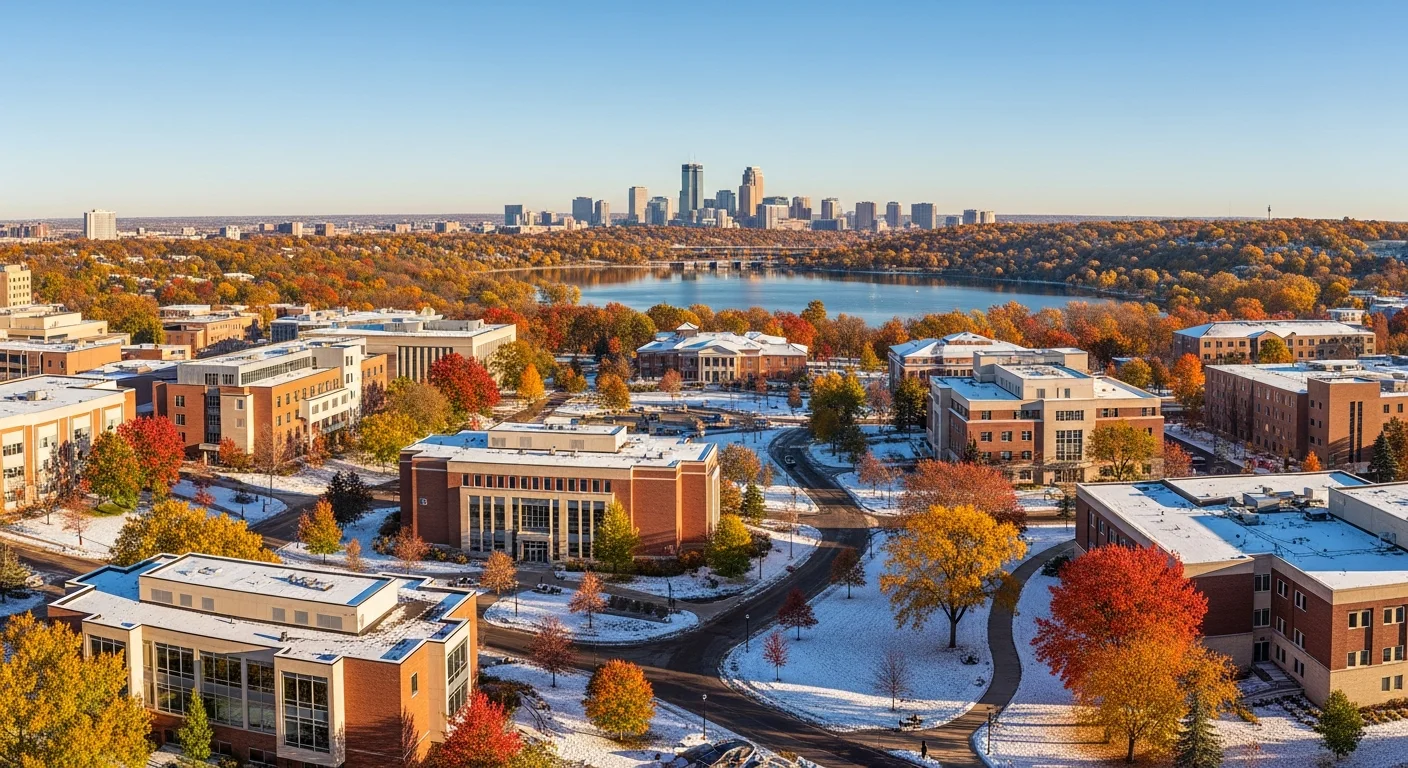

Minnesota State University-Mankato — Mankato, MN

Key Distinction: A large, ABET-accredited program offering dual specialization tracks (native vs. hybrid mobile) with strong senior project outcomes and established regional employer pipeline.

Hakia Insight: Minnesota State Mankato's dual native/hybrid specialization tracks let you commit to a deployment strategy halfway through the program, not after graduation—a rare structure that compresses the trial-and-error period most developers face in their first job.

At the bachelor's level, minnesota State University-Mankato's mobile development program integrates mobile technology education within a broader computer science framework, ensuring students understand fundamental principles alongside applied skills. The curriculum begins with core programming concepts before specializing in mobile platforms, creating developers who can troubleshoot at multiple levels and adapt to new technologies throughout their careers. Both iOS and Android development receive comprehensive treatment, with students becoming proficient in their respective development environments and design paradigms. The program emphasizes software engineering practices—students learn not just to code but to design maintainable, scalable applications using established patterns and principles. Faculty research interests in mobile computing, human-computer interaction, and related areas shape course content and provide research opportunities for advanced students. Connections with Minnesota's tech sector, including companies in the Twin Cities region, create internship and employment pathways. The program values diverse development approaches, including progressive web applications and cross-platform frameworks, preparing graduates for the reality that technology stacks vary widely across employers. Students graduate with both specialized mobile expertise and flexible technical foundations enabling career growth into backend development, full-stack roles, or leadership positions.

Programs Offered
  • Bachelor of Science in Mobile Development — 4 years, on-campus
  • Bachelor of Arts in Mobile Development — 4 years, online
Industry Partners
  • Mayo Clinic (corporate)
  • Hormel Foods (corporate)
Career Outcomes

Top Employers: Mayo Clinic, Hormel Foods, Verizon, 3M.

Accreditations and Certifications
  • ABET accredited

Location Advantages: Proximity to Mayo Clinic (Rochester, 90 miles south)Access to agricultural technology sectorRegional manufacturing and healthcare tech ecosystem

Minnesota State University Moorhead — Moorhead, MN

Key Distinction: MSUM prioritizes production-ready capstone projects with regional businesses over theoretical coursework, giving students genuine portfolio work before graduation.

Hakia Insight: MSUM students graduate with production-ready code from actual regional businesses in their portfolio rather than academic projects, a credential distinction that eliminates the 'capstone isn't real work' objection hiring managers commonly raise.

At the bachelor's level, minnesota State University Moorhead's computer science program integrates mobile development as a key competency within its applied software engineering track, bridging academia and industry practice through structured internships and capstone experiences. Rather than treating mobile as a specialization tacked onto a traditional CS degree, the curriculum front-loads practical mobile frameworks alongside foundational theory, so students see real applications of concepts like event-driven programming and memory management before abstracting to theory. The program emphasizes team-based development, drawing inspiration from agile methodologies and real project workflows—students work in sprints, conduct code reviews, and present demos to faculty mentors who model professional practices. Faculty connections to regional tech companies and startups create direct pathways: internship supervisors often recruit strong performers into full-time roles, and alums frequently mentor current students through industry challenges. The Moorhead location, while geographically removed from major tech hubs, cultivates a focused student community less distracted by competing opportunities, allowing deeper peer collaboration and stronger mentorship. Graduates enter the job market with portfolios reflecting real-world team experiences, not just academic exercises, giving them confidence in fast-paced development environments.

Programs Offered
  • Bachelor of Science in Mobile Development — 4 years, on-campus
  • Bachelor of Arts in Mobile Development — 4 years, online

Location Advantages: Access to Twin Cities tech corridor via commuting distance

Best Master's Mobile Development Degree Programs in Minnesota

University of Minnesota-Twin Cities — Minneapolis, MN

Key Distinction: Research-intensive program integrating mobile development with cutting-edge work in security, ML deployment, and distributed systems at an R1 university.

Hakia Insight: Twin Cities' R1 research labs mean master's students can co-author papers on ML-on-mobile or mobile security—publications that differentiate you from bootcamp graduates when competing for senior engineer or research-adjacent roles.

At the master's level, twin Cities' mobile development education emerges from one of the nation's strongest computer science programs, where mobile engineering integrates seamlessly with research-grade coursework in distributed systems, machine learning, security, and human-computer interaction. Students benefit from world-class faculty pursuing cutting-edge research in areas directly relevant to mobile: mobile security architectures, privacy-preserving computation on edge devices, AI/ML deployment on resource-constrained platforms, and cross-device user experience. The program's strength lies in treating mobile development not as a standalone specialization but as a domain where fundamental computer science research translates to production challenges. Undergraduates access advanced electives and research opportunities; graduate students pursue theses on mobile-adjacent topics or capstones on emerging mobile platforms. Twin Cities' location in Minnesota's tech corridor—home to Target, Best Buy, UnitedHealth Group, and a thriving startup scene—creates internship and employment pathways with companies building mission-critical mobile applications at scale. For students seeking a rigorous, research-informed mobile development education with genuine career leverage, Twin Cities delivers unmatched depth and opportunity.

Programs Offered
  • Master of Science in Mobile Development — 1-2 years, on-campus
  • Master of Arts in Mobile Development — 1-2 years, online
Research Labs and Institutes
  • Department of Computer Science and Engineering
Industry Partners
  • Target Corporation (corporate)
  • Best Buy (corporate)
  • UnitedHealth Group (corporate)
Career Outcomes

Top Employers: Target Corporation, Best Buy, UnitedHealth Group, 3M, Microsoft, Google.

Accreditations and Certifications
  • ABET accredited

Location Advantages: Twin Cities tech corridor: Target, Best Buy, UnitedHealth, 3M headquartersProximity to Fortune 500 companies with major mobile development initiativesThriving startup ecosystem and venture capital presence

Metropolitan State University — Saint Paul, MN

Key Distinction: Metropolitan State delivers a practice-first mobile development curriculum designed for working professionals, with flexible scheduling and direct connections to regional hiring partners.

Hakia Insight: Metropolitan State's flexibility for working professionals is paired with direct pipelines to Target, Best Buy, and 3M hiring teams, so your employer connections activate while you're still in the program, not after.

At the master's level, metro State's mobile development program is purpose-built for urban, commuter students pursuing practical tech careers while working or managing other responsibilities. The curriculum emphasizes job-ready skills in iOS and Android development, with coursework timed to fit evening and weekend schedules for students balancing daytime employment. What makes this program distinctive is its explicit bridge to the Twin Cities tech job market: faculty maintain hiring connections with Minneapolis-St. Paul companies, and recruiting events are built directly into course calendars. The program doesn't emphasize research output; instead, it focuses on portfolio development and interview preparation, with capstones structured as client projects that students can showcase to employers. Metro State's location in the heart of the Twin Cities means students access networking events, meetups, and tech talks hosted by local companies—Google, Target, Best Buy, and numerous startups—creating informal pipeline opportunities. Many students land internships or full-time roles before completing their degree. The student body is notably diverse and career-focused, creating peer networks that often lead to job referrals after graduation. Graduates commonly move into mobile developer roles at regional tech companies, corporate IT departments, and startups within six months of degree completion.

Programs Offered
  • Master of Science in Mobile Development — 1-2 years, on-campus
  • Master of Arts in Mobile Development — 1-2 years, online
Research Labs and Institutes
  • Cybersecurity Teaching and Research Lab
  • Minnesota Institute for Cybersecurity and Forensics
Accreditations and Certifications
  • National Security Agency NCAE-CD
  • National Security Agency NCAE-CO

Location Advantages: Located in Twin Cities metro area with substantial tech employmentAccess to Target, Best Buy, 3M, and regional healthcare/fintech sectors

Saint Cloud State University — Saint Cloud, MN

Key Distinction: Saint Cloud State maintains a curriculum that stays synchronized with platform releases and hiring trends, teaching current best practices rather than historical approaches.

Hakia Insight: Saint Cloud State's curriculum synchronizes with platform releases rather than lagging 12–18 months behind current iOS/Android best practices—a structural advantage that matters most when recruiters screen for candidates who code in production patterns, not outdated idioms.

At the master's level, saint Cloud State's mobile application development track within the computer science bachelor's degree tackles emerging frameworks and platforms with surprising speed—the curriculum refreshes regularly to track iOS and Android evolution, ensuring students learn current tools rather than last-decade's standards. The program pairs platform-specific coursework with a strong emphasis on software architecture, teaching students to recognize anti-patterns and design for testability and extensibility. Faculty expertise spans both consumer app development and enterprise mobile systems, with instructors who maintain active GitHub profiles and contribute to open-source mobile libraries. A distinctive feature is the mobile development lab, where students access cutting-edge devices and testing equipment; this hands-on infrastructure matters for iOS development workflows in particular. Internship placements reach across Minnesota's tech sector—from healthcare IT firms to manufacturing companies modernizing field operations—and recruiters specifically seek SCSU graduates for their combination of platform knowledge and engineering discipline. The larger university environment means robust peer support and career services, while the computer science cohort remains collaborative and collegial. Graduating seniors report strong readiness for both independent app development work and team-based engineering roles.

Programs Offered
  • Master of Science in Mobile Development — 1-2 years, on-campus
  • Master of Arts in Mobile Development — 1-2 years, online
Research Labs and Institutes
  • Huskies Make It Space
  • Woodworking Lab
  • Manufacturing Center
Industry Partners
  • Marco, Inc. (partner)

Location Advantages: Access to Minnesota healthcare IT and enterprise modernization sectors

University of Minnesota-Duluth — Duluth, MN

Key Distinction: Systems-centric approach combining algorithmic rigor with mobile-IoT integration and edge computing specialization.

Hakia Insight: At the master's level, UMD's systems-centric mobile-IoT focus feeds directly into Upper Midwest logistics and manufacturing hiring pipelines where most tier-one programs have zero regional advantage.

At the master's level, UMD's mobile development curriculum emphasizes practical, cross-platform skills within a tight-knit computer science community where students work directly with faculty on real-world projects. The program integrates iOS and Android development across multiple course sequences, with particular strength in embedded systems and mobile networking—areas where Duluth's proximity to industrial control and IoT applications creates genuine project opportunities. What distinguishes the experience is the capstone track: students regularly partner with regional manufacturing and logistics companies to build production mobile applications, giving graduates portfolio pieces that employers immediately recognize. The faculty maintain active consulting relationships with industry, meaning course projects often reflect current technical challenges rather than textbook scenarios. Class sizes stay small enough that mobile development students benefit from direct mentorship, and many complete internships locally before graduation, often converting those roles into full-time positions. Graduates commonly move into roles at regional tech firms, healthcare IT companies, and startups across the Upper Midwest, with several pursuing advanced degrees in HCI and systems design.

Programs Offered
  • Master of Science in Mobile Development — 1-2 years, on-campus
  • Master of Arts in Mobile Development — 1-2 years, online

Location Advantages: Proximity to regional manufacturing and industrial IoT companiesStrong connections to Upper Midwest tech and logistics sector

Best Doctoral Mobile Development Degree Programs in Minnesota

University of Minnesota-Twin Cities — Minneapolis, MN

Key Distinction: Research-intensive program integrating mobile development with cutting-edge work in security, ML deployment, and distributed systems at an R1 university.

Hakia Insight: Twin Cities doctoral candidates work alongside faculty publishing in mobile security and distributed systems venues with Fortune 500 co-authors, turning dissertation committees into industry research networks before defense.

At the doctoral level, twin Cities' mobile development education emerges from one of the nation's strongest computer science programs, where mobile engineering integrates seamlessly with research-grade coursework in distributed systems, machine learning, security, and human-computer interaction. Students benefit from world-class faculty pursuing cutting-edge research in areas directly relevant to mobile: mobile security architectures, privacy-preserving computation on edge devices, AI/ML deployment on resource-constrained platforms, and cross-device user experience. The program's strength lies in treating mobile development not as a standalone specialization but as a domain where fundamental computer science research translates to production challenges. Undergraduates access advanced electives and research opportunities; graduate students pursue theses on mobile-adjacent topics or capstones on emerging mobile platforms. Twin Cities' location in Minnesota's tech corridor—home to Target, Best Buy, UnitedHealth Group, and a thriving startup scene—creates internship and employment pathways with companies building mission-critical mobile applications at scale. For students seeking a rigorous, research-informed mobile development education with genuine career leverage, Twin Cities delivers unmatched depth and opportunity.

Programs Offered
  • Doctor of Philosophy in Mobile Development — 4-6 years, on-campus
  • Doctor of Science in Mobile Development — 4-6 years, online
Research Labs and Institutes
  • Department of Computer Science and Engineering
Industry Partners
  • Target Corporation (corporate)
  • Best Buy (corporate)
  • UnitedHealth Group (corporate)
Career Outcomes

Top Employers: Target Corporation, Best Buy, UnitedHealth Group, 3M, Microsoft, Google.

Accreditations and Certifications
  • ABET accredited

Location Advantages: Twin Cities tech corridor: Target, Best Buy, UnitedHealth, 3M headquartersProximity to Fortune 500 companies with major mobile development initiativesThriving startup ecosystem and venture capital presence