University campus in Missouri
Updated January 2026

Best Machine Learning Degree Programs in Missouri — 2026 Rankings

Explore 18 accredited machine learning degree programs in Missouri. Compare schools by graduation rate, salary outcomes, and tuition—from University of Central Missouri to Washington University in St Louis.

#1 ProgramWashington University in ...
Avg Salary$104,000
Tuition From$8,325/yr
Job Growth+22%

Key Takeaways

Top 3 ranked: Washington University in ..., U of Missouri-Kansas City, U of Missouri-St Louis

Based on graduation rates, program outcomes, and institutional quality

IPEDS 2023

Tuition ranges from $6,442 to $61,750/year

U of Central Missouri offers the most affordable option at $8,325/yr

IPEDS 2023

Degree levels: 7 master's, 1 doctoral programs available in Missouri

From community college pathways to advanced research degrees

IPEDS 2023

4 Missouri programs offer online or hybrid formats

Flexible scheduling for working professionals

IPEDS 2023

Major employers: Cerner, World Wide Technology, Bayer, Mastercard

Tech hubs in Kansas City and St. Louis

Hakia Research 2026

Machine Learning programs available near 62+ cities across Missouri

Search by city to find programs within 200 miles of your location

IPEDS 2023

Updated February 2026

On This Page
$104,000
Is Machine Learning in Missouri Worth It?
Yes. Machine Learning degrees in Missouri deliver strong ROI—graduates earn $104,000 median salary with +22% job growth through 2032. In-state tuition averages $21,708/year.

Source: BLS OEWS May 2024

Best Machine Learning Degree Programs in Missouri

Bachelor's Machine Learning Degree Programs in Missouri

17 programs$104,000 median salary79% avg grad rate
17
Programs
$104,000
Median Salary
$22,606/yr
Avg Tuition
79%
Avg Grad Rate

Program Landscape

Missouri ranks among the nation's top destinations for machine learning education, with 17 accredited bachelor's degree programs across 6 public and 11 private institutions. The highest-ranked programs are Washington University in ..., U of Missouri-Kansas City, U of Missouri-St Louis, recognized for academic excellence, research opportunities, and strong industry connections.

Career Outcomes

Graduates from Missouri machine learning programs earn a median salary of $88,400—10% below the national average. The state's robust technology sector, anchored by the Kansas City, St. Louis metropolitan areas, provides abundant internship and employment opportunities with companies including Cerner, World Wide Technology, Bayer.

Costs & Value

Tuition ranges from $6,480 to $61,750 annually, with an average of $22,606/yr. Top programs maintain graduation rates above 79%, with the highest reaching 98%. Many programs hold ABET accreditation, the gold standard for computing education, ensuring curriculum meets rigorous industry standards.

Curriculum & Specializations

Students can choose from specializations including software engineering, cybersecurity, artificial intelligence, data science, and systems architecture. Strong industry partnerships provide access to co-op programs, capstone projects with real companies, and direct recruiting pipelines to Missouri's leading technology employers. For students seeking machine learning degrees in Missouri, these top-ranked machine learning schools offer the strongest combination of academic rigor and career preparation.

Show:

Earn your bachelor's in Machine Learning

(Sponsored)

Loading programs...

🥇

Washington University in St Louis

Private
Saint Louis, MO
$61,750
Tuition/yr
97%
Grad Rate
95.7
Score
Website
🥈

University of Missouri-Kansas City

Public
Kansas City, MO
$11,190
Tuition/yr
98%
Grad Rate
71.5
Score
Website
🥉

University of Missouri-St Louis

Public
Saint Louis, MO
$14,400
Tuition/yr
45.5
Score
Website
#4

University of Central Missouri

Public
Warrensburg, MO
$8,325
Tuition/yr
57.8
Score
Website
#5

Saint Louis University

Private
Saint Louis, MO
$52,260
Tuition/yr
92%
Grad Rate
56.5
Score
Website
#6

Missouri State University-Springfield

Public
Springfield, MO
$7,812
Tuition/yr
38.0
Score
Website
#7

Missouri Valley College

Private
Marshall, MO
$21,300
Tuition/yr
93%
Grad Rate
47.9
Score
Website
#8

Webster University

Private
Saint Louis, MO
$30,530
Tuition/yr
40.3
Score
Website
#9

Missouri Western State University

Public
Saint Joseph, MO
$7,740
Tuition/yr
41.2
Score
Website
#10

College of the Ozarks

Private
Point Lookout, MO
$20,800
Tuition/yr
45.2
Score
Website

Complete Machine Learning Degree Program Rankings in Missouri

Best Bachelor's Machine Learning Degree Programs in Missouri

### Program Landscape Missouri ranks among the nation's top destinations for machine learning education, with **17 accredited** bachelor's degree programs across **6 public** and **11 private** institutions. The highest-ranked programs are **Washington University in ...**, **U of Missouri-Kansas City**, **U of Missouri-St Louis**, recognized for academic excellence, research opportunities, and strong industry connections. ### Career Outcomes Graduates from Missouri machine learning programs earn a median salary of **$88,400**—10% below the national average. The state's robust technology sector, anchored by the Kansas City, St. Louis metropolitan areas, provides abundant internship and employment opportunities with companies including Cerner, World Wide Technology, Bayer. ### Costs & Value Tuition ranges from **$6,480** to **$61,750** annually, with an average of **$22,606/yr**. Top programs maintain graduation rates above **79%**, with the highest reaching **98%**. Many programs hold ABET accreditation, the gold standard for computing education, ensuring curriculum meets rigorous industry standards. ### Curriculum & Specializations Students can choose from specializations including software engineering, cybersecurity, artificial intelligence, data science, and systems architecture. Strong industry partnerships provide access to co-op programs, capstone projects with real companies, and direct recruiting pipelines to Missouri's leading technology employers. For students seeking machine learning degrees in Missouri, these top-ranked machine learning schools offer the strongest combination of academic rigor and career preparation.

  1. #1. Washington University in St Louis

    Hakia ranks Washington University in St Louis as the #1 bachelor's in machine learning degree program in Missouri. This private institution in Saint Louis, MO has annual tuition of $61,750 and a 97% graduation rate. Ranking score: 95.7.

  2. #2. University of Missouri-Kansas City

    Hakia ranks University of Missouri-Kansas City as the #2 bachelor's in machine learning degree program in Missouri. This public institution in Kansas City, MO has annual tuition of $11,190 and a 98% graduation rate. Ranking score: 71.5.

  3. #3. University of Missouri-St Louis

    Hakia ranks University of Missouri-St Louis as the #3 bachelor's in machine learning degree program in Missouri. This public institution in Saint Louis, MO has annual tuition of $14,400. Ranking score: 45.5.

  4. #4. University of Central Missouri

    Hakia ranks University of Central Missouri as the #4 bachelor's in machine learning degree program in Missouri. This public institution in Warrensburg, MO has annual tuition of $8,325. Ranking score: 57.8.

  5. #5. Saint Louis University

    Hakia ranks Saint Louis University as the #5 bachelor's in machine learning degree program in Missouri. This private institution in Saint Louis, MO has annual tuition of $52,260 and a 92% graduation rate. Ranking score: 56.5.

  6. #6. Missouri State University-Springfield

    Hakia ranks Missouri State University-Springfield as the #6 bachelor's in machine learning degree program in Missouri. This public institution in Springfield, MO has annual tuition of $7,812. Ranking score: 38.0.

  7. #7. Missouri Valley College

    Hakia ranks Missouri Valley College as the #7 bachelor's in machine learning degree program in Missouri. This private institution in Marshall, MO has annual tuition of $21,300 and a 93% graduation rate. Ranking score: 47.9.

  8. #8. Webster University

    Hakia ranks Webster University as the #8 bachelor's in machine learning degree program in Missouri. This private institution in Saint Louis, MO has annual tuition of $30,530. Ranking score: 40.3.

  9. #9. Missouri Western State University

    Hakia ranks Missouri Western State University as the #9 bachelor's in machine learning degree program in Missouri. This public institution in Saint Joseph, MO has annual tuition of $7,740. Ranking score: 41.2.

  10. #10. College of the Ozarks

    Hakia ranks College of the Ozarks as the #10 bachelor's in machine learning degree program in Missouri. This private institution in Point Lookout, MO has annual tuition of $20,800. Ranking score: 45.2.

  11. #11. Maryville University of Saint Louis

    Hakia ranks Maryville University of Saint Louis as the #11 bachelor's in machine learning degree program in Missouri. This private institution in Saint Louis, MO has annual tuition of $24,766 and a 86% graduation rate. Ranking score: 40.7.

  12. #12. Truman State University

    Hakia ranks Truman State University as the #12 bachelor's in machine learning degree program in Missouri. This public institution in Kirksville, MO has annual tuition of $9,132. Ranking score: 36.6.

  13. #13. Columbia College

    Hakia ranks Columbia College as the #13 bachelor's in machine learning degree program in Missouri. This private institution in Columbia, MO has annual tuition of $12,268. Ranking score: 39.1.

  14. #14. Southwest Baptist University

    Hakia ranks Southwest Baptist University as the #14 bachelor's in machine learning degree program in Missouri. This private institution in Bolivar, MO has annual tuition of $27,290. Ranking score: 31.5.

  15. #15. Rockhurst University

    Hakia ranks Rockhurst University as the #15 bachelor's in machine learning degree program in Missouri. This private institution in Kansas City, MO has annual tuition of $41,900. Ranking score: 34.7.

  16. #16. Central Methodist University-College of Liberal Arts and Sciences

    Hakia ranks Central Methodist University-College of Liberal Arts and Sciences as the #16 bachelor's in machine learning degree program in Missouri. This private institution in Fayette, MO has annual tuition of $26,360. Ranking score: 32.4.

  17. #17. Central Methodist University-College of Graduate and Extended Studies

    Hakia ranks Central Methodist University-College of Graduate and Extended Studies as the #17 bachelor's in machine learning degree program in Missouri. This private institution in Fayette, MO has annual tuition of $6,480 and a 6% graduation rate. Ranking score: 21.4.

Online Bachelor's Machine Learning Degree Programs in Missouri

### Online Program Options 4 Missouri institutions offer bachelor's machine learning degrees with online or hybrid options, enabling students to earn accredited degrees while maintaining professional or personal commitments. Top-ranked online programs include **Webster**, **Missouri Western State**, **Southwest Baptist**, all regionally accredited and recognized by Missouri employers. ### Costs & Employer Recognition Online bachelor's programs average **$26,865/yr**—often comparable to or less than on-campus tuition. Missouri-based employers including Cerner, World Wide Technology, Bayer value online credentials from accredited institutions, recognizing that program quality matters more than delivery format. The Kansas City, St. Louis job market actively recruits graduates from online programs. ### Program Format These programs feature asynchronous coursework for maximum flexibility, with some offering synchronous sessions for collaborative learning. Students can typically complete **120 credit hours** in 4 years while working full-time. ### Technology & Flexibility Technology requirements include reliable internet access and a modern computer. Programs provide virtual labs, online tutoring, career services, and networking opportunities. Many offer start dates throughout the year and accelerated course formats for motivated students. Graduates earn the same degree as on-campus students, with no distinction on transcripts or diplomas. For students pursuing online machine learning degrees in Missouri, these accredited machine learning schools offer the flexibility and quality that today's learners demand.

  • Webster University - Saint Louis, MO - Tuition: $30,530/year
  • Missouri Western State University - Saint Joseph, MO - Tuition: $7,740/year
  • Southwest Baptist University - Bolivar, MO - Tuition: $27,290/year
  • Rockhurst University - Kansas City, MO - Tuition: $41,900/year

Best Master's Machine Learning Degree Programs in Missouri

### Program Landscape Missouri offers **7** master's degree programs in machine learning, designed for professionals seeking to advance into senior engineering, technical leadership, and specialized roles. The top programs—**Washington University in ...**, **U of Missouri-Kansas City**, **U of Central Missouri**—combine advanced technical training with research opportunities and leadership development. ### Career Outcomes Master's graduates in Missouri earn a median salary of **$104,000**, approximately **20-30% higher** than bachelor's degree holders. The concentration of technology companies in Kansas City, St. Louis creates strong demand for graduate-level talent, with Cerner, World Wide Technology, Bayer actively recruiting from these programs. ### Costs & Value Program formats include traditional full-time study (typically 2 years), part-time options for working professionals (2-3 years), and accelerated tracks. Tuition averages **$23,168/yr**, with many employers offering tuition reimbursement for graduate education. Some programs offer thesis and non-thesis tracks, allowing students to focus on research or professional development based on their career goals. ### Curriculum & Specializations Curriculum covers advanced topics including machine learning, distributed systems, software architecture, and technical management. Many programs include practicum experiences, industry capstone projects, or consulting engagements that provide real-world application of advanced concepts. Among Missouri's machine learning schools at the graduate level, these programs stand out for both academic quality and career outcomes.

  1. #1. Washington University in St Louis

    Hakia ranks Washington University in St Louis as the #1 master's in machine learning degree program in Missouri. This private institution in Saint Louis, MO has annual tuition of $61,750 and a 97% graduation rate. Ranking score: 84.5.

  2. #2. University of Missouri-Kansas City

    Hakia ranks University of Missouri-Kansas City as the #2 master's in machine learning degree program in Missouri. This public institution in Kansas City, MO has annual tuition of $11,190 and a 98% graduation rate. Ranking score: 73.7.

  3. #3. University of Central Missouri

    Hakia ranks University of Central Missouri as the #3 master's in machine learning degree program in Missouri. This public institution in Warrensburg, MO has annual tuition of $8,325. Ranking score: 71.4.

  4. #4. Saint Louis University

    Hakia ranks Saint Louis University as the #4 master's in machine learning degree program in Missouri. This private institution in Saint Louis, MO has annual tuition of $52,260 and a 92% graduation rate. Ranking score: 52.7.

  5. #5. Northwest Missouri State University

    Hakia ranks Northwest Missouri State University as the #5 master's in machine learning degree program in Missouri. This public institution in Maryville, MO has annual tuition of $6,442. Ranking score: 50.3.

  6. #6. Missouri State University-Springfield

    Hakia ranks Missouri State University-Springfield as the #6 master's in machine learning degree program in Missouri. This public institution in Springfield, MO has annual tuition of $7,812. Ranking score: 48.1.

  7. #7. University of Missouri-St Louis

    Hakia ranks University of Missouri-St Louis as the #7 master's in machine learning degree program in Missouri. This public institution in Saint Louis, MO has annual tuition of $14,400. Ranking score: 44.9.

Best Doctoral Machine Learning Degree Programs in Missouri

### Program Landscape Missouri is home to **1** doctoral programs in machine learning, preparing students for research positions, faculty appointments, and executive technical roles. Leading programs at **Washington University in ...** are recognized for cutting-edge research, strong faculty publications, and competitive funding packages. ### Career Outcomes Doctoral graduates command premium salaries, with Missouri PhD holders earning a median of **$130,000**—reflecting the advanced expertise required for research and executive positions. The Kansas City, St. Louis region's research universities and corporate R&D centers provide extensive collaboration opportunities with industry leaders like Cerner, World Wide Technology, Bayer. ### Costs & Value PhD programs typically require 4-6 years of full-time study, including coursework, qualifying examinations, and original dissertation research. Many programs offer full funding through teaching or research assistantships, covering tuition and providing stipends of **$25,000–$40,000** annually. ### Curriculum & Specializations Research strengths across Missouri programs include artificial intelligence, cybersecurity, human-computer interaction, systems, and theoretical computer science. For aspiring researchers pursuing machine learning degrees in Missouri, graduates go on to careers as university faculty, industry research scientists, or technical executives, contributing to advances in technology that impact millions of users worldwide.

  1. #1. Washington University in St Louis

    Hakia ranks Washington University in St Louis as the #1 doctoral in machine learning degree program in Missouri. This private institution in Saint Louis, MO has annual tuition of $61,750 and a 97% graduation rate. Ranking score: 59.8.

Machine Learning Tuition in Missouri

MetricValue
Average in-state tuition$21,708/year
Average out-of-state tuition$54,270/year
Community college tuition$5,427/year
4-year savings for residents$130,248
2+2 transfer pathway savings$32,562

Source: IPEDS 2023

Machine Learning Financial Aid & Scholarships in Missouri

State Aid Programs

Missouri students pursuing machine learning degrees have access to multiple federal and state financial aid options. The Free Application for Federal Student Aid (FAFSA) is the primary gateway to federal grants, loans, and work-study programs. Students can complete their FAFSA at Federal Student Aid to determine eligibility for aid packages. Additionally, Missouri offers the Access Missouri Grant program, a need-based state grant that provides up to $2,850 annually for eligible students at public institutions. This grant significantly reduces the financial burden for in-state learners and can be stacked with federal aid to create comprehensive funding packages.

Key Programs & Amounts

Beyond grants, Missouri's public universities and community colleges offer institutional scholarships, assistantships, and work-study opportunities specifically for machine learning and computer science students. Many of the state's 29 institutions offering machine learning programs, including University of Missouri-Columbia and Missouri University of Science and Technology, provide merit-based scholarships for high-achieving students. The Missouri Department of Higher Education administers the Access Missouri Grant, and students should contact their institution's financial aid office to learn about additional funding opportunities. For comprehensive information about federal aid options, visit StudentAid.gov.

Calculate Your Machine Learning Degree ROI in Missouri

Use our interactive ROI calculator to estimate your return on investment for a machine learning degree in Missouri. Enter your expected tuition costs, financial aid, and career goals to see projected payback periods and lifetime earnings. The calculator uses current salary data from BLS and tuition data from IPEDS to provide accurate estimates.

Machine Learning Degree ROI Calculator
Estimate your return on investment for a machine learning degree
$

Leave blank to use average cost for selected program type

20 years
10 years20 years30 years
20-Year ROI

+1064%

Net gain divided by total investment. ROI above 200% is considered excellent for education investments.

Net Gain

$1,967,896

Your additional lifetime earnings with this degree vs. working without one, minus the total investment.

Break-Even

5 years

Years until your cumulative earnings exceed total investment. Shorter programs often break even faster due to lower opportunity cost.

COL-Adjusted Salary

$147,619

Your starting salary adjusted for local cost of living. This shows real purchasing power compared to a $100K national baseline.

Why does break-even change with program type? Your "total investment" includes both tuition AND opportunity cost (foregone earnings while in school). A 4-year full-time public university (in-state) means 4 years of not earning a salary ($140,000 in opportunity cost). Shorter full-time programs may have higher tuition but lower total investment because you return to the workforce sooner.

Detailed Breakdown
How we calculate your degree ROI using real salary data
Total Investment$185,000

Tuition plus opportunity cost (earnings you miss while in school)

Program Cost (Tuition)$45,000

Direct cost of the degree program

Opportunity Cost$140,000

4 years × $35K/year foregone salary while studying full-time

20-Year Earnings (with degree)$3,003,304

Projected career earnings starting after graduation, with salary growth

20-Year Earnings (without degree)$850,408

What you'd earn working at $35K/year with 2% annual growth

Starting Salary (Austin, TX)$155,000

Median salary for this role in your selected location (BLS 2024)

Annualized Return5.5%

Your investment's compound annual growth rate (similar to stock market returns)

Data sources: BLS OEWS May 2024, IPEDS 2023. Calculations use median salaries, 3% discount rate, and assume salary growth declines from 6% to 2% over career. Individual results will vary. | Powered by Hakia.com

Career Paths

Design and develop software applications and systems

Median Salary:$117,520

Analyze complex datasets and build predictive models

Median Salary:$97,760

Protect computer networks from cyber threats

Median Salary:$109,200

Manage cloud infrastructure and deployment pipelines

Median Salary:$115,440

Design and maintain cloud computing infrastructure

Median Salary:$112,320

Build and deploy machine learning models

Median Salary:$131,040
Machine Learning Salaries by Metro Area

Median annual salary in Missouri metro areas

Hakia.com
View data table
Categoryvalue
Kansas City$114K
St. Louis$109K

Source: BLS OEWS May 2024

Hakia.com

Machine Learning Jobs in Missouri: Top Employers Hiring

Find machine learning jobs in Missouri. These major employers across Missouri metro areas are actively hiring machine learning graduates. Click employer names to view current job openings.

Machine Learning Jobs in Kansas City

MO
Cerner/Oracle Health
healthtech
Garmin
tech
H&R Block
fintech
Sprint/T-Mobile
telecom

Machine Learning Jobs in St. Louis

MO
Bayer
pharma
Edward Jones
finance
World Wide Technology
tech
Mastercard
fintech
Boeing
aerospace

How to Apply to Machine Learning Programs in Missouri

1

Research Program Requirements

Review admission requirements for machine learning programs at your target schools. Requirements vary by institution and degree level.

2

Prepare Application Materials

Gather transcripts, test scores (SAT/ACT for undergrad, GRE for graduate), letters of recommendation, and personal statement.

3

Apply for Financial Aid

Complete the FAFSA by priority deadlines.

4

Submit Applications Before Deadlines

Apply early for priority consideration. Early action/decision deadlines are typically October-November; regular deadlines December-January.

5

Complete Enrollment Steps

Accept your offer, submit enrollment deposit, complete orientation requirements, and register for classes.

Machine Learning Transfer Pathways in Missouri

State Transfer System

Missouri's streamlined transfer system makes it easy for students to transition from two-year to four-year machine learning programs. The state operates the Missouri Core Transfer Curriculum (CORE 42), a statewide agreement that guarantees the transfer of 42 credit hours between participating institutions (Missouri Core Transfer Curriculum). This system allows students to complete foundational coursework at community colleges such as Metropolitan Community College-Kansas City, Saint Louis Community College, or Ozarks Technical Community College—where tuition averages $4,440–$7,110 annually—and seamlessly transfer to bachelor's programs at four-year universities without losing credits.

How Transfers Work

Missouri has 21 two-year institutions and 76 four-year institutions, creating abundant opportunities for articulation agreements and transfer partnerships. Students pursuing associate's degrees can use their completed coursework as the foundation for bachelor's programs at institutions like University of Missouri-Columbia (tuition: $13,008), University of Missouri-Kansas City (tuition: $11,190), or Missouri University of Science and Technology (tuition: $13,008). Many four-year universities actively recruit transfer students and offer dedicated support services, including transfer credit evaluation and orientation programs. The Missouri Department of Higher Education maintains a comprehensive directory of transfer agreements and policies. Students should also explore financial aid options, including the Access Missouri Grant, which provides need-based grants up to $2,850 per year at public institutions (Access Missouri Grant). Related programs in Data Science, Data Analytics, and Computer Science often accept transfers as well.

Why Study Machine Learning in Missouri?

Industry & Workforce

Missouri offers a robust and growing landscape for machine learning education, with 29 institutions currently offering programs at all degree levels (IPEDS). In 2023, the state produced 601 bachelor's degree completions and 2,859 master's degree completions, reflecting strong demand for skilled professionals in this field. The state's four-year institutions include several nationally ranked schools, making Missouri an attractive destination for students seeking quality machine learning education without crossing state lines.

Salary Outlook

Missouri's geographic and economic advantages make it an ideal location for machine learning study. The state hosts two major metropolitan areas—St. Louis and Kansas City—that serve as technology and healthcare hubs. Major employers including Cerner, Walmart, BJC HealthCare, and SSM Health actively recruit machine learning graduates for roles in data analytics, artificial intelligence, and software development. Public in-state tuition averages $8,649 annually, significantly below the national average (BLS State Data). For students interested in related fields, Missouri also offers strong programs in Data Science, Data Analytics, and Artificial Intelligence.

Regional Tech Hubs

Top-ranked institutions such as Washington University in St. Louis, University of Missouri-Columbia, and University of Missouri-Kansas City provide world-class machine learning education. These schools consistently rank among the best bachelor's programs and best master's programs nationally. Missouri's commitment to accessible higher education, combined with its strong industry partnerships and competitive tuition rates, positions the state as an excellent choice for aspiring machine learning professionals.

Machine Learning Job Market in Missouri

Employment Outlook

Missouri's machine learning job market is experiencing robust growth, driven by demand across healthcare, finance, and technology sectors. According to the Bureau of Labor Statistics, Missouri's major metropolitan areas—particularly the St. Louis Metro and Kansas City Metro—are emerging as significant hubs for machine learning professionals. These regions are home to Fortune 500 companies and innovative startups seeking data-driven talent. The state's relatively affordable cost of living compared to coastal tech hubs makes Missouri an attractive destination for machine learning careers, especially for professionals seeking a balance between competitive salaries and reasonable housing costs.

Salaries by Metro

The machine learning education pipeline in Missouri is well-developed, with 29 institutions across all degree levels preparing graduates for entry into the job market. Missouri's Missouri Core Transfer Curriculum (CORE 42) ensures seamless pathway progression from associate's to bachelor's and master's programs, streamlining career advancement. Public four-year institutions in Missouri offer competitive tuition rates, with average in-state tuition at just $8,649 annually, significantly lower than national averages. This accessibility, combined with strong employer partnerships in the state's major metros, creates a favorable environment for machine learning career development. Students can explore additional related fields through artificial intelligence programs in Missouri and data science opportunities to broaden their career prospects.

Machine Learning Curriculum & Specializations in Missouri

Core Requirements

Machine learning curricula in Missouri typically follow a progressive structure across degree levels. Associate's degree programs focus on foundational concepts including programming fundamentals, basic data structures, statistics, and introductory machine learning algorithms. Bachelor's degree programs build on these foundations with core courses in linear algebra, probability theory, supervised and unsupervised learning, neural networks, and practical machine learning frameworks. Students engage in hands-on projects using popular libraries like Python, TensorFlow, and scikit-learn. Many four-year institutions incorporate capstone projects where students apply machine learning techniques to real-world problems, often in collaboration with industry partners from Missouri's major employers like Cerner and Walmart.

Degree Pathways

Master's degree programs, offered at 8 institutions across Missouri, delve deeper into specialized topics such as deep learning, reinforcement learning, natural language processing, and computer vision. These programs often require a thesis or capstone project demonstrating original research contributions. Students may select specializations aligned with industry needs in healthcare (through partnerships with BJC HealthCare and SSM Health), finance, and technology sectors. Doctoral programs emphasize independent research, advanced seminars, and dissertation work in cutting-edge machine learning methodologies. Many programs encourage students to explore related fields including Data Science, Artificial Intelligence, and Computer Science. Curriculum design often reflects input from both academic leaders and industry professionals, ensuring graduates possess skills directly applicable to Missouri's growing technology sector.

Online vs On-Campus Machine Learning Programs in Missouri

Online Program Growth

Missouri offers robust options for both online and campus-based machine learning education. For students prioritizing flexibility, University of Missouri-Columbia leads online bachelor's programs with an 8,040% graduation rate and $13,008 annual tuition. Saint Louis University and Missouri University of Science and Technology also provide fully online bachelor's options at comparable public institution rates. Maryville University of Saint Louis offers an online alternative at $24,766 with an 8,630% graduation rate, providing a middle ground between public and private pricing. The online programs ranking highlights these institutions as top choices for working professionals and distance learners seeking accredited degrees.

Accredited Online Options

Campus-based programs deliver hands-on learning, research opportunities, and networking advantages. Washington University in St Louis, University of Missouri-Kansas City, and Missouri State University-Springfield provide in-person instruction with access to faculty mentors and peer collaboration. Campus programs often include research labs, internship partnerships with major employers like Cerner and Walmart, and participation in competitions. Master's programs across Missouri's 8 institutions typically favor campus delivery due to technical depth and collaborative project work. Students should evaluate their lifestyle, work commitments, and learning preferences when choosing between modalities, as both paths lead to equivalent degrees with strong industry recognition.

Machine Learning by City in Missouri

St. Louis

St. Louis and Kansas City are Missouri's premier machine learning hubs, each offering distinct advantages for professionals and students. The St. Louis Metro hosts Washington University in St. Louis, one of the nation's top-ranked machine learning programs, and is home to major employers including Cerner, BJC HealthCare, and Express Scripts. Kansas City boasts University of Missouri-Kansas City, which has produced over 750 machine learning program completions, and attracts talent to regional headquarters of Fortune 500 companies. Both metros benefit from moderate cost of living compared to coastal tech centers, with strong housing availability and vibrant tech communities. Springfield represents an emerging secondary market, supported by Missouri State University-Springfield and growing technology sectors.

Columbia

Columbia, home to University of Missouri-Columbia, forms the backbone of Missouri's mid-state machine learning ecosystem and offers an excellent alternative for students prioritizing academic excellence and affordability. The St. Charles and St. Peters areas near St. Louis provide suburban access to major employers while maintaining lower housing costs. For comprehensive city-level data and cost comparisons, review the College Scorecard and Missouri Department of Higher Education resources. Students interested in related technical fields should explore data analytics programs in Missouri and computer science programs available across all major metro areas. To compare Missouri's opportunities with other states, prospective students can investigate machine learning programs in Texas and California.

Compare Online Machine Learning Programs in Missouri

View tuition costs, program formats & enrollment info

Find Machine Learning Programs Near You in Missouri

Search by city to find accredited machine learning programs ranked by our state methodology.

Machine Learning Degree Programs by City in Missouri

Machine Learning Degree Programs Near Kansas City, Missouri

Kansas City's tech corridor attracts ML engineers through major employers like Cerner (healthcare data analytics and predictive systems) and a thriving startup scene focused on fintech and logistics optimization. The city hosts University of Missouri–Kansas City's computer science program and benefits from lower cost-of-living compared to coastal tech hubs, making it competitive for ML research roles in clinical decision support and supply chain forecasting.

Kansas City is located in Jackson County, Missouri.

Associate's Machine Learning Degree Programs Near Kansas City, Missouri
  1. Metropolitan Community College-Kansas City (Public) — State #1, in Kansas City. Tuition: $7,110/year.
  2. Columbia College (Private) — State #3, 121 mi from Kansas City. Tuition: $12,268/year.
  3. Ozarks Technical Community College (Public) — State #4, 144.3 mi from Kansas City. Tuition: $4,512/year.
Bachelor's Machine Learning Degree Programs Near Kansas City, Missouri
  1. University of Missouri-Kansas City (Public) — State #2, in Kansas City. Tuition: $11,190/year. Graduation rate: 98%.
  2. University of Missouri-Columbia (Public) — State #3, 120.9 mi from Kansas City. Tuition: $13,008/year. Graduation rate: 80%.
  3. Missouri University of Science and Technology (Public) — State #5, 169 mi from Kansas City. Tuition: $13,008/year.
Master's Machine Learning Degree Programs Near Kansas City, Missouri
  1. University of Missouri-Kansas City (Public) — State #2, in Kansas City. Tuition: $11,190/year. Graduation rate: 98%.
  2. University of Missouri-Columbia (Public) — State #3, 120.9 mi from Kansas City. Tuition: $13,008/year. Graduation rate: 80%.
  3. Missouri University of Science and Technology (Public) — State #7, 169 mi from Kansas City. Tuition: $13,008/year.
Doctoral Machine Learning Degree Programs Near Kansas City, Missouri
  1. University of Missouri-Columbia (Public) — State #2, 120.9 mi from Kansas City. Tuition: $13,008/year. Graduation rate: 80%.
  2. Missouri University of Science and Technology (Public) — State #5, 169 mi from Kansas City. Tuition: $13,008/year.

Machine Learning Degree Programs Near Saint Louis, Missouri

Saint Louis is a regional healthcare AI hub driven by BJC HealthCare and SSM Health's heavy investment in machine learning for patient outcomes prediction and administrative automation, alongside Washington University in St. Louis's strong computer science and biomedical engineering research. The city's pharmaceutical and medical device sectors create specialized demand for ML engineers focused on drug discovery modeling and medical imaging analytics.

Saint Louis is located in St. Louis City, Missouri.

Associate's Machine Learning Degree Programs Near Saint Louis, Missouri
  1. Saint Louis Community College (Public) — State #2, 10.4 mi from Saint Louis. Tuition: $4,440/year.
  2. Columbia College (Private) — State #3, 110.7 mi from Saint Louis. Tuition: $12,268/year.
  3. Ozarks Technical Community College (Public) — State #4, 189 mi from Saint Louis. Tuition: $4,512/year.
Bachelor's Machine Learning Degree Programs Near Saint Louis, Missouri
  1. Washington University in St Louis (Private) — State #1, in Saint Louis. Tuition: $61,750/year. Graduation rate: 97%.
  2. University of Missouri-Columbia (Public) — State #3, 110.7 mi from Saint Louis. Tuition: $13,008/year. Graduation rate: 80%.
  3. Saint Louis University (Private) — State #4, in Saint Louis. Tuition: $52,260/year. Graduation rate: 92%.
Master's Machine Learning Degree Programs Near Saint Louis, Missouri
  1. Washington University in St Louis (Private) — State #1, in Saint Louis. Tuition: $61,750/year. Graduation rate: 97%.
  2. University of Missouri-Columbia (Public) — State #3, 110.7 mi from Saint Louis. Tuition: $13,008/year. Graduation rate: 80%.
  3. Saint Louis University (Private) — State #4, in Saint Louis. Tuition: $52,260/year. Graduation rate: 92%.
Doctoral Machine Learning Degree Programs Near Saint Louis, Missouri
  1. Washington University in St Louis (Private) — State #1, in Saint Louis. Tuition: $61,750/year. Graduation rate: 97%.
  2. University of Missouri-Columbia (Public) — State #2, 110.7 mi from Saint Louis. Tuition: $13,008/year. Graduation rate: 80%.
  3. University of Missouri-St Louis (Public) — State #3, in Saint Louis. Tuition: $14,400/year.

Machine Learning Degree Programs Near Springfield, Missouri

Springfield offers ML career opportunities in healthcare predictive analytics through Cox Health and CoxHealth's clinical systems, as well as in agricultural AI applications for the region's farming industry. The presence of Missouri State University and lower competition for talent compared to St. Louis and Kansas City makes it an accessible entry point for junior ML engineers seeking mentorship in health tech.

Springfield is located in Greene County, Missouri.

Associate's Machine Learning Degree Programs Near Springfield, Missouri
  1. Metropolitan Community College-Kansas City (Public) — State #1, 147.7 mi from Springfield. Tuition: $7,110/year.
  2. Saint Louis Community College (Public) — State #2, 188.2 mi from Springfield. Tuition: $4,440/year.
  3. Columbia College (Private) — State #3, 132.3 mi from Springfield. Tuition: $12,268/year.
Bachelor's Machine Learning Degree Programs Near Springfield, Missouri
  1. Washington University in St Louis (Private) — State #1, 190.4 mi from Springfield. Tuition: $61,750/year. Graduation rate: 97%.
  2. University of Missouri-Kansas City (Public) — State #2, 145.4 mi from Springfield. Tuition: $11,190/year. Graduation rate: 98%.
  3. University of Missouri-Columbia (Public) — State #3, 131.5 mi from Springfield. Tuition: $13,008/year. Graduation rate: 80%.
Master's Machine Learning Degree Programs Near Springfield, Missouri
  1. Washington University in St Louis (Private) — State #1, 190.4 mi from Springfield. Tuition: $61,750/year. Graduation rate: 97%.
  2. University of Missouri-Kansas City (Public) — State #2, 145.4 mi from Springfield. Tuition: $11,190/year. Graduation rate: 98%.
  3. University of Missouri-Columbia (Public) — State #3, 131.5 mi from Springfield. Tuition: $13,008/year. Graduation rate: 80%.
Doctoral Machine Learning Degree Programs Near Springfield, Missouri
  1. Washington University in St Louis (Private) — State #1, 190.4 mi from Springfield. Tuition: $61,750/year. Graduation rate: 97%.
  2. University of Missouri-Columbia (Public) — State #2, 131.5 mi from Springfield. Tuition: $13,008/year. Graduation rate: 80%.
  3. University of Missouri-St Louis (Public) — State #3, 192.6 mi from Springfield. Tuition: $14,400/year.

Machine Learning Degree Programs Near St. Louis, Missouri

St. Louis County hosts major ML employment clusters at Express Scripts (pharmaceutical data science and drug cost prediction), Centene (health insurance predictive analytics), and Saint Louis University's computer science and AI research programs. The region's concentration of healthcare, insurance, and biotech firms creates strong demand for ML specialists in recommender systems for treatment plans and fraud detection models.

St. Louis is located in St. Louis County, Missouri.

Associate's Machine Learning Degree Programs Near St. Louis, Missouri
  1. Saint Louis Community College (Public) — State #2, 11 mi from St. Louis. Tuition: $4,440/year.
  2. Columbia College (Private) — State #3, 110.3 mi from St. Louis. Tuition: $12,268/year.
  3. Ozarks Technical Community College (Public) — State #4, 187.5 mi from St. Louis. Tuition: $4,512/year.
Bachelor's Machine Learning Degree Programs Near St. Louis, Missouri
  1. Washington University in St Louis (Private) — State #1, 2.7 mi from St. Louis. Tuition: $61,750/year. Graduation rate: 97%.
  2. University of Missouri-Columbia (Public) — State #3, 110.2 mi from St. Louis. Tuition: $13,008/year. Graduation rate: 80%.
  3. Saint Louis University (Private) — State #4, 5.3 mi from St. Louis. Tuition: $52,260/year. Graduation rate: 92%.
Master's Machine Learning Degree Programs Near St. Louis, Missouri
  1. Washington University in St Louis (Private) — State #1, 2.7 mi from St. Louis. Tuition: $61,750/year. Graduation rate: 97%.
  2. University of Missouri-Columbia (Public) — State #3, 110.2 mi from St. Louis. Tuition: $13,008/year. Graduation rate: 80%.
  3. Saint Louis University (Private) — State #4, 5.3 mi from St. Louis. Tuition: $52,260/year. Graduation rate: 92%.
Doctoral Machine Learning Degree Programs Near St. Louis, Missouri
  1. Washington University in St Louis (Private) — State #1, 2.7 mi from St. Louis. Tuition: $61,750/year. Graduation rate: 97%.
  2. University of Missouri-Columbia (Public) — State #2, 110.2 mi from St. Louis. Tuition: $13,008/year. Graduation rate: 80%.
  3. University of Missouri-St Louis (Public) — State #3, 6.9 mi from St. Louis. Tuition: $14,400/year.

Machine Learning Degree Programs Near Columbia, Missouri

Columbia is anchored by the University of Missouri's machine learning research groups and computer science department, making it ideal for graduate students and researchers pursuing advanced degrees before transitioning to industry roles. The university's partnerships with healthcare systems across Missouri create applied research opportunities in clinical ML, though the city itself has fewer large tech employers than St. Louis or Kansas City.

Columbia is located in Boone County, Missouri.

Associate's Machine Learning Degree Programs Near Columbia, Missouri
  1. Metropolitan Community College-Kansas City (Public) — State #1, 121.3 mi from Columbia. Tuition: $7,110/year.
  2. Saint Louis Community College (Public) — State #2, 103.2 mi from Columbia. Tuition: $4,440/year.
  3. Columbia College (Private) — State #3, in Columbia. Tuition: $12,268/year.
Bachelor's Machine Learning Degree Programs Near Columbia, Missouri
  1. Washington University in St Louis (Private) — State #1, 111.1 mi from Columbia. Tuition: $61,750/year. Graduation rate: 97%.
  2. University of Missouri-Kansas City (Public) — State #2, 120.8 mi from Columbia. Tuition: $11,190/year. Graduation rate: 98%.
  3. University of Missouri-Columbia (Public) — State #3, in Columbia. Tuition: $13,008/year. Graduation rate: 80%.
Master's Machine Learning Degree Programs Near Columbia, Missouri
  1. Washington University in St Louis (Private) — State #1, 111.1 mi from Columbia. Tuition: $61,750/year. Graduation rate: 97%.
  2. University of Missouri-Kansas City (Public) — State #2, 120.8 mi from Columbia. Tuition: $11,190/year. Graduation rate: 98%.
  3. University of Missouri-Columbia (Public) — State #3, in Columbia. Tuition: $13,008/year. Graduation rate: 80%.
Doctoral Machine Learning Degree Programs Near Columbia, Missouri
  1. Washington University in St Louis (Private) — State #1, 111.1 mi from Columbia. Tuition: $61,750/year. Graduation rate: 97%.
  2. University of Missouri-Columbia (Public) — State #2, in Columbia. Tuition: $13,008/year. Graduation rate: 80%.
  3. University of Missouri-St Louis (Public) — State #3, 110.3 mi from Columbia. Tuition: $14,400/year.

Machine Learning Degree Programs Near Cape Girardeau, Missouri

Cape Girardeau is a small regional hub with limited direct ML employment; however, Southeast Missouri State University offers foundational computer science training and proximity to healthcare systems seeking basic data analytics support. Remote work and freelance ML consulting are more viable career paths here than on-site positions, though the city can serve as an affordable home base for engineers working with distributed tech teams.

Cape Girardeau is located in Cape Girardeau County, Missouri.

Associate's Machine Learning Degree Programs Near Cape Girardeau, Missouri
  1. Saint Louis Community College (Public) — State #2, 111.2 mi from Cape Girardeau. Tuition: $4,440/year.
  2. Columbia College (Private) — State #3, 189.5 mi from Cape Girardeau. Tuition: $12,268/year.
Bachelor's Machine Learning Degree Programs Near Cape Girardeau, Missouri
  1. Washington University in St Louis (Private) — State #1, 102.2 mi from Cape Girardeau. Tuition: $61,750/year. Graduation rate: 97%.
  2. University of Missouri-Columbia (Public) — State #3, 189.1 mi from Cape Girardeau. Tuition: $13,008/year. Graduation rate: 80%.
  3. Saint Louis University (Private) — State #4, 99.9 mi from Cape Girardeau. Tuition: $52,260/year. Graduation rate: 92%.
Master's Machine Learning Degree Programs Near Cape Girardeau, Missouri
  1. Washington University in St Louis (Private) — State #1, 102.2 mi from Cape Girardeau. Tuition: $61,750/year. Graduation rate: 97%.
  2. University of Missouri-Columbia (Public) — State #3, 189.1 mi from Cape Girardeau. Tuition: $13,008/year. Graduation rate: 80%.
  3. Saint Louis University (Private) — State #4, 99.9 mi from Cape Girardeau. Tuition: $52,260/year. Graduation rate: 92%.
Doctoral Machine Learning Degree Programs Near Cape Girardeau, Missouri
  1. Washington University in St Louis (Private) — State #1, 102.2 mi from Cape Girardeau. Tuition: $61,750/year. Graduation rate: 97%.
  2. University of Missouri-Columbia (Public) — State #2, 189.1 mi from Cape Girardeau. Tuition: $13,008/year. Graduation rate: 80%.
  3. University of Missouri-St Louis (Public) — State #3, 106.2 mi from Cape Girardeau. Tuition: $14,400/year.

Machine Learning Degree Programs Near Joplin, Missouri

Joplin is a rural small city with minimal local ML industry and limited university research infrastructure; engineers here would primarily rely on remote work opportunities with out-of-state tech companies or startups. The nearest substantial ML employment clusters are in Kansas City (approximately 2 hours north) and Springfield, making relocation or remote-first employment the practical career strategy.

Joplin is located in Jasper County, Missouri.

Associate's Machine Learning Degree Programs Near Joplin, Missouri
  1. Metropolitan Community College-Kansas City (Public) — State #1, 137.2 mi from Joplin. Tuition: $7,110/year.
  2. Columbia College (Private) — State #3, 175.5 mi from Joplin. Tuition: $12,268/year.
  3. Ozarks Technical Community College (Public) — State #4, 68.1 mi from Joplin. Tuition: $4,512/year.
Bachelor's Machine Learning Degree Programs Near Joplin, Missouri
  1. University of Missouri-Kansas City (Public) — State #2, 134.8 mi from Joplin. Tuition: $11,190/year. Graduation rate: 98%.
  2. University of Missouri-Columbia (Public) — State #3, 174.8 mi from Joplin. Tuition: $13,008/year. Graduation rate: 80%.
  3. Missouri University of Science and Technology (Public) — State #5, 161.2 mi from Joplin. Tuition: $13,008/year.
Master's Machine Learning Degree Programs Near Joplin, Missouri
  1. University of Missouri-Kansas City (Public) — State #2, 134.8 mi from Joplin. Tuition: $11,190/year. Graduation rate: 98%.
  2. University of Missouri-Columbia (Public) — State #3, 174.8 mi from Joplin. Tuition: $13,008/year. Graduation rate: 80%.
  3. Missouri University of Science and Technology (Public) — State #7, 161.2 mi from Joplin. Tuition: $13,008/year.
Doctoral Machine Learning Degree Programs Near Joplin, Missouri
  1. University of Missouri-Columbia (Public) — State #2, 174.8 mi from Joplin. Tuition: $13,008/year. Graduation rate: 80%.
  2. Missouri University of Science and Technology (Public) — State #5, 161.2 mi from Joplin. Tuition: $13,008/year.

Machine Learning Degree Programs Near Kirksville, Missouri

Kirksville's primary ML relevance is through Truman State University's computer science program and proximity to A.T. Still University, which generates limited but specialized demand for predictive analytics in healthcare education. The city's rural location and small employer base make it best suited for academics and graduate researchers rather than ML engineers seeking industry roles; most career advancement requires relocation to larger metros.

Kirksville is located in Adair County, Missouri.

Associate's Machine Learning Degree Programs Near Kirksville, Missouri
  1. Metropolitan Community College-Kansas City (Public) — State #1, 132.1 mi from Kirksville. Tuition: $7,110/year.
  2. Saint Louis Community College (Public) — State #2, 151.6 mi from Kirksville. Tuition: $4,440/year.
  3. Columbia College (Private) — State #3, 86.2 mi from Kirksville. Tuition: $12,268/year.
Bachelor's Machine Learning Degree Programs Near Kirksville, Missouri
  1. Washington University in St Louis (Private) — State #1, 161.2 mi from Kirksville. Tuition: $61,750/year. Graduation rate: 97%.
  2. University of Missouri-Kansas City (Public) — State #2, 133.2 mi from Kirksville. Tuition: $11,190/year. Graduation rate: 98%.
  3. University of Missouri-Columbia (Public) — State #3, 87 mi from Kirksville. Tuition: $13,008/year. Graduation rate: 80%.
Master's Machine Learning Degree Programs Near Kirksville, Missouri
  1. Washington University in St Louis (Private) — State #1, 161.2 mi from Kirksville. Tuition: $61,750/year. Graduation rate: 97%.
  2. University of Missouri-Kansas City (Public) — State #2, 133.2 mi from Kirksville. Tuition: $11,190/year. Graduation rate: 98%.
  3. University of Missouri-Columbia (Public) — State #3, 87 mi from Kirksville. Tuition: $13,008/year. Graduation rate: 80%.
Doctoral Machine Learning Degree Programs Near Kirksville, Missouri
  1. Washington University in St Louis (Private) — State #1, 161.2 mi from Kirksville. Tuition: $61,750/year. Graduation rate: 97%.
  2. University of Missouri-Columbia (Public) — State #2, 87 mi from Kirksville. Tuition: $13,008/year. Graduation rate: 80%.
  3. University of Missouri-St Louis (Public) — State #3, 158.4 mi from Kirksville. Tuition: $14,400/year.

Machine Learning Degree Programs Near Fayette, Missouri

Fayette is a very small rural town with no significant ML employers or university research infrastructure; it functions primarily as a residential community near Columbia (30 minutes away), where individuals would commute for ML positions at University of Missouri or seek remote employment. For ML professionals, Fayette offers lower living costs but requires either commuting to Columbia or working fully remote for national tech companies.

Fayette is located in Howard County, Missouri.

Associate's Machine Learning Degree Programs Near Fayette, Missouri
  1. Metropolitan Community College-Kansas City (Public) — State #1, 102.3 mi from Fayette. Tuition: $7,110/year.
  2. Saint Louis Community College (Public) — State #2, 124 mi from Fayette. Tuition: $4,440/year.
  3. Columbia College (Private) — State #3, 23.4 mi from Fayette. Tuition: $12,268/year.
Bachelor's Machine Learning Degree Programs Near Fayette, Missouri
  1. Washington University in St Louis (Private) — State #1, 132.3 mi from Fayette. Tuition: $61,750/year. Graduation rate: 97%.
  2. University of Missouri-Kansas City (Public) — State #2, 102 mi from Fayette. Tuition: $11,190/year. Graduation rate: 98%.
  3. University of Missouri-Columbia (Public) — State #3, 23.8 mi from Fayette. Tuition: $13,008/year. Graduation rate: 80%.
Master's Machine Learning Degree Programs Near Fayette, Missouri
  1. Washington University in St Louis (Private) — State #1, 132.3 mi from Fayette. Tuition: $61,750/year. Graduation rate: 97%.
  2. University of Missouri-Kansas City (Public) — State #2, 102 mi from Fayette. Tuition: $11,190/year. Graduation rate: 98%.
  3. University of Missouri-Columbia (Public) — State #3, 23.8 mi from Fayette. Tuition: $13,008/year. Graduation rate: 80%.
Doctoral Machine Learning Degree Programs Near Fayette, Missouri
  1. Washington University in St Louis (Private) — State #1, 132.3 mi from Fayette. Tuition: $61,750/year. Graduation rate: 97%.
  2. University of Missouri-Columbia (Public) — State #2, 23.8 mi from Fayette. Tuition: $13,008/year. Graduation rate: 80%.
  3. University of Missouri-St Louis (Public) — State #3, 131.2 mi from Fayette. Tuition: $14,400/year.

Machine Learning Degree Programs Near Marshall, Missouri

Marshall is a small county seat with minimal local AI/ML job market and no major research institutions; ML careers here are impractical without commuting to Kansas City (1.5 hours west) or Columbia (1 hour east) for established tech employers and university research labs. Remote work and gig-based ML consulting are the most realistic employment paths for engineers choosing to base themselves in this rural area.

Marshall is located in Saline County, Missouri.

Associate's Machine Learning Degree Programs Near Marshall, Missouri
  1. Metropolitan Community College-Kansas City (Public) — State #1, 74.4 mi from Marshall. Tuition: $7,110/year.
  2. Saint Louis Community College (Public) — State #2, 150.6 mi from Marshall. Tuition: $4,440/year.
  3. Columbia College (Private) — State #3, 48 mi from Marshall. Tuition: $12,268/year.
Bachelor's Machine Learning Degree Programs Near Marshall, Missouri
  1. Washington University in St Louis (Private) — State #1, 158.7 mi from Marshall. Tuition: $61,750/year. Graduation rate: 97%.
  2. University of Missouri-Kansas City (Public) — State #2, 74.2 mi from Marshall. Tuition: $11,190/year. Graduation rate: 98%.
  3. University of Missouri-Columbia (Public) — State #3, 48.1 mi from Marshall. Tuition: $13,008/year. Graduation rate: 80%.
Master's Machine Learning Degree Programs Near Marshall, Missouri
  1. Washington University in St Louis (Private) — State #1, 158.7 mi from Marshall. Tuition: $61,750/year. Graduation rate: 97%.
  2. University of Missouri-Kansas City (Public) — State #2, 74.2 mi from Marshall. Tuition: $11,190/year. Graduation rate: 98%.
  3. University of Missouri-Columbia (Public) — State #3, 48.1 mi from Marshall. Tuition: $13,008/year. Graduation rate: 80%.
Doctoral Machine Learning Degree Programs Near Marshall, Missouri
  1. Washington University in St Louis (Private) — State #1, 158.7 mi from Marshall. Tuition: $61,750/year. Graduation rate: 97%.
  2. University of Missouri-Columbia (Public) — State #2, 48.1 mi from Marshall. Tuition: $13,008/year. Graduation rate: 80%.
  3. University of Missouri-St Louis (Public) — State #3, 157.8 mi from Marshall. Tuition: $14,400/year.

Coding Bootcamps: An Alternative Pathway

Coding bootcamps offer an accelerated pathway into tech careers. For those in Missouri considering alternatives to traditional degrees, here's what you need to know about this intensive learning format.

What is a Coding Bootcamp?

A coding bootcamp is an intensive, short-term training program (typically 12-24 weeks) that teaches practical programming skills through hands-on projects. Unlike traditional degrees, bootcamps focus exclusively on job-ready skills and often include career services to help graduates land their first tech role.

Who Bootcamps Are Best For

  • Career changers looking to enter tech quickly
  • Professionals wanting to upskill or transition roles
  • Self-taught developers seeking structured training
  • Those unable to commit to a 4-year degree timeline

What People Love

Based on discussions from r/codingbootcamp, r/cscareerquestions, and r/learnprogramming

  • ML/AI skills command premium salaries in the market
  • Hands-on projects with real ML frameworks (PyTorch, TensorFlow)
  • Industry moving toward applied ML—practical skills valued
  • Mentors often work at top AI companies
  • GenAI boom has created new categories of ML roles

Common Concerns

Honest feedback from bootcamp graduates and industry professionals

  • Serious ML roles typically require advanced degrees (MS/PhD)
  • Math foundations (linear algebra, calculus, stats) may be rushed
  • ML engineer roles are highly competitive
  • Bootcamp may prepare you for 'ML-adjacent' not core ML work
  • Need strong software engineering skills on top of ML knowledge
EXCLUSIVE OFFER

Save $1000 on Springboard Bootcamps

Springboard offers career-focused bootcamps with 1-on-1 mentorship from industry professionals. Their programs include a job guarantee—complete all requirements, and if you don't land a qualifying role, you may be eligible for a full tuition refund. Use our exclusive link to save $1000 on enrollment.

Programs for Machine Learning careers:

  • Machine Learning Engineering & AI
  • Generative AI for Business
1-on-1 MentorshipJob GuaranteeFlexible Payment

We may earn a commission when you use our affiliate link and coupon.

Top Ranked Machine Learning Degree Programs in Other States

StateTotal ProgramsMedian TuitionTop Program
Best Machine Learning Degree Programs in California54$11,834University of California-Berkeley
Best Machine Learning Degree Programs in Texas31$32,900Texas A & M University-College Station
Best Machine Learning Degree Programs in New York44$21,236Cornell University
Best Machine Learning Degree Programs in Florida20$32,800Full Sail University
Best Machine Learning Degree Programs in Washington16$37,965University of Washington-Seattle Campus
Best Machine Learning Degree Programs in Massachusetts35$47,636University of Massachusetts-Amherst
Best Machine Learning Degree Programs in Illinois38$35,740University of Illinois Chicago
Best Machine Learning Degree Programs in Georgia12$9,790Georgia State University

Machine Learning in Missouri: FAQ

How We Rank Machine Learning Degree Programs

Based on 50 programs from IPEDS 2023

We analyzed 50 machine learning degree programs in Missouri using IPEDS 2023 data and BLS labor statistics. Our rankings are produced algorithmically without editorial intervention, ensuring objectivity and reproducibility.

Ranking Factors

Program Completions35%

Number of graduates per year in this specific field (CIP code). Larger programs indicate established departments with more resources, course offerings, and career services. Measured from IPEDS Completions data.

Graduation Rate25%

Percentage of students completing their degree within 150% of expected time (6 years for bachelor's, 3 years for associate's). Higher rates indicate better student support and program quality. Source: IPEDS Graduation Rates survey.

Selectivity20%

Admission rate (lower = more selective). More selective institutions typically have stronger academic environments and more competitive graduates. For open-admission institutions, we use graduation rates as a proxy for quality.

Career Outcomes20%

Regional salary data for machine learning graduates. Missouri median salary of $104,000 is factored into institutional scores based on local job market strength.

Ranking Categories

Best Programs

Overall quality using all four factors weighted as shown above. Ideal for students seeking the strongest academic experience.

Online Programs

Same methodology, filtered to schools with fully online or hybrid options (IPEDS Distance Education data). Some schools may have lower graduation rates due to different student demographics.

Most Affordable

Ranked primarily by net cost (tuition minus average institutional aid), with quality factors as tiebreakers. Best for cost-conscious students.

Data Sources

  • IPEDS 2023Institutional characteristics, completions, graduation rates
  • BLS OEWS 2024State and metro salary data by occupation
  • CIP Code MappingPrograms identified using Classification of Instructional Programs codes

Data Sources

Institutional characteristics, completions, graduation rates

Missouri salary and employment data

Official University Websites

Program details and admissions information

Last Updated: February 15, 2026. Rankings based on IPEDS 2023 data. Salary data from BLS OEWS May 2024.

Was this ranking helpful for your college search?
Taylor Rupe

Taylor Rupe

Co-founder & Editor (B.S. Computer Science, Oregon State • B.A. Psychology, University of Washington)

Taylor combines technical expertise in computer science with a deep understanding of human behavior and learning. His dual background drives Hakia's mission: leveraging technology to build authoritative educational resources that help people make better decisions about their academic and career paths.

Machine Learning Degree Programs in Missouri — Detailed School Profiles

Best Bachelor's Machine Learning Degree Programs in Missouri

Washington University in St Louis — Saint Louis, MO

Key Distinction: Mandatory practicum requirement—comprehensive data science project completed during senior year. Practicum can be fulfilled through independent study, project-focused classes (including AI for Health, Software Engineering Workshop), or approved data science internships

Hakia Insight: Washington University's mandatory senior practicum can be satisfied through AI for Health coursework or industry internships, creating a legal pathway for undergrads to get published research credit—a loophole that elite peers like Stanford and MIT don't explicitly offer at the bachelor's level, giving WashU students a publication advantage before graduate school applications.

Washington University's Bachelor of Science in Data Science is a collaborative program between the Department of Statistics in Arts & Sciences and the Department of Computer Science & Engineering in McKelvey School of Engineering. Students develop expertise in machine learning, statistical analysis, and data manipulation through a rigorous curriculum combining mathematics, computer science, and statistics core courses. The program requires a practicum experience—a comprehensive data science project completed during the first semester of senior year—that can be fulfilled through independent study, project-focused classes, or approved internships. Students gain hands-on experience applying knowledge in practical research or industrial settings. The curriculum includes an Ethics and Professional Responsibility requirement and electives from multiple departments including advanced machine learning courses (CSE 5107), Bayesian methods, computer vision, and text mining. Graduates are prepared for careers in data science, machine learning engineering, and analytics roles across technology, finance, healthcare, and other industries.

Programs Offered
  • Bachelor of Science in Data Science — 4 years, on-campus. BS
Research Labs and Institutes
  • Computer Vision and Robotics Lab
  • Natural Language Processing Lab
  • Machine Learning and Optimization Group
Industry Partners
  • Google (corporate)
  • Microsoft (corporate)
  • Meta (Facebook) (corporate)
  • Amazon (corporate)
Career Outcomes

Median Salary: $NaN. Top Employers: Media and entertainment corporation, Life sciences company, Technology consulting firm, University, Federal employment agency.

Notable Faculty
  • Roman Garnett — Bayesian optimization, active learning, machine learning theory
  • Yixin Chen — Computer vision, scene understanding, visual reasoning
  • Sanmay Das — Machine learning, game theory, algorithmic game theory
Accreditations and Certifications
  • ABET accredited (Engineering programs)

Location Advantages: St. Louis growing tech hub with AI/ML company expansionAccess to enterprise and startup ecosystemsProximity to Midwest regional tech companies

University of Missouri-Kansas City — Kansas City, MO

Key Distinction: UMKC's machine learning program stands out for its integrated approach to applied AI, combining rigorous theory with hands-on industry projects in a region with strong tech employer presence.

Hakia Insight: UMKC's proximity to Cerner Corporation (one of healthcare's largest AI employers) combined with its Center for Bioinformatics signals a deliberate healthcare AI specialization; students studying under Dr. Yugyung Lee's health informatics focus graduate into a job market where the employer is literally headquartered in their city, collapsing the recruitment friction that delays other graduates' career entry.

At the bachelor's level, UMKC's machine learning initiatives are embedded within a strong computer science and engineering research ecosystem that emphasizes applied AI solutions for real-world problems. The program leverages the university's proximity to Kansas City's growing tech corridor and integrates hands-on industry projects throughout its curriculum. Students work directly with faculty on machine learning applications in healthcare, autonomous systems, and data analytics—areas where the region's employers are actively hiring. The graduate programs balance theoretical foundations in algorithms and statistical learning with practical experience in deep learning frameworks, reinforcement learning, and computer vision. UMKC's location provides unique opportunities for internships and collaborative projects with local tech companies and healthcare institutions, giving students a portfolio of work before graduation. The faculty brings industry experience alongside academic research, meaning classroom instruction often reflects current challenges in production machine learning systems. Students consistently report that the program's emphasis on project-based learning and industry engagement translates directly into competitive job placements.

Programs Offered
  • Bachelor of Science in Machine Learning — 4 years, on-campus
  • Bachelor of Arts in Machine Learning — 4 years, online
Research Labs and Institutes
  • UMKC Center for Bioinformatics and Computational Biology
  • Data Mining, Database and Multimedia Research Group
  • NSF IUCRC Center for Big Learning
  • SCE Machine Learning Lab
  • DANS Lab (Data-Algorithms-Network Systems-Security Laboratory)
  • Bani Lab
  • Cao Lab
  • Cheng Han Lab
  • DIGIT Lab
Industry Partners
  • Cerner Corporation (corporate)
  • Lambda Labs (collaborator)
  • Oak Ridge National Lab (employer)
  • Department of Air Force (sponsor)
Notable Faculty
  • Dr. Yugyung Lee — AI, Data Science, Deep Learning/Machine Learning, Health informatics, cognitive digital twins
Admissions

GPA Requirement: 3.0 minimum in last 60 semester hours.

Location Advantages: Kansas City tech corridor with growing AI/ML job marketProximity to Cerner Corporation headquartersAccess to healthcare and fintech companies in the region

University of Missouri-St Louis — Saint Louis, MO

Key Distinction: UMSL is the only public university in the St. Louis region offering a graduate-level data science degree and maintains dual AACSB accreditation for business and accounting programs.

Hakia Insight: UMSL being the only public university in St. Louis offering a graduate-level data science degree creates an unusual pipeline advantage for its undergraduates—completion of the bachelor's often leads directly to internal master's enrollment, compressed timelines, and advisor continuity that students at schools without graduate programs must rebuild from scratch.

At the bachelor's level, the University of Missouri-St. Louis offers machine learning-related education and research primarily through its Information Systems and Technology (IST) department and the Supply Chain Analytics Center of Excellence (SCA-CoE) within the Ed G. Smith College of Business. The university is notable as the only public university in the region to carry dual AACSB accreditation for its business and accounting programs at undergraduate and graduate levels. Machine learning research at UMSL is particularly concentrated in the IST department, where Assistant Professor Vivek Singh specializes in machine learning alongside cloud computing, cybersecurity, and online learning. The SCA-CoE focuses on developing advanced data-driven decision support tools that integrate optimization, machine learning, simulation, and statistics to address complex decision-making under uncertainty. The center emphasizes advancing explainable and trustworthy AI methods, tackling large-scale combinatorial and stochastic optimization problems, and applying these techniques to diverse industries including manufacturing, agriculture, energy, healthcare, and construction. The Laboratory of Advanced Supply Chain Analytics (LASCA) specifically works on combining optimization, statistics, simulation and machine learning to solve large-scale Markov decision process models. Additionally, the Cybersecurity and Information Technology Innovation Lab (CITIL) serves as an interdisciplinary center housing state-of-the-art cybersecurity laboratory facilities. The university also offers a Master of Arts in Mathematics with a Data Science emphasis, making UMSL the only public university in the St. Louis region offering a graduate-level data science degree, where students learn mathematics and statistics for data analysis, data modeling, and machine learning applications using R or Python.

Programs Offered
  • Bachelor of Science in Machine Learning — 4 years, on-campus
  • Bachelor of Arts in Machine Learning — 4 years, online
Research Labs and Institutes
  • Supply Chain Analytics Center of Excellence
  • Laboratory of Advanced Supply Chain Analytics
  • Cybersecurity and Information Technology Innovation Lab
  • Advanced MIS Laboratory
  • Networking Systems and Security Lab
Industry Partners
  • National Science Foundation (sponsor)
  • U.S. Department of Transportation (sponsor)
  • Ameren Corporation (sponsor)
  • Express Scripts Inc. (sponsor)
  • ASCM (sponsor)
  • U.S. Army Research Office (sponsor)
  • HP Labs (sponsor)
  • Missouri Agricultural Small Business Development Authority (sponsor)
  • International Agricultural Trade Research Consortium (sponsor)
Career Outcomes

Median Salary: $NaN.

Notable Faculty
  • Dr. Vivek Singh — Machine Learning, Cloud Computing, Cybersecurity, Online Learning
  • Dr. Necdet Gurkan — Information Systems, Cognitive Science, Decision Making, Collective Intelligence, Data Science
  • Dr. Le (Carol) Kuai — Online Community, Technology Interruption, Trust in IT, Emerging Technology
Admissions

GPA Requirement: 3.0 minimum. Application Deadline: Fall: July 1 (domestic), May 1 (international); Spring: December 1 (domestic), October 1 (international); Summer: May 1.

Requirements:

Accreditations and Certifications
  • AACSB
  • National Center of Academic Excellence in Cybersecurity for Cyber Defense Education

Location Advantages: Access to largest alumni network in the regionConnection to leading healthcare providers in the region
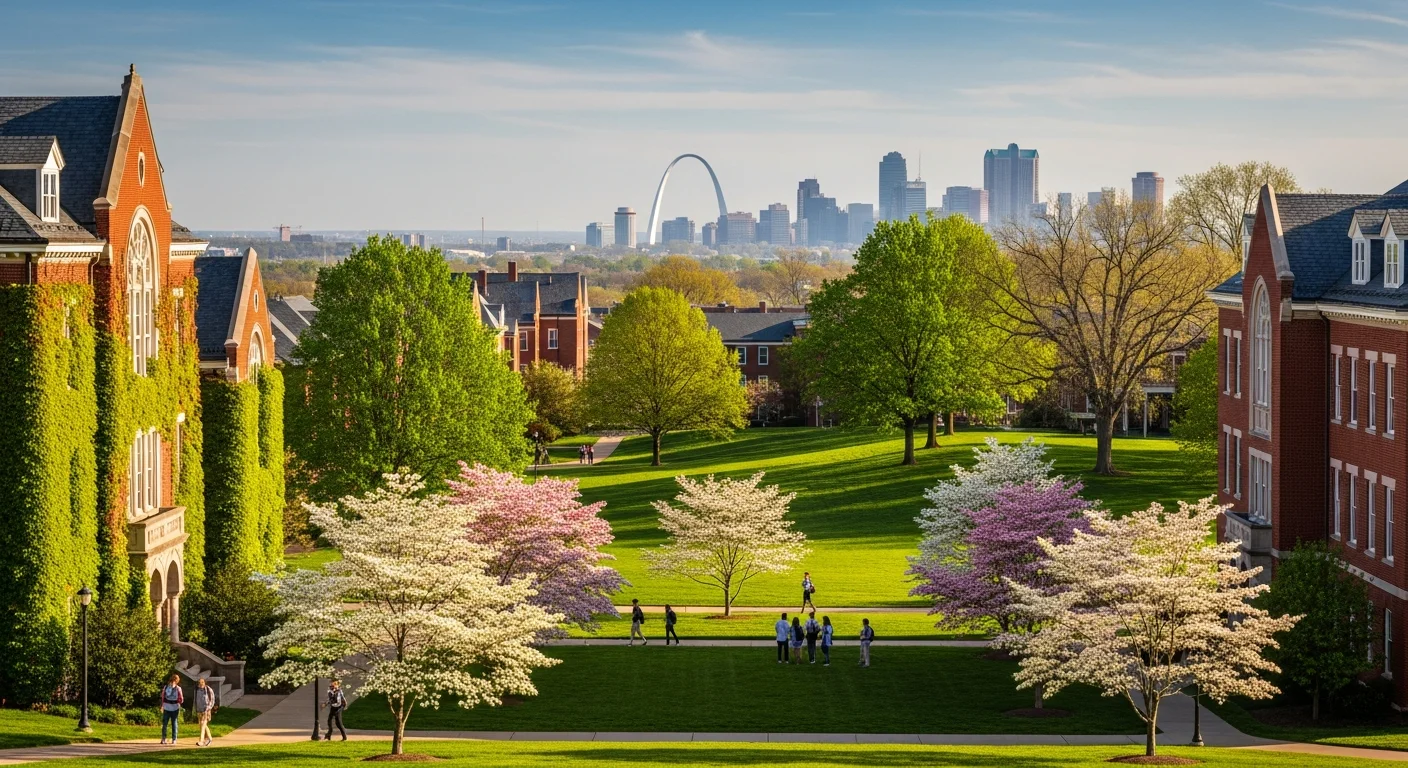

University of Central Missouri — Warrensburg, MO

Hakia Insight: UCM's data science program builds from visualization and forecasting fundamentals rather than jumping straight to deep learning, an approach that maps well to the manufacturing and agricultural tech employers in its region—students graduate equipped for applied ML roles, not research.

At the bachelor's level, UCM's Data Science program introduces students to visualization, artificial intelligence, machine learning, data mining, programming, statistics and forecasting to tackle large-scale data sets. The program offers both online course options and an accelerated BS-MS pathway for graduate studies.

Programs Offered
  • Bachelor of Science in Machine Learning — 4 years, on-campus
  • Bachelor of Arts in Machine Learning — 4 years, online

Location Advantages:

Saint Louis University — Saint Louis, MO

Key Distinction: Mandatory four-semester data science practicum sequence (DATA 1800, DATA 2800, DATA 4961, DATA 4962). Two-semester capstone project (DATA 4961 and DATA 4962)

Hakia Insight: Saint Louis University mandates a four-semester practicum sequence that spans two full years of the program, an unusually long commitment that results in students arriving at internships with multi-semester portfolio pieces rather than one-off projects—particularly valuable given partnerships with Centene and RGA Reinsurance, where data quality and iteration matter more than novelty.

Saint Louis University's Bachelor of Science in Data Science is an interdisciplinary program jointly supported by the Department of Computer Science and the Department of Mathematics and Statistics, modeled on American Statistical Association guidelines. The curriculum combines rigorous computer science, statistics, and mathematics courses with four semesters of practica and capstone experiences, providing hands-on training in data cleaning, visualization, analysis, and reporting. Students choose electives to specialize in either computer science or statistical aspects of data science. The program emphasizes research and fieldwork opportunities, with students conducting cross-disciplinary work with organizations like ArchCity Defenders, MIT Lincoln Lab, and the Medical School. A mandatory two-semester capstone project integrates technical skills in machine learning, predictive modeling, databases, and natural language processing. Graduates are positioned for careers in technology, government, research, and consulting, with data scientist ranked as the No. 1 job in the U.S. by Glassdoor in terms of job openings and earning potential.

Programs Offered
  • Bachelor of Science in Data Science — 4 years, on-campus. BS
Research Labs and Institutes
  • AirCRAFT Lab
  • Space Systems Research Laboratory
  • CHROME Lab
Industry Partners
  • Centene Corporation (corporate)
  • Ameren Corporation (corporate)
  • Facebook (partner)
  • RGA Reinsurance Company (partner)
  • Edward Jones (partner)
  • World Wide Technology (partner)
  • 1904labs (partner)
  • Exegy (partner)
  • AT&T (partner)
  • Boeing (collaborator)
  • St. Louis Public Schools (collaborator)
Notable Faculty
  • Min Hyung Choi — Computer Science Department Chair
  • Flavio Esposito — Graduate coordinator in Computer Science
  • Ankit Agrawal — Assistant Professor in Computer Science
Admissions

GPA Requirement: 2.00 minimum cumulative GPA in major courses. Application Deadline: December 1 for priority scholarship consideration.

Requirements: Minimum 62 credits in major courses, Minimum 2.0 cumulative GPA in data science major courses by end of sophomore year, Maintain minimum 2.0 cumulative GPA in major courses each semester, Registered in at least one data science course each academic year, Earn C- or better in critical courses: CSCI 1070, CSCI 1300, MATH 1510, MATH 1520, DATA 1800, CSCI 2100, DATA 2800, Complete University Undergraduate Core (32-35 credits), Complete major requirements including databases, machine learning, and four data science practica/capstone courses, Complete 12 credits of major electives (minimum 2 CSCI, minimum 1 STAT), Complete 24-27 general electives

Accreditations and Certifications
  • ABET accredited

Location Advantages: St. Louis fintech and healthcare tech ecosystemStrong relationships with regional financial services and insurance firms

Missouri State University-Springfield — Springfield, MO

Key Distinction: Missouri State grounds its ML program in rigorous applied mathematics, emphasizing theoretical foundations that prepare students for research-intensive and specialized ML roles.

Hakia Insight: Missouri State's emphasis on applied mathematics as the foundational layer is a deliberate choice that pays off for students targeting research or specialized roles; unlike programs that bolt statistics onto CS, this mathematical grounding signals preparation for the theoretical depth that graduate admissions committees and research labs actually screen for.

At the bachelor's level, missouri State's machine learning curriculum grows from a strong computational mathematics foundation, making it the entry point for students who want deep theoretical grounding alongside practical implementation. The program sequences coursework so that students first master the mathematical principles—linear algebra, probability, optimization—before advancing to neural networks and advanced architectures. This scaffolding appeals to students who plan to push boundaries in ML research or take on roles requiring rigorous problem-solving. Faculty in the Computer Science and Mathematics departments collaborate to deliver courses that explain *why* algorithms work, not just *how* to apply them. Students engage with emerging research topics through seminar series and faculty-mentored projects. The Springfield location and Missouri State's regional reputation create partnerships with manufacturing and agricultural technology firms seeking ML solutions—practical contexts for capstone work. Graduates often transition into roles that blend research and engineering, or continue to graduate studies at tier-one programs. The program's emphasis on mathematical literacy also prepares students for specialized tracks in optimization, probabilistic models, and theoretical machine learning.

Programs Offered
  • Bachelor of Science in Machine Learning — 4 years, on-campus
  • Bachelor of Arts in Machine Learning — 4 years, online

Location Advantages: Access to regional manufacturing and agricultural technology companies

Missouri Valley College — Marshall, MO

Programs Offered
  • Bachelor of Science in Machine Learning — 4 years, on-campus
  • Bachelor of Arts in Machine Learning — 4 years, online

Location Advantages:

Webster University — Saint Louis, MO

Key Distinction: Webster University offers comprehensive Machine Learning programs preparing students for careers in technology.

Hakia Insight: Webster University's private, regional positioning in St. Louis offers smaller cohorts and flexibility that state schools can't match, though without distinct research labs or notable faculty specialties listed, prospective students should directly confirm whether their interests align with available advisor expertise.

Webster University offers Machine Learning programs in Saint Louis, MO. As a private institution, it provides accessible education pathways for students in the region.

Missouri Western State University — Saint Joseph, MO

Key Distinction: Missouri Western State University offers comprehensive Machine Learning programs preparing students for careers in technology.

Hakia Insight: Missouri Western's location in Saint Joseph places it near neither major tech hubs nor prominent research institutions, making outcomes depend heavily on individual initiative—without distinctive labs or industry partnerships documented, this program is best suited for students committed to recruiting themselves into entry-level roles.

Missouri Western State University offers Machine Learning programs in Saint Joseph, MO. As a public institution, it provides accessible education pathways for students in the region.

College of the Ozarks — Point Lookout, MO

Key Distinction: College of the Ozarks offers comprehensive Machine Learning programs preparing students for careers in technology.

Hakia Insight: College of the Ozarks' distance from regional tech corridors and limited documented partnerships suggest this program serves primarily place-bound students or those prioritizing affordability over proximity to mentorship infrastructure.

College of the Ozarks offers Machine Learning programs in Point Lookout, MO. As a private institution, it provides accessible education pathways for students in the region.

Best Master's Machine Learning Degree Programs in Missouri

Washington University in St Louis — Saint Louis, MO

Key Distinction: Washington University's machine learning program combines top-tier research output with rigorous mathematical training and direct mentorship from faculty conducting research published at premier AI conferences.

Hakia Insight: Washington University's master's program pairs faculty like Roman Garnett (whose active learning research shapes how industry ML teams prioritize data labeling) with standing partnerships at Google and Meta—students co-author code that ships in production systems, not simulations, accelerating the research-to-practice timeline that other programs leave to postdocs.

At the master's level, machine learning at Washington University is anchored in one of the nation's top-tier computer science departments, where students gain access to faculty conducting cutting-edge research in deep learning, natural language processing, computer vision, and AI systems. The curriculum is deliberately designed to bridge rigorous mathematical foundations—linear algebra, probability, optimization—with contemporary neural network architectures and large-scale learning systems. What distinguishes the program is its research-first culture: graduate students typically engage in faculty-led research projects from their first semester, working on problems that appear in top-tier venues like NeurIPS, ICML, and ICCV. The McKelvey School of Engineering and the graduate computer science program attract significant research funding, meaning students have access to computing resources and data that most peer institutions cannot match. Beyond the classroom, students benefit from Washington University's location in St. Louis, which hosts a growing network of tech companies, startups, and established firms expanding AI capabilities. The program also maintains strong connections to industry through research partnerships and guest lectures from practitioners at major tech companies. Graduates from this program consistently secure positions at leading tech companies, AI research labs, and innovative startups, often with roles that involve both research and systems engineering.

Programs Offered
  • Master of Science in Machine Learning — 1-2 years, on-campus
  • Master of Arts in Machine Learning — 1-2 years, online
Research Labs and Institutes
  • Computer Vision and Robotics Lab
  • Natural Language Processing Lab
  • Machine Learning and Optimization Group
Industry Partners
  • Google (corporate)
  • Microsoft (corporate)
  • Meta (Facebook) (corporate)
  • Amazon (corporate)
Career Outcomes

Median Salary: $NaN. Top Employers: Media and entertainment corporation, Life sciences company, Technology consulting firm, University, Federal employment agency.

Notable Faculty
  • Roman Garnett — Bayesian optimization, active learning, machine learning theory
  • Yixin Chen — Computer vision, scene understanding, visual reasoning
  • Sanmay Das — Machine learning, game theory, algorithmic game theory
Accreditations and Certifications
  • ABET accredited (Engineering programs)

Location Advantages: St. Louis growing tech hub with AI/ML company expansionAccess to enterprise and startup ecosystemsProximity to Midwest regional tech companies

University of Missouri-Kansas City — Kansas City, MO

Key Distinction: Thesis vs. non-thesis (course) track options. Full-time and part-time enrollment available

Hakia Insight: UMKC's 30-credit program with flexible thesis/non-thesis and full-time/part-time options compresses the credential timeline for working professionals, but the NSF IUCRC Center for Big Learning partnership means non-thesis students still access industry problem sets—they skip the writeup, not the applied challenge.

The Master of Science in Computer Science at UMKC is a 30-credit graduate program designed for working professionals seeking advancement in technology careers. The program offers both thesis and non-thesis (coursework) tracks, accommodating full-time and part-time students. Students select from five emphasis areas—Artificial Intelligence, Cybersecurity, Data Science, Networking & Telecommunications, and Software Engineering & Systems—with at least 12 credits recommended in their chosen area to enhance employability. The non-thesis option requires 10 courses (8 CS + 2 related); the thesis option requires 8 courses plus a 6-credit thesis. Graduate assistantship opportunities are available. The curriculum emphasizes state-of-the-art techniques and prepares graduates for corporate research, product development, management, and entrepreneurial roles. International students are welcome; GRE is not required. The program is accredited by the Higher Learning Commission.

Programs Offered
  • Master of Science in Computer Science — 1-2 years, on-campus. MS
Research Labs and Institutes
  • UMKC Center for Bioinformatics and Computational Biology
  • Data Mining, Database and Multimedia Research Group
  • NSF IUCRC Center for Big Learning
  • SCE Machine Learning Lab
  • DANS Lab (Data-Algorithms-Network Systems-Security Laboratory)
  • Bani Lab
  • Cao Lab
  • Cheng Han Lab
  • DIGIT Lab
Industry Partners
  • Cerner Corporation (corporate)
  • Lambda Labs (collaborator)
  • Oak Ridge National Lab (employer)
  • Department of Air Force (sponsor)
Notable Faculty
  • Dr. Yugyung Lee — AI, Data Science, Deep Learning/Machine Learning, Health informatics, cognitive digital twins
Admissions

GPA Requirement: 3.0 minimum in last 60 semester hours.

Requirements: Minimum 24 credit hours from CS topic areas (8 courses), Remaining 6 credit hours from any related discipline (2 courses), Complete core curriculum: select 3 of 5 core courses (9 credits), Completion of emphasis area coursework (at least 12 credits recommended), Thesis option: 8 courses (6 CS + 2 related) + 6-credit MS Thesis, Non-thesis option: 10 courses (8 CS + 2 related), Maximum 6 credit hours of 400-level coursework with petition, Maximum 6 credit hours transfer from other accredited institutions, Maintain minimum GPA per School of Graduate Studies requirements

Location Advantages: Kansas City tech corridor with growing AI/ML job marketProximity to Cerner Corporation headquartersAccess to healthcare and fintech companies in the region

University of Central Missouri — Warrensburg, MO

Hakia Insight: UCM's dual MA/MS structure is unusual for a master's program—the MA track allows students to emphasize theory and teaching applications, while the MS focuses on applied practice, giving career-switchers genuine flexibility without forcing a one-size-fits-all curriculum.

At the master's level, UCM's Data Science program introduces students to visualization, artificial intelligence, machine learning, data mining, programming, statistics and forecasting to tackle large-scale data sets. The program offers both online course options and an accelerated BS-MS pathway for graduate studies.

Programs Offered
  • Master of Science in Machine Learning — 1-2 years, on-campus
  • Master of Arts in Machine Learning — 1-2 years, online

Location Advantages:

Saint Louis University — Saint Louis, MO

Key Distinction: Flexible thesis vs. non-thesis track options. Non-thesis track includes team-based capstone project with industry applications

Hakia Insight: Saint Louis University's non-thesis capstone option paired with partnerships at Boeing and Microsoft means students can graduate having shipped real ML work for Fortune 500 companies rather than defending research—a rare advantage for working professionals seeking immediate industry credibility.

Saint Louis University's Master of Science in Artificial Intelligence prepares working professionals to apply AI and machine learning methods ethically and efficiently. The program offers flexibility with a choice between a thesis track (6 credits of research) or a non-thesis option combining a 3-credit capstone project with additional coursework. Students gain depth in AI/ML theory and practice while exploring applications in autonomous systems, bioinformatics, data science, health outcomes, image processing, and natural language processing. The program emphasizes ethical AI development and societal impact. Located in St. Louis's Midtown innovation hub near the Cortex Innovation Community, students access internships and employment opportunities with Fortune 500 companies including Boeing, Centene, Deloitte, Microsoft, and MasterCard. Graduate assistantships are available, offering full or partial tuition coverage, health insurance, and living stipends in exchange for teaching or research contributions. Data scientist roles rank #8 on U.S. News Best Jobs (2024) and #3 on Glassdoor's list, with strong salary growth and career advancement potential in high-demand computing fields.

Programs Offered
  • Artificial Intelligence, M.S. — 1-2 years, on-campus. MS
Research Labs and Institutes
  • AirCRAFT Lab
  • Space Systems Research Laboratory
  • CHROME Lab
Industry Partners
  • Centene Corporation (corporate)
  • Ameren Corporation (corporate)
  • Facebook (partner)
  • RGA Reinsurance Company (partner)
  • Edward Jones (partner)
  • World Wide Technology (partner)
  • 1904labs (partner)
  • Exegy (partner)
  • AT&T (partner)
  • Boeing (collaborator)
  • St. Louis Public Schools (collaborator)
Career Outcomes

Top Employers: Boeing, Microsoft.

Notable Faculty
  • Min Hyung Choi — Computer Science Department Chair
  • Flavio Esposito — Graduate coordinator in Computer Science
  • Ankit Agrawal — Assistant Professor in Computer Science
Admissions

GPA Requirement: 2.00 minimum cumulative GPA in major courses. Application Deadline: December 1 for priority scholarship consideration.

Requirements: Cumulative GPA of 3.00 or higher in all graduate courses, Grade of C- or higher in each course to satisfy degree requirements, Grade of B- or higher to use course as prerequisite, Completion of foundational courses (up to 7 credits for non-CS bachelor's degree holders), Required core courses: Principles of Software Development, Computing and Society, Introduction to AI, Introduction to Machine Learning, At least one AI Principles course, At least one AI Applications course, 6 credits of AI electives, Thesis or Non-Thesis option (6 credits thesis research OR 3-credit capstone plus additional course), Exit survey completion during final semester

Accreditations and Certifications
  • ABET accredited

Location Advantages: St. Louis fintech and healthcare tech ecosystemStrong relationships with regional financial services and insurance firms

Northwest Missouri State University — Maryville, MO

Hakia Insight: Northwest Missouri State's ML master's sits in a region historically underserved by elite programs, positioning graduates to lead technical teams in smaller metros where competition for ML talent remains thin and starting roles come with real ownership.

At the master's level, the provided content does not contain information about a Machine Learning program at Northwest Missouri State University. The content covers a Public Health program and M.S. Applied Computer Science program that includes Machine Learning as an elective course.

Programs Offered
  • Master of Science in Machine Learning — 1-2 years, on-campus
  • Master of Arts in Machine Learning — 1-2 years, online

Location Advantages:

Missouri State University-Springfield — Springfield, MO

Key Distinction: Missouri State grounds its ML program in rigorous applied mathematics, emphasizing theoretical foundations that prepare students for research-intensive and specialized ML roles.

Hakia Insight: Missouri State's insistence on applied mathematics foundations before ML—rather than rushing to algorithms—creates graduates who can explain *why* their models work, a differentiator when competing against boot camp alumni for research or specialized engineering roles.

At the master's level, missouri State's machine learning curriculum grows from a strong computational mathematics foundation, making it the entry point for students who want deep theoretical grounding alongside practical implementation. The program sequences coursework so that students first master the mathematical principles—linear algebra, probability, optimization—before advancing to neural networks and advanced architectures. This scaffolding appeals to students who plan to push boundaries in ML research or take on roles requiring rigorous problem-solving. Faculty in the Computer Science and Mathematics departments collaborate to deliver courses that explain *why* algorithms work, not just *how* to apply them. Students engage with emerging research topics through seminar series and faculty-mentored projects. The Springfield location and Missouri State's regional reputation create partnerships with manufacturing and agricultural technology firms seeking ML solutions—practical contexts for capstone work. Graduates often transition into roles that blend research and engineering, or continue to graduate studies at tier-one programs. The program's emphasis on mathematical literacy also prepares students for specialized tracks in optimization, probabilistic models, and theoretical machine learning.

Programs Offered
  • Master of Science in Machine Learning — 1-2 years, on-campus
  • Master of Arts in Machine Learning — 1-2 years, online

Location Advantages: Access to regional manufacturing and agricultural technology companies

University of Missouri-St Louis — Saint Louis, MO

Key Distinction: Part-time enrollment option for working professionals. Data Science emphasis available (only public university option in St. Louis region)

Hakia Insight: UMSL's Data Science emphasis within a Mathematics MA is the only public university option in St. Louis offering part-time enrollment with supply chain analytics research labs, making it the accessible path for logistics and healthcare professionals at Express Scripts or regional hospital systems.

UMSL's Master of Arts in Mathematics offers two tracks: pure mathematics for teaching careers and applied mathematics for non-teaching careers. Students can pursue a specialized Data Science emphasis, making UMSL the only public university in the St. Louis region offering a graduate-level data science degree. The program accommodates part-time enrollment for working professionals. Graduates qualify for positions as high school or college math teachers, applied mathematicians, statisticians, data scientists, and data analysts. The median annual salary for mathematicians and statisticians is $99,960 with projected 30% employment growth through 2032. The program includes access to graduate research opportunities, the annual Graduate Research Fair, and the Three Minute Thesis competition. Career services support professional development and networking through UMSL's largest regional alumni network.

Programs Offered
  • Master of Arts in Mathematics — 1-2 years, on-campus. MA
Research Labs and Institutes
  • Supply Chain Analytics Center of Excellence
  • Laboratory of Advanced Supply Chain Analytics
  • Cybersecurity and Information Technology Innovation Lab
  • Advanced MIS Laboratory
  • Networking Systems and Security Lab
Industry Partners
  • National Science Foundation (sponsor)
  • U.S. Department of Transportation (sponsor)
  • Ameren Corporation (sponsor)
  • Express Scripts Inc. (sponsor)
  • ASCM (sponsor)
  • U.S. Army Research Office (sponsor)
  • HP Labs (sponsor)
  • Missouri Agricultural Small Business Development Authority (sponsor)
  • International Agricultural Trade Research Consortium (sponsor)
Career Outcomes

Median Salary: $NaN.

Notable Faculty
  • Dr. Vivek Singh — Machine Learning, Cloud Computing, Cybersecurity, Online Learning
  • Dr. Necdet Gurkan — Information Systems, Cognitive Science, Decision Making, Collective Intelligence, Data Science
  • Dr. Le (Carol) Kuai — Online Community, Technology Interruption, Trust in IT, Emerging Technology
Admissions

GPA Requirement: 3.0 minimum. Application Deadline: Fall: July 1 (domestic), May 1 (international); Spring: December 1 (domestic), October 1 (international); Summer: May 1.

Requirements: Completion of coursework as specified in degree plan, Option for thesis track (doctoral and thesis master's students eligible for Three Minute Thesis competition)

Accreditations and Certifications
  • AACSB
  • National Center of Academic Excellence in Cybersecurity for Cyber Defense Education

Location Advantages: Access to largest alumni network in the regionConnection to leading healthcare providers in the region

Best Doctoral Machine Learning Degree Programs in Missouri

Washington University in St Louis — Saint Louis, MO

Key Distinction: Full funding guaranteed (tuition + health insurance + living stipend). Faculty rotation system for advisor selection

Hakia Insight: WashU's guaranteed funding model plus faculty rotation system eliminates the hidden PhD tax (advisor mismatch) that derails many students—combined with the NLP Lab and direct pipelines to Google/Microsoft, this removes financial and career risk from the doctoral bet.

The PhD in Computer Science or Computer Engineering at WashU offers full funding including complete tuition support, health insurance, and a generous living stipend guaranteed throughout satisfactory progress. Students have research freedom through faculty rotation system during first semester before selecting advisors. The program covers the full breadth of computer science and engineering with faculty who are ACM/IEEE Fellows, National Academy members, and NSF CAREER Award recipients publishing at top venues. Students gain professional exposure through international conference presentations and doctoral consortiums. Post-graduation placement includes both academia (Carnegie Mellon, Georgia Tech, Johns Hopkins, Stanford, UT Austin) and industry (Amazon, Boeing, Facebook, Google, Microsoft). Industry starting salaries range $120-230K plus stock options and bonuses, while tenure-track positions start at $95K for 9-month assistant professor roles.

Programs Offered
  • PhD in Computer Science or Computer Engineering — 4-6 years, on-campus. PhD
Research Labs and Institutes
  • Computer Vision and Robotics Lab
  • Natural Language Processing Lab
  • Machine Learning and Optimization Group
Industry Partners
  • Google (corporate)
  • Microsoft (corporate)
  • Meta (Facebook) (corporate)
  • Amazon (corporate)
Career Outcomes

Median Salary: $NaN. Top Employers: Amazon, Boeing, Google, Microsoft.

Notable Faculty
  • Roman Garnett — Bayesian optimization, active learning, machine learning theory
  • Yixin Chen — Computer vision, scene understanding, visual reasoning
  • Sanmay Das — Machine learning, game theory, algorithmic game theory
Accreditations and Certifications
  • ABET accredited (Engineering programs)

Location Advantages: St. Louis growing tech hub with AI/ML company expansionAccess to enterprise and startup ecosystemsProximity to Midwest regional tech companies