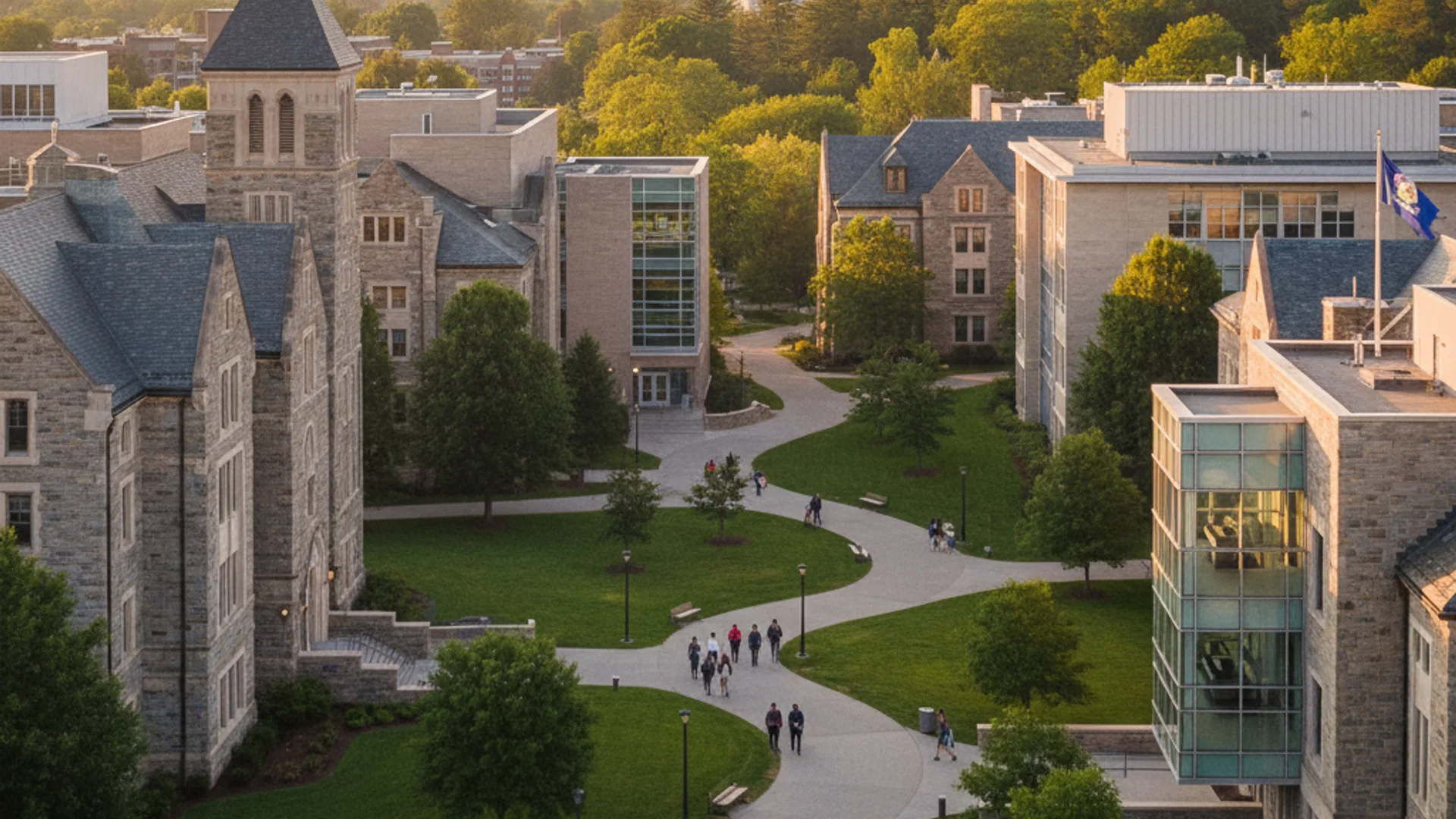
University campus near Philadelphia, Pennsylvania
Updated February 2026

Best Cybersecurity Degree Programs in Philadelphia, Pennsylvania — 2026 Rankings

10 accredited cybersecurity programs near Philadelphia ranked by IPEDS data. 2 NSA-designated schools. Median cybersecurity salary: $125,000. An estimated 1,200 open positions in the metro area.

#1 ProgramUniversity of Pennsylv...
Median Salary$125,000
Schools10
Job Growth+33%

Key Takeaways

10 cybersecurity programs from 4 public and 6 private institutions

4 schools physically in Philadelphia, plus 6 within 50 miles. Tuition ranges from $7,500 (Northampton County Area Community College) to $67,522 (Haverford College).

IPEDS 2023

Median cybersecurity salary: $125,000 — 0% above the national median

Security engineers earn up to $135,000, while cybersecurity managers command $181,250 in the Philadelphia-Camden-Wilmington. Source: BLS OEWS Philadelphia-Camden-Wilmington MSA, May 2024.

BLS OEWS May 2024

An estimated 1,200 open cybersecurity positions in the Philadelphia-Camden-Wilmington

Pennsylvania has 14,200 total cybersecurity openings — 8% concentrated in the Philadelphia metro. Nationally, 26% of cybersecurity roles remain unfilled.

CyberSeek/CompTIA 2025

2 NSA Center of Academic Excellence designated schools

University of Pennsylvania, Drexel University hold NSA/DHS CAE designation — the federal gold standard for cybersecurity education. CAE students may qualify for CyberCorps: Scholarship for Service (full tuition + stipend).

NSA CAE Community

Updated February 2026

On This Page

Best Cybersecurity Degree Programs in Philadelphia, Pennsylvania

Bachelor's Cybersecurity Degree Programs in Philadelphia, Pennsylvania

4 programs$105,000 median salary92% avg grad rate
4
Programs
$105,000
Median Salary
$62,329/yr
Avg Tuition
92%
Avg Grad Rate

Hakia ranks 4 accredited bachelor's cybersecurity programs within 50 miles of Philadelphia — 4 private institutions. 1 is physically located in Philadelphia, with the rest accessible via short commutes. The top-ranked programs include University of Pennsylvania, Lehigh University, Swarthmore College.

Annual tuition ranges from $58,620 to $67,522 (average: $62,329). A four-year cybersecurity degree covers core topics including network defense, ethical hacking, digital forensics, and security policy — preparing graduates for roles as security analyst, penetration tester, or incident response specialist. The average graduation rate across these programs is 92%.

Graduates with a bachelor's degree in cybersecurity from Philadelphia-area schools can expect starting salaries in the range of $110,000 to $118,750 in the local market, with roles such as security analyst, penetration tester, or incident response specialist. The Philadelphia metro area has an estimated 1,200 open cybersecurity positions, and the BLS projects +33% job growth through 2033.

University of Pennsylvania holds NSA Center of Academic Excellence (CAE) designation at this level — the federal gold standard for cybersecurity education. CAE students may qualify for the CyberCorps: Scholarship for Service program, covering full tuition plus a stipend.

Show:

Earn your bachelor's in Cybersecurity

(Sponsored)

Loading programs...

🥇

University of Pennsylvania

PrivateNSA CAE
Philadelphia, PA
$58,620
Tuition/yr
$1,954
Per Credit
100%
Grad Rate
80.0
Score
Website
🥈

Lehigh University

Private
Near Philadelphia, PA
$61,180
Tuition/yr
$2,039
Per Credit
81%
Grad Rate
75.0
Score
Website
🥉

Swarthmore College

Private
Near Philadelphia, PA
$61,992
Tuition/yr
$2,066
Per Credit
95%
Grad Rate
70.0
Score
Website
#4

Haverford College

Private
Near Philadelphia, PA
$67,522
Tuition/yr
$2,251
Per Credit
94%
Grad Rate
65.0
Score
Website

Complete Cybersecurity Degree Program Rankings in Philadelphia, Pennsylvania

Best Associate's Cybersecurity Degree Programs in Philadelphia, Pennsylvania

Hakia ranks **3 accredited associate's cybersecurity programs** within 50 miles of Philadelphia — 3 public institutions. 1 is physically located in Philadelphia, with the rest accessible via short commutes. The top-ranked programs include **Community College of Philadelphia**, **Delaware County Community College**, **Northampton County Area Community Col...**. Tuition for associate's programs ranges from **$7,500** to **$8,100** per year. Community colleges typically offer the most affordable entry into cybersecurity, and many have articulation agreements with nearby four-year universities for seamless credit transfer. Students can complete foundational coursework in networking, operating systems, and security fundamentals while earning industry certifications like CompTIA Security+ or CySA+. Graduates with a associate's degree in cybersecurity from Philadelphia-area schools can expect starting salaries in the range of **$81,250 to $97,500** in the local market, with roles such as SOC analyst, IT security technician, or network security associate. The Philadelphia metro area has an estimated **1,200 open cybersecurity positions**, and the BLS projects **+33% job growth** through 2033.

  1. #1. Community College of Philadelphia

    Hakia ranks Community College of Philadelphia as the #1 associate's in cybersecurity degree program in Philadelphia, Pennsylvania. This public institution in Philadelphia, PA has annual tuition of $7,632 ($254/credit). Ranking score: 80.0.

  2. #2. Delaware County Community College

    Hakia ranks Delaware County Community College as the #2 associate's in cybersecurity degree program in Philadelphia, Pennsylvania. This public institution in Near Philadelphia, PA has annual tuition of $8,100 ($270/credit). Ranking score: 75.0.

  3. #3. Northampton County Area Community College

    Hakia ranks Northampton County Area Community College as the #3 associate's in cybersecurity degree program in Philadelphia, Pennsylvania. This public institution in Near Philadelphia, PA has annual tuition of $7,500 ($250/credit). Ranking score: 70.0.

Best Bachelor's Cybersecurity Degree Programs in Philadelphia, Pennsylvania

Hakia ranks **4 accredited bachelor's cybersecurity programs** within 50 miles of Philadelphia — 4 private institutions. 1 is physically located in Philadelphia, with the rest accessible via short commutes. The top-ranked programs include **University of Pennsylvania**, **Lehigh University**, **Swarthmore College**. Annual tuition ranges from **$58,620** to **$67,522** (average: $62,329). A four-year cybersecurity degree covers core topics including network defense, ethical hacking, digital forensics, and security policy — preparing graduates for roles as security analyst, penetration tester, or incident response specialist. The average graduation rate across these programs is **92%**. Graduates with a bachelor's degree in cybersecurity from Philadelphia-area schools can expect starting salaries in the range of **$110,000 to $118,750** in the local market, with roles such as security analyst, penetration tester, or incident response specialist. The Philadelphia metro area has an estimated **1,200 open cybersecurity positions**, and the BLS projects **+33% job growth** through 2033. **University of Pennsylvania** holds NSA Center of Academic Excellence (CAE) designation at this level — the federal gold standard for cybersecurity education. CAE students may qualify for the CyberCorps: Scholarship for Service program, covering full tuition plus a stipend.

  1. #1. University of Pennsylvania

    Hakia ranks University of Pennsylvania as the #1 bachelor's in cybersecurity degree program in Philadelphia, Pennsylvania. This private institution in Philadelphia, PA has annual tuition of $58,620 ($1954/credit) and a 100% graduation rate. Ranking score: 80.0. NSA/DHS Center of Academic Excellence designation: CAE-CDE, CAE-R.

  2. #2. Lehigh University

    Hakia ranks Lehigh University as the #2 bachelor's in cybersecurity degree program in Philadelphia, Pennsylvania. This private institution in Near Philadelphia, PA has annual tuition of $61,180 ($2039/credit) and a 81% graduation rate. Ranking score: 75.0.

  3. #3. Swarthmore College

    Hakia ranks Swarthmore College as the #3 bachelor's in cybersecurity degree program in Philadelphia, Pennsylvania. This private institution in Near Philadelphia, PA has annual tuition of $61,992 ($2066/credit) and a 95% graduation rate. Ranking score: 70.0.

  4. #4. Haverford College

    Hakia ranks Haverford College as the #4 bachelor's in cybersecurity degree program in Philadelphia, Pennsylvania. This private institution in Near Philadelphia, PA has annual tuition of $67,522 ($2251/credit) and a 94% graduation rate. Ranking score: 65.0.

Best Master's Cybersecurity Degree Programs in Philadelphia, Pennsylvania

Hakia ranks **4 accredited master's cybersecurity programs** within 50 miles of Philadelphia — 4 private institutions. 2 are physically located in Philadelphia, with the rest accessible via short commutes. The top-ranked programs include **University of Pennsylvania**, **Lehigh University**, **Villanova University**. Graduate tuition ranges from **$58,293** to **$63,806** per year. Master's programs typically take 18-24 months and focus on advanced topics like threat intelligence, security architecture, risk management, and leadership — designed for professionals looking to move into senior technical or management roles. Average completion rate: **90%**. Graduates with a master's degree in cybersecurity from Philadelphia-area schools can expect starting salaries in the range of **$135,000 to $152,500** in the local market, with roles such as security engineer, security architect, or cybersecurity consultant. The Philadelphia metro area has an estimated **1,200 open cybersecurity positions**, and the BLS projects **+33% job growth** through 2033. **University of Pennsylvania and Drexel University** hold NSA Center of Academic Excellence (CAE) designation at this level — the federal gold standard for cybersecurity education. CAE students may qualify for the CyberCorps: Scholarship for Service program, covering full tuition plus a stipend.

  1. #1. University of Pennsylvania

    Hakia ranks University of Pennsylvania as the #1 master's in cybersecurity degree program in Philadelphia, Pennsylvania. This private institution in Philadelphia, PA has annual tuition of $58,620 ($1954/credit) and a 100% graduation rate. Ranking score: 80.0. NSA/DHS Center of Academic Excellence designation: CAE-CDE, CAE-R.

  2. #2. Lehigh University

    Hakia ranks Lehigh University as the #2 master's in cybersecurity degree program in Philadelphia, Pennsylvania. This private institution in Near Philadelphia, PA has annual tuition of $61,180 ($2039/credit) and a 81% graduation rate. Ranking score: 75.0.

  3. #3. Villanova University

    Hakia ranks Villanova University as the #3 master's in cybersecurity degree program in Philadelphia, Pennsylvania. This private institution in Near Philadelphia, PA has annual tuition of $63,806 ($2127/credit). Ranking score: 70.0.

  4. #4. Drexel University

    Hakia ranks Drexel University as the #4 master's in cybersecurity degree program in Philadelphia, Pennsylvania. This private institution in Philadelphia, PA has annual tuition of $58,293 ($1943/credit). Ranking score: 65.0. NSA/DHS Center of Academic Excellence designation: CAE-CDE.

Best Doctoral Cybersecurity Degree Programs in Philadelphia, Pennsylvania

Hakia ranks **4 accredited doctoral cybersecurity programs** within 50 miles of Philadelphia — 1 public and 3 private institutions. 3 are physically located in Philadelphia, with the rest accessible via short commutes. The top-ranked programs include **University of Pennsylvania**, **Lehigh University**, **Temple University**. Doctoral program tuition ranges from **$21,023** to **$61,180** per year, though many programs offer research assistantships, teaching fellowships, or full-tuition waivers. Ph.D. programs in cybersecurity typically take 4-6 years and focus on original research in areas like cryptography, AI-driven threat detection, or privacy engineering. Graduates with a doctoral degree in cybersecurity from Philadelphia-area schools can expect starting salaries in the range of **$152,500 to $181,250** in the local market, with roles such as chief information security officer, research scientist, or university professor. The Philadelphia metro area has an estimated **1,200 open cybersecurity positions**, and the BLS projects **+33% job growth** through 2033. **University of Pennsylvania and Drexel University** hold NSA Center of Academic Excellence (CAE) designation at this level — the federal gold standard for cybersecurity education. CAE students may qualify for the CyberCorps: Scholarship for Service program, covering full tuition plus a stipend.

  1. #1. University of Pennsylvania

    Hakia ranks University of Pennsylvania as the #1 doctoral in cybersecurity degree program in Philadelphia, Pennsylvania. This private institution in Philadelphia, PA has annual tuition of $58,620 ($1954/credit) and a 100% graduation rate. Ranking score: 80.0. NSA/DHS Center of Academic Excellence designation: CAE-CDE, CAE-R.

  2. #2. Lehigh University

    Hakia ranks Lehigh University as the #2 doctoral in cybersecurity degree program in Philadelphia, Pennsylvania. This private institution in Near Philadelphia, PA has annual tuition of $61,180 ($2039/credit) and a 81% graduation rate. Ranking score: 75.0.

  3. #3. Temple University

    Hakia ranks Temple University as the #3 doctoral in cybersecurity degree program in Philadelphia, Pennsylvania. This public institution in Philadelphia, PA has annual tuition of $21,023 ($701/credit). Ranking score: 70.0.

  4. #4. Drexel University

    Hakia ranks Drexel University as the #4 doctoral in cybersecurity degree program in Philadelphia, Pennsylvania. This private institution in Philadelphia, PA has annual tuition of $58,293 ($1943/credit). Ranking score: 65.0. NSA/DHS Center of Academic Excellence designation: CAE-CDE.

Why Study Cybersecurity in Philadelphia, Pennsylvania

Philadelphia is home to a growing cybersecurity education ecosystem with 10 accredited programs across 3 associate's, 4 bachelor's, 4 master's, 4 doctoral degree levels within 50 miles. 4 of these institutions are physically located in Philadelphia, with the remaining schools accessible via short commutes from surrounding communities in the Philadelphia-Camden-Wilmington.

2 schools near Philadelphia hold NSA Center of Academic Excellence (CAE) designation: University of Pennsylvania, Drexel University. The CAE program, jointly sponsored by the NSA and DHS, certifies schools whose cybersecurity curricula meet rigorous federal standards aligned with the NICE Cybersecurity Workforce Framework. Students at CAE-designated schools may qualify for the CyberCorps: Scholarship for Service program, which covers full tuition plus a $25,000-$34,000 annual stipend in exchange for government service after graduation.

The Philadelphia-Camden-Wilmington cybersecurity job market is substantial, with an estimated 1,200 open positions and a median salary of $125,000 for information security analysts (BLS OEWS May 2024). The Bureau of Labor Statistics projects +33% job growth for cybersecurity roles through 2033, making it one of the fastest-growing occupations in the U.S. economy. For students in Philadelphia, this translates to strong local hiring prospects upon graduation.

Among the top-ranked programs, University of Pennsylvania (100% graduation rate) leads the bachelor's rankings. See our complete rankings below for detailed program comparisons across all degree levels.

$125,000
Median Cybersecurity Salary in Philadelphia
0% above the national median of $124,910. Cybersecurity managers in the Philadelphia-Camden-Wilmington earn up to $181,250.

Source: BLS OEWS Philadelphia-Camden-Wilmington MSA, May 2024

Cybersecurity Salaries by Role: Philadelphia vs. National Average

RolePhiladelphia MetroNational MedianDifference
Security Analyst
$110,000
$109,921
0%
Penetration Tester
$118,750
$118,665
0%
Security Engineer
$135,000
$134,903
0%
Security Architect
$152,500
$152,390
0%
Cybersecurity Manager / CISO
$181,250
$181,120
0%

Source: BLS OEWS Philadelphia-Camden-Wilmington MSA, May 2024. Role estimates derived from BLS SOC 15-1212 median.

Cybersecurity Salaries in Philadelphia: What to Expect by Role

Cybersecurity professionals in the Philadelphia-Camden-Wilmington earn a median salary of $125,000, which is 0% above the national median of $124,910 (BLS OEWS May 2024, SOC 15-1212: Information Security Analysts). This positions Philadelphia as a competitive market for cybersecurity professionals.

Entry-level security analysts in Philadelphia can expect starting salaries around $110,000, making cybersecurity one of the highest-paying entry points in the tech sector. With 2-5 years of experience, penetration testers — who simulate cyberattacks to identify vulnerabilities — earn approximately $118,750. Senior technical roles like security engineers command $135,000, while security architects who design enterprise defense systems earn up to $152,500.

At the management level, cybersecurity managers and CISOs in the Philadelphia-Camden-Wilmington can earn $181,250 or more — a 65% premium over entry-level positions. This career trajectory from analyst to manager typically spans 8-12 years, with certifications like CISSP (82,494 openings nationally), CompTIA Security+ (70,019 openings), and CISA (52,337 openings) significantly accelerating advancement and salary growth.

Security clearances provide an additional salary boost of approximately $25,000 per year. Professionals with Top Secret/SCI clearances can earn between $104,000 and $185,000 nationally, making this a particularly lucrative path for graduates near Philadelphia. For a deeper dive into cybersecurity compensation trends, see our Cybersecurity Analyst Salary Guide. You can also explore related fields like Information Security and Network Administration for adjacent career paths.

Top Cybersecurity Employers in Philadelphia

The Philadelphia cybersecurity job market spans 3 major sectors, with employers actively recruiting for roles ranging from entry-level SOC analysts to senior security architects. Here are the key employers driving cybersecurity hiring locally:

Technology

Comcast — Major telecommunications headquarters with large-scale SOC and network security operations.

Healthcare

UPMC — Large healthcare system with enterprise security operations and compliance infrastructure.

Penn Medicine — Academic medical center with integrated EHR security and clinical system protection.

Cigna — Insurance company headquarters with data protection and claims system security.

Finance

University of Pennsylvania — Major research institution with cybersecurity research programs and campus IT security operations.

PNC Financial Services — Major regional bank with significant cybersecurity and fraud prevention operations.

These employers represent a cross-section of the Philadelphia-Camden-Wilmington area's cybersecurity hiring market. Many maintain partnerships with local universities for internships, co-ops, and direct hiring pipelines — making a degree from a Philadelphia-area school particularly valuable for breaking into the field.

2
Notable Cyber Incidents Affecting Philadelphia Organizations
Including the Comcast data breach (2021). These incidents demonstrate why local employers urgently need trained cybersecurity professionals.

Notable Cyber Incidents in the Philadelphia Area

Cyber threats are not abstract risks for Philadelphia — they have directly impacted local organizations, underscoring the urgent need for trained cybersecurity professionals in the Philadelphia-Camden-Wilmington:

Comcast (2021)data breach. Customer data exposure affecting account information for thousands of cable customers in the region.

University of Pennsylvania (2023)ransomware. Ransomware incident affected university systems requiring restoration from backups and operational downtime.

These incidents represent just a fraction of the cyber threats facing Philadelphia-area organizations. According to CyberSeek data, the Philadelphia metro area has an estimated 1,200 open cybersecurity positions, and the nationwide supply-to-demand ratio stands at just 74% — meaning roughly one in four cybersecurity roles goes unfilled. For students considering a cybersecurity degree, these real-world incidents demonstrate that the skills learned in programs near Philadelphia directly translate to preventing and responding to threats that affect their own community.

Cybersecurity Job Market in the Philadelphia-Camden-Wilmington

The cybersecurity job market in the Philadelphia-Camden-Wilmington reflects a broader national talent crisis. Pennsylvania has approximately 14,200 open cybersecurity positions (CyberSeek, January 2026), with an estimated 1,200 concentrated in the Philadelphia metro area. Nationally, there are 514,359 unfilled cybersecurity roles across the United States, and the workforce gap continues to widen — the global shortfall reached 4.8 million positions in 2024, a 41% increase since 2022.

The supply-to-demand ratio for cybersecurity talent nationally is approximately 74% — meaning for every 100 cybersecurity jobs posted, only about 74 qualified candidates are available. This ratio has been declining steadily (from 116% in 2020 to 74% in 2025), which means cybersecurity graduates face increasingly favorable job prospects. For Philadelphia students specifically, this translates to strong local hiring demand and competitive starting salaries.

The Bureau of Labor Statistics projects +33% growth in information security analyst employment through 2033, compared to just 4% for all occupations. This makes cybersecurity the 6th fastest-growing occupation in the United States. Within Pennsylvania, the combination of growing digital transformation across industries is driving sustained demand for cybersecurity talent.

Most in-demand certifications that complement a cybersecurity degree from Philadelphia schools include CISSP (82,494 job postings nationally), CompTIA Security+ (70,019 postings), and CISA (52,337 postings). Many of the top-ranked programs near Philadelphia integrate certification preparation into their curricula, giving graduates a competitive edge in this seller's market. For statewide job market trends and additional programs, see our Pennsylvania Cybersecurity Rankings.

Cybersecurity Degree Costs in Philadelphia

Cybersecurity degree programs near Philadelphia range from $7,500/year at Northampton County Area Community College to $67,522/year at Haverford College. Public institutions average $11,064/year (in-state), while private schools average $61,902/year.

Return on investment is compelling: with a median cybersecurity salary of $125,000 in the Philadelphia area versus a high school diploma median of $42,000 (BLS 2024), a four-year bachelor's degree at a typical tuition rate (approximately $200,268 total) can be recouped in roughly 2.4 years of the annual salary premium. Community college cybersecurity programs offer an even faster path — a two-year associate's degree for as little as $15,000 provides foundational credentials for entry-level SOC analyst or IT security roles paying $93,750+.

Ways to reduce costs: Federal financial aid (FAFSA), Pennsylvania state grants, institutional scholarships, and cybersecurity-specific funding like the CyberCorps: Scholarship for Service program (full tuition + $25,000-$34,000 annual stipend). Many employers in the Philadelphia area also offer tuition reimbursement for employees pursuing cybersecurity degrees — check with local employers listed in our employer section above.

Cybersecurity Bootcamps: An Alternative Pathway

Not ready for a 2-4 year degree commitment? Cybersecurity bootcamps offer an accelerated pathway into the field, typically lasting 3-9 months. While bootcamps cannot replace the depth of a formal degree, they can provide practical skills and certifications that help you land entry-level roles like SOC analyst or junior penetration tester — especially when combined with certifications like CompTIA Security+ or CEH.

What is a Coding Bootcamp?

A cybersecurity bootcamp is an intensive, short-term training program focused on practical security skills. Unlike degree programs, bootcamps emphasize hands-on labs, tool proficiency (Wireshark, Burp Suite, Metasploit), and industry certifications over academic theory. Most programs include career coaching and portfolio development to help graduates transition into cybersecurity roles.

Who Bootcamps Are Best For

  • Career changers from IT, networking, or software development
  • Military veterans transitioning to civilian cybersecurity roles
  • IT professionals looking to specialize in security
  • Recent graduates who want practical skills alongside their degree

What People Love

Based on discussions from r/codingbootcamp, r/cscareerquestions, and r/learnprogramming

  • Cybersecurity demand is massive—skills shortage works in your favor
  • Certifications (Security+, CEH) often included in programs
  • Hands-on labs with real security tools and simulations
  • Many entry paths: SOC analyst, pentesting, GRC compliance
  • High-paying field once you get your foot in the door

Common Concerns

Honest feedback from bootcamp graduates and industry professionals

  • Entry-level security often requires IT/networking experience first
  • Certifications matter more than bootcamp credentials in security
  • SOC analyst burnout is real—long hours monitoring alerts
  • Many roles require security clearances, limiting options
  • Bootcamp may not teach offensive security depth for pentesting
EXCLUSIVE OFFER

Save $1,000 on Springboard Bootcamps

Springboard offers mentor-led cybersecurity bootcamps with a job guarantee — if you don't land a role within 6 months of graduating, you get a full tuition refund. Use our exclusive Hakia partner link to save $1,000 on enrollment.

Programs for Cybersecurity careers:

  • Cybersecurity Career Track
  • Tech Sales Career Track
1-on-1 MentorshipJob GuaranteeFlexible Payment

We may earn a commission when you use our affiliate link and coupon.

Cybersecurity Degree Programs in Philadelphia: Frequently Asked Questions

How We Rank Cybersecurity Degree Programs

Based on 50 programs from IPEDS 2023

We analyzed 50 cybersecurity degree programs using IPEDS 2023 data and BLS labor statistics. Our rankings are produced algorithmically without editorial intervention, ensuring objectivity and reproducibility.

Ranking Factors

Program Completions35%

Number of graduates per year in this specific field (CIP code). Larger programs indicate established departments with more resources, course offerings, and career services. Measured from IPEDS Completions data.

Graduation Rate25%

Percentage of students completing their degree within 150% of expected time (6 years for bachelor's, 3 years for associate's). Higher rates indicate better student support and program quality. Source: IPEDS Graduation Rates survey.

Selectivity20%

Admission rate (lower = more selective). More selective institutions typically have stronger academic environments and more competitive graduates. For open-admission institutions, we use graduation rates as a proxy for quality.

Career Outcomes20%

Regional salary data for cybersecurity graduates. Regional median salary is factored into institutional scores based on local job market strength.

Ranking Categories

Best Programs

Overall quality using all four factors weighted as shown above. Ideal for students seeking the strongest academic experience.

Online Programs

Same methodology, filtered to schools with fully online or hybrid options (IPEDS Distance Education data). Some schools may have lower graduation rates due to different student demographics.

Most Affordable

Ranked primarily by net cost (tuition minus average institutional aid), with quality factors as tiebreakers. Best for cost-conscious students.

Data Sources

  • IPEDS 2023Institutional characteristics, completions, graduation rates
  • BLS OEWS 2024State and metro salary data by occupation
  • CIP Code MappingPrograms identified using Classification of Instructional Programs codes

Data Sources

U.S. Department of Education institutional data: enrollment, completions, graduation rates, tuition, and institutional characteristics for all Title IV schools

Occupational Employment and Wage Statistics for Information Security Analysts (SOC 15-1212). National median: $124,910.

Cybersecurity workforce supply and demand data powered by CompTIA and NICE. Pennsylvania: 14,200 openings. National: 514,359 openings, 26% vacancy rate.

National Centers of Academic Excellence in Cybersecurity program designations. 2 designated schools near Philadelphia.

Last Updated: February 18, 2026. Rankings based on IPEDS 2023 institutional data. Salary data from BLS OEWS May 2024 release. Job market data from CyberSeek (January 2026). NSA CAE designations verified as of February 2026.

Taylor Rupe

Taylor Rupe

Co-founder & Editor (B.S. Computer Science, Oregon State • B.A. Psychology, University of Washington)

Taylor combines technical expertise in computer science with a deep understanding of human behavior and learning. His dual background drives Hakia's mission: leveraging technology to build authoritative educational resources that help people make better decisions about their academic and career paths.

Cybersecurity Degree Programs in Philadelphia, Pennsylvania — Detailed School Profiles

Best Associate's Cybersecurity Degree Programs in Philadelphia, Pennsylvania

Community College of Philadelphia — Philadelphia, PA

Key Distinction: Program includes courses that prepare students for industry certification exams and offers transfer pathway to Thomas Jefferson University with junior standing

The Associate of Applied Science (A.A.S) program in Cybersecurity and Networking is tailored for students pursuing cybersecurity, networking, or system administration careers. The program includes courses that prepare students for industry certification exams.

Programs Offered
  • AAS — 2 years, on-campus
Industry Partners
  • Thomas Jefferson University (education)

Location Advantages: Located in Philadelphia with access to major tech companiesStrong transfer partnerships with area universitiesAccess to Philadelphia's growing tech job market

Delaware County Community College — Near Philadelphia, PA

Key Distinction: Prepares students for multiple industry certifications including CompTIA A+, Network+, Security+, and EC-Council Certified Ethical Hacker (CEH), with hands-on ethical hacking techniques and penetration testing

The Cyber Security Certificate Program prepares students to identify security threats to networked computers, devices, and their data. Students learn to examine network intrusions and implement defense techniques using ethical hacking methods.

Programs Offered
  • Certificate of Competency — 1-1.5 years, on-campus
Industry Partners
  • CompTIA (tech)
  • EC-Council (tech)
  • Microsoft (tech)
Accreditations and Certifications
  • CompTIA A+
  • CompTIA Network+
  • CompTIA Security+
  • CompTIA Cloud+
  • EC-Council Certified Ethical Hacker (CEH)
  • Microsoft Azure AI Fundamentals
  • Microsoft Azure Fundamentals

Northampton County Area Community College — Near Philadelphia, PA

Northampton County Area Community College's cybersecurity program prepares students for immediate employment in one of the fastest-growing IT fields. Students master network defense, threat analysis, penetration testing, and security infrastructure management through hands-on labs and real-world scenarios. The curriculum aligns with industry certifications including CompTIA Security+, CEH, and CISSP pathways, giving graduates competitive credentials employers actively seek. Graduates transition directly into cybersecurity roles at regional Fortune 500 companies, healthcare systems, and government agencies, or transfer to four-year universities like Lehigh University and Penn State for bachelor's degrees. The program's partnership with local employers ensures curriculum stays current with market demands and creates direct hiring pipelines. What sets this program apart is its affordability combined with career outcomes. Students earn industry certifications while keeping tuition costs significantly lower than universities, then enter the workforce earning $60,000+ starting salaries or advance to senior roles through transfer pathways. For students seeking quick entry into cybersecurity without crushing debt, this program delivers demonstrated ROI and employer recognition.

Programs Offered
  • Associate of Applied Science in Cybersecurity — 2, On-campus and hybrid
Research Labs and Institutes
  • Cybersecurity Lab
Industry Partners
  • Lehigh Valley Technology Park (Regional technology hub)
  • Local healthcare systems (Healthcare cybersecurity)
Career Outcomes

Median Salary: $45,000. Top Employers: Local government agencies, Small-medium businesses, Healthcare organizations.

Accreditations and Certifications
  • CompTIA Security+
  • CompTIA Network+
  • CompTIA A+

Best Bachelor's Cybersecurity Degree Programs in Philadelphia, Pennsylvania

University of Pennsylvania — Philadelphia, PA

Key Distinction: Penn Engineering's cybersecurity program uniquely combines software systems expertise with cybersecurity through the Schlein Center for Cybersecurity, led by world-class faculty who emphasize building secure systems with human impact in mind.

The University of Pennsylvania's Department of Computer and Information Science (CIS) is at the forefront of computing education and research, with a particular strength in cybersecurity through its Online Master of Science in Engineering in Software Systems and Cybersecurity program. Led by Professor Michael Hicks as Program Director, who also serves as Director of the Schlein Center for Cybersecurity, the program is co-directed by Professor Andreas Haeberlen. The department traces its innovative legacy to the 1940s when Penn Engineers developed ENIAC, the first general-purpose electronic computer, launching the digital age. Today, CIS houses over 159 tenure-track faculty across six academic departments offering 25+ programs, maintaining a 13:1 undergraduate student-faculty ratio. The department's cybersecurity focus is strengthened by faculty expertise in distributed systems, computer security, and formal methods. Notable achievements include Professor Aaron Roth receiving the 2025-26 George H. Heilmeier Faculty Award for Excellence in Research, and Professor Surbhi Goel being named a 2025 Schmidt Sciences AI2050 Early Career Fellow. The program benefits from Penn's new Amy Gutmann Hall, the university's dedicated home for AI and data science research. With 89% of students receiving job offers before graduation and access to a vibrant alumni network of 28,000+ business leaders globally, the department emphasizes interdisciplinary collaboration across Penn's 12 schools and maintains strong industry partnerships with tech giants and Fortune 500 companies.

Programs Offered
  • MSE, on-campus
  • Online Master of Science in Engineering in Software Systems and Cybersecurity, online. Graduate program combining software systems expertise with cybersecurity education
  • Bachelor's in Computer Science — 4 years, on-campus. Undergraduate degree in computer science
  • Master of Computer and Information Technology (MCIT) Online — 16 months, online. For individuals without computer science background to establish foundational skills
  • Master of Science in Engineering in Data Science (MSE-DS) Online, online. For individuals with foundational computer science background
Research Labs and Institutes
  • Warren Center for Network and Data Science
  • GRASP robotics lab
  • Schlein Center for Cybersecurity
  • Distributed Systems Laboratory
  • Penn Image Computing and Science Laboratory
  • Translational Biomedical Imaging Center
  • 3-D and Advanced Imaging Laboratory
  • GRASP Lab
Industry Partners
  • Amazon Web Services (employer)
  • Apple (employer)
  • Google (employer)
  • Microsoft (employer)
  • Meta AI (employer)
  • Atlassian (employer)
  • Raytheon (employer)
  • Salesforce (employer)
  • Blackstone (employer)
  • Cesium (employer)
Career Outcomes

Top Employers: Amazon Web Services, Apple, Google, Microsoft, Salesforce, Blackstone.

Notable Faculty
  • Dr. Michael Hicks — Cybersecurity and software engineering
  • Dr. Andreas Haeberlen — Software systems and cybersecurity
  • Dr. Sebastian Angel — Distributed systems and computer security
  • Dr. Aaron Roth — Machine learning and privacy
  • Dr. Surbhi Goel — Theoretical machine learning

Location Advantages: Access to Amy Gutmann Hall for AI and data science researchProximity to major tech companies and financial institutions

Swarthmore College — Near Philadelphia, PA

Swarthmore offers cybersecurity coursework through its Computer Science department with an emphasis on theoretical foundations and ethical considerations. The liberal arts approach integrates cybersecurity with broader societal and policy implications.

Programs Offered
  • Bachelor of Arts in Computer Science with Cybersecurity Concentration — 4, On-campus
Research Labs and Institutes
  • Computer Science Research Lab
  • Digital Humanities Lab
Industry Partners
  • Microsoft (Technology)
  • Google (Technology)
  • Various tech startups (Startup ecosystem)
Career Outcomes

Median Salary: $75,000. Top Employers: Microsoft, Google, Apple, Financial services firms, Graduate schools.

Accreditations and Certifications
  • Research focuses on academic preparation rather than industry certifications

Haverford College — Near Philadelphia, PA

Haverford's cybersecurity education is integrated within the Computer Science curriculum, emphasizing mathematical foundations and ethical considerations. The program benefits from close collaboration with Bryn Mawr and Swarthmore colleges through the Tri-College Consortium.

Programs Offered
  • Bachelor of Arts in Computer Science — 4, On-campus
  • Bachelor of Science in Computer Science — 4, On-campus
Research Labs and Institutes
  • Computer Science Laboratory
  • Interdisciplinary Research Center
Industry Partners
  • IBM (Technology)
  • Deloitte (Consulting)
  • Financial services firms (Finance)
Career Outcomes

Median Salary: $78,000. Top Employers: IBM, Deloitte, JPMorgan Chase, Google, Graduate programs.

Accreditations and Certifications
  • Academic focus with optional industry certification preparation

Best Master's Cybersecurity Degree Programs in Philadelphia, Pennsylvania

University of Pennsylvania — Philadelphia, PA

Key Distinction: Penn Engineering's cybersecurity program uniquely combines software systems expertise with cybersecurity through the Schlein Center for Cybersecurity, led by world-class faculty who emphasize building secure systems with human impact in mind.

The University of Pennsylvania's Department of Computer and Information Science (CIS) is at the forefront of computing education and research, with a particular strength in cybersecurity through its Online Master of Science in Engineering in Software Systems and Cybersecurity program. Led by Professor Michael Hicks as Program Director, who also serves as Director of the Schlein Center for Cybersecurity, the program is co-directed by Professor Andreas Haeberlen. The department traces its innovative legacy to the 1940s when Penn Engineers developed ENIAC, the first general-purpose electronic computer, launching the digital age. Today, CIS houses over 159 tenure-track faculty across six academic departments offering 25+ programs, maintaining a 13:1 undergraduate student-faculty ratio. The department's cybersecurity focus is strengthened by faculty expertise in distributed systems, computer security, and formal methods. Notable achievements include Professor Aaron Roth receiving the 2025-26 George H. Heilmeier Faculty Award for Excellence in Research, and Professor Surbhi Goel being named a 2025 Schmidt Sciences AI2050 Early Career Fellow. The program benefits from Penn's new Amy Gutmann Hall, the university's dedicated home for AI and data science research. With 89% of students receiving job offers before graduation and access to a vibrant alumni network of 28,000+ business leaders globally, the department emphasizes interdisciplinary collaboration across Penn's 12 schools and maintains strong industry partnerships with tech giants and Fortune 500 companies.

Programs Offered
  • MSE, on-campus
  • Online Master of Science in Engineering in Software Systems and Cybersecurity, online. Graduate program combining software systems expertise with cybersecurity education
  • Bachelor's in Computer Science — 4 years, on-campus. Undergraduate degree in computer science
  • Master of Computer and Information Technology (MCIT) Online — 16 months, online. For individuals without computer science background to establish foundational skills
  • Master of Science in Engineering in Data Science (MSE-DS) Online, online. For individuals with foundational computer science background
Research Labs and Institutes
  • Warren Center for Network and Data Science
  • GRASP robotics lab
  • Schlein Center for Cybersecurity
  • Distributed Systems Laboratory
  • Penn Image Computing and Science Laboratory
  • Translational Biomedical Imaging Center
  • 3-D and Advanced Imaging Laboratory
  • GRASP Lab
Industry Partners
  • Amazon Web Services (employer)
  • Apple (employer)
  • Google (employer)
  • Microsoft (employer)
  • Meta AI (employer)
  • Atlassian (employer)
  • Raytheon (employer)
  • Salesforce (employer)
  • Blackstone (employer)
  • Cesium (employer)
Career Outcomes

Top Employers: Amazon Web Services, Apple, Google, Microsoft, Salesforce, Blackstone.

Notable Faculty
  • Dr. Michael Hicks — Cybersecurity and software engineering
  • Dr. Andreas Haeberlen — Software systems and cybersecurity
  • Dr. Sebastian Angel — Distributed systems and computer security
  • Dr. Aaron Roth — Machine learning and privacy
  • Dr. Surbhi Goel — Theoretical machine learning

Location Advantages: Access to Amy Gutmann Hall for AI and data science researchProximity to major tech companies and financial institutions

Villanova University — Near Philadelphia, PA

Villanova's approach to cybersecurity education integrates the discipline across multiple departments while maintaining a dedicated concentration pathway, reflecting the reality that modern security requires cross-functional expertise. Students in the program benefit from Villanova's strong engineering and computer science foundations, which provide rigorous grounding in systems architecture, data structures, and software development—essential prerequisites for understanding how attackers exploit technical vulnerabilities. The cybersecurity concentration emphasizes both technical depth and business acumen, recognizing that security decisions ultimately serve organizational goals and risk tolerance. Coursework covers cryptographic protocols, secure system design, identity and access management, and incident response procedures, with labs that simulate enterprise environments. Villanova's location in the Philadelphia region—home to major financial institutions, healthcare systems, and technology companies—creates internship pipelines into organizations with sophisticated security operations. The program's Jesuit tradition emphasizes ethical decision-making, which is particularly relevant in cybersecurity where professionals frequently face tensions between transparency, privacy, and organizational interests. Students develop professional judgment alongside technical skills, preparing them not just to implement security controls but to communicate their importance to non-technical stakeholders. Many graduates pursue advanced roles in security architecture, compliance leadership, or specialized domains like healthcare or financial services security, where their combination of technical rigor and ethical grounding provides competitive advantage.

Programs Offered
  • Bachelor of Science in Cybersecurity — 4, On-campus
  • Bachelor of Science in Computer Engineering with Cybersecurity Track — 4, On-campus
Research Labs and Institutes
  • Cybersecurity and Privacy Research Lab
  • Network Security Laboratory
  • Digital Forensics Lab
Industry Partners
  • Lockheed Martin (Defense contractor)
  • Boeing (Aerospace and defense)
  • Comcast (Telecommunications)
  • JPMorgan Chase (Financial services)
Career Outcomes

Median Salary: $82,000. Top Employers: Lockheed Martin, Boeing, Comcast, JPMorgan Chase, Accenture.

Accreditations and Certifications
  • CISSP preparation
  • CompTIA Security+
  • Certified Ethical Hacker

Drexel University — Philadelphia, PA

Key Distinction: Drexel's mandatory co-op model embeds 6+ months of paid professional cybersecurity work directly into the degree, differentiating it from programs where internships are optional or post-graduation.

Drexel's cybersecurity program distinguishes itself through its cooperative education model, requiring students to complete mandatory internships that integrate directly into the curriculum. This means cybersecurity majors alternate between classroom semesters and paid, professional work experiences at real organizations—a structure that produces graduates with 6+ months of hands-on security experience before graduation. The program emphasizes both offensive and defensive security competencies, with coursework spanning cryptography, network security, secure coding, and incident response. Students gain exposure to emerging threat landscapes through labs involving malware analysis, penetration testing, and vulnerability assessment. Drexel's location in Philadelphia positions students near major financial institutions and government contractors with substantial cybersecurity operations, creating internship pipelines to employers like Comcast, Lockheed Martin, and regional financial services firms. The faculty bring industry experience—many hold certifications like CISSP or CISM and maintain active consulting relationships. For students seeking a program where real-world employment begins during, not after, studies, Drexel's co-op structure removes the typical gap between academic learning and professional practice. The program is housed within the College of Computing & Informatics, which operates dedicated security labs and maintains partnerships with industry leaders for curriculum guidance and guest lectures.

Programs Offered
  • BS in Cybersecurity — 4 years, on-campus
  • MS in Cybersecurity — 2 years, on-campus
Research Labs and Institutes
  • Cybersecurity Research Lab (CRL)
Industry Partners
  • Comcast (corporate)
  • Lockheed Martin (corporate)
  • Accenture (corporate)
Notable Faculty
  • null — Network security and cryptography
Accreditations and Certifications
  • National Security Agency Center of Academic Excellence in Cyber Defense (NSA CAE-CD)

Location Advantages: Philadelphia region: proximity to Comcast HQ, major financial services sectorGovernment contractor ecosystem in mid-Atlantic (Lockheed Martin, L3Harris, defense labs)

Best Doctoral Cybersecurity Degree Programs in Philadelphia, Pennsylvania

University of Pennsylvania — Philadelphia, PA

Key Distinction: Penn Engineering's cybersecurity program uniquely combines software systems expertise with cybersecurity through the Schlein Center for Cybersecurity, led by world-class faculty who emphasize building secure systems with human impact in mind.

The University of Pennsylvania's Department of Computer and Information Science (CIS) is at the forefront of computing education and research, with a particular strength in cybersecurity through its Online Master of Science in Engineering in Software Systems and Cybersecurity program. Led by Professor Michael Hicks as Program Director, who also serves as Director of the Schlein Center for Cybersecurity, the program is co-directed by Professor Andreas Haeberlen. The department traces its innovative legacy to the 1940s when Penn Engineers developed ENIAC, the first general-purpose electronic computer, launching the digital age. Today, CIS houses over 159 tenure-track faculty across six academic departments offering 25+ programs, maintaining a 13:1 undergraduate student-faculty ratio. The department's cybersecurity focus is strengthened by faculty expertise in distributed systems, computer security, and formal methods. Notable achievements include Professor Aaron Roth receiving the 2025-26 George H. Heilmeier Faculty Award for Excellence in Research, and Professor Surbhi Goel being named a 2025 Schmidt Sciences AI2050 Early Career Fellow. The program benefits from Penn's new Amy Gutmann Hall, the university's dedicated home for AI and data science research. With 89% of students receiving job offers before graduation and access to a vibrant alumni network of 28,000+ business leaders globally, the department emphasizes interdisciplinary collaboration across Penn's 12 schools and maintains strong industry partnerships with tech giants and Fortune 500 companies.

Programs Offered
  • MSE, on-campus
  • Online Master of Science in Engineering in Software Systems and Cybersecurity, online. Graduate program combining software systems expertise with cybersecurity education
  • Bachelor's in Computer Science — 4 years, on-campus. Undergraduate degree in computer science
  • Master of Computer and Information Technology (MCIT) Online — 16 months, online. For individuals without computer science background to establish foundational skills
  • Master of Science in Engineering in Data Science (MSE-DS) Online, online. For individuals with foundational computer science background
Research Labs and Institutes
  • Warren Center for Network and Data Science
  • GRASP robotics lab
  • Schlein Center for Cybersecurity
  • Distributed Systems Laboratory
  • Penn Image Computing and Science Laboratory
  • Translational Biomedical Imaging Center
  • 3-D and Advanced Imaging Laboratory
  • GRASP Lab
Industry Partners
  • Amazon Web Services (employer)
  • Apple (employer)
  • Google (employer)
  • Microsoft (employer)
  • Meta AI (employer)
  • Atlassian (employer)
  • Raytheon (employer)
  • Salesforce (employer)
  • Blackstone (employer)
  • Cesium (employer)
Career Outcomes

Top Employers: Amazon Web Services, Apple, Google, Microsoft, Salesforce, Blackstone.

Notable Faculty
  • Dr. Michael Hicks — Cybersecurity and software engineering
  • Dr. Andreas Haeberlen — Software systems and cybersecurity
  • Dr. Sebastian Angel — Distributed systems and computer security
  • Dr. Aaron Roth — Machine learning and privacy
  • Dr. Surbhi Goel — Theoretical machine learning

Location Advantages: Access to Amy Gutmann Hall for AI and data science researchProximity to major tech companies and financial institutions

Temple University — Philadelphia, PA

Key Distinction: A computer science-rooted MS with cybersecurity specialization that combines rigorous cryptographic theory with applied security engineering, positioned in Philadelphia's financial and healthcare security ecosystem.

Temple University's cybersecurity offerings emerge from a strong computer science foundation, with the MS in Computer Science offering a cybersecurity specialization track that balances formal theory with applied security engineering. The program emphasizes cryptographic foundations, secure software development, and system vulnerability analysis, taught by faculty with active research programs in areas like intrusion detection and network security. Students benefit from Temple's location in Philadelphia—a growing tech hub with significant presence from financial services firms, healthcare providers, and government cybersecurity initiatives—and faculty often facilitate internships and project partnerships with local employers. The specialization track allows flexibility: students can ground themselves in cryptography and formal methods, pursue hands-on penetration testing and forensics, or focus on secure software engineering depending on career goals. Temple's larger research infrastructure means some students engage with faculty-led security research projects, contributing to publications while building expertise. The program attracts a mix of recent graduates and mid-career professionals, with the latter group often transitioning from IT or software engineering roles into specialized security positions. Outcomes consistently show strong placement in finance, healthcare cybersecurity operations, and software security roles, with many graduates pursuing additional certifications (CISSP, OSCP) immediately after completing the degree.

Programs Offered
  • BS in Cybersecurity, campus
Research Labs and Institutes
  • BSL3 Facility
  • Nano Instrumentation Center
  • Onsite Tier 1 Micro Data Center
Industry Partners
  • Philadelphia-area financial institutions (corporate)
  • Healthcare cybersecurity providers (corporate)

Location Advantages: Philadelphia financial services sector proximityAccess to healthcare cybersecurity initiativesGrowing Philadelphia tech hub ecosystem

Drexel University — Philadelphia, PA

Key Distinction: Drexel's mandatory co-op model embeds 6+ months of paid professional cybersecurity work directly into the degree, differentiating it from programs where internships are optional or post-graduation.

Drexel's cybersecurity program distinguishes itself through its cooperative education model, requiring students to complete mandatory internships that integrate directly into the curriculum. This means cybersecurity majors alternate between classroom semesters and paid, professional work experiences at real organizations—a structure that produces graduates with 6+ months of hands-on security experience before graduation. The program emphasizes both offensive and defensive security competencies, with coursework spanning cryptography, network security, secure coding, and incident response. Students gain exposure to emerging threat landscapes through labs involving malware analysis, penetration testing, and vulnerability assessment. Drexel's location in Philadelphia positions students near major financial institutions and government contractors with substantial cybersecurity operations, creating internship pipelines to employers like Comcast, Lockheed Martin, and regional financial services firms. The faculty bring industry experience—many hold certifications like CISSP or CISM and maintain active consulting relationships. For students seeking a program where real-world employment begins during, not after, studies, Drexel's co-op structure removes the typical gap between academic learning and professional practice. The program is housed within the College of Computing & Informatics, which operates dedicated security labs and maintains partnerships with industry leaders for curriculum guidance and guest lectures.

Programs Offered
  • BS in Cybersecurity — 4 years, on-campus
  • MS in Cybersecurity — 2 years, on-campus
Research Labs and Institutes
  • Cybersecurity Research Lab (CRL)
Industry Partners
  • Comcast (corporate)
  • Lockheed Martin (corporate)
  • Accenture (corporate)
Notable Faculty
  • null — Network security and cryptography
Accreditations and Certifications
  • National Security Agency Center of Academic Excellence in Cyber Defense (NSA CAE-CD)

Location Advantages: Philadelphia region: proximity to Comcast HQ, major financial services sectorGovernment contractor ecosystem in mid-Atlantic (Lockheed Martin, L3Harris, defense labs)