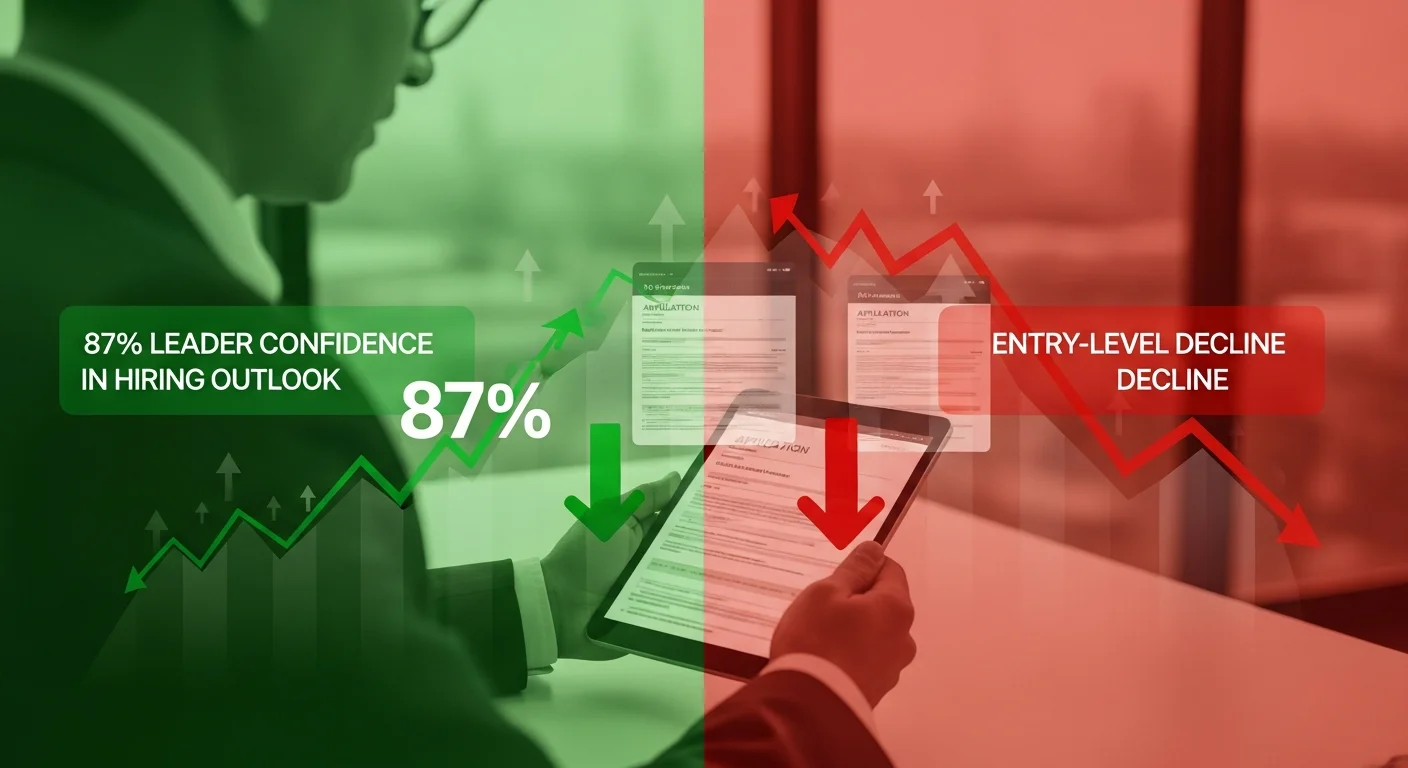
- 1.87% of technology leaders feel confident about 2026 business outlook. 61% plan to increase headcount (Robert Half, 2026)
- 2.Global IT spend projected to increase nearly 10% in 2026, exceeding GDP growth (Gartner, 2026)
- 3.Entry-level positions (P1/P2) saw 73% decrease in hiring rates vs. 7% overall decline (Ravio, 2025)
- 4.IT skills shortage will cost organizations $5.5 trillion by 2026 (IDC, 2025)
87%
Leader Confidence
10%
IT Spend Growth
73%
Entry-Level Decline
$5.5T
Skills Gap Cost
The Tech Job Market Paradox
The 2026 tech job market defies simple narratives. As Interview Query notes, tech is simultaneously shrinking AND growing. Companies are laying off in some areas while desperately struggling to hire in others.
Research from Robert Half found that 87% of technology leaders feel confident about their business outlook for 2026, and 61% plan to increase permanent headcount in the first half of the year. Thomas Vick from Robert Half notes that 'More and more executives are telling us they'll need to hire more IT people to work on projects next year, which have been sitting idle for a very long period.'
Yet simultaneously, entry-level positions saw a staggering 73% decrease in hiring rates according to Ravio's 2025 Tech Job Market Report, compared to just a 7% decrease in hiring rates across all job levels overall.
CIO Spending Plans for 2026
Gartner predicts that global IT spend will increase by nearly 10% in 2026, far exceeding GDP growth in most major economies. This increased spend will fuel aspects of tech hiring, particularly in AI implementation, cloud infrastructure, and cybersecurity.
Technology leaders and their teams face colliding priorities. They must strengthen security, implement AI, and modernize systems at the same time, often with limited capacity. That pressure is keeping demand high for talent in areas such as cybersecurity, cloud infrastructure, and data engineering.
- AI implementation. Making AI usable at scale is driving technology hiring
- Cloud infrastructure. Building and managing multi-cloud environments
- Cybersecurity. Strengthening defenses amid rising threats
- Data engineering. Preparing data for AI and analytics
- System modernization. Technical debt reduction and platform updates
Roles in Highest Demand
According to Robert Half, efforts to adopt AI and make it usable at scale are driving technology hiring in 2026. Employers are prioritizing professionals who can build and manage cloud environments, keep core platforms secure, and help ensure systems perform optimally.
| Role Category | Demand Level | Salary Trend |
|---|---|---|
| AI/ML Engineers | Critical shortage | +15-25% YoY |
| Cybersecurity Engineers | Severe shortage | +10-15% YoY |
| Data Engineers | High demand | +8-12% YoY |
| Cloud Architects | Strong demand | +8-10% YoY |
| DevOps/SRE | Steady demand | +5-8% YoY |
| General Software Dev (Sr.) | Moderate demand | +3-5% YoY |
| General Software Dev (Jr.) | Weak demand | Flat/declining |
Source: Robert Half, Industry Data, 2026
The Entry-Level Collapse
According to Ravio's 2025 Tech Job Market Report, entry-level positions (P1 and P2 job levels) have seen a staggering 73% decrease in hiring rates in the past year, compared to just a 7% decrease in hiring rates across all job levels overall.
New roles emerging in 2026 include AI governance officers, AI workflow and enablement leaders, and AI agent orchestrators, all of which require experience and specialized knowledge that entry-level candidates lack.
If there's a hiring slowdown, CIOs may want to prioritize upskilling and reskilling over external hiring. This strategy further limits entry-level opportunities as companies develop existing talent rather than hire new graduates.
Source: IDC, 2025
The Skills Shortage Crisis
According to an IDC survey of North American IT leaders, by 2026 the IT skills shortage is expected to become a significant problem for most organizations globally, resulting in $5.5 trillion in losses. More than 90% of organizations say IT skills shortages will affect them by 2026.
The most in-demand skills according to Indeed research include:
- Python. Foundation for AI/ML and data work
- AWS. Dominant cloud platform
- APIs. Integration and service architecture
- CI/CD. DevOps and deployment automation
- AI. Generative AI, LLMs, and ML implementation
Cyber talent shortages are driving up salaries by 10-15% for mid-level roles, such as cybersecurity analysts and engineers with seven to nine years of experience.
Career Strategy for 2026
Based on the market data, here's how to position yourself:
- Specialize in high-demand areas. AI/ML, cybersecurity, and cloud architecture have the strongest hiring
- Build skills over experience. Tech salaries now reward specific skills more than years of experience
- Target mid-level roles. Entry-level is collapsing, but mid-level demand remains strong
- Get certified. Cloud and AI certifications demonstrate specific competencies employers need
- Consider adjacent entry points. QA, DevOps, and data roles may be easier entry paths than traditional development
CompTIA's latest outlook indicates that tech occupations are expected to grow roughly twice as fast as overall employment over the next decade. Mid-2025 readings showed sub-3% unemployment in core tech roles, the opportunity is there for those with the right skills.
Related Articles
Related Degrees
Frequently Asked Questions
Sources
87% leader confidence and in-demand roles data
10% IT spending growth projection
73% entry-level hiring decline data
$5.5 trillion skills shortage cost estimate
Long-term tech job growth projections

Taylor Rupe
Co-founder & Editor (B.S. Computer Science, Oregon State • B.A. Psychology, University of Washington)
Taylor combines technical expertise in computer science with a deep understanding of human behavior and learning. His dual background drives Hakia's mission: leveraging technology to build authoritative educational resources that help people make better decisions about their academic and career paths.