- 1.CISSP delivers 22% average salary boost with $131K average salary (UniHackers, 2026)
- 2.CISSP appears in job postings 3.6-5.7x more often than CEH (Industry Research, 2026)
- 3.Security+ adds 11% salary boost. Paired with experience reaches $90K-$105K (Nucamp, 2026)
- 4.91% of employers prefer candidates with security certifications (Industry Survey, 2026)
$131K
CISSP Salary
22%
CISSP Salary Boost
11%
Security+ Boost
91%
Employers Prefer Certs
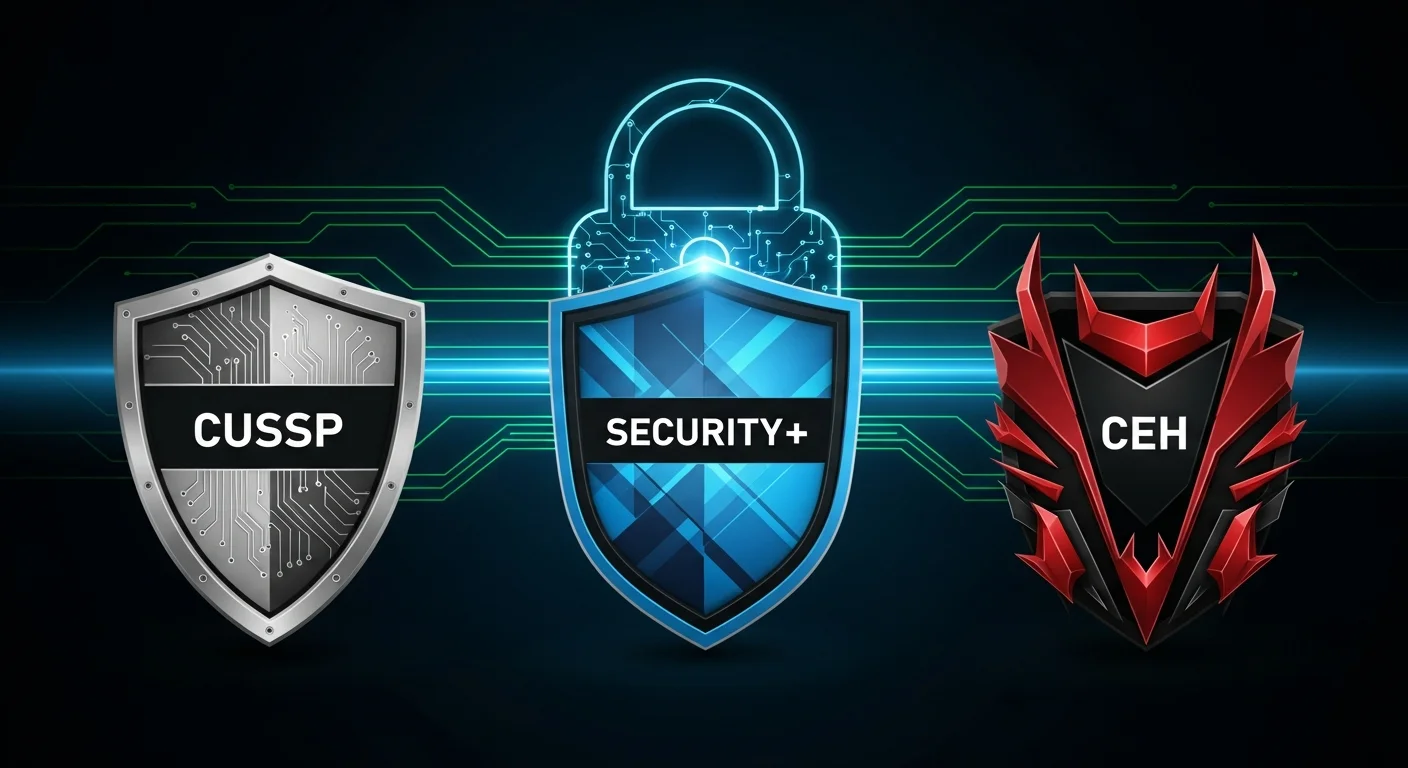
Cybersecurity Certification Overview
With 3.4 million unfilled cybersecurity positions globally, security certifications provide proven credentials that help candidates stand out. According to UniHackers, 91% of employers prefer candidates with certifications, especially those proving applied skills in areas like SOC operations, cloud security, or threat intelligence.
| Certification | Target Level | Exam Cost | Average Salary | Salary Boost |
|---|---|---|---|---|
| CISSP | Senior/Management (5+ years) | $749+ | $131,000 | +22% |
| Security+ | Entry/Mid-level | $370-$450 | $90,000-$105K* | +11% |
| CEH | Mid-level Technical | $1,000+ | $96,000 | +21% |
| OSCP | Advanced Technical | $1,649+ | $110,000+ | ~21% |
Source: UniHackers, Nucamp, Research.com (*with experience)
CISSP: The Management-Level Benchmark
According to UniHackers, CISSP delivers a 22% average salary boost, with holders earning an average base salary of $131,000. Research on popular job boards found that 'CISSP' appeared in job postings 3.6-5.7 times more often than 'CEH,' making it the more popular certification by a vast margin.
- Requirements: 5 years of cumulative paid work experience in 2+ of 8 CISSP domains
- Focus: Broad, management-level security knowledge
- Best for: Security managers, architects, consultants, CISOs
- Exam cost: $749+
- Renewal: 40 CPE credits annually, $125 annual fee
According to StationX, a sustainable approach is to treat CISSP as a later-stage goal: start with foundational certs and real on-the-job experience, then pursue CISSP when leadership or architecture is clearly the direction your career is moving.
Security+: The Entry-Level Foundation
According to Nucamp, Security+ adds an 11% salary boost. Many salary guides associate Security+ with $90,000-$105,000 total compensation once paired with some experience.
- Requirements: None (recommended: 2 years IT experience)
- Focus: Core skills needed in any cybersecurity role
- Best for: Career changers, entry-level security positions, IT professionals adding security skills
- Exam cost: $370-$450
- DoD approved: Required for many government/contractor positions
Security+ is often the first step for anyone entering cybersecurity. It's vendor-neutral, widely recognized, and satisfies DoD 8570 requirements for many government security roles.
CEH: The Offensive Security Credential
According to UniHackers, offensive security certifications like CEH and OSCP raise salaries by approximately 21%. The average annual salary for a CEH-certified expert is $96,000.
- Requirements: 2 years IT security experience OR official training
- Focus: Practical, hands-on ethical hacking experience
- Best for: Penetration testers, security analysts, vulnerability assessors
- Exam cost: $1,000+ (including training)
- Career path: Often leads to OSCP or other advanced offensive certs
CEH demonstrates offensive security skills, the ability to think like an attacker. While CISSP appears in more job postings, CEH is valuable for roles specifically focused on penetration testing and vulnerability assessment.
Source: Job Board Analysis, 2026
Recommended Certification Path
According to Nucamp, a practical path is to first build fundamentals with Security+ or an equivalent baseline, then use CEH to break into your first offensive-leaning role, and later pursue more hands-on certs like PenTest+ or OSCP for deeper technical credibility.
- Year 1: Security+. Establish foundational knowledge, qualify for entry-level roles
- Years 2-3: CySA+ or CEH. Specialize in defensive or offensive security
- Years 3-5: PenTest+ or OSCP. Deepen technical skills for penetration testing
- Year 5+: CISSP. When targeting management, architecture, or senior consultant roles
Don't rush to CISSP. The 5-year experience requirement exists for a reason, and attempting it too early often leads to failure. Build practical experience alongside certifications for the strongest career foundation.
Related Articles
Related Degrees
Consider a Coding Bootcamp
Beyond individual certifications, bootcamp programs can bundle multiple certs with hands-on training and career support.
What is a Coding Bootcamp?
A coding bootcamp is an intensive, short-term training program (typically 12-24 weeks) that teaches practical programming skills through hands-on projects. Unlike traditional degrees, bootcamps focus exclusively on job-ready skills and often include career services to help graduates land their first tech role.
Who Bootcamps Are Best For
- Career changers looking to enter tech quickly
- Professionals wanting to upskill or transition roles
- Self-taught developers seeking structured training
- Those unable to commit to a 4-year degree timeline
What People Love
Based on discussions from r/codingbootcamp, r/cscareerquestions, and r/learnprogramming
- Cybersecurity demand is massive, skills shortage works in your favor
- Certifications (Security+, CEH) often included in programs
- Hands-on labs with real security tools and simulations
- Many entry paths: SOC analyst, pentesting, GRC compliance
- High-paying field once you get your foot in the door
Common Concerns
Honest feedback from bootcamp graduates and industry professionals
- Entry-level security often requires IT/networking experience first
- Certifications matter more than bootcamp credentials in security
- SOC analyst burnout is real, long hours monitoring alerts
- Many roles require security clearances, limiting options
- Bootcamp may not teach offensive security depth for pentesting
Save $1000 on Cybersecurity Bootcamp
Springboard offers career-focused bootcamps with 1-on-1 mentorship from industry professionals. Their programs include a job guarantee, complete all requirements, and if you don't land a qualifying role, you may be eligible for a full tuition refund. Use our exclusive link to save $1000 on enrollment.
Programs for Cybersecurity careers:
- Cybersecurity Career Track
We may earn a commission when you use our affiliate link and coupon.
Frequently Asked Questions
Sources
Cybersecurity salary guide and certification impact data
Top cybersecurity certifications comparison
CISSP vs Security+ career path analysis
Certification cost data

Taylor Rupe
Co-founder & Editor (B.S. Computer Science, Oregon State • B.A. Psychology, University of Washington)
Taylor combines technical expertise in computer science with a deep understanding of human behavior and learning. His dual background drives Hakia's mission: leveraging technology to build authoritative educational resources that help people make better decisions about their academic and career paths.