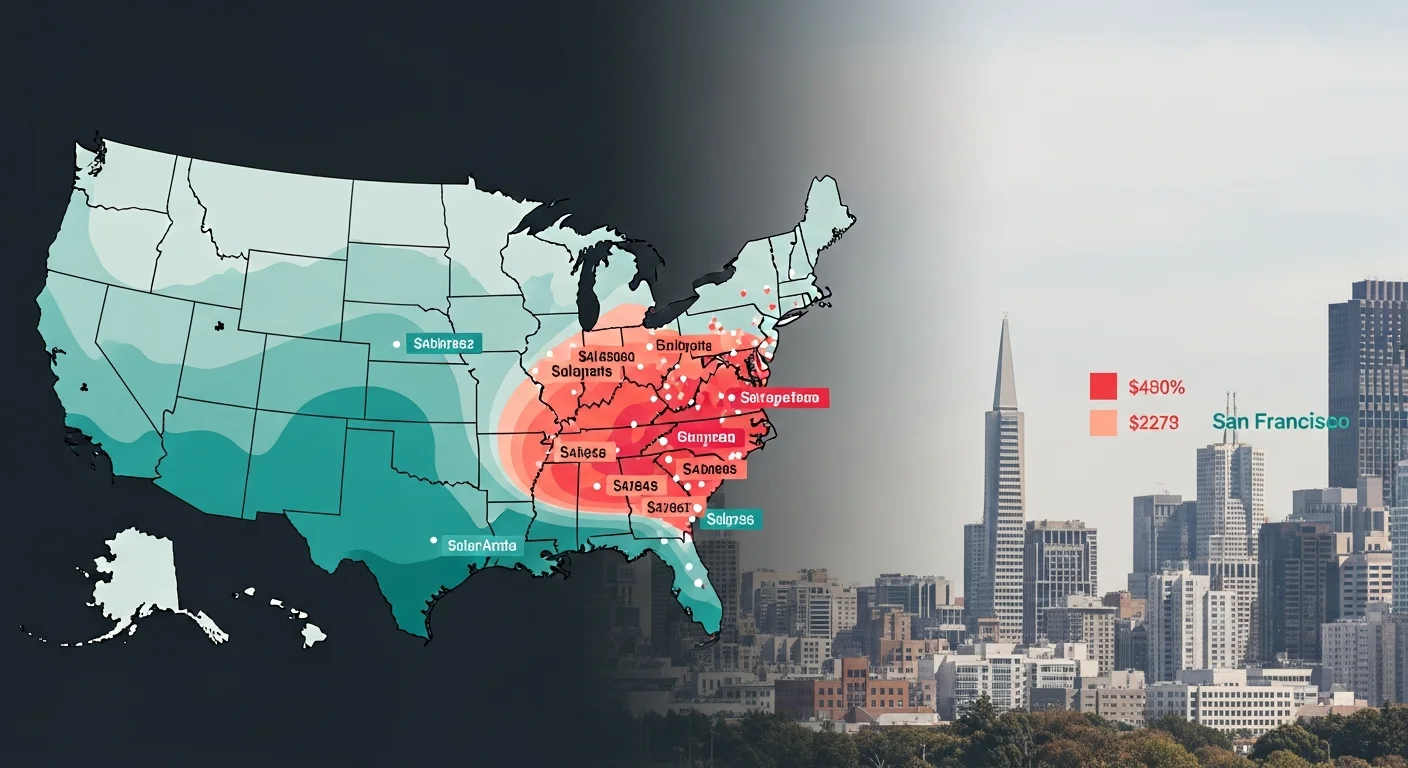
- 1.62% of organizations now use geographic pay policies to adjust remote salaries (Payscale, 2026)
- 2.Tech employees in high-cost cities earn 20% more than those in smaller cities for identical roles (Indeed, 2026)
- 3.GitLab's average location factor is 0.679, meaning 68% of SF salary for average employee (GitLab, 2026)
- 4.Pay transparency laws in CA, CO, NY, and WA now require salary range disclosures even for remote roles
62%
Using Geo Pay
20%
High vs Low COL Gap
68%
GitLab Location Factor
$10K
Violation Penalties
Three Approaches to Geographic Pay
According to Ravio, companies take three main approaches to location-based compensation for remote workers:
| Approach | How It Works | Used By |
|---|---|---|
| Geographic Differentials | Baseline (usually HQ) with multipliers by location | Most large enterprises |
| Location-Agnostic | Single rate regardless of location (often SF/NY benchmark) | Some remote-first companies |
| Tiered Regional | Group regions into tiers (e.g., Tier 1 = SF/NY, Tier 2 = Austin/Denver) | Tech startups, GitLab |
Source: Ravio, 2026
The Pay Gap Data
According to Indeed research, tech employees in high-cost cities like San Francisco earn 20% more than those in smaller cities for identical roles. The gap can be even larger for some companies.
GitLab, known for its transparent compensation model, publishes its location factors publicly. Their average location factor across all teams is 0.679, meaning the average employee compensation is 67.9% of what an employee in San Francisco would be paid.
- San Francisco: 100% (benchmark)
- New York: 95-100%
- Austin/Denver: 85-90%
- Other US cities: 70-85%
- Lower COL countries: 50-70%
The Regulatory Landscape
According to SalaryCube, pay transparency laws are reshaping how companies handle geographic compensation. Jurisdictions like California, Colorado, and New York City mandate salary range disclosures in job postings, even for remote roles, with penalties up to $10,000 per violation.
The European Union's Pay Transparency Directive further requires employers to justify geographic pay gaps exceeding 5% for similar roles. This creates pressure for companies to document and defend their location-based pay policies.
Source: Industry Analysis
The Fairness Debate
There are two sides to the geographic pay debate:
Arguments for location-based pay:
- Reflects local cost of living and market rates
- Allows companies to hire globally without SF-level costs
- Someone earning $100K in Austin lives better than $130K in SF
- Competitive with local job market alternatives
Arguments against location-based pay:
- Same work should receive same pay
- Punishes workers for not living in expensive cities
- Undermines the 'location-independent' promise of remote work
- Creates perverse incentives (move to SF just for higher pay)
Negotiation Tips for Remote Workers
According to Payscale, remote workers can navigate geographic pay policies strategically:
- Research the policy upfront. Ask about geographic pay tiers before accepting offers
- Understand your tier. Know where you fall and what the ranges are
- Negotiate on skills, not location. Emphasize specialized expertise that commands premiums regardless of location
- Consider relocation timing. Some companies adjust pay if you move. Understand the policy
- Target location-agnostic companies. Some remote-first companies pay SF rates everywhere (Basecamp, Help Scout)
According to best practices, companies should be transparent about compensation models and clearly document how location impacts pay. If your company doesn't explain their policy, ask, transparency laws increasingly require disclosure anyway.
Related Articles
Related Degrees
Frequently Asked Questions
Sources
Three approaches to location-based pay
Regulatory landscape and compliance requirements
Remote work compensation trends
20% pay gap between high and low COL cities

Taylor Rupe
Co-founder & Editor (B.S. Computer Science, Oregon State • B.A. Psychology, University of Washington)
Taylor combines technical expertise in computer science with a deep understanding of human behavior and learning. His dual background drives Hakia's mission: leveraging technology to build authoritative educational resources that help people make better decisions about their academic and career paths.