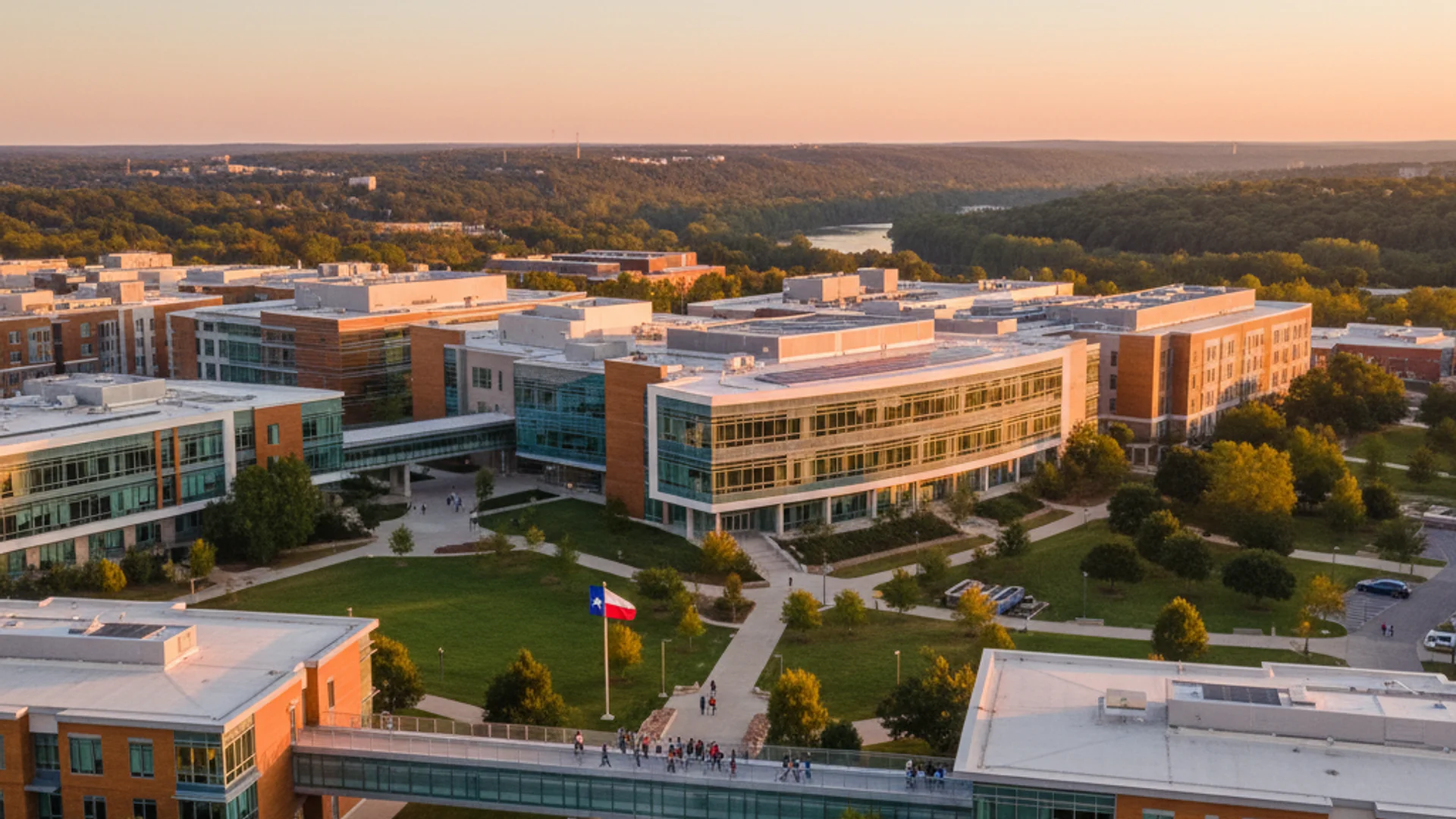
Top 3 Associate Data Science Programs 2025
Bellevue College
Strong industry partnerships with Microsoft and Amazon, 85% job placement rate within 6 months
Northern Virginia Community College
Direct transfer pathways to Virginia Tech and George Mason, comprehensive Python curriculum
Austin Community College
Real-world capstone projects with local tech companies, 78% transfer rate to 4-year programs
- 1.Associate degrees in data science typically cost 60-70% less than bachelor's programs while providing foundational skills
- 2.Most programs focus on SQL, Python, Excel, and basic statistics rather than advanced machine learning
- 3.Community colleges offer the most affordable options with strong transfer pathways to 4-year universities
- 4.Entry-level positions include data analyst, business analyst, and junior data technician roles
- 5.Many programs can be completed part-time while working, with evening and online course options
Based on 45 programs from Analysis of 45 associate degree programs nationwide
Depth of data science coursework, hands-on projects, and industry-relevant tools
Percentage of graduates employed within 6 months
Success rate and pathways for students continuing to bachelor's programs
Total program cost relative to earning potential
Industry experience and academic credentials of instructors
Access to software, computing labs, and data visualization tools
What is an Associate Degree in Data Science?
An associate degree in data science is a 2-year undergraduate program that provides foundational knowledge in data analysis, statistics, and basic programming. Unlike bachelor's programs that dive deep into machine learning and advanced algorithms, associate programs focus on practical skills employers need for entry-level data positions.
Most associate data science programs combine business analytics, computer science fundamentals, and statistics. Students learn to work with databases, create visualizations, and analyze data using tools like Excel, SQL, Python, and R. The curriculum emphasizes hands-on projects that mirror real workplace scenarios.
These programs serve two primary pathways: direct entry into the workforce as junior data analysts or preparation for transfer to bachelor's data science programs. Many community colleges have articulation agreements with 4-year universities, allowing seamless credit transfer.
The growing demand for data professionals has created opportunities for associate degree holders. According to the Bureau of Labor Statistics, employment in data-related occupations is projected to grow 22% through 2030, much faster than average. While senior data scientist roles require advanced degrees, many organizations hire associate degree graduates for support roles, data entry, and junior analyst positions.
Top Associate Data Science Programs 2025
| Rank | ||||||
|---|---|---|---|---|---|---|
| 1 | Bellevue College | Bellevue, WA | $4,200 | 8500% | 7200% | 94 |
| 2 | Northern Virginia Community College | Annandale, VA | $4,800 | 8200% | 8500% | 91 |
| 3 | Austin Community College | Austin, TX | $3,600 | 7800% | 7800% | 89 |
| 4 | Sinclair Community College | Dayton, OH | $4,100 | 7500% | 8000% | 87 |
| 5 | Valencia College | Orlando, FL | $3,200 | 7300% | 8200% | 85 |
| 6 | Santa Monica College | Santa Monica, CA | $1,400 | 7000% | 8800% | 84 |
| 7 | Ivy Tech Community College | Indianapolis, IN | $4,000 | 6800% | 7500% | 82 |
| 8 | Tarrant County College | Fort Worth, TX | $2,800 | 6500% | 7900% | 80 |
| 9 | Hillsborough Community College | Tampa, FL | $3,100 | 6200% | 7700% | 78 |
| 10 | Montgomery College | Rockville, MD | $5,200 | 6000% | 8300% | 76 |
Bellevue College
Bellevue, WA • University
Program Highlights
- • 85% job placement rate within 6 months of graduation
- • Average starting salary of $52,000 for graduates
- • Transfer agreements with University of Washington and Western Washington University
- • Required capstone project with local business partner
Program Strengths
- Direct internship placements with Fortune 500 tech companies
- Curriculum updated annually based on employer feedback
- State-of-the-art data analytics lab with cloud computing access
- Small class sizes with 15:1 student-to-faculty ratio
- Evening and weekend class options for working professionals
Why Ranked #1
Bellevue College tops our ranking due to its exceptional industry connections and practical curriculum design. Located in the heart of the Pacific Northwest tech hub, the program leverages partnerships with Microsoft, Amazon, and other major employers to provide real-world learning experiences.
Student Reviews
"The hands-on projects prepared me perfectly for my current role as a junior data analyst. The SQL and Python skills I learned are used daily."
— Recent Graduate, Class of 2024
"Instructors have real industry experience and bring current challenges into the classroom. The career services team helped me land interviews."
— Current Student
Career Paths
Entry-level position analyzing data to support business decisions, creating reports and basic visualizations
Business Intelligence Analyst
Work with business stakeholders to identify data needs and create dashboards for decision-making
Data Technician
Support senior data scientists by cleaning data, running analyses, and maintaining databases
Research Assistant
Assist researchers in collecting, organizing, and analyzing data for studies and reports
Marketing Data Analyst
Analyze marketing campaign performance, customer behavior, and digital analytics
Curriculum and Course Requirements
Associate data science programs typically require 60-66 credit hours completed over four semesters. The curriculum balances general education requirements with technical coursework, ensuring graduates have both analytical skills and communication abilities needed in the workplace.
Core technical courses cover database fundamentals, statistical analysis, data visualization, and programming. Most programs use Python and R for statistical computing, SQL for database queries, and tools like Tableau or Power BI for visualization. Students also learn Excel at an advanced level, as it remains widely used in business environments.
- Database Management and SQL (3-4 credits)
- Statistics for Data Analysis (3-4 credits)
- Python Programming for Data Science (3-4 credits)
- Data Visualization and Reporting (3 credits)
- Business Analytics Applications (3 credits)
- Research Methods and Data Ethics (3 credits)
- Capstone Project or Internship (3-6 credits)
General education requirements typically include college algebra, business communication, and basic computer literacy. Some programs offer electives in specialized areas like healthcare analytics, financial analysis, or digital marketing metrics.
The capstone experience varies by program but usually involves working with real data from local businesses or non-profit organizations. Students apply their skills to solve actual problems, creating portfolios that demonstrate their capabilities to potential employers. This practical experience often becomes the centerpiece of job interviews and demonstrates readiness for entry-level positions.
Source: Including summer terms for accelerated completion
Admission Requirements and Prerequisites
Most associate data science programs have relatively accessible admission requirements compared to competitive bachelor's programs. Community colleges typically accept all high school graduates or equivalent, making these programs excellent options for career changers or students seeking affordable entry into the field.
Standard admission requirements include a high school diploma or GED, basic computer literacy, and completion of college-level algebra. Some programs require intermediate algebra or statistics as prerequisites, which can be completed at the same institution if needed.
- High school diploma or GED equivalent
- College-level algebra with grade of C or better
- Basic computer skills assessment or coursework
- Completed application and transcripts
- Placement testing in math and English (if required)
Unlike bachelor's programs, associate degrees rarely require standardized test scores, letters of recommendation, or essays. This open-access approach makes data science education available to a broader population, including working adults and first-generation college students.
International students may need additional documentation such as TOEFL scores and credential evaluations. Many programs offer English as a Second Language (ESL) support to help non-native speakers succeed in technical coursework that requires precise communication of analytical findings.
| Factor | Associate Degree | Bachelor's Degree | Bootcamp |
|---|---|---|---|
| Program Length | 2 years | 4 years | 3-6 months |
| Total Cost | $8,000-$15,000 | $40,000-$120,000 | $10,000-$20,000 |
| Depth of Learning | Foundational | Comprehensive | Focused Skills |
| Job Readiness | Entry-level roles | Mid-level roles | Specific skills |
| Transfer Options | Excellent | Not applicable | Limited |
Online vs On-Campus Program Options
Associate data science programs offer flexible delivery methods to accommodate different student needs. Traditional on-campus programs provide face-to-face instruction and access to computer labs, while online programs offer convenience for working professionals and students in rural areas.
On-campus programs typically feature hands-on lab sessions where students work with specialized software and large datasets. The collaborative environment allows for group projects and immediate instructor feedback. Students also benefit from networking opportunities with classmates and access to career services.
Online programs have evolved significantly, offering virtual labs and cloud-based computing resources. Many use platforms like AWS or Google Cloud to provide students with the same tools used in professional environments. Synchronous online sessions maintain real-time interaction, while asynchronous components allow flexible scheduling.
Hybrid programs combine both approaches, with core instruction delivered online and periodic on-campus sessions for intensive workshops or networking events. This model works well for students who need flexibility but want some in-person connection.
When choosing between delivery methods, consider your learning style, technical setup at home, and career goals. Online programs require strong self-discipline and reliable internet access. On-campus programs may offer better immediate job placement assistance through local employer relationships. For students planning to transfer to 4-year programs, check that online credits will be fully accepted by target universities.
Transfer Pathways to Bachelor's Programs
One of the strongest advantages of associate data science programs is their transfer potential to bachelor's degree programs. Most community colleges have established articulation agreements with 4-year universities, guaranteeing credit transfer and junior-level admission for qualified students.
Students can typically transfer 60+ credits toward bachelor's data science programs, computer science degrees, or related fields like applied mathematics or statistics. This pathway can save $20,000-$40,000 compared to starting at a 4-year institution.
Successful transfer requires careful planning from the beginning of the associate program. Students should work with academic advisors to ensure coursework aligns with requirements at target universities. Key considerations include maintaining a strong GPA (typically 3.0+ for competitive programs) and completing specific prerequisite courses.
- Research transfer agreements early in your program
- Meet regularly with academic advisors at both institutions
- Maintain strong grades, especially in math and science courses
- Complete general education requirements that transfer broadly
- Apply for transfer admission well before graduation
Some universities offer guaranteed admission programs for community college graduates who meet specific criteria. For example, students completing associate degrees at Virginia community colleges have guaranteed admission to Virginia Tech's data science program if they maintain a 3.4 GPA and complete required coursework.
Transfer students often bring practical experience and maturity that serves them well in advanced coursework. Many report feeling better prepared for upper-division courses than students who started as freshmen, particularly in applied statistics and programming courses where hands-on experience matters.
Which Should You Choose?
- You want the most affordable option
- You plan to transfer to a 4-year university
- You prefer smaller class sizes and personalized attention
- You need flexible scheduling options
- You want immediate job placement assistance
- You prefer industry-focused curriculum
- You're interested in specialized certifications
- You want hands-on, practical training
- You're a working professional
- You live in a rural area without local options
- You need maximum scheduling flexibility
- You're comfortable with virtual learning environments
Frequently Asked Questions
Next Steps to Get Started
Research Program Options
Use our rankings table to identify programs in your area. Contact admissions offices to request detailed curriculum information and transfer agreements.
Meet Prerequisite Requirements
Ensure you have completed required math courses. If not, enroll in prerequisite courses at the same institution or through online providers.
Plan Your Career Path
Decide whether you want immediate employment or plan to transfer to a bachelor's program. This will influence your choice of electives and extracurricular activities.
Apply Early
Submit applications well before deadlines. Popular programs may have waiting lists, and early application ensures better class scheduling options.
Build Your Foundation Skills
Start learning Excel and basic statistics through free online resources. This preparation will help you succeed in your first semester courses.
Related Data Science Resources
Data Sources and Methodology
Employment projections and salary data for data science occupations
Program completion rates and transfer statistics
Graduation rates, costs, and post-graduation earnings by institution
Student satisfaction and engagement metrics
Program quality assessments and accreditation status

Taylor Rupe
Full-Stack Developer (B.S. Computer Science, B.A. Psychology)
Taylor combines formal training in computer science with a background in human behavior to evaluate complex search, AI, and data-driven topics. His technical review ensures each article reflects current best practices in semantic search, AI systems, and web technology.