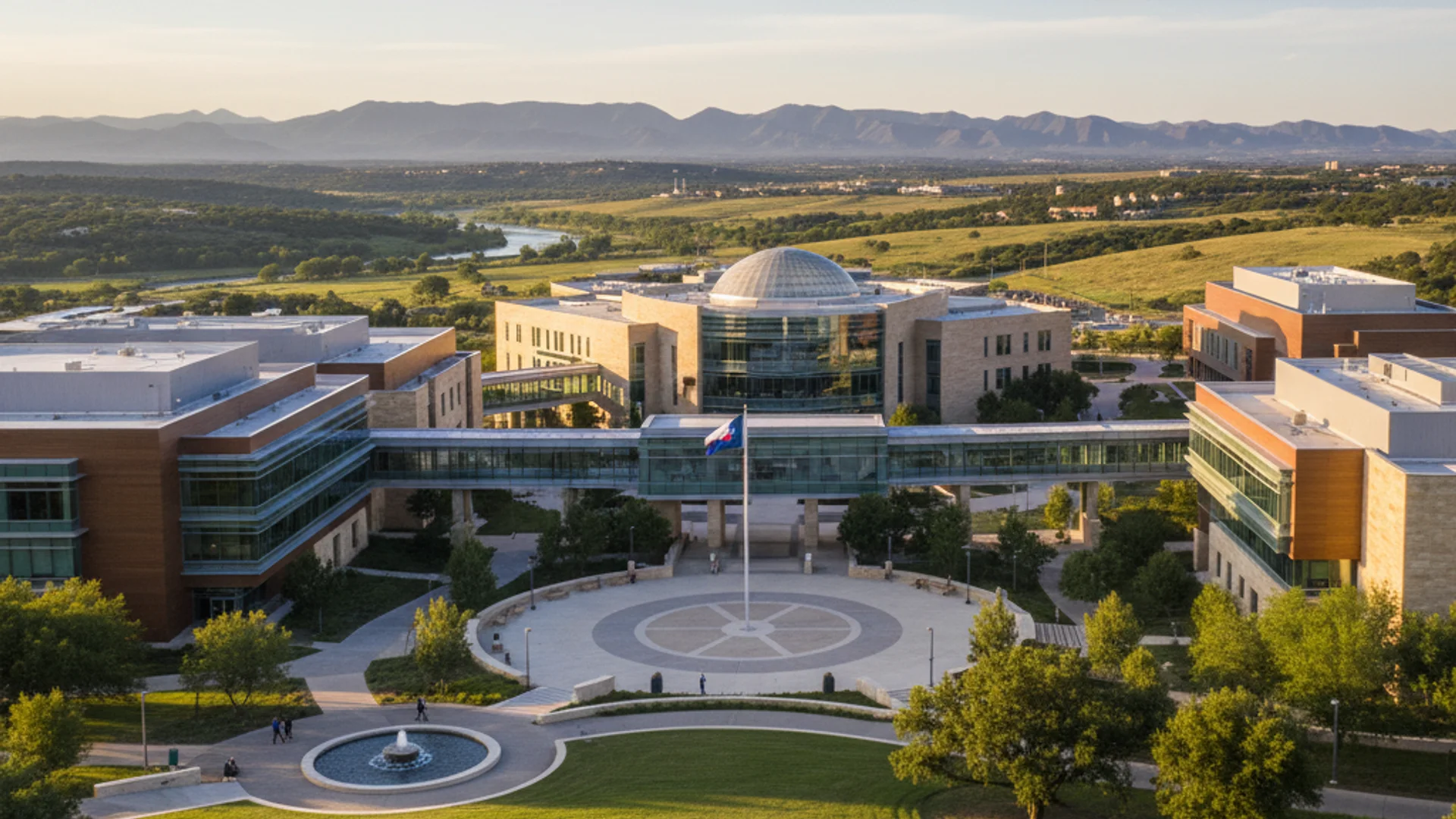
Top 3 Doctoral Programs in Cloud Computing
Carnegie Mellon University
Leading research in distributed systems and cloud security with $45M in annual funding
University of California, Berkeley
Pioneering work in edge computing and serverless architectures with top industry partnerships
Stanford University
Cutting-edge research in cloud-native AI and quantum cloud computing
- 1.Only 42 universities offer dedicated cloud computing doctoral tracks, with most programs housed within computer science departments
- 2.Average time to degree completion is 5.2 years, with full funding typically guaranteed for 4-5 years
- 3.Graduates earn median starting salaries of $165,000, with research positions at tech giants paying up to $250,000
- 4.Top programs require GRE scores above 325 (quantitative + verbal) and extensive research experience
- 5.Cloud computing PhD graduates have 98% job placement rates within 6 months of graduation
Based on 42 programs from Academic Analytics Research Database, NSF Survey of Earned Doctorates
Publications, citations, and conference presentations in cloud computing
Number of faculty with cloud computing specializations and h-index scores
Research grants, lab facilities, and industry partnerships
Job placement rates, starting salaries, and time to degree
Internship opportunities and collaborative research projects
Complete Rankings: Top Doctoral Programs in Cloud Computing 2025
| Rank | |||||||
|---|---|---|---|---|---|---|---|
| 1 | Carnegie Mellon University | Pittsburgh, PA | PhD Computer Science - Cloud Computing | 98.2 | 24 | $58,000 | 96.8 |
| 2 | UC Berkeley | Berkeley, CA | PhD EECS - Distributed Systems | 96.5 | 19 | $62,000 | 94.2 |
| 3 | Stanford University | Stanford, CA | PhD Computer Science | 95.8 | 21 | $60,000 | 93.7 |
| 4 | MIT | Cambridge, MA | PhD EECS - Systems | 94.1 | 17 | $59,000 | 92.4 |
| 5 | University of Washington | Seattle, WA | PhD Computer Science & Engineering | 91.7 | 15 | $54,000 | 90.8 |
| 6 | Georgia Tech | Atlanta, GA | PhD Computer Science | 90.3 | 18 | $52,000 | 89.6 |
| 7 | University of Illinois Urbana-Champaign | Urbana, IL | PhD Computer Science | 88.9 | 16 | $51,000 | 88.2 |
| 8 | Cornell University | Ithaca, NY | PhD Computer Science | 87.5 | 14 | $56,000 | 87.1 |
| 9 | University of California San Diego | San Diego, CA | PhD Computer Science & Engineering | 86.2 | 13 | $53,000 | 85.9 |
| 10 | Princeton University | Princeton, NJ | PhD Computer Science | 85.7 | 12 | $57,000 | 85.3 |
Doctoral Program Admission Requirements
Admission to top cloud computing doctoral programs is highly competitive, with acceptance rates averaging just 8-12% across ranked institutions. Most programs require a strong foundation in computer science, distributed systems, and mathematics.
Academic prerequisites typically include a bachelor's degree in computer science, software engineering, or related technical field, though some programs accept students with master's degrees from other disciplines. Successful applicants demonstrate research potential through undergraduate research experience, publications, or industry projects in cloud technologies.
Standardized test requirements vary by institution. The majority of top programs require GRE scores, with successful candidates typically scoring above 325 combined (quantitative + verbal). International students must provide TOEFL scores of 100+ or IELTS scores of 7.0+. Some programs have begun waiving GRE requirements, particularly for applicants with strong research backgrounds or industry experience at companies like AWS, Google Cloud, or Microsoft Azure.
- Minimum GPA of 3.5 for undergraduate coursework, 3.7 for master's programs
- Three letters of recommendation from academic or industry professionals
- Statement of purpose outlining research interests and career goals
- Research portfolio demonstrating experience with distributed systems, virtualization, or cloud platforms
- Programming proficiency in languages like Python, Java, C++, or Go
Application deadlines typically fall between December 1 and February 1 for fall admission. Early application submission is recommended, as many programs conduct rolling admissions and funding decisions. Prospective students should contact potential advisors before applying to discuss research alignment and funding opportunities.
Primary Research Areas in Cloud Computing
Cloud computing doctoral research spans multiple interconnected domains, from fundamental distributed systems theory to cutting-edge applications in artificial intelligence and edge computing. The field has evolved rapidly, with new research areas emerging as cloud technologies mature and new challenges arise in scalability, security, and performance optimization.
Distributed systems and cloud architecture represent the core foundation of cloud computing research. Students in this area investigate problems related to consensus algorithms, fault tolerance, load balancing, and resource allocation across large-scale distributed environments. This research often involves collaboration with industry partners working on next-generation cloud platforms.
Cloud security and privacy research addresses critical challenges in multi-tenant environments, including secure computation, homomorphic encryption, and privacy-preserving analytics. With growing concerns about data sovereignty and compliance, this area has seen significant growth in funding and industry interest. Students often work with cybersecurity professionals on real-world security implementations.
- Serverless computing and Function-as-a-Service (FaaS) optimization
- Edge computing and Internet of Things (IoT) integration
- Cloud-native artificial intelligence and machine learning platforms
- Container orchestration and microservices architecture
- Green computing and energy-efficient cloud operations
- Quantum computing integration with classical cloud infrastructure
- Blockchain and distributed ledger technologies for cloud services
Emerging research areas include cloud-native AI systems, where students explore how to optimize machine learning workloads for cloud environments, and quantum-classical hybrid computing, investigating how quantum computers can be integrated into existing cloud infrastructures. These areas often lead to collaborations with AI/ML engineers and quantum computing researchers.
Career Paths
Lead research initiatives at major cloud providers, developing next-generation distributed systems and cloud services
Principal Cloud Architect
Design enterprise-scale cloud solutions and guide technical strategy for large organizations
Academic Professor/Researcher
Conduct research and teach at universities, often with consulting opportunities in industry
Senior technical leadership roles at technology companies, shaping product direction and technical standards
Develop security frameworks and protocols for cloud environments at cybersecurity firms
Technical Startup Founder
Launch cloud technology companies, leveraging deep technical expertise and research insights
Doctoral Program Funding and Financial Support
Most top-tier cloud computing doctoral programs offer full funding packages that cover tuition, fees, and provide a living stipend. The average annual stipend across ranked programs is $32,000-$45,000, with additional opportunities for summer research funding and conference travel support.
Research assistantships (RA) represent the primary funding mechanism, where students work on faculty research projects related to cloud computing. These positions typically provide full tuition remission plus stipends ranging from $28,000 to $42,000 annually. Students may also secure teaching assistantships (TA), though these are less common in research-intensive programs.
External funding opportunities are abundant in cloud computing due to high industry and government interest. The National Science Foundation (NSF) provides numerous grants through programs like Computer and Information Science and Engineering (CISE), while industry partners including Amazon, Microsoft, and Google offer dedicated fellowship programs for cloud computing research.
- NSF Graduate Research Fellowship Program (GRFP) - $37,000 annual stipend for 3 years
- Amazon Web Services (AWS) Graduate Fellowship - $15,000 plus cloud credits
- Microsoft Research PhD Fellowship - Full tuition plus $42,000 stipend
- Google Cloud Research Credits Program - Up to $5,000 in cloud computing resources
- Department of Energy Computational Science Graduate Fellowship - $38,000 annually
Many students supplement their funding through internships at major technology companies. Summer internships at cloud providers like AWS, Microsoft Azure, or Google Cloud typically pay $8,000-$12,000 per month, providing valuable industry experience and networking opportunities. Some students also pursue graduate assistantships in related departments or administrative roles.
International students should note that funding opportunities may be more limited, though many programs still offer competitive packages. Students should explore employer tuition reimbursement options if currently employed in tech roles, as some companies provide educational support for advanced degrees in relevant fields.
Carnegie Mellon University
Pittsburgh, PA • University
Program Highlights
- • Home to the Parallel Data Lab, a world-renowned research center for distributed systems
- • Students regularly publish at top-tier conferences including SOSP, OSDI, and NSDI
- • 95% of graduates secure positions at top tech companies or leading research institutions
- • Access to multiple cloud testbeds including NSF CloudLab and Amazon research clusters
Program Strengths
- 24 faculty members specializing in cloud and distributed systems research
- $45M in annual research funding from NSF, DARPA, and industry partners
- Dedicated Cloud Computing Research Lab with state-of-the-art infrastructure
- Partnerships with Amazon, Microsoft, Google, and IBM for collaborative research
- Average time to degree: 4.8 years with 98% funding guarantee
Why Ranked #1
CMU leads in cloud computing research with the highest publication output, strongest industry partnerships, and most comprehensive curriculum covering distributed systems, cloud security, and edge computing.
Student Reviews
"The research opportunities at CMU are unparalleled. I worked directly with AWS engineers on cutting-edge serverless computing research."
— Current PhD student, 4th year
"The faculty mentorship and collaborative environment helped me publish 8 papers during my PhD and land a research scientist role at Google Cloud."
— 2024 graduate
| Factor | PhD Programs | Professional Doctorates | Industry Roles |
|---|---|---|---|
| Duration | 4-6 years | 3-4 years | Immediate entry |
| Research Focus | Original research required | Applied research projects | Implementation focus |
| Starting Salary | $165,000 | $145,000 | $125,000 |
| Career Flexibility | Academia + Industry | Industry focused | Industry only |
| Funding Availability | Full funding typical | Limited funding | Self-funded |
| Industry Connections | Strong through research | Moderate | Immediate |
Frequently Asked Questions
Steps to Apply for Cloud Computing Doctoral Programs
Research Programs and Faculty
Identify programs aligned with your research interests. Review faculty publications, current projects, and funding sources. Contact potential advisors to discuss research fit before applying.
Strengthen Technical Background
Ensure solid foundations in distributed systems, algorithms, and systems programming. Consider relevant coursework, online certifications, or industry projects to fill knowledge gaps.
Gain Research Experience
Participate in undergraduate research, industry research internships, or independent projects. Aim to produce publishable work or significant technical contributions.
Prepare Application Materials
Draft compelling personal statement highlighting research interests and career goals. Secure strong letters of recommendation from academic or industry mentors familiar with your technical abilities.
Take Required Exams
Register for GRE (if required) and TOEFL/IELTS (international students). Aim for GRE scores above 325 combined and TOEFL scores above 100.
Submit Applications Early
Apply to 5-8 programs with varying competitiveness levels. Submit applications well before deadlines to ensure all materials are properly processed and reviewed.
Related Programs and Resources
Data Sources and Methodology
Annual census of research doctorate recipients in the United States, providing comprehensive data on degree completion times, funding sources, and career outcomes.
Faculty productivity metrics including publication counts, citation analysis, and research funding data for computer science and engineering programs.
Peer assessment scores, faculty resources, and student selectivity data for graduate programs in computer science and engineering.
Annual survey of computer science and computer engineering academic units in North America, tracking enrollment, graduation, and employment trends.
Federal data on science and engineering education, workforce, and research funding, including detailed breakdowns by field and institution type.

Taylor Rupe
Full-Stack Developer (B.S. Computer Science, B.A. Psychology)
Taylor combines formal training in computer science with a background in human behavior to evaluate complex search, AI, and data-driven topics. His technical review ensures each article reflects current best practices in semantic search, AI systems, and web technology.