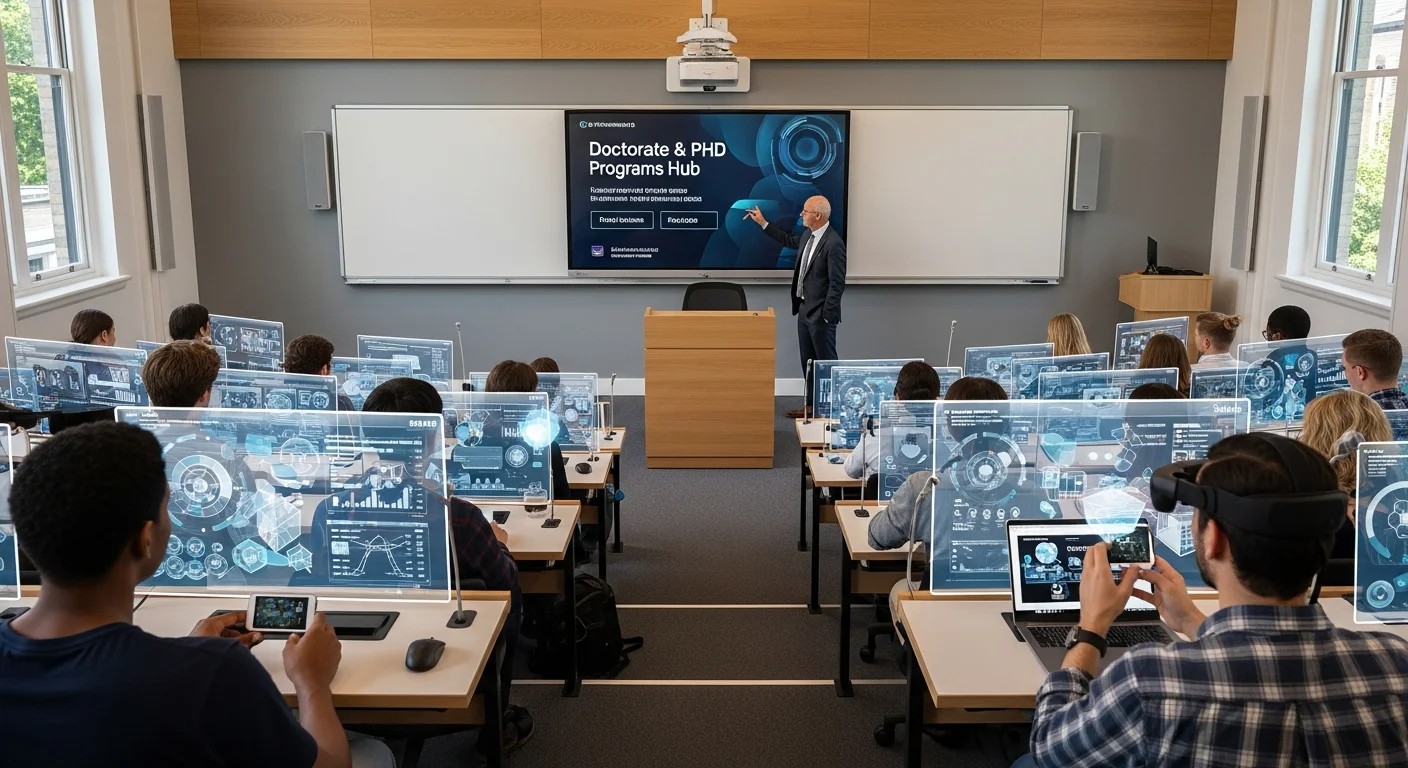
- 1.Doctoral programs in tech lead to research careers with median salaries of $155,000+ for computer and information research scientists
- 2.85% of doctoral students receive funding through assistantships, fellowships, or research grants, making PhD education largely free
- 3.Technology PhD programs typically take 4-6 years and combine advanced coursework with original research
- 4.Top career paths include research scientist, faculty positions, R&D leadership, and senior technical roles at major tech companies
- 5.Strong job growth projected for research roles: 23% for computer and information research scientists through 2032
Source: NSF Survey of Earned Doctorates 2024
What is a Technology Doctorate?
A doctorate or PhD in technology is the highest academic degree available, focused on advancing knowledge through original research. Unlike professional degrees that prepare you for practice, a doctoral degree prepares you to conduct independent research, lead innovation, and contribute new knowledge to the field.
Technology doctoral programs combine advanced coursework with extensive research training. Students typically spend 2-3 years on coursework covering theoretical foundations, research methods, and specialized topics, followed by 2-4 years conducting original research under faculty supervision, culminating in a dissertation that makes a significant contribution to the field.
Common technology doctorate areas include Computer Science, Artificial Intelligence, Data Science, Cybersecurity, and Software Engineering. Each field offers unique research opportunities and career paths.
Who Should Pursue a Technology PhD?
A technology PhD is ideal for individuals passionate about research, innovation, and advancing the field through discovery. This path requires strong intellectual curiosity, persistence, and the ability to work independently on complex, open-ended problems.
- Research enthusiasts who want to investigate fundamental questions and develop new technologies
- Academic aspirants planning faculty careers at universities or research institutions
- Innovation leaders seeking R&D roles at major tech companies, national labs, or startups
- Problem solvers drawn to tackle society's biggest challenges through technology
- Lifelong learners who thrive in environments of continuous discovery and intellectual growth
Consider a PhD if you're not satisfied with applying existing knowledge but want to create new knowledge. If your goal is primarily industry employment as a practitioner, a master's degree or professional experience may be more efficient. For career guidance, see our detailed analysis of doctoral vs industry career paths.
Doctorate vs Masters: Complete Comparison
Understanding the differences between doctoral and master's programs helps you choose the right path for your career goals
Technology Doctorate Career Outcomes
Technology PhD graduates pursue diverse career paths in academia, industry R&D, government research, and entrepreneurship. The BLS projects 23% job growth for computer and information research scientists through 2032—much faster than average. For detailed compensation analysis, see our research scientist salary guide.
Career Paths
Computer and Information Research Scientist
SOC 15-1221Conduct research to solve complex computing problems and develop new computing technologies and methodologies.
University Professor
SOC 25-1021Teach and conduct research at universities, leading labs and training the next generation of technologists.
Principal Research Engineer
SOC 17-2061Lead R&D teams at technology companies, driving innovation and breakthrough product development.
Data Science Research Lead
SOC 15-2051Lead advanced analytics and machine learning research initiatives at tech companies or research institutions.
AI/ML Research Scientist
SOC 15-1221Develop cutting-edge AI algorithms and systems, pushing the boundaries of machine intelligence.
Technology PhD Specialization Areas
Technology doctoral programs offer numerous specialization areas, each with unique research opportunities and career paths
Broad doctoral program covering algorithms, systems, theory, and applications across all areas of computing.
Specialized doctorate focusing on machine learning, neural networks, robotics, and intelligent systems.
Key Skills
Common Jobs
- • AI research scientist
- • AI product lead
Interdisciplinary program combining statistics, computing, and domain expertise for data-driven discovery.
Key Skills
Common Jobs
- • Data science researcher
- • Chief data scientist
Research-focused program addressing security challenges in computing systems, networks, and data protection.
Explore Technology Doctoral Programs
Comprehensive CS programs from bachelor's to PhD level
AI and machine learning focused degree programs
Data analytics and statistical computing programs
Information security and risk management degrees
Software development and engineering methodology programs
IT systems and infrastructure management programs
PhD Funding & Financial Support
One major advantage of doctoral programs is funding opportunities. According to NSF data, 85% of technology PhD students receive financial support, making doctoral education largely free for most students.
- Research Assistantships (RA): Work on faculty research projects while earning stipend and tuition coverage
- Teaching Assistantships (TA): Assist with undergraduate courses, gain teaching experience
- Fellowships: Merit-based awards from universities, NSF, or private foundations
- Industry Partnerships: Collaborate with companies like Google, Microsoft, or IBM on sponsored research
- Government Grants: NSF, NIH, DOE, and other agencies fund research projects
Typical PhD student support includes full tuition coverage plus stipends ranging from $25,000-$40,000 per year, varying by institution and location. For detailed funding strategies, see our PhD funding guide.
Doctoral Program Application Requirements
Technology doctoral programs are highly competitive, typically accepting 5-15% of applicants. Strong applications demonstrate research potential, academic excellence, and clear career goals.
- Bachelor's or Master's degree in relevant field (computer science, engineering, mathematics, or related)
- High GPA: Typically 3.5+ overall, 3.7+ in major coursework
- GRE scores: Many programs now waiving requirements, check individual programs
- Research experience: Undergraduate research, publications, conference presentations highly valued
- Letters of recommendation: 3 strong letters from faculty or research supervisors
- Statement of purpose: Clear articulation of research interests and career goals
- Programming skills: Demonstrated proficiency in relevant languages and tools
Research experience is particularly important—consider research internships, undergraduate thesis projects, or industry R&D positions before applying. For application strategies, see how to get into top CS PhD programs.
Top Technology Doctoral Programs
Leading technology doctoral programs combine world-class faculty, cutting-edge research facilities, and strong industry connections. Here are some top-ranked programs
#1 CS
MIT CSAIL
#1 AI
Stanford AI Lab
#1 SE
Carnegie Mellon
#1 Theory
UC Berkeley
#1 HCI
Georgia Tech
#1 Systems
University of Washington
Research Opportunities by Program
- MIT: Artificial intelligence, computer systems, theory of computation, human-computer interaction
- Stanford: Machine learning, robotics, computer vision, natural language processing, security
- Carnegie Mellon: Software engineering, human-computer interaction, machine learning, robotics
- UC Berkeley: Database systems, computer graphics, security, theoretical computer science
- Georgia Tech: Human-computer interaction, computational perception, educational technology
Is a Technology PhD Worth It in 2026?
A technology PhD is worth it if you're passionate about research and want to pursue careers that require deep technical expertise and innovation leadership. The financial investment is minimal (thanks to funding), but the time commitment is substantial.
When a PhD is worth it: You want research careers, academic positions, or R&D leadership roles. You're intellectually curious about fundamental problems. You're willing to spend 4-6 years in a structured learning environment. You thrive on independence and long-term projects.
When to consider alternatives: Your primary goal is industry employment as a practitioner. You want immediate income and career advancement. You prefer applied work over theoretical research. You're uncomfortable with uncertainty and open-ended problems.
Industry alternatives include senior engineering roles, technical leadership positions, or specialized master's programs. Many successful technologists advance without PhDs through experience, skills development, and strategic career moves. For detailed analysis, see PhD vs industry career paths.
Which Should You Choose?
- You want to conduct original research and advance the field
- Academic or research scientist careers appeal to you
- You're passionate about solving fundamental technical problems
- You enjoy independent, long-term intellectual challenges
- R&D leadership at major tech companies is your goal
- You want immediate career advancement and income
- Building products and solving practical problems excites you
- You prefer collaborative, fast-paced work environments
- Technical leadership through experience appeals more than research
- You want to avoid 4-6 years of additional education
Steps to Technology Doctoral Success
Gain Research Experience
Participate in undergraduate research, seek research internships, or work in industry R&D roles to build research portfolio
Build Strong Academic Foundation
Excel in relevant coursework, develop strong relationships with faculty, maintain high GPA in major courses
Identify Research Interests
Explore different areas through courses, conferences, and faculty interactions to focus your research direction
Prepare Strong Application
Craft compelling statement of purpose, secure strong recommendation letters, prepare for potential interviews
Apply Strategically
Target programs that match your research interests, apply to 8-12 programs including reach, match, and safety schools
Technology Doctorate FAQ
Related Technology Education Resources

Taylor Rupe
Full-Stack Developer (B.S. Computer Science, B.A. Psychology)
Taylor combines formal training in computer science with a background in human behavior to evaluate complex search, AI, and data-driven topics. His technical review ensures each article reflects current best practices in semantic search, AI systems, and web technology.